Quotulatiousness

October 17, 2026

Mussolini’s Ethiopian adventure

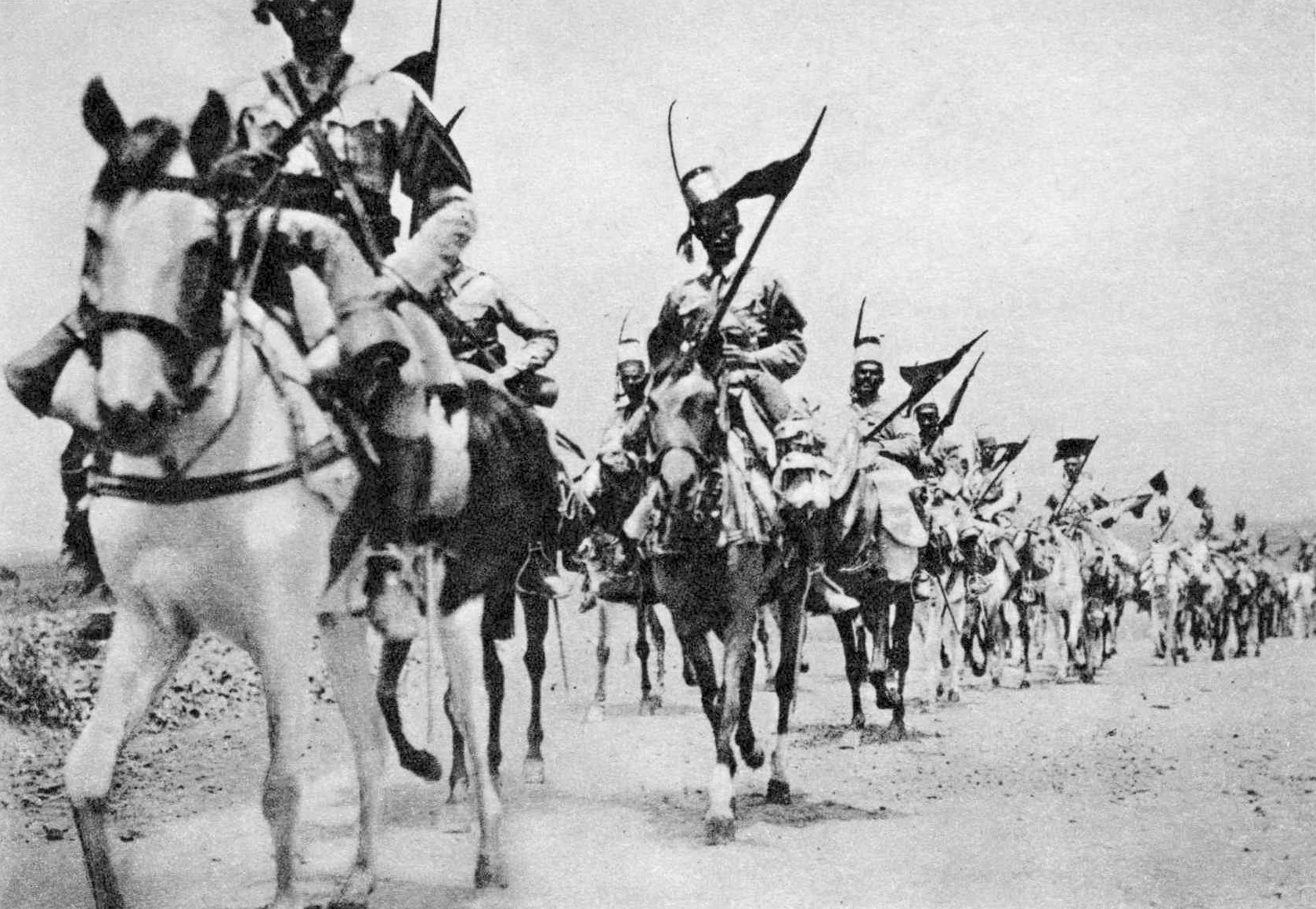
On the social media site formerly known as Twitter, Handre recounts the brutal invasion of Ethiopia by Mussolini’s troops in 1935:

Mussolini invaded Ethiopia in 1935, where Italian forces burned villages, deployed mustard gas banned under the 1925 Geneva Protocol, and slaughtered an estimated 275,000 Ethiopians in the first year alone.

The invasion was economic lunacy, directed by a sociopath seeking imperial glory. Italy’s economy in 1935 was already strangled by Mussolini’s autarky policies: state-controlled prices, forced grain production quotas, and currency manipulation that gutted purchasing power. Ethiopia was supposed to deliver raw materials and lebensraum that central planning couldn’t produce at home. This is the eternal promise of conquest: steal what you cannot generate through voluntary exchange.

It failed completely. The occupation cost Italy roughly 40 billion lire, accelerating debt that Mussolini’s treasury couldn’t service without the printing press. The resource extraction never materialized. Ethiopia’s terrain, infrastructure, and hostile population made profitable colonization impossible. Rome poured capital into a sinkhole while Italian workers at home faced food rationing.

The League of Nations imposed economic sanctions on Italy in November 1935, which Mussolini predictably used as nationalist propaganda. Those sanctions were both too narrow (they excluded oil) and too late to matter strategically.

State violence always carries a price tag nobody budgets for honestly. Mussolini thought he was building an empire; he was actually accelerating Italy’s slide toward the catastrophe of 1943

One of the major contributing factors to Italy’s economic woes was the same problem that all authoritarian regimes encounter: bad news is unwelcome, so fake good news is reported instead. That’s bad enough in the newspapers for general consumption, but it’s fatal in the long term for any centrally planned economy (and pretty much every fascist and communist government loved central planning).

The planners demand X million tons of steel, the steel mills can’t achieve that but they know the penalty for failure, so they … lie. The planners now allocate all that extra steel to manufacture tanks or trucks or planes … and the factories can’t produce their assigned output because they don’t get enough steel, so … they lie. The army doesn’t get as many tanks/trucks/guns/etc. as the planners say they will get, but they can’t tell the planners that they don’t have all the new equipment, so they lie and stage photogenic parades for the leaders and the cameras, cycling the same few dozen working vehicles through the same route again and again to “show their military might” … and to stave off anyone discovering that they don’t have all the new stuff.

The government then goes to war, knowing they have X thousand new tanks, trucks, planes, etc. and are horrified to discover that they don’t just walk over their opponents with sheer military might …

Everyone is Wrong about the Cromwell Tank

Filed under: Britain, History, Military, Weapons, WW2 — Tags: , , , , — Nicholas @ 02:00

The Tank Museum
Published 19 Jun 2026

Lacking firepower. Thin skinned. Many believe it was obsolete before it even went into combat.

Except … that isn’t all true.

Because the Cromwell didn’t just fight its way through Normandy, it was pivotal in the defeat of Nazi Germany.

After that, it held off Soviet expansion in Europe, held ground in Korea, and stayed in British service well into the 1950s.

So how did a tank everyone calls a failure end up doing all that?

In this video, we’re going to wade through the hate mail and see if we can convince you that actually the Cromwell did rather well.

00:00 | Introduction
00:52 | A Dysfunctional Start
04:42 | Built for Speed in a Slow War
09:48 | Failure in the Bocage, Victory in the Breakout
15:44 | The Tank That Wouldn’t Go Away

This video features archive footage courtesy of British Pathé.

In this video, join our historian James Donaldson in defence of the oft-maligned Cromwell. Emerging from troubled development, the Cromwell proved itself in the European theatre as an exceptional reconnaissance tank and continued to be used well beyond the end of the Second World War. It was fast and versatile, utterly devastating when used properly, and stayed in service longer than many of its critics would care to admit.
(more…)

QotD: The original purpose of the European project

Filed under: Europe, France, Germany, History, Quotations — Tags: , , , — Nicholas @ 01:00

Professor Bogdanor tells us that the European project was one of peace, and no doubt, after the second catastrophic war within the space of half a century, this is in part so, at least originally. No one could possibly have wanted yet another Franco-German conflict. But it does not in the least mean that the subsequent peace in Europe was caused by the European project. Other factors were surely far more important, indeed decisive.

First, of course, was the fact that Europe was in no condition to wage another war. The continent was in ruins, the Germans were disarmed, the Americans would not have stood for it, and in any case the Germans had genuinely changed. There was no revanchisme to speak of in Germany, as there had been after the first war. Moreover, to the east was the looming presence of what in the 19th century was called the Russian steamroller, only infinitely worse than that of the time of Alexander I and Nicholas I, with a barbaric ideology that at the time attracted the allegiance of a considerable proportion of the population, especially of that part of it — the intelligentsia — that ought to have known better. Only American power prevented the steamroller from rolling west, and thereby kept the peace in Europe.

Even if the maintenance of peace was one of the original aims of the European project, this is a very weaselly way of putting it. Even without the European Union, Estonia would not attack Portugal, nor would Belgium attack Slovakia. What is meant by keeping the peace is ensuring that Germany does not again attack France (no one thinks that France would attack Germany): in other words, and to put it crudely, without the European Union people thought — even Germans themselves — that Germany would be up to its old tricks again. I do not believe this.

Theodore Dalrymple, “European Empire, Fractured”, Law & Liberty, 2020-11-10.

October 16, 2026

Three Heinleins

Filed under: Books — Tags: , , — Nicholas @ 06:00

While I can’t claim to have read every word Robert A. Heinlein published, I’ve read most of his novels and short stories. I started with Starship Troopers in grade school. I was a still-wet-behind-the-ears army cadet and that book rocked my world. It’s still in that small group of early books I’ll re-read every few years. Stranger in a Strange Land was an outlier for me, even though it was the next book Heinlein wrote and it became much more relevant culturally by the time I read it (early 70s) it didn’t speak to me the way Starship Troopers had done. On the other hand The Moon is a Harsh Mistress is another one of my all-time favourites, but it helped that when I read it I was already interested in libertarian ideas. All that said, I pretty much felt obliged to share Derek Ryan Jacobs’ short essay on the three books:

There may be no single author in science fiction more persistently misread than Robert A. Heinlein. Depending on what you read and how you interpret it, he is a fascist militarist, a free-love mystic, or a libertarian firebrand. He writes novels that venerate duty and others that dissolve it, texts that praise hierarchy and others that work to dismantle it. Starship Troopers is cited by conservative politicians for its advocacy of earned citizenship; The Moon is a Harsh Mistress is direct rebellion. In between, Stranger in a Strange Land was adopted by communes as spiritual scripture. The contradiction seems total. How could one author plausibly inhabit all these roles at once — much less within a single decade?

0. Introduction

When read together and with care, Starship Troopers, Stranger in a Strange Land, and The Moon is a Harsh Mistress do not reveal an author in philosophical chaos. They reveal an author in methodical experiment. Each novel proposes a different relationship between the individual and the state, a different subgenre framework, and a different set of philosophical tools. But beneath these surface dissonances, all three are working toward the same end: to interrogate the legitimacy of power, and to dramatize the conditions under which agency becomes moral authority. Heinlein does not offer answers so much as simulations. He runs three models. He sets the parameters and variables, and lets the story prove — or fail to prove — the coherence of its system.

It is no accident that these books appeared in the order they did. Starship Troopers came first, a tightly structured martial bildungsroman that argues for citizenship earned through service. Stranger in a Strange Land followed two years later, its spiritual and structural opposite, casting off hierarchy in favor of intuitive communion. Then came The Moon is a Harsh Mistress, a revolutionary treatise dressed as a caper novel — neither ecstatic nor doctrinaire, but strategic, and committed to the long work of building something better. Rather than signaling a philosophical evolution, this sequence maps a series of aesthetic transformations. Each novel shifts genre to create a new laboratory and tell a story of outsiders confronting power. And each converges on a shared moral structure: legitimacy requires individual consent, and any illegitimate system is unfit to govern.

[…]

Conclusion — Three Systems, One Standard

It is tempting to treat Heinlein’s bibliography as a contradiction, or a drift, or an ideological muddle. It is none of those things. What Starship Troopers, Stranger in a Strange Land, and The Moon is a Harsh Mistress reveal — when read in dialogue — is a single philosophical theme rendered in three keys. Legitimacy must be earned. Authority without consent is counterfeit. Freedom without structure is meaningless.

The genre of science fiction gave Heinlein the tools to test that claim. Subgenre let him shift the boundaries, change the stakes, and vary the rules of engagement. But in every world he built, from the Mobile Infantry to the Martian mind to the lunar republic, the same truth holds: agency is a responsibility. And only those who accept its cost are fit to wield its power.

Worried you might commit an accidental Islamophobia? Britain’s Greens can help!

Filed under: Britain, Media, Politics, Religion — Tags: , , , , , , — Nicholas @ 05:00

The British Green Party has been getting a lot of media attention lately, but not for their former environmental concerns: now they’ve effectively converted themselves into the primary political vehicle for British Muslims, as Heydon Prowse explains:

You know you’re in People’s Front of Judea territory when the GEWs (Greens of England and Wales) decree that the majority of JEWs (Jews Everywhere in the World) are “racist“. Meanwhile, the party’s Muslim Greens grouping recently published a handy guide to what is and isn’t “Islamophobic”.

It turns out, pretty much everything is! Including, but not limited to, the following:

1) Criticising the Koran

The guidance warns against saying that the teachings of the Koran are backwards, because nothing says forward-thinking like a pre-Enlightenment ban on questioning religion.

2) Speaking up against Islam’s treatment of women

Koran 2:223 says wives are like farmland that husbands can cultivate as they please. Which, to be fair, is closer than the Green Party has come to discussing agriculture all year.

3) Saying that Islam isn’t a massive fan of the gays

Not a single Muslim country in the world permits or recognises same-sex marriage or lets gay couples adopt. But according to the Muslim Greens, this is all the fault of the Brits.

The guidance says: “Queerphobic legislation in many Muslim-majority countries is deeply tied to colonialism”. Apparently, the British Empire made them do it and has forced them to continue doing it enthusiastically ever since.

4) Going to the pub

Yes, apparently having too many Green Party meetings and social events in venues with alcohol present is racist. Given that Wetherspoons is the closest thing Britain has to a place of worship, I find this one deeply offensive.

Confused? You’re not alone. The Greens seem to have abandoned saving the planet in favour of a much more achievable pastime: making everything racist. It’s a bit like that game show, Is It Cake?, except instead of cutting open a handbag to reveal layers of sponge and jam, you dissect every political opinion to unveil a hidden hate crime.

Almost anything could be racist and you wouldn’t even know it. The guidance encourages Muslims to join the Greens because they “speak out on oppression everywhere”. But careful! It also says that if you assume a Muslim is oppressed, you might be being Islamophobic. Is it solidarity? Is it prejudice? Gotcha! It was cake all along! And now you’ve been referred to a disciplinary committee.

How Does THIS Become a Chair?

Filed under: Tools, Woodworking — Tags: , , , — Nicholas @ 04:00

Rex Krueger
Published 15 Oct 2026

AI-generated video summary

Rex Krueger demonstrates the intricate assembly and finishing techniques required to build a traditional stick chair. This guide covers essential joinery preparation, strategic glue application, and the creation of a durable, natural finish, highlighting the meticulous process of transforming raw wooden components into a functional piece of furniture.

Clarkson’s … goats

Filed under: Britain, Environment, Media — Tags: , — Nicholas @ 03:00

I started watching Clarkson’s Farm, although I got interrupted after a few seasons so I haven’t caught up to the most recent season. On X, Sama Hoole talks about the goats Jeremy Clarkson recently added to the farm:

Jeremy Clarkson switched on an electric fence so his goats could get used to it, and a goat gets used to a fence the way it gets used to anything, by testing it until it gives.

Lizzie, the goat farmer he bought them from, warned him they would be out, and she was right. A sheep accepts a fence. A cow leans on it and thinks. A goat regards it as a question somebody has asked, and answers.

They had been bought for the half of Diddly Squat no tractor can touch, a bank of bramble and thorn that would take a man with a brushcutter all week. The goats went on it, and in Clarkson’s own words one bramble bush was in real trouble inside five minutes.

Nothing else on four legs can do this. A goat would rather eat a hedge than a lawn. The mouth is small and the lip is split, so it picks a leaf out from between two thorns the way you would pick out a splinter. It stands on its hind legs for the top of the hedge. It leans on a sapling until the crown comes down. It eats gorse, strips bark, chews through leaves that cattle and sheep spit out, and comes back in the morning for the regrowth.

Oakland keeps a herd on its hillsides against the fires. Portugal pays shepherds to walk goats through its mountains before the summer burns. The firebreak that saved the Reagan Library in 2019 had been chewed that spring. Network Rail has put them on the cliffs at Folkestone.

The oldest farm animal there is, 10,000 years in the job, is being rediscovered as green technology, and in all that time it has learned nothing about fences.

The thicket goes in one end and comes out the other as kids and milk.

Clarkson’s land agent has never once told him a goat was a sound investment. The goats have never once asked him.

Isotta Fraschini (Albertini) Bent & Riveted SMG (MP40 Mag Version)

Filed under: History, Italy, Military, Weapons, WW2 — Tags: , , , — Nicholas @ 02:00

Forgotten Weapons
Published 17 Jun 2026

Isotta Fraschini was an Italian firm in Cavaria best known for making luxury automobiles before World War Two. It entered the arms industry during the war. It made mostly heavy weapons like aircraft cannons, and not small arms, but the chief designer Albertini began working on a submachine gun in 1943. It eventually went into production in late 1944 and early 1945, but only in very small numbers — estimates are 250-500 guns total. These included two distinct models; one using MP40 magazines (as seen here) and one using Beretta 38 magazines.

The most distinctive and interesting element of the Albertini design is the extremely simple construction. It is not just a stamped sheet metal gun, but rather one that can be built almost entirely with a press break and basic punch instead of requiring stamping dies. The parts are riveted together instead of welded, further reducing already-simple production methods.

Thanks to Beretta for giving me access to this example from there reference museum to show to film for you!
(more…)

QotD: Niccolao Manucci as a “player character” in history

Filed under: Books, History, India, Quotations — Tags: , , — Nicholas @ 01:00

… when you suddenly realize that Manucci, like the protagonist of a Gene Wolfe story, is not telling you all that he knows.

How do I know that? Well let’s return to the teenage Venetian, suddenly orphaned of his foster father: “I was left alone, sad and anxious, having nothing to console me, nor anywhere to turn in order to recover my things”. Then things go from bad to worse: two other Europeans show up and steal the rest of Manucci’s stuff and coerce him into traveling with them to Delhi. But then somehow the young man scores an interview with the king’s vizier and, using the bits of Persian he picked up along the journey, convinces him to arrest the men who’d tried to abduct him. He parlays the vizier’s friendship into a royal audience, and thence into an offer of employment from the crown prince. In a short while, Manucci is a courtier hanging around the palace in fine clothes paid for by the state, getting tutored in Indian languages and Mughal history and correct deportment. He tells us that the only difficulty in his life was the need to constantly scheme in order to avoid being forcibly converted to Islam, and then interrupts his own narration to give us a few hundred pages of ancient Mughal history.

Are you rolling your eyes yet? Every bit of this story so far, starting from the moment he snuck onto that ship, is literally unbelievable. Irvine certainly seemed to feel that way, if his footnotes and interjections are anything to go by. He evidently flung himself into a centuries-later posthumous cross-examination, looking for any detail in Manucci’s narrative that’s out of place. He doesn’t find any. Worse, he finds numerous corroborating accounts in other contemporaneous sources. But if this story actually happened, then we are left with a nasty trichotomy. One of three things must be true: (1) Manucci is the luckiest sonofabitch alive. (2) Manucci has superhuman powers of persuasion. (3) Manucci is leaving out something important. Actually, I’m pretty sure it’s a little bit of all three, because Manucci is a player character.

They walk among us. Lately the preferred jargon term has been “agency”. Before that people called them “live players”. In the old days they were referred to as “great men”, but that one’s my least favorite of the descriptors because it implies that they have to be like Cyrus the Great or Napoleon, when in reality they’re often much harder to spot. That’s because, as Samo Burja notes, player characters often deliberately cloak themselves in order to avoid detection by other player characters. These ones you may only notice by their aftereffects, like the lingering gravitational distortion after a singularity has whizzed by, reality warping as they knife through to their destination and then reconstituting itself behind them.

Humanity’s great sages have long known that every so often the planets are in a particular configuration, and a Child of Destiny is born. The real question is why. The fun-ruiners will note that in a world of billions of people, some of them are just going to be 6σ lucky. It is difficult for us even to conceive what it means to be 6σ lucky, and yet, like some bizarre object conjured by a non-constructive mathematical proof, we know such people are out there, somewhere in the wave function. But let’s not be fun-ruiners for a moment and consider the other possibilities. Maybe these individuals are chosen by God, or the gods. Or maybe they are the ones paying for the simulation, and therefore have access to the root login. Whatever their source, they exist. Often they spend part of their lives unaware of their true nature. And then … they awaken.

There was a little while when “NPC” was getting thrown around as a term of abuse, but as I have explained at some length,1 there’s nothing wrong with being an NPC. We come by it honestly. At some point, in the Springtime of your life, you bumped up against the universe, you pushed the boundaries, you pushed your limits. On that day, the universe pushed back. Hard. You learned your lesson, like a little kid who touched a hot stove. NPCs are formed from scar tissue, a fibrous mass of tough lessons about the nature of the world. But, as we have just deduced, there must exist people who, whether by divine ordinance or fluke of probability, had a very different experience on that fateful day. They pushed against the universe, and the universe gave in and gave them everything they wanted. And what lesson does that impart? Something like: “Rules are for the sheep, but you can hack the matrix and get what you want”. Now they are awakened. And the crazy thing is that if you keep getting lucky, not 6σ lucky, but just on-a-roll lucky, the awakened state can become a self-fulfilling prophecy. Some parts of the world really can be hacked with a little luck and a lot of determination. So there’s a feedback loop that can rapidly amplify mere one-in-a-billion luck into miraculous, reality-altering luck. That’s my attempt at a purely naturalistic explanation of player characters. Or maybe they’re just chosen by God.

Manucci is a slippery one. I only caught him because I read the first part of this book twice: once when I was reading it through casually, and then again as I sat down to write this review and tried to figure out how the hell to convey all this. Again, as with a Gene Wolfe novel, to understand the beginning you must have read the ending. In all the thousands of pages of narration, the one subject Manucci barely touches on is himself. That’s because Manucci is a player character practicing very high-level obfuscation techniques. This sort of misdirection is also the hallmark of a con-man, and what do you know: there is one brief, brief moment when Manucci gets a little too sure of himself and lets slip that he actually was functioning as a super-effective con-man back there in 17th century India. He wove his web of shadows around the Mughal aristocracy, and then he nearly got it around us the readers as well.

So we finally have Manucci pinned down: he is the subtype of player character known as a “guile hero“. You know them from stories: Odysseus, or Locke Lamora, or almost every character played by Kevin Spacey. Manucci is like them, his character class is either rogue or bard.2 At what age was he awakened? Was he already aware of his powers when he crept down that Venetian dock? And what really happened between him and Bellomont? Did he seduce the English gentleman? Or did he suss out his mission and blackmail him with a threat to make it public? Or did he just turn the full force of his personality on the hopeless cavalier and get 6σ lucky on his CHA roll? We shall never know. But if you are asking questions like these, then you now have the correct interpretive lens for what follows.3

John Psmith, “REVIEW: Storia do Mogor, by Niccolao Manucci”, Mr. and Mrs. Psmith’s Bookshelf, 2025-09-08.


  1. Twice!
  2. This is a totally OP and broken build, since as a Venetian he already gets a racial bonus to DEX and CHA.
  3. And you’re one step ahead of Irvine, who as far as I can tell never figured it out.

October 15, 2026

Nearly half of Cornell students report being “harassed”

Filed under: Education, Media, Politics, USA — Tags: , , , , — Nicholas @ 05:00

William M Briggs discusses the most recent sexual harassment survey results from Cornell, where — if you take the numbers at face value — the situation is dire:

You may have heard of the depressing contretemps at Cornell of late (written in the lady’s (a hotelie) own words here, but I cannot recommended reading it). It is not a coincidence that Cornell recently asked all students about how much sexual assault and harassment they enjoyed. It is that survey which interests us, because it so closely matches the breed and we need to understand their shortcomings.

Don’t put too much blame on Cornell. New York has a law that makes them give this survey every two years. This allows bureaucrats and rulers to think that they have done something good, which is the main reason for their existence, regardless how silly the results are.

Cornell gave the “instrument” — toot, toot — to 6,000 students, but only had “757 full completions”, which is a return rate of just over 12%.

How would the missing 88% have answered? This is a key question. The assumption sociologists make is: exactly the same. Yet, as we’ll see, it is far from impossible that those who blew off the survey would have responded differently than those who did answer, especially on the questions I’ll highlight.

Naturally, a lot more ladies than men answered, because women like to “play quiz” more than men. They also had a handful of students who, it seems, were unable to identify their sex; non-science majors, one supposes. All the extra ladies would have been fine if Cornell had broken the results out by sex, which they always didn’t. It will make a difference.

Cornell reported 49% of the students claimed that they “experienced any form of harassment”. My guess, since I am an arch sexist, is that the great bulk of that 49% were female reports. We never learn, but never mind. Let’s take the number as given.

If we extrapolate the survey results, as all good sociologists and rulers do, we would announce that half of all students were harassed. Half. Half, my dear readers, is an enormous number. Half would suggest that a small army of mouth-breathing harassers, likely from the Poetry Department, skulk around campus hiding behind bushes waiting for their chance to harass. Who could tolerate such an environment where half of all students are so abused?

I’ll tell you who: students. They can tolerate it. Because similar numbers of harassed were also reported in 2021 and 2023. Which can only mean one of two things. One: students come, they get harassed, then they come back for more of that rousing hands-on experience. They must be loving them some harassment to stick around when half get the business.

Or two: the survey and its results are, to use a technical word, bullshit.

I favor the second explanation, though I don’t entirely dismiss the first.

1980s gun myths from TV shows

Filed under: Media, Politics, USA, Weapons — Tags: , , , , , — Nicholas @ 04:00

On Substack, John Van Stry discusses one of the myths about guns that were commonplace in 1980s cop shows on TV:

Okay, so he’s talking handguns, but this is still kinda on-topic.

Decades ago, and I do mean decades, on one of the many police drama TV shows that existed in the 70’s, there was one about cops (of course there was!) where they followed a different set of officers (not detectives, street cops — kinda1) each week.

So in that particular episode we had these guys (I think it was two? It was more than one) going around and robbing banks and they were shooting (and of course killing) people at the banks. They were using “HIGH POWERED WEAPONS” (emphasis theirs) of some sort. I don’t remember if it was rifles (AR-15’s weren’t the boogie man back then) or pistols. I think it was pistols though, Magnums perhaps?

Anyway, cutting to the chase, we’ve got two officers “staking out” the bank that they believe is going to be next and all they’ve got are their wimpy-wimpy-wimpy (emphasis theirs) .38 revolvers. Because everyone knows being shot by a .38 is no more dangerous than being shot by a B-B gun!2

So, before the “big shootout” one officer comes up to the other and offers him a Special Bullet.3 He tells the other “I thought maybe we should have a little something to even the odds”.4

The other officer is of course duly horrified because this is NOT “regulation ammo”!

So what was this “special ammo”? Were they .357 magnum rounds? (which you might be able to shoot from some .38’s back then, if you could get them to fit, just once). Were they +P’s?5 Oh no no no no no! They were (Dun dun DAAAA!)

HOLLOW POINTS!!!!

Yup, their first bullet in their revolver was a .38 hollow point.

When the robbers attack, oh the things that happen! One officer blows one of the robber’s heads Clean OFF!! Yes, that’s right! The dreaded hollow point is so powerful it took off the guy’s head! Completely!!! I don’t recall exactly what the other robber had happen, but I think it was a hole blown throw him you could see through.6

But wait! There’s More!7


  1. I forget the details exactly, it was a long long time ago.
  2. In this episode at least — consistency from the anti-gun lefties who wrote this dreck in the 70’s was not to be expected.
  3. I ain’t making this part up.
  4. Or words that effect. Again, 50 years ago, I don’t remember the exact line.
  5. A lot of .38 ammo was ‘+P’ back then, because they hadn’t created the designation yet, look up the specs in the old reloading manuals if you don’t believe me.
  6. Props to these officers however for their first shots in each case being killing ones!
  7. Of course there is!

When your political establishment is controlled by globalists

Filed under: Britain, France, Government, Media, Politics — Tags: , , , , , , — Nicholas @ 03:00

On Substack Notes, Spiff responds to someone decrying the British media’s concerted efforts to ignore the political protests across the channel:

Britain’s traditional media have long since chosen their side on the culture wars. They have embraced the establishment and their disgust at patriotism and national loyalty. They are globalists.

That is why they are becoming more extreme over time. They have to. They are a crucial part of the establishment narrative machine along with nudge units, elaborately funded NGOs and charities, and the civil service.

A Nuremberg-style trial would likely convict them of treason given how anti-immigration the British public is. We may not know the details but all these institutions point in only one direction; more immigrants, more diversity, the managed decline of the country, the condemnation of its people.

We often have to step back and look at screenshots like the one below to remind ourselves the media class are making a series of conscious decisions to damage and diminish Britain and the British people. It is not an accident. They know what is happening in France and their choice has been to downplay the enormous social changes that were avoidable and are not working in favour of the French people. Mass immigration of North Africans is destroying France. These riots reflect the alliance between immigrant groups and the hard-left who hate the West.

A similar process is now destroying the UK. They have to keep that observation away from the public for as long as they can. But time is now running out.

Prime Minister Burnham will probably follow Mark Carney’s example and start subsidizing the non-state media to ensure that the propaganda is more closely co-ordinated to the establishment’s preferred narrative. After all, it’s working quite well to keep malinformed Canadian elbows up.

Why is it called Welsh Rabbit (Rarebit)?

Filed under: Britain, Food, History — Tags: , , , , — Nicholas @ 02:00

Tasting History with Max Miller
Published 21 Apr 2026

Buttered toast with a rich cheese sauce made with mustard and ale

City/Region: England
Time Period: 1861

Is it Welsh? Maybe. The Welsh certainly had a reputation for loving toasted cheese that precedes “Welsh rarebit” as a dish, so it’s possible, but we’ll likely never know if that’s where it originated. There were recipes for English rarebit and Scotch rarebit, the main difference between them and Welsh rarebit being the addition of mustard. It’s no wonder that the mustard-containing Welsh rarebit is the one that we see today, because it’s delicious.

This recipe is so simple, but so good. The combination of the crunchy toast and silky smooth cheese sauce is phenomenal, and the addition of the ale and mustard are just enough to bring out the flavor of the cheese. It’s one of the simplest and one of the best dishes I’ve made on the channel, and is one that I look forward to making again.

    Toasted Cheese, Or Welsh Rarebit
    Ingredients — 1/2 a lb. of Cheshire or Cheddar cheese, 1 oz. of butter, 2 tablespoonfuls of either milk or ale, 1 teaspoonful of made mustard, hot buttered toast.
    Method — Melt the butter in a stewpan, add the cheese cut into small pieces, stir until melted, then add the milk or ale gradually, mustard and season to taste. Have ready some hot-buttered toast, pour the cheese preparation on to it, and serve as hot as possible.
    — Mrs. Beeton’s Book of Household Management by Isabella Beeton, 1861

Ingredients:

A loaf of bread, like French or Italian, enough for 6 slices
1/2 lb (225 g) good quality cheddar cheese*, or something similar
2 tablespoons (30 g) butter, plus some more for the toast
2 tablespoons milk or ale
1 teaspoon mustard
Seasonings**, to taste, optional

*Don’t use pre-shredded cheese as they usually add starches to keep it from sticking that make it harder to melt.
**Seasonings they’d add to this dish at the time include salt, cayenne pepper, garlic, and horseradish. Feel free to use any that you like.

Instructions:

  1. Slice 6 slices of bread. How thick and what size you cut the bread is up to you, just keep in mind you want about 2 slices per serving.
  2. Toast the bread either in a toaster or under the broiler. If you use the broiler, a couple of minutes on each side should do the trick. Spread a little butter on each slice.
  3. Chop the cheese into small pieces or grate it.
  4. Melt the 2 tablespoons (30 g) of butter in a saucepan over medium heat. When it’s melted, add the cheese and stir constantly as it melts.
  5. Once the cheese has melted, stir in the milk or ale a little bit at a time. You want to make sure that the cheese doesn’t get so hot that it starts to bubble or burn. Lower the heat if necessary. Stir in the mustard and any of the seasonings you like to taste.
  6. Dish the hot cheese sauce over the prepared toast and serve it forth right away for the best texture.

QotD: The “political object” in war

Filed under: History, Military, Quotations — Tags: , , — Nicholas @ 01:00

Political Object is a key concept from Clausewitz, a term reflecting the state’s actual interest in a conflict which is one component of his “trinity” and indeed, the foremost of the three. The political object is what a state (or the leader or leaders of a state) want to get out of a war. This can, of course, change as the conflict continues. As Clausewitz notes (drink!) the role of political leadership in war is to tailor the methods and means employed to obtaining the political object they have set. Clausewitz supposes the political object to be rightly ruled by reason and calculation, rather than emotion or instinct. One way to compel an enemy to cease hostilities is by so altering the political calculus that the enemy leadership concludes that continuing the conflict is no longer in their interest.

Bret Devereaux, “Miscellanea: A Very Short Glossary of Military Terminology”, A Collection of Unmitigated Pedantry, 2022-03-25.

October 14, 2026

He really is the model of a modern Major-General

Filed under: Media, Politics, USA — Tags: , , , , — Nicholas @ 05:00

InfantryDort reacts to a retired US general’s opinions on public executions on X (that is, the post is on X, not the executions … but now that I think on it …)

Why does it consistently appear that the criteria to be a General officer is historical illiteracy, suicidal empathy, and being toxically egalitarian? How did we get here?

This one thinks its “fundamentally unamerican” to publicly execute people. Well I guess George Washington is unamerican too. Or Abraham Lincoln.

You know what’s “fundamentally unamerican”, General? Simping for terrorists.

I hear this guy talk and I can’t help but think: no wonder GWOT didn’t end the way we wanted it to. The militarily crucial act of killing people disgusts this type of leader.

No wonder why it was so easy for guys like him and Stan McChrystal to make us practice “courageous restraint” on the battlefield. Letting the enemy gain the upper hand in every engagement, on purpose.

Out of what? Some wayward sense of nobility? That we’re the “good guys”?

No, General. Being the good guys doesn’t mean allowing our enemies to have a monopoly on violence. WE MUST HAVE THE MONOPOLY ON VIOLENCE.

Why am I constantly explaining this to Generals? Especially of the retired variety? Why am I having to explain that killing people is not only important to our profession, but for protecting western civilization itself?

The bar for General officer has been so low it’s practically in the basement. And no matter what institutional changes we make, these types always choose themselves to replace…. themselves.

So it’s more of the same. Same bad experience, same bad channel. Same feckless worldview. Incapable of victory. Incapable of common sense. Incapable of doing their jobs. But completely capable of making Instagram videos about how mean and cruel we’ve become.

BEING MEAN AND CRUEL TO OUR EVIL ENEMIES IS THE ENTIRE POINT!

Pathetic filth.

To which Tom Kratman responds:

Did I ever … hmmm … maybe not. Wait a sec …

Not only will you be rated or senior rated by about 100 people, in 30 years in the Army, but you can never have pissed one of them off. These men, however, will range from the bright to the ignorant, the moral to the immoral, and will have vastly diverging experiences which will drive their judgment. And you cannot disagree with them if you want stars. It would be one thing if they were all the same and you learned to echo just one theme. But when they are all different, and you still agree with every trivial thought they ever had, it can only be because you lack any center of your own, any moral compass whatsoever, since everything in the military has a moral aspect to it. In other words — with only very rare exceptions; I thought well of Foss, LeMoyne, and Petraeus, for example — the man who rises to stars usually has nothing, no values of worth, inside him.

Which is worse than contemptible; it’s absolutely pathetic, given how useless it is to become a general.

True story: Some people thought there were stars in my future. There came a day, early 1988, I was on my second company command, of three, and I was shooting the crap with the brigade commander in his office. I’d been ambivalent about stars for some time by then, but it was a very amorphous thing. I couldn’t have told you why. Eventually, I realized that my brigade commander (Annapolis, oddly enough) was trying to mentor me into stars. “You need to do this, Tom, then you need to do that. Then you need to …”

And it all came clear, an epiphany, a blinding flash of the obvious, and I said, “Sir, I don’t want to be a general.”

“Wha … what … WHAT?”

So I stood up, walked across the office to his LCE tree, and took his helmet in hands.

“Sir, do you remember General Meyer?”

“Shy Meyer? Chief of Staff?”

“Yes, sir, him.”

“Sure.”

“Sir, Meyer was a reformer. He had a bag full of good ideas for improving the Army. I counted thirty-seven once, about half and half trivial and important. I may have missed some.”

“Yes, so?”

Then I turned the helmet around to point at him the two silly bits of glow in the dark tape on the camouflage band around the helmet. “Sir, of all that, this is all that’s left of Meyer. Everything else is gone. In a matter of a few years it’s as if he never existed. So what, sir, would be the point of becoming a general, if, even if I rose to be Chief of Staff of the Army, I could not possibly have a good and lasting effect?”

Which is, in any case, why I turned to writing. My brigade commander didn’t get it; he still tried to stick me as the incoming CG’s Aide, but I wanted nothing to do with that.

« Newer Posts — Older Posts »

Powered by WordPress