Quotulatiousness

August 16, 2026

In Ontario, bike lanes are not a “human right”, thank goodness

Filed under: Cancon, Government, Law, Media, Politics — Tags: , , , , , — Nicholas @ 05:00

On his Substack, Brian Lilley celebrates two recent developments in Ontario that — unlike so many others in the last several years — align with common sense:

Last year I wrote about the horrible court decision put out by “Justice” Paul Schabas on bike lanes being a Charter right. I put “Justice” in quotations because as I described at the time, the decision was so horrible and so political that it wasn’t worthy of an Ontario court.

Today, the Court of Appeal of Ontario agreed with me. As I wrote in my Toronto Sun column, they didn’t just overturn the ridiculous decision by Schabas, they excoriated him and his ruling.

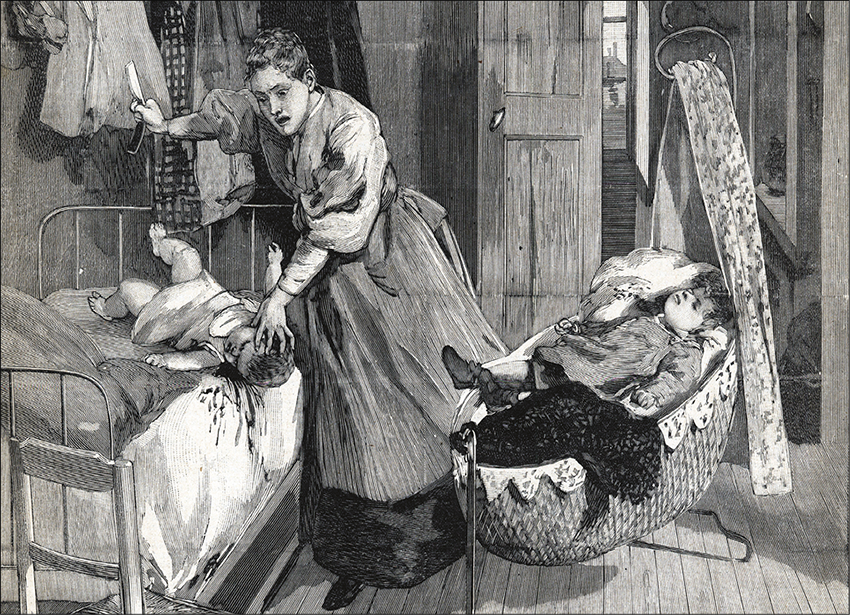
AI-generated image from Brian Lilley

I quoted different sections of the appeals court ruling in my column, and trust me it was tough to choose which parts to quote in such a brilliant decisions. Here, I want to quote from early in the ruling, paragraphs 3-5.

    [3] The application judge’s decision presents as a straightforward application of orthodox s. 7 principles. But the application of those principles, divorced from a broader understanding of the constitution of which they are a part, has led to a surprising outcome: the conclusion that routine legislation regulating road usage is unconstitutional.

    [4] Something has gone wrong.

    [5] The application judge erred in law in interpreting and applying s. 7. But his decision is wrong in a more profound sense, for it subverts a fundamental principle of our democratic constitutional order: a legislature cannot bind its successors. Legislatures in the Westminster tradition are free to undo legislation by amending or repealing it as they see fit. That is the nature of democratic lawmaking in our constitutional order. Of course, all laws are subject to the Charter, but this does not preclude the amendment or repeal of legislation the legislature was under no constitutional obligation to have passed in the first place. Amendment or repeal of legislation may breach the Charter only if the breach can be established independent of the prior state of the law.

There is so much to digest here, but I am glad to see judges — who come from different backgrounds and were appointed by both the Harper and Trudeau governments — agree on fundamental principles. That should be a given, we shouldn’t think about such things, but today, we can’t those fundamentals for granted.

The idea that one Parliament, or legislature, cannot bind the hands of another is fundamental to our system. If I pass a law saying that wearing blue on Tuesdays is illegal and the next Parliament passes a law saying that it isn’t, the more recent law takes precedent.

Yes, I used a ridiculous example on purpose, but just to prove a point. It’s sad that so many people, including those who report and comment on politics, aren’t familiar with this basic concept on the role of Parliament.

And the other reversal of an absurd policy:

Last month there was a tribunal ruling in Ontario that said people in the country illegally were still entitled to welfare. I wrote about it at the time and said it was a crazy ruling that the Ford government needed to deal with.

They promised to do so at the time and on Thursday announced that they had.

Friday morning I was forced to write about the ridiculous take by the Toronto Star‘s “senior immigration reporter” Nicholas Keung. It seems, based on his stories, that Keung has never met someone he doesn’t think should be in Canada.

I’ll say as the son of immigrants, who grew up in an area where kids with parents who had Canadian accents were the strange ones, most immigrants don’t back illegals getting welfare.

Still, this was the Star‘s headline on the story.

As I point out in my Sun column, Parsa is himself an immigrant having come from Iran with his family as a child.

But sure, the Star‘s “senior immigration reporter” smears him as racist.

Let me explain something to you. When a reporter says “experts” say and they only find experts from one side, that is them finding the people they agree with to say what they want said.

How Not to Be A Nazi – Death of Democracy 28 – Epilogue

Filed under: Germany, History, Military, WW2 — Tags: , , , , , , — Nicholas @ 04:00

World War Two
Published 15 Aug 2026

Nazi Germany destroyed democracy in weeks, launched a war that killed tens of millions, and carried racial persecution to industrialized mass murder. But after 1945, Germans and Europeans faced another question: how could they prevent it from ever happening again?

In this final, independently viewable epilogue to Death of Democracy, Spartacus examines how West Germany transformed the lessons of dictatorship and war into the Grundgesetz — a constitutional system built around human dignity, enforceable rights, federalism, judicial independence, social stability, and a democracy empowered to defend itself.

We trace how the Federal Republic combined lessons from Weimar, the United States, Britain, Austria, France, and other democratic traditions; how Konrad Adenauer’s generation tied Germany to a new European order; and how the same determination to restrain power and prevent another continental war eventually shaped the European Union and the Lisbon Treaty.

Finally, we ask how well those democratic fortifications are holding in 2026 — and return one last time to the diarists, victims, witnesses, supporters, and resisters whose voices guided us through Germany’s descent into dictatorship.

From the comments:

@spartacus-olsson
12 hours ago

Thank you for joining me on this adventure. I hope it has been eye-opening. If you watched to the very end, you will know that I’m soon launching a World War 2 Trivia board game – I’ve been super punny and named it World War IIrivia (2rivia with Roman numerals).

After so many years of studying this and sharing it in the darkest possible way, I felt it was time to look at the whole affair in a way that’s fun, social, and still educational. So a couple of months ago I came up with something. It turned out to be one of those moments when the work seems like extra fun. Before I knew it, I was spending my sleepless nights on the idea, sketching rules in Word, writing questions into lists in Excel, designing the game in Photoshop, testing gameplay against myself, and redesigning. And then there it was — an actual game. It’s a game for both novices and experts, with some unexpected twists and turns. If you’re interested in this period of history and enjoy a night of board games, this is for you. Stay tuned for more updates about the launch.

Once again, many, many thanks to all of you for watching. Thank you to Iryna, Astrid, Anna, and Clara for your great work on the series. Thank you to the TimeGhost Army members for enabling me to do this. With that, as Mr. Murrow would put it:

Good Night and Good Luck,
Your Spartacus

Understanding Canadian politics

Filed under: Cancon, Media, Politics — Tags: , — Nicholas @ 03:00

To an outsider, the ins and outs of Canadian politics must seem quite illogical — and for lots of good reasons — but L. Wayne Mathison offers an explanation that may help:

I think the “constraints” framework explains a surprising amount of Canadian politics.

Canada increasingly governs as though good intentions can overrule physical and economic limits.

We want more housing, but often ignore land-use rules, permitting delays, skilled-trade shortages, infrastructure capacity and construction costs.

We want better health care, but governments can promise “universal access” far more easily than they can produce doctors, nurses, operating rooms, diagnostic machines and hours in the day.

We want rapid population growth, while pretending housing, roads, schools and hospitals will expand at the same speed.

We want reliable electricity while making major generation and transmission projects harder to build.

We want higher wages and stronger public services while giving far less attention to productivity, capital investment and the businesses that ultimately generate the income being taxed.

This is where I think the constrained versus unconstrained distinction is useful.

Politics often treats shortages as failures of compassion or policy design. But sometimes the problem is much simpler: you cannot legislate resources into existence.

I learned that farming. You could have the best plan in the world, but weather, machinery, labour, soil, interest rates and time still had the final vote. Reality didn’t care how sincere you were.

Government faces the same rule.

This doesn’t mean government is useless, and it doesn’t mean every left-wing idea ignores constraints or every conservative understands them. Plenty don’t. But Canadian policy would improve dramatically if every proposal had to answer one basic question:

What are the real-world bottlenecks, and what happens when we hit them?

You can redistribute money. You can rewrite regulations. You can announce targets.

You cannot redistribute houses that haven’t been built, doctors who don’t exist, electricity that hasn’t been generated or productivity that hasn’t been created.

Eventually the physical world collects its bill.

The Ancient Greeks 04 – The Persian Invasion 2 – Logistics and Diplomacy

Filed under: Greece, History, Middle East, Military — Tags: , , , , , , , — Nicholas @ 02:00

seangabb
Published 24 Mar 2026

Greece: A Brief History, c.700 BC – 500 AD

How do you move an empire to war? This lecture examines the extraordinary logistical and diplomatic preparations behind Xerxes’ invasion of Greece. We explore how the Persian Empire assembled one of the largest armies in ancient history and the immense challenges of supplying and coordinating such a force.

At the same time, we examine the diplomatic pressure placed on the Greek states, including demands for submission and the divisions this created within the Greek world.

– The scale and organisation of the Persian army and navy
– Supply lines, engineering, and preparation
– The bridging (and scourging) of the Hellespont
– Persian diplomacy and the demand for “earth and water”
– Greek responses: submission, neutrality, and resistance

This lecture shows that the invasion was not simply a military campaign, but a vast imperial operation combining force, intimidation, and political calculation.

QotD: The “Marian reforms” were not a thing

Filed under: Europe, History, Military, Quotations — Tags: , , , , — Nicholas @ 01:00

We can then return to our list at the beginning:

  • Cohorts: Experimented with before Marius, especially in Spain. Marius uses cohorts, but there’s no evidence he systematized or standardized this or was particularly new or unusual in doing so. Probably the actual breakpoint here is the Social War.
  • Poor Volunteers Instead of Conscripted Assidui: Marius does not represent a break in the normal function of the Roman dilectus but a continuation of the Roman tradition of taking volunteers or dipping into the capite censi in a crisis. The traditional Roman conscription system functions for decades after Marius and a full professional army doesn’t emerge until Augustus.
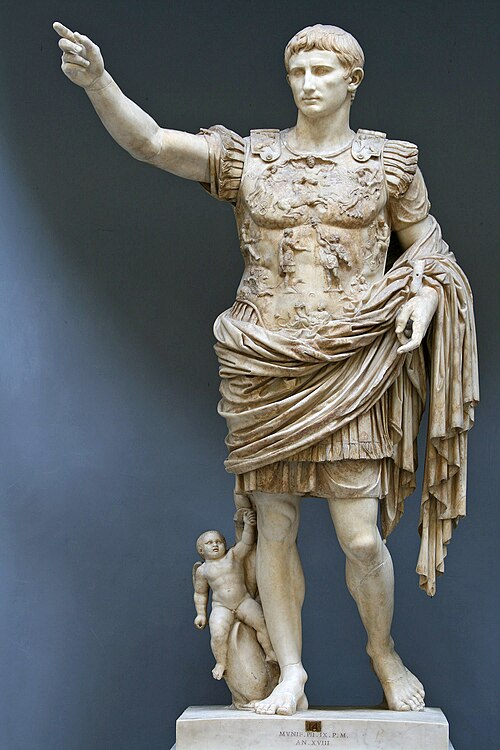
  • Discharge bonuses or land as a regular feature of Roman service: Once again, this isn’t Marius but Imperator Caesar Augustus who does this. Rewarding soldiers with loot and using conquered lands to form colonies wasn’t new and Marius doesn’t standardize it, Augustus does.
  • No More equites and velites: No reason in the source to suppose Marius does this and plenty of reasons to suppose he doesn’t. Both velites and equites seem to continue at least a little bit into the first century. Fully replacing these roles with auxilia is once again a job for our man, Imperator Caesar Augustus, divi filius, pater patriae, reformer of armies, gestae of res, and all the rest.
  • State-Supplied Equipment: No evidence in the sources. This shift is happening but is not associated with Marius. In any event, the conformity of imperial pay records with Polybius’ system of deductions for the second century BC suggests no major, clean break in the system.
  • A New Sort of Pilum: No evidence, probably didn’t exist, made up by Plutarch or his sources. Roman pilum design is shifting, but not in the ways Plutarch suggests. If a Marian pilum did exist, the idea didn’t stick.
  • Aquila Standards: Eagle standards pre-date Marius and non-eagle standards post-date him, but this may be one thing he actually does do, amplifying the importance of the eagle as the primary standard of the legion.
  • The sarcina and furca and making Roman soldiers carry things: By no means new to Marius. This is a topos of Roman commanders before and after Marius. There is no reason to suppose he was unusual in this regard.

So the Marian reforms … were not a thing. Functionally none of what is described as happening in them was new or unique to Marius. Indeed, the most substantial reforms are either things that were already changing (and which Marius seems to have had little role in) or things which had not yet changed but which would, under Augustus. Indeed, one of the problems with the assumption of a Marian reform is that it takes a whole lot of changes which were more likely a package of reforms under Augustus and pulls them forward in time to Marius, doing some damage to our understanding of both figures.

But Augustus makes much more sense as the figure doing many of those organizational changes. For one we have sources actually telling us he did them, from the standardization of military service (Dio 54.25.6), the creation of retirement bonuses and the aerarium militare to fund them (Dio 54.25.6 again, but also Res Gestae 17), and the radical expansion and formalization of the auxilia as part of the Roman army (Tac. Ann. 4.5). The one thing missing is citizenship-for-service, which we can see emerging under Tiberius, the next emperor immediately after Augustus. And it makes sense because Augustus is, by necessity, doing a bunch of other things with the legions too. He’s instituting a whole new command structure, with dedicated legionary commanders (the legatus legionis) serving under his own provincial commanders (legati Augusti) with imperial procuratores handling the former role of the quaestors. Also, the legions get their citizen cavalry (though a quite small detachment of it) back too.

So instead of thinking, “Marian reforms” – which were, I must stress, not a thing – you ought to be thinking about a period of tactical, organizational and institutional change beginning in the second century, accelerating in the first century and then finally being instituted as a comprehensive set of reforms and formalization by Augustus, not by Marius, which codified a lot of change that had already happened over that long period. A long process with a punctuation mark at the end rather than a singular moment of reform associated with a singular Roman general.

Alright. Now one of you go and fix the Wikipedia entry.

Bret Devereaux, “Collections: The Marian Reforms Weren’t a Thing”, A Collection of Unmitigated Pedantry, 2023-06-30.

August 15, 2026

“Forestalling collapse is simple: all we need do is reinstate meritocracy within institutions”

Filed under: History, Media, Politics, Technology, USA — Tags: , , , — Nicholas @ 06:00

John Carter discusses the ever-more-concerning collapse in basic competence in western societies, which left unchecked will absolutely lead to civilizational collapse due to the vastly complex interconnection of so many systems that we all depend on day and night:

Helen Andrews recently wrote an essay for Compact Magazine, titled The Racial Crossroads, which has been making waves for daring to use the verboten descriptor “race communism” for the acrimonious racial spoils system that has replaced meritocracy throughout the dying West. It’s very good. You should read it.

Personally, I prefer the more descriptive “gay race communism”. The progress pride flag is inseparable from the clenched Marxist fist of Black Lives Matter in regime iconography. Moreover, gay race communism is a deliberate subversion of the left’s own “fully automated luxury gay space communism” meme.

There are zero communists who actually look like this, gay or otherwise.

To be fair, Andrews introduces the concept as “gay race communism”, and even directly acknowledges its coinage by Twitter anon Drukpa Kunley. It wasn’t that long ago that conservative popularizers laundered ideas emerging from the anonosphere without attribution, as a means of hiding their origin and making themselves look more original, and Helen deserves credit for not doing this. Also to be fair, given the focus of Andrews’ piece, adding the “gay” to “race communism” could be seen as an unnecessarily inflammatory complication. It isn’t, but we’ll get to that in due time.

Andrews spends the first half of her essay detailing how the regulatory framework built by the Civil Rights Act created the cultural conditions for the rise of wokeness, affirmative action, and DEI initiatives. The official explanation given for anti-discrimination laws was that they were well-intended correctives to the legacy of slavery and Jim Crow. Affirmative action was to be an explicitly temporary measure to give American blacks a helping hand, with the understanding that – after a decade or at most a generation of assistance – they would no longer need a thumb on the scale. Once racism was defeated, we could all live in utopian colour-blind race-neutral Star Trek liberalism, judging one another by the content of our individual characters and no more concerned by the phenotypic differences of ancestral population groups than we are by sartorial quirks. Kumbayah and such. This isn’t an original argument: the same points have been made by Christopher Caldwell in his 2021 book The Age of Entitlement, and of course most directly by Richard Hanania in his 2023 book The Origins of Woke (whom Andrews doesn’t mention, possibly because everyone hates Hanania now).

The central point of Andrews’ essay is the following:

    The old racial bargain is breaking down, due to a combination of changing demographics and a dawning realization that racial outcomes are not going to converge any time soon. One possible path forward is to throw out the old racial bargain and establish a new one based on equality under the law. The other possible path is to accept permanent racial favoritism at every level of society.

As Andrews sees it, the first problem with the Civil Rights regime is that it reifies the abstraction of equality into a legal presumption that there are no salient biological differences between human population groups. This simply isn’t true, but the assumption that it is true leads to the necessary conclusion that all differences in outcome between groups must be a consequence of discrimination based on irrational prejudice, rather than a natural result of inborn distinctions of cognitive capacity or behavioural profile. Biological differences are real and significant, but the make-believe that they are socially constructed and unimportant incentivizes a perpetual inquisition that dismantles society as it persecutes innocent people for ever more tenuous spectres of racism implicitly haunting the privileged depths of their incorrigbly white ids. This places institutions in an impossible quandary, since the only way to avoid being dragged into court in discrimination lawsuits is to preemptively discriminate in favour of protected groups, which is to say, against unprotected groups. Human resources departments have formed as a direct response to the legal sword of Damocles poised over every institution’s neck: their function isn’t actually to hire the best people, or to hire anyone at all, but rather to ensure that the employer won’t get sued for hiring people from the wrong groups, or not hiring the people from the right groups, or for allowing people from the right groups to get offended by things said by people from the wrong groups. A doctrine predicated on denial of reality must go to war with reality to preserve itself, and as the war on noticing grinds on the battlefront presses into ever more intimate corners of people’s lives, their public speech, their private speech, their silent thoughts, their very emotions.

Your emotions are illegal, chud.

The second problem Andrews identifies is demographic mission creep. When race communism first got rolling in the 50s and 60s, the focus was quite specifically on African-Americans, who had an arguable claim to restitution on the basis of their long period of bondage on the cotton plantations.1 White Americans largely agreed with that, and were trying to do the decent thing, to make up for the abuses and indignities suffered by the disadvantaged blacks.

The mass migration of the third world into the first upsets that balance. America is no longer a 90% white country with a small rump of Africans, but more like a 50% white country, with large and growing minorities from every benighted slum in the Global South … and every single one of those groups gets to classify itself as an oppressed racial minority from the Global Majority, and therefore help itself to the largess spilling forth from the cornucopia of white guilt. In the 70s and 80s affirmative action was largely no more than an annoyance for white Americans, but in the 2020s young American whites find themselves shoved aside in university admissions, in corporate hiring, in the availability of loans and grants for education, in the availability of venture capital, in promotions, and so on, with these opportunities being bestowed instead upon supposedly oppressed minorities who arrived five minutes ago and were never actually oppressed by white Americans.

[…]

Institutional collapse is a near certainty on this track. Our civilization is a staggeringly complex system of systems. Operating and maintaining those systems requires a high degree of competence. Competence has to be learned, but it can’t be learned by anyone. DEI pushes incapable people into key positions, while denying even the opportunity for training to the potentially capable. Eventually, the systems themselves begin to malfunction. Repair becomes impossible, because there’s no one who actually knows how to repair the systems: the ones working in the system are too stupid to understand it, while those who could have learned were locked out and therefore didn’t learn what they needed to know. One system breaks, causing a problem in another system, which leads to a problem in a third system, and soon cascading failures junk the entire machine. DEI – and by extension, Civil Rights – has precipitated a competence crisis, and Complex Systems Won’t Survive the Competence Crisis.

This complex systems collapse is already happening. Andrews uses the example of failures in airplane manufacturing, pilot training, and air traffic control that have made air travel that much more hazardous, and which seem to trace directly to DEI-motivated recruitment policies, although naturally it is difficult to verify this as the regime does everything it can to obscure such a connection. The general enshittification of the Internet is probably at least partly a result of less talented and less scrupulous Indians replacing white software engineers. Entertainment media has become ludicrously bad in direct proportion to the replacement of white male directors, showrunners, screenwriters, animators, artists, and programmers by women of pronouns. Academia is in the midst of a credibility collapse for exactly the same reason.

It is not hard to extrapolate this degenerative process out a generation or two. Instead of building cities on Mars, we will be bouncing over potholes on dirt roads. Tap water will have to be boiled, assuming water even comes from taps. Electricity will only be available a few days a week, and that in the good neighbourhoods. What did South Africans use for light before they had candles? Light bulbs. There are still liberals in South Africa, by the way.

Forestalling collapse is simple. All we need do is reinstate meritocracy within institutions.

Simple does not mean easy. Reinstating meritocracy is in fact ideologically impossible for the regime.


  1. The merits of that case can certainly be debated: white Americans have spilled rivers of their blood and mountains of treasure to end and make up for slavery, and when is enough enough?; the crime and dysfunction blacks have brought to American cities must surely be included against them in the accounting; the standard of living of the most low-down American hood rat is orders of magnitude better than that of his distant cousins in the shantytowns of Lagos, suggesting that if anything blacks should be grateful for free transport to the New World. Putting all of that aside, the fact remains that American blacks have a long history in America, and therefore have some claim to consideration.

Debunking common Supply Management beliefs

On his Substack, Dr. Sylvain Charlebois debunks ten myths about Canada’s supply management cartel that interfere with Canadians’ ability to engage with the idea of dismantling the government’s favourite oligopoly:

Suddenly, everyone — and their grandmother — seems to be an expert on supply management.

That newfound interest is healthy. Canadians are finally examining the benefits, costs and contradictions of a complicated system affecting roughly one-quarter of the country’s agricultural economy.

A generation ago, few economists openly criticized supply management. Those who did faced fierce attacks, while the dairy lobby deployed a nationwide marketing budget approaching $200 million annually. Remember the Doug Gilmour milk advertisements? Today, the “Milk” logo appears on Toronto Maple Leafs jerseys through a multimillion-dollar sponsorship.

For years, criticizing supply management was almost politically taboo. Social media has changed that. Consumers can now see milk being dumped, compare Canadian prices with those abroad and question why Ottawa repeatedly compensates a protected industry.

Dairy farmers are not the problem. They operate rationally within rules created by governments and administered by marketing boards. But those rules should not be immune from scrutiny.

Here are 10 myths Canadians should stop believing.

1. Dairy farmers are poor […]

2. Supply management is saving the family farm […]

3. Canadian dairy farmers receive no subsidies […]

4. Trade agreements make every dairy farmer lose money […]

5. Ending supply management would automatically lower prices […]

6. Farmers alone pay for dumped milk […]

7. Milk dumping is unavoidable […]

8. Canada has fully respected CUSMA […]

9. Supply management guarantees food security […]

10. Reform means abolishing the system overnight […]

Mark Steyn denies being a “Never Trump”-er

Filed under: Media, Politics, USA — Tags: , , , — Nicholas @ 04:00

From his sickbed, Mark Steyn responds to a criticism from one of his long-time readers that he’s “gradually devolved into NeverTrumpism:

I have no idea where I saw this meme, but it makes me laugh

I begin to understand why, since I emerged from my coma, the docs have recommended eschewing the Internet. Following Wednesday’s Clubland Q&A, Joe Huber comments:

    Unfortunately, SteynOnline (once my favorite place to visit) has gradually devolved into NeverTrumpism, and that’s sad. But it is what it is.

We may have to introduce weekly ceremonial expulsions from The Mark Steyn Club. I’m not “NeverTrump” on immigration, DOGE, MAHA, endless war, etc, and I would still favour him over any likely Democrat candidate or “mainstream” Republican. The first time I met him was over thirty years ago, when his then wife was auditioning for a Broadway musical produced by a friend of mine. The only substantive exchange we had that day was his demand for assurance that the show was a bona fide hit … because the defining characteristic of Trump has always been his utter contempt for what he calls “losers” and his disinclination to allow his brand to be contaminated by association with them.

So it is a mystery to me that he allowed himself to get mixed up with an institution that, by any objective measure, is the biggest “loser” on the planet.

By contrast, my position on this has been exactly the same throughout the time Mr Huber regarded SteynOnline as “my favorite place to visit”. This piece, for example, was published in the print edition of National Review over fifteen sod-bollocking years ago, and its first sentence remains the question that, multiple unwon wars later, the Rah-Rah Right still declines to answer. I recall multiple back-and-forths with the editors over passages they felt were too strong meat, and I would probably write it more bluntly today. But its comparative sobriety should cause Mr Huber to reflect that his charge of “NeverTrumpism” is bollocks, and that my concerns about US inability to use half of the entire planet’s military budget to accomplish any minimal strategic purpose is principled, long-held, and borne out by any random headline. From today:

    Russia Captures Record Share of India’s Oil Market

And so it goes. (Incidentally, just as a minor point: I note the increasing adoption of the term “West Asia” for the zone of conflict. “Middle East” is a designation that reflects the view from Washington; “West Asia” is how it looks from Delhi and Beijing.)

You will see in the latter half of my ancient piece the reference to the US military as “the expeditionary force of the Parliament of Man”. It is safe to say that President Trump — with his declaration that he’ll pick the next Supreme Leader — does not see it like that, but that’s the point: the rhetoric may change, but the self-bollocksing of American warmongering does not.

Money isn’t an invention of the state

Filed under: Economics, History — Tags: , — Nicholas @ 03:00

The invention of money has happened many, many times in many different societies. It’s an essential element to moving beyond subsistence and crude barter, because having a stable medium of exchange allows far more sophisticated economic activities. It addressed the real needs of people and it worked:

The state didn’t invent money. Carl Menger destroyed that myth in 1871 with his regression theorem, and statists have been seething ever since.

Picture yourself in a primitive barter economy. You’re a blacksmith who needs grain, but the farmer doesn’t want your horseshoes. He wants pottery. The potter wants leather goods. The leather worker wants meat. You face what economists call the double coincidence of wants problem: finding someone who both has what you want and wants what you have. Barter works for simple trades, but complex economic coordination becomes impossible.

Smart traders notice that certain goods get accepted more readily than others. Cattle, salt, shells, precious metals. These commodities share specific properties: durability, divisibility, portability, recognizability. Over generations, market participants gravitate toward the most marketable goods as media of exchange. No central authority decrees this. No committee meets to decide monetary policy. Individual actors pursuing their own interests spontaneously converge on the same solution.

Money emerges from voluntary exchange, not government decree. Every unit of money traces its value back through an unbroken chain of exchanges to its original commodity value. Gold became money because people valued it first as jewelry, ornamentation, and industrial uses. Its monetary premium built on top of that foundation. When governments later monopolized monetary systems, they parasitically appropriated this organic market institution.

You can observe this process today in Venezuela, Zimbabwe, Lebanon. When state currencies collapse, people don’t wait for permission to adopt alternatives. They trade cigarettes, rice, Bitcoin. Markets route around monetary failure because human cooperation demands a medium of exchange.

Laugo Alien Remus: Making the Best Pistol Better

Filed under: Europe, Weapons — Tags: , , , , , — Nicholas @ 02:00

Forgotten Weapons
Published 21 Mar 2026

The Remus is the new version of the Laugo Alien pistol. It was released about a year ago, and just recently also made available in a left-handed version — which I have been eagerly awaiting. The Remus is designed to be a more general-purpose and carry-suited pistol in contrast to the competition focus of the original Alien. It adds a manual safety, system for racking the slide with the optic while having a 0.8″ shorter barrel and weighing 25% less. The optics mounting options now include the Aimpoint COA, which I am also a big fan of.

Disclosure: Laugo gave me this pistol, so you will have to judge for yourself if I am being bought or if I genuinely believe this pistol is as good as I say.
(more…)

QotD: “The progressive is a walking paradox”

In economics, we cut through noise with a concept called “Revealed Preference”.

If I loudly claim to love vanilla ice cream, yet every time I return from the Mr Whippy van I’m holding a choc-ice, my revealed preference is evidently for chocolate — not vanilla.

Thus the truth of a person’s preferences is revealed through their actual choices and behaviour, not by what they claim to prefer.

It’s unfortunate we can’t simply listen to their words, but they are so oriented toward the external, the aesthetic, and the performative (“Theater Kid Progressivism”) that we must instead look at their proximal behaviours — where they actually choose to live and raise their families, for example, to extrapolate backwards their true feelings on mass migration and its consequences.

This is the lens through which we should try to understand our Progressive class.

The bitterest irony, the irony of ironies, is this: progressives, especially those who voted for it, self-evidently do not feel at home in the societies they helped create.

If they were genuine believers, they would live contentedly amidst their new friends.

Instead, they scuttle off into the countryside, the leafy suburbs, or gated enclaves, abandoning the very demographic transformation they imposed on others.

It is often said that if liberals didn’t have double standards they wouldn’t have any at all, but while this is very funny (and true), there’s more to it.

It reveals a profound non-confluence between their stated attitudes and their actual behaviours, indicative of extreme cognitive distortion.

They protest performatively that open borders and rapid demographic change are a universal good, even moral imperatives and (admittedly less often nowadays) sources of strength.

Yet when it comes to their most intimate revealed preference — where they opt to live and raise their families — they consistently prioritise homogeneity, good schools, and cultural familiarity.

They lobby and vote without end for policies that maximise immigration into lower- and middle class neighbourhoods, then abandon those very communities for pastures anew, safely insulated by postcodes and house prices.

Their revealed preference is that do not want to live in the Canada (or Britain, or America, or Europe) they are busily helping to construct.

They enjoy the vibes, the moral status, the Instagram aesthetics, while quietly falling back to the leafy, high-trust environments their grandparents took for granted.

Progressives love to speak of taboos (indeed if there is a pastime more alluring and intoxicating to the progressive than “breaking taboos”, I am yet to come across it, but I digress) yet is the greatest taboo of all right in front of us after all, carrying a basket of organic fruit and veg from Waitrose?

To interrupt the Progressive in the midst of his communal dream state, to turn our collective eye away from the brave new world they are building for us and to instead look inwards, to look the Liberal cuckoo directly in the eye and put words to the disparity between their words and their actions …

The subject of lawful and legal deportations is increasingly mainstream, yet what of urban renewal and rewilding by means of progressive importations?

The Progressive is a walking paradox, he is both the centre of attention and the ghost at the feast all at once.

Æthelstan, The social media site formerly known as Twitter, 2026-05-14.

August 14, 2026

Ontario premier doubles-down on provoking Trump. What could go wrong?

Filed under: Business, Cancon, Economics, Government, Media, Politics, USA — Tags: , , , , , — Nicholas @ 05:00

At some point you have to ask yourself … if Canada was being run by people who wanted to destroy it, what would they have done differently in the trade negotiations with Donald Trump’s government?

Is Doug Ford the dumbest Canadian?

I know, it is a deep bench. But the tubby premier is extraordinary. You have to appreciate talent.

There are, apparently, two schools of Canadian thought on the trade fracas with the US. “Punch the bully in the nose.” and “For God’s sake get a deal already.” As I prefer a Canada with an economy, I pick door number 2.

Our Chief Trade Negotiator Janice Charette, is more combative. If Trump brings in his retaliatory tariffs in a week she’s packing up and going home. That’ll learn him.

The idle threat school of negotiation enjoys wide currency in both Ottawa and Queens Park. Meanwhile, Canadian businesses are looking [longingly] at the low tax, low reg world inside the Trump tariff wall.

I’m having a beer with a buddy who is in “founder’s mode” on a startup and, frankly, he’d be crazy not to be looking at domiciling his business in the States. Sure, have a Canadian sub, but why put your main business in Canada?

And decisions like this are being made all over Canada and, indeed, the world. People might hate Trump and all his works but the business attractions of Red States make Ontario and BC look pathetic.

You would think that after Ford’s Super Bowl ad fiasco he would have the wit to remain silent as his province’s fate is being negotiated. You know, avoid more damage. But no, the tubby premier likes to “talk tough”.

I actually feel a bit sorry for Carney having to deal with the fallout of this idiot’s remarks. Unless, of course, like the Super Bowl ads, Carney actually encouraged these remarks … In which case the competition for dumbest guy in Canada has tightened up.

AI’s coming, everyone panic!

Filed under: Media, Politics, Technology — Tags: , , , — Nicholas @ 04:00

At the Foundation for Economic Education, Mani Basharzad suggests we do the exact opposite of my chosen headline in regard to the inevitable collapse of civilization rise of artificial intelligence:

In recent weeks, a letter on AI titled “We Must Act Now” has made headlines. Its list of signatories brought together an unlikely coalition of intellectuals, from Joseph Stiglitz and Paul Krugman to Alex Tabarrok, Tyler Cowen, and Niall Ferguson.

The signatories agree on three key propositions. First, they argue that “AI may become radically more powerful over the next decade”. Second, they argue that it could “transform the economy on a scale larger than the Industrial Revolution, but over a much shorter period, bringing both large-scale job displacement and significant improvements in living standards”. Third, they argue that “economists, policymakers, and technology leaders must act now to create the incentives, guardrails, and institutions needed to ensure AI benefits society”.

These propositions have created an unusual consensus among economists and policymakers. They also reflect a broader public anxiety about AI and its impact on people’s livelihoods. Yet, as Stanford economist John Cochrane remarked in response to the letter, “You see AI everywhere, except in productivity and labor statistics”. That is the first problem with the argument: those are the two places where the letter’s predictions should already be showing up.

The letter makes extraordinary claims, and as the famous saying goes, extraordinary claims require extraordinary evidence. Yet the evidence offered is remarkably thin. The language is dramatic — “large-scale job displacement”, “larger than the Industrial Revolution”, and “major gains in living standards” — but every prediction is qualified by one word: could. There is still little evidence that AI has fundamentally reshaped employment or productivity.

Take the labor market as an example. A widely cited survey claimed that employers plan to reduce graduate hiring because of AI. But the study was forecasting the future, not describing present reality. It found that “four in ten employers believe entry-level roles could disappear within the next five years”. Once again, the evidence rests on expectations and fears rather than observed outcomes.

Now compare that with what is actually happening. Economist Valentin Boboc has argued that entry-level jobs are growing fastest at firms that are aggressively adopting AI. If AI were already eliminating these positions, we would expect to see the opposite.

Consider youth unemployment. Which developed country currently faces one of the most severe youth employment crises? The answer is not a country overwhelmed by AI, but the United Kingdom. More than 1 million people aged 16–24 are classified as NEET (Not in Education, Employment, or Training), at an estimated annual cost of £125 billion ($169 billion) to the economy.

I’m somewhat ambivalent about the “Something must be done! This is something! Therefore we must do it!” reaction to the rise of widely available LLM agents. If all the claims for AI’s disruptive abilities are true, then change is going to happen whether we want it to or not. I’ve had little direct contact with the various agents, having used Grok a couple of times to generate graphics to accompany blog posts, but I’m told by others that they get lots of benefit from using their preferred AI for all sorts of things.

Ultra vires

Filed under: Cancon, Government, Law, Liberty, Media, Politics — Tags: , — Nicholas @ 03:00

On the social media site formerly known as Twitter, Eva Chipiuk explains why it’s never a good thing to have your government ever extending the things it is involved in:

Governments going ultra vires should concern every citizen.

Ultra vires means “beyond the powers”. In a democracy, governments and public institutions do not have unlimited authority. They can only exercise the powers the law actually gives them.

Yet increasingly, we see governments, regulators, agencies, and other public bodies stretching their mandates, assuming powers they were never granted, and acting as though their authority is limited only by what they can get away with.

That turns the rule of law on its head.

The question should never be: “Where does the law say government can’t do this?”

The question is: “Where does the law give government the authority to do this?”

That distinction matters.

Government is not above the law. Public institutions are creatures of law, and their power has boundaries. When those boundaries are ignored, courts must enforce them, legislatures must correct them, and citizens must demand accountability.

Because once we accept government exercising powers it was never given, the limits on government become meaningless.

Staying within your legal jurisdiction is not optional. It is the foundation of the rule of law.

What Did the Builders of Stonehenge Eat?

Filed under: Britain, Food, History — Tags: , , , , — Nicholas @ 02:00

Tasting History with Max Miller
Published 17 Feb 2026

Roasted pork ribs with blackberries and honey with Stonehenge Nettle and Hazelnut Soup

City/Region: Britain
Time Period: 3000-1500 BCE

About 2 miles from Stonehenge is Durrington Walls, the place that archaeologists believe was the living settlement for the people who built and used Stonehenge. Amongst the evidence of what was eaten, there are a lot of bones, about 90% of them being pig bones. Based on scientific analysis of the pig teeth found there, they were probably fattened on something sweet, which would have probably been honey or berries, so I’m using both to prepare these pork ribs.

This is a simple preparation, but these ribs are so good. The honey is the dominant flavor and the blackberry does come through. The other 10% of bones found at Durrington Walls were mostly cattle, so you could use beef ribs instead if you’d like, you’ll just have to cook them longer.
(more…)

« Newer PostsOlder Posts »

Powered by WordPress