Paltrow seemed to arrive on the scene having everything and wanting for nothing.
Funny, that’s also the most accurate description of an AWFL ever penned. Who the hell are they, and where did they come from? How do they have the free time and endless disposable cash to do literally every single thing they do?
In 2001, she promoted Shallow Hal — in which she played Rosemary, an obese woman whose “inner beauty” is only visible to Hal (Jack Black) — by talking about doing practice runs in her character’s fat suit. “I got a real sense of what it would be like to be that overweight, and every pretty girl should be forced to do that.”
Wait, this is supposed to be a hit piece? Because that might be the most sensible thing I have ever heard a woman say. Yes, definitely they should be forced to do that, if not the full Norah Vincent. If you’re halfway presentable, ladies — hell, if you’re not grossly deformed — you’re playing life on “God mode”. Look at all the simps in your social media feeds, and tell me I’m wrong. Being forced to go around in a fat suit for a week or two is a necessary corrective.
Paltrow’s first big trip on the Hollywood hater-go-round was 1998, the year she won the Best Actress Oscar for Shakespeare in Love and gave a memorably messy, genuinely emotional acceptance speech. (Days after her win, Salon was among many outlets eviscerating her.) What viewers didn’t see, Odell notes, is the amount of effort by Miramax head Harvey Weinstein to make Shakespeare a winner, raise the profile of his still-independent studio, and solidify his belief that Paltrow belonged to him.
I’m going to stop here, because there’s really no point. I just wanted everyone to remember Shakespeare in Love. You do remember Shakespeare in Love, don’t you?
Of course you don’t; it was silly and forgettable at the time, and now is remembered, if at all, as a bizarre footnote — it’s the movie that won Best Picture over Saving Private Ryan. From the perspective of 2025, then, it sure looks like 1998 was the official start of the Girlboss Era.
Severian, “Kvetching Up With Karen: DC Edition”, Founding Questions, 2025-08-14.
December 19, 2025
QotD: “1998 was the official start of the Girlboss Era”
December 18, 2025
QotD: Reserved for women
Woman is the luckier sex for two reasons. Without shame we can indulge in a good cry and we have the babies.
Tears do help, no matter what the cynics say. The resilience and longer life of women probably are due to our ability to clear supercharged emotional atmosphere with occasional violent storms.
The symptoms follow a pattern. For days you feel low. You mope, and worry over nothing. Then some little upset comes and you hit bottom. Waves of misery wash over you. They flatten you out.
Then grief grips your soul and sobs rack your body. When ended it’s as if you were born again. The good old “I’m alive” feeling floods your being. You wash your face, and powder your nose and for the next six months the family can expect reasonable behavior from you. Such outbursts are better than a bottle of drug store tonic for feminine nerves.
Men, poor things, can’t have such a release for fear of becoming softies. Instead, they indulge in profanity, which is a poor substitute for tears.
They mention their great achievements with pride, but not one ever emerged from months of discomfort and pain, clasping a live baby.
Life’s high moments are rare and brief. And God saved the best for us.
“Nonsense,” I can hear the realists say. “Babies are a commonplace biological fact.” Which proves that they talk nonsense, for every woman knows that her baby is a miracle made of Heaven-spun dreams.
Mrs. Walter Ferguson, “Reserved for women”, The Pittsburgh Press, 1946-09-17.
December 14, 2025
Andrea Dworkin – feminism’s anti-sex evangelist
On her Substack, Janice Fiamengo examines the life and work of Andrea Dworkin, whose influence on modern feminism is still quite strong, twenty years after her death:

A friend wrote a couple of days ago to say that he had seen shiny new copies of works by feminist author Andrea Dworkin (1946-2005) in Munro’s Books, one of Canada’s premier independent bookstores. One of the books was positioned on a shelf with the cover facing out to indicate that it was being showcased.
It is both shocking and unsurprising that Picador Books decided to reprint three of Dworkin’s texts in the past year, calling her a “prescient and visionary writer” who was “ahead of her time”. Anti-male paranoia is a sanctioned, cultivated taste more popular now, perhaps, than ever before, and Andrea Dworkin is its most notorious propagandist.
Known for her physical bulk, impassioned rhetoric, unkempt hair, and lesbian-identified overalls, Dworkin was a feminist icon in the 1980s and 90s, loved and hated in equal measure. No one did more to outline and consolidate the modern feminist understanding of sex than she, writing on the subject obsessively and with unparalleled fervor in books with titles such as Woman Hating (1974) and Pornography: Men Possessing Women (1981). The MeToo movement is almost unimaginable without the influence of Dworkin’s pronouncements.
Like other radical feminists, Dworkin wrote about rape, pornography, and prostitution, but her special focus was the degradation for women of sex itself: regular sex, the commonly accepted, normalized indignity that men allegedly inflict on women every day. Tempering her words in the white-heat of her revulsion, Dworkin became feminism’s anti-sex evangelist.
Sex, Dworkin believed, embodied nothing less than men’s hatred of everything female: “Intercourse is the pure, sterile, formal expression of men’s contempt for women” (p. 175). This is the thesis of her most representative book, Intercourse, which was first published in 1987 when Dworkin was 41 years old. Dworkin’s characterization of heterosexual sex as the ultimate enactment of misogyny has had an enduring impact on North American culture.
Intercourse set out to illuminate, through select readings of literary texts, what Dworkin believed to be a constant of male culture: the “hatred of women, unexplained, undiagnosed, mostly unacknowledged, that pervades sexual practice and sexual passion” (pp. 175-76). The phrase she most often used in the book to refer to intercourse was “the fuck”, which was meant to signify the raw dehumanization that supposedly characterized it.
Dworkin nominated herself the expert on male contempt for women because she had been its victim. “Specifically, am I saying that I know more than men about fucking?” she asked defiantly in the book’s preface, and answered, “Yes, I am […] the way anyone used knows the user” (p. xxxi).
While she also claimed in the preface that the book “does not say that all men are rapists or that all intercourse is rape” (p. xxxii), she does essentially say that, if not in quite those words. As she asserted only a page after the denial, “Intercourse conveys […] what it means that men — and now boys — feel entitled to come into the privacy of a woman’s body in a context of inequality” (p. xxxiv).
In another segment, she clarified that most, even the vast majority, of men were sexually abusive. She charged that men object to feminist criticism of pornography and prostitution because “So many men use these ignoble routes of access and domination to get laid,” that “without them the number of fucks would so significantly decrease that men might nearly be chaste” (p. 61). The implication was that men who objected to her arguments about the omnipresence of sexual exploitation were themselves sexual abusers who didn’t like the thought of their exploitation being curtailed.
This was the Dworkin who made feminists swoon with admiration: bombastic, hyperbolic, and incandescent with accusatory rage.
December 9, 2025
The “Great Feminization” of western culture
In the National Post, Barbara Kay outlines the way society has been trending further away from traditional values and more and more toward the values of “empathy, safety, and cohesion” which have been predominantly feminine values in contrast to more male-oriented values of “rationality, risk, and competition”:
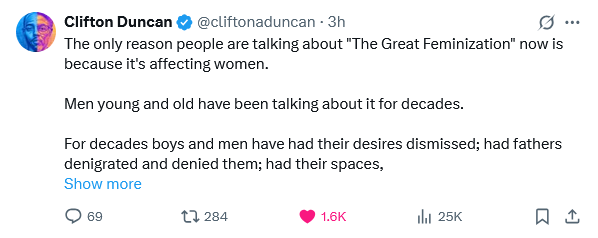
In September, public intellectual Helen Andrews caused a stir when she delivered a provocative 17-minute speech, titled “Overcoming the Feminization of Culture”, to the National Conservatism Conference, later published as an article for Compact, titled “The Great Feminization“.
Andrews summarized feminization as the prioritizing of feminine over masculine interests, but additionally prioritizing “empathy over rationality, safety over risk, cohesion over competition”. All these traits combine, she believes, in institutions where females are numerically dominant, to define “wokeness” and “cancel culture”.
Andrews points to Bari Weiss’ 2020 resignation letter from the New York Times where Weiss was labeled and ostracized for her social ties and cut off by perceived friends. In 2018, the newsroom there had tipped to a female majority which Andrews argues changed the work environment’s dynamics to one where cohesion is preferred, and covert undermining would replace open debate in favour of emotional harmony.
And I would argue that the more feminized society’s institutions become, the more readily extreme, empathic attitudes replace rational decision-making at policy-making levels, and the more society loses confidence in its ability to thrive.
Ironically, instead of directing empathy towards our own citizens, feminization also tends to direct empathy internationally. That is exactly what is happening at our national level, when our government earmarks funds for programs such as “Gender-Just, Low-Carbon, Rice Value Chains in Vietnam”.
This is also happening at a micro-level to the Jewish community in North America. Our spiritual leadership in non-orthodox synagogues is growing increasingly female, and, by no coincidence, is wokeness spreading, and, by no further coincidence, so is alignment with radical anti-Zionism.
[…]
Claims that Israel was guilty of genocide and apartheid, the authors write, were a constant feature of their education. Most shockingly, they write — and this at a rabbinical training institution headed by a female rabbi — that “the sexual violence Israelis experienced (on October 7) was never mentioned, even during Women’s History Month”.
What about the Christian clergy? A 2024 report on female Christian clergy found that in a 2018 sample, about 14 per cent of U.S. churches were headed by a senior female clergyperson. So, churches are not yet in danger of feminization. Good luck to them.
If there is a solution to the feminization-linked problem of anti-Zionism in the non-Orthodox rabbinate, I don’t know what it is. I only know this trend cannot end well for our community. What is essential in Jews’ spiritual homes now, more than ever in our history, is that they be spaces where “ahavat Yisrael” — love of Israel — is the prevailing norm. If we are not for ourselves, who will be?
On a more individual level, the Great Feminization has worked not to make women equal, but to increase their existing privileges and to demonize men who even notice the inequality now runs directly opposite to the narrative:

Image from Steve’s Substack
Over thirty years ago, I knew a woman who felt ecstatic joy taunting men with her nudity. She loved to flash her breasts at truckers on the highway. Thrilled at the thought that she left them frustrated, she would boast about her sexual power.
This is clear, unequivocal abuse. Imagine her taunting a village of starving Africans with BBQ’d steak. She then flees to her 5-star hotel, laughing and bragging that she had left them hungry and frustrated. This is how the West raises women. Self-obsessed, over-entitled and insufferable (insert obligatory, “not-all-women” clause here – yawn).
Feminists have gotten more sophisticated with their abuse since then. We now have transgressions that include absurd accusations like prolonged looking, mansplaining and manspreading. TikTokers go to the gym essentially nude in order to video and humiliate men who happen to notice.
We had the, “Yes means Yes” campaign that insists a man should repeatedly pester his partner with endless questions for permission during every intimate encounter. Never mind that a normal woman is likely to leave the bed after a few of these interruptions, rightly despising the insecure man who obeys that tripe. Anywhere outside of a deep feminist indoctrination camp, a woman will wonder whether your mother dropped you on your head as a child. I’ll bet that not even the most committed believer follows their own advice. This is not good communication — it denies healthy context, body language and facial expression.
And there’s nothing romantic about it; it is designed for feminist power. There is no number of reassurances that could possibly satisfy. The emphasis upon a non-stop verbal Q&A is courtroom strategy. And that’s the point: eliminate the human context, and set a trap for the man. “Did he ask permission to engage in number 17 of the 32 listed steps before sex? No, your honor, that’s where the sexual assault happened.”
Human intimacy is negotiated using mostly unspoken signals, and everybody likes it that way. Obviously there’s a need for clear communication, especially in a new relationship. I only need to include this disclaimer because the world is filled with pedantic manhating feminists eager to accuse me of denying women’s humanity. Grow up, child. Healthy women have absolutely no problem setting their own limits during intimacy. I’ve never met one who didn’t.
We cover for even the worst of women’s transgressions. When a woman murders her child, we call it infanticide and blame postpartum depression. When she murders her husband we call it battered wife syndrome, which is the title of a book by Canadian feminist law professor, Elizabeth Sheehy. Feminist lawyers even argue to eliminate female incarceration and close all women’s prisons, and for decriminalization of husband murder. This nonsense from the feminist cult for women with daddy issues protects mentally ill women who need psychological help, and/or belong in prison.
Every woman has a plethora of options, and near-infinite sympathy and support, in Western culture. Maybe that’s the problem: we don’t hold women responsible for their own behavior. Many women have not been socialized into adulthood.
At risk of making this a TLDR post, here’s Mark Steyn on the cultural side of our ever-more-feminized culture:

Welcome to another in our ongoing series of As I Said Twenty Sod-Bollocking Years Ago. Women have inherited the thrones of great powers — Elizabeth I, Catherine the Great, Victoria — and presided over massed ranks of courtiers drawn from the “pale, male and stale” (thank you, David Cameron). But America and its client states are the first in history in which every significant venue aside from ladies’ sport is now dominated by women. The west is closer than any society should be to the end of men — which is a big source of the terrible confusion in our schools that has led children to offer themselves up for bodily mutilation and irreversible infertility. Helen Andrews’ much noted “viral” essay on the phenomenon informs us inter alia that by 2024 American law schools were fifty-six per cent female and that sixty-three per cent of judges appointed by Joe Biden’s autopen are likewise on the distaff side. Elsewhere, fifty-five per cent of New York Times reporters are women (up from ten per cent half-a-century ago) and 57.3 per cent of US undergraduates are what we would once have called “coeds”.
At the same time, the principal source of immigration to the west is from a patriarchal culture even more severe (if you can believe it) than 1950s sitcom dads. If you live in London, Paris, Brussels, Stockholm, Dearborn, do you see more body-bagged crones on the streets than you did a generation back? Are you figuring on seeing more still in another twenty years? Or are you betting that the tide will have receded?
It is at the intersection of these two not entirely compatible trendlines — a feminised society with a patriarchal immigration policy — where lies the future (such as it is) of the western world. With that in mind, the annual commemoration of the 1989 Montreal massacre each December 6th has a symbolism that extends far beyond my own deranged dominion. Not just because it was an early example of the state hijacking the actual news to impose a narrative more helpful to its own needs. In the dismantling of manhood and manliness, no lie is too outrageous. As I wrote in The National Post of Canada on December 12th 2002 – twenty-three years ago:
For women’s groups, the Montreal Massacre is an atrocity that taints all men, and for which all men must acknowledge their guilt. Marc Lépine symbolizes the murderous misogyny that lurks within us all.
M Lépine was born Gamil Gharbi, the son of an Algerian Muslim wife-beater, whose brutalized spouse told the court at their divorce hearing that her husband “had a total disdain for women and believed they were intended only to serve men”. At eighteen, young Gamil took his mother’s maiden name. The Gazette in Montreal mentioned this in its immediate reports of the massacre. The name “Gamil Gharbi” has not sullied its pages in the thirteen years since.
The Gazette notwithstanding, that might open up many avenues of journalistic investigation, don’t you think? The potential implications of Canadian immigration policy. The misogyny in particular of Islam, and its compatibility with developed societies. But instead everyone who mattered in the Dominion’s elite decided it was all the fault of Canadian manhood in general — of Gordy and Derek’s, or Émile and Pierre’s, culture of toxic masculinity. That narrative has held for two generations. The only even slight modification has been from a sliver of academics who posit Gamil Gharbi as “the first incel“. I’m not sure “incels” — young men who are “involuntarily celibate” — existed as a mass phenomenon back in 1989: they are a consequence of the societal feminisation Ms Andrews writes about. The “incel” segment was by far the most interesting part of the Tucker/Fuentes convo, and the least remarked upon, but the notion that they’re itching to kill women bolsters the original 1989 framing, so the media are minded to entertain it.
Yet we all know, surely, that the young ladies in that Montreal classroom would have benefited from a little bit of available “masculinity” that day. Alas, the men to hand were in a certain sense far more profoundly disarmed than the wildest dreams of “gun control” advocates. From my book After America:
To return to Gloria Steinem, when might a fish need a bicycle? The women of Montreal’s École Polytechnique could have used one when Marc Lépine walked in with a gun and told all the men to leave the room. They meekly did as ordered. He then shot all the women.
Which is the more disturbing glimpse of Canadian manhood? The guy who shoots the women? Or his fellow men who abandon them to be shot? For me, the latter has always been the darkest element of the story. From my column in Maclean’s, January 9th 2006:
Every December 6th, our own unmanned Dominion lowers its flags to half-mast and tries to saddle Canadian manhood in general with the blame for the Montreal massacre — the fourteen women murdered by Marc Lépine, born Gamil Gharbi, the son of an Algerian Muslim wife-beater, though you wouldn’t know that from the press coverage. Yet the defining image of contemporary Canadian maleness is not M Lépine/Gharbi but the professors and the men in that classroom, who, ordered to leave by the lone gunman, obediently did so, and abandoned their female classmates to their fate — an act of abdication that would have been unthinkable in almost any other culture throughout human history. The “men” stood outside in the corridor and, even as they heard the first shots, they did nothing. And, when it was over and Gharbi walked out of the room and past them, they still did nothing. Whatever its other defects, Canadian manhood does not suffer from an excess of testosterone.
So the annual denunciation of manhood in general is the precise inversion of the reality of the event. That was unusual in 1989, but has become routine since: the UK Government’s “Prevent” programme, set up in the wake of the July 7th Tube bombings to “prevent” further “Islamist” attacks, now focuses its energies on the threat from a “far right” boorish enough to insist on noticing all these Islamic provocations; January 6th is an insurrection for which trespassing gran’mas have to be hunted down and banged up in solitary, but Thoroughly Modern Milley telling the ChiComs he’ll ignore his commander-in-chief or James Comey taking to Twitter to urge his chums to “eighty-six” the President is true patriotism of the highest order; in German cities saving democracy is so critical that it is necessary to ban the leading political party.
So the inversion of reality is pretty much standard operating procedure these days. There is, however, a sense in which that terrible one-off atrocity from the late Eighties has become a portent of tomorrow — of a western world thoroughly unmanned. Your average feminist lobby group doesn’t see it that way, naturally. “The feminism I think of is the one that embodies inclusivity, multiculturalism and the ability to change the world through the humanity that women do bring,” says Stephanie Davis, executive director of Atlanta’s Women’s Foundation. “If there were women in power in representative numbers — fifty-two per cent — I think that the World Trade Center would still be standing.”
November 30, 2025
The plight of most young western men
At Postcards from Barsoom, John Carter explores the dangerous psychological rift in western thought that casts young men into a literal no-win situation and yet blames them for not succeeding:
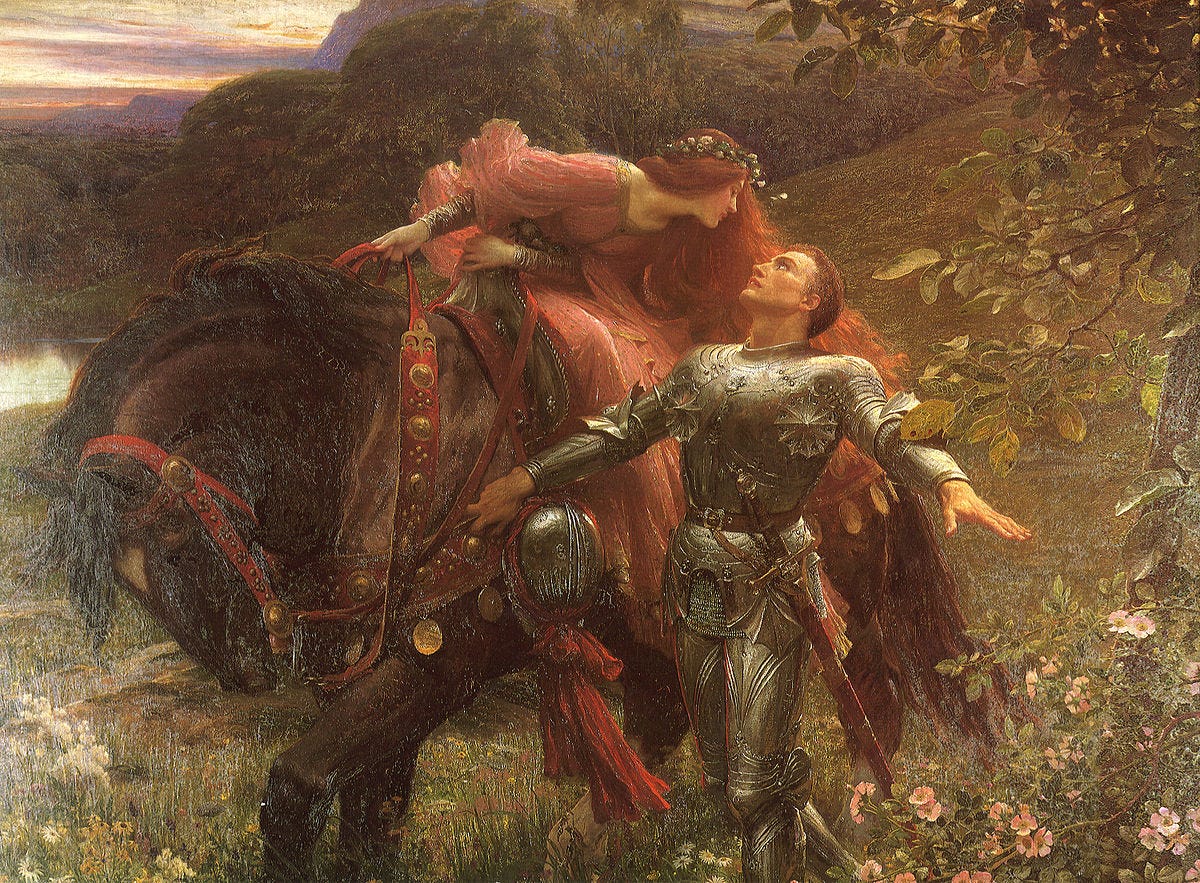
La Belle Dame Sans Merci by Frank Bernard Dicksee, 1901
A great deal of Discourse revolves around the desultory state of the broken modern young man. We wring our hands about porn brained incels, and about the incel’s mirror image in the sociopathic gym bro fuckboy. We talk about how men need to man up, put down the console controller, get out of the basement, talk to real girls, and wife them up. At the same time, we do everything we can to make this as difficult and unappealing as possible. Male sexuality is relentlessly demonized, and this is at the root of great deal of social dysfunction.
Our society has established new social norms that make talking to girls in the wild, or even looking at them, tantamount to a sex crime. Buying a girl a drink at the bar is an imposition, an implicit expectation that she will at the very least say thank you, and this is essentially sexual harassment. As a result of this men do not buy girls drinks anymore. Glance at a girl’s cameltoe as she places her yoga pants between you and the mirror to do hip thrusts while you’re trying to focus on your deadlift, and get put on blast on TikTok as a perv. As a result men carefully avoid looking at girls, and girls wonder why they don’t get attention. Office romances are right out: ask Betty from accounting if she’d like to get a coffee, and you’re rolling the dice between getting lucky and getting a talking to from HR (if you’re lucky). Friend-group romances are discouraged: they bring too much drama.
The only romantic avenue still permitted is the dating apps. The de facto proscription of every other venue was so abrupt and thorough that I can’t help but wonder if MeToo was engineered by Match Group, in order to do to dating what Uber did to taxis. Just like Uber took an occupation that was able to provide a reasonable living standard for working class guys and turned it into piece-work for an imported third-world precariat, so Tinder wiped away thousands of years of accumulated social technologies optimized for the purpose of bringing young men and women together into stable, loving, and fecund matrimony, and replaced it with a winner-take-all meat market in which a small minority of the best-looking men swipe their way through a digital harem of emotionally crippled cum-dumpsters, while women retaliate by using their matches to get free meals and ghosting as soon as the cheque comes without so much as a thanks for the company. Commoditizing romance left everyone more lonesome and miserable than ever, but would you look at that market cap.
The decay set in long before Tinder, however.
Feminists have gotten a great deal of mileage out of Freud’s Madonna-whore complex. This is the idea of a Manichean division of femininity: the chaste purity of the innocent nurturing mother, contrasted with the wanton looseness of the degraded prostitute. The Madonna is embodied by the Virgin Mary, whose only begotten child was conceived immaculately, which is to say without actually having sex. Both archetypes are caricatures that fail to capture the full range of feminine sexuality, but a traditional, god-fearing society effectively forced women to choose between one or the other. Either she represses her instincts and lives a passionless life of quiet misery, or she becomes a fallen woman.
Unlike much of Freud’s oeuvre, which largely consisted of the author’s barely concealed fetishes, the Madonna-whore complex has held up fairly well in the era of evolutionary psychology. Freud’s explanation for the phenomenon – that it is rooted in the Oedipal desire to rut with your own mother – is of course nonsense (except possibly insofar as it may have applied to him). Its origin is more plausibly in the predicament of paternal uncertainty which has bedevilled men since before the dawn of mankind, and which leads to a trade-off between short- and long-term mating strategies with easy women on the one hand (with whom paternity is always in question, and in whom investment should therefore be kept to a minimum, but since they’re easy you can sow your seed in lots of them), and chaste women on the other (with whom paternity can be more reliably determined, and in whom greater investment is therefore warranted). It doesn’t matter that we have paternity tests now: evolved instincts don’t care about your technology.
In the aftermath of the sexual revolution female sexuality was freed from these ancient constraints. Women are permitted to dress as they please, date who they want, have sex with as many partners as they desire. Any attempt to dissuade women from such behaviour is attacked as slut shaming, a ploy by the patriarchy to control their bodies.
Promiscuous premarital sex was once a one-way street to single motherhood. The pill and legal abortion reduced that risk considerably, which provided the justification for eliminating sexual restraint in the first place. Male sexual psychology presents its own problems, however. Revealing attire invites male attention, and often not from the males whose attention a woman wants to attract. Women enjoy male attention, and so dress to attract it. Sexually excited men are liable to behave badly. Badly behaving men result in women getting hurt. Obviously, if a man behaves badly, society will punish him … but the wise course is to avoid putting temptation in his way in the first place. Those ancient restrictions on female sexuality weren’t there to oppress women: they were there to protect women from themselves.
Women may have chafed under the chastity belt of the Madonna-whore complex, but it caused problems for men too. Men don’t generally want either a frigid Victorian schoolmarm or a drunken slattern for a wife: he wants the happy medium between the two, purity in the streets but a prostie in the sheets, a girl who enjoys sex and is good at it, but only has it with him. The Madonna-whore complex is a schizoid separation of these two conflicting desires, which then leads to the romantic frustration of both sexes: men have to choose between two equally unappealing options, and women are required to deny one or the other aspect of their own sexuality.
Just like men, women tend to want two, somewhat contradictory things from the opposite sex. First, they want men to protect and provide for them: to build what needs building, fix what needs fixing, pay for dinner, buy them pretty jewellery. In other words, they want men to sacrifice their time and energy of their behalf. At the same time they want men who are dominant, strong, confident, and at least potentially dangerous, for the obvious reason that men must compete with other men, and men who do not possess these traits make terrible protectors and providers in comparison with men who do. The necessary tension is that dominant, aggressive men are generally much less interested in protecting and providing: a man who won’t submit easily to other men, won’t submit to women either; a man who can force other men to submit to his will, can also force a woman to do the same. This mirrors the tension in male desires: a girl who’s a good lay might not be the most impeccably virginal of innocent maidens.
We can’t call women whores anymore in order to enforce virginal purity, but bad romantic decisions still carry bad consequences, and women also need to be protected from those consequences (and can’t ever be held responsible for them). The emphasis has therefore shifted from policing female sexuality to policing male sexuality. The result of this is the emergence of the simp-rapist complex.
The only way to create a safe environment for women whose behaviour is entirely unrestricted is to ruthlessly suppress precisely those masculine traits of dominance and aggression that women find attractive in the first place. All of these traits get included into the broad category of “rape culture”. Even looking at a woman without her expressly stated positive consent becomes a problematic act. Men who violate these norms become, according to this standard, “rapists”.
Update, 1 December: Welcome, Instapundit readers! Please do have a look around at some of my other posts you may find of interest. I send out a daily summary of posts here through my Substack – https://substack.com/@nicholasrusson that you can subscribe to if you’d like to be informed of new posts in the future.
November 25, 2025
“So what?”
Spaceman Spiff makes the case for the two simple words in the title being the most powerful words in the English language:

The two most powerful words in the English language are, so what? We do not use them enough.
A “so what?” is a rebuff, a rejection of some cherished belief. It confronts the promoter of an idea with the worst form of disagreement, indifference.
In a narcissistic world where attention is often the goal of agitators, genuine disinterest is difficult to manipulate. It disarms anyone intent on destroying established norms.
A “so what?” forces a reconsideration. It has the strongest effect on the issues we care most about.
Nobody enjoys their precious cause being dismissed. That is why we must use it more.
Who cares?
Many of today’s moral crusades are imposed on us against our will. We are told we must attend to issues most of the world ignores.
Here are a few to consider.
Racism and diversity
Accusations of racism are now endemic in Western nations. The underlying drive is one of punishment. Natural wariness of alien peoples is recast as a moral failing, the antidote to which is enforced mixing to demonstrate the backwardness of one’s social inferiors. A policy unique to Western countries.
The promotion of diversity quotas rests upon tacit acceptance of the idea that homogeneity is undesirable. This requires our participation to succeed, especially the consequence of this belief, that the mass importation of foreigners is needed to improve society.
The response to accusations of a lack of diversity should be, so what? It needs to be laughed at. Who cares if we are too homogenous? Says who?
No rational group seeks to dilute their numbers. This is a perverse affectation confined to a handful of ethnomasochists who think racism is unique to Western societies.
A robust rejection of this helps recalibrate to the global norm, a useful reminder to anyone steeped in woke catechisms. Much of the world views out-group preference as either treason or mental illness, a perspective easily observed simply by travelling.
Sexism and gender equality
There is a mismatch between the sexes. Men win the prizes, dominate their fields and invent the inventions.
We are told this is a disgrace. Such patriarchal domination will not do.
A key flashpoint is the “gender wage gap” that unwittingly illustrates the insincerity of feminism. There is no wage gap. There is a lifetime earnings gap. This is a consequence of decisions women voluntarily make such as spending more time with family or choosing less risky employment closer to home.
This is firmly established and supported with unimpeachable data, often produced by the very governments pursuing gender pay gap legislation.
Polite counterarguments against feminist talking points like this fail despite their thoroughness because facts are dismissed as they are inconvenient to a lucrative narrative.
Therefore the response to accusations of gender imbalances should be met with a robust so what? If they don’t care about engaging with established facts why should we care about the issue at all? Energetic indifference is the only way to deprive feminism of its momentum.
Much of the “argument” for gender equality is emotional manipulation. It abuses men’s protective instincts in a shameless way.
A firm “so what?” arrests this natural urge in men. It provides a small space for us to escape manipulation and examine the facts.
Who cares if women are underrepresented or have less money? This is a result of decisions women themselves make, so solve the problem yourself. Stop begging men for special favours.

Update, 26 November: Welcome, Instapundit readers! Please do have a look around at some of my other posts you may find of interest. I send out a daily summary of posts here through my Substack – https://substack.com/@nicholasrusson that you can subscribe to if you’d like to be informed of new posts in the future.
November 15, 2025
There’s not much room for men and boys in the “Female Future”
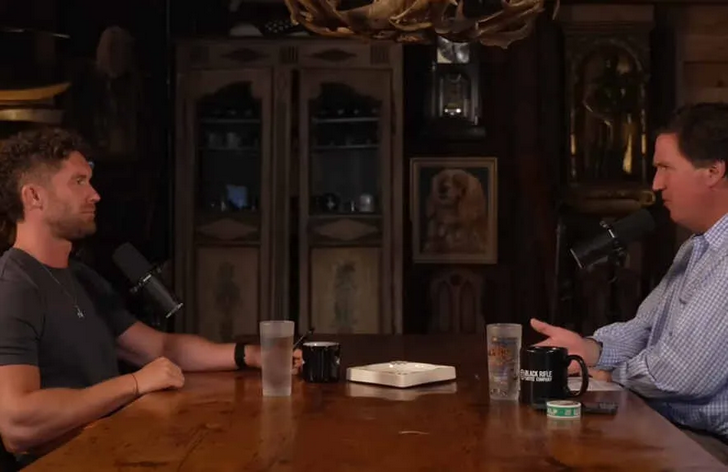
Janice Fiamengo responds to a recent discussion between former Fox News host Tucker Carlson and happiness coach Chris Williamson which was intended to be about men’s lives but “quickly becomes a conversation about what women want”:
Chris Williamson: “It’s very hard to try and put forward something that doesn’t sound like putting the brakes on women. And I don’t think that’s what either of us …”
Here is the problem in a nutshell. We must never say No to a woman, no matter the social atrophy and misery she and her sisters are causing. Carlson, in turn, gives the only permissible response: “Are women happier than they were?”
A conversation about men’s lives quickly becomes a conversation about what women want.
**
Men’s issues have long been the purview of a tiny group of outliers who gained traction in the early days of the internet and were popularized in Cassie Jaye’s The Red Pill.
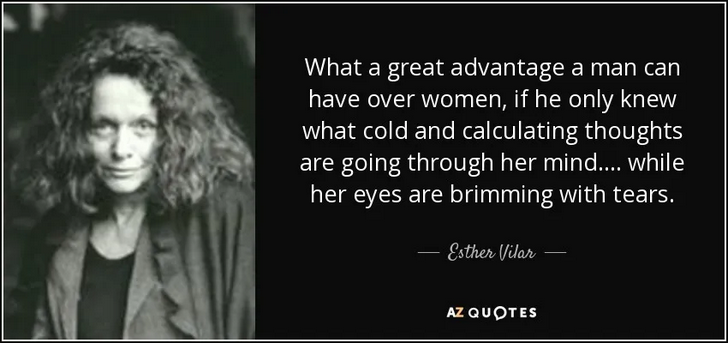
Following in the footsteps of iconoclasts like Ernest Belfort Bax (The Legal Subjection of Men, 1896), Esther Vilar (The Manipulated Man, 1971), and Warren Farrell (The Myth of Male Power, 1993), they questioned standard feminist wisdom, focusing on male disposability (see also here) and the empathy gap. For years, they were voices crying in the wilderness.
Now, decades into our Female Future, it’s becoming harder to ignore the suffering and plummeting fortunes of men and boys — and their knock-on social effects. But what happens when the red pill begins to go mainstream?
As the recent discussion between former Fox News host Tucker Carlson and happiness coach Chris Williamson makes clear, most hard truths get leached away, and we’re left with half-hearted calls for a compassion that the influencers themselves seem unable to maintain.
Spoiler Alert: “Chris Williamson’s Guide to Being Happy, and Debunking the Feminist Lies Sabotaging You” doesn’t debunk any feminist lies. Even the MeToo movement, which harmed or destroyed thousands of men’s lives through unproven accusations (some of them almost inconceivably ridiculous and trivial), is accepted as an attempt to “sanitize the toxic elements of male behavior”. Accusers’ falsehoods, ‘Poor-me-I’m-so-desirable’ showboating, manipulations, and blithe indifference to evidence are all passed over in feminist-compliant silence.
Sadly, the discussion is full of feminist lies.
**
Near the beginning of the discussion, Williamson expresses frustration that in order to acknowledge any of the troubles of men and boys in the modern world, it has become obligatory first to rehearse women and girls’ (always at least equal, if not greater) suffering. Unfortunately, Williamson is a prime example of such gynocentric genuflecting, visibly uncomfortable every time the conversation seems to be moving into non-feminist territory.
In order to talk about the drastic decline in men’s higher education attainment, for example, Williamson seems to think it necessary to point out that women were at some point in the past discouraged from getting university degrees. Both Williamson and Carlson refer to men’s diminishing earning power, but pivot immediately to stressing how hard this is on professional women looking for marriageable men.
The sexual revolution is alleged to have mainly benefited men who can now, with impunity, “use and abuse women”; nothing is said about women’s rampant OnlyFans activity or their exploitation of men in divorce.
It goes on and on like this: for every male suicide, divorce-raped father, falsely accused or incarcerated man, there must be at least one woman somewhere who felt at some point that she wasn’t encouraged to do something.
There is a small amount of criticism directed at women, but only when women act badly towards other women, as is the case, according to Carlson, with female bosses. But about female cruelty to men or children (over half of child maltreatment, for example, is female-perpetrated), we do not hear anything.
There is a good deal said about women as a civilizing force, how much women bring to family life, how women are better with social cues, how they are “unbullshittable.” Carlson even gushes about how kind women are to their hubbies: “They wash your underwear. They listen to you snore,” he rhapsodizes. For the considerable number of men who have rarely had a kind word from any woman or who have gone through a hellish marriage and/or divorce with a vindictive shrew, the adulation seems quite unhelpful.
November 13, 2025
How the school environment encourages male disconnection and stokes extremism
On the social media site formerly known as Twitter, a parent describes the experience of visiting a local high school and observing just how politicized and progressivized most of the classrooms are (which also strongly implies that the instruction is part education, part indoctrination):
Wokal Distance @wokal_distance
Nov 11I despise the Groyper movement, but if you want to understand where Fuentes gets purchase with young men I will tell you how it happened by telling you about my experience at the orientation night when my son joined elementary school band:
My 11 year old son son joined the elementary school band, and so I went to the parents orientation night which was held at a local high-school. As the night went on it became obvious to me why young men rage against the larger social system.
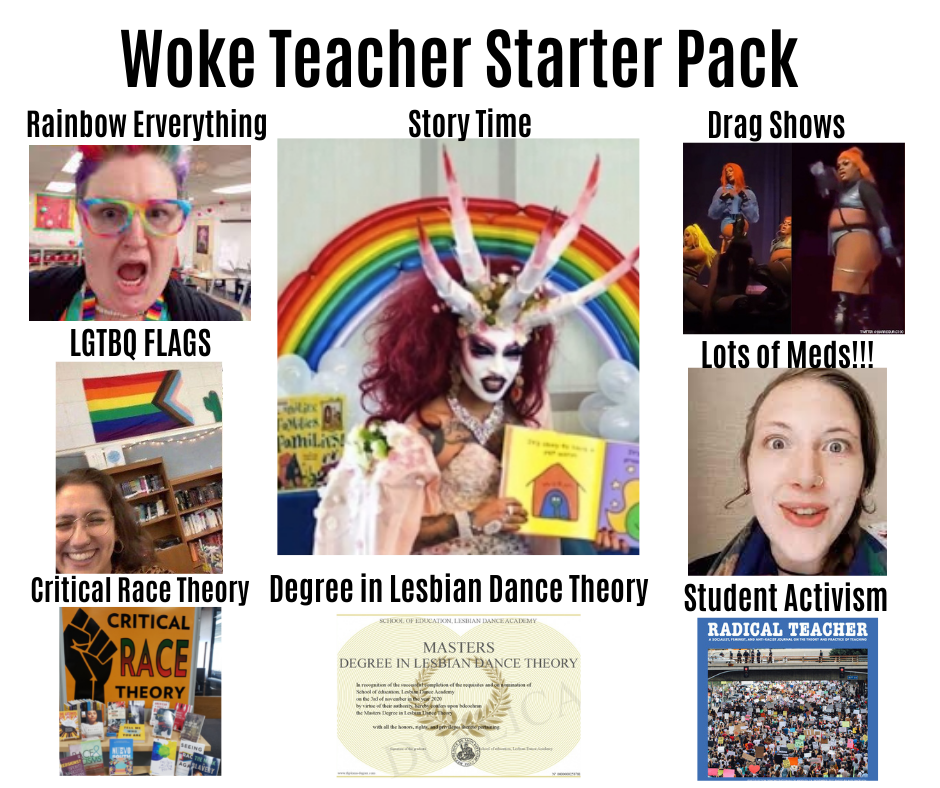
The classrooms were inundated with DEI messages and trans pride flags. On the walls there were posters, stickers and various decorations that all invoked the various totems if diversity. Black lives matter messaging, decolonization messaging, LGBTQ+ messaging, and basically ever sort of race and gender social justice messaging you can imagine was present. The advertisements for post secondary opportunities featured social justice education prominently, including advertising a course on indigenous ways of knowing” as something grade 12 students should pursue upon graduation. Many of the teachers has “this is a safe space” sticker son their doors, and others had variations of “in this house” messaging on their doors or on the walls of the classroom.
The entire aesthetic which dominated the decoration of classrooms was the progressive leftist coded “in this house” and “be kind” aesthetic. As soon as you walked into a classroom there was no doubt as the the political leanings of whichever teacher occupied that classroom. The only way I can describe it is to say that progressive social justice activists have colonized the school and marked their territory.
A woman in a mask (who was in charge) got up and read a number of land acknowledgements before acknowledging the contribution of indigenous people to ways of knowing. Standard leftist land acknowledgement boilerplate. Additionally, every interaction was done in the style of HR style professionalism mixed with progressive leftist coded gentle parenting.
When it comes to how the teachers behaved I am going to draw on both that night and the other times I have been at my sons school in order to explain it. To begin, the boys are treated almost as though they are defective girls. The feminine modes of interaction and socialization are treated as though they are the only legitimate modes of interaction and serve as the taken for granted way to properly interact and navigate the world. Almost all the authority figures at my sons school are women with almost no exceptions. One day my son found out that the school had hired a single male education Assistant, and my son came home and told me, in wondrous amazement, that he saw a “boy teacher” at school. The level of wonderment and surprise he expressed was on par with what I would expect if he had walked into school and seen a triceratops walking the hallways.
My son often comes home from school and expresses utter frustration at the fact that his preferred way of communicating, as well as the things that are aligned with his temperament are treated as though they were somehow inferior. As he is 11 (and being assessed for autism) he lacks the correct technical language to describe this, so it generally shows up as him getting in trouble for being insufficiently “gentle” and “kind” in response to various passive aggressive power plays and instances of bullying carries out by his more socially developed (often) female peers.
To say that band night was feminine coded would be an understatement. It would be more accurate to say that feminized modes of behavior and communication were embedded in every single interaction. It was a totally alien environment for anyone who isn’t well versed in navigating the social codes of progressive leftist institutional spaces. It was like the slogan “the future is female” was taken to be a command delivered from God Himself turned into an education program.
Now, I want you to imagine what it is like for an 11 year old boy to be saturated in that environment day after day. he is an alien in his own school who is treated essentially like a ticking time bomb who needs to be effectively managed rather than engaged with an taught, and he knows this is happening. It is hard to overstate the level of hostility towards boys that is floating around in the ambient culture of the school system. It isn’t so much that there is an explicit form of anti-male bigotry (although examples of that exist) it is more that there is an overall attitude of distaste for anything masculine and an utter indifference towards the interests, fortunes, and inner lives of young boys. The expectations, norms, rules, and standards of behavior cater to the sensibilities of girls and women.
This is the entire social system that a young boy goes through from when he is 6 years old all the way until he is graduated from university.
It’s an old trope on the right to say “imagine if the roles were reversed,” but that would be to miss the point. I know that many on the left will say that all of this is perfectly acceptable because of historical injustices and the pursuit of Social Justice. What I want to point out to you is how absurd the world must appear through the eyes of the average 11 year-old boy. He is basically told he has a host of social advantages (white privilege, male privilege, straight privilege, etc) that he has never experienced and will never benefit from, and this justifies the system which he is immersed in. And the worst part is, if young men point any of this out, the very people who are doing it will look them in the eye with a straight face and deny that any of this ever happened. Making matters worse these men begin to figure out that the institutions have been used to advance a leftist political agenda that scapegoated their group (young white men), and when they point this out everyone in authority calls them evil bigots.
And all this happens during their formative years.
Now, Imagine you are a young white male.
You graduate from the school system and are released into the world only to find that the feminine modes of socialization pushed on you are entirely unfit for purpose. That the social skills you were taught fail utterly in both the job markets young men tend towards (construction, engineering, building, landscaping, etc) and have no purchase in the dating market where highly agentic, masculine, wealthy men have a huge advantage over the passive, docile “nice boy.” On top of that, imagine that a great deal of the job listings that you peruse make it clear that preference will be given to women and “diverse” candidates, and that the job interview itself is full of shibboleths, coded statements, and trap questions meant to elicit responses that allow the hiring party to exclude anyone who isn’t sufficiently versed in and aligned with the priorities of the DEI/Woke/Social Justice paradigm.
On top of that, that if a you do get a job you will exposed to various sensitivity trainings, DEI trainings, and intersectionality workshops in which your group (straight white men) are repeatedly scapegoated as the source of all the worlds pathologies. Laid at your feet are patriarchy, colonialism, racism, sexism and a great number of other social evils for which you are taken to be complicit in and have a responsibility for fixing in virtue of being a white male.
While all this is going on a series of scandals (COVID, Men in womens’ sports, trans kids, etc) reveal to you the degree to which the institutions that make up the society you live in have adopted an ideology that is actively hostile to you because you are a straight white male, and have been denying you opportunity while scapegoating you for all societies problems and treating you like you are a defective girl.
Once you understand this, the real question is not “why are some young men radicalizing?” the real question is “why are there any young men at all who have not been radicalized?”
None of this is to excuse any of the extremist radicals who are attempting to harness the resentment and anger of young men for their evil purposes. The point is to get you to understand why young men will attach themselves to any voice who is willing to stridently call for the obliteration of the social system and ideology which lied to them during their formative years and is currently doing things which rob them of opportunities for advancement and success.
The institutions have totally blown their credibility with young men, and have completely destroyed young men’s trust in institutions. Young men view the current set of social institutions as ideologically corrupt and totally illegitimate, and they view the narratives that emerge from those institutions as being expressions of as nothing more then a story told to legitimize an ideology which seeks to hold them back. As such, the institutions and their narratives have absolutely no normative pull on young Gen Z men.
I am not saying the situation is hopeless, but unless you acknowledge what I have laid out here, and engage in a good faith attempt to understand what the school system, Universities, non-profits, HR departments, and other civic institutions have done to young men, you will never be able to gain their trust enough to lead them away from guys like Nick Fuentes, Andrew Tate, Andrew Torba, and other pathological influences.
/fin
H/T to Sarah Hoyt at Instapundit for the link.
November 8, 2025
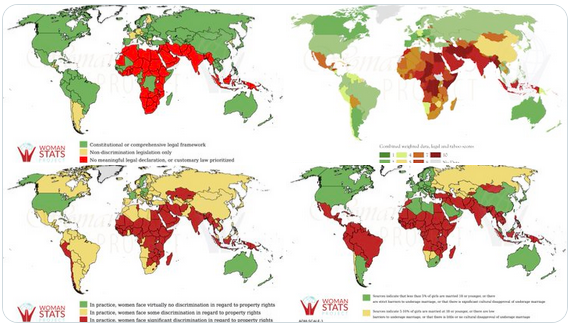
All cultures are not equal, especially when it comes to crimes like rape
On the social media site formerly known as Twitter, Dr. Sydney Watson responds to a post on feminists blaming all men for the actions of some men from other cultures:
Jessica Pin @jess_ann_pin
It bothers me so much when some feminists act like men are just as misogynist and violent everywhere.
That’s not true. Men from some cultures are absolutely worse than others.
I’m not saying there is a genetic difference. But there are definitely cultural differences, and we need to be careful about who we let in.
[Full sized images in the linked post]
I don’t know how to explain this succinctly —
But, ages ago I watched this series about prisons around the world. There were a few episodes that focused on prisons in African countries – how the prisons ran, what people were charged with etc.
What stood out to me was that over 50% of the male prisoners were there for some sort of sex crime – rape, sexual assault, child sexual abuse etc.
What was even worse was that, when asked about why they committed these crimes, a lot of the men said things about how they were “teaching the woman a lesson” or raping her was some sort of “punishment.”
And I couldn’t help but think, “well, that checks out. Given how these men from these places come to Western countries and rape women.”
People might not like hearing that, and the less evolved among us chalk it up to “racism” (lol) but if someone comes from a culture that views rape as a form of punishment for unruly women, then why would that viewpoint suddenly change when their feet hit British/Swedish/Canadian soil?
If, culturally, you view women as barely people, why on earth would you suddenly start because you’re in a new place?
Point being – it’s utterly mad to put women and girls at risk because people don’t want to admit that some cultures are horrible. I’m tried of pretending that all cultures are equal when they’re so obviously not.
Update, 10 November: Welcome, Instapundit readers! Please do have a look around at some of my other posts you may find of interest. I send out a daily summary of posts here through my Substack – https://substack.com/@nicholasrusson that you can subscribe to if you’d like to be informed of new posts in the future.
November 7, 2025
“BookTok on its own sounds innocent enough”
I’ve seen occasional references to BookTok on other platforms but as it seemed to be as female-coded as an online community can be, I’d never bothered to pay close attention to it. If Zoomertea is to be believed, it’s a weird and disturbing space for the unprepared to visit:

Image from “The Female Gooner Epidemic” at Zoomertea
If you’re smart enough to have never downloaded TikTok, then you’ve probably never heard of BookTok and the resulting epidemic of female gooners (a term borrowed from porn culture to describe obsessive arousal and fixation). BookTok on its own sounds innocent enough, women rediscovering the joys of reading, romanticising cozy nights in, or even joining a book club. In theory, what could be more wholesome? However, the reality is more concerning. It turns out the bookish girls have traded the likes of Pride and Prejudice for highly pornographic dark fantasy erotica, stories that make Fifty Shades of Grey seem tame.
Women have always enjoyed a flair for romance. Once it was the slow burn longing of Romeo & Juliet or Wuthering Heights – the stories weren’t explicit, yet still roused deep, passionate feelings. By the 2000s, romance had evolved into “chick lit” – breezy novels about friendship, love and self-discovery. Books like Bridget Jones and the Devil Wears Prada swapped tragic love for witty realism, capturing the struggles of modern women navigating careers, dating, and independence. It seems like in all aspects of modern culture, people have been pushing for the “reliability factor” – they wanted to see themselves in the characters and storylines. But somewhere along the way, the realism and reliability factor lost its appeal.
During the pandemic, while the virus spread and the world stayed home, TikTok spread too, surpassing 2 billion downloads by mid-2020. With endless free time, people picked up new hobbies: some tried Chloe Ting’s “Get Abs in 2 Weeks” workouts, others turned to BookTok and rediscovered their love for literature. Booktok isn’t just for explicit romantasy novels, however it’s become synonymous with women who obsessively consume dark romance. On BookTok, desire isn’t intimate anymore; it’s performed.
While Fifty Shades of Grey, a book very explicitly about sex, came almost ten years before BookTok, it wasn’t exposed to the algorithmic amplification loop we see today. Although its release did shock readers and spark feminist critiques about patriarchal relationships and sexual themes, it still felt more like a dirty secret. Its eroticism was discussed privately, even sheepishly. It was a book club secret, not a TikTok performance. Now, even the most unassuming women are flocking to BookTok and demanding books with a maximum “spice rating”, without an ounce of shame. But how did this happen?
Somewhere between the isolation and scrolling, the lines between fantasy and reality began to blur. The algorithm on TikTok can be very dangerous for enforcing unhealthy habits on its users. When a woman watches or likes just one “spicy book” video, even just out of curiosity, TikTok interprets it as interest in similar content. Without the user’s knowledge, suddenly their ForYou page is filled with similar videos, “books with a max spice rating”, “extreme taboo book recommendations” or “Top five dark romance recs”. The more they see, the more they engage, the more the algo pushes darker more extreme content. Essentially, the algorithm learns: You like desire, here’s more. Louder. Darker
November 4, 2025
The Great Feminization isn’t catching on in the culture, despite its power in our institutions
Lorenzo Warby provides a bit of hopeful news that despite the ever-expanding march of feminization through our various organizations and institutions, the culture is displaying strong resistance and effective:
Western culture is not feminising. How can I tell? The travails of Disney. Disney spent billions buying male-centric franchises — Star Wars, the Marvel Cinematic Universe, Indiana Jones … It then proceeded to so alienate the fan bases of those franchises that it is now reduced to openly discussing how to appeal to male audiences that it spent billions acquiring and further billions alienating.
If Western culture was feminising, then Disney should have had no trouble with its feminised products. Clearly, it has had problems. Meanwhile, the Top Gun: Maverick sequel to a 1986 movie can do excellent box office ($1.5bn) precisely because it knows what it is about.
The question then becomes, how and why did Disney so alienate those male-dominated fanbases it spent billions acquiring entree to? A simple answer would be that Disney was a Princess-story factory and it turned its new acquisitions into Princess-stories — stories not necessarily with literal princesses, but with female protagonists.
There is certainly a fair bit of that. A recent study found that Disney has tended, over time, to feminise male characters in its animated movies.
For it was not only that the Disney turned those franchises into launch pads for new Princess stories. Yes, Rey in the Star Wars sequels is an obvious example of doing precisely that. Nevertheless, there was rather more going on.
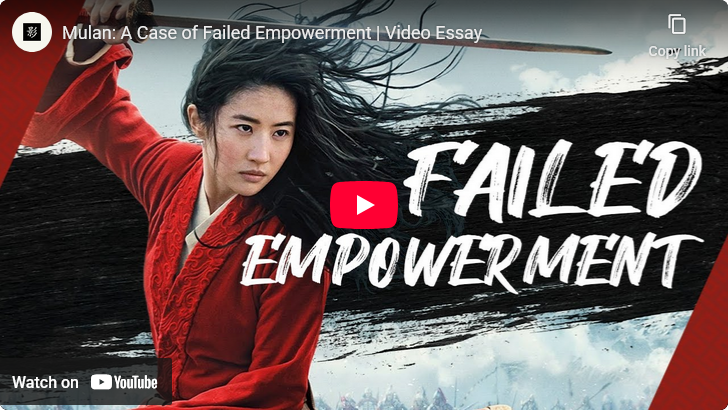
We can tell this from the Mulan live-action remake. The original 1998 Disney animated Mulan — despite controversy at the time of its cinematic release — acquired some popularity in China. It was seen as an engaging adaptation of the original story: a story deeply familiar to Chinese audiences. Worldwide, the film was a box office success.
The 2020 live-action Mulan remake was not a box office success. It was not for many reasons, but it was also emblematic of the problems of what YouTube critic Critical Drinker calls our post-creativity era.
2020 Mulan turned a female-protagonist story into a “woke” great-because-girl female-protagonist story. It turned a story of filial piety — a girl disguising herself as a boy to train and become a soldier in place of her disabled father, and struggling to overcome the limitations inherent in that — into something rather different.
Animated Mulan becomes accepted into the team of soldiers and triumphs through cleverness and teamwork. What makes the story resonate so well is there is nothing special about Mulan. She takes what she has and works hard at becoming better and succeeds in, and through, doing so. There is no hint of great-because-girl: rather it is fine being girl. Being a girl imposes limitations on her that she has to deal with and overcome: which she does — but not without genuine struggles — by sheer persistence and being clever, a problem-solver.
The key difference between a traditional Disney Princess story and contemporary Disney “woke” Princess story is the injection of great-because-girl. Live-action Mulan is a prodigy warrior with extra qi (or chi) who can do what the boys can do, but better. This is a cinematic version of a classic failing of feminism — by taking a blank slate view of humans, turning what men do into the standard for women. Women are great because they can do everything men can do, but even better. Feminist antipathy for stay-at-home mothers expresses this valorisation of matching men.
Live action Mulan is also much more politically conformist, even retrograde, in its denounement of Mulan celebrating service to the Emperor and going off to be a soldier. Animated Mulan rejecting a job as imperial advisor, and returning to her beloved father, is much less deferential to public authority.
The live-action film virtue-signals at the expense of story and understanding. It sacrifices clever cultural engagement for much flatter message-signalling.
If you want to watch a story set in China about women warriors, then the recent Chinese drama (C-drama) hits of Legend of the Female General and Shadow Love are available. These are smart, character-driven stories with the pervasive professionalism and sense of beauty—anchored in the cultural confidence—that one expects from contemporary costumed C-dramas, which are very much not based on trashing cultural heritage or we-know-better disrespect for source material.
Costumed C-dramas regulary have strong female lead characters while also having strong male lead characters. (As it happens, the male lead characters in both the aforementioned dramas are played by Cheng Lei; the female leads by Zhou Ye and Song Yi respectively.)
Update, 5 November: Welcome, Instapundit readers! Please do have a look around at some of my other posts you may find of interest. I send out a daily summary of posts here through my Substack – https://substack.com/@nicholasrusson that you can subscribe to if you’d like to be informed of new posts in the future.
October 30, 2025
QotD: When species’ mating rituals are disturbed, they don’t mate … and Humans are a species
Rob Henderson @robkhenderson
The actual truth is a lot of guys are naturally timid and are secretly grateful that approaching women was stigmatized because it gave them a righteous-sounding excuse for their own cowardice.
Is thirty seconds’ thought before posting too much to ask?
If cold approaching strange women was part of the natural human reproductive cycle, no men would [be] afraid to do it, because those who were would not have had descendants.
Every species has mating rituals. If those rituals are not disrupted, they will mate. If they are disrupted, they will not mate.
This is why a cattery run by a middle aged housewife in her own home can breed Occicats, Russian Blues, or Bengals, but the best zoos in the world can’t make two pandas into three pandas.
The basic mating ritual of human beings does not begin with a man cold approaching a strange woman.
It begins with a woman covertly signalling a willingness to be approached, either to a specific man, or in general. Only then is the man supposed to respond with an overt approach.
Women raised under the heel of feminism not only don’t know how to signal, they don’t even know that they should.
Men raised under the heel of feminism not only don’t know how to spot a signal, they don’t know they should be looking for one. And even if they did, it wouldn’t do them any good, because the women are not signalling.
This is why women’s twitter histories are an endless litany of “don’t approach me at the park, don’t approach me in the dark, don’t approach me here or there, don’t approach me anywhere”, alternating with “why don’t I get any attention? *sob*”.
They instinctively know that an approach from a man they do not favor is an affront, so they are affronted, and demand not be approached, when it happens.
Then everyone stops approaching, and they cry.
They want only men they like to approach them, but they have no idea that it’s their responsibility to make this happen.
If you attempt to make them understand this, most of them think you are telling them to overtly cold approach men, and they hate this idea, because it’s not natural to them, either.
Blank slatists, who don’t think humans have mating rituals, or at least don’t want them to, will insist that men “man up” and do all the work of solving this problem by cold approaching a steady stream of women until something clicks.
Or they will try to get women to do the approaching by building a dating website where only women can make first contact.
Doesn’t work.
Because mating rituals aren’t just “things you’re afraid to stop doing”, they are “things that make you feel attracted at all”.
When I was in my 20s, I would certainly cold approach women. But only for sex. If a woman didn’t make some sort of “come-hither” signal to me, sex was all I was in it for, and sex was the highest level of commitment she could expect from me.
Because it was firmly fixed in my mind, on an instinctive level, that she wasn’t actually that enthusiastic about me. And if she wasn’t enthusiastic about me, how could I be about her?
No thanks. I wanted to be appreciated, and so do most men.
Walking around with your breasts on display may attract the male gaze, but it’s not a substitute for contributing some energy and enthusiasm to the process.
This is what men really mean when they say “you told us not to approach you”.
It doesn’t mean “I am afraid of being called a creepy pervert or even arrested”.
It means “I can’t drum up much enthusiasm if you don’t show any”.
It means “You told everyone not to approach you, and you never shot me that eye contact and smile to say ‘I didn’t mean you'”.
It means “You project an air of defensiveness, and I’m not interested in rowing upstream. I want to be appreciated.”
No one wants to dance with a mannequin.
Devon Eriksen The social media site formerly known as Twitter, 2025-07-26.
October 27, 2025
QotD: Feminine traits
H.L. Mencken, In Defense of Women, 1918.
October 24, 2025
The future is feminine … maybe
William M. Briggs celebrates the feminine future by celebrating the end of a matriarchy in Greek mythology:
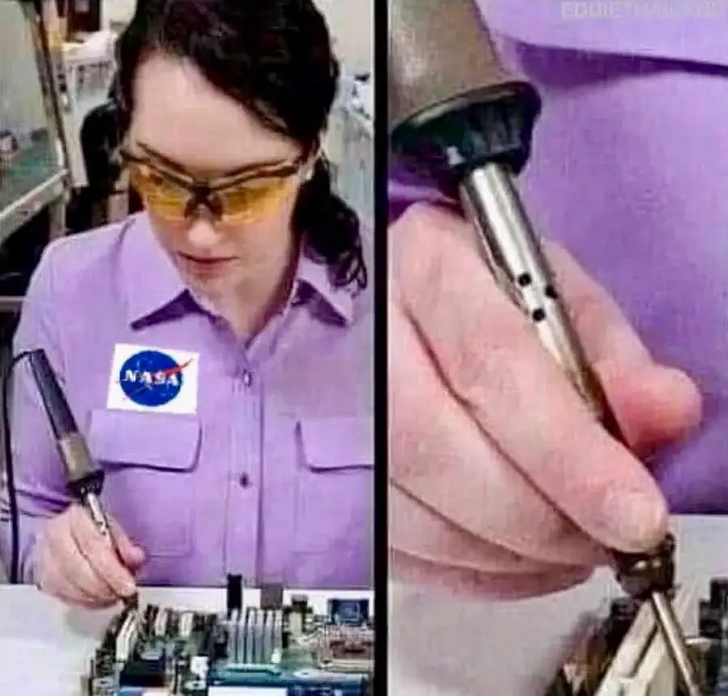
An obvious cause, but of course not the sole problem, is our anti-discrimination laws. These enforce DIE and the Great Feminization (David Stove, decades ago, saw it all coming in his essay “Jobs for the Girls“), which always choke out even hints of manliness. A solution would thus seem to be expurgating this great and terrible body of enervating law.
Alas, that would require men. Congress is unable even to decide what time it is. It will never summon the testicular fortitude to cancel the Civil Rights Act. It does not need to be so.
Perhaps you recall Mary Renault’s The King Must Die, which tells the tale of Theseus and his slaying of the Minotaur. Theseus travels to Athens to fulfill his destiny, but must first pass through Eleusis, where he finds himself in a battle to the death with the King. He wins, but discovers that King is only a ceremonial role; the occupant’s main job is to die each year. During his year-long reign, all his appetites are sated by the queen and her attendants, and he becomes weak.
Eleusis is, of course, a matriarchy. The culture enslaved to a desultory Earth Mother cult. The men soft and unable to deal with hostile neighbors. Theseus bucks tradition, gathers a group of men, the Companions, and goes out to take care of business. He then marches back into Eleusis and declares the restoration of the patriarchy. The queen, in one last defiant girl-boss move, reveals she has taken an abortifacient to kill Theseus’s child. She takes poison and sails off to die.
Theseus installs his Companions into all key positions, institutes a new religion based on knowledge instead of human sacrifice, instructs the men their time in the Longhouse is over, and that is that. The transition takes place in a day.
That is the most true-to-life part of the novel. That instant switch. After all, if the men were united, what could the women do? Women applying force and violence only happens in the movies. Women call for men to do violence on their behalf. But if men have the courage to say no, then that is that.
Now, of course, men do not say no, argues Andrews, and do not have the courage to, either. The Longhouse issues edicts and the men obey, their own appetites well enough satisfied. What next?
Our own John Carter reasons, correctly I think, that the Great Feminization is self-limiting.
It’s also probably no accident that the Trump administration seems to care a lot more about what the anons of the Online Right say than it does about the opinion of the universities or the news media. All the intelligent young men got pushed out of the institutions, and those ionized particles of free male energy then began to self-assemble online into an ad hoc competence hierarchy where prestige is measured by clout rather than professional degrees, job titles, or institutional affiliations. The anon swarm is entirely informal, meaning that its outcomes are not amenable to antidiscrimination legislation or to procedural manipulation; you can screw with the algo all you want but you can’t actually force people to care what women say just because they’re women (thereby placing women into the position of openly trading in thirst, which gets them attention but certainly doesn’t mean that anyone has to pretend to take them seriously).
All that’s happened so far is that people’s attention has been redirected away from crazy woke females and towards the influencers of the online right. The fever has broken but society is a long way from recovered. The institutions are still under the control of crazy woke females, and this is extremely bad, especially because they are — for biological reasons related to childlessness — only going to get crazier as time goes on. Fortunately no one really cares what they say anymore, so as they throw tantrums as the institutions are reclaimed over the next decade or so, their protests won’t register as anything but irrelevant toddler noise.
We still have to hurdle those “rights” laws, because they are still driving behavior of all large organizations. They can be purged or be forgotten. To purge requires Theseus-like courage. To forget requires we first suffer.
Get ready to suffer.
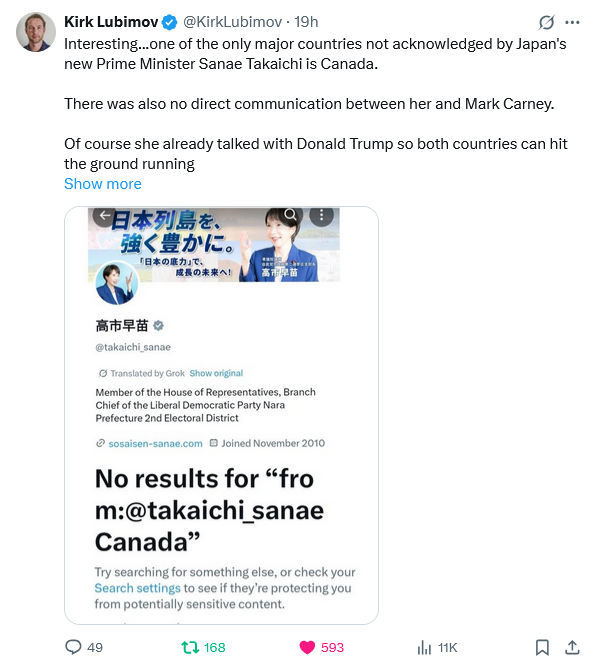
Sanae Takaichi, Japan’s Thatcher?
In UnHerd, Christopher Harding profiles the new Prime Minister of Japan, Sanae Takaichi, the first female PM who was elected to office on the 21st:
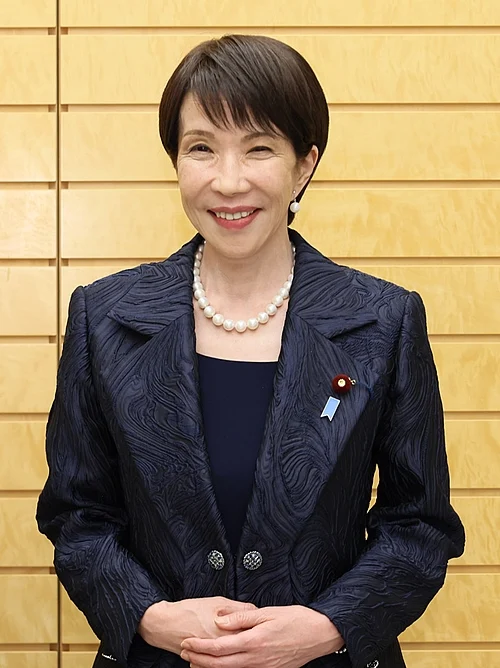
Sanae Takaichi, new Prime Minister of Japan, 21 October, 2025
Photo by the Cabinet Public Affairs Office via Wikimedia Commons.
As a teenager, Sanae Takaichi no doubt riled her parents now and again with her love of motorbikes and heavy metal. Today, poised to become Japan’s first female prime minister at the age of 64, she is polarising a nation. Some credit “Japan’s Iron Lady” with the steely resolve required to tackle the country’s domestic problems and stand up to China. Others lament the apparent fact that to succeed as a woman in Japanese politics you have to adopt the worst instincts of the men, from policies that prop up the patriarchy — men only on the imperial throne, compulsory shared surnames for married couples — to a nativist ultranationalism.
While Takaichi’s premiership will represent a milestone for modern Japan, it’s important in Japanese politics not to place too much weight on the frontman — or woman. The reality is more like one of those bands where the bassist writes the songs but, disliking the limelight, hires a series of relatively disposable vocalists to present them to the public. Alongside machinations in her own party, the LDP, where senior background figures largely decide who gets the premiership and how long they keep it, Takaichi’s fortunes may come to depend on how she deals with two intertwined issues: the economy and immigration.
First, the economy. People in Japan, and the young in particular, are furious about a combination of high taxes, low wage-growth, rising inflation and insecure job prospects. Japanese governments of the past 30 years have struggled with some or all of these problems, trying and largely failing to find solutions against the backdrop of a national debt that has now ballooned to an extraordinary 235% of GDP.
One of the reasons why Japan’s economic problems have been so intractable in recent years is the country’s rapidly declining population — now shrinking by almost a million people every year. Nearly a third of Japanese people are over the age of 65 and after years of hard graft, they expect to be looked after in old age. But that takes money and it takes carers. Japan is short on both. Nursing has long been in crisis, with just one applicant now for every four jobs advertised.
Back in the 2010s, the hope was that “care bots” might see to the needs of the elderly and infirm, freeing up younger people to increase productivity in the wider economy. But the widespread deployment of humanoid caregivers is not expected until well into the 2030s, if ever, in part because of the level of mechanical precision combined with advanced AI required of a robot designed to look after humans. Even robots that simply provide companionship have turned out to be prohibitively expensive and to require a self-defeating level of human oversight: charging them, fixing them, getting them from A to B.
Update, 26 October: