The Great War
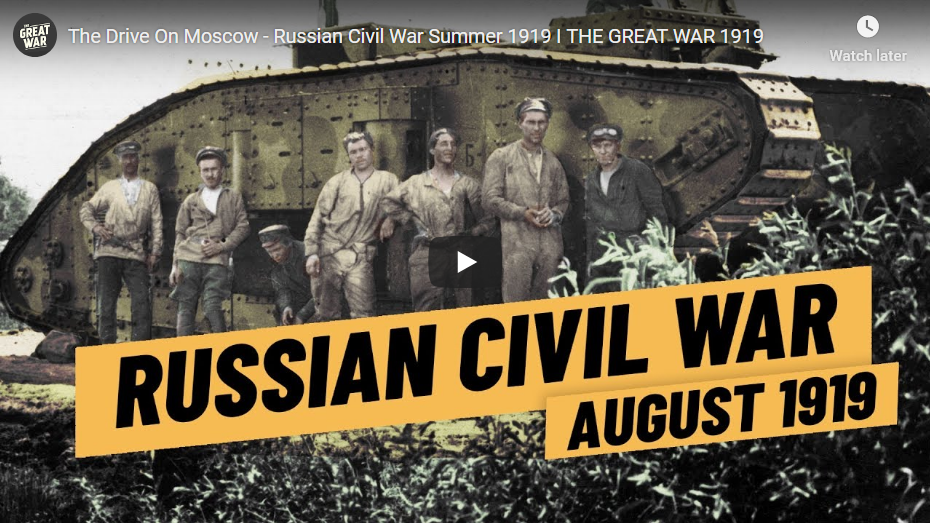
Published on 28 Jun 2019GAME OF TRENCHES: The first 20 players to register at: http://bit.ly/GameOfTrenches will receive in-game rewards worth a total of 10 600 Gold
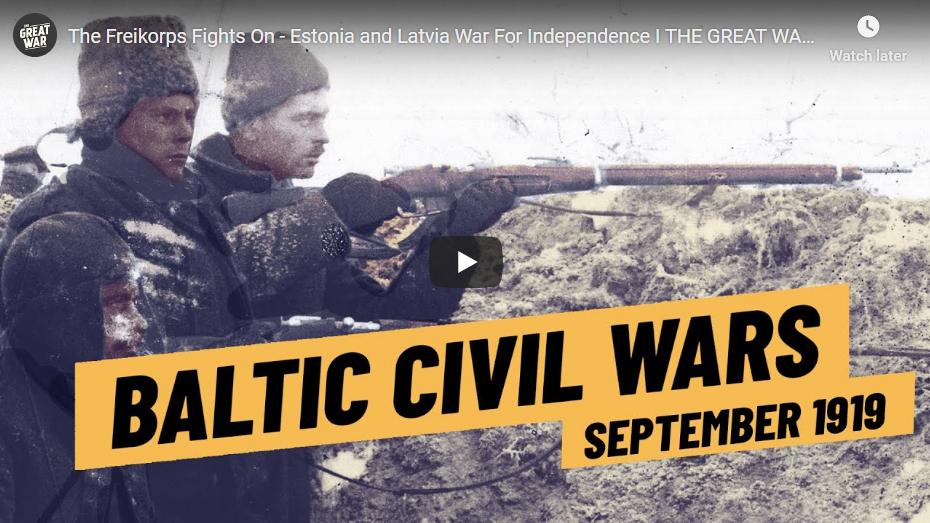
Estonia and Latvia had declared their independence from Russia in the late 1918 chaos. Over the spring of 1919 both countries’ new governments needed to defend that independence not only against the Russian Bolsheviks: there was also a violent internal struggle about the future of these countries. The Baltic Germans didn’t want to give up their social status and the even the anti-Bolshevik Russians considered the Baltics as part of the Russian Empire.
» SUPPORT THE CHANNEL
Patreon: https://www.patreon.com/thegreatwar
Merchandise: https://shop.spreadshirt.de/thegreatwar/» SOURCES
Bennett, Geoffrey Martin. Cowan’s War. The Story of British Naval Operations in the Baltic, 1918-1920 (London: Collins, 1964)Chester, Geoff. “When the Capital of Latvia was a Ship Called Saratov” (Deep Baltic, 2016). https://deepbaltic.com/2016/06/13/whe…
Fletcher, William A. “The British Navy In the Baltic, 1918-1920. Its Contribution to the Independence of the Baltic Nations”. Journal of Baltic Studies, Vol. 7, No. 2, Summer 1976, p. 134-144.
Gerwarth, Robert. The Vanquished. Why the First World War Failed to End, 1917-1923 (Penguin, 2017).
Hatlie, Mark R. Riga at War 1914-1919. War and Wartime Experience in a Multi-ethnic Metropolis (Marburg: Herder-Institut, 2014). https://digital.herder-institut.de/pu…
Jēkabsons, Ēriks: “Cēsis, Battle of”, in: 1914-1918-online. International Encyclopedia of the First World War, ed. by Ute Daniel, Peter Gatrell, Oliver Janz, Heather Jones, Jennifer Keene, Alan Kramer, and Bill Nasson, issued by Freie Universität Berlin, Berlin 2014-10-08. https://encyclopedia.1914-1918-online…
Ibid. “The Latvian War of Independence 1918-1920 and the United States”. In: Fleishman L., Weiner A. (ed). War, Revolution, and Governance: The Baltic Countries in the Twentieth Century (Boston, 2018).
Kirby, David. The Baltic World 1772–1993. Europe’s Northern Periphery in an Age of Change. (London: Longman, 1995).
Raun, Toivo U. Estonia and the Estonians, 2nd ed. (Stanford: Hoover, 2002).
Sammartino, Annemarie H. The Impossible Border: Germany and the East, 1914–1922 (Cornell, 2014).
Sullivan, Charles L. “The 1919 German Campaign in the Baltic. The Final Phase.” In The Baltic States in Peace and War, 1917–1945, ed. V. Stanley Vardys and Romuald J. Misiunas, 31-42. (University Park: Penn State, 1978).
Tammela, Mari-Leen. Saaremaa Uprising. Estonica (Estonian Institute, 2012). http://www.estonica.org/en/Saaremaa_U…
Uustalu, Evald. The History of Estonian People (London: Boreas, 1952).
Von Rauch, Georg. The Baltic States. The Years of Independence 1917-1940 (London: Hurst, 1995).
Smele, Jonathan. The ‘Russian’ Civil Wars, 1916-1926: Ten Years That Shook the World (Oxford University Press: 2016)
Palmer, Alan. Northern Shores: A History of the Baltic Sea and Its Peoples (John Murray, 2005)
»CREDITS
Presented by: Jesse Alexander
Written by: Jesse Alexander
Director: Toni Steller & Florian Wittig
Director of Photography: Toni Steller
Sound: Toni Steller
Editing: Toni Steller
Mixing, Mastering & Sound Design: http://above-zero.com
Motion Design: Christian Graef – GRAEFX
Maps: Daniel Kogosov (https://www.patreon.com/Zalezsky)
Research by: Jesse Alexander
Fact checking: Florian WittigChannel Design: Alexander Clark
Original Logo: David van StepholdA Mediakraft Networks Original Channel
Contains licensed material by getty images
All rights reserved – Real Time History GmbH 2019

June 29, 2019
Estonia and Latvia Fight For Independence – Russian Civil War Baltic Front I THE GREAT WAR June 1919
June 16, 2019
Britain Votes to Leave – WW2 – 042 – June 15 1940
World War Two
Published on 15 Jun 2019The fighting in France isn’t over, not even when Paris falls, as the Germans advance and Italy joins the fight. But the Brits now have their back to yet another ocean and see no option but out. Further east Stalin uses the chaos in the West as cover to start moving in on his neighbours.
Join us on Patreon: https://www.patreon.com/TimeGhostHistory
Or join The TimeGhost Army directly at: https://timeghost.tvFollow WW2 day by day on Instagram @World_war_two_realtime https://www.instagram.com/world_war_t…
Join our Discord Server: https://discord.gg/D6D2aYN.
Between 2 Wars: https://www.youtube.com/playlist?list…
Source list: http://bit.ly/WW2sourcesWritten and Hosted by: Indy Neidell
Produced and Directed by: Spartacus Olsson and Astrid Deinhard
Executive Producers: Bodo Rittenauer, Astrid Deinhard, Indy Neidell, Spartacus Olsson
Creative Producer: Joram Appel
Research by: Indy Neidell
Post Production Director: Wieke Kapteijns
Edited by: Marek Kamiński
Map animations: EastoryColorisations by Norman Stewart and Julius Jääskeläinen https://www.facebook.com/JJcolorization/
Eastory’s channel: https://www.youtube.com/channel/UCEly…
Archive by Screenocean/Reuters https://www.screenocean.com.Sources: Italo-Scottish Research Cluster, Alchemist-hp
A TimeGhost chronological documentary produced by OnLion Entertainment GmbH.
From the comments:
World War Two
2 days ago
Paris… German soldiers in 1914 left their homes for the western front painted “To Paris” on their train carriages, little did they know what horrors were awaiting them. And that after four years of fighting in the trenches, none of them made it to Paris. This week, after another month of fighting in France, they finally do.Whenever we read that some of you think that it’s just Indy making all of this, we have a good laugh. Actually, there are over 10 people working on this project. We have multiple editors, researchers/historians, producers, fact-checkers, colorisers and volunteers working on this. And of course there’s Eastory making the maps. We’d like to pay each and everyone of them for their hard work so they can feed themselves. Truth is, many of them work on a voluntary or part-time basis right now. The support we get on Patreon and our website is great and helps us sustain this channel, but we’re not nearly at the point that everyone involved gets what they deserve. If you like our work here on YouTube and you want to support the people who make it, please check us out on https://www.patreon.com/TimeGhostHistory or on our website https://timeghost.tv. Help us make history! Every dollar counts!
Cheers,
Joram
June 11, 2019
“[I]t may suddenly occur to you that Mazin has turned a deadly epochal disaster into … a buddy-cop movie”
I haven’t watched Chernobyl, but a lot of sensible people, including Colby Cosh, insist that it’s well-worth the watching:
It looks as though HBO’s miniseries Chernobyl will take the title as the prestige TV event of the first half of 2019. This is pretty remarkable, all things considered. The writer of the series, Craig Mazin, is still described on Wikipedia as “an American screenwriter and film director best known for writing Identity Thief, The Hangover Part II, The Hangover Part III, and The Huntsman: Winter’s War.” The director, Johan Renck, is a Swede who got his start as a Eurodance performer with the nom de guerre “Stakka Bo.” For the zillionth time, HBO has spread its patented secret sauce over unpromising ingredients and delivered superb television.
I am being something of a jerk about these people, of course. Screenwriters don’t have much control over which of their scripts get made and what happens to those scripts on the set, and Mazin is admired as a critic and teacher. (Unusual respect for writers is an obvious component of that HBO magic.) As for Renck, he got from trashy music to HBO through an apprenticeship in music video — the same kind of apprenticeship that brought us David Fincher, Spike Jonze and Michel Gondry. He may, in this regard, be the last gasp of a noble tradition.
It is not that the Chernobyl series doesn’t have elements of hackiness. After spending a couple of hours watching Jared Harris’s austere scientist and Stellan Skarsgård’s smarter-than-he-looks apparatchik warm to each other while trying to save Eastern Europe from obliteration, it may suddenly occur to you that Mazin has turned a deadly epochal disaster into … a buddy-cop movie. Set aside the wonderful visual poetry, the period detail and the fine soundtrack, and the spine you’re left holding is a whodunit. It’s the Case of the Exploding Reactor.
I think Mazin would probably admit this, if he hasn’t already, but if it’s not clear enough, the whole thing winds up in the last episode with a contrived courtroom drama, one which does not quite resemble anything that ever happened in connection with Chernobyl.
Here is the funny and admirable thing: the solution that Mazin’s “cops” work out is highly technical and involved, is explained in careful detail, and is more or less the real solution to the mystery of Chernobyl. Mazin, who is my age and was therefore a teenager when the reactor went kablooie, is not some Jordan Peterson-esque Soviet-history nerd or someone who wanted to turn Chernobyl into a metaphor. It just seems to have occurred to him one day, quite recently, that he knew the word “Chernobyl,” and remembered that Chernobyl was very bad, but wasn’t sure what exactly had happened. When he found out he realized there was a movie in it.
Between the accidents at Chernobyl and Three-Mile Island (in 1979), the nuclear power industry was set back literally decades … despite being one of the best — and safest — answers to the problem of generating enough electricity to keep modern industrial countries humming along while also reducing production of carbon dioxide in the atmosphere. Maybe someone will produce a TV mini-series to de-mystify the American nuclear accident soon, and debunk the half-truths, quarter-truths, and outright lies that still bedevil any discussion of nuclear power in the western world.
May 31, 2019
“Hearts of Iron” – The Battle of Berlin – Sabaton History 017 [Official]
Sabaton History
Published on 30 May 2019The Sabaton song “Hearts of Iron” (on the Heroes album) tells the story of a German commander who is ordered to relieve Berlin in face of an overwhelming attack from the east and the west. Berlin is almost fully surrounded, but instead of following orders from his superiors who have clearly lost touch with reality, he decides to use his men to get as many civilians as possible out of Berlin.
Support Sabaton History on Patreon: https://www.patreon.com/sabatonhistory
Check out the trailer for Sabaton’s new album The Great War right here: https://www.youtube.com/watch?v=HCZP1…
Listen to Sabaton on Spotify: http://smarturl.it/SabatonSpotify
Official Sabaton Merchandise Shop: http://bit.ly/SabatonOfficialShopHosted by: Indy Neidell
Written by: Markus Linke and Indy Neidell
Directed by: Astrid Deinhard and Wieke Kapteijns
Produced by: Pär Sundström, Astrid Deinhard and Spartacus Olsson
Creative Producer: Joram Appel
Executive Producers: Pär Sundström, Joakim Broden, Tomas Sunmo, Indy Neidell, Astrid Deinhard, and Spartacus Olsson
Maps by: Eastory
Edited by: Iryna Dulka
Sound Editing by: Marek KaminskiEastory YouTube Channel: https://www.youtube.com/channel/UCEly…
Archive by: Reuters/Screenocean https://www.screenocean.com
Music by Sabaton.Source:
– Colorization by Ruffneck88, Phot-colorizationAn OnLion Entertainment GmbH and Raging Beaver Publishing AB co-Production.
© Raging Beaver Publishing AB, 2019 – all rights reserved.
From the comments:
Sabaton History
1 day ago
This episode is one of the few which shows the humanity in the German army. As with all conflicts, this was not a binary where it was the “good guys” versus “the bad guys”. And before anyone else says it – some people will probably complain how we frame the Soviets as the bad guys. We chose to tell this story from a neutral perspective, but fact is that many German civilians feared what the Soviets would do to them, and preferred to live under American occupation. This might be considered anti-Soviet, but it simply is how many Germans viewed the Soviet army and one of the reasons why Wenck and his 12th created a corridor for the civilian refugees to escape into American occupied territories. We’re happy to have a reasonable and research-based discussion in the comments, but we won’t tolerate any extremism or revisionism.Another note: while this episode is about a moment where the German army thought for humanity instead of against it, it nowhere near proves any sort of clean-Wehrmacht myth – and we won’t tolerate any comments of that sort either.
And with that, I will leave you. Enjoy the video!
Cheers!
May 29, 2019
US Soldiers Fighting in Russia – The End of the “Polar Bear Expedition” I THE GREAT WAR May 1919
The Great War
Published on 28 May 2019The so called Allied intervention into the Russian Civil War suffered from no clear operational goals and mandate and when US President Woodrow Wilson pulled out the American soldiers that were fighting in Northern Russia in May 1919, the operation suffered another setback. Public pressure against US foreign intervention was increasing now that Germany had been beaten and many people didn’t understand what American soldiers were doing in Russia anyway. At the same time Winston Churchill and his supporters maintained that it was vital to defeat the Bolsheviks in Russia once and for all.
» SUPPORT THE CHANNEL
Patreon: https://www.patreon.com/thegreatwar
Merchandise: https://shop.spreadshirt.de/thegreatwar/» SOURCES
Crownover, Roger. The United States Intervention in North Russia, 1918-1919: The Polar Bear Odyssey. Edwin Mellen Press, 2001.Wright, Damien. Churchill’s Secret War With Lenin: British and Commonwealth Military Intervention in the Russian Civil War, 1918-20, Helion and Company, 2017
Long, John W. “American Intervention in Russia: the North Russian Expedition, 1918-1919,” in Arthur Dudden, ed. American empire in the Pacific: from trade to strategic balance 1700 – 1922 (Aldershot: Ashgate, 2004): 321-344.
Mawdsley Evan. The Russian Civil War, Pegasus Books, 2019
Moore, Joel. The History of the American Expedition Fighting the Bolsheviki Campaigning in North Russia 1918-1919 (1920)
»CREDITS
Presented by: Jesse Alexander
Written by: Jesse Alexander
Director: Toni Steller & Florian Wittig
Director of Photography: Toni Steller
Sound: Toni Steller
Editing: Toni Steller
Mixing, Mastering & Sound Design: http://above-zero.com
Motion Design: Christian Graef – GRAEFX
Maps: Daniel Kogosov (https://www.patreon.com/Zalezsky)
Research by: Jesse Alexander
Fact checking: Florian WittigChannel Design: Alexander Clark
Original Logo: David van StepholdA Mediakraft Networks Original Channel
Contains licensed material by getty images
All rights reserved – Real Time History GmbH 2019
May 26, 2019
HBO’s Chernobyl reviewed by Slava Malamud
Colby Cosh linked to Slava Malamud’s thread, rolled up here courtesy of Thread reader:
April 29, 2019
System of a Nazi Terror – WW2 – WaH 002 – April 1940
World War Two
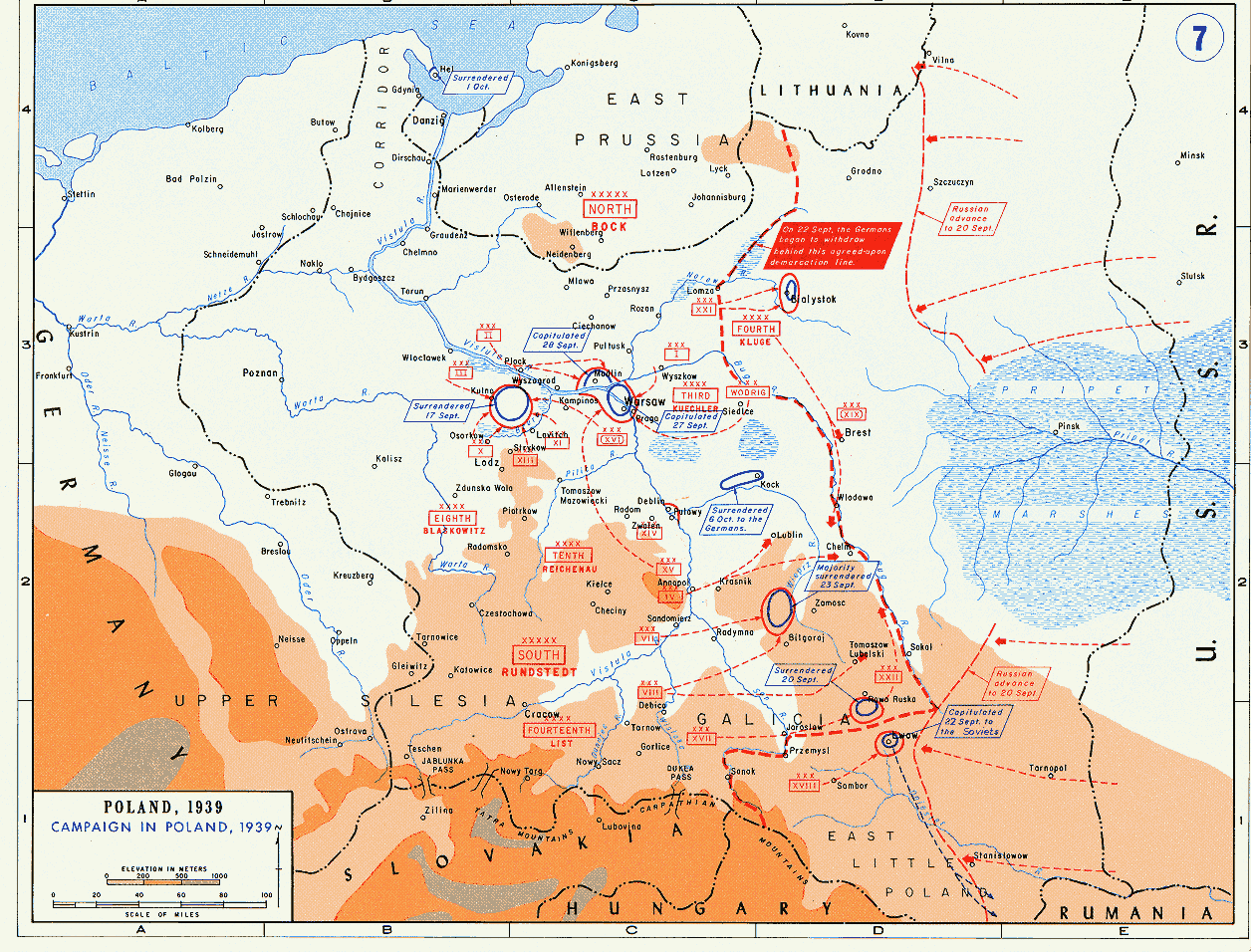
Published on 27 Apr 2019In April 1940 in Poland, if you are on the list of Nazi or Soviet non-desirables, there three options: run for your life, be shipped off to a camp, or face the execution squad… if you happen to be Jewish it’s likely to be the fourth option: the Ghetto.
Neurology of Hate Special: https://youtu.be/yeZ3_OtDa7E
Join us on Patreon: https://www.patreon.com/TimeGhostHistory
Or join The TimeGhost Army directly at: https://timeghost.tvFollow WW2 day by day on Instagram @World_war_two_realtime https://www.instagram.com/world_war_t…
Source list: http://bit.ly/WW2sourcesWritten and Hosted by: Spartacus Olsson
Produced and Directed by: Astrid Deinhard
Executive Producers: Bodo Rittenauer, Astrid Deinhard, Indy Neidell, Spartacus Olsson
Creative Producer: Joram Appel
Post Production Director: Wieke Kapteijns
Research by: Spartacus Olsson
Edited by: Wieke KapteijnsArchive by Screenocean/Reuters https://www.screenocean.com
A TimeGhost chronological documentary produced by OnLion Entertainment GmbH.
From the comments:
World War Two
4 hours ago
Now… this is a tough episode. It’s also tough to illustrate with images. Many of the events we speak of were, for obvious reasons not documented at the time. As a result we have had to resort to using some imagery that is from later dates when similar events, or the aftereffects of these events were documented on film and photo. We have labeled these images as best we can when it is relevant. Last but not least… do please remember our rules, especially on an episode like this one. Respect the dead and never forget that the only way we can do them justice is to remember their loss and sacrifice.
April 21, 2019
QotD: High Modern city design as a tool to control the populace
Scott notes that although citizens generally didn’t have a problem with earlier cities, governments did:
Historically, the relative illegibility to outsiders of some urban neighborhoods has provided a vital margin of political safety from control by outside elites. A simple way of determining whether this margin exists is to ask if an outsider would have needed a local guide in order to find her way successfully. If the answer is yes, then the community or terrain in question enjoys at least a small measure of insulation from outside intrusion. Coupled with patterns of local solidarity, this insulation has proven politically valuable in such disparate contexts as eighteenth-and early nineteenth-century urban riots over bread prices in Europe, the Front de Liberation Nationale’s tenacious resistance to the French in the Casbah of Algiers, and the politics of the bazaar that helped to bring down the Shah of Iran. Illegibility, then, has been and remains a reliable resource for political autonomy
This was a particular problem in Paris, which was famous for a series of urban insurrections in the 19th century (think Les Miserables, but about once every ten years or so). Although these generally failed, they were hard to suppress because locals knew the “terrain” and the streets were narrow enough to barricade. Slums full of poor people gathered together formed tight communities where revolutionary ideas could easily spread. The late 19th-century redesign of Paris had the explicit design of destroying these areas and splitting up poor people somewhere far away from the city center where they couldn’t do any harm.
Scott ties this into another High Modernist creation: the collective farms of the Soviet Union. This was a terrible idea and responsible for the famines that killed millions (tens of millions?) during Stalin’s administration. The government went ahead with them because the non-collectivized farmers were too powerful and independent a political bloc. They lived in tight-knit little villages that did their own thing, the Party officials who went to these villages to keep order often ended up “going native”, and the Soviets had no way of knowing how much food the farmers were producing and whether they were giving enough of it to the Motherland.
The collectivized farms couldn’t grow much, but people were thrown together in artificial towns designed to make it impossible to build any kind of community: there was nowhere to be except in bed asleep, working in the fields, or at the public school receiving your daily dose of state propaganda. The towns were identical concrete buildings on a grid, which left the locals maximally disoriented (because there are no learnable visual cues) and the officials maximally oriented (because even a foreigner could go to the intersection of Street D and Street 7). All fields were perfectly rectangular and produced Standardized Food Product, so it was (theoretically) easy to calculate how much they should be producing and whether people were meeting that target. And everyone was in the same place, so if there were some sort of problem it was much easier to bring in the army or secret police than if they were split up among a million tiny villages in the middle of nowhere.
Confronting a tumultuous, footloose, and “headless” rural society which was hard to control and which had few political assets, the Bolsheviks, like the scientific foresters, set about redesigning their environment with a few simple goals in mind. They created, in place of what they had inherited, a new landscape of large, hierarchical, state-managed farms whose cropping patterns and procurement quotas were centrally mandated and whose population was, by law, immobile. The system thus devised served for nearly sixty years as a mechanism for procurement and control at a massive cost in stagnation, waste, demoralization, and ecological failure.
Scott Alexander, “Book Review: Seeing Like a State”, Slate Star Codex, 2017-03-16.
April 18, 2019
Chiang Kai-shek Plays it Like Stalin | Between 2 Wars | 1926 Part 3 of 3
TimeGhost History
Published on 17 Apr 2019In 1926 Chiang Kai-shek manages to turn the Kuomintang into his own private army, and the events are befuddling…
Join us on Patreon: https://www.patreon.com/TimeGhostHistory
Hosted by: Indy Neidell
Directed by: Astrid Deinhard
Written by: Spartacus Olsson
Produced by: Astrid Deinhard
Executive Producers: Bodo Rittenauer, Astrid Deinhard, Indy Neidell, Spartacus Olsson
Creative Producer: Joram Appel
Post Production Director: Wieke Kapteijns
Edited by: Wieke Kapteijns
Research by: Spartacus Olsson supported by Gabriel MatsakisColorized Pictures by Olga Shirnina
https://klimbim2014.wordpress.comVideo Archive by Screenocean/Reuters http://www.screenocean.com
A TimeGhost chronological documentary produced by OnLion Entertainment GmbH.
From the comments:
TimeGhost History
15 hours ago (edited)
First of all, many thanks to Gabriel Matsakis for helping out with the research for this episode! While writing about China and Chiang Kai-shek, Spartacus realised that he needed to make more than one script to explain The Northern Expedition (crucial to the developments that eventually lead to the World War in China), so we threw in another episode in 1926 to explain Chiang Kai-shek’s rise to power. In the next episode (1927 part 1) we will return to the United States and look at the economic boom and the Roaring Twenties. We will also return to China and the actual Northern Expedition in a 1927 episode after that. Enjoy the confusion that is China in the 1920s!?!
April 15, 2019
The Lenin Boys Go To War – Hungarian Soviet Republic I THE GREAT WAR 1919
The Great War
Published on 14 Apr 2019Like many European countries, Hungary experienced rapid political changes in the aftermath of the 1918 armistices. The Kingdom of Hungary used to rule big parts of South Eastern Europe and many peoples within its former boundaries are now gaining independence and expand their territory. The new Hungarian Republic is faced by external and internal pressures and after a coup becomes the Hungarian Soviet Republic, the 2nd Soviet State in Europe.
» SUPPORT THE CHANNEL
Patreon: https://www.patreon.com/thegreatwar
Merchandise: https://shop.spreadshirt.de/thegreatwar/» SOURCES
Böhler, Jochen. “Post War Military Action and Violence (East Central Europe,” in 1914-1918 online. International Encyclopedia of the First World War. https://encyclopedia.1914-1918-online…Borsanyi, György. The Life of a Communist Revolutionary, Bela Kun (New York: Columbia University Press, 1993).
Freud, Sigmund and Sándor Ferenczi. The Correspondence of Sigmund Freud and Sándor Ferenczi, Volume 2: 1914-1919. Eva Brabant, Ernst Falzeder, Patrizia Giampieri-Deutsch, eds. (Boston: Harvard University Press, 1993).
Gerwarth, Robert. The Vanquished. Why the First World War Failed to End, 1917-1923 (Penguin, 2017).
Gilley, Christopher. “Peasant Uprisings/Tambovshchina” in 1914-1918 online. International Encyclopedia of the First World War: https://encyclopedia.1914-1918-online…
Leidinger, Hannes. “Revolutions (Austria Hungary),” in 1914-1918 online. International Encyclopedia of the First World War https://encyclopedia.1914-1918-online…
Leonhard, Jörn. Der überforderte Frieden. Versailles und die Welt 1918-1923 (CH Beck, 2018).
Mawdsley, Evan. The Russian Civil War (New York: Pegasus Books, 2005).
Molnar, Miklos. From Bela Kun to Janos Kadar: 70 years of Hungarian Communism (New York: Berg, 1990).
Pastor, Peter. Hungary Between Wilson and Lenin (New York: Columbia University Press, 1976).
Pastor, Peter, ed. Revolutions and Interventions in Hungary and its Neighbor States, 1918-1919 (New York: Columbia University Press, 1988).
Vörös, Boldiszar. “Bela Kun,” in 1914-1918 online. International Encyclopedia of the First World War https://encyclopedia.1914-1918-online…
» SOCIAL MEDIA
Twitter: https://twitter.com/WW1_Series
Reddit: https://reddit.com/r/TheGreatWarChannel»CREDITS
Presented by: Jesse Alexander
Written by: Jesse Alexander
Director: Toni Steller & Florian Wittig
Director of Photography: Toni Steller
Sound: Toni Steller
Editing: Toni Steller
Mixing, Mastering & Sound Design: http://above-zero.com
Motion Design: Christian Graef – GRAEFX
Maps: Daniel Kogosov (https://www.patreon.com/Zalezsky)
Research by: Jesse Alexander
Fact checking: Florian Wittig
Channel Design: Alexander Clark
Original Logo: David van StepholdA Mediakraft Networks Original Channel
Contains licenced material by getty images
All rights reserved – Real Time History GmbH 2019
April 3, 2019
Greater Poland Uprising – Book Picks – Veteran Care I BEYOND THE GREAT WAR
The Great War
Published on 2 Apr 2019It’s time for another episode of Beyond The Great War where we answer questions from the community. This time we take a look at the Greater Poland Uprising and the situation of Poland in early 1919, Jesse recommends a few of his favourite history books and we also talk about how veterans were treated after the 1918 armistice.
» SUPPORT THE CHANNEL
Patreon: https://www.patreon.com/thegreatwar
Merchandise: https://shop.spreadshirt.de/thegreatwar/» SOURCES
Boysen, Jens. “Polish-German Border Conflict”, in 1914-1918 online. International Encyclopedia of the First World War. https://encyclopedia.1914-1918-online…Davies, Norman. White Eagle, Red Star. The Polish-Soviet War 1919-1920 and the ‘Miracle on the Vistula’ (London: Pimlico, 2003 [1972]).
Gattrell, Peter. Russia’s First World War (Pearson, 2005).
Gerwarth, Robert. The Vanquished. Why the First World War Failed to End, 1917-1923 (Penguin, 2017).
Horne, John. “The Living,” in Jay Winter, ed. The Cambridge History of the First World War, vol. 3: Civil Society (Cambridge: Cambridge University Press, 2014): 592-617.
Leonhard, Jörn. Der überforderte Frieden. Versailles und die Welt 1918-1923 (CH Beck, 2018).
Pawlowsky, Verena/Wendelin, Harald. “Government Care of War Widows and Disabled Veterans after World War I,” in: Contemporary Austrian Studies, XIX: From Empire to Republic: Post-World War I Austria, eds. Bischof, Günter/Plasser, Fritz/Berger, Peter (2010): 171-191
Prost, Antoine. “Les anciens combattants”, in Stéphane Audoin-Rouzeau and Jean-Jacques Becker, eds. Encyclopédie de la Grande guerre 1914-1918 (Paris: Bayard, 2013): 1025-1036.
Snyder, Timothy. The Reconstruction of Nations. Poland, Ukraine, Lithuania, Belarus, 1569-1999 (Yale University Press, 2003).
March 24, 2019
Il Duce and der Führer Have a Date – WW2 – 030 – March 23 1940
World War Two
Published on 23 Mar 2019French Prime Minister Daladier overplays his hand and is replaced after his vision regarding Scandinavia wasn’t widely shared in the French parliament. Meanwhile, the French and British in France are preparing for a German attack. If Hitler gets it his way, they will also have to prepare for an attack in the south as Hitler tries to persuade Mussolini to join his invasion.
Join us on Patreon: https://www.patreon.com/TimeGhostHistory
Or join The TimeGhost Army directly at: https://timeghost.tvFollow WW2 day by day on Instagram @World_war_two_realtime https://www.instagram.com/world_war_t…
Between 2 Wars: https://www.youtube.com/playlist?list…
Source list: http://bit.ly/WW2sourcesWritten and Hosted by: Indy Neidell
Produced and Directed by: Spartacus Olsson and Astrid Deinhard
Executive Producers: Bodo Rittenauer, Astrid Deinhard, Indy Neidell, Spartacus Olsson
Creative Producer: Joram Appel
Research by: Indy Neidell
Edited by: Iryna Dulka
Map animations: EastoryPhotos of the Winter War are mostly from the Finnish Wartime Photograph Archive (SA-Kuva).
Colorisations by Norman StewartEastory’s channel: https://www.youtube.com/channel/UCEly…
Archive by Screenocean/Reuters https://www.screenocean.comA TimeGhost chronological documentary produced by OnLion Entertainment GmbH.
From the comments:
World War Two
25 minutes ago (edited)
The Wehrmacht is amassing at the German western borders. The Allies are ducked behind the Maginot Line and standing ready to advance into Belgium, are they in the right places? We want to go to France before the Germans do to give you guys some solid specials about the coming events there – you can help us by supporting the TimeGhost 1940 Road Trip to France here: https://timeghost.tv/support-the-1940-france-roadtrip/ more info here: https://www.youtube.com/watch?v=z3Mvd1VEFyw Thank you for your Support!!!!
March 19, 2019
The Russian Civil War in Early 1919 I THE GREAT WAR
The Great War
Published on 18 Mar 2019Check out The Great War Miniatures Game: http://bit.ly/BattlefrontMiniatures
Use “greatwarchannel1” for 25% off of the Great War Game Book
Use “greatwarchannel2” for 10% off of any Army Deal plus free shipping worldwide.The biggest conflict, or rather series of conflicts, that had their roots in the First World War are today known as the Russian Civil War. After the October Revolution the Bolsheviks under Vladimir Lenin and Leon Trotsky fought all across the former Russian Empire to consolidate their power.
» SUPPORT THE CHANNEL
Patreon: https://www.patreon.com/thegreatwar
Merchandise: https://shop.spreadshirt.de/thegreatwar/» SOURCES
Figes, Orlando. A People’s Tragedy. The Russian Revolution (London: The Bodley Head, 2017 [1996]).Mawdsley, Evan. The Russian Civil War (New York: Pegasus Books, 2005).
Robert Gerwarth, The Vanquished. Why the First World War Failed to End, 1917-1923 (Penguin, 2017)
Gattrell, Peter. Russia’s First World War (Pearson, 2005).
Leonhard, Jörn. Der überforderte Frieden. Versailles und die Welt 1918-1923 (CH Beck, 2018).
Lloyd George, David. The Truth About the Peace Treaties, vol 1, (London: Victor Glocancz, 1938).
Mawdsley, Evan. “International Responses to the Russian Civil War,” in 1914-1918 online.
International Encyclopedia of the First World War. https://encyclopedia.1914-1918-online…Peeling, Siobhan. “War Communism,” in 1914-1918 online.
International Encyclopedia of the First World War. https://encyclopedia.1914-1918-online…Smele, Jonathan. The ‘Russian’ Civil Wars 1916-1926 (London: Hurst, 2015).
Sumpf, Alexandre. “Russian Civil War,” in 1914-1918 online.
International Encyclopedia of the First World War. https://encyclopedia.1914-1918-online…Volkov, Evgenii. “Czech Legions,” in 1914-1918 online.
International Encyclopedia of the First World War. https://encyclopedia.1914-1918-online…» SOCIAL MEDIA
Twitter: https://twitter.com/WW1_Series
Reddit: https://reddit.com/r/TheGreatWarChannel»CREDITS Presented by: Jesse Alexander
Written by: Jesse Alexander
Director: Toni Steller & Florian Wittig
Director of Photography: Toni Steller
Sound: Toni Steller
Editing: Toni Steller
Mixing, Mastering & Sound Design: http://above-zero.com
Motion Design: Christian Graef – GRAEFX
Maps: Daniel Kogosov (http://patreon.com/Zalesky)
Research by: Jesse Alexander
Fact checking: Florian Wittig
Channel Design: Alexander Clark Original Logo: David van StepholdA Mediakraft Networks Original Channel
Contains licenced material by getty images
All rights reserved – Real Time History GmbH i.Gr. 2019
March 17, 2019
The Soviets Finish a Costly Winter War – WW2 – 029 – March 16 1940
World War Two
Published on 16 Mar 2019The Winter War is over. The Allies tried to stall the Finns for as long as possible to justify their invasion of Norway, but the Finns have had it and don’t trust the British and French to come to their aid. This week, the Finns sign a peace agreement with the Soviet in Moscow.
Join us on Patreon: https://www.patreon.com/TimeGhostHistory
Or join The TimeGhost Army directly at: https://timeghost.tvFollow WW2 day by day on Instagram @World_war_two_realtime https://www.instagram.com/world_war_t…
Between 2 Wars: https://www.youtube.com/playlist?list…
Source list: http://bit.ly/WW2sourcesWritten and Hosted by: Indy Neidell
Produced and Directed by: Spartacus Olsson and Astrid Deinhard
Executive Producers: Bodo Rittenauer, Astrid Deinhard, Indy Neidell, Spartacus Olsson
Creative Producer: Joram Appel
Research by: Indy Neidell
Edited by: Iryna Dulka
Map animations: EastoryPhotos of the Winter War are mostly from the Finnish Wartime Photograph Archive (SA-Kuva).
Eastory’s channel: https://www.youtube.com/channel/UCEly…
Archive by Screenocean/Reuters https://www.screenocean.comA TimeGhost chronological documentary produced by OnLion Entertainment GmbH.
March 15, 2019
“Talvisota” – The Winter War – Sabaton History 006
Sabaton History
Published on 14 Mar 2019This war is modern version of David versus Goliath. The Sabaton song “Talvisota” (from The Art of War album) is about the Winter War that took place in late 1939 till the early spring of 1940 between Finland and the Soviet union. Against all odds, and overwhelming numbers of Red Army soldiers, the Finnish army manage to hold off the Soviet advance for longer than anyone could have foreseen.
Support Sabaton History on Patreon: https://www.patreon.com/sabatonhistory
Hosted by: Indy Neidell
Written by: Markus Linke and Indy Neidell
Directed by: Astrid Deinhard and Wieke Kapteijns
Produced by: Pär Sundström, Astrid Deinhard and Spartacus Olsson
Creative Producer: Joram Appel
Executive Producers: Pär Sundström, Joakim Broden, Tomas Sunmo, Indy Neidell, Astrid Deinhard, and Spartacus Olsson
Maps by: Eastory
Edited by: Wieke Kapteijns
Sound Editing by: Marek KaminskiEastory YouTube Channel: https://www.youtube.com/channel/UCEly…
Archive by: Reuters/Screenocean https://www.screenocean.com
Music by Sabaton.An OnLion Entertainment GmbH and Raging Beaver Publishing AB co-Production.
© Raging Beaver Publishing AB, 2019 – all rights reserved.