Economics Explained
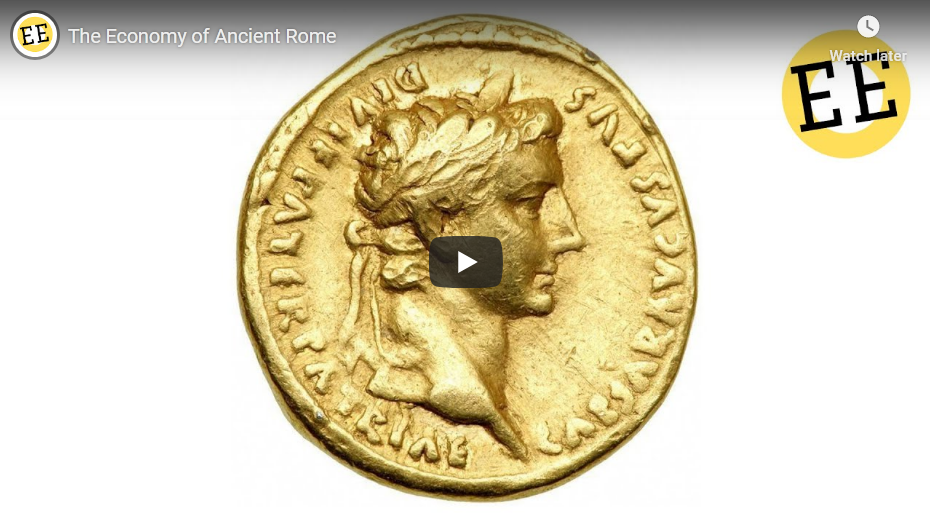
Published 26 Apr 2020Ancient Rome was perhaps the most significant ancient civilisation to have existed throughout history, the empire lived for over 1000 years and in that time, it gave us the foundations for our modern society. Democracy, a court based legal system, Latin languages and alphabet, three course meals, and perhaps it was one of the first modern economies to move beyond a simple agrarian empire and develop things like modern banking, lending, taxation and yes even financial crisis as we know them today.
In the same way that scholars study a dead language like Latin to discerned the foundation of meaning in our modern dialects economists can study the histories of ancient civilisations like Rome to determine basic economic functions in a time before modern financial systems could skew results and Rome was perhaps the most developed case study we could look at.
#rome #economics #recession
Patreon – https://www.patreon.com/EconomicsExpl…
Discord – https://discord.gg/7kM7Tw9
Enquiries – loungejita@gmail.com
References –
Morley, N., 2002. Metropolis and hinterland: the city of Rome and the Italian economy, 200 BC-AD 200. Cambridge University Press.
Temin, P., 2006. “The economy of the early Roman Empire”. Journal of Economic Perspectives
Temin, P., 2017. The Roman market economy. Princeton University Press.
Garnsey, P., Hopkins, K. and Whittaker, C.R. eds., 1983. Trade in the ancient economy
Brown, P., 2012. Through the Eye of a Needle: Wealth, the Fall of Rome, and the Making of Christianity in the West, 350-550 AD. Princeton University Press.
Braund, D.C., 1983. Gabinius, Caesar, and the publicani of Judaea. Klio
Articles
http://penelope.uchicago.edu/Thayer/E…
April 27, 2020
The Economy of Ancient Rome
April 14, 2020
History Summarized: England
Overly Sarcastic Productions
Published 10 Apr 2020English history has a reputation for being nigh incomprehensible — what with all the kings, civil wars, succession crises, and slapfights with France. But with the right perspective (and a little royal-restraint), England can become quite a straightforward story. So let’s take a look at this slice of Britain, and see how it grew into the master of the Isles.
SOURCES & Further Reading: “History of England from the Tudors to the Stuarts”, lecture series for The Great Courses by Robert Bucholz, a great look at Renaissance and Early Imperial England.
“Ten Minute History of England and Britain” Parts 1-18, by History Matters, a lengthy chronicle of English history from the Roman conquest through the Union of the Crowns. Good watch if you have the time.
Foundation by Peter Ackroyd, the first book in a mammoth 6-volume History of England, which covers everything up to the death of Henry VII. If you really want to dig into English history, this is the book for you.This video was edited by Sophia Ricciardi AKA “Indigo”. https://www.sophiakricci.com/
Our content is intended for teenage audiences and up.PATREON: https://www.Patreon.com/OSP
DISCORD: https://discord.gg/h3AqJPe
MERCH LINKS: https://www.redbubble.com/people/OSPY…
OUR WEBSITE: https://www.OverlySarcasticProductions.com
Find us on Twitter https://www.Twitter.com/OSPYouTube
Find us on Reddit https://www.Reddit.com/r/OSP/
The role of disease and climate change in the fall of the western Roman Empire
In Quillette, Jaspreet Singh Boparai reviews a new book by Kyle Harper that tries to incorporate what we have learned about epidemics and climate change into the narrative on the decline of Rome:
Why did the Roman Empire fall? The classic answer is given by Edward Gibbon (1737 — 1794), in chapter 38 of the third volume of The History of the Fall and Decline of the Roman Empire (1776 — 1789):
The decline of Rome was the natural and inevitable effect of immoderate greatness. Prosperity ripened the principle of decay; the causes of destruction multiplied with the extent of conquest; and as soon as time or accident had removed the artificial supports, the stupendous fabric yielded to the pressure of its own weight.
Kyle Harper, Senior Vice President and Provost of the University of Oklahoma, seeks to complement Gibbon’s account by emphasising the role of nature, and specifically climate change and infectious disease, in the fall of Rome in his provocative, exceptionally well-written book The Fate of Rome: Climate, Disease and the End of an Empire. Is Harper correct? Were plagues and climate events fatal for Rome?
Harper accepts the conventional view that Rome’s civilizational collapse began in the later second century AD, accelerated amidst chaos and bloodshed during the third century, and culminated in the humiliations of the fifth century, when Rome was famously sacked by barbarians, and the last, weak, insignificant Roman Emperor was pushed off the throne in AD 476.
[…]
Harper begins The Fate of Rome with a description of Rome as it advertised itself in AD 400. Contemporary inventories record: 28 libraries, 19 aqueducts, two circuses, 37 gates, 423 neighborhoods, 46,602 blocks of flats, 1,790 grand houses, 290 granaries, 856 public baths, 1,352 cisterns, 254 bakeries, 46 brothels, and 144 public latrines. The population is estimated at 700,000 or so. This figure diminished rapidly after August 24th, AD 410, when Rome was sacked by an army of Goths.
The traditional date of Rome’s fall is September 4th, AD 476, when the 16-year-old Emperor Romulus Augustus, the son of a former secretary to Attila the Hun, was forced to abdicate the throne by a barbarian warlord, and dismissed to spend the rest of his days at a seaside villa near Naples. His date of death is not recorded; he was too unimportant to fear assassination. At this point, the city of Rome’s population was still as high as 400,000.
Rome was invaded and sacked a few times over the centuries; more and more of it was abandoned; by the 10th century it was a suburb to nowhere surrounded by malarial swamps, and may have had only 9,000 inhabitants. Most of the economy was related to religious pilgrimages; the city was controlled by gangsters and petty warlords. What was left amidst the ruins was sacked again in AD 1084 by an army that outnumbered residents by as much as three to one.
QotD: The Edict of Diocletian, 301 AD
The most famous episode of price controls in Roman history was during the reign of Emperor Diocletian (A.D. 244-312). He assumed the throne in Rome in A.D. 284. Almost immediately, Diocletian began to undertake huge and financially expensive government spending projects.
There was a massive increase in the armed forces and military spending; a huge building project was started in the form of a planned new capital for the Roman Empire in Asia Minor (present-day Turkey) at the city of Nicomedia; he greatly expanded the Roman bureaucracy; and he instituted forced labor for completion of his public works projects.
[…]
Diocletian also instituted a tax-in-kind; that is, the Roman government would not accept its own worthless, debased money as payment for taxes owed. Since the Roman taxpayers had to meet their tax bills in actual goods, this immobilized the entire population. Many were now bound to the land or a given occupation, so as to assure that they had produced the products that the government demanded as due it at tax collection time. An increasingly rigid economic structure, therefore, was imposed on the whole Roman economy.
But the worst was still to come. In A.D. 301, the famous Edict of Diocletian was passed. The Emperor fixed the prices of grain, beef, eggs, clothing, and other articles sold on the market. He also fixed the wages of those employed in the production of these goods. The penalty imposed for violation of these price and wage controls, that is, for any one caught selling any of these goods at higher than prescribed prices and wages, was death.
Realizing that once these controls were announced, many farmers and manufacturers would lose all incentive to bring their commodities to market at prices set far below what the traders would consider fair market values, Diocletian also prescribed in the Edict that all those who were found to be “hoarding” goods off the market would be severely punished; their goods would be confiscated and they would be put to death.
In the Greek parts of the Roman Empire, archeologists have found the price tables listing the government-mandated prices. They list over 1,000 individual prices and wages set by the law and what the permitted price and wage was to be for each of the commodities, goods, and labor services.
A Roman of this period named Lactanius wrote during this time that Diocletian “… then set himself to regulate the prices of all vendible things. There was much blood shed upon very slight and trifling accounts; and the people brought no more provisions to market, since they could not get a reasonable price for them and this increased the dearth [the scarcity] so much, that at last after many had died by it, the law was set aside.”
Richard M. Ebeling, “How Roman Central Planners Destroyed Their Economy”, Foundation for Economic Education, 2016-10-05.
March 27, 2020
March 1, 2020
The rise and fall of the Byzantine Empire – Leonora Neville
TED-Ed
Published 9 Apr 2018Check out our Patreon page: https://www.patreon.com/teded
View full lesson: https://ed.ted.com/lessons/the-rise-a…
Most history books will tell you that the Roman Empire fell in the fifth century CE, but this would’ve come as a surprise to the millions who lived in the Roman Empire through the Middle Ages. This Medieval Roman Empire, today called the Byzantine Empire, began when Constantine, the first Christian emperor, moved Rome’s capital. Leonora Neville details the rise and fall of the Byzantine Empire.
Lesson by Leonora Neville, animation by Remus & Kiki.
Thank you so much to our patrons for your support! Without you this video would not be possible! Abhijit Kiran Valluri, Mandeep Singh, Sama aafghani, Vinicius Lhullier, Connor Wytko, Marylise CHAUFFETON, Marvin Vizuett, Jayant Sahewal, Quinn Shen, Caleb ross, Elnathan Joshua Bangayan, Gaurav Rana, Mullaiarasu Sundaramurthy, Jose Henrique Leopoldo e Silva, Dan Paterniti, Jose Schroeder, Jerome Froelich, Tyler Yoshizumi, Martin Stephen, Justin Carpani, Faiza Imtiaz, Khalifa Alhulail, Tejas Dc, Govind Shukla, Srikote Naewchampa, Ex Foedus, Sage Curie, Exal Enrique Cisneros Tuch, Vignan Velivela, Ahmad Hyari, A Hundred Years, eden sher, Travis Wehrman, Minh Tran, Louisa Lee, Kiara Taylor, Hoang Viet, Nathan A. Wright, Jast3 , Аркадий Скайуокер, Milad Mostafavi, Singh Devesh Sourabh, Ashley Maldonado, Clarence E. Harper Jr., Bojana Golubovic, Mihail Radu Pantilimon, Sarah Yaghi, Benedict Chuah, Karthik Cherala, haventfiguredout, Violeta Cervantes, Elaine Fitzpatrick, Lyn-z Schulte, cnorahs, Henrique ‘Sorín’ Cassús, Tim Robinson, Jun Cai, Paul Schneider, Amber Wood, Ophelia Gibson Best, and Cas Jamieson.
February 28, 2020
A history lesson from Roman Thessalonika
At Samizdata, Niall Kilmartin recounts a story that has some interesting modern parallels for those who choose to look:

The Course of Empire – Destruction by Thomas Cole, 1836.
From the New York Historical Society collection via Wikimedia Commons.
It happened in Thessalonika near the end of the Roman Empire.
The empire had been in trouble for some time. It was not reproducing itself – “The human harvest was bad” (Seeley). “Agri Deserti” – once-cultivated lands now abandoned for lack of people to till them – could be found in every province.
Internally, the empire tried its usual solution: more government, more laws, more force. Legislation to reward large families and tax bachelors was kept on the statute books for centuries although “successful it was not” (Power). As the empire waned, laws to deal with the consequence of this failure were added: binding cultivators to the soil (the origin of serfdom) was merely the most common example of assigning a hereditary obligation to more and more of the professions the state relied on as soon as a shortfall appeared in them, legally punishing any son who did not follow in his father’s footsteps. To draft and regulate these laws, the numbers and privileges of bureaucrats ballooned from Rome’s former proportion (though still small by our standards).
Successful all these laws were not – so, externally, the empire addressed its chronic shortage of manpower by immigration,
to dose it with barbarian vigour. Just a small injection to begin with and then more and more
Goths arrived, first as recruits to Roman army units, then as foederate units under their own leaders, growing like a cancer within the armed forces until an Egyptian mother quite naturally wrote the emperor to return her citizen son who “has gone off with the barbarians” – by which she meant he had joined the “Roman” army.
Emperor Theodosius made the Goths obey him, but his was an insecure authority over them. He used Gothic troops in battles where pyrrhic victories may have been welcome. As one summary of the costly victory of Frigidius (394 AD) puts it,
The loss of 10,000 Goths cannot have distressed Theodosius unduly.
Theodosius also had little choice but to use some of their leaders as governors. Mostly, the empire’s soldiers were also its police – so the leaders of those who were now increasingly providing those soldiers had to be both rewarded by, and used in, such posts. Thus did Butheric the Goth became governor (magister militum) over Illyricum, which included Thessalonika.
The urban elite of Thessalonika were university-educated Greeks.
It would be hard to imagine an education less suited to help them understand the dangers they faced. The study of rhetoric, its links with reality long severed, …
So Eileen Power described the “learned” of the dying Roman world. (Today, 8 decades after she wrote those sentences, it is easier to imagine an education even less suited to helping elite intellectuals understand the dangers facing them, one whose links with reality are even more completely severed.) In the empire’s second century, Hadrian had dispersed those Jews he did not kill around the empire, confident they’d soon lose their primitive prejudices and assimilate to being broad-minded Graeco-Roman intellectuals like himself. Fourth/fifth century Graeco-Roman intellectuals thought the same of the immigrants. Sidonius Appolinaris wrote a “good-natured” description of the “embarrassing friendliness” of the new barbarian neighbours he encountered on a fifth-century visit to Lyons:
“How can he be expected to compose six-foot metres”, [Sidonius] asks, “with so many seven-foot patrons all around him, all singing and all expecting him to admire their uncouth stream of non-Latin words.”
The shrug of the shoulders, the genial contempt of one conscious of an infinite superiority – how familiar it all seems.
Perhaps the Thessalonikan city leaders greeted their new governor in this spirit, as sure as Hadrian was about the Jews that this uncouth Goth would soon lose his barbaric prejudices.
QotD: Greek and Roman views of markets
The debate over the Polanyi and Finley view of ancient economic organisation — or perhaps over the Marx and Weber and Polanyi and Finley views — does not seem to have been followed with much attention by libertarians and conservatives. It is worth following, even so. Beyond a very basic level, history is as much about the present as the past. Gibbon’s Decline and Fall of the Roman Empire is a masterpiece of pure history. But it is also an account of what he saw as the long night of reason — and its attendant nightmares — between the golden age of the Antonines and his own age, and an anxious search for reassurance that there would be no second sleep. Macaulay’s History of England is in part an attempt to legitimise the Victorian settlement as the culmination of historical processes that had their local origin in the 1680s. How readers can be brought to think about the past will insensibly affect how they see the present.
Now, if it could be shown that the Aztecs had no concept of market behaviour, and that they were motivated by considerations wholly different from our own, it would be of little consequence. Everything we know about Aztec civilisation raises doubts whether it was worth calling a civilisation. The Aztecs had no writing and were ignorant of metal working and wheeled transport. Their cultural values were expressed in ritual torture, mass human sacrifice and cannibalism. The Mayans and Toltecs and all the others of their sort seem to have been no better. We may deplore the brutality of the Spanish conquest, but still conclude that it was, on balance, a blessing for the peoples of South America.
But it is different with the empires of the ancient Near East — and very different with the Greeks and Romans. These latter races are our intellectual fathers. Everything we ourselves have achieved is built on the foundations they laid. They gave us the names of all our arts and sciences. Eighty per cent of the English vocabulary is derived from Greek or Latin. Knowledge of these languages may be less widely diffused than it was until a century ago. But the general prestige of the Greeks and Romans is barely less now than it was among the mediaeval pilgrims who gaped at the crumbling remains of the Colisseum and the Baths of Diocletian. If it can be shown that they were wholly unlike us in their economic motivations, that would surely place in doubt the notion that market behaviour is natural to us.
And if few people outside the relevant university departments have read Polanyi and Finley, their conclusions are transmitted through popular histories and newspaper articles and television documentaries, and through large numbers of students who, however superficially, are exposed to these conclusions.
Sean Gabb, “Market Behaviour in the Ancient World: An Overview of the Debate”, 2008-05.
February 15, 2020
The Best Couples in History — Valentine’s Day Special
Overly Sarcastic Productions
Published 14 Feb 2020Happy Valentine’s Day! Celebrate the history of Love with a rundown of these outstanding couples — for better and for worse.
Our content is intended for teenage audiences and up.
This video was edited by Sophia Ricciardi, AKA “Indigo”.
PATREON: https://www.Patreon.com/OSP
DISCORD: https://discord.gg/h3AqJPe
MERCH LINKS: https://www.redbubble.com/people/OSPY…OUR WEBSITE: https://www.OverlySarcasticProductions.com
Find us on Twitter https://www.Twitter.com/OSPYouTube
Find us on Reddit https://www.Reddit.com/r/OSP/
January 23, 2020
Vespasian: The Path To Power | Timeline
Timeline – World History Documentaries
Published 9 Jun 2017Check out our new website for more incredible history documentaries: HD and ad-free. http://bit.ly/2O6zUsK
Looks at the life of the Roman emperor Vespasian, from childhood to his death in 79 AD. Provides insight into the sophisticated workings of the Roman Empire.
Content licensed from Digital Rights Group (DRG).
January 18, 2020
Economic interventions during the Roman republic and empire
Even during the republican period, state intervention in the economy — usually to “fix” another problem already caused or exacerbated by previous interventions — often made the situation worse. Fortunately there’s a lot of ruin in a nation, but over a long enough run, you do reach the economic end-game:

“The Course of Empire – The Consummation of Empire” by Thomas Cole, one of a series of five paintings created between 1833 and 1836.
Wikimedia Commons.
Debt forgiveness in ancient Rome was a contentious issue that was enacted multiple times. One of the earliest Roman populist reformers, the tribune Licinius Stolo, passed a bill that was essentially a moratorium on debt around 367 BC, a time of economic uncertainty. The legislation enabled debtors to subtract the interest paid from the principal owed if the remainder was paid off within a three-year window. By 352 BC, the financial situation in Rome was still bleak, and the state treasury paid many defaulted private debts owed to the unfortunate lenders. It was assumed that the debtors would eventually repay the state, but if you think they did, then you probably think Greece is a good credit risk today.
In 357 BC, the maximum permissible interest rate on loans was roughly 8 percent. Ten years later, this was considered insufficient, so Roman administrators lowered the cap to 4 percent. By 342, the successive reductions apparently failed to mollify the debtors or satisfactorily ease economic tensions, so interest on loans was abolished altogether. To no one’s surprise, creditors began to refuse to loan money. The law banning interest became completely ignored in time.
The original “dole” was implemented as part of the reforms of the Gracchi brothers, and quickly became a major part of government spending:
Gaius, incidentally, also passed Rome’s first subsidized food program, which provided discounted grain to many citizens. Initially, Romans dedicated to the ideal of self-reliance were shocked at the concept of mandated welfare, but before long, tens of thousands were receiving subsidized food, and not just the needy. Any Roman citizen who stood in the grain lines was entitled to assistance. One rich consul named Piso, who opposed the grain dole, was spotted waiting for the discounted food. He stated that if his wealth was going to be redistributed, then he intended on getting his share of grain.
By the third century AD, the food program had been amended multiple times. Discounted grain was replaced with entirely free grain, and at its peak, a third of Rome took advantage of the program. It became a hereditary privilege, passed down from parent to child. Other foodstuffs, including olive oil, pork, and salt, were regularly incorporated into the dole. The program ballooned until it was the second-largest expenditure in the imperial budget, behind the military. It failed to serve as a temporary safety net; like many government programs, it became perpetual assistance for a permanent constituency who felt entitled to its benefits.
In the imperial government, economic interventions were part and parcel of the role of the emperor:
In 33 AD, half a century after the collapse of the republic, Emperor Tiberius faced a panic in the banking industry. He responded by providing a massive bailout of interest-free loans to bankers in an attempt to stabilize the market. Over 80 years later, Emperor Hadrian unilaterally forgave 225 million denarii in back taxes for many Romans, fostering resentment among others who had painstakingly paid their tax burdens in full.
Emperor Trajan conquered Dacia (modern Romania) early in the second century AD, flooding state coffers with booty. With this treasure trove, he funded a social program, the alimenta, which competed with private banking institutions by providing low-interest loans to landowners while the interest benefited underprivileged children. Trajan’s successors continued this program until the devaluation of the denarius, the Roman currency, rendered the alimenta defunct.
By 301 AD, while Emperor Diocletian was restructuring the government, the military, and the economy, he issued the famous Edict of Maximum Prices. Rome had become a totalitarian state that blamed many of its economic woes on supposed greedy profiteers. The edict defined the maximum prices and wages for goods and services. Failure to obey was punishable by death. Again, to no one’s surprise, many vendors refused to sell their goods at the set prices, and within a few years, Romans were ignoring the edict.
Actually that last sentence rather understates the situation. The Wikipedia entry describes the outcome of the Edict:
The Edict was counterproductive and deepened the existing crisis, jeopardizing the Roman economy even further. Diocletian’s mass minting of coins of low metallic value continued to increase inflation, and the maximum prices in the Edict were apparently too low.
Merchants either stopped producing goods, sold their goods illegally, or used barter. The Edict tended to disrupt trade and commerce, especially among merchants. It is safe to assume that a black market economy evolved out of the edict at least between merchants.
Sometimes entire towns could no longer afford to produce trade goods. Because the Edict also set limits on wages, those who had fixed salaries (especially soldiers) found that their money was increasingly worthless as the artificial prices did not reflect actual costs.
January 2, 2020
Divine Caesar Augustus, Master of Propaganda – January 1, 2020 – TimeGhost of Christmas Past Day 9
TimeGhost History
143K subscribers
Dissent This
Julius Caesar was already associated with the Divine during his life. But two years after his death, he was officially declared so by the Senate of Rome. Very much to benefit of his cousin, Octavian.Join us on Patreon: https://www.patreon.com/TimeGhostHistory
Hosted by: Indy Neidell
Written by: Joram Appel
Directed and Produced by: Spartacus Olsson and Astrid Deinhard
Executive Producers: Bodo Rittenauer, Astrid Deinhard, Indy Neidell, Spartacus Olsson
Creative Producer: Joram Appel
Post-Production Director: Wieke Kapteijns
Research by: Joram Appel
Edited by: Karolina Dołęga
Sound design: Marek KamińskiSources:
Wellcome Library no. 42647i
Calendar by Lorena Salagre from the Noun ProjectMusic from Epidemic Sound Library:
“A Sleigh Ride Into Town” – Howard Harper-Barnes
“Ancient Saga” – Max Anson
“Thunder Storm 01” – Fredrik EkstromA TimeGhost chronological documentary produced by OnLion Entertainment GmbH.
From the comments:
TimeGhost History
1 week ago
Happy New Year! We have some amazing videos coming up in the new year, but not before we publish the final instalment of our TimeGhost of Christmas Past episode. This one is my personal favourite, as I’m a huge fan of the late Roman Republic and early Empire as a historical study object. So when we were dividing the Christmas episodes among the research team, I fought for this one to be on the list. I had a blast writing it (surprisingly, I don’t get to write about Caesar that often for the WW2 Channel) and I hope you all enjoy watching it.
Cheers,
Joram
November 4, 2019
QotD: Ludwig von Mises explains the fall of the western Roman empire
Knowledge of the effects of government interference with market prices makes us comprehend the economic causes of a momentous historical event, the decline of ancient civilization.
[…]
The Roman Empire in the second century, the age of the Antonines, the “good” emperors, had reached a high stage of the social division of labour and of interregional commerce. Several metropolitan centres, a considerable number of middle-sized towns, and many small towns were the seats of a refined civilisation […]. There was an extensive trade between the various regions of the vast empire. Not only in the processing industries, but also in agriculture there was a tendency toward further specialization. The various parts of the empire were no longer economically self-sufficient. They were interdependent.
What brought about the decline of the empire and the decay of its civilization was the disintegration of this economic interconnectedness, not the barbarian invasions. The alien aggressors merely took advantage of an opportunity which the internal weakness of the empire offered to them. From a military point of view the tribes which invaded the empire in the fourth and fifth centuries were not more formidable than the armies which the legions had easily defeated in earlier times. But the empire had changed. Its economic and social structure was already medieval […]
[I]n the political troubles of the third and fourth centuries the emperors resorted to currency debasement. With the system of maximum prices the practice of debasement completely paralysed both the production and the marketing of the vital foodstuffs and disintegrated society’s economic organisation. The more eagerness the authorities displayed in enforcing the maximum prices, the more desperate became the conditions of the urban masses dependent on the purchase of food. Commerce in grain and other necessities vanished altogether. To avoid starving, people deserted the cities, settled on the countryside, and tried to grow grain, oil, wine, and other necessities for themselves.
Ludwig von Mises, Human Action, 1949.
October 29, 2019
QotD: The financial crisis of 33AD
Let us next take a brief but important notice in Tacitus, for the year 33 AD:
Meanwhile a powerful host of accusers fell with sudden fury on the class which systematically increased its wealth by usury in defiance of a law passed by Caesar the Dictator defining the terms of lending money and of holding estates in Italy, a law long obsolete because the public good is sacrificed to private interest. The curse of usury was indeed of old standing in Rome and a most frequent cause of sedition and discord, and it was therefore repressed even in the early days of a less corrupt morality. First, the Twelve Tables prohibited any one from exacting more than 10 per cent., when, previously, the rate had depended on the caprice of the wealthy. Subsequently, by a bill brought in by the tribunes, interest was reduced to half that amount, and finally compound interest was wholly forbidden. A check too was put by several enactments of the people on evasions which, though continually put down, still, through strange artifices, reappeared. On this occasion, however, Gracchus, the praetor, to whose jurisdiction the inquiry had fallen, felt himself compelled by the number of persons endangered to refer the matter to the Senate. In their dismay the senators, not one of whom was free from similar guilt, threw themselves on the emperor’s indulgence. He yielded, and a year and six months were granted, within which every one was to settle his private accounts conformably to the requirements of the law.
Hence followed a scarcity of money, a great shock being given to all credit, the current coin too, in consequence of the conviction of so many persons and the sale of their property, being locked up in the imperial treasury or the public exchequer. To meet this, the Senate had directed that every creditor should have two-thirds of his capital secured on estates in Italy. Creditors however were suing for payment in full, and it was not respectable for persons when sued to break faith. So, at first, there were clamorous meetings and importunate entreaties; then noisy applications to the praetor’s court. And the very device intended as a remedy, the sale and purchase of estates, proved the contrary, as the usurers had hoarded up all their money for buying land. The facilities for selling were followed by a fall of prices, and the deeper a man was in debt, the more reluctantly did he part with his property, and many were utterly ruined. The destruction of private wealth precipitated the fall of rank and reputation, till at last the emperor interposed his aid by distributing throughout the banks a hundred million sesterces, and allowing freedom to borrow without interest for three years, provided the borrower gave security to the State in land to double the amount. Credit was thus restored, and gradually private lenders were found. The purchase too of estates was not carried out according to the letter of the Senate’s decree, rigour at the outset, as usual with such matters, becoming negligence in the end.
So far as we can understand what was happening, the passage largely explains itself. An old law restricting the rate of interest is suddenly revived. This invalidates a large class of loans above the official rate made on short term but renewable contracts. An indulgence is given of eighteen months, during which the now illegal loans are systematically called in. The result is a liquidity crisis in which land prices collapse. The crisis is dealt with by emergency lending by the Emperor.
There is nothing unusual about this sort of crisis. We are passing through something similar at the moment. What Tacitus is showing is a developed economy with much integration of capital and land markets. We can see how easily land can be sold, and how responsive prices are to the forces of demand and supply. Again, special pleading can be brought to bear on the story to try and minimise the extent of market behaviour. But, so far as this crisis can be analysed in terms of standard economic theory, the simplest explanation is to conclude that the economy of the early Roman Empire was, in its essentials, like that of the modern world.
Sean Gabb, “Market Behaviour in the Ancient World: An Overview of the Debate”, 2008-05.
October 26, 2019
History Summarized: Byzantine Beginnings
Overly Sarcastic Productions
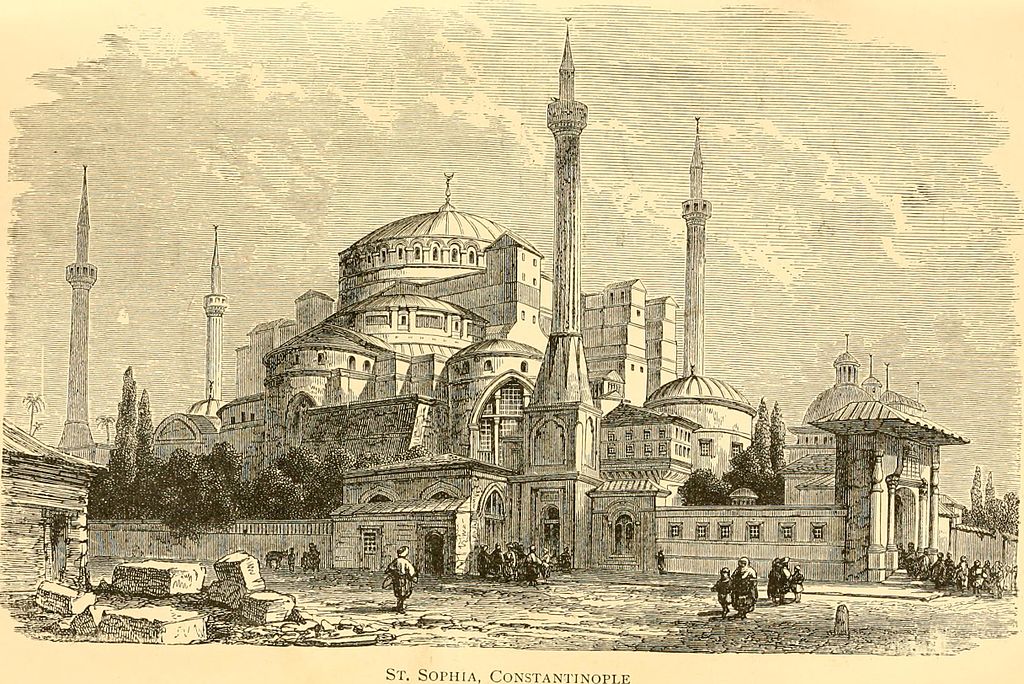
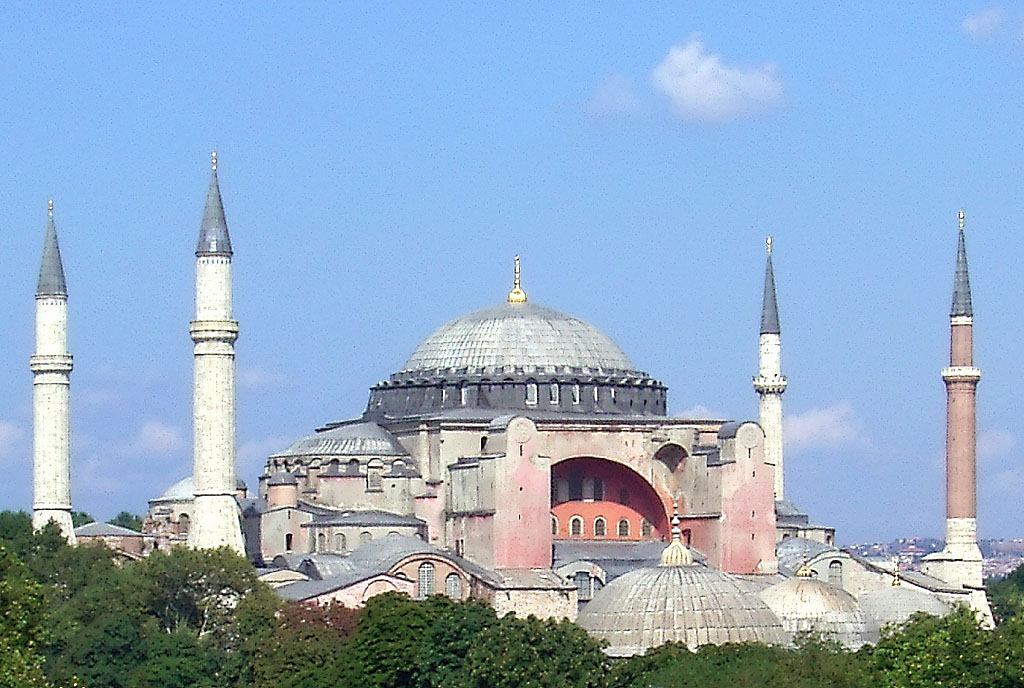
Published 25 Oct 2019It’s Rome! It’s Greece! It’s… The Byzantine Empire! Check out how late Imperial Rome transformed in the centuries from Constantine to Justinian, as it evolved into a new and unique iteration of Roman civilization. Watch as Byzantine craftsmen revolutionize artwork by throwing a megaton of gold onto every last mosaic in the Mediterranean, and radically reimagine architecture by asking “But what if *dome*?”
PATREON: https://www.Patreon.com/OSP
DISCORD: https://discord.gg/sS5K4R3
MERCH LINKS: https://www.redbubble.com/people/OSPY…
OUR WEBSITE: https://www.OverlySarcasticProductions.com
Find us on Twitter https://www.Twitter.com/OSPYouTube
Find us on Reddit https://www.Reddit.com/r/OSP/