Quotulatiousness

April 11, 2023

Canada’s colonial past

Filed under: Books, Britain, Cancon, Education, History — Tags: , , , — Nicholas @ 05:00

Peter Shawn Taylor talks to Nigel Biggar, author of the recent book Colonialism: A Moral Reckoning:
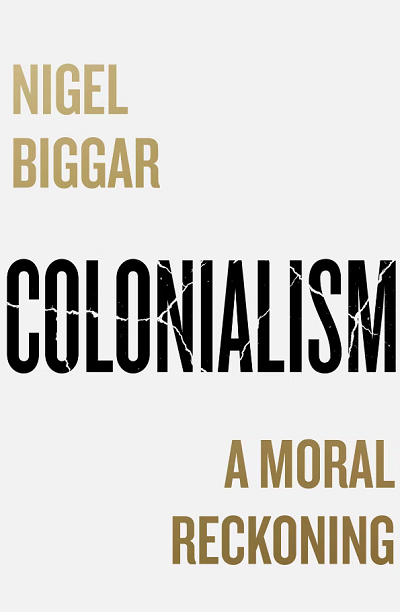
C2C Journal: Explain what you mean by a “moral reckoning” for colonialism – and how does that differ from the now-standard historians’ view that it was a shameful era characterized by exploitation, racism and violence?

Nigel Biggar: My first degree from Oxford is in history but professionally I am a theologian and ethicist. An ethicist is in the business of thinking about rights and wrongs and complicated moral issues. As I have previously written about the morality of war, I wanted to bring that ethical expertise to the very complicated historical phenomenon of empire.

And while my critics claim I am not an historian, they are not ethicists. My book is not a chronology. Each chapter deals with a different moral issue: motives, violence, racism, slavery, et cetera. Then I try to bring it to a conclusion with an overall view of the record of British imperialism, morally speaking. There are the evils of the British Empire, and there are its benefits as well.

[…]

C2C: One of your chapters takes a close look at Canada’s Indian Residential Schools. Take us through an ethicist’s view of a topic that has come to be considered this country’s greatest sin.

NB: The motivation for establishing residential schools was basically humanitarian. That is, they were meant to enable pupils to survive in a world that was changing radically. Notwithstanding any abuses and deficiencies that may have come later, we have to deal with the fact that native Canadians were asking for these schools in the beginning. They lobbied for them in treaties. And this was because they recognized that for their people to survive, they needed to adapt. They wanted their young people to learn English or French and how to farm. They recognized that the old ways could not be sustained any longer.

A lot of people today have a hard time coming to grips with the fact that the past was a very different place. For most people, the 19th century was pretty damn brutal. When we consider the conditions in residential schools today, we are horrified. But what is horrifying are the conditions in which most people of that time had to live. It is true mortality among native kids in these schools was generally higher and conditions were poorer. Sexual abuse was also a problem, but mostly by fellow pupils. I don’t want to sweep any of that under the table. Maybe the Canadian government should have spent more money on residential schools. But to make that case you need to identify what the government of the day should have spent less on. And I haven’t seen that argument made anywhere.

The Truth and Reconciliation Commission has many lurid tales about kids being seized from their parents. No doubt that, after education became compulsory in the 1920s, some children were distressed at being taken away. But this too has to be understood in light of the fact that the idea all children must have a certain level of education was gaining tremendous traction in Canada, Britain and throughout Europe at this time. So compulsory education for native children must be considered in that regard. And what might people say today if the Government of Canada had refused to educate Indigenous children?

Again, I don’t want to downplay the defects of residential schools. But we need to provide context in order to understand these things in proportion. It must also be considered significant that since the early 1990s, Canadian media have declined to give voice to many natives who want to offer positive expressions of residential schools, as J.R. Miller points out in his authoritative history of the residential school system, Shingwauk’s Vision. According to Miller, the verdict for the schools must be given in “muted and equivocal terms”. The wholesale damnation of residential schools is overwrought and unfair.
April 6, 2023

Tikka T3x Arctic / Canadian Rangers C19 Rifle, 7.62 / .308 Win

Filed under: Cancon, Europe, Military, Weapons — Tags: , , , , — Nicholas @ 02:00

Bloke on the Range
Published 29 Mar 2019

Bloke unboxes and takes a first look at the Tikka T3x Arctic rifle, adopted as the C19 rifle for the Canadian Rangers in 7.62 NATO / .308 Winchester. Is the hype real? Oh yes! Yes, it really is!
(more…)

April 1, 2023

The fastest growing demographic in Canada might be the “Pretendians”

Filed under: Cancon, History, Media, Politics — Tags: , , , , , — Nicholas @ 04:00

In Quillette, George Case outlines the fraught topic of claimed First Nations heritage among Canadians:

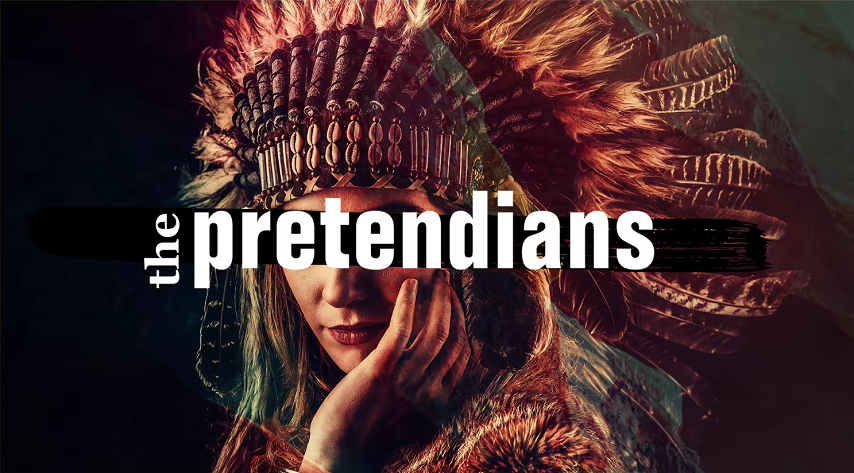
“The Pretendians”, a CBC documentary – https://www.cbc.ca/passionateeye/episodes/the-pretendians

Many North Americans have cited such extraction as a conversation piece, an exotic mark of character, or just an intriguing bit of genealogy: among them are singers Cher and Beyoncé, actor Johnny Depp, rockers Jimi Hendrix and Robbie Robertson, baseball great Johnny Bench, and numerous others.

That such backgrounds are both perfectly plausible and difficult to verify tells us something about the history of the human species since 1492. Consensual or coerced relations between Europeans, Africans, and Indigenous people throughout the Americas — even when socially deplored or officially prohibited—must have happened countless times to generate the populace we are today. Most of us, by some measure, are mini-melting pots. And consider, too, today’s routine unions of partners whose great-grandparents might have been horrified at the prospect of “marrying out”: Protestants with Catholics, Jews with Gentiles, Asians with Anglos, and a rainbow of other combinations. Indeed, to oppose such relationships, and the products thereof, is now usually seen as a small-minded prejudice of the ignorant and intolerant.

Unless the opponent happens to be a Native person. In Canada, over the last few years, a rash of scandals have erupted over prominent figures whose claims of Aboriginal heritage have been heatedly disproved, like novelist Joseph Boyden, actress and filmmaker Michelle Latimer, academic Carrie Bourassa, and former judge Mary Ellen Turpel-Lafond. The uproar around “Pretendians” has raised uncomfortable questions around race and politics that the angriest Aboriginals may not have intended in their denunciations. Métis lawyer Jean Teillet has called the phenomenon “the ultimate step in colonialism”, while on The Indigenous Foundation website, Neegahnii Madeline Chakasim has asserted, “To claim Indigenous ancestry and/or claim to be a member of a Nation without any evidence, or claiming Indigeneity for the fun of it, is a complete slap to the face of any existing Indigenous person.” And Ojibwe writer Drew Hayden Taylor explained the message of his 2022 documentary, The Pretendians, by remarking, “In past centuries, the dominant culture has tried to take so many things from us, leaving behind the one thing most important to us: who we are.”

Yet just who are “we”? As with so much else in conventional Canadian wisdom around Native issues, the jealous guarding of authentic Native identity has its logical terminus in a separate-but-equal regime that contradicts the universal impartiality promised to all citizens: sanctioned racial essentialism for Aboriginals, mandatory multiculturalism for everyone else. Never discriminate against, but always discriminate in favor. In principle, all people are to be treated interchangeably, but in practice, one subset of people must be impermeably sealed off from others. At its creepiest, the Pretendian problem has echoes of the one-drop standards that obtained in Nazi Germany and the Jim Crow American South, insofar as sorting the real Natives from the fake ones is determined in part by a biological purity that few other cultures attempt to preserve, much less openly endorse.

It’s also ironic that in many episodes of exposed Pretendians, the purported disadvantage of a Native background — statistically, Canadian Natives are poorer than non-Natives, suffer higher rates of addiction and suicide, and have long been overrepresented in prisons and as victims of crime — is used as a bonus credential in academia or the arts. Schools and other institutions eager to boast of their ameliorative “Indigenization” programs have hired, commissioned works by, or otherwise granted special recognition to applicants based on unchecked claims of Aboriginal ancestry.

Eventually — and inevitably — some of those claims turn out to be flimsy: a vague personal biography here, a tenuous adoption record there, suspicious gaps in government documentation (Canadian Natives are entitled to hold a “Status Indian” card issued by federal or provincial agencies) somewhere else. This has happened across Canada, from Vancouver’s Emily Carr University of Art and Design, where faculty member Gina Adams’s Native lineage was called into question in 2021, to Kingston Ontario’s Queen’s University, where no less than six instructors and staff had their Native self-identification doubted in an anonymous report that came out the same year.

Complicating these situations, however, is that few of these cases seem to have been deliberate frauds. Even the famous imposter Archie Belaney (1888–1938), an Englishman whose Scottish-Apache persona of “Grey Owl” was wholly invented, parlayed his imaginary Native status into genuinely progressive campaigns for wilderness conservation in the early 20th century.

March 22, 2023

California – Embrace the Unicorn! No, the other Unicorn!

Chris Bray on California’s hoped-for path to transition away from fossil fuels:

California has the progressive vision to go all-electric, with laws and regulations that phase out gas water heaters, furnaces, and cars in the near future — while transitioning away from the production of electricity through the use of nuclear and natural gas technologies. Putting the teensy-weensy engineering questions aside and embracing the unicorn, this deep blue vision of the future means the state needs to build wind and solar power facilities in massive quantities, and now. California currently has about half the power it needs to do what it says it plans to do in just ten years.

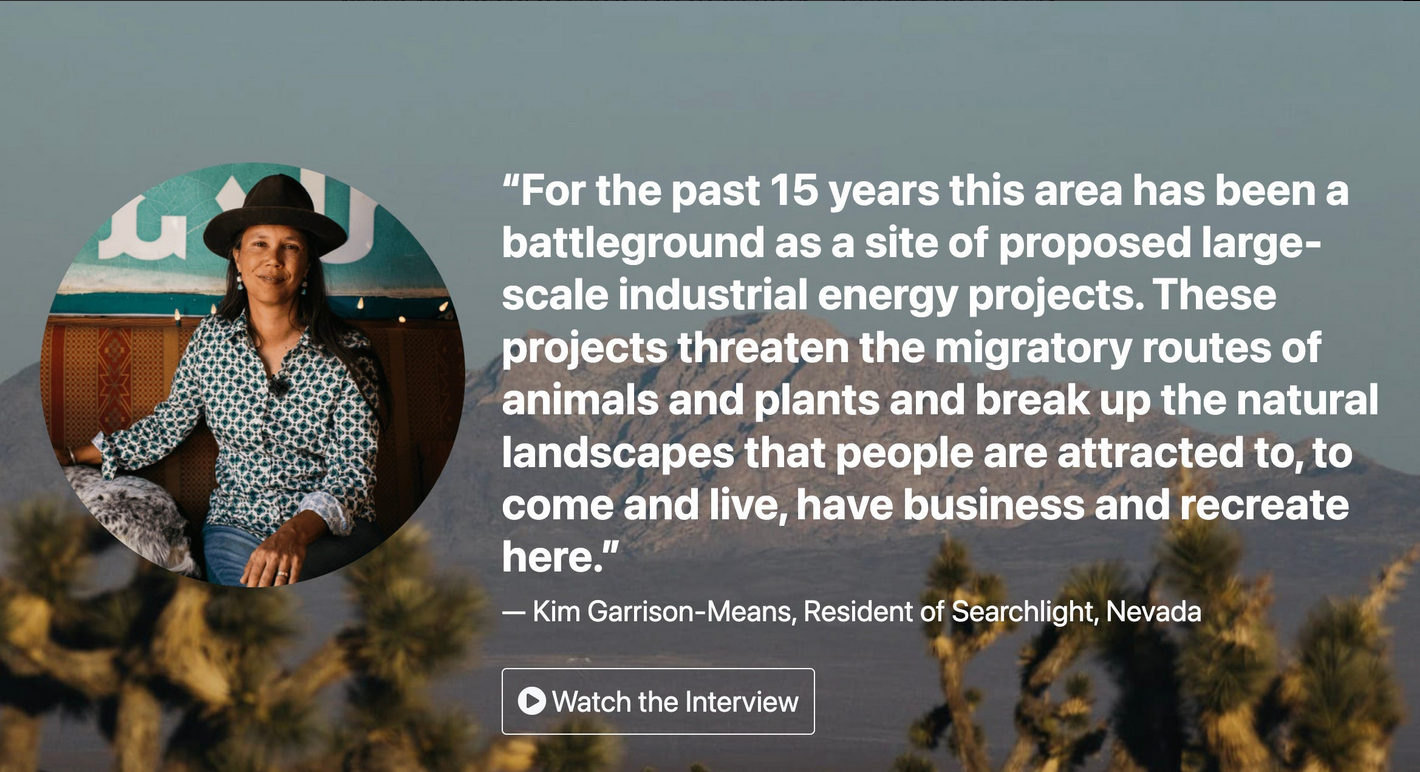
But President Joe Biden just announced a move that aggressively advances the progressive vision of preserving wilderness and preventing development, naming the Avi Kwa Ame National Monument in the Mojave Desert — preventing solar and wind development on 506,814 acres of lightly populated and federally owned desert land. The coalition of tribal and community groups that has worked to get the national monument designated make the anti-solar point explicit on their website:

Where progressive coastal urbanites see the progressive project of decarbonization, people in wilderness-adjacent areas see industrial blight, and express that view in the language of progressive conservationism. To a degree not explored by the false binary of media-defined American politics, in which good people on the left face bad people on the right, California’s future is an increasingly sharp conflict between left and left — and note what kind of permits energy companies have to get to build big wind and solar plants in the desert:

When progressive California builds its progressive energy infrastructure, it’s going to incidentally take a shit-ton of bighorns and tortoises and birds. I assume I don’t have to explain the euphemism.

March 15, 2023

Mining the moon would be “harmful” to indigenous people, say activists

Filed under: Media, Politics, Science, Space, USA — Tags: , , , — Nicholas @ 03:00

Among the many, many things that are said to be harmful to indigenous culture we’re now told to include any kind of Lunar exploitation as modern colonialism:

Artist’s conception of Helium-3 mining on the surface of the Moon.
Image from Inhabitat.com

Humans have boldly ventured beyond the Earth into space for more than half a century now. It’s a testament to the ambition of the modern world.

And today, humanity is still more ambitious. A new space race is underway between the US and China to mine the Moon for rare metals. NASA is even hoping to establish a long-term presence on the Moon and eventually send humans to Mars.

But it seems that some scientists-cum-activists, in hock to identity politics, want to rein in that ambition. Speaking ahead of a US conference on the ethics of space exploration, held by the American Association for the Advancement of Science (AAAS) last week, astrobiologist Dr Pamela Conrad told the Guardian that space exploration, particularly efforts to mine the Moon, is in danger of becoming an exercise in “colonialism” and “exploitation”. Conrad warned that “if something that’s not here [on Earth] is seen as a resource, just ripe to be exploited, then that [perpetuates] colonialism”.

Conrad’s fellow panellist at the conference, Dr Hilding Neilson, went even further. According to Neilson, a member of the Native American Mi’kmaq people, indigenous people have a deep connection with celestial bodies like the Moon. They therefore have a more profound and, by implication, superior “way of knowing” the Moon compared with those advocating space exploration. The latter merely see the Moon “as a dead object to be conquered”, Neilson says – meaning that those advocating space exploration are “essentially cheering on the history of colonialism”.

There are so many problems with this argument it’s difficult to know where to start. Both Conrad and Neilson appear to be using the specific and brutal practice of “colonialism” to describe – and demonise – humanity’s attempt to master nature in general. That’s a flawed enough approach to take to the history of our growing mastery of nature on Earth. But it’s even more flawed in the context of space.

After all, there’s one big difference between laying claim to the resources of other countries under colonialism and attempting to mine the Moon – nobody lives on the Moon! So no one would be “exploited” or “colonised” if humans were to mine it. Space exploration is therefore not the same as colonialism.

March 5, 2023

The clear drawbacks of depending too much on oral history

In The Line, Jen Gerson explains why you need to exercise caution when dealing with oral traditions:

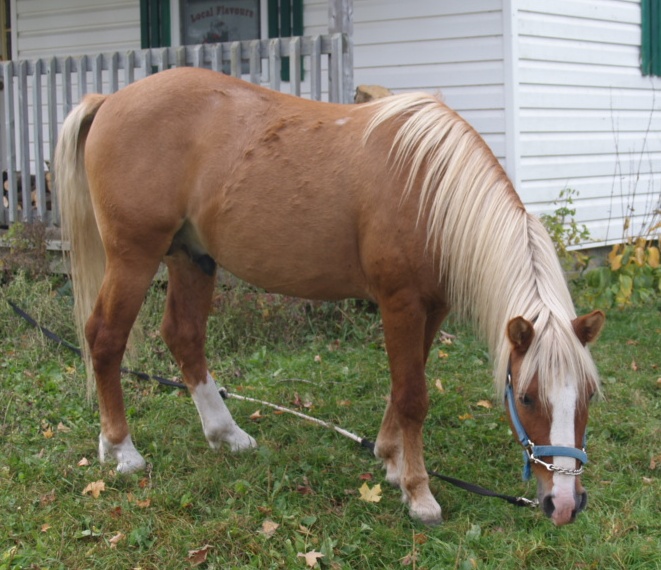
Lac La Croix Indian Pony stallion – Mooke (Ojibway for – he comes forth), October 2008.
Photo by Llcips09 via Wikimedia Commons.

A BBC travel feature published several weeks ago had the hallmarks of a classic progressive narrative. It was the tale of the “endangered Ojibwe spirit horse; the breed, also known as the Lac La Croix Indian pony, is the only known indigenous horse breed in Canada.”

The spirit horse was reduced to near extinction by European settlers who treat these magical creatures, deemed “guides and teachers”, as a mere nuisance to be culled and eliminated in favour of more profitable animals like cattle, or so the telling goes. A native breed of a beloved animal struggling to survive in the face of voracious colonial settlers.

Someone call James Cameron.

Unless you know a little evolutionary history, that is. In which case, you will already be aware that this story is pure pseudoscientific hokum.

Look, no one likes to be disrespectful about sensitive matters where the legitimately oppressed and aggrieved claims of First Nations peoples are concerned. This is a nation that is struggling to come to terms with its own horrific colonial past. This process is taking on many forms: witness the applause granted to singer Jully Black, who recently amended the national anthem “our home on native land”. Or, perhaps, the calls by one NDP MP to combat residential school denialism by passing new laws on hate speech — which would make questioning certain narratives not only an act of heresy, but also a literal crime.

Listening to stories, and respecting lived experiences and oral histories Indigenous people at the core of Canadian history and identity has given a new credibility to the traditional knowledge of First Nations people in academia, media, and in society at large.

But the story of the Ojibwe spirit horse is a clear example of the limits of oral history.

The horses now roaming the plains of North America are not a native species. The horse did evolve on this continent before migrating to Asia and Europe. However, the North American breed is believed to have been extirpated about 10,000 years ago (or thereabouts) during a mass extinction event that wiped out almost all large land mammals.

There is some evidence that isolated pockets of a native horse breed may have survived in North America much later than this, but the horses roaming about today are descended from those that were brought from Europe after the 15th century.

Of course, science is always evolving, but the overwhelming bulk of genetic and archeological evidence to date supports this theory. The native North American horse is long, long gone. The bands of horses freely wandering the backcountry are not wild, but feral; they’re the product of escaped or abandoned horse stock of distant European origin.

January 26, 2023

Indigenous Weapons and Tactics of King Philip’s War

Atun-Shei Films
Published 20 Jan 2023

Native American living historians Drew Shuptar-Rayvis and Dylan Smith help me explore the military history of King Philip’s War from the indigenous perspective.
(more…)

December 6, 2022

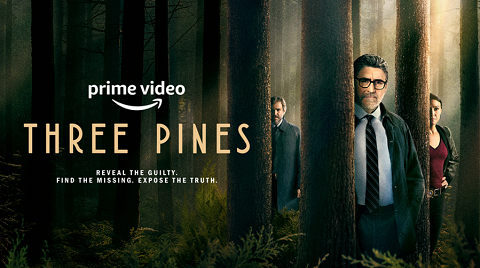
Elizabeth Nickson on Prime TV’s new mystery series, Three Pines

Filed under: Cancon, Media — Tags: , , , , — Nicholas @ 05:00

I don’t watch much TV myself, aside from Minnesota Vikings football games, so what little I know about current TV offerings is pretty much all second-hand … and as Elizabeth Nickson‘s review shows, I don’t think I’m missing much at all:

I had the distinct unpleasure this week of watching Prime TV’s new mystery series, Three Pines, set in the village I grew up in, Knowlton, Quebec, where the author now lives and the geography within which she sets her series. I have a rule of not watching anything violent (except Yellowstone) but to catch a glimpse of the village I ranged through as a kid, I sucked it up.

Of course, I was immediately insulted, as the first scene had a white-blond beefy Anglo (Nazi Alert!) cop in Quebec City (an Anglo cop in Quebec City is vanishingly rare) beating up an Indian woman. The thing marched on, hitting every nasty leftie trope, through an increasing ugly physical landscape. The writer, Louise Penny, is very successful, top of the NYTimes bestseller list with every book and much loved by women of a certain age. Penny’s work is a look inside their heads. Hillary Clinton and she are friends, ’nuff said.

The show is like a beautiful painting over which an angry adolescent has thrown red and black paint in order to “show reality”. A friend who who lives across the street from Penny’s palatial residence states that, contra her reality, there has been one murder in the village in the last 80 years and that was an argument over a pig.

Penny has populated my village with killers, bigots, madmen and women, noble Indians, and noble artistes who wrestle with evil normals, all of whom are unhappy because they are so unethical, bigoted, homophobic and racist. There is also a former residential school in situ, which there was not. There are literally no children in the show. No children, no families. (Penny is childless like most of her generation of Canadian artists) Just noble artistes, hard-done-by-noble Indians and noble French policemen.

Oh wait, there is one 12 year old. She murders her mother.

An unrelated thematic undercurrent about Canada’s maltreatment of its native peoples clubs the viewer, so of course that gives Penny permission to trash the culture she exploits. There is, apparently, no wound that she will not scrape at, making it bigger, more dramatic, more focused on her hatred for white Anglo men.

And women. The villain, like all her villains, is a sick, entitled, white woman. Basically Penny loathes rich white people of any sex, while living a lush life in the place they created. Because Knowlton was the summer and weekend place of Canada’s then corporate elite. A village of 500 bulked out to 1500, as the interlocking network of the people who built the infrastructure of modern Canada came to summer. Penny profits off the product of bitterly hard generational labor, while trashing it. Which is a metaphor for our arts.

I went to the local school for seven years so was friends with both parts of the community. My father was on every committee in the village, and he and his fellows made sure there was not one fallen sparrow in the region. The only way anyone fell out of the network of care that used to exist in every small town in Canada and the US, was through alcoholism. Aside from crime caused by that sickness, there was virtually none. And for the fallen, there were halfway houses and treatment. Unlike Penny’s implication of hate and neglect, Indians in the area were, to the extent they allowed, helped, funded, cared for. Like almost every early settler family, my father’s family had married into two Indian tribes, and in the case of my father, given his cousinage, were understood.

Because that’s what Christians do, and at the time, everyone was Christian.

That job now falls to bureaucrats who, like Penny, see everyone as unreconstructed bigots, walking beasts capable of sudden mayhem, and treats them accordingly. The village, if my eyes are telling me true, is no longer beautiful. At least the filmmakers don’t see any beauty in it. Setting it there, like Penny, they hope to capitalize on the mythical small town’s history as a place where happiness and safety were possible. And then they can destroy its memory as a place where goodness reigned.

November 22, 2022

The real story of the First Thanksgiving

Filed under: Americas, Food, History — Tags: , , , , , — Nicholas @ 04:00

Tasting History with Max Miller
Published 15 Nov 2022
(more…)

November 21, 2022

City Minutes: Colonial America

Overly Sarcastic Productions
Published 22 Jul 2022

Colonial-era North America was a busy place, so let’s take a quick look through some of the major players from the perspective of the lands & cities they inhabited.

SOURCES & Further Reading: Lectures from The Great Courses: “1759 Quebec – Battle For North America” from The Decisive Battles of World History by Gregory Aldrete, “The American Revolution” from Foundations of Western Civilization II by Robert Bucholz, “North American Peoples and Tribes” from Big History of Civilizations by Craig Benjamin, “The Iroquois and Algonquians Before Contact” from Ancient Civilizations of North America by Edwin Barnhart, “Iroquoia and Wendake in the 1600s”, “Indian-European Encounters 1700-1750”, “The Seven Years War in Indian Country” and “The American Revolution Through Native Eyes” from Native Peoples of North America by Daniel M. Cobb, Britannica articles “New York” & “Boston” https://www.britannica.com/place/New-… & https://www.britannica.com/place/Bost…
(more…)

November 19, 2022

QotD: Canada from the American Revolution to the Riel Rebellion

A significant number of Americans who were loyal to Britain and despised the American Revolution moved to Canada during and in the decades after the Revolutionary War. And as the number of English Canadians steadily increased along the Great Lakes and west of the Ottawa River, [Sir Guy] Carleton created what became the province of Ontario, Upper Canada, in 1791. The first lieutenant governor, John Graves Simcoe, devised and implemented an ambitious program of enticing Americans to Canada by effectively giving them rich farmland. The population of English Canada rose swiftly toward parity with the French. In 1792, Simcoe took it upon himself to abolish slavery in Upper Canada, 42 years before this was done in the British Empire, and 71 years before the United States. It was an admirable and pioneering endeavour in the principal area of civil rights controversy in North America in the coming century.

Unfortunately, as the Revolutionary and Napoleonic wars unfolded, the British could not resist the temptation to employ their mastery of the high seas to impose blockades and harass the shipping of neutral powers. The young United States did not have the military force to deter such treatment, and in 1812 those countries went to war. Canada was the blameless focal point of most of the fighting. Canada with the continuing solidarity of the French-Canadians, was able to mount a very solid defense. The many thousands of recently arrived Americans did not support the United States and the generous policy of enticing settlement from the United States was completely vindicated. There were pressures to expel them, monitor them, disqualify them from holding local offices and positions. But it was soon agreed that they could become citizens after eight years of residency. This affected about 40 percent of English-Canadians and this must count as another very successful chapter in Canada’s early record of respect for civil and human rights.

As reasonably successful wars do, considerable national sentiment was created and encouraged by the successful joint struggle to avoid American occupation. Out of these experiences came increased ambitions for democratic self-rule in domestic matters as the British and Americans enjoyed, instead of autocratic rule by British governors. Canada’s position was complicated by the fact that it could not agitate for home rule too energetically or the British would lose patience and sell Canada to the United States for cash or other territory or for a comprehensive alliance. Outright rebellion was not an option for Canada as it had been for the Americans, as the United States would seize Canada if it were not under British protection.

The Canadian solution for agitating but not completely exasperating Great Britain was the Gilbert and Sullivan rebellions of 1837 led by William Lyon Mackenzie in Ontario and Louis-Joseph Papineau in Québec. The Ontario uprising was just a rowdy group of malcontents who became disorderly and were easily chased off, and the French-Canadian group were essentially pamphleteers, though there were some exchanges of fire and small rebel and military units marched to and fro in poor winter weather. A total of about 300 people died, there were 14 executions and 92 people were transported as prisoners to Australia. The rebel leaders fled but were eventually pardoned and returned.

There was enough commotion to get Britain’s attention, but the loyalty of most of the population gratified the British, and they determined to put things right. London sent the well-known reformer Lord Durham to Canada in 1840 to make recommendations. After a year of research by a couple of biased examiners, Durham came to the insane conclusion that the source of Canadian discontent was that the French-Canadians wanted to be relieved of the intolerable burden of being French. Durham proposed uniting Upper and Lower Canada and assumed that the slight resulting English majority would assimilate the French in about 10 years. Of course, this was precisely what the French feared, and the English-Canadians had no desire for it either. But after several years of rearguard action by British governors, the movement for autonomous government succeeded, after the 25-year-old Queen Victoria sent Lord Elgin to Canada as governor to give the Canadians what they wanted. Elgin and Robert Baldwin and Louis-Hippolyte LaFontaine achieved this and secularized a great deal of territory owned by the principal churches so that they could be more easily settled and made the principal universities officially nondenominational. These were again great and non-violent steps in the civil rights of Canadians who now numbered over two million people.

All of North America was now walking on eggshells over the immense problem of American slavery. Slavery was abolished throughout the British Empire in 1834. In practice, there had not ever been more than a couple of hundred slaves in Canada, apart from the natives enslaving each other. Slaves had been imported to the southern states because of their efficiency at harvesting tropical crops such as cotton, so Canada was effectively spared that horrible institution, because of its climate more than its virtue. Canada consistently had a fine record in accepting about 40,000 fugitive slaves that reached the Canadian border in the thirty years before the U.S. Civil War. The leading American anti-slavery advocates Harriet Tubman and John Brown, and Josiah Henson, the model for the chief character in Harriet Beecher Stowe’s novel Uncle Tom’s Cabin, which sold an unheard-of two million copies in the 1850s, all lived in Canada for years. There were at least 11 black Canadian doctors who were fugitive slaves or sons of fugitive slaves who served in the Union Army in the Civil War, and the white Canadian anti-slavery activist, Dr. Alexander Ross, at the request of President Lincoln, assisted in breaking up a Confederate spy ring in Montréal. Escaped slave Joseph Taper, of St. Catharine’s, wrote this letter back to his former and still putative owner in 1839: “I now take this opportunity to inform you that I’m in a land of liberty, in good health … In the Queen’s dominions, man is as God intended he should be; all are born free and equal, not like the southern laws, which put man on a level with brutes. All the coloured population is supplied with schools. My boy Edward, who will be six years next January, is now reading and I intend keeping him at school until he becomes a good scholar. My wife and self are sitting by a good comfortable fire, happy, knowing that there are none to molest us or make us afraid. God save Queen Victoria.”

As many as 40,000 Canadian volunteers served in the Union Army in the Civil War and Canada was thanked on several occasions by President Lincoln for infiltrating Confederate exile organizations. This was an issue in which all Canadians were united and is a legitimate matter of national pride.

The next major civil rights challenge that Canada had to face was that of the Métis — the mixed white and indigenous people on the Great Plains of Canada. The territory of the natives had been steadily reduced by white settlement and the nutritious content of their diet had been reduced by the heavy depletion of the herds of plains Buffalo. There were also many other grievances and undoubtedly a number of violations of the Indian treaties and of the Indian Act and a flamboyant Metis lawyer, Louis Riel, led an uprising on the western plains in 1878. This was eventually suppressed with little violence, as Prime Minister John A. Macdonald dispatched an adequate military force under Field Marshal Garnet Wolseley, Gilbert and Sullivan’s “very model of the modern major general”. Riel fled to the U.S. and the Canadian government made a number of useful concessions to the aggrieved natives. But in 1885, Riel returned and led a rebellion in northwest Saskatchewan. At the same time, the Canadian Pacific Railway ran out of money and was about to flounder into bankruptcy. Macdonald brilliantly sent Canadian forces West on the railway and they surprised and defeated the insurgents and captured Riel. By emphasizing the railway’s role in saving the country (as Riel was making both annexationist and secessionist noises), Macdonald won passage of a bill to finance completion of the railway. Macdonald also gave the natives the right to vote and rewarded his allies among the native leaders. However, he created a lasting grievance by allowing the execution of Riel. Although 15 people died in the uprising, he should have commuted the sentence for insanity — Louis Riel was delusional.

Conrad Black, “Canada’s excellent history of civil and human rights”, New English Review, 2022-08-18.

October 11, 2022

Looking for a full definition of “Two-Spirit” is a fruitless task

Filed under: Cancon, History, Politics, USA — Tags: , , , , — Nicholas @ 03:00

In Quillette, Jonathan Kay tries to find a satisfactory definition of the term “Two-Spirit” but despite his best efforts comes up empty:

On August 28th, Justin Trudeau’s government announced “Canada’s first federal 2SLGBTQI+ action plan: Building Our Future With Pride“, which was described as “a whole-of-government approach to achieve a future where everyone in Canada is truly free to be who they are and love who they love”. One aim of the $100-million plan, the government explained, is to convince Canadians to adopt the term “2SLGBTQI+” in place of “LGBT” — on the basis that 2SLGBTQI+ “is more inclusive and places the experiences of Indigenous 2SLGBTQI+ communities at the foreground as the first 2SLGBTQI+ peoples in North America”.

The two characters given pride of place, “2S”, signify “Two-Spirit”, a term that’s been a form of self-identification among Indigenous North Americans since the 1990s. But the descriptor doesn’t appear to be in wide everyday use outside Canada. And so non-Canadian readers will sometimes ask me to explain its meaning — at which point, I have to admit that I can’t. And I’m hardly alone: While most Canadians know that the “Two-Spirit” category is connected to Indigenous identity in some way, there’s an unspoken rule against requesting more specific information.

Last week, the Elementary Teachers’ Federation of Ontario (ETFO), the province’s elementary-school teachers union, published what the authors present as a primer on Two-Spirit identity, a document written in close consultation with 2S-identified Indigenous people. Since the report’s target audience consists of workaday teachers who educate young students, I imagined that Niizh Manidoowag: Two-Spirit might finally provide me with a straightforward explanation of what the 2S identifier actually means.

Unfortunately, it doesn’t. In fact, one of the main themes of the 32-page document is that the task of defining the Two-Spirit concept is (quite literally) beyond the powers of Western language and epistemology. And in any case, the category is almost completely open-ended: The act of proclaiming oneself Two-Spirited could be a statement about one’s gender, or sexual orientation, or both, or neither. Or 2S can be a statement about one’s politics, spirituality, or simply one’s desire to present as “anti-colonial”.

According to the ETFO report, there are only two non-negotiable elements of a Two-Spirited individual—both of which are spelled out multiple times in the document, and in bold letters. Neither rule is concerned with sex or gender, but rather with race and political orientation: To be Two-Spirited requires (1) that you are Indigenous; and (2) that you are engaged in a “decolonizing act of resistance”:

    There is no one way to prescribe usage of the term [Two-Spirit] … There is no one way to define the term Two-Spirit. Two-Spirit people and their roles predate colonial impositions, expectations, and assumptions of sex, gender, and sexual orientation. Where colonial worldviews often frame concepts as linear, compartmentalized, categorical, and hierarchical, Indigenous worldviews tend to be understood as non-linear, reciprocal, (w)holistic, relational, and independent of Eurocentric perspectives and framings. As such, identifying as two-spirit is a decolonizing act of resistance in and of itself.

The term Two-Spirit was first popularized in 1990, at an inter-tribal Native American/First Nations gay and lesbian summit in Winnipeg, and is derived from the Ojibwa words Niizh Manidoowag. By one account, delegates were looking for a term that would “distance Native/First Nations people from non-Natives, as well as from the words ‘berdache‘ [a European term suggesting deviancy] and ‘gay'”. But lore has it that the true originator is a Fisher River First Nation woman named Myra Laramee, who experienced a vision of the world as seen “through the lens of having both feminine and masculine spirit”.

On the surface, that sounds like what today might be called “non-binary”. But that analogy fails on a fundamental level. The idea of gender identity relates to the (perceived) nature of oneself. Two-Spirit people, on the other hand, are described in the ETFO report as possessing a savant-like power (or “lens”) that channels truths about the nature of the external world.

The Two Spirit concept is also entirely distinct from run-of-the-mill gender dysphoria. In everyday progressive gender parlance, it is typically insisted that trans women are just like other women. Two-Spirited people, by contrast, are presented as an entirely unique specimen whose arrival within traditional Indigenous societies was “celebrated” — “highly valued” “gifts” who “possess the best of both gendered identities”.

September 28, 2022

Pemmican: History’s Power Bar

Filed under: Americas, Cancon, Food, History, USA — Tags: , , , — Nicholas @ 04:00

Tasting History with Max Miller
Published 27 Sep 2022
(more…)

September 26, 2022

Canada, a confessed “ongoing” genocidal state, has no moral grounds to criticize China, Russia, or Iran

In Quillette, Jonathan Kay expresses his frustration as Canadian Prime Minister Trudeau’s performative moral posturing and virtue signalling for his globalist comrades comes back to bite him in the ass … again:

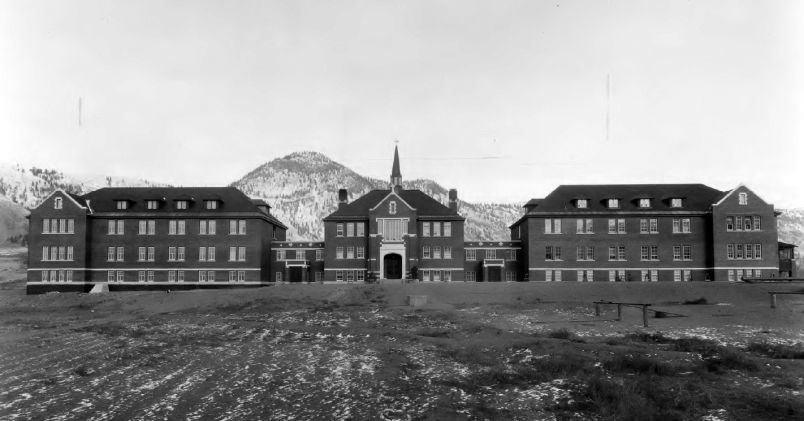
Kamloops Indian Residential School, 1930.
Photo from Archives Deschâtelets-NDC, Richelieu via Wikimedia Commons.

… [Iranian President Ebrahim Raisi] also threw in an attack on Canada’s treatment of Indigenous peoples, declaring that “bodies of hundreds of children were discovered in mass graves in a [former residential] school.”

The issue of supposed unmarked Indigenous child graves dominated the Canadian media in the latter half of 2021. But as I reported in Quillette several months ago, no “mass graves” were ever found. In fact, even the Indigenous groups that initially reported ground-penetrating radar (GPR) survey results consistent with the possible presence of unmarked burial sites weren’t talking about “mass graves”. Rather, the invented mass-graves claim was popularized by a badly botched New York Times May 28th, 2021, story written by reporter Ian Austen. (For a definitive debunking, see Terry Glavin’s account in Canada’s National Post).

In the 16 months that have passed since the unmarked-graves story broke in late May 2021, not a single body has been found, nor any human remains. And so even the less sensational allegation that 215 individual unmarked child graves lie buried under the grounds of a former Indigenous residential school in Kamloops, British Columbia, now seems doubtful. Nor have bodies or human remains been recovered at any of the other former residential-school properties where GPR surveys were conducted.

Yet that didn’t prevent Prime Minister Justin Trudeau from lowering flags on Canadian public buildings for more than five months, nor from speaking publicly as if bodies were already being dug up. And aside from the National Post, not a single major Canadian media outlet has admitted its role in feeding the unmarked-graves social panic that exploded last year, and which often included lurid speculation that the supposed grave sites not only contained the remains of Indigenous children, but that these children had been murdered through methods worthy of a horror-movie plot.

Given this, what can Canadian public figures say to Raisi now that he’s throwing spurious moral equivalences into our faces? Nothing. In making the false claim that “bodies of hundreds of children were discovered in mass graves in a [former residential] school”, the man is merely reading our own officially sourced misinformation back to us.

This isn’t the first time that Trudeau has managed to maneuver Canada into this kind of mortifying position vis-à-vis the world’s tyrants. Last year, when Canadian lawmakers voted to denounce China’s treatment of Uighurs in western Xinjiang as a form of genocide, Trudeau and his Cabinet abstained. The suspected reasons for that move were complex. But they included the fact that Canada was, by its own description, morally compromised on the genocide file: Back in 2019, Trudeau had explicitly acceded to the (absurd) claim that Canada, too, was guilty of “genocide” — this one against Indigenous women. Indeed, according to the official report that precipitated Trudeau’s mea culpa, this supposed Canadian genocide remains ongoing.

September 21, 2022

Jonathan Kay on cultural appropriation

In Quillette, Jonathan Kay put together “a somewhat lengthy manifesto” on the topic of cultural appropriation in response to a request from Robert Jago who wanted to do an interview with Kay on this issue:

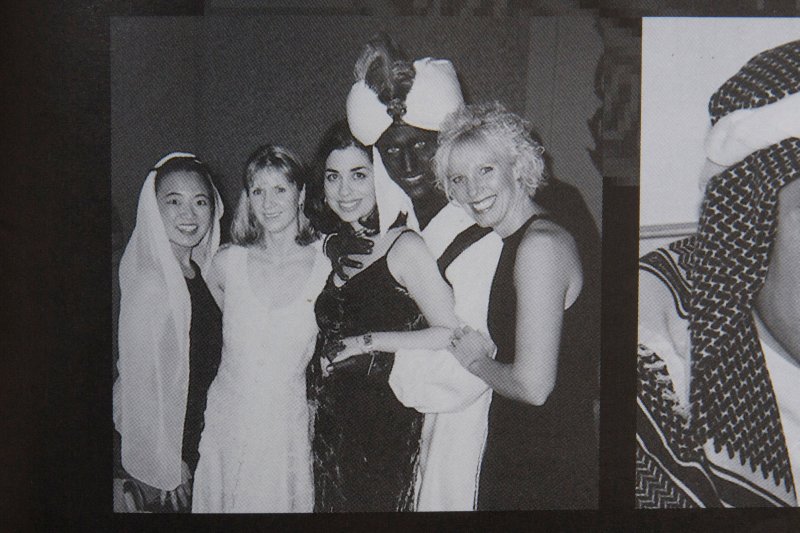
Justin Trudeau (Canada’s most prolific cultural appropriator) with dark makeup on his face, neck and hands at a 2001 “Arabian Nights”-themed party at the West Point Grey Academy, the private school where he taught.
Photo from the West Point Grey Academy yearbook, via Time

“Cultural appropriation” typically gets defined in a way that depends on whether one is defending it or denouncing it. If you’re defending it, you prefer to look at the big picture: Every new kind of art form, literary genre, style of dress, or cuisine typically represents a mix of inherited and borrowed elements. Shakespeare’s sonnets were written in an Iambic pentameter that Chaucer had “appropriated” from the French and Italians. So if Indigenous or African poets want to appropriate it from the English, no one has any basis for complaint. If you define cultural appropriation in this big-picture way, the concept isn’t just permissible. It’s artistically necessary, and indeed inevitable.

But if you’re denouncing cultural appropriation, on the other hand, the argument is more persuasive when your frame of reference is small, local, and community-rooted. I’m thinking of the (white) novelist or film director who passes through a region, and hears some garbled version of folklore that relates to a nearby Indigenous community. The guy thinks, “Oh wow, that’ll make a great novel” (or TV show, movie, etc.), and then makes a mint without consulting (let alone cashing in) the Indigenous community.

So the debate over cultural appropriation is like a lot of debates: It’s really easy to win if you get to define the terms. And since both sides pick definitions that suit them, it can become a dialogue of the deaf.

Indeed, there’s often no dialogue at all. Rather, both sides are apt to retreat into apocalyptic language about, respectively, (a) totalitarian censorship, and (b) white supremacist (cultural) genocide. This is absolutist language that leaves no room for nuance or discussion.

The cultural-universalism side of this dialogue is represented by people like me. I write about every topic under the sun, and so I get my back up when someone tells me that I’ve got to “stay in my lane”. My whole career is built around hopscotching from one idea to the next without worrying (much) about who gets offended. For me, the imposition of rules on what people are allowed to write about isn’t just an annoyance. It’s an existential threat to the creative faculties.

But if you’re on the other end of this — say, you’re a member of a small Indigenous community whose history and folklore have yet to be recorded or celebrated in any definitive form — you don’t care about some white guy in Toronto whining about how he can’t do the equivalent of wearing a sombrero on Cinco de Mayo. A small First Nations community might get only one real shot at telling its story to the world. If that shot gets used up by an outsider who strip-mines the locals’ oral history for a bestseller, that can no doubt feel like existential threat to one’s cultural autonomy. It’s like: “So you took our land, punished us for using our own language, sent our kids to residential schools, and now all we really have left is our culture, and you want to steal that, too?”

There’s this trite expression that often gets trotted out these days: Intent doesn’t matter, only the harm you cause. But of course, intent does matter. And if an author, director, or artist intends to respectfully and accurately include a community’s story in his or her work, then, for me, that’s very much a mark in their favour. That said, I absolutely do not think that this means there is an obligation to “honour” or “uplift” the community in question — let alone express “solidarity” or “allyship” with them. Doing so means you’re writing activist propaganda. What I mean, rather, is that you shouldn’t be intending to mock or belittle whole swathes of humanity.

The problem is that, in Canadian cultural circles at least, this isn’t really the standard that’s applied. I’ve spoken to a number of Canadian writers who, out of the best of intentions, invest their own funds in “sensitivity readers” — a process that can be not only expensive and time-consuming, but also creatively ruinous, since these consultants often are bursting with ideas about how to turn your novel or movie into a specimen of the above-referenced activist propaganda. I know one woman, in particular — a novelist — who appeared before a First Nations tribal council, and got its official permission to include a character in her book whose identity related to their community. But then a community member, someone not even involved with the band leadership, went after the woman and tried to smear her as racist. This is after she’d dotted every I and crossed every T of the sensitivity-reader process.

« Newer Posts — Older Posts »

Powered by WordPress