
World War Two
Published 5 Jun 2025In June 1931, Germany teeters on the edge of collapse — facing riots, unemployment, and a banking crisis. Amidst chaos and international pressure, US President Herbert Hoover offers a dramatic moratorium on war debts, giving Germany a critical lifeline. Can this American intervention stabilize the Weimar Republic, or is disaster still on the horizon? Explore how global politics, economic turmoil, and desperate diplomacy shape a nation’s fate.
(more…)
June 7, 2025
The US President Saves Germany – Rise of Hitler 18 – June 1931
Comments Off on The US President Saves Germany – Rise of Hitler 18 – June 1931
The 12th SS Massacre of the Canadians in Normandy | History Traveler Episode 195
The History Underground
Published 9 Feb 2022In the days after D-Day, the Canadians of the 3rd Infantry Division found themselves up against the German 12th SS Panzer Division as they were making their way south through Normandy. Tragically, some of these men would find themselves as the victims of one the battle’s worst atrocities at a place called Abbey Ardenne. In this episode, we’re joining Paul Woodadge of @WW2TV as we retrace the final steps of these men as they made their way to a tragic fate at the hands of Kurt Meyer and a division of the most fanatical fighters that Germany threw into the Battle of Normandy.
(more…)
Comments Off on The 12th SS Massacre of the Canadians in Normandy | History Traveler Episode 195
May 23, 2025
Did Germany Just Choose a King? – Rise of Hitler 17, May 1931
World War Two
Published 22 May 2025May 1931: 150,000 Stahlhelm men parade through Breslau before Crown Prince Wilhelm and other imperial relics, reviving monarchist hopes. Hitler hails his SA and calls for eastern expansion. But it’s economic collapse that dominates — Austria’s top bank nears default, threatening Germany’s own system. As Berlin pushes for a reparations pause and clings to its customs union with Vienna, France stands firm. And in Oldenburg, the Nazis take their first Landtag.
(more…)
Comments Off on Did Germany Just Choose a King? – Rise of Hitler 17, May 1931
May 21, 2025
The Butt Report – Nadir of the RAF – The Bomber War Episode 3
HardThrasher
Published 15 Dec 2023As the powers that be on YT have decided that this video is Evil and naughty they’ve removed the ads — which, like, is great from your point of view but a bit shite from mine. So if you wanted to it’d be awesome if you’d consider either hitting the Super Thanks button or consider becoming a super cool kid and joining my Pateron.
If you’d like to email me send a message to lordhardthrasher@gmail.com
In this episode, the Butt Report, what happened next and the arrival of Bomber Harris. Despite this being more than 50 minutes, I’ve skipped some detail e.g. The Singleton Report which basically said “eh – bit difficult this bombing thing” nor Tizard’s rubbishing of Cherwell’s Memorandum, nor really the detail of the Cherwell Memorandum. You’ll live. However if you want more on the subject then I recommend the Official History of Bomber Command to get more into the civil service fire fights.
(more…)
Comments Off on The Butt Report – Nadir of the RAF – The Bomber War Episode 3
May 9, 2025
Nazi vs. Nazi – The Rebellion Within – Rise of Hitler 16, April 1931
World War Two
Published 8 May 2025April 1931 plunges Hitler’s Nazis into crisis as SA leader Walter Stennes leads a dramatic internal revolt, challenging Hitler’s oath to legality. Meanwhile the Nazis loose their only ministerial post and President Hindenburg’s emergency decree intensifies clashes with communists, leading to mass arrests during banned protests.
(more…)
Comments Off on Nazi vs. Nazi – The Rebellion Within – Rise of Hitler 16, April 1931
May 8, 2025
Aftermath
I’ve read a few books on what happened in Europe after the surrender of Nazi Germany in May of 1945, but there is always more to learn about a continent-wide struggle to recover from a disaster of the magnitude of World War Two:
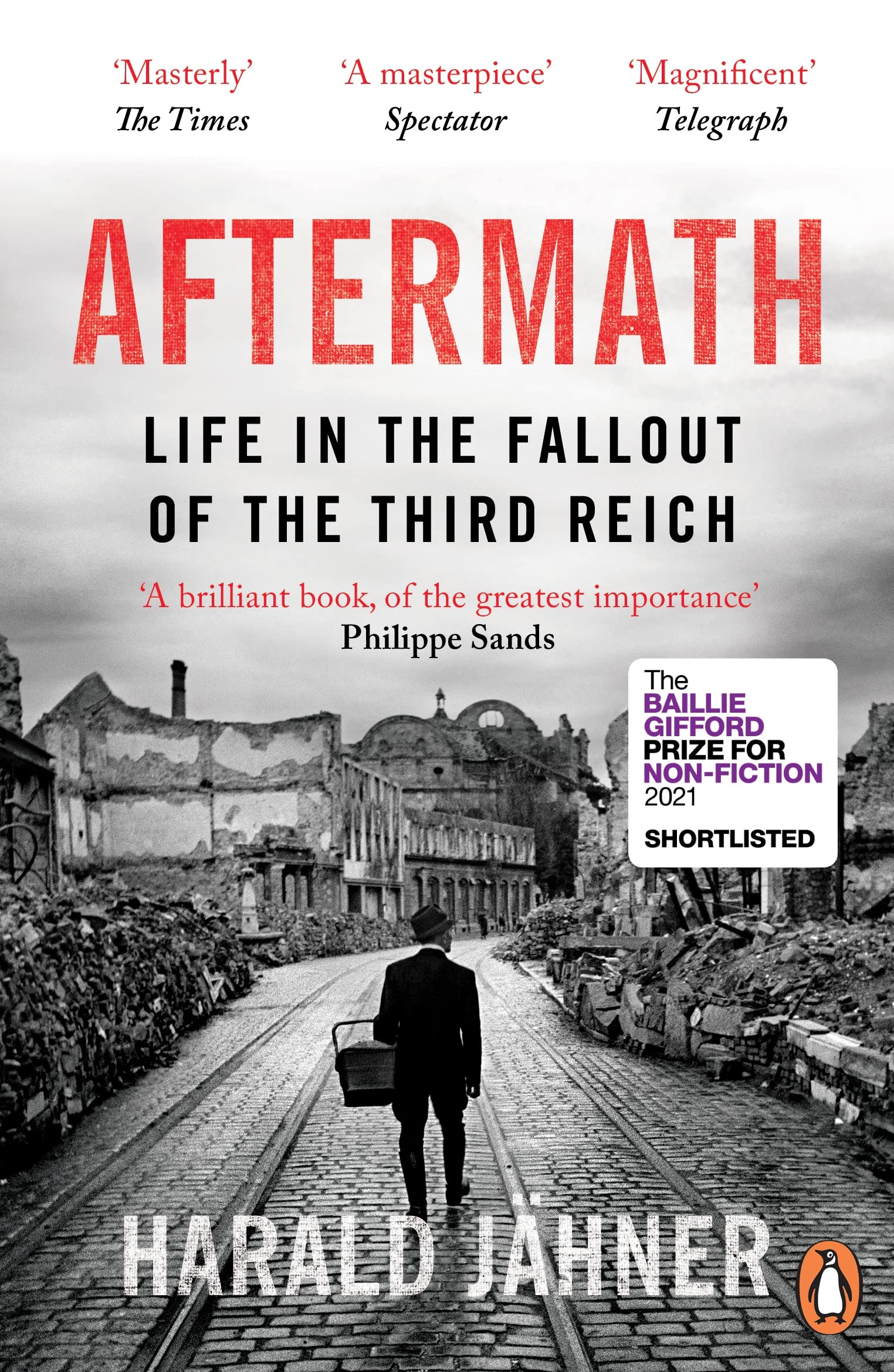
On a train journey earlier this year between Cologne and Berlin, I began to read Harald Jähner’s Aftermath, a fascinating account of the years when Germany emerged from the destruction and shame of the Third Reich.
The war ended 80 years ago today, and in the defeated nation the scenes were primeval and apocalyptic. In Berlin, journalist Ruth Andreas-Friedrich, along with a doctor, actor and musical conductor, discovered a white ox wandering through the streets and, after finding a Russian soldier to shoot it, found themselves suddenly surrounded by a ravenous mob. She recalled: “Suddenly, as if the underworld had been spying on them, a noisy crowd gathered around the dead ox. They crept from a hundred basements. Women, men, children. Were they lured by the smell of blood? Within minutes they were scrambling for meat.” The bourgeois of Middle Europe reduced to an animal state.
Germany was a pile of rubble; the ruins in the Reich‘s capital amounted to 55 million cubic metres, enough for a wall 30 metres wide and 5 metres high stretching all the way to Cologne. In West Berlin, for the next 22 years, up to 800 lorries a day unloaded so much rubble on the former Factory of Armaments Technology that it became known as Teufelsberg, or Devil’s Mountain. The last “rubble brigade” in Dresden only finished work in 1977.
Although Nazi party members were made to clear rubble as a punishment, the Germans hardly needed encouragement; on 23 April, the war not yet over, the municipal building of Mannheim had already declared WE ARE REBUILDING.
The communal process of clearing away seemed to serve a psychological function for a hungry, defeated people, and was encouraged by the new authorities — all the “heroic cinematic rhetoric” employed by the UFA film company of the Nazi regime now used to get the country clearing up. There was even a cinema genre called Trümmerfilm, rubble films, one — And The Heavens Above Us — ending with the Lord’s Prayer being recited among the ruins of Germany.
German POWs, “dispirited, disciplined and dutiful to the point of submissiveness”, made life easy for occupying soldiers while their former victims were far more troublesome. (Russian POWs in France caused such anarchy that they called in a Soviet liaison officer who selected ten at random and shot them, bringing the mob under control.) This led to a bizarre alliance between Allied and German law enforcement working hand-in-hand from the early days of the occupation, with joint raids and weapons searches on displaced persons from Poland and the Soviet Union, which the Poles and Russians “of course saw as an intolerable provocation”.
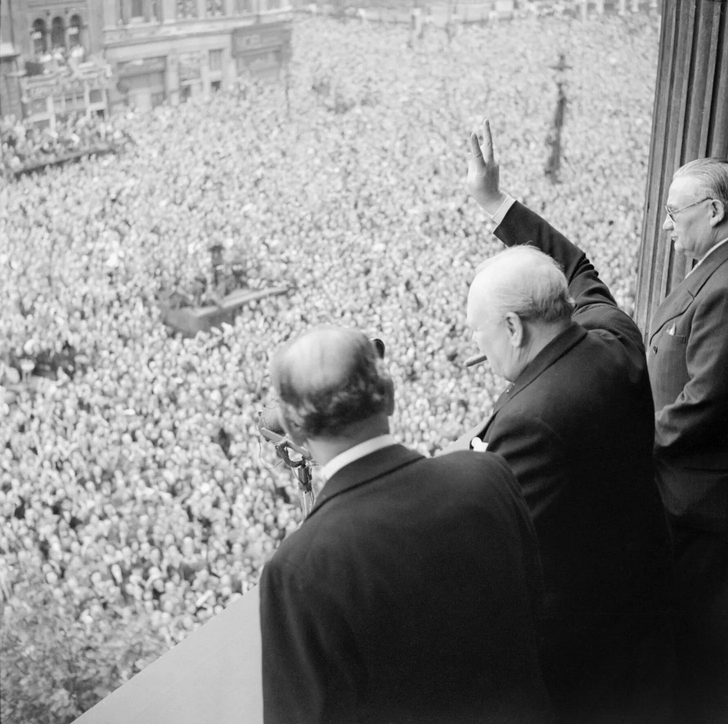
London cheered on May 8, 1945. In Berlin they searched for food and cleared rubble
In a strange irony, there was now a large-scale migration of Jews from Poland to Germany, fleeing fresh persecution despite the horror they had endured. Even here in a camp system under Allied control, there were anti-Semitic attacks from other survivors, so that Jews were eventually separated altogether following the conclusions of the Harrison Report. The Americans, in a likely first in European history, now made Jews an explicitly privileged group, with superior camp conditions.
The Polish Jews set up their own camp in the Munich district of Bogenhausen where locals were confused and disorientated by the new arrivals. These eastern Jews actually looked like the alien caricatures Nazi propaganda had bombarded them with, dressed in oriental clothes from the shtetl, totally unlike the assimilated German Jews they had grown up with. One local complained that “the Jews from the old days were really, how can I put it, very intelligent, polite and unusually friendly and elegant people. And of course the ones who turned up after the war included all sorts.” The Jews “from the old days” were “the good Jews”, he lamented.
Holocaust guilt was in the distant future for most, and newly re-established newspapers weren’t remotely shy about publishing anti-Semitic content. One printed a resident’s complaint about Polish Jews that “these were not people who had been persecuted” but “the sputum, the yeast and the scum of elements who were never deported but, to avoid regular work, came here from the eastern states, in many cases completely illegally, and are now spreading themselves raggedly about the place.”
Comments Off on Aftermath
May 4, 2025
The Clean German Myth, Doomed B-17 Pilots, and Japan’s Rapid Victories – Out of the Foxholes Live
World War Two
Published 3 May, 20205Indy and Sparty tackle some more of your interesting questions in another live Out of the Foxholes. Today they look at loss rates of B-17 crews, the myth of the clean Wehrmacht, and ask why the West was apparently so unprepared for Japan’s attack.
(more…)
Comments Off on The Clean German Myth, Doomed B-17 Pilots, and Japan’s Rapid Victories – Out of the Foxholes Live
April 29, 2025
1984 and the Politicizing of Language
Feral Historian
Published 16 Aug 2024A dive into 1984 in relation to modern politics can’t be done without pissin’ in everyone’s Froot-Loops, so grab a tall glass of Victory Gin and let’s talk about how The Party functions, how doublethink makes us crazy, and how it’s not just those nutters on the other side that do it.
I take a few jabs at current sacred cows of the Left and Right here. Hopefully the comments won’t look like Hate Week.
00:00 Intro
01:46 Thoughtcrime and Doublethink
12:27 War is Peace
17:46 Oligarchal Collectivism
22:12 MiniTruePost-release edit: It’s been pointed out that I grossly oversimplified the military analysis later in the video, which is true. Man-portable air defense systems and maneuver warfare are a lot more complicated than this video implies. As for that one particular doublethink example mentioned so very briefly, some of the counterpoints have been … impressive contortions of language in their own right. But not interesting enough to discuss the matter further.
Comments Off on 1984 and the Politicizing of Language
April 19, 2025
Downfall: The Battle of Berlin 1945
Real Time History
Published 6 Dec 2024April 1945. After nearly six years of war, the Red Army stands massed on the banks of the Oder River in eastern Germany. The Nazi capital and Hitler’s bunker are just 60km away, but the Nazi Party and the Wehrmacht are preparing to fight to the bitter end in the final struggle of WW2 in Europe – the Battle for Berlin.
(more…)
Comments Off on Downfall: The Battle of Berlin 1945
April 11, 2025
Nazis and Communists Unite Against Weimar – Rise of Hitler 14, February 1931
World War Two
Published 10 Apr 2025February 1931 sees unprecedented chaos in Germany’s parliament as Nazis and Communists stage a dramatic walkout, ironically enabling democratic parties to pass reforms unopposed. Meanwhile, Hitler pushes eastward expansion, Berlin bans extremist newspapers — including Goebbels’ Der Angriff — and Röhm militarizes the Nazi SA. With democracy under strain and political extremes emboldened, what’s next for the Weimar Republic?
(more…)
Comments Off on Nazis and Communists Unite Against Weimar – Rise of Hitler 14, February 1931
April 10, 2025
Late onset Trump Derangement Syndrome
Ed West diagnoses himself with a raging case of late onset TDS:
What has caused this late-onset TDS, however, is not Trump’s behaviour, but the relative silence of his critics. During Trump’s first term, everyone in the American establishment seemed to be calling him the next Hitler, and this included not just the usual academics and journalists but many major corporations; companies like Nike, Heineken and Airbnb were at the forefront of the “resistance” against the president, a trend labelled “CEO Activism”. It was quite obviously self-interested and performative, because if everyone in your country is calling its leader a fascist dictator, then you probably don’t live in a fascist dictatorship.
I have no idea where I saw this meme, but it makes me laugh
That is not the case this time around, and that is more troubling. I recall from my time volunteering for first aid training that, when you arrive at the scene of an accident, you don’t go to the person screaming in pain, but the individual lying on the ground in stony silence. Similarly, the fact that people working for large corporations now keep quiet about Trump, even as he embarks on the most reckless economic policy in recent years, should probably concern us. The reason they keep quiet — and this is something I have heard from the horse’s mouth — is because they feel that there is a real risk of punitive action if they speak out.
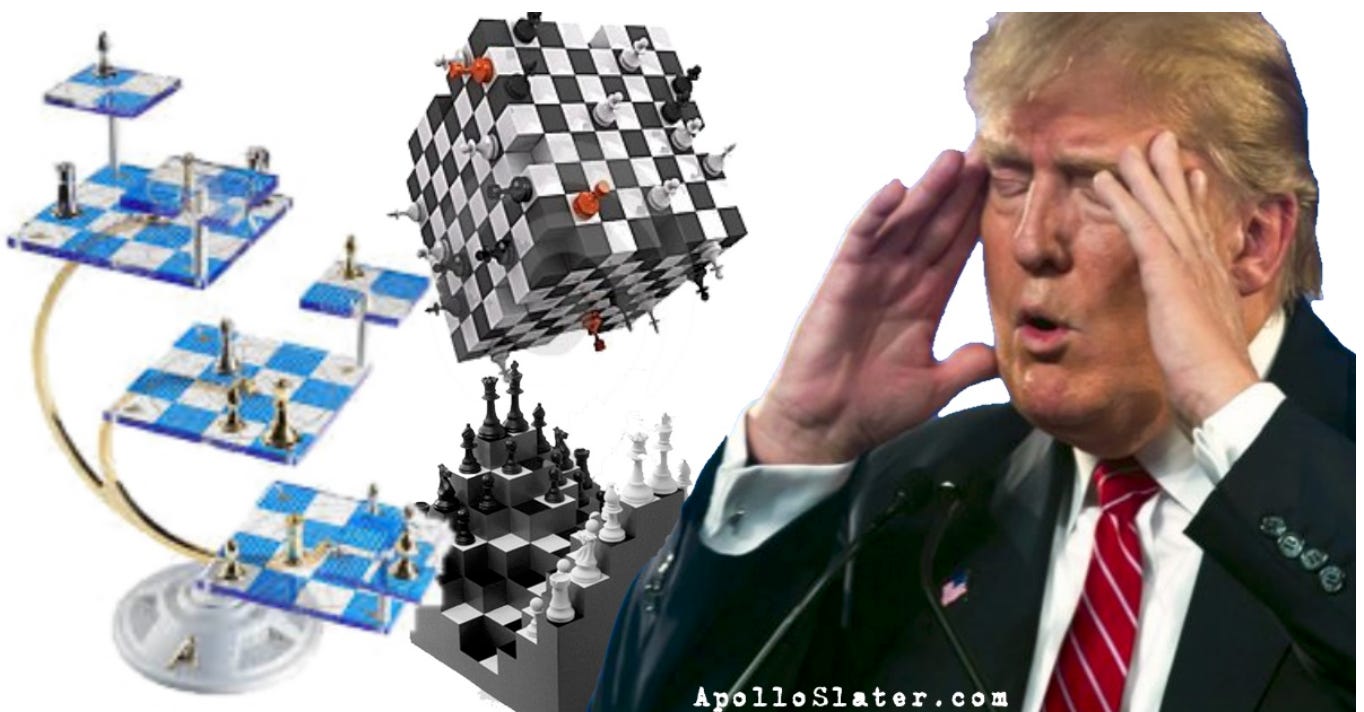
One of the things more moderate folks used to warn the far left activists about using any and all tools to “get” their enemies is that it can — and in this case has — unleashed exactly the same kind of retribution when their former target now has the power to do so. “Muh norms!” indeed.
The constant evocation of fascism is not just mistaken in my view, but neurotic. Western civilisation is emotionally scarred by the violent racial supremacism of the Nazi regime and in particular the Holocaust, the worst crime in history, yet people have a tendency to fight the last war and this isn’t the danger that Trump represents. He is not a white supremacist and not especially motivated by ethnic nationalism. He is, however, authoritarian in nature, prone to be vengeful to those who cross him while also surrounding himself with yes-men, and he does seem to have territorial ambitions, even if they concern a frozen wasteland. Those things are all bad enough in themselves.
Rather than being a new Hitler, a more realistic concern is that Trump represents the 19th century spectre of Caesarism, a man who uses democracy in order to establish himself as an imperial figure. The fear of a Caesar always haunted the founders of the Republic, obsessed with Roman history as they were and sceptical of democracy and mobs.
Trump as a modern Louis Napoleon? A case could certainly be made for it.
Caesars do not come out of nowhere, and the progressivism of the last few years has been deeply illiberal, hostile to freedom of speech and even more so to freedom of association. Jonathan Haidt talked of “decentralized totalitarianism” and it was the chaotic nature of woke progressivism that made it so disconcerting and caused many people, including those same corporate leaders, to stay silent.
Many of the things Trump is now doing are not entirely dissimilar to what radical progressives did when the opportunity arose, in particular the determination that institutions are cleared of their opponents. It is bitterly ironic, for instance, to have the Left accuse Trump of “rewriting history” for ideological reasons (gosh, imagine!). Yet there is something quite different about people scared of online mobs and being scared of the government. Activists, though loud and hysterical, could be ignored if people only had the courage to face them (which they usually didn’t); the state can make your life very difficult indeed. Already the Trump regime has punished law firms which oppose their leader; foreign nationals who’ve expressed criticism of the regime have been detained. These are not good signs.
I’ve sneered at the American critics who worked themselves up into hysterical rages about Trump, not just because of their puritanical piety but because of the lack of awareness about their own behaviour, in particular the conspiracies about Russia and the dishonest, partisan nature of American journalism (Trump is probably the most dishonest president in US history, but it may also be true that he is the most lied about). In the modern liberal imagination, in part because so many people read far more fiction than history, Trumpian figures tend to be opposed by a courageous “resistance”, whereas in reality most dictatorial leaders arise because there are no moderate alternatives, and the opposition is similarly extreme and unpalatable. There were no real goodies in the Spanish Civil War, nor in Syria, nor even in much of central-eastern Europe in the mid-20th century, where fascists fought communists for control of the streets.
Comments Off on Late onset Trump Derangement Syndrome
April 7, 2025
Those brave, rare contrarians willing to risk everything by … criticizing Trump?
Chris Bray is deeply concerned that a free society seems unable to produce even a mild array of differing political opinions these days:
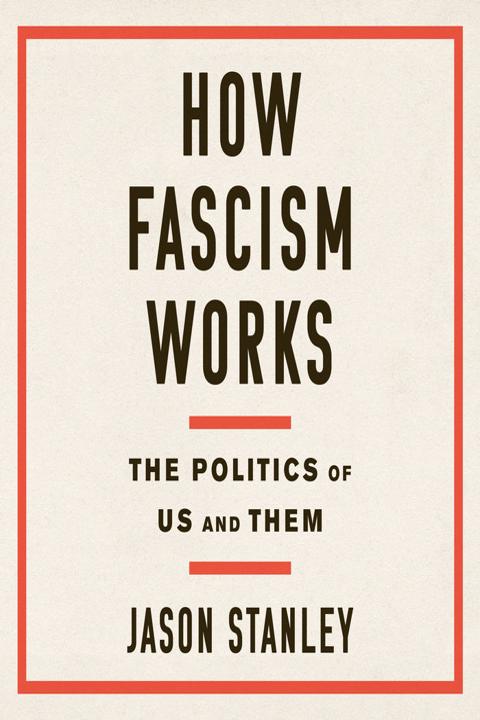
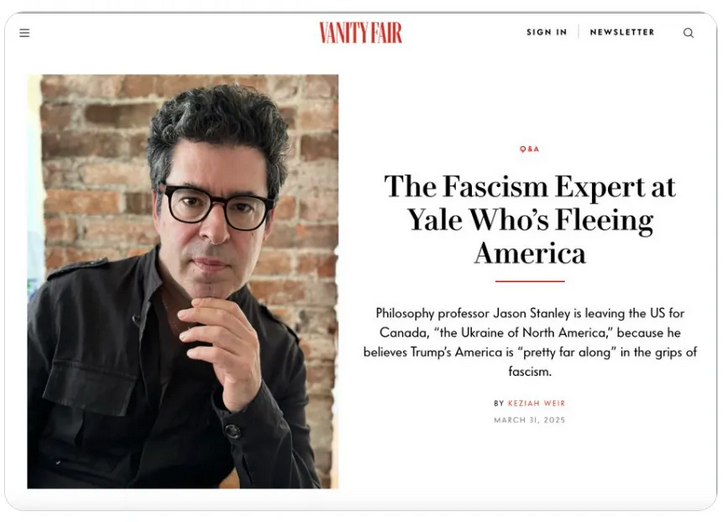
I was at a small independent bookstore today, the exact kind of place that’s supposed to curate a culture of argument and criticism. The prominently displayed books about politics and current events were Timothy Snyder’s book about the terrifying rise of American fascism under that monster Trump, Jason Stanley’s book about the terrifying rise of American fascism under that monster Trump, Anne Applebaum’s book about the terrifying rise of American fascism under that monster Trump, and a bunch of other books by prominent journalists and professors about … okay, try to guess.
On the other side of that exchange, the books by public intellectuals offering a favorable or even neutral view of Trump and the Trump era were … not there? Maybe I just missed them. So every prominent figure moving to the cultural foreground from academia and “mainstream” journalism — every brave contrarian, every freethinking intellectual warrior rising against the prevailing fascist sentiment of the age to speak in his own voice as a free person — thinks and says the same things, the same ways, with the same evidence and the same framing and the same tone and in the same state of mind. They’re so free and brave and iconoclastic that they’re essentially identical, chanting in intellectual unison.
Forget Trump for a moment and answer this question in general: If you’re living through an era in which every prominent journalist and academic and artist says exactly the same fucking thing all the time, what kind of moment are you living in? Would you call people who all chant in unison the resistance?
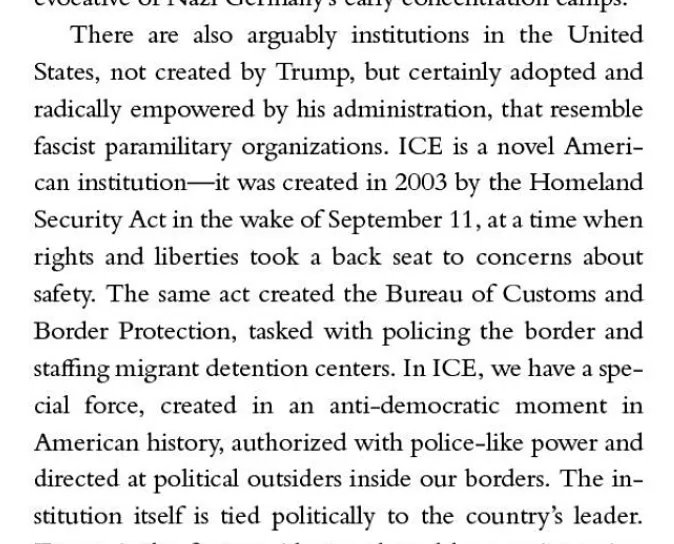
Any engagement with these books reveals their emptiness. Snyder, Stanley, Applebaum, whatever: pick a book, then pick a page. See if it makes sense. Here, I spent a few nauseating minutes today with brave Jason Stanley’s book How Fascism Works: The Politics of Us and Them. Here’s a paragraph from the introduction to the paperback edition:
ICE is novel: It was created after 9/11, by the same law that created a bureau tasked with border protection: a “special force, created in an anti-democratic moment”.
I can’t calibrate the degree to which this person is a fool or a liar, but let’s go with both. The Border Patrol was created in 1924, and was itself the successor agency to a different organization that was created in 1904. You can read that history here. The post-9/11 organization that supposedly created this novel American institution merely reorganized a century-old American institution, making it not the least bit novel. Before ICE, we had INS. Yes, we had a border before 2003, and we policed it. This isn’t a novel concept at all, as it has operated in any form of practice.
You can go through that single amazing paragraph sentence by sentence and tear every last bit of it apart, at the lowest, simplest factual level. The argument isn’t wrong: all of it is wrong, every layer of fact and interpretation. This man is an absolutely enormous jackass. And he’s … important. An important public intellectual, you see.
Comments Off on Those brave, rare contrarians willing to risk everything by … criticizing Trump?
April 6, 2025
Judgement Day at Nuremberg: Hitler’s Butchers Meet Their Fate
World War Two
Published 5 Apr 2025The Nuremberg Trials begin. Twenty-four of Hitler’s closest Nazi allies face judgment for crimes of aggressive war, mass enslavement, and genocide. At stake is more than justice for the dead; it’s the birth of a new legal order. We examine the trials, the accused, and whether Nuremberg delivered justice or simply vengeance.
(more…)
Comments Off on Judgement Day at Nuremberg: Hitler’s Butchers Meet Their Fate
March 28, 2025
The Man Hitler Needs for Civil War, Ernst Röhm, Returns!
World War Two
Published 27 Mar 2025January 1931 starts with violence, economic collapse, and Nazi upheaval in Germany. Hitler secretly meets with army chief Kurt von Hammerstein-Equord, while Ernst Röhm returns to take command of the Nazi paramilitary SA. As hundreds of thousands of miners face mass layoffs and brutal crackdowns, the republic’s future hangs in the balance — how long can democracy hold on?
(more…)
Comments Off on The Man Hitler Needs for Civil War, Ernst Röhm, Returns!
March 27, 2025
Ban the swastika? Are you some kind of racist?
In Ontario, the elected council for the Region of Durham has been reacting to a few painted swastika graffiti around the region over the last couple of months. To, as a politician might say, “send a message”, they proposed banning the use of the swastika altogether … failing to remember that it’s not just neo-Nazi wannabes who use it:
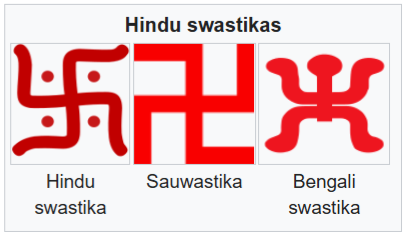
Durham council is adjusting the wording of its calls for a national ban on the Nazi swastika, or “Hakenkreuz“.
This follows efforts by religious advocates to distance their own symbols from the genocidal German fascist regime.
Swastikas often appear in Jain, Hindu and Buddhist iconography.
“The word ‘swastika’ means ‘well-being of all’,” explained Vijay Jain, president of Vishwa Jain Sangathan Canada, at Wednesday’s regional council meeting. “It’s a very sacred word. […] We use it extensively in our prayers.”
“Many Jain and Hindi parents give their children the name ‘Swastika’,” he added. “Many Hindi and Jain people, they keep their [business’s] name as ‘Swastika’. If you go to India, you’ll find the ‘Swastika’ name prominently used.”
“We stand in solidarity with the Jewish community and fully support all of the efforts by authorities to address growing antisemitism in Canada,” he said.
Regional council made its initial call for a ban on Nazi swastikas in February, after two separate incidents of the antisemitic symbol being scrawled inside a washroom at the downtown Whitby library.
On Wednesday, councillors voted to revise that motion to replace the word “swastika” with the term “Nazi symbols of hate”.
B’nai Brith Canada has been spearheading a petition campaign to have the Nazi symbol banned across the country.
The group has increasingly opted to refer to it by the alternative names “Nazi Hooked Cross” or “Hakenkreuz“.
On March 20, B’nai Brith put out a joint statement with Vishwa Jain Sangathan and other religious advocacy groups, calling for further differentiation between the symbols.
“These faiths’ sacred symbol (the Swastika) has been wrongfully associated with the Nazi Reich,” wrote Richard Robertson, B’nai Brith Canada’s Director of Research and Advocacy. “We must not allow the continued conflation of this symbol of peace with an icon of hate.”
Comments Off on Ban the swastika? Are you some kind of racist?


