
World War Two
Published 12 Oct 2021In the history of European-style warfare, there has always been the ideal of “rules of warfare”. The horrors of the Eastern Front and the Pacific prove how hollow this ideal can be, but there is one theatre where some officers are trying to maintain it: North Africa.
(more…)
October 13, 2021
A War Without Hate? – The Officers and Gentlemen of North Africa – WW2 – Gallery 05
Comments Off on A War Without Hate? – The Officers and Gentlemen of North Africa – WW2 – Gallery 05
October 12, 2021
QotD: Titus Livius, better known as Livy
Livy’s life (roughly 59 BC to about 17 AD) spanned the most consequential period in the thousand-year history of ancient Rome. He witnessed the last decades of the crumbling old Republic and the rise in its place of the imperial autocracy we know as the Roman Empire. He was in his early twenties when the last great defender of the republican heritage, Cicero, was assassinated by a henchman of the tyrant Marc Antony. Livy observed the entirety of the reign of the first Emperor, Augustus. He is best known for his history of Rome, Ab Urbe Condita, described both in his day and in ours with such terms as “monumental” and “magisterial”.
What little we know of the man himself suggests he was somehow financially well-off, independent, and reclusive. He was schooled in rhetoric, philosophy, and history. He never served in any public position, though apparently, he personally knew Augustus. Writing his massive history of Rome absorbed his adult life.
Though Romans at the time of his writing held his work in high regard, we know that some parts of Livy’s historical accounts were surely based on minimal records, old and dubious oral stories, and even legend. After all, he wrote 2,000 years ago about people and events of as much as eight centuries before his time. “I hope my passion for Rome’s past has not impaired my judgment,” he opined in his introduction to Ab Urbe Condita, “for I do honestly believe that no country has ever been greater or purer than ours or richer in good citizens and noble deeds.”
“The old Romans,” wrote Livy of his countrymen before the beginning of the Republic, “all wished to have a king over them because they had not yet tasted the sweetness of freedom.” But then in 508 BC, Romans mounted a truly historic revolution of both ideas and governance. They overthrew the monarchy and established a new order that ultimately included a Senate of nobles, popularly elected Assemblies, the dispersion of centralized power, term limits, a constitution, due process, habeas corpus, and the widest practice of individual liberty the world had yet seen. Before they lost it all less than five centuries later, they experienced a remarkable rise and fall. […]
From Livy, we learn about Rome’s pivotal wars against the Carthaginians, the Samnites, and other peoples of the Italian Peninsula. He also informs us of the rivalry between Sulla and Marius, the tumultuous last days of the Republic as strong men fought each other for power, the murder of Julius Caesar, and the self-serving machinations of Augustus. Livy celebrated the courage of his ancestors; in fact, he originated the phrase, “Fortune favors the brave,” which is still used commonly today as a maxim and a motto.
Lawrence W. Reed, “Lessons from Livy on How Great Civilizations Rise and Fall”, Foundation for Economic Education, 2021-06-28.
Comments Off on QotD: Titus Livius, better known as Livy
October 10, 2021
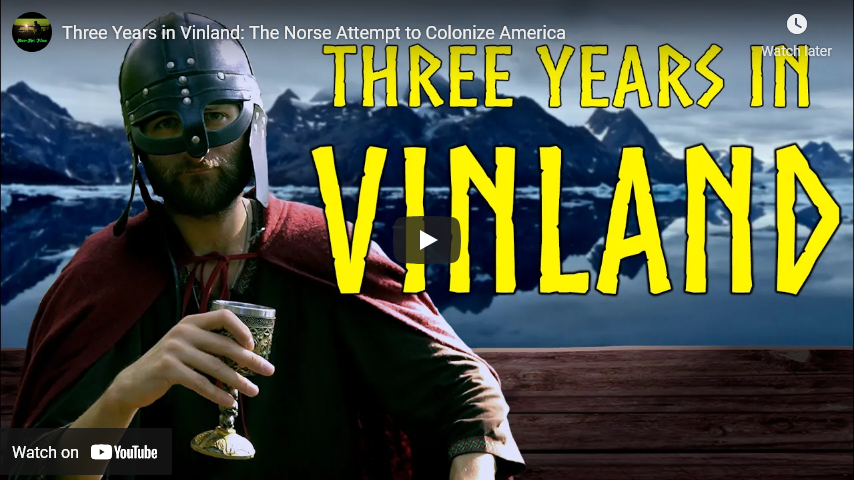
Three Years in Vinland: The Norse Attempt to Colonize America
Atun-Shei Films
Published 9 Oct 2021Happy Leif Erikson Day! Some time after Thorvald Erikson’s disastrous voyage to the mysterious lands west of Greenland, a wealthy Icelander named Thorfinn Karlsefni financed and led an expedition of his own, with the goal of establishing a permanent Norse settlement in Vinland. Karlsefni and his crew would spend three summers in the New World, where they would have to deal with internal division, hostile Native Americans, and (according to some) the wrath of demonic mythological creatures.
Support Atun-Shei Films on Patreon ► https://www.patreon.com/atunsheifilms
Leave a Tip via Paypal ► https://www.paypal.me/atunsheifilms
Buy Merch ► https://teespring.com/stores/atun-she…
#LeifErikson #Vinland #History
Original Music by Dillon DeRosa ► http://dillonderosa.com/
Reddit ► https://www.reddit.com/r/atunsheifilms
Twitter ► https://twitter.com/atun_shei~REFERENCES~
[1] Magnus Magnusson & Hermann Pálsson. The Vinland Sagas: The Norse Discovery of America (1965). Penguin Books, Page 7-43
[2] Birgitta Wallace. “Karlsefni” (2006). The Canadian Encyclopedia [https://www.thecanadianencyclopedia.c..].
[3] Lorraine Boissonault. “L’Anse Aux Meadows and the Viking Discovery of North America” (2005). JSTOR Daily https://daily.jstor.org/anse-aux-mead…
Comments Off on Three Years in Vinland: The Norse Attempt to Colonize America
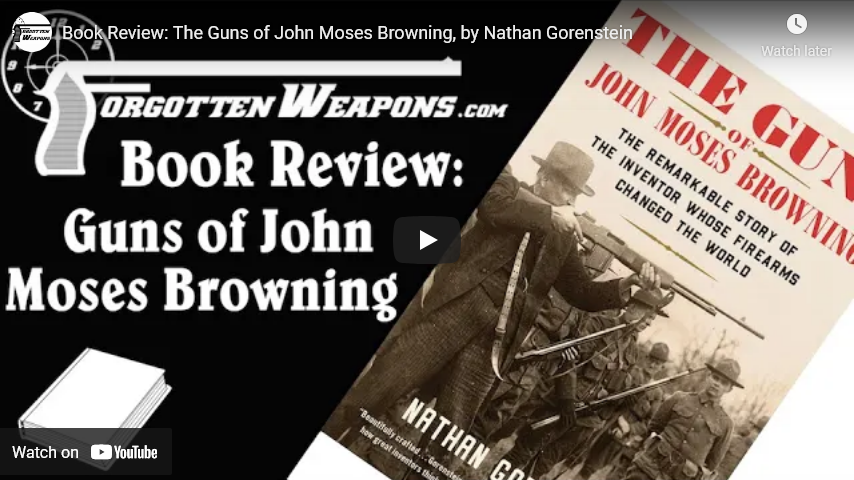
Book Review: The Guns of John Moses Browning, by Nathan Gorenstein
Forgotten Weapons
Published 24 Jun 2021http://www.patreon.com/ForgottenWeapons
https://www.floatplane.com/channel/Fo…
Cool Forgotten Weapons merch! http://shop.forgottenweapons.com
John Moses Browning is, without argument, the greatest firearms designer in history. While we have had many brilliant designers who had their names forever connected to guns (Maxim, Luger, Kalashnikov, …), Browning invented whole *categories* of firearms. Gorenstein’s new book The Guns of John Moses Browning is a welcome biography of the man, giving great insight into Browning’s life and work. The book is well researched, well written, and thoroughly engaging. It is also worth noting that Gorenstein is himself a competitive shooter, and understands the world that Browning operated in.
I think my back-cover blurb for the book (for which I received no compensation; full disclosure) sums it up well:
Following Browning from his birth in rural Utah to his death in urban Belgium, we see how a changing world shaped his inventions and how, in turn, his inventions shaped a changing world.
Browning began in the last years of the Wild West inventing lever action rifles, then became a major part of the blossoming of the automatic pistol, then invented the semiauto shotgun before designing the modern machine guns that become iconic to the United States’ involvement in two world wars. It is a tremendous story, and Gorenstein’s book lays it all out for the reader.
Available from Amazon here:
https://amzn.to/355eMxeContact:
Forgotten Weapons
6281 N. Oracle 36270
Tucson, AZ 85740
Comments Off on Book Review: The Guns of John Moses Browning, by Nathan Gorenstein
September 20, 2021
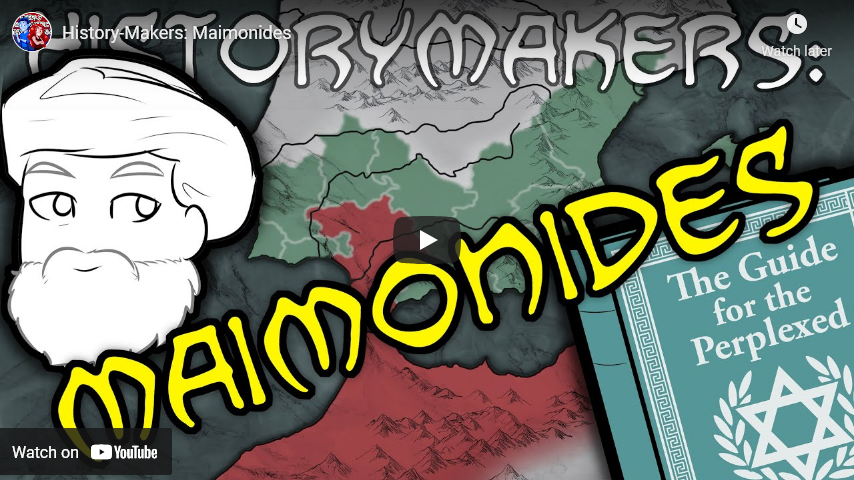
History-Makers: Maimonides
Overly Sarcastic Productions
Published 17 Sep 2021“From Moses to Moses, there was none like Moses.” Jump into 1100s Cordoba & Cairo as we take a look at the life of one of the Medieval world’s most boundary-breaking History-Makers: Moses Maimonides!
SOURCES & Further Reading: Great Courses lectures “Jewish Scholar in Cairo: Moses Maimonides” from The History and Achievements of the Islamic Golden Age by Eamonn Gearon and “Maimonides and Jewish Law” from Great Minds of the Medieval World by Dorsey Armstrong. Britannica “Maimonides” https://www.britannica.com/biography/…, Stanford Encyclopedia of Philosophy “Maimonides” https://plato.stanford.edu/entries/ma…, The Guide For The Perplexed, Mishne Torah and Commentary on the Mishnah by Maimonides
Special thanks to Yellow/LudoHistory for his assistance in checking over my script. You can check out his livestreams playing historically-inspired videogames over at https://www.twitch.tv/ludohistory
Our content is intended for teenage audiences and up.PATREON: https://www.Patreon.com/OSP
PODCAST: https://overlysarcasticpodcast.transi…
DISCORD: https://discord.gg/osp
MERCH LINKS: http://rdbl.co/osp
OUR WEBSITE: https://www.OverlySarcasticProductions.com
Find us on Twitter https://www.Twitter.com/OSPYouTube
Find us on Reddit https://www.Reddit.com/r/OSP/
Comments Off on History-Makers: Maimonides
September 15, 2021
Narendra Modi apparently doesn’t inspire mere biographies … he gets hagiographies
Scott Alexander reviews Andy Marino’s gushingly admiring Modi: A Political Biography:
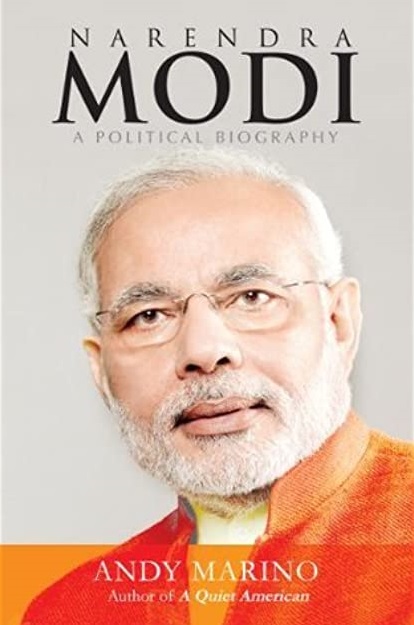
The author begins by writing about how Modi let him ride with him in his private helicopter and gave him unprecedented access to have “open-ended conversations” about “every aspect of his life”. The cover promises an objective evaluation, but on page 2, the author notes that “Objectivity does not mean flying in the face of incontrovertible evidence”, adding that “Modi has been the subject of the longest, most intense — and probably the most vituperative — campaign of vilification.” Marino promises to replace this campaign with “a narrative that is balanced, objective, and fair — but also unsparingly critical of [Modi’s] foibles” — which is an interesting construction, given how it contrasts criticism with fairness — and also pre-emptively declares the flaws he will be criticizing “foibles”. I’m not sure we ever get around to the criticism anyway, so it doesn’t really matter.
I am still going to summarize and review this book, but I recommend thinking of it as Modi’s autobiography, ghost-written by Andy Marino. I hope to eventually find another book which presents a different perspective, and an update for the past six years (M:APB ends in 2014, right when Modi was elected PM). Until then, think of M:ABP as a look into how Modi sees himself, and how he wants you to see him.
[…]
In 1975 the Emergency happened.
For thirty years, since its independence, India had been a socialist state. Not the cool kind of socialist where you hold May Day parades and build ten zillion steel mills. The boring kind of socialist where the government makes you get lots of permits, then taxes you really heavily, and nothing really ever gets done. “Even today the Representation of the People Act requires all Indian political parties to pledge allegiance not only to the Constitution but also to socialism.” The RSS [Rashtriya Swayamsevak Sangh] and its collection of associated right-wing nationalist parties supported Hindu nationalism plus socialism. Their arch-enemy, the center-left-to-confused-mishmash Congress Party, supported secularism plus socialism. Non-socialism was off the table.
In unrelated news, there was a food shortage. Indians took to the streets protesting Prime Minister Indira Gandhi (no relation to Mahatma Gandhi). Gandhi was heavy-handed in crushing the protests, which caused more protests, one thing led to another, and finally Gandhi declared martial law, a period which has gone down in history as the Emergency.
Gandhi immediately moved to arrest all her political enemies and shut down all newspapers that criticized her. The RSS was one of Gandhi’s main enemies and had to go underground quickly. Gujarat became a center for the resistance. So Modi, as an official in Gujarat’s RSS, ended up right in the middle of this. He remained a paper-pusher, but now he was a paper-pusher for freedom, scheduling meetings of resistance leaders, maintaining a master list of safe houses and trusted operatives, and keeping lines of communication open.
During a capital-e Emergency even paper-pushers can have greatness thrust upon them, and Modi ended up with responsibilities way outside his formal job description:
Chhayanak Mehta tells of how, after Deshmukh’s arrest, it was discovered that the papers he was carrying were still with him. These contained plans for the future actions of the [resistance], and it was essential to somehow retrieve them. To this end, Modi planned a distraction with the help of a female swayamsevak from Maningar. They went to the police station where Deshmukh was being held. While she posed as a relative and contrived a meeting with the prisoner, Modi somehow took the documents from under the noses of the police.
Or:
Modi was also responsible for transportation and travel to Gujarat of those opponents of Indra still at liberty … Modi too, in the course of his duties, was compelled to travel, often with pamphlets that could have got him arrested. To minimize the risk he became a master of disguise, something that came naturally to one who always paid attention to his appearance. On one outing, he would appear as a saffron-robed sanyasi; on another, as a turbaned Sikh. One time he was sitting in a railway carriage, hiding behind a thick black beard, when his old schoolteacher sat down next to the grown-up “urchin”. The disguise worked perfectly, but some years afterwards the teacher attested that as Narendra disembarked, he introduced himself and offered a hearty saluation.
Still, the Emergency ground on. One aspect the book doesn’t stress, but which I was surprised to read about when Googling the period, was the forced sterilizations. Under pressure from the US and UN to control exponentially rising populations, Indira had started various population control efforts in the 60s, all ambiguously voluntary. Over time, the level of pressure ratcheted up, and during the Emergency the previously-ambiguous coercion became naked and violent. “In 1976-1977, the programme led to 8.3 million sterilisations, most of them forced”.
How did this end? Gandhi called an election — during which she was predictably voted out completely and her party lost more thoroughly than any party has ever lost anything before. Her opponents’ campaign was based on things like “she just forceably sterilized 8 million people and you could be next”, which is honestly a pretty compelling platform. The real question is why she gave up her emergency dictatorship and called an election at all. According to the book:
It is more likely that in ending the Emergency Indira was thinking of herself, not India. She was aware of her growing international reputation as a tyrant, the daughter of a great democratic leader whose legacy she had damaged. As the journalist Tavleen Singh points out, the pressure to end the Emergency came simply from Indira Gandhi finding it unbearable that “the Western media had taken to calling her a dictator.”
(but before you interpret this as too inspiring a story of the victory of good over evil, Indira Gandhi was voted back in as prime minister three years later. We’ll get to that.)
Modi came out of the Emergency a rising star, appreciated by all for his logistical role in the Resistance. In the newly open political climate, the RSS was devoting more attention to their political wing and asked Modi to come on as a sort of campaign-manager-at-large, who would travel all around India and help friendly politicians get elected. He turned out to be really good at this, and rose through the ranks until he was one of the leading lights of the new BJP (Bharatiya Janata Party, “Indian People’s Party”). He spent the next two decades running campaigns, traveling the country, and getting involved in internal backstabbing (which he had a habit of losing in ways that got him kicked out of the party just before something terrible happened, leaving him as the only person untarnished by the terrible thing when they inevitably invited him back). Finally some of Modi’s political enemies failed badly in the leadership of Gujarat — one was expelled for corruption, another suffered several natural disasters which he responded to poorly. Modi had been accepted back into the party. He was beloved by Gujaratis, who still remembered his heroic work during the Resistance. He was the only person untarnished by various terrible things. By the rules of Indian politics, it was the party’s choice who would replace the resigning incumbent as Chief Minister of Gujarat, and as Modi tells it, everyone else just kind of agreed he was the natural choice (his enemies say he did various scheming and backstabbing at this point). So on October 7 2001, Narendra Modi was sworn in as Chief Minister of Gujarat, India’s fifth-largest state.
Comments Off on Narendra Modi apparently doesn’t inspire mere biographies … he gets hagiographies
September 12, 2021
Terry Pratchett: Discworld And Beyond
Biographics
Published 19 Mar 2021Dive into Discworld.
Comments Off on Terry Pratchett: Discworld And Beyond
September 7, 2021
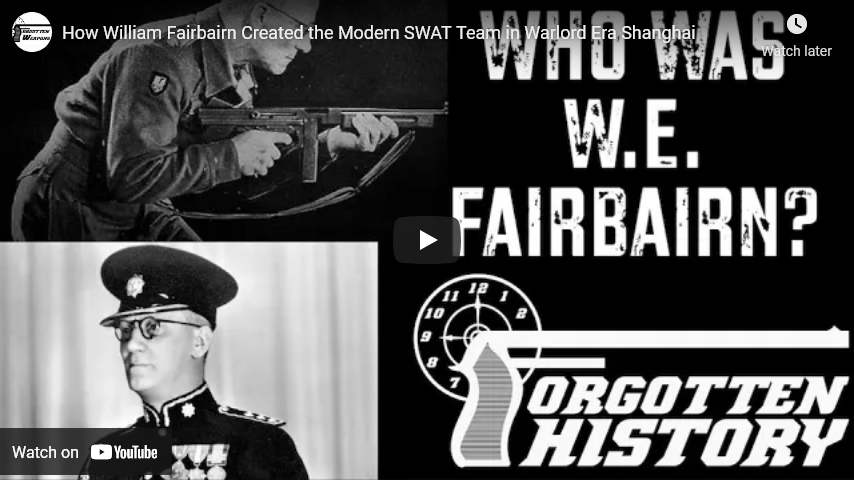
How William Fairbairn Created the Modern SWAT Team in Warlord Era Shanghai
Forgotten Weapons
Published 1 Jun 2021William E. Fairbairn is best known for his work with Eric Sykes and their “Commando” knife design during World War Two. However, Fairbairn spent some 33 years in the Shanghai Municipal Police, working his way up from a beat constable to Assistant Commissioner. There he was responsible for the SMPD adopting truly forward-thinking fighting methods, and he essentially invented the modern SWAT team (the “Reserve Unit”, which Fairbairn led for 10 years). He combined expertise in formal marksmanship, instinctive practical shooting, and hand-to-hand combat schools (including jiu-jitsu and judo) into a comprehensive training program like no other on earth at the time.
Book references:
The World’s First SWAT Team, by Leroy Thompson:
https://amzn.to/2TrYiNvGentleman & Warrior, by Peter Robins:
https://amzn.to/3vuODn9http://www.patreon.com/ForgottenWeapons
https://www.floatplane.com/channel/Fo…
Cool Forgotten Weapons merch! http://shop.forgottenweapons.com
Contact:
Forgotten Weapons
6281 N. Oracle 36270
Tucson, AZ 85740
Comments Off on How William Fairbairn Created the Modern SWAT Team in Warlord Era Shanghai
August 31, 2021
Isambard Kingdom Brunel: The Genius of the Industrial Revolution
Biographics
Published 23 Mar 2020Check out Brilliant: https://brilliant.org/biographics
Check out Business Blaze: https://www.youtube.com/channel/UCYY5…
This video is #sponsored by Brilliant.
TopTenz Properties
Our companion website for more: http://biographics.org
Our sister channel TopTenz: https://www.youtube.com/channel/UCQ-h…
Our Newest Channel about Interesting Places: https://studio.youtube.com/channel/UC…Credits:
Host – Simon Whistler
Author – Morris M.
Producer – Jennifer Da Silva
Executive Producer – Shell HarrisBusiness inquiries to biographics.email@gmail.com
Source/Further reading:
Oxford National Dictionary of Biography: https://www.oxforddnb.com/view/10.109…
Interesting podcast on his life: https://www.bbc.co.uk/programmes/b04n…
Britannica: https://www.britannica.com/biography/…
History Today: https://www.historytoday.com/archive/…
The Thames Tunnel: https://www.smithsonianmag.com/histor…
The atmospheric railway: https://www.theguardian.com/science/t…
SS Great Britain accident: https://www.ssgreatbritain.org/about-…
Comments Off on Isambard Kingdom Brunel: The Genius of the Industrial Revolution
August 27, 2021
On Which Side is Brazil? – WW2 Special
World War Two
Published 26 Aug 2021Brazilian President, Getúlio Vargas, has led his country as dictator since the 1930s. He has embraced European fascist ideas and fostered close ties with Germany and Italy. Yet, he also maintains a close relationship with the United States. After skilfully playing both sides, he must now choose Axis or Allies.
(more…)
Comments Off on On Which Side is Brazil? – WW2 Special
August 8, 2021
Presidential biographies
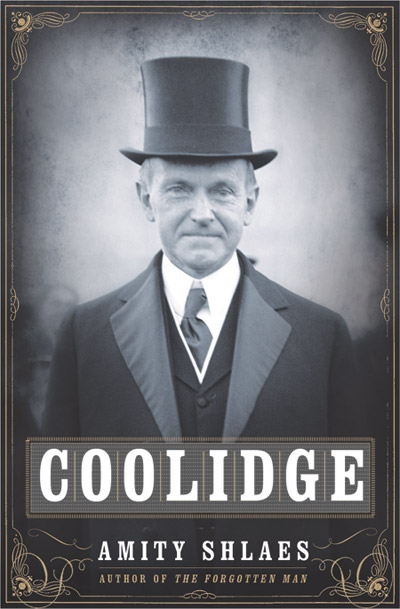
As I’m not an American, I haven’t read many biographies of US Presidents (just Jefferson, Jackson, Lincoln, Grant, and Coolidge if I remember correctly), so I can’t really comment on this project by a man who read and ranked 240 of them:
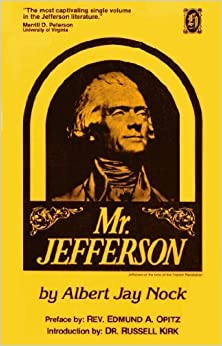
In 2012, an investment banker and avid history reader named Stephen Floyd began making his way through the American presidents, one biography at a time. It was a way to fill time while commuting to Hong Kong on twelve-hour flights. “I got tired of drinking free wine and watching cheap movies,” he says. Starting with George Washington, he read 240 titles (123,000 pages) in six years or, to be precise, 2,243 days, bringing him up to Obama. (Floyd is not alone in this pursuit: as the Washington Post reports, reading biographies of all the presidents is a thing).
Along the way, Floyd blogged about the books he read at bestpresidentialbios.com where fellow enthusiasts commented on his reviews, sometimes challenged his opinions, and suggested additional biographies to read. His blog posts improved to the point where he became a reliable and knowledgeable reviewer, as good as most professionals. When Stephen Floyd says David McCullough’s much-celebrated biography of John Adams is the second-best biography of John Adams, you need to listen. He can back it up.
Floyd, who continues to review biographies he overlooked in his initial journey, as well as new releases, has covered a dozen volumes on George Washington alone, including all four volumes and 1,800 pages of James Flexner. He rates Ron Chernow’s Washington: A Life the best of the bunch, by far. Chernow is the only biography of the 270-some Floyd has reviewed to earn a five-star rating. Only sixteen authors have 4.5 stars or better. (In case you’re wondering, Floyd gave Hoover one of the worst reviews it got anywhere, but still placed it among the dozen or so biographies with 4.25 stars, and seeing as it’s keeping company with Edmund Morris’s magnificent Theodore Roosevelt series, I won’t complain.)
Of course, one can quibble with Floyd’s judgments, as with those of any reviewer. He has 4.5 stars for Doris Kearns Goodwin’s The Fitzgeralds and the Kennedys, notwithstanding the padding and the plagiarism (it has been taken out of print by its publisher). He found a lot more to like in Peggy Noonan’s Reagan biography than I did. Also in H. Wayne Morgan’s McKinley, which is nowhere near as fine as Margaret Leech’s lower-rated effort. But Floyd knows what he likes and why.
Going back to the Adams biographies, he celebrates Ferling for his judicious details and careful opinions. “The author’s descriptive capability is on consistent display and he sets the context in most scenes magnificently.” He appreciates that Ferling finds Adams’ relationship with his wife, Abigail, more complicated than the perfect romance portrayed in other biographies.
Floyd is less charmed by McCullough’s “enormously sympathetic” biography of Adams. It is “incontrovertibly excellent,” and firmly rooted in the abundant Adams source material, but the author’s tendency to end every scene with a remark favorable to the subject irks after a while. McCullough comes across as “a mother doting on a favorite child.”
It’s a fair point, and Ferling gets the higher mark.
Bestpresidentialbios.com has all of Floyd’s reviews, and summaries of his reviews broken down by president. It’s a great resource and, as mentioned, he’s still adding to it.
Comments Off on Presidential biographies
August 6, 2021
Shostakovich: Stalin’s Composer? – WW2 Biography Special
World War Two
Published 5 Aug 2021Leningrad’s Dmitri Shostakovich has risen from a child prodigy to be one of the Soviet Union’s most celebrated composers, having rescued his career from Stalin’s interference along the way. Desperate to defend Russia after the German invasion, he fights back, not with a rifle, but with music.
(more…)
Comments Off on Shostakovich: Stalin’s Composer? – WW2 Biography Special
July 19, 2021
George Orwell: The Uncompromising Visionary
Biographics
Published 29 Nov 2019This video is #sponsored by NordVPN.
Credits:
Host – Simon Whistler
Author – Morris M
Producer – Jennifer Da Silva
Executive Producer – Shell HarrisBusiness inquiries to biographics.email@gmail.com
Source/Further reading:
Britannica’s Orwell Bio: https://www.britannica.com/biography/…
Excellent, very informative ONDB biography (paywall for non-UK users. UK users need only enter library card number to access): https://www.oxforddnb.com/view/10.109…
Spanish civil war: https://encyclopedia.ushmm.org/conten…
https://www.history.com/this-day-in-h…
Orwell’s mistakes on the Spanish Civil War: https://www.theguardian.com/books/201…
Orwell at the BBC: https://www.bbc.com/news/entertainmen…
Comments Off on George Orwell: The Uncompromising Visionary
July 13, 2021
“Samuel Beckett was one of the twentieth century’s very greatest conmen and his dupes continue to relish being parted from their cash”
In The Critic, J.S. Barnes digs up the bones of Samuel Beckett for a thorough kicking:
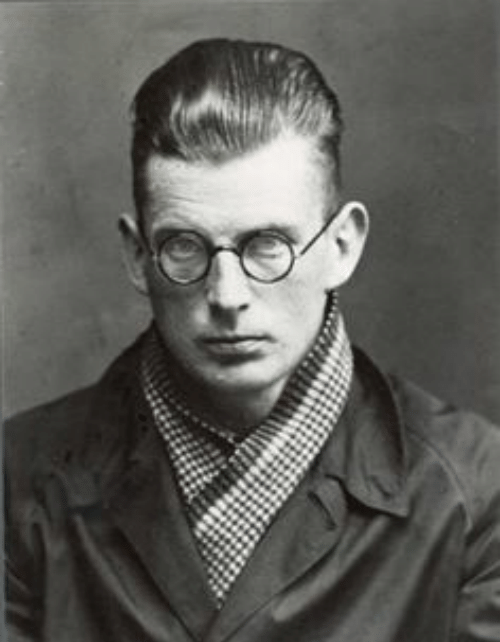
Samuel Beckett as a student in 1922.
Wikimedia Commons.
A good conman needs three key attributes to succeed: swagger, plausibility and commitment to the perpetuation of the con. A great conman, meanwhile, needs one additional factor: the discovery and nurturing of victims who are not only willing to be gulled but who come to actively enjoy that sensation.
Samuel Beckett was one of the twentieth century’s very greatest conmen and even now, decades after his death, his dupes continue to relish being parted from their cash.
That he was plausible in his claims is clear from the fact that his plays are still performed all around the world. His swagger may be witnessed in the endless succession of black and white photographs which accompany most editions of his work: the old fraud gazing grimly out at the reader from his home in France, like some weathered statue come dolefully to life, looking as though he is considering the fundamental inequities of existence or, perhaps, rumours of a forthcoming croissant shortage.
As for his commitment to the long con, he had form. In 1930, he gave a lecture at Trinity College, Dublin, about a poet (Jean du Chas) and an artistic movement (Le Concentrisme) which he had entirely invented, both fooling and riling up the dons. He learnt well from this, one suspects, never again to allow the mask to slip.
Following his early, glumly unreadable novels, much indebted to James Joyce, the real foundation of Beckett’s reputation is his 1953 play Waiting for Godot. The set-up is vivid and intriguing: in a rural wasteland sit two ravaged, witty tramps, Vladimir and Estragon, who trade barbs and banter while waiting for the arrival of a third individual who, we soon suspect, will never show up. And then, of course, nothing of any consequence happens.
Two additional characters wander on and off stage. The tramps talk and bicker some more. Godot never puts in an appearance. As one of the characters remarks: “Nothing happens. Nobody comes, nobody goes. It’s awful.”
There is no progression or change in the characters, no shift in their situation. Any clear-eyed audience member who has gone into the theatre meaning to judge the thing in as objective a fashion as possible will soon find themselves restless, then bored, then on the cusp of feigning some sort of medical emergency simply to get out of the stalls without causing too much of a fuss.
At this, avid Beckettians are no doubt sprawling on their chaise longues, sucking ferociously on a Gauloise and muttering to themselves that this lack of narrative progression, this absence of change, is the very crux of old Sam’s oeuvre. Confronted with the horrors of the twentieth-century, they say, pointlessness and circularity are the only things which make sense. Laughter in the ruins is all that’s left.
Comments Off on “Samuel Beckett was one of the twentieth century’s very greatest conmen and his dupes continue to relish being parted from their cash”
July 9, 2021
Alexander Larman on George MacDonald Fraser’s Flashman novels
I happened upon a copy of the first Flashman in my teens and was totally taken in by the assertion that the book was about “a real historical figure involved in most of the Victorian era’s most notorious episodes and that his papers were discovered during a sale of household furniture at Ashby, Leicestershire in 1965.” I’d watched the TV adaptation of Tom Brown’s Schooldays, so I had some awareness about the character Flashman, which only helped keep the cover story going for me. I absolutely loved the book and while it eventually became clear that it was fiction, I haunted the bookshops for years afterwards searching for more from Fraser. In The Critic, Alexander Larman looks at the author and his works — which almost certainly could never have been published in this neo-Victorian age:
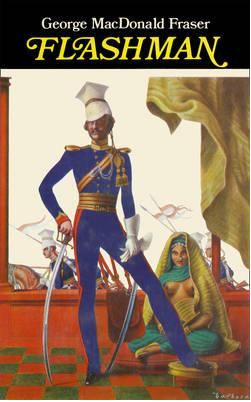
When Flashy first entered the scene in bestselling form in 1969, there was confusion as to whether the tales were fanciful fiction or eyebrow-raising fact. This was due to MacDonald Fraser’s straight-faced claim that his protagonist was a real historical figure involved in most of the Victorian era’s most notorious episodes and that his papers were discovered during a sale of household furniture at Ashby, Leicestershire in 1965.
MacDonald Fraser presented himself as an impartial editor. He wrote, “I have no reason to doubt that it is a completely truthful account; where Flashman touches on historical fact he is almost invariably accurate, and readers can judge whether he is to be believed or not on more personal matters.”
The subterfuge succeeded. A third of the initial reviews treated it as a serious work of non-fiction, rather than a brilliantly conceived and superbly written counter-factual piece.
Not bad for the continued exploits of a minor character in the sanctimonious Victorian novel Tom Brown’s Schooldays, whose major achievement is to bully the protagonist and his friend Harry “Scud” East, before being expelled for drunkenness. It set its creator on a hugely lucrative path, and established him as one of the great comic novelists of his day.
MacDonald Fraser was a contradictory figure. A patriotic right-winger who had a deep respect for other cultures and peoples; one of Hollywood’s most in-demand screenwriters who happily lived on the Isle of Man in a self-conscious recreation of “the good old days”; a fully paid-up reactionary who wished to reintroduce corporal and capital punishment, but who loathed British incursions abroad.
Above all, he despised cant and hypocrisy. He described Tony Blair as “not just the worst prime minister we’ve ever had, but by far the worst prime minister we’ve ever had” and angrily added, “it makes my blood boil to think of the British soldiers who’ve died for that little liar.”
Christopher Hitchens, who may not have agreed with his views on foreign expeditions, but knew a thing or two about the value of being able to hold one’s drink, was a friend of MacDonald Fraser’s. When Hitchens telephoned him on his eightieth birthday to offer his regards, he was stoutly informed that he shared the company of “Charlemagne, Casanova, Hans Christian Andersen and Kenneth Tynan” on that date.
Their politics may have differed — Christopher acknowledged MacDonald Fraser’s “robust Toryism” — but Hitchens respected the older writer’s enduring affection for his Zulu, Sikh and Afghan characters, as well as the dutiful admiration he showed towards both American culture and its presidents.
Comments Off on Alexander Larman on George MacDonald Fraser’s Flashman novels


