
Whitehall Moll History Clips
Published 11 Feb 2019Dr David Starkey reveals how Winston Churchill’s biography of his ancestor John Churchill marked out Winston as the only politician who truly understood war — just as WWII loomed.
January 20, 2022
David Starkey — The Churchills episode 2
Comments Off on David Starkey — The Churchills episode 2
“McLuhan came to be regarded by the Baby Boomer generation as a guru and prophet; a visionary who had discovered something profound, not merely about the media, but about life and the universe”
In Quillette, Graham Majin looks at the life and works of Marshall McLuhan:
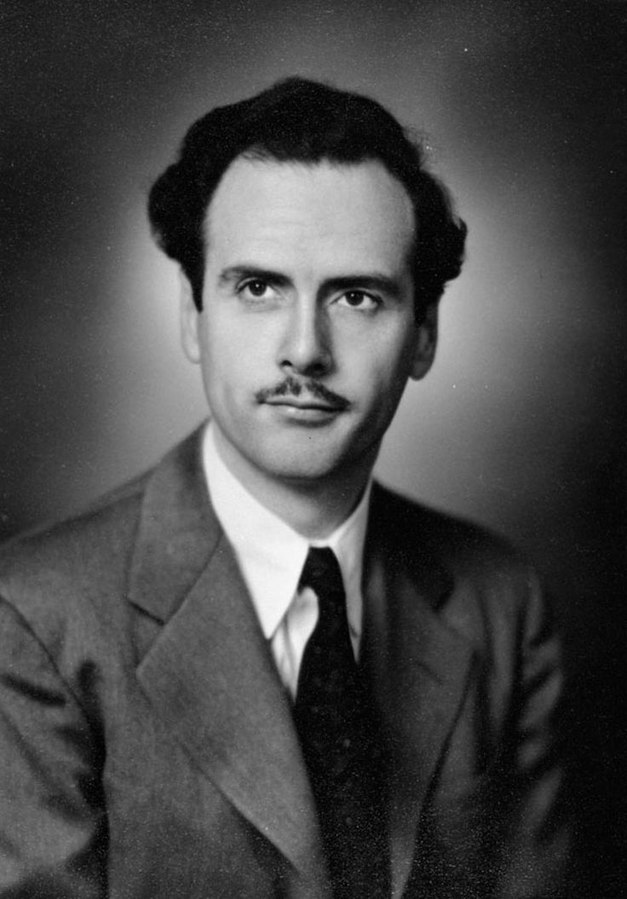
Marshall McLuhan, 1945.
Library and Archives Canada reference number PA-172791 via Wikimedia Commons.
The media ecosystem of the early 21st century is marked by a collapse of trust in journalism. How did we get here? As we look back, like a detective searching for clues, one moment stands out as significant; the publication on March 1st, 1962, of The Gutenberg Galaxy, written by a then-obscure Canadian academic named Marshall McLuhan. This book set in motion a line of falling dominoes, the consequences of which continue to affect us profoundly today.
McLuhan came to be regarded by the Baby Boomer generation as a guru and prophet; a visionary who had discovered something profound, not merely about the media, but about life and the universe. During the 1960s, he became a major celebrity, especially in the US. He featured on the cover of Newsweek magazine, was frequently interviewed on TV, and made a cameo appearance in Woody Allen’s 1977 movie Annie Hall. There was even a prog rock band named in his honor. The American media historian Aniko Bodroghkozy writes that “no other figure who was not of the movement itself received so much positive notice in the alternative newspapers that served dissident youth communities.” In 1965, the celebrity journalist Tom Wolfe asked breathlessly, “Suppose he is what he sounds like, the most important thinker since Newton, Darwin, Freud, Einstein, Pavlov?” Wolfe described McLuhan as an almost Christ-like figure:
A lot of McLuhanites have started speaking of him as a prophet. It is only partly his visions of the future. It is more his extraordinary attitude, his demeanor, his qualities of monomania, of mission. He doesn’t debate other scholars, much less TV executives. He is not competing for status; he is alone on a vast unseen terrain, the walker through walls, the X-ray eye.
Writing in 1967, John Quirk agreed that McLuhan was a “savant and prophet” and explained that, “McLuhanites hold that the new technologies will lend men the awareness and instruments necessary to solve contemporary problems and inaugurate a bright new era.” McLuhan was a master of the catchy one-liner and the original source of Timothy Leary’s famous counterculture catchphrase, “Turn on, tune in, drop out.”
McLuhan’s division of media into two types was certainly influential although that influence wasn’t particularly useful:
In The Gutenberg Galaxy, McLuhan observed that the decline of Catholicism, the rise of Protestantism, and the drift towards secularism all coincided with the development of printing. He hypothesized that the invention of printing had produced the European Enlightenment and Victorian liberal democracy. It was not what was printed, but printing itself that was responsible. McLuhan classified all media into two types: “hot” and “cool”. Printed books and newspapers, he suggested, were “hot” because they were bursting with information. Pre-Renaissance forms of communication, on the other hand, like the spoken Catholic Mass, were “cool”. This was because the Mass was spoken in Latin and hence contained little or no information that ordinary people could understand. Handwritten books were also categorized as “cool”.
Baby Boomers were quite receptive to McLuhan’s message, as it told them very much the sort of thing they wanted to hear:
He had produced a Boomer-friendly, sanitized version of his thesis in which magic and fantasy replaced religion. He also took care to flatter his Boomer audience by telling them that they were uniquely in tune with a deeper reality their parents could not see or understand. “We of the TV age,” he wrote, “are cool. The waltz was a hot, fast mechanical dance suited to the industrial time in its moods of pomp and circumstance. In contrast, the Twist is a cool, involved and chatty form of improvised gesture.”
McLuhan told the Boomers that they might appear irrational to their parents, but this was simply because the old generation was raised on obsolete “hot” media. As a result, he said, they had lost touch with their emotional side and become unnaturally rational and impartial: “Phonetic culture endows men with the means of repressing their feelings and emotions when engaged in action. To act without reacting, without involvement, is the peculiar advantage of Western literate man.”
McLuhan was a key influence on the Boomers, but his ideas failed when logically analyzed:
Trying to deconstruct McLuhan’s arguments reveals glaring absurdities. For example, it is self-defeating to claim that the content of a message is unimportant. On the contrary, all messages must convey information which corresponds with, or claims to correspond with, some state of affairs in the real world if they are to be useful. A news article without news, a weather forecast that does not mention the weather, or a traffic report lacking information about traffic might all be deliciously McLuhanesque, but they are not helpful. Even the Bible, revered by McLuhan, would be meaningless if it were merely a book of random words and blank pages. As Finklestein summarized, McLuhan’s argument is “absurd, when analyzed.”
McLuhan might well be the patron saint of fake news.
Comments Off on “McLuhan came to be regarded by the Baby Boomer generation as a guru and prophet; a visionary who had discovered something profound, not merely about the media, but about life and the universe”
January 19, 2022
Neville Chamberlain, the “great appeaser”
Alexander Larman considers an attempt to paint British Prime Minister Neville Chamberlain in a much more positive light than his popular image after appeasement failed:
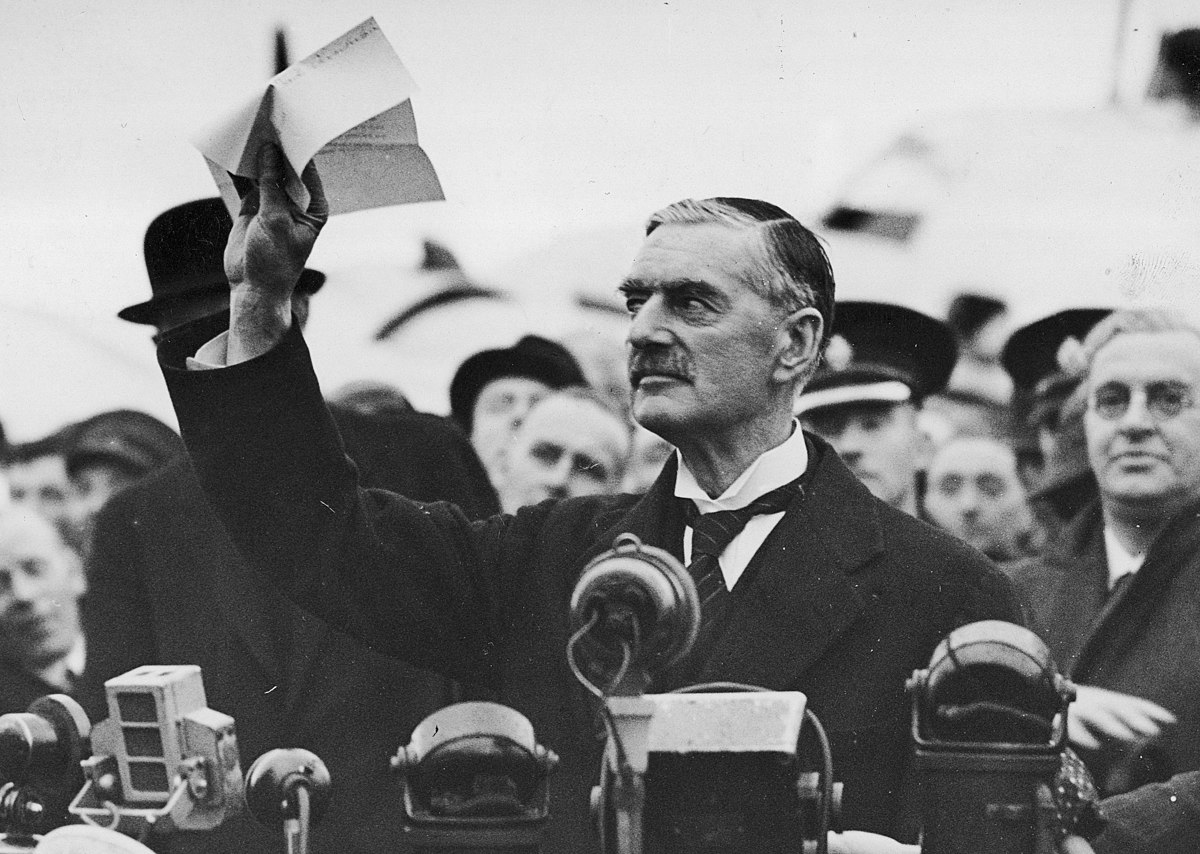
Prime Minister Neville Chamberlain at Heston Aerodrome, holding up a copy of the Anglo-German Declaration he had negotiated with Adolf Hitler, 30 September, 1938.
Narodowe Archiwum Cyfrowe via Wikimedia Commons.
On 30 September 1938, the Prime Minister Neville Chamberlain waved a piece of paper in his hand and declared “My good friends, for the second time in our history, a British Prime Minister has returned from Germany bringing peace with honour. I believe it is peace for our time.” He was, of course, incorrect. Less than a year later, Britain was at war with Germany, and the piece of paper was rendered meaningless.
Posterity has been hard on Chamberlain, regarding him as one of the least effective British premiers, and he has been entirely overshadowed by his more charismatic and successful replacement, Winston Churchill. Yet the bestselling author Robert Harris took a more sympathetic view of Chamberlain, and suggested in his 2017 novel Munich that, far from the Prime Minister being a hapless blunderer, he was in fact a canny tactician who bought his country an invaluable extra year to prepare for the coming conflict. This novel has now been filmed by Netflix, and has attracted particular attention for Jeremy Irons’ sympathetic and warm portrayal of Chamberlain.
Harris has even suggested that “I could perhaps show him as a tragic hero rather than merely the gullible old fool of popular myth … it is a mark of maturity to be able to hold two competing views in one’s head at the same time: that Churchill was vital to the defeat of Germany, and so, in a different way, was Neville Chamberlain.” Does he have a point, or is this just the canny spin of a novelist who has found a new and profitable angle to bring a well-worn story to life?
For my forthcoming book The Windsors at War, dealing with the royals in WWII and their relationships with the politicians of the day, I researched many letters and documents written by Chamberlain, members of the Royal Family and those around him in Downing Street. Several things came to light. There was residual antipathy between Chamberlain, who was an instinctive appeaser, and Churchill, who was not, and the Prime Minister privately derided the other politician as “a bandit” and “a pirate”. He also despised Attlee’s Labour party, calling them experts in “sob-stuff” sentimentality. He can undeniably be accused of high-handedness and complacency. Yet the charge of incompetence is a more deadly one.
Chamberlain himself came from a distinguished political family. His father Joseph was a ruthless Liberal parliamentarian who was said to have originated the phrase “you cannot teach old dogs new tricks”, and his elder brother Austen, one-time Chancellor of the Exchequer and leader of the Conservative Party, demonstrated a confidence in his intellectual abilities that his sibling did his best to emulate. He was not universally popular with his own side – the Conservative MP and diarist Harold Nicolson called him “a bourgeois shit” – but he generally had the support of his party in pursuing his policy of appeasement towards Hitler and Germany, believing – correctly – that Britain could not win the conflict outright.
Comments Off on Neville Chamberlain, the “great appeaser”
January 18, 2022
David Starkey – The Churchills episode 1
Whitehall Moll History Clips
Published 7 Jan 2019David Starkey weaves the stories of two great British war leaders: John and Winston Churchill. Hear how John Churchill rose from obscurity to be King James II’s right-hand man.
Comments Off on David Starkey – The Churchills episode 1
January 12, 2022
Sniper Warrior – Vasily Zaitsev – WW2 Biography Special
World War Two
Published 11 Jan 2022From the woods of the Urals to the burning city of Stalingrad, Vasily Zaitsev went out to hunt his prey. As a sniper, he learned his trade in the grim reality of Stalingrad street fighting. Deep in the ruins of the factories, he stalked his enemies with a team of battle-hardened snipers. For days on end, they would lay in wait for valuable targets to show up. With a finger on the trigger, they would decimate the German ranks within a few deadly moments.
(more…)
Comments Off on Sniper Warrior – Vasily Zaitsev – WW2 Biography Special
January 5, 2022
John Ronald Reuel Tolkien
In The Critic, David Engels outlines the early life and career of J.R.R. Tolkien:
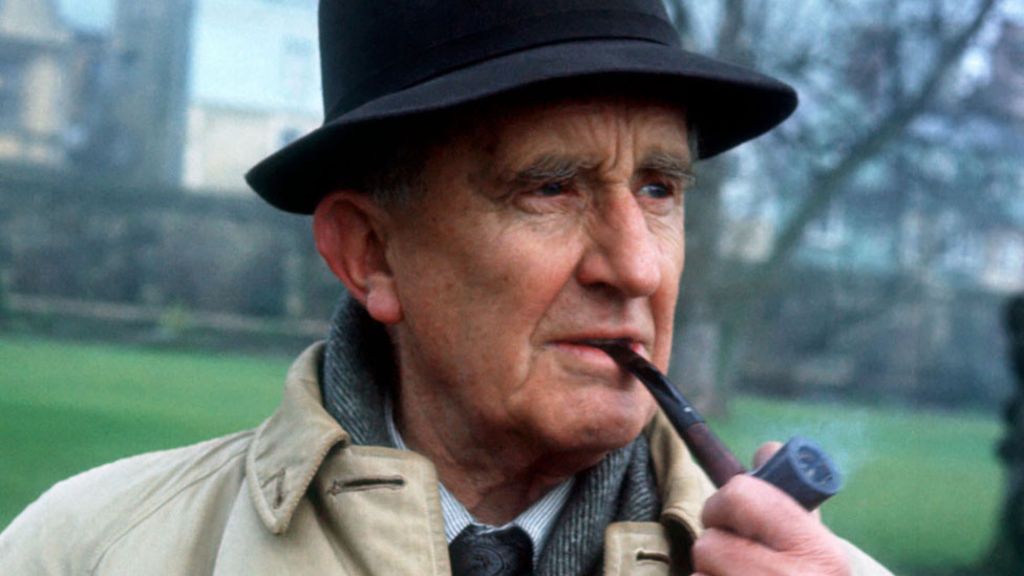
The biography of the British writer and philologist John Ronald Reuel Tolkien (1892-1973) is quickly summarised and, despite a few unusual cornerstones such as his early childhood in South Africa, the tragic death of his parents and the highly romantic love for his later wife Edith, not very spectacular. An existence confined entirely to the British Isles except for a few forays into the continent; a military service in the Great War only moderately traumatic compared to other fates; an honourable but hardly groundbreaking academic career; a life as father of a family that knew the most varied but hardly extraordinary fortunes.
Not really the stuff of legends — except for the global success of The Lord of the Rings, which arrived too late to set Tolkien’s existence on a different course. The (deeply unsatisfying) 2019 film adaptation of Tolkien’s youth attempts to surround him with the aura of a scholarly genius and war hero, and to explain his literary work biographically — but this reductionist attempt rather hinders the understanding of his oeuvre. Tolkien’s works are not exceptional because his life was: on the contrary, their exceptionality only gains its full significance when they are understood against the background of an altogether quite normal existence.
Of course, with such an undramatic approach, it is tempting to associate Tolkien’s enormous mythopoeic activity with the catchword “escapism”, and to reduce it once again to his biography, albeit this time not as a correspondence but as a compensation. This, too, misses the point — all the more so because Tolkien’s earliest literary activity goes far back into his teenage years: his work is not a reaction to his life, but rather the two grew in union, not unlike the mythical trees Telperion and Laurelin. Indeed, one might even regard Tolkien’s rather ordinary academic and family life as a consequence of his consuming, lifelong work on myth rather than the other way around. But what was Tolkien’s intention — and what can we learn from him?
In the beginning, there was disappointment. The Anglo-Saxon world, unlike France or Germany, has scarcely left any traces of an indigenous myth tradition; even the saga of King Arthur belongs to the pre-Anglo-Saxon, Celtic tradition. The Norman Conquest destroyed the entire Anglo-Saxon legend tradition, apart from a few nursery rhymes and place names and a very brittle literary corpus.
As an ardent lover of the Northwest of the Old World, the young Tolkien felt cut off from his own heritage and enthusiastically took up Indo-European linguistics as a technique for reconstructing the historical and mythical tradition of times long past. He set about, partly in play, partly in earnest, creatively deciphering and reconstructing the hitherto misunderstood evidence of England’s dark centuries. In the process, the boundary between etymology and mythopoetics quickly blurred, as Tolkien enriched the hypothetical material obtained by merging it with the archetypal content of the other legends of the ancient world. He created a mythical tradition that took on a character of its own.
But it would be wrong to interpret this legendarium, which was born out of linguistics but soon took on increasingly literary features, as a mere poetic game. Especially in the initial phase of his attempts, Tolkien endeavoured to introduce the increasingly coherent legends and sagas, which are known to the general public mainly through the posthumous Silmarillion and the publishing activities of his son Christopher, by use of a wide variety of framework plots, some of which have an old Anglo-Saxon character and some which are set in modern times. The leitmotif was the dream of the great wave that swallowed up a green island, which later became the seed of the “Fall of Númenor”; an image that haunted Tolkien himself often enough in his sleep and led him to state that those images, recorded partly in dreams and partly in a half-awake state, were not to be regarded as mere fiction, but rather as access to something true and permanent, which he fleshed out in various literary ways, but whose core consistently bore the character of a vision.
Comments Off on John Ronald Reuel Tolkien
January 4, 2022
Jim Morrison’s surprisingly long cultural shadow
In City Journal, Ian Penman considers the paradox of Jim Morrison’s brief period of musical and cultural stardom yet seemingly endless echoes in popular culture:
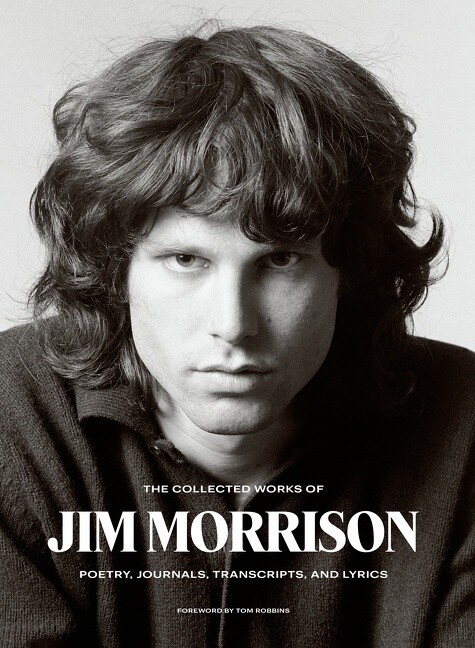
Jim Morrison’s bright spotlight time with The Doors lasted not quite five years: the band’s debut album arrived in January 1967, and L.A. Woman, the final work to feature the singer, was released the week of his death, aged 27, on July 3, 1971.
It’s now a half century since Morrison died in Paris in opaquely squalid circumstances, due to — take your pick — some mixture of alcohol, heroin, a small respiratory infection, and a general (not to say studied) carelessness. “When the music’s over / turn out the lights,” he sang in 1967, on The Doors’ second album, Strange Days. “Cancel my subscription / to the Resurrection.” Yet his revenant career as all-purpose Dionysian icon seems inexhaustible. From the posthumous album An American Prayer (1978) and The Doors’ soundtrack appearance on Francis Ford Coppola’s Apocalypse Now (1979), to the serial publication of various “lost” Morrison writings and the lamentable Oliver Stone biopic The Doors (1991), there’s no medium that Morrison’s shade hasn’t found a way to inhabit. More recently, hip L.A. chanteuse Lana del Rey sang: “Living like Jim Morrison / Heading for a fucked-up holiday.” And now we have a figuratively and literally heavy 600-page tome, like a chic designer sarcophagus, with Harper’s publication of The Collected Works of Jim Morrison. Not designed for casual riffling, it should really come with its own lectern or pulpit. It’s hard to know whom this kind of swanky item is aimed at, but it’s a palpable attempt (in the current lingo) to secure Morrison’s legacy: to fix him as more than just this crazy dude who had a few glorious hits and looked sensational in leather pants.
What accounts for such a thriving afterlife? Why is there still such a halo around Morrison’s shaggy head when a cursory examination might suggest a fatally date-stamped cultural figure? How does this Nietzsche-quoting white bluesman and would-be shaman fit into today’s culturally disputatious landscape? A memory is being conjured, but is everything as straightforward as it looks?
Born in December 1943, the young James Douglas Morrison was the son of a career Navy man who bequeathed his firstborn son a middle name honoring no less a figure than General Douglas MacArthur. Constantly on the move from base to base with his family, with no real hometown or settled circle of friends, young James turned to books and music to forge a sense of self-possession. Pursuing the then-prevalent ethos of pop existentialism (via Camus, Nietzsche, and Genet) allowed Morrison to view his own deracinated life as a Sisyphean trial. Unlike many such adolescents, however, Morrison seems actually to have read all the key texts — and a lot more besides. He was particularly taken with doomed poets, demonology, and Greek myth.
This was a cultural moment between the declamatory Beats and rock and roll proper, with European authors all the rage in cheap, widely available paperbacks. The shy, pudgy, bookish James slowly became charismatic Jim in waiting, splicing together a wild strain of Rimbaud and Baudelaire, American blues and Native American shamanism. Such borrowings are likely to be chided these days for over-easy appropriation of other cultures; but at the time, it may have had less to do with privilege than a tentative questing for something larger than the self — less to do with the cliché of rebelling against conformity than a way of locating something to worship in a time and place that was big on prosperity but had little sense of the sacred. Morrison found it in American blues and European literature, and what eventually appeared was his own kind of two-headed soul music: The Doors’ debut album made space for covers of both Howlin’ Wolf’s “Back Door Man” and Brecht/Weill’s “Alabama Song”. Morrison opened a door onto a threshold space that he would call his “bright midnight”: a sublime European Romanticism transplanted to a very American plain of cars, bars, deserts, and beaches — The Golden Bough on the Billboard chart.
The founding myth of Morrison’s short, intense life occurred when he was only a child. In 1947, the four-year-old Morrison was on a family road trip somewhere in the desert between Albuquerque and Santa Fe, and they passed the scene of a horrific traffic accident, involving a truckload of Indian workers. He claimed that he felt the spirit of one of the dead Indians enter him and take up residence as storm clouds unfurled overhead: “Indians scattered on dawn’s hi-way bleeding / Ghosts crowd the young child’s fragile egg-shell mind.” This scene contains all the elements that he would later obsessively return to in song, poetry, and film. A car in motion. Blood, sand, and death. Ghost whispers and gigantic skies. Here is a liminal scene more real than the polite society he’s being raised in. Nothing quite so full of life for these young inquiring eyes as this moment of messy extinction. A primal landscape, with the figure of the bewildered but awakened man-child set against it: enormous horizons outside, the child’s intently fascinated gaze within. “It was the first time I discovered death.”
Comments Off on Jim Morrison’s surprisingly long cultural shadow
Ayn Rand: The Virtue of Selfishness
Biographics
Published 21 Jan 2021Pretty excited for our first weird comment section of 2021.
Simon’s Social Media:
Twitter: https://twitter.com/SimonWhistler
Instagram: https://www.instagram.com/simonwhistler/Source/Further reading:
Britannica biography: https://www.britannica.com/biography/…
Biography: https://www.biography.com/writer/ayn-…
American National Biography: https://www.anb.org/view/10.1093/anb/…
Biography via the Ayn Rand Institute: http://aynrandlexicon.com/about-ayn-r…
Claremont Review of Books, two biographies of Ayn Rand: https://claremontreviewofbooks.com/wh…
NY Mag: https://nymag.com/arts/books/features…
Slate, the liberal view, but some good details on her childhood: https://slate.com/culture/2009/11/two…
Rand and religion: https://www.wsj.com/articles/can-you-…
Rand and social security: https://www.snopes.com/fact-check/ayn…
Sex in The Fountainhead: https://medium.com/curious/discussing…
February Revolution in Russia: https://www.iwm.org.uk/history/what-w…
October Revolution in Russia: https://www.history.com/topics/russia…
Comments Off on Ayn Rand: The Virtue of Selfishness
December 22, 2021
The Nazi-Islam Alliance? – Amin al-Husseini – WW2 Biography Special
World War Two
Published 21 Dec 2021Amin al-Husseini is one of the leading figures in global Islam. He’s an Arab nationalist, an anti-Semite, and anti-Zionist. But he’s also willing to work with imperialist powers if it suits him. He’s been loyal to the Ottomans and the British. In 1941, he throws his lot in with Hitler and the Nazis.
(more…)
Comments Off on The Nazi-Islam Alliance? – Amin al-Husseini – WW2 Biography Special
December 15, 2021
Christopher Hitchens, ten years gone
In The Critic, Ben Sixsmith laments our loss of the “last cool columnist”:
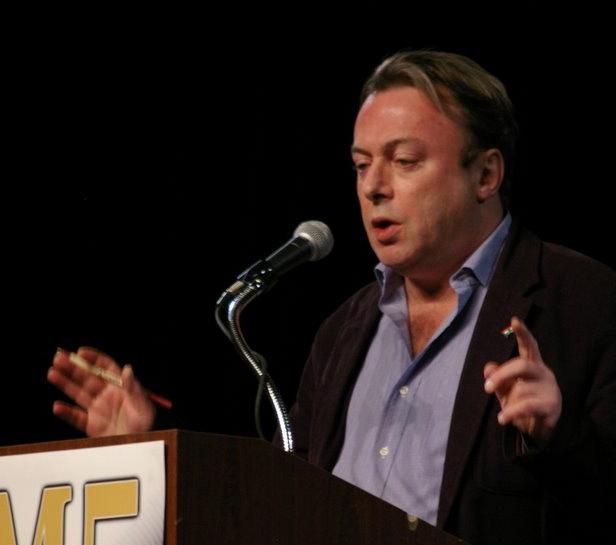
Christopher Hitchens speaking at The Amaz!ng Meeting held at the Riviera Hotel, Las Vegas, Nevada on 20 January 2007.
Photo detail by ensceptico via Wikimedia Commons.
The ten year anniversary of the death of Christopher Hitchens (15 December) brings to mind two questions. Firstly, has it really been ten years since Christopher Hitchens died? Secondly, has it only been ten years since Christopher Hitchens died? The vivid nature of his prose and rhetoric makes him feel like our contemporary. His obsessions, though, — like atheistic evangelism and Middle Eastern nation building — feel as dated as a Roman artifact.
Columnists have a short cultural lifespan. Once, millions of Britons read Bernard Levin every week. Now? I doubt that most young writers have even heard of him. Classic books are reprinted. Newspapers gather dust. Hitchens’s name does not have all the weight it had ten years ago but it has stayed alive, because the Internet archives essays and appearances and because of the esteem that he is held in by his peers.
Janan Ganesh, writing for the Financial Times, believes that Hitchens would have thrived if he had lived to comment on 2021. “He was made for our time, not his own,” Ganesh writes, “The great vacancy in today’s public life is for an equal scourge of the censorious left and the feral right … Hitchens would have been in his element.”
This is bunkum. Hitchens would have been hopelessly out of sorts in the 2020s. How, for example, would he have responded to the COVID-19 pandemic? It is as implausible to imagine that a man with such a lust for life would have endorsed long-term restrictions as it is to imagine that a man with such cheerful faith in the scientific establishment would have had time for COVID sceptics and vaccine hesitancy. Anybody hoping that Hitchens would have carved out some kind of nuanced middle ground, meanwhile, must have forgotten who we are dealing with. No, the plain truth is that the high moralism and rhetorical fury of “the Hitch” were perfectly suited to the heydays of the War on Terror and cable TV.
Liberal commentators like Ganesh miss Hitchens not so much because of his opinions as because he was cool. Ross Douthat mentions Mark Lilla, Anne Applebaum and Andrew Sullivan as other liberals who criticise the left and the right. But while I respect Lilla and Applebaum’s accomplishments and enjoy Sullivan’s writing, how many people do you think have fantasised about having a few drinks with them — or, indeed, with any other political commentator not named “Hitchens”?
Comments Off on Christopher Hitchens, ten years gone
December 12, 2021
“Say what you will about Rand, nobody ever described her as a light read”
In Quillette, David Cohen notes that we’re coming up on the 40th anniversary of Ayn Rand’s death, which will almost certainly help expose her work to a renewed audience of disaffected teens and freshman university students:
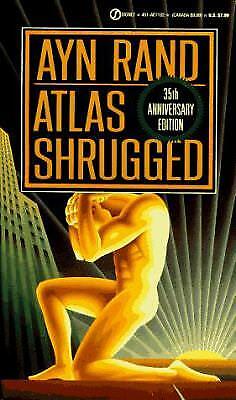
More than a half-century ago the great — and, alas, irreplaceable — American scholar Allan Bloom became aware of the spell she could cast. He first started noticing it around the time he became aware of a decline in serious reading among his students. As the University of Chicago professor later recounted in The Closing of the American Mind, it became particularly evident whenever he asked his large introductory classes which authors and books really mattered to them. Most of the undergrads fell silent, he wrote, or else were puzzled by the question. There was generally no text to which they looked “for counsel, inspiration or joy,” he remarked. But one exception kept popping up.
There always seemed to be, he marvelled, a student who mentioned Atlas Shrugged, a work “although hardly literature, which, with its sub-Nietzschean assertiveness, excites somewhat eccentric youngsters to a new way of life.” And rather more of them than did Allan Bloom or, indeed, pretty much anyone else in the United States who has ever tried to hawk philosophy to the masses. Rand’s book sales overall stand at around 30 million, with hundreds of thousands more each year, and probably rather more this coming year.
Not only is she sought-after for her two best-known novels — the other being The Fountainhead — but also for her nonfiction. Her slim volumes of collected essays and old newspaper columns and other outtakes comprise an apparently fathomless vault from which the Ayn Rand Institute routinely cobbles together regular offerings for the lucky kids. One survey by the Library of Congress listed Atlas Shrugged as second only to the Bible in terms of campus popularity; an incredible accomplishment. All the more so in an era of Twitter, Facebook, and all the other intimations of the shortened attention-span. Say what you will about Rand, nobody ever described her as a light read.
A random internet search throws up an impressive litany of fans from the entertainment world, including Oliver Stone, Rob Lowe, Jim Carrey, and Sandra Bullock. Even the late professional wrestler James Hellwig, better known as The Ultimate Warrior, bellowed her praises, which might add some context to those rollickingly individualistic pre-fight interviews he used to do back in the WWE glory days. Oh, and let’s not forget Brad Pitt and Vince Vaughn. Which is particularly interesting, I think, since Jennifer Aniston (also a Rand fan) replaced the first with the second after Pitt ran off with Angelina Jolie, who’s also on record enthusing about Rand’s “very interesting” take on the good life.
In politics and economics, Rand had her youthful followers, too, and here again one sees the youth-appeal angle. Probably her best-known disciple is the former Federal Reserve chairman Alan Greenspan, who is rather ancient now. But back when dinosaurs still roamed the Earth, Greenspan declared that the high empress of the libertarian Right “taught me that capitalism is not only practical and efficient but also moral.” Like the young and philosophically restless undergrads in Allan Bloom’s classes, the British health secretary Sajid Javid also discovered her early on, and apparently still reads the courtroom scene in The Fountainhead every year. Or rather, as the cool libertarian kids in the black jeans might prefer to put it, it still reads him.
Comments Off on “Say what you will about Rand, nobody ever described her as a light read”
November 16, 2021
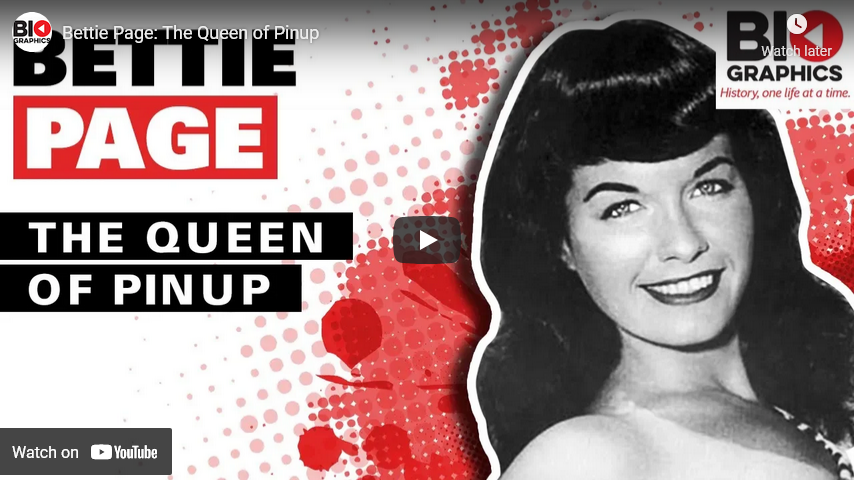
Bettie Page: The Queen of Pinup
Biographics
Published 4 Mar 2019Visit our companion website for more: http://biographics.org
Credits:
Host – Simon Whistler
Author – Shannon Quinn
Producer – Jennifer Da Silva
Executive Producer – Shell HarrisBusiness inquiries to biographics.email@gmail.com
Source/Further reading:
https://www.youtube.com/watch?v=MJhop…
https://www.pbs.org/video/history-det…
https://nces.ed.gov/pubs93/93442.pdf
http://news.bbc.co.uk/2/hi/americas/7…
https://www.biography.com/news/bettie…
https://www.celebritynetworth.com/ric…
https://www.forbes.com/sites/zackomal…Secondary Sources/Photos/Videos:
(Hey guys- You technically can’t see any of her private parts in these videos, so it’s not really porn, but I still would not call this safe for work. Your wives, co-workers, or people on public transportation may give you really dirty looks if they see these over your shoulder. You have been warned.)
https://en.wikipedia.org/wiki/Bettie_…Dancing video
https://www.youtube.com/watch?v=_Pndr…
The “Striporama” scenes with Bettie Page
https://youtu.be/ZDypKx8c1TM
Comments Off on Bettie Page: The Queen of Pinup
November 13, 2021
The patron saint of “Gonzo” journalism was a pretty cruddy human being
As I mentioned in an earlier post on one of Hunter S. Thompson’s famous early books, I discovered the writer at a particularly susceptible age … teenagers of my generation were generally suckers for counter-culture heroes (being too young to be actual hippies because we were in primary school when the Summer of Love flew past, and therefore feeling we’d missed out on something Big and Important and Meaningful). As a gullible teen, I believed Fear and Loathing in Las Vegas was mostly factual with some obvious-even-to-me embroideries for dramatic or comedic effect. I could easily forgive the guessed-at 10% fiction, but Thompson eventually admitted that the majority of the story was bullshit. Entertaining bullshit, but bullshit.
Which, as it happens, turns out to have been Thompson’s life-long modus operandi, as Kevin Mims repeatedly highlights in his Quillette review of David S. Wills’ biography called High White Notes: The Rise and Fall of Gonzo Journalism:
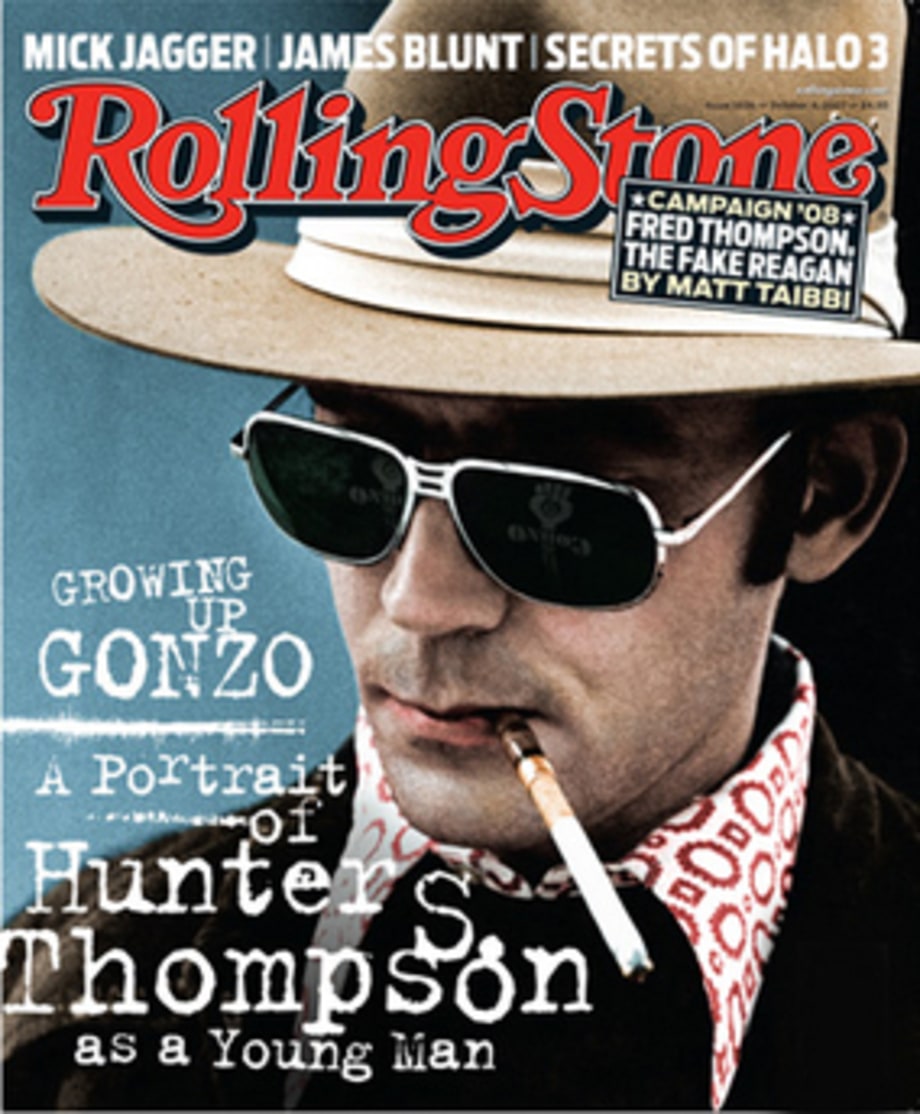
In High White Notes, his riveting new biography of Hunter S. Thompson, journalist David S. Wills describes Thompson as America’s first rock star reporter and compares him to Mick Jagger. But by the time I finished the book, I’d decided that Thompson bore a closer resemblance to Donald Trump. The two men were born nine years apart, during white American masculinity’s golden age. Both were obsessed with politics without possessing anything that could be described as a coherent political philosophy. Both men longed for some mythical American paradise of the past. Both men screwed over multiple friends and business partners. Both men would have gone broke if not for the frequent intervention of helpful patrons. Both men were egomaniacs fond of self-mythologizing and loath to share a spotlight with anyone. Both men enjoyed making disparaging remarks about women, minorities, the disabled, and other disadvantaged people. Both men were frequently disloyal to their most loyal aiders and abetters. Thompson’s endless letter writing and self-pitying 3am telephone calls to friends and colleagues were the 20th century equivalent of Trump’s late-night Twitter tantrums. Both men generally exaggerated their successes and blamed their failures on others. Both men mistreated their wives. Both men nursed a constant (and not entirely irrational) sense of grievance against perceived enemies in the government and the media. Both men had a colossal sense of entitlement …
The list could go on and on. Trump actually fares better than Thompson by various measures. For instance, Trump has never had a drug or alcohol problem, as far as I know. Thompson was a drug and alcohol problem. The first US president in living memory without a White House pet seems to have no interest in animals. Thompson enjoyed tormenting them. Rumors have circulated since 2015 that a recording exists of Trump using a racial slur but since the evidence has never surfaced, it might be fairer to conclude (at least provisionally) that this is not one of his many character failings. Thompson’s published and (especially) unpublished writings are full of such language.
All of which may lead you to conclude that High White Notes is not a favorable account of Hunter S. Thompson’s life and work. To the contrary, David S. Wills is a Thompson devotee who considers his subject to have been a great writer and, at times, a great journalist. But Wills is an honest guide, so his endlessly entertaining biography manages to be both a fan’s celebration and unsparing in its criticism of Thompson and his work.
Though impressive, the book is not without faults. Wills relies too heavily on cliché (“This book will pull no punches”; “breathing down his neck for the final manuscript”; “women threw themselves at him” etc.), and has a tendency to find profundity in unnaturally strained readings of Thompson’s prose. For instance, Wills describes a scene from a 1970 profile Thompson wrote of French skier Jean-Claude Killy, in which three young boys approach Thompson and ask if he is Killy. Thompson tells them that he is, then holds up his pipe and says, “I’m just sitting here smoking marijuana. This is what makes me ski so fast.” This sounds to me like standard Thompson misbehavior, but Wills infers something more complex: “On the surface, it appears to be comedy for the sake of comedy but in fact it is a comment on the nature of celebrity and in particular Killy’s empty figurehead status.” And when Thompson describes Killy as resembling “a teenage bank clerk with a foolproof embezzlement scheme,” Wills remarks, “Thompson has succeeded mightily not just in conveying [Killy’s] appearance but in hinting at his personality. He has placed an image in the head of his reader that will stick there permanently. It was something F. Scott Fitzgerald achieved, albeit in more words, when he had Nick Carraway describe Jay Gatsby’s smile.” (The book, by the way, takes its title from Fitzgerald, who used the phrase to describe short passages of writing so beautiful that they stand out from the larger work of which they are a part.)
[…]
Thompson’s big break as a writer came in 1965 when he was hired to write an article about the Hell’s Angels motorcycle gang for the Nation. The piece was so popular that Thompson found himself besieged by publishers who wanted him to expand it into a full-length nonfiction book. The Thompsons moved into the Haight-Ashbury district of San Francisco and Thompson set about writing Hell’s Angels, the 1967 book that would make him famous. Even in that first book, written before he had fully formulated the concept of Gonzo journalism, Thompson was already tinkering with the truth and engaging in the kind of self-mythologizing that would become a hallmark of his work. And that didn’t sit well with the Hell’s Angels themselves. According to Sonny Barger, a founding member of the Angels, Thompson “would talk himself up that he was a tough guy, when he wasn’t. When anything happened, he would run and hide.” Barger’s assessment of the book was terse: “It was junk.”
Wills notes that Thompson “tended to write about himself in ways that built his legend … to prove his machismo on paper. The back cover [of Hell’s Angels] describes him as ‘America’s most brazen and ballsy journalist’ and in the book he tells the story of first meeting the Angels and trying to impress them by shooting out the windows of his own San Francisco home. Such moments of bravado tend to enter the story very briefly and seem to serve little purpose beyond this self-mythologizing.”
But it was exactly this kind of self-mythologizing — the bragging about his drug use and general misbehavior — that editors of American magazines found so exciting about Thompson’s work, so it’s no wonder that he engaged in so much of it. It was his wild man persona that made Warren Hinckle of Scanlan’s Monthly want to unleash him among the socialites of Louisville. Still, Thompson didn’t fully emerge as a countercultural hero until he began to write for a small start-up publication in San Francisco called Rolling Stone.
Comments Off on The patron saint of “Gonzo” journalism was a pretty cruddy human being
November 6, 2021
Choose your college roommates well
Scott Alexander on the unlikely rise of Victor Orbán:

Viktor Orbán at the European People’s Party Summit in Brussels, December 2018.
Wikimedia Commons.
Some are born great. Some achieve greatness. And some are Victor Orbán’s college roommates.
Orbán: Europe’s New Strongman and Orbánland, my two sources for this installment of our Dictator Book Club, tell the story of a man who spent the last eleven years taking over Hungary and distributing it to guys he knew in college. Janos Ader, President of Hungary. Laszlo Kover, Speaker of the National Assembly. Joszef Szajer, drafter of the Hungarian constitution. All of them have something in common: they were Viktor Orbán’s college chums. Gabor Fodor, former Minister of Education, and Lajos Simicska, former media baron, were both literally his roommates. The rank order of how rich and powerful you are in today’s Hungary, and the rank order of how close you sat to Viktor Orbán in the cafeteria of Istvan Bibo College, are more similar than anyone has a right to expect.
Our story begins on March 30 1988, when young Viktor Orbán founded an extra-curricular society at his college called The Alliance Of Young Democrats (Hungarian abbreviation: FiDeSz). Thirty-seven students met in a college common room and agreed to start a youth organization. Orbán’s two roommates were there, along with a couple of other guys they knew. Orbán gave the pitch: the Soviet Union was crumbling. A potential post-Soviet Hungary would need fresh blood, new politicians who could navigate the democratic environment. They could get in on the ground floor.
It must have seemed kind of far-fetched. Orbán was a hick from the very furthest reaches of Hicksville, the “tiny, wretched village of Alcsutdoboz”. He grew up so poor that he would later describe “what an unforgettable experience it had been for him as a fifteen-year-old to use a bathroom for the first time, and to have warm water simply by turning on a tap”. He was neither exceptionally bright nor exceptionally charismatic.
Still, there was something about him. To call it “a competitive streak” would be an understatement. He loved fighting. The dirtier, the better. He had been kicked out of school after school for violent behavior as a child. As a teen, he’d gone into football, and despite having little natural talent he’d worked his way up to the semi-professional leagues through sheer practice and determination. During his mandatory military service, he’d beaten up one of his commanding officers. Throughout his life, people would keep underestimating how long, how dirty, and how intensely he was willing to fight for something he wanted. In the proverb “never mud-wrestle a pig, you’ll both get dirty but the pig will like it”, the pig is Viktor Orbán.
Those thirty-six college friends must have seen something in him. They gave him his loyalty, and he gave them their marching orders. The predicted Soviet collapse arrived faster than anybody expected, and after some really fast networking (“did you know I represent the youth, who are the future of this country?”) Orban got invited to give a speech at a big ceremony marking the successful revolution, and he knocked it out of the park.
He spoke about freedom, and democracy, and the popular will. He spoke against the older generation, and the need for a rupture with the crumbling traditions of the past. And also, he spoke against the Russian troops remaining in the country — the only speaker brave enough to say what everyone else was thinking. The voters liked what they heard: in Hungary’s first free election, he and several of his college friends were elected to Parliament on the Fidesz ticket.
Unfortunately, he wasn’t a very good liberal MP.
Separated from his pomp and platform, he was just a 27 year old kid without a lot of political experience. There was a glut of liberal democrats in Hungary — the country had just had a successful liberal democratic revolution — and Orbán and Fidesz couldn’t differentiate themselves from the rest of the market. Most liberal democrats wanted cosmopolitan intellectual types; Orbán — despite his herculean efforts to lose the accent and develop some class — was still just a hick from Hicksville. During the next election, Fidesz did embarrassingly badly.
So Viktor Orbán got everyone from his liberal democratic party together and asked — what if, instead of being liberal democrats, we were all far-right nationalists?
Wait, what?
Comments Off on Choose your college roommates well
October 13, 2021
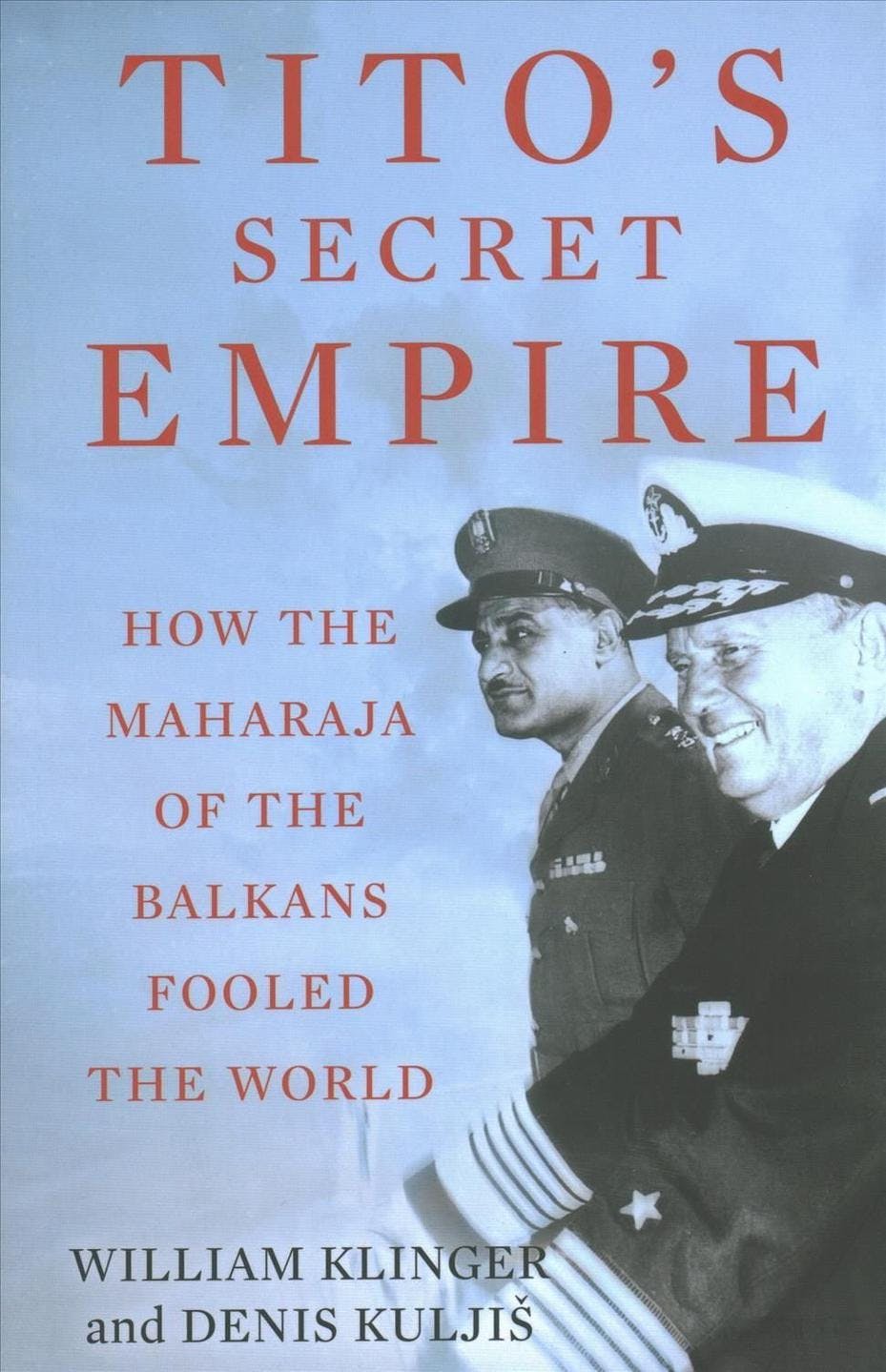
Josip Broz Tito — The “Maharaja of the Balkans”
In The Critic, Thomas Gallagher looks at the man and the myth of Yugoslavia’s communist leader, known to the world as “Tito”:
Decades after his death in 1980, Josip Broz Tito still casts a spell as a larger-than-life figure.
The legend portrays him as a famous military leader and anti-fascist guerrilla fighter who fought off the Nazis and defied Stalin. He then went on to be a champion of peace who stood up for various small nations snapping the coils of European overlordship. He was at home on imperial estates or, more often, on his secluded luxury home on the island of Brioni, with Old Masters adorning his walls and kings, emperors and fellow communist strongmen paying homage.
Despite clumsy language and hyperbole in places, as well as some avoidable errors, Tito’s Secret Empire seeks to debunk Tito’s legend and in several key respects it succeeds. The authors William Klinger and Dennis Kuljiš accord some honours to their subject.
He was a unique character well-equipped to surmount various obstacles during his 88-year life. For the British diplomat, Sir Fitzroy Maclean, he was “a fail-proof survivor”. In 1974 he was hailed by Germany’s Chancellor, Helmut Schmidt, as “the greatest of the winners of the Second World War”.
A benign image persisted, despite Tito being responsible for more acts of mass cruelty than any other European communist leader with the exception of the Soviets. He was admired as a wheeler-dealer in international affairs, from murky transactions to the most delicate undertakings in statecraft. This well-researched book deserves attention for those who wish to peer beyond the carefully cultivated image.
[…]
His 1954 state visit to then-royalist Greece, a regime which he had spent years trying to topple, was an unmistakable indication that he was placing himself at the head of a hybrid regime. Britain’s foreign secretary, Anthony Eden, had already visited him and urged the United States to prop up Tito financially. The favour was not returned. Evidence is provided that Tito played a major role in encouraging Egypt to nationalise the Suez Canal. He saw President Nasser as a kindred spirit, a populist unencumbered by ideology. Tito even more keenly sought to end French rule in Algeria, arming the rebels and offering diplomatic support.
In September 1961, he welcomed dozens of leaders from the promising new “non-aligned” bloc to a conference in Belgrade. Next year China invaded India and his soul-mate, Nehru, turned to the West for help. Thereafter, the non-aligned movement’s influence waned, as did Tito’s with it.
He increasingly became a pensioner of the Soviet Union. American ardour cooled as it became clear how reliant he was on Soviet arms and industrial licences which enabled this supposed ambassador of peace to export weapons to the Third World.
Comments Off on Josip Broz Tito — The “Maharaja of the Balkans”


