Quotulatiousness

November 14, 2019

Albertan separatism – “we don’t want to become Newfoundland”

Filed under: Cancon, Government, Politics — Tags: , , , — Nicholas @ 03:00

Colby Cosh discusses the hot topic in western Canada, separatism:

In trying to puzzle out the immediate future of Greater Alberta’s struggle with Confederation, one is naturally exposed to many varieties of the question “What are you blue-eyed sheiks complaining about?” Alberta is still a province with relatively high incomes despite a labour market that has been in the doldrums for years: why, people ask, is there separatist panic in a place that is still far wealthier than, say, Newfoundland? A good short answer to this would be “That’s why everybody here is going nuts: we don’t want to become Newfoundland.”

Newfoundland, unlike Alberta, was given the choice of joining Confederation on a bare majority vote; the result, in time, is that the province’s defining cod industry was permanently annihilated … thanks to expert, scientifically informed, completely well-intentioned centralized management from Ottawa. Hey, mistakes happen! One long-term consequence of this one is that a large fraction of the ethnic stock of Newfoundland now lives and works in Alberta. It might be that “Wexit” sentiment is especially strong in this expatriate community, though no one has any hard data to hand yet.

A crucial purpose of Alberta Premier Jason Kenney’s “Fair Deal Panel,” announced on the weekend, is to gather some. Kenney announced, in a speech which reaffirmed his own strong commitment to federalism, that Preston Manning will head a group of MLAs and academics whose job will be studying ideas for giving Alberta more autonomy within Confederation. The “Fair Deal Panel” is going to look at a number of concepts that have been swirling around for decades but which were ignored by Alberta’s Progressive Conservative governments. One notes, however, that the panel does have a mandate to sound out public opinion quantitatively, through polling and focus groups.

Some of the political concepts recommended to the Fair Deal Panel for study appeared in what is remembered as the Alberta “Firewall Letter,” authored by Stephen Harper and a group of Calgary School fellow-travellers (not including Kenney); the letter was first published in this newspaper in 2001. The firewall had five components: Alberta withdrawal from the Canada Pension Plan, Alberta withdrawal from the federal Tax Collection Agreement, the revival of an Alberta Provincial Police force, a request for tax points from the federal government in place of cash transfers for health and welfare, and a provincial referendum on Senate reform, which was still a thing back then.


Shooting the Mle 1866 Chassepot

Filed under: France, History, Military, Weapons — Tags: , , — Nicholas @ 02:00

Forgotten Weapons
Published on 14 Sep 2019

http://www.patreon.com/ForgottenWeapons

Cool Forgotten Weapons merch! http://shop.bbtv.com/collections/forg…

A while back, I visited @CanadianGunLover, and we did a bit of shooting with an 1866 Chassepot. I lost track of the footage and only just now found where I had put it – so today is some Chassepot shooting! A couple things to note; the rifle sounds very quiet because my microphone was clipping it off, sorry. And yes, we are on a very short range bay – it’s what was available at the time. The ammo we are using was made by CGL, and was a bit longer than military spec, which led to the bolt getting tight to close more quickly that would have originally been the case. But even with that, the rapidity of fire offered by the Chassepot completely outclassed all the muzzleloaders still in service.

Want a whole lot more information on the Chassepot? Well, it’s covered in the first chapter of my book, Chassepot to FAMAS: French Military Rifles: https://www.headstamppublishing.com/f…

Contact:
Forgotten Weapons
6281 N. Oracle #36270
Tucson, AZ 85704

QotD: Memory

Filed under: Humour, Quotations — Tags: — Nicholas @ 01:00

We can remember minutely and precisely only the things which never really happened to us.

Eric Hoffer, “Thoughts of Eric Hoffer”, New York Times Magazine, 1971-04-25.

November 13, 2019

George Orwell: A Life in Pictures

Filed under: Books, Britain, History, Politics — Tags: , , , , — Nicholas @ 09:45

Albion Noise
Published 27 Dec 2015

George Orwell: A Life in Pictures is a 2003 BBC Television docudrama telling the life story of the British author George Orwell. Chris Langham plays the part of Orwell. No surviving sound recordings or video of the real George Orwell have been found.

Awards:
International Emmy 2004 for Best Arts Programme
Grierson Award 2004 for Best Documentary on the Arts

Conclusions from a mock battle

Filed under: History, Military — Tags: , , , — Nicholas @ 02:00

Lindybeige
Published 19 Jul 2013

Re-enactment is a form of experimental archaeology.

http://www.LloydianAspects.co.uk

QotD: Western culture’s mortal wound

Filed under: Europe, History, Politics, Quotations, WW1 — Tags: , , , — Nicholas @ 01:00

Just about every king tried to do it [explain “where we come from” and “what are we here for”], and there was a serious rewrite of history associated with events like Henry VIII’s break from Rome.

None of those attempts were as total or as successful as the 20th century ones, due to several things. The first was that nations hadn’t had their spirits broken as thoroughly as WWI broke them, so people weren’t willing to lend credence to things spouted from on high with that much eagerness, and things leaked through. HOWEVER the most important thing that the twentieth century had in hand to try to remake culture was this: public education, mass media, mass news reporting.

Did it succeed? No. The only result of trying to mold human beings into the utopian version of the man who would live happily under communism was 100 million graves, and a Europe that is dying of senescence and lack of reproduction.

However it succeeded brilliantly in not only separating, now, I suppose two or three generations from their roots, but also convincing them that they are superior to their actual learned ancestors, and somehow, yet, the product of the worst civilization of human history.

Western culture is dying of WWI partly because the “cure” imposed by state education apparatus, corrupted by Soviet agitprop and continued by “intellectuals” who know nothing except that they’re superior to everyone else, more enlightened, kinder, and that they should design society and the world to “improve” it.

Sarah Hoyt, “A Generation With No Past”, According to Hoyt, 2017-10-19.

November 12, 2019

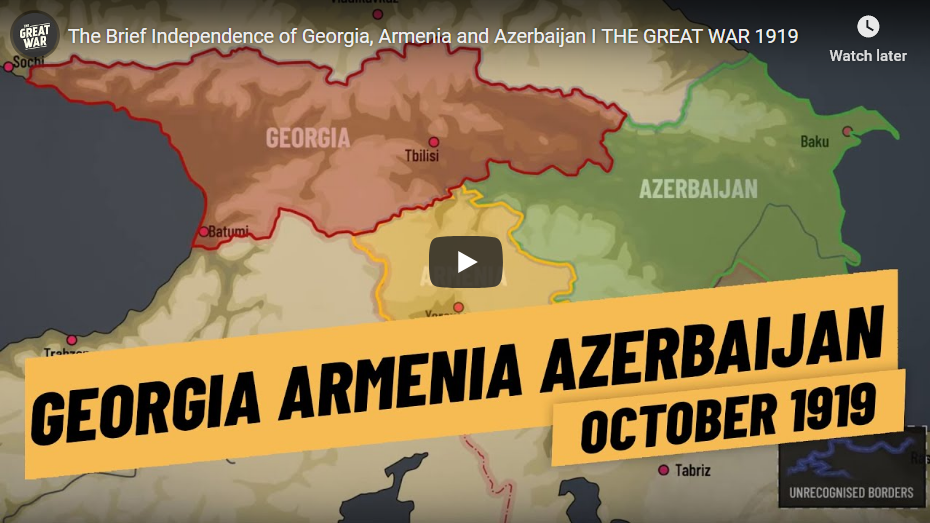
The Brief Independence of Georgia, Armenia and Azerbaijan I THE GREAT WAR 1919

Filed under: Asia, History, Military, Russia — Tags: , , , , , — Nicholas @ 06:00

The Great War
Published 11 Nov 2019

Georgia, Armenia and Azerbaijan used the power vacuum after the 1917 revolution in Russia and after the collapse of the Central Powers in 1918 to gain their independence. But the Caucasus region was of vital strategic importance to the new Russian regime, to the British and to the Turks.

» SUPPORT THE CHANNEL
Patreon: https://www.patreon.com/thegreatwar
Merchandise: https://shop.spreadshirt.de/thegreatwar/

» SOCIAL MEDIA
Instagram: https://instagram.com/the_great_war
Twitter: https://twitter.com/WW1_Series
Reddit: https://reddit.com/r/TheGreatWarChannel

»CREDITS
Presented by: Jesse Alexander
Written by: Jesse Alexander
Director: Toni Steller & Florian Wittig
Director of Photography: Toni Steller
Sound: Toni Steller
Editing: Toni Steller
Mixing, Mastering & Sound Design: http://above-zero.com
Maps: Daniel Kogosov (https://www.patreon.com/Zalezsky)
Research by: Jesse Alexander
Fact checking: Florian Wittig

Channel Design: Alexander Clark
Original Logo: David van Stephold

A Mediakraft Networks Original Channel

Contains licensed material by getty images
All rights reserved – Real Time History GmbH 2019

Building Angkor – The “Lost” City – Extra History – #5

Filed under: Asia, Environment, France, History, Religion — Tags: , , , , — Nicholas @ 04:00

Extra Credits
Published 8 Nov 2019

Join us on Patreon! http://bit.ly/EHPatreon

After its decline, Angkor had become the Ancient, Lost City so prominent in our pop culture. Just one problem: Angkor was neither ancient (having declined around the same time as Hundred Years War) nor lost (people still lived there!). That didn’t stop the European visitors from trying to invent all kinds of stories for how this city could possibly exist, and stealing parts of the temple to bring back home. But despite all the hardships Angkor faced, it managed to become a national symbol for Cambodia and still remains to this day.

Speculations on South Korean or Japanese F-35 deployment

Filed under: Asia, Japan — Tags: , , , — Nicholas @ 03:00

Last week, Strategy Page considered the options available for both South Korea and Japan to convert some of their F-35 orders to F-35B variants which would allow operations from small helicopter carriers in service or in plan for both navies:

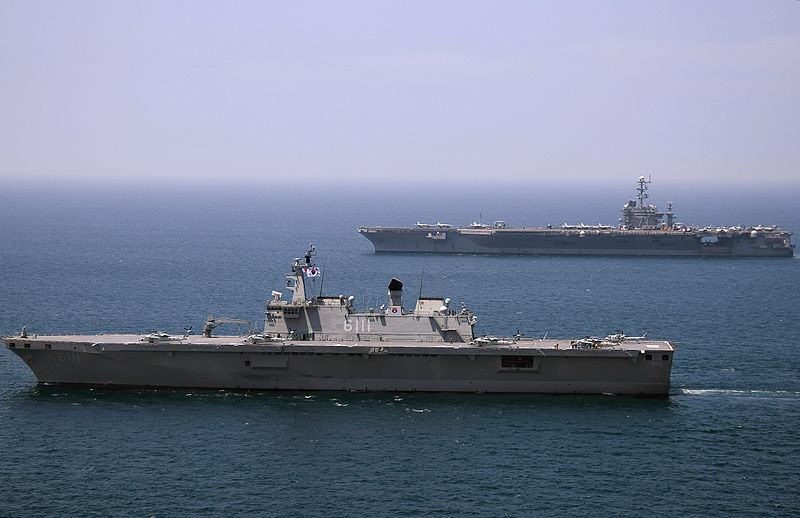
The Republic of Korea Navy amphibious landing ship ROKS Dokdo (LPH 6111) and the aircraft carrier USS George Washington (CVN 73) transit the Sea of Japan (July 27, 2010).
U.S. Navy photo by Mass Communication Specialist 3rd Class Charles Oki via Wikimedia Commons.

In October South Korea announced it was buying 20 more F-35 stealth fighters. There are already 40 on order and South Korea will have received 13 by the end of 2019. Those 60 F-35s will cost $9.7 billion and a decision still has to be made as to whether any of the second 20 will be the VTOL (Vertical Take-Off and Landing) F-35B version. The first 40 will all be the basic F-35A which just operates from land-based airfields. But South Korea has ships that F-35Bs could operate from.

By 2018 South Korea had two 14,500 ton Dokdo class large amphibious ships. These South Korea LPHs (Landing Platform Helicopter) are similar in appearance and operation to the larger American amphibious ships. The LPH flight deck can handle helicopters, as well as vertical takeoff jets like the F-35B. The Koreans deny that the ship will be used with these jets, but the capability is there. The LPH normally carries 720 combat troops and their heavy equipment. Dokdos also carry fifteen aircraft; two V-22 vertical takeoff transports and 13 helicopters. Marado, the second Dokdo, has a redesigned flight deck that can handle two V-22s at once instead of just one. In addition to a more powerful 3-D surveillance radar for tracking aircraft, Marado has to Phalanx anti-missile system.

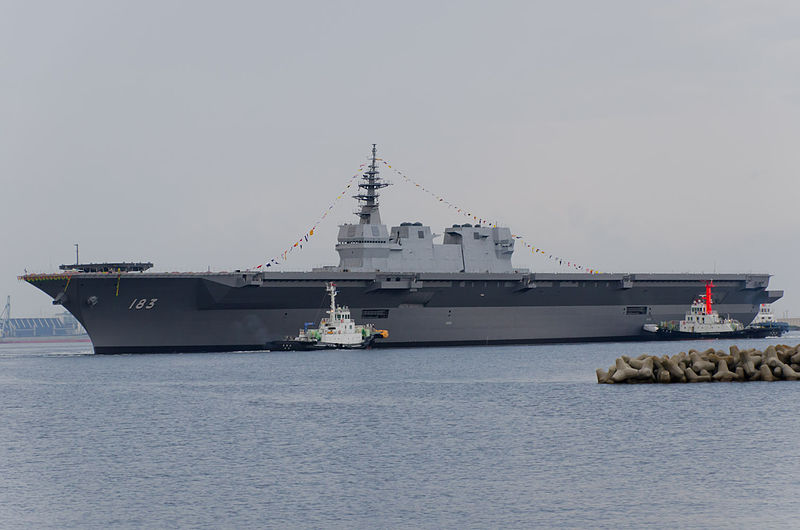
JS Izumo DDH-183

South Korea is also planning to build one or more 30,000 ton ships that look like the Japanese DDH (destroyer helicopter carrier) and could handle a dozen F-35Bs. Neighboring Japan has already ordered some F-35Bs so that it can experiment with some of these aircraft aboard the existing Japanese DDHs. Since 2017 Japan has had two 27,000 ton “destroyers” (DDH type ships) that look exactly like an aircraft carrier. These Izumo class ships can carry up to 28 helicopters or up to ten vertical takeoff aircraft. The carriers are armed only with two 20mm Phalanx anti-missile cannon and launchers with sixteen ESSM missiles for anti-missile defense. The DDH have powerful engines capable of destroyer-like speeds of over fifty-four kilometers an hour. Izumo has considerable cargo capacity, which is intended for moving disaster relief supplies quickly to where they are needed. Apparently, some of these cargo spaces can be converted to carry additional weapons and equipment needed to support F-35B fighter-bombers. Izumo could carry and operate at least ten F-35Bs once modifications are made to the flight deck to deal with the extremely high temperatures the F-35B generates when taking off or landing vertically (like a helicopter). When the first DDH entered service in 2015 Japan made no mention of buying F-35Bs or modifying the LPH flight decks to handle the very high temperatures. The Izumos already have an elevator (to the hanger deck under the flight deck) powerful enough to carry an F-35B fighter.

Another factor that makes operating F-35Bs from an LPH or DDH possible is the availability of smart bombs and small air-to-ground guided missiles for warplanes. A LPH or DDH was not designed to haul a lot of munitions for aircraft but, the amount of smart bombs and missiles needed to make five or ten F-35Bs effective would not be large. These ships already carry a lot of fuel for helicopters and have space for maintenance gear to support many helicopters. South Korean and Japanese naval planners noted this when they suggested using LPHs and DDHs as platforms for F-35Bs.

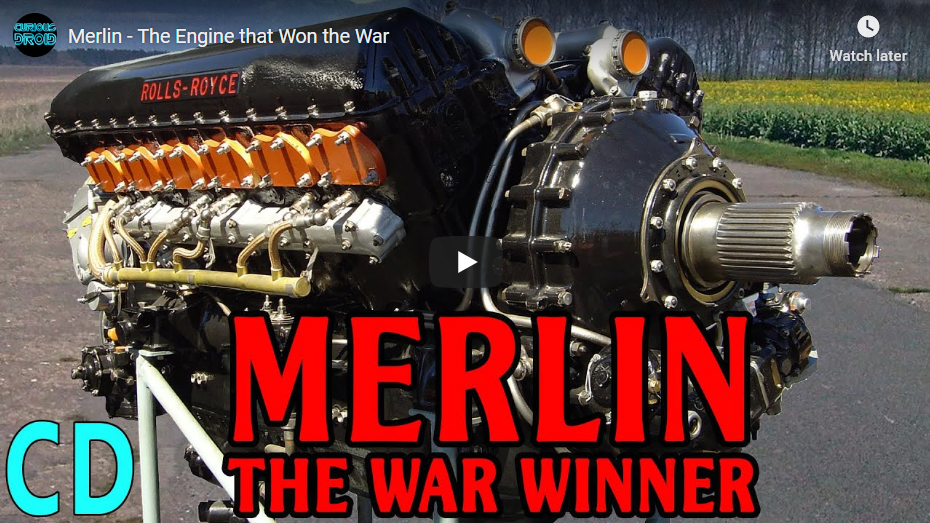
Merlin – The Engine that Won the War

Filed under: Britain, History, Military, Technology, USA — Tags: , , , — Nicholas @ 02:00

Curious Droid
Published 28 Sep 2019

Sounds like a bit of a bold claim that one engine helped change the course of WW2 but when you see the evidence it has a lot of validity but how did one little engine change the course of world events and become the engine that won the war?

I would like to thank David Irwin of Historic Aero Engines not only for the generous use of his footage but as in checking over the script and finished video for technical accuracy.

Historic Aero Engines display team :
https://www.youtube.com/channel/UCtE_…

Patreon https://www.patreon.com/curiousdroid
Paypal.me https://www.paypal.me/curiousdroid

Sponsored by
Craig Fleming, Florian Hesse, Peter Barber

Presented by Paul Shillito

Written and Researched by Paul Shillito with assistance from David Irwin.

Images and Footage:
Historic Aero Engines, Rolls Royce, USAF, RAF, Boeing, Packard,
Joel Trick

Music From the Youtube library
“Magical Gravity” by Asher Fulero
“Saving the World” by Aaron Kenny
“Adrift” by ELPHNT
“Oceans, Rivers, Canyons” by ELPHNT
“The Story Unfolds” by Jingle Punks

QotD: The crimes of the Righteous

Filed under: Books, Liberty, Quotations, Religion — Tags: , , , — Nicholas @ 01:00

There was no mercy in them, not even those specks of humanity that can occasionally be glimpsed in the most heartless of souls. Priests, judge, scribe, and torturers acted with such rigorous coldness and distance that that was precisely what evoked the most horror. Even more blood-curdling that the suffering they were capable of inflicting was the icy determination of those know they are backed by divine and human laws and who at no moment doubt the righteousness of what they are doing.

Later, with time, I learned that although all men are capable of good and evil, the worst among them are those who, when they commit evil, do so by shielding themselves in the authority of others, in their subordination, or in the excuse of following orders. And even worse are those who believe they are justified by their God. Because in the secret dungeons of Toledo, nearly at the cost of my life, I learned that there is nothing more despicable or more dangerous than the malevolent individual who goes to sleep every night with a clear conscience. That is true evil. Especially when paired with ignorance, superstition, stupidity, or power, all of which often travel together.

And worst of all is the person who acts as exegete of The Word — whether it be from the Talmud, the Bible, the Koran, or any other book already written or yet to come. I am not fond of giving advice — no one can pound opinions into another’s head — but here is a piece that costs you nothing: Never trust a man who reads only one book.

Arturo Pérez-Reverte, Purity of Blood, 1997.

November 11, 2019

The Berlin Wall – A Street Party With Sledgehammers – Extra History

Filed under: Europe, Germany, History, Politics, Russia — Tags: , , , , , , — Nicholas @ 06:00

Extra Credits
Published 9 Nov 2019

Thanks to World of Tanks for sponsoring this episode. Download the game on PC and use the invite code CHECKPOINTC to claim your $15 starter pack https://tanks.ly/2NoVfjx.

The Berlin Wall has become a symbol of the Cold War. It encircled West Berlin, separating it from the Soviet-controlled East Berlin, placed to try and stop the flood of skilled professionals leaving to the West. Multiple US presidents had penned speeches about tearing down the wall, to no effect. But the Wall did fall. As the USSR underwent massive reforms and the Velvet Revolution was underway, East Germany was undergoing its own reform. And one clerical oversight in a press conference will destroy the Wall for good.

Update: Austin Bay linked to a column he wrote in 2009 on the 20th anniversary of these events.

Many in the West, including the U.S., believed that the communists had history on their side. The wry debate reply from the defeatist lefties favoring unilateral U.S. nuclear disarmament was “better Red than dead.” For decades — I repeat, decades — this crowd had a media pulpit from which its self-proclaimed intelligentsia preached the moral equivalency of the U.S. and the Soviet Union, and at times dropped the all pretense and fingered the U.S. as the “fascist state” and global oppressor.

In the language of the defeatist left, the U.S. was the jailer, the warmonger, the threat to world peace.

The Berlin Wall’s collapse exposed that Big Lie, as did the documented moral, political, economic and ecological wretchedness of the Soviet Union. Unfortunately, we still hear echoes of this “blame America” cant lacing al-Qaida propaganda and the lectures of hard-left reactionaries like Bill Ayers. The great anti-American lies of the Cold War are recast as the great anti-American lies of the War on Terror.

Breaching the wall in 1989 was bloodless, but the Cold War certainly wasn’t. World War III did not break out along the intra-German border and produce a nuclear conflagration, but the Cold War’s battles on the periphery (e.g., Greece, Korea, Vietnam, El Salvador, Angola, Afghanistan) were expensive, fatiguing and deadly.

Addressing the real extinction-level environmental threat

Filed under: Science, Space, USA — Tags: , , , , — Nicholas @ 05:00

In the latest edition of the Libertarian Enterprise, L. Neil Smith points to what he thinks will be Donald Trump’s signature achievement: the United States Space Force.

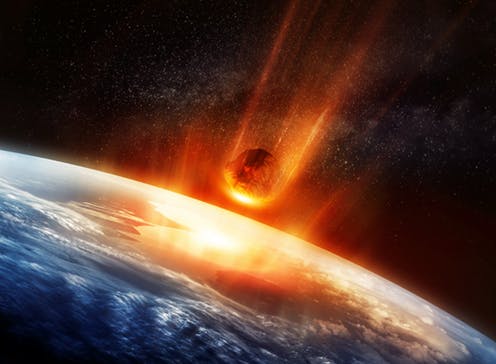
The biggest nuclear weapon ever detonated on Earth, Tsar Bomba, was 50MT. The Chicxulub impact was, at these numbers, 2 million times as powerful as Tsar Bomba.
Image and caption from Stephanie Osborn’s “Incoming: The Chicxulub Impactor, Part 3 — The Impactor & Effects” at https://accordingtohoyt.com/2019/10/31/incoming-the-chicxulub-impactor-part-3-%e2%80%95-the-impactor-effects-by-stephanie-osborn/

Many thoughtful observers believe that the most significant thing that Donald Trump has accomplished so far is his appointment of dozens of federal judges who share his philosophy of governance and I, amateur historian that I am, am inclined to agree with them — with one exception, that is, a little item that just might prove to be a thousand times, a million times, a billion times more important than anything else the Donald — or anybody else, for that matter — has ever done.

Most of us have become aware of the way that a relatively small piece of rock — an asteroid approximately the size of Manhattan Island or the Matterhorn — changed the course of life-history on this planet. It struck the Earth at 40,000 miles and hour, hitting what is now the northern coast of the Yucatan, generating a titanic explosion that ignited every plant standing above the ground, raising a tidal wave that swept over most of North America, and opening a chain of deadly volcanoes on the other side of the world, near India. The esteemed Bob Bakker to the contrary, the late, lamented dinosaurs, I believe, died from smoke inhalation.

Three quarters of all life on this planet, plant and animal, land and sea, was brutally exterminated by this “Cretaceous-Tertiary Event”, and apparently not for the first time. There was a much worse die-off between the Permian and the Triassic eras. The important fact, for you and me, is that there are thousands, if not millions of other lethal asteroids still out there, with which our vulnerable little blue marble is still playing a murderous game of roulette. It is only a matter of time before another “extinction-level event” occurs, possibly wiping out every last living entity on Earth. We can see plenty of evidence of that kind of phenomenon, that magnitude of destruction, elsewhere in the Solar System.

Take your precious carbon footprints and stuff them where the sun don’t shine, Greta. It is Donald Trump who has made the historic first move to prevent this very real cataclysm, and probably to extend the life of the human species indefinitely (an idea environmentalists hate), by calling for the organization of a United States Space Force. At this moment it still isn’t clear exactly what methods will work best to destroy or divert asteroids that threaten our home-world (I mention possibilities in my 2010 Ngu Family Saga novel Ceres), but it is something that must be done, sooner or later, probably by manned spacecraft.

The other important task for which we need a Space Force is to clean up the tens of millions of items of orbital debris that NASA and other agencies have very sloppily left circling over our heads. Remember when the Gemini astronauts simply threw those expensive Hasselblad cameras out the door? These objects range in size from particles of dust to cast-off booster stages which endanger satellites and spacecraft. A hunk of junk the size and shape of a small screw can damage solar panels, pressurized living and working spaces, as well as helmeted individuals in spacesuits, to whom that flying screw would be like a bullet through the head.

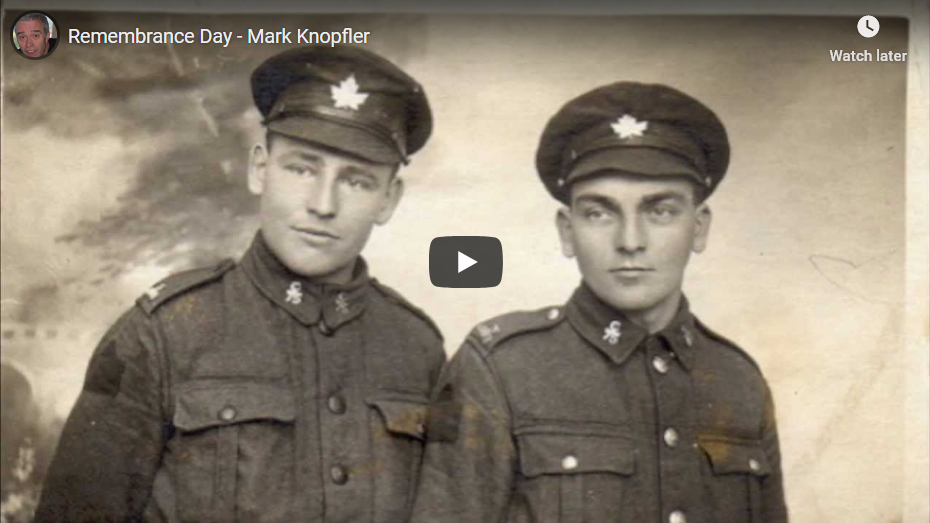
Mark Knopfler – “Remembrance Day”

Filed under: Britain, Cancon, History, Military, WW1, WW2 — Tags: , — Nicholas @ 04:00

Bob Oldfield
Published on 3 Nov 2011

A Remembrance Day slideshow using Mark Knopfler’s wonderful “Remembrance Day” song from the album Get Lucky (2009). The early part of the song conveys many British images, but I have added some very Canadian images also which fit with many of the lyrics. The theme and message is universal… ‘we will remember them’.

In memoriam

Filed under: Britain, History, Military, WW1, WW2 — Tags: , , — Nicholas @ 03:00

A simple recognition of some of our family members who served in the First and Second World Wars:

The Great War

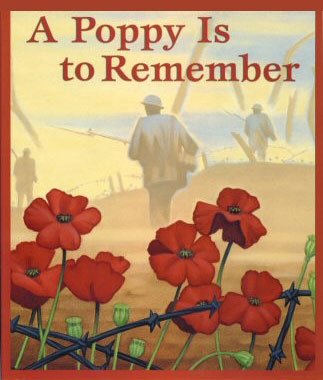
  • A Poppy is to RememberPrivate William Penman, Scots Guards, died 16 May, 1915 at Le Touret, age 25

    (Elizabeth’s great uncle)
  • Private Archibald Turner Mulholland, Argyll & Sutherland Highlanders, mortally wounded 25 September, 1915 at Loos, age 27
    (Elizabeth’s great uncle)
  • Private David Buller, Highland Light Infantry, died 21 October, 1915 at Loos, age 35
    (Elizabeth’s great grandfather)
  • Private Harold Edgar Brand, East Yorkshire Regiment. died 4 June, 1917 at Tournai.
    (My first cousin, three times removed)
  • Private Walter Porteous, Durham Light Infantry, died 4 October, 1917 at Passchendaele, age 18
    (my great uncle)
  • Corporal John Mulholland, Argyll & Sutherland Highlanders, wounded 2 September, 1914 (shortly before the First Battle of the Aisne), wounded again 29 June, 1918, lived through the war.
    (Elizabeth’s great uncle)

The Second World War

  • Flying Officer Richard Porteous, RAF, survived the defeat in Malaya and lived through the war
    (my great uncle)
  • Able Seaman John Penman, RN, served in the Defensively Equipped Merchant fleet on the Murmansk Run (and other convoy routes), lived through the war
    (Elizabeth’s father)
  • Private Archie Black (commissioned after the war and retired as a Major), Gordon Highlanders, captured at Singapore (aged 15) and survived a Japanese POW camp
    (Elizabeth’s uncle)
  • Elizabeth Buller, “Lumberjill” in the Women’s Land Army in Scotland through the war.
    (Elizabeth’s mother)
  • Trooper Leslie Taplan Russon, 3rd Royal Tank Regiment, died at Tobruk, 19 December, 1942 (aged 23).
    Leslie was my father’s first cousin, once removed (and therefore my first cousin, twice removed).

For the curious, the Commonwealth War Graves Commission the Royal British Legion, and the Library and Archives Canada WW1 and WW2 records site provide search engines you can use to look up your family name. The RBL’s Every One Remembered site shows you everyone who died in the Great War in British or Empire service (Canadians, Australians, New Zealanders, South Africans and other Imperial countries). The CWGC site also includes those who died in the Second World War.

In Flanders fields the poppies blow
Between the crosses row on row,
That mark our place; and in the sky
The larks, still bravely singing, fly
Scarce heard amid the guns below.

We are the Dead. Short days ago
We lived, felt dawn, saw sunset glow,
Loved and were loved, and now we lie
In Flanders fields.

Take up our quarrel with the foe:
To you from failing hands we throw
The torch; be yours to hold it high.
If ye break faith with us who die
We shall not sleep, though poppies grow
In Flanders fields.

Lieutenant Colonel John McCrae, MD Canadian Army Medical Corps (1872-1918)

« Newer PostsOlder Posts »

Powered by WordPress