Quotulatiousness

November 30, 2019

WW1 Villar Perosa SMG at the Range

Filed under: History, Italy, Military, Weapons, WW1 — Tags: , , , — Nicholas @ 02:00

Forgotten Weapons
Published 28 Sep 2019

Courtesy of the Morphy Auction Company, I am out at the range today with a very rare Italian Villar Perosa machine gun from World War One. These are pretty unorthodox machine guns, as they were initially designed as aircraft armament and later repurposed as ground guns. The basic design is a pair of actions and barrel with a single rear trigger housing. The actions are (slightly) delayed blowback, feeding from 25-round magazines and firing at about 1500 rpm each. The grip has two separate thumb triggers, which fire the two barrels independently.

For an aircraft application, this allowed a very high volume of fire for a very short time; exactly what aerial combat called for. As an infantry gun, the design was much less practical. The bipod held the gun up, but did not have any firm stop that could be pushed into. Coupled with the lack of a buttstock, the gun was very difficult to keep on pattern with anything but the shortest burst. The small aperture sight certainly doesn’t help things either.

http://www.patreon.com/ForgottenWeapons

Cool Forgotten Weapons merch! http://shop.bbtv.com/collections/forg…

Contact:
Forgotten Weapons
6281 N. Oracle #36270
Tucson, AZ 85704

QotD: Comparative advantage

Filed under: Business, Economics, Quotations, USA — Tags: , , , — Nicholas @ 01:00

Business schools, which focus naturally on the fortunes of the individual firm, teach that “competitiveness” is all. They believe it follows that government, not price signals from the world economy, should choose winners. The economists in the business schools have had hard time persuading their colleagues that the pattern of trade and specialization is determined, on the contrary, by “comparative advantage,” which has nothing to do with absolute advantage, and which professors of management and of history regularly mistake it for. Pakistan exports clothing to the United States, the economists preach (without much effect on editorial boards and politicians), not because it is better per hour at making socks and sweaters but because it is comparatively better at them than at making jet airplanes and farm tractors.

Deirdre McCloskey, Bourgeois Equality, 2016.

November 29, 2019

History of Space Travel – Red Star – Extra History – #4

Filed under: History, Military, Russia, Space, USA — Tags: , , , , , — Nicholas @ 06:00

Extra Credits
Published 28 Nov 2019

Start your Warframe journey now and prepare to face your personal nemesis, the Kuva Lich — an enemy that only grows stronger with every defeat. Take down this deadly foe, then get ready to take flight in Empyrean! Coming soon! http://bit.ly/EHWarframe

While rockets had been proven to be indispensable to the Second World War, the idea to send people up into orbit was still seen as fantasy. Space was important only as a method to further the range of missiles meant to land oceans away from their original launch point. But a man named Korolev will change all of that, with work so secretive, he will be referred to as Chief Designer for nearly his entire life. But we all know the name of his first project into space: Sputnik.

From the comments:

Extra Credits
1 day ago
We weren’t able to fit her into the episode, but the other famous first cosmonaut in space is Laika, the Soviet space dog. She was a stray who was taken in by the program to test the Sputnik 2 and some of its life support features (like a coolant fan). Unfortunately, Laika did not return from her mission alive but she’s still regarded highly in the history of space flight and has become a symbol for the space race and animal testing in general. Look her up!

I remember reading in Robert Heinlein’s Expanded Universe of the day on his tour of the Soviet Union in 1960 when he and his wife were told by a group of Red Army cadets of a Soviet rocket launch carrying a human into orbit for the first time. The story was officially denied and the capsule was said to be unmanned after all. Wikipedia says:

According to Gagarin’s biography, these rumours were likely started as a result of two Vostok missions equipped with dummies (Ivan Ivanovich) and human voice tape recordings (to test if the radio worked) that were made just prior to Gagarin’s flight.

In a U.S. press conference on February 23, 1962, colonel Barney Oldfield revealed that an uncrewed space capsule had indeed been orbiting the Earth since 1960, as it had become jammed into its booster rocket. According to the NASA NSSDC Master Catalog, Korabl Sputnik 1, designated at the time 1KP or Vostok 1P, did launch on May 15, 1960 (one year before Gagarin). It was a prototype of the later Zenit and Vostok launch vehicles. The onboard TDU (Braking Engine Unit) had ordered the retrorockets to fire to recover, but due to a malfunction of the attitude control system, the spacecraft was oriented upside-down, and the firing put the craft into a higher orbit. The re-entry capsule lacked a heat shield as there were no plans to recover it. Engineers had planned to use the vessel’s telemetry data to determine if the guidance system had functioned correctly, so recovery was unnecessary.

England’s early search for new markets

Filed under: Britain, History — Tags: , , , , , , — Nicholas @ 05:00

In the latest installment of Anton Howes’ Age of Invention, he looks at the multiple crises that afflicted England in the mid-sixteenth century and some of the reactions to those setbacks:
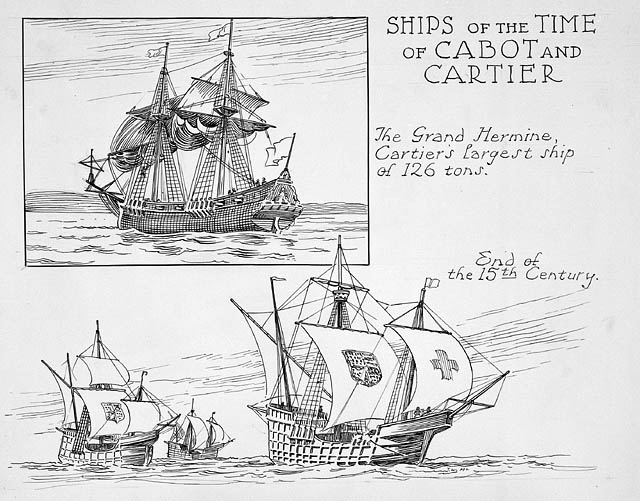
Ships from the period of John Cabot (Giovanni Caboto) and Jacques Cartier.
Illustration by Thomas Wesley McLean (1881-1951) via Wikimedia Commons.

From the 1540s through to the 1560s, [England] was beset by religious uproar, high inflation, hunger, rural and then urban unemployment, a fall-off in its major export trades, and widespread unrest. It was diplomatically isolated too. And I did not even mention the epidemics: the terrifying “sweating sickness” returned in 1551, deadly influenza swept the country in 1557, and in 1563 some 17,000 people in London were reportedly killed by the plague.

Yet, in the face of such problems, innovation in England began to pick up pace. The country, having once been a scientific and technological backwater, began to show signs of catching up. Why?

[…] The fall-off in trade with Europe, for example, seems to have had something to do with spurring the voyages of exploration in search of a north-west and north-east passage to the East Asia. Having lost Antwerp as a place to sell cloth in 1551, the English went in search of an arctic route to northern China and Japan. The expert geographers believed that those regions had a similar climate to that of Antwerp and the surrounding Netherlands, and so reasoned that the Japanese would therefore demand the same kinds of cloth. Although the English expeditions from 1553 onwards did not find a passage to Japan, they did establish trade routes with Russia via the White Sea, and they began to more actively consider the exploration and colonisation of North America. More importantly, with those voyages of exploration came greater experience of navigation, and it was not long before English ships were circumnavigating the globe (Francis Drake in 1577-80). Improvements to navigational techniques and instruments, as well as the ships themselves followed.

So it is tempting to think that necessity was initially the mother of invention, and that the many navigational and shipbuilding improvements of late-sixteenth-century England were its result. But I don’t think that this narrative quite works. I do not believe that necessity was the mother of invention.

For a start, voyages of navigation had already been attempted a number of times, long before the more successful ones in the early 1550s. The first explorers had reputedly gone west from Bristol in 1465, and certainly from 1480. And soon after the announcement of Columbus’s discoveries in the 1490s, the Venetian Zuan Chabotto (aka John Cabot), had sailed from Bristol with Henry VII’s blessing and claimed Newfoundland for both crown and Catholicism. Cabot had even hoped to found a penal colony on his second voyage in 1497, though for some reason the king did not provide the criminals. Throughout the early sixteenth century, the voyages continued. John Rastell, brother-in-law to Thomas More, the famous statesman and author of Utopia, in 1517 went in search of a north-west passage (though he never got beyond Ireland, because his crew decided it would be better to leave him there and sell the ship’s cargo in Bordeaux). Yet another voyage went west with Henry VIII’s support in 1527, but it mostly just found other Europeans — fishing fleets from Spain, Portugal, and France off the coast of Newfoundland (the English had made some catches there in the early 1500s, but apparently could not compete), and the Spanish everywhere else. The expedition made its way down to the Caribbean and then went home, with little to report. So people had already gone off exploring, long before the mid-sixteenth-century English commercial crisis. It suggests that there had already been both a latent supply and demand for such explorations.


“Reign of Terror” – Operation Desert Storm – Sabaton History 043 [Official]

Filed under: History, Media, Middle East, Military, Technology, USA — Tags: , , , , , , — Nicholas @ 04:00

Sabaton History
Published 28 Nov 2019

After Saddam Hussein invaded Kuwait in 1990, most of the whole world gets together to avenge this attack. This will be the basis for Operation Desert Storm — one of the largest battles since the Second World War.

Support Sabaton History on Patreon: https://www.patreon.com/sabatonhistory

Listen to Primo Victoria (where “Reign of Terror” is featured):
CD: http://bit.ly/PrimoVictoriaStore
Spotify: http://bit.ly/PrimoVictoriaSpotify
Apple Music: http://bit.ly/PrimoVictoriaAppleMusic
iTunes: http://bit.ly/PrimoVictoriaiTunes
Amazon: http://bit.ly/PrimoVictoriaAmzn
Google Play: http://bit.ly/PrimoVictoriaGooglePlay

Listen to Sabaton on Spotify: http://smarturl.it/SabatonSpotify
Official Sabaton Merchandise Shop: http://bit.ly/SabatonOfficialShop

Hosted by: Indy Neidell
Written by: Markus Linke and Indy Neidell
Directed by: Astrid Deinhard and Wieke Kapteijns
Produced by: Pär Sundström, Astrid Deinhard and Spartacus Olsson
Creative Producer: Joram Appel
Executive Producers: Pär Sundström, Joakim Broden, Tomas Sunmo, Indy Neidell, Astrid Deinhard, and Spartacus Olsson
Post-Production Director: Wieke Kapteijns
Edited by: Iryna Dulka
Sound Editing by: Marek Kaminski
Maps by: Eastory – https://www.youtube.com/c/eastory

Archive by: Reuters/Screenocean https://www.screenocean.com
Music by Sabaton.

An OnLion Entertainment GmbH and Raging Beaver Publishing AB co-Production.

© Raging Beaver Publishing AB, 2019 – all rights reserved.

Revolts, civil wars, and revolutions

Filed under: Britain, Government, History, Politics — Tags: , , , , , — Nicholas @ 03:00

Severian offers his taxonomy of protest with examples from English history:

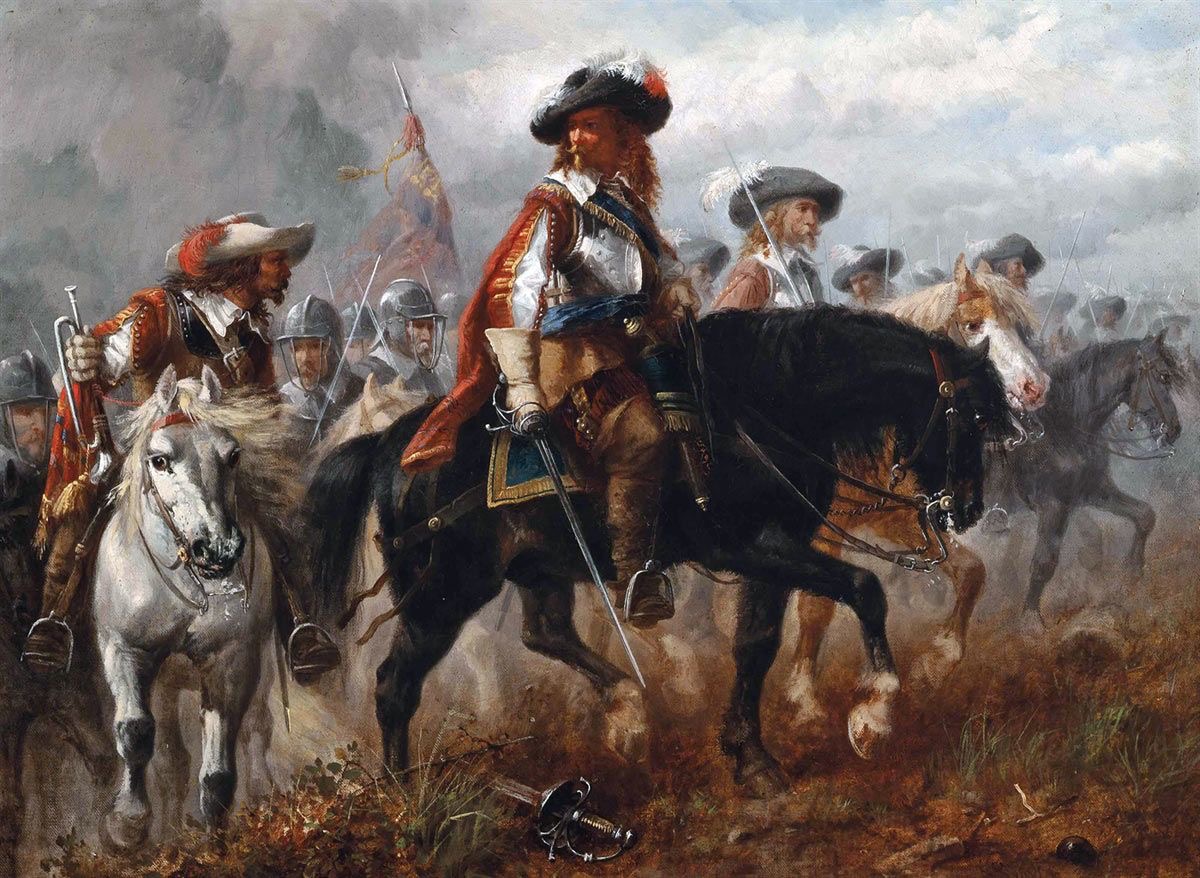
King Charles I and Prince Rupert before the Battle of Naseby 14th June 1645 during the English Civil War.
19th century artist unknown, from Wikimedia Commons.

  • A revolt is a large-scale, semi-organized riot. It aims, at best (e.g. Wat Tyler’s Rebellion), at the redress of specific grievances. At worst, it’s violent nihilism (e.g. the Jacquerie).
  • A civil war aims to replace one leader with another, leaving the underlying civil structure intact — e.g. any of the Roman civil wars post-Augustus.
  • A revolution‘s goal is total social transformation. We’re stipulating that it’s violent, because while stuff like the Industrial Revolution is fascinating, we’re not looking at peaceful change here in the Current Year. Revolutions are necessarily, fundamentally ideological.

I realize this can cause some confusion, as events I’d classify as “revolutions” are called civil wars in the history books, and vice versa. But the difference is important, because it sheds light on the development, course, and outcome of events.

The paradigm case is the English Civil War, 1642-51. This was clearly a revolution, as it aimed at — and achieved — the near-total overthrow of existing society. When Charles I took the throne in 1625, his kingdom was very much closer to a Continental-style divine-right monarchy than most Britons would like to admit. While the English had succeeded in clawing some of their liberties back from the crown after Henry VIII’s death, the fact remains that the Stuart state, like the Tudor state, was despotic. But by 1625, the despot was completely out of step with his people, and his times.

By 1642, the first revolutionary prerequisite was in place: No clear alternative. There were lots of revolts against Henry VIII, and one of them, the Pilgrimage of Grace, had the potential to turn into a civil war, or even a revolution. The revolts against Elizabeth I didn’t quite rise to that level, but the Northern Rebellion, and Essex’s Rebellion certainly imperiled her government. See also Wyatt’s Rebellion against Queen Mary, the Prayer Book Rebellion and Kett’s Rebellion against Edward VI, etc. In all of these, the alternative was clear — return to Rome, replacement of one court faction with another, or return to the old ways.

Why was Cavalry Used in Warfare? | Animated History

Filed under: History, Military — Tags: , , — Nicholas @ 02:00

The Armchair Historian
Published 11 Jan 2018

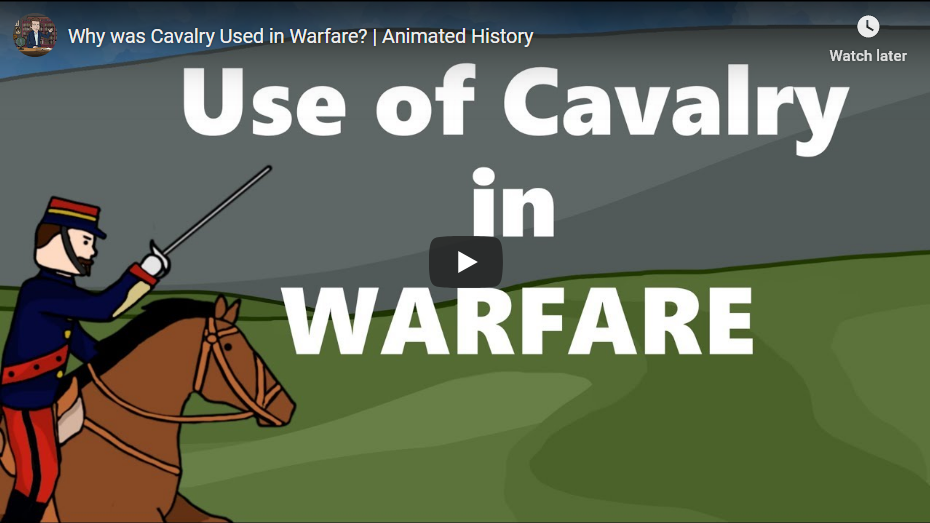
Why was Cavalry used in warfare?

Our Website: https://www.thearmchairhistorian.com/

Our Twitter:
@ArmchairHist

Sources: https://en.wikipedia.org/wiki/Horses_…
http://www.napolun.com/mirror/napoleo…
http://napoleonistyka.atspace.com/cav…
https://en.wikipedia.org/wiki/Cavalry…
https://ehistory.osu.edu/exhibitions/…
http://www.cincinnaticwrt.org/data/cc…
http://www.napolun.com/mirror/web2.ai…

Music: Music: Antonio Salieri: “Twenty six variations on La Folia de Spagna

From the comments:

The Armchair Historian
1 year ago

So two things….

1. A lot of people are saying the video is an oversimplification. You’re exactly right, this is a prelude of a series I’ll be doing covering all types of cavalry from all different eras, as well as tanks. I’ll be covering mainly the abstract, and the concepts, and less of all the specific numbers and statistics. This video is to act as an intro.

2. A lot of people are saying cavalry and tanks aren’t the same. You’re right again, but here’s what I meant in the video. The tank replaced the cavalry, and still fulfills the abstract usage of cavalry, as a decisive shock unit. You don’t have many of them, they’re more expensive, and they hit harder than their counterparts, infantry, and artillery. Of course tanks are not used in the same way cavalry was in warfare, but as cavalry left they were replaced by armor. In fact, many people tried to use tanks just like cavalry, but it didn’t work. It took up until the end of WW2 for most generals to realize this.

Hope that clears some stuff up,

Griff

To give an example of his second point, the British use of “cruiser” tanks in the Western Desert campaign of World War 2 typified the “it’s just an armoured horse” view of tanks. Disproportional British tank losses to German anti-tank guns was the usual result.

QotD: The progressive belief in the mind-controlling power of the press (and Facebook)

Filed under: Britain, Media, Politics, Quotations — Tags: , , , , — Nicholas @ 01:00

There’s a piece of graffiti that sums up the woke left’s view of ordinary people. It says: “When the British working class stop reading right-wing news, we will see progressive change.” There it is. In black and white. Scrawled on a wall somewhere but frequently shared on social media by supposed progressives. One sentence that captures why so many modern left-wingers, and in particular the Corbynistas, are so obsessed with the press – because they think it has hypnotised the fickle masses and polluted the plebs’ brains with horrible right-wing ideas. Make no mistake: when the left rages against the media, it is really raging against the masses.

Media-bashing has resurfaced with a vengeance over the past couple of weeks. It isn’t hard to see why. The polls don’t look good for Labour. Some are predicting a wipeout, especially in Labour’s traditional working-class strongholds. And as has been the case for a good 30 years now, when political events don’t go the left’s way – or rather, when the dim public lets the left down – the knives come out for the media.

Corbynista commentators are railing against the “billionaire media”. “Billionaires control the media, and it’s undermining democracy”, say the middle-class left-wingers of Novara Media. How? Because these billionaires are “tell[ing] you what to think”. You, the gullible, ill-educated throng, that is; not us, the well-educated, PhD-owning media leftists at Novara who can see through the lies peddled by evil billionaires.

Brendan O’Neill, “The woke elitism behind the left’s media-bashing”, Spiked, 2019-11-25.

November 28, 2019

Deltic Diesel Powered Train (1962) | British Pathé

Filed under: Britain, History, Railways — Tags: , , — Nicholas @ 06:00

British Pathé
Published 13 Apr 2014

Catch a glimpse of Finsbury Park and Kings Cross station back in the day in this remarkable footage of diesel powered trains in 1962.

For Archive Licensing Enquiries Visit: https://goo.gl/W4hZBv
Explore Our Online Channel For FULL Documentaries, Fascinating Interviews & Classic Movies: https://goo.gl/7dVe8r

#BritishPathé #History #London #KingsCross #FinsburyPark #Trains

(FILM ID:165.08)

Finsbury Park and Kings Cross, London.

L/S of a row of steam train engines on a set of tracks, M/S of steam coming out of the engine. M/S of the driver and fireman in overalls climbing down from the cabin of the engine. M/S of a diesel train in a station, two staff climb into the train, they are a lot cleaner than the steam men.

Interior of the engine, one of the men turns a couple of taps before the journey. C/U of a set of gauges, C/U of another part of the engine. M/S of the driver washing his hands, he closes the folding washbasin and dries his hands. C/U of the sign ‘Max. Speed 100 M.P.H.’ M/S of the driver pouring water from a kettle into a coffee pot. He places the pot on a hot plate and sits down. C/U of his feet on the footrest. M/S of the train pulling out of Kings Cross Station. M/S from the driver’s viewpoint as the train comes out of a tunnel. M/S of two shafts rotating in the engine. M/S of the driver in the cabin, M/S from his viewpoint as the train travels down the track. M/S as the train passes through a station. Various shots of the train and driver, and various point of view shots from inside the cabin of the track as it speeds along. C/U of the speed dials. M/S from the point of view of the driver as the train speeds down the track under bridges and past a steam train going in the opposite direction.

BRITISH PATHÉ’S STORY
Before television, people came to movie theatres to watch the news. British Pathé was at the forefront of cinematic journalism, blending information with entertainment to popular effect. Over the course of a century, it documented everything from major armed conflicts and seismic political crises to the curious hobbies and eccentric lives of ordinary people. If it happened, British Pathé filmed it.

Now considered to be the finest newsreel archive in the world, British Pathé is a treasure trove of 85,000 films unrivalled in their historical and cultural significance.

British Pathé also represents the Reuters historical collection, which includes more than 136,000 items from the news agencies Gaumont Graphic (1910-1932), Empire News Bulletin (1926-1930), British Paramount (1931-1957), and Gaumont British (1934-1959), as well as Visnews content from 1957 to the end of 1984. All footage can be viewed on the British Pathé website. https://www.britishpathe.com/

It’s time for the ever-popular Game of Budget Leaksmanship for the British military

Filed under: Britain, Government, Military — Tags: , , , — Nicholas @ 05:00

Sir Humphrey wants to encourage all defence-minded readers not to panic unduly at the all-too-predictable tactics used by all sides in the next round of British government defence planning:

It’s that time again, a period theoretically seen every five years or so, but occasionally more recently than that. A group of people who it seems cordially loathe each other spend months leaking, shouting, briefing and making grandiose pledges that don’t always get fulfilled. This whole, and at times, unedifying, process is, of course, the latest iteration in a Strategic Defence Review.

The Sunday Times leads with a story today that the Army is facing cuts to its manpower, and that in return they want the Navy to be forced to lease or mothball one of the two Queen Elizabeth class carriers. The article talks about a range of debates going on, and the latest news about what may or may not be scrapped or cut in any future budget settlement. Is this something to worry about, or is it merely the opening salvos in what is likely to be a long and painful campaign of attrition?

Defence reviews are driven from the very centre of Government – they occur usually with the Prime Minister of the day’s blessing, and they are now run centrally – usually via the Cabinet Office, and not by the MOD. This reflects the fact that modern national security requirements means the need to bring all departments together in a consensus and not isolated pockets doing their own thing.

He also provides a helpful list of the specific “the-sky-is-falling!” predictions you can expect to see through all stages of any given defence review process:

What is clear is that the new season of “Game of Planning Rounds” has begun. We can expect plenty more leaks like this to a variety of sources and papers which will be intended to achieve effect. If past performance is anything to go by, you can expect to see a “greatest hits” collection of some variants of the following options leaked in the next 12-18 months:

a. Parachute regiment to merge with Royal Marines
b. White elephant carriers are all to blame
c. The nasty MOD civil service did it …
d. SAS to merge with SBS
e. RAF to take control of all F35 and scrap FAA
f. Army has more horses than tanks
g. Army to no longer have enough troops to deploy a Division
h. Cranwell, Sandhurst and Dartmouth to close / merge in one location
i. RN to scrap X number of frigates or other ships
j. Naval Infantry Division to return …
k. Army to scrap Y number of tanks
l. RAF to dispose of Z aircraft fleets

All of these have appeared in the past, but how many of them actually happened or were true? The above links are just a snapshot in time (based on a quick google) but demonstrate that in the build up to a review, we’ll see a lot more articles like this one (which predicted cuts, many of which never happened) and a lot of rumours, angst and predictions.

Humphreys honest advice is simple – DON’T PANIC! Until the review is finalised, and has gone to the Prime Minister of the day for approval, nothing is set in stone. There will be leaks aplenty, rumours aplenty and very little in the way of actionable outcomes. Until the final package of measures is approved, everything is to play for, and anything can happen. It is just not worth getting worked up about because unless you are on the inside track as part of the Review team, you don’t know what is going on.

The ENTIRE History of NFL Thanksgiving!

Filed under: Football, History — Tags: , , , , — Nicholas @ 04:00

NFL Throwback
Published 25 Nov 2019

Check out the evolution of NFL games!

#NFL100

The NFL Throwback is your home for all things NFL history.

“The chickens are coming home to roost … but they are, actually, Pierre Trudeau’s chickens”

Filed under: Cancon, Government, Military, Politics, USA — Tags: , , , , — Nicholas @ 03:00

Ted Campbell looks at Justin Trudeau’s plight — needing to focus on policies that will increase his party’s chances of winning more seats in Quebec — with increasing demands from south of the border to get the Canadian commitment to higher military spending moved from “aspirational goal” to actual policy:

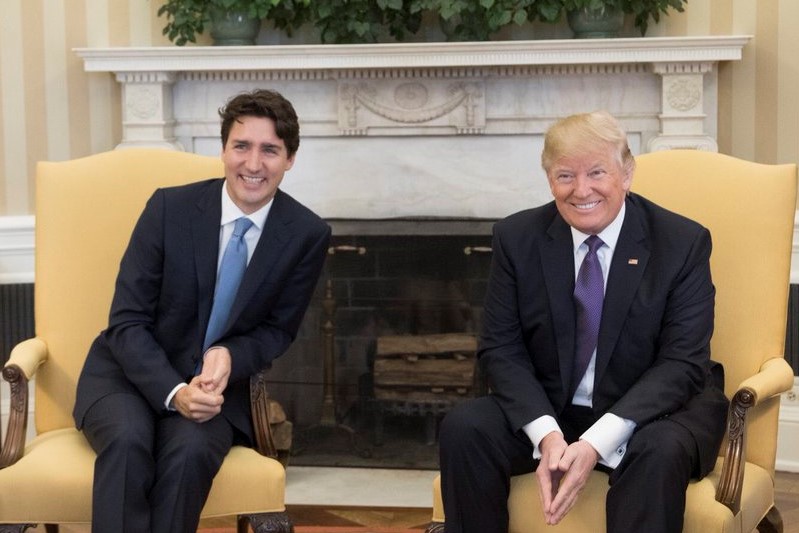
Justin Trudeau meets with President Donald Trump at the White House, 13 February, 2017.
Photo from the Office of the President of the United States via Wikimedia Commons.

Many in the media are saying, and I agree, that Justin Trudeau’s agenda for the next couple of years is about 99.9% domestic and focused, mainly, gaining seats in on Québec and holding on, at least, in Atlantic Canada and in urban and suburban Ontario and British Columbia. The overarching aim ~ the ONLY aim ~ of this government is to be re-elected with a majority.

As I mentioned a week or so ago, Donald J Trump is about to rain all over Justin Trudeau’s parade.

As Murray Brewster reports, for CBC News,

    The Liberal government is facing renewed political pressure from the administration of U.S. President Donald Trump to increase defence spending to meet the benchmark established by NATO [… and …] Robert O’Brien, the new U.S. national security adviser, said it is an “urgent priority” to get allies across the board to set aside military budgets that are equal to two per cent of the individual country’s gross domestic product [… while …] Speaking with journalists at the Halifax International Security Forum on Saturday, O’Brien rattled off a list of the world’s flashpoints, including Iran and Venezuela, as well as traditional adversaries such as Russia and China [… saying …] “There are very serious threats to our freedom and our security [… and adding that …] Canada made a pledge at [the 2014 NATO Summit in] Wales to spend two per cent. We expect our friends and our colleagues to live up to their commitments, and Canada is an honourable country; it’s a great country.”

Note the choice of words by Mr O’Brien, who is “a lawyer and former U.S. State Department hostage negotiator.” He doesn’t say that President Trump and the USA “asks” Canada to keep its word (although the Harper government said that spending 2% of GDP on defence was an “aspirational goal,” rather than a firm commitment) nor did he say something like “the US hopes Canada will change its ways and spend more on defence.” He said that Donald Trump’s America “expects” Canada to live up to its “pledge.” As I mentioned before, when President Trump negotiates with friends and allies he usually has both fists in the air and his knuckles are often reinforced with unfair trade tariffs and the like. Right now he is, for example, asking Japan and South Korea to pay much, much more to support American forces in their countries because, in his mind, he (America) is providing a “service” which is all for the Asians and is not, in any way, in America’s self-interest and, therefore, he wants to be reimbursed. It’s a very Trumpian notion. I am sure he sees NATO and NORAD in very much the same light.

[…]

The issue that worries some analysts is that while Canada is, in the final analysis, protected by the US because it is in America’s best interests to protect us, NATO provides a useful counter-balance and, in effect, helps us to at least pretend to be a little less than just another American colony. And that, having the status of being little better than a US colony, is what Pierre Trudeau willed upon Canada in the late 1960s and early 1970s when he wanted to leave NATO, entirely and saddled Canada with his, juvenile, nonsensical, neo-isolationist “Foreign Policy For Canadians” white paper in 1970. Although Brian Mulroney wanted Canada to be independent – think standing up to President Reagan and Prime Minister Thatcher on South Africa – and Stephen Harper did, too, the cumulative impact of Trudeau-Chrétien-Trudeau for 30 of the last 50 years has been too much to change. When our political leaders don’t care about Canada being a leader amongst the nations and don’t, in fact, even care about Canada being a truly sovereign state then we will sink, inevitably, into the status of an American colony.

10 Quick Woodworking Tips | Paul Sellers

Filed under: Tools, Woodworking — Tags: , , — Nicholas @ 02:00

Paul Sellers
Published 22 Oct 2019

To celebrate a year of “Tuesday Tips” on Paul’s Instagram stories, Paul has picked his top 10 quick woodworking tips to share with you.

Every Tuesday Paul uploads a quick 15 second “Tuesday Tip” to his Instagram stories. You can join Paul on Instagram here: https://www.instagram.com/paul.a.j.se…

If you want to view his past “Tuesday Tips”, you can view his Instagram Story Highlight here:
https://www.instagram.com/stories/hig…

——————-

Want to learn more about woodworking?

https://woodworkingmasterclasses.com for weekly project episodes

https://commonwoodworking.com for step-by-step beginner guides and courses

https://paulsellers.com/ for Paul’s latest ventures on his blog

QotD: The native view of the Pilgrims

Filed under: History, Humour, Quotations, USA — Tags: , — Nicholas @ 01:00

Shorter than the natives, oddly dressed, and often unbearably dirty, the pallid foreigners had peculiar blue eyes that peeped out of the masks of bristly, animal-like hair that encased their faces. They were irritatingly garrulous, prone to fits of chicanery, and often surprisingly incompetent at what seemed to Indians like basic tasks. But they also made useful and beautiful goods — copper kettles, glittering colored glass, and steel knives and hatchets — unlike anything else in New England. Moreover they would exchange these valuable items for cheap furs of a sort used by Indians as blankets. It was like happening upon a dingy kiosk that would swap fancy electronic goods for customers’ used socks — almost anyone would be willing to overlook the shopkeeper’s peculiarities.

Charles Mann, 1491: New Revelations of the Americas Before Columbus, 2006.

November 27, 2019

The Father of Modern China – Sun Yat-sen l HISTORY OF CHINA

Filed under: China, History — Tags: , , , , , , — Nicholas @ 06:00

IT’S HISTORY
Published 2 Sep 2015

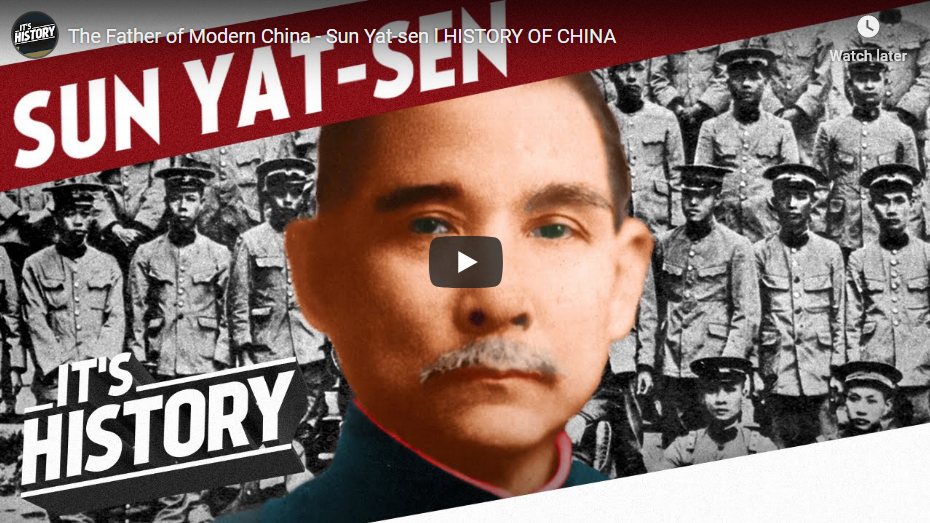
Sun Yat-sen is known as the “father of modern China”. He spent his adult life fighting against imperial China and the ruling Qing dynasty. First as revolutionary leader and later as politician. He founded the Tongmenghui League in 1905 and supported rebellions in China. After the Wuchang Uprising, Sun handed over the presidential office for the Republic of China to Yuan Shikai who soon after would ban Sun’s political party, the Kuomintang. So he reformed it as China’s National People’s party. His military and political work laid the groundwork from which his successors would later call out the People’s Republic of China.

» Century of Humiliation
Part 1: http://bit.ly/humiliation1
Part 2: http://bit.ly/Humiliation2

» SOURCES
Videos: British Pathé (https://www.youtube.com/user/britishp…)
Pictures: mainly Picture Alliance
Content:
Chang, Johannes (1960): “Sun Yat-sen – Seine Lehre und seine Bedeutung” in: JCSW 1 [1960] S.179-194
Gernet, Jacques (1988): Die chinesische Welt. Die Geschichte Chinas von den Anfängen bis zur Jetztzeit, Suhrkamp, Berlin.
Klein, Thoralf (2008): “Politische Geschichte Chinas 1900-1949”, auf bpb.de
https://www.bpb.de/internationales/as…
Vogelsang, Kai (2013): Geschichte Chinas, Reclam, Ditzingen.
Weigelin-Schwiedrzik (2012): “Der geteilte Himmel”, in ZEIT Geschichte Nr. 01/2012
http://www.zeit.de/zeit-geschichte/20…

» ABOUT US
IT’S HISTORY is a ride through history – Join us discovering the world’s most important eras in IN TIME, BIOGRAPHIES of the GREATEST MINDS and the most important INVENTIONS.

» HOW CAN I SUPPORT YOUR CHANNEL?
You can support us by sharing our videos with your friends and spreading the word about our work.

» CAN I EMBED YOUR VIDEOS ON MY WEBSITE?
Of course, you can embed our videos on your website. We are happy if you show our channel to your friends, fellow students, classmates, professors, teachers or neighbors. Or just share our videos on Facebook, Twitter, Reddit etc. Subscribe to our channel and like our videos with a thumbs up.

» CAN I SHOW YOUR VIDEOS IN CLASS?
Of course! Tell your teachers or professors about our channel and our videos. We’re happy if we can contribute with our videos.

» CREDITS
Presented by: Guy Kiddey
Script by: Julia Korbik
Translated by: Guy Kiddey
Directed by: Daniel Czepelczauer
Director of Photography: Markus Kretzschmar
Music: Markus Kretzschmar
Sound Design: Marc Glücks
Editing: Markus Kretzschmar

A Mediakraft Networks original channel
Based on a concept by Florian Wittig and Daniel Czepelczauer
Executive Producers: Astrid Deinhard-Olsson, Spartacus Olsson
Head of Production: Michael Wendt
Producer: Daniel Czepelczauer
Social Media Manager: Laura Pagan

Contains material licensed from British Pathé
All rights reserved – © Mediakraft Networks GmbH, 2015

« Newer PostsOlder Posts »

Powered by WordPress