
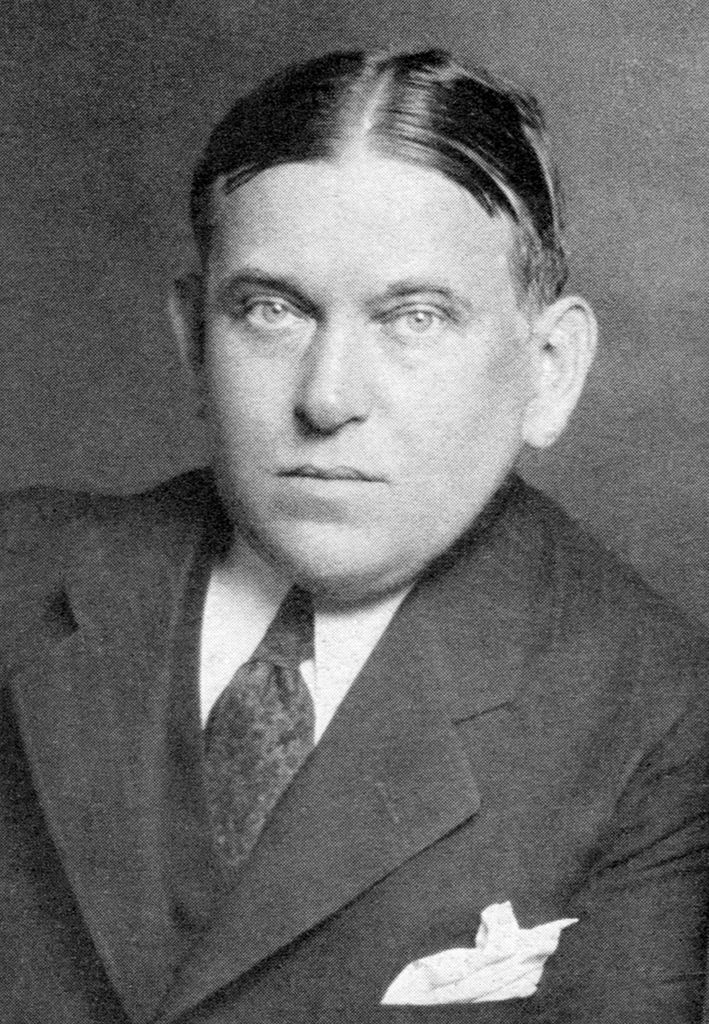
H.L. Mencken in 1928.
Photo by Ben Pinchot for Theatre Magazine, August 1928.The trouble with fighting for human freedom is that one spends most of one’s time defending scoundrels. For it is against scoundrels that oppressive laws are first aimed, and oppression must be stopped at the beginning if it is to be stopped at all.
H.L. Mencken.
December 3, 2019
QotD: Defending freedom of speech
Comments Off on QotD: Defending freedom of speech
December 2, 2019
The Battle of the Granicus (334 B.C.E.)
Historia Civilis
Published 30 Nov 2019Patreon | http://patreon.com/HistoriaCivilis
Donate | http://www.paypal.com/cgi-bin/webscr?…
Merch | http://teespring.com/stores/historiac…
Twitter | http://twitter.com/HistoriaCivilis
Website | http://historiacivilis.comSources:
Arrian, The Anabasis of Alexander, Book 1 | https://amzn.to/37F4qo3
Diodorus Siculus, “The Library of History,” Book 17 | https://amzn.to/2qPDP71
Plutarch, “Parallel Lives: The Life of Alexander” | https://amzn.to/2QUHXxu
—
Ernst Badin, “The Battle of the Granicus: A New Look,” from “Collected Papers on Alexander the Great” | https://amzn.to/37zeuyO
Peter Green, Alexander of Macedon | https://amzn.to/2OogimY
Robin Lane Fox, Alexander the Great | https://amzn.to/2OlzZvx
Philip Freeman, Alexander the Great | https://amzn.to/35wVtv4Music:
“IMF,” by Dot
“Heliograph,” by Chris Zabriskie
“Infados,” by Kevin MacLeod
“The House Glows (With Almost No Help),” by Chris Zabriskie
“Hallon,” by Christian BjoerklundWe are a participant in the Amazon Services LLC Associates Program, an affiliate advertising program designed to provide a means for us to earn fees by linking to Amazon.com and affiliated sites.

Comments Off on The Battle of the Granicus (334 B.C.E.)
Andrew Scheer’s Daisy connection
Jay Currie on the lingering stench of the spoiled Milk Dud’s campaign:

Andrew Scheer, paid tool of Big Dairy, chugs some milk during a Press Gallery speech in 2017. I’ve called him the “Milk Dud” ever since.
Screencapture from a CTV video uploaded to YouTube.
The sheer lack of ethics and paranoia hiring the Jackal demonstrates pretty much proves that Scheer is not fit to lead the CPC or to be Prime Minister. A fact which is dawning on the CPC itself as it struggles to figure out what to do with their present leader. Before Kinsellagate it was possible to say that Scheer was a decent, if uninspiring, leader. Now? It is indecent to hire a political mobster to beat up your opponents. Which leaves Scheer as merely uninspiring. I would be astonished if he survives a leadership review.
The revelation of Kinsella’s filth may sink Scheer but it burnishes Bernier’s reputation. Virtually all the accusations of “racism” levelled against the PPC and Max personally either were manufactured by Kinsella or occurred in a climate of hate created by the Jackal. I have never seen a credible accusation and now we have a pretty good idea why.
The PPC, even with Kinsella’s disinformation campaign, secured over 300,000 votes from a standing start a year before the election. If the CPC tears itself apart with a red/blue fight, a lot of thoughtful, conservative, people will give the PPC a second look. Conservative MPs looking for an alternative to the nastiness and vindictiveness of the Scheer people might well be tempted to join the PPC. Max had a lot of caucus support for his CPC leadership run. He was careful not to unfairly attack conservative positions, rather, during the campaign, he attacked CPC positions which were, in fact, Liberal-lite positions.
Political pundits, as they do after every election in which the Conservatives fail to win government, solemnly inform us that it was because the Conservatives failed to move towards the middle. The fact that only 30-35% of Canadians are even a bit right-leaning is trotted out to show how impossible it is for the Conservatives to win government unless they move left. I think this analysis is entirely incorrect. A solid, right of center party which had libertarian social views would hold that 30-35%. From there it is simply a matter of finding 3-5% in carefully targetted ridings. To do that a party would have to come up with policies which, while conservative, do not alienate middle-class voters, immigrant communities and women.
I don’t think there is a chance the CPC will manage that simply because they are too tied to establishment politics in Canada. Yeah multi-culti, boo climate change only echos the Liberal Party’s bland formula for success.
Comments Off on Andrew Scheer’s Daisy connection
Policing London – The Thief-Taker General – Extra History – #1
Extra Credits
Published 30 Nov 2019These days we kind of assume that police are a normal part of law and order. But that wasn’t always the case. In fact, it wasn’t the case for a lot of human history. So how did we start thinking of police as a natural part of a city? It all starts in London with the Thief-Taker General Jonathan Wilde, a man of two faces. Which one is real: valiant crime fighter or the puppet master of London’s underbelly?
Join us on Patreon! http://bit.ly/EHPatreon

Comments Off on Policing London – The Thief-Taker General – Extra History – #1
A bad IDEA for classroom peace
In Quillette, Max Eden discusses the rise of “room clears” as teachers resort to evacuating classrooms to prevent harm to students from one disruptive one:

Last month, NBC Nightly News aired a segment on the latest classroom-management technique to sweep America’s schools: “room clears”: When a child throws a tantrum that could physically endanger his peers, teachers evacuate all of the other students from the classroom until the troublemaker has vented his rage upon empty desks, tables and chairs. The technique was virtually unheard of five years ago. But 56 percent of surveyed teachers and parents in Oregon now report having experienced a room clear in their or their child’s classroom over the last year.
Surrendering the classroom to a single student: The average reader might well ask why anyone thinks this would be a good idea. Yet the policies that make this approach inevitable have been applauded by a wide range of authorities, from the Southern Poverty Law Center to the Trump-administration’s Department of Education.
The emergence of room clears is a product of several fashionable education-policy trends designed to protect the rights of troubled students, often with little regard for the rights of their classmates. These include the provisions contained in the federal Individuals with Disabilities Education Act (IDEA), which mandates that special-education students be subject to the “least restrictive environment” possible. When it comes to students who are hard of hearing, dyslexic or developmentally delayed, this policy likely has done a great deal of good. But many schools also label disruptive or violent students as having an “Emotional and Behavioral Disability” (EBD). Rather than provide these students specialized attention in separate settings, schools often funnel them into traditional classrooms.
In a national poll, two thirds of surveyed teachers at high-poverty schools reported that there is a student in their classroom who they believed shouldn’t be there; and 77 percent of surveyed teachers report that a small number of disruptive students cause other students to suffer. Unfortunately, IDEA’s provisions don’t adequately account for the rights and interests of general-education students, and teachers typically have little say over who is in their classroom.
Once they are assigned to a traditional class, EBD students can become virtually untouchable as far as discipline goes. Schools are discouraged by federal policy and activist groups alike from disproportionately disciplining students with disabilities — the effect of which is that principals are required to overlook many otherwise unacceptable transgressions. (Two thirds of teachers say that special-education students are treated more leniently than general-education students for the same offenses.) The worst-behaved students effectively are taught that the rules don’t apply to them in the same way they apply to others. Even when misbehavior edges toward violence, EBD students are becoming physically untouchable.
Comments Off on A bad IDEA for classroom peace
China Rules the Seas – The Invention of the Junk l HISTORY OF CHINA
IT’S HISTORY
Published 19 Aug 2015Imperial China was a great seafaring nation. With the invention of the junks — massive, nearly unsinkable ships — it is safe to say that by the 14th century China had the best sea vessels in the world. The invention of the compass made navigation trustworthy as never before and Admiral Zheng He’s treasure fleet eagerly explored the Seven Seas. The first Chinese navy also depended on the mighty junk for their fighting tactics. But not all emperors were convinced of seafare and so the Chinese maritime power ended somewhat abruptly, giving the rest of the world time to catch up. Learn all about China on the water on IT’S HISTORY.
» The Complete PLAYLIST: http://bit.ly/HistoryOfChina
» SOURCES
Videos: British Pathé (https://www.youtube.com/user/britishp…)
Pictures: mainly Picture Alliance
Content:
“Hadingham, Evan (2001): Ancient Chinese Explorers: http://www.pbs.org/wgbh/nova/ancient/…
Needham, Joseph (1986): Science and Civilization in China, Volume 4, Physics and Physical Technology, Part 3, Civil Engineering and Nautics. Taipei”» ABOUT US
IT’S HISTORY is a ride through history – Join us discovering the world’s most important eras in IN TIME, BIOGRAPHIES of the GREATEST MINDS and the most important INVENTIONS.» CREDITS
Presented by: Guy Kiddey
Script by: Martin Haldenmair
Translated by: Guy Kiddey
Directed by: Daniel Czepelczauer
Director of Photography: Markus Kretzschmar
Music: Markus Kretzschmar
Sound Design: Bojan Novic
Editing: Markus KretzschmarA Mediakraft Networks original channel
Based on a concept by Florian Wittig and Daniel Czepelczauer
Executive Producers: Astrid Deinhard-Olsson, Spartacus Olsson
Head of Production: Michael Wendt
Producer: Daniel Czepelczauer
Social Media Manager: Laura Pagan and Florian WittigContains material licensed from British Pathé
All rights reserved – © Mediakraft Networks GmbH, 2015

Comments Off on China Rules the Seas – The Invention of the Junk l HISTORY OF CHINA
QotD: Evidence of markets in classical civilizations
If someone were to claim that market behaviour was peripheral to life in eighteenth century England, it would be easy to laugh at him. This is not to say the claim has not been or will not be made. But if it were made, it could be refuted with a mass of government and private statistics, of newspaper reports and law reports, of high literature, of sermons, speeches and letters, of descriptive and analytical surveys, of biographies and novels, and of physical remains. Ludicrous claims can always be based on selective and misread evidence. In this case, the weight of the evidence must be decisive.
If we turn, however, to the ancient world, the evidence must almost always be indecisive. Very few ancient writings have survived. Obviously, two thousand years are a long time; and ancient civilisation did collapse. Add to this that far fewer documents relating to economic matters were produced or could be preserved than has been the case with us. There was no printing: everything had to be copied by hand. The best writing material was papyrus, which was both expensive and fragile. The normal writing materials for accounts and administrative documents were waxed tablets, which were scraped and reused, and thin wooden sheets, which were thrown away once they had served their purpose.
The literary remains of Greece and Rome which have come down to us through generations of copying and recopying are the products of a rather snobbish culture, and contain little direct information about economic behaviour. The great writers, as Finley observes, do seem to have lacked the conceptual framework for intelligent discussion of finance and commerce. Even otherwise, these were matters they regarded as beneath the notice of history. Thucydides, for example, gives full discussion to the political causes of the Peloponnesian War, but says nothing of what we know from the archaeological evidence was the complete Athenian displacement of Corinth in the pottery markets of the Western Mediterranean world.
During the past century or so, the rubbish dumps of Egypt have revealed a mass of the everyday documentation we have for no other area of the ancient world. There are tax records, and commercial correspondence, and administrative commands, among much else. The problem here is that Egypt was always an exception. From its earliest history, its geography opened it to capture and exploitation by rent-seeking élites. The Pharaohs were worshipped as gods and given whatever they demanded. The Ptolemies organised the country into one gigantic state enterprise and used the proceeds for making a big noise in the Hellenistic world. The Roman Emperors kept up the monopolies and requisitions, treating Egypt as their personal property, and so far as possible isolating it from the rest of the Empire. The documentary evidence, therefore, we have from Egypt may not be representative of the ancient world as a whole.
But this, plus the material archaeology, is all we have. And if we want to know anything for economic motivations and behaviour, we must press the evidence we have as hard as we can. The history of the ancient world is, in many important respects like a mosaic that has been broken up with many of its tiles thrown away. The whole must be reconstructed from the parts remaining. It is a difficult enterprise, but it can be attempted.
If there is little direct, there is much indirect evidence. This is scattered through the surviving body of ancient literature. It consists of casual remarks, illustrations to arguments, even comments that are in themselves foolish. It is a question of looking for this evidence, and of knowing how to use it.
An interesting example of how evidence can be extracted and used comes not from our own ancient world, but from pre-Columbian South America. Deirdre McCloskey has looked at the geographical distribution of Mayan obsidian tools. She notes that, the farther from the sources of their obsidian, the smaller was the ratio of blade weight to cutting length. She comments:
By taking more care with more costly obsidian the blade makers were earning better profits; as they did by taking less care with less costly obsidian.
What we have here, then, is evidence that illiterate, stone age toolmakers were at least as conscious of opportunity cost as any Victorian mill owner, and rather more so than the average socialist planner of the next century. So long, of course, as this is evidence — this is, so long as the tools are distributed as claimed — we have empirical reason for doubting the Polanyi claim that,
previously to our time no economy has ever existed that, even in principle, was controlled by markets…. Gain and profit made on exchange never [before the nineteenth century] played an important part in human economy.
Sean Gabb, “Market Behaviour in the Ancient World: An Overview of the Debate”, 2008-05.
Comments Off on QotD: Evidence of markets in classical civilizations
December 1, 2019
The German Plan to Destroy French Culture – The Occupation of France – WW2 – 066 – November 30, 1940
World War Two
Published 30 Nov 2019While Hitler consolidates his power in occupied France, Japanese and Italian forces try to get an edge, but fail. The war is not looking too well for anyone at this point.
Join us on Patreon: https://www.patreon.com/TimeGhostHistory
Or join The TimeGhost Army directly at: https://timeghost.tvFollow WW2 day by day on Instagram @World_war_two_realtime https://www.instagram.com/world_war_t…
Join our Discord Server: https://discord.gg/D6D2aYN.
Between 2 Wars: https://www.youtube.com/playlist?list…
Source list: http://bit.ly/WW2sourcesWritten and Hosted by: Indy Neidell
Produced and Directed by: Spartacus Olsson and Astrid Deinhard
Executive Producers: Bodo Rittenauer, Astrid Deinhard, Indy Neidell, Spartacus Olsson
Creative Producer: Joram Appel
Post-Production Director: Wieke Kapteijns
Research by: Indy Neidell
Edited by: Mikołaj Cackowski
Map animations: Eastory (https://www.youtube.com/c/eastory)Colorizations by:
– Adrien Fillon (https://www.instagram.com/adrien.colo…)
– Dememorabilia (https://www.instagram.com/dememorabilia/)Sources:
-Archiwum CyfroweArchive by Screenocean/Reuters https://www.screenocean.com.
A TimeGhost chronological documentary produced by OnLion Entertainment GmbH.

Comments Off on The German Plan to Destroy French Culture – The Occupation of France – WW2 – 066 – November 30, 1940
Tulsi Gabbard versus the Democratic establishment
At Spiked, Tim Black calls the establishment’s anger and rage at the Democratic presidential candidate “Gabbard Derangement Syndrome”:

Tulsi Gabbard speaks at the “People’s Rally” in Washington DC on 17 November, 2016.
Photo by Lorie Shaull via Wikimedia Commons.
… the Democratic establishment and its media cheerleaders seem to have become fixated on her. She annoys them. She riles them. And it’s not just because of her ambivalence towards identity politics and the other aspects of her Sanders-style progressivism – indeed, she endorsed Sanders in 2016, much to the chagrin of the Democratic establishment at the time. No, it’s also because of her uncompromising opposition to the “counterproductive regime-change wars” pursued with such ignorant zeal by the likes of Democratic grandee Hillary Clinton. It’s because of her willingness to question the narratives that have justified Western intervention in Syria, including a secret fact-finding mission to Damascus, and a meeting with Bashar al-Assad in 2017. And it’s because she does all this not as a woolly pacifist, but as a war vet.
So where her small but growing band of supporters see a principled 38-year-old, armed with a progressive policy platform, and, above all, a strong commitment to anti-interventionism, her powerful opponents are determined to present her as something altogether more sinister. They talk of her being a poster girl for white supremacists and the alt-right, of her being a Republican stooge in Democratic clothing, and of her being some sort of Russian asset.
It’s genuinely crazy stuff. Last week, the New York Times even laid into her for wearing a white pantsuit for a TV debate, claiming it was somehow cult-like. But that is as nothing compared to the constant innuendo and sometimes outright claims that Gabbard is being backed by Russia and Putin, the seeming power behind all world disorder.
Gabbard’s chances of winning the Democratic nomination are slim, but her recent online spat with Hillary Clinton probably won her a lot of fans outside the establishment:
Then, of course, there’s Hillary Clinton herself, a woman who, since losing to Donald Trump in the 2016 presidential election, is no longer able to go near a bed without spotting reds under it. Gabbard, unsurprisingly, does not escape Clinton’s conspiracist gaze. “I’m not making any predictions but I think [the Russians have] got their eye on somebody who’s currently in the Democratic primary, and they’re grooming her to be the third-party candidate. She’s the favorite of the Russians”, Clinton continued. “They have a bunch of sites and bots and other ways of supporting her so far.”
That’s right. Clinton thinks Gabbard is a Russian plant. She thinks Gabbard is “being groomed” by the Kremlin. She thinks she is being manoeuvred, by Putin and Co, out of the Democratic Party and into a third-party position, so as to split the Democratic vote in 2020. And she thinks that will hand victory once again to Russia’s Manchurian Candidate, Donald Trump, just as she thinks that Jill Stein, the Green Party’s 2016 presidential nominee, was also a Russian asset, used to split the vote three years ago and deprive Hillary of the election victory she still believes should be hers. The entitlement underwriting her deranged conspiracy theory is breathtaking.
Comments Off on Tulsi Gabbard versus the Democratic establishment
Tank Chats #56 Sherman DD | The Funnies | The Tank Museum
The Tank Museum
Published 7 Sep 2018Another episode in the Tank Chats Funnies Specials, with David Fletcher looking at the weird and wonderful vehicles of 79th Armoured Division led by Major General Percy Hobart, known as “Hobart’s Funnies”.
The Sherman DD, or Duplex Drive, was a term applied to Sherman tanks modified for amphibious operations. DD tanks were used by American, British and Canadian forces in WW2 on D-Day, 6 June 1944; by the Americans again in the south of France and by the Americans and British during the Rhine crossing.
Support the work of The Tank Museum on Patreon: ► https://www.patreon.com/tankmuseum
Or donate http://tankmuseum.org/support-us/donateVisit The Tank Museum SHOP: ► https://tankmuseumshop.org/
Twitter: ► https://twitter.com/TankMuseum
Tiger Tank Blog: ► http://blog.tiger-tank.com/
Tank 100 First World War Centenary Blog: ► http://tank100.com/ #tankmuseum #tanks #tankchats

Comments Off on Tank Chats #56 Sherman DD | The Funnies | The Tank Museum
QotD: Religious belief
James Lileks, The Bleat, 2004-10-18.
Comments Off on QotD: Religious belief
November 30, 2019
Miscellaneous Myths: Krishna
Overly Sarcastic Productions
Published 29 Nov 2019The man. The myth. The whole entire universe. It’s time to dive into Krishna’s youth and learn the backstory of everyone’s favorite blue dude!
Video requested by patron Antonio Juarez!
Join the official channel discord here! https://discord.gg/btEGDBf
PATREON: https://www.Patreon.com/OSP
MERCH LINKS: https://www.redbubble.com/people/OSPY…
OUR WEBSITE: https://www.OverlySarcasticProductions.com
Find us on Twitter https://www.Twitter.com/OSPYouTube
Find us on Reddit https://www.Reddit.com/r/OSP/

Comments Off on Miscellaneous Myths: Krishna
Hong Kong and China
At Samizdata, Brian Micklethwait considers the state of play in Hong Kong’s defiance of the Chinese Communist Party:

Protests continue in Hong Kong, 25 November 2019.
Photo by Studio Incendo via Wikimedia Commons
How can the HongKongers defeat the Chinese Communists (hereinafter termed ChiComs), and preserve their HongKonger way of life approximately as it now is? In the short run, they probably can’t. During the next few months, the ChiCom repression in Hong Kong will surely get ever nastier, and the bigger plan, to just gobble it up and digest it into ChiCom China will surely bash onwards.
But then again, I thought that these Hong kong demonstrations would all be snuffed out months ago. So what the hell do I know? I thought they’d just send in the tanks, and to hell with “world opinion”. But the ChiComs, it turned out, didn’t want to just kill everyone who dared to disobey, plus anyone else who happened to be standing about nearby. That would not be a good look for them. What are they? Russians? Far too unsophisticated. Instead the plan has been to divide and conquer, and it presumably still is. By putting violent agent provovateurs in among the demonstrators, and by ramping up the violence simultaneously perpetrated by the police, the plan was, and is, to turn the peaceful and hugely well attended demonstrations into far smaller, far more violent street battles of the sort that would disgust regular people. Who would then turn around and support law and order, increased spending on public housing, blah blah. So far, this has not worked.
And for as long as any ChiCom plan for Hong Kong continues not to work, “world opinion” has that much more time to shake itself free from the sneer quotes and get itself organised, to try to help Hong Kong to stay semi-free.
Those district rat-catcher (or whatever) elections last Sunday came at just the wrong time for the ChiComs, because they gave peaceful HongKongers the chance to make their opinions known, about creatures of a far more significant sort than rats, and at just the time when the ChiCom plan should have started seriously shutting the HongKongers up. These elections were a landslide.
The ChiComs are very keen to exude indifference to world opinion, but they clearly do care about it, because if they truly didn’t care about it, those tanks would have gone in months ago, just as I had assumed they would. So, since world opinion clearly has some effect, the first thing the rest of us can do to help the HongKongers is to keep our eyeballs on Hong Kong.
As I say, I continue to be pessimistic about the medium-term future in Hong Kong. But in the longer run, if the HongKongers can’t have a local victory, they can set about getting their revenge. And all of the rest of us who care can join in and help them.
Comments Off on Hong Kong and China
How to Cut Curves by Hand | Paul Sellers
Paul Sellers
Published 28 Nov 2019Shaping hollows and cambers in wood can be done efficiently with no more than four commonly used woodworking tools.
In this video, Paul shows you how to cut three different types of curves, within minutes. You can do this and this video simplifies the whole process.
——————–
Want to learn more about woodworking?
Go to Woodworking Masterclasses for weekly project episodes: http://bit.ly/2JeH3a9
Go to Common Woodworking for step-by-step beginner guides and courses: http://bit.ly/35VQV2o
http://bit.ly/2BXmuei for Paul’s latest ventures on his blog

Comments Off on How to Cut Curves by Hand | Paul Sellers
Toynbee’s warning
In the National Post, Barbara Kay wonders if conservative democracy can shore up the civilizational boundaries that liberal democracy has abandoned:
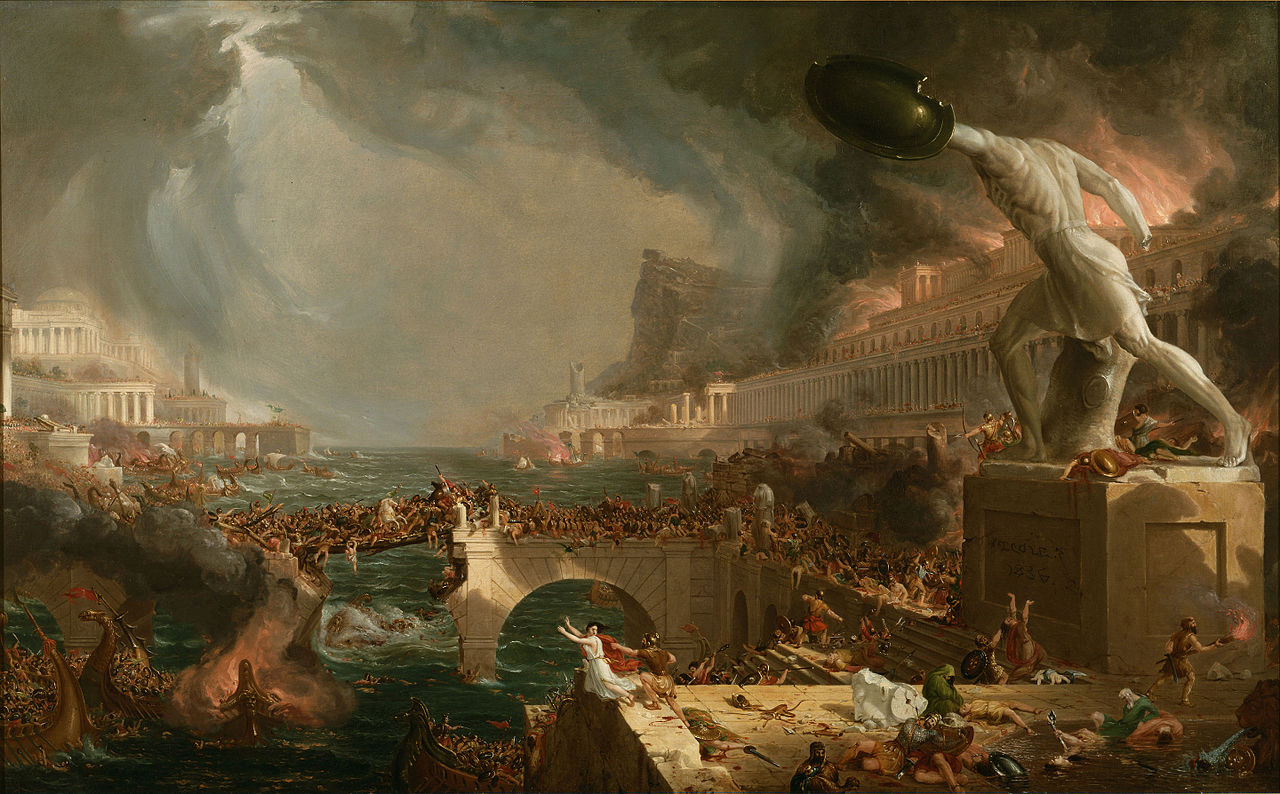
The Course of Empire – Destruction by Thomas Cole, 1836.
From the New York Historical Society collection via Wikimedia Commons.
The historian Arnold Toynbee warned that “civilizations die from suicide, not by murder.” He said they begin to disintegrate when they abandon moral law and yield to their impulses, which in turn brings about a state of passivity, a sense that there is no point in resisting incoming waves of foreigners driven by confidence and purpose.
Since Toynbee, other writers, notably James Burnham in his influential 1964 essay, “Suicide of the West: An essay on the Meaning and Destiny of Liberalism”, have picked up on the theme. In every case in which the word “suicide” features, the root cause comes down to the effects of a universalist liberal democracy over time. These observers are not trading in fear-mongering for its own sake. We must pay respectful attention to their warnings.
Liberal democracy is, broadly speaking, a political doctrine consecrated to the belief that reason, universally accessible and everywhere the same, can by itself create the conditions for enlightened progress in human affairs.
With social justice as the end and social transformation as the means, liberals are not perturbed by the erosion of Christianity, the traditional family and the cultural particularism such transformation requires. The instinct to jettison cultural babies in order to refresh our cultural bathwater is a feature, not a bug, of liberal democracy.
Conservatives, even those who don’t embrace social conservatism, view the crumbling of these building blocks of civilization with anxiety and fear. Their view is that reason alone, without spiritual ballast and deference to the traditions that created our civilization, can produce social instability and even violence. Nobody considered himself more reasonable than Vladimir Lenin. Nobody considers herself more reasonable than a minister of sport who conflates subjective gender identification with biological sex.
Conservatives’ fears are driving the nationalist/nativist counter-movement liberals view with disgust and anger. Conservatives find it difficult to get an unbiased hearing in the prevailing progressive zeitgeist. Liberals have been successful in linking nationalism with history’s most odious incarnations of racism and imperialism in the popular imagination, while ignoring the equally tragic history of internationalist movements, because Marxist utopianism casts a spell they find irresistible.
So in the matter of immigration, for example, liberals are not concerned by mass immigration from countries with different religious and cultural traditions, because they rely on the universal appeal of liberal principles to even out the initial wrinkles. Conservatives regard these different traditions as deeply entrenched and likely to be negatively transformative to our own culture. They are inclined to impose strictures that encourage integration into, along with recognition of, our own culture’s dominant status. Far from being racist, conservatives view this precaution as a hedge against the kind of inter-cultural tensions spilling over into expressed hatreds that are presently roiling Europe. But as we saw in the last election, even the mildest criticism of mass immigration is the kiss of death to a politician.
Recently, I posted a Quote of the Day from Sarah Hoyt that emphasized the persistence of culture, which is a warning to those who think unlimited immigration from other cultures won’t have negative impacts on the receiving culture:
Societies don’t work that way. Culture doesn’t work that way. In fact culture is so persistent, so stubborn, it leads people to think it’s genetic. (It’s not. A baby taken at birth to another culture will not behave as his culture of origin.) It changes, sure, through invasions and take overs, but so slowly that bits of older cultures and ideas stay embedded in the new culture. It has been noted that the communist rulers of Russia partook a good bit of the Tsarist regime, because the culture of the people was the same and that came through. (They just dialed up the atrocities and lowered the functionality because their ideology was dysfunctional. They blame their failure on Russia itself, but considering how communism does around the world, I’ll say to the extent countries survive it’s because of the underlying culture.)


