
Rex Krueger
Published 29 Jan 2020Make a full-size, hand-tool work bench that’s also fast, easy, and cheap.
More video and exclusive content: http://www.patreon.com/rexkrueger
Get the FREE Plans!!!!: https://www.rexkrueger.com/store/plan…
(more…)
January 30, 2020
The incredible English Joiner’s Bench
Comments Off on The incredible English Joiner’s Bench
French immersion is still like private school for the middle class
Chris Selley talks about the differences between Canadian official bilingual opinion and reality for Canadian students:
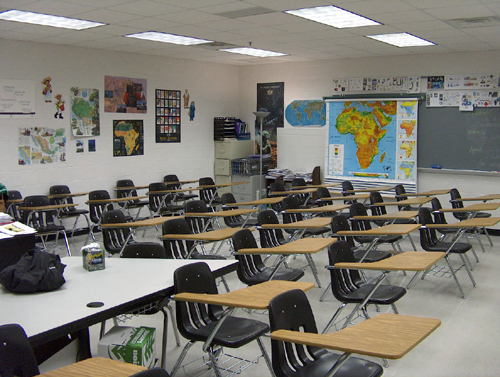
Inevitably in these discussions, however, someone dares mention the unspeakable truth: that when it comes to bilingualism, not all Canadians are born equal. Conservative MP and possible leadership candidate Michelle Rempel Garner suggested bilingualism was a matter of “privilege” — “either financially, access to education, or time required.” And the National Post‘s Alberta correspondent, Tyler Dawson, ventured that in most of the country, “it’s nearly impossible to finish high school fluent in French and English.”
These perfectly axiomatic observations produced the standard anecdote-laden blowback. Author and journalist Chris Turner boasted of his “fully bilingual” 14-year-old daughter, the beneficiary of “a public immersion program in Calgary, which is maybe Canada’s least French city.” Former Parliament Hill reporter Rosemary Thompson claimed “there are many options in the public school system for French” in “rural Alberta.” Shannon Phillips, the Alberta NDP’s finance critic, claimed “there is French-language education of high quality almost everywhere in this country.”
It’s frankly bizarre that Canadians who think bilingualism is important could be this misinformed. The internet is full of studies, papers and op-eds from the Official Languages Commissioner, the Senate’s Standing Committee on Official Languages and the various chapters of Canadian Parents for French bemoaning widespread lack of access to French-as-a-second-language education.
The numbers back that up. Never mind graduating high school bilingual; the vast majority of Canadian students aren’t even studying it after elementary. In the 2017-18 school year, excepting Quebec and New Brunswick, just under 50 per cent of Canadian Grade 9 students were in either core French or French immersion programs. In Grade 10 that was down to 22 per cent; in Grade 11, 15 per cent; in Grade 12, eight per cent.
Where French classes are available, moreover, they are too often shoddy. A 2017 report from the Senate committee noted a study finding 78 per cent of teachers teaching core French in British Columbia “felt uncomfortable speaking French.” Why would parents waste their kids’ time with that, if competent instruction in Mandarin, Punjabi or Japanese were available down the hall? (French isn’t mandatory at any grade level in British Columbia.)
As for French immersion, demand vastly outstrips supply. Lotteries and waiting lists are de rigueur. The Senate report told of cases where parents “camp(ed) outside schools to enrol their child in French immersion programs (for) up to four days.” Most parents have to go to work.
Back in 2015, Aaron Hutchins covered this for Maclean’s:
French-English bilingualism rates may be on the decline in Canada, but when it comes to getting kids into French immersion programs — which have come to be seen by many as a free private school within the public school system — there is nothing, it seems, that a Canadian parent won’t do.
Alyvia is now in Grade 2 and loving French classes. But for every student who graduates from French immersion, there’s at least one other who has been bumped out of the program and put into an English-only stream that many deem inferior. Well-meaning parents may feel that French immersion is the answer for every child. In reality, it has become an elitist, overly restrictive system, geared to benefit a certain type of student.
[…]
“What a program like French immersion does is it siphons off those kids who have engaged families who make sure the kids do all their homework,” says Andrew Campbell, a Grade 5 teacher in Brantford, Ont. “Because of that, the opportunities in the rest of the system are affected because the modelling and interaction those kids would provide for the other kids in the system aren’t there anymore.”
The immersion program creates division along lines of gender, social class and special needs students, wrote a 2008 study from the Canadian Research Institute for Social Policy looking at French immersion in New Brunswick. Girls are more likely to be enrolled than boys and the French stream has fewer kids in need of extra help. All things being equal in New Brunswick, every class — French or English — should have 3.4 students with special needs. But when a school offered French immersion, the average number of special needs students ending up in the English stream was 5.7. This kind of segregation is not unique to that province.
The richer the family, the more likely their kids will be immersed in French, according to figures from a Toronto District School Board study. In 2009-10, 23 per cent of all French immersion students came from families in the top 10 per cent of income. Meanwhile, only four per cent of French immersion students came from the bottom 10 per cent of family income.
“The program is open to lots of people, but it gets whittled down,” says Nancy Wise, a French immersion educational consultant and former special education teacher in the York region, just outside Toronto. “If you can’t cut it, you probably fall into one of these categories: [you’re a] new Canadian, this is your third language, you’ve got some learning challenges, or there’s a socio-economic factor. They jump on it in the schools and show them the door — and it’s just not right.”
Comments Off on French immersion is still like private school for the middle class
Cutting a Dovetail by Eye | Paul Sellers
Paul Sellers
Published 7 Nov 2019Set up a board and start freestyle dovetailing to see just how close you can get to the one in seven ratio. You might surprise yourself. Watch Paul give it a go!
If you’re near to the one in seven ratio, then practice will give you muscle memory you can ultimately depend on. If you are way out, then just keep trying until you are close. It’ll come.
——————–
Want to learn more about woodworking?
https://woodworkingmasterclasses.com for weekly project episodes
https://commonwoodworking.com for step-by-step beginner guides and courses
https://paulsellers.com/ for Paul’s latest ventures on his blog

Comments Off on Cutting a Dovetail by Eye | Paul Sellers
QotD: Nutrition and aging from the middle ages to the 20th century
Those of us who didn’t grow up in the first world (second and a half at best!) know d*mn well how people lived in the 20th century, with nominal indoor plumbing, but without a lot of changes of clothing, washers and dryers, heated houses, etc. (The trains from the mountains, where it was colder, in winter, smelled like a mix of VERY unwashed bodies and wood smoke. You never forget that smell.) The particular etc. I have in mind in this case is the lack of refrigeration.
Look Portugal is fertile enough that a careful planner can feed a family on less than an acre of land (particularly the area I come from, apparently one of the oldest inhabited in Europe and whose name in Indo European translated as wet and fertile valley.) I’m sure the food available to us in the 20th century when you could buy improved seeds, etc. was way better than the one available to people in the middle ages.
But … yeah, no. We didn’t eat like people do now. Not even close. For one, meat was fairly scarce. We mostly ate fish (thanks to the coasts!) and vegetables. Oh, and we were relatively lucky. A lot of people got almost no protein. The most common lunch among the people was the “isca” that is a bit of fried flour which might or might not have a couple of shreds of codfish in it. The very poor ate a lot of vegetable soup.
And again this was in the 20th century. In winter vegetables more or less vanished and the only fruit available were the wrinkled, flour-like apples.
Christmas treats were dried fruit, not cookies. It tells you all you need to know. (Yes, it was healthy too except for the scarce protein for most people, but no one said the way we eat is particularly healthy.)
I’m not complaining, but I know that we ate massively better than my parents did in the mid 20th century. And they ate better than their parents. So, kindly, do not tell me some serf on a medieval estate got his choice of however many flavors of ice-cream.
Sure the very rich ate well, if sometimes oddly. But the average person, not so much.
And as for living as long? Yeah, no.
I still remember vividly — as do many our age — when 60 was old, 70 VERY old.
Yes, I’m concerned for my parents in their late eighties. And that’s, as my dad puts it “after 80, that’s old”. But it would surprise no one is they lived another 10 years. Because a lot of people do now. And now one makes a big deal of people who turn 100. (Even though 114 seems to be, a little inexplicably, our hard drop-off limit.)
And besides we KNOW. Shakespeare at 58 — two years older than I’m now — was “very old.”
So kindly take your “people lived about as long,” fold it all in corners and put it where the sun don’t shine, even if people in the arctic in winter will be a little puzzled by it.
Sarah Hoyt, “What if I Told You?”, According to Hoyt, 2019-11-05.
Comments Off on QotD: Nutrition and aging from the middle ages to the 20th century
January 29, 2020
The Roman Triumph
Historia Civilis
Published 5 Dec 2018Patreon | http://patreon.com/HistoriaCivilis
Donate | http://www.paypal.com/cgi-bin/webscr?…
Merch | http://teespring.com/stores/historiac…
Twitter | http://twitter.com/HistoriaCivilis
Website | http://historiacivilis.comSources:
The Jewish War, by Josephus: https://amzn.to/2Ub8JRq
Parallel Lives: The Life of Pompey, by Plutarch: https://amzn.to/2BP6vjq
Parallel Lives: The Life of Julius Caesar, by Plutarch: https://amzn.to/2BP6vjq
Letters to Atticus, Book 13, by Cicero: https://amzn.to/2Qa9SKv
The History of Rome, Book 1, by Livy: https://amzn.to/2PbCkX7
Natural History, Book 3, by Pliny the Elder: https://amzn.to/2PhX3Za
Roman History, Book 43, by Cassius Dio: https://amzn.to/2PgJ99C
Roman History, Book 44, by Cassius Dio: https://amzn.to/2PgJ99C
Roman History, Book 53, by Cassius Dio: https://amzn.to/2Pgdq8Q
Roman History, Book 54, by Cassius Dio: https://amzn.to/2Pgdq8Q
Roman History, Book 55, by Cassius Dio: https://amzn.to/2Pgdq8Q
The Life of Julius Caesar, by Suetonius: https://amzn.to/2QuwULE
The Fasti Triumphales http://www.attalus.org/translate/fast…
The Roman Triumph, by Mary Beard: https://amzn.to/2UafiDD
Rubicon, by Tom Holland: https://amzn.to/2E0x5HX
Cicero, by Anthony Everitt: https://amzn.to/2PgJJnO
Julius Caesar, by Philip Freeman: https://amzn.to/2DXortC
Caesar: Life of a Colossus, by Adrian Goldsworthy: https://amzn.to/2Q9rtlO
The Rise of Rome, by Anthony Everitt: https://amzn.to/2PeSEGw
“Circum Metas Fertur: An Alternative Reading of the Triumphal Route,” by Ida Östenberg. From Historia: Zeitschrift für Alte Geschichte, vol. 59, no. 3: https://bit.ly/2SpsjHJMusic:
“Honey,” by Nctrnm
“XY,” by Nctrnm
“The House Glows (With Almost No Help),” by Chris Zabriskie
“Hallon,” by Christian BjoerklundWe are a participant in the Amazon Services LLC Associates Program, an affiliate advertising program designed to provide a means for us to earn fees by linking to Amazon.com and affiliated sites.
Comments Off on The Roman Triumph
Charles Stross on “reality” TV
I don’t watch much TV at all … after catching the Superbowl on Sunday, I may not turn on the TV until the NFL preseason gets underway in the summer, so my impressions of reality TV offerings are gathered second- or third-hand at best. That said, I do recall watching some very early reality TV in the late 80s or early 90s (the one that comes to mind was something like “take a bunch of urban Brits and dump them in a recreated iron age village”). As Charles Stross describes the current crop of shows, I’m very confident that I’ve missed absolutely nothing over the decades:
I watch as little television as I can, and most of it by accident.
Whenever I do catch an eyeful, it usually consists of one of three things: a talking heads news channel, organized sportsball, or a Reality TV show. The first I try to ignore (they’re usually triangulated on the tabloid newspapers with added eye candy, then dumbed down: as information sources this century, TV news channels are useless). The sportsball I leave to my spouse (who is prone to lecturing me interminably about Manchester City). But the latter phenomenon — Reality TV — has all the grisly attention-grabbing potential of a flaming school bus careening out of control into a public execution: I basically have to leave the room in a hurry to avoid having my eyeballs sucked right out of my head by the visual media equivalent of internet clickbait.
What makes Reality TV shows so addictive?
The sector is dominated by a couple of competing recipes. As in so many mature markets, there’s an 80/20 split between a dominant incumbent and an insurgent that isn’t quite successful enough to overturn a monopoly but is too tenacious to die. Think Android/iPhone, or car/pick-up truck (that latter died about a decade ago in the US).
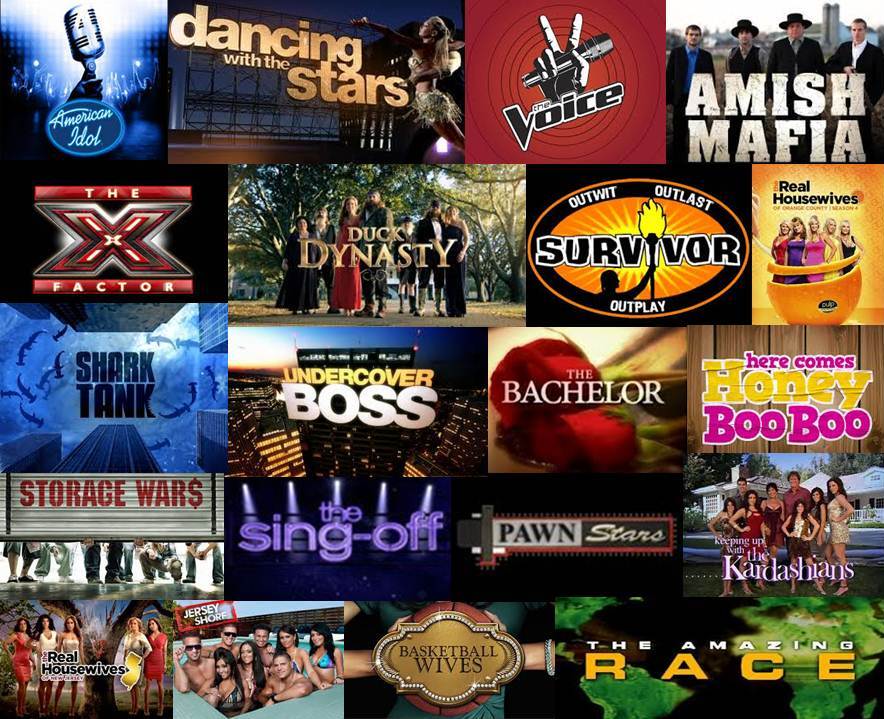
In the case of rTV shows, the 20% insurgent is about people demonstrating competence. Mythbusters was the classic competence-porn show (although it deteriorated into the explosion-of-the-week club after a few seasons): using science!!! and workshop/lab work to evaluate the plausibility of urban legends. Other competence rTV shows include: a team of dudes acquire a car wreck and restore it to good-as-new condition, a former special forces soldier/scout troop leader is dumped on a desert island and demonstrates survival skills, and so on.
But the other 80% of rTV shows are incompetence porn.
Incompetence porn Reality TV, as pioneered by Big Brother, usually aims to get the audience to laugh at or mock the participants in a contest designed to plumb the depths of humiliation. Instead of dropping a fit expedition leader on a desert island, the show dumps a bunch of washed-up B-list celebs in a wilderness of mosquitos and no soft toilet paper. Or perhaps it’s a bunch of Armani-suited sociopaths in a boardroom where they’re expected to pitch business start-up proposals at a washed-up B-list business celeb like Alan Sugar (or, in the American version of The Apprentice, a certain mobbed-up New York property speculator with shady Russian banking connections). Back-stabbing is a given in the celebrity/sociopath driven variant of rTV, as incompetent contestants are shoved out of the show at every episode until only the most obliviously egocentric remains.
(Note that the survivor selection criterion isn’t “competence”, be it at wilderness survival or boardroom brown-nosing: it’s entertainment value. Because these shows, despite the name, aren’t about reality, they’re showbiz.)
But these aren’t the worst.
Comments Off on Charles Stross on “reality” TV
Patton | Based on a True Story
The Cynical Historian
Published 30 Aug 2018It’s finally time to review Patton! I have a lot to say about it, as you can tell by the time stamp. Way back when I started the Based on a True Story series, the second episode was a bit about what I considered to be the best ones — and this movie was at the top. I love this film, but for more reasons than most of you could know — so this is going to be a deep dive into the film and its subject matter. It’s ambiguous, narrowed in subject, and just a perfect examination of the man. As the New Yorker said during the movie’s release, “[Patton] appears to be deliberately planned as a Rorschach test.”
————————————————————
references:
Brian Sobel and George S. Patton IV, The Fighting Pattons (Westport: Praeger Publishing, 1997). https://amzn.to/2u2WI57MacMillan Compendium, America at War (New York: Macmillan Library Reference, 1994), 726-727. https://amzn.to/2m6o4mx
John Keegan and Andrew Wheatcroft, Who’s Who in Military History: from 1453 to the Present Day, (London: Routledge, 1996), 231-232. https://amzn.to/2KWv53M
Paul Fussell, “Patton”, in Past Imperfect: History According to the Movies, ed. Mark Carnes (New York: Henry Holt and Company, 1996). https://amzn.to/2J5iGc7
Jonathan Vankin and John Whalen, Based on a True Story: Fact and Fantasy in 100 Favorite Movies, (Chicago: A Cappella Books, 2005), 269-272. https://amzn.to/2m2sSZQ
Frank Sanello, Reel v. Real: How Hollywood Turns Fact into Fiction (Lanham: Taylor Trade Publishing, 2003), 177-181. https://amzn.to/2N072BB
http://www.historynet.com/patton-film…
https://dailyhistory.org/How_accurate…
http://jbell2ja.umwblogs.org/history-…
https://www.theguardian.com/film/2008…
https://www.moviemistakes.com/film960
Special thanks to my mom, dad, and uncle for making sure this was accurate and providing media for the end bit, especially my father (Mark Hall-Patton), who proofread the script as well.
————————————————————
Support the channel through Patreon:
https://www.patreon.com/CynicalHistorian
or pick up some merchandise at SpreadShirt:
https://shop.spreadshirt.com/cynicalh…LET’S CONNECT:
https://discord.gg/Ukthk4U
https://twitter.com/Cynical_History
————————————————————
Wiki:
Patton is a 1970 American epic biographical DeLuxe Color war film about U.S. General George S. Patton during World War II. It stars George C. Scott, Karl Malden, Michael Bates and Karl Michael Vogler. It was directed by Franklin J. Schaffner from a script by Francis Ford Coppola and Edmund H. North, who based their screenplay on the biography Patton: Ordeal and Triumph by Ladislas Farago and Omar Bradley’s memoir A Soldier’s Story. The film was shot in 65 mm Dimension 150 by cinematographer Fred J. Koenekamp and has a music score by Jerry Goldsmith.Patton won seven Academy Awards, including Best Picture, Best Director and Best Original Screenplay. Scott won Best Actor for his portrayal of General Patton, but declined to accept the award. The opening monologue, delivered by George C. Scott as General Patton with an enormous American flag behind him, remains an iconic and often quoted image in film. The film was successful, and in 2003, Patton was selected for preservation in the United States National Film Registry by the Library of Congress as being “culturally, historically or aesthetically significant”. The Academy Film Archive preserved Patton in 2003.
————————————————————
#History #Patton #Review #Accuracy #GeneralPatton

Comments Off on Patton | Based on a True Story
“CanCon” rules for internet streaming services will be “inevitable”
Yes, the federal government is serious about extending the moronic “Canadian content” regime to internet streaming companies (like Netflix). Canadians are too blind to be allowed to select all of their own viewing without the paternal hand of government jiggling those choices in a politically desired direction, as Michael Geist explains:

Later this week, a government appointed panel tasked with reviewing Canada’s broadcast and telecommunications laws is likely to recommend new regulations for internet streaming companies such as Netflix, Disney, and Amazon that will include mandated contributions to support Canadian film and television production. In fact, even if the panel stops short of that approach, Canadian Heritage Minister Steven Guilbeault and Canadian Radio-television and Telecommunications Commission chair Ian Scott have both signalled their support for new rules with Mr. Guilbeault recently promising legislation by year-end and Mr. Scott calling it inevitable.
My Globe and Mail op-ed notes that the new internet regulations are popular among cultural lobby groups, but their need rests on a shaky policy foundation as many concerns with the fast-evolving sector have proved unfounded.
[…]
Third, the not-so-secret reality of the Canadian system is that foreign location and service production and Canadian content are frequently indistinguishable. Qualifying as Canadian requires having a Canadian producer along with meeting a strict point system that rewards granting roles such as the director, screenwriter, lead actors, and music composer to Canadians.
Yet this is a poor proxy for “telling our stories”. The rules mean foreign companies can never produce Canadian content leading to the absurd outcome that revivals of Canadian programs such as Trailer Park Boys and Degrassi will not meet the qualification requirements if Netflix is the sole funder and producer. Moreover, programs such as The Handmaid’s Tale may be based on a Margaret Atwood novel, but using one of Canada’s best known novelists as the source doesn’t count in the Canadian points system.
So what is Canadian? A quick scan of Canadian Audio-Visual Certification Office data turns up Blood and Fury: America’s Civil War, The Kennedys, Murder in Paradise, Natural Born Outlaws, Who Killed Ghandi?, and dozens of other programs that are Canadian in regulation-only. Further, there are also “co-productions”, in which treaty agreements deem predominantly foreign productions such as The Borgias or Vikings as Canadian.
Comments Off on “CanCon” rules for internet streaming services will be “inevitable”
M20A1B1 Super Bazooka – It’s a Super Bazooka. Need I Say More?
Forgotten Weapons
Published 28 Oct 2017Sold for $1,380 (deactivated).
The US was one of the few major military powers that went into World War II without a substantial infantry antitank weapon. Most countries had an antitank rifle of some sort, but the US just had some marginal antitank rifle grenades. That was rectified in late 1942 when the M1 Rocket Launcher — aka the Bazooka — was introduced. Using a 2.36″ shaped charge warhead, it was able to penetrate about 4.7 inches of armor, which was effective through most of the war. A larger version went into development in 1943 though, because it was clear that the M1 would soon become obsolete.
The 3.5″ M20 Super Bazooka was adopted in late 1945 and put into production in 1948, with its first combat use coming in the Korean War. It was much more powerful, capable of penetrating 11 inches of armor plate. The launcher itself weighed just 13 pounds, with each rocket adding another 8.9 pounds. This, and the updated M20A1, would serve as the main US infantry antitank weapon until replaced by the 90mm recoilless rifle in the 1960s.
http://www.patreon.com/ForgottenWeapons
Cool Forgotten Weapons merch! http://shop.bbtv.com/collections/forg…
If you enjoy Forgotten Weapons, check out its sister channel, InRangeTV! http://www.youtube.com/InRangeTVShow
From the comments:
WeirdHarold49
2 years agoSince Ian forgot and Wikipedia knows:
Origin of the “bazooka” name
Shortly after the first prototype launcher and rockets had been tested by firing into the Potomac River, Skinner and Uhl took the new system to a competitive trial of various types of spigot mortar (at that time seen as the most promising way to deliver a shaped charge), which was held at the Aberdeen Proving Ground in May 1942. The new rocket launcher scored several hits on a moving tank while the five different mortars achieved none; this was a considerable achievement since the launcher’s sights had been fabricated that morning from a wire coat hanger. The trial was being watched by various senior officers, among them the Chief of Research and Engineering in the Ordnance Department, Major General Gladeon M. Barnes. Barnes was delighted by the performance of the system and fired it himself, but commented: “It sure looks like Bob Burns’ bazooka”. Bob Burns was a popular radio comedian, who used a novelty musical instrument which he had devised himself and called a “bazooka”.

Comments Off on M20A1B1 Super Bazooka – It’s a Super Bazooka. Need I Say More?
QotD: The Golden Gate Bridge
Tim Cavanaugh, “Why Kill Yourself…”, Reason Hit and Run, 2005-01-20.
Comments Off on QotD: The Golden Gate Bridge
January 28, 2020
Classics Summarized: The Iliad
Overly Sarcastic Productions
Published 23 Jan 2015I’m baaaaaaaack!
This one took me a while. The reason why should be pretty obvious. Enjoy your adorable murderfest.
Troy may be a good movie (though I have my doubts) but it sure as hell isn’t the Iliad.
PATREON: https://www.patreon.com/user?u=4664797
Find us on Twitter @OSPYouTube!

Comments Off on Classics Summarized: The Iliad
QotD: Drinking and driving
According to BTLPTP, “Drinking drivers are responsible for one-quarter of all people killed on Ontario roads.” In other words, only 75 percent of Ontario traffic fatalities are the work of sober people. Either we have more drunks in Ontario or our sober drivers are better drivers than Britain’s. [Where “one in seven of all deaths on the road involve drivers who are over the legal limit.”]
Now, despite the damning evidence in these brochures that sober people are causing carnage on our roads, the people who know what’s good for us are busy trying to lower the legal blood alcohol limit. Early in 2001 the Quebec government announced that it was lowering the limit from eighty milligrams to fifty, throwing in a complete drinking ban for professional drivers — cabbies, bus drivers, and the like. This last measure was a reaction to — well, nothing at all. Were drunk ambulance drivers creating havoc on the roads of Quebec? No. But it gave the government of Quebec the appearance of having taken a strong stand on something. Predictably, the Ontario government immediately made noises about following suit.
Nicholas Pashley, Notes on a Beermat: Drinking and Why It’s Necessary, 2001.
Comments Off on QotD: Drinking and driving
January 27, 2020
Tank Chats #60 Valentine Bridgelayer | The Tank Museum
The Tank Museum
Published 23 Nov 2018The Valentine Bridgelayer, on a Valentine Mark I hull, was developed in 1943 during the Second World War. They were largely superseded by Churchill Bridgelayer, although some Valentine Bridgelayers were used in north-west Europe from 1944 to 1945, because the supply of Churchill Bridgelayers could not meet demand.
Support the work of The Tank Museum on Patreon: ► https://www.patreon.com/tankmuseum
Visit The Tank Museum SHOP: ► https://tankmuseumshop.org/
Twitter: ► https://twitter.com/TankMuseum
Tiger Tank Blog: ► http://blog.tiger-tank.com/
Tank 100 First World War Centenary Blog: ► http://tank100.com/ #tankmuseum #tanks #tankchats

Comments Off on Tank Chats #60 Valentine Bridgelayer | The Tank Museum
QotD: The radicalization of the Republican Party
And this all happened along with the rise of Fox News. Many political scientists have noted that Fox News and the right-wing media ecosystem had an effect on the Republican Party that is unlike anything that happened on the left. It rewards more extreme statements, more grandstanding, more outrage. Many people will point out that the media leans left overall, and that the Democrats did some polarizing things, too. Fair enough. But it is clear that Gingrich set out to create a more partisan, zero-sum Congress, and he succeeded. This more combative culture then filtered up to the Senate, and out to the rest of the Republican Party.
Jonathan Haidt, “The Age of Outrage: What the current political climate is doing to our country and our universities”, City Journal, 2017-12-17.
Comments Off on QotD: The radicalization of the Republican Party
January 26, 2020
Trudeau’s illogical gun ban will do nothing to reduce violent crime
It will, on the other hand, infringe the rights of law-abiding Canadians and encourage otherwise law-abiding people to disobey the law. It won’t take a single lethal weapon out of the hands of criminals — because they’re already violating the laws that are in force today and won’t be deterred by yet another token rule they won’t obey. At the Post Millennial, D.J. Sumanik explains why the proposed ban is wrong:

Restricted and prohibited weapons seized by Toronto police in a 2012 operation. None of the people from whom these weapons were taken was legally allowed to possess them.
Screen capture from a CTV News report.
I chose the AR-15 for that video because it is the singular most demonized firearm on the planet. The rifle is used to scare uninformed citizens daily. Yet the same rifle has never been used for murder by a legal gun owner in Canada.
In fact, it’s only been used for murder one time in our country over the last 50 years by a gang. A far cry from the narrative that “assault weapons” are lurking in every corner of Canadian society waiting to murder our children.
Justin Trudeau is claiming this firearm and others like it are so deadly, so dangerous, and so extreme that they must be confiscated from every licensed Canadian gun owner across the country. But with only one murder in 50 years, and the gun almost certainly still being the murderer’s hand regardless if there was a ban, the numbers simply don’t add up. In fact they barely register. Semi-auto rifles are extremely rare for use in Canadian gun homicide […] handguns are the firearm of choice for most shootings. Semi-autos only make up a small percentage of rifles and shotguns in our country. So how does this add up to a federal ban costing $600 million in taxpayer money?
Short answer: It doesn’t.
Canada has roughly 2.2 million licensed gun owners who are monitored DAILY by RCMP for red flags. Most people don’t know that. It’s called continuous eligibility screening. If you step out of the line with the law, the cops show up and take your guns.
Some further thoughts.
If only 5 percent of Canadian gun owners were out there shooting up the streets, we’d have 110,000 deaths on our hands annually. According to StatsCan, 2018 left Canada with 249 tragic gun murders. The vast majority were by gangs fighting over drugs in urban centers. Even if you were to incorrectly assume every one of those shootings was a legal gun owner and not a gang member (yeah right) it means 99.9998868% of us pose no threat to society. Can you think of another demographic with that kind of track record? I certainly can’t.
Now, the lives lost in those incidents are valuable. 249 Canadian families are feeling daily pain. Something needs to change. Gang warfare can’t go unchecked. But to punish millions of innocent Canadians who hold such an excellent track record will not help. There’s a very simple truth in all of this: Taking my firearms away in the Yukon will not prevent gang homicide in Toronto.
Furthermore, we as Canadians don’t discriminate against entire groups of people based on the actions of a few bad eggs. For instance, we don’t blame all Muslims in Canada for the actions of 9/11. How is it acceptable for Justin Trudeau to punish gun owners across Canada for gang violence?
Comments Off on Trudeau’s illogical gun ban will do nothing to reduce violent crime


