Quotulatiousness

July 10, 2020

Upon a Sleepless Isle by Andrew Fidel Fernando

Filed under: Asia, Books — Tags: , , — Nicholas @ 03:00

In The Critic, A.S.H. Smyth reviews this Gratiaen Prize-winning travel memoir of Sri Lanka:

Having returned to Sri Lanka from school and uni in New Zealand, and spent a few years consolidating a career in cricket journalism, AFF (as he is also known) decides to tour the country on a solo self-educational adventure – not least because big chunks of it were basically off-limits during his upbringing, thanks to the 26-year civil conflict with the LTTE/”Tamil Tigers”.

The book begins:

    The smiles in Sri Lanka are as wide as the horizon, visitors say. The nation’s treasures are as boundless as the ocean, many report. But never let it be forgotten that the ineptitude of the government is as vast and as awesome as the heavens …

At this point, our intrepid would-be traveller just wants the ID card to which he, as a Sri Lankan citizen, is well entitled. But there follow six pages of brutal savaging of the bureaucracy (remember that bear scene in The Revenant …?), and then short treatises on social scandal, unsustainable development, the traffic, tourists, and the glossy travel magazines that bring them here. And we haven’t even left Colombo yet.

But he gets out and about soon enough, and in a punchy 240-page mildly-memoirish survey, utilising pretty much every form of transport barring the bullock cart, he sees the elephant herds at Minneriya, climbs the 1/8-Mile-High Club that was the rock fortress of Sigiriya, explores a highwayman’s hideout near Kandy, the surreal Lego-ish hill town of Nuwara Eliya, the tea estates, the ancient waterworks around Polonnaruwa, the temple-strewn Anuradhapura, the otherworldly Mannar island, the Southern beach towns, and on through the flattened LTTE heartlands up into Jaffna. (Cricket nerds, be advised: there is no cricket in this book.)

In all, his journey amounts to about seven or eight weeks on the road, and, Sri Lanka being a fairly small place, it’s worth noting that his is an entirely normal tourist itinerary – a visitor with even a mid-level budget and modest accommodation demands could cover all of it in a three-week holiday – just done more slowly and, crucially, with better local “access”, specifically linguistic.

Like all good “city-bred pansy” writer types, he gets into scrapes (a tuktuk crash), and makes a fool of himself (“helping” some fishermen), and the whole thing is narrated with much irreverent humour and ironic side-eye, topped off with a great line in exaggerated street-chat/aunty gossip and the occasional murderously-deft flick of the stiletto: “if you had the financial means to inspire a government worker out of apathy …” – all facets not exactly over-represented in Sri Lankan English letters (non-fiction, anyway. Novels are full of it).

Nor is his apparent economy dependent on foreknowledge on the reader’s part (aided certainly by the author’s more-or-less ingenuous exploratory conceit). Whatever learning AFF was already armed with here is lightly worn, he works in the historical and social context of each leg of the journey with a minimum of fuss (a certain journalistic pragmatism and efficiency paying off there, one assumes), and there’s really no time at which you feel he’s had to throw his bucket down the well of Wikipedia to get through to the end of a particular informative sub-section.

That said, considerable amounts of this material were new to me (which, in a whistlestop tour of the entire island, is not saying nothing). His trip to the abandoned rebel-descendant jungle village of Kumana is as intriguing as the details of the 1817 Uva rebellion are grim. And in particular, I’m grateful to him for introducing me to the life and works of the archaeologist John Still, and clueing me up as to the origin of the phrase “white elephant”: “after the Thai royal practice of presenting unpopular courtiers with tuskers that were ruinously expensive to maintain.”

Alas for AFF – the curse of writing first-draft history – Upon a Sleepless Isle also offers (or rather offered) two major hostages to fortune. Namely, his repeated and overt enthusiasm about the transition away from the family-oriented regime of Mahinda Rajapaksa (2005-15), and his vocal sympathy and support for Sri Lanka’s peaceful and tolerant Muslim minority. Only three months after the book was published, a series of domestic Muslim terrorist attacks took place around the country, killing hundreds, which in turn helped to usher in the present (Gotabaya) Rajapaksa government. These have aged almost so badly that it adds a certain piquancy to read his already-blasted hopes of just two years ago.

English Civil War | 3 Minute History

Filed under: Britain, History, Military — Tags: , , , , , — Nicholas @ 02:00

Jabzy
Published 9 Mar 2015

I cut quite a bit out to save time. I’ll try and do a video on the Protectorate or the Restoration soon.

QotD: Marcus Aurelius for the incel demographic

We all know that barren cat ladies of both sexes and all 57+ genders are the poz’s storm troopers. As I’ve written here probably ad nauseam, you can’t beat Trigglypuff, because — and only because — she has more free time than you do. You have a life, a job, a family, hobbies, interests. She doesn’t. Hell, you have to sleep sometime. She doesn’t, because the Trigglypuffs of the world are by definition jacked up on powerful prescription psychotropics. You just can’t beat that.

You just can’t beat it. But […] Our Thing has lots of potential Trigglypuffs. They’re called “incels,” I’m informed, but whatever the nomenclature, there are a lot of young single dudes out there who while away their pointless hours with video games and porn. Those are our potential storm troopers (it’s a metaphor, FBI goons). Why haven’t we weaponized them? (again: metaphor).

It’s probably as simple as giving them a role model. It goes without saying that your “incel” (or whatever) was raised by women. Even if there was a biological male living in the house during his childhood, it’s a thousand to one he was just that: a cohabiting male. Certainly not a father. And even if by some miracle he was, the poor guy can only do so much. You’ve got to let your sons out of the house sometime … where they’ll immediately be snapped up by the sour, shrieking cat ladies that control our educational system, our media, our professions, our culture. Both the son and his father have to be very, very hard-headed, and not a little lucky, to escape a poz infection …

… and that’s the best-case scenario. For the worst, look around — you’ll find incel and his soy-enfeebled twerp of a “male” parent cowering under the bed, scrubbing their hands and faces with Lysol, while Mommy scolds and caterwauls on Facebook.

There are role models out there, y’all. Stoicism in general, and Marcus Aurelius in particular, have seen a real upswing in popularity, especially on “Game” sites. This doesn’t represent a return to a Classical education; it’s that Marcus seems to be — Marcus is — a worthwhile role model for a fatherless boy. Strip out the “credits” at the start of book one and a few of the denser, more philosophical passages, and you could subtitle Meditations “how to drop your nuts on the carpet and act like a fucking man for once.” Loosely translated, of course.

Severian, “Be a Centurion!”, Rotten Chestnuts, 2020-04-07.

July 9, 2020

Making a turning saw with Uri Tuchman

Filed under: Tools, Woodworking — Tags: , — Nicholas @ 06:00

Rex Krueger
Published 8 Jul 2020

Cut beautiful curves by hand with this lovely turning saw.

See Uri’s video here: https://youtu.be/SVso-KE_mRc
(more…)

Ethiopian Emperor Haile Selassie died in 1974, but was toppled in 2020

Filed under: Africa, Britain, History, Italy, Religion — Tags: , , , , — Nicholas @ 05:00

In The Critic, James Jeffrey explains the late emperor and how he fell off his plinth in June of this year:

The Ethiopian emperor has fallen in leafy Wimbledon, but there’s more to his demise than meets the eye

In 1936, Emperor Haile Selassie gave a rousing speech to the League of Nations reminding it of its moral duty to defend Ethiopia which was being invaded and ransacked by Italy.

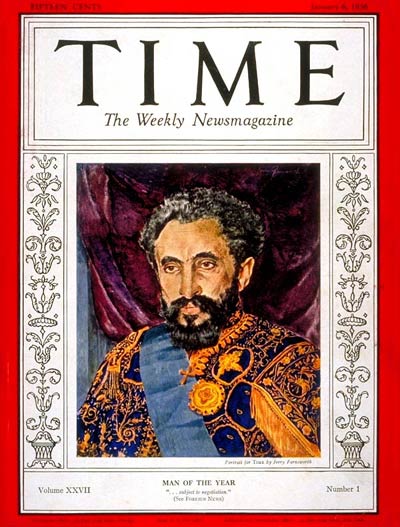
Despite the League entirely ignoring him — thereby dooming its proclaimed doctrine of collective security, which in turn hastened World War II — Selassie’s impressive performance recounting “the tortures inflicted upon the Ethiopian people,” while imploring the League to save Ethiopia from the “bonds of vassalship,” cemented his iconic international reputation. Time magazine named him “Man of the Year.”

All the while, and for the span of his reign from 1930 to 1974, the vast majority of Ethiopians lived in feudal conditions, knowing only vassalship. An authoritarian ruler, Selassie’s full title was “By the Conquering Lion of the Tribe of Judah, His Imperial Majesty Haile Selassie I, King of Kings, Lord of Lords, Elect of God.”

Among his retinue of lackies there was a man whose sole job was to wipe away the urine of the imperial dog Lulu after it relieved itself on the shoes of visiting dignitaries, according to Ryszard Kapuscinski’s The Emperor: Downfall of an Autocrat (a hotly contested point and accused of being invented by Kapuscinski; it sounds entirely plausible to me having seen how much Ethiopians, especially those with wealth and power, go in for being kowtowed to and waited on).

Civil rights and political rights were little known during Selassie’s reign — cementing an oppressive trend that continues to this day in Ethiopia — while he failed to adequately respond to famines in 1958 and 1973, dooming tens of thousands, possibly hundreds of thousands, of Ethiopians to their deaths.

Yet for all his faults — based on what I know and saw in Ethiopia, and on my gut instinct, I’ve never been a fan — Selassie opened up Ethiopia to the world and pushed to develop it. He introduced the country’s first written constitution in 1931, which while heavily in favour of the nobility, envisaged a transition to democracy. In Ethiopia today, he remains an inspiring figure for many, his image appearing all over the place. Among the Rastafari movement, Selassie is revered by many as the returned messiah and God incarnate.

Last week a group of Ethiopian diaspora in London got to give their judgement on the so-called Negusa Nagast, King of Kings, whose dynastic lineage reportedly stretched back to Emperor Menelik I, the offspring of King Solomon and the Queen of Sheba. In a Wimbledon park on June 30, a bust of Selassie was destroyed by a group of around 100 people, leaving a shattered plinth surrounded by rubble.

Top Secret U-2 Spy Planes | The Cuban Missile Crisis I Day 02

TimeGhost History
Published 8 Jul 2020

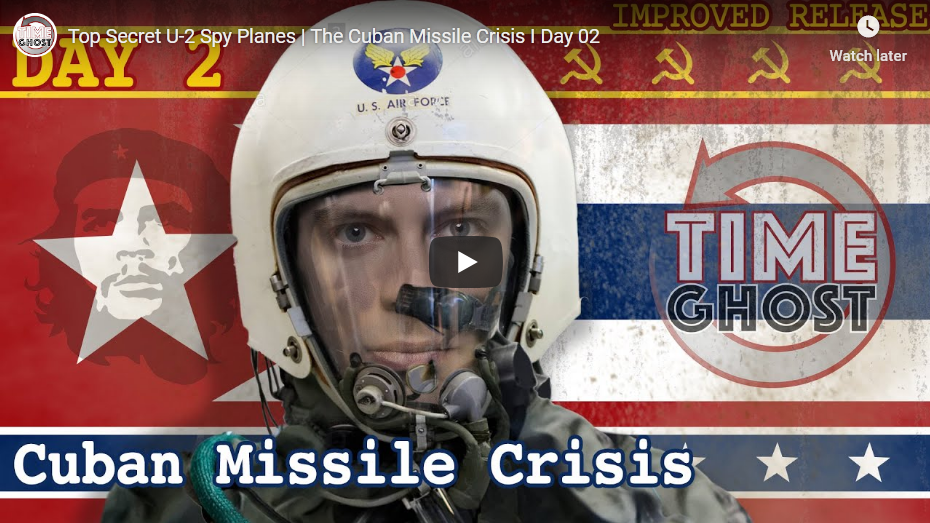
On October 17th, 1962, the U2 Dragon Lady spy plane yield more alarming pictures of Cuban missile sites and President Kennedy is urged to restrain his dogs of war.

Join us on Patreon: https://www.patreon.com/TimeGhostHistory

Hosted by: Indy Neidell
Written by: Spartacus Olsson
Director: Astrid Deinhard
Producers: Astrid Deinhard and Spartacus Olsson
Executive Producers: Astrid Deinhard, Indy Neidell, Spartacus Olsson, Bodo Rittenauer
Creative Producer: Joram Appel
Post-Production Director: Wieke Kapteijns
Research by: Spartacus Olsson
Edited by: Daniel Weiss
Sound design: Marek Kaminski

Colorizations:
– Carlos Ortega Pereira (BlauColorizations) – https://www.instagram.com/blaucoloriz…

Soundtracks from Epidemic Sound:
– “Cold Eyes” – Elliot Holmes
– “Car Chase in Virginia” – White Bones
– “Moving to Disturbia” – Experia
– “Zoot Suit” – Elliot Holmes
– “From the Depths” – Walt Adams
– “When They Fell” – Wendel Scherer

Archive by Screenocean/Reuters https://www.screenocean.com.

A TimeGhost chronological documentary produced by OnLion Entertainment GmbH.

Austin Bay on how Malawi fixed a crooked election

Filed under: Africa, Government, Law — Tags: , , , — Nicholas @ 03:00

At Strategy Page, Austin Bay recounts the efforts to overturn an election that was clearly fraudulent in the small land-locked African country of Malawi:

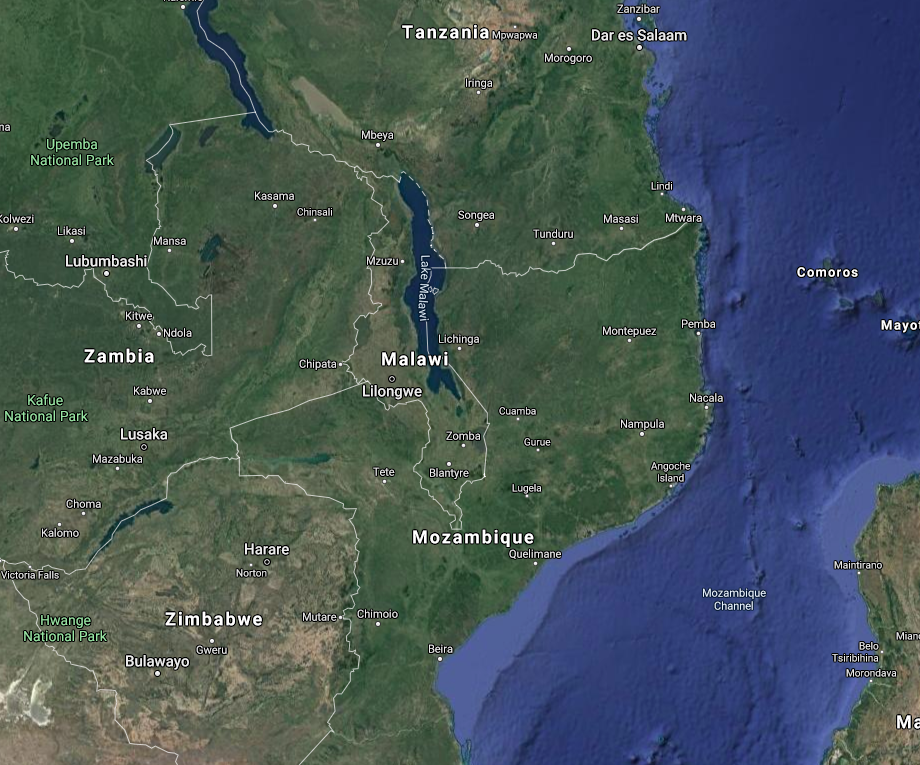
Malawi and surrounding countries in southern Africa.
Satellite image via Google Maps.

Since he retained the title of president, Mutharika believed he controlled the guns and the courts. The protests would fade.

He learned otherwise. Malawi’s military, the Malawi Defense Force (MDF) and the Malawi Police Service, watched the country carefully, keeping order but not taking sides. The opposition appealed to Malawi’s highest court, the Constitutional Court. MDF commanders made it clear their service, as protectors of the constitution, would protect the court’s justices and respect the court’s decision.

Ignoring intimidation and enticements (Mutharika offered splendid early retirement), in February 2020, the court annulled the 2019 results as tainted and ordered new elections in June 2020 — the Fresh Presidential Election.

MDF soldiers prepared to secure the FPE’s paper ballots. In a June briefing, an MDF general told motorists to “maintain a distance of at least one kilometer between them and vehicles” carrying ballots. Enter the security zone and get a warning, but “(overtly) following the vehicles can lead to loss of lives if one is not careful.” Beware political thugs — MDF weapons prevent ballot hijacking.

Voters need protection, too. On June 22, MDF soldiers in central Malawi detained 16 men local citizens identified as intruders seeking to disrupt the vote. When police officers questioned the 16, they admitted they worked for Mutharika’s governing Democratic Progressive Party.

On June 23, opposition leader Chakwera received 60% of the vote in the untainted do-over. Mutharika got 38%. An MDF contingent immediately began protecting Chakwera.

Voting irregularities occur in mature democracies. However, election fraud does severe harm to developing nations where the disenfranchised have little or no systemic recourse and free speech is risky. Hope and nascent civil participation give way to wrath and alienation, which produce violence and destruction, not stability and economic development.

In the six decades since decolonization, election rigging by sub-Saharan Africa elites has stunted economic and social progress in nations whose people deserve far better (see Ghana). Disregard of constitutional law and violent intimidation of opposition voters by the party in power inevitably accompany election theft. Burundi and Congo are examples.

Victorian Banana Candy or why does banana candy typically not taste like bananas?

Filed under: Food, History — Tags: , — Nicholas @ 02:00

Lofty Pursuits
Published 8 Aug 2017

Buy these candies at http://www.pd.net

Watch banana candies being formed by hand using Victorian techniques and discover why banana candy typically does not taste like what you think a banana should taste like. Also explore the weirdness of the banana plant and the correct way to peel a banana.

More information about the Secret Life of the City Banana:
https://www.nytimes.com/2017/08/04/ny…

Banana with seeds photo By Warut Roonguthai – Own work, CC BY-SA 3.0, https://commons.wikimedia.org/w/index…

QotD: Energy return on energy invested

The modern world stands on a cairn built by energy conversions in the past. Just as it took many loaves of bread and nosebags of hay to build Salisbury Cathedral, so it took many cubic metres of gas or puffs of wind to power the computer and develop the software on which I write these words. The Industrial Revolution was founded on the discovery of how to convert heat into work, initially via steam. Before that, heat (wood, coal) and work (oxen, people, wind, water) were separate worlds.

To be valuable, any conversion technology must produce reliable, just-in-time power that greatly exceeds — by a factor of seven and upwards — the amount of energy that goes into its extraction, conversion and delivery to a consumer. It is this measure of productivity, EROEI (energy return on energy invested), that limits our choice.

By the EROEI criterion, biofuel is a disastrous choice, requiring about as much tractor fuel to grow as you get out in ethanol or biodiesel. Wind power has a low energy return, because its vast infrastructure is energetically costly and needs replacing every two decades or so (sooner in the case of the offshore turbines whose blades have just expensively failed), while backing up wind with batteries and other power stations reduces the whole system’s productivity. Geothermal too may struggle, because turning warm water into electricity entails waste. Solar power with battery storage also fails the EROEI test in most climates. In the deserts of Arabia, where land is nearly free, sunlight abundant and gas cheap, solar power backed up with gas at night may be cheap.

Fossil fuels have amply repaid their energy cost so far, but the margin is falling as we seek gas and oil from tighter rocks and more remote regions. Nuclear fission passes the EROEI test with flying colours but remains costly because of ornate regulation.

Matt Ridley, “Nuclear Fusion Could Provide Unlimited Energy”, HumanProgress, 2018-04-09.

July 8, 2020

The Luftwaffe and Barbarossa – WW2 Special

Filed under: Germany, History, Military, WW2 — Tags: , , , — Nicholas @ 06:00

World War Two
Published 7 Jul 2020

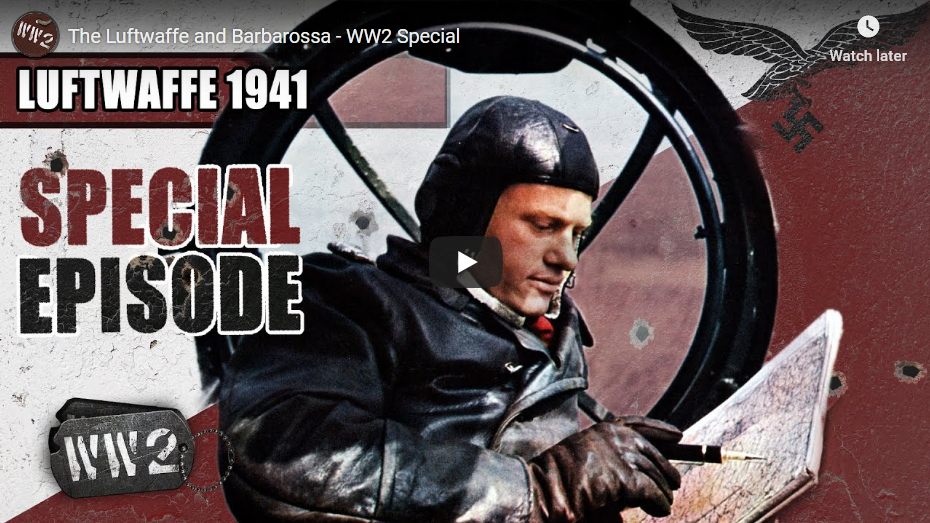
Unlike the German Army, which for the most part had many idle months over the past year, the German Air Force — the Luftwaffe — has seen constant action in the Battle of Britain and the Mediterranean Theater. How did this affect its preparations and plans for the invasion of the Soviet Union?

Join us on Patreon: https://www.patreon.com/TimeGhostHistory
Or join The TimeGhost Army directly at: https://timeghost.tv

Follow WW2 day by day on Instagram @World_war_two_realtime https://www.instagram.com/world_war_two_realtime
Between 2 Wars: https://www.youtube.com/playlist?list…
Source list: http://bit.ly/WW2sources

Written and Hosted by: Indy Neidell
Director: Astrid Deinhard
Producers: Astrid Deinhard and Spartacus Olsson
Executive Producers: Astrid Deinhard, Indy Neidell, Spartacus Olsson, Bodo Rittenauer
Creative Producer: Joram Appel
Post-Production Director: Wieke Kapteijns
Research by: Indy Neidell
Edited by: Mikołaj Cackowski
Sound design: Marek Kamiński
Map animations: Eastory (https://www.youtube.com/c/eastory)

Colorizations by:
Jaris Almazani (Artistic Man), https://instagram.com/artistic.man?ig…
Dememorabilia – https://www.instagram.com/dememorabilia/
Cassowary Colorizations https://www.flickr.com/photos/cassowa…

Sources:
Messerschmitt Bf 110, courtesy ElwoodB https://commons.wikimedia.org/wiki/Fi…
Junkers_Ju_87B-2_Stuka by Kaboldy https://commons.wikimedia.org/wiki/Fi…
Bundesarchiv
IWM E 3064E, E 3066E, A 4153

Soundtracks from the Epidemic Sound:
Phoenix Tail – “At the Front”
Johannes Bornlof – “The Inspector 4”
Reynard Seidel – “Deflection”
Philip Ayers – “Trapped In A Maze”
Rannar Sillard – “March Of The Brave 4”
Fabien Tell – “Last Point Of Safe Return”
Johan Hynynen – “Dark Beginning”

Archive by Screenocean/Reuters https://www.screenocean.com.

A TimeGhost chronological documentary produced by OnLion Entertainment GmbH.

Harry Potter fandom, Millennials, and the continued decline of traditional religious beliefs

Filed under: Books, Britain, Religion, USA — Tags: , , , , , , , , — Nicholas @ 05:00

In The Critic, Oliver Wiseman talks to Tara Isabella Burton about her book Strange Rites:

J.K. Rowling’s Harry Potter books have been pivotal for many Millennials in encouraging them to move away from traditional religious beliefs.

I want to start with Harry Potter, which is — perhaps surprisingly — central to the argument you make in the book, so, as an introduction to your broader thesis, what does Harry Potter have to do with America’s new religions?

It’s funny. When Harry Potter first came out in the nineties, there was a flurry American Christian voices saying “This book promotes witchcraft. There’s going to be a whole new religious movement devoted to Harry Potter books.” In the way they meant it, that was absolutely not true. But I think that there was something to it in terms of an inadvertent change to the religious landscape.

What Harry Potter did, or, more accurately, what it was the canary in the coal mine for, was a transformation, linked to the rise of at-home internet access, in how we talk about cultural properties andhow we relate to cultural properties. The transition to an internet space defined by user-generated content and what is often called participatory culture coincided with the publication of the Harry Potter books.

Between the first Harry Potter book’s release in 1997 and the fourth book’s publication in 2000 we went from 19 million Americans with internet access to more than 100 million. It’s that backdrop that really explains the shift. You did have fan cultures before. There were Star Wars conventions, for example, but there was quite a high bar to entry. You had to get on the right mailing list and it was done via post. It was quite a lot of work. You couldn’t just log on and enter a community, which is really what could happen with Harry Potter fandom.

J.K. Rowling was also one of the first major writers to openly accept and embrace fan fiction. So what you ended up seeing was something that started with Harry Potter fandom that then became an element of fandom online more broadly which in turn, I would argue, shaped millennial-and-younger culture. It was this idea that you weren’t just a reader of consumer of texts. It wasn’t just a top down hierarchical thing. Instead, mediated through the anonymity of the internet, you a kind of tribalism from talking to people in different geographical areas as well as things like fan fiction and later meme culture that meant you could change, shift, reimagine a text in your own way. And what’s so interesting about that is that sensibility — the sensibility that we have not only the right but the responsibility, the authority as consumers to also be creators, to rework ideas outside of existing texts — has spilled over into all aspects of our political life and of our religious life. And that is really something that is the product of user generated content and the internet.

To bring this to religion more specifically, 36 per cent of Americans born after 1985 are religiously unaffiliated, compared to about 23 per cent of the national average. That’s a huge generational shift in religious affiliation and organisation. That is not the same thing as saying that these are atheists or that these people are not religious. Some 72 per cent of them say they believe in some sort of higher power. About 17 per cent say they believe in the Judaeo-Christian God.

We’re in a religious or spiritual landscape that privileges mixing and matching, and unbundling — a bit of tarot here, a bit of meditation there. And a resistance to institutional and authoritative declarations in terms of how religion should be practised is very much something that has its roots in internet culture, of which Harry Potter was a forerunner.

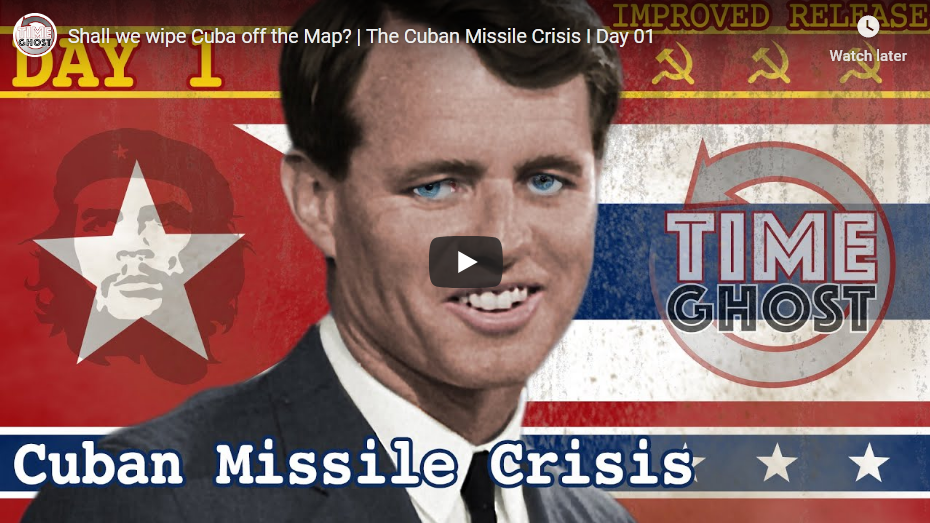
Shall we wipe Cuba off the Map? | The Cuban Missile Crisis I Day 01

TimeGhost History
Published 7 Jul 2020

On 16 October 1962, the Cuban Missile Crisis begins. President Kennedy assembles his advisors in EXCOMM to find an adequate response to the threat posed by Soviet nuclear missiles on Cuba.

Join us on Patreon: https://www.patreon.com/TimeGhostHistory

Hosted by: Indy Neidell
Written by: Spartacus Olsson
Director: Astrid Deinhard
Producers: Astrid Deinhard and Spartacus Olsson
Executive Producers: Astrid Deinhard, Indy Neidell, Spartacus Olsson, Bodo Rittenauer
Creative Producer: Joram Appel
Post-Production Director: Wieke Kapteijns
Research by: Spartacus Olsson
Edited by: Daniel Weiss
Sound design: Marek Kaminski

Colorizations:
– Carlos Ortega Pereira (BlauColorizations) – https://www.instagram.com/blaucoloriz…

Soundtracks from Epidemic Sound:
– “Cold Eyes” – Elliot Holmes
– “Zoot Suit” – Elliot Holmes
– “Juvenile Delinquent” – Elliot Holmes
– “Scope” – Got Happy
– “Nightclub Standoff” – Elliot Holmes
– “When They Fell” – Wendel Scherer

Archive by Screenocean/Reuters https://www.screenocean.com.

A TimeGhost chronological documentary produced by OnLion Entertainment GmbH.

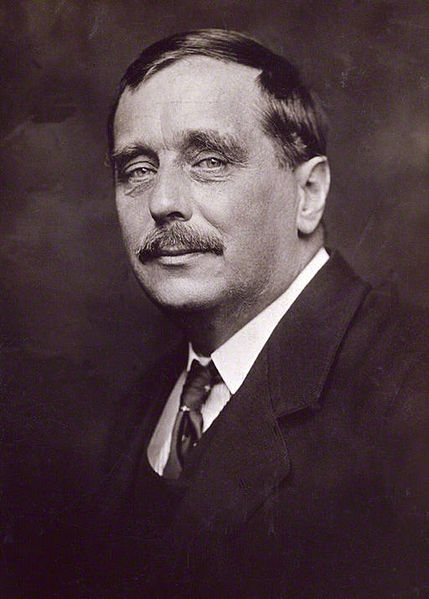
H.G. Wells, fortunately for his reputation, is mostly remembered for his science fiction writings

Filed under: Books, Britain, History, Politics, WW2 — Tags: , , , , , , — Nicholas @ 03:00

I was well into my twenties before I found out that H.G. Wells the science fiction writer was only a small slice of his career. I picked up a one-volume edition of his Outline of History, but it didn’t seem to have the same interest for me that The War of the Worlds or The Time Machine had done (and honestly, it was Jeff Wayne’s musical interpretation of War of the Worlds that pushed me to read any of his writing). His analysis of the events of his day fell well short of his reputation, as George Orwell pointed out:

In March or April, say the wiseacres, there is to be a stupendous knockout blow at Britain … What Hitler has to do it with, I cannot imagine. His ebbing and dispersed military resources are now probably not so very much greater than the Italians’ before they were put to the test in Greece and Africa.

    The German air power has been largely spent. It is behind the times and its first-rate men are mostly dead or disheartened or worn out.

    In 1914 the Hohenzollern army was the best in the world. Behind that screaming little defective in Berlin there is nothing of the sort … Yet our military “experts” discuss the waiting phantom. In their imaginations it is perfect in its equipment and invincible in its discipline. Sometimes it is to strike a decisive “blow” through Spain and North Africa and on, or march through the Balkans, march from the Danube to Ankara, to Persia, to India, or “crush Russia”, or “pour” over the Brenner into Italy. The weeks pass and the phantom does none of these things — for one excellent reason. It does not exist to that extent. Most of such inadequate guns and munitions as it possessed must have been taken away form it and fooled away in Hitler’s silly feints to invade Britain. And its raw jerry-built discipline is wilting under the creeping realisation that the Blitzkrieg is spent, and the war is coming home to roost.

These quotations are not taken from The Cavalry Quarterly but from a series of newspaper articles by Mr. H. G. Wells, written at the beginning of this year and now reprinted in a book entitled Guide to the New World. Since they were written, the German Army has overrun the Balkans and reconquered Cyrenaica, it can march through Turkey or Spain at such time as may suit it, and it has undertaken the invasion of Russia. How that campaign will turn out I do not know, but it is worth noticing that the German general staff, whose opinion is probably worth something, would not have begun it if they had not felt fairly certain of finishing it within three months. So much for the idea that the German Army is a bogey, its equipment inadequate, its morale breaking down, etc. etc.

What has Wells to set against the “screaming little defective in Berlin”? The usual rigmarole about a World State, plus the Sankey Declaration, which is an attempted definition of fundamental human rights, of anti-totalitarian tendency. Except that he is now especially concerned with federal world control of air power, it is the same gospel as he has been preaching almost without interruption for the past forty years, always with an air of angry surprise at the human beings who can fail to grasp anything so obvious.

[…]

Mr. Wells, like Dickens, belongs to the non-military middle class. The thunder of guns, the jingle of spurs, the catch in the throat when the old flag goes by, leave him manifestly cold. He has an invincible hatred of the fighting, hunting, swashbuckling side of life, symbolised in all his early books by a violent propaganda against horses. The principal villain of his Outline of History is the military adventurer, Napoleon. If one looks through nearly any book that he has written in the last forty years one finds the same idea constantly recurring: the supposed antithesis between the man of science who is working towards a planned World State and the reactionary who is trying to restore a disorderly past. In novels, Utopias, essays, films, pamphlets, the antithesis crops up, always more or less the same. On the one side science, order, progress, internationalism, aeroplanes, steel, concrete, hygiene: on the other side war, nationalism, religion, monarchy, peasants, Greek professors, poets, horses. History as he sees it is a series of victories won by the scientific man over the romantic man.

In addition to being a surprisingly consistent one-note proponent of the same solution to every problem, he was, as Michael Coren relates, a nasty piece of work in his personal life:

There’s an anecdote concerning H.G. Wells that rather exemplifies his character. A London theatre in the 1920s. Wells was approached by a nervous, eager young fan. “Mr. Wells, you probably don’t remember me”, he said, holding out his hand. “Yes, I bloody do!” replied Wells, and rudely turned his back. Personality aside, Wells also embraced anti-Semitism, racism, and social engineering, and in this atmosphere of outrage and iconoclasm it’s surprising that he hasn’t been more targeted for symbolic removal. Then again, perhaps not. Because while the undoubtedly gifted author said and believed some dreadful things he was also a man of the left. And when it comes to cancel culture, socialism is the ultimate prophylactic.

George Bernard Shaw said of his nastiness and his ugly views, “Multiply the total by ten; square the result. Raise it again to the millionth power and square it again; and you will still fall short of the truth about Wells — yet the worse he behaved the more he was indulged; and the more he was indulged the worse he behaved.”

In fact, for much of the 20th-century eugenics was a creature of the left as much if not more than the right. Shaw himself, Sydney and Beatrice Webb and many other left-wing intellectuals were convinced that for the lives of the majority to improve there had to be a harsh control of the minority.

Wells argued that the existing social and economic structure would collapse and a new order would emerge, led by “people throughout the world whose minds were adapted to the demands of the big-scale conditions of the new time … a naturally and informally organized educated class, an unprecedented sort of people.” The “base,” the class at the bottom of the scale, “people who had given evidence of a strong anti-social disposition,” would be in trouble. “This thing, this euthanasia of the weak and the sensual, is possible. I have little or no doubt that in the future it will be planned and achieved.” He wrote of, “boys and girls and youth and maidens, full of zest and new life, full of an abundant joyful receptivity … helpers behind us in the struggle.” Then chillingly, “And for the rest, these swarms of black and brown and dingy white and yellow people who do not come into the needs of efficiency … I take it they will have to go.”

US M2/M2A1 Flamethrower

Filed under: History, Military, USA, Weapons, WW2 — Tags: , , , — Nicholas @ 02:00

Forgotten Weapons
Published 12 May 2016

http://www.patreon.com/ForgottenWeapons

After a dismal first attempt at designing a flamethrower (the M1) in 1941, the US Chemical Corps along with several universities and industrial partners put in a lot of research to develop a more usable and effective flamethrower. The result was the M2, which went into production in early 1944. It would prove to be an exceptionally effective weapon in the island-hopping campaign towards the end of the war.

The M2 was arguably the best flamethrower fielded by any military during the war, with a number of excellent design features. These included:

* A constant-pressure regulator to ensure that the range stayed the same from the first to the last shot of a tank of fuel
* An on/off main valve easily accessible to the operator
* A supremely waterproof and reliable pyrotechnic cartridge ignition system
* An auto-shutoff valve which sealed at the nozzle, preventing dribble (and cutting off fuel flow should the operator lose control of the weapon)

The M2 would see service into the Vietnam War even as its successor the M9 was being issued. It was a truly outstanding design, and remains viable to this day.

Thanks to Charlie Hobson for showing us the unit and teaching me to fire it, and also thanks to Adaptive Firearms for letting us use their range facilities!

You can find Charlie Hobson’s book, US Portable Flamethrowers here:
http://amzn.to/1SP9yc5

QotD: Telecommuting in the post-Wuhan Coronavirus era

Filed under: Business, Economics, Health, Quotations, Technology, USA — Tags: , , , , — Nicholas @ 01:00

People are being stampeded into telecommuting. The thing is, dear media, once that happens, you can’t put it back in the bottle.

For two decades now, telecommuting and distance learning have been perfectly possible and even, frankly, beneficial. What has held it back is managers afraid they don’t know how to manage at a distance, corporations who think mega cubicle farms are a great way to be “important” and a general sense that only us, ne’er do wells, work in our pajamas on the sofa (I’ll have you know I’m wearing a sweatshirt and yoga pants. Never mind.)

If the panic lasts even two months (and the press will ensure it does before it collapses under its own weight) that reluctance to telecommute is going to be blown to hell. For one, once workers taste of THAT fruit, just anecdotally, 90% of them LOVE it. (The other 10% have very annoying children or spouses.)

And in the wake of the financial panic and wobbles, corporations are going to notice that they spend a lot less money when most of the workers work from home. At some point, they’ll also realize that they need much smaller facilities if they need facilities at all. And hey, money.

This will cause all sorts of other things, which I think will lead within two years to an exodus from the big cities everyone has crammed into because it’s where the jobs are. I think in turn this will lead to a world the social engineers really don’t like.

Sarah Hoyt, “Unintended Consequences”, According to Hoyt, 2020-03-12.

« Newer PostsOlder Posts »

Powered by WordPress