Quotulatiousness

December 15, 2020

Port wine

Filed under: Britain, Europe, History, Wine — Tags: , , — Nicholas @ 03:00

In The Critic, Henry Jeffreys considers how Port became so popular in Britain:
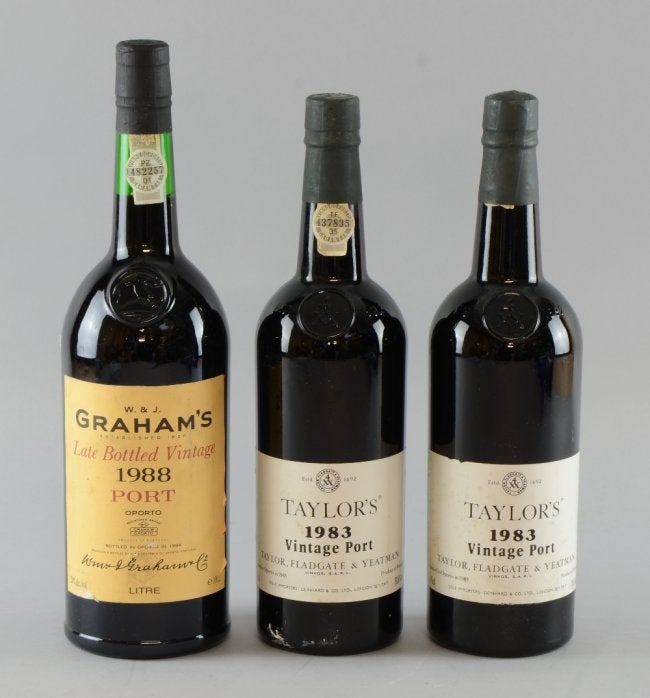
Before there were package holidays, there was port. This was the way British people shivering on their cold wet island could get a bit of sunshine. It’s a miracle drink, preserving the heat of the Douro valley in liquid form for decades ready to be uncorked and spread cheer. And don’t we need cheer more than ever at the moment? According to Adrian Bridge, CEO of Taylor’s, British port sales were booming during lockdown.

Our love affair with port goes back a long way but the funny thing is that when wines from Portugal began to arrive in large quantities in the 17th century, people hated it. Port was a necessity because Bordeaux, the traditional wine of choice, had become expensive due to the high duty put on it from Cromwell’s time onwards. Early port was a rough sort of wine, often transported down to the city of Oporto in pig skins and adulterated with brandy and elderberries. A poem from 1693 by Richard Ames captures the mood of the times: “But fetch us a pint of any sort, Navarre, Galicia, anything but Port.” The Scots in particular were not impressed. After the Act of Union, wine drinking took on political connotations with Jacobites drinking claret and Hanoverians port. This antipathy to port still persists: a few years back, I sat next to a Scottish woman at dinner who complained that the English only drank port to thumb their noses at Napoleon.

It took a long time before port became the sweet smooth consistent wine that we know and love today. In fact, until 1820 it would usually have been dry. The vintage that year was so hot that the grapes contained more sugar than the yeasts could deal with, so brandy was added while the wines were still fermenting. It was such a success in Britain that this became the model for how port was made in future. Not everyone was keen, however. Baron Forrester, the man who first mapped the course of the Douro river, was still complaining about the new-fangled sweet port right into the 1850s. The current winemaker at Taylor’s, David Guimaraens, reckoned this year’s heatwave had more than a little in common with the 1820 vintage.

Port really is perfectly designed to deal with this heat. Even with modern temperature-controlled fermentation it can be difficult making balanced dry wine with such ripe grapes whereas adding brandy during the fermentation preserves the fresh fruit flavour. Furthermore, heavier wines can be blended with lighter vintages to make tawny ports which are aged for years in wood with oxygen contact. Tawnies were traditionally enjoyed more by the Portuguese but they’re becoming increasingly popular over here. They’re mellow, pale and nutty from oxygen contact, quite different to vintage wines. The great thing is they are ready to drink, no ageing or decanting needed, and an open bottle will last for months. In fact, wood-aged ports are practically indestructible, I’ve had examples from 1937 and 1863 that were both fresh and vigorous.

Grapes with the right balance can go into vintage releases, though a declared vintage from 2020 does look unlikely. The discovery of how well port aged in bottles was probably an accident. A well-off individual would buy a pipe of port (around 500 litres) and have it bottled and corked. It was discovered that after years in bottle, something sublime happened to the fiery tannic wine. A vintage from a declared year will need at least 20 years. Happily, for the impatient among us, ready to drink vintage ports aren’t terribly expensive when you compare with the price of say, mature Bordeaux or Burgundy.


History Summarized: Spread of Christianity

Overly Sarcastic Productions
Published 10 Jan 2017

Things I learned when making this video: 1) when your script goes beyond 4 single-spaced pages, you’re heading into the danger zone 2) Gregorian Chants are awesome and you should totally listen to them, 3) editing always takes longer than you’d hope 4) self care is huffing frankincense for breakfast lunch and dinner and single-handedly sacking a levantine city!

Have a question about something I mentioned, or maybe something I might have left out? Leave it down below and I’ll do my best to respond!

PATREON: https://www.patreon.com/OSP

MERCH LINKS:
Shirts – https://overlysarcasticproducts.threa…
All the other stuff – http://www.cafepress.com/OverlySarcas…

Find us on Twitter @OSPYouTube!
twitter.com/OSPyoutube

QotD: TedX

Filed under: Britain, Humour, Politics, Quotations — Tags: , , , , , — Nicholas @ 01:00

TedX, a non-official version of the sanctimonious ubiquitous Ted Talks programme, is more inclusive than official Ted because they have added a random letter ‘X’ into the word. On an unrelated note, TedX London have decided to start using the totally real and not at all just made-up word “Womxn” when they talk about members of the female persuasion, chapettes, fillies, gels, y’know, charming, delightful, non-men – them. They told a normal person bigot on Twitter who asked why they were using the word “womxn”: “No, that’s not a typo: ‘womxn’ is a spelling of ‘women’ that’s more inclusive and progressive. The term sheds light on the prejudice, discrimination, and institutional barriers womxn have faced, and explicitly includes non-cisgender women.” But are TedX really the inclusive group they claim to be? Trans Media Watch, a pro-trans lobby group told the BBC it would never use the word Womxn: “because we feel it’s important for people to recognise that trans women are women. Trans women aren’t a special, separate category.” So it turns out “women” is the most inclusive term after all. If TedX London hasn’t been cancelled by the end of the week then Twitter’s not what it was.

David Scullion, “UN-Believable”, The Critic, 2020-09-09.

December 14, 2020

Hall Model 1819: A Rifle to Change the Industrial World

Forgotten Weapons
Published 7 Sep 2020

http://www.patreon.com/ForgottenWeapons

https://www.floatplane.com/channel/Fo…

Cool Forgotten Weapons merch! http://shop.bbtv.com/collections/forg…

John Hall designed the first breechloading rifle to be used by the United States military, and the first breechloader issued in substantial numbers by any military worldwide. His carbines would later be the first percussion arms adopted by any military force. Hall developed a breechloading flintlock rifle in 1811, had it tested by the military in 1818, and formally adopted as a specialty arm in 1819.

Hall’s contribution actually goes well beyond having a novel and advanced rifle design. He would be the first person to devise a system of machine tools capable of producing interchangeable parts without hand fitting, and this advance would be the foundation of the American system of manufacturing that would revolutionize industry worldwide. Hall did this work at the Harpers Ferry Arsenal, where he worked from 1819 until his death in 1841.

I plan to expand on the details of a variety of Hall rifle models in future videos, and today is meant to be an introduction to the system. Because it was never a primary arm in time of major war, Hall is much less well recognized than he should be among those interested in small arms history.

Contact:
Forgotten Weapons
6281 N. Oracle #36270
Tucson, AZ 85740

QotD: Goodhart’s law

Filed under: Bureaucracy, Business, Economics, Quotations — Tags: , , , — Nicholas @ 01:00

This is why planning an economy simply doesn’t work. Issue targets that must be hit and people game the system to hit the targets without actually doing the desired underlying thing. Or, as it is formally constituted:

    Any observed statistical regularity will tend to collapse once pressure is placed upon it for control purposes.

Or as it has been reformulated:

    Goodhart’s law is an adage named after economist Charles Goodhart, which has been phrased by Marilyn Strathern as: “When a measure becomes a target, it ceases to be a good measure.” One way in which this can occur is individuals trying to anticipate the effect of a policy and then taking actions which alter its outcome.

Set a target for tonnes of shoes and you get one tonne shoes. Set a target for 100 shoes and you get 100 left feet. Set a target for being on time and people fiddle their definition of time.

It is, by the way, entirely fine to insist that airlines play fair with telling us how long a flight will take. You said it will take 4 hours, then 4 hours should be about the time it takes. Yes, sure, we understand, airports, crowded places. Idiot passengers forget to board, luggage must be taken off. Winds vary, thunderstorms happen, French air traffic controllers actually turn up to work today, their one day in seven. Sure, there’re lots of variables. But if you say it’s about four hours then it should be about four hours. Great.

But to complain that they pad their number a bit is ludicrous. We’re holding their feet to the fire, insisting that an underestimate will lead to financial costs. Thus, obviously, they will overestimate. That’s not really even Goodhart’s Law, that’s just human beings. But then, as we know, those who would plan everything don’t deal well with the existence of people, do they?

Tim Worstall, “Goodhart’s Law Applies To Economies, To Everything – Why Not Scheduled Airline Flight Times?”, Continental Telegraph, 2018-08-27.

December 13, 2020

Hitler Declares War on the USA and the Jews – WW2 – 120 – December 12, 1941

World War Two
Published 12 Dec 2020

The Japanese launch attacks all over Southeast Asia and the Pacific, and launch a preemptive surprise attack on the American Pacific Fleet at Pearl Harbor. The war is suddenly much larger. In the USSR, the Germans find themselves now heavily on the defensive after the failure to take Moscow, while in North Africa, Erwin Rommel decides he must withdraw out of Cyrenaica to await reinforcements.

Join us on Patreon: https://www.patreon.com/TimeGhostHistory
Or join The TimeGhost Army directly at: https://timeghost.tv

Follow WW2 day by day on Instagram @ww2_day_by_day – https://www.instagram.com/ww2_day_by_day
Between 2 Wars: https://www.youtube.com/playlist?list…
Source list: http://bit.ly/WW2sources

Written and Hosted by: Indy Neidell
Director: Astrid Deinhard
Producers: Astrid Deinhard and Spartacus Olsson
Executive Producers: Astrid Deinhard, Indy Neidell, Spartacus Olsson, Bodo Rittenauer
Creative Producer: Maria Kyhle
Post-Production Director: Wieke Kapteijns
Research by: Indy Neidell
Edited by: Miki Cackowski
Sound design: Marek Kamiński
Map animations: Eastory (https://www.youtube.com/c/eastory)

Colorizations by:
Daniel Weiss
Adrien Fillon – https://www.instagram.com/adrien.colo…
Mikołaj Uchman
Carlos Ortega Pereira, BlauColorizations – https://www.instagram.com/blaucolorizations
Klimbim – https://www.flickr.com/photos/2215569…
Julius Jääskeläinen – https://www.facebook.com/JJcolorization/
Jaris Almazani (Artistic Man) – https://instagram.com/artistic.man?ig…

Sources:
IWM HU 56120, K 1385, HU 675, TR153, HU 81216, WPN 298
NARA
Bundesarchiv
Narodowe Archiwum Cyfrowe
Picture of a victim of starvation during the siege of Leningrad, courtesy of George Shuklin
Picture of Alfred Godwin-Austen, courtesy of Berserker276 https://commons.wikimedia.org/wiki/Fi…
Picture of Harold Cole, courtesy of Cumbria County Archives

Soundtracks from the Epidemic Sound:
Phoenix Tail – “At the Front”
Johannes Bornlof – “Deviation In Time”
Johan Hynynen – “Dark Beginning”
Rannar Sillard – “March Of The Brave 4”
Jo Wandrini – “To War!”
Reynard Seidel – “Deflection”
Wendel Scherer – “Defeated”
Johannes Bornlof – “Death And Glory 3”
Johannes Bornlof – “The Inspector 4”
Hakan Eriksson – “Epic Adventure Theme 3”
Skrya – “First Responders”
Bonnie Grace – “Imperious”

Archive by Screenocean/Reuters https://www.screenocean.com.

A TimeGhost chronological documentary produced by OnLion Entertainment GmbH.

From the comments:

World War Two
2 days ago (edited)
Five days ago, we covered the Japanese attacks on Pearl Harbor minute by minute in real time over five hours. If you missed that, then check out episode one right here, you’ll love it: https://www.youtube.com/watch?v=Joh2BXPsrXs&t=4s

NOTE: An error snuck through our controls regarding the Japanese casualties at Wake, we are working with YouTube to have it fixed before the video goes public. We apologize for this inconvenience.

Japan attacked a whole variety of places that day, launching massive offensives all over SE Asia and the Pacific. I’ll be covering them here weekly, of course, but for even more coverage, check out our day by day Instagram coverage of the war: https://www.instagram.com/ww2_day_by_day

Islamism and the French Republic

Filed under: France, Politics, Religion — Tags: , , — Nicholas @ 03:00

Niccolo Soldo talks to Pascal-Emmanuel Gobry about the rise of Islamism in France and the dangers it poses:

Brigitte Macron and Emmanuel Macron, 11 November, 2018.
Photo from the office of the President of Ukraine via Wikimedia Commons, CC-BY-4.0.

Islamism presents an existential threat to the French Republic. Statements are being made, positions are being taken, and the smell of action is in the air to counter this threat. Will we see a follow through from Macron?

Your guess is as good as mine. Macron is hard to predict. Although there are many reasons to be pessimistic, from French elites’ general lack of follow-through to Macron’s own (I believe, sincere and deeply-held) commitment to so-called “liberal values”, I will note that it hasn’t been all talk. BarakaCity (the biggest Muslim NGO in France) whose leaders happen to think ISIS is misunderstood, was shut down by executive decree. CCIF, a prominent “anti-islamophobia” organization, dissolved itself after the government announced its intent to shut it down. So an important Rubicon has been crossed, at least in principle: the French government has rhetorically and legally committed itself to combating not just those who engage in Islamist violence, but those who engage in Islamist advocacy and activism.

Can France’s secularism hold on in light of this challenge? Islamism is rather dynamic, and secularism lacks the ingredients for fanaticism that only the irrational are able to muster. In many countries it seems that only the elites are strongly-wedded to secularism.

I’ll let you in on a little secret we don’t share with foreigners: nobody in France believes in “laïcité“, it’s all a code to say we don’t like Islam. We have a freaking concordat, for crying out loud!

The entire notion that there is this specific French culture of “laïcité” that goes beyond institutional separation of church and state was a retcon invented in the 1980s when the Muslim population became too big to ignore. Nobody — nobody — is fooled that banning the hijab in public schools as well as “large ostentatious crosses” is a neutral secularist measure.

Today some people are claiming that wearing religious garb in the National Assembly is a breach of laïcité, but after the War the Canon Kir sat as a member of Parliament in his cassock for twenty years and nobody had any problem with it. (My favorite Kir story: during a late-night parliamentary session, a Communist deputy asked him “How come you believe in God, even though you’ve never seen him?” “What about my asshole? You’ve never seen it, yet you know it exists!”)

The fig leaf of laïcité was useful, and perhaps still is, as politically correct cover for defending French identity, but over time it will have to be discarded. There are signs that it’s beginning.

The bottom line is that France has always been assimilationist. The idea is that assimilation was invented by the Republic, but it’s not true. When Louis XIV invaded a province, he would create schools with scholarships for poor, talented youth from those places to “turn them into Frenchmen.” The self-conscious project of the French Kings was to restore the Roman Empire, and this bequeathed to us the Roman concept of citizenship: laws, language, and culture. This is what is behind “laïcité.” This assimilationism therefore has deep roots, and it is perfectly legitimate that we demand of immigrants that they assimilate into our culture, which is inescapably Judeo-Christian.

H/T to Colby Cosh for the link.

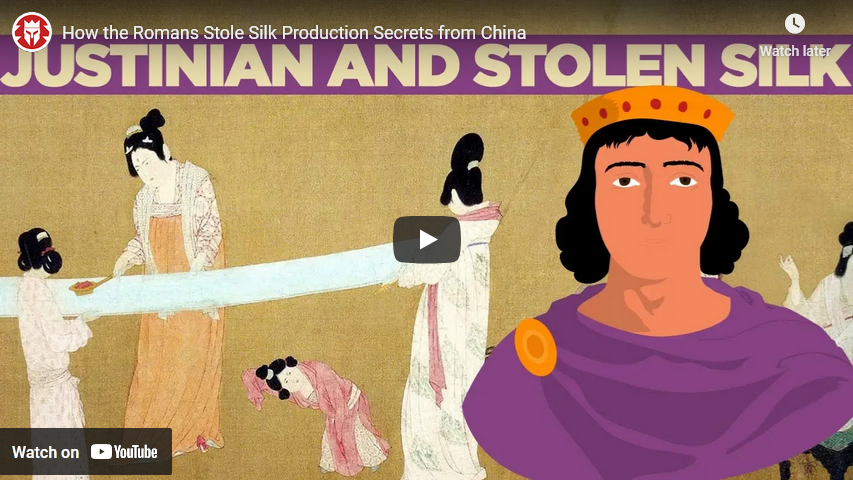
How the Romans Stole Silk Production Secrets from China

Filed under: China, Economics, History — Tags: , , , , , — Nicholas @ 02:00

Kings and Generals
Published 31 Jan 2019

Go to https://www.wix.com/KingsAndGenerals to get started on your website today!
Check out our new website at http://kingsandgenerals.org

Silk production was one of the biggest secrets of China and one of the most lucrative industries of the age. So it is not a surprise that the Roman emperor Justinian was eager to learn this secret. In this video we will discuss the start of the silk production, its importance and the story of how Justinian managed one of the first industrial thefts in history

Support us on Patreon: http://www.patreon.com/KingsandGenerals or Paypal: http://paypal.me/kingsandgenerals

Check out our Merch Store: teespring.com/stores/kingsandgenerals

We are grateful to our patrons and youtube members, who made this video possible: https://drive.google.com/open?id=1Xa-…

The video was made by our friend Cogito

This video was narrated by Officially Devin (https://www.youtube.com/user/Official…)

✔ Merch store ► teespring.com/stores/kingsandgenerals
✔ Podcast ► Google Play: http://bit.ly/2QDF7y0 iTunes: https://apple.co/2QTuMNG
✔ Twitter ► https://twitter.com/KingsGenerals
✔ Instagram ► http://www.instagram.com/Kings_Generals

Production Music courtesy of Epidemic Sound: http://www.epidemicsound.com
#Documentary #Justinian #Silk

QotD: The statistical “Rule of Silicone Boobs”

Filed under: Health, Humour, Quotations, Science — Tags: , , , , — Nicholas @ 01:00

If it’s sexy, it’s probably fake.

“Sexy” means “likely to get published in the New York Times and/or get the researcher on a TEDx stage”. Actual sexiness research is not “sexy” because it keeps running into inconvenient results like that rich and high-status men in their forties and skinny women in their early twenties tend to find each other very sexy. The only way to make a result like that “sexy” is to blame it on the patriarchy, and most psychologist aren’t that far gone (yet).

[…]

Anything counterintuitive is also sexy, and (according to Rule 2) less likely to be true. So is anything novel that isn’t based on solid existing research. After all, the Times is the newspaper business, not in the truthspaper one.

Finding robust results is very hard, but getting sexy results published is very easy. Thus, sexy results generally lack robustness. I personally find a certain robustness quite sexy, but that attitude seems to have gone out of fashion since the Renaissance.

Jacob Falkovich, “The Scent of Bad Psychology”, Put a Number On It!, 2018-09-07.

December 12, 2020

Pearl Harbor and the Global War Against Humanity – WAH 024 – December 1941, Part 1

Filed under: Europe, Germany, History, Japan, Military, USA, WW2 — Tags: , , , — Nicholas @ 04:00

World War Two
Published 11 Dec 2020

December 1941 marks the shift to a new chapter in the War Against Humanity. New fronts open up, exposing millions more to the horrors of war. Other developments continue their path of continuous escalation.

Join us on Patreon: https://www.patreon.com/TimeGhostHistory
Or join The TimeGhost Army directly at: https://timeghost.tv

Follow WW2 day by day on Instagram @ww2_day_by_day – https://www.instagram.com/ww2_day_by_day
Between 2 Wars: https://www.youtube.com/playlist?list…
Source list: http://bit.ly/WW2sources

Hosted by: Spartacus Olsson
Written by: Joram Appel
Director: Astrid Deinhard
Producers: Astrid Deinhard and Spartacus Olsson
Executive Producers: Astrid Deinhard, Indy Neidell, Spartacus Olsson, Bodo Rittenauer
Creative Producer: Maria Kyhle
Post-Production Director: Wieke Kapteijns
Research by: Joram Appel
Edited by: Karolina Dołęga
Sound design: Marek Kamiński

Colorized by:
– Daniel Weiss
– Julius Jääskeläinen – https://www.facebook.com/JJcolorization/
– Carlos Ortega Pereira, BlauColorizations – https://www.instagram.com/blaucolorizations
– Jaris Almazani (Artistic Man) – https://instagram.com/artistic.man?ig…
– Mikołaj Uchman
– Klimbim
– Spartacus Olsson

Sources:
– Yad Vashem: 76CO9, 3150-122, J3065-2, 85DO1, 1427 83, 1007_31,
– Narodowe Archiwum Cyfrowe
– National Archive NARA
– Library of Congress
– Bundesarchiv
– Berlin Gestapo Museum
– United States Holocaust Museum

Soundtracks from epidemic sounds:
– “Guilty Shadows 4” – Andreas Jamsheree
– “For the Many STEMS INSTRUMENTS” – Jon Bjork
– “Remembrance” – Fabien Tell
– “Not Safe Yet” – Gunnar Johnsen
– “London” – Howard Harper-Barnes
– “Moving to Disturbia” – Experia

Archive by Screenocean/Reuters https://www.screenocean.com.

A TimeGhost chronological documentary produced by OnLion Entertainment GmbH.

From the comments:

World War Two
3 hours ago
Before we get comments about the countries currently participating in World War Two: in December 1941 there are more countries that are still neutral than we list here, but that won’t last, or as Sparty said these are the ones that will REMAIN neutral. They are without a doubt not at war, not occupied, and not in a state of war. All the other ones are – more or less. Mongolia? Has been in a de-facto state of war with Japan since the Manchurian incident. Ethiopia and Iraq? Both occupied, or at least on the lines of contested territory. The South and North American states? They will mostly enter the war later – but we’d argue that already now the Panama declaration ties them to each other to an extent that the fate of the “neutrals” has been complicated by the countries joining the war in December ’41. Now that you know our reasoning behind this, we encourage you to offer any alternative or additional thoughts on this in the comments.

“Canada’s party system has long been an outlier that has baffled political scientists”

Filed under: Cancon, Environment, History, Politics — Tags: — Nicholas @ 03:00

Ben Woodfinden emerges from a pre-winter hibernation to mull on how environmental issues intersect with regional and linguistic issues in a uniquely Canadian way that does not match how these issues play out in other countries:

“2019 Canadian federal election – VOTE” by Indrid__Cold is licensed under CC BY-SA 2.0

… if you want to understand how democratic politics work, you have to begin with the premise that voters and electoral coalitions are made up of individuals with overlapping and complicated political identities, not just rationalistic voters who need to be convinced with some charts and data.

These identities and value divides coalesce and become the basis of the political cleavages around which competition in democratic regimes is built. There are many classic accounts of party system formation in political science, the one I think most plausible and still useful is the now classic account of cleavage politics posited by the political scientists Seymour Martin Lipset and Stein Rokkan.

This now classic account of the formation of party systems in Western Europe argues that long existing social conflicts and divides that existed prior to the gradually universal extension of voting across Western Europe helped to structure political competition. Specifically, industrialization and nation building generated four major cleavages that structured political conflict and party systems going forward: territorial cleavages defined by a centre-periphery divide, religious cleavages defined by a church versus state divide, an urban-rural cleavage, and a labour-capital cleavage.

Canada’s party system has long been an outlier that has baffled political scientists who study these things. If you’re looking for a good comprehensive overview of the history of the Canadian party system I’d recommend this recent book by Richard Johnston. Since the 1930’s Canada has defied what is perhaps the single most generalizable finding in comparative politics: Duverger’s Law. Canada also defies many of the expectations of the cleavage theory of party formation. But Canadian politics can still be broadly understood in terms of cleavages, albeit idiosyncratic Canadian cleavages (regional and linguistic cleavages especially).

I won’t bog you down with too much academic explanation. There is an enormous body of literature that builds on, tests, and modifies the cleavage thesis. Much of the talk in recent decades has been about an “unfreezing” of the traditional cleavages that have dominated party politics in western democracies, and the reorganizing of politics around new cleavages.

As traditional industrial, class, and religious cleavages have declined new cleavages have emerged and politics has been playing a catch up game. These new cleavages coalesce around educational, geographic, gendered, and age divides. This realignment, which has been in the making for decades has become the dominant political narrative since 2016, and as I’ve written in the newsletter recently these divides exist in Canada just as they do in Europe and America.

But the realignments these new cleavages produce often require singular events or defining figures to fully emerge. In the United Kingdom, the 2016 referendum produced a realignment because it scrambled the existing partisan and political arrangements so much that it gave rise to a hyper-polarized culture war around a remain/leave divide that people reoriented their own politics around this divide.

Trains and Oil | California History [ep.8]

Filed under: Business, Economics, Government, History, Politics, Railways, USA — Tags: , , , — Nicholas @ 02:00

The Cynical Historian
Published 4 Jul 2019

After a long hiatus, here is the return of the History of California series. For those who haven’t seen the previous episodes, here’s the playlist: https://www.youtube.com/playlist?list…

Today we’re going over the history of transcontinental railroads, monopolistic practices, and crude oil production in California.
————————————————————
references:
eds. Richard Francaviglia and David Narrett, Essays on the Changing Images of the Southwest (Arlington: University of Texas at Arlington, 1994). https://amzn.to/2JwNiHk

William H. Goetzmann, Army Exploration in the American West, 1803-1863, new ed. (1959; Lincoln: University of Nebraska, 1979). https://amzn.to/2K8tslY

Paul Sabin, Crude Politics: The California Oil Market, 1900-1940 (Berkeley: University of California Press, 2005). https://amzn.to/2W16gtt

Jules Tygiel, The Great Los Angeles Swindle: Oil, Stocks, and Scandal During the Roaring Twenties (Berkeley: University of California Press, 1996). https://amzn.to/2ASH7Z0

Richard White, Railroaded: The Transcontinentals and the Making of Modern America (New York: W.W. Norton, 2011). https://amzn.to/2zkURO3
————————————————————
Support the channel through PATREON:
https://www.patreon.com/CynicalHistorian

LET’S CONNECT:
Discord: https://discord.gg/Ukthk4U
Twitter: https://twitter.com/Cynical_History
————————————————————
Wiki: The history of the Southern Pacific stretches from 1865 to 1998. For the main page, see Southern Pacific Transportation Company; for the former holding company, see Southern Pacific Rail Corporation. The Southern Pacific was represented by three railroads. The original company was called Southern Pacific Railroad, the second was called Southern Pacific Company and the third was called Southern Pacific Transportation Company. The third Southern Pacific railroad, the Southern Pacific Transportation Company, is now operating as the current incarnation of the Union Pacific Railroad.

The story of oil production in California began in the late 19th century. In 1903, California became the leading oil-producing state in the US, and traded the number one position back-and forth with Oklahoma through the year 1930. As of 2012, California was the nation’s third most prolific oil-producing state, behind only Texas and North Dakota. In the past century, California’s oil industry grew to become the state’s number one GDP export and one of the most profitable industries in the region. The history of oil in the state of California, however, dates back much earlier than the 19th century. For thousands of years prior to European settlement in America, Native Americans in the California territory excavated oil seeps. By the mid-19th century, American geologists discovered the vast oil reserves in California and began mass drilling in the Western Territory. While California’s production of excavated oil increased significantly during the early 20th century, the accelerated drilling resulted in an overproduction of the commodity, and the federal government unsuccessfully made several attempts to regulate the oil market.
————————————————————
Hashtags: #history #California #trains #oil

QotD: Modernism

Filed under: Architecture, Media, Quotations — Tags: , , , , — Nicholas @ 01:00

Don’t you think the whole effort of modernism — in architecture, in literature, in music, in painting — might have been a huge dead end, from which Western culture will painfully have to extricate itself?

Myron Magnet, “Free Speech in Peril: Trigger warning: may offend the illiberal or intolerant”, City Journal, 2015-04.

December 11, 2020

“The March to War” – The Great War Begins – Sabaton History 097 [Official]

Filed under: Europe, History, Media, Military, WW1 — Tags: , — Nicholas @ 06:00

Sabaton History
Published 10 Dec 2020

August 1914. Europe marched to war. Heavy boots resounded in unison over the pavement, while proud banners flew overhead the soldiers. Their leaders had promised them a short war. In a few weeks, maybe a couple of months, each man would return home as a hero. Cavalrymen in embroidered coats, white gloves, and plumed caps rode ahead, surging towards the front in search of promised glory. But the perceived enthusiasm, eagerly exploited by the propaganda, was not widely shared. Instead, it was the gloomy atmosphere, full of fear and doubt.

Support Sabaton History on Patreon: https://www.patreon.com/sabatonhistory

Listen to “The March to War” on the album Primo Victoria (Re-Armed): https://music.sabaton.net/PrimoVictoria

Listen to Sabaton on Spotify: http://smarturl.it/SabatonSpotify
Official Sabaton Merchandise Shop: http://bit.ly/SabatonOfficialShop

Hosted by: Indy Neidell
Written by: Markus Linke and Indy Neidell
Directed by: Astrid Deinhard and Wieke Kapteijns
Produced by: Pär Sundström, Astrid Deinhard and Spartacus Olsson
Creative Producer: Maria Kyhle
Executive Producers: Pär Sundström, Joakim Brodén, Tomas Sunmo, Indy Neidell, Astrid Deinhard, and Spartacus Olsson
Community Manager: Maria Kyhle
Post-Production Director: Wieke Kapteijns
Editor: Karolina Dołęga
Sound Editor: Marek Kaminski
Maps by: Eastory – https://www.youtube.com/c/eastory
Archive: Reuters/Screenocean – https://www.screenocean.com

Colorizations by:
Klimbim
Cassowary Colorizations

Sources:
Imperial War Museums: HU 68424, HU 68463, HU 68487, Q 81765, PST 2734, Q 81840B, Q 93521, Q 53472, Q70232, Q 115391
Narodowe Archiwum Cyfrowe
National Archives NARA
National Army Museum
Rijksmuseum
Bundesarchiv
Library of Congress
Picture of Three Emperors courtesy of Anna Moscowriuo
Pictures from French Manufacture of Weapons and Cycles courtesy of mediatheques.saint-etienne.fr
Picture from the Battle of Bulair courtesy of Dupnitsa Municipality, Historical Museum
Pictures of the French departure to War, courtesy of 66emeri from Wikimedia
Picture from the Battle of Mons courtesy of Champagnepapi22 from Wikimedia Commons
Map of Europe courtesy of Altenhof from Wikimedia Commons

All music by: Sabaton

An OnLion Entertainment GmbH and Raging Beaver Publishing AB co-Production.

© Raging Beaver Publishing AB, 2019 – all rights reserved.

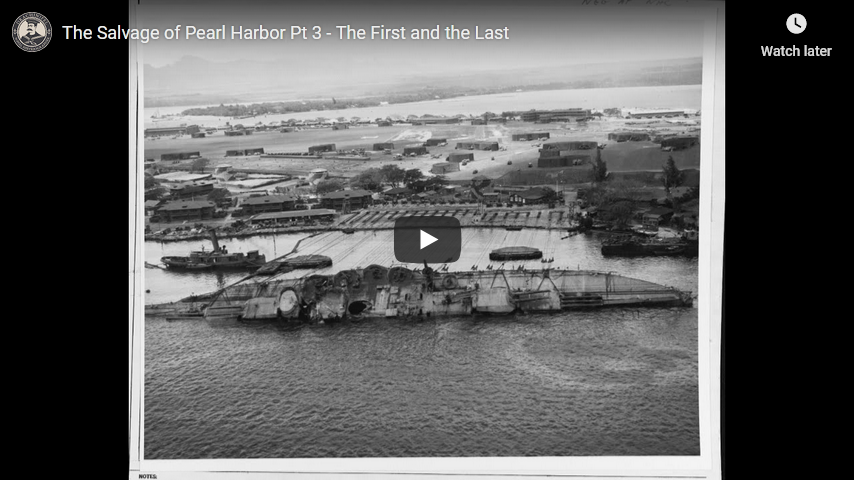
The Salvage of Pearl Harbor Pt 3 – The First and the Last

Filed under: History, Military, Pacific, USA, WW2 — Tags: , , , , , , — Nicholas @ 04:00

Drachinifel
Published 2 Dec 2020

Today we look at the salvage efforts on the USS Shaw, first vessel salvaged from the remains of the attack on Pearl Harbor and the work on the last two vessels under the team’s care, the Utah and Oklahoma

Sources:
www.amazon.co.uk/gp/product/B00C0JIXJO
https://www.history.navy.mil/our-coll…
www.amazon.co.uk/Pearl-Harbor-Fleet-Salvage-Appraisal/dp/0898755654
www.amazon.co.uk/Descent-into-Darkness-Harbour-Divers/dp/0891417451
Videos – US National Archives / US Department of Defense

Free naval photos and more – www.drachinifel.co.uk

Want to support the channel? – https://www.patreon.com/Drachinifel

Want a shirt/mug/hoodie – https://shop.spreadshirt.com/drachini…

Want a poster? – https://www.etsy.com/uk/shop/Drachinifel

Want to talk about ships? https://discord.gg/TYu88mt

Want to get some books? www.amazon.co.uk/shop/drachinifelDrydock

Episodes in podcast format – https://soundcloud.com/user-21912004

Music – https://www.youtube.com/c/NCMEpicMusic

« Newer PostsOlder Posts »

Powered by WordPress