Quotulatiousness

October 28, 2021

There are bad generals, there are evil generals, and (in a class of his own) there’s Luigi Cadorna

Filed under: Europe, History, Italy, Military, WW1 — Tags: , , , , — Nicholas @ 05:00

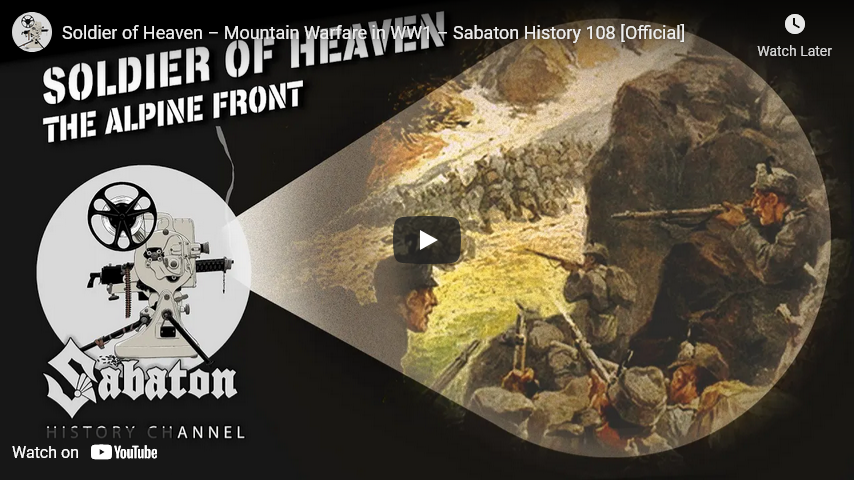
Earlier this month, Bret Devereaux took the time to give WW1 Italian general Luigi Cadorna the attention he richly deserved as the worst general of that war (which also included the strong Austrian contender Conrad von Hötzendorf), and certainly must be considered to be in the running as the worst general in military history:

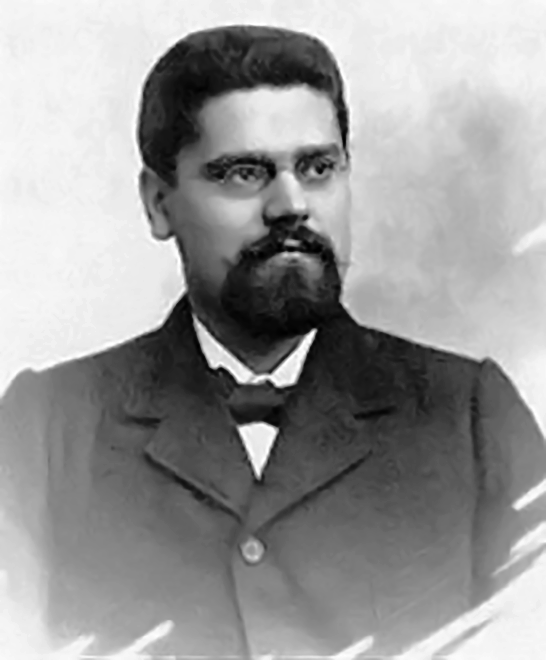
Luigi Cadorna, Marshal of Italy, Chief of Staff of the Italian Army, 1914-1917.
Photo via Wikimedia Commons.

This week we’re going to break from our normal fare and take a bit of a lark. I thought I ought to substantiate the nearly endless shade towards Luigi Cadorna, Italian Army Chief of Staff from 1914-1917 (though I realize after writing this that what I actually ought to have done is just told the same bad joke about Cadorna 11 times in a row and let that stand as the explanation). I said that Cadorna was my pick for the worst general of World War I. Now, as I noted at the time, there is some stiff competition for that position. While I argued that the tactical problem of trench warfare probably wasn’t solvable by any general, that doesn’t mean that some generals didn’t perform better than others under the difficult conditions imposed by the stalemate.

Now I should be clear here what I mean by “worst general”. What I am assessing here is the fellow who was worst at generaling, rather than the worst human being who happened to be a general. That latter prize probably goes to İsmail Enver Pasha, Ottoman Minister of War from 1914 to 1918, a vain, arrogant strutting sort of man who not only utterly botched the only battle in which he commanded directly (Sarikamish, Dec. 1914 – Jan 1915) but who also then blamed his defeat (falsely) on the Armenians and subsequently instigated and played a key role in the Armenian genocide. He then sold his services to the Soviets, before betraying them to side with the Basmachi movement, which didn’t go particularly well either.

We are also here not investigating to see which WWI leader made the single worst decision. As I’ve noted before, the worst decision in the First World War was having a First World War, though the responsibility for that is diffused across multiple different leading figures.

Luigi Cadorna didn’t, to my knowledge, perpetrate any genocides, though as we’ll see, he was cruel and unreasonable. Nor did he bring Italy to war. The son of Count Raffaele Cadorna (who had led the army which captured Rome, completing the unification of Italy), Cadorna’s political connections, particularly to the king Victor Emmanuel III, made him functionally impossible to remove from command after he was made chief of staff in 1914. For his part, Cadorna seems to have spent about as much time fighting a political battle in Rome as he did fighting the actual war on the Isonzo; Cadorna insisted at the outset that he would only accept the job if he was given unfettered, complete authority. As we’ll see, that complete authority is not going to come with complete responsibility for outcomes. But in any event, this is a good illustration of Cadorna’s personality: bitter, arrogant and callous, but with a cruel authoritarian streak and a profound conviction that all of his mistakes were someone else’s fault.

[…] Cadorna has a small, fragile and relatively weak army to work with. Conscription would eventually put millions more Italians in the ranks (and slowly make the equipment situation less of a disaster), but of course everyone else was doing that too and even then it was clear from a simple exercise in demography that Italy’s manpower reserves were likely to be brittle. An equally simple exercise in economic statistics would suggest that while Italy’s army might be made minimally sufficient in equipment (the Italians eventually end up deploying well over a thousand artillery pieces on the Isonzo front, though the quality of their artillery never matched what was available on either side of the Western Front), it would never be excellent. Strategically then, Cadorna had the one army; it was small and weak and it was also effectively all Italy had. Moreover Italy, only recently unified (recall, Cadorna’s father had been directly involved!) was still politically fragile itself and might not take well for horrible casualties. So Cadorna’s army had to be husbanded carefully, spent only in great need and for great benefit.

Instead of doing literally any of that, Cadorna opted to pursue the highest operational tempo of any front of the war. I can’t stress this enough: between May 1915 and October 1917, the French launched (or supported) four offensives (Second Artois, Third Artois/Second Champagne/Loos, the Somme and the Nivelle Offensive; I’m not counting Second Arras as that was a Commonwealth operation in which the French had little part), plus being on the defensive at Verdun. Of course there were lots of minor operations too, but that’s five major operations on the Western Front, where the French were almost totally focused. In contrast, in that same time frame, Cadorna – who again, has the smallest, weakest major army – launches eleven (11)(eleven)(XI)(1011)(I𐤗‎)(ΙΑ)(eleven!?!) offensives on the Isonzo River.

[…]

Because Cadorna thought that discipline and morale were the key components of victory (and also because he seems to have just generally been a cruel, uncaring and authoritarian person) he attempted to enforce both in his army through coercion and cruelty. Cadorna executed around 750 men for cowardice (to my knowledge the highest rate in any army of the war), presided over a military justice regime that convicted something like 3.6% of his army of one disciplinary charge or the other. He dismissed an incredible total of 217 officers during his tenure, frequently because he felt they were not committed enough or aggressive enough and when his army began to fall apart at Caporetto, he ordered the summary execution of officers whose units retreated. It turns out that actually adopting a “the beatings will continue until morale improves” command style does not actually improve morale.

October 24, 2021

Showdown at El Alamein – WW2 – 165 – October 23, 1942

World War Two
Published 23 Oct 2021

Could this be the beginning of the big break in North Africa? The Allies have the men, the armor, and the fuel … they just have to deal with the Axis minefields to try and get started. And the Axis are throwing ever more men at Stalingrad as the Soviets grimly hold on. Another roller coaster of a week.
(more…)

October 13, 2021

A War Without Hate? – The Officers and Gentlemen of North Africa – WW2 – Gallery 05

Filed under: Africa, Australia, Britain, Germany, History, Italy, Military, WW2 — Tags: , , , , , — Nicholas @ 04:00

World War Two
Published 12 Oct 2021

In the history of European-style warfare, there has always been the ideal of “rules of warfare”. The horrors of the Eastern Front and the Pacific prove how hollow this ideal can be, but there is one theatre where some officers are trying to maintain it: North Africa.
(more…)

October 12, 2021

Pesto — You Suck At Cooking, episode 73

Filed under: Europe, Food, Humour, Italy — Tags: , — Nicholas @ 02:00

You Suck At Cooking
Published 28 Mar 2018

The YSAC Cook Book is now available: http://hyperurl.co/yousuckatcooking

Pesto. It’s the besto.

http://instagram.com/yousuckatcooking
https://twitter.com/yousuckatcookin
Snapchat: @yousuckatcookin

2 cups basil
Half cup olive oil
half cup parmesan
couple spoonfuls of pine nuts (you can use walnuts if you want)
a clove or two or garlic
a squeeze of lemon
you can salt it a bit more if the parmesan hasn’t done the trick

QotD: Titus Livius, better known as Livy

Filed under: Books, Europe, History, Italy, Quotations — Tags: , , — Nicholas @ 01:00

Livy’s life (roughly 59 BC to about 17 AD) spanned the most consequential period in the thousand-year history of ancient Rome. He witnessed the last decades of the crumbling old Republic and the rise in its place of the imperial autocracy we know as the Roman Empire. He was in his early twenties when the last great defender of the republican heritage, Cicero, was assassinated by a henchman of the tyrant Marc Antony. Livy observed the entirety of the reign of the first Emperor, Augustus. He is best known for his history of Rome, Ab Urbe Condita, described both in his day and in ours with such terms as “monumental” and “magisterial”.

What little we know of the man himself suggests he was somehow financially well-off, independent, and reclusive. He was schooled in rhetoric, philosophy, and history. He never served in any public position, though apparently, he personally knew Augustus. Writing his massive history of Rome absorbed his adult life.

Though Romans at the time of his writing held his work in high regard, we know that some parts of Livy’s historical accounts were surely based on minimal records, old and dubious oral stories, and even legend. After all, he wrote 2,000 years ago about people and events of as much as eight centuries before his time. “I hope my passion for Rome’s past has not impaired my judgment,” he opined in his introduction to Ab Urbe Condita, “for I do honestly believe that no country has ever been greater or purer than ours or richer in good citizens and noble deeds.”

“The old Romans,” wrote Livy of his countrymen before the beginning of the Republic, “all wished to have a king over them because they had not yet tasted the sweetness of freedom.” But then in 508 BC, Romans mounted a truly historic revolution of both ideas and governance. They overthrew the monarchy and established a new order that ultimately included a Senate of nobles, popularly elected Assemblies, the dispersion of centralized power, term limits, a constitution, due process, habeas corpus, and the widest practice of individual liberty the world had yet seen. Before they lost it all less than five centuries later, they experienced a remarkable rise and fall. […]

From Livy, we learn about Rome’s pivotal wars against the Carthaginians, the Samnites, and other peoples of the Italian Peninsula. He also informs us of the rivalry between Sulla and Marius, the tumultuous last days of the Republic as strong men fought each other for power, the murder of Julius Caesar, and the self-serving machinations of Augustus. Livy celebrated the courage of his ancestors; in fact, he originated the phrase, “Fortune favors the brave,” which is still used commonly today as a maxim and a motto.

Lawrence W. Reed, “Lessons from Livy on How Great Civilizations Rise and Fall”, Foundation for Economic Education, 2021-06-28.

September 24, 2021

Italian Soldiers in France Fighting Germans I Franco-Prussian War 1870

Filed under: Europe, France, Germany, History, Italy, Military — Tags: , , , — Nicholas @ 06:00

Real Time History
Published 23 Sep 2021

Sign up for Curiosity Stream and get Nebula bundled in and SAVE 26%: https://curiositystream.com/realtimehistory

While the Franco-Prussian War was raging in France, another armed conflict to the south was reaching its conclusion. The unification of Italy was not yet complete in the eyes of Italian nationalists because Rome and the Papal State still held out. After the defeat at Rome, the Papal Zouaves went on to France to fight the Prussians.

» THANK YOU TO OUR CO-PRODUCERS
John Ozment
James Darcangelo
Jacob Carter Landt
Thomas Brendan

» OUR PODCAST
https://realtimehistory.net/podcast – interviews with historians and background info for the show.

» LITERATURE
Arand, Tobias: 1870/71. Die Geschichte des Deutsch-Französischen Krieges erzählt in Einzelschicksalen. Hamburg 1870

Bunnenberg, Christian: “Granaten sammeln. Totenkult und Tourismus auf den Schlachtfeldern”, in: 1870/71 – Der deutsch-französische Krieg und die Gründung des Kaiserreiches, ZEITGeschichte 4 (2020), S. 97.

Fiori, Simonetta: “Porta Pia. Roma libera e italiana”, in: La Repubblica v. 19.9.2020. o. S.

Pilant Paul: “La population messine pendant le siège de 1870”. In: La Révolution de 1848 et les révolutions du XIXe siècle, Tome 33, Numéro 158, Septembre-octobre-novembre 1936. pp. 141-175.

Plessner, Helmuth: Die verspätete Nation. Über die politische Verführbarkeit bürgerlichen Geistes. Kohlhammer, Stuttgart 1959

Seibt, Gustav: Rom oder Tod. Der Kampf um die italienische Hauptstadt. Berlin 2001

» SOURCES
Bazaine, François Achille: L’Armée du Rhin depuis 12. Août jusqu’ au 29. Octobre 1870. Paris 1872

Braun, Lily (Hrsg.): Kriegsbriefe aus den Jahren 1870/71 von Hans v. Kretschman. Berlin 1911

Crombrugghe, Ida de: Journal d’une infirmière. Paris 1871

» OUR STORE
Website: https://realtimehistory.net

»CREDITS
Presented by: Jesse Alexander
Written by: Cathérine Pfauth, Prof. Dr. Tobias Arand, Jesse Alexander
Director: Toni Steller & Florian Wittig
Director of Photography: Toni Steller
Sound: Above Zero
Editing: Toni Steller
Motion Design: Philipp Appelt
Mixing, Mastering & Sound Design: http://above-zero.com
Maps: Battlefield Design
Research by: Cathérine Pfauth, Prof. Dr. Tobias Arand
Fact checking: Cathérine Pfauth, Prof. Dr. Tobias Arand

Channel Design: Battlefield Design

Contains licensed material by getty images
All rights reserved – Real Time History GmbH 2021

September 21, 2021

Early Rome, Part V: Introduction to Modern Scholarship

Filed under: Books, Europe, History, Italy, Religion, Science — Tags: , , , , — Nicholas @ 04:00

Thersites the Historian
Published 6 Sep 2021

In this video, we look at what modern scholars tend to think about early Rome and some of the ways in which they approach this fraught topic.

Patreon link: https://www.patreon.com/thersites

PayPal link: paypal.me/thersites

Discord: https://discord.gg/QCaXXFr

Brave Browser: https://brave.com/noa557

Twitter link: https://twitter.com/ThersitesAthens

Minds.com link: https://www.minds.com/ThersitestheHis…

Steemit/dtube link: https://steemit.com/@thersites/feed

BitChute: https://www.bitchute.com/channel/jbyg…

September 17, 2021

The Battle of Lissa, 1866

Filed under: Europe, History, Italy, Military — Tags: , , , , , — Nicholas @ 02:00

Drachinifel
Published 26 Sep 2018

One of the most unintentionally hilarious battles of the 19th century is the subject of today’s special video.

Bezeuge Mich!” – Admiral Tegethoff 1866 (probably)

September 8, 2021

500 Year-Old Pizza VS Today

Filed under: Europe, Food, History, Humour, Italy — Tags: , , , — Nicholas @ 02:00

Tasting History with Max Miller
Published 25 May 2021

Help Support the Channel with Patreon: https://www.patreon.com/tastinghistory
Tasting History Merchandise: crowdmade.com/collections/tastinghistory

Follow Tasting History here:
Instagram: https://www.instagram.com/tastinghist…
Twitter: https://twitter.com/TastingHistory1
Tiktok: TastingHistory
Reddit: r/TastingHistory
Discord: https://discord.gg/d7nbEpy

Tasting History’s Amazon Wish List: https://amzn.to/3i0mwGt

LINKS TO INGREDIENTS & EQUIPMENT**
Sony Alpha 7C Camera: https://amzn.to/2MQbNTK
Sigma 24-70mm f/2.8 Lens: https://amzn.to/35tjyoW
10 inch removable bottom pan: https://amzn.to/3f8ZZI0
Rose Water: https://amzn.to/3oL0xqI

LINKS TO SOURCES**
Scappi Video: https://www.youtube.com/watch?v=o4Ymv…
Tomato Video: https://www.youtube.com/watch?v=beBQg…
Pizza – A Global History by Carol Helstosky: https://amzn.to/3bHFPCQ

**Some of the links and other products that appear on this video are from companies which Tasting History will earn an affiliate commission or referral bonus. Each purchase made from these links will help to support this channel with no additional cost to you. The content in this video is accurate as of the posting date. Some of the offers mentioned may no longer be available.

Subtitles: Jose Mendoza

PHOTO CREDITS
Stuffed pizza from Giordano’s: By TNVWBOY – https://www.flickr.com/photos/tnvwboy…, CC BY 2.0, https://commons.wikimedia.org/w/index…
Lombardi’s Pizza: By Beyond My Ken – Own work, CC BY-SA 4.0, https://commons.wikimedia.org/w/index…
Sushi Pizza: Quinn Dombrowski from Berkeley, USA, CC BY-SA 2.0 https://creativecommons.org/licenses/…, via Wikimedia Commons
Pizza Bagels: Mike Mozart https://www.flickr.com/photos/jeepers…

MUSIC CREDITS
“Bushwick Tarentella” – Thatched Villagers by Kevin MacLeod is licensed under a Creative Commons Attribution 4.0 license. https://creativecommons.org/licenses/…
Source: http://incompetech.com/music/royalty-…
Artist: http://incompetech.com/

#tastinghistory #pizza

September 2, 2021

Road to WWII: A Basic Causal Analysis

Thersites the Historian
Published 19 Nov 2019

This video is a primer for undergraduates in broad history survey courses that will hopefully help make sense of the interwar years between World War I and World War II.

Patreon link: https://www.patreon.com/thersites

PayPal link: paypal.me/thersites

https://brave.com/noa557

Twitter link: https://twitter.com/ThersitesAthens

Minds.com link: https://www.minds.com/ThersitestheHis…

Steemit/dtube link: https://steemit.com/@thersites/feed

BitChute: https://www.bitchute.com/channel/jbyg…

Backup Channel: https://www.youtube.com/channel/UCUrD…

August 25, 2021

Carica! – The Cavalry Charges of World War Two – WW2 Special

Filed under: Europe, Germany, History, Italy, Military, Russia, WW2 — Tags: , , , , — Nicholas @ 04:00

World War Two
Published 24 Aug 2021

The Eastern Front is a battleground of Blitzkrieg and Deep Battle; Panzers vs. T-34s; Nazism and Communism. You’d think that there would be no place for cavalry tactics here. But the Wehrmacht, Red Army, and Regio Esercito do still use centuries-old cavalry tactics in their waging of war.
(more…)

August 14, 2021

English wholesalers, Dutch retailers and the expansion of foreign trade by European sailors

In the latest Age of Invention newsletter, Anton Howes considers the changing nature of English foreign trade as possibly one of the main drivers of the unprecedented growth of London from 1550-1650, and how both English and Dutch sailors differed from most of the rest of Europe:

An English merchant ship of the late 16th to early 17th century: this is a replica of the Susan Constant at the Jamestown Settlement in Virginia. The original ship was built sometime before 1607 and rented by the Virginia Company of London to transport the original settlers to Jamestown.
Photo by Nicholas Russon, March 2004.

I am fairly convinced that this transformation was sparked by the changing nature of England’s trade, with its merchants taking near-total control of it themselves, whereas once they had relied on foreign merchants to bring many of their imports to them. And thanks to their adoption of celestial navigation techniques from the Iberians and Italians — learning to read the stars, to find their latitude at sea — the English gained the ability to discover new routes, noting details down for others to come back again and again and create more permanent new trades. In merchants’ parlance of the time, the English increasingly went in search of “the well head” — to buy things at source, where they were cheapest.

This sounds like the common-sense thing to do. But it was surprisingly rare. Very few countries’ merchants attempted to take advantage of such opportunities for arbitrage — to buy where things were cheapest and sell them where they were most expensive. Even the English themselves, despite their newfound search for well heads, rarely exploited arbitrage opportunities to the full. Although they bought at source, they tended, at first, to sell the goods they’d acquired back in London, to serve English consumers rather than taking them to wherever the goods would sell for the highest prices. This was instead the strategy of the Dutch, whose trading techniques were by 1600 said to surpass all others. Indeed, the Dutch were also some of the only merchants who discriminated on prices within markers, “not shaming to retail any commodity by small parts and parcels”, as one English merchant complained, charging a multitude of buyers according to what they thought they could get from them — something that “both English merchants and Italians disdain to do in any country whatsoever.” It was seemingly considered beneath them.

I’m not wholly clear why the English only sold wholesale when they knew that price discrimination was a Dutch advantage. It seems, at first, to be irrational. But I suspect it had something to do with the wider difficulties of trading abroad. For the English and Dutch were quite unusual in Europe in the early seventeenth century for being among the only merchants willing to risk sailing to shores where their own rulers held no sway.

The Hanseatic merchants of the North Sea and Baltic, who had once been dominant in London, had been stripped of their privileges there and displaced by the English, later confining themselves largely to the Baltic. German mercantile efforts were otherwise generally concentrated inland. And French merchants were apparently under-capitalised, or so the English suspected, because “gentlemen do not meddle with traffic, because they think such traffic ignoble and base”. French merchants did occasionally sail down the Atlantic coast to Spain, and into the Mediterranean to trade with Italy and the Ottoman Empire, but overall they were content to have third parties to come to them — there was always the attraction to foreign merchants of being able to buy French wines, salt, linens, and grain.

As for the once-great Italians, they had apparently been impoverished by the Portuguese discovery of a direct route around Africa to the Indian Ocean, and perhaps by the depredations of various Mediterranean predators too — Algerian corsairs, Ottoman galleys, and the like. Although their rulers could themselves be merchants — the Grand Duke of Tuscany, a Medici, was considered the greatest merchant of them all — by this stage the Italians only rarely ventured far abroad themselves, except over land. Indeed, the English considered them impious for not risking the seas, accusing them of blasphemy for not trusting their lives and livelihoods to God. Whereas the Venetian merchant-nobility had once been required to spend time aboard ship, English commentators by 1600 noticed that their mariners were now overwhelmingly Greek. “Their customs have decayed, their ships rotted and their mariners, the pride of their commonwealth all become poltrones” — that is, loafers or idlers — “and the worst accounted in all those seas”. A Tuscan exploration of the coast of South America in 1608, to look into founding a colony in what is now French Guiana, had to be captained and piloted by Englishmen. What reputation the Italians maintained was as financiers and money-exchangers — perhaps because the Genoese were the only merchants permitted to take the vast quantities of New World silver out of Spain.

August 5, 2021

Gordon Ingram’s Westarm .308 Battle Rifle

Forgotten Weapons
Published 2 Apr 2021

http://www.patreon.com/ForgottenWeapons​

https://www.floatplane.com/channel/Fo…​

Cool Forgotten Weapons merch! http://shop.bbtv.com/collections/forg…​

In the late 1970s and early 80s, Gordon Ingram came close to producing a military rifle in one of the most convoluted international arrangements I’ve yet heard of. Prototypes were made in Italy using British raw castings, to be tested in Somalia as part of a project to build a rifle factory there with Dominican Republic expertise from the San Cristobal armory. Somalia actually ordered a large quantity of rifles in 7.62x39mm, but Ingram prototyped the design in .223 and .308 as well.

Mechanically, the rifle was essentially a scaled-up M1 Carbine with a long stroke gas piston instead of a gas tappet. The production guns were select-fire, but the handful or prototypes brought into the US were semi-automatic only, to meet import requirements. In .308, the rifle used FAL magazines, while the .223 ones used AR magazines and the 7.62x39mm ones AK magazines.

Unfortunately for Ingram (but predictably), the project fell apart as the result of financial corruption among the many interested parties. The Somali government ended up paying out something like $5 million US and all they got for it were 10 unreliable prototype rifles.

Contact:
Forgotten Weapons
6281 N. Oracle 36270
Tucson, AZ 85740

July 29, 2021

In The Shadow of Napoleon – The 2nd French Empire Before 1870 I GLORY & DEFEAT

realtimehistory
Published 12 Jul 2021

Support Glory & Defeat: https://realtimehistory.net/gloryandd…

After Napoleon I had conquered and then lost Europe, France went through multiple revolutions. In 1851, Napoleon’s nephew and French president Louis-Napoléon Bonaparte took control and in 1852 crowned himself Emperor Napoleon III. The new French Empire wanted to regain the glory of Napoleon’s uncle and together with his wife Empress Eugenie he ruled a state known for lavish balls and spending.

» OUR PODCAST
https://realtimehistory.net/podcast – interviews with historians and background info for the show.

» LITERATURE
Arand, Tobias: 1870/71. Die Geschichte des Deutsch-Französischen Kriegs erzählt in Einzelschicksalen. Hamburg 2018

Arand, Tobias/Bunnenberg, Christian (Hrsg.): Karl Klein. Fröschweiler Chronik. Kriegs- und Friedensbilder aus dem Krieg 1870. Kommentierte Edition. Hamburg 2021

Gouttman, Alain. La grande défaite de 1870-1871. Paris 2015

Herre, Franz: Eugénie. Kaiserin der Franzosen. Stuttgart, München 2000

Rieder, Heinz: Napoleon III. Abenteurer und Imperator. München 1998

» SOURCES
Bonaparte, Prince Napoléon-Louis: Des Idées Napoléoniennes. London 1839

Marx, Karl: Der achtzehnte Brumaire des Louis Napoleon. Hamburg 1869

Maupassant, Guy de: Bel-Ami. Paris 1901

N.N. (Hrsg): Fontane, Theodor. Aus den Tagen der Okkupation. Eine Osterreise durch Nordfrankreich und Elsaß-Lothingen 1871. Berlin (Ost) 1984

» OUR STORE
Website: https://realtimehistory.net

»CREDITS
Presented by: Jesse Alexander
Written by: Cathérine Pfauth, Dr. Tobias Arand, Jesse Alexander
Director: Toni Steller & Florian Wittig
Director of Photography: Toni Steller
Sound: Above Zero
Editing: Toni Steller
Motion Design: Philipp Appelt
Mixing, Mastering & Sound Design: http://above-zero.com
Maps: Battlefield Design
Research by: Cathérine Pfauth, Prof. Dr. Tobias Arand
Fact checking: Cathérine Pfauth, Prof. Dr. Tobias Arand

Channel Design: Battlefield Design

Contains licensed material by getty images
All rights reserved – Real Time History GmbH 2021

June 21, 2021

Etruscans: Italian Civilization Before Ancient Rome

Filed under: Europe, History, Italy, Religion — Tags: , , , , — Nicholas @ 04:00

Kings and Generals
Published 20 Feb 2020

Our new animated historical documentary talks about the Etruscans. Their origins, culture, religion, lifestyle and how they influenced the Roman Republic and through it the world.

Support us on Patreon: http://www.patreon.com/KingsandGenerals or Paypal: http://paypal.me/kingsandgenerals

We are grateful to our patrons and sponsors, who made this video possible: https://docs.google.com/document/d/1_…

The video was made by our friend András Szente-Dzsida while the script was researched and written by Leo Stone

This video was narrated by Officially Devin (https://www.youtube.com/user/OfficiallyDevin)

✔ Merch store ► teespring.com/stores/kingsandgenerals
✔ Podcast ► Google Play: http://bit.ly/2QDF7y0 iTunes: https://apple.co/2QTuMNG
✔ Twitter ► https://twitter.com/KingsGenerals
✔ Instagram ► http://www.instagram.com/Kings_Generals

Production Music courtesy of Epidemic Sound: http://www.epidemicsound.com

#Documentary #Etruscans #KingsandGenerals

« Newer PostsOlder Posts »

Powered by WordPress