Atun-Shei Films
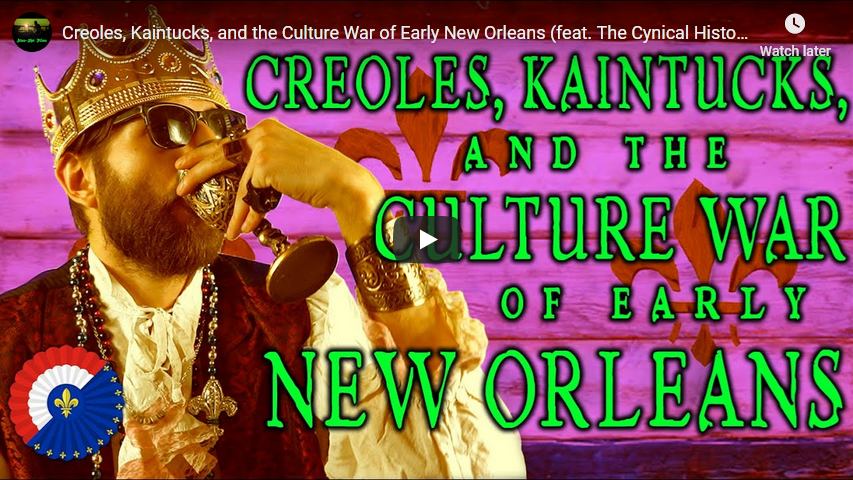
Published 21 Aug 2020For #ProjectFrance, I collaborated with @The Cynical Historian to teach y’all about the cosmopolitan cultural exchange between revolutionary France and a country called the United States of America in the late 18th and early 19th century. In this video, I discuss the contentious relationship between Anglo-Americans and French Creoles in New Orleans in the years after the Louisiana Purchase.
Support Atun-Shei Films on Patreon ► https://www.patreon.com/atunsheifilms
Leave a Tip via Paypal ► https://www.paypal.me/atunsheifilms (All donations made here will go toward the production of The Sudbury Devil, our historical feature film)
Buy Merch ► teespring.com/stores/atun-shei-films
#NewOrleans #History
Watch our film ALIEN, BABY! free with Prime ► http://a.co/d/3QjqOWv
Reddit ► https://www.reddit.com/r/atunsheifilms
Twitter ► https://twitter.com/atun_shei~REFERENCES~
[1] Lo Faber. “Anglo-Americans” (2018). 64Parishes https://64parishes.org/entry/anglo-am…
[2] Richard Campanella. Bienville’s Dilemma: A Historical Geography of New Orleans (2008). University of Louisiana at Lafayette, Page 170-171
[3] Peter J. Kastor. “Louisiana Purchase and Territorial Period” (2018). 64Parishes https://64parishes.org/entry/louisian…
[4] Daniel Rasmussen. American Uprising: The Untold Story of America’s Largest Slave Revolt (2011). Harper Perennial, Page 16
[5] Kimberly S. Hanger. Bounded Lives, Bounded Places: Free Black Society in Colonial New Orleans, 1769-1803 (1997). Duke University Press, Page 54-56
[6] Mary Gehman. The Free People of Color of New Orleans (2009). Sheridan Books, Page 49-51
[7] Rasmussen, Page 159-163
August 22, 2020
Creoles, Kaintucks, and the Culture War of Early New Orleans (feat. The Cynical Historian)
August 21, 2020
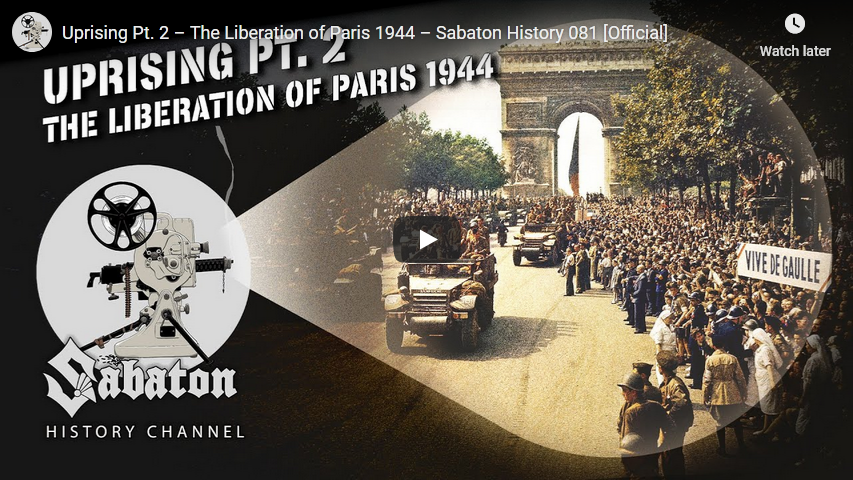
“Uprising” Pt. 2 – The Liberation of Paris 1944 – Sabaton History 081 [Official]
Sabaton History
Posted 20 Aug 2020Mid-August 1944. The battle for France enters its decisive phase. With the Allied spearheads just 100 km away from Paris, the Résistance prepares for its long-awaited uprising. While collaborators and fascist officials flee the city in panic, many insurgents are eager to immediately rise up against the occupation and fight the Germans in the streets. But there is need for caution. The Germans are still there in force, and they have tanks and machine guns. The fear that this might turn into “another Warsaw” if the Allies don’t show up in time is very real.
Support Sabaton History on Patreon: https://www.patreon.com/sabatonhistory
Listen to “Uprising” on the album Coat Of Arms:
https://music.sabaton.net/CoatOfArmsWatch the Official Music Video of “Uprising”:
https://www.youtube.com/watch?v=01IaK…Listen to Sabaton on Spotify: http://smarturl.it/SabatonSpotify
Official Sabaton Merchandise Shop: http://bit.ly/SabatonOfficialShopHosted by: Indy Neidell
Written by: Markus Linke and Indy Neidell
Directed by: Astrid Deinhard and Wieke Kapteijns
Produced by: Pär Sundström, Astrid Deinhard, and Spartacus Olsson
Creative Producer: Maria Kyhle
Executive Producers: Pär Sundström, Joakim Broden, Tomas Sunmo, Indy Neidell, Astrid Deinhard, and Spartacus Olsson
Post-Production Director: Wieke Kapteijns
Editor: Iryna Dulka
Sound Editor: Marek Kaminski
Archive by: Reuters/Screenocean https://www.screenocean.com
Community Manager: Maria Kyhle
All music by SabatonSources:
– Imperial War Museum: B 9298
– Bundesarchiv, CC-BY-SA 3.0: Bild_101I-027-1477-16, Bild_183-2008-0710-500, Bild_183-2003-1112-500
– lubini from freesound.orgAn OnLion Entertainment GmbH and Raging Beaver Publishing AB co-Production.
© Raging Beaver Publishing AB, 2019 – all rights reserved.
August 20, 2020
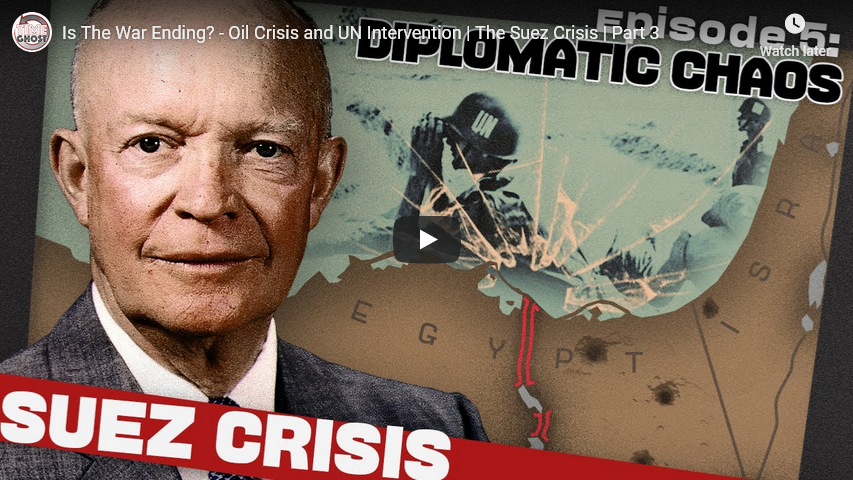
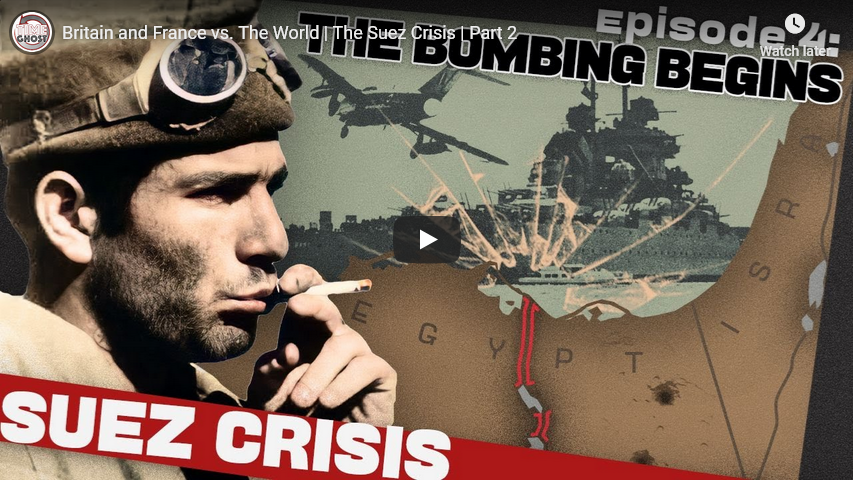
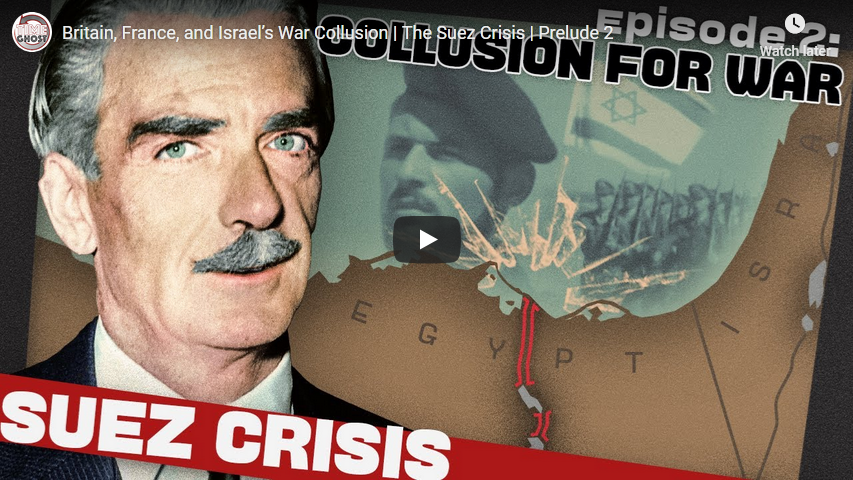
Britain, France, and Israel’s War Collusion | The Suez Crisis | Prelude 2
TimeGhost History
Published 19 Aug 2020Britain and France are becoming increasingly worried about the growing threat of Egypt to the Middle East and Africa — they are not alone — Israel is also worried. Israel’s close proximity to Egypt makes them a valuable secret accomplice in finding justification for a war that will seek to remove Gamal Abdel Nasser.
Join us on Patreon: https://www.patreon.com/TimeGhostHistory
Hosted by: Indy Neidell
Written by: Joram Appel and Francis van Berkel
Director: Astrid Deinhard
Producers: Astrid Deinhard and Spartacus Olsson
Executive Producers: Astrid Deinhard, Indy Neidell, Spartacus Olsson, Bodo Rittenauer
Creative Producer: Joram Appel
Post-Production Director: Wieke Kapteijns
Research by: Joram Appel
Image Research: Ian Irungu, Shaun Harrison & Daniel Weiss
Edited by: Daniel Weiss
Sound design: Marek Kamiński
Maps: Ryan WeatherbyColorizations:
– Mikolaj Uchman
– Daniel Weiss
– Carlos Ortega Pereira (BlauColorizations) – https://www.instagram.com/blaucoloriz…
– Norman Stewart – https://oldtimesincolor.blogspot.com/Sources:
National Archives NARA
Library of Congress Geography and Maps Department
Munich_conference – Mareček2000From the Noun Project:
– Paris – Vonn WeisenbergerSoundtracks from Epidemic Sound:
– “Devil’s Disgrace” – Deskant
– “Dreamless Nights” – The New Fools
– “Where Kings Walk” – Jon Sumner
– “Invocation” – Deskant
– “Call of Muezzin” – Sight of Wonders
– “Crying Winds” – Deskant
– “Divine Serpent” – Deskant
– “Pepper Seeds” – Rune Dale
– “Searching Through Sand” – Deskant
– “Scented Nectar” – Rune Dale
– “As the Rivers Collapse” – DeskantArchive by Screenocean/Reuters https://www.screenocean.com.
A TimeGhost chronological documentary produced by OnLion Entertainment GmbH.
From the comments:
TimeGhost History
2 days ago
“And now for our second prologue episode on the Suez Crisis. This one is all about a conspiracy where three countries believe they can fool the US, USSR, and entire UN all at the same time. Hindsight is of course 20/20, but it really is astounding that Britain, France, and Israel thought they could start a war with another member of the UN with a completedly engineered casus belli. This isn’t the first or last time something like this has happened in the history of international relations. Still, the pure audacity of Britain and France in their plans here really does seem quite unique. Can you guys think of any other examples of this kind of thing?”Cheers,
Francis.
August 18, 2020
Napoleon’s First Victory: Siege of Toulon 1793
Epic History TV
Published 31 Mar 2018Get Epic History TV early access & voting rights at Patreon: https://www.patreon.com/epichistorytv
With big thanks to HistoryMarche, check out his channel here: https://www.youtube.com/channel/UC8MX…
Find Osprey books on the Napoleonic Wars here:
https://ospreypublishing.com/#EpicHistoryTV #NapoleonicWars #Napoleon
Music from Filmstro https://www.filmstro.com/
Get 20% off an annual license with this exclusive code:EPICHISTORYTV_ANNFrom Osprey Publishing (as an Amazon Associate I earn from qualifying purchases):
Toulon 1793: Napoleon’s first great victory: http://geni.us/vUITM
French Revolutionary Infantry 1789-1802: http://geni.us/RsWkNN
Napoleon’s Guns 1792-1815 (1): Field Artillery: http://geni.us/YWU1HaZ
Napoleon’s Guns 1792-1815 (2): Heavy and Siege Artillery: http://geni.us/SJn9I
August 16, 2020
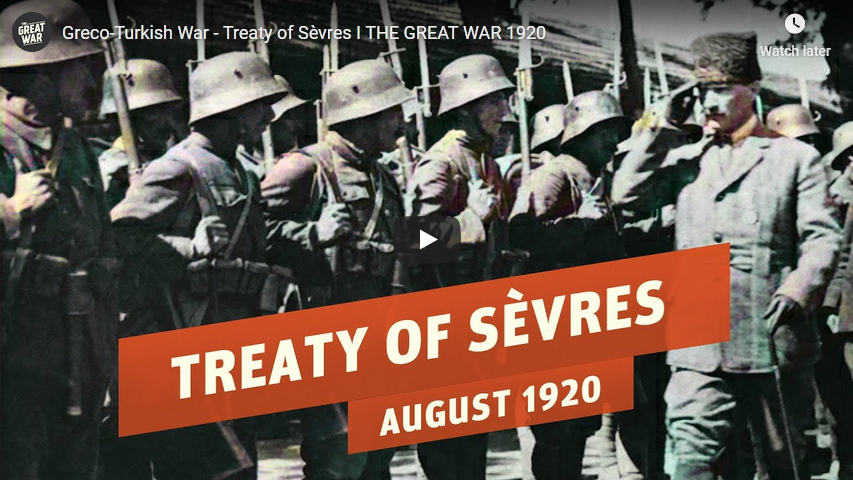
Greco-Turkish War – Treaty of Sèvres I THE GREAT WAR 1920
The Great War
Published 15 Aug 2020Sign up for Curiosity Stream and get Nebula bundled in: https://curiositystream.com/thegreatwar
While the Greco-Turkish War was still raging, the last of the peace treaties between the Allies and the Central Powers was finalized in Paris. But the Turkish Nationalist Movement under Mustafa Kemal would not accept the terms of the Treaty of Sèvres – even though the Ottoman government had signed it.
» SUPPORT THE CHANNEL
Patreon: https://www.patreon.com/thegreatwar» OUR PODCAST
https://realtimehistory.net/podcast – interviews with World War 1 historians and background info for the show.» BUY OUR SOURCES IN OUR AMAZON STORES
https://realtimehistory.net/amazon *
*Buying via this link supports The Great War (Affiliate-Link)» SOURCES
Halide Edib Adivar, The Turkish Ordeal: Being the Further Memoirs of Halidé Edib, (Piscataway: Gorgias Press, 2012)John Darwin, Britain, Egypt and the Middle East, (London: Macmillan Press, 1981)
M.L. Dockrill and J. D. Goold, Peace Without Promise: Britain and the Peace Conferences, 1919-1923, (Connecticut: Hamden, 1981)
T G Fraser, Andrew Mango and Robert McNamara, The Makers of the Modern Middle East, (London: Gingko Library, 2015)
Phillip S Jowett, “Armies of the Greek-Turkish War: 1919-1922”, Men at Arms, no 501, (2015)
Michael Llewellyn Smith, Ionian Vision: Greece in Asia Minor 1919-1922, (London: Allen Lane, 1973)
Margaret Macmillan, Paris 1919: Six Months That Changed the World, (London: Macmillan, 2019)
A.E. Montgomery, “The Making of the Treaty of Sèvres of 10 August 1920”, The Historical Journal Vol. 15, No. 4 (December, 1972)
New York Times, “Turk Nationalists Capture Beicos” (July 6, 1920) https://timesmachine.nytimes.com/time…
George Riddell, Lord Riddell’s Intimate Diary of the Peace Conference and After: 1918-1923, (London: Victor Gollancz Ltd, 1933)
» MORE THE GREAT WAR
Website: https://realtimehistory.net
Instagram: https://instagram.com/the_great_war
Twitter: https://twitter.com/WW1_Series
Reddit: https://reddit.com/r/TheGreatWarChannel»CREDITS
Presented by: Jesse Alexander
Written by: Jesse Alexander
Director: Toni Steller & Florian Wittig
Director of Photography: Toni Steller
Sound: Toni Steller
Editing: Toni Steller
Motion Design: Philipp Appelt
Mixing, Mastering & Sound Design: http://above-zero.com
Maps: Daniel Kogosov (https://www.patreon.com/Zalezsky)
Research by: Jesse Alexander
Fact checking: Florian WittigChannel Design: Yves Thimian
Contains licensed material by getty images
All rights reserved – Real Time History GmbH 2020
August 15, 2020
French President Emmanuel Macron – “We are a country that for decades is divided and in doubt”
Individuals in France may be chauvinistic, says Joseph de Weck, but the French as a whole are less chauvinistic and more self-critical than the British or the Germans:
There is no doubt that the French are a self-sufficient bunch. After all, it was a Frenchman who once wrote, “Hell is other people.”
COVID-19 or not, the French rarely travel abroad for holidays. In terms of food, most French people think they have it best. And at housewarming parties in Paris, the music playlist is usually primarily made up of chansons and French rap classics.
And despite President Emmanuel Macron’s attempts to turn Europe into a global “balancing power,” what happens abroad doesn’t seem to spark much interest at home. The evening news on the public channel on average dedicates 16 percent of its coverage to European and foreign news. By comparison, that proportion rises to 50 percent in Germany. No surprise then that polls show the average French person knows little about the functioning of the EU.
But if this cliché about French aloofness is easily backed up with data points, another common trope about the Gauls doesn’t: that of French arrogance. At least when it comes to the present, the French are brutally self-critical.
In fact, France seem to be among the least chauvinistic countries in Europe. Asked whether they think their culture is superior to others, 36 percent of the French answered “yes” in a recent poll. This compares to 46 percent in the United Kingdom and 45 percent in Germany.
Or take the COVID-19 crisis: unlike other nations, the Republic’s citoyens won’t rally around the flag. Among Europeans, the French give their government the lowest grades for its handling of the pandemic. Never mind that four of France’s neighbors have significantly higher death-per-capita rates. Never mind either that France’s short-time work benefits are among the most generous, also explaining why consumption is almost back to pre-crisis levels.
Of course, one could explain the French’s dim view of the state’s COVID-19 response as being due to Macron’s unpopularity. But by French standards, the president is actually polling relatively well. At 39 percent, Macron’s approval ratings surpass his predecessors François Hollande (23 percent) and Nicolas Sarkozy (35 percent) at the same point in their terms.
The negative view the French have of their country goes far beyond the complaint du jour. As Macron put it, “We are a country that for decades is divided and in doubt.”
August 11, 2020
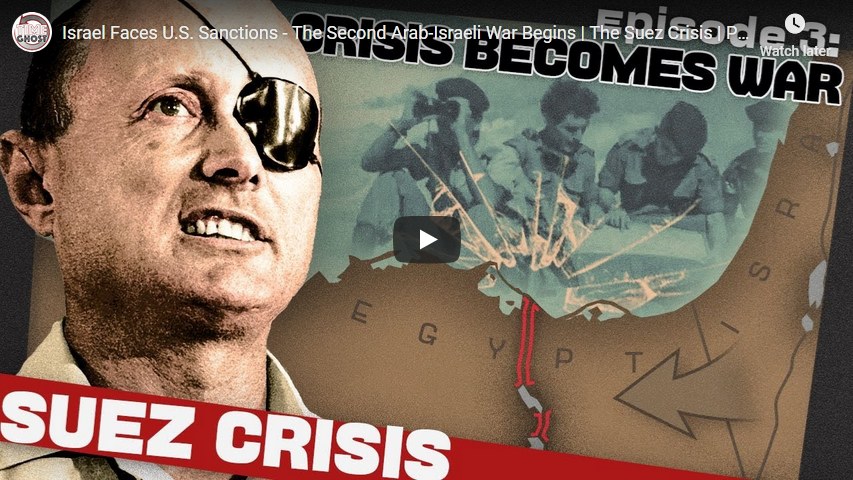
Egypt’s Colonial and Zionist Troubles | The Suez Crisis | Prelude 1
TimeGhost History
Published 10 Aug 2020Recently independent Egypt, under President Gamal Abdel Nasser, navigates the turbulent waters of the Cold War, seeking national autonomy, while negotiating its relations with the British Empire, United States, and the Soviet Union. The question is, how will Egypt realize its self-determination with these powers vying for dominance in the region?
Join us on Patreon: https://www.patreon.com/TimeGhostHistory
Hosted by: Indy Neidell
Written by: Joram Appel and Francis van Berkel
Director: Astrid Deinhard
Producers: Astrid Deinhard and Spartacus Olsson
Executive Producers: Astrid Deinhard, Indy Neidell, Spartacus Olsson, Bodo Rittenauer
Creative Producer: Joram Appel
Post-Production Director: Wieke Kapteijns
Research by: Joram Appel
Image Research: Ian Irungu, Shaun Harrison & Karolina Dołęga
Edited by: Karolina Dołęga
Sound design: Marek KamińskiColorizations:
Mikolaj UchmanVisual Sources:
National Archives NARA
Library of Congress Geography and Maps Department
Tropenmuseum
Wellcome Images
National Army Museum of New Zealand
Imperial War Museum: HU70788,
National Photo Collection of Israel
Fortepan – ID 32790
Bibliotheca AlexandrinaMusic:
“Descending Mount Everest” – Trailer Worx
“Dreamless Nights” – The New Fools
“March Of The Brave 10” – Rannar Sillard
“Break Free” – Fabien Tell
“The Unexplored” – Philip Ayers
“It’s Not a Game” – Philip Ayers
“Foreign Signs” – Philip AyersArchive by Screenocean/Reuters https://www.screenocean.com.
A TimeGhost chronological documentary produced by OnLion Entertainment GmbH.
From the comments:
TimeGhost History
1 hour ago (edited)
Welcome to the first episode of our series on the Suez Crisis! It’s a 7-episode wild ride through secretive international collusion, clashing nations, and imperial anxieties. It’s a watershed moment in a variety of entangled histories: decolonization, the Arab-Israel Conflict, the rise of America as a superpower, the growing power of the UN, and much much more. It’s a lot to take in, but we hope that we’ve made this series as digestible (and enjoyable!) as possible. Thanks to our TimeGhost Army members for choosing this series. Want to be part of the effort that makes stuff like this happen? Join us at patreon.com/timeghosthistory or https://timeghost.tv.Cheers,
Francis.
Napoleon’s greatest foe
Lindybeige
Published 18 Jan 2018Support me on Patreon: https://www.patreon.com/Lindybeige
Possibly I did too much research for this one. Trying to stay on-topic when the subject is so vast and so interesting was not easy, hence the rather long video. I didn’t mean to say quite so much about what an utter £$%&*! Napoleon was, but he was so thoroughly vile that it proved impossible not to include some details about the man who won his promotion in the army by mowing down civilian protesters in the streets of Paris with grapeshot from his artillery batteries. Anyway, here are tales of bravery and virtue, as well as horrendous some of brutality, lies, and death.
Correction: The battle against the Russian fleet is called Svensksund (Swedish sound, as in channel), not Svenksund. I missed out an S in my haste.
Buy the music – the music played at the end of my videos is now available here: https://lindybeige.bandcamp.com/track…
Lindybeige: a channel of archaeology, ancient and medieval warfare, rants, swing dance, travelogues, evolution, and whatever else occurs to me to make.
▼ Follow me…
Twitter: https://twitter.com/Lindybeige I may have some drivel to contribute to the Twittersphere, plus you get notice of uploads.
website: http://www.LloydianAspects.co.uk
August 8, 2020
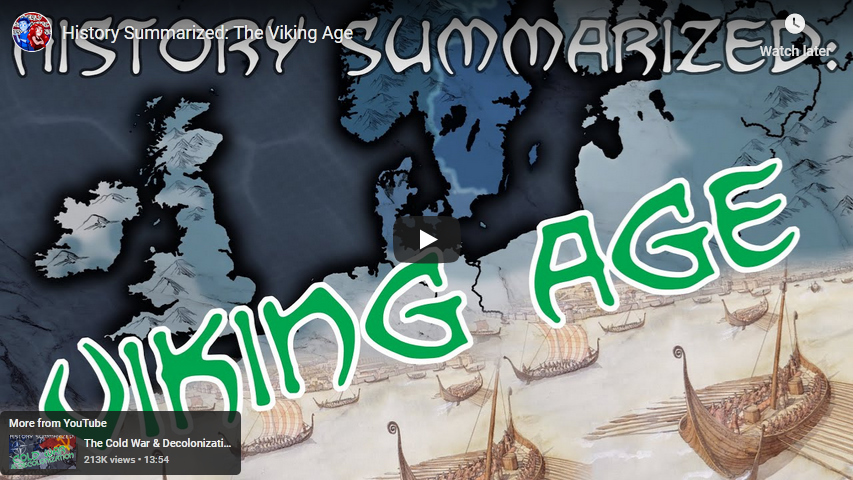
The Cold War & Decolonization — History Summarized
Overly Sarcastic Productions
Published 7 Aug 2020Keep safe and stylish with a Red-And-Blue facemask from Volante Design, or DONATE to help students in public schools receive high-quality masks for free — https://bit.ly/2DwE9O7
August of 2020 marks the 75th anniversary of the end of the Second World War. So I wanted to make a video about that. That was a bad idea…
What do you get when a Classically-Minded historian ventures about 2,000 years outside of their comfort zone? A mess. A well-intentioned mess is what you get. BUT a mess that we can learn from! So join me as we dig into the aftermath of the Second World War to analyze the origins of the Cold War and the decolonization of European Empires.
SOURCES & Further Reading: The Cold War by Gaddis, The Wars of French Decolonization by Clayton, British decolonization, 1946-1997 by McIntyre, The Cold War’s Killing Fields by Chamberlin, The Cold War: A Very Short Introduction by McMahon, and “Crash Course European History [Parts 42-47]” by Green.
This video was edited by Sophia Ricciardi AKA “Indigo”. https://www.sophiakricci.com/
Our content is intended for teenage audiences and up.DISCORD: https://discord.gg/kguuvvq
PATREON: https://www.Patreon.com/OSP
MERCH LINKS: https://www.redbubble.com/people/OSPY…
OUR WEBSITE: https://www.OverlySarcasticProductions.com
Find us on Twitter https://www.Twitter.com/OSPYouTube
Find us on Reddit https://www.Reddit.com/r/OSP/
From the comments:
Overly Sarcastic Productions
1 hour ago (edited)
Some clarifications:
North Africa did of course see conflict, the Pacific did get occupied — even the places that didn’t (eg: India) still paid for the war. Damn double-negatives.That weird Romania-Hungary-Russia border is a holdover from WWII. The border lasted until 1946 and was changed in 1947. Later in the video you’ll see the more familiar borders.
Indonesia declared Independence in 1945 (Like Vietnam), but the Netherlands didn’t withdraw until 1949, hence my mention of ’49.
July 26, 2020
French War In Syria – British War Against The Iraqi Revolution I THE GREAT WAR 1920
The Great War
Published 25 Jul 2020Sign up for Curiosity Stream and get Nebula bundled in: https://curiositystream.com/thegreatwar
The French and British colonial powers had their own plans on how to rule the Middle East after the costly campaigns of World War 1. National self-determination for the different groups in Syria, Iraq, Palestine and Arabia were not part of these plans. And so in the summer of 1920 the situation in Iraq and Syria escalated and the French-Syrian War and the Iraqi Revolt broke out.
» SUPPORT THE CHANNEL
Patreon: https://www.patreon.com/thegreatwar» OUR PODCAST
https://realtimehistory.net/podcast – interviews with World War 1 historians and background info for the show.» BUY OUR SOURCES IN OUR AMAZON STORES
https://realtimehistory.net/amazon *
*Buying via this link supports The Great War (Affiliate-Link)» SOURCES
Kadhim, Abbas. Reclaiming Iraq: the 1920 revolution and the founding of the modern state (U of Texas Press, 2012).
Allawi, Ali. Faisal I of Iraq (Yale University Press, 2014).
Fromkin, David. A Peace to End All Peace (Macmillan, 2009 [1989]).
Naaman, Abdullah. Le Liban: histoire d’une nation inachevée.
Karsh, Efraim & Karsh, Inari. Empires of the Sand: The Struggle for Mastery in the Middle East 1789-1923, (Cambridge, MA : Harvard University Press, 1999)» MORE THE GREAT WAR
Website: https://realtimehistory.net
Instagram: https://instagram.com/the_great_war
Twitter: https://twitter.com/WW1_Series
Reddit: https://reddit.com/r/TheGreatWarChannel»CREDITS
Presented by: Jesse Alexander
Written by: Jesse Alexander
Director: Toni Steller & Florian Wittig
Director of Photography: Toni Steller
Sound: Toni Steller
Editing: Toni Steller
Motion Design: Philipp Appelt
Mixing, Mastering & Sound Design: http://above-zero.com
Maps: Daniel Kogosov (https://www.patreon.com/Zalezsky)
Research by: Jesse Alexander
Fact checking: Florian WittigChannel Design: Alexander Clark
Original Logo: David van StepholdContains licensed material by getty images
All rights reserved – Real Time History GmbH 2020
July 22, 2020
Glorious Revolution | 3 Minute History
Jabzy
Published 21 Jul 2015Sorry about the delay I’ve been without internet while I’ve moved apartment. And thanks for the 9,000 subs
Thanks to Xios, Alan Haskayne, Lachlan Lindenmayer, William Crabb, Derpvic, Seth Reeves and all my other Patrons. If you want to help out – https://www.patreon.com/Jabzy?ty=h
Please let me know if I’ve forgot to mention you, I’m a little disorganized without internet.
July 21, 2020
Spanish Republican Exiles – Nazi Colonialism & Hitler + Mussolini ≠ ❤️ – WW2 – OOTF 014
World War Two
Published 16 Jul 2020What did Spanish Republicans do during the Second World War? How would the Axis have divided Africa? And did Hitler plan to keep Mussolini around after the war? Find out as Indy and the Chair of Infinite Knowledge answer three more intriguing questions in this episode of Out of the Foxholes!
Join us on Patreon: https://www.patreon.com/TimeGhostHistory
Or join The TimeGhost Army directly at: https://timeghost.tvSubmit your own question for Out of the Foxholes here: https://community.timeghost.tv/c/Out-…
Follow WW2 day by day on Instagram @World_war_two_realtime https://www.instagram.com/world_war_two_realtime
Between 2 Wars: https://www.youtube.com/playlist?list…
Source list: http://bit.ly/WW2sourcesHosted by: Indy Neidell
Written by: Rune Væver Hartvig
Director: Astrid Deinhard
Producers: Astrid Deinhard and Spartacus Olsson
Executive Producers: Astrid Deinhard, Indy Neidell, Spartacus Olsson, Bodo Rittenauer
Creative Producer: Joram Appel
Post-Production Director: Wieke Kapteijns
Research by: Rune Væver Hartvig
Edited by: Karolina Dołęga
Sound design: Marek Kamiński
Map animations: Karolina DołęgaVisual Sources:
Bundesarchiv
US Holocaust Memorial Museums
Library of Congress Geography and Map Division
Nasjonalbiblioteket from Norway
Icons from The Noun Project by: Milinda Courey, Eucalyp, Luis Prado, Gan Khoon Lay, DonBLC, Pavel N and Rigo PeterMusic:
“Deviation In Time” – Johannes Bornlof
“Superior” – Silver Maple
“Underlying Truth” – Howard Harper-BarnesArchive by Screenocean/Reuters https://www.screenocean.com.
A TimeGhost chronological documentary produced by OnLion Entertainment GmbH.

July 19, 2020
July 18, 2020
“Agglomerationists” today and in the Middle Ages
In his latest Age of Invention newsletter, Anton Howes compares the views of today’s “urbanists” with the “agglomerationists” of the late Medieval period:

John Norden’s map of London in 1593. There is only one bridge across the Thames, but parts of Southwark on the south bank of the river have been developed.
Wikimedia Commons.
The other day, economic historian Tim Leunig tagged me into a comment on twitter with the line “intellectually I think the biggest change since settled agriculture was the idea that most people could live in cities and not produce food”. What’s interesting about that, I think, is the idea that this was not just an economic change, but an intellectual one. In fact, I’ve been increasingly noticing a sort of ideology, if one can call it that, which seemingly took hold in Britain in the late sixteenth century and then became increasingly influential. It was not the sort of ideology that manifested itself in elections, or even in factions, but it was certainly there. It had both vocal adherents and strenuous opponents, the adherents pushing particular policies and justifying them with reference to a common intellectual tradition. Indeed, I can think of many political and economic commentators who are its adherents today, whether or not they explicitly identify as such.
Today, the people who hold this ideology will occasionally refer to themselves as “urbanists”. They are in favour of large cities, large populations, and especially density. They believe strongly in what economists like to call “agglomeration effects” — that is, if you concentrate people more closely together, particularly in cities, then you are likely to see all sorts of benefits from their interactions. More ideas, more trade, more innovation, more growth.
Yet urbanism as a word doesn’t quite capture the full scope of the ideology. The group also heavily overlaps with natalists — people who think we should all have more babies, regardless of whether they happen to live in cities — and a whole host of other groups, from pro-immigration campaigners, to people setting up charter cities, to advocates of cheaper housing, to enthusiasts for mass transit infrastructure like buses, trams, or trains. The overall ideology is thus not just about cities per se — it seems a bit broader than that. Given the assumptions and aims that these groups hold in common, perhaps a more accurate label for their constellation of opinions and interests would be agglomerationism.
So much for today. What is the agglomerationist intellectual tradition? In the sixteenth century, one of the mantras that keeps cropping up is the idea that “the honour and strength of a prince consists in the multitude of the people” — a sentiment attributed to king Solomon. It’s a phrase that keeps cropping up in some shape or form throughout the centuries, and used to justify a whole host of agglomerationist policies. And most interestingly, it’s a phrase that begins cropping up when England was not at all urban, in the mid-sixteenth century — only about 3.5% of the English population lived in cities in 1550, far lower than the rates in the Netherlands, Italy, or Spain, each of which had urbanisation rates of over 10%. Even England’s largest city by far, London, was by European standards quite small. Both Paris and Naples were at least three times as populous (don’t even mention the vast sixteenth-century metropolises of China, or Constantinople).
Given their lack of population or density, English agglomerationists had a number of role models. One was the city of Nuremburg — through manufactures alone, it seemed, a great urban centre had emerged in a barren land. Another was France, which in the early seventeenth century seemed to draw in the riches to support itself through sheer exports. One English ambassador to France in 1609 noted that its “corn and grain alone robs all Spain of their silver and gold”, and warned that it was trying to create still new export industries like silk-making and tapestry weaving. (The English rapidly tried to do the same, though with less success.) France may not have been especially urban either, but Paris was already huge and on the rise, and the country’s massive overall population made it “the greatest united and entire force of any realm or dominion” in Christendom. Today, the population of France and Britain are about the same, but in 1600 France’s was about four times as large. Some 20 millions compared to a paltry 5. If Solomon was right, then England had a lot of catching up to do to even approach France in honour.
July 13, 2020
German-Polish Proxy War In Silesia – French Troops On The Rhine I THE GREAT WAR 1920
The Great War
Published 11 Jul 2020Sign up for Curiosity Stream and get Nebula bundled in: https://curiositystream.com/thegreatwar
The summer of 1920 was marked by escalating tensions on the borders of the German Reich. In the Rhineland, a neutral zone per the Versailles Treaty, the revolutionary uprising after the failed Kapp Putsch was put down with the help of the army and the Freikorps. In Upper Silesia, the conflict between Poland and Germany was escalating into a proxy war. And all that while the German government was negotiating the payments of reparations at the Spa Conference.
» SUPPORT THE CHANNEL
Patreon: https://www.patreon.com/thegreatwar» OUR PODCAST
https://realtimehistory.net/podcast – interviews with World War 1 historians and background info for the show.» BUY OUR SOURCES IN OUR AMAZON STORES
https://realtimehistory.net/amazon *
*Buying via this link supports The Great War (Affiliate-Link)» SOURCES
Buat, Edmond. 8 (Perrin, 2015)
Beaupré, Nicolas. Occuper l’Allemagne après 1918 (Revue historique des armées, 2009)
Böhler, Jochen. Civil War in Central Europe, 1918-1921 (Oxford University Press, 2019)
Gietinger, Klaus. Kapp-Putsch (Stuttgart: Schmetterling, 2020)
le Naour, Jean Yves. La Honte Noire (Hachette, 2004)
Le Figaro, numéro du 8 avril 1920 (via Gallica)
Stengers, Jean. L’accord militaire franco-belge de 1920 et le Luxembourg (Revue belge de de Philologie et d’Histoire, 2004)
https://www.dhm.de/lemo/jahreschronik…
Pöppinghege, Rainer: Republik im Bürgerkrieg. Kapp-Putsch und Gegenbewegung an Ruhr und Lippe 1919/1920 (2019)
van Galen Last, Dick. Des soldats noirs dans une guerre de blancs (1914-1922): une histoire mondiale (Editions de l’Université de Bruxelles, 2015)» MORE THE GREAT WAR
Website: https://realtimehistory.net
Instagram: https://instagram.com/the_great_war
Twitter: https://twitter.com/WW1_Series
Reddit: https://reddit.com/r/TheGreatWarChannel»CREDITS
Presented by: Jesse Alexander
Written by: Jesse Alexander
Director: Toni Steller & Florian Wittig
Director of Photography: Toni Steller
Sound: Toni Steller
Editing: Toni Steller
Motion Design: Philipp Appelt
Mixing, Mastering & Sound Design: http://above-zero.com
Maps: Daniel Kogosov (https://www.patreon.com/Zalezsky)
Research by: Jesse Alexander
Fact checking: Florian WittigChannel Design: Alexander Clark
Original Logo: David van StepholdContains licensed material by getty images
All rights reserved – Real Time History GmbH 2020