Quotulatiousness

July 5, 2020

Light, Mobile, and Deadly: the French Mle 1937 25mm Puteaux AT Gun

Filed under: France, History, Military, Weapons, WW2 — Tags: , , , , — Nicholas @ 02:00

Forgotten Weapons
Published 20 Mar 2020

http://www.patreon.com/ForgottenWeapons

https://www.floatplane.com/channel/Fo…

Cool Forgotten Weapons merch! http://shop.bbtv.com/collections/forg…

After World War One, the French military set up a program to modernize all of its weaponry, and that included a replacement for the Mle 1916 light infantry cannon. An anti-tank gun had not been necessary during the Great War, as Germany never fielded tanks in substantial numbers — but as a pioneer of the modern tank, the French recognized the need for a good AT gun. Taking a lesson from World War One, they wanted a light gun that was flexible and mobile, easily moved around the battlefield and easily concealed from enemy fire. A 25mm cartridge was specified, and both the Hotchkiss company and the Puteaux arsenal created guns to use it. Both were adopted into service, with the Hotchkiss Mle 1934 being a bit heavier and the Puteaux Mle 1937 being a bit lighter, at only about 600 pounds. The Puteaux gun was quite small, easily moved by a horse or virtually any motorized vehicle. It had a long barrel and the 25mm AP projectile had a muzzle velocity of about 3150 fps, making it quite effective on the light and medium tanks of the 1930s. It was also remarkably accurate, and the long barrel and flash hider gave it a very small firing signature. Aiming was done with either a 4x magnified optic or a set of backup iron sights.

A total of 1285 of these guns were made before the armistice of June 1940, and they served ably in the Battle of France. A few were also used by the British before Dunkirk, and after the armistice they were used by German forces in limited numbers, and also supplied to Spain and Finland as military aid (this particular one has a Finnish property tag on it).

Thanks to DriveTanks.com in Uvalde Texas for giving me access to film this Puteaux cannon for you!

Contact:
Forgotten Weapons
6281 N. Oracle #36270
Tucson, AZ 85740

July 1, 2020

The Somme then and now … in full HD

Filed under: Britain, Europe, France, History, Military, WW1 — Tags: , , — Nicholas @ 02:00

MC C
Published 1 Aug 2016

100 years ago Malins and McDowell exposed their film to the light capturing a moment in time.

It’s very difficult to understand and watch the original film as they were very limited by technology and the danger. Malins risked his life on several occasions making this film, being right on the front line with a huge box camera sticking out above the trench. After watching the film many times, over many years, I wanted to find these locations and stand in their foot prints and re-film.

Some locations were easy to find, some took much research and some I haven’t yet been able to locate, but all the ones in this documentary are within yards to feet of where they filmed originally, none are guesses or just possibilities. I hope you enjoy watching and it helps you to understand please leave comments this is worth more to me than earning money I ask for nothing but love remarks.

June 27, 2020

Maximilien Robespierre: The Reign of Terror

Filed under: France, Government, History — Tags: , , , , , — Nicholas @ 06:00

Biographics
Published 5 Jul 2018

Maximilien Robespierre promised to usher a fairer, more representative form of government to the French people. What they got was a reign of terror that saw thousands facing the horror of the guillotine.

Visit our companion website for more: http://biographics.org

Credits:
Host – Simon Whistler
Author – Steve Theunissen
Producer – Jack Cole
Executive Producer – Shell Harris

Business inquiries to biographics.email@gmail.com

June 26, 2020

“Ghost Division” – Rommel’s 7th Panzer Division – Sabaton History 073 [Official]

Filed under: France, Germany, History, Media, Military, WW2 — Tags: , , , , , — Nicholas @ 04:00

Sabaton History
Published 25 Jun 2020

In the night of 17 May 1940, confusing reports were reaching French High Command. They spoke of what was thought impossible: The German Army had broken through the Maginot Line in the north. Scattered and panicked soldiers spoke of a “Division Fantôme” – a Ghost Division! It was Generalmajor Erwin Rommel’s 7th Panzer Division that was wreaking havoc in the French rear. In an unauthorized push, Rommel had seized the opportunity to rush the French fortress garrisons by a surprise armor attack straight from the move. Now in open space and with the night sky illuminated by burning French tanks and trucks, it was crucial for the Ghost Division to exploit its tactical victory. Alone and cut off like an island in a sea of enemies, this was easier said than done.

Support Sabaton History on Patreon: https://www.patreon.com/sabatonhistory

Listen to “Ghost Division” on the album The Art of War:
CD: http://bit.ly/TheArtOfWarStore
Spotify: http://bit.ly/TheArtOfWarSpotify
Apple Music: http://bit.ly/TheArtOfWarAppleMusic
iTunes: http://bit.ly/TheArtOfWariTunes
Amazon: http://bit.ly/TheArtOfWarAmz
Google Play: http://bit.ly/TheArtOfWarGooglePlay

Watch the Official Lyric Video of “Ghost Division” here:
https://www.youtube.com/watch?v=9FkYx…

Listen to Sabaton on Spotify: http://smarturl.it/SabatonSpotify
Official Sabaton Merchandise Shop: http://bit.ly/SabatonOfficialShop

Hosted by: Indy Neidell
Written by: Markus Linke and Indy Neidell
Directed by: Astrid Deinhard and Wieke Kapteijns
Produced by: Pär Sundström, Astrid Deinhard and Spartacus Olsson
Creative Producer: Joram Appel
Community Manager: Maria Kyhle
Executive Producers: Pär Sundström, Joakim Broden, Tomas Sunmo, Indy Neidell, Astrid Deinhard, and Spartacus Olsson
Post-Production Director: Wieke Kapteijns
Edited by: Iryna Dulka
Sound Editing by: Marek Kaminski
Maps by: Eastory – https://www.youtube.com/c/eastory

Archive by: Reuters/Screenocean https://www.screenocean.com
Music by Sabaton.

Colorizations:
– Dememorabilia – https://www.instagram.com/dememorabilia/

Sources:
– Bundesarchiv, CC-BY-SA 3.0: Bild 146-1977-018-13A/Otto, Bild 101I-124-0219-20/Hinz, Bild 146-1972-045-02
– Narodowe Archiwum Cyfrowe
– chieftanruncrush from Freesound.org
– Food vector created by freepik – www.freepik.com

An OnLion Entertainment GmbH and Raging Beaver Publishing AB co-Production.

© Raging Beaver Publishing AB, 2019 – all rights reserved.

June 24, 2020

Napoleon’s Great Blunder: Spain 1808

Filed under: Britain, Europe, France, History, Military — Tags: , , , — Nicholas @ 04:00

Epic History TV
Published 16 Jan 2019

In 1808, Napoleon’s rivalry with Britain led to an ill-fated intervention in Portugal and Spain, that sparked a nationalist revolt against the French. At Bailén Napoleon’s Empire suffered its first major defeat, and though Napoleon himself then arrived in Spain to reassert French military dominance, he could not prevent the escape of Sir John Moore’s small British army, after its defensive victory at Corunna on 16 January 1809. The British army would return, under new leadership, to play a major part in his downfall.

Get early access and a vote on future topics by supporting us on Patreon: https://www.patreon.com/epichistorytv

With thanks to HistoryMarche, check out his channel here: https://www.youtube.com/channel/UC8MX…

Find Osprey books on the Napoleonic Wars here:
https://ospreypublishing.com/

Great books about the Napoleonic Wars (as an Amazon Associate I earn from qualifying purchases):
The Napoleonic Wars http://geni.us/R5ZI9c
Corunna 1809 http://geni.us/IHLD
Peninsular War Atlas http://geni.us/S6Na84z
Napoleon the Great http://geni.us/NqMW

#EpicHistoryTV #NapoleonicWars #Napoleon

All music from Filmstro https://www.filmstro.com/
Get 20% off an annual license with this exclusive code: EPICHISTORYTV_ANN

Thanks to The 95th Rifles Battle Re-enactment and Living History Society: https://www.95thrifles.com/

June 23, 2020

The “Battle of Dijon”

Filed under: France, Law, Military — Tags: , , , — Nicholas @ 05:00

I post a lot of accounts of ancient and modern wars and battles, but the “Battle of Dijon” actually took place earlier this month and has been widely mischaracterized in the media, as John Lichfield recounts:

Dijon viewed from Saint-Bénigne Cathedral with the Palace of the States of Burgundy, the Notre-Dame and Saint-Michel churches, the Saint-Nicolas tower, the former Saint-Bénigne abbey palace (ENSA), The Lafayette galleries, the old department stores at Le Pauvre Diable and la Ménagère.
Photo by Twibo2 via Wikimedia Commons (caption translated by Google Translate).

Dijon, the capital of Burgundy, rarely attracts the world’s attention. There is Dijon mustard of course. There is Dijon blackcurrant liqueur (Cassis de Dijon). There are many beautiful, old Burgundian streets and buildings. But of all the medium to large cities in France, Dijon (population: 159,000) is surely the least talked about.

Then, abruptly, last weekend Dijon had the great misfortune to become newsworthy. War broke out, we were told, between “Chechen gangs” and “Arab gangs”. The dispute was, some French media reported, about the right to traffic drugs. The Daily Mail announced that the French army had been sent in to restore order. Marine Le Pen compared Dijon to Beirut. Similar “wars between migrant communities” now threatened, she said, all over France.

All these reports were, I believe, wrong or deeply misleading. What did happen in Dijon over four days the other weekend was surreal and disturbing. But the incidents defy simple explanation or political point-scoring. They say, perhaps, more about Chechnya, and the values — good and bad — of exiled Chechens, than they do about the wider racial issues of France. The severity of the violence probably owed something to the frustrations of France’s recent nine weeks of Covid lockdown. The political and media reaction was skewed by the fact that the events occurred while France was in the midst of a debate about race and policing – in the wake of the George Floyd killing in the United States.

On Sunday evening, on the third night of violence in Dijon, President Emmanuel Macron happened to be addressing the nation on TV. He said, among many other things, that he would resist all pressure to splinter France into ethnic communities.

So what had happened over four days in Dijon? There are several conflicting accounts. Here, briefly, are the facts that I have been able to establish.

On 9th June a 15-year-old (some say 16-year-old) boy of Chechen origin was badly beaten up outside a chicha (hookah) bar in central Dijon. His attackers were local men in their 30s of African and North African origin. According to the Chechen version of events, the men were drug-dealers. The injured boy apparently had no connection with drugs. The dealers attacked him because local Chechens were known to be hostile to drug-trafficking. They put a gun in the boy’s mouth and said: “We hate Chechens. We’re going to let you live so you can tell the other Chechens what’s going to happen to them.”

Three days later a convoy of cars arrived in Dijon packed with Chechen men from several other parts of France, as well as Belgium and Germany. Local media and police say that there were 100 of them; the Chechens say that there were only 15. They smashed up the chicha bar, assaulted its owner and then rampaged through the multi-racial Les Grésilles area of council estates just north-east of central Dijon.

June 21, 2020

French Killing French in Syria – WW2 – 095 – June 20, 1941

World War Two
Published 20 Jun 2020

The Allies continue advancing into Vichy French Syria, but they are halted and pushed back by Erwin Rommel at the Halfaya Pass in Libya. Meanwhile, the last preparations are being made for Operation Barbarossa. It will begin in two days.

Join us on Patreon: https://www.patreon.com/TimeGhostHistory
Or join The TimeGhost Army directly at: https://timeghost.tv

Check out our TimeGhost History YouTube Channel: https://www.youtube.com/c/timeghost?s…

Follow WW2 day by day on Instagram @World_war_two_realtime https://www.instagram.com/world_war_two_realtime
Between 2 Wars: https://www.youtube.com/playlist?list…
Source list: http://bit.ly/WW2sources

Written and Hosted by: Indy Neidell
Director: Astrid Deinhard
Producers: Astrid Deinhard and Spartacus Olsson
Executive Producers: Astrid Deinhard, Indy Neidell, Spartacus Olsson, Bodo Rittenauer
Creative Producer: Joram Appel
Post-Production Director: Wieke Kapteijns
Edited by: Iryna Dulka
Sound design: Marek Kamiński
Map animations: Eastory (https://www.youtube.com/c/eastory)

Colorizations by:
– Julius Jääskeläinen – https://www.facebook.com/JJcolorization/
– Olga Shirnina, a.k.a. Klimbim – https://klimbim2014.wordpress.com/
– Norman Stewart – https://oldtimesincolor.blogspot.com/
– Adrien Fillon – https://www.instagram.com/adrien.colo…

Sources:
– Imperial War Museum: E 6022, CM 923
– Bundesarchiv, CC-BY-SA 3.0: Bild_101I-443-1599-20
– Hawker Hurricane shape by Martin Čížek from Wikimedia
– Narodowe Archiwum Cyfrowe
– SA-Kuva
– Bundesarchiv, CC-BY-SA 3.0: Bild 101III-Wiegand-119-12 / Wiegand

Archive by Screenocean/Reuters https://www.screenocean.com.

A TimeGhost chronological documentary produced by OnLion Entertainment GmbH.

June 16, 2020

QotD: A thumbnail history of the English language

Filed under: Britain, France, History, Humour, Law, Quotations — Tags: , , , , , — Nicholas @ 01:00

Languages are anything but static. Some change very slowly, like French — which owes much of its ponderousness to a government department specifically tasked with rooting out heretic words that creep in from the outside. Other languages undergo periods of very rapid change — the English of Chaucer (late 1300s) would be very confusing to Shakespeare (late 1500s and early 1600s). Two hundred years seems like a long period of time, but in the history of an entire country, it’s a drop in the bucket.

English doesn’t just borrow words; it lifts whole phrases and grammatical ideas from other languages without so much as a by-your-leave. With the coming of the Saxons to Britain, Germanic languages crashed headlong into Brythonic and became Old English. Then the Vikings went for a multi-century beer run starting in the late 700s and left behind a bunch of Norse words, because who doesn’t invent a new language every time they go out carousing? In 1066, William the Bastard decided he didn’t like his name, and brought Norman French with him when he went to the town clerk’s office to have his name legally changed to William the Conqueror.

For the next two hundred years, the English upper classes spoke French and the lower classes spoke a zillion dialects of Middle English (travel was difficult for poor people, so regional variations survived). All legal business was done in French, which was often translated on the spot into Latin for the official records. A person couldn’t even submit a legal plea in English until 1362. But with the start of the Hundred Years’ War in 1337, Edward III decided that speaking French was très passé, and began encouraging English as a spoken and written language, with a little French thrown in, just to keep things interesting. And ever since, English has been debating how sophisticated it wants to be, while making rude gestures across the Channel at France and grumbling when the French sneer northwards.

Blake Smith, “A Brief History of English and Why it Matters”, Mad Genius Club, 2018-03-07.

June 15, 2020

The Battle that Saved an Army | Arras 1940 | The Tank Museum

Filed under: Britain, Economics, France, Germany, History, Military, Weapons, WW2 — Tags: , , , , , , — Nicholas @ 04:00

The Tank Museum
Published 17 May 2020

Encircled by the Germans in North-West France, the Battle of Arras, 21st May 1940, was a successful Allied counter-attack which allowed French and British troops to be evacuated at Dunkirk. Curator David Willey, presents his talk on the WW2 Battle of Arras from home.

For more on the Blitzkrieg see David’s Tank Story Hall tour https://www.youtube.com/watch?v=eysQa…

Support the work of The Tank Museum on Patreon: ► https://www.patreon.com/tankmuseum
Visit The Tank Museum SHOP & become a Friend: ► https://tankmuseumshop.org/

Twitter: ► https://twitter.com/TankMuseum
Instagram: ► https://www.instagram.com/tankmuseum/
Tiger Tank Blog: ► http://blog.tiger-tank.com/
Tank 100 First World War Centenary Blog: ► http://tank100.com/

June 14, 2020

Finland and France Join Hitler – WW2 – 094 – June 13 1941

World War Two
Published 13 Jun 2020

Germany, Romania and Finland prepare for a gigantic invasion of the Soviet Union, whose own military is in a dire state. The Allies invade Vichy French Syria and prepare to relieve the Australians besieged at Tobruk.

Join us on Patreon: https://www.patreon.com/TimeGhostHistory
Or join The TimeGhost Army directly at: https://timeghost.tv

Follow WW2 day by day on Instagram @World_war_two_realtime https://www.instagram.com/world_war_t…
Between 2 Wars: https://www.youtube.com/playlist?list…
Source list: http://bit.ly/WW2sources

Written and Hosted by: Indy Neidell
Director: Astrid Deinhard
Producers: Astrid Deinhard and Spartacus Olsson
Executive Producers: Astrid Deinhard, Indy Neidell, Spartacus Olsson, Bodo Rittenauer
Creative Producer: Joram Appel
Post-Production Director: Wieke Kapteijns
Edited by: Iryna Dulka
Sound design: Marek Kamiński
Map animations: Eastory (https://www.youtube.com/c/eastory)

Colorizations by:
– Norman Stewart – https://oldtimesincolor.blogspot.com/
– Olga Shirnina, a.k.a. Klimbim – https://klimbim2014.wordpress.com/
– Daniel Weiss
– Carlos Ortega Pereira, BlauColorizations – https://www.instagram.com/blaucoloriz…
– Julius Jääskeläinen – https://www.facebook.com/JJcolorization/

Sources:
– Imperial War Museum: E 7070, E 15182, IND 3143
– Mil.ru
– spbarchives.ru
– IDF Spokesperson’s Unit
– Bundesarchiv, CC-BY-SA 3.0: Bild_101I-443-1599-20

Archive by Screenocean/Reuters https://www.screenocean.com.

A TimeGhost chronological documentary produced by OnLion Entertainment GmbH.
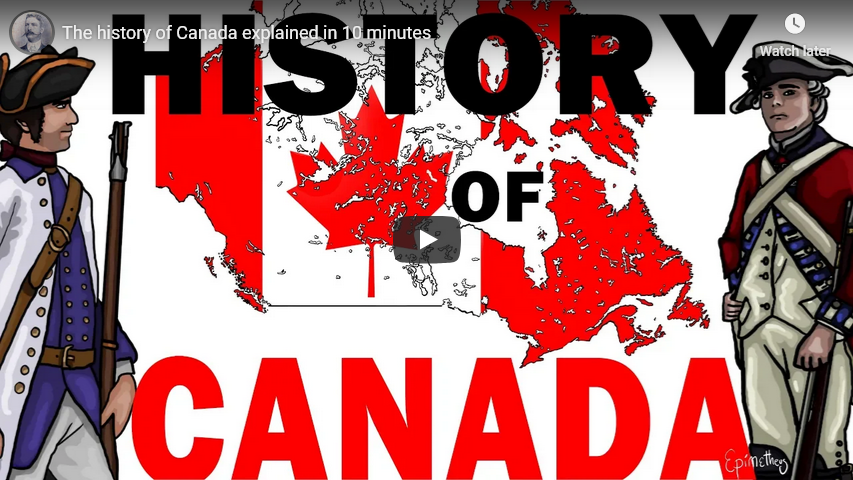
The Treaty of Trianon – The Most Controversial of the Peace Treaties I THE GREAT WAR 1920

The Great War
Published 13 Jun 2020

Sign up for Curiosity Stream and get Nebula bundled in: https://curiositystream.com/thegreatwar

The last of the big peace treaties signed in Paris that finalized the borders in Europe was the Treaty of Trianon. Even at the time, Hungarians considered it a historic injustice while nations such as Czechoslovakia, Romania and Yugoslavia were quite happy with the result. We examine how the treaty was signed and negotiated.

» SUPPORT THE CHANNEL
Patreon: https://www.patreon.com/thegreatwar
Merchandise: https://shop.spreadshirt.de/thegreatwar/

» SOURCES
Isaiah Bowman, The New World-Problems in Political Geography, (Yonkers-on-Hudson: World Book Company, 1921)

Francis Deák & Dezsó Ujváry, Paper and Documents Relating to the Foreign Relations of Hungary, Volume 1; 1919-1920, (Budapest: Royal Hungarian Ministry of Foreign Affairs, 1939)

Conan Fischer, Europe between democracy and dictatorship, 1900-1945, (Chichester: Malden, MA: Wiley-Blackwell, 2011)

Mike Gyula (ed.), Magyar Statisztikai Zsebkönyv, 1940 [Hungarian Statistical Pocket Book 1940], (Központi Statisztikai Hivatal: Budapest, 1940)

Róbert Győri & Charles W.J. Withers, “Trianon and its aftermath: British geography and
the ‘dismemberment’ of Hungary, c.1915-c.1922”, Scottish Geographical Journal, 135:1-2 (2019)

Michael Károlyi, Memoirs of Michael Károlyi: Faith Without Illusion (London: Jonathan Cape, 1956)

Jörn Leonhard, Der überforderte Frieden: Versailles und die Welt 1918-1923, (Bonn: bpp, Bundeszentrale für Politische Bildung, 2019)

C.A. Macartney, Hungary and her successors: the treaty of Trianon and its consequences 1919-1937, (London: Oxford University Press, 1937)

Margaret MacMillan, Paris 1919: Six Months That Changed the World, (London: Macmillan, 2019)

Arnold Suppan, The Imperialist Peace Order in Central Europe: Saint-Germain and Trianon, 1919–1920, (Vienna: Austrian Academy of Sciences Press, 2019)

Miklós Zeidler; Thomas J. DeKornfeld; Helen DeKornfeld, “Ideas on Territorial Revision in Hungary, 1920-1945”, East European Monographs, 717, (2010)
Miklós Zeidler, Trianon, (Budapest, Osiris, 2003.)

» SOCIAL MEDIA
Instagram: https://instagram.com/the_great_war
Twitter: https://twitter.com/WW1_Series
Reddit: https://reddit.com/r/TheGreatWarChannel

»CREDITS
Presented by: Jesse Alexander
Written by: Jesse Alexander
Director: Toni Steller & Florian Wittig
Director of Photography: Toni Steller
Sound: Toni Steller
Editing: Toni Steller
Mixing, Mastering & Sound Design: http://above-zero.com
Maps: Daniel Kogosov (https://www.patreon.com/Zalezsky)
Research by: Jesse Alexander
Fact checking: Florian Wittig

Channel Design: Alexander Clark
Original Logo: David van Stephold

A Mediakraft Networks Original Channel

Contains licensed material by getty images
All rights reserved – Real Time History GmbH 2020

June 13, 2020

The CHAZ is a little bit 1968, a little bit 1789, but perhaps more 1871

Filed under: France, Germany — Tags: , , , , , , — Nicholas @ 03:00

Lawrence W. Reed finds the developments in the Capitol Hill Autonomous Zone of Seattle remind him of the Paris Commune:

Otto von Bismarck talks with the captive Napoleon III after the Battle of Sedan in 1870.

“‘Autonomous zone’ has armed guards, local businesses being threatened with extortion.”

That was quite a striking headline to behold. My immediate reaction was, “Oh my gosh, the Paris Commune is back!”

Except that it wasn’t Paris, and it wasn’t 1871. It was Seattle, Washington, USA — today. According to multiple reports, radical protesters seized a six-block area of the city. They declared it a police-free fiefdom, posted armed guards at its perimeter, began extorting money from local businesses (normally called “taxation”) and were even requiring residents to provide ID to enter their own homes.

The Paris Commune that lasted just 70 days in the spring of 1871 was born amid the ruins of France’s wartime loss at the hands of Prussia in the fall of the previous year. When the Prussians captured France’s Emperor Napoleon III, the monarchy collapsed, and the French Third Republic was born. In Versailles, just a few miles from Paris, its leaders sat on their hands as Parisians stewed in the toxic juices of defeat, resentment, and a rising tide of Marxist-inspired class warfare. The voices of the big mouths increasingly drowned out those of the more moderate citizens who preferred to get the city back to normal and work for a living.

On March 18, 1871, the socialist radicals seized the upper hand in the City of Lights. They occupied government buildings and ousted or jailed their opposition. It was a “People’s Revolution” (unless you were one of the people who didn’t support it). Karl Marx’s communist scribblings provided the radicals — called “Communards” — with their primary inspiration, but Marx himself later criticized their failure to immediately seize the Bank of France and march on the government in Versailles. In the early days of the Paris Commune, however, he hoped he was witnessing a fulfillment of his own delusions:

    The struggle of the working class against the capitalist class and its state has entered upon a new phase with the struggle in Paris. Whatever the immediate results may be, a new point of departure of world-historic importance has been gained.

Barricades of the Paris Commune, April 1871. Corner of the Place de l’Hôtel-de-Ville and the Rue de Rivoli.
Photo by Pierre-Ambroise Richebourg (1818-1875) from the collection of the Metropolitan Museum of Art.

June 10, 2020

US Racism Against Germans, South African Neutrality and the Occupation of the Maginot – OOTF 013

Filed under: Africa, France, History, Italy, Military, USA, WW2 — Tags: , , , , — Nicholas @ 04:00

World War Two
Published 9 Jun 2020

Did the neutral US discriminate against German- and Italian-Americans? And exactly how pro-Axis was South Africa? And what happened to the Maginot Line after the Fall of France? Find out as Indy answers three more of your interesting questions in this episode of Out of the Foxholes!

Join us on Patreon: https://www.patreon.com/TimeGhostHistory
Or join The TimeGhost Army directly at: https://timeghost.tv

Follow WW2 day by day on Instagram @World_war_two_realtime https://www.instagram.com/world_war_t…
Between 2 Wars: https://www.youtube.com/playlist?list…
Source list: http://bit.ly/WW2sources

Hosted by: Indy Neidell
Written by: Rune Væver Hartvig
Director: Astrid Deinhard
Producers: Astrid Deinhard and Spartacus Olsson
Executive Producers: Astrid Deinhard, Indy Neidell, Spartacus Olsson, Bodo Rittenauer
Creative Producer: Joram Appel
Post-Production Director: Wieke Kapteijns
Research by: Rune Væver Hartvig
Edited by: Mikołaj Cackowski
Sound design: Marek Kamiński
Map animations: Eastory (https://www.youtube.com/c/eastory)

Colorizations by:
Carlos Ortega Pereira, BlauColorizations – https://www.instagram.com/blaucolorizations
Norman Stewart – https://oldtimesincolor.blogspot.com/
Klimbim – https://www.flickr.com/photos/2215569…
Albert Einstein by Wayne Degan

Sources:
IWM Q 101768, TR 1262, Q 72178
Narodowe Archiwum Cyfrowe
Bundesarchiv
Les Bergers des Pierres – Moselle Association
from the Noun Project: id by Flatart, Fingerprint Recognition by Olena Panasovska, people by ProSymbols

Soundtracks from the Epidemic Sound:
Reynard Seidel – “Deflection”
Johannes Bornlof – “Deviation In Time”
Fabien Tell – “Last Point of Safe Return”
Philip Ayers – “Trapped in a Maze”
Johannes Bornlof – “The Inspector 4”

Archive by Screenocean/Reuters https://www.screenocean.com.

A TimeGhost chronological documentary produced by OnLion Entertainment GmbH.
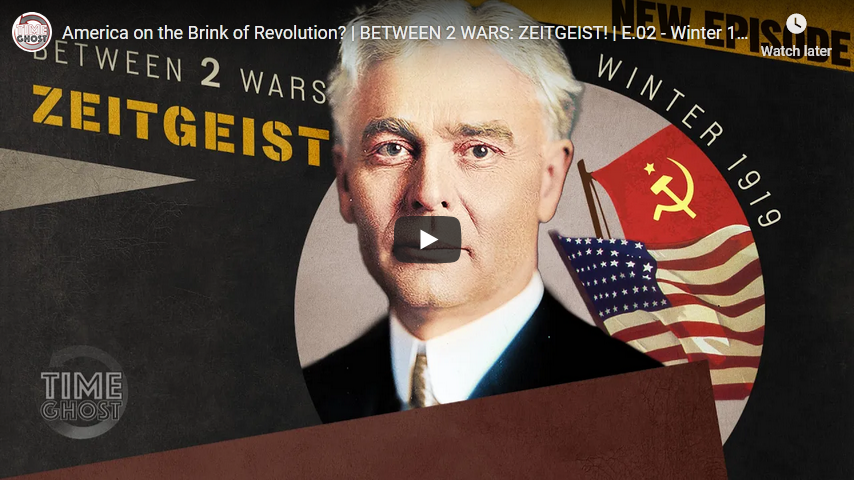
June 9, 2020

Hiding your Army | Military Camouflage | The Tank Museum

Filed under: Britain, France, Germany, History, Military, Russia, USA, WW1, WW2 — Tags: , , , , , , — Nicholas @ 04:00

The Tank Museum
Published 10 May 2020

Curator David Willey talks to you about military camouflage, from home! He takes a look at military uniform and vehicles.

https://tankmuseumshop.org/

Support the work of The Tank Museum on Patreon: ► https://www.patreon.com/tankmuseum
Visit The Tank Museum SHOP & become a Friend: ► https://tankmuseumshop.org/

Twitter: ► https://twitter.com/TankMuseum
Instagram: ► https://www.instagram.com/tankmuseum/
Tiger Tank Blog: ► http://blog.tiger-tank.com/
Tank 100 First World War Centenary Blog: ► http://tank100.com/

June 6, 2020

Pope Fights 3 — The Italian Wars: History Summarized

Overly Sarcastic Productions
Published 5 Jun 2020

It’s time for a POPE FIIIIIIIIIIIIGHT!!!!! Gather ’round and listen to a tale of the utter nonsense that is the Renaissance Papacy. We’ll look at the Pontifical careers of Rodrigo Borgia, Julius II, Leo X, and Clement VII.

SOURCES & Further Reading: Rome: A History In Seven Sackings by Kneale, A History of Venice by Norwich.

This video was edited by Sophia Ricciardi AKA “Indigo”. https://www.sophiakricci.com/
Our content is intended for teenage audiences and up.

PATREON: https://www.Patreon.com/OSP

MERCH LINKS: https://www.redbubble.com/people/OSPY…

OUR WEBSITE: https://www.OverlySarcasticProductions.com
Find us on Twitter https://www.Twitter.com/OSPYouTube
Find us on Reddit https://www.Reddit.com/r/OSP/

« Newer PostsOlder Posts »

Powered by WordPress