
Clever banter can only be called “repartee” if it’s from the Repartée region of France. Otherwise it’s just sparkling wit.
Daniel Hannan, Twitter, 2020-11-06.
February 12, 2021
QotD: Repartee
Comments Off on QotD: Repartee
February 10, 2021
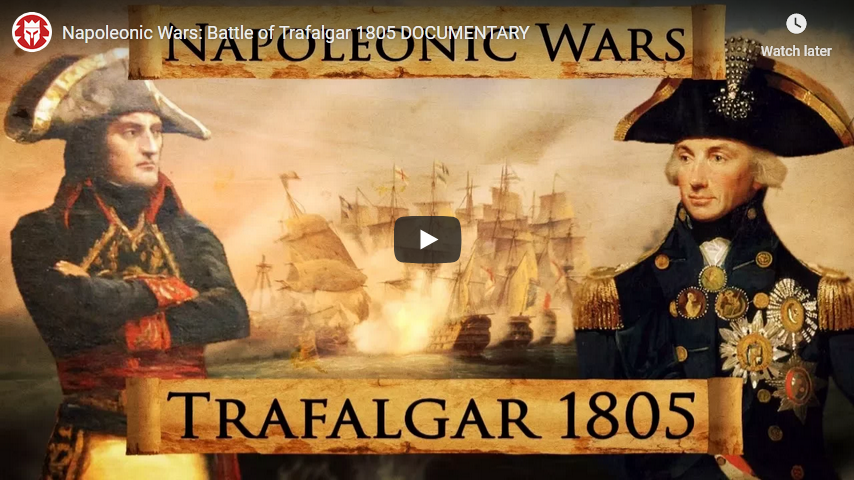
Napoleonic Wars: Battle of Trafalgar 1805
Kings and Generals
Published 5 Nov 2017Napoleon Bonaparte fought all his battles on land, but no other battle influenced his military and political decisions as the battle of Trafalgar that was fought in 1805 off the coast of Spain between the allied Franco-Spanish fleet lead by the admirals Pierre-Charles Villeneuve and Federico Gravina and the Royal Navy of the United Kingdom commanded by the admirals Horatio Nelson and Cuthbert Collingwood. This is our first video on the War of the Third Coalition and second video in this series. We hope to have much more and cover all the Napoleonic Wars.
Support us on Patreon: http://www.patreon.com/KingsandGenerals or Paypal: http://paypal.me/kingsandgenerals
We are grateful to our patrons, who made this video possible: Koopinator, Daisho, Łukasz Maliszewski, Nicolas Quinones, William Fluit, Juan Camilo Rodriguez, Murray Dubs, Dimitris Valurdos, Félix Gagné-Dion, Fahri Dashwali, Kyle Hooton, Dan Mullen, Mohamed Thair, Pablo Aparicio Martínez, Iulian Margeloiu, Chet, Nick Nasad, Jeyares, Amir Eppel, Thomas Bloch, Uri Sternfeld, Juha Mäkelä, Georgi Kirilov, Moe Mia, Daniel Yifrach, Brian Crane, Muramasa, Gerald Tnay, Hassan Ali and Richie Thierry.
This video was narrated by good friend Officially Devin. Check out his channel for some kick-ass Let’s Plays. https://www.youtube.com/user/Official…
The Machinimas for this video are created by one more friend – ltflak. Check out his channel for some great Let’s Plays and Machinimas: https://www.youtube.com/user/ltflak
✔ Twitch ► https://www.twitch.tv/nurrrik_phoenix
✔ Twitter ► https://twitter.com/KingsGenerals
✔ Instagram ► https://www.instagram.com/nurrrrrik
✔ Steam ► http://steamcommunity.com/id/nurrrikInspired by: BazBattles, Invicta (THFE), Epic History TV, Historia Civilis and Time Commanders
Machinimas made on the Napoleon Total War
Production Music courtesy of Epidemic Sound and Total War Napoleon: http://www.epidemicsound.com
Songs used:Epidemicsound:
“Slaves” – Gunnar Johnsén
“At The Front” – Johan Hynynen
“Battle Ostinato 3” – Valdemar HansenTotal War Napoleon:
Richard Beddow – “Corsica, Humble Beginnings”
Ian Livingstone – “The Battle At Arcole”
Richard Beddow – “HMS Victory”
Richard Beddow – “The End”
Comments Off on Napoleonic Wars: Battle of Trafalgar 1805
February 8, 2021
Why Everybody Disagrees on the Efficacy of the English Longbow – A Video Essay
SandRhoman History
Published 7 Feb 2021Everybody quarrels over the efficacy of the English longbow. Many historians, reenactors and history enthusiasts alike hold the view that arrows piercing armor is a myth. Some base this view on testing as was done for example by Tod from Tod’s workshop. Together with his team, he provided an invaluable data point for this debate. Others, such as traditionalist historians are often open to the possibility of arrows piercing armor, even though they are aware of actual testing of the longbow. In general, the efficacy of a weapon is much more complicated than its mere armor penetration value. So, in this video we’d like to shed light on the whole debate and explain why it is so hard to find common ground on this issue. This is why everybody disagrees on the efficacy of the English longbow.
Patreon: https://www.patreon.com/sandrhomanhis…
Twitter: https://twitter.com/Sandrhoman
Tod’s Video: ARROWS vs ARMOUR – Medieval Myth Busting https://youtu.be/DBxdTkddHaE
Tod’s playlist: MEDIEVAL MYTH BUSTING https://youtube.com/playlist?list=PLI…
Bibliography:
Rogers, C.J., The Efficacy of the English Longbow, 1998.
Devries, K., Medieval Military Technology, 1994.
Bane, M., “English Longbow Testing against various armor circa 1400”, 2006.
Soar, H., Gibbs, J., Jury, C., Stretton, M., Secrets of the English War Bow. Westholme, 2010, pp. 127–151.
Magier, Mariusz; Nowak, Adrian; et al., “Numerical Analysis of English Bows used in Battle of Crécy”. Problemy Techniki Uzbrojenia. 142 (2), 2017, 69–85.

Comments Off on Why Everybody Disagrees on the Efficacy of the English Longbow – A Video Essay
February 5, 2021
The 369th Infantry Regiment in WW1 – the “Harlem Hellfighters”
Lawrence W. Reed remembers the US regiment that spent the most days in combat during WW1 and was awarded the French Croix de Guerre for the unit’s incredible fighting efforts:
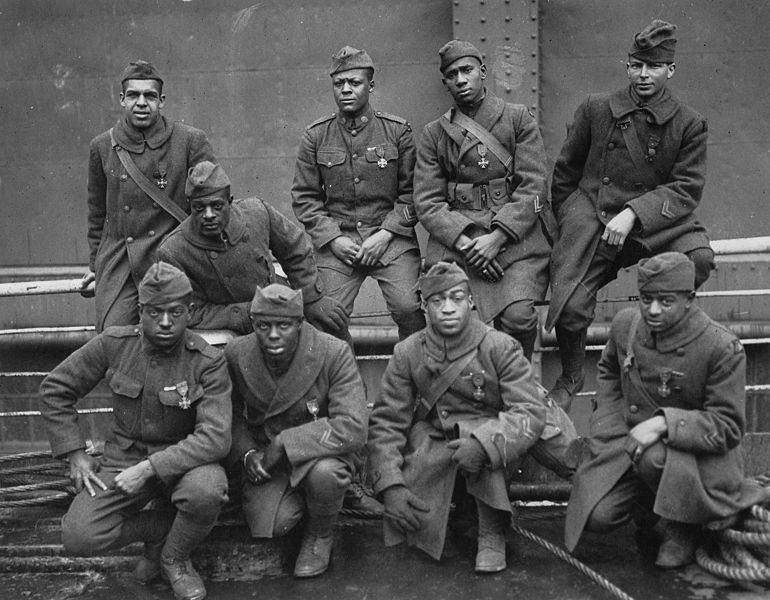
“Some of the colored men of the 369th (15th N.Y.) who won the Croix de Guerre for gallantry in action.” Left to right. Front row: Pvt. Ed Williams, Herbert Taylor, Pvt. Leon Fraitor, Pvt. Ralph Hawkins. Back Row: Sgt. H. D. Prinas, Sgt. Dan Strorms, Pvt. Joe Williams, Pvt. Alfred Hanley, and Cpl. T. W. Taylor.
Records of the War Department General and Special Staffs via Wikimedia Commons.
Formed from a New York National Guard unit, the men of the 369th learned basic military practices at Camp Whitman, New York, before being sent to Camp Wadsworth in Spartanburg, South Carolina, for combat training. They were not welcomed by many of the locals there, and some were subjected to discrimination and vile epithets for no more reason than their color. In December 1917, they were shipped to France where they expected to see action on the front lines.
Their high spirits were quickly dashed when it became apparent the Army did not want to deploy them for anything other than manual labor, far from the fighting. Even the rifles they brought with them were confiscated by US Army officials.
The commander of the American Expeditionary Force, General John J. Pershing, was reluctant to commit any US troops to the front until he felt he had assembled them in sufficient numbers to ensure victory. The French, meanwhile, were desperate for manpower. Finally bowing to French pressure, Pershing gave them the 369th. While some regarded black troops as expendable, they ultimately proved themselves indispensable.
Consider this amazing record of the Harlem Hellfighters: No American unit experienced more time in combat than they did — no less than 191 days under fire. They never lost an inch of ground. The enemy never captured a single of their number. They suffered the highest casualty rate of any US regiment. None deserted. The grateful French bestowed their highest military honor, the Croix de Guerre, upon the entire regiment. Many individuals of the regiment received the US Army’s second-highest award, the Distinguished Service Cross. Posthumously, Henry Johnson received America’s Medal of Honor in 2015. The 369th ended up as the most decorated US regiment of the war.
Another distinguishing feature of the Harlem Hellfighters was their band, the largest and best-known of any regiment. Its leader was James Reese Europe, whose enlistment in 1917 proved to be a boon for recruitment. He was one of America’s best-known black musicians and others like Noble Sissle, who became Europe’s lieutenant and lead vocalist, were eager to serve with him.
Europe’s band was extremely popular with the French, even when Europe introduced his own arrangement of La Marseillaise, France’s national anthem. The Hellfighters’ band brought both jazz and ragtime music to France, where nobody had heard either before.
Comments Off on The 369th Infantry Regiment in WW1 – the “Harlem Hellfighters”
January 24, 2021
The Great Wine Blight
The History Guy: History Deserves to Be Remembered
Published 9 Sep 2020In the 19th century, the Great Wine Blight threatened the very existence of grapes. But the pestilence brought into Europe by American vines was eradicated by the use of those very same vines. The History Guy recalls how American indigenous vines saved the wine industry, and how you can help to preserve its future.
This is original content based on research by The History Guy. Images in the Public Domain are carefully selected and provide illustration. As very few images of the actual event are available in the Public Domain, images of similar objects and events are used for illustration.
Special thanks to Stone Hill Winery, Hermann, Missouri:
https://stonehillwinery.comYou can purchase the bow tie worn in this episode at The Tie Bar:
All events are portrayed in historical context and for educational purposes. No images or content are primarily intended to shock and disgust. Those who do not learn from history are doomed to repeat it. Non censuram.
Find The History Guy at:
Patreon: https://www.patreon.com/TheHistoryGuyThe History Guy: History Deserves to Be Remembered is the place to find short snippets of forgotten history from five to fifteen minutes long. If you like history too, this is the channel for you.
Awesome The History Guy merchandise is available at:
teespring.com/stores/the-history-guy
Script by CDH
#history #thehistoryguy #wine

Comments Off on The Great Wine Blight
January 8, 2021
Renault’s Backwards Car
Big Car
Published 12 Oct 2020Renault’s Project 900 is certainly an odd-looking car, but it’s also a car designed to break new ground. It used innovative new materials and gave class-leading visibility to try to leapfrog the competition. It also seems they were trying to beat their competition in the “weird” category as well, which given they were up against Citroën was no mean feat! So, what happened to Renault’s backwards car, and what echoes of this strange but innovative design are there in today’s cars?
To get early ad-free access to new videos, or your name at the end of my videos, please consider supporting me from just $1 or 80p a month at https://www.patreon.com/bigcar
Link to my second channel – Little Car: https://www.youtube.com/littlecar
Get Big Car t-shirts, mugs or a tote bag at teespring.com/stores/bigcartv
#bigcar

Comments Off on Renault’s Backwards Car
December 30, 2020
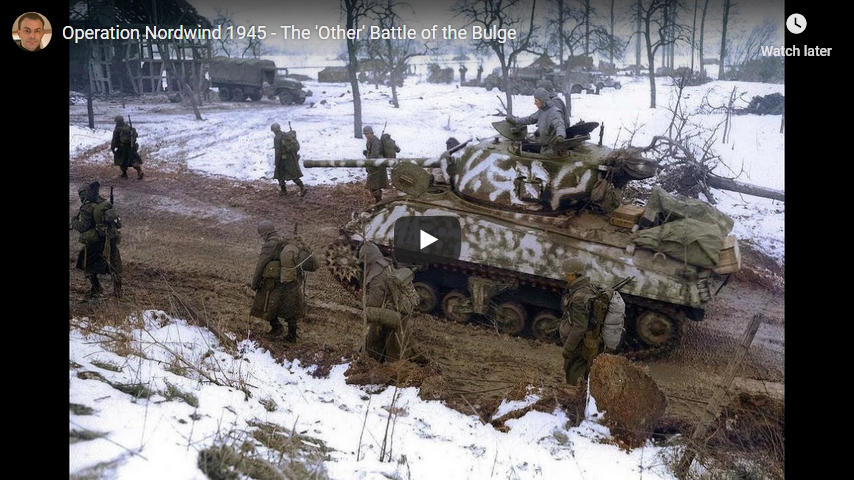
Operation Nordwind 1945 – The ‘Other’ Battle of the Bulge
Mark Felton Productions
Published 29 Dec 2020The stories of the last big German offensives on the Western Front in WWII — Operations Nordwind and Sonnenwende in Alsace, France, January 1945.
Dr. Mark Felton is a well-known British historian, the author of 22 non-fiction books, including bestsellers Zero Night and Castle of the Eagles, both currently being developed into movies in Hollywood. In addition to writing, Mark also appears regularly in television documentaries around the world, including on The History Channel, Netflix, National Geographic, Quest, American Heroes Channel and RMC Decouverte. His books have formed the background to several TV and radio documentaries. More information about Mark can be found at: https://en.wikipedia.org/wiki/Mark_Fe…
Help support my channel:
https://www.paypal.me/markfeltonprodu…
https://www.patreon.com/markfeltonpro…Disclaimer: All opinions and comments expressed in the ‘Comments’ section do not reflect the opinions of Mark Felton Productions. All opinions and comments should contribute to the dialogue. Mark Felton Productions does not condone written attacks, insults, racism, sexism, extremism, violence or otherwise questionable comments or material in the ‘Comments’ section, and reserves the right to delete any comment violating this rule or to block any poster from the channel.
Comments Off on Operation Nordwind 1945 – The ‘Other’ Battle of the Bulge
December 29, 2020
The Economics of Wine (Orley Ashenfelter, Princeton)
Marginal Revolution University
Published 30 Sep 2020What does an economist know about wine? Given that many wines need years to mature, how can one predict which ones will be great or not?
Princeton’s Orley Ashenfelter explains how he used economic principles and regression analysis to predict wine quality (and score great deals!). His research helped spawn an entire field dedicated to the economics of wine.
This video is based on the following paper:
Predicting the Quality and Prices of Bordeaux Wines By Orley Ashenfelter
https://www.researchgate.net/publicat…More of Orley Ashenfelter’s work: https://irs.princeton.edu/people/orle…
Orley Ashenfelter’s vineyard: https://cedarrosevineyards.com/
Want to see more Economists in the Wild? Check out our series: https://mru.io/economists-wild-67905

Comments Off on The Economics of Wine (Orley Ashenfelter, Princeton)
December 18, 2020
When Movies Were Magic (3D glasses recommended)
Atun-Shei Films
Published 8 Sep 2020A brief history of early motion picture technology and artistry, from the magic lantern to Georges Méliès. Presented in glorious 3-D!!!
To fully enjoy this video, you will need a pair of red/blue anaglyph 3-D glasses. They can be acquired cheaply at a number of online vendors, and you can even make them at home by coloring sheets of clear plastic with permanent markers: https://www.wikihow.com/Make-Your-Own…
Support Atun-Shei Films on Patreon ► https://www.patreon.com/atunsheifilms
Leave a Tip via Paypal ► https://www.paypal.me/atunsheifilms (All donations made here will go toward the production of The Sudbury Devil, our historical feature film)
Buy Merch ► https://www.teespring.com/stores/atun…
#FilmHistory #MagicLantern #3D
Reddit ► https://www.reddit.com/r/atunsheifilms
Twitter ► https://twitter.com/atun_shei~REFERENCES~
[1] William Godwin. Lives of the Necromancers (1834). Project Gutenberg https://www.gutenberg.org/cache/epub/…
[2] Paul Clee. Before Hollywood: From Shadow Play to the Silver Screen (2005). Houghton Mifflin, Page 12-21
[3] Chris Bennett. “The Psychedelic Phantasmagoria Shows of the 18th Century” (2018). Cannabis Culture https://www.cannabisculture.com/conte…
[4] Clee, Page 39-47
[5] Clee, Page 84-85
[6] “Dissolving View Magic Lantern Slides.” Magic Lantern World https://magiclanternist.com/2016/09/2…
[7] “A Color Photograph Pioneer Comes to Light” (2018). The European Synchrotron https://www.esrf.eu/home/news/general…
[8] Clee, Page 83
[9] Clee, Page 85-95
[10] “Freeze Frame: Eadweard Muybridge’s Photography of Motion” (2000). National Museum of American History https://americanhistory.si.edu/muybri…
[11] “Sallie Garner at a Gallop.” IMDB https://www.imdb.com/title/tt2221420/…
[12] Laurent Mannoni. “Etienne-Jules Marey: French Physiologist and Chronophotographer.” Who’s Who of Victorian Cinema https://www.victorian-cinema.net/marey
[13] Clee, Page 107-109
[14] Harald Sack. “The Kinetoscope and Edison’s Wrong Way to Invent the Cinema” (2020). SciHi Blog http://scihi.org/kinetoscope-edison/
[15] Clee, Page 127
[16] Clee, Page 139-141
[17] James Travers. “Georges Méliés Biography: Life and Films” (2017). FrenchFilms.org http://www.frenchfilms.org/biography/…
[18] Clee, Page 158-159

Comments Off on When Movies Were Magic (3D glasses recommended)
December 13, 2020
Islamism and the French Republic
Niccolo Soldo talks to Pascal-Emmanuel Gobry about the rise of Islamism in France and the dangers it poses:

Brigitte Macron and Emmanuel Macron, 11 November, 2018.
Photo from the office of the President of Ukraine via Wikimedia Commons, CC-BY-4.0.
Islamism presents an existential threat to the French Republic. Statements are being made, positions are being taken, and the smell of action is in the air to counter this threat. Will we see a follow through from Macron?
Your guess is as good as mine. Macron is hard to predict. Although there are many reasons to be pessimistic, from French elites’ general lack of follow-through to Macron’s own (I believe, sincere and deeply-held) commitment to so-called “liberal values”, I will note that it hasn’t been all talk. BarakaCity (the biggest Muslim NGO in France) whose leaders happen to think ISIS is misunderstood, was shut down by executive decree. CCIF, a prominent “anti-islamophobia” organization, dissolved itself after the government announced its intent to shut it down. So an important Rubicon has been crossed, at least in principle: the French government has rhetorically and legally committed itself to combating not just those who engage in Islamist violence, but those who engage in Islamist advocacy and activism.
Can France’s secularism hold on in light of this challenge? Islamism is rather dynamic, and secularism lacks the ingredients for fanaticism that only the irrational are able to muster. In many countries it seems that only the elites are strongly-wedded to secularism.
I’ll let you in on a little secret we don’t share with foreigners: nobody in France believes in “laïcité“, it’s all a code to say we don’t like Islam. We have a freaking concordat, for crying out loud!
The entire notion that there is this specific French culture of “laïcité” that goes beyond institutional separation of church and state was a retcon invented in the 1980s when the Muslim population became too big to ignore. Nobody — nobody — is fooled that banning the hijab in public schools as well as “large ostentatious crosses” is a neutral secularist measure.
Today some people are claiming that wearing religious garb in the National Assembly is a breach of laïcité, but after the War the Canon Kir sat as a member of Parliament in his cassock for twenty years and nobody had any problem with it. (My favorite Kir story: during a late-night parliamentary session, a Communist deputy asked him “How come you believe in God, even though you’ve never seen him?” “What about my asshole? You’ve never seen it, yet you know it exists!”)
The fig leaf of laïcité was useful, and perhaps still is, as politically correct cover for defending French identity, but over time it will have to be discarded. There are signs that it’s beginning.
The bottom line is that France has always been assimilationist. The idea is that assimilation was invented by the Republic, but it’s not true. When Louis XIV invaded a province, he would create schools with scholarships for poor, talented youth from those places to “turn them into Frenchmen.” The self-conscious project of the French Kings was to restore the Roman Empire, and this bequeathed to us the Roman concept of citizenship: laws, language, and culture. This is what is behind “laïcité.” This assimilationism therefore has deep roots, and it is perfectly legitimate that we demand of immigrants that they assimilate into our culture, which is inescapably Judeo-Christian.
H/T to Colby Cosh for the link.
Comments Off on Islamism and the French Republic
December 9, 2020
Historical Models Summarized: The Military Expedition
Overly Sarcastic Productions
Published 18 Feb 2016Today, Blue discusses recurring themes in history! This one’s the Military Expedition, aka what happens when a powerful military juggernaut gets too big for its britches and starts saying stuff like “too big to fail” unironically.
Blue: If you’re curious about the weird chart/graph thing blue showed during the Napoleon segment, look up Charles Joseph Minard [mentioned here and here], the guy who made it. It’s a really cool chart that shows the size of the army as it traveled across Russia (tan) and back (black). You can see how perilous the journey was based on how narrow the line gets. Graphs are cool.

Comments Off on Historical Models Summarized: The Military Expedition
December 4, 2020
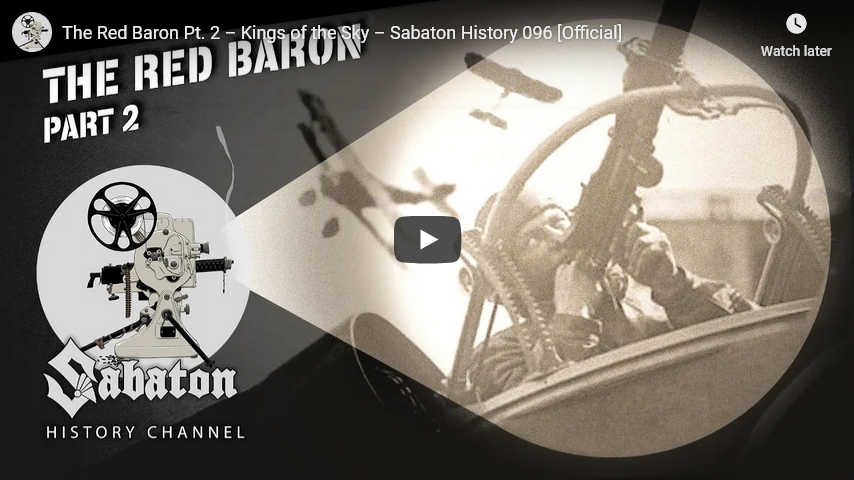
“The Red Baron Pt. 2” – Kings of the Sky – Sabaton History 096 [Official]
Sabaton History
Published 3 Dec 2020They were the Aces in the sky — proud knights who flew their planes into deadly combat. Loved by the public, feared by their enemies, the victorious pilots of the Great War rose to prominence as gallant heroes. But the personal stories of those celebrated pilots were also memories full of excruciating pain, of terrible loss, and inner struggle. Body and mind of those aces were broken by the constant danger of fighting in the air. Those who survived bore more than a few scars.
Support Sabaton History on Patreon: https://www.patreon.com/sabatonhistory
Listen to “The Red Baron” on the album The Great War: https://music.sabaton.net/TheGreatWar
Watch the Official Lyrics Video of “The Red Baron” here: https://www.youtube.com/watch?v=3PXzg…
Listen to Sabaton on Spotify: http://smarturl.it/SabatonSpotify
Official Sabaton Merchandise Shop: http://bit.ly/SabatonOfficialShopHosted by: Indy Neidell
Written by: Markus Linke and Indy Neidell
Directed by: Astrid Deinhard and Wieke Kapteijns
Produced by: Pär Sundström, Astrid Deinhard and Spartacus Olsson
Creative Producer: Maria Kyhle
Executive Producers: Pär Sundström, Joakim Brodén, Tomas Sunmo, Indy Neidell, Astrid Deinhard, and Spartacus Olsson
Community Manager: Maria Kyhle
Post-Production Director: Wieke Kapteijns
Editor: Karolina Dołęga
Sound Editor: Marek Kamiński
Maps by: Eastory – https://www.youtube.com/c/eastory
Archive: Reuters/Screenocean – https://www.screenocean.comSources:
– National Archives NARA
– Imperial War Museums: EB1911, Q33851, Q33725, Q33875, Q23897, Q 105765, ART 1611, Q 63852, Q 63850, Q 93660, Q 55479, Q 60799, Q 10331, Q 67114, Q 66540,
– Library of Congress
– The Board of Trustees of the Science Museum
– Wellcome Images
– Icons form The Nano Project: iron cross By Souvik Maity, IN ld Plane by LUTFI GANI AL ACHMAD,
– planes of World War 1 courtesy of 11Amanda on Wikimedia CommonsAll music by: Sabaton
An OnLion Entertainment GmbH and Raging Beaver Publishing AB co-Production.
© Raging Beaver Publishing AB, 2019 – all rights reserved.
Comments Off on “The Red Baron Pt. 2” – Kings of the Sky – Sabaton History 096 [Official]
December 2, 2020
The Nazis: Most Notorious Art Thieves in History – WW2 Special
World War Two
Published 1 Dec 2020During their occupation of large parts of Europe, the Nazis systematically looted foreign countries for art, gold and other items holding financial or cultural value. Often not for any larger purpose, but for their own, egocentric, criminal gain.
Join us on Patreon: https://www.patreon.com/TimeGhostHistory
Or join The TimeGhost Army directly at: https://timeghost.tvFollow WW2 day by day on Instagram @ww2_day_by_day – https://www.instagram.com/ww2_day_by_day
Between 2 Wars: https://www.youtube.com/playlist?list…
Source list: http://bit.ly/WW2sourcesHosted by: Indy Neidell
Written by: Joram Appel
Director: Astrid Deinhard
Producers: Astrid Deinhard and Spartacus Olsson
Executive Producers: Astrid Deinhard, Indy Neidell, Spartacus Olsson, Bodo Rittenauer
Creative Producer: Maria Kyhle
Post-Production Director: Wieke Kapteijns
Research by: Joram Appel
Edited by: Karolina Dołęga
Sound design: Marek Kamiński
Map animations: Eastory (https://www.youtube.com/c/eastory)Colorizations by:
– Klimbim
– Daniel Weiss
– Norman Stewart – https://oldtimesincolor.blogspot.com/
– Dememorabilia – https://www.instagram.com/dememorabilia/
– Spartacus OlssonSources:
– Bundesarchiv
– Yad Vashem: 73_1_34, 72GO8, 03_198, 73_1_23, 99co5, 186_271, 99co6, 16_28,
– United States Holocaust Memorial Museum ID EA 65940
– RijksmuseumSoundtracks from Epidemic Sound:
– “The Inspector 4” – Johannes Bornlöf
– “London” – Howard Harper-Barnes
– “Moving to Disturbia” – Experia
– “Break Free” – Fabien Tell
– “Remembrance” – Fabien Tell
– “Disciples of Sun Tzu” – Christian AndersenArchive by Screenocean/Reuters https://www.screenocean.com.
A TimeGhost chronological documentary produced by OnLion Entertainment GmbH.
From the comments:
World War Two
1 hour ago
Throughout history, people have obsessed with hidden treasure of past thieves. There were plenty of hidden art and gold collections left behind by the Nazis, often in caves or vaults. Many were found after the war by the several Allied units tasked with locating valuables. While finding some Nazi gold stash still sounds exciting, we should not forget the story behind this loot. Writing this episode, the exciting nature of it quickly faded once I fully realised how thousands of normal people were robbed of everything they owned – including their lives. The thievery of valuables can not be seen outside of the context of Nazi racial policies and ultimately the murder of millions in the Holocaust. The top Nazis truly reconfirm their true criminal nature in this episode, not caring a bit about anything other than themselves.Cheers,
Joram

Comments Off on The Nazis: Most Notorious Art Thieves in History – WW2 Special
November 24, 2020
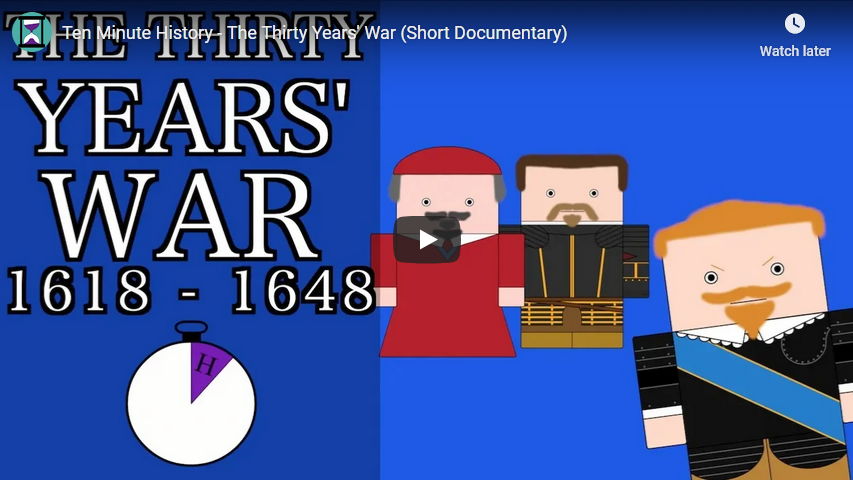
Ten Minute History – The Thirty Years’ War
History Matters
Published 30 Sep 2018Twitter: https://twitter.com/Tenminhistory
Patreon: https://www.patreon.com/user?u=4973164Special Thanks to the following Patrons for their support on Patreon:
Chris Fatta
Joshua
Mitchell Wildoer
Mason Cox
William Foster
Thomas Mitchell
Perry Gagne
Shaun Pullin
Anon
Spencer Smith
Matt M
RbjThis episode of Ten Minute History (like a documentary, only shorter) covers the outbreak of the Bohemian Revolt which was what would eventually spiral out of control into the Thirty Years’ War. The revolt was crushed fairly quickly but sparked intervention by Denmark, who didn’t do too well, and later Sweden who did very well. Both of these were aided by France who decided to get directly involved in 1635. By 1648 the Holy Roman Empire lay in ruins, with Austria and Spain struggling to pay for the war and rebuild the Habsburg Empire. This war saw the rise of Sweden and France but most importantly saw the foundations of modern diplomacy built.
Recommended books:
Mark Greengrass – Christendom Destroyed: Europe 1517-1648. Does a great job of outlying the theological currents in Europe at the time and how all of the religious changes led to the Thirty Years’ War.
Peter H. Wilson – Europe’s Tragedy: A New History of the Thirty Years’ War. The go-to text for the war; incredibly detailed and honestly can’t be beat for the topic. 100% recommend.
Comments Off on Ten Minute History – The Thirty Years’ War
November 20, 2020
Patton marches on Shreveport, Romania vs. USSR, and Free French intelligence – WW2 – OOTF 019
World War Two
Published 19 Nov 2020How did the non-German Axis fare against the Soviet Union? What was the intelligence agency of the Free French like? And what were the Louisiana Maneuvers? All these questions are answered in this edition of Out of the Foxholes.
Join us on Patreon: https://www.patreon.com/TimeGhostHistory
Or join The TimeGhost Army directly at: https://timeghost.tvFollow WW2 day by day on Instagram @ww2_day_by_day – https://www.instagram.com/ww2_day_by_day
Between 2 Wars: https://www.youtube.com/playlist?list…
Source list: http://bit.ly/WW2sourcesHosted by: Indy Neidell
Written by: Ian Irungu, Shaun Harrison, Dennis Stepanov
Director: Astrid Deinhard
Producers: Astrid Deinhard and Spartacus Olsson
Executive Producers: Astrid Deinhard, Indy Neidell, Spartacus Olsson, Bodo Rittenauer
Creative Producer: Maria Kyhle
Post-Production Director: Wieke Kapteijns
Research by: Ian Irungu, Shaun Harrison, Dennis Stepanov
Edited by: Karolina Dołęga
Sound design: Marek Kamiński
Map animations: Eastory (https://www.youtube.com/c/eastory)Colorizations by:
– Norman Stewart – https://oldtimesincolor.blogspot.com/
– Mikołaj UchmanSources:
– Bundesarchiv
– Library of Congress
– Imperial War Museums: MI 14/822/12
– The Icons from Noun Project: Letter by Mochammad Kafi, Headphones by Simon Child, Russian soldier by Wonmo Kang, Skull by Muhamad UlumSoundtrack from Epidemic Sound:
– “Break Free” – Fabien Tell
– “Moving to Disturbia” – Experia
– “Other Sides of Glory” – Fabien Tell
– “Please Hear Me Out” – Philip AyersArchive by Screenocean/Reuters https://www.screenocean.com.
A TimeGhost chronological documentary produced by OnLion Entertainment GmbH.

Comments Off on Patton marches on Shreveport, Romania vs. USSR, and Free French intelligence – WW2 – OOTF 019


