
World War Two
Published 18 Nov 2021The second front has been opened, and Allied forces are invading Vichy French Northwest Africa. But did you know that it could very well have been an invasion of Europe taking place right now instead? Let’s examine how this idea came about, and why it never worked out.
(more…)
November 19, 2021
The Allied 1942 Plan to Invade Europe – WW2 Special
Comments Off on The Allied 1942 Plan to Invade Europe – WW2 Special
November 18, 2021
When artillery became powerful enough to literally destroy castles
In Quillette, Paul Lockhart recounts one of the early artillery successes in European siege warfare, the reduction of the English-held fortifications at Odruik:
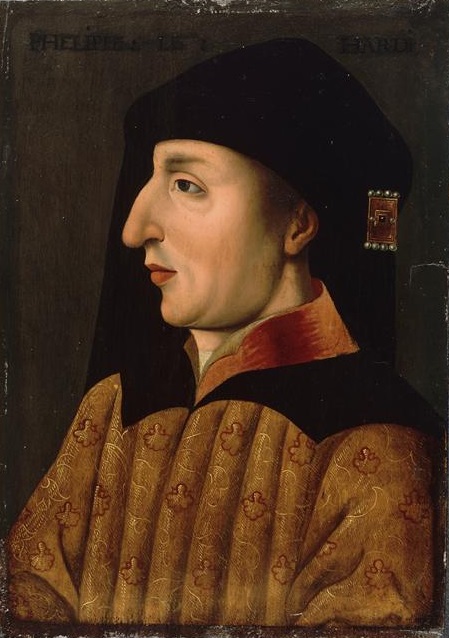
Portrtait of Philip the Bold (Philip II, Duke of Burgundy), 1342-1404.
Unknown painter of the Flemish School via Wikimedia Commons.
Philip the Bold, duke of Burgundy, was a warrior’s warrior. Hawk-nosed, ambitious, and brash, Philip had been a soldier since childhood. He was still a smooth-faced boy of 14 when he fought alongside his father, King John II of France, in the battle of Poitiers in 1356. Like King John, he was taken prisoner by the English when Edward, the Black Prince of Wales, vanquished the French on the field at Poitiers. A decade later, the duke, always looking for an advantage over the Englishmen who had invaded his country, embraced a novel technology: gunpowder.
This mysterious Asian invention had been known in Europe for more than a century, and for nearly that long European armies had used it as a weapon of war — or, more precisely, as the substance that made another recent innovation, the cannon, work. So far, gunpowder artillery had not shown great promise. Cannon had been used as siege engines in European warfare at least as early as the 1320s. But for all the trouble and effort they demanded, they had not proven themselves to be much more effective than conventional siege weapons such as catapults and trebuchets, machines that used mechanical energy to hurl projectiles at castle walls. Certainly, the early cannon did not appear to be effective enough to justify their cost, which was substantial.
But Philip the Bold saw promise in the new weapons, especially the huge siege guns that came to be known as bombards, and in 1369 he began to invest heavily in them. France and England were then locked in the on-again, off-again series of dynastic conflicts known today as the Hundred Years’ War (1337–1453). In 1377, when Duke Philip’s brother and sovereign, King Charles V of France, ordered him to attack the English in the Calais region, the duke answered the call, bringing with him more than 100 new cannon, including one monster of a gun that fired a stone cannonball weighing some 450 livres (around 485 pounds).
One of the duke’s intended targets was the English-held castle at Odruik, built with stout masonry walls and surrounded by a thick layer of outworks. Odruik would be a tough nut to crack. Its defenders seemed to think so, too, and were confident that they could hold out against Duke Philip’s army, even as the duke’s men began to put their huge siege cannon into position in full view of the castle walls.
The first few shots from Philip’s siege-battery hammered Odruik’s outer walls into dust. Soon, the stone cannonballs were sailing through the walls as if they weren’t there; soon after that, the outer walls actually weren’t there. After Philip’s guns had fired a grand total of about 200 rounds, much of Odruik’s once-proud walls lay in ruin, and before the duke could send his men through the breach and into the castle, Odruik’s defenders capitulated.
Philip the Bold’s triumph at Odruik in 1377 was a harbinger of things to come, a revealer of unsettling truths. Gunpowder artillery had been used in sieges before, but Odruik was its first overwhelming and clear-cut victory over a castle. The siege of Odruik demonstrated that — when the guns were big enough, and when there were enough of them — cannon were more powerful than any siege engine yet invented, and could knock down castles in a matter of hours. What happened at Odruik would be repeated over and over again at castles throughout continental Europe and the British Isles through the remainder of the Middle Ages and beyond.
It was one of the accepted “rules” of war that a besieged town that surrendered before the beseiging army conducted an infantry assault would be spared from sack … the theory being that once the fortifications had been overcome, the final outcome was not in doubt and the defenders lost no honour from the surrender. You can certainly understand why the citizens of the defended town would be eager to avoid the plunder and rapine of an assaulting army once the walls were breached.
Comments Off on When artillery became powerful enough to literally destroy castles
November 17, 2021
The Real History Behind The Forgotten Battle | Battle of Walcheren 1944
History With Hilbert
Published 10 Nov 2021The Forgotten Battle is a Dutch/Belgian Netflix war film set during the Battle of Walcheren in 1944, part of the Liberation of the Netherlands from German control following the successful D-Day landings of the Allies. In this video I look at the history of the Battle of the Scheldt and in particular the assault on Walcheren, as well as some of the other historical aspects covered by the film such as Dutchmen who served in the Waffen SS on the Eastern Front and the Dutch Resistance (De Ondergrondse) who fought against the German occupiers and aided the Allies in their push into the Netherlands.
@History Hustle’s excellent videos on Dutch Waffen SS units:
https://www.youtube.com/watch?v=bQlF0…Go Fund My Windmills (Patreon):
https://www.patreon.com/HistorywithHi…Join in the Banter on Twitter:
https://twitter.com/HistorywHilbertIndulge in some Instagram..?(the alliteration needs to stop):
https://www.instagram.com/historywith…0:00 – Intro
3:00 – Walcheren Remains In German Hands
4:14 – The Battle of Walcheren Causeway
6:18 – Operation Infatuate I & II
8:00 – Walcheren Is Captured
8:47 – Dutchmen Serving in the SS
10:18 – The Dutch Resistance In World War 2
13:04 – OutroSend me an email if you’d be interested in doing a collaboration! historywithhilbert@gmail.com
#WW2 #Netherlands #Netflix

Comments Off on The Real History Behind The Forgotten Battle | Battle of Walcheren 1944
Tank Chats #132 | Morris Light Reconnaissance Car | The Tank Museum
The Tank Museum
Published 23 Jul 2021David Fletcher is back with another Tank Chat discussing the Morris Light Reconnaissance Car.
(more…)
Comments Off on Tank Chats #132 | Morris Light Reconnaissance Car | The Tank Museum
November 15, 2021
QotD: Britain at war
England is the most class-ridden country under the sun. It is a land of snobbery and privilege, ruled largely by the old and silly. But in any calculation about it one has got to take into account its emotional unity, the tendency of nearly all its inhabitants to feel alike and act together in moments of supreme crisis. It is the only great country in Europe that is not obliged to drive hundreds of thousands of its nationals into exile or the concentration camp. At this moment, after a year of war, newspapers and pamphlets abusing the Government, praising the enemy and clamouring for surrender are being sold on the streets, almost without interference. And this is less from a respect for freedom of speech than from a simple perception that these things don’t matter. It is safe to let a paper like Peace News be sold, because it is certain that ninety-five per cent of the population will never want to read it. The nation is bound together by an invisible chain. At any normal time the ruling class will rob, mismanage, sabotage, lead us into the muck; but let popular opinion really make itself heard, let them get a tug from below that they cannot avoid feeling, and it is difficult for them not to respond. The left-wing writers who denounce the whole of the ruling class as “pro-Fascist” are grossly over-simplifying. Even among the inner clique of politicians who brought us to our present pass, it is doubtful whether there were any conscious traitors. The corruption that happens in England is seldom of that kind. Nearly always it is more in the nature of self-deception, of the right hand not knowing what the left hand doeth. And being unconscious, it is limited. One sees this at its most obvious in the English Press. Is the English press honest or dishonest? At normal times it is deeply dishonest. All the papers that matter live off their advertisements, and the advertisers exercise an indirect censorship over news. Yet I do not suppose there is one paper in England that can be straightforwardly bribed with hard cash. In the France of the Third Republic all but a very few of the newspapers could notoriously be bought over the counter like so many pounds of cheese. Public life in England has never been openly scandalous. It has not reached the pitch of disintegration at which humbug can be dropped.
George Orwell, “The Lion And The Unicorn: Socialism and the English Genius”, 1941-02-19.
Comments Off on QotD: Britain at war
November 14, 2021
Axis and Allies Both Invade France – WW2 – 168 – November 13, 1942
World War Two
Published 13 Nov 2021Operation Torch goes off this week, the Allied invasion of French Northwest Africa, but this prompts the Germans to invade Vichy France. This is the Allies’ first combined major offensive in the Western Hemisphere. The Germans launch another offensive of their own this week, though — Operation Hubertus in Stalingrad. And in the South Pacific, a major naval battle begins off Guadalcanal.
(more…)
Comments Off on Axis and Allies Both Invade France – WW2 – 168 – November 13, 1942
“Jungle Carbine” – the Lee Enfield No5 MkI Rifle
Forgotten Weapons
Published 4 Aug 2021http://www.patreon.com/ForgottenWeapons
https://www.floatplane.com/channel/Fo…
Cool Forgotten Weapons merch! http://shop.forgottenweapons.com
Today I am concluding our series on the standard-issue Lee Enfield system with the No5 MkI — the “jungle carbine”. Developed in 1943 as a shorter and handier pattern of rifle than the No4, the carbine went into production in 1944 and saw use during World War Two. It featured a number of lightening cuts, as well as a shortened barrel, conical flash hider, side-mounted sling, 800-yard sights, and rubber buttpad. Unfortunately, the No5 was beset by a problem of “wandering zero”. A significant number of the rifles failed to properly hold zero when they were widely issued. The problem was never fully resolved, but appears to have been the result of receiver flex due to the lightening cuts. Efforts to fix it were essentially abandoned, as it was recognized that a new self-loading rifle was going to be adopted soon, and it would be a waste of time and money to continue development of the Lee Enfield by that point.
Contact:
Forgotten Weapons
6281 N. Oracle 36270
Tucson, AZ 85740

Comments Off on “Jungle Carbine” – the Lee Enfield No5 MkI Rifle
November 13, 2021
Here’s Looking at You, Bill – The Secret Preparations for Operation Torch – WW2 – Spies & Ties 10
World War Two
Published 12 Nov 2021To smooth the way for the Allied invasion of French North Africa, Operation Torch, a massive spy operation is set up in 1941 and 42.
(more…)
Comments Off on Here’s Looking at You, Bill – The Secret Preparations for Operation Torch – WW2 – Spies & Ties 10
Creation of Israel
The Cold War
Published 1 Jun 2019Our series on the history of the Cold War period continues with a documentary on the creation of Israel, Zionist movement, reactions and diplomatic maneuvers of other states and the build-up to first Arab-Israeli war
Consider supporting us on Patreon: https://www.patreon.com/thecoldwar

Comments Off on Creation of Israel
QotD: Boris Johnson as Billy Bunter, the “Fat Owl of the Remove”
Although a spokesman for the Scottish police said, with tongue so far in cheek that it was astonishing they could speak, “Operational names are auto-generated by computer and can be changed if they are deemed to be inappropriate”, the comparison between the Prime Minister and Frank Richards’ legendary creation Billy Bunter, the “Fat Owl of the Remove” is a far from flattering one.
In Richards’ stories, Bunter is a gluttonous, lazy, dishonest and academically negligible student at Greyfriars School in Kent, forever attempting to obtain loans from his fellow schoolboys on the promise that a non-existent postal order is going to arrive from his wealthy relatives at “Bunter Court”. It is made clear that, for all his fantasies of wealth and success, Bunter’s home is in fact the considerably more modest “Bunter Villa”, which possesses merely one maid and one cook. Richards therefore invites his readers to condemn Bunter as an arriviste to the English public school system, amongst his many other sins. He is repulsive in appearance, significantly overweight, perpetually dirty and often given to thoughtless instances of racism and xenophobia. And his famous catchphrases – “I say, you fellows!” and, when he is being beaten, kicked or otherwise abused, “yarooh!” – are irritating, rather than witty or charming.
Needless to say, the books that featured him as their lead character were hugely successful for decades, but now, in our more censorious and self-aware image, have fallen into obscurity. None of them are currently in print, and the last time that any of the novels were reissued was in the early Nineties. When the news story about Operation Bunter broke, many papers had to explain exactly who the character was, and why the allusion was apposite. While the milder likes of Jennings and William continue to be much loved by parents and grandparents of a certain generation, Bunter and his fellow denizens of Greyfriars have found themselves condemned to a kind of literary Siberia, and show few signs of coming in from this particular cold. Is there any hope that some literary-minded minister will intervene and aid the Fat Owl’s rehabilitation? Or are the books simply too outrageous and un-PC for our contemporary tastes?
Alexander Larman, “Boris Bunter”, The Critic, 2021-08-09.
Comments Off on QotD: Boris Johnson as Billy Bunter, the “Fat Owl of the Remove”
November 12, 2021
Britain’s Highly Unusual Crescent-Wing Victor Bomber
Dark Skies
Published 2 Nov 2021The V force was a legendary team of bombers built to serve during the post-war crisis. However, they would not carry ordinary bombs, but nuclear weapons.
As World War II ended, the division between the West and the East became a significant threat to world peace, and shortly before the Cold War began, Britain started working on a modern jet bomber force that could rival any other on the planet.
The Handley Page Victor featured a one-of-kind wing, making it the largest aircraft to break the sound barrier up to that point.
As the British mastered the atomic bomb by the mid-1950s with the exceptional V force and the Victor to deliver it, Britain’s stature among the world’s superpowers significantly solidified.
—
Join Dark Skies as we explore the world of aviation with cinematic short documentaries featuring the biggest and fastest airplanes ever built, top-secret military projects, and classified missions with hidden untold true stories. Including US, German, and Soviet warplanes, along with aircraft developments that took place during World War I, World War 2, the Korean War, the Vietnam War, the Cold War, the Gulf War, and special operations missions in between.
As images and footage of actual events are not always available, Dark Skies sometimes utilizes similar historical images and footage for dramatic effect and soundtracks for emotional impact. We do our best to keep it as visually accurate as possible.
All content on Dark Skies is researched, produced, and presented in historical context for educational purposes. We are history enthusiasts and are not always experts in some areas, so please don’t hesitate to reach out to us with corrections, additional information, or new ideas.

Comments Off on Britain’s Highly Unusual Crescent-Wing Victor Bomber
November 11, 2021
In memoriam
A simple recognition of some of our family members who served in the First and Second World Wars:
The Great War
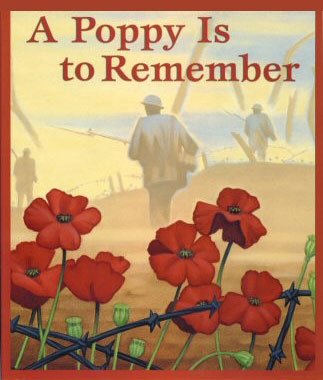 Private William Penman, Scots Guards, died 16 May, 1915 at Le Touret, age 25
(Elizabeth’s great uncle)- Private Archibald Turner Mulholland, Argyll & Sutherland Highlanders, mortally wounded 25 September, 1915 at Loos, age 27
(Elizabeth’s great uncle) - Private David Buller, Highland Light Infantry, died 21 October, 1915 at Loos, age 35
(Elizabeth’s great grandfather) - Private Harold Edgar Brand, East Yorkshire Regiment. died 4 June, 1917 at Tournai.
(My first cousin, three times removed) - Private Walter Porteous, Durham Light Infantry, died 4 October, 1917 at Passchendaele, age 18
(my great uncle) - Corporal John Mulholland, Argyll & Sutherland Highlanders, wounded 2 September, 1914 (shortly before the First Battle of the Aisne), wounded again 29 June, 1918, lived through the war.
(Elizabeth’s great uncle)
The Second World War
- Flying Officer Richard Porteous, RAF, survived the defeat in Malaya and lived through the war
(my great uncle) - Able Seaman John Penman, RN, served in the Defensively Equipped Merchant fleet on the Murmansk Run (and other convoy routes), lived through the war
(Elizabeth’s father) - Private Archie Black (commissioned after the war and retired as a Major), Gordon Highlanders, captured at Singapore (aged 15) and survived a Japanese POW camp
(Elizabeth’s uncle) - Elizabeth Buller, “Lumberjill” in the Women’s Land Army in Scotland through the war.
(Elizabeth’s mother) - Trooper Leslie Taplan Russon, 3rd Royal Tank Regiment, died at Tobruk, 19 December, 1942 (aged 23).
Leslie was my father’s first cousin, once removed (and therefore my first cousin, twice removed).
For the curious, the Commonwealth War Graves Commission the Royal British Legion, and the Library and Archives Canada WW1 and WW2 records site provide search engines you can use to look up your family name. The RBL’s Every One Remembered site shows you everyone who died in the Great War in British or Empire service (Canadians, Australians, New Zealanders, South Africans and other Imperial countries). The CWGC site also includes those who died in the Second World War. Library and Archives Canada allows searches of the Canadian Expeditionary Force and the Royal Newfoundland Regiment for all who served during WW1, and including those who volunteered for the CEF but were not accepted.
In Flanders fields the poppies blow
Between the crosses row on row,
That mark our place; and in the sky
The larks, still bravely singing, fly
Scarce heard amid the guns below.We are the Dead. Short days ago
We lived, felt dawn, saw sunset glow,
Loved and were loved, and now we lie
In Flanders fields.Take up our quarrel with the foe:
To you from failing hands we throw
The torch; be yours to hold it high.
If ye break faith with us who die
We shall not sleep, though poppies grow
In Flanders fields.Lieutenant Colonel John McCrae, MD Canadian Army Medical Corps (1872-1918)
Comments Off on In memoriam
H.G. Wells – The Outline of History – The Great War
Thersites the Historian
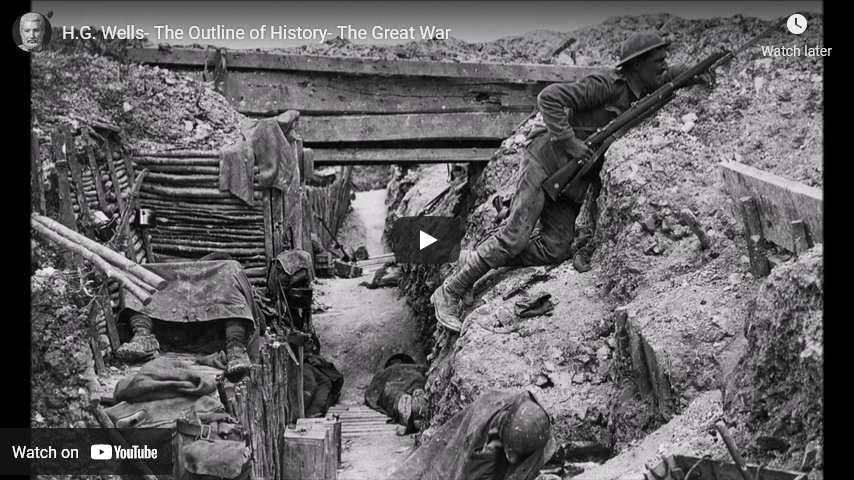
Published 5 Mar 2021In this video, we look at H.G. Wells’ coverage of World War I, from the war’s outbreak to the Armistice. Here, we see Wells at his most passionate and he makes a few controversial claims as well as sharing a couple of his personal experiences as a Londoner dealing with German air raids and celebrating the Armistice.
Patreon link: https://www.patreon.com/thersites
PayPal link: paypal.me/thersites
Discord: https://discord.gg/QCaXXFr
Brave Browser: https://brave.com/noa557
Twitter link: https://twitter.com/ThersitesAthens
Minds.com link: https://www.minds.com/ThersitestheHis…
Steemit/dtube link: https://steemit.com/@thersites/feed
BitChute: https://www.bitchute.com/channel/jbyg…
Comments Off on H.G. Wells – The Outline of History – The Great War
November 10, 2021
Wives – What Soldiers Left Behind – WW2 – On the Homefront 012
World War Two
Published 9 Nov 2021With men away at the front, couples have to separate and manage the struggle of war on their own. For women who stay at home, this is not any easier than for the man: worry, longing, loneliness, meaningless sex, the temptation of falling in love with others – it is an emotional rollercoaster.
(more…)
Comments Off on Wives – What Soldiers Left Behind – WW2 – On the Homefront 012
When the police get posh – “The ruling class needs a woke paramilitary vanguard for when the people revolt”
In The Critic, Harry Miller decries the comfortable middle- and upper-middle-class wokesters who can posture and protest and cause mass disruptions to the workers and lower-middle-class with impunity, because on the very few occasions they are brought to court, the judiciary demonstrate that their hearts are with the posh protest movements, not with the people:
Of course, there is a risk when elected leaders burn up the air miles to feast with the Bacchanalian elite, whilst simultaneously preaching that climate armageddon will only be avoided if the hoi polloi ditch their cars and, once a week, take the peasant wagon to Lidl. When “let them eat cake” becomes “let them eat insects and plant based mash”, there is a heightened risk that the working class will take to the streets to sing “One Day More” with a spare rib in one hand a pitchfork in the other. And it is the working class which poses the threat as the middle class can afford to make a virtue of its suffering. Trading in the Discovery Sport for a hybrid Mini Countryman and a bag full of social bragging rights is substantially different from having to choose between putting on the heating and a week on the beer in Faliraki.
In anticipation of the backlash the government has turned a blind eye to the politicisation of the police and is now recruiting exclusively from the middle class. Why else do you suppose a career in the police is now only open to those with a degree? The ruling class needs a woke paramilitary vanguard, well versed in the etiquette of uncritical obedience, for when the people revolt.
When the police embrace a political cause, there is no expression of support that is too extreme. Humberside Police endorsed a lunatic with connections to organised crime who once told Julie Burchill, a writer of Jewish heritage, that Hitler had the right idea. And the national lead on Hate Crime, Paul Giannasi OBE, recently introduced the concept of laudable hate, provided it serves middle class preoccupations such as gender identity or preserving the tundra.
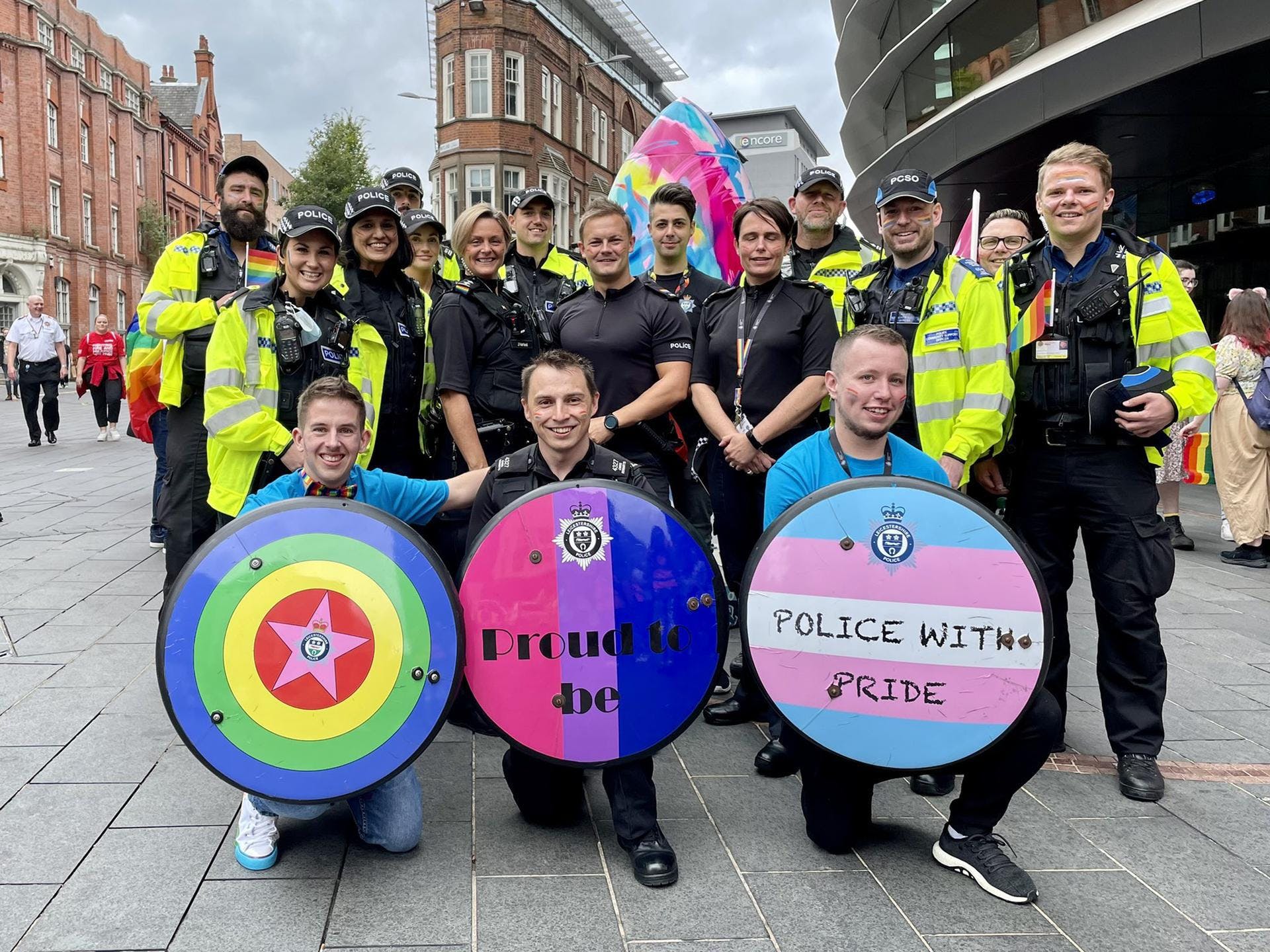
And then there is the obscene spectacle of politically sponsored riot shields being paraded by the police through the streets of Leicester. We are meant to swallow the lie that this is a benign display of support for a marginalised community when, in reality, it is an emblematic reminder to the working class to Remember The Battle Of Orgreave. On the 18th of June, 1984, ordinary working people lent their support to the picketing miners and were met with a baton charge, preceded by the pounding of riot shields, in scenes reminiscent of Zulu. Lest they forget.
Photo from The Critic
The crimes of the woke middle class, where they are prosecuted at all, come with the safety net of a judiciary that is also in on the racket. When six XR zealots found themselves in the dock for progressing the cause of Greta Thunberg by taking hammers to the glass frontage of Shell’s London Headquarters, Judge Gregory Perrin advised that their actions had no defence at law. Nevertheless, he offered gratitude for the care and diligence taken by the jury when it returned a not-guilty verdict. Last week, three activists were found guilty of criminal damage for graffitiing “Lies, lies, lies” on the Westminster Office of the Global Warming Policy Foundation in response to its sin of climate scepticism. Before being slammed with peppercorn fines, the criminals — Clare, Jessica and Rupert — were praised by the bench for their openness and honesty. It is yet to be seen whether similar leeway will be afforded to working class criminals who, in pursuit of Net Zero, begin half inching insulation from Travis Perkins.
Comments Off on When the police get posh – “The ruling class needs a woke paramilitary vanguard for when the people revolt”


