
Those of us on the back nine of our lives remember high school as a process of differential diagnosis. You try on a certain set of social roles to see which, if any, fit. You don’t go out for the baseball team because it’s the first step to making the Majors. Really, you might not even like playing baseball all that much. You go out for the baseball team because you want to be a Jock. If you make the team, you’re a Jock for a while, leading the Jock life and learning its lessons. If you don’t make the team, you go find something else — the Debate Club, heavy metal music, whatever — and learn the lessons those lifestyles teach.
You didn’t understand this back then, of course, but your parents did, and — crucially — your teachers did. If you wanted to be a Metalhead this semester, they’d treat you like a Metalhead, complete with the “Why are you wasting your potential (and ruining your ears) with that godawful noise?” They’d make a show of having a Very Serious Conversation with you about the dangers of drugs and satanism … knowing full well that you weren’t on drugs, weren’t sacrificing virgins to Moloch (if for no other reason than you didn’t actually know any girls), and would, in fact, come back as a clean-scrubbed Preppie after summer break your junior year.
The key word in “adolescent rebellion”, after all, is adolescent. All of that stuff was just practice. If it proceeded in the normal way, what going through all the permutations of high school identity taught you was:
- you’re a fairly normal person; and
- that’s ok.
In other words, you are not a collection of externals — clothes, music, hairstyles. You’re you. The externals can change, fairly radically — remember that one summer you broke your nose trying to be a skater? — but there’s a core in there that’s you. Which is great, because it means that you are just a person who takes customer service calls in a cubicle farm to pay the bills; they’re not going to put “Here lies Bill, a Customer Service Representative” on your tombstone.
Severian, “The Basic College Girl”, Rotten Chestnuts, 2019-07-24.
October 14, 2022
QotD: High school
October 12, 2022
QotD: Luxury beliefs
An easy way to show that you’re not a member of the riff-raff, the masses, is to hold the opposite opinion, or a strange opinion that maybe doesn’t make sense, because it shows you’re not one of them. It’s not just the opinion itself, but the way that you express it. If you express it using vocabulary that no-one has ever heard of, for example … You often are not paying the price for your luxury beliefs, but even if you do, it’s still not nearly the same as the cost inflicted on the lower classes if they were to adopt those luxury beliefs too. […]
I talked to a friend of mine who was telling me, “When I set my Tinder radius to one mile, just around the university, and I see the bios of the women, a lot of their profiles say things like ‘poly’ or ‘keeping it casual’ – basically, they’re not interested in anything too serious.” He says something like half of them have something like that in their bio. And then he said, “But when I expand the radius on my Tinder to five miles, to include the rest of the city and the more run-down areas beyond the university bubble, half the women are single moms.” And basically, the luxury beliefs of the former group, the educated group, trickled down and ended up having this outsize effect on the people who are less fortunate, who don’t have the [social and] economic capital of the people who can afford that belief.
David Thompson, quoting from the transcript of a TRIGGERnometry interview with Rob Henderson, David Thompson, 2022-07-11.
October 10, 2022
QotD: The joy of teaching
It’s all the other bullshit — which is 98% of academia — that I couldn’t stand.
Severian, “Friday Mailbag”, Founding Questions, 2022-07-01.
October 8, 2022
QotD: Does homework, well, work? ¯\_(ツ)_/¯
Unfortunately, all the research on this (showcased in eg Cooper 2006) is terrible.
Most studies cited by both sides use “time spent doing homework” as the independent variable, then correlate it with test scores or grades. If students who do more time on homework get better test scores, they conclude homework works; otherwise, that it doesn’t.
One minor complaint about this methodology is that we don’t really know if anyone is reporting time spent on homework accurately. Cooper cites some studies showing that student-reported time-spent-on-homework correlates with test scores at a respectable r = 0.25. But in the same sample, parent-reported time-spent-on-homework correlates at close to zero. Cooper speculates that the students’ estimates are better than the parents’, and I think this makes sense — it’s easier to reduce a correlation by adding noise than to increase it — but in the end we don’t know. According to a Washington Post article, students in two very similar datasets reported very different amounts of time spent on homework — maybe because of the way they asked the question? I don’t know, self-report from schoolchildren seems fraught.
But this is the least of our problems. This methodology assumes that time spent on homework is a safe proxy for amount of homework. It isn’t. Students may spend less time on homework because they’re smart, find it easy, and can finish it very quickly. Or they might spend more time on homework because they love learning and care about the subject matter a lot. Or they might spend more time because they’re second-generation Asian immigrants with taskmaster parents who insist on it being perfect. Or they might spend less time because they’re in some kind of horrible living environment not conducive to sitting at a desk quietly. All of these make “time spent doing homework” a poor proxy for “amount of homework that teacher assigned” in a way that directly confounds a homework-test scores correlation. Most studies don’t bother to adjust for these factors. The ones that do choose a few of them haphazardly, make wild guesses about what model to use, and then come up with basically random results.
Both homework proponents (Harris Cooper) and opponents (Alfie Kohn) briefly nod to this problem, then take these studies seriously anyway. If you do that, you find that probably homework isn’t helpful in elementary school, but might be helpful during high school (though some people disagree with either half of that statement). But why would you take these seriously?
Scott Alexander, “Nobody Knows How Well Homework Works”, Astral Codex Ten, 2022-07-07.
October 6, 2022
QotD: Life in grad school
After a few years of this, you forget what normal life is even like. You come to understand the deep and longstanding grievances the Poststructuralist Feminist Marxists have with the Marxist Feminist Poststructuralists. Oh, there’s scads of “diversity” on campus — all those recruiting brochures they mail to dumb parents in the ‘burbs aren’t lying — but there’s one thing you’ll never, ever find: The thought that maybe politics doesn’t matter all that much.
That’s the answer, right there. Academic “humanities” work is mostly bullshit because most people just don’t care about politics. To normals, if they think about “politics” at all, it’s in Schoolhouse Rock terms — some guys in Washington vote on some stuff, and that’s how a bill becomes a law. They certainly don’t mean ideology, which is pretty much the only thing academics mean. That a normal person could walk into the voting booth without really knowing if he’s going to pull the lever for Trump or Hillary fries an egghead’s circuits…
… and yet, as we all know, the majority of American voters do this, every single time. There’s something profound about normal person behavior that academics just can’t — or won’t — grasp.
Severian, “Ignoring the Human Factor”, Rotten Chestnuts, 2019-08-14.
September 27, 2022
Is Kayla Lemieux the leading edge of LGBT tolerance or a “dude gaming the system”?
Back on September 16, I posted a link to the then-breaking story of the teacher in Halton whose prosthetic breasts had poked into news headlines everywhere: “This is either the teacher of the year (come on, you know that’s inevitable because reasons) or someone doing an epic physical and psychological parody of our culture right now.” It’s nearly two weeks later, and we’re still not really clear on which of those two possibilities is closest to the truth. At PJ Media, Athena Thorne is making a case for the epic prank case:
There is the most titillating rumor being bandied about the interwebs right now. And while it may or may not be true, it’s certainly food for thought. It concerns “Kayla Lemieux”, the infamous trans-woman shop teacher at Oakville Trafalgar High School (OTHS) in Ontario, Canada.
An anonymous poster on an online forum recently made a claim about Lemieux’s shop class back when “Kayla” was still Mr. Kerry Luc Lemieux. The post reads:
This dude is gaming the system. An anon here yesterday was in this dude’s class. This teacher was almost fired for ‘toxic masculinity’ last year, as well as not embracing woke culture. He’d drop redpills to his class, such as how silly gender neutral bathrooms are. The school board hates him.
He’s now upping the ante to exploit the very clown world the school and society itself created. His long game is most likely to get fired, and then sue for discrimination. There is no other explanation… No better way to troll clown world than to become an over-the-top caricature of a woman.
File this allegation under “Huge if True” (lol). Imagine for a moment that the anonymous person is telling the truth. If that is the case, then this teacher is the greatest hero the sane world has fronted yet.
If Lemieux is indeed pranking the school board, then he is a genius. When images of the trans-busty high school shop teacher began spreading like wildfire online, the outrage was swift and formidable. OTHS and the Halton District School Board (HDSB) went on the defensive — and it quickly became evident that they had painted themselves into a corner with their mindless commitment to “inclusion”.
“We are aware of discussion on social media and in the media regarding Oakville Trafalgar High School. We would like to take this opportunity to reiterate to our community that we are committed to establishing and maintaining a safe, caring, inclusive, equitable and welcoming learning and working environment for all students and staff”, said OTHS in an email sent to parents and obtained by feminist news site Reduxx.

September 26, 2022
“We’ve credentialed people for membership in a series of high-cultural-status groups on the basis of their ability to chant slogans and perform rituals; they are coreless”
Chris Bray on Vivek Ramaswamy’s book Woke, Inc.:

Vivek Ramaswamy was trying to close a deal, so he went to do some relationship building over dinner at an investor’s house. As dinner ended, the investor’s son came downstairs to greet the visitors, and he turned out to be a high school senior who was applying to Harvard. By the most remarkable coincidence, Vivek Ramaswamy is a Harvard grad, so the kid asked for some advice on getting in. Stand out, the Harvard grad told the Harvard applicant. Have something that makes you different than all the other applicants. Oh, the kid said, yeah — I got that. It turns out the seventeen year-old son of a venture capitalist had started a non-profit to fight against global sex slavery, which did indeed impress the admissions office and did indeed get him into Harvard. When Ramaswamy ran into the kid again, a few years later, he was shopping for Wall Street internships — and had moved on from the whole sex slavery thing, which had by then served its purpose.
Ramaswamy’s book Woke, Inc., a title published last year that seems to be gaining new momentum now as its author takes on corporate ESG posturing, accurately promises to take readers “inside corporate America’s social justice scam”, though I don’t love everything he offers as a solution. He clearly is reporting from inside: He’s a Harvard grad, a Yale Law grad, a former hedge fund employee, and a former pharmaceutical CEO. (Those credentials make you trust his argument, right?)
The thing the kid did, dummying up a quick thing to fight global sex slavery to get it into his admissions package, is a version of a maneuver that Ramaswamy finds all over the woke corporate world. The highly woke consumer products company Unilever is passionate about taking deep notice of intersectionality and serving women of color, and it partners with UN Women, “a nonprofit branch of the UN dedicated to advancing gender equality and empowering women”. Also, dozens of women who work on a Unilever tea plantation in Kenya were gang-raped in front of their families, an event that was coupled with a dozen or so murders, and Unilever declined to provide them with substantial support or assistance: “Unilever said the attacks on its plantation were unexpected and therefore that it should not be held liable”.
Unilever provides money to UN Women, Ramaswamy concludes, and UN Women provides Unilever with “moral cover for the Kenyan massacre”. Woke Unilever is a façade for, you know, Unilever. It’s a strategy, one example of many, and Ramaswamy argues that the “arranged marriage” between wokeness and corporate capitalism was born out of Occupy Wall Street: Here’s a check, now let’s stop talking about TARP and start talking about white privilege.
You should read Woke, Inc., so I won’t go on summarizing. But without going deeper into Ramaswamy’s argument, which reflects a series of increasingly familiar observations about social class and the function of wokeness, the point is the inauthenticity and shallowness of corporate social justice posturing, all of which is meant to protect the core of the project — to provide cover for business practices that might otherwise be criticized. It’s a show, a performative and manipulative posture. You could easily make comparable arguments about wokeness and power in academia, media, or government.
Now, to take all of this and pivot to an argument that will satisfy absolutely no one, if the social justice façade is a façade — shallow, performative, calculatedly purpose-serving — then there’s a good chance the branch managers of the globalist project will drop it when it slides out of fashion. The kid who, wanting a career on Wall Street, did the sex slavery nonprofit thing just long enough to get into Harvard: That kid is a middle manager now, and he’ll recite slogans about white privilege or not, as Current Thing demands, as long as the checks still cash. We’ve credentialed people for membership in a series of high-cultural-status groups on the basis of their ability to chant slogans and perform rituals; they are coreless.
September 25, 2022
The five-paragraph essay straitjacket
In Aeon, David Labaree discusses the good intent and terrible results of forcing students to rigidly follow the “five paragraph” model of essay writing:
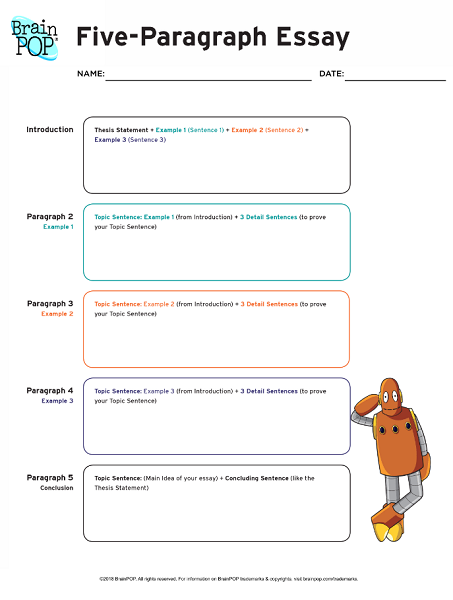
Schools and colleges in the United States are adept at teaching students how to write by the numbers. The idea is to make writing easy by eliminating the messy part – making meaning – and focusing effort on reproducing a formal structure. As a result, the act of writing turns from moulding a lump of clay into a unique form to filling a set of jars that are already fired. Not only are the jars unyielding to the touch, but even their number and order are fixed. There are five of them, which, according to the recipe, need to be filled in precise order. Don’t stir. Repeat.
So let’s explore the form and function of this model of writing, considering both the functions it serves and the damage it does. I trace its roots to a series of formalisms that dominate US education at all levels. The foundation is the five-paragraph essay, a form that is chillingly familiar to anyone who has attended high school in the US. In college, the model expands into the five-section research paper. Then in graduate school comes the five-chapter doctoral dissertation. Same jars, same order. By the time the doctoral student becomes a professor, the pattern is set. The Rule of Five is thoroughly fixed in muscle memory, and the scholar is on track to produce a string of journal articles that follow from it. Then it’s time to pass the model on to the next generation. The cycle continues.
Edward M White is one participant in the cycle who decided to fight back. It was the summer of 2007, and he was on the plane home from an ordeal that would have crushed a man with a less robust constitution. An English professor, he had been grading hundreds of five-paragraph essays drawn from the 280,000 that had been submitted that June as part of the Advanced Placement Test in English language and composition. In revenge, he wrote his own five-paragraph essay about the five-paragraph essay, whose fourth paragraph reads:
The last reason to write this way is the most important. Once you have it down, you can use it for practically anything. Does God exist? Well you can say yes and give three reasons, or no and give three different reasons. It doesn’t really matter. You’re sure to get a good grade whatever you pick to put into the formula. And that’s the real reason for education, to get those good grades without thinking too much and using up too much time.
White’s essay – “My Five-Paragraph-Theme Theme” – became an instant classic. True to the form, he lays out the whole story in his opening paragraph:
Since the beginning of time, some college teachers have mocked the five-paragraph theme. But I intend to show that they have been mistaken. There are three reasons why I always write five-paragraph themes. First, it gives me an organisational scheme: an introduction (like this one) setting out three subtopics, three paragraphs for my three subtopics, and a concluding paragraph reminding you what I have said, in case you weren’t paying attention. Second, it focuses my topic, so I don’t just go on and on when I don’t have anything much to say. Three and only three subtopics force me to think in a limited way. And third, it lets me write pretty much the same essay on anything at all. So I do pretty well on essay tests. A lot of teachers actually like the five-paragraph theme as much as I do.
Note the classic elements of the model. The focus on form: content is optional. The comfortingly repetitive structure: here’s what I’m going to say, here I am saying it, and here’s what I just said. The utility for everyone involved: expectations are so clear and so low that every writer can meet them, which means that both teachers and students can succeed without breaking a sweat – a win-win situation if ever there was one. The only thing missing is meaning.
For students who need a little more structure in dealing with the middle three paragraphs that make up what instructors call the “body” of the essay, some helpful tips are available – all couched in the same generic form that could be applicable to anything. According to one online document by a high-school English teacher:
The first paragraph of the body should contain the strongest argument, most significant example, cleverest illustration, or an obvious beginning point. The first sentence of this paragraph should include the “reverse hook” which ties in with the transitional hook at the end of the introductory paragraph. The topic for this paragraph should be in the first or second sentence. This topic should relate to the thesis statement in the introductory paragraph. The last sentence in this paragraph should include a transitional hook to tie into the second paragraph of the body.
You probably won’t be surprised that the second paragraph “should contain the second strongest argument, second most significant example, second cleverest illustration, or obvious follow-up to the first paragraph …” And that the third paragraph “should contain the third strongest argument …” Well, you get the picture.
September 19, 2022
There’s a difference between “caring what kids think” and “pandering for kids’ attention and affection”
Rob Henderson wonders why so many adults these days are clearly desperate for the approval of young people:
During my recent re-watch of the entirety of Mad Men, which takes place in the 1960s, a recurring thought entered my mind: This was the last generation where young adults behaved like they were older than their real age. Don Draper is around thirty-five at the start of the series, and carries himself in a more adult manner than many 45 year olds today.
Recently, Abigail Shrier quoted a physician and psychologist who stated that “Fifty years ago, boys wanted to be men. But today, many American men want to be boys”.
Until the early 1960s, young people acted older than their actual age. Now, older adults pretend to be younger than their actual age.
Which is perhaps one reason why boomers are so easy to mock. They don’t act their age.
[…]
About two years later, I was at a breakfast gathering with some other students on campus. Our guest was a former governor and presidential candidate. He was gracious, and spent most of the time answering questions from students.
And in his answers, he continually returned to variations of the same response: “We screwed up, and it’s up to you guys to fix it. I’m so happy to see how bright you all are and how sharp your questions have been, because you will fix the mistakes my generation made.”
This mystified me. This guy was well into his sixties, with a lifetime of unique experiences in leadership roles, was telling a bunch of 20-year-olds (though I was a little older) that older adults are relying on them.
In the military, we thought of those senior to us as the leaders. It was okay to give feedback, of course. Commanding officers would regularly consult lower ranking and enlisted members to see what was working and what could be improved. But that happens only after getting through the filter of the initial training endeavors.
I remember in the first week of basic training, our instructor declared, “I don’t want any of you [expletive] thinking you are doing anyone a favor being here. I could get rid of all of you clowns and have your replacements here within the hour.” (This was 2007, well before the recruitment crisis).
My 17-year-old brain heard that thought, yeah, he’s probably right. I thought of the bus loads of other ungainly young guys I saw stepping off and being confronted with “Pick ’em up, and put ’em down” and other mind games from the instructors while waiting in the endless in-processing lines.
So then I got to college and learned that even though any seat, at least at selective schools, can be filled immediately with a bright applicant (top colleges reject thousands of them each year), students are never ejected for disrespecting professors or anyone else. In the military the first message was, you are a peon and less than nothing and we can easily have you replaced (this changes as you advance in rank, of course — at least to some degree). In college, the first message was, you are amazing and privileged and a future leader (and marginalized and erased) and you will never lose your position here among the future ruling class. That feeling of whiplash will forever linger in my mind.
[…]
Older adults crave validation from the youth, which is one reason they are mocked. Young people sense their desire to be seen as cool and deprive them of this by taunting them.
This desire for esteem may be why older adults won’t exert any authority in response to energetic young conflict entrepreneurs who yell at them or threaten them.
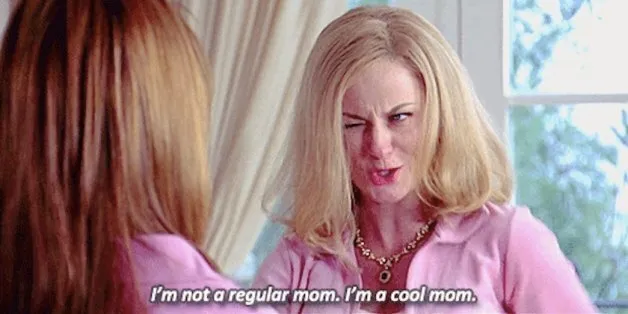
Older adults want to be on the side of youth. So desperate to pencil themselves out of the “old” category. Every parent wants to be the “cool parent”, every professor wants to be the “cool” professor. You can be cool and still be an authority figure. Maybe decades of imbibing the worst of U.S. pop culture made everyone forget this.
September 16, 2022
The rise of the “golden penis”
Look folks, there are some headlines that just write themselves, but it’s not my coining — here’s Janice Fiamengo to explain where that … memorable term … came from:

We’ve been told for years that the future is female, that everyone benefits from female leadership and everything improves when women take charge.
Any man on a college campus who has ever objected to the plethora of special university programs and women-only scholarships and pro-woman propaganda was told he had a problem with gender equality.
But now it turns out that some women themselves are not entirely happy with the deal feminists engineered for them, which sees them outnumbering men at close to 3-2 at most English-speaking universities, and thousands of words have already been devoted to the idea that college women deserve a more satisfactory dating experience.
According to Monica Greep in an article from last fall for the Daily Mail, “How Golden Penis Syndrome is ruining dating for university women”, the “deficit of male students” at college “means men develop inflated egos and become Casanovas who cheat — despite a lack of social and sexual skills”.
The formulation reminds me of an old Woody Allen joke from his movie Annie Hall. In my updated version, two women are discussing college dating: “The guys are awful, egotistical schmucks who think they’re really great,” says one. “I know,” says the other, “And there are so few of them!”
If these men are so lacking in “social and sexual skills”, as the article tut tuts, then why are the women upset that there are not more of them? If the women don’t want guys who are Casanovas, they don’t have to date them. But admitting that women have any role in creating the hookup culture being decried is impossible for most commentators today; the fault must always be found in the men. There is even a “relationship therapist” quoted in the article who tells us that Golden Penis Syndrome “speaks of the delusional belief that you are unusually and uniquely gifted as a man”.
Really? Did any of these analysts interview any young men who actually said that about themselves, or is this a case of women projecting onto men their own self-delusions, angry because the men have failed to respond to them as they, the women, would prefer?
As has become typical of pronouncements about men and women, the article blames men for being in the minority at college: at some institutions, they make up only 25% of the student body (see Mark Perry’s charts, for example here, showing the decades-long gender asymmetries; and see his proof that women outnumber men in STEM fields too). The shortage apparently causes men “to see themselves as a prize to be won by female suitors”.
What articles such as this one won’t admit is that these guys are “prizes to be won”, and increasingly so in light of the reported imbalance.
It is well known that college-educated men who marry are, on average, likely to work the longest hours, seek promotion most aggressively, and become high earners focused on supporting their wives and families (even post-divorce, as too often happens). A woman who is fortunate enough to marry a man like this stands to secure a materially better life, often at her husband’s expense of health and leisure, than she would have had if she had depended solely on her own earning power and work ethic (women are famously more interested in “work-life balance” than men are). Now with these men in the minority, women are having to compete for the men’s attention, and we’re supposed to feel sorry for them.
Of course the alleged problem has an obvious solution: the women could date and marry non-university-educated men. Why won’t they? The article mentions this somewhat embarrassing reality in gender-neutral terms by noting that “At the same time [that] university sex ratios have been skewing female, there’s been a simultaneous increase in what academics call ‘assortative mating’.” The article explains, “That’s a fancy way of saying that college grads only want to date and marry other grads.”
Wrong.
It’s not male college grads who won’t marry anyone other than a female college grad. As a 2019 study confirmed, it is almost exclusively women who insist on the need for their mates to earn more. In a sane age genuinely committed to “gender equality”, we might criticize women for their stereotypical behavior, for perceiving men as “success objects”. But we never criticize women for acting out of self-interest.
Only men are criticized for that, as well as for uncouth dating behaviors that everyone knows women also engage in when circumstances favor them: playing the field, cheating, “ghosting”, and so on. Being picky, demanding, and often downright rude are all recognized as a woman’s prerogative because women ARE seen as inherently valuable.
September 11, 2022
“Learning is something we humans do, while schooling is something done to us”
Kerry McDonald refutes the “learning loss” narrative we’ve been inundated with:

“Abandoned Schoolhouse and Wheat Field 3443 B” by jim.choate59 is licensed under CC BY-NC-ND 2.0


There are mounting concerns over profound learning loss due to prolonged school closures and remote learning. New data released last week by the US Department of Education reveal that fourth-grade reading and math scores dropped sharply over the past two years.
Fingers are waving regarding who is to blame, but the alleged “learning loss” now being exposed is more reflective of the nature of forced schooling rather than how children actually learn.
The current hullabaloo over pandemic learning loss mirrors the well-worn narrative regarding “summer slide”, in which children allegedly lose knowledge over summer vacation. In 2017, I wrote an article for Boston NPR stating that there’s no such thing as the summer slide.
Students may memorize and regurgitate information for a test or a teacher, but if it has no meaning for them, they quickly forget it. Come high school graduation, most of us forget most of what we supposedly learned in school.
In his New York Times opinion article this week, economist Bryan Caplan makes a related point: “I figure that most of the learning students lost in Zoom school is learning they would have lost by early adulthood even if schools had remained open. My claim is not that in the long run remote learning is almost as good as in-person learning. My claim is that in the long run in-person learning is almost as bad as remote learning.”
Learning and schooling are completely different. Learning is something we humans do, while schooling is something done to us. We need more learning and less schooling.
Yet, the solutions being proposed to deal with the identified learning loss over the past two years promise the opposite. Billions of dollars in federal COVID relief funds are being funneled into more schooling and school-like activities, including intensive tutoring, extended-day learning programs, longer school years, and more summer school. These efforts could raise test scores, as has been seen in Texas where students receive 30 hours of tutoring in each subject area in which they have failed a test, but do they really reflect true learning?
As we know from research on unschoolers and others who learn in self-directed education settings, non-coercive, interest-driven learning tends to be deep and authentic. When learning is individually-initiated and unforced, it is not a chore. It is absorbed and retained with enthusiasm because it is tied to personal passions and goals.
September 6, 2022
Fixing the American education system (other than burning it to the ground and starting over)
At First Things, M.D. Aeschliman reviews The Knowledge Gap: The Hidden Cause of America’s Broken Education System — and How to Fix It by Natalie Wexler:
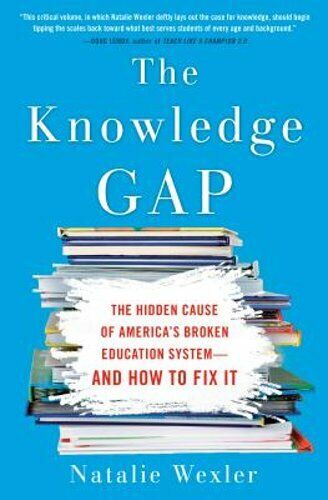
E.D. Hirsch Jr., distinguished scholar of comparative literature, is the most important advocate for K–12 education reform of the past seventy-five years. Natalie Wexler’s recent book The Knowledge Gap is a helpful examination of Hirsch’s critical analyses and intellectual framework, as well as the elementary school curriculum that he designed — Core Knowledge.
One of Hirsch’s key focal points is the vapid, supposedly “developmentally appropriate” fictions that dominate language arts curricula in elementary schools — mind-numbingly banal stories with single-syllable vocabularies and large pictures. These silly literary fictions and fantasies have helped “dumb down” a hundred years of American students by eliminating or forbidding any substantial reading of expository prose about history and science in the first eight grades. A poignant narrative well worth reading is Harold Henderson’s Let’s Kill Dick and Jane, which details a noble but ultimately losing fight waged by a family firm from 1962 to 1996 against the big textbook publishers.
After a teaching career of fifty years, I agree with Hirsch that the primary problem in American public education is not the high schools, but the poorly organized, ineffective elementary school curricula, including the idiotic books of childish fiction. As Wexler writes, the governing “approach to reading instruction … leaves … many students unprepared to tackle high-school-level work”. Pity the poor high school teachers.
A hundred years ago John Dewey and his lieutenants from Columbia Teachers College, especially William H. Kilpatrick, started dismantling academic “subjects” in favor of “the project method”. They also worked to redefine history as “social studies”, a degenerative development that has continued without cease in our K–12 schools, leading to ludicrous presentism. Dewey and the progressives also attacked traditional language classes — especially phonics but also Latin — opening the way for “naturalistic” literacy instruction that has proved to be ineffective. Yet it should be obvious that students must “learn to read” well early on so as to “read to learn” for high school and college and the rest of their lives. And what they read early on is important.
The “progressive” educational assault on traditional American education had another source, which might be called “soft utopianism”. Twenty-five years ago Hirsch was already writing powerfully — in The Schools We Need and Why We Don’t Have Them — about this romantic-progressive “soft utopianism” and how it conflicted with what is wisest and best in the thinking, writings, and achievements of the founding fathers and their early republic. Yet he also knew — as himself a repentant progressive “mugged by reality” — that in the nineteenth century the republican educational legacy was already under intellectual assault by Rousseau’s American disciples Emerson, Thoreau, and Walt Whitman. Whitman’s egalitarian naturalism was one of Dewey’s greatest inspirations by the early twentieth century.
The progressives particularly dislike history, and our current “Great Awakening” indicates this. A few years ago, the former superintendent of the school system of one of our most “liberal” states said to me in private conversation that “the progressives hate history and won’t tolerate it in the curriculum”. They hate it because any thinking about history requires ethical assumptions and qualitative judgments: What in the past is worth studying? How do we structure our narratives? How do we fairly evaluate historical personalities and events? Which ones were virtuous and beneficial? These and related questions require some standard of justice and the idea that most individuals — in the past and present — have some degree of free will and some disposition to ethics: the “self-evident truths” of our founding document, and of civilization itself.
September 2, 2022
US Navy to get its very own Zampolit cadre
CDR Salamander reports on the latest politically correct doings at the US Naval Academy, which he points out always filter down to the active duty fleet, both good and bad … and I don’t think he considers this particular initiative to be a good one:
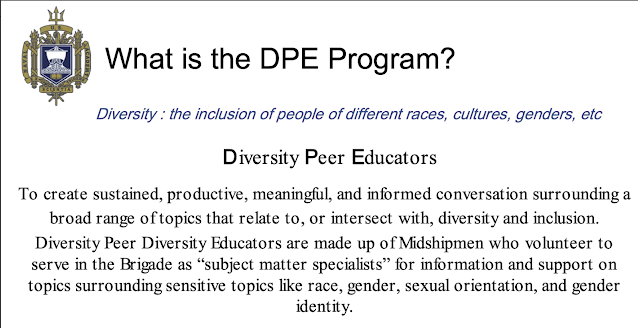
The quasi-woke religion as promoted by the CNO provided all the supporting fires they needed and the commissariat decided to make hay while the sun shines.
You know the drill.
Do you want Political Officers, USNA’s own Zampolit? You’ll get them.
Want blue and gold Red Guards? You’re going to have them.
You want red in tooth and claw racism, quotas, and different standards based on self-identified racial groups? You’re going to have more of it.
First let’s pull some nice bits from the governing document; COMDTMIDNINST 1500.5, the “Diversity Education Program” from February of this year. You can read it at the link, or below the pull quotes;
BEHOLD!
1. Purpose. To provide guidance and designate responsibilities for implementation of the Diversity Peer Educator (DPE) Program.
…
b. DPEs support moral development at USNA by facilitating small group conversations that educate and inform midshipmen, faculty, and staff and foster a culture of inclusion across the Yard, resulting in cohesive teams ready to exert maximal performance and win the Naval service’s battles.
I’m not sure you could get more Orwellian … but they’re going to try;
4. Responsibilities
a. USNA Chief Diversity Officer. The Chief Diversity Officer is the final approving authority for all matters pertaining to the DPE Program and will ensure the program is in line with Department of the Navy and Superintendent’s guidance in reference (a).
a. DPE Program Manager. The program manager for DPE is an active-duty officer appointed by the Chief Diversity Officer. Faculty/staff from the Stockdale Center for Ethical Leadership, the Naval Academy Athletic Association (NAAA), or other cost-centers on the Yard will aid the program manager.
Yes, the football booster organization will “help” the Zampolits. Huh. You see that, yes? Pull that thread …
c. Brigade Dignity and Respect Officer. Reference (c) delineates the roles and responsibilities of the Brigade Dignity and Respect Officer (BDRO) who is accountable for the training, development, and qualification of the DPEs. However, the DPEs are organized and managed by the Midshipman DPE Lead.
d. Midshipmen DPE Lead. A midshipman selected annually by the DPE Program Manager and confirmed by the USNA Chief Diversity Officer. The Midshipmen DPE Lead is typically a First Class Midshipman. Responsibilities include:
(1) Work with the DPE Program Manager to ensure the mission of the program is met.
(2) Provide feedback and keep the DPE Program Manager informed regarding anything that may impact the DPE program.
(3) Serve as the senior DPE, and as the program representative to the BDRO.
(4) Lead and provide guidance to the DPE Midshipmen.
(5) Appoint and manage DPE leads in each battalion, company, varsity athletic team and club sport team.I’ll let you do the math on how many bodies “each” means. That is a lot of Zampolits. I guess MIDN have a lot of extra time.
Again, I want you to ponder the opportunity cost of this across USNA and how it relates to professional development.
August 29, 2022
QotD: Refuting the “children want to learn” notion
“Progressivism rests on the idea that children want to behave and they want to learn, the teacher needs to step back and allow the child to explore their natural curiosity, which will motivate them and keep them engaged,” Mr Bennett said.
Isn’t that fun as an assumption? Because if it were true then we wouldn’t need trained teachers in schools, would we? The brats want to learn, they will learn therefore. Actually, we don’t even need schools. Just release them into the wild somewhere near a library and they’ll get on with it themselves. [Perhaps the best known historical exponent of this theory was Jean-Jacques Rousseau, in Émile, a treatise on education.]
Ah, you say, that wouldn’t work? Then and therefore our assumption about all just wanting to learn is wrong, isn’t it?
To approach the same point alternatively. If kiddies just thirst for that knowledge to be imparted then why do we monitor truancy? If the first assertion is true then there won’t be any of the second. If we have incidence of the second – and we do indeed have a system to both monitor and try to prevent it – then the first assertion cannot be true. Not of all, all the time that is. And that’s all we need to be able to insist that a teaching method based upon its universal existence is wrong.
Not for the first time Progressivism fails when applied to actual human beings.
Jacob Rosser, “When Progressive Teaching Meets The Reality of Human Children — Not A Pretty Sight”, Continental Telegraph, 2019-05-13.
August 27, 2022
The hallmark of modern government is the institutionalization of corruption
In the New English Review, Theodore Dalrymple identifies one of the unifying trends of governments throughout the western world:

One of the most remarkable developments of recent years has been the legalization — dare I say, the institutionalization? — of corruption. This is not a matter of money passing under the table, or of bribery, though this no doubt goes on as it always has. It is far, far worse than that. Where corruption is illegal, there is at least some hope of controlling or limiting it, though of course there is no final victory over it; not, at least, until human nature changes.
The corruption of which I speak has a financial aspect, but only indirectly. It is principally moral and intellectual in nature. It is the means by which an apparatchik class and its nomenklatura of mediocrities achieve prominence and even control in society. I confess that I do not see a ready means of reversing the trend.
I happened to read the other day an article in the Times Higher Educational Supplement titled “Can army of new managers help HE [Higher Education] tackle big social challenges?” The article is subtitled “Spate of new senior roles created as universities seek answers on addressing sustainability, diversity and social responsibility.” One’s heart sinks: The old Pravda must have made for better reading than this.
As the article makes clear, though perhaps without intending to, the key to success in this brave new world of commissars, whose job is to draw a fat salary while enforcing a fatuous ideology, is mastery of a certain kind of verbiage couched in generalities that it would be too generous to call abstractions. This language nevertheless manages to convey menace. It is difficult, of course, to dissent from what is so imprecisely asserted, but one knows instinctively that any expressed reservations will be treated as a manifestation of something much worse than mere disease, something in fact akin to membership in the Ku Klux Klan.
It is obvious that the desiderata of the new class are not faith, hope, and charity, but power, salary, and pension; and of these, the greatest is the last. It is not unprecedented, of course, that the desire for personal advancement should be hidden behind a smoke screen of supposed public benefit, but rarely has it been so brazen. The human mind, however, is a complex instrument, and sometimes smoke screens remain hidden even from those who raise them. People who have been fed a mental diet of psychology, sociology, and so forth are peculiarly inapt for self-examination, and hence are especially liable to self-deception. It must be admitted, therefore, that it is perfectly possible that the apparatchik-commissar-nomenklatura class genuinely believes itself to be doing, if not God’s work exactly, at least that of progress, in the sense employed in self-congratulatory fashion by those who call themselves progressives. For it, however, there is certainly one sense in which the direction of progress has a tangible meaning: up the career ladder.


