Quotulatiousness

May 14, 2013

Is this week’s Scandalpalooza actually a “big bath” move?

Filed under: Business, Government, Media, USA — Tags: , , — Nicholas @ 13:22

Megan McArdle explains what a “big bath” is and how the current rash of scandals might be a political version of this financial accounting trick:

I confess, when I woke up this morning, I half expected to find that Obama had confessed to being one of our lizard overlords, or made an offhand mention of the time he’d had the CIA price out a drone attack on Mitt Romney’s headquarters. Between Benghazi, the discovery that Kathleen Sebelius has been leaning on insurers to finance their Obamacare PR, uncovery of a freelance political inquisition by the IRS, and last night’s revelation that the Department of Justice had been trolling through the phone records of AP reporters, this has been the most scandalicious week in living memory. I mean, sure, none of it rises to the level of Watergate. But while the gravity may pale in comparison, the volume is breathtaking. So breathtaking that it’s tempting to think that the administration is doing this deliberately.

In finance, there’s an art known as “Big Bath Accounting” which is used to manage earnings expectations. Here’s how it works: if you know you’re going to have a bad quarter, you look around for anything else that might go wrong in the future, and you decide to “recognize” that bad news now. Inventory looking a little stale? Write it down, man! Customers getting a little slow to pay? Now would be a good time to write off their accounts as bad debt. Is there some uncertainty in the projections about depletable assets like oil stores? For heaven’s sake, why not use the low end of the projections rather than the medium or high end? And we should really book some sort of charge to account for the risk that the Yellowstone supervolcano will explode, killing hundreds of thousands and covering the entire western half of the United States in volcanic ash, and in the process severely dampening demand for our premium line of Wyoming-themed memorabilia.

Corporations call this “cleaning up the balance sheet”. Accounting professors call it things I can’t print because this is a family blog.

Time to free the CBC

Filed under: Business, Cancon, Media — Tags: , , , , , , — Nicholas @ 11:04

In Maclean’s, James Cowan makes the case for liberating the CBC from the shackles of government subsidy, as it’s now out-competing private business in several fields:

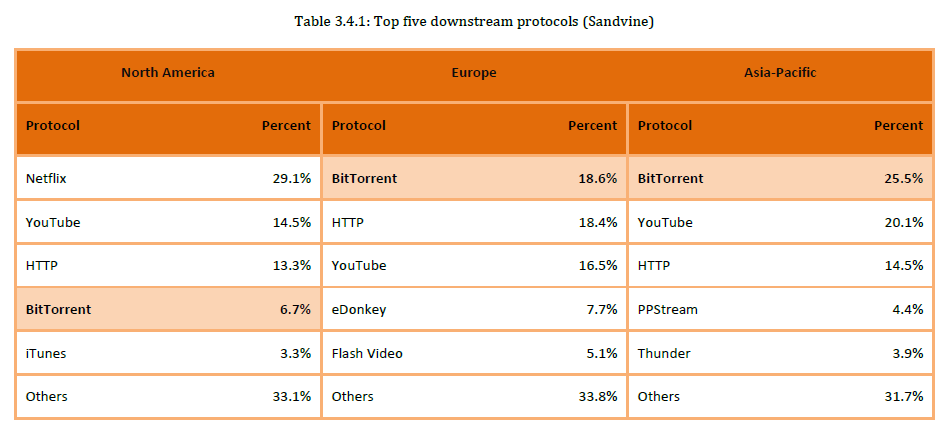
The online success of the CBC should be laudable. Its website received an average of 6.2-million unique visitors last year, making it the most popular Canadian website. Around 4.3-million people visit the CBC News site each month, besting both The Globe and Mail and Huffington Post. Adding to this success is an ambitious five-year plan that will open digital-only news operations in cities like Hamilton and Kamloops and allocate 5 per cent of the overall programming budget to digital content. Once upon a time, it was only private TV and radio broadcasters who had reason to grumble about competing with the Crown corporation; in building its online empire, the CBC is taking on everyone from newspapers to Netflix.

In doing so, the CBC has strayed a long way from its original purpose: to sustain Canadian culture when and where the market cannot. The problem is, the CBC’s traditional funding model now allows it to build its digital empire unfettered by economic reality. In its last quarter, 60 per cent of the company’s expenses were paid by government subsidies while just 21 per cent of its revenue comes from advertising. All media companies are struggling to adapt to shifting consumer and advertising patterns brought about by the digital age; only the CBC had $1.2 billion in government cash to fund its experiments and ease the transition.

Broadcasters would argue the CBC has always operated from an unfair advantage. But the current scenario is different in several respects. For one, the Corp.’s legislated mandate to be “predominantly and distinctly Canadian” arguably placed it at a commercial disadvantage. Further, capital and regulatory requirements made it implausible for commercial broadcasters to serve many areas of the country. But nobody needs to ask the CRTC’s permission to create a website, and the startup costs for a digital service are far less than those of a television or radio station. If small cities like Kamloops need a local digital news service, that’s a need that could be plausibly served by entrepreneurs. The CBC is increasingly no longer complementing the market, but instead meddling within it.

May 13, 2013

Peter Worthington, RIP

Filed under: Business, Cancon, Media — Tags: , , — Nicholas @ 09:36

680News reports on the death of Toronto newspaperman Peter Worthington yesterday:

Well-known journalist Peter Worthington, the founding editor of the Toronto Sun, has died. He was 86.

The Toronto Sun reported Worthington died Sunday night at Toronto General Hospital, where he had been admitted with a staph infection.

Worthington enlisted in the Canadian Navy when he was 17 and served in the Korean War before becoming a journalist.

As a former staff reporter at the Toronto Telegram, he covered the Vietnam War, and was in the Dallas courthouse parking garage in 1963 when Lee Harvey Oswald was shot and killed by Jack Ruby.

He also reported on conflicts in the Gaza Strip, the Portuguese Colonial War, the invasion of Netherlands’ New Guinea by Indonesia and was in the northeast frontier of India when Chinese forces invaded, the Sun reported.

After the Telegram folded in 1971, Worthington, J. Douglas Creighton and Don Hunt founded the Toronto Sun.

I met Peter Worthington in 1982 when he attempted to enter politics as a Progressive Conservative. After he was defeated for the PC nomination, he ran as an independent candidate in a lively but ultimately unsuccessful by-election campaign. In 1984, he secured the PC nomination, but lost at the polls (he joked with supporters after the election that it took real skill to lose in the middle of a PC landslide — Mulroney took 211 of the 282 seats in parliament in that election).

Ontario’s other quasi-monopoly, The Beer Store

Filed under: Business, Cancon, Government — Tags: , , , — Nicholas @ 09:16

Anthony Matijas discusses the privately owned organization that controls the majority of beer sales in Ontario:

The Beer Store’s employees will not be going on strike because they are not public sector employees. That may seem obvious to some, but according to an independent survey cited by a government report, 60% of people in Ontario believe The Beer Store to be a state-run entity. No doubt they benefit from the confusion, which may placate customers wondering why they pay so much more for beer than districts such as Quebec and New York state, where beer is sold in corner stores. The Beer Store fosters this ambiguity by designing their stores to be about as welcoming as a Service Ontario outlet.

In fact, the retailer is co-owned by three of Canada’s largest brewers, Molson, Labatt’s, and Sleeman, none of which are entirely Canadian companies. Molson merged with Coors of Denver in 2005, Labatt’s is owned by Anheuser-Busch InBev of Belgium, and Sleeman is owned by Sapporo of Japan. Aside from the LCBO, which enjoys a far more modest market share and generally does not supply restaurants and bars — and microbreweries, which are allowed to sell retail beer only on premises — The Beer Store maintains a government-protected monopoly.

[. . .]

Meanwhile, brewers who aren’t part of the beer cartel must pay what they describe as exorbitant listing prices to have their products placed in Beer Store locations and, once they do, their visibility is generally limited to a coaster-sized listing on the wall, often nowhere near eye-level. Anyone who doesn’t live next door to a Beer Store is likely to pass several billboards for multinational swill on the way and, not frequenting an LCBO, one may not be aware of the many local craft beers available. Those who are near-sighted, and have forgotten their corrective eyewear, may just end up walking out of there with a two-four of Coors Light and a sad look in their eyes.

Revoking Beer Store exceptionalism should be a matter all Ontarians could agree upon, regardless of ideology. A state sponsored monopoly defies the free-market principles of conservatives, while special privileges for multinational corporations should not sit well with supporters of either one of the left-of-centre parties. Furthermore, the largely foreign ownership of Canada’s big breweries means that The Beer Store in no way compliments the economic nationalist tendencies of the NDP.

May 11, 2013

Britain’s latest wave of snobbery

Filed under: Britain, Business, Food — Tags: , , — Nicholas @ 09:05

Brendan O’Neill examines the worldview of the supermarket-hater:

A malady is spreading through the leafier bits of Britain. It’s causing fevered thinking among its sufferers, who can’t even walk down a high street without experiencing distressing symptoms: cold sweats, anger, an urge to shout rude things at dumb shoppers.

Their ailment? Tescophobia, an irrational loathing of Britain’s biggest supermarket.

A certain tranche of the middle classes hates nothing more than the sight of a Tesco store. Except perhaps the sight of Tesco patrons, whom anti-Tesco author Andrew Simms snobbishly describes as always looking “listless and depressed… slumping from place to place”.

It is nothing more than thinly veiled class disdain for the plebs:

But there’s a reason Tesco and other supermarkets have been a roaring hit: it’s because they’ve made people’s lives, especially women’s lives, so much easier.

Remember when we had to traipse from shop to shop almost every day of the week just to have enough grub and stuff to live on? I have vivid memories of going shopping with my mum, accompanied by my five brothers, back when supermarkets weren’t as common as they are now.

We’d go to the butchers, the bakers, the greengrocers, the corner shop, packing our wares into tatty bags and dragging them home, before having to do the same thing again in a couple of days’ time because the foodstuffs sold by small shops didn’t tend to last long. The arrival of the supermarket revolutionised all that.

Suddenly, everything you might need or want was under one roof. A family larder could be stocked in the space of an hour, where once it was a never-ending task. How much of mankind’s, or rather womankind’s, time has been freed up for other pursuits by the spread of Tesco?

May 10, 2013

Is wine tasting bullshit?

Filed under: Business, Media, Wine — Tags: — Nicholas @ 09:41

There are lots of bullshit artists in the wine trade … and a lot of what is written about wine is definitely bullshit:

A real wine review

The human palate is arguably the weakest of the five traditional senses. This begs an important question regarding wine tasting: is it bullshit, or is it complete and utter bullshit?

There are no two ways about it: the bullshit is strong with wine. Wine tasting. Wine rating. Wine reviews. Wine descriptions. They’re all related. And they’re all egregious offenders, from a bullshit standpoint.

[. . .]

In 1996, research published in the Journal of Experimental Psychology concluded that wine experts cannot reliably identify more than three or four of a wine’s flavor components. Most wine critics routinely report tasting six or more. The wine review excerpted in the top image for this post, for example (which is a real review, by the way – somebody actually wrote those words about a bottle of wine, in earnest) lists the following components in the wine’s “principle flavor” profile: “red roses, lavender, geranium, dried hibiscus flowers, cranberry raisins, currant jelly, mango with skins [Ed. note: jesus wine-swilling christ – mango with skins?], red plums, cobbler, cinnamon, star anise, blackberry bramble, whole black peppercorn,” and more than a dozen other flavors that I refuse to continue listing lest my head implode.

Fun fact: MIT behavioral economist Coco Krume recently conducted a meta-analysis of the classifiers used in wine reviews, and found that reviewers tend to use “cheap” and “expensive” words differently. Cheap descriptors are used much more frequently, expensive ones more sparingly. Krume even demonstrated that it’s possible to guess the price range of a wine based on the words used in its review.

Even with all the evidence that the wine world is replete with marketing bullshit, there’s still great wine experiences to have, and you don’t need to wear an ascot and fake a snobby accent to enjoy it. As I wrote last year:

There are good wines and bad wines. There are good wines and better wines. But my experience has always been that there’s a point of diminishing returns beyond which you’re paying more money for no appreciable improvement in the quality of the wine. In other words, beyond that point, you’re paying for the prestige of the label or the mystique of the brand not for anything intrinsic to the liquid in the glass. [. . .] If you’re buying wine to have with a nice dinner, find your point of diminishing returns and don’t go beyond it: you’ll save yourself a lot of money over time and still enjoy your wine. If, on the other hand, you’re buying wine specifically to impress then go as expensive as you like.

May 9, 2013

Let ’em strike!

Filed under: Business, Cancon, Government — Tags: , , , — Nicholas @ 09:00

We’re in the final week before the LCBO is threatening a strike. Michael Pinkus suggests we should let ’em walk:

For the third time in a decade the LCBO is holding Ontario hostage — and just like they did in 2005 and 2009 when the threat of a strike was on the table, they’ll be an 11th hour (more like on the 11th hour and 59 minute mark) resolution where the LCBO employees get everything they want because the province does not want to lose the revenue the LCBO brings into the province. Screw the teachers, they take money out of the system, but the LCBO brings it in, so they should get whatever they ask for, right? It’s the approach taken by every government who has “stared down” the LCBO, and lost. Not that I’m necessarily for the teachers, but if it’s a choice between educating our youth or feeding our appetite for liquor I know which side I fall on … and so would any right minded Ontarian — it’s the booze that wins out every time.

And just like in 2005 and 2009 the LCBO will make a ton of money in the days before the “strike”. It’ll be a feeding frenzy of mammoth proportions in the aisles, right up to the last hour. Shelves will be decimated as people stock up for what surely will be touted as long, drawn out labour strife … that’ll never come. And why do I say that? Because any right thinking Ontarian knows that if the LCBO goes on strike it means more than loss of revenue to the province, or an inability to get out of country booze … it means the end of the LCBO (and everyone involved knows that).

Take a peak around us privatization is today’s buzz-word and it’s all around us. In our own country, to the south, in Europe — at corner stores, in supermarkets and in specialty stores … heck even Pennsylvania is getting into the act of loosening their liquor laws (and nobody thought that day would come) — but not here in NO-FUN-Tario, a have not province … we sit under the rules and thumb of the Liquor Control Board. If they go on strike questions will be raised as to why we have a provincially run system, why we support unionized workers, or why we can’t be more liberal with our booze (plus you just know some idiot will want to declare it an essential service). So it does not behoove the LCBO to walk off the job and the government won’t allow it because they’ll be tough questions to answer. So don’t go betting the farm on a labour dispute and seeing picket sign toting employees at the local Board store — this one will end like all the others, with the LCBO threatening to walk out, a mass throng of buyers the day before, and the sun rising to a new dawn the next day with a new deal for LCBO employees … and all will be right in Ontario for another 4 years … when we’ll do it all again.

Update: A report in the Toronto Star claims that Ontario could earn a $1 billion windfall by allowing private liquor stores into the province:

“If the Ontario liquor industry mirrored ours in B.C., instead of $1.6 billion going to government, that number could be around $2.7 billion,” he states in his 15-page speech, which highlights the pluses for locally produced wines, beers and spirits.

With 635 stores and 219 convenience store locations in rural and northern Ontario, the LCBO last year reported net sales of $4.71 billion — up $218 million — and handed over to the Ontario treasury an all-time high of $1.63 billion, not including taxes.

“If Ontario allowed private liquor stores, consumers would have access to hundreds of new VQA wines, craft beers and spirits.”

His comments come at a time when the LCBO plans to spend $100 million on expansion, including express outlets in 10 large grocery stores and expanded VQA sales, and while Tory Leader Tim Hudak calls for the booze monopoly to be privatized and for beer and wine to be sold in corner stores.

“A bit of competition makes the world go round . . . I think now that we are (in) 2013 it’s time for some change,” Hudak told reporters at Queen’s Park.

B.C. has had a mix of private and public liquor stores “to create better choices for producers to sell and for consumers to buy,” Baillie said.

Ontario currently does allow a tiny number of private wine stores to operate, but under incredibly restrictive conditions. For one thing, they’re only allowed to be located in areas the LCBO has determined are “underserved”, they may only sell wine from a single winery or winery group, and the number of stores is limited to the licenses that were granted to certain wineries before 1993.

Oh, and the kicker to all those restriction? If you manage to put in a store in an “underserved” area and make a profit? The LCBO can then turn around and re-designate your area to invalidate your license or place one of their own stores in the area and take away the business you’ve built up. Catch-22.

May 4, 2013

Ron Paul on the so-called “Marketplace Fairness Act”

Filed under: Business, Economics, Government, USA — Tags: , , , , , , — Nicholas @ 09:28

As you probably guessed, he’s against it:

David French, Senior Vice President of the National Retail Federation, the major industry group lobbying for the so-called “Marketplace Fairness Act,” (more aptly named the “National Internet Tax Mandate”) recently commented that “…the law [governing Internet sales] today is a 20th-century interpretation of an 18th-century document…” Mr. French’s comments are typical of those wishing to expand government power beyond the limits established by the United States Constitution.

[. . .]

The National Internet Tax Mandate overturns the Supreme Court’s 1992 Quill v. North Dakota decision that states can only force businesses to collect sales tax if the business has a “physical presence” in the state. Quill represented a rare instance where the Supreme Court properly interpreted the Commerce Clause. Thanks to the Quill decision, the Internet has remained a tax-free zone, though some states require consumers to later pay taxes on products they purchased online. This freedom has helped turn the Internet into a thriving and dynamic sector of the economy, to the benefit of entrepreneurs and consumers.

Now that status is threatened by an alliance of big business and tax-hungry state governments seeking new powers to force out-of-state business to collect state sales taxes. Far from updating the Constitution to fit the needs of the 21st century, the National Internet Tax Mandate is a throwback to 18th century mercantilism.

The National Internet Tax Mandate will raise the costs of doing business over the Internet. Large, established Internet companies, such as Amazon, can absorb these costs, whereas their smaller competitors cannot. More importantly, the Mandate’s increased costs and regulations could prevent the creation and growth of the next Amazon.

This is why cash-rich Apple is borrowing money on the bond market

Filed under: Business, Economics, USA — Tags: , , — Nicholas @ 09:20

In one word, taxes:

What a crazy world. Apple, a company with $145 billion of cash, is issuing some $17 billion of debt to buy back its own shares. Why doesn’t it just use its cash to do the same thing? First, because a lot of that cash is overseas, and bringing it back to America would incur a tax charge. Second, because interest rates are low and debt interest is tax-deductible, making this look a great arbitrage.

But think of it from the point of view of the hard-working American taxpayer. Apple’s money will still sit overseas and not be invested at home to create jobs. Apple’s tax bill will fall, as it offsets the interest payments against its profits. The buy-back will probably push up the share price in the short term, boosting the value of executive options; profits from those options will probably be taxed at the long-term capital gains tax rate of 15%, lower than the rate many workers pay. Organising a bond issue, rather than using a company’s own cash, incurs costs in the form of fees to bankers on Wall Street; the same bankers taxpayers helped support five years ago.

Why the terror-through-shipping-container threat has not materialized (yet)

Filed under: Business, Military, USA — Tags: , , , — Nicholas @ 09:11

Strategy Page explains why the much-discussed threat of terrorists smuggling in weapons of mass destruction using the ubiquitous shipping container has not actually happened:

A decade ago there was much talk about how vulnerable the United States was to a terror attack via shipping container. It never happened. It’s also unlikely because of the large number of variables the terrorists face. The problems associated with using cargo containers to move a nuclear or conventional bomb are manifold. The big problem is that these containers often don’t arrive right on schedule. Sometimes the ship breaks down or encounters bad weather. This last event leads to thousands of containers a year falling off cargo ships and going to the bottom with their cargo. Sometimes containers get lost “in the system.” More frequently containers get robbed or opened by mistake. Customs officials open a small percentage (this varies by port) for inspection. Another problem, whether the bomb goes off or not, is the fact that containers have to have documentation like bills of lading and such. These can be faked, but the problem is that a paper trail is being created and that can lead to terrorists getting arrested. All containers must officially belong to someone, they are tracked and any that aren’t being tracked tend to get noticed. Many countries do scrutinize containers coming from certain countries in an attempt to catch people smuggling drugs or arms. Large bombs, be they nuclear or conventional, are relatively fragile and may not survive (in working condition) the punishment received during a long sea voyage. If all that weren’t enough to make terrorists nervous, container ships can be delayed when trying to enter a port because of congestion. This can delay arrival by days, or even weeks.

May 1, 2013

A quick primer on crony capitalism

In The Atlantic, Timothy P. Carney gives us a thumbnail sketch of the rise and rise of crony capitalism in the United States since 2004:

The 2005 and 2007 energy bills required drivers to buy ethanol, created a government loan-guarantee program for private sector green-energy projects, and effectively outlawed the traditional incandescent light bulb. Ethanol and the green-energy finance programs are pretty naked corporate welfare. General Electric and the light-bulb industry lobby supported the light-bulb law, which forces consumers to buy higher-profit-margin high-tech bulbs.

Then, 2008 saw an avalanche of corporate bailouts: Bear Stearns, AIG, Fannie Mae and Freddie Mac. Then the TARP bailed out all of Wall Street, and later General Motors and Chrysler.

Obama came to power in 2009 and signed an $800 billion stimulus bill supported by the Chamber of Commerce and loaded with goodies for the likes of Google and Solyndra. Obama pushed cap-and-trade with the support of the U.S. Climate Action Partnership, a corporate coalition led by GE, which had set up a business to create and trade greenhouse-gas credits.

In June 2009, Obama signed the Family Smoking Prevention and Tobacco Control Act, a regulatory measure that Philip Morris supported and reportedly helped write — smaller competitors called it the “Marlboro Monopoly Act.” That same month, Wal-Mart, the country’s largest private-sector employer, publicly endorsed the employer mandate in health insurance that became part of Obamacare. The drug lobby wrote significant parts of Obamacare, and the hospital lobby liked the bill enough to file an amicus curiae brief with the Court defending the law from its challenge by states and the small business lobby.

Boeing and the Chamber of Commerce launched a full-court lobbying push in 2011 to save and expand the Export-Import Bank, the government agency Obama loves using to subsidize U.S. Exports — including lots of Boeing jets. In a lesser-known case of regulatory profiteering, Obama hired H&R Block’s CEO to a top position at the IRS, where he crafted new regulations on tax preparers — rules which H&R Block supported and small tax preparers sued to overturn.

April 30, 2013

Barnes & Noble files a great argument for reforming the patent system

Filed under: Business, Law, USA — Tags: , , , — Nicholas @ 15:22

At Techdirt, Mike Masnick has to restrain himself from just quoting the whole B&N submission to the Federal Trade Commission and the Department of Justice:

As Groklaw notes, the B&N filing is clear, concise and highly readable. It outlines the problem directly:

    The patent system is broken. Barnes & Noble alone has been sued by “non practicing entities” — a/k/a patent trolls — well over twenty-five times and received an additional twenty-plus patent claims in the last five years. The claimants do not have products and are not competitors. They assert claims for the sole purpose of extorting money. Companies like Barnes & Noble have to choose between paying extortionate ransoms and settling the claim, or fighting in a judicial system ill equipped to handle baseless patent claims at costs that frequently reach millions of dollars.

As they point out clearly, even when they have a very strong case — either when they don’t infringe and/or when the patent is bogus, a lawsuit is incredibly costly in terms of time, money and effort.

    In the current system, patent trolls overwhelm operating companies with baseless litigation that is extremely costly to defend. Patent cases generally cost at least $2M to take through trial, and frequently much more. Litigating, even to victory, also entails massive business disruption. Companies are forced to disclose their most sensitive and top-secret technical and financial information and must divert key personnel from critical business tasks to provide information and testimony. The process is exceptionally burdensome, especially on technical staff. Document discovery and depositions seem endless.

    Patent trolls know this and as a result, they sue companies in droves and make settlement demands designed to maximize their financial take while making it cheaper and less painful to settle than to devote the resources necessary to defeat their claims. The current system lets them do so even with claims that are unlikely to prevail on the merits. That is because, whether win lose or draw, the rules effectively insulate trolls from negative consequences except perhaps a lower return than expected from any given company in any given case. They can sue on tenuous claims and still come out ahead. And so the broken system with its attendant leverage allows trolls to extract billions in blackmail from U.S. companies and, in the final analysis, consumers.

One of the great things about the filing is that it reminds the FTC and the DOJ of the constitutional underpinnings of patent law — not that patents are required or guaranteed, but that their purpose is to promote the progress of the useful arts. If that is not happening, then the use of patents in such a manner should be seen as unconstitutional.

April 29, 2013

US domestic firearms sales continue to grow

Filed under: Business, USA — Tags: , , , , — Nicholas @ 12:38

In the Wall Street Journal, Tom Gara shows us the booming market for firearms since 2008:

Gun buyers have long demonstrated a tendency to stock up on weapons and ammunition ahead of possible changes to gun laws, and a so-called “Obama surge” in gun sales kicked off in the lead-up to Barack Obama’s first election victory in 2008.

There was a similar pick up in 2012 as a second Obama victory looked likely, and another rush on stores when it became clear the Obama administration would push for tighter gun control laws in the wake of the Sandy Hook school shooting last December.

In fact, the rush beginning in December has been high even by historic standards: the FBI conducted just under 2.8 million background checks on prospective gun buyers in December 2012, the highest number in any single month since records begin in November 1998. That’s more than triple the number it was running in in December 2002.

And the rush has continued through 2013 so far. Here’s the number of monthly background checks in the first three months of each year since 1998. This year looks set to be the busiest ever.

Jan-Mar gun sales 1998-2013

April 27, 2013

The misplaced outrage over Amazon’s tiny tax bill in the UK

Filed under: Books, Britain, Business, Economics, Europe, Media — Tags: , , , , — Nicholas @ 08:40

Tim Worstall explains that the current efforts by various campaigners including Stephen Fry are not only a waste of time and effort, but betray a fundamental misunderstanding of how the EU is set up:

There are several points that could be made. One being that selling to Brits from Luxembourg is not tax dodging, it’s exactly what the EU intends the Single Market should be. A, umm, single market across 27 countries. A second might be that even if we start to whine about UK warehouses, tax is still not due here. Our double taxation treaty with Luxembourg means that such warehouses do not lead to tax being due. And that’s from 1968 or so when Wilson ruled: it’s also a standard part of all double taxation treaties and for good reason.

(For example, the metals trade uses warehouses in Rotterdam as the point at which a contract is concluded. The cut flowers business warehouses in a small village near Schipol. Should Holland get all the tax from the world’s metals and flower businesses? Or should everyone be taxed where they really are, not the warehouses?)

But there’s much worse than this. We’ve had the Margaret Hodges screeching that we’re talking about immoral, not illegal. The TJN and other fools similarly scream about how awful it is that people can do business without paying tax. And it is precisely all of this activism that leads these gentle booksellers to spend their year collecting signatures. To absolutely no avail whatsoever.

For in the year they are complaining about, last year, 2012, Amazon did not make a profit. A $39 million loss in fact according to their accounts. It’s simply not true that “tax dodging” by Amazon is leading to the crucifixtion of the independent book shop. That’s a lie that’s been foisted upon people by the obfuscations of the campaigners.

April 25, 2013

What we “know” as opposed to what is actually true

Filed under: Business, Football, Health, Law — Tags: , , , , — Nicholas @ 13:36

We all know the NFL is in serious trouble as more evidence comes out about the relationship between playing professional football and brain damage in later life. But what we know may not be true:

Dr. Everett Lehman, part of a team of government scientists who studied mortality rates for NFL retirees at the behest of the players’ union, discovered that the pros live longer than their male counterparts outside of the NFL. The scientists looked at more than 3,000 pension-vested NFL retirees and expected 625 deaths. They found only 334. “There has been this perception over a number of years of people dying at 55 on the average,” Dr. Lehman told me. “It’s just based on a faulty understanding of statistics.”

The scientists also learned that, contrary to conventional wisdom, NFL players commit suicide at a dramatically lower rate than the general male population. The suicides of Junior Seau, Dave Duerson, and Andre Waters don’t represent a trend but outliers that attract massive attention, and thereby massively distort the public’s perception. More typical was the death of Pat Summerall, who passed away quietly last week at 82 after a productive post-career career.

Indeed, a 2009 study by University of Michigan researchers reported that NFL retirees are far more likely to own a home, possess a college degree, and enjoy health insurance than their peers who never played in the league. The myth of the broke and broken-down athlete is just that: a myth. A few surely struggle after competition ceases; most apply their competitive natures to new endeavors.

It’s true that skill-position players on rosters for five or more years in the NFL faced elevated levels of Alzheimer’s, Lou Gehrig’s, and Parkinson’s disease deaths. But some perspective is in order. Of the 3,439 retired athletes studied by Lehman’s group, less than a dozen succumbed to deaths directly attributable to these neurodegenerative killers. Had Parkinson’s killed one rather than the two retirees it did kill, for example, its rate would have been lower among players than among the general population.

It’s quite possible the NFL is concerned (and ensuring that it is seen to be concerned) primarily because of the need to address public perceptions, rather than as a defensive move against future or ongoing legal challenges.

« Newer PostsOlder Posts »

Powered by WordPress