Quotulatiousness

June 16, 2019

QotD: Critical gender studies

The first thing you must understand is that gender is a social construct. “Woman” and “man” are concepts arbitrarily invented by society. They have nothing to do with reality. A child is assigned one of these labels randomly at birth by primitive, backward-thinking doctors who, for no good or objective reason, have decided that a human child with a penis must be a boy and a human child with a vagina must be a girl. These words are all interchangeable, as are the body parts. None of it means anything, really.

But remember that the generic people we meaninglessly call “women” are beautiful and powerful and their arbitrary womanhood should be constantly celebrated. Women must band together and lift each other up. Women must be represented equally in all of our institutions. Women are truly wonderful, splendid, special creatures.

But there is nothing special about women. Literally anyone can be a woman. A woman is not anything in particular. A person with a penis can be a woman. A person with a vagina can be a woman. If a bucket of sand came to life and wanted to be a woman, it could be a woman. There is no aspect of womanhood that is ingrained or biological or inaccessible to males. And womanhood certainly has nothing at all to do with your body parts.

But if you don’t have a uterus then you shouldn’t be giving your opinion on women’s rights. No uterus, no opinion. That’s the motto. We’re tired of men making decisions about women’s bodies.

But there is no such thing as a woman’s body. Transwomen are women, too. A transwoman is just a much a woman as any other woman. There is absolutely no difference between the two and to suggest otherwise is the height of bigotry.

Matt Walsh, “Explaining Progressive Gender Theory To Right Wing Bigots”, The Daily Wire, 2019-05-14.

June 4, 2019

QotD: Freedom of speech and “balancing” competing rights

Filed under: Australia, Cancon, Liberty, Quotations, USA — Tags: , , , — Nicholas @ 01:00

“They used to pay lip service to the Voltaire argument,” [“I disagree with what you say, but will defend to the death your right to say it”] says Steyn, “but now they say that every other right trumps freedom of speech. The rights of identity groups take precedence. Since there is no document in the British Commonwealth to support free-speech absolutism, as you have in the United States, what’s happened in our time is that there is a view of competing rights. Section 13 in Canada. Section 18 in Australia. Human rights commissions everywhere. And it’s all done in the name of ‘striking a balance’. The minute you talk about striking a balance, you are on the wrong side of the line, because that cure is worse than the disease. We have to take chances with repellent and repulsive speech in order to retain free speech.

“And actually it’s no better in the United States. On the one hand you have the absence of a monarchy and free-speech absolutism, but on the other hand you prostrate yourselves before judges. I’m in the fifth year of a lawsuit that started with a 140-word blog post — there’s not much of a First Amendment when that happens. And then, on your college campuses, you have the debate about ‘acceptable’ and ‘safe’ speech. You have a tiny little Canada on each campus, with the same sort of shrunken, shrivelled public discussion. ‘Safe speech’ is a road to hell. Their goal is the abolition of hate — the abolition of a human emotion. They want everyone to have this glassy-eyed look, celebrating diversity. And they don’t recognise their own totalitarianism.”

Mark Steyn, interviewed by John Bloom, “Mark Steyn, Cole Porter and Free Speech”, Quadrant, 2017-05-11.

June 3, 2019

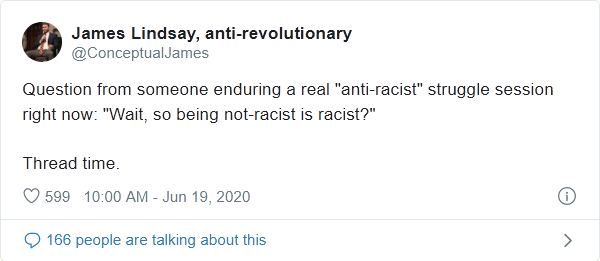
The state of US academia in juxtaposed tweets

Filed under: Bureaucracy, Economics, Education, USA — Tags: , , — Nicholas @ 03:00

American universities have problems, but the solutions they choose do not seem to be addressing those problems (screencapped, in case the tweet doesn’t load correctly):

May 31, 2019

Addressing the Canadian Forces’ shortfall in recruiting

Filed under: Cancon, Military — Tags: , , , — Nicholas @ 05:00

The Canadian Armed Forces have an authorized strength of more than 60,000, but have not been close to that level for several years: as of 2016 there were barely more than 56,000. Recruiting has not kept pace with the demand:

Canada’s armed forces have struggled for years to attract and retain talent. The latest reports only highlight the growing gulf between the number of members required for a fully staffed service, and the lack of actual personnel.

On May 7, Procurement Canada published an expression of interest notice asking the film and television industry to help boost the military’s brand among millennials and young Canadians.

The document ascribes young people’s apparent lack of interest in joining the military to a shift in generational attitudes.

“Millennials rank inward-focused values – happiness, discovery, etc. – higher than collective-focused values – justice, duty, etc.,” the report says.

“Characteristically, they want to contribute to society in a way that is meaningful as viewed in their own standards.”

Membership in the Canadian Armed Forces (CAF) fell from 58,000 to 56,300 between 2011 and 2016, while the forces’ staffing requirements actually grew.

The shortfall in personnel by the end of 2016 measured 4,200 jobs – nearly twice the vacancy gap of four years prior – with no evidence of a reversal of fortunes since.

A fascinating statistic popped up in the coverage that I hadn’t seen before:

The callout also targets celebrity personalities, influencers, podcasts and video games as potential vehicles for pro-military narratives, and stresses the importance of attracting visible minorities “as they account for 51 per cent of all science, technology, engineering and math (STEM) degrees and account for 50 per cent of the doctorate holders in Canada.”

According to the 2016 Census (summarized by Wikipedia), the national average of visible minorities is 22%, so that 22% is disproportionally represented in the graduating classes in STEM programs.

H/T to my friend William for the link.

May 24, 2019

Ontario universities’ “quarter-million dollar club”

Filed under: Cancon, Education, Law — Tags: , , , , — Nicholas @ 05:00

Being a tenured university professor is generally a well-paid job, even in Canada. But thanks to an unintended interaction between pension legislation and retirement policies, older tenured professors are required to draw their pensions (which are pretty damned good by themselves) and their salaries from the university, which boosts many of them well into the quarter-million a year range:

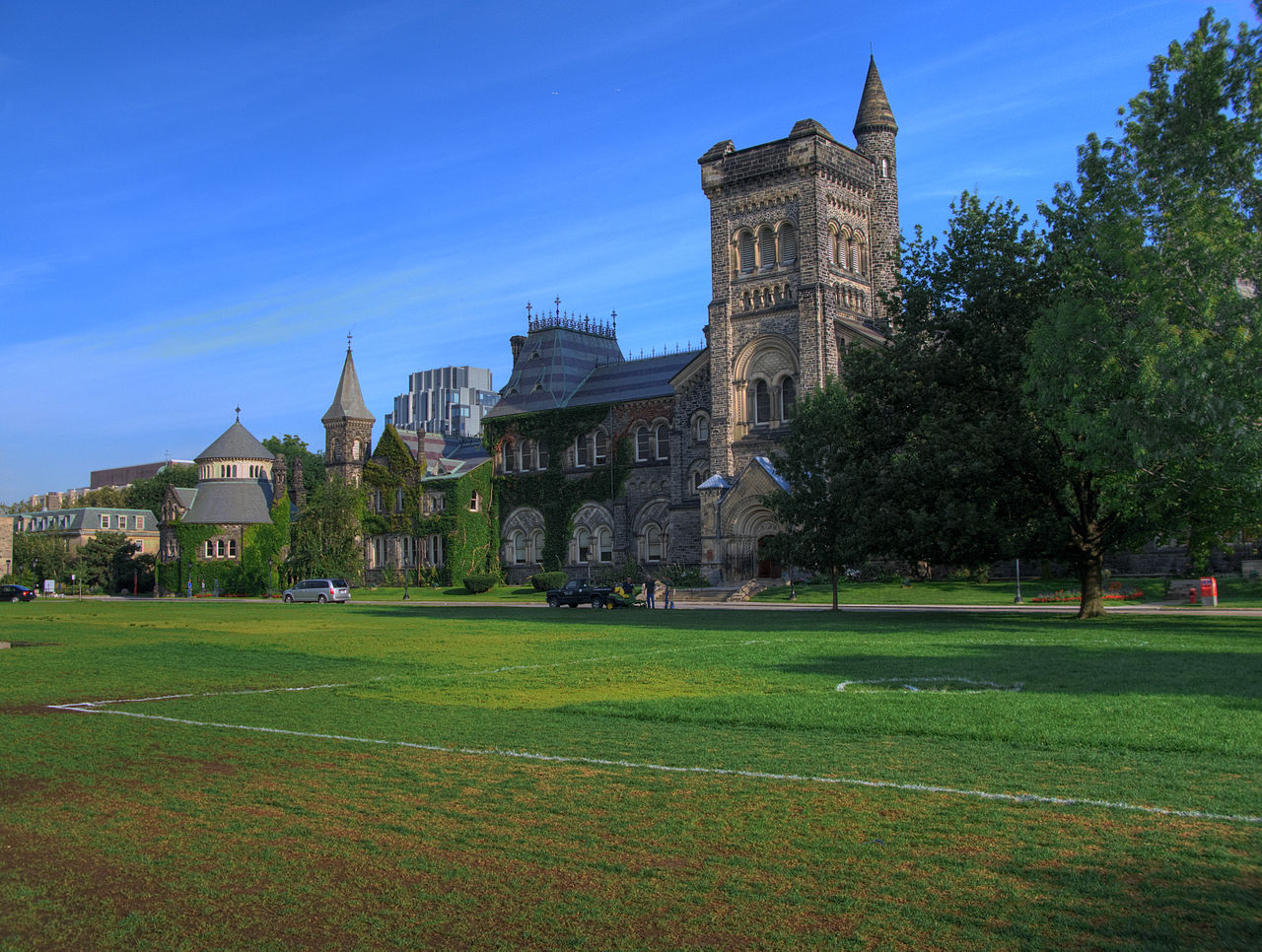
University College, University of Toronto, 31 July, 2008.
Photo by “SurlyDuff” via Wikimedia Commons.

Ontario is a weird place sometimes. One month ago, the government announced that it was implementing a performance-based funding plan which – if you took the government’s half-thought-out comments seriously – raised the possibility that hundreds of millions or perhaps even billions of dollars currently projected to be spent on institutions might be snatched away if institutions failed to hit some ill-defined targets in a type of contract-based funding system. You’d think this would be a big deal, something people would want to talk about and discuss.

But no. Somehow, this is not what is currently obsessing the Ontario university sector. Instead, apparently, we need to talk about how it’s a human rights violation for professors to be asked to enjoy their retirement on a six-figure annual pension.

Crazy? Well, yes. Here’s the deal. Time used to be that universities could tell professors to retire at age 65 or 67 or whenever. Over the course of the 2000s, provinces gradually got rid of mandatory retirement; in Ontario this occurred in 2006, when the provincial government amended the Human Rights Code to that effect. It should have surprised absolutely no one that more and more full professors, who towards the end of their career routinely make over $180,000 per year, decided to delay retirement not just past 65 but pretty much forever. In 2011, only 6.7% of professors were over 65 and 0.9% 70 or over. Just five years later in 2016, that was up to 10.2% and 3.3% respectively. At the time, I estimated that the compensation costs for the over-65s amounted to $1.3 billion, or enough to hire about 10,000 new junior faculty. The share of that going to the 70-pluses would amount to a little north of $400 million.

But here’s the thing: federal pension legislation requires individuals to start drawing down their pensions at age 71. You can’t opt-out. And so as a result you get individuals who are in what Carleton University economist Frances Woolley recently called the “quarter-million dollar club” (do read Frances’ piece – everything she does on higher education is excellent, but she is extra-excellent on this one). Even if you understand the legislative path that led us here, you probably – rightly – think this is an outrageous sum, particularly in light of the fact that research productivity tends to decline over time and teaching loads among full professors are not all that onerous.

On the other side of the pond, a recent tribunal ruling at Oxford’s St. John’s College points in a very different direction:

Oxford and Cambridge universities can force old professors to retire in order to boost diversity, a tribunal ruling suggests.

Prof John Pitcher, a leading Shakespeare scholar and fellow at St John’s College at Oxford, claimed that he had been unfairly pushed out at age 67 to make way for younger and more ethnically diverse academics.

He sued the College and university for age discrimination and unfair dismissal, claiming loss of earnings of £100,000 – but Judge Bedeau dismissed both claims.

May 15, 2019

“Our” intellectuals and how they got that way

Over at Rotten Chestnuts, Severian says we should blame the eggheads:

Because its goals were impossible, The Revolution didn’t go as planned. For every two self-deluded fools who thought the Soviet Union was a new civilization, there were five who knew exactly what the Communists were about. Bomb-throwing anarchists had terrorized European cities for years before 1917, and Red atrocities during the Civil War were no secret. It was obvious to anyone who cared to look, then, that horrors like the White Sea Canal were features, not bugs, of Communism.

If you’ve read your Festinger, you know what happened next. The True Believers searched frantically for any “explanation” that wouldn’t invalidate their precious Marxism, and Antonio Gramsci gave it to them. Though he didn’t coin the term “false consciousness” (Georgy Lukacs did), Gramsci weaponized it. The reason the Bolsheviks are forced to do all that awful stuff — which we don’t admit they actually did! — is that The People lack the proper revolutionary consciousness. They still believe in stuff like “God,” “free speech,” “not getting starved to death while the Party fatcats drive around in limos,” etc.

And where do they get this “false consciousness,” comrades? Why, it’s the same place the Western proles get theirs, which is also why the Western proles haven’t joined The Revolution (yet!), in fulfillment of the scriptures. Gramsci called the false consciousness installation process “hegemony.” There are a zillion unread academic tomes covering all the nuances, but the basic idea is simple enough: The ruling class controls the institutions; the institutions transmit culture; therefore, the culture takes ruling class values for granted.*

The solution, therefore, is as simple as the diagnosis: Capture the institutions, change the culture.

I trust y’all see where this is going. The best conspiracy theories are the ones that are actually true, and this one is. You want a grand conspiracy to destroy Western Civ? Here it is, laid out as openly as Marxist prose can express it, in excruciating detail. If anything, I’m being unfair to Antonio Gramsci. He put it all together in true kommissar style, but these ideas were everywhere on the Left in the early 20th century. In America, for instance, Progressives like John Dewey had been maneuvering to get control of elementary schools since the late 19th century. Progressives just looooove putting their hands on children. Have you noticed?

Every single insane, culture-destroying, gulag-enabling idea the Left has had in the last 200 years, starting with Karl Marx’s sub-Hegelian flatulence itself, can be traced directly back to some fucking egghead. I’ll repeat that: DIRECTLY. You can find their works, and quote them, because this stuff is in every syllabus of every Humanities class of every college in the Western world. The prose is opaque as only PoMo prose can be, but the main ideas are easy enough to decipher….

…I wrote “ideas,” but there’s really only one “idea.” Since The Revolution obviously ain’t gonna happen — it seems even Leftists can acknowledge one tiny aspect of reality, if you give ’em twelve decades and 100 million bodies — the Left’s entire program, top to bottom, stem to stern, is shit-flinging nihilism. Hey hey, ho ho, Western Civ has got to go — not because it’s Western, but because it’s Civilization.

May 7, 2019

QotD: Competitive Wokeness

Filed under: Education, Humour, Politics, Quotations — Tags: , , — Nicholas @ 01:00

I love competitive #Wokeness.

No, seriously — it’s high time you people out in the real world got to experience one of the defining joys of life in the ivory tower. In the ivy-covered halls of academe, the Marxist Postcolonialist Feminsts have longstanding beef with the Postcolonialist Feminist Marxists. They’d each happily feed the other into a wood chipper, even though to outsiders it would look like the pot executing the kettle for counterrevolutionary crimes. If you’re the sort who takes schadenfreudy delight in very obvious folly, university life is hilarious.

It’s even funnier if you take these buffoons at their word. Compared to the pronouncements of your average Angry Studies professor, Pol Pot was a sane and balanced man. In reality, of course, university people are so soft and coddled, they make the Eloi look like the Sons of Anarchy. Spending so much time around college folk is one of the main reasons for my mantra: “Today’s SJW is tomorrow’s obergruppenfuhrer.” They talk a fearsome game, these campus Ches, but they cry if the cafeteria is out of free trade sustainably sourced indigenous grown gluten free soy milk. When the zeitgeist shifts, they’ll be the first to knuckle under.

Severian, “The Reluctant Revolutionary”, Rotten Chestnuts, 2019-04-05.

April 19, 2019

QotD: The revolution will be YouTubed, which might snuff it out before it gets underway

Filed under: Media, Politics, Quotations, USA — Tags: , , , , — Nicholas @ 01:00

I think that a number of factors will ultimately tamp it down [campus protests/riots]. The ability of people to record videos of police has been a tremendous spur to calls for reform. But police are not the only people who can be filmed in public; so can protesters. I suspect that as people discover what can happen when future employers google up videos of you shouting “[expletive deleted] the police” or screaming at professors and speakers, the costs of this sort of protest will rise, and there will be less of it. Moreover, I suspect that both alumni and state funding for schools where this sort of thing happens a lot will often decline, putting pressure on administrators to curb it.

Megan McArdle, “Ask Me Anything”, Reddit, 2017-04-10.

March 17, 2019

QotD: McGill University

Filed under: Cancon, Education, Humour, Quotations — Tags: , — Nicholas @ 01:00

… if the freedom to speak harsh truth and engage in adventurous social critique means nothing at McGill, it is doomed at younger universities — especially those that have materialized, or been promoted to new feudal rank, during the ongoing academic bubble era.

The stakes are high. We all enjoy a laugh at McGill’s perception of itself as the Canadian Harvard, but if there is one university from which others in our country are bound to take ethical and stylistic cues — well, McGill probably is Harvard.

Colby Cosh, “Scary Potter and the Chamber of Secrets: an alternate view of the storm engulfing McGill”, National Post, 2017-03-27.

March 16, 2019

QotD: Teaching critical thinking

Filed under: Education, Politics, Quotations, USA — Tags: , , — Nicholas @ 01:00

Traditionally, the “critical” part of the term “critical thinking” has referred not to the act of criticizing, or finding fault, but rather to the ability to be objective. “Critical,” in this context, means “open-minded,” seeking out, evaluating and weighing all the available evidence. It means being “analytical,” breaking an issue down into its component parts and examining each in relation to the whole.

Above all, it means “dispassionate,” recognizing when and how emotions influence judgment and having the mental discipline to distinguish between subjective feelings and objective reason — then prioritizing the latter over the former.

I wrote about all this in a recent post on The Chronicle of Higher Education’s Vitae website, mostly as background for a larger point I was trying to make. I assumed that virtually all the readers would agree with this definition of critical thinking—the definition I was taught as a student in the 1980s and which I continue to use with my own students.

To my surprise, that turned out not to be the case. Several readers took me to task for being “cold” and “emotionless,” suggesting that my understanding of critical thinking, which I had always taken to be almost universal, was mistaken.

I found that puzzling, until one helpful reader clued me in: “I share your view of what critical thinking should mean,” he wrote. “But a quite different operative definition has a strong hold in academia. In this view, the key characteristic of critical thinking is opposition to the existing ‘system,’ encompassing political, economic, and social orders, deemed to privilege some and penalize others. In essence, critical thinking is equated with political, economic, and social critique.”

Suddenly, it occurred to me that the disconnect between the way most people (including employers) define critical thinking and the way many of today’s academics define it can be traced back to the post-structuralist critical theories that invaded our English departments about the time I was leaving grad school, in the late 1980s. I’m referring to deconstruction and its poorer cousin, reader response criticism.

Both theories hold that texts have no inherent meaning; rather, meaning, to the extent it exists at all, is entirely subjective, based on the experiences and mindset of the reader.

Rob Jenkins, “Why College Graduates Still Can’t Think”, The James G. Martin Center for Academic Renewal, 2017-03-23.

March 14, 2019

Life in the modern academic paradise

Filed under: Education, Politics, USA — Tags: , , , — Nicholas @ 03:00

At Rotten Chestnuts, Severian recounts his time in the idyllic Ivory Tower of modern academia:

Imagine you’re some kind of Gulliver-type explorer, and you reach an island of perfect bliss. Clear air, gentle breezes, balmy temperatures, and all the delicious food you can eat. And the natives! They live to serve you, completely unconstrained by anything so antiquated as Western sexual morality. Limitless 5G internet. Anything you want to eat, drink, watch, read, do, say, insert, or have inserted, it’s all yours at the snap of your fingers. Got it?

Now imagine that the rulers of this little slice of paradise do nothing but sit on the side of the road all day, smashing their own toes with ball-peen hammers.

That’s life in a college town. The Left run everything. They set the admissions requirements. They have unlimited budgets, and since they do, the entire commercial ecosystem exists only for them. All cuisine is “fusion,” you have to drive to the next burg over to find milk that comes from cows, and every single item of public culture — from sidewalk graffiti to public radio to experimental theater troupe — does nothing but flatter them. There is no fetish so outre, no practice so bizarre, that you can’t find at least one other enthusiastic participant. It’s intersectional genderfluid heaven….

…. and every single person in it is miserable. I’m serious — if it’s not too far out of your way, drive down to your nearest college town, and just watch the faces. You might glimpse a grinning undergrad or two — they’re too young and dumb to know better; they’ll be fully reeducated by junior year — but you can spot the tenured faculty solely by their scowls. The only thing that temporarily alleviates the existential horror of their lives is getting outraged by something, which — since, again, they control everything — means tilting at windmills is their only sport; they play it with a cutthroat intensity the football coach can only dream of.

How can you not be fascinated by that? To utterly refute the view of man as homo economicus, all you have to do is watch the facial expressions of people who are “the 1%” by any measure that makes sense. It’s one hell of a show…

March 8, 2019

Education schools and the bloat of university administration

Filed under: Bureaucracy, Education, Politics, USA — Tags: , , , — Nicholas @ 03:00

Remember the old joke:

    Those who can, do.
    Those who can’t, teach.
    Those who can’t teach, teach gym educational studies.

As far as higher education is concerned, the joke is on us:

Though I didn’t realize it at the time, those were my first encounters with an alternate curriculum that was being promoted on many campuses, a curriculum whose guiding principles seemed to be: 1) anything that could be construed as bigotry and hatred should be construed as bigotry and hatred; and 2) any such instance of bigotry and hatred should be considered part of an epidemic. These principles were being advanced primarily, though not exclusively, by college administrators, whose ranks had grown so remarkably since the early 1990s.

Everyone knows about the kudzu-like growth of the administrative bureaucracy in higher education over the past three decades. What most don’t know is that at many colleges, the majority of administrators directly involved in the lives of students — in dorms, conduct hearings, bias-response teams, freshmen “orientation” programs, and the like — got their graduate degrees from education schools.

Ed schools, such as Teachers College at Columbia, or Penn’s Graduate School of Education, have trained and certified most of the nation’s public-school teachers and administrators for the past half-century. But in the past 20 years especially, ed schools have been offering advanced degrees in things like “educational leadership,” “higher education management,” and just “higher education” to aspiring college administrators. And this influx of ed school trained bureaucrats has played a decisive role in pushing an already left-leaning academy so far in the direction of ideological fundamentalism that even liberal progressives are sounding the alarm.

To anyone acquainted with the history and quality of American ed schools, this should come as no surprise. Education schools have long been notorious for two mutually reinforcing characteristics: ideological orthodoxy and low academic standards. As early as 1969, Theodore Sizer and Walter Powell hoped that “ruthless honesty” would do some good when they complained that at far too many ed schools, the prevailing climate was “hardly conducive to open inquiry.” “Study, reflection, debate, careful reading, even, yes, serious thinking, is often conspicuous by its absence,” they continued. “Un-intellectualism — not anti-intellectualism, as this assumes malice — is all too prevalent.” Sizer and Powell ought to have known: At the time they were dean and associate dean, respectively, of the Harvard Graduate School of Education.

More than three decades later, a comprehensive, four-year study of ed schools headed by a former president of Teachers College, Arthur Levine, found that the majority of educational-administration programs “range from inadequate to appalling, even at some of the country’s leading universities.” Though there were notable exceptions, programs for teaching were described as being, in the main, weak and mediocre. Education researchers seemed unable to achieve even “minimum agreement” about “acceptable research practice,” with the result that there are “no base standards and no quality floor.” Even among ed school faculty members and deans, the study found a broad and despairing recognition that ed school training was frequently “subjective, obscure, faddish, … inbred, and politically correct.”

March 6, 2019

QotD: Teaching evolution in the “Bible Belt”

Filed under: Africa, Education, History, Quotations, Religion, Science, USA — Tags: , , , — Nicholas @ 01:00

I teach college in a small city in Arkansas, deep in the American Bible Belt. I am a historian of Africa and in my department that means that I also teach a world history survey. I always start with the expansion of modern humans out of Africa and their encounter with other types of humans: Neanderthals, Homo erectus, Denesovians and what seems like an ever-growing list of newly discovered human-like creatures. It’s less the case now, but when I started twenty years ago this part of the course was initially met with polite but firm resistance, which gradually gave way to a sort of furtive curiosity. I eventually realized that even my cleverest students knew very little about human evolution except that it was false and that they were supposed to reject it. They came to the university having been taught that evolution was part of a larger attack on their faith and values, but they had never really been exposed to anything but a sort of parody version of it. A small number of them accepted evolutionary theory, but being a Darwinian in rural Arkansas was usually more about youthful rebellion and non-conformity than it was about informed, rational consideration of evidence.

Once we got past the denunciation or acceptance of evolutionary theory as a form of tribal affiliation, I found students to be deeply curious about it. It was such a taboo subject that their high school teachers had only skimmed over it and often with some careful personal distancing from the material. So the opportunity to delve into the details of this forbidden knowledge was intellectually thrilling for them. Despite the excitement engendered by the topic only a few changed their minds; most did not.

My students had grown up in communities where evolutionary theory was so wrong, so contrary to the accepted worldview of all decent people, that the only acceptable way to talk about it was to denounce it or reject it. The result was that most of my students rejected evolution, but getting a chance to learn about it was profoundly exciting, even if most of them were too conformist (these were Honors students after all) to change their positions.

Erik Gilbert, “Liberal Orthodoxy and the New Heresy”, Quillette, 2019-02-04.

February 17, 2019

QotD: Nanotechnology and quantum computing

When I say Quantum Computing is a bullshit field, I don’t mean everything in the field is bullshit, though to first order, this appears to be approximately true. I don’t have a mathematical proof that Quantum Computing isn’t at least theoretically possible. I also do not have a mathematical proof that we can make the artificial bacteria of K. Eric Drexler’s nanotech fantasies. Yet, I know both fields are bullshit. Both fields involve forming new kinds of matter that we haven’t the slightest idea how to construct. Neither field has a sane ‘first step’ to make their large claims true.

Drexler and the “nanotechnologists” who followed him, they assume because we know about the Schroedinger equation we can make artificial forms of life out of arbitrary forms of matter. This is nonsense; nobody understands enough about matter in detail or life in particular to do this. There are also reasonable thermodynamic, chemical and physical arguments against this sort of thing. I have opined on this at length, and at this point, I am so obviously correct on the nanotech front, there is nobody left to argue with me. A generation of people who probably would have made first rate chemists or materials scientists wasted their early, creative careers following this over hyped and completely worthless woo. Billions of dollars squandered down a rat hole of rubbish and wishful thinking. Legal wankers wrote legal reviews of regulatory regimes to protect us from this nonexistent technology. We even had congressional hearings on this nonsense topic back in 2003 and again in 2005 (and probably some other times I forgot about). Russians built a nanotech park to cash in on the nanopocalyptic trillion dollar nanotech economy which was supposed to happen by now.

Similarly, “quantum computing” enthusiasts expect you to overlook the fact that they haven’t a clue as to how to build and manipulate quantum coherent forms of matter necessary to achieve quantum computation. A quantum computer capable of truly factoring the number 21 is missing in action. In fact, the factoring of the number 15 into 3 and 5 is a bit of a parlour trick, as they design the experiment while knowing the answer, thus leaving out the gates required if we didn’t know how to factor 15. The actual number of gates needed to factor a n-bit number is 72 * n^3; so for 15, it’s 4 bits, 4608 gates; not happening any time soon.

It’s been almost 25 years since Peter Shor had his big idea, and we are no closer to factoring large numbers than we were … 15 years ago when we were also able to kinda sorta vaguely factor the number 15 using NMR ‘quantum computers.’

I had this conversation talking with a pal at … a nice restaurant near one of America’s great centers of learning. Our waiter was amazed and shared with us the fact that he had done a Ph.D. thesis on the subject of quantum computing. My pal was convinced by this that my skepticism is justified; in fact he accused me of arranging this. I didn’t, but am motivated to write to prevent future Ivy League Ph.D. level talent having to make a living by bringing a couple of finance nerds their steaks.

Scott Locklin, “Quantum computing as a field is obvious bullshit”, Locklin on Science, 2019-01-15.

February 1, 2019

Severian explains why he quit teaching

Filed under: Education — Tags: , , , , , — Nicholas @ 03:00

Spoiler: it wasn’t fun anymore. As to why it wasn’t fun, it was (say it together with me) the youth of today:

It’s not that kids today are mal-educated, woefully ignorant, and wouldn’t know serious academic work if it bit them on the ass. Those are all true, of course, but that’s the way it has always been — I have no doubt Plato said the same thing about Aristotle (and Socrates no doubt said it about Plato). In my experience, the rueful phrase “back when I was in college” first escapes your lips approximately 36 hours into graduate school.

It’s not the quantity of ignorance, then, but the quality. Generation Snowflake really are New Soviet Men. If you’ve read about life under Stalin, especially, you’ll know what I’m talking about — at once invincibly self-righteous and cringingly subservient, modern students come across like junior volunteer commissars. If they don’t already know it, it’s by definition not worth knowing… and you’re an asshole — to be avoided, undermined, ignored, or (very, very grudgingly) tolerated, as the situation dictates — for trying to make them “learn” something new.

They’re not sociopaths, exactly, but that’s close enough to what they are that we’ll go with it. For instance: They have no problem asking you to move due dates, even for big things like midterm exams, if it inconveniences them. And just them — the rest of the class should still have to take the exam on Friday; it’s just that she, Suzy Snowflake, has a big sorority function that weekend that she really needs to prepare for, so she should be allowed to take it Monday. Nor do they have a problem with lying on spec, just to see if you’ll bite. Tell Suzy no, she still has to take the exam on Friday like everyone else, and there’s a decent chance you’ll be getting a “dead Grandma” email from her over the weekend — my Grandma died suddenly this Friday, I had to go home for the funeral, I’m so broken up, I’m free to take the makeup exam on Monday.

No, I’m not joking, and yes, you can check Suzy Snowflake’s social media and find pictures of her downing shots at the big sorority do Saturday night. And yes, she knows those pictures are out there; Generation Snowflake regards the concept of “online privacy” like your cat thinks about calculus. It’s just that hey, maybe you won’t check. Worth a shot, right? If anyone should be upset it’s her, for making her feel bad by doubting her story. She’ll saunter into class on Monday like nothing happened…. because to her, nothing did. She threw a Hail Mary, it got intercepted, oh well, what’s new in the Netflix queue?

Faced with that, any attempt at education is like King Canute ordering back the tides. It’s excruciatingly pointless, and that’s why I quit. Life’s too short to spend raging against the inevitable.

« Newer PostsOlder Posts »

Powered by WordPress