Quotulatiousness

February 4, 2022

Canada’s delusionary approach to the question of providing military support to Ukraine

Filed under: Cancon, Europe, Government, Military, Weapons — Tags: , , , — Nicholas @ 05:00

In The Line, “Tommy Conway” explains why it makes no sense to take Canadian government and military leaders’ talking points on the situation in Ukraine seriously:

Canada has not done these things. We say we’re not sending weapons because “diplomacy is the solution”, but the reality is we can’t send anything meaningful. Any small arms we send would likely be on a NATO standard, and thus not very useful for Ukrainian forces who use Soviet calibers. As for the stuff the Kyiv really needs — the anti-tank and anti-air systems that the Americans, British, and Balts are sending — we are not sending them because we barely have any. Our anti-tank capability is mostly theoretical. Because we have not replaced older, worn-out systems, we have less anti-tank capability now than we did during the “decade of darkness” in the 1990s. We’ve known for decades that we need to equip the infantry with highly-portable, effective guided missiles like the U.S. Javelin, but we haven’t bothered, save for a few Spike missile systems for our special forces. Maybe our regular ground forces will get something similar by 2033. We have literally no air defence capability besides shooting machine guns in the air and hoping for the best, so we have no air defence missiles to send. Besides the fact that we can’t support Ukraine with weapons, we can’t really support NATO allies with reinforcements either because our units, on a modern battlefield, would lack the ability to defend themselves. We might be welcome as a political gesture, but we might also just be in the way.

Our deficiencies go deeper than weapons. CAF is well below strength. But instead of doubling down on core capabilities, CAF leadership insists on putting more people and resources into newer, faddish capabilities like cyber and information warfare, when we already have an entire government agency that does cyber. Our brigades — the core of the Canadian Army’s fighting power, are under-strength, and the army’s recent “Force 2025” concept concedes that the army should hope to field small, combat team elements as the core of any near-future operational deployment. To put this in perspective, a combat team makes up part of a battlegroup, which makes up part of a brigade. The Russians have 50 battlegroup equivalents on the Ukrainian border, and roughly 16 in the Kaliningrad exclave bordering Poland and Lithuania.

A Canadian deployment of a few combat teams would be too small a force even to help manage a large number of refugees in an active combat zone. We might be able to scrape together a battlegroup, but it would be vulnerable to air and tanks — in other words, not very useful. Once it was destroyed, that would probably be the majority of the Canadian Army’s combat power gone, with no hope of reconstituting it.

It would be one thing if the army sold this reorganization as a necessary evil in lean times, but this sort of hollowing-out is instead presented as allowing the army to “remain[…] ready to operate not only in the land domain, but pan-domain in a joint environment beyond simply reinforcing its existing capabilities.” Strip away the jargon, and it should be obvious that this phrasing is the victim of too much powerpoint and too little thinking. Junior NCOs and junior officers alike are instructed to build a “priority of work” into their plans for even small, simple operations. Given that we don’t have realistic “current capabilities”, reinforcing our shell of an army should obviously be on the top of the list before we commit resources to new things. At the very least we should be open and honest about what we can and can’t do.

If you ask most talking heads in the Canadian “defence space”, battlegroups that can’t battle aren’t a big deal. The idea that modern war will be won on social media or through “integration” and digital technologies, thus making the old ground-pounders outdated, is a common staple among civilian defence academics. It’s also present in the government’s defence policy, which goes on at length about space and cyberwar and climate change and “ungoverned spaces”, but little about building a realistic fighting force. This hopeful language about an army that can operate in a chaotic world without much messy stuff like hurting people or breaking things is obviously nonsense, but novelty and wishful thinking are pretty standard fare for academics and politicians. It’s much more concerning to see supposedly practical military people hold reality in such low regard.

The officer class’ shoddy thinking comes from decades of misguided pseudo-intellectual development. After the Somalia Affair in the 1990s, the CAF turned to liberal arts education as a way to buy credibility. There was nothing wrong with the idea of intellectual broadening in theory — the officer corps obviously needed reform. But the reforms were rushed and packaged, so they replaced one set of intellectual deficiencies with another.

November 17, 2021

Environmental pessimism despite the facts

Filed under: Economics, Environment, Media — Tags: , , , , — Nicholas @ 05:00

Alexander Hammond refutes one of the many, many articles preaching global environmental doom and disaster:

Last week, The Scotsman published an article by the journalist Anastasiia Zagoruichyk. In the piece, Zagoruichyk claims that thanks to climate change, fires, and deforestation in her native Ukraine, her children won’t get to experience childhood joys like “walking in the autumn forest, picking mushrooms and breathing fresh air.”

Forest coverage in Ukraine is, admittedly, a niche topic, but alarmism about the future of our forests and our children is unfortunately widespread. Indeed, it was not long ago that Extinction Rebellion founder Roger Hallam confidently declared that due to deforestation and other environmental damage, “our children are going to die in the next 10-20 years.” Thankfully for humanity, these far-fetched claims are not based in reality.

Contrary to what Zagoruichyk would have you believe, forest coverage in Ukraine has increased drastically in recent years. Between 1992 (the oldest data available) and 2020, the share of land in Ukraine covered by forest increased from 16.1 percent to 16.7 percent. While a 0.6 percentage point increase might seem like a small amount, this equates to an additional 3,622 square kilometers of forest – a land area roughly 1.5 times larger than the country of Georgia.

Globally, the world does continue to lose forest area. However, according to the United Nation’s Food and Agriculture Organisation (FAO), the rate of deforestation between 2010-2020 was 40 percent lower than in 1990-2000. At this rate, even without additional promises from world leaders at COP, the global deforestation rate will likely hit zero. Indeed, over the last 30 years, net afforestation has occurred in Europe (including Russia), North America, Oceania, and Asia.

The world’s two poorest regions, South America and Africa, are also the only ones that continue to experience net deforestation. This is no coincidence; many environmental scientists and commentators suggest that economic and ecological well-being are intimately related. According to one hypothesis, called the Environmental Kuznets Curve, a region’s environment worsens in tandem with economic growth but only until a certain income per capita is reached. At that point, people can afford to protect the environment, and ecosystems flourish. This environmental recovery has occurred across Europe and North America and is currently happening in China, Russia, India, and Vietnam.

Therefore, as South America and Africa continue to become richer, we can expect their rate of forest loss to slow and eventually reverse. Given this good news, why is there so much pessimism about the future of our forests? Zagoruichyk’s article offers some answers.

Earlier this month, Michael Shellenberger also had good-but-ignored environmental news to report in UnHerd:

No global problem has ever been more exaggerated than climate change. As it has gone from being an obscure scientific question to a theme in popular culture, we’ve lost all sense of perspective.

Here are the facts: in Europe, emissions in 2020 were 26% below 1990 levels. In the United States, emissions in 2020 were 22% below 2005 levels. Emissions are likely to start declining, too, in developing nations, including China and India, within the next decade. Most nations’ emissions will be bigger this year than last, due to post-Covid economic growth. But global emissions are still likely to peak within the next decade.

And the result will be a much smaller increase in global average temperatures than almost anyone predicted just five years ago. The best science now predicts that temperatures are likely to rise just 2.5-3°C above pre-industrial levels. It’s not ideal, but it’s a far cry from the hysterical and apocalyptic predictions of 6°C, made just a decade ago. A 3°C increase is hardly an existential threat to humanity.

Not that you’d know it, if you had half an eye on the headlines this summer. The floods, fires and heatwaves that plagued the world were, for many observers, proof that the impacts of climate change have already become catastrophic. In Europe, more than 150 people died in flooding. In the United States, wildfire season started earlier and lasted longer, razing hundreds of thousands of acres. Around the world, hundreds died from heatwaves.

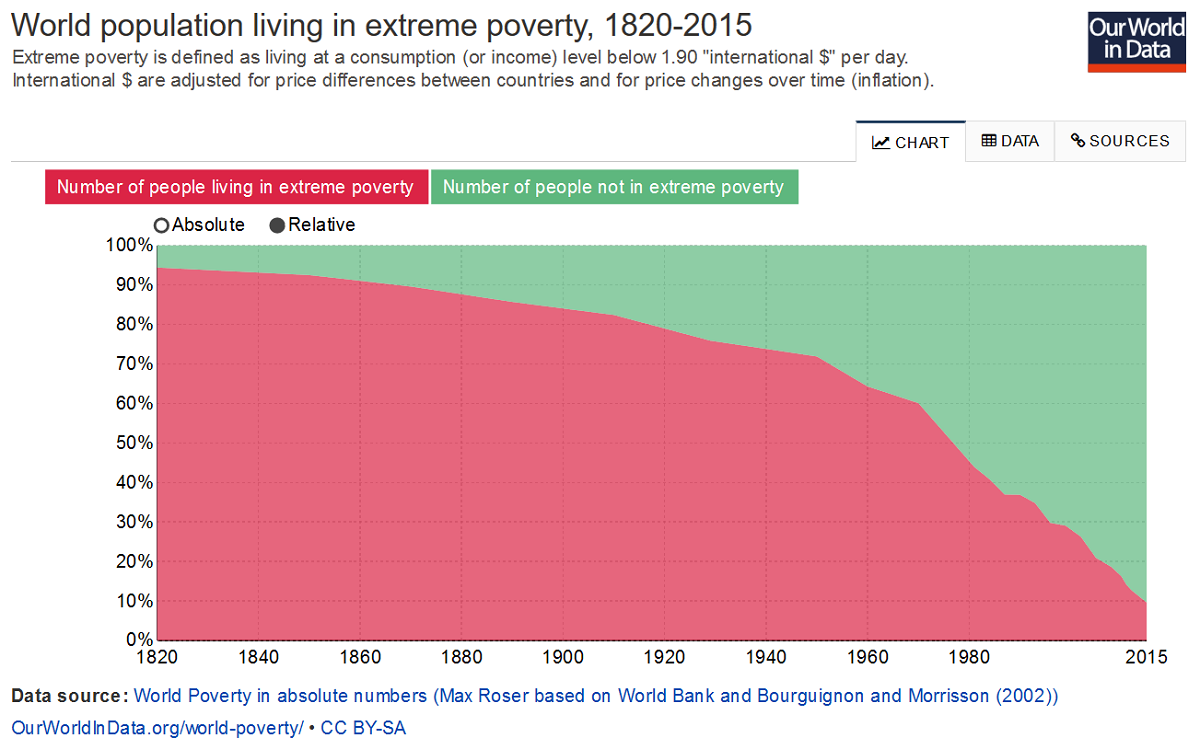
But again, it’s worth reminding ourselves of the facts: there has been a 92% decline in the per decade death toll from natural disasters since its peak in the 1920s. In that decade, 5.4 million people died from natural disasters. In the 2010s, just 0.4 million did. Globally, the five-year period ending in 2020 had the fewest natural disaster deaths of any five-year period since 1900. And this decline occurred during a period when the global population nearly quadrupled — and temperatures rose more than 1°C degree centigrade above pre-industrial levels.

July 27, 2021

QotD: Walter Duranty’s Pulitzer

Walter Duranty was possibly the worst foreign correspondent in the history of the Western press. Reporting on Russia for the New York Times during the 1920s and 30s, he not only lied through his teeth about the death of millions during the Ukrainian famine, but conspired, with some success, to prevent anyone else from telling the truth about it.

He won the Pulitzer Prize in 1934 for his reporting, but ever since 1990, when a biography of him was published that emphasized the extent of his mendacity, there have been efforts to have the prize symbolically rescinded (Duranty died in 1957).

A man may be honestly mistaken, but Duranty had knowingly and persistently lied about matters of world importance. At the very least he deserved the sack rather than a prestigious award, but was never called to account during his lifetime; and the Pulitzer committee has twice decided that the award should not be withdrawn.

I can see the argument for rescinding the prize because Duranty’s conduct was truly despicable, and the prize had been for what, morally, was a great crime.

But there is also an argument for not rescinding it, for the posthumous withdrawal of an award can look like an attempt to rewrite the history of the awarding authority by an act of auto-absolution. An admission that the Pulitzer committee had made a terrible error of judgment might have been sufficient.

Theodore Dalrymple, “Richard Dawkins Punished for Inviting Us to Think”, The Iconoclast, 2021-04-24.

May 16, 2021

Joseph Stalin Jumps the Gun – 142 – May 16, 1942

World War Two
Published 15 May 2021

The Soviets pre-empt a German offensive with one of their own in the south of the Eastern Front, but that’s not the only fighting. The skies over Malta and the waters of the Gulf of St. Lawrence are full of action. Meanwhile, two races against time — and the Japanese — come to an end in India.
(more…)

November 11, 2020

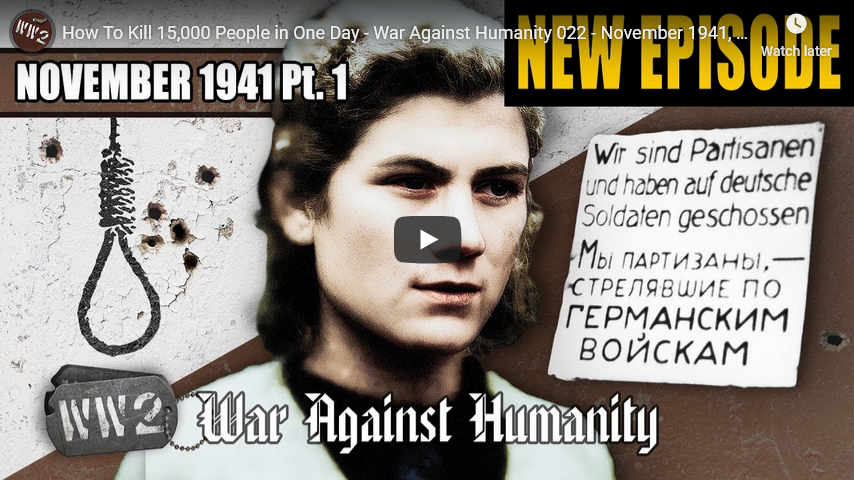
How To Kill 15,000 People in One Day – War Against Humanity 022 – November 1941, Pt. 1

Filed under: Europe, Germany, History, Military, Russia, WW2 — Tags: , , , , , — Nicholas @ 04:00

World War Two
Published 10 Nov 2020

As German troops pull into eastern Ukraine, locals fight back in any way they can. Some of them have been the target of Soviet brutalisation for decades. For many who are deemed ‘enemy of the Third Reich’, the first two weeks of November 1941 are their last, as the ‘Holocaust of Bullets’ continues.

Join us on Patreon: https://www.patreon.com/TimeGhostHistory
Or join The TimeGhost Army directly at: https://timeghost.tv

Follow WW2 day by day on Instagram @ww2_day_by_day – https://www.instagram.com/ww2_day_by_day
Between 2 Wars: https://www.youtube.com/playlist?list…
Source list: http://bit.ly/WW2sources

Hosted by: Spartacus Olsson
Written by: Joram Appel and Spartacus Olsson
Director: Astrid Deinhard
Producers: Astrid Deinhard and Spartacus Olsson
Executive Producers: Astrid Deinhard, Indy Neidell, Spartacus Olsson, Bodo Rittenauer
Creative Producer: Maria Kyhle
Post-Production Director: Wieke Kapteijns
Research by: Joram Appel
Edited by: Miki Cackowski
Sound design: Marek Kamiński
Map animations: Eastory (https://www.youtube.com/c/eastory)

Colorizations by:
Mikołaj Uchman
Jaris Almazani (Artistic Man), https://instagram.com/artistic.man?ig…
Spartacus Olsson

Sources:
Yad Vashem 2725/6, 953, 145CO2, 2798-2, 48AO3, 2869/48, 4360/99, 83EO4, 2791/5, 4220/3, 48AO5, 3745/140, 48AO4, 95EO2, 142BO7, 3296/4, 4788/72, 4613/625,4788/73
Visuotinė lietuvių enciklopedija
Bundesarchiv
USHMM
Picture of Soviet POWs digging graves, courtesy of Max Peronius
from the Noun Project: Skull by Muhamad Ulum

Soundtracks from the Epidemic Sound:
Peter Sandberg – “Document This 1”
Gavin Luke – “Drifting Emotions 3”
Farrell Wooten – “Blunt Object”
Wendel Scherer – “Defeated”
Gunnar Johnsen – “Not Safe Yet”
Andreas Jamsheree – “Guilty Shadows 4”
Jon Bjork – “For the Many”
Jon Bjork – “Icicles”

Archive by Screenocean/Reuters https://www.screenocean.com.

A TimeGhost chronological documentary produced by OnLion Entertainment GmbH.

From the comments:

World War Two
1 hour ago
You might have noticed how more and more of our War Against Humanity episodes are restricted by YouTube. For some, it might take up to three separate “warning” windows to see the video. Many don’t get the episodes in their subscription boxes or don’t receive notifications despite their settings having notifications turned on. The video might not be sharable on social media, or some might not be able to watch them at all because they don’t have an account, are deemed too young by YouTube or are in the wrong geographic location.

And that doesn’t even include the huge restrictions YouTube puts on the organic reach of these videos. If it weren’t for out loyal community and other social media channels, these War Against Humanity episodes would go virtually under the radar. Even though our episodes could be a remedy to the problems that YouTube and many societies are dealing with. Misinformation, ignorance, and the obliviousness to the horrors of our past are dangerous and the restriction of our educational, factual and academic coverage of these horrors adds insult to injury.

“The following content has been identified by the YouTube community as inappropriate or offensive to some audiences,” one of the warning says. And mind you that it’s not the facts that people find offensive. They’re facts. They are neutral. It is that we are showing them to the world that people find offensive.

We won’t change our content or our tone. To make sure to see our content no matter what, you can follow our other Social Media accounts and/or join the TimeGhost Army on https://www.patreon.com/TimeGhostHistory or https://timeghost.tv to ensure we stay financially independent.

Cheers,
Joram

October 2, 2020

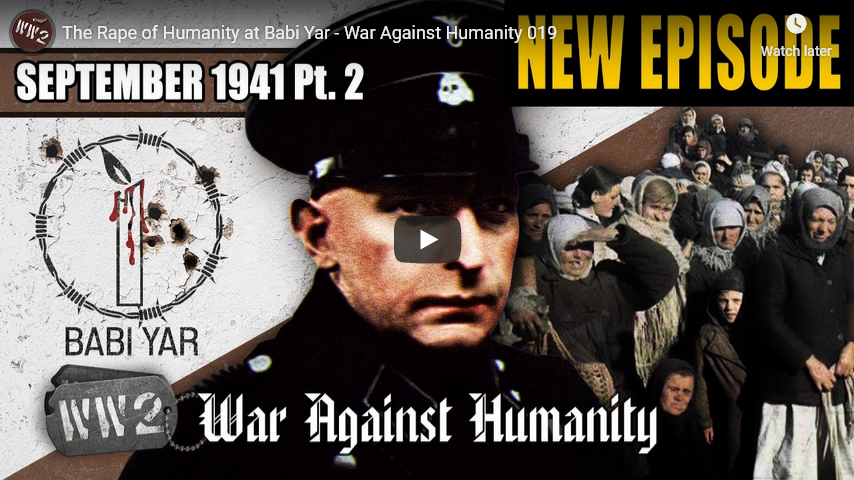
The Rape of Humanity at Babi Yar – War Against Humanity 019

Filed under: Germany, History, Military, Russia, WW2 — Tags: , , , , — Nicholas @ 04:00

World War Two
Published 1 Oct 2020

Killing Jews by the thousands becomes the main way of eradicating the Jews in Eastern Europe in August and September 1941. The Mass Murder at Babi Yar in Kiev is yet another escalation in that process.

Join us on Patreon: https://www.patreon.com/TimeGhostHistory
Or join The TimeGhost Army directly at: https://timeghost.tv

Check out our TimeGhost History YouTube Channel: https://www.youtube.com/c/timeghost?s…

Follow WW2 day by day on Instagram @ww2_day_by_day – https://www.instagram.com/ww2_day_by_day
Between 2 Wars: https://www.youtube.com/playlist?list…
Source list: http://bit.ly/WW2sources

Hosted by: Spartacus Olsson
Written by: Joram Appel and Spartacus Olsson
Director: Astrid Deinhard
Producers: Astrid Deinhard and Spartacus Olsson
Executive Producers: Astrid Deinhard, Indy Neidell, Spartacus Olsson, Bodo Rittenauer
Post-Production Director: Wieke Kapteijns
Creative Producer: Maria Khyle
Research by: Joram Appel
Edited by: Miki Cackowski
Sound design: Marek Kamiński
Map animations: Eastory (https://www.youtube.com/c/eastory)

Colorizations by:
Carlos Ortega Pereira, BlauColorizations – https://www.instagram.com/blaucolorizations
Julius Jääskeläinen – https://www.facebook.com/JJcolorization/
Tzo15 https://commons.wikimedia.org/wiki/Fi…
Mikolaj Uchman
Spartacus Olsson

Image Sources:
Bundesarchiv
Yad Vashem 3725/4, 7717/273, 5705/29, 5705/43, 3150/37, 5705/48, 5705/53, 5705/54, 5705/21, 2725/7, 5705/12, 5705/20, 5705/22, 4788/72, 5705/26, 5705/40, 4613/1055, 3521/134, 3521/133
USHMM
Narodowe Archiwum Cyfrowe
from the Noun Project: Skull by Muhamad Ulum, soldier by Simon Child

Soundtracks from the Epidemic Sound:
Cobby Costa – “Flight Path”
Andreas Jamsheree – “Guilty Shadows 4”
Jon Bjork – “For the Many”
Farell Wooten – “Blunt Object”
Fabien Tell – “Never Forget”
Gunnar Johnsen – “Not Safe Yet”

Sources:
Berkhoff, Karel (ed.), Basic Historical Narrative of the Babi Yar Holocaust Memorial Center (2018).
Desbois, Patrick, The Holocaust by Bullets: A Priest’s Journey to Uncover the Truth Behind the Murder of 1.5 Million Jews (2008).
Fox, Holquist and Martin, The Holocaust in the East: Local Perpetrators and Soviet Responses (2014).
Kay, Alex and David Stahel, Mass Violence in Nazi-Occupied Europe (2018).
Longerich, Peter, The Unwritten Order: Hitler’s Role in the Final Solution (2001)
Longerich, Peter, Holocaust: The Nazi Persecution and Murder of the Jews (2010).
Klee, dressen and Reiss, The Good Old Days: The Holocaust as Seen by its Perpetrators and Bystanders (1991).
Müller, “The Brutalisation of Warfare, Nazi Crimes and the Wehrmacht”, In: Erickson & Dilks, Barbarossa: The Axis and the Allies.
Pieper, Henning, Fegelein’s Horsemen and Genocidal Warfare: The SS Cavalry Brigade in the Soviet Union (2015).
Rutherford, Jeff, Combat And Genocide on the Eastern Front: The German Infantry’s War, 1941-1944 (2014).
Snyder, Timothy, Bloodlands: Europe Between Hitler and Stalin (2010).
United States Holocaust Memorial Museum, Encyclopaedia of Camps and Ghettos, 1933-1945, volume II, Part A (2012).
United States Holocaust Memorial Museum, Encyclopaedia of Camps and Ghettos, 1933-1945, volume II, Part B (2012).

Archive by Screenocean/Reuters https://www.screenocean.com.

A TimeGhost chronological documentary produced by OnLion Entertainment GmbH.

From the comments:

World War Two
3 hours ago
No one should have to go through what the subjects of todays episode went through. Every one of the 33,000 victims of the mass-murder at Babi Yar has their own personal story. They were humans, just like you and me, with memories, interests, hobbies, fears, hopes and loved ones. This is why we tried to make this episode as personal as we could – So that we don’t forget that we’re talking about real people here.

September 27, 2020

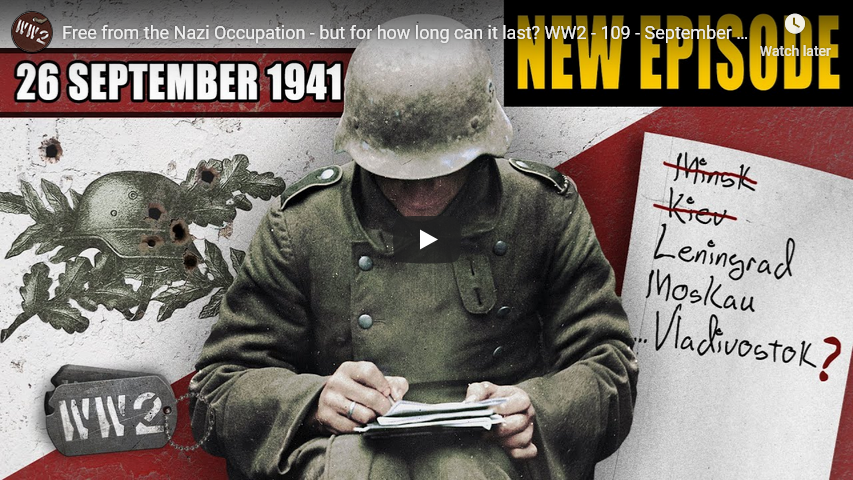
Free from the Nazi Occupation – but for how long can it last? WW2 – 109 – September 26, 1941

Filed under: China, Germany, History, Japan, Military, Russia, WW2 — Tags: , , , , , — Nicholas @ 04:00

World War Two
Published 26 Sep 2020

In former Yugoslavia, the Republic of Uzice breaks free from the German occupation, even as the Germans are mopping up the masses of shattered Soviet Armies after last week’s capture of Kiev. In the north, it really looks as if Leningrad will hold out for the time being, and German troops from both north and south converge on the center for the coming drive on Moscow.

Join us on Patreon: https://www.patreon.com/TimeGhostHistory
Or join The TimeGhost Army directly at: https://timeghost.tv

Follow WW2 day by day on Instagram @ww2_day_by_day –https://www.instagram.com/ww2_day_by_day
Between 2 Wars: https://www.youtube.com/playlist?list…
Source list: http://bit.ly/WW2sources

Written and Hosted by: Indy Neidell
Director: Astrid Deinhard
Producers: Astrid Deinhard and Spartacus Olsson
Executive Producers: Astrid Deinhard, Indy Neidell, Spartacus Olsson, Bodo Rittenauer
Creative Producer: Joram Appel
Post-Production Director: Wieke Kapteijns
Research by: Indy Neidell
Edited by: Iryna Dulka
Sound design: Marek Kamiński
Map animations: Eastory (https://www.youtube.com/c/eastory)

Colorizations by:
– Olga Shirnina, a.k.a. Klimbim – https://klimbim2014.wordpress.com/
– Julius Jääskeläinen – https://www.facebook.com/JJcolorization/
– Norman Stewart – https://oldtimesincolor.blogspot.com/
– Carlos Ortega Pereira, BlauColorizations – https://www.instagram.com/blaucolorizations
– Mikołaj Uchman
– Jaris Almazani (Artistic Man) – https://instagram.com/artistic.man?ig…

Sources:
– Bundesarchiv, CC-BY-SA 3.0: Bild_146-2005-0176, Bild_183-J21813,
– Narodowe Archiwum Cyfrowe

Archive by Screenocean/Reuters https://www.screenocean.com.

A TimeGhost chronological documentary produced by OnLion Entertainment GmbH.

September 20, 2020

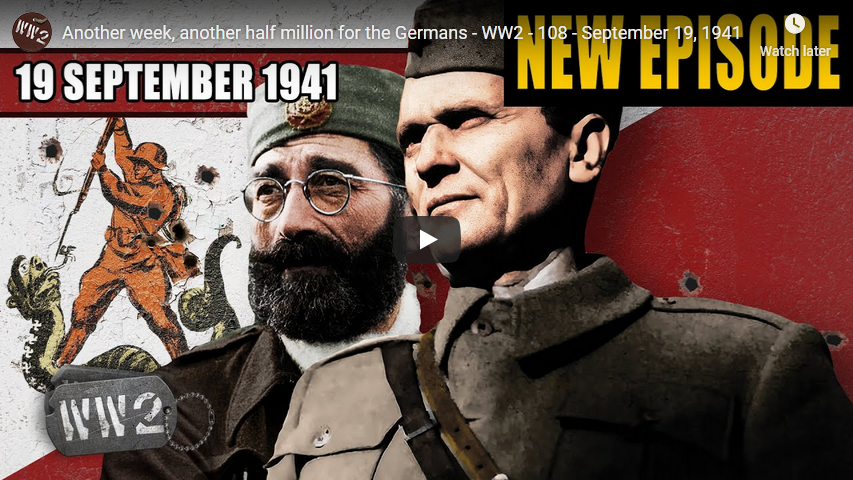
Another week, another half million for the Germans – WW2 – 108 – September 19, 1941

Filed under: China, Germany, History, Japan, Military, Russia, WW2 — Tags: , , , , , — Nicholas @ 04:00

World War Two
Published 19 Sep 2020

Kiev falls to the Germans, yielding hundreds of thousands of prisoners as whole armies are surrounded, but behind the lines all over German-occupied territories, partisan movements are gaining steam. Meanwhile, in China, Japan launches another campaign against Changsha.

Join us on Patreon: https://www.patreon.com/TimeGhostHistory
Or join The TimeGhost Army directly at: https://timeghost.tv

Follow WW2 day by day on Instagram @ww2_day_by_day – https://www.instagram.com/ww2_day_by_day
Between 2 Wars: https://www.youtube.com/playlist?list…
Source list: http://bit.ly/WW2sources

Written and Hosted by: Indy Neidell
Director: Astrid Deinhard
Producers: Astrid Deinhard and Spartacus Olsson
Executive Producers: Astrid Deinhard, Indy Neidell, Spartacus Olsson, Bodo Rittenauer
Creative Producer: Joram Appel
Post-Production Director: Wieke Kapteijns
Research by: Indy Neidell
Edited by: Monika Worona
Sound design: Marek Kamiński
Map animations: Eastory (https://www.youtube.com/c/eastory)

Colorizations by:
– Norman Stewart – https://oldtimesincolor.blogspot.com/
– Carlos Ortega Pereira, BlauColorizations – https://www.instagram.com/blaucolorizations
– Olga Shirnina, a.k.a. Klimbim – https://klimbim2014.wordpress.com/
– Julius Jääskeläinen – https://www.facebook.com/JJcolorization/
– Jaris Almazani (Artistic Man) – https://instagram.com/artistic.man?ig…
– Daniel Weiss

Sources:
– Ra Boe / Wikipedia / Lizenz: Creative Commons CC-by-sa-3.0 de
– Mil. ru
– Narodowe Archiwum Cyfrowe
– Estonica

Archive by Screenocean/Reuters https://www.screenocean.com.

A TimeGhost chronological documentary produced by OnLion Entertainment GmbH.

July 25, 2020

Walter Duranty, Stalin’s tame “journalist”

Filed under: History, Media, Russia, USA — Tags: , , , , , , — Nicholas @ 03:00

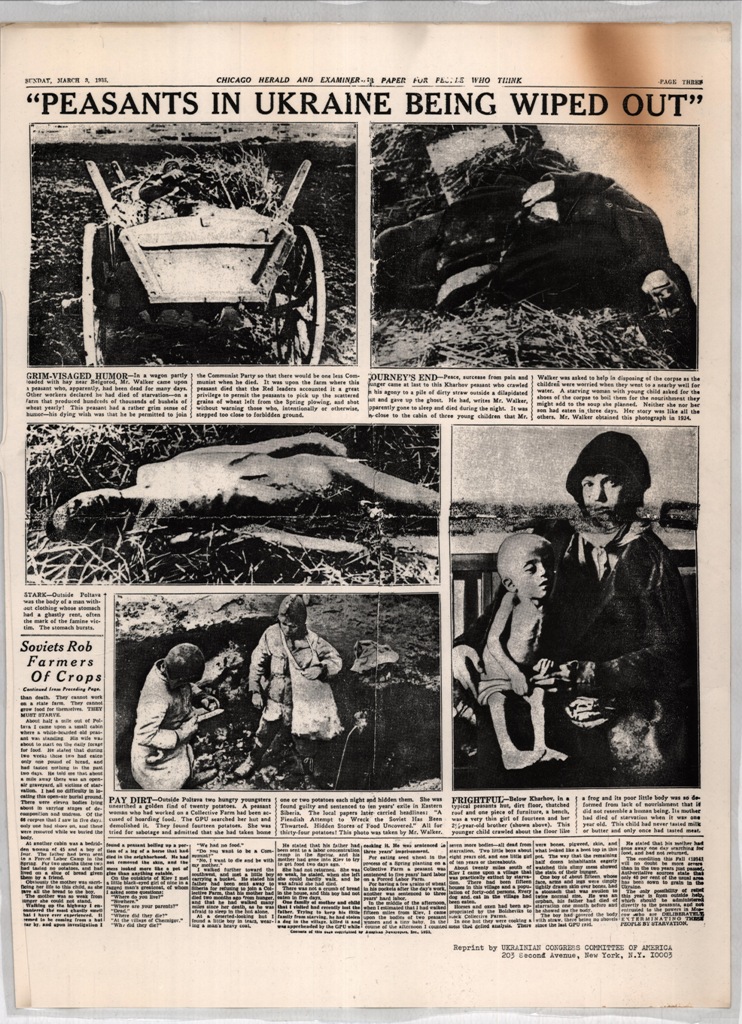
Francis X. Maier makes the case that the Holodomor — the Soviet Union’s deliberate starvation of millions of its own people in Ukraine and surrounding regions — killed even more than the better-known Nazi Holocaust, then identifies one of the key apologists who lied serially and deliberately to hide the genocide:

A page from the Chicago Herald and Examiner from 3 March, 1935.
Wikimedia Commons.

[S.J.] Taylor’s 1990 article was timed to the release of Stalin’s Apologist, her withering biography of journalist Walter Duranty. A Pulitzer Prize winner, celebrated political analyst, and Moscow correspondent for the New York Times during the 1930s, Duranty interviewed Stalin twice. He also played a significant role in securing American diplomatic recognition for the Soviet regime. Less publicly, he was a prodigious womanizer, longtime opium buddy of Satanist Aleister Crowley, compulsive exploiter of friends, a spendthrift, occasional drunk, and an inventive, always-reliable flack for the Soviet regime.

One of Duranty’s lifelong memories involved his religious grandmother who, after catching the adolescent Duranty in a lie, had warned him that “liars go to hell.” He never forgot or forgave the correction. As an adult, he simply erased all family ties and falsely claimed in his autobiography that he’d been orphaned at age ten. Massaging the truth became one of his core skills. Brilliant, engaging, and widely respected at the time, he was, in the words of Malcolm Muggeridge, who also reported from Moscow and saw Duranty in action, “the greatest liar of any journalist I have met in 50 years of journalism.”

Committed to protecting his own influence and to a future “greater good” promised by the Soviet regime, Duranty at first dismissed rumors of the Ukrainian Famine. Then he downplayed them. Then he claimed that Ukraine’s “food shortages” were the result of local mismanagement and the work of “wreckers” and “spoilers” intent on undermining Soviet progress. He repeatedly denied the mass starvation in his reporting. But he did suggest that “you can’t make an omelet without breaking eggs” … especially when the omelet is the task of modernization, and the cooks are tough-minded Bolsheviks intent on a better tomorrow.

As Taylor notes in her book, Western powers struggling with the Great Depression and the rise of Hitler in Germany had little interest in rumors from Ukraine that might antagonize Stalin as a potential ally. Muggeridge had arrived in Russia in 1932 to string for the Manchester Guardian. A convinced socialist at the time, he intended to stay in Russia and renounce his British passport for Soviet citizenship. Reality interfered. By March 1933, he was reporting on Ukraine’s famine as “one of the most monstrous crimes in history,” and his disillusionment with the Soviet paradise was complete. But back in England, thanks in part to Duranty’s counter-reporting and Soviet propaganda, Muggeridge’s work was dismissed as “a hysterical tirade.” Muggeridge himself was slandered, vilified, and unable to find employment. And that might have buried the Holodomor story successfully, except for one man.

Welshman Gareth Jones was a young Russian Studies graduate of Cambridge and a former secretary to British Prime Minister Lloyd George. Stringing for the same Manchester Guardian as Muggeridge, he eluded Soviet press controls and spent three weeks on his own, walking through the hellish conditions of a starvation-ravaged Ukraine. Then he wrote about it in the spring of 1933, confirming and compounding the impact of Muggeridge’s recent work. Walter Duranty led the ferocious, Soviet-prodded attack on Jones’s credibility. He also bullied most other Moscow-based Western journalists — to their enduring disgrace — into doing the same, lest they lose their visas. Jones, however, had a spine. He did not back off. He continued writing and speaking about the famine in Ukraine with lasting effect, until his death under suspicious circumstances two years later.

July 20, 2020

A lost nation that lasted for 300 years in (relative) peace and prosperity

Filed under: Asia, Economics, Europe, History — Tags: , , , — Nicholas @ 05:00

I’d heard of the Khazar Khaganate occasionally, but didn’t know much about it until I read a useful summary by Lawrence W. Reed:

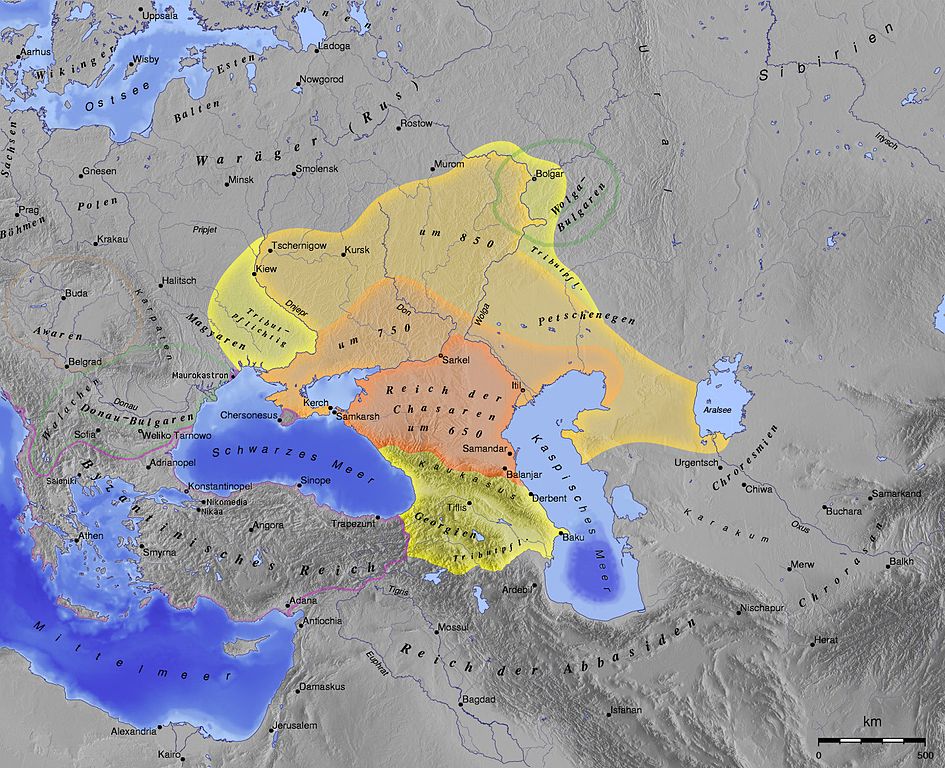
Borders of the Khazar Khaganate between 650 and 850 A.D.
Wikimedia Commons.

The list of extinct countries includes the better known ones like the USSR (aptly dubbed “the Evil Empire” by Ronald Reagan) and Yugoslavia, as well as hundreds of largely forgotten others like Majapahit, Assyria, Babylonia, Burgundy, and the Ottoman Empire. Far more countries are long gone, in fact, than the 195 on the map today. As a history lover, I’ve never yet discovered a country whose inhabitants’ experience was devoid of interesting facts and lessons.

Take Khazaria, for example. It lasted over 300 years (650 to 965 AD) and covered more territory than the combined Scandinavian nations of our time. It spanned the eastern half of modern-day Ukraine, the steppes of the Volga-Don region of present Russia, the entire Crimean Peninsula, and the northern Caucasus. Its southern portion took in most of the shorelines of three seas: the Black, the Caspian and the Aral.

It’s my thesis that for a country to be “successful” for a considerable period — success being defined loosely here as economically prosperous, politically stable, and militarily defensible — it must possess substantial TTD. That’s not a pronounceable acronym, unfortunately, but it stands for trade, tolerance and decentralization.

Each of these three criteria for success is worth volumes of discussion but here’s the nub of it: When economic freedom and private property exist, trade flourishes. And trade is what peaceful humans do to satisfy wants and improve material well-being. Choke it off and living standards plummet. Tolerance is a sign that people appreciate the benefits derived from diversity in personal choices. An intolerant people deprive themselves of what others can offer and waste time and resources fighting instead of collaborating. Decentralization preserves the rich identities of local communities and stymies the concentration of authority with its inevitable corruption. Power dispersed is power tamed.

So a successful country is one that can boast a lot of TTD. It encourages exchange, celebrates diversity and avoids top-down, political command-and-control. Almost every “failed state” in history did just the opposite by stifling commerce; stoking racial, ethnic or nationalistic hatred; and/or installing a dictatorship.

Khazaria, to its great credit, practiced remarkable measures of trade and tolerance and enough decentralization to prevent its government from sabotaging either one. In the end, it met its demise not from internal decay but from foreign assault.

May 16, 2020

Polish-Soviet War – First Phase 1919 – May 1920 I THE GREAT WAR 1920

Filed under: Europe, History, Military, Russia — Tags: , , , , , — Nicholas @ 06:00

The Great War
Published 15 May 2020

Sign up for Curiosity Stream and Nebula – and get 40% off annual plans right now: https://curiositystream.com/thegreatwar

The Polish-Soviet War was one of the biggest conflicts after the armistice of 1918 and the culmination point of the many sub-conflicts that made up the Western Front of the Russian Civil War. The question about the Polish-Russian border was decided with armored trains, cavalry charges and also on the negotiating table.

» SUPPORT THE CHANNEL
Patreon: https://www.patreon.com/thegreatwar
Merchandise: https://shop.spreadshirt.de/thegreatwar/

» SOURCES
Centek, Jarosław: “Polish-Soviet War 1920-1921”, in: 1914-1918-online. International Encyclopedia of the First World War, ed. by Ute Daniel, Peter Gatrell, Oliver Janz, Heather Jones, Jennifer Keene, Alan Kramer, and Bill Nasson, issued by Freie Universität Berlin, Berlin 2014-10-08

Leonhard, Jörn. Der überforderte Frieden. Versailles und die Welt 1918-1923 (CH Beck, 2018).

Borzecki, Jerzy. The Polish-Soviet Peace of 1921 and the Creation of Interwar Europe (New Haven and London: Yale University Press, 2008)

Engelstein, Laura. Russia in Flames (Oxford University Press, 2017).

Smele, Jonathan. The “Russian” Civil Wars 1916-1926 (London: Hurst, 2015).

Davies, Norman. White Eagle Red Star (Random House, 2003 (1972))

Böhler, Jochen. Civil War in Central Europe, 1918-1921 (Oxford University Press, 2019)

Timothy Snyder. The Reconstruction of Nations. (New Haven: Yale University Press, 2003)

» SOCIAL MEDIA
Instagram: https://instagram.com/the_great_war
Twitter: https://twitter.com/WW1_Series
Reddit: https://reddit.com/r/TheGreatWarChannel

»CREDITS
Presented by: Jesse Alexander
Written by: Jesse Alexander
Director: Toni Steller & Florian Wittig
Director of Photography: Toni Steller
Sound: Toni Steller
Editing: Toni Steller
Mixing, Mastering & Sound Design: http://above-zero.com
Maps: Daniel Kogosov (https://www.patreon.com/Zalezsky)
Research by: Jesse Alexander
Fact checking: Florian Wittig

Channel Design: Alexander Clark
Original Logo: David van Stephold

A Mediakraft Networks Original Channel

Contains licensed material by getty images
All rights reserved – Real Time History GmbH 2020

March 6, 2020

“Poltava” – The Great Northern War – Sabaton History 057 [Official]

Filed under: Europe, History, Media, Military, Russia — Tags: , , , , , — Nicholas @ 04:00

Sabaton History
Published 5 Mar 2020

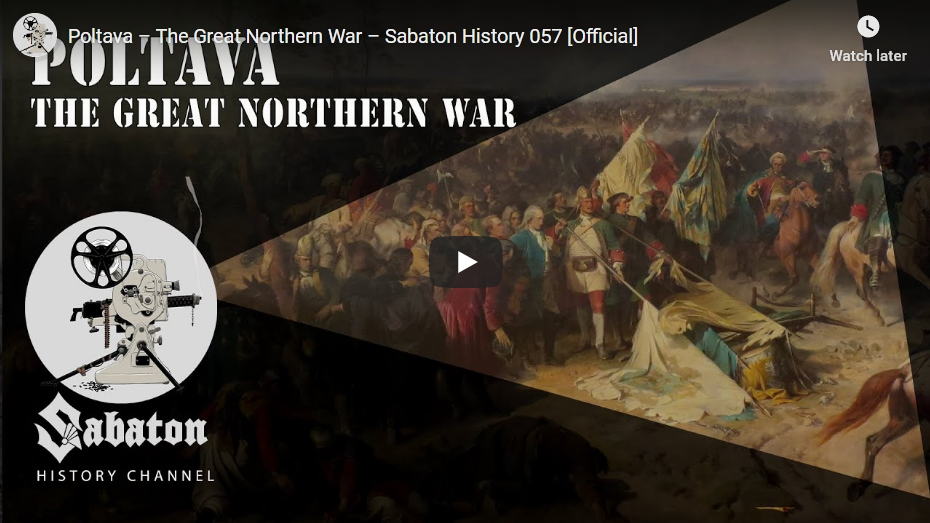
Bullets break the silent air, a wasted battleplan! It was a long and harsh march through the lands in the east, where the Swedish army of Charles XII sought to bring the Russian Empire to its knees. The Swedish king had the vision of a great victory, in which he captured Moscow and destroyed Tsar Peter I’s ambitions once and for all. However, as in late June 1709, the exhausted and hungry Swedish troops finally met the Tsar in open battle near the fortress of Poltava, it all seemed impossible. A relentless and fateful battle would commence. A battle after which only one empire would continue to rise while the other would fall.

Support Sabaton History on Patreon: https://www.patreon.com/sabatonhistory

Listen to “Poltava” on the Album Carolus Rex:
CD: http://bit.ly/CarolusRexStore
Spotify: http://bit.ly/CarolusRexSpotify
Apple Music: http://bit.ly/CarolusRexAppleMusic
iTunes: http://bit.ly/CarolusRexiTunes
Amazon: http://bit.ly/CarolusRexAmz
Google Play: http://bit.ly/CarolusRexGooglePlay

Check out the trailer for Sabaton’s new album The Great War right here: https://www.youtube.com/watch?v=HCZP1…

Listen to Sabaton on Spotify: http://smarturl.it/SabatonSpotify
Official Sabaton Merchandise Shop: http://bit.ly/SabatonOfficialShop

Hosted by: Indy Neidell
Written by: Markus Linke and Indy Neidell
Directed by: Astrid Deinhard and Wieke Kapteijns
Produced by: Pär Sundström, Astrid Deinhard and Spartacus Olsson
Creative Producer: Joram Appel
Executive Producers: Pär Sundström, Joakim Broden, Tomas Sunmo, Indy Neidell, Astrid Deinhard, and Spartacus Olsson
Post-Production Director: Wieke Kapteijns
Edited by: Iryna Dulka
Sound Editing by: Marek Kaminski
Maps by: Eastory – https://www.youtube.com/c/eastory

Archive by: Reuters/Screenocean https://www.screenocean.com
Music by Sabaton.

An OnLion Entertainment GmbH and Raging Beaver Publishing AB co-Production.

© Raging Beaver Publishing AB, 2019 – all rights reserved.

From the comments:

Sabaton History
2 hours ago
Just a quick correction: St. Petersburg was not named after Peter I himself, but after his patron saint St. Peter. Although the Russian Tsar made sure that he himself would be immortalized by founding St. Petersburg, Russia’s window to Europe.

November 15, 2019

“In a functioning system, the head of the government sets foreign policy and the diplomats enact it. So naturally there’s not a chance of that in Washington”

Filed under: Bureaucracy, Government, Politics, Russia, USA — Tags: , , , — Nicholas @ 03:00

Mark Steyn on the foggiest of Foggy Bottom diplomatic bafflegab on the first day of the :

Yesterday I caught a bit of the impeachment theatre en route to a lunchtime speaking engagement. To be honest, if they’d come round and performed it live in my hotel room, I’d still have fled. If universally respected eminent lifelong career foreign-service bigshots Bill Taylor and George Kent are Adam Schiff’s star witnesses, their chief purpose seems to be to get Democrats pining for the charisma of Bill de Blasio and the self-effacement of John Kerry.

In a functioning system, the head of the government sets foreign policy and the diplomats enact it. So naturally there’s not a chance of that in Washington. When Taylor and Kent whine that there seemed to be a “shadow foreign policy”, the shadow is theirs; they spent a day testifying that everything had been going ticketty-boo for decades just as they’d always done things – and then Trump came along and took a different view. Oh, my! Anyone would think that, as Barack Obama once proposed, “elections have consequences”.

First up was George Kent, the “Deputy Assistant Secretary of State for Eastern Europe and the Caucasus”. He warmed up the crowd with some extensive biographical material about the “nearly sixty years” of George Kents (I believe he’s George III or some such) who have “chosen” to endow America with the blessings of their “public service”. It didn’t help that he wore a bow tie. Eventually he stopped talking about himself and started talking about Ukraine:

    Our strategic aim for the entirety of my foreign service career is not possible without a Ukraine whole, free, and at peace, including Crimea and Donbas, territories currently occupied by Russia.

Crimea is, of course, familiar to anyone who’s read “The Charge of the Light Brigade”:

    Theirs not to reason why
    Theirs but to do or die…

Or, in the case of low-level diplomats who’ve never had a single conversation with the President, theirs not to reason why, theirs but to do or tender their resignations after first ensuring that their pensions won’t be affected. Instead:

    Into the valley of the SCIF
    Rode the six hundred hearsay witnesses…

As I said, any Tom, Dick or Harry can bandy Crimea, but it takes a career striped-pants Foggy Bottom public servant to toss in “Donbas” with gay abandon. It would have been interesting to see whether Adam Schiff or anyone else in the room could have found Donbas on a map. The odds of pinning the tail on the Donbas blindfolded are better. It’s bordered to the north, east and south-east by Russia, so it’s akin to the Russian foreign ministry regarding northern Mexico as a vital national-security interest of Moscow’s.

In fact, northern Mexico is a vital national-security interest of America’s, but, under the mass wankerization of public policy, Perma-Beltway cares more about the borders of Ukraine than it does about the borders of the United States.

November 1, 2019

“Unbreakable” – Guerrilla Warfare – Sabaton History 039 [Official]

Filed under: China, History, Media, Military, Russia, WW2 — Tags: , , , , , , — Nicholas @ 06:00

Sabaton History
Published 31 Oct 2019

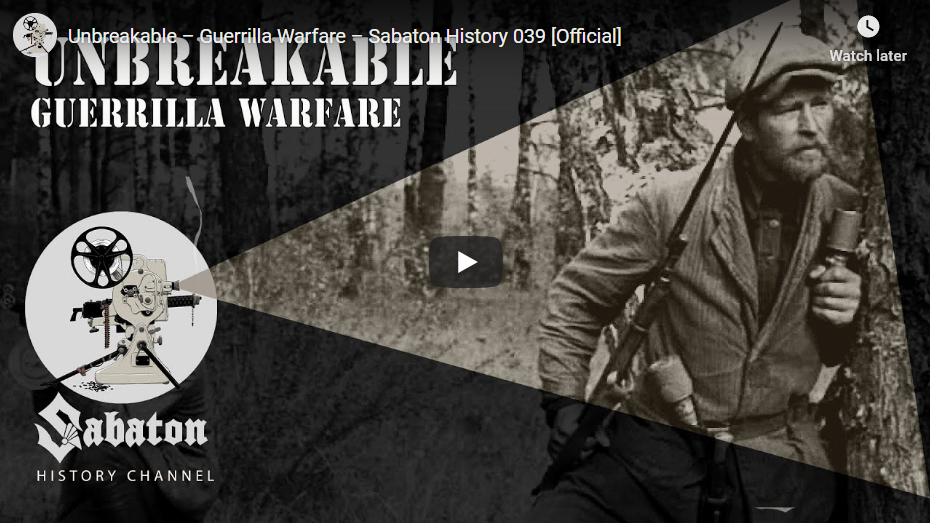
The exact topic of Sabaton’s song “Unbreakable” will forever be a mystery. But we do know that it has to do with guerrilla warfare, which is what Indy will dive into in this episode.

Support Sabaton History on Patreon: https://www.patreon.com/sabatonhistory

Listen to The Art of War (where “Unbreakable” is featured):
CD: http://bit.ly/TheArtOfWarStore
Spotify: http://bit.ly/TheArtOfWarSpotify
Apple Music: http://bit.ly/TheArtOfWarAppleMusic
iTunes: http://bit.ly/TheArtOfWariTunes
Amazon: http://bit.ly/TheArtOfWarAmz
Google Play: http://bit.ly/TheArtOfWarGooglePlay

Listen to Sabaton on Spotify: http://smarturl.it/SabatonSpotify
Official Sabaton Merchandise Shop: http://bit.ly/SabatonOfficialShop

Hosted by: Indy Neidell
Written by: Indy Neidell, Spartacus Olsson and Markus Linke
Directed by: Astrid Deinhard and Wieke Kapteijns
Produced by: Pär Sundström, Astrid Deinhard and Spartacus Olsson
Creative Producer: Joram Appel
Executive Producers: Pär Sundström, Joakim Broden, Tomas Sunmo, Indy Neidell, Astrid Deinhard, and Spartacus Olsson
Post-Production Director: Wieke Kapteijns
Maps by: Eastory
Edited by: Iryna Dulka
Sound Editing by: Marek Kaminski

Eastory YouTube Channel: https://www.youtube.com/channel/UCEly…
Archive by: Reuters/Screenocean https://www.screenocean.com
Music by Sabaton.

Sources:
– RIA Novosti archive
– Colorization of Mao Zedong by Olga Shirnina a.k.a. Klimbim
– IWM: NA 15129
– Water splash sound effect – littlerobotsoundfactory

An OnLion Entertainment GmbH and Raging Beaver Publishing AB co-Production.

© Raging Beaver Publishing AB, 2019 – all rights reserved.

From the comments:

Sabaton History
2 days ago
There are many examples where guerrilla warfare was used in an attempt to force out or at least harass a foreign invader or domestic military power. Partisan movements are almost always connected to a certain ideology or party — after all, they rebel against a power they disagree with. We haven’t mentioned a lot of different movements and causes in this episode, not because we don’t value or support them or their cause, but because we have a limited amount of time to cover a general topic in. As Indy also states in the video, we have picked several examples to describe what guerrilla warfare was. Please share any additional groups or events that are relevant for this episode, but keep it civil and keep your political thoughts to yourself.
Cheers, The Sabaton History team

September 27, 2019

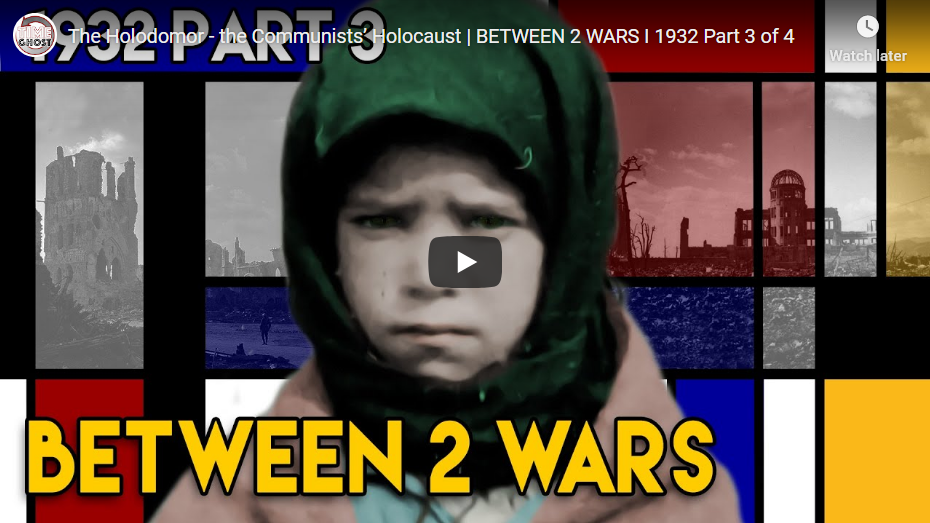
The Holodomor – the Communists’ Holocaust | BETWEEN 2 WARS I 1932 Part 3 of 4

Filed under: History, Russia — Tags: , , , , — Nicholas @ 04:00

TimeGhost History
Published 26 Sep 2019

What do you get when you combine vigorous grain-tax policies, bad harvests with Stalins fear and animosity for the rural population of Ukraine? A man-created murder famine, designed to kill millions of Ukrainian men, women and children.

Join us on Patreon: https://www.patreon.com/TimeGhostHistory

Subscribe to our World War Two series: https://www.youtube.com/c/worldwartwo…

Hosted by: Indy Neidell
Written by: Indy Neidell and Spartacus Olsson
Directed by: Spartacus Olsson and Astrid Deinhard
Executive Producers: Bodo Rittenauer, Astrid Deinhard, Indy Neidell, Spartacus Olsson
Creative Producer: Joram Appel
Post-Production Director: Wieke Kapteijns
Research by: Naman Habtom and Spartacus Olsson
Edited by: Danliel Weiss
Sound design: Marek Kaminski

Sources:
– Applebaum, Anne, Red Famine: Stalin’s War on Ukraine (2017).
– Davies, R. W. and Stephen G, “Stalin and the Soviet Famine of 1932-33: A Reply to Ellman”, in: Europe-Asia Studies 58-4 (2006), 625-633, https://www.uio.no/studier/emner/hf/i…
– Lewin, M, “The Immediate Background of Soviet Collectivization,” in: Soviet Studies 17-2 (1965) 162–197.
– Kuromiya, Hiraoki, “Ukraine and Russia in the 1930’s”, in Harvard Ukrainian Studies 18-3/4 (1994) 327–341.
– Marples, David R, “Ethnic Issues in the Famine of 1932-1933 in Ukraine,” in: Europe-Asia Studies 61-3 (2009) 505–518.
– Watstein, Joseph, “The Role of Foreign Trade in Financing Soviet Modernization,” in: The American Journal of Economics and Sociology 29-3 (1970) 305–319.
– Wolowyna et al., “Regional Variations of 1932–1934 Famine Losses in Ukraine”.

A TimeGhost chronological documentary produced by OnLion Entertainment GmbH.

From the comments:

TimeGhost History
4 hours ago (edited)
This might have been one of the hardest episodes we have written, both historically and emotionally. Nothing could ever do justice to the millions of men, women and children who suffered, starved and died during this episode of history. Let us never forget them. We acknowledge that this topic is surrounded by many opposing agendas, myths so that talking about it can get emotional. This is why, as should be known by now, will UNDER NO CIRCUMSTANCES tolerate any kind of Stalinist apologism, falsification of known facts, or outright denial of the Holodomor. The sources, which are clearly presented in our video, the description and in this comment, are unequivocal about the events covered in this episode. Anywhere were there is an assumption based on deduction from these facts, we mention it. Keep that in mind when discussing this under the episode. We will moderate any comments that can’t abide to these clear and simple rules.

« Newer Posts — Older Posts »

Powered by WordPress