
This is your new term for “mainstream media”. Being against the “mainstream media” sounds kind of conspiratorial. Instead, you’re against the upper-class media, which gains its status by systematically excluding lower-class voices, and which exists mostly as a tool of the upper classes to mock and humiliate the lower class. You are not against journalism, you’re not against being well-informed, you’re against a system that exists to marginalize people like you. Tell the upper-class media that if they want your respect, they need to stop class discrimination.
67% of US families watch the Super Bowl — what percent of New York Times editors and reporters do? 20% of Americans go to religious services weekly — how many of those work for the New York Times? How come 96% of political donations from journalists go to Democrats? Your job is to take a page from the Democratic playbook and insist there is no reason any of this could be true except systemic classism, that any other explanation is offensive, and it’s the upper-class media’s moral duty to do something about this immediately. Until they do so you are absolutely justified in ignoring them and trusting less bigoted and exclusionary sources (I hear Substack is pretty good!)
Insist that working-class people have the right to communicate with each other without interference from upper-class gatekeepers. Make sure people know every single fact about @Jack and what a completely ridiculous person he is, and point out that somehow this is the guy who decides what you’re allowed to communicate with your Twitter friends. Every time tech companies censor social media, even if they’re censoring left-wing views, call their CEOs in for long and annoying Congressional hearings where you use the words “Silicon Valley elites” a lot.
Scott Alexander, “A Modest Proposal For Republicans: Use The Word ‘Class'”, Astral Codex Ten, 2021-02-26.
June 17, 2021
June 6, 2021
Decoding NPR’s revised approach to reporting in a social justice age
At Ace of Spades H.Q., K.T. listens to some NPR broadcasts (so you don’t have to) including an insight into how NPR and probably other media organizations are changing how they report the news:

We Hold These Truths: How Newsroom Leaders Wrestled With Covering A Tumultuous Year
This was sort of a panel discussion (light on the “discussion”), with commentary on things like how social media pressured newsrooms, for example, to say that “police murdered George Floyd” rather than “George Floyd died”.
But I kind of homed in on an academic phrase that bothers me. Sara Just from PBS:
Yeah, I think that you’re absolutely right. There’s been a deeper understanding and deeper conversation about how much our lived experiences play into the reporting that we do. And there’s no question that it does for each and every one of us in different ways. And I think that lived experience we especially highlight now is valuable, whether it’s race or gender or the challenges. I don’t think people with those lived experiences have to carry the burden, though, of being the only ones to report on it by any means. And so that’s something that we are always balancing. (emphases mine)
So, are they balancing whether or not people without “lived experiences” can report on issues involving “lived experiences”? Like Lori Lightfoot deciding she would only do one-on-one interviews with journalists of color? Will white people be allowed to report on stories involving black people? Will men be allowed to report on stories involving women?
This is partly about local sources, but it is largely about people thought of as being in “oppressed groups”. This panel is informing us that news reporting will now be filtered through the language and perspective of Critical Social Justice, whether we realize it or not.
The indispensable Translations from the Woke at New Discourses provides the following information on Lived Experience:
In the Theory of Critical Social Justice, for what turn out to be surprisingly deep and philosophically (almost) sophisticated reasons, lived experience is the overwhelmingly primary way in which knowledge can be obtained. This should not be mistaken to mean one’s firsthand experience, which most of us already recognize to provide a rather weak claim upon knowledge, though it is both implied and claimed that this is what “lived experience” refers to in Critical Social Justice. Lived experience, as Critical Social Justice uses the term, refers more specifically to one’s life experiences in allegedly systemic power dynamics of dominance and oppression that shape society structurally as understood with a critical consciousness and interpreted through Theory. That is, one’s “lived experience” refers to the interpretation that Critical Social Justice Theory gives for the anecdotal accounts of experiences one has had.
Because “lived experience” refers to an interpretation through Theory, it is only the “lived experience of oppression,” as Theory will have it, that counts …
It appears that you can’t really understand the reporting on PBS, and probably NPR, now unless you have studied Critical Social Justice.
Certainly, the claimed “lived experience” of members of dominant groups cannot be in any way used to challenge or dispute the assertions of Theory or those claiming to speak from it …
This restriction extends to members of “minoritized” groups who disagree with Theory as well — Theory cannot be authentically disagreed with. One might think that the lived experience of a member of oppressed groups would be admissible as a valid challenge to the claims of Theory, but this not so. They may be talking about their own experiences in life, but they aren’t appealing to lived experience, which must comport with Theory …
This is all very confusing and appears to be exactly what it is — a form of manipulating knowledge and epistemology as a means of asserting power and rigging the system such that those assertions of power cannot be challenged. Nevertheless, it isn’t merely an application of power and has a rather interesting and deep philosophical explanation that must be understood to understand why “lived experience” holds the status that it does and why it must comport with Theory to be granted veridical status and epistemic weight. This has everything to do with the fact that the roots of Critical Social Justice are in critical theories and, especially, postmodern philosophy.
There is much more, but it is way too deep to include here.
The NPR panel goes on to discuss new understandings of “balance” and “objectivity”. They do not intend to be objective. “Balance” will mean something different than what it has meant in the past in the news business.
Many people have found the way that TV news shows report on events since 2016 to be rather different than what they’d been used to before that. Some changes are subtle and others are quite blatant and hard to ignore unless you already agree with the viewpoint of the presenter. TV news used to at least pretend to present the news objectively but from the start of the Trump presidency most media outlets abruptly changed from a pseudo-objective (but leaning progressive) to an outright full-on progressive stance from start to finish with little or no attempt to provide other points of view for balance.
June 2, 2021
Media Fearmongering
Laura Dodsworth on how the BBC and other British media outlets turned all the dials to 11 to ramp up fear over the spread of the Wuhan Coronavirus:
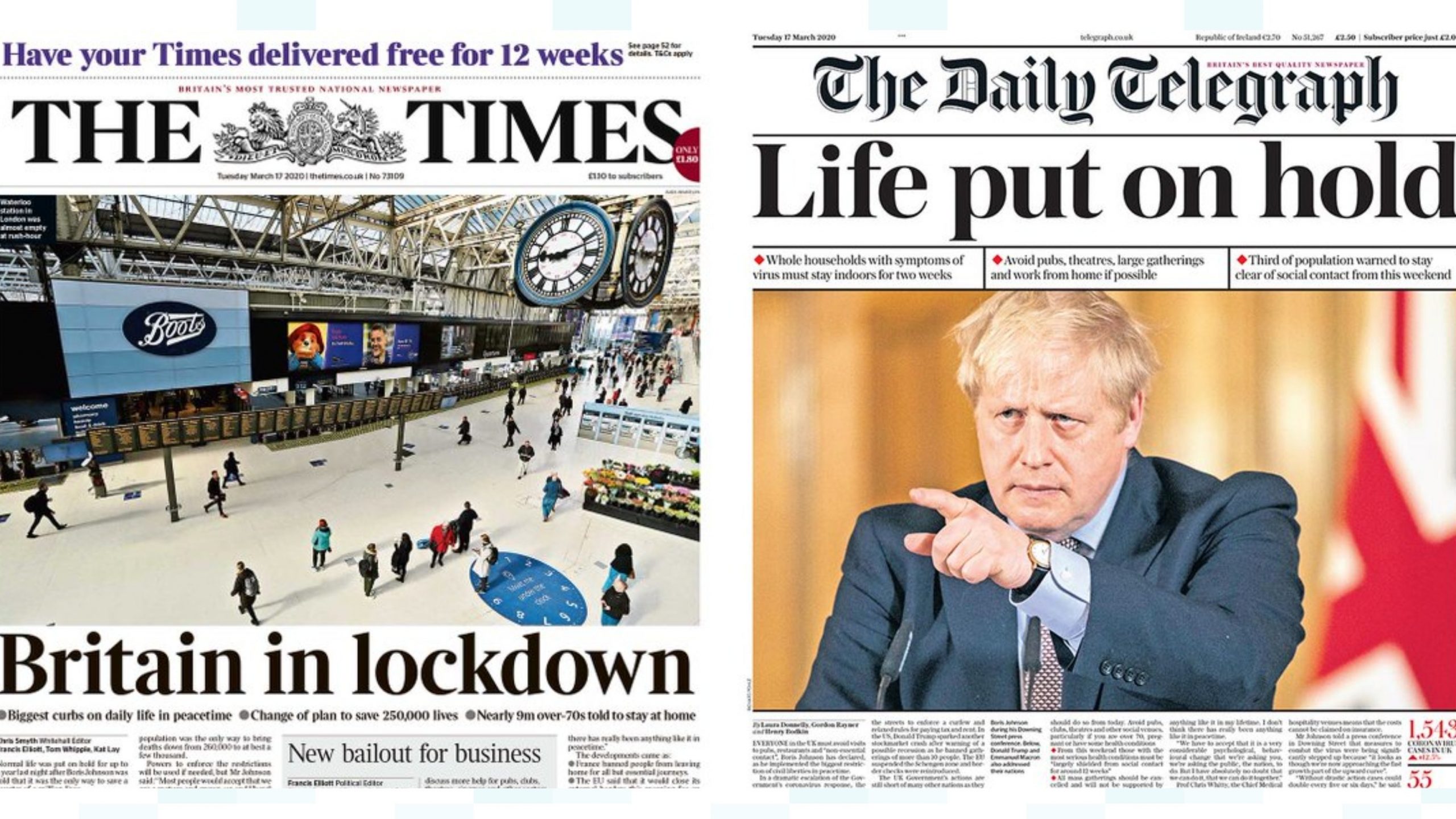
The media have served us a cornucopia of frightening articles and news items about Covid-19 in 2020 and 2021. While writing my new book, A State of Fear: How the UK Government Weaponised Fear During the Covid-19 Pandemic, I encountered a panoply of doom-mongering headlines. These were an indication of the significant role the media have played in creating our state of fear.
Of course, news media should not shy away from reporting frightening news during a pandemic. They should make us aware of the numbers of deaths, the policies being implemented to tackle the pandemic and the latest scientific developments. But during Covid, the media went beyond reporting on the pandemic. Instead, they appeared beholden to the old commercial imperatives, “If it scares, it airs”, and “If it bleeds, it leads”. It seems fear does sell.
The anxious, frightened climate this has helped to create has been suffocating. Death tolls were constantly brandished without the context of how many people die every day in the UK, and hospital admissions were reported while recoveries were not. As a result, Covid often appeared as a death sentence, an illness you did not recover from – even though it was known from the outset that Covid was a mild illness for the majority of people.
Given the wall-to-wall doom, it is therefore no surprise that the British were one of the most frightened populations in the world. Various studies showed that we were more concerned than other countries about the spread of Covid and less confident in the ability of our government to deal with it. One survey in July 2020 showed that the British public thought between six and seven per cent of the population had died from Covid – which was around 100 times the actual death rate at the time. Indeed, if six or seven per cent of Brits had died from Covid, that would have amounted to about 4,500,000 bodies – we’d have noticed, don’t you think?
While researching A State of Fear, I interviewed members of the general public about how they were impacted by the “campaign of fear” during the epidemic. Many talked of how the media had elevated their alarm.
“There wasn’t much to do”, Darren told me, “so we’d watch TV and we saw programmes about disinfecting your shopping when it arrives, and having a safezone in the kitchen. The nightly bulletins on the TV about death tolls, the big graphs with huge spikes on them, came at us ‘boom, boom, boom!’. It was a constant barrage of doom and gloom. My fear of the virus went through the roof.”
Sarah told me she had to stop watching the BBC. As her daughter put it, “If you just watched or listened to the BBC every day, what hope would you have had?”. Jane, meanwhile, described the “gruesome headlines” that came at her “thick and fast”.
The fearmongering about Covid began even before the pandemic hit the UK. We were primed by videos from Wuhan in China, which were then widely circulated by UK-based media outlets. These painted an apocalyptic picture, featuring collapsed citizens, medics in Hazmat suits, concerned bystanders and a city grinding to a halt. In one memorable video, which went viral, so to speak, a woman fell, stiff as a board, flat on her face, on a pavement. The split second where she falters is a giveaway – this was a set-up. If the rest of the world had Covid, China had “Stunt Covid”.
June 1, 2021
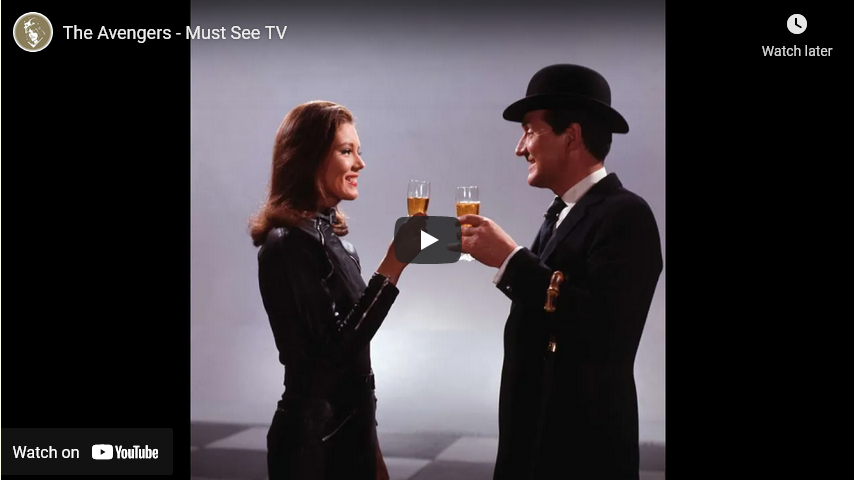
The Avengers – Must See TV
Billy Rees
Published 19 Aug 2015ITV programme from 2005 presented by Joan Collins.
May 30, 2021
New frontiers in cultural appropriation
John McWhorter considers the notion that white people shouldn’t be allowed to use “black” words and phrases because it’s a form of cultural appropriation and therefore another aspect of white supremacy:

Screencap from NBC’s Saturday Night Live highlights for “Gen-Z Hospital” skit.
A little while ago, a Saturday Night Live skit depicted a multiracial group of teens communicating in what was depicted as “Gen Z slang”, with the doctor they were talking with having to “translate” his thoughts into it to communicate with them.
A lot of people didn’t like it, because the slang in question was mostly of Black English origin. The complaint is that the skit was denying the black roots of these terms, and instead ascribing them to Americans in general – i.e. (shudder) white persons. As in, yes – the problem was cultural appropriation.
As I write, there are still people grousing on social media in the wake of that skit about whites “stealing” black language, with a leitmotif being that we should apply our N-word taboo more widely. To wit, many propose that whites should not be allowed to use Black English terms because they are “ours”. Many who haven’t outright proposed this give the notion Likes, which suggests that a considerable group of people – and from what I can see, quite a few of them are white – concur with this line of reasoning.
Let’s break this down. To do so we must understand the sorts of terms in question. The SNL skit included, among others, yo, bestie, vibes, feels for feelings, salty for irritated, bro / bruh and no cap for “I’m not kidding” (as in, these are actual whole gold teeth, not golden caps on teeth).
Is there a case that you should only use these terms if you’re black, or that if you use them as a white person you should “do the work” of thinking hard about whether or not it is problematic (blasphemous)?
May 26, 2021
The Line refutes arguments recently posted in … The Line
Recently the editors at The Line accepted an article from the astroturf “advocacy” group Friends of Canadian Broadcasting, pushing the establishment line that all of us peons and useless idiots in the blogosphere and even a few undisciplined malcontents among the actual mainstream media are totally misunderstanding and misrepresenting what the government is trying to do with their “tax the web giants” initiative. Peter Menzies responds to the latest bullshit propaganda offensive:
[Mouthpiece for Friends of Canadian Broadcasting Daniel] Bernhard makes a great case for the regulation of tech giants, pointing to some truly dreadful things such as the New Zealand massacre streamed on Facebook, and exploitive content uploaded to Montreal’s PornHub.
To the best of my knowledge, none of the people listed above disagree with the Friends on this point. In fact, many have made the case that Bill C-10 is an unnecessary diversion from more serious online industry problems — some of which are addressed in another bill (C-11).
The big matters that need to be addressed by the government involve algorithms, data collection, privacy protection, and anti-competitive practices — not the facility of the Netflix search tool, nor whether the search term “Canadian” should pop up as a default selection.
My main point of disagreement to Bernhard’s piece is that the Internet is no more broadcasting than a cow is a caribou. Further, it’s ridiculous to think that an outmoded relic such as the 1991(!) Broadcasting Act is the proper tool to use to govern communications in the 21st Century (for those inclined, there is a complete policy paper available here that fleshes that out.)
In terms of the sections 2.1 vs 4.1 legal arguments, I’m pretty certain I will lose most of The Line readers if I delve into those details. I’m more than comfortable deferring to my fellow “militants” such as law professors Laidlaw and Geist, whose arguments have been so overwhelming that not even Attorney General David Lametti attempted to refute them in the defence of Guilbeault, who has now established himself as the most regressive Heritage Minister in the history of that ministry.
All readers really need to know is that, yes, Bill C-10 makes it legal for the CRTC to regulate your video or audio uploads if they are posted to “social media”, the definition of which will be left entirely up to the nine government-appointed CRTC commissioners. Who knows what they’ll come up with. There are no minutes of their meetings, so it’s impossible to know what they might be thinking.
I mean, if it was easy to define social media you’d think the government would have just done it, right? Similarly, if the legislation is aimed only at the bad behaviour of the “Web Giants” — the pejorative term Guilbeault has engaged — the bill ought to simply say that. But it doesn’t.
And as for the government-approved Canadian Content industry’s argument that it didn’t want to regulate/suppress the user generated content produced by the rest of us . . .
Oh Yes They Did.
May 18, 2021
In future, if you’re on TV, do not use your hands or fingers under any circumstances … OK?
… as a Jeopardy contestant has recently discovered, there is no hand gesture that is free from the slightest hint of an emanation of a penumbra of white supremacy:
And then they came for the integers. The small social universe surrounding the syndicated game show Jeopardy has been boiling over for the past month because of a hand gesture made by a contestant, Kelly Donahue, at the outset of the April 27 episode. Donahue, returning to the show as a three-time winner, held up three fingers in a gesture of triumph and tapped his chest with them. He had done something similar on earlier episodes, flashing a “one” after his first win and a “two” after his second.
Needless to say, he had to be immediately chastised. A small number of conspiracy theorists felt his use of three fingers to represent three of something “resembled very closely a gesture that has been co-opted by white power groups, alt right groups and an anti-government group that calls itself the Three Percenters.”
That quote is taken from an indignant open letter signed by almost 600 members of a private Facebook group for former Jeopardy contestants, in which the signers demanded to know why Donahue’s heinous Nazi code, “whether intentional or not,” hadn’t been cut from the show before broadcast.
[…]
Smith’s column doesn’t actually get around to answering the question, although with a little legwork he was able to establish that the Facebook group had actually approached the Anti-Defamation League (ADL), the Jewish grandparent of all anti-hate monitoring groups, for advice. The ADL told the addled ex-contestants, “Uh, it looks to us like the guy’s just making a three,” which led some in the internet cocoon to conclude they were being “gaslit.” Smith also talked to members of the Facebook group who knew that their fellow contestants were talking twaddle and fomenting harassment of an innocent man, but who were afraid to contradict the leaders of a witch hunt, lest the purifying fire be kindled beneath their own tootsies.
Smith does identify a crucial point in what is otherwise a workaday tale of cancel culture run mad. Former Jeopardy contestants, every last three-o-phobic one of them, are people selected specifically for high intelligence and wide knowledge. This didn’t make the signers of the letter any less obtuse, or any more resistant to a complicated conspiracy theory. It was their knowledge of disaggregated facts that made them susceptible in the first place.
May 17, 2021
An older BBC dramatization on the slave trade that seems to have gone down the memory hole
At Samizdata, Niall Kilmartin wondered why the BBC hadn’t gotten around to showing a 1970s historical series through the year-and-more of the pandemic lockdowns. He doesn’t mention the name of the series, and an unusually unhelpful BBC site search didn’t turn up a name but IMDB suggests it was 1975 and the series was called The Fight Against Slavery:
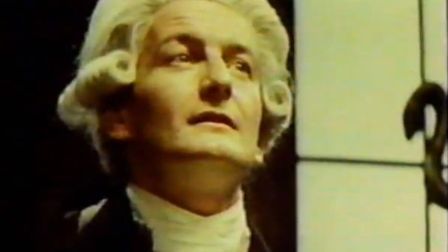
Fifty years ago, the BBC screened a dramatised documentary series about the fight to abolish the slave trade. Even a year of the virus limiting new series, at a time of great BBC eagerness to talk about racism, has not made them screen it again.
– I see one reason why they have not: the series displayed sleazy white slave traders and abusive white slave owners prominently, but it also showed white people eager to end the slave trade and (much worse) black people eager to continue it. It included the king of Dahomey’s threat: “if you do not allow me to sell you my slaves, their fate will be a great deal worse” (a very brief scene of the Dahomey murder spectacle lent meaning to his remark). After abolition was voted, it showed a white slave trader assuring the Dahomans, as a drug dealer might his suppliers, “It is one thing for parliament to pass a law …”, hinting at the Royal Navy’s long and hard campaign to enforce it.
– Only recently did I spot another reason why they would not want to show it again – the scene in which a corrupt old white slave trader warns his young colleague that “it’s more than your life’s worth” to doubt the ability of their slave-selling hosts to count very accurately the quantity of trade goods being handed over in exchange, and to assess their quality knowledgeably. The traders well knew that Africans counted two plus two as four, just as they did. Any trader who imagined that black ability to add diverged enough from white to enable an attempt to short-change them had learned otherwise long before the 1780s.
– The southern Confederacy thought the same. Until its death throes, it forbade enlisting a southern black as a Confederate soldier because, as one Confederate senator put it, “If blacks can make good soldiers then our whole theory of slavery is wrong.” (Perhaps also because even southern white Democrats realised that southern black desire to fight against blacks being freed was likely to be a very minority taste.) But there was one exception. Every regiment had its regimental band, which played to set the pace at the start and end of marches, used trumpets to signal commands in battle – and fought when other duties did not supervene. From its start to its end, Confederate law said any black could enlist as bandsman, with the same pay and perquisites as a white – a very rare example of formal legal equality. (Playing music requires the ability to count time. For the woke, “dismantling the legacy of the Confederacy” apparently includes dismantling its realisation – shared by the Victorian composer Dvorak – that blacks often excelled in music so much as to overcome prejudice against black ability. Today, it’s “racist” to value instrumental skill.)
“Politically correct” has meant “actually wrong” ever since the first commissar explained to the first party comrade that it was neither socialist nor prudent to notice a factual error in the party line. “Structurally racist” is PC’s modern companion. No longer are the woke content merely to imply (“mathematics is racist”, “punctuality is racist”, “politeness is racist”) that blacks can’t count, can’t tell the time and can only behave crudely. They’re starting to say it in words of fewer syllables.
If I’d scrolled down to the comments, I’d have discovered that Natalie Solent had also dug up the name of the series:
Natalie Solent (Essex)
May 10, 2021 at 4:30 pm
Outstanding post, Niall. Was the BBC series you mentioned “The Fight Against Slavery“, written and narrated by Evan Jones? I have not seen it – given that I was ten or eleven in 1975 my parents probably thought I was too young too see it.However someone called “InternetPilgrim” has put up three videos of the series on YouTube. There is a link to Part I here, Part II here and Part III here, so I will try to remedy that lack soon.
May 11, 2021
QotD: The (disappointing) sex lives of the rich and famous
Severian, “Junkies”, Rotten Chestnuts, 2021-01-18.
May 2, 2021
QotD: The “I don’t watch sports” bore is even more rare than the Libertarian bore
Only about 7 percent of American adults don’t watch sports at all. That means that non-sports-watchers are, by some counts, even rarer than libertarians. What I’m trying to say is, I’m fun at parties.
Peter Suderman, “Call of Duty Is the Best Sporting Event in the World”, Reason, 2018-10-19.
May 1, 2021
The more we ask governments to do, the less well they do … everything
Matt Gurney’s latest Code 47 post reflects on the good and bad of Canadian governance right now (and yes, I agree with his basic take that despite buffoonery and incompetence at all levels of government, Canadians still generally have it good):
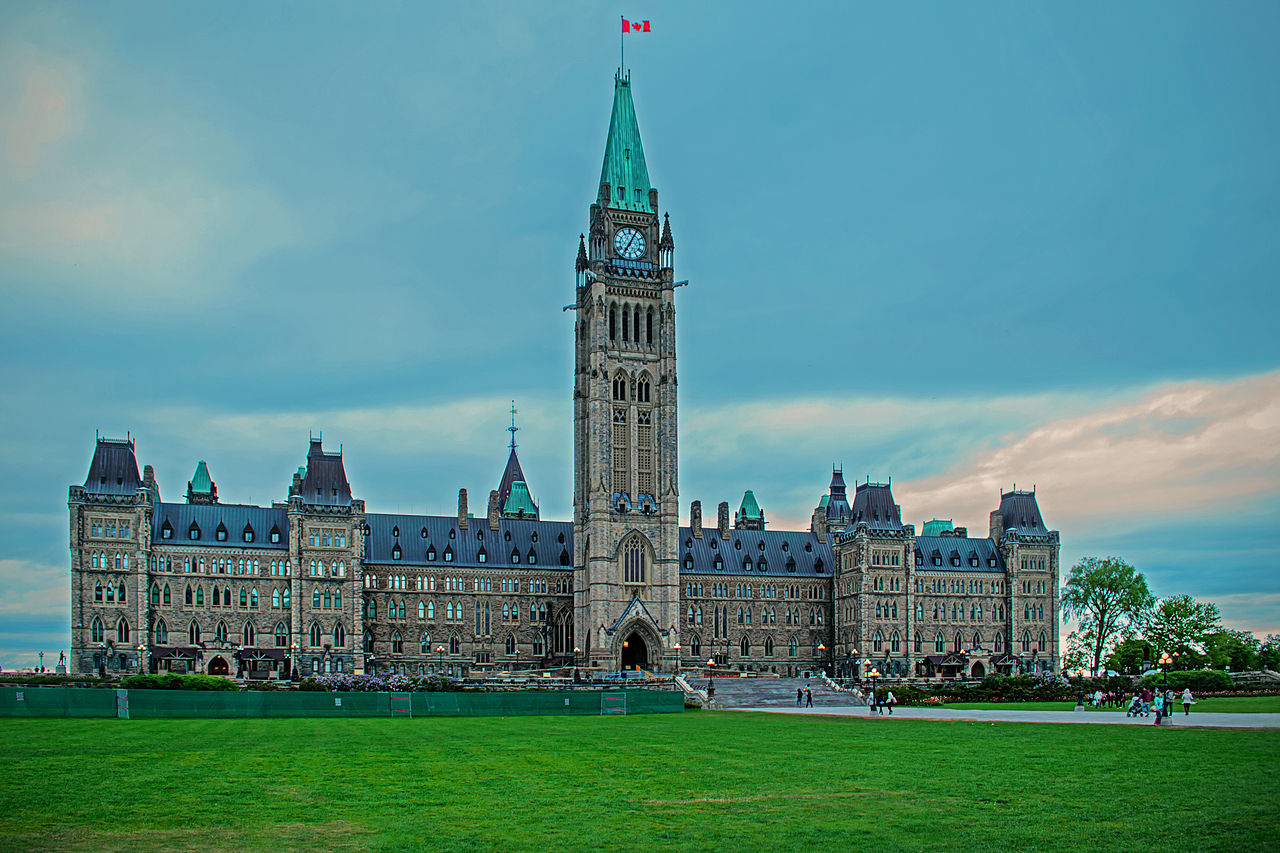
Parliament Hill in Ottawa.
Photo by S Nameirakpam via Wikimedia Commons.
In some ways, absolutely. Canada’s relative awesomeness is not an accident. We rest on the accomplishments of prior generations and some of what we do today contributes directly to the common prosperity. A ton of stuff happens behind the scenes, every day, that contribute enormously to our way of life — really, make it possible. But in other ways, the pandemic has revealed just how incompetent and inept our governments have become meeting new challenges. It’s like every last bit of bandwidth our governments have is used up just keeping the status quo running along, and if we ask it to do anything new, it’s like hitting a computer with one process too many for its CPU. It just locks up.
Real-life example: I was watching today as the Ontario and federal governments continued bickering about the proper border controls we should have during what will probably be the last phase of this crisis. And what struck me was the sheer insanity of not having settled this a long time ago. I’m not even saying what I think the answer should have been. There’s a lot of genuinely competing interests there. I have my opinion, you can have yours. But can we at least agree that what to do about the goddamn borders ought not to still be under active decision 14 frickin’ months after this all began?
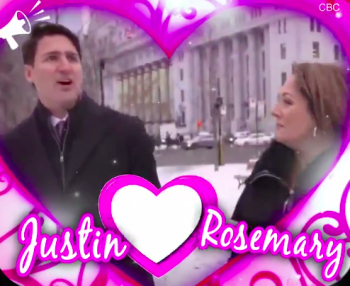
The federal government, in particular, seems to have fallen into a trap of its own making in that it corporately seems to believe that saying they’ll do something is exactly the same as actually doing something. Often enough, I’m pleased and relieved to find that Trudeau Jr.’s latest brain fart never got further than the press release and obligatory photo op, but it has become a constant in federal affairs. Optics matter far more than achievements, as long as the tame Canadian media play along — and they always played along with their boyfriend PM even before he bought them off with real money — nothing really changes. And everyone seems generally okay with this … except that real problems are not being addressed (ask any First Nations representative about how well the feds are helping with long-standing, known issues, for instance).
Certain provinces have done better than others. It’s tempting to point at them and go, ah ha, there’s what we should have done. And I think this is in large part fair and true. But it’s hard to make direct comparisons. Nova Scotia is not Ontario, and what worked in Nova Scotia wouldn’t necessarily have worked here. Believe me, if I could have swapped in their leaders for ours, I would have. It would have been an upgrade for sure. But the right solution, and personalities, for one crisis, in one time and place, aren’t necessarily the right solution for even that same crisis, at the same time, in a different place. I suspect we’ll spend a long time arguing about this once it’s all over, but I think that’s more or less where I’ve landed. Most of us would have been better off trying to be more like the Atlantic, but that doesn’t mean it would have recreated Atlantic-like successes everywhere.
But all that being said, there have been enormous basic failures, both in leadership and execution. You’ve all heard the joke about how someone new to government is shocked and dispirited to finally seize the levers of power, only to discover they’re not connected to anything. You can push and pull the levers all day long. But they don’t do anything. In Canada, both federally and in some of the provinces, we’ve been shockingly slow, again and again, to pull those levers. And sometimes, even after they’re pulled, nothing happens.
I don’t know if I have this thought through yet in a meaningful, useful way. This is a big, big idea that I’m starting at from different angles, trying to even conceive of its dimensions and scope. But if there is one problem we have — we have more, but if there is a meta-problem — I think it is that Canadian governments have lost the ability to execute new policy agendas. What we already have will generally work, more or less. But new things, or updates to old things? We routinely accept that failure is an option, or that even our successes will be late and overbudget — beyond acceptable real-world margins. (Life is always more complicated than theory.) There are things in my life that I just take for granted will work. If I get into my car and it doesn’t start, that surprises me, even though I am intellectually aware that that’s a possibility every time I try. But too often, with government, there is an entirely justified skepticism that it’ll succeed at all, let alone as intended, and yet, we shrug, because, hey. It’s Canada. Things are still good. How upset can I get about another program failure when I can just go fire up the barbecue and watch some hockey or something.
Governments are generally not very good at solving problems, especially novel problems that don’t already have a template to follow for success in similar circumstances. Set up a bureaucracy, establish processes and procedures, and set it in motion and it’ll carry on until the final Trump, but don’t ask it to cope with a crisis or even just an unexpected event or six. That’s not what they’re good at and they generally lack the organizational flexibility to adapt on the fly. Or at all.
QotD: “WOLF! Film at 11”
Natalie Solent, “Why do Americans think the media might be hiding things from them? Let’s try asking Tony Bobulinski on Twitter”, Samizdata, 2021-01-13.
April 30, 2021
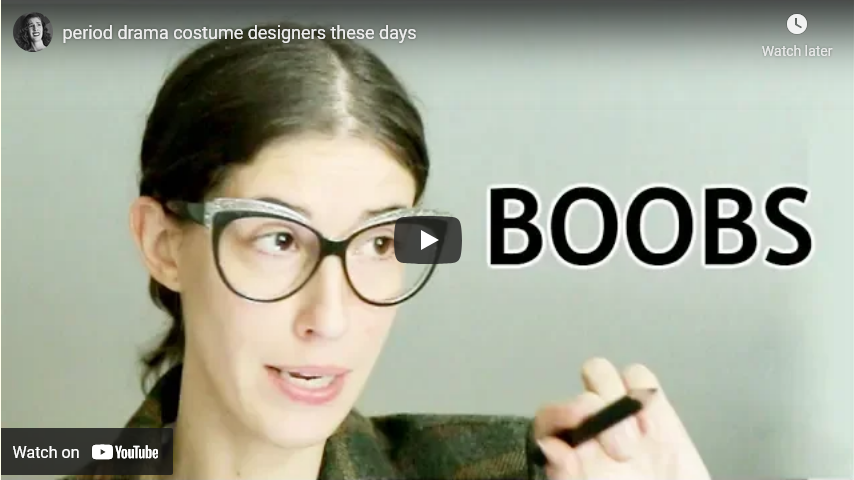
Period drama costume designers these days
Karolina Żebrowska
Published 15 Aug 2019Piero Tosi died last week and it made me really sad. he was one of the first to understand how staying close to history can actually make the film costumes fascinating, not boring. sadly, I’m beginning to think he was also one of the last — today’s mainstream cinema is all about “making things relatable for the modern viewer”.
________
My Instagram: https://bit.ly/2Qo9rrI
My nudes: https://bit.ly/2KypPpn
My merch: bit.ly/2CCq5jE
April 8, 2021
The Weird Years of The Simpsons (1989-1994)
J.J. McCullough
Published 2 Jan 2021The show struggled for five years to figure out what kind of show it wanted to be, and how to treat its characters. It could have been much weirder than it was.
FOLLOW ME:
🇨🇦Support me on Patreon! https://www.patreon.com/jjmccullough
🤖Join my Discord! https://discord.gg/3X64ww7
🇺🇸Follow me on Instagram! https://www.instagram.com/jjmccullough/
🇨🇦Read my latest Washington Post columns: https://www.washingtonpost.com/people…
🇨🇦Visit my Canada Website http://thecanadaguide.comHASHTAGS: #tv #animation
March 18, 2021
What’s the German phrase for “waiting for the other shoe to drop”?
Sarah Hoyt on the current situation in American politics:

As we sit here, waiting for the other shoe to drop, almost weekly, if not daily, I field the question “Why isn’t anyone doing anything yet?” This is usually followed by wails that we’ll do nothing that we’ll just sit here and take it.
There are two things to take into account. The first is that most people aren’t us. Most people aren’t political junkies who know every stupid, unjust and just plain suicidal executive order coming from on high, from the office of the vice-roi of the middle kingdom installed over us.
The second is the shock part of shocked disbelief. Which tends to delay reactions quite a bit.
On the first one “but how can they not know?” Well, because most of our media is and has been devoted to lying to the people. They are the propaganda arm of international socialism, drumming madly for their billionaire owners, who somehow have failed to read a single word of history and think they’ll end up on top.
No, forgive me. It’s not that. It’s that they don’t think at all. They want to be accepted with the “best” people, who at their level are the old aristocratic families of Europe, who of course are all on the spectrum of socialism/communism.
What our idiot nouveau riche have failed to absorb is that these more inbred and pedigreed mental midgets might not know why they support the bullshit anymore, but it all started in the early 20th century with their being convinced communism was inevitable and putting on wolf suits before they were eaten by the wolves.
So we get back to the idiot millionaires and billionaires (hi Bernie!) are stupid and have never read history. After all they made lots of money in various ways that have nothing to do with learning history, so why should they bother.
And below them are the scrambling multitudes of the upper middle class who ape what they view as the beliefs of their betters and — when they attended college — the “smart people” who in turn were taught by the fossils of the 20th century that communism was inevitable and that all smart people are communist.
All of which amounts to: most of the people have not yet found out what Zhou Bai den has been signing at warp speed, or what it saddles us with. Fear not. These people are very very stupid, bordering on mentally slow, and they will make sure everyone knows, soon enough. Why, they’re proud of it.
People are already finding out retail, anyway. Very retail. As in, they are finding out every price is going up, and what was their very nice lifestyle is now evaporating before their eyes, as is any hope of getting better.


