The first modern revolution was neither French nor American, but English. Long before Louis XVI went to the guillotine, or Washington crossed the Delaware, the country which later became renowned for stiff upper lips and proper tea went to war with itself, killed its king, replaced its monarchy with a republican government and unleashed a religious revolution which sought to scorch away the old world in God’s purifying fire.
One of the dark little secrets of my past is my teenage membership of the English Civil War Society. I spent weekends dressed in 17th-century costumes and oversized helmets, lined up in fields or on medieval streets, re-enacting battles from the 1640s. I still have my old breeches in the loft, and the pewter tankard I would drink beer from afterwards with a load of large, bearded men who, just for a day or two, had allowed themselves to be transported back in time.
I was a pikeman in John Bright’s Regiment of Foote, a genuine regiment in the parliamentary army. We were a Leveller regiment, which is to say that this part of the army was politically radical. For the Levellers, the end of the monarchy was to be just the beginning. They aimed to “sett all things straight, and rayse a parity and community in the kingdom”. Among their varied demands were universal suffrage, religious freedom and something approaching modern parliamentary democracy.
The Levellers were far from alone in their ambitions to remake the former Kingdom. Ranters, Seekers, Diggers, Fifth Monarchists, Quakers, Muggletonians: suddenly the country was blooming with radical sects offering idealistic visions of utopian Christian brotherhood. In his classic study of the English Revolution, The World Turned Upside Down, historian Christopher Hill quotes Lawrence Clarkson, leader of the Ranters, who offered a radical interpretation of the Christian Gospel. There was no afterlife, said Clarkson; only the present mattered, and in the present all people should be equal, as they were in the eyes of God:
“Swearing i’th light, gloriously”, and “wanton kisses”, may help to liberate us from the repressive ethic which our masters are trying to impose on us — a regime in which property is more important than life, marriage than love, faith in a wicked God than the charity which the Christ in us teaches.
Modernise Clarkson’s language and he could have been speaking in the Sixties rather than the 1640s. Needless to say, his vision of free love and free religion, like the Leveller vision of universal equality, was neither shared nor enacted by those at the apex of the social pyramid. But though Cromwell’s Protectorate, and later the restored monarchy, attempted to maintain the social order, forces had been unleashed which would change England and the wider world entirely. Some celebrated this fact, others feared it, but in their hearts everyone could sense the truth that Gerard Winstanley, leader of the Diggers, was prepared to openly declare: “The old world … is running up like parchment in the fire”.
Paul Kingsnorth, “The West needs to grow up”, UnHerd, 2022-07-29.
November 14, 2022
QotD: The first modern revolution
November 5, 2022
Repost: Remember, Remember the Fifth of November
Today is the anniversary of the Gunpowder Plot:
Everyone knows what the Gunpowder Plotters looked like. Thanks to one of the best-known etchings of the seventeenth century we see them “plotting”, broad brims of their hats over their noses, cloaks on their shoulders, mustachios and beards bristling — the archetypical band of desperados. Almost as well known are the broad outlines of the discovery of the “plot”: the mysterious warning sent to Lord Monteagle on October 26th, 1605, the investigation of the cellars under the Palace of Westminster on November 4th, the discovery of the gunpowder and Guy Fawkes, the flight of the other conspirators, the shoot-out at Holbeach in Staffordshire on November 8th in which four (Robert Catesby, Thomas Percy and the brothers Christopher and John Wright) were killed, and then the trial and execution of Fawkes and seven others in January 1606.
However, there was a more obscure sequel. Also implicated were the 9th Earl of Northumberland, three other peers (Viscount Montague and Lords Stourton and Mordaunt) and three members of the Society of Jesus. Two of the Jesuits, Fr Oswald Tesimond and Fr John Gerard, were able to escape abroad, but the third, the superior of the order in England, Fr Henry Garnet, was arrested just before the main trial. Garnet was tried separately on March 28th, 1606 and executed in May. The peers were tried in the court of Star Chamber: three were merely fined, but Northumberland was imprisoned in the Tower at pleasure and not released until 1621.
[. . .]
Thanks to the fact that nothing actually happened, it is not surprising that the plot has been the subject of running dispute since November 5th, 1605. James I’s privy council appears to have been genuinely unable to make any sense of it. The Attorney-General, Sir Edward Coke, observed at the trial that succeeding generations would wonder whether it was fact or fiction. There were claims from the start that the plot was a put-up job — if not a complete fabrication, then at least exaggerated for his own devious ends by Robert Cecil, Earl of Salisbury, James’s secretary of state. The government’s presentation of the case against the plotters had its awkward aspects, caused in part by the desire to shield Monteagle, now a national hero, from the exposure of his earlier association with them. The two official accounts published in 1606 were patently spins. One, The Discourse of the Manner, was intended to give James a more commanding role in the uncovering of the plot than he deserved. The other, A True and Perfect Relation, was intended to lay the blame on Garnet.
But Catesby had form. He and several of the plotters as well as Lord Monteagle had been implicated in the Earl of Essex’s rebellion in 1601. Subsequently he and the others (including Monteagle) had approached Philip III of Spain to support a rebellion to prevent James I’s accession. This raises the central question of what the plot was about. Was it the product of Catholic discontent with James I or was it the last episode in what the late Hugh Trevor-Roper and Professor John Bossy have termed “Elizabethan extremism”?
October 28, 2022
The Byzantine Empire: Part 7 – Recovery and Return to Hegemony, 717-1025 AD
seangabb
Published 2 May 2022In this, the seventh video in the series, Sean Gabb explains how, following the disaster of the seventh century, the Byzantine Empire not only survived, but even recovered its old position as hegemonic power in the Eastern Mediterranean. It also supervised a missionary outreach that spread Orthodox Christianity and civilisation to within reach of the Arctic Circle.
Subjects covered:
The legitimacy of the words “Byzantine” and “Byzantium”
The reign of the Empress Irene and its central importance to recovery
The recovery of the West and the Rise of the Franks
Charlemagne and the Holy Roman Empire
The Conversion of the Russians – St Vladimir or Vladimir the Damned?
The reign of Basil IIBetween 330 AD and 1453, Constantinople (modern Istanbul) was the capital of the Roman Empire, otherwise known as the Later Roman Empire, the Eastern Roman Empire, the Mediaeval Roman Empire, or The Byzantine Empire. For most of this time, it was the largest and richest city in Christendom. The territories of which it was the central capital enjoyed better protections of life, liberty and property, and a higher standard of living, than any other Christian territory, and usually compared favourably with the neighbouring and rival Islamic empires.
(more…)
October 14, 2022
When Potatoes were Illegal
Tasting History with Max Miller
Published 7 Jun 2022
(more…)
October 12, 2022
History’s Real Macbeth
Tasting History with Max Miller
Published 11 Oct 2022
(more…)
October 7, 2022
Churchill and the Queen
In The Critic, Andrew Roberts outlines the relationship between Prime Minister Winston Churchill and Queen Elizabeth II:

Queen Elizabeth II and Sir Winston Churchill, with Prince Charles and Princess Anne in the foreground, 10 Februrary 1953.
Official photograph via Wikimedia Commons.
Winston Churchill was besotted with Queen Elizabeth II: the word is precise. He worshipped and adored her. His relations with some other members of the royal family were, on occasion, complicated — not least when King Edward VII was sleeping with his mother. But for the late Queen he had nothing but an almost puppy-dog love.
[…]
When King George VI died unexpectedly on 6 February 1952, aged only 56, Churchill was devastated, weeping copiously both on hearing the news and at the funeral. Of the new monarch he told his private secretary, Jock Colville, that “he did not know her and that she was only a child”.
Nonetheless he saw an opportunity of romanticising the country’s situation. “Famous have been the reigns of our queens,” he said in his BBC broadcast on the King’s death. “Some of the greatest periods in our history have unfolded under their sceptre. Now that we have the second Queen Elizabeth, also ascending the Throne in her twenty-sixth year, our thoughts are carried back nearly 400 years to the magnificent figure who presided over and, in many ways, embodied and inspired the grandeur and genius of the Elizabethan Age.”
Although she was his sixth sovereign, Churchill was the new Queen’s first prime minister and old enough to be her grandfather. For all the 51-year age difference — or perhaps because of it — Churchill quickly grew devoted to her. “There was one lady by whom, from 1952 onward, Churchill was dazzled,” noted Colville. “That was the new Queen. Here was a woman whom he respected and admired more than any man.”
[…]
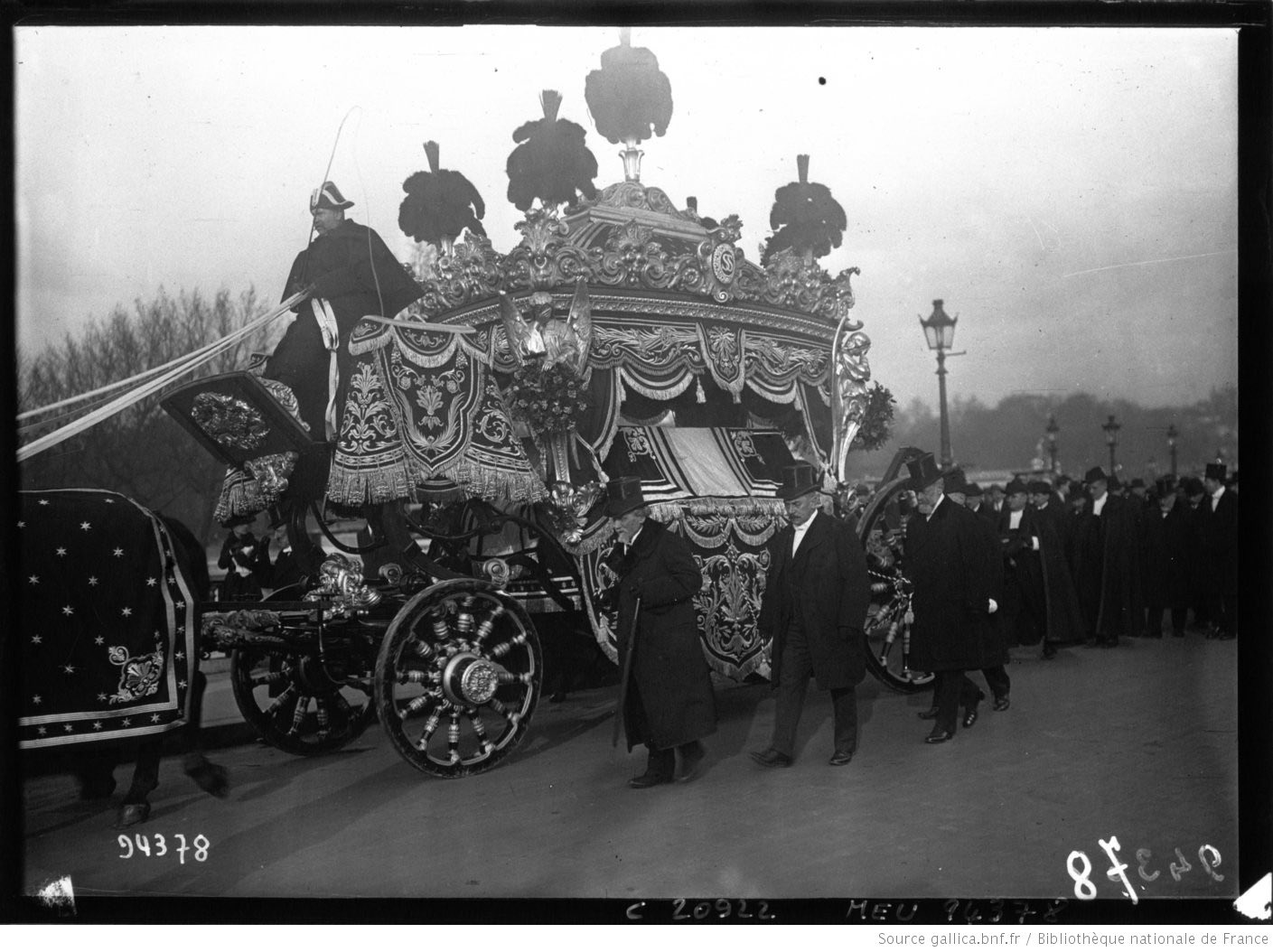
On 24 January 1965, 70 years to the day after the death of his father Lord Randolph Churchill, Sir Winston died. The Queen waived all custom and precedent to attend his funeral at St Paul’s Cathedral. She added a message in her own handwriting to the wreath of white flowers that was placed upon his coffin: “From the Nation and the Commonwealth. In grateful remembrance, Elizabeth R.” It echoed that which Churchill had placed on her father’s coffin, simply saying “For Valour”, the motto of the Victoria Cross, and a reference to the late king’s moral and physical courage during the Second World War, and perhaps also at the battle of Jutland in 1916.
[…]
The Queen decided Churchill should have a State funeral following his stroke in 1953. Once he had recovered, she told him so. The plans had to be rewritten several times over the next 12 years because, as Lord Mountbatten joked, Churchill kept on living but the pallbearers kept on dying.
There is a powerful symmetry to the friendship of monarch and premier that the next State funeral after Churchill’s was to be the Queen’s own, a full 57 years later.
October 5, 2022
Ancient Roman Jellyfish for the Black Banquet
Tasting History with Max Miller
Published 4 Oct 2022
(more…)
October 4, 2022
The History of the Wine Glass
Tasting History with Max Miller
Published 31 May 2022
(more…)
September 30, 2022
History Re-Summarized: The Roman Empire
Overly Sarcastic Productions
Published 16 Sept 2022
The plot twist of Rome is that it was always a mess, now sit back and enjoy the marble-covered mayhem.This video is a Remastered, Definitive Edition of three previous videos from this channel — “History Summarized: The Roman Empire”, “History Hijinks: Rome’s Crisis of the Third Century”, and “History Summarized: The Fall of Rome”. This video combines them all into one narrative, fully upgrading all of the visuals and audio, with a substantially re-written script in parts 1 and 3.
(more…)
September 29, 2022
The Byzantine Empire: Part 5 – The Death of Roman Byzantium, 568-628 AD
seangabb
Published 21 Jan 2022In this, the fifth lecture in the series, Sean Gabb discusses the progressive collapse of Byzantium between the middle years of Justinian and the unexpected but sterile victory over the Persian Empire.
Between 330 AD and 1453, Constantinople (modern Istanbul) was the capital of the Roman Empire, otherwise known as the Later Roman Empire, the Eastern Roman Empire, the Mediaeval Roman Empire, or the Byzantine Empire. For most of this time, it was the largest and richest city in Christendom. The territories of which it was the central capital enjoyed better protections of life, liberty and property, and a higher standard of living, than any other Christian territory, and usually compared favourably with the neighbouring and rival Islamic empires.
The purpose of this course is to give an overview of Byzantine history, from the refoundation of the City by Constantine the Great to its final capture by the Turks.
Here is a series of lectures given by Sean Gabb in late 2021, in which he discusses and tries to explain the history of Byzantium. For reasons of politeness and data protection, all student contributions have been removed.
(more…)
September 19, 2022
“… the Royal Family has always seemed less like a business enterprise than a giant open-air prison”
The editors at The Line have a rather unusual view of the monarchy, or perhaps more accurately, of the Royal Family itself:

The Royal Family at Buckingham Palace for the Trooping of the Colour, 30 June, 2015.
Photo by Robert Payne via Wikimedia Commons.
We have a soft spot for the monarchy, here at The Line. We believe that as an organizing principle of our system of government, the Crown provides a decent balance between effectiveness and accountability. And while the idea of our head of state residing in a foreign country seems perverse, as a practical matter the physical distancing of the sovereign in London, and the institutional distancing via the Governor General, helps Canada sidestep what would otherwise be yet another occasion for national recrimination.
So, call it two cheers for the monarchy.
That the Queen was a model of duty, decorum and discretion throughout her long reign is undeniable, and there’s not much to add on that front that hasn’t been spread over square miles of newsprint over the past week. By the same token, she and her husband raised a rather problematic set of boys, of whom the best (Edward) that can be said is that he’s a nullity. But again, there’s been more written on this than one could safely consume in a lifetime.
But we’d like to say a few things about the Royal Family itself. The Royals have long described themselves not as a family, but as The Firm — a corporate entity and business enterprise that has extensive land holdings. It pokes its fingers in countless pies, and employs an army of secretaries and assistants and advisers and servants. It has been described as an enormous, bureaucratically organized machine that dictates and determines the lives of its members.
Yet to us, the Royal Family has always seemed less like a business enterprise than a giant open-air prison. A well-funded and nicely appointed prison to be sure, but a prison nonetheless.
What’s the difference between a complicated overbearing bureaucracy and a jail? Where does the line between compliance end and incarceration begin? It can be hard to say, but the key difference can be found in whether or not you have the right of exit. As Harry put it in his infamous interview with Oprah Winfrey: “My father and my brother, they are trapped. They don’t get to leave.”
But beyond that, it is found in how you treat those who try to change things, or more importantly, those who try to escape. Diana tried to change things, and got destroyed for her efforts. Her second son has attempted an escape, and he’s paying an enormous price.
Diana was no saint obviously, and Harry is a dim fellow who married poorly and has not always exercised the best judgment. But who could, under the circumstances? How could any human be reasonably expected to behave properly, to act normally, to judge wisely, given the insane combination of internal pressure, public expectation and media scrutiny that is a non-negotiable part of the royal package? A panopticon is no less carceral for being well-funded.
With the accession of Charles to the throne as King Charles III, there have been a number of articles published running through the main plot points of his life, with a great deal of focus on his romantic life, his marriage to Diana, and ultimately his reunion with the great love of his life, Camilla. What is remarkable is to read about the number of women he proposed to, prior to Diana, who saw the monarchy for what it was, and turned him down. It’s a testament to how much Camilla must really love the old fart that she prefers a life imprisoned with him than free without.
September 18, 2022
“King Eeyore”
In the latest edition of the SHuSH newsletter, Kenneth Whyte recounts some of the anti-Carolean gossip from the early years of King Charles:
My library of royalist literature is thin, but I did find Tina Brown’s The Palace Papers on the shelf. Published last spring, it chronicles the recent history of the House of Windsor and while it treats the whole cast of characters — Elizabeth, Philip, Margaret, Charles, Anne, Andrew, Edward, William, Kate, Harry, Meghan — much is revealed about the new king.
Charles, writes Brown, the former Vanity Fair and New Yorker editor, was never a happy fellow. She calls him “Prince Eeyore”. He “felt bruised by his childhood and miserable school days, misunderstood by his domineering father, and deprived of an emotional connection with his mother”. Among the “brutalities” he endured in his youth: his schoolmates at Gordonstoun beat him with pillow because he snored.
Although an indifferent student, he attended Cambridge where he read anthropology and archaeology. In 1969, a year before graduating, his mother crowned him Prince of Wales. He spent his early twenties in the Royal Air Force and the Royal Navy, distinguishing himself in the latter service by lowering an anchor without noticing on his chart the presence of a telecommunications cable linking Ireland and Britain. “It was snagged,” writes Brown, “and the two divers send down to dislodge it nearly drowned.” Charles earned a “stern rebuke”.
Having done his military duty, he devoted himself to polo, windsurfing, and test-driving prospective wives. Charles’s royal status made him an obvious catch, writes Brown, who judges that his “Dumbo ears were offset by his excellent tailoring and debonair polo prowess.”
Finding a wife proved difficult, not least because of his affinity for married women. At one point he was sleeping with both Camilla Parker Bowles, wife of Andrew Parker Bowles, and Dale “Kanga” Harper, wife of his buddy, Lord Tyron. “In the mid-seventies,” says Brown, “both married women were on call for the Prince while their husbands looked the other way.”
That’s not exactly true. Both men seemed pleased to lay down their wives for their country, as the joke went at the time. Charles was godfather to Tom Parker Bowles, son of Andrew and Camilla Parker Bowles, and also to a middle child of the Tyron’s who, naturally, was named Charles.
What Camilla and Kanga had in common were game personalities and maternal instincts that accommodated the Prince’s “sentimentality and tantrums, and needs to be soothed and amused”.
It wasn’t until 1981, at the age of 32, that the Prince of Wales made his choice of a bride. It was famously awful for all concerned. He married twenty-year-old Diana Spencer who bore him an heir, William, in 1982, and a spare, Harry, in 1984. Brown reports that Charles behaved properly in the marriage until the birth of Harry who, to his disappointment, was not a girl. “Oh God,” he said, “it’s a boy … and he’s even got red hair.”
He was back with Camilla in no time. Diana ratted him out to the author Andrew Morton in 1992 and Charles unwittingly confirmed his infidelity the next year in a notorious telephone conversation with Camilla in which he said that he wanted to “live inside your trousers or something”. You know the rest.
September 17, 2022
A royal assault on free speech | The spiked podcast
spiked
Published 16 Sep 2022Tom, Fraser and Ella discuss the clampdown on republican protesters. Plus: the Ukrainian counteroffensive and the madness of Mermaids.
(more…)
September 14, 2022
QotD: The Wars of Religion and the (eventual) Peace of Westphalia
Thomas Hobbes blamed the English Civil War on “ghostly authority”. Where the Bible is unclear, the crowd of simple believers will follow the most charismatic preacher. This means that religious wars are both inevitable, and impossible to end. Hobbes was born in 1588 — right in the middle of the Period of the Wars of Religion — and lived another 30 years after the Peace of Westphalia, so he knew what he was talking about.
There’s simply no possible compromise with an opponent who thinks you’re in league with the Devil, if not the literal Antichrist. Nothing Charles I could have done would’ve satisfied the Puritans sufficient for him to remain their king, because even if he did everything they demanded — divorced his Catholic wife, basically turned the Church of England into the Presbyterian Kirk, gave up all but his personal feudal revenues — the very act of doing these things would’ve made his “kingship” meaningless. No English king can turn over one of the fundamental duties of state to Scottish churchwardens and still remain King of England.
This was the basic problem confronting all the combatants in the various Wars of Religion, from the Peasants’ War to the Thirty Years’ War. No matter what the guy with the crown does, he’s illegitimate. It took an entirely new theory of state power, developed over more than 100 years, to finally end the Wars of Religion. In case your Early Modern history is a little rusty, that was the Peace of Westphalia (1648), and it established the modern(-ish) sovereign nation-state. The king is the king because he’s the king; matters of religious conscience are not a sufficient casus belli between states, or for rebellion within states. Cuius regio, eius religio, as the Peace of Augsburg put it — the prince’s religion is the official state religion — and if you don’t like it, move. But since the Peace of Westphalia also made heads of state responsible for the actions of their nationals abroad, the prince had a vested interest in keeping private consciences private.
I wrote “a new theory of state power”, and it’s true, the philosophy behind the Peace of Westphalia was new, but that’s not what ended the violence. What did, quite simply, was exhaustion. The Thirty Years’ War was as devastating to “Germany” as World War I, and all combatants in all nations took tremendous losses. Sweden’s king died in combat, France got huge swathes of its territory devastated (after entering the war on the Protestant side), Spain’s power was permanently broken, and the Holy Roman Empire all but ceased to exist. In short, it was one of the most devastating conflicts in human history. They didn’t stop fighting because they finally wised up; they stopped fighting because they were physically incapable of continuing.
The problem, though, is that the idea of cuius regio, eius religio was never repudiated. European powers didn’t fight each other over different strands of Christianity anymore, but they replaced it with an even more virulent religion, nationalism.
Severian, <--–>”Arguing with God”, Rotten Chestnuts, 2020-01-20.
September 12, 2022
The art of the constitutional monarchy
At The Ruffian, Ian Leslie considers the form of government nobody set out to design, but has proven to be one of the most stable forms of government we’ve had:

The royal family at Buckingham Palace for the Trooping of the Colour, 30 June, 2015.
Photo by Robert Payne via Wikimedia Commons.
When I said that nobody would design this system, that is not a criticism. Evolved systems tend to work better than designed ones, even if they can seem maddeningly irrational to those who presume to know better. Yesterday somebody posted extracts from an essay by Clement Attlee. As a socialist, Attlee might have been expected to oppose or at least be sceptical of constitutional monarchy, but he was a strong believer in it. Attlee was writing in 1952, a year after the end of his term as Prime Minister, and the same year that Queen Elizabeth came to the throne. When he refers to the monarch, he refers to her – one of those examples of how the Queen’s longevity stretches our perception of time. “You will find the greatest enthusiasm for the monarch in the meanest streets,” he writes. After qualifying as a lawyer, Attlee ran a club in the East End of London for teenage boys raised in dire poverty. He remembers one of them saying, “Some people say as how the King and Queen are different from us. They aren’t. The only difference is that they can have a relish with their tea every day.”
Attlee notes that Norway, Sweden, and Denmark — countries in which there is “the highest equality of well-being” — have royal families. That’s still true and we might add the Netherlands to that list. While it’s impossible to disentangle the many historical factors that make for a decent and successful society, it is at the very least tough to make the case, on evidence alone, that democratic monarchies are inherently bad. Indeed, they seem to work pretty well versus other forms of government. As the left-wing American blogger Matt Yglesias remarked yesterday, “It’s hard to defend constitutional monarchy in terms of first principles, but the empirical track record seems good.”
If this is so, I’m interested in why (let’s agree, by the way, that there isn’t one definitively superior way of running a country, and that every system has flaws). My guess is that it’s because constitutional monarchies do a better job than more “rational” forms of government of accommodating the full spectrum of human nature. They speak to the heart as well as the head. Attlee puts it succinctly: “The monarchy attracts to itself the kind of sentimental loyalty which otherwise might to the leader of a faction. There is, therefore, far less danger under a constitutional monarchy of the people being carried away by a Hitler, a Mussolini or even a de Gaulle.” (I need hardly add that for Attlee, these were not merely historical figures.) Martin Amis, in the closing paragraph of his 2002 piece about the Queen for the New Yorker, expresses the same idea with characteristic flair:
“A princely marriage is the brilliant edition of a universal fact,” Bagehot wrote, “and as such, it rivets mankind.” The same could be said of a princely funeral — or, nowadays, of a princely divorce. The Royal Family is just a family, writ inordinately large. They are the glory, not the power; and it would clearly be far more grownup to do without them. But riveted mankind is hopelessly addicted to the irrational, with reliably disastrous results, planetwide. The monarchy allows us to take a holiday from reason; and on that holiday we do no harm.
Yes, there is something deeply sentimental and even loopy about placing a family at the centre of national life, and ritually celebrating them, not for what they’ve done but for who they are. But here’s the thing: humans are sentimental and yes, a bit loopy. Constitutional monarchies accept this, and separate the locus of sentiment from the locus of power. They divert our loopiness into a safe space.
In republics, the sentimentality doesn’t go away but becomes fused with politics, often to dangerous effect. Russia, despite having killed off its monarchy long ago, retains an ever more desperate hankering after grandeur, the consequences of which are now being suffered by the Ukrainians. America’s more “rational” system has given us President Donald Trump, and I don’t think it’s a coincidence that their political culture is more viciously, irrationally polarised than ours.
Monarchy, in its democratic form, can also be a conduit for our better natures. It gives people a way to express their affection for the people with whom they share a country, by proxy. Think about that boy in Limehouse: it’s not that he wouldn’t have preferred to have relish with his tea – to be rich, or at least richer. But he recognised that, as different as human lives can be, they are always in some fundamental ways the same. People have mothers and fathers (present or absent, kind or cruel), brothers and sisters, hopes, fears, joys and anxieties. That’s why one family can stand in for all of us, even if that family lives in a very privileged and singular manner.