We have a generally pro-Quebec stance; however, these annual meltdowns because Some Anglo Said Something Mean About Quebec are getting really tiresome. Somehow this province has managed to prove itself to be even more thin-skinned than Alberta — yes, we said it. Quebec is more reactive than the province that last week suffered a fit over an unflattering children’s cartoon.
And for some reason, the rest of Canada continues to treat these tantrums as if they are very weighty and serious matters meriting news coverage and discussion by very weighty and serious people. Canada’s indulgence of Quebec’s inability to tolerate pointed criticism is probably why the province gets away with passing racist legislation like Bill 21. And no one — least of all politicians — dare say boo because they’re all too eager to win seats in a populous province perpetually in play.
Attaran’s tweets wouldn’t even be worth our lowly mention, except that they prompted response from Justin Trudeau himself, who responded by saying: “Enough of the Quebec bashing.” That’s right, what we have here is Prime Minister Brownface condemning the tweets of an Iranian-Canadian professor who called Quebec racist by declaring such comments “Quebec bashing.” People, we are down the rabbit hole.
Earlier in this dispatch, we called Attaran a bit of a dumbass, and maybe some of you found that assessment a bit harsh. Others, perhaps not. We leave ourselves open to be capably judged by you, our dear readers. But we must ask this: What kind of dumbass do you have to be to make a figure like Amir Attaran into a national hero on free speech grounds? Good lord.
“Dispatch from The Front Line: Doing the Code Dance”, The Line, 2021-03-26.
July 2, 2021
June 27, 2021
“Apologies are just a subset of performance art for Trudeau, not actual admissions of failure and expressions of regret”
From The Line‘s weekend wrap-up post, a reminder that the top leadership of the Canadian Armed Forces and the government are still embroiled in scandal:

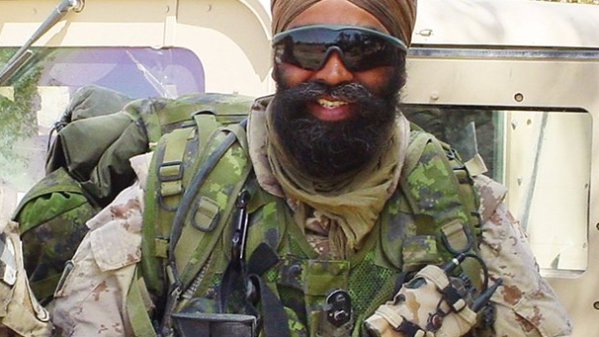
Canadian Defence Minister (at least for the moment) Harjit Sajjan during his pre-ministerial career.
In other news, your Line editors continue to think that not enough of you are tuned in to the sexual misconduct scandal still roiling the Canadian Armed Forces. Yes, yes, we know the military is this weird, complicated thing that no one really pays much attention to in this country. But you really ought to be.
You all know the basic outline already: sexual harassment and assault is a major problem in the armed forces. In 2015, former Supreme Court justice Marie Deschamps completed a major report into the issue, and recommended sweeping changes. A few of the changes were made, but the report was mostly immediately assigned dust-collector status and forgotten. That would be bad enough, but what really gave this life was that the Trudeau government — specifically, National Defence Minister Harjit Sajjan — was given a heads-up that Gen. Jonathan Vance, the country’s top military officer, was himself accused of misconduct. And the PMO found a way to bend the nature of the space-time continuum as they contorted and twisted their way out of having to do anything about it.
It’s a horrific look for a government that considers itself feminist, especially when the guy at the top has some baggage of his own. The Liberals did what Liberals do — said they should have done better and circled the wagons. Accountability is for chumps, after all. This week, Gregory Lick, the ombudsman for the Canadian Armed Forces — a position that exists to give serving members of the armed forces a place to go with complaints within their chains of command — took aim at his own chain of command — Minister Sajjan, saying that his reporting structure has to be changed because Sajjan, frankly, ain’t interested in hearing about problems that the Liberals find awkward.
Here’s Lick:
The collective actions or, in some cases, the inaction of senior political, military and civilian leadership within the government have eroded trust within the defence community … When leaders turn a blind eye to our recommendations and concerns in order to advance political interests and their own self-preservation or career advancement, it is the members of the defence community that suffer the consequences … It is clear that inaction is rewarded far more than action. In the four months since the most recent outbreak of multiple accusations of sexual misconduct, the actions of the minister of National Defence, senior government and military officials have bitterly proved this point. The erratic behaviour of leadership defies common sense or reason. The concept of ministerial accountability has been absent.
Folks, trust us when we tell you that by the standard of Ottawa bureaucratese, that statement is blistering. Lick is directly targeting Sajjan with that last sentence. Translated into normal Canadian English, Lick is accusing Sajjan of inaction in the face of obvious problems.
[…]
What was it that Lick said about ministerial accountability again? About inaction? Oh dear, it’s totally slipped our little ole minds. Probably nothing important!
More seriously: We don’t expect much to come from this. From any of it, or from all of it. Firing Sajjan would require Trudeau to admit he’d fell short, and, well, we all know this guy is way more comfortable apologizing for stuff that happened a century before he was born than he ever is admitting he himself screwed up. Apologies are just a subset of performance art for Trudeau, not actual admissions of failure and expressions of regret. But let’s not mistake what has happened here. A slew of senior military officers have quit or been removed. The PMO has been singed. Sajjan has been directly called out, and his own assistant implicated.
There is no mystery here. Canadians have been told there is rot in the government, and that our men and women in uniform are suffering for it while Trudeau looks the other way. And you’ll have to get used to that, too.
June 20, 2021
L’Affaire Annamie Paul – “… it’s like every Liberal across the land forgot about politics”
The weekly wrap-up from The Line wonders why Canadian media outlets pay so much attention to the Green Party (far in excess of their political influence normally), but recent Green Party fratricidal bun-fighting merits attention just because of the injured bystander, the Prime Minister of the current year:
The background of all of this is complicated, and we’re not going to bother recapping it. If you care enough about Canadian politics to follow the Greens, you know it all already. What’s interesting to us — and funny as all hell — is how angry the PM’s die-hard fanbase was, how shocked and sincerely surprised they were, when Paul turned her guns on the PM instead of her own rebelling party executives and grassroots:
“To the prime minister, Justin Trudeau,” Paul said at a press conference, “I say to you today, you are no ally. And you are no feminist. Your deeds and your words over these past weeks prove that definitively. A real ally and feminist doesn’t end their commitment to those principles whenever they come up against their personal ambition.”
And, gosh. Liberals everywhere were just stunned.
It was cute. As we said, it’s like every Liberal across the land forgot about politics. And that’s ridiculous. Canadian Liberals are the most ruthlessly effective vote winners precisely because they are relentlessly amoral and craven. We don’t even mean this as an insult! Your typical Canadian Liberal constitutes the purest sample of raw partisanship known to human science — which is why they’re so good at winning.
And that’s why they should have instantly understood what Paul was doing when she attacked the PM. She was picking a fight she could win because she’s losing the one she’s actually facing. Paul is a black woman. She’s Jewish. She’s obviously lost control of her own party. The only chance in hell she has of surviving is to lay every possible identity group card down on the table, declare herself the champion of those oppressed groups, and then dare her own party to purge her. She’s adopting the mantle of the WOC woke champion. It’s a lot easier for Paul to fight that battle against the PM than it is for her to fight it against her own party.
As much as Liberals hate to admit it — and they really, really, really hate to admit it — the PM is vulnerable to accusations of hypocrisy on the feminism and racial equality files. Obviously.
Paul is desperate. She’s in a fight for her political life, and she seems to be losing. So she’s picked a fight with a powerful white man to play up her own “voice of the oppressed” credentials. It’s cynical and desperate. Frankly, the Liberals ought to be honoured. What’s that they say about imitation and flattery?
June 13, 2021
May 29, 2021
Justin Trudeau is clearly not concerned about China or Chinese involvement in Canadian affairs
In The Line, Jen Gerson outlines the PM’s latest display of insouciance in regard to anything involving China, their ruling Communist party, or the Chinese military:
The Globe and Mail reported last week that Canada’s top infectious disease research centre, the National Microbiology Laboratory in Winnipeg, had hosted and otherwise collaborated with guest researchers and scientists from China — including some with links to that country’s military or government. O’Toole asked about this in the House, and Trudeau gave a very routine Trudeauvian non-answer. O’Toole and other Tories kept up the questioning, Trudeau eventually responded with this (as per Hansard): “Mr. Speaker, we have always and will always take this threat seriously. Public safety officials have met with more than 34 universities to help them keep their research safe. In 2020, CSIS engaged more than 225 different organizations, including universities, to ensure that they were aware of foreign threats. I also want to mention that we are seeing a disturbing rise in anti-Asian racism. I hope that my Conservative Party colleagues are not raising fears about Asian Canadians.”
Sigh. Where do we begin?
First of all, though this may shock our readers, the Sun papers, and its columnists, have been known to exaggerate their criticisms of the PM. The PM gave a more substantive answer than Lilley gave him credit for. You can disagree with the PM — see below! — without getting cute with what he actually said. The racism line was dumb, and shitty. It was beneath the PM and unfair to the legitimate questions that were being asked. Trudeau shouldn’t have said it, and he was right to get called out for it.
So yes, a dick move by the PM — in a hundred years, maybe one of his descendants can apologize for it. But let’s not take our eye off the ball.
Trudeau’s answers were more than Lilley suggested, but they’re still not good enough. O’Toole and the Conservatives are onto something. China’s ruling regime is aggressive, brutal, and thuggish. They’re a threat to security abroad, they’re committing outright crimes against humanity against their own religious minorities, they’ve crushed Hong Kong underfoot, and they’re actively hostile to Canada. None of this is racist to note.
And yet our federal Liberals remain alarmingly unable to admit any of this. We don’t buy that it’s just a matter of political expediency, an awkward but necessary consequence of the ongoing detention of the two Michaels. Hell, we wish that the Liberals were just being publicly cautious with their real views on Beijing while remaining clear-eyed about the threat behind closed doors. The evidence continues to suggest that the federal Liberals, from Trudeau on down, remain hopelessly naïve about the nature of Beijing’s rulers, even as more and more of our allies are getting real about what the next generation or two of geopolitics is gonna look like for the Western alliance. (Which Canada remains a part of, whether Trudeau likes it or not.)
The growing tensions with a rising China are a big deal. It is only going to become a bigger deal. The Liberals need to get with the program. We hope to see more on this across the Canadian media — and hopefully it’s a bit more useful and productive than what the Sun ran with this week. The Liberals look terrible on this file already for entirely legitimate, serious reasons. We don’t need to pop our aging joints as we stretch and contort ourselves to make it seem so.
May 28, 2021
Justin Trudeau apologizes for WW2 detainment of card-carrying Fascists by Mackenzie King’s government
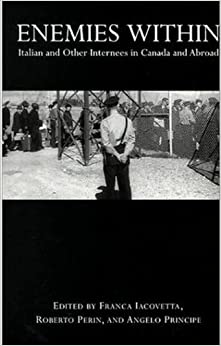
As Colby Cosh notes in the latest NP Platformed newsletter, it is hard to reconcile the mythological events the Prime Minister is busy apologizing for with the actual, documented facts of the case as recorded in a book published by three Italian-Canadian academics about 20 years ago:
What they found was that the 500 people, singled out from 112,000 Italian-Canadians by the government in 1940, were scarcely the victims of racial hysteria. They were, in fact, a hardcore fraction of 3,000 or so literal card-carrying Fascists in Canada. They hadn’t been thrown into camps willy-nilly, as Canada’s Japanese would be later; most had Fascist ties and sympathies that had been carefully investigated, abundantly documented and double-checked by the RCMP.
The internees had mostly been members of overtly pro-Fascist “fraternal organizations”, whose loyalty they later protested in the face of the facts. As that young reporter’s review observed, many of those groups reported directly to the Italian government, all were devoted to promoting the idea of Mussolini’s near-godhood and some helped finance Italy’s Fascist (and racist) 1935 invasion of Ethiopia, which annihilated the League of Nations security apparatus and set the table for further fascist aggression in Europe. Although the impugned Italians were detained without trial, none lost their homes or property as Japanese internees later would, and in fact none were held beyond the end of 1942.
That review was just about the only notice Enemies Within received anywhere in the Canadian press. The author, whose alliterative name you can probably guess by now, interviewed (now emeritus) Prof. Perin and was told the book had “fallen into a big black hole”. The revisionist account of Italian-Canadian internment as an out-of-control racial panic directed at anyone whose name ended in a vowel had long since taken hold in Canadian schools, and has never lost its grip.
Today, the prime minister, attentive to his nose for votes, apologized officially in the House of Commons for the “unjustified” detentions. And opposition parties are competing vigorously to out-apologize the apologizer-in-chief. One wonders what our present-day anti-fascists, who favour street beatings for anyone wearing the wrong hat, make of this laborious grieving for honest-to-God anti-Fascist action. As Michael Petrou argued courageously in the Globe and Mail on May 3, we shouldn’t be consecrating a falsehood for the sake of anyone’s political advantage. (And the CBC, to its credit, gives some attention to the historically informed side of the debate.)
May 21, 2021
May 9, 2021
“The PMO and senior defence officials knew [about the sexual assault allegations]. For three years. … No one cared.”
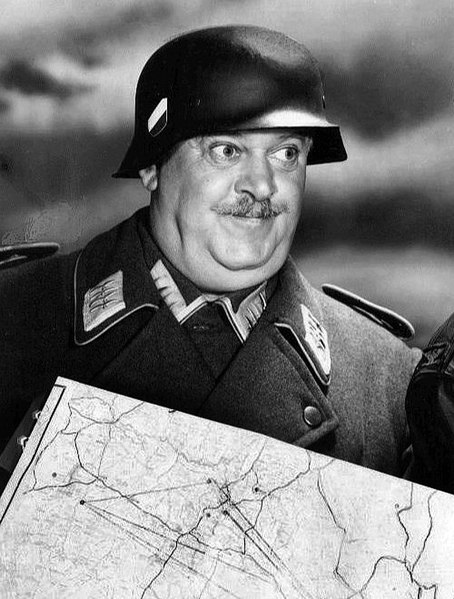
The federal government collectively and individually (in the person of Justin Trudeau’s chief of staff) continues to do their vastly unconvincing Sergeant Schultz imitation, “I see nothing! I hear nothing! I know nothing!”

John Banner as Sergeant Schultz in Hogan’s Heroes, 1965.
CBS Television promotional photo via Wikimedia Commons.
We at The Line ended a long week staring agog and aghast at Katie Telford, the prime minister’s chief of staff, who was interviewed by members of the Standing Committee on National Defence over her knowledge (such as it was) of the sexual misconduct allegations made against now-retired Army general Jonathan Vance.
Vance, until recently the chief of the defence staff, the highest position in the Canadian Armed Forces, was accused of sexual misconduct by a female subordinate in 2018, but nothing came of it because, well, hey, Telford explained. Life is complicated. Right?
We don’t really have the emotional wherewithal to summarize the entire proceeding at length. Suffice it to say that nothing new was learned. Telford’s defence continues to be the same as the ones offered by other Liberal officials — they knew there was an allegation of some kind, but not what the allegation was. And they were clearly content to leave it that way for three years. The problem for Telford, of course, is that Global News already obtained documents showing internal emails among senior staff openly discussing “sexual harassment” allegations against Vance. We accept that Telford and other high mucky-mucks didn’t know the details of the allegations, but if they didn’t know that they were related to sexual misconduct, their ignorance was a product of a deliberate, sustained multi-year effort.
Our official opposition wasn’t exactly draping itself in glory either, alas, which might explain why they remain a distant second in the polls. The Tory MPs on the committee clearly had their battle plan, and they were sticking to it: they wanted to know why Telford hadn’t told the PM that there had been allegations of some kind against Gen. Vance, or who had made that decision, if not her. We know that they wanted to know this because they asked her this 50 or so fucking times. And each time she just declined to answer, offering up some word salad instead. Yet the Tory MPs just kept going in again and again, like infantry marching into machine-gun nests in one of the dumber battles of the First World War. We assume their strategy was to create memorable soundbite moments of Telford refusing to answer, or maybe trip her up into a gotcha. But the Tories spent so much time repeating the one question Telford had already made manifestly clear she was not gonna answer that they didn’t ask a way better question: what the hell are women in the armed forces supposed to react to the fact that their government knew that there were sexual misconduct allegations against Gen. Vance, and that they just sat around and waited for him to retire three years later?
Look, we weren’t born yesterday. If we were, we wouldn’t be as exhausted as we are. (Though probably roughly equally as frightened of sudden loud noises.) We know that there is a political desire for the CPC to link Trudeau himself to the scandal. But there was a bigger, more profound scandal laying right before their eyes — everyone in the PMO and the senior levels of National Defence knew there were unanswered questions about Gen. Vance and they were all A-fucking-OK with that. For years. The right questions to ask weren’t what Trudeau knew, and when, or who chose to tell (or not tell) him this, that or the other thing. The only relevant question is how these people could dare look any female member of the military, or any of their loved ones, in the eyes.
The PMO and senior defence officials knew. For three years. They didn’t know everything, but they knew enough to know they should know more. No one cared. So Gen. Vance stayed in command, and oversaw the military’s efforts to, uh, root out sexual misconduct and end impunity among high-ranked abusers.
That’s what the CPC should have been asking about, and that’s what Canadians should be angry about. But they didn’t, and we aren’t. And that’s why nothing’s gonna change.
May 1, 2021
The more we ask governments to do, the less well they do … everything
Matt Gurney’s latest Code 47 post reflects on the good and bad of Canadian governance right now (and yes, I agree with his basic take that despite buffoonery and incompetence at all levels of government, Canadians still generally have it good):
In some ways, absolutely. Canada’s relative awesomeness is not an accident. We rest on the accomplishments of prior generations and some of what we do today contributes directly to the common prosperity. A ton of stuff happens behind the scenes, every day, that contribute enormously to our way of life — really, make it possible. But in other ways, the pandemic has revealed just how incompetent and inept our governments have become meeting new challenges. It’s like every last bit of bandwidth our governments have is used up just keeping the status quo running along, and if we ask it to do anything new, it’s like hitting a computer with one process too many for its CPU. It just locks up.
Real-life example: I was watching today as the Ontario and federal governments continued bickering about the proper border controls we should have during what will probably be the last phase of this crisis. And what struck me was the sheer insanity of not having settled this a long time ago. I’m not even saying what I think the answer should have been. There’s a lot of genuinely competing interests there. I have my opinion, you can have yours. But can we at least agree that what to do about the goddamn borders ought not to still be under active decision 14 frickin’ months after this all began?
The federal government, in particular, seems to have fallen into a trap of its own making in that it corporately seems to believe that saying they’ll do something is exactly the same as actually doing something. Often enough, I’m pleased and relieved to find that Trudeau Jr.’s latest brain fart never got further than the press release and obligatory photo op, but it has become a constant in federal affairs. Optics matter far more than achievements, as long as the tame Canadian media play along — and they always played along with their boyfriend PM even before he bought them off with real money — nothing really changes. And everyone seems generally okay with this … except that real problems are not being addressed (ask any First Nations representative about how well the feds are helping with long-standing, known issues, for instance).
Certain provinces have done better than others. It’s tempting to point at them and go, ah ha, there’s what we should have done. And I think this is in large part fair and true. But it’s hard to make direct comparisons. Nova Scotia is not Ontario, and what worked in Nova Scotia wouldn’t necessarily have worked here. Believe me, if I could have swapped in their leaders for ours, I would have. It would have been an upgrade for sure. But the right solution, and personalities, for one crisis, in one time and place, aren’t necessarily the right solution for even that same crisis, at the same time, in a different place. I suspect we’ll spend a long time arguing about this once it’s all over, but I think that’s more or less where I’ve landed. Most of us would have been better off trying to be more like the Atlantic, but that doesn’t mean it would have recreated Atlantic-like successes everywhere.
But all that being said, there have been enormous basic failures, both in leadership and execution. You’ve all heard the joke about how someone new to government is shocked and dispirited to finally seize the levers of power, only to discover they’re not connected to anything. You can push and pull the levers all day long. But they don’t do anything. In Canada, both federally and in some of the provinces, we’ve been shockingly slow, again and again, to pull those levers. And sometimes, even after they’re pulled, nothing happens.
I don’t know if I have this thought through yet in a meaningful, useful way. This is a big, big idea that I’m starting at from different angles, trying to even conceive of its dimensions and scope. But if there is one problem we have — we have more, but if there is a meta-problem — I think it is that Canadian governments have lost the ability to execute new policy agendas. What we already have will generally work, more or less. But new things, or updates to old things? We routinely accept that failure is an option, or that even our successes will be late and overbudget — beyond acceptable real-world margins. (Life is always more complicated than theory.) There are things in my life that I just take for granted will work. If I get into my car and it doesn’t start, that surprises me, even though I am intellectually aware that that’s a possibility every time I try. But too often, with government, there is an entirely justified skepticism that it’ll succeed at all, let alone as intended, and yet, we shrug, because, hey. It’s Canada. Things are still good. How upset can I get about another program failure when I can just go fire up the barbecue and watch some hockey or something.
Governments are generally not very good at solving problems, especially novel problems that don’t already have a template to follow for success in similar circumstances. Set up a bureaucracy, establish processes and procedures, and set it in motion and it’ll carry on until the final Trump, but don’t ask it to cope with a crisis or even just an unexpected event or six. That’s not what they’re good at and they generally lack the organizational flexibility to adapt on the fly. Or at all.
March 21, 2021
“Speaking of military affairs […] the sexual misconduct scandals continue to rock the senior leadership of the Canadian Armed Forces”
The weekend round-up at The Line includes a bit more on the ongoing scandal where over a third of the senior military leadership of the Canadian Forces are currently under investigation for sexual impropriety:
We noted with interest Steve Saideman, who holds the Paterson Chair in International Affairs at Carleton, has called for National Defence Minister Harjit Sajjan’s resignation — and Saideman is no partisan alarmist.
We agree with Saideman. Sajjan should quit or be sacked, frankly, pour encourager les autres. He should be epically sacked for birthing one of the stupidest possible excuses for inaction that we’ve ever heard from a minister of the Crown. Sajjan, under sharp questioning at committee, said — he really said this, we shit you not — that it wasn’t his place to get involved when allegations of sexual misconduct by retired army general Jonathan Vance were brought to his attention because, since Sajjan is an elected official, his involvement would politicize the matter.
Think about that for a minute. The entire goddamned basis of our system of government is ministerial accountability. Once upon a time, before it became awkward and inconvenient for him personally, Prime Minister Trudeau used to even boast about how he was bringing back government by cabinet, in contrast to that nasty, evil, centralizing Harper fellow. But according to Minister Sajjan, ministers are actually the wrong people to get involved in these serious issues … because they’re politicians. This completely inverts the way our government is supposed to work, though it might actually be a depressingly accurate summary of how Trudeau’s cabinet ministers interpret their roles.
But think about the message it sends to to our women (and men!) in uniform who’ve been the victim of abuse and harassment, sexual or otherwise: sorry, guys, I’d love to help and all, but I’m too busy being a fucking Liberal politician to step in as minister of National Defence.
Sajjan’s gotta go. Now. If he doesn’t quit he should be fired. And as we’ve been saying for weeks now, this is only getting worse — the sexual misconduct scandal that was frantically ignored by Canada’s self-styled feminist government has now made The New York Times, which means, if you’re an Ottawa Liberal, this is about as real as it gets. All that media attention was nice when it was fawning, with nice photo spreads, but … this? This isn’t fun for the Liberals at all.
March 14, 2021
“You mean Justin Trudeau might have not lived up to his own self-branding and may have even — this is hard to even type — fallen short of the standard he sets for others?!”
Over at The Line, they’ve had to double the number of fainting couches available for overwhelmed and emotionally depleted staff members after discovering that the ongoing military leadership scandal goes up to the man at the top, Justin Trudeau himself:
We told you a week ago about the sexual misconduct scandal(s) at the very top of the Canadian Armed Forces. Army General Jonathan Vance recently retired after serving as the chief of the defence staff, the highest post in the military. Shortly after, Global News reported that he had faced two allegations of inappropriate sexual conduct during his career. Then, Vance’s successor was also required to step aside while being investigated for allegations of a sexual nature.
This is embarrassing for the military, but as we noted last week, there’s danger here to the government — Defence Minister Harjit Sajjan was told about the allegations against Vance, and passed that up the chain of command … meaning the PM knew, and did nothing.
Whoa, whoa, whoa. You mean Justin Trudeau might have not lived up to his own self-branding and may have even — this is hard to even type — fallen short of the standard he sets for others?!
OK, OK. We had to sit down a minute there and catch our breath. It’s all just so much to take in. The government clearly knows it’s in trouble. Sajjan gave some testy testimony in which he said that it would have been inappropriate for him take an active role in any investigation. This is an awfully god-damned novel interpretation on ministerial responsibility that we’re excited to see become even dumber as this unfolds. The PM, for his part, has adjusted his ass covering; where once he said that he was not aware of the allegations against Gen. Vance, he now admits he was told in 2018, but says he did not know the details.
Think about that for a minute. The prime minister of Canada, the self-styled feminist prime minister of Canada, was told that the country’s top soldier, a man in a position of incredible power and authority, was accused of sexual misconduct, and … that’s it? Like he didn’t ask any questions? Give the old general a buzz and ask what’s up? A government that tried to sink an admiral in a case so flimsy it collapsed once readily available facts came to light couldn’t be bothered to find out if all that smoke around the general may have been from a fire?
This is, remarkably, not even the funny part. Everything above is embarrassing and awful and pathetic, but it actually gets worse.
March 9, 2021
February 27, 2021
Profiles in Cowardice — Justin Trudeau
Matt Gurney on how Prime Minister Justin Trudeau’s latest act of moral cowardice probably won’t hurt him at all in the polls:
It has been fascinating to watch the reaction to Prime Minister Justin Trudeau’s profile in non-courage this week, after he and most of his cabinet skipped a vote on a Tory motion seeking to declare China’s brutal campaign against the Uyghur people a genocide. (Marc Garneau, who was probably desperately wishing he was back in low-Earth orbit, showed up to abstain … because that’s a good use of an astronaut.) If there is anything close to a consensus on the matter, it’s that the PM was in a difficult spot and found a way to slither out of it at the cost of some dignity, but no other real loss.
Kaveh Shahrooz, in a piece here at The Line on Thursday, made that case well. He savaged Trudeau for his hypocrisy — “when the chips were down, the [gender-based analysis], the intersectional lens and the feminist foreign policy were tossed aside in favour of appeasing China,” he wrote — but he also noted that the entire affair won’t really hurt the PM. “Sadly, the worst that will happen to Trudeau because of the hypocrisy and incompetence displayed is some angry tweets and a few articles like this one,” said Shahrooz.
Maybe. But maybe not. Shahrooz and others are certainly right that the prime minister won’t pay an electoral price, and probably won’t see his polling waver. But history makes its own judgments. And I suspect this prime minister is more aware of that than most.
It seems a long time ago now, but in his first term, Trudeau made a habit of apologizing. Only rarely for stuff that he was actually himself responsible for — he’s kinda averse to doing that. But formal and public apologies for past failures? He was all over those. In 2018, the BBC even ran a piece noting the PM’s habit, and asked in the headline, “Does Justin Trudeau apologize too much?”
It’s not that there weren’t things worth apologizing for. In 2016, he apologized for Canada turning back the Komagata Maru, a ship carrying mostly Sikhs that was then forced to return to India, where 20 of them were killed in a riot. The next year, he apologized to survivors of residential schools in Newfoundland and Labrador, and to LGBT Canadians for discrimination they faced at the hands of the federal government. The next year, Jews and members of the Tsilhqot’in Nation received apologies for historical wrongs inflicted on them. And so on. It was a thing.
A man who so clearly adores taking a stage to shed a few tears while acknowledging wrongs committed by someone else, long ago, probably can’t avoid wondering who, in a hundred years, will be apologizing to Uyghurs for his refusal to clearly state that what is happening to them is a genocide.
February 20, 2021
Confessed genocidal nation refuses to accuse China of genocide
Jen Gerson considers the moral smallness of Canadian government wiggling out of labelling China’s treatment of their Uyghur minority as the genocide it certainly is:
This week, the Prime Minister of an admittedly genocidal G7 state refused to condemn China for its treatment of its minority Uyghur population. A treatment that has included family separation, forced sterilization, and warehousing thousands of people in what can only be described as modern concentration camps.
Justin Trudeau failed to condemn China, noting, quite rightly, that genocide is an “extremely loaded” term. One not to be bandied about lightly. It demonstrates some moral cowardice on his part, certainly, but also a degree of pragmatism. Canada’s squeaky and lonely objection would do little good. We’re already in a vulnerable position, what with the ongoing captivity of two Canadians who remain in Chinese detention as an act of retaliation for our arrest of Huawei executive Meng Wanzhou. A declaration of genocide in this case is probably better handled by a collection of nations. As long as we can live with the shame of the smallness that such an argument implies.
(Although perhaps it was unwise to pin so many of our early hopes of an early vaccine rollout on a doomed collaboration with a Chinese manufacturer with a vaccine backed by China’s Institute of Biotechnology and its Academy of Military Medical Sciences. Who could have predicted we would run into problems with such a notoriously reliable and honourable global partner that occasionally engages in hostage diplomacy? But I digress.)
The real issue with Trudeau’s grovelling little deflection on the question of Chinese genocide is that it made his own position on the subject not two years ago impossible to ignore in comparison. The final report of the Missing and Murdered Indigenous Women and Girls inquiry stated that the truths it uncovered in the process of its years-long investigations:
… tell the story — or, more accurately, thousands of stories — of acts of genocide against First Nations, Inuit and Métis women, girls, and 2SLGBTQQIA people. This violence amounts to a race-based genocide of Indigenous Peoples … This genocide has been empowered by colonial structures, evidenced notably by the Indian Act, the Sixties Scoop, residential schools, and breaches of human and Inuit, Métis and First Nations rights, leading directly to the current increased rates of violence, death, and suicide in Indigenous populations.
Several pundits at the time noted at the time that this stretched the definition of “genocide” beyond ordinary recognition. “Genocide” is not the result of a set of compounding government failures over time: it’s a word that we reserve to describe a discreet set of acts motivated by the deliberate intent to decimate or totally exterminate an ethnic population. But after a day or so of hemming and hawing on the issue after the report was released, our prime minister noted: “The issue that we have is that people are getting wrapped up in debates over a very important and powerful term … We accept the finding that this was genocide, and we will move forward to end this ongoing national tragedy.”
There was some careful phrasing in this response. Note, Trudeau agreed that this was genocide, not that it is genocide. The prime minister dodged the implication that Canada is engaged in deliberate ethnic cleansing. But it’s worth peeling back the skin of the onion, past the obvious and easy allegation of hypocrisy, and instead ask ourselves why?
Why can we get away with calling ourselves a genocidal state, but not China?
February 11, 2021
“… the entire Canadian constitution boiled down to the government saying, essentially, ‘trust us'”
Andrew Potter on the interesting and almost certainly unCanadian notion that the Prime Minister actually accept responsibility for things that happen on his watch:

Former Prime Minister Jean Chrétien speaking at the “No to the war in Iraq: 10 years later” colloquium, 15 March 2013.
Detail of a photo by Gopmtl1 via Wikimedia Commons.
The late UBC law professor Wesley Pue once remarked that the entire Canadian constitution boiled down to the government saying, essentially, “trust us.” He was speaking in the wake of the release of the Hughes Report into the APEC affair.
A refresher: In 1997 it was Canada’s turn to host the annual APEC summit, a free trade and cooperation gabfest for countries in the Pacific Rim. Prime Minister Jean Chrétien decided to hold the meeting on the campus of UBC. Given that it is probably one of the most gorgeous pieces of real estate in the country, Chrétien probably thought he was being a good host. But some UBC students objected to the presence of Indonesian dictator Suharto at their school, and so they marched, held up signs, blocked campus roads and exits, chanted slogans, the usual student protest stuff.
Chrétien was clearly embarrassed, and orders went out from the PMO to clear the roads. The Mounties started telling students their campus was now a “Charter-free zone,” arresting a bunch of them. In a notorious incident captured by CBC cameras, RCMP Staff Sgt. Hugh Stewart walked amongst the students hosing them down with pepper spray. (Asked about the incident at a press conference, Chrétien made a joke.)
The only proper investigation into the affair was led by commissioner Ted Hughes, who issued his report in the summer of 2001. Hughes found that the RCMP had behaved by turns incompetently and unprofessionally and that they had systematically violated the Charter rights of the students. Further, Hughes found that they had done so under direction from the PMO — in particular at the behest of its director of operations, Jean Carle. While Chrétien himself escaped direct censure (Hughes could find no evidence that Carle had acted on Chrétien’s explicit orders), Pue pointed out that the fundamental principle of responsible government requires that the prime minister accept responsibility for what happened. Yet Chrétien did not. He neither accepted personal responsibility, nor did he throw Carle under the bus. Instead, what happened was typically Canadian: the matter simply went away.
The APEC affair serves as a useful reminder of a fundamental truth about our system of government. As Pue noted, there are virtually no effective parliamentary or legal checks on a prime minister’s authority, and as a result it is pretty much impossible to hold our executive branch to account. We need to just trust them.
[…]
It’s worth rehearsing all of this because we are going through a rather extended “just trust us” phase in Ottawa. After shuttering parliament last spring, ostensibly to focus their energies on fighting the COVID-19 pandemic, Justin Trudeau’s Liberals spent the summer dreaming of “building back better” while fighting a ferocious rearguard action to keep MPs from finding out the truth about payments to Trudeau’s family by a charity. Trudeau has since spent the better part of the last six months governing by press conference from the front steps of his cottage, but even as the extreme levels of federal spending continue, and even as scandals and reports of gross mismanagement pile up, the Liberals have been brazenly testing the waters for a spring election.