Quotulatiousness

November 24, 2022

Viewing the Public Order Emergency Commission spectacle from abroad

Filed under: Cancon, Government, Law, Liberty, Media, Politics — Tags: , , , , , — Nicholas @ 03:00

Chris Bray on how the Public Order Emergency Commission inquiry in Ottawa has utterly failed to show up on the radar of the US legacy media:

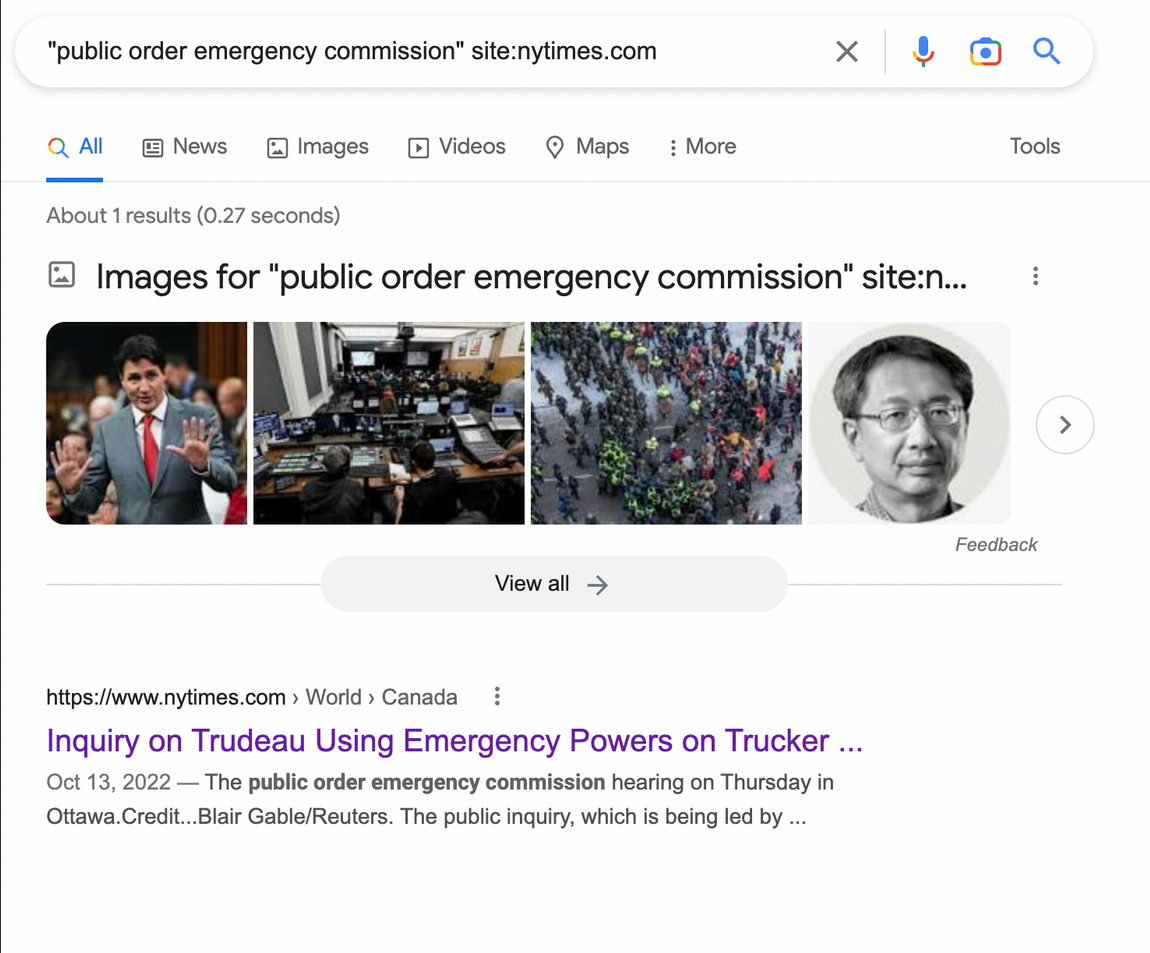
I conducted a dignified survey of a number of politically savvy people this evening, by which I mean I staggered around a bar and slurred questions at friends, and I was surprised to discover that no one has noticed the POEC. At all. Similarly, the US news media appears to have taken a nearly complete pass on covering the thing. The New York Times offered a single story, more than a month ago, describing the fact that it would be happening, and then lapsed into silence. I left some blank space at the bottom of this image so you can see all the nothing down there:

But the spectacle has been extraordinary, and it opens the curtains on the world of high-status malevolence, elite mediocrity, and news media cravenness. For background, remember that the Canadian government led by Prime Minister Derek Zoolander responded to the peaceful truckers’ “Freedom Convoy” in Ottawa and anti-Covid-measure blockades at several border crossing areas this February — the infamous bouncy castle protests — by invoking Canada’s Emergencies Act, for the first time since that law was created in 1988. That declaration of a national emergency allowed the government to exercise extraordinary power, most infamously in the form of an order to Canadian banks to completely freeze the bank accounts of protest participants. Zoolander lost his state of emergency as the Canadian Senate signaled its growing alarm at the decision, after a shameful vote in the House of Commons to affirm the declaration. The state of emergency was declared on February 14, and revoked on February 23.

Now comes the second act. The invocation of the Emergencies Act triggers a legal duty to review that decision after the fact. Here’s the directive calling the Public Order Emergency Commission into being.

So the commission is meeting, with testimony from government officials, and — this is the important part — with cross-examination from lawyers representing the targets of the declaration of emergency. In effect, the truckers are in the room; their representatives can ask questions of the government officials who did things like ordering banks to take their money because they disagreed with the government.

If you read the mainstream Canadian press, which pisses me off every time I try to do it, this means that the moronic lawyers for a bunch of idiotic terrorists are being pointlessly mean to senior government officials. Conspiracy theories! Debunked claims! I mean, truck drivers versus respectable figures, amirite? All the usual deployment of marking language is in effect, telling readers what to think about what’s happening while carefully limiting their description of what’s actually happening.

[…]

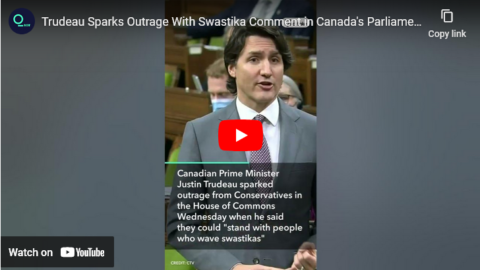
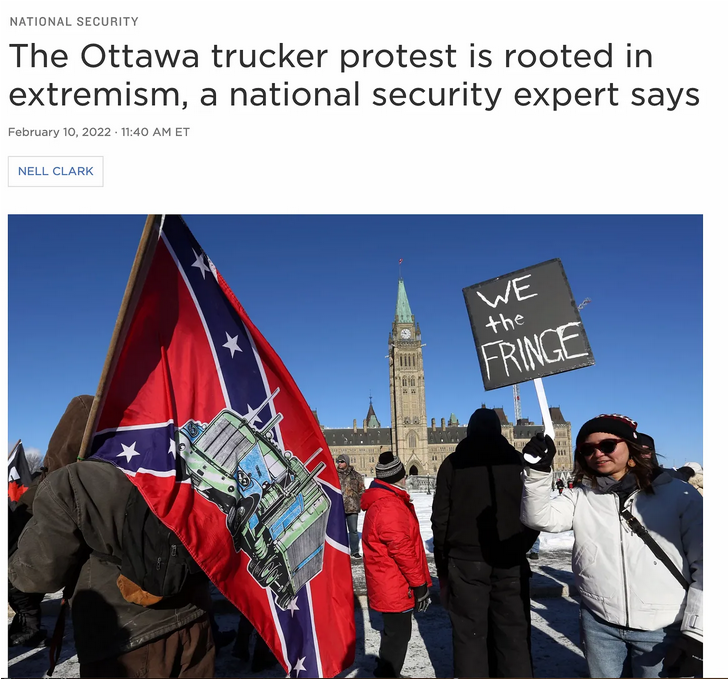
And finally, most remarkably, if you followed the Emergencies Act debate in the House of Commons back in February, you’ll recall that Prime Minister Zoolander and his ministers responded to every criticism and question regarding their handling of the convoy by saying that Canadians won’t stand with people who carry Confederate flags, and with “those who fly swastikas”.

That’s how they framed the entire event, full stop: the truckers, the swastika people. The anti-vaccine-mandate Nazis!

The news media picked up that framing and ran with it, non-stop, pounding the message that the truckers were flying Nazi symbols and Confederate flags:

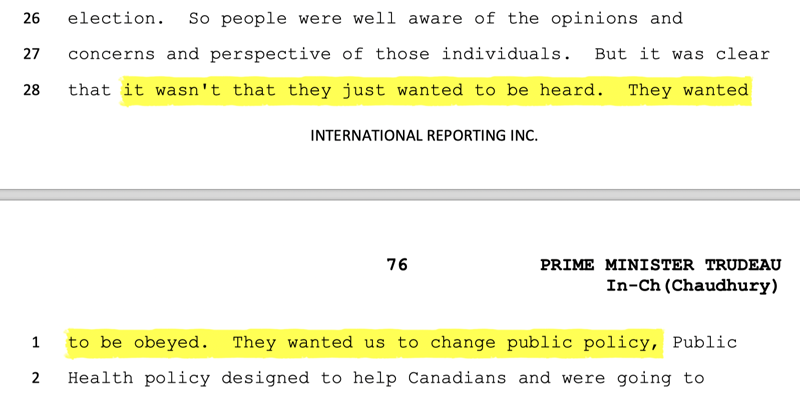
Now: Miller said, before the commission, that he knows the identity of the people who carried those Nazi and Confederate flags in Ottawa — and that they’re employees of a public relations firm that was working on behalf of officials in the Canadian government.

November 19, 2022

“But actually, vat ve haf to confront is ze deep, systemic, and structural restructuring of our world”

Because, as Chris Bray points out, there’s no point in restructuring the non-structural structures or something…

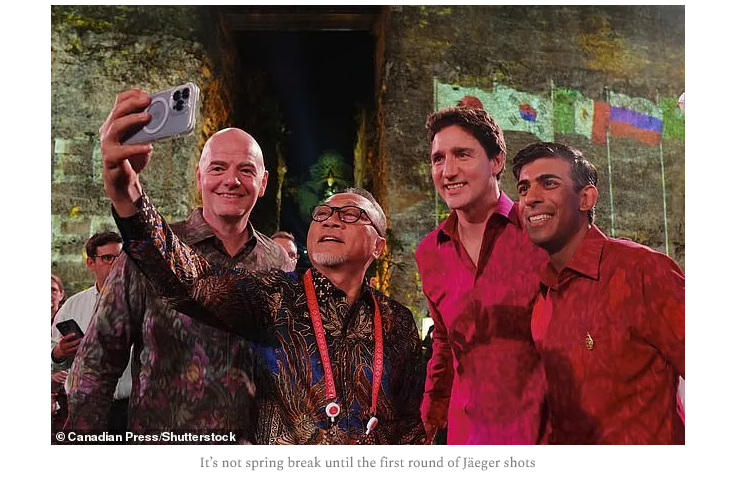
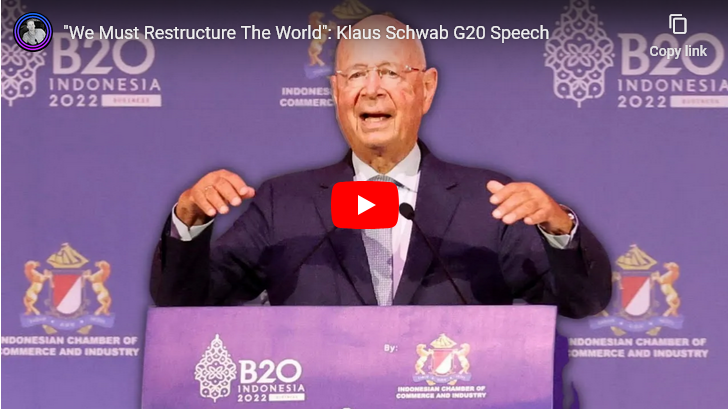
The G20 leaders flew to Bali this week to cosplay social repulsiveness and to hear from Klaus Schwab, who has no government position or formal place in the G20, making the G20 gathering a kind of executive committee meeting for something that rhymes with “Morld Meconomic Morum”.

The terrifyingly vacuous Bond villain said that ve must fundamentally restructure ze vorld, flattering the geniuses like Justin Trudeau and Joe Biden who will now use their personal wisdom and strength to do the restructuring.

(That’s an excerpt — the whole thing is here, if you want to punish your mind.)

There’s so much to love in this babbling, starting with the fact that the wealthiest and most powerful nations in the world can’t manage to deliver decent audio. But listen to what the man says:

1.) Looking out into an audience of the world’s major national leaders, he says that we face a global “multi-crisis”, made up of “economic, political, social, and ecological, and institutional crisis”.

Accepting the premise for the sake of argument, who caused all that crisis? Hello, leaders of the ruined world, I honor your wisdom and clarity, and turn to you to fix your broken countries that you’ve been leading.

2.) “But actually, vat ve haf to confront is ze deep, systemic, and structural restructuring of our world. Und zis vill take some time! Und ze vorld vill look differently, after ve haf gone through zis transition process.”

This is all of Klaus Schwab in three sentences: We must do structural restructuring, see, not non-structural restructuring. And after we have completely, deeply, systematically restructured literally everything in the entire world, the world will look — wait for this, because this is insight from the most renowned of all the experts, a deep mind who you may struggle to follow — different. Yes, changing things a lot makes them not be the same. Und zis is vy Klaus Schwab receives ze big bucks! You and I could not think at this level! Stand at attention!

3.) “Politically, the driving forces for this political transformation, of course, is the transition into a multipolar world, which has a tendency to make our world much more fragmented.”

Political fragmentation, then — the transition into multipolarity — causes fragmentation. The fragmentation into multipolarity makes the world fragmented, thereby, you see, fragmenting it. Careful, Klaus, you’ll accidentally write a whole Thomas Friedman column with your mouth.

The man is like a novelty gift with a pop-up clown inside it: You press the button, and it makes nonsensical streams of word-sounds. Fortunately, however, Klaus was speaking to an audience of Joe Biden, so I’m sure it sounded deep in the room.

November 9, 2022

Liberal political fortunes ride “especially women in the suburbs of the Greater Toronto Area” … and those women are angry right now

Filed under: Cancon, Economics, Health, Media, Politics — Tags: , , , , , , — Nicholas @ 03:00

In The Line, Ashley Csanady has some advice for Justin Trudeau in the lead-up to the next federal election that he really needs to pay attention to:

Poll after poll has told us the Liberals lost white male voters a long time ago, and their electoral fortunes, especially in Quebec and suburban Ontario, rely on women, especially women in the suburbs of the Greater Toronto Area. This isn’t to say dads and other caregivers aren’t angry. Families take many shapes and anyone with small people at home has faced the same indignities over the past nearly three years. However, politically and demographically, it’s the Ontario moms who are going to make or break the next election. And when folks are angry, it doesn’t matter who the incumbent is, they are wont to vote them out.

Nor is it not just about the children’s pain meds.

It’s about the fact we can’t find antibiotic eye drops over-the-counter either (a shortage one pharmacist told me is even worse than the one for pain and fever meds for the wee ones). Another shortage that means we must then turn to an already over-burdened health-care system to get a prescription for a medicine that may or may not be in stock.

Oh, and if that respiratory virus going around turns nasty, we aren’t even certain there will be a hospital bed for our babies when they need it most.

Then there is the infuriatingly slow roll-out of affordable childcare in this province. Parents once again caught between the feds and the province in a battle that may drag out the process so long that many expecting relief will see their kids off to junior kindergarten before it arrives.

Grocery bills are skyrocketing, and while I admit I’m privileged enough to absorb the eye-popping increases, so many families simply cannot. Imagine telling a picky toddler they can’t have their favourite snack because you can’t afford the crackers.

Now, Ontario moms had to deal with yet another disruption to their kids’ schooling, which threw their work lives into chaos once again. More disruptions are possible should bargaining fail again. This just after many women who left the workforce or took a step back from their careers during the pandemic were just getting back into the swing of things.

I made this point — that Ontario moms are angry and much of that anger is directed at political leaders, but I don’t expect it to fall on Ontario Doug Ford — on Twitter a couple weeks back. For this, I was “reminded” — more like chided — that many of these challenges are Mr. Ford’s fault. Or global challenges no logical person could blame the prime minister for. The partisans in my mentions were right on both counts. But here’s what they got wrong:

It doesn’t matter if I’m being “unfair” to Mr. Trudeau, because politics is unfair.

And as for Mr. Ford’s share of the blame, voters punish who’s up next at the ballot box, especially in a crisis. They had a chance to take out their rage on the PCs in June. They didn’t. So who does that leave up next?

October 23, 2022

“It’s starting to be noteworthy how often people in government record their important conversations”

Filed under: Cancon, Government, Liberty, Media, Politics — Tags: , , , , , — Nicholas @ 03:00

From the kindness of his heart, Paul Wells decided to make this column available to cheapskate non-paying subscribers like me because he feels it needs to be seen by a wider audience. The topic is the ongoing inquiry into the Trudeau government’s invocation of the Emergencies Act and it’s certainly promising to stay entertaining for a while (unlike the vast majority of such inquiries):

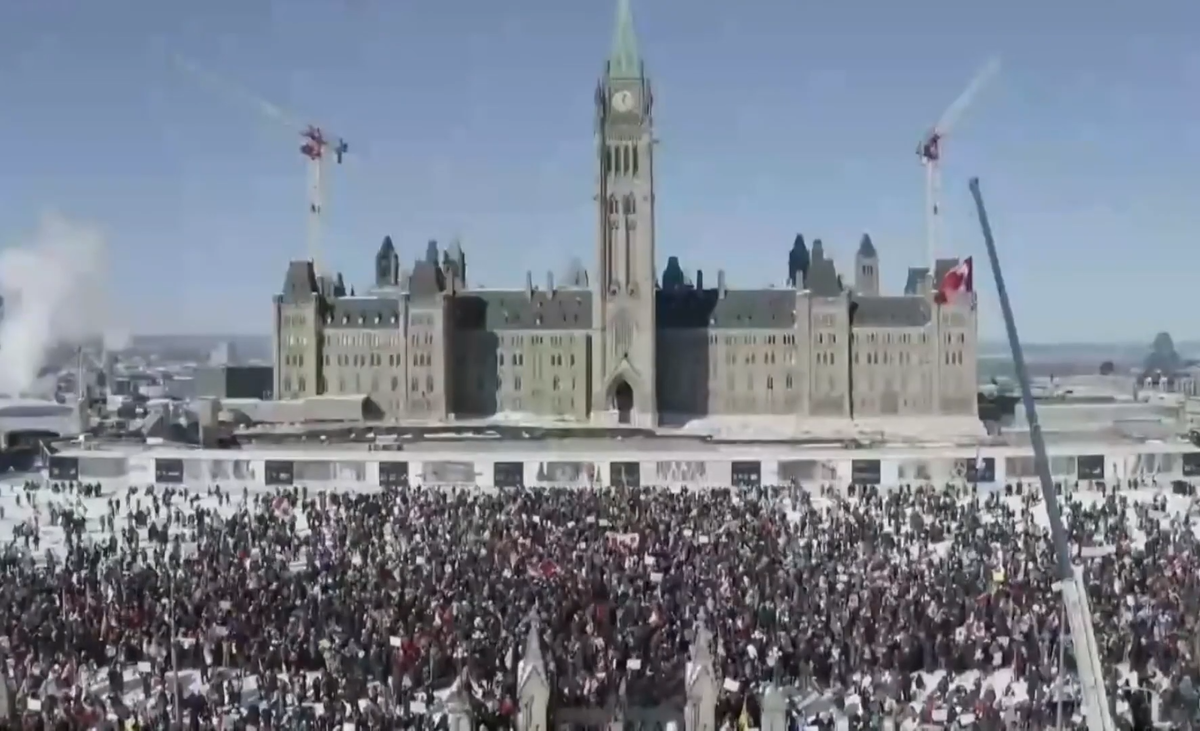
A screenshot from a YouTube video showing the protest in front of Parliament in Ottawa on 30 January, 2022.
Photo via Wikimedia Commons.

The goal of it all is to permit Rouleau to decide whether the Emergencies Act was used properly when it was invoked, for the first time in its 34-year existence, by the Trudeau government to end the mess in Ottawa’s Centretown. But it’s also a deep dive into conflicting ideas of police doctrine, the best look we’ve had at the stressed and dysfunctional city administration in Ottawa. And while we haven’t yet heard much about the Trudeau government’s processes, that’s coming. The prime minister and seven of his senior cabinet ministers, with their deputies, will testify soon.

Nobody can keep up with it. For Ottawa reporters it’s as though we’ve dragged ourselves for a decade through a desert of talking points and euphemisms into an oasis of unbelievable information bounty. The temptation is to gorge. I took Wednesday off, only to learn that Diane Deans, the city councillor who was heading the Ottawa Police Service Board when the mess began, secretly recorded the call in which she informed Mayor Jim Watson that she’d gone ahead and negotiated the hiring of an interim police chief Watson had never heard of. […]

Aaron Sorkin couldn’t have written it better. Deans tells Watson she’s found a new police chief for him in the middle of the worst public-security crises of their lives. He tells her it’s a terrible plan. She asks whether he’ll vote to remove her from her post and he won’t say, which of course is the same as saying. They talk about what to do next, in a way that leaves room for each to have an understanding of what they agreed that’s incompatible with the other’s. It’s gold. The consensus on Thursday among Parliament Hill people I talked to who’d heard the tape was that conversations like this happen all the time in workplaces across the capital, as of course they happen around the world. It’s just that usually in governments, as in most large organizations, any sign of their existence is buried under lakes of Novocaine.

It’s starting to be noteworthy how often people in government record their important conversations. Almost as though people were increasingly worried they might be lied about. When Jody Wilson-Raybould did such a thing three years ago, it was possible for her ex-colleagues to clutch their pearls and protest that such a thing just isn’t done. But after months of claims and assertions about what RCMP commissioner Brenda Lucki told the RCMP detachment in Nova Scotia, nine days after the worst mass murder in Canadian history, it’s handy to have a recording, isn’t it.

By this emerging standard, Patricia Ferguson is old-fashioned. As far as we know she didn’t record her meetings. But she did break open a notebook methodically, like clockwork, to write detailed longhand notes after her conversations. Those notes are hard to reconcile with the portrait Deans painted in her testimony a day earlier, of Peter Sloly as a lone good man, standing up for proper policing in the face of heckling and even racism from the city’s old guard.

In Ferguson’s version, it sounds like Ottawa’s cops were all reasonably good but they were cracking and colliding under immense pressure.

Ferguson described an Ottawa Police Service already worn down by the beginning of this year. There had been retirements, resignations, a high-level suspension and a suicide before and during the COVID lockdowns, followed by Black Lives Matter protests with the attendant internal soul-searching and external scrutiny every North American police corps faced.

And then the convoy hit. And then it stayed. This last was more of a surprise than it should have been.

The late stories out of Wednesday’s testimony were from Pat Morris, an Ontario Provincial Police superintendent in charge of intelligence-gathering. He dumped a bunch of old OPP “Project Hendon” reports, a term of art for the force’s intelligence-gathering operations, onto the commission server. Those reports were sent regularly to the Ottawa police as the various truck convoys approached the capital. Ferguson testified that she didn’t become aware of them until just before the trucks arrived. Which is too bad. What the OPP had found was a very large group of protesters from all over. They did not pose an organized threat of violence, though the Hendon reports acknowledged that confrontation can always escalate and that “lone wolf” extremists could well be tempted to join the crowd. But all the trucks represented a huge problem anyway, because they had rapidly growing funding — and no plans to go home at any point.

October 15, 2022

Freeland does a good job of “talking the talk”, but the government is doing anything but “walking the walk”

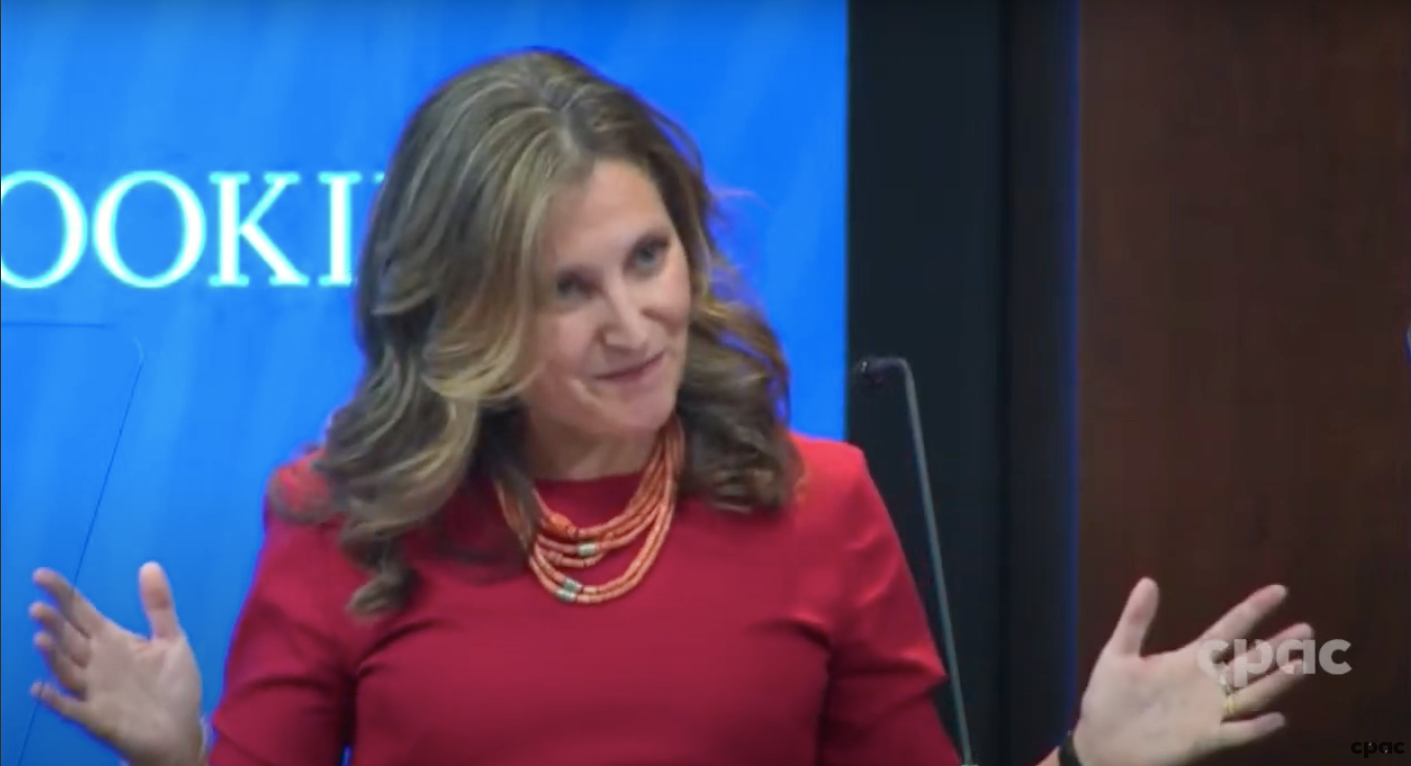
In The Line, Matt Gurney reluctantly agrees that at least some of what Deputy Prime Minister Chrystia Freeland covered in her recent speech to the Brookings Institute in Washington, DC was logical, sensible and well-crafted. What he finds mind-croggling is the chasm between what Freeland talks about and what the government she’s deputy leader of is actually doing:


Screencap from the CPAC video of Chrystia Freeland’s speech this week.

Deputy Prime Minister Chrystia Freeland went to Washington this week, to give a speech at the Brookings Institution. It is a very interesting speech. Truly — it’s interesting. You should read it.

Is it a good speech, though?

In some ways, yes. You could even go so far as to say it’s a very good speech. Freeland lays out a stark but convincing critique of more than 30 years of Western foreign policy and economic assumptions, and offers some worthwhile Canadian initiatives that seek to address what we got wrong. We were wrong to believe that history had ended, Freeland said, and must now accept that we’re going to have to fight for the world we want to live in, and to win hearts and minds. We can’t just sit around and wait for the arc of history to bend things our way — we must work consciously and deliberately with our allies to make the Western alliance stronger, richer and safer, better able to withstand the hostility of our enemies and win over the undecideds of the world.

That’s the good stuff. There is, however, some bad news.

[…]

Freeland’s speech is full of little examples like this, where the value of her ideas collides bodily with the reality of her government’s competency problems. She is saying the right things. She is also saying the things that her government could already have been doing, but either hasn’t wanted to or isn’t capable of actually pulling off.

So we’re going to spend some domestic political capital to help draw the democratic allies together, eh? That sounds great. But what if they want to sell us some cheese or fancy butter? Are we going to spend some domestic political capital on that, or nah? Freeland says we must “deepen and expand” NATO and our other alliances, which also sounds super, but we’re already seeing signs that our allies are increasingly cutting us out of the loop and forming new Canada-free forums because we simply aren’t interested in deepening or expanding anything, and don’t add anything but an extra meal tab when we show up for the family photo. Freeland says that adapting to our changing world order is “one of our most urgent tasks”. Okay! Again, that sounds fantastic, but are we going to do a defence policy review? A foreign policy review? Are we going to spearhead any new initiatives? Are we going to build out our military, expand our diplomatic corps, and invoke that famous convening power in a way that tangibly helps? Or is this one of those things where the urgency is in the saying aloud before a well-heeled crowd, but not so much in the doing?

Indeed, this goes well beyond what I’d call this government’s meta-failure: a strong preference for saying the right things in place of doing the right things, but still expecting full credit for said things, as if they’d actually pulled it off. That problem is bad enough, but on top of that is layered the very real concerns I and many others have about our state capacity. Even if we chose to spend political capital to get things done, and then tried really hard to succeed, could we? I know it’s a bit of a deep cut now, but I wonder if everything Freeland wants to do will be charitably deemed “underway with challenges” by the time the war in Europe enters its second year, or fifth, or tenth.

There’s a line in Freeland’s speech that really jumped out at me. Early on, she’s talking about the assumptions many of us in the West had about the “end of history” — the proclaimed permanent triumph of democracy and capitalism after the end of the Cold War. “It is easy to mock the hubris and the naiveté which animated that era”, she said.

She’s right! Here’s the thing, though: it’s equally easy to mock the hubris and naiveté of a Canadian deputy PM who flies to Washington to lay out a vision of allied solidarity and hard work that her own government has yet to demonstrate the slightest interest in putting into action. Her government’s own record undercuts her (truly) very fine words. Canada could be leading by example here. Instead, Freeland is giving a speech about the things we ought to be doing, and could already be doing, but aren’t. The D.C. audience may not know enough of her government’s record to mock the hubris and naiveté; we Canadians have no such luxury of ignorance.

I’ll say this for Freeland: I believe she is sincere. I believe she means what she says, I believe she has thought about these issues long and hard, and despite my previously acknowledged quibbles, it is a damn good speech. The problem, in this case, isn’t the message, or even the messenger. The problem is who the messenger works for.

October 13, 2022

Are we to believe that Prime Minister Trudeau lied about the Freedom Convoy? To the fainting couches!

Filed under: Cancon, Government, Media, Politics — Tags: , , , — Nicholas @ 03:00

Some recent revelations show that Prime Minister Justin Trudeau was … less than perfectly honest … about the intelligence reports he was receiving about the Freedom Convoy:

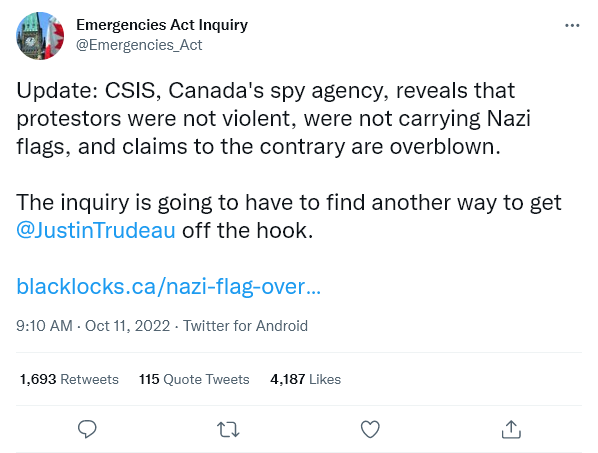
It has now been revealed that statements by Prime Minister Justin Trudeau associating the “Freedom Convoy” with Nazism were unfounded, according to Canadian Security Intelligence Service (CSIS) documents published by Blacklock’s Reporter.

On January 31, 2022, Trudeau conflated support for the “Freedom Convoy” with “Nazi symbolism” in his first press conference addressing the massive anti-mandate demonstration that captured the world’s attention in the first two months of the year.

Trudeau also stated at the time that he would not meet with the truckers because of their supposed “hateful rhetoric” and “violence towards citizens”, behavior he consistently implied was a core aspect of the movement’s strategy to put an end to COVID jab mandates nationwide.

Contradicting Trudeau’s characterization, the now-revealed documentation from CSIS, dated February 2 – just two days after the prime minister’s initial comments – explain that the protest was predominantly comprised of “patriotic Canadians standing up for their democratic rights” and not of those holding extremists beliefs.

Detailing how the presence of bigoted imagery is “not unique” when it comes to large-scale protests, CSIS also noted that the presence of swastikas on some flags was “not necessarily to self-identify as Nazis but to imply the Prime Minister and federal government are acting like Nazis by imposing public health mandates”.

It was therefore the conclusion of CSIS that while some attendees had manually added swastikas to flags, it was to associate Trudeau with Nazism as a statement of their opposition to the ideology.

Two weeks after the CSIS report was produced, Trudeau doubled-down on his conflation of the Freedom Convoy with Nazism, accusing the Conservative Party of Canada, and in particular Jewish MP Melissa Lantsmann, of standing “with people who wave swastikas”.

October 12, 2022

The two traditions of the American political left

Filed under: Government, Media, Politics, USA — Tags: , , , , , — Nicholas @ 03:00

Chris Bray responds to a post by Leighton Woodhouse that declares that “left libertarianism” has won the battle for the soul of the American left:

I see two traditions on the American political left.

One is a tradition skeptical of authority, or aggressively hostile to it: Striking miners battling Coal and Iron Police, or Pinkertons, or Colorado sheriffs, or the National Guard; Wobblies fighting cops in the street; Great War-era socialists attacking the military draft, and going to prison for it; the Weatherman planting bombs in police and military offices. This tradition on the left views government as authority, a repressive servant of the status quo — “the executive committee of the bourgeoisie”. Leftists in this tradition say that of course government serves capitalism and corporate power, and of course the government isn’t on our side. Go back to the Coal and Iron Police to see how radical labor activists saw them: state-sanctioned police, with badges, on the private payroll of the industrialists. The young radical George Orwell, writing about his time fighting in Spain: “When I see an actual flesh-and-blood worker in conflict with his natural enemy, the policeman, I do not have to ask myself which side I am on.”

The other is a tradition centered on the supposedly inherent decency, wisdom, and fairness of government, a tradition that runs through the capital-p Progressive Era and Woodrow Wilson, to the New Deal, and onward into the Great Society. In this tradition, state power is benevolence itself, and points its kindness downward. Government interposes itself between the downtrodden worker and the power of the wealthy, ensuring the dignity of the poor. Tax the rich! In this tradition, government represents our best selves, our highest yearning for a better world. Why, just look at how much more equitable the progressive income tax made our social order, back when marginal tax rates were so much more fair at the top. Government serves, protects, nurtures: It’s the tool of the ordinary man, offering the noble guarantees of Social Security and Medicaid. Of course government is on our side, fellow downtrodden, and we need more of it.

Those two traditions don’t fit together, though the obvious way to square the circle is to say that a Bill Ayers opposes the power of the state when it opposes him, and embraces it if he thinks his side has come to control it. This would mean that there aren’t two ideological traditions — just two different instrumental postures. But no one who survived the Ludlow Massacre thought the government was a benevolent servant of the working man.

As Leighton Woodhouse notes, we have a good deal of what looks like anti-authority leftism in our cities, in the form of movements that call for the end of mass incarceration, the defunding of the police, and the transition to a social services model in response to homelessness and drug addiction. In this view, rising crime and growing homelessness are signs of urban leftists rejecting authority as a tool. Homelessness is not a crime, you fascists!

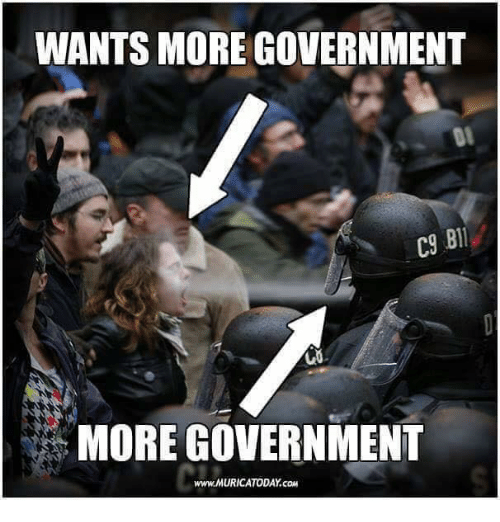
But I’ve written before about the incredible strangeness of progressive political columnists denouncing Donald Trump’s vicious authoritarianism, and then proudly pivoting to an expression of their approval of the warm and caring Justin Trudeau — who cracked down on incipient Trumpism in his country by boldly freezing the bank accounts of dangerous participants in the evil right-wing truck convoy. When government freezes the bank accounts of protesters, government is fighting against authoritarianism, obviously. More government power means less authoritarianism!

October 7, 2022

The “two movies on the same screen” effect: most Canadians see impending collapse but our “elites” think everything’s peachy

Tara Henley contrasts the reality many Canadians are facing day-to-day with the out-of-touch “laptop elites” who, as a class, did great through the last two and a half years and who have no clue at all why anyone would see the state of the country as anything like a collapse:

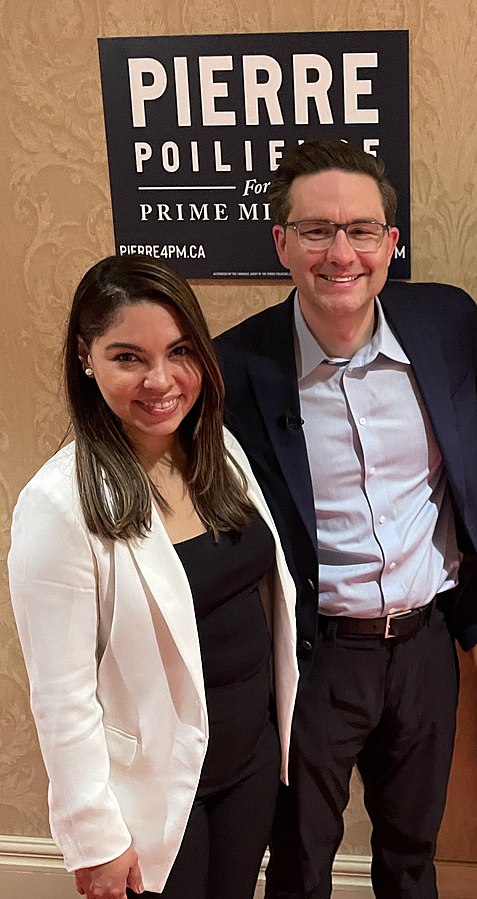
Pierre and Ana Poilievre at a Conservative leadership rally, 21 April, 2022.
Photo by Wikipageedittor099 via Wikimedia Commons.

There has been much discussion lately about the state of our nation — and whether or not we, as a society, are in decline.

Former journalist and Justin Trudeau speechwriter (and current Substacker) Colin Horgan published a provocative essay at The Line last month, arguing that our country is vulnerable to extremists who believe that “the current system of liberal democracy is inherently corrupt and corrupted, verging on collapse, and that, in the extreme, its downfall can and should be hastened by acts of violence”.

Horgan worries that Conservative leader Pierre Poilievre — who’s been actively speaking to this ambient vibe of distress and dissatisfaction — could accelerate such destabilization.

Poilievre does not say extreme things, Horgan concedes, but Poilievre’s message is “still poison” because “what he telegraphs is the vision of a social order at a tipping point, with the suggestion that it can be easily pushed over”.

In short, Poilievre has tapped into “an Internet language of decline”.

There’s a thriving cottage industry in the Canadian legacy media doing everything they can to tar Poilievre as a Canadian Hitler and to continue the re-typing and re-phrasing of government talking points for the mass market. The government subsidies to “approved” media outlets will help keep the lights on a bit longer as they continue to lose audience share — and trust.

Our quality of life has been eroded for some time now. Wages have been stagnant for decades. Precarious work is the order of the day, both for the working class and professionals. Rents and property prices are through the roof; according to the Globe and Mail, since 2000, domestic home prices have increased by 420 percent. Inflation is high. Gas is expensive. Food costs are up. We are coping with a crisis of social isolation. Our opioid epidemic rages on.

Meanwhile, pandemic policy has benefited the laptop class and harmed the most vulnerable among us. (See lockdowns and school closures, for starters.)

Indeed, there has been extreme winners and losers during the COVID era, which saw a massive transfer of wealth upwards. Billionaires in this country, in fact, saw their wealth increase 68 percent during the pandemic.

Should we be surprised that those on the losing end are expressing their frustration?

[…]

Things have only gotten worse as the pandemic has dragged on and citizens have been hit with high inflation and rising interest rates (while also staring down other looming financial catastrophes).

According to an Angus Reid poll out this week, nine out of ten Canadians have cut their household budgets due to inflation and high prices. And 46 percent of Canadians say their personal finances are worse off now than they were at this time last year.

But if the material conditions in this country are dire, so too is the national mood.

In fact, there is a gaping wound at the centre of our national psyche.

Essential workers have laboured throughout the COVID crisis, endangering their health and that of their families, in order to keep society running. In return for their heroic efforts, the unvaccinated among them — many of whom previously contracted COVID and have natural immunity — have seen themselves ostracized and smeared as racists and misogynists. Their fundamental values have been mocked in the public square, and their basic rights and freedoms, including freedom of expression, have been compromised. Some have lost jobs, social lives and more for declining vaccination.

To comprehend the human toll this has taken, one need only look to the grassroots #TrudeauMustGo campaign on Twitter.

The consequences of vaccine mandates should have been covered in great depth by our national press. But instead, the Canadian media largely fell down on this story, often generating coverage that uncritically reproduced the Liberal party line.

Trust in the Canadian news media is now at its lowest point in seven years.

And judging from the reader mail I get, the Liberals’ decision to turn vaccine mandates into a wedge issue has had significant social consequences — tearing apart families, communities, and workplaces in ways that may take years to recover from.

All told, what we are witnessing is not merely a state of decline. It is a form of collapse. A collapse of the social contract. A collapse of the expectations we grew up with — that if you worked hard and respected the law, you could have a home, a family if you chose, and, crucially, a say in our democracy.

What we are living through is a collapse of life as we knew it in Canada.

What was once a stable, prosperous, diverse democracy is now a nation divided, rife with fear and anger, and financial and social instability.

Not only has our Prime Minister failed to grasp this, but he’s actively stoked tensions.

September 26, 2022

Canada, a confessed “ongoing” genocidal state, has no moral grounds to criticize China, Russia, or Iran

In Quillette, Jonathan Kay expresses his frustration as Canadian Prime Minister Trudeau’s performative moral posturing and virtue signalling for his globalist comrades comes back to bite him in the ass … again:

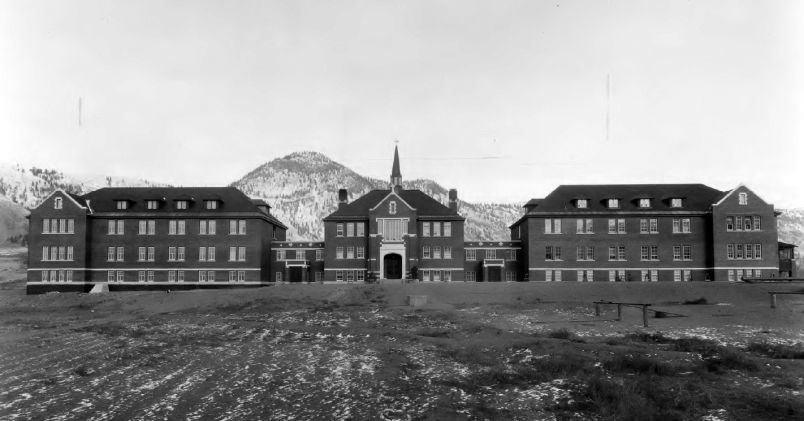
Kamloops Indian Residential School, 1930.
Photo from Archives Deschâtelets-NDC, Richelieu via Wikimedia Commons.

… [Iranian President Ebrahim Raisi] also threw in an attack on Canada’s treatment of Indigenous peoples, declaring that “bodies of hundreds of children were discovered in mass graves in a [former residential] school.”

The issue of supposed unmarked Indigenous child graves dominated the Canadian media in the latter half of 2021. But as I reported in Quillette several months ago, no “mass graves” were ever found. In fact, even the Indigenous groups that initially reported ground-penetrating radar (GPR) survey results consistent with the possible presence of unmarked burial sites weren’t talking about “mass graves”. Rather, the invented mass-graves claim was popularized by a badly botched New York Times May 28th, 2021, story written by reporter Ian Austen. (For a definitive debunking, see Terry Glavin’s account in Canada’s National Post).

In the 16 months that have passed since the unmarked-graves story broke in late May 2021, not a single body has been found, nor any human remains. And so even the less sensational allegation that 215 individual unmarked child graves lie buried under the grounds of a former Indigenous residential school in Kamloops, British Columbia, now seems doubtful. Nor have bodies or human remains been recovered at any of the other former residential-school properties where GPR surveys were conducted.

Yet that didn’t prevent Prime Minister Justin Trudeau from lowering flags on Canadian public buildings for more than five months, nor from speaking publicly as if bodies were already being dug up. And aside from the National Post, not a single major Canadian media outlet has admitted its role in feeding the unmarked-graves social panic that exploded last year, and which often included lurid speculation that the supposed grave sites not only contained the remains of Indigenous children, but that these children had been murdered through methods worthy of a horror-movie plot.

Given this, what can Canadian public figures say to Raisi now that he’s throwing spurious moral equivalences into our faces? Nothing. In making the false claim that “bodies of hundreds of children were discovered in mass graves in a [former residential] school”, the man is merely reading our own officially sourced misinformation back to us.

This isn’t the first time that Trudeau has managed to maneuver Canada into this kind of mortifying position vis-à-vis the world’s tyrants. Last year, when Canadian lawmakers voted to denounce China’s treatment of Uighurs in western Xinjiang as a form of genocide, Trudeau and his Cabinet abstained. The suspected reasons for that move were complex. But they included the fact that Canada was, by its own description, morally compromised on the genocide file: Back in 2019, Trudeau had explicitly acceded to the (absurd) claim that Canada, too, was guilty of “genocide” — this one against Indigenous women. Indeed, according to the official report that precipitated Trudeau’s mea culpa, this supposed Canadian genocide remains ongoing.

September 8, 2022

Surprise! Liz Truss can successfully locate Canada on a map!

In UnHerd, Marshall Auerback details some of the Canadian connections of Britain’s new PM:

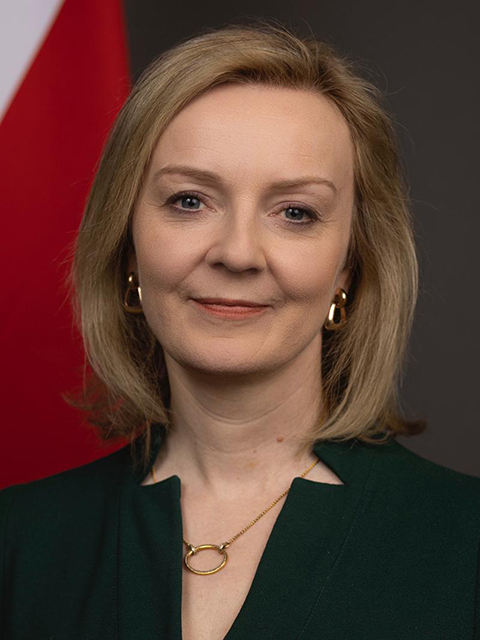
British Prime Minister Liz Truss, 1 May 2022.
Official portrait via Wikimedia Commons.

Faced with soaring costs of living, increased collateral damage from the war in Ukraine, and widening national inequality, Liz Truss seemed curiously optimistic in her first speech as Prime Minister. What could possibly be driving such bullishness? Absent any sign of a coherent plan of action, we might find her motivation in an Instagram post from 2018, where Truss cited the time she spent in Canada as a teenager as “the year that changed my outlook on life … #pioneercounty #optimism #maplespirit”.

As profound an impact as that year might have had on Truss’s optimistic psyche, she would do well to look more closely at Canada’s faltering “success story” in recent years. Today, the country is no longer the land of milk and honey (even if it does still produce a fair amount of maple syrup), but suffers many of the same problems as the UK, and a number that are significantly worse: rising inflation, profound income inequality, the challenges posed by climate change, and an increasing host of social problems — not least the mass stabbing spree last weekend in Saskatchewan that left 10 people dead.

However, to the extent that the Trudeau Administration has attempted to remedy some of these problems, there are clear lessons for Truss. Unlike in the UK, many of Canada’s energy problems are largely self-inflicted, a result of a progressive government ignoring its comparatively resource-rich environment, even as its European allies (including the UK) suffer severe consequences of being cut off from Russian gas supplies and the corresponding rise in energy prices.

A few weeks ago, German Chancellor Olaf Scholz visited Canada to secure more gas for his country. This being Canada, the German Chancellor was treated politely, but the underlying plea for Ottawa to increase liquefied natural gas (LNG) production to offset the loss of Russian gas was given short shrift. The Canadian government, one of the biggest producers of natural gas in the world, has misgivings about whether becoming an even bigger producer and exporter would actually be profitable.

Leaving aside the broader debate as to whether the dangers of man-made climate change have been confounded with natural weather and climate variability, natural gas, although a fossil fuel, emits roughly half the amount of carbon dioxide when combusted in a new, efficient natural gas power plant. This would suggest that Canada’s absolutist stance is not only a major geopolitical mistake, but also an economic own goal. The country is foregoing a major growth opportunity, which would both alleviate global inflationary pressures by increasing the supply of natural gas to the global markets, while simultaneously enhancing the prospect for a plethora of new high-paying jobs that would buttress Canada’s declining middle class.

Canada is also home to substantial supplies of copper, nickel, lithium, and cobalt — all of which will be essential to producing the infrastructure required to transition from fossil fuels to greener sources of energy, such as wind and solar. But mining itself remains a “brown” industry, one that creates substantial carbon emissions and environmental degradation. It seems conceivable, then, that the Trudeau government’s green energy purity could soon discourage the increased mining activity needed to facilitate this energy transition.

[…]

Yet in many respects, Canada’s problems are more easily resolved, given that so many are self-inflicted. And not only are there ample natural resources to offset the current energy crisis, but also broad institutional mechanisms to alleviate regional inequalities. Canada, then, cannot provide all the solutions that Truss needs. For all her boosterism, Britain remains a country fatigued by her party’s ongoing political churn and the non-stop travails still emanating from Brexit. If she is to succeed, Truss must begin by removing her rose-tinted view of Canada. The Great White North can certainly serve as an inspiration — but that is all. Canada may have changed Truss’s “outlook on life”. But if Britain is to “ride out the storm”, as she suggested yesterday, an entirely new approach is needed.

August 17, 2022

To understand Justin Trudeau, you need to look at his relationship with his mother

Filed under: Cancon, History, Politics — Tags: , , , , , — Nicholas @ 03:00

Janice Fiamengo on how a lot of Justin Trudeau’s personal quirks may be directly traced to his upbringing and particularly his relationship with Margaret Trudeau:

Malia and Sasha Obama talk with Prime Minister Trudeau and his mother Margaret Trudeau during a reception on the Truman Balcony, 10 March, 2016.
Official White House photo by Pete Souza via Wikimedia Commons.

Cue the popularity of Justin Trudeau, who at first seemed all sincerity, even to the point of public spectacles of tearfulness and child-like ebullience. He was the first Canadian leader to march in the Gay Pride Parade as if it were his natural milieu, not merely a vote-seeking opportunity. His enthusiasm for Bollywood-style gyving, Hindu fancy dress, and participation in Islamic prayer, though heavily criticized, seemed genuine, at least in a high-school drama teacher way.

When he refused to give a real answer to the question of why it was necessary to appoint a gender-equal cabinet as one of his first actions upon assuming office in 2015, his insouciant quip “Because it’s 2015” suggested an unstudied feminist commitment. His comments after the Boston bombings emphasized that empathy rather than harshness was the appropriate response to murderous acts of terror.

But there has always been a harsher side to Trudeau, a fondness for dictators, an attraction to brute power, and an inability (or unwillingness) to hide his contempt for political opponents. Perhaps his empathy for the Boston bombers was respect or even admiration for their willingness to use violence. Many were shocked by his open admission that one of the countries he most admired was the “basic dictatorship” of China. When churches burned across Canada in the summer of 2021 in response to the alleged discovery of “mass” graves at a residential school (a discovery that has not yet yielded a single body), Trudeau condemned the arson but hastened to say it was “understandable”. About Canadians who chose not to take the Covid-19 vaccines, he could not control his impatience, unleashing a volley of stigmatizing, scapegoating rhetoric. For the truckers who camped out in Ottawa amid a sea of Canadian flags and bouncy castles demanding vaccine mandates be revoked, he had a brutal contempt.

Which is he: the soft feminist with the fancy socks, joy in Gay Pride, and empathy for the marginalized? Or the hard, contemptuous leader who could oversee without flinching a violent RCMP crackdown on the Convoy protest that saw an Indigenous woman trampled under the hoofs of a police horse?

The answer is: both. A clue to his doubleness may be found in his relationship with his mother.

I recently watched an old interview with Margaret Trudeau that offers some illuminating glimpses into the character of the woman who mothered Justin. The interview took place in 1979, after Margaret had left Pierre Trudeau, Justin’s father, who was Prime Minister of Canada from 1968 until 1982. Pierre had primary custody of their three young children.

The interview shows a very beautiful woman whose consciousness of her attractiveness is a paramount part of her identity. She is not, as has sometimes been claimed, stupid; many of her answers to the interviewer are clever in the manner of a wayward adolescent convinced she can get away with nearly anything so long as she charms. At times she flirts openly, smiling suggestively, tongue protruding through her lips, confident in her sexual power.

The overall impact of her answers is horrifying for a viewer who fails to be enchanted. This is a woman who takes herself seriously but evidently does not take seriously her position as a mother to three young sons (all of them under 10 years old at the time) — and certainly not her position as estranged wife to the leader of the country.

She boasts girlishly about smoking marijuana, listening to psychedelic music, and giving up guilt over failing to meet others’ expectations. Spouting feminist rhetoric about being true to herself, she makes clear that she is more interested in having lovers than in looking after her children. She dismisses her husband’s shock at her unfaithfulness as owing to “old-fashioned principles of fidelity”, and indicates that Canadian society would be better off if more people heeded their “feelings” rather than stodgy moral precepts.

I cringe to think of Justin Trudeau, even today, watching this interview. The woman who presented herself therein — self-preoccupied, proudly promiscuous — must also have been evident to the son who watched her flamboyantly “find herself”, feminist-style, as his parents’ marriage crumbled.

H/T to Brian Peckford for the URL.

August 1, 2022

The fertilizer front in Justin Trudeau’s renewed war on Canada’s farmers

Filed under: Cancon, Economics, Environment, Government, Politics — Tags: , , , — Nicholas @ 03:00

In The Line‘s weekly dispatch, one of the items discussed was the Trudeau government’s decision to follow the Netherlands and Sri Lanka down the path of ensuring that millions may be at risk of starvation to mollify the global warming lobby and the WEF:

In 2020, the federal government announced a plan to reduce greenhouse gas emissions arising from fertilizer application by 30 per cent below 2020 levels within the next decade. The targets, then fairly vaguely spelled out, have been a subject of considerable consternation among farmers in the wheat belt ever since. However, as the feds moved into a consultation process, set to end by the end of August, it’s now become clear that those targets are a little more set in stone than they had previously feared. Further, the “consultation” process is looking increasingly tokenistic.

“The commitment to future consultations are only to determine how to meet the target that Prime Minister Trudeau and Minister Bibeau have already unilaterally imposed on this industry, not to consult on what is achievable or attainable,” according to a press release sent out jointly by the Alberta and Saskatchewan agriculture ministers last week.

Why does this matter? Well, firstly because these emissions targets are coming on top of tariffs placed on chemical precursors to fertilizer coming out of Russia. And further because according to industry lobbyists and many farmers themselves, it’s not going to be possible to meet these kinds of emissions targets without significantly reducing fertilizer use — which is already efficiently applied owing to the fact that the stuff is expensive.

The meat of it (ha!) is that if we reduce fertilizer use further, there is significant fear that we will cut into food yields, just as the world’s growing population is facing a possible famine thanks to war. It’s not like these concerns are temporary, either. In the long run, climate change is only going to add to food insecurity; and Canada may be well-positioned in a changing climate to address the global food supply.

And, yeah, all of this is very ironic. Of course we should be doing all we can to cut emissions, but, perhaps — just hear us out, here — given the broader geopolitical realities, agriculture is not the most obvious or well-placed target for those emissions cuts. Especially considering Canada still accounts for a very small fraction of global greenhouse emissions overall. (Yes, we know our per-capita emissions are high. That’s the unfortunate consequence of living in a very cold, poorly populated expanse. However, our actual population remains low. These two facts are not coincidences!)

Now, if we were going to give the federal government some benefit of the doubt, we’d point out that we’re still in a consultation process. We’d also further point out that if the government wanted to reduce agriculture emissions, there are probably some smarter ways to go about it — equipment upgrades, for example. Investments in soil testing could go a long way to helping farmers apply nitrogen more efficiently, which could help them increase yields while maintaining profits. Win-win!

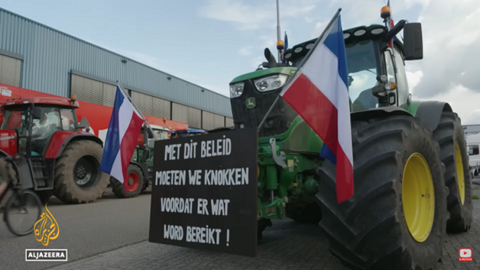
Yet, from what we’ve seen from this government since the last election, we’re not betting on sensible, win-win solutions. Farmers in the Netherlands have been so put out by similar climate-change inspired emissions cuts that they’ve engaged in convoy-like protests themselves. Further, we suspect the Trudeau government salivates at the prospect of a bunch of another round of spitting-mad, truck-driving farmers rolling into Parliament to protest climate change policies. Every pissy article in the Federalist is a win to this cabinet.

If you’re angering the right people, you’re winning, right?

And how do we imagine arcane policies like this are going to play out internationally in the next three to nine months, if we witness more and more developing countries closing borders to grain exports and significant swathes of the developing world look set to starve? How well are these climate-change policies going to sit against real, hard geopolitical realities like a frozen Europe in winter or significantly curtailed industrial production in Germany, leading to further supply chain issues and economic recession?

If this government is not careful, they’re going to drag a lot of the progressive movement — and its genuinely very noble ideals — along with it. This is a government that appears to have said “fuck it,” retreating ever deeper into self-reinforcing ideological bubbles as the world decides it has much bigger problems than those that the Trudeau government seems able to address. To put it bluntly, how are pious climate-change goals going to look if they have to be measured against piles of emaciated bodies in the developing world? Because that’s the danger. Nobody in Canada is going to starve.

July 26, 2022

Is Trudeau channelling Caligula? – “Let them hate me as long as they fear me”

Filed under: Cancon, Government, Liberty, Media, Politics — Tags: , , , — Nicholas @ 03:00

Spencer Fernando, writing for the National Citizens Coalition:

When trying to ascertain where the Trudeau Liberals are trying to take the country, it’s important to look at the foundations of Justin Trudeau’s worldview.

Clearly, he was heavily influenced by his father, someone who continuously expanded the power of the state.

Justin Trudeau’s father was well known as a Communist-sympathizer, being a big fan of both Fidel Castro and Communist China.

Note, the version of the CCP that existed in Pierre Trudeau’s era was even more brutal than the CCP as it exists today. At the time, it was not far removed from the time of Mao’s Great Leap Forward, a government-imposed “reshaping of society” that led to roughly 45 million deaths.

To look at that, and still be a fan of the Chinese Communist Party, is to show a deep ideological commitment to authoritarian socialism and a deep aversion to human freedom.

The apple clearly didn’t fall far from the tree, as Justin Trudeau praised China’s “basic dictatorship” (AKA the centralized power structure that enables horrific crimes).

Trudeau also sought to move Canada closer to China’s orbit, only giving up on that when public opinion – and a subtle revolt among some backbench Liberals – rendered it politically unfeasible.

We can see how the authoritarian socialism that Trudeau praised in China (and let’s not forget his fawning eulogy for Fidel Castro), lines up with the fear and contempt he and the Liberals have for many Canadians.

Now, let’s also note this essential point:

The Liberals continuously target the same individuals that authoritarian socialists and communists have targeted:

    Rural Conservatives.

    Private Enterprise.

    Religious Groups.

    Freethinkers.

    Individualists.

    Private Farmers.

    Rural Gun Owners.

    Independent Press Outlets.

Historically, those are all groups that the far-left has targeted when given the opportunity.

We only need to look at how the Liberal approach to Covid was modelled after the approach taken by Communist China, and how both the Liberals and the CCP have been largely unwilling to move on.

While the Liberals are more constrained than the CCP by the fact that Canada maintains some freedoms, do we have any doubt that they would be far more severe if they could get away with it?

Remember, the moment he feared losing the 2021 election, Justin Trudeau used very divisive and disturbing rhetoric (especially disturbing when seen in a historical context), and purposely sought to direct hatred and blame towards those who resisted draconian state orders.

Since then, the Trudeau Liberals – even in the face of criticism by a few courageous Liberal MPs who were quickly “put back in their place” – have almost gleefully abused their power, purposely creating an “Us vs Them” narrative designed to pit Canadians against each other.

At the same time, they’ve continued their efforts to gain control over social media, silence dissenting views, and turn the establishment media into an extension of the state propaganda apparatus.

This is all being done because they fear those who have the intelligence and strength of character to see through their agenda.

They fear you, and have contempt for you.

July 21, 2022

Prime Minister Look-At-My-Socks shocked to discover that betraying an ally has consequences

Filed under: Cancon, Germany, Government, Russia — Tags: , , , — Nicholas @ 05:00

In The Line, Andrew Potter outlines why the Ukrainian government is unhappy with Prime Minister Photo-Op’s decision to break the sanctions on Russia as a favour to Germany:

Well, one thing is for certain: There isn’t going to be a “Justin Trudeau Lane” anywhere in Ukraine any time soon.

In case you missed the drama last week, Trudeau found himself on Ukraine president Volodymyr Zelenskyy’s shit list after Canada announced, on July 9, that it would allow Siemens to return to Germany up to six gas turbines for the Nord Stream 1 pipeline that were being repaired in Montreal. Russia was threatening to shut down the pipeline and cut off the flow of gas to Germany, which is facing a very serious energy crisis.

In response, a furious Zelenskyy summoned Canada’s ambassador to Ukraine for what one presumes was a solid chewing out, after which the Ukrainian president posted a video in which he lit into Trudeau for “an absolutely unacceptable exception to the sanctions regime against Russia”. As Zelenskyy put it, the problem isn’t just that Canada handed some turbines back to Russia, via Germany. It is that it was a direct response to blackmail by Russia. And if Canada is willing to bend when its sanctions become politically uncomfortable, what is to stop other countries from carving out their own exceptions to their own sanctions, when it suits? Furthermore, Zelenskyy added, it isn’t like this is going to stop Russia from shutting down the supply of gas to Europe — the turbines were always just a pretext, an opportunity to cause strife and stir dissension amongst the countries allied with Ukraine against Russia.

Trudeau — who spent the weekend flipping pancakes at the Calgary Stampede — must have woken up on the Monday wondering what had gotten into his old buddy in Kyiv. After all, hadn’t Trudeau, along with other members of his cabinet, made it clear through their many, many tweets on the subject that Canada stood by Ukraine? Hadn’t Canada sent enough money, arms and humanitarian aid to Ukraine? Hadn’t Trudeau himself paid a visit to Kyiv in May, to re-open our embassy and to underscore just how seriously Zelenskyy should understand Canada’s commitment?

[…]

Ultimately, the problem here is a serious failure by Canada to manage Ukrainian expectations, brought about by the profound mismatch between the level of our rhetoric and the clear limits of our commitment. For Ukrainians, there is a moral clarity to the Russian invasion of Ukraine that, from a Western perspective, has not been present in any other conflict since the Second World War. Zelenskyy assumed that Canadians saw that. He assumed that if Ukrainians were going to be slaughtered, the least we could do would be to stick to our principles, even if it meant asking the population to suffer economic harms and the government to manage genuine political discomfort.

He assumed wrong.

Five months into their war for survival against the genocidal Russian regime, the Ukrainians have learned something important about Canadians: When it comes to our foreign affairs, we don’t mean what we say. When we say we stand with a country, that we fully support them, that we will help defend them or hold their enemies to account, there’s always a “but” or an “until” or an “unless”. We will stand with you, unless it’s politically difficult. We will help you, but not if it means genuine sacrifice. We will support you, until the costs get too high. Then, all bets are off.

The bigger point is this: Canada doesn’t do moral clarity anymore. Whether it is our business dealings with China, our arms sales to Saudi Arabia, or sending a diplomat to a garden party at the Russian embassy in Ottawa, we are always and everywhere hedging our bets, fudging our principles, letting down our allies.

July 3, 2022

David Warren waves the flag

As noted the other day, the official period of mourning sickness that enveloped Canada last year after the blockbuster revelations about residential schools has not been followed-up by any substantive proof of any of the sensational claims that Prime Minister Trudeau seized upon to lecture Canadians about our historical guilt (the “genocideal nation” that he claimed we were) and to haul the national flag down to half-staff for half a year. David Warren chooses to wave the flag instead:

Justin Trudeau has always had a strong affinity for the symbolic gesture, especially when the media are around to record it.

The latest trick in what we might call “eco-commie-perv agitprop”, emerged while shaming Canadian history and traditions. I’ll touch on it in a moment. It is a product chiefly of the Indian Wars of the last few years. The White Man, and more specifically when Catholic, has been accused of massacring the Native People in 20th-century residential schools, just as he did upon coming to the continent. He then ploughs the anonymous victims into mass graves, showing his affinity to, exempli gratia, the Nazis.

This propaganda campaign, which quickly reached the tedious stage, was founded on a series of oft-repeated unambiguous lies, driven into our susceptible children in our compulsory public schools, and throughout life by such agencies as the CBC. (All our significant media are now under government control, subsidy, and watch.) White men, especially the Catholics, contaminate Canadian history by their Satanic essence, according to this malicious fantasy. Goodness and innocence can be found only in their victims, the “visible minorities” (or majorities, as the case may be). Shame is inculcated among persons exhibiting the wrong race.

I write of Canada, but something similar is happening in the United States, and has been carried to Europe on the sails of Hollywood and popular “music”. Canada is, however, an extreme example — of brazen idiocy — and even to underprivileged (all-white) rural places the message is piped in. Disharmonious voices must expect state interference, and eventual arrest.

For Canada now has political prisoners, including many who participated in the Freedom Convoy of truck drivers. Tamara Lich, a prominent organizer of this demonstration, has been gratuitously jailed, though she didn’t even try to commit a plausible crime. This week she was gaoled again, apparently for receiving a freedom medal. (Persons it was in her bail conditions not to meet may have been in the audience.) She was put out of sight for “Canada Day” (the former Dominion celebration, yesterday). This manipulation of Canadian law is, sadly, no longer unprecedented. It seems to be ordered directly from the Prime Minister’s Office.

« Newer PostsOlder Posts »

Powered by WordPress