Quotulatiousness

June 23, 2022

Lucki will need to be lucky to keep her job as RCMP Commissioner

Filed under: Cancon, Government, Law, Politics, Weapons — Tags: , , , , , — Nicholas @ 05:00

In The Line, Stephen Maher covers the active collusion between the Commissioner of the RCMP, Brenda Lucki, and the Liberals in Ottawa to use the tragedy in Nova Scotia that took so many lives to push for further federal gun control measures:

It is bitterly ironic that the first female commissioner of the Royal Canadian Mounted Police may have to resign for pushing the force to be more open, but it is hard to imagine that Brenda Lucki will be able to maintain public confidence after evidence presented Tuesday in the inquiry into the Nova Scotia mass shooting.

On April 28, 2020, 10 days after a killer went on a shooting and arson rampage that left 22 innocent people dead in rural Nova Scotia, Supt. Darren Campbell gave a news conference in which he declined to reveal what kind of firearms the killer used because investigators in Canada and the United States were still trying to find out how the killer came to have them.

After the news conference, Lucki summoned Campbell to a conference call where she chewed him out for holding that information back, as the Halifax Examiner reported.

    “The Commissioner said she had promised the Minister of Public Safety and the Prime Minister’s Office that the RCMP (we) would release this information”, Campbell’s notes say. “I tried to explain there was no intent to disrespect anyone however we could not release this information at this time. The Commissioner then said that we didn’t understand, that this was tied to pending gun control legislation that would make officers and the public safer. She was very upset and at one point Deputy Commissioner (Brian) Brennan tried to get things calmed down but that had little effect. Some in the room were reduced to tears and emotional over this belittling reprimand.”

If this is accurate — and a statement from Lucki late Tuesday did not contradict it, reading in part that “I regret the way I approached the meeting and the impact it had on those in attendance” — then it is hard to see how Lucki can stay in her job. Further, the jobs of then-public safety minister Bill Blair and Prime Minister Justin Trudeau are also in jeopardy.

[…]

Trudeau and Blair are in the vote-seeking business, but Lucki is not supposed to be. If Campbell’s notes are accurate, she was confused about that, which is worrying.

We don’t know how much pressure the Liberals were applying. They clearly wanted to make a big splash with their gun announcement, and it would have had more impact if they had been able to say that they were banning the very guns used by the killer.

Pierre Poilievre has called for an emergency committee meeting to look into the matter, and that seems like a good idea. If Lucki was clumsily freelancing, seeking to curry favour with her bosses, she needs to go. If Blair and Trudeau were putting the muscle on her to release politically helpful information even at the risk of damaging an investigation, they need to go. Either way, we need to find out.

June 19, 2022

Has anyone checked the “Best Before” date on the federal government lately?

In the free-to-cheapskates abridged edition of The Line‘s weekly dispatch, the editors wonder if the Trudeau government may have inadvertently entered the end-game phase of its life:

Your Line editors have grown wary of making firm predictions. We’ve been burned a few times before, plus, the last two years have been so wild it’s almost impossible to take seriously any prediction with a time horizon longer than a week or two. All that being said, one of your Line editors did have something of a prediction this week. Honestly maybe something more akin to an intuition or a Spidey sense tingling. But as he watched the news over the last 10 days or so, he found himself wondering: is this it for the Liberals? Is this the start of a death spiral? Is this what we will look back to in years to come as the moment they crossed the point of no return?

The Liberals started to look and feel really burnt out and exhausted this week. Of course they’re burnt out and exhausted. It’s been a hellish two years for everyone, and they were dealing with the Trump circus for years before that. They haven’t usually looked exhausted, though. Even when they have no doubt been running on adrenaline, existential terror, caffeine and digestive bile, they kept running. That’s not sustainable forever, though, and sooner or later, a government slips into the terminal phase of democratic politics. We’ve all seen that before, and we recognize the signs when we see it.

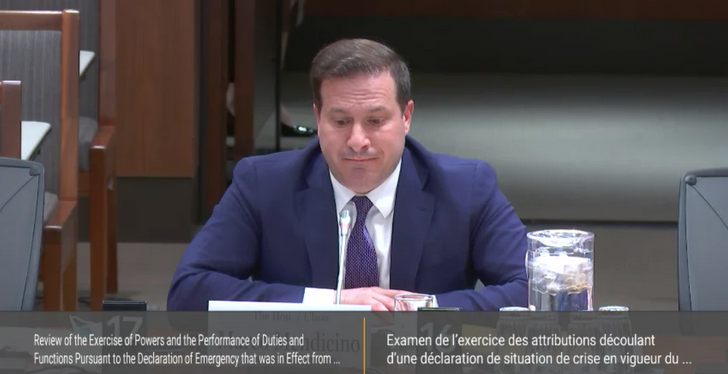
Just think about the stories over the last few days. Public Safety Minister Marco Mendicino has come in for widespread criticism, and not just from here at The Line, for his handling of the gun control and Emergencies Act files. Chrystia Freeland, for her part, made a wholly uninspiring appearance before the committee investigating the Emergencies Act, and followed that up with a speech to a Toronto business crowd where she rolled out the Liberal plan to help Canadians cope with inflation. It was nothing but a repackaging of previously announced initiatives, some of which are fine on their merits, but none of which, even in total, will make a dent against inflation. Mélanie Joly’s office, as noted in greater detail in the full, subscribers-only version of the dispatch, has become a complete clown show of absurdity this week. Karina Gould, normally one of Trudeau’s less trouble-making ministers, had to issue a mea culpa over a minor ethics breach. The Liberals rammed Bill C-11, which would regulate internet content, through the House with unseemly speed, and the Senate is pledging to do the thorough review that the House Liberals clearly wished to avoid.

And then there was the sudden evolution of Liberals’ stand on vaccine mandates, and the pandemic more generally. Facing enormous public pressure over delays at the airports, the Liberals first agreed to “suspend” random COVID-19 testing of passengers landing in Canadian airports from international arrivals. This week, they followed that by suspending the vaccine mandate for air and rail travel. In both cases, the government had been overtly defending both of those measures as absolute necessities just hours or days before scrapping — sorry, “suspending” — them. We won’t even try to summarize this better than the National Post‘s Chris Selley did in a recent column, because we won’t do better than his absolute perfection: “By now, the Liberal playbook on untenable pandemic-related policies is clear: They defend each square inch of policy territory like Tony Montana at the top of the staircase until ordered to retreat, at which point they drop their weapons, flee into the night and claim science made them do it.”

Yuuuup.

In a political sense, none of these would amount to all that much in isolation. (Some of them should amount to a whole lot, because they’re legitimate issues, but we know how politics works in this country.) When viewed in their totality, though, all these (and more) stories over the last week or two start to look and feel like a government that has basically exhausted itself and run out of gas. When you consider the fact that, if anything, the situation facing the country is getting worse on many fronts — hello, inflation! — not better, it’s not at all difficult to imagine them struggling to ever really recover from this.

June 13, 2022

Justin Trudeau’s sadism is visible at Toronto’s Pearson International Airport

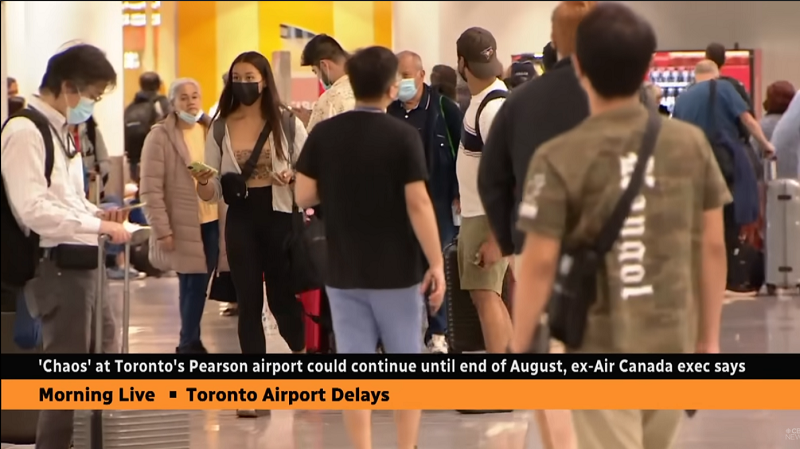
It’s been more than a decade since the last time I had to travel by air … and even then it was still a far worse experience than it was before 9/11. Canada is among the last few countries to loosen Wuhan Coronavirus restrictions on international travel — along with two of Justin Trudeau’s favourite nations, the cuddly North Korean sole proprietorship and the “admirable” “basic dictatorship” in China. In the free-to-cheapskates weekly round-up of The Line, the editors have recent travel experiences at Canadian airports to discuss:

CBC News report on delays at Pearson International Airport in Toronto, 9 June, 2022.
Screencap from https://www.youtube.com/watch?v=pkgmWWY2SDc

… Why couldn’t your Line editor browse the aisle? Well, because duty free is only for international travellers, and hanging around was forbidden due to “COVID protocols,” the clerk explained.

Now, was your Line editor going to stand around and pick a fight with some underpaid store clerk who was just following the rules? Absolutely not.

But she thought about it.

Look, we understand that not being able to browse is, on the list of first-world problems, really far down, but we had to admit that this stupid little non-incident made us angry. Just stupid, irrationally, bug-eyed angry for a solid minute or two.

Why? Because our entire lives have been eaten by a compounding collection of nonsensical COVID rules and restrictions that have added up to make everybody crazy and miserable, and this was just another. Everyone we know now has a story of peaking on COVID hysteria; experiencing a moment so surreal, inhumane and paranoid that it had the effect of fundamentally breaking trust in the judgement of public health and in broader institutional authority. Whether it was the moment they covered the outdoor playgrounds with police tape; the librarian who refused to let the potty-training toddler use the bathroom; the umpteenth school closure; the triple-masked mom screaming hysterically at her ward for touching other kids; to stories of being trapped for hours on end in airplanes or terminals. There was a moment when nearly all of us broke and took someone else’s head off. When we stopped clapping for health-care workers and instead grew quietly resentful, or found ways to silently flout COVID protocols — or abandoned the mainstream altogether and lost ourselves to fringe politics and conspiracy theories.

Upon arrival at one airport, one of your Line editors spotted a kids’ play area containing nothing more than a cartoonish carpet depicting a fun little airport runway. It was still closed. It is, apparently, still too dangerous to let kids burn off steam by pretending to be airplanes for a few minutes.

Even the Liberal backbench has been reported to be demanding that Justin Trudeau make some vague gestures to reduce the arbitrary and unscientific civil liberty restrictions we’ve been living under for what seems like forever … but he seems to like making Canadians miserable where and when he can.

Keeping up unnecessary mandates is not a cost-free political solution. You are teaching your population to distrust you. Yeah, we mean that quite literally: you, Liberals, are also responsible for the declining social cohesion and failing institutional trust that is fuelling populist movements across the country.

We realize that the mandates are small potatoes. But in a way, they’re also really not. Keeping up historic restrictions on Canadians movement, slowing a desperately desired return to normal, purely for political reasons, is only further corroding the social contract between electorate and government. Further, you’re falling into exactly the same trap as the Conservatives — you’re riding the dragon that will eat you, allowing your loudest, fringiest members to dictate policy.

The Liberals seem to be getting this, at least a little bit. Probably because they perceive the political threat this presents to them. On Friday, they announced that random COVID-19 testing of certain arrivals would be suspended, temporarily, until the end of the month. This is intended to reduce backlogs and crowding at our arrival gates, particularly in Toronto. We’ll see how much it helps, but as a political decision, it’s revealing: the Liberals are now alarmed enough to do something, but not to actually just scrap the screening, at least not yet. For now, it’s just a pause.

June 11, 2022

As federal minister of public safety, it’s Marco Mendicino’s job to lie to Canadians

At least, the headline is my interpretation of Matt Gurney‘s somewhat more cautious and measured assessment of the minister’s recent performance:

To celebrate World Press Freedom Day last month, Prime Minister Justin Trudeau said some wonderful things about the importance of truth.

“In the age of disinformation and misinformation,” the statement read, “independent, fact-based reporting is vital. We must all come together to support the work of journalists and double down in the fight against disinformation.”

Stirring stuff. But does the prime minister, his government and the Liberals’ many supporters think any of that actually applies to them?

Marco Mendicino is the federal minister of public safety — a tough job in challenging times. But I’ve come to the unsettling conclusion that Minister Mendicino is not being honest with Canadians.

On the issue of gun control, I’m sorry to say he’s simply lying.

Last week here at The Line, I analyzed the Liberals’ proposed Bill C-21, a package of gun-control measures. My views on this file differ sharply from the government’s. But I’d have hoped that we could at least agree that honesty should be central to the government’s proposals and publicity.

No dice. Last weekend, on CTV’s Question Period, the minister said this: “Bill C-21 doesn’t target law-abiding gun owners, it targets handgun violence, it targets organized crime … I have enormous respect for law-abiding gun owners …”

Well, let’s just go have a gander at the minister’s own webpage, eh? The Public Safety Ministry summarized the proposed legal and regulatory changes. There are 13 specific proposed changes to the Firearms Act. Two are “internal” to the government itself and don’t directly bear on gun owners, law-abiding or otherwise. One targets firearms-related marketing, another is exemptions for “elite sports shooters”. The remaining nine are entirely aimed at the “law-abiding gun owners” the minister insists aren’t being targeted. The page also notes that the government will also be changing regulations (separately from the proposed bill) relating to the safe storage of firearms and ammunition magazine limits … again, aimed entirely and solely at law-abiding gun owners. Indeed, along with some entirely process-focused Criminal Code proposals, there’s only one — one — proposed change that actually focuses on gun smuggling, which is widely believed by law enforcement to be the primary driver of firearms homicides in Canada. (Other planned changes are too vague to be properly analyzed in this context, but could plausibly be aimed at smuggling or blackmarket sales.)

But do the math. One clear mention of smuggling, at least 11 that only affect licensed owners. Denying this is dishonest, full stop.

Let’s be clear: the minister is entirely within his rights to argue that the proposed measures targeting lawful owners are necessary, appropriate and reasonable. These are legitimate debates. What is not up for debate is that the majority of these proposals exclusively target and/or affect law-abiding gun owners. There’s no ambiguity here. The meaning and purpose of C-21 is clear.

June 6, 2022

Very convenient – “Only the cabinet can invoke the Emergencies Act, and if only the cabinet can be privy to the information that informs that decision, only the cabinet can judge whether the cabinet got it right”

Filed under: Cancon, Government, Law, Liberty — Tags: , , , , , — Nicholas @ 03:00

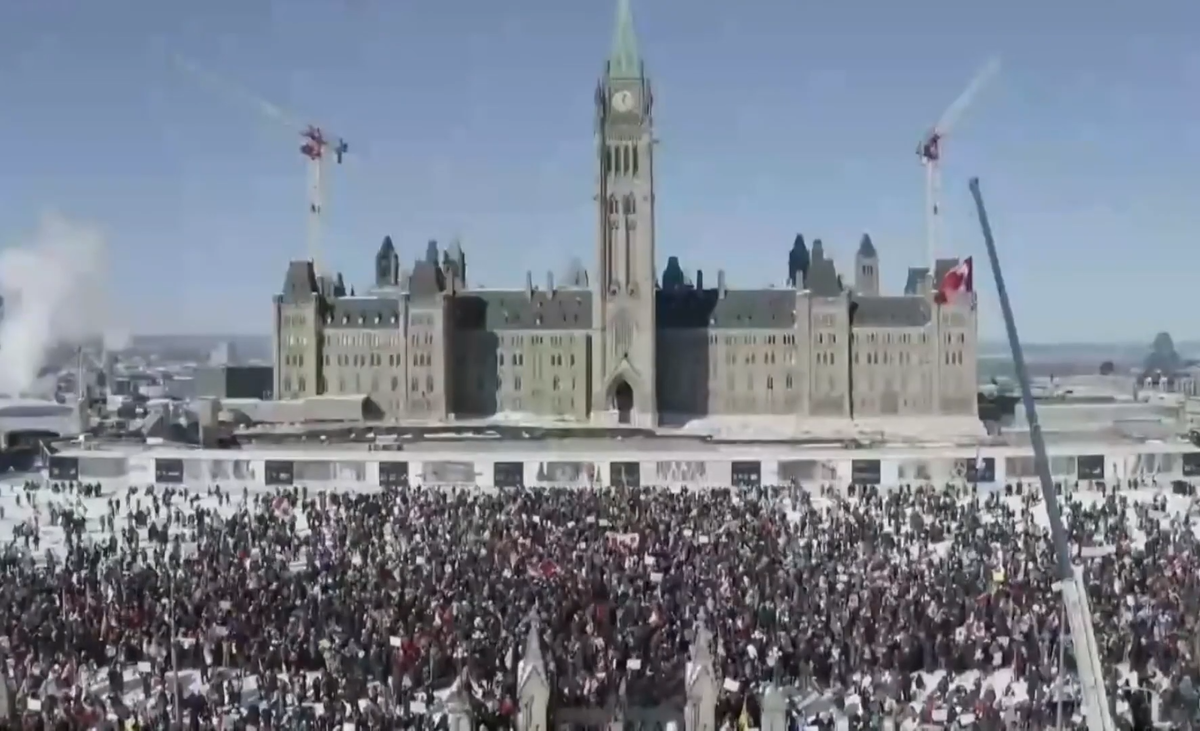
In the free-to-cheapskates portion of The Line‘s weekly dispatch, the editors discuss the lack of evidence that the federal government was actually justified in its invokation of the Emergencies Act in February to break up the Freedom Convoy 2022 protests in Ottawa:

A screenshot from a YouTube video showing the protest in front of Parliament in Ottawa on 30 January, 2022.
Photo via Wikimedia Commons.

Your Line editors always understood that the situation in Ottawa (and at the borders) was indeed a crisis. We never doubted that. It was a very serious challenge that required a very serious response. But we have never seen the case for invoking the Emergencies Act. Under the law, which is very clear, a public-order emergency can only be invoked when the emergency cannot be met under existing laws. We really don’t know what, if anything, convinced Prime Minister Justin Trudeau and his cabinet that we had reached that point.

We have always been reasonable about this. The government may well be in possession of classified information that is not publicly known that convinced them, in good faith, that that condition had been met.

The problem is, they’re asking us to take it on their say-so. The position of the federal government thus far, as regards the inquiries and parliamentary reviews that are automatically triggered by invoking the act, is that they will not necessarily disclose all of the information that was known to the cabinet, and they may treat internal discussions as protected by cabinet confidentiality. This is setting up a perfect little loop of zero accountability. Only the cabinet can invoke the Emergencies Act, and if only the cabinet can be privy to the information that informs that decision, only the cabinet can judge whether the cabinet got it right.

You see the problem, right? As noted above, maybe they know something we don’t, and acted reasonably. Or maybe, under enormous political pressure, the PM whipped out the Emergencies Act to show us how big it is. That would be entirely within his character.

Do we think that’s what happened? We don’t know. Can we rule it out? No.

One of the only things the feds have yet said about their decision to invoke the Emergencies Act was that they did it because the police said it was necessary. But [former Ottawa Police Chief Peter] Sloly now says he never asked for it. The interim chief who succeeded him has said the same. The RCMP has said they did not ask for it. Who does that leave?

Maybe it was the OPP. Maybe it was one of the police agencies that patrols parliament itself. We don’t know. They just want us to take their word for it.

We’re sorry, but we don’t. The Emergencies Act is far too powerful to ever be invoked by a government on the basis of, “Trust us”. That’s not how things work in a democracy. And it should alarm all Canadians that the Liberals seem not to realize this, or are at least hoping that you don’t.

June 1, 2022

Trudeau’s new gun control plans will do nothing to reduce criminal use of firearms … and he doesn’t care

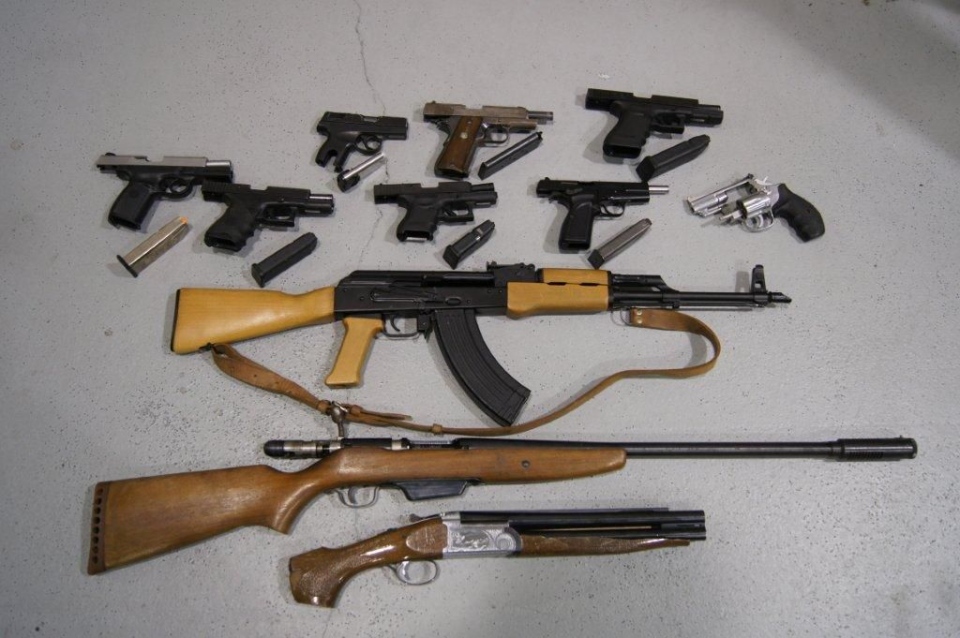
The proposed new rules will impose costs on legal gun owners and restrict their access to certain firearms, and almost certainly do nothing at all to reduce the headline-grabbing crimes that supposedly prompted the new rules in the first place:

A 2018 Toronto Police Services publicity photo of guns seized in a recent operation.

In my 15 years or so of writing about firearms policy, here’s been a constant problem: gun policy is complicated, the broader public doesn’t know much about it, and it’s hard (impossible?) to make any coherent arguments without laying out the context, both of the specific proposals and the broader background. Working through what was announced yesterday, and how this clarifies a worrying shift in how the Liberals approach gun control, is going to be a bit of a process.

Get comfy.

As of Tuesday morning, we are short a lot of details, because the Liberals chose to make their high-publicity announcement before they provided any technical briefings. (We’ll come back to that later.) At first glance, it seems that lot of what the Liberals announced is stuff they’d either already committed to do or, in fact, already exists. (The Liberals?! Re-announcing stuff? Well, I never!) There is currently confusion about the ammunition magazine capacity limit — most non-gunnies won’t know the difference between an internal magazine and a detachable one, but it’s a huge difference, and the proposed legislation is unhelpfully vague. So stay tuned. But the actual centrepiece of the proposal, I have to admit, made me burst out laughing. On Twitter, I called it “peak Liberal”. It really is a pretty perfect example of what’s wrong with how the Liberals govern, but why they’re great at politics.

One of the jokes about Justin Trudeau when he entered politics was that he’d be much better suited to playing the role of political leader on TV than he would in real life. Several years later, the joke is on the Canadian voter because that’s turned out to be exactly the case: Trudeau loves posturing and pontificating for the cameras, and early in his first term as prime minister he became notorious for “unplanned” photo ops (despite being constantly accompanied by at least one staff photographer/videographer everywhere he went). I think this is one of the reasons the Liberals have been justly mocked for constantly re-announcing policies and programs — it looks good on camera.

The big reveal was a “freeze” on handgun sales in Canada, and their importation. Existing owners can keep theirs. It’s not clear exactly when this will go in effect, so I imagine gun stores across the land are going to set sales records in the next few days. Once in place, the sale or transfer of a handgun — from either a store to an individual or between individuals — will be eliminated. Again, “frozen”, as the Liberals call it.

At the most basic level, new government policies are intended to solve a problem: you see something that’s wrong with the status quo, and you try to enact a policy to improve it. Parties tend to wrap their policies in lots of rhetorical flourishes, but if you tune out what the politicians are saying and look at what they’re doing, you can get a decent sense of what their actual goal is. And there’s been an interesting shift in what the Liberals have been doing with gun control these last few years. Monday’s announcement is perhaps the ultimate example of this yet, the purest form of the new normal we’ve yet seen.

The Liberals are making a series of announcements that won’t actually change, at all, how safe Canadians are from gun violence. The announcements do get a lot of attention, though. Because, clearly, getting the attention is itself the goal. The public-safety talking points are just the PR frosting on top of what is an entirely political exercise. Why else make the announcement before you give the press the technical briefings? The sequence tells you all you need to know.

Trudeau’s general governing style might best be described as “provocatively performative”. If you think of him just portraying what he thinks a Prime Minister should look like, much of his performance makes more sense. As I joked on social media the other day “It’s about time Trudeau took decisive steps to crush these MAGA-hatted, gun-toting, pickup-truck-driving rednecks who keep coming into Toronto and gunning down innocent drug dealers, pimps, and aspiring rap artists who were just turning their lives around! ” It’s a theatrical performance on the political stage … but unfortunately ordinary Canadians are going to be forced to put up with his playing up to the urban and suburban voting galleries.

Note that while the government is puffing its collective chest for this “tough on guns” announcement, they are also pushing a bill in Parliament that would reduce or eliminate many “mandatory minimum penalties” for things like smuggling firearms into the country. This is apparently intended to address the “overincarceration rate” of First Nations and other “marginalized Canadians”. So, on the one hand, they’re planning to penalize legal gun owners and on the other hand, they’ll reduce the penalties that can be imposed on criminals who smuggle illegal weapons into the country. That only makes sense if it’s all a theatrical performance.

May 6, 2022

“Canadians might not know their constitutional history or even the text of the Charter, but they know in their bones that these orders were unconstitutional”

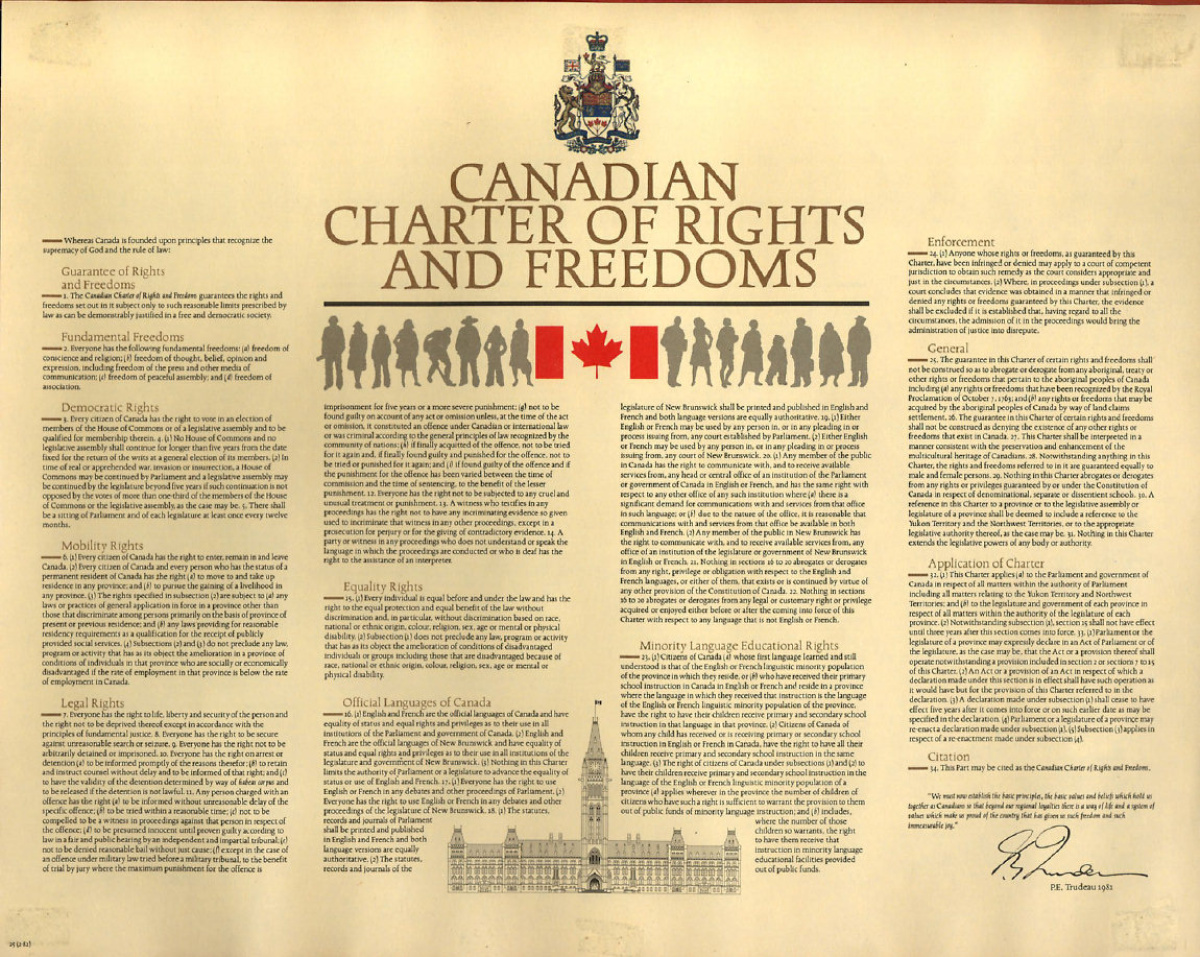
Long before the Freedom Convoy protests earlier this year, I’d been somewhat skeptical of the value of the Canadian Charter of Rights and Freedoms — not that I thought it was a bad thing to have a clear enumeration of Canadians’ rights, but in the degree to which those rights could be ignored or abrogated whenever the government found it convenient to do so. The invocation of the Emergencies Act proved that lacking strong and effective absolute rights, the Charter was merely a bit of tissue paper. In The Line, Josh Dehass shows he’s not as cynical as I am about the value of the Charter and provides some history predating the current document:

In a Boston courtroom in 1761, lawyer James Otis Jr. made one of the most consequential legal arguments of all time.

Otis was challenging the legality of “writs of assistance”, a form of general warrant giving unfettered discretion to customs agents to force their way into people’s homes to search for and seize smuggled goods, and to require the “assistance” of bystanders.

“It appears to me (may it please your honours) the worst instrument of arbitrary power, the most destructive of English liberty, and the fundamental principles of the constitution, that ever was found in an English law-book,” Otis inveighed.

John Adams later described that day in court as “the first scene of the first Act of opposition to the Arbitrary claims of Great Britain. Then and there the Child Independence was born. Every Man of an immense crowded Audience appeared to me to go away, as I did, ready to take Arms against Writs of Assistants.”

This hard-won right to be secure against unreasonable searches and seizures, affirmed by Section 8 of the Canadian Charter of Rights and Freedoms, is the reason so many of us felt queasy about the Emergency Economic Measures ordered by the Liberal cabinet under the Emergencies Act in February to quell the trucker protests. Canadians might not know their constitutional history or even the text of the Charter, but they know in their bones that these orders were unconstitutional.

The emergency measures required financial institutions to search their records for customers suspected of “directly or indirectly” engaging in a “public assembly that may reasonably be expected to lead to a breach of the peace”, or “directly or indirectly” using their money to facilitate such protests, and then seize their accounts.

That’s a classic general warrant, a writ of assistance in fact, enlisting banks to help King Trudeau and Queen Freeland hunt down their political enemies without going before a judge to prove reasonable grounds that a specific offence had been committed by a specific person. Section 8 is designed to keep us secure against unreasonable searches and seizures by the executive, and the only way for individuals to maintain this security is by requiring specific warrants from an independent judiciary, barring exigent circumstances.

This profound assault on our section 8 right will hopefully be raised during Justice Paul Rouleau’s inquiry into the use of the Emergencies Act, despite Trudeau’s attempt to focus the inquiry on the truckers themselves. Even if section 8 doesn’t get examined during the inquiry, the Canadian Civil Liberties Association expects to raise it in Federal Court if they’re successful in convincing a judge to review the decision to declare the protests a national emergency.

I don’t expect anything useful to come out of this inquiry process, otherwise Trudeau wouldn’t have let it get started in the first place.

May 5, 2022

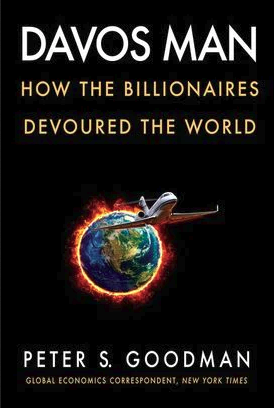
Paul Wells reviews Davos Man by Peter S. Goodman

Paul Wells — now on Substack — considers an unusual-from-a-Canadian-perspective critical book on the World Economic Forum and the people who attend their exclusive shindigs in Davos, Switzerland:

I’ve been reading Peter S. Goodman’s Davos Man, a tough, angry — not entirely persuasive — critique of the sort of people who get top-level access to the World Economic Forum in Davos, Switzerland. Because Goodman’s vantage point is left-by-centre-left, his book provides fascinating counterpoint to a polemic about the WEF that is, in Canada, the almost exclusive preserve of the right.

[…]

Politicians who make a show of having a problem with Davos should explain what the problem is; why they didn’t raise their concerns when cabinet colleagues were lining up to go; and what solutions, if any, they propose. Otherwise they might seem to be faking their indignation to lure a few votes.

Second, it’s easy to see why Davos catastrophism has taken root in some corners of the electorate. We are coming off a COVID pandemic, after all. Very early, only weeks into this historic disaster, the WEF was quick to start discussing visions of a green egalitarian future with prominent roles for green progressive governments and Davos regulars. This was the “Great Reset”, which I discussed here in a magazine. Soon Trudeau was on video calls saying, “This pandemic has provided an opportunity for a reset. This is our chance to accelerate our pre-pandemic efforts to reimagine economic systems.” Which was jarring. Still is. Soon people were digging up old video of Klaus Schwab, the WEF founder, bragging about “penetrating the cabinets” of Western countries with “Young Global Leaders of the World Economic Forum”.

People who didn’t like everything that’s happened since — vaccines, lockdowns, restrictions — started reading great significance into all kinds of perceived Davos connections. Often Trudeau has seemed eager to help. Replacing his finance minister with the only member of his cabinet who sits on the WEF Board of Trustees, while yet again blathering on about how “we can choose to embrace bold new solutions to the challenges we face and refuse to be held back by old ways of thinking” was … loopy, sure, but it probably only accidentally resembled the second act of a Bond movie.

Bringing an element of novelty to all this is Peter S. Goodman, the Global Economics Correspondent of the New York Times. Even if he were Canadian, nobody should expect Goodman to support Poilievre for Conservative leader. Davos Man is a furious diatribe, not against the WEF as an institution but against many of Davos’s richest regulars — and it’s written from a consistently social-democratic perspective.

From its subtitle, “How the Billionaires Devoured the World”, Davos Man relentlessly skewers some of the most glamorous Davos habitués — Amazon gillionaire Jeff Bezos, Blackstone founder Stephen Schwarzman, BlackRock CEO Larry Fink, banker Jamie Dimon, Salesforce guy Marc Benioff. And their, you know, ilk.

“Over recent decades, the billionaire class has ransacked governments by shirking taxes, leaving societies deprived of the resources needed to combat trouble,” Goodman writes. Davos Man — Goodman has borrowed the term from Samuel Huntington — “is a rare and remarkable creature, a predator who attacks without restraint … expanding his territory and seizing the nourishment of others.” Goodman’s language is consistently violent. The billionaires “eviscerate financial regulations”, “defenestrated antitrust authorities”, “squashed the power of labor movements”.

April 16, 2022

Remember all the angst about untold numbers of unmarked graves at former residential schools?

Filed under: Cancon, History, Religion — Tags: , , , , , , — Nicholas @ 05:00

Oh, c’mon man! You must remember the performative grief and anger as even the Prime Minister got into the act by declaring Canada a nation that had committed genocide against as-yet-uncounted First Nations children (oh, and upping the ante, he also implied that this genocide was still ongoing). Do you remember the number of times these graves — often described as “mass graves” rather than merely “unmarked graves” — were investigated in the wake of all this media attention and the fate of at least some of the victims confirmed? No? Well, there’s a good reason for that:

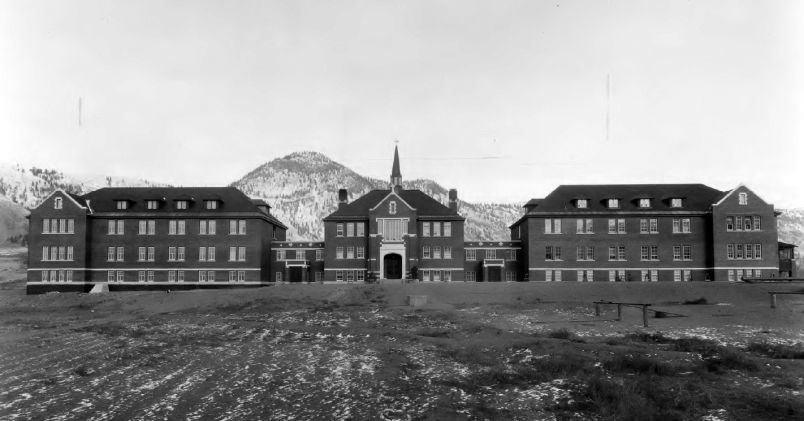
Kamloops Indian Residential School, 1930.
Photo from Archives Deschâtelets-NDC, Richelieu via Wikimedia Commons.

Rosanne Casimir, the chief of the local Tk’emlúps te Secwépemc First Nation, said that “knowledge keepers” within the community had guided investigators to the area to be searched — which had once been an apple orchard on the residential school’s premises. The chief also said that knowledge keepers had already told her that what lay below the surface were graves of children whose deaths had previously been undocumented.

Following that announcement, several other First Nations announced their own discoveries. And in December, the Canadian Press called the discovery of unmarked graves, the “news story of the year”.

If you aren’t from Canada, it’s hard to understand the scale of the national reaction to this story. It’s been known for decades that thousands of Indigenous children died during their time in the residential-school system, many of them from tuberculosis. But this new discovery set the country off emotionally. Justin Trudeau, the prime minister, lowered the Canadian flag on public buildings, and didn’t raise it for another five months. And journalists became unrestrained in the language they used. In one Canadian newspaper, a headline ran, “Is this Canada’s Holocaust moment?”

Canadians were assured that these weren’t just graves, they were the graves of children; and furthermore, it was suggested, these children hadn’t just died from malnutrition or untreated disease — which is obviously bad enough. Some suggested these children were flat out murdered and dumped in shallow graves in the middle of the night. These claims were even aired by the national broadcaster, CBC, on an investigative show called Fifth Estate.

In the Kamloops press, meanwhile, Dr. Sarah Beaulieu, the ground-penetrating-radar expert who’d helped with the discovery, described — as a newspaper put it — “recollections of children as young as six years old being woken up in the middle of the night to dig holes for burials in the apple orchard.”

But there was one odd aspect to the story — and it got odder as the weeks and months marched on: No one seemed to be in any kind of hurry to see what was actually beneath the surface. All we had were ground-penetrating-radar images. And those images don’t show bodies, or caskets, or anything like that. What this technology shows are soil dislocations, which, depending on their depth and spacing, can sometimes indicate the possible presence of grave sites. Why weren’t police, or indigenous authorities, or forensic teams searching for the remains of these poor children?

It’s important to remember that Canadians were being told that this was a crime scene — indeed, not just any crime, but mass murder. If you told Canadians that, say, 215 murdered white children were buried in a field in Toronto, or Ottawa, or Vancouver, there’d be investigators and police all over the place — to see if they could find remains that could be tested and identified. Maybe evidence could be collected showing the manner of death.

And remember that many of the abuses identified at the Kamloops residential school and others like it date to the middle of the 20th century. This means that some of the perpetrators of these claimed child homicides — that is, the teachers, administrators, priests, and ministers who worked at these schools — some of them could still be alive. Shouldn’t we be getting evidence and building a case against them?

April 6, 2022

Proposed new Canadian censorship rules will ███████ the ████████ unless we ████ ██

In The Line, Josh Dehaas waves off accusations against Trudeau while also highlighting just how censorious his governments proposed internet bill can be to freedom of expression online:

Comparisons of our prime minister to a dictator are self-evidently ridiculous. But the Russian example is still a case study in the harms of governments having too much power over the flow of information and ideas in a society. Trudeau is no dictator but he does helm a government in which overreach is becoming a frequent and habitual complaint. And one such area in which this government’s more illiberal tendencies are beginning to show is in the realm of media regulation. Despite pushback from groups like the Canadian Constitution Foundation and the Canadian Civil Liberties Association, the Trudeau government seems determined to press ahead with laws to control what you read, write, watch and hear online.

The Liberals have long promised three bills aimed at countering three ostensible problems with online speech. The first bill aims to correct the problem of too few people choosing CanCon, by manipulating what you watch and listen to on platforms like Netflix and Spotify. The second bill would address the problem of advertisers ditching legacy newspapers for Facebook and Google. (Apparently the $600 million bailout was not enough.) The third bill, aimed at so-called “online harms”, would try to prevent people from saying hateful things to each other on social media.

This “online harms” bill is the scariest. Recently rebranded as the “online safety” bill, it’s apparently getting an overhaul from an expert panel and will be re-tabled in a few months. Let’s hope it never comes back. A version tabled last year, Bill C-36, would have created a tribunal wherein people found guilty of “online hate speech” could have been forced to pay up to $20,000 to their accusers, plus up to $50,000 in fines. In some cases, the accusers would be allowed to remain anonymous. Unlike the rarely used hate speech provisions in the Criminal Code, the tribunal would have only needed to find that the speech was hateful on a balance of probabilities, as opposed to the higher standard of beyond a reasonable doubt.

Even more ominously, C-36 would have allowed judges presented with “reasonable grounds” that a person might commit “an offence motivated by bias, prejudice or hate” in the future to threaten the would-be hater with up to 12 months in prison.

I don’t deny that hate speech can lead to harm. But do we really want government and judges deciding what crosses the line? One person’s hateful tweet is another person’s harsh but valuable contribution. Think J.K. Rowling. Think Dave Chapelle. Or think of the University of Toronto student who wrote recently that it was hateful for a professor to show an unflattering cartoon about Iranian Supreme Leader Ali Khamenei, a man whose theocracy executes people for being gay.

Proponents of the bill will tell you that it only applies to the most extreme forms of vilification, but at the end of the day it means government-appointees deciding who gets to say what in an environment that financially incentivizes the aggrieved. People will self-censor even more than they already do.

March 31, 2022

Canada’s F-35 procurement process — “Dysfunctional, but, like, a masterpiece of dysfunction.”

In The Line, Matt Gurney reveals the embarrassing secret of his life: he has “a favourite Canadian military procurement fiasco”. He’s quite right that there’s a distressingly wide variety of procurement cock-ups to choose from since the 1960s, but in his opinion the F-35 saga is the best:

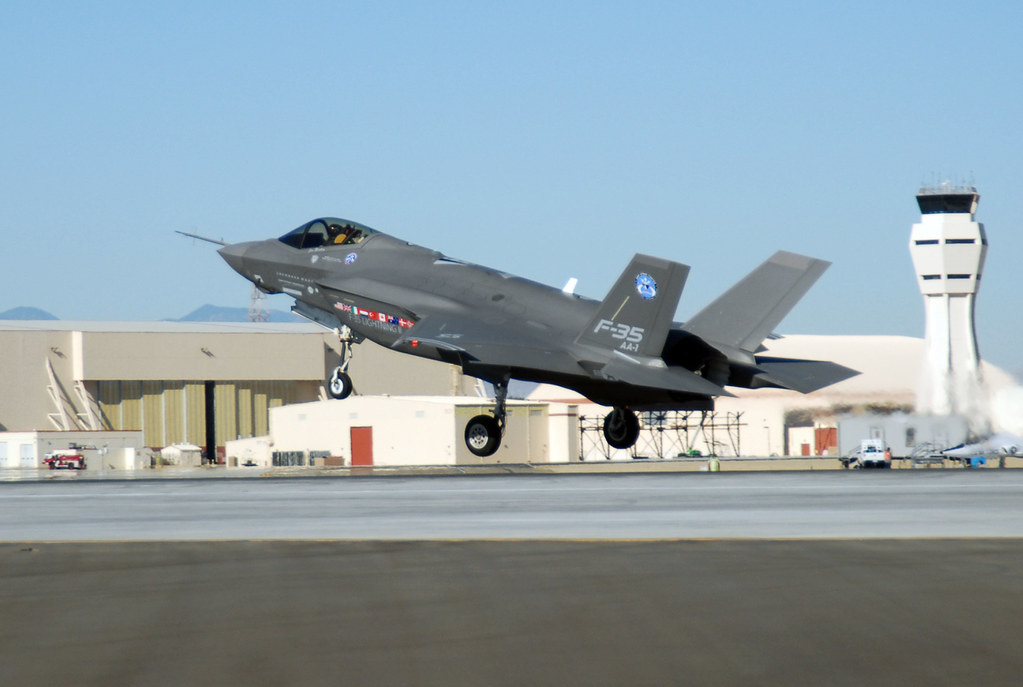
“F-35 Lightning II completes Edwards testing” by MultiplyLeadership is licensed under CC BY 2.0

Having a favourite Canadian military procurement fiasco feels perverse, in a way. It’s like having a favourite gruesome sports injury. Procurement fiascos are bad. We want fewer of them. There’s nothing to be celebrated when yet another one barfs all over the national rug. And yet I find myself indulging a bizarre fondness for a mostly overlooked low point in our long, embarrassing journey to this week’s re-decision to buy a fleet of F-35 fighter jets for the Royal Canadian Air Force. As bad as the low point was — and it was really bad — it also so perfectly summed up our utterly manifest dysfunction that I’ve come to almost admire it. It’s awful, but it’s a pure form of awful. Dysfunctional, but, like, a masterpiece of dysfunction. You couldn’t ask for a better example of what’s wrong with us.

[…]

That wasn’t the original plan; the Liberals first proposed buying 18 new F-18 SuperHornets, the more advanced American successor to the original F-18. That idea fell through due to a trade spat between Canadian darling Bombardier and Boeing, the SuperHornet manufacturer. This was the point of no return: the Boeing dispute was another opportunity for the Liberals to sigh, pop a few Tums and then just do the right thing and proceed with the full replacement as quickly as possible.

They did not. And this, dear readers, is where this embarrassing chapter of our already pathetic history of military procurement reached maximum absurdity.

With our CF-18 fleet at a state of exhaustion, and Boeing in Trudeau’s dog house, instead of actually replacing our old, exhausted jets with new jets, we just gave the air force enough old, exhausted Australian jets so that the RCAF could cobble enough workable jets and spare parts together to allow the Liberals to further delay any decision on a real replacement program.

When you write a lot about military procurement, as I certainly have, you can’t help but grow a bit (!) jaded and cynical. Even by the standards of my appallingly lowered expectations, though, this was an outrageous decision. As I said above, it’s so bad, so cynical, so crassly political, that it has perversely become something I almost admire, in a twisted way. It’s an almost too-brutal-to-be-believed example of politicians dodging accountability and leadership like Keanu bobbing and weaving out of the path of CGI bullets. Every dollar and hour of time we put into scooping up Australia’s leftover jets — they were unneeded because Australia was competent enough to procure more advanced SuperHornets and, ahem, F-35s — was money and time spent not to improve the readiness and capabilities of the Canadian Armed Forces, but to permit the Liberals to avoid acknowledging they’d made a dumb campaign promise.

Stephen Harper failed the Canadian Armed Forces and Canada generally by not getting the ball rolling on a replacement during his majority term. This was a major failure by the Conservatives that they get all awkward and squirmy about when you bring up, but we should bring it up. The CPC botched this, badly, and should feel shame. Justin Trudeau then repeated that failure, and then took it up a level. In this race to the bottom, where no one looks good, Trudeau “wins” by simple virtue of snapping up used jets — the last of which only arrived last spring! — to buy his government time to do absolutely nothing.

March 30, 2022

The RCAF’s long, sad F-35 story

In The Line, Mitch Heimpel tries (without either laughing or crying) to tell the story of how the Canadian government finally got around to admitting they should have bought the F-35 fourteen years ago (when the RCAF told them it was the best fit for our national requirements):

If you’re looking for a simple meta-explanation for all of us, it would be this: Canadian politicians refuse to tell the public one simple truth — military procurement is expensive. There isn’t an inexpensive version of this. That doesn’t mean we should accept any and all costs just because it’s going to be expensive. It does mean that politicians have to stop trying to sell us on there being an inexpensive, or perfect, version of this. There is no MacGyver version of military procurement. No amount of rubber bands and paper clips replaces jet engines and submarines, no matter how many times we pretend it will. Indeed, the longer you delay, the more it’ll cost — the weapons generally get more expensive, and you end up spending more money to wring every last bit of use out of what equipment you already have, instead of replacing it in an efficient, orderly way.

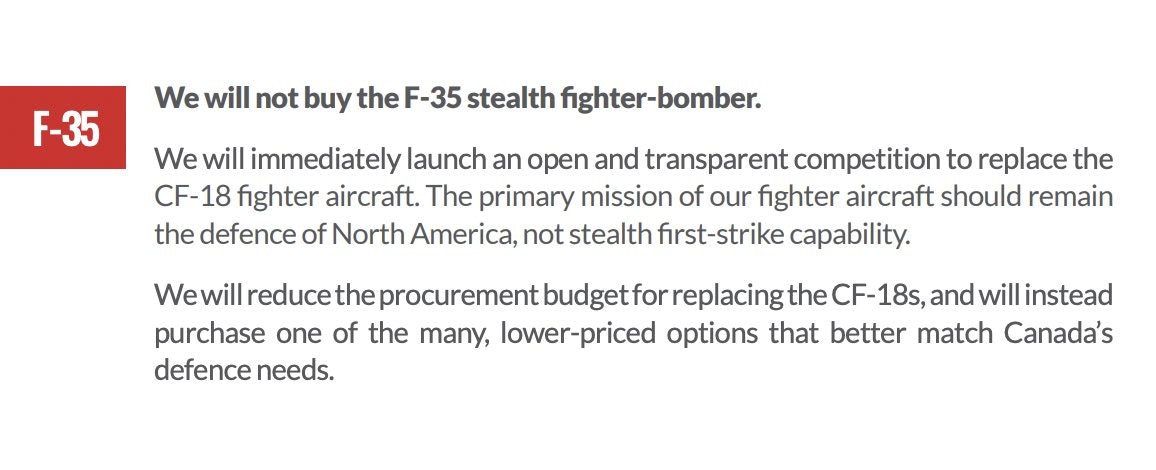
So, let’s recap: We are, in fact, so bad at procurement that we ran a process for years, and then cancelled it. And then pledged not to buy the jets we’d originally pleged to buy. We then bought seven old Australian F-18s so we could keep our elderly and dwindling CF-18 fleet from experiencing a “capability gap” caused mostly by not just buying the F-35 in the first place. Then, almost 12 years after announcing we were going to buy the F-35, after all the drama above, we’ve announced we’ll buy the F-35, after all. Eighty eight of them, in fact. So there’s that, I guess.

In so many ways, the F-35 saga is another symbol of seven years of Trudeau governance. In 2015, the Liberals could not have been more clear in their campaign platform, which included a whole section titled “We will not buy the F-35 stealth bomber-fighter.”

What were Ministers Anand and Tassi out saying when the F-35 announcement was made this week? “Best plane” and “best price.” Which was true in 2008 when we were first told it was the only fighter that met our needs. It was still true when the Harper government blinked in 2012, and still true when Justin Trudeau was accusing the government of “whipping out” our CF-18s while on the opposition benches in 2014. Remained true in 2015 when the Liberals campaigned against it, too, and every year since.

We have no reason to believe that what is supposed to be a $19-billion announcement for 88 planes to begin delivery in 2025 will actually end up being any of those things. Don’t be surprised if we spend more money to get fewer jets at a later date. But we are now well past the point of being able to blame anyone other than ourselves for cost overruns or late deliveries. The Canadian government failed the Royal Canadian Air Force in this procurement. That is beyond dispute. These guys need the planes. They have for years.

Let’s hope we’ve at least been sufficiently embarrassed by this experience to be more serious when we have to talk about submarines, which is now, come to think of it.

But I doubt it.

March 28, 2022

The only question in my mind is why the NDP thought they’d benefit from propping up Trudeau the Lesser

Filed under: Cancon, Government, Politics — Tags: , , , , — Nicholas @ 03:00

The editors at The Line, having taken last week off to look after kids on March break, sent out a brief round-up post on the deal Jagmeet Singh made with the Devil Justin Trudeau to keep the Liberals comfortably in power for (potentially) the full term:

The key question here that we can’t really think up an answer for is what this deal changes. In big picture terms, the NDP is going to keep the Liberals alive for a while, and the Liberals will serve up some goodies the NDP base will like. That’s what the parties have agreed to, distilled to the most basic essence.

And this is new how? This has changed what?

The NDP doesn’t want an election right now. The Liberals don’t want an election right now. The Liberals are led by a guy who has already moved the party toward the left and seemed quite happy to do it. The Liberals were getting along just fine with NDP support until they rolled the electoral dice and tried to secure a majority in summer of 2021; they fell short, and now they’ll continue getting along just fine with NDP support.

Well, gee. Stop the presses.

Yes, yes, there’s more specific commitments. The parties have put on paper what they’ll work jointly to achieve. But look at those commitments. Anything surprising? Is this not precisely what any random collection of reasonably bright high schoolers in a mandatory civics class could have guessed when their teacher told them to write a five-paragraph essay on things the NDP and Liberals agree on?

We aren’t particularly swayed by arguments, largely from angry Conservatives, that this deal suddenly leaves the Liberals immune from accountability. Again, the NDP was already playing ball to avoid an election. A week ago, the Liberals were going to be held precisely as accountable as Singh found convenient, and that’s just as true now as it was then. It’s not that the angry Conservatives are wrong about the Liberals being immune from accountability. It’s just that they essentially already were, NDP protestations aside. The NDP will tighten the screws enough to make Trudeau uncomfortable but not enough to trigger an election. They won’t be an opposition, but they’ll play one on TikTok. This sucks, but it is what it is, folks.

Nor do we expect the deal to last the full four years. Hey, it could happen. Both parties could find reasons to keep it going. But remember: this is a gentlemen’s agreement between gentlemen that don’t like each other. Gentlemen who are both pursuing different personal and political agendas. This deal will last right up until the moment one of them sees more advantage in stabbing the other guy than in continuing to play nice-nice.

We admit we really aren’t sure what the Liberals are thinking here. Trudeau had a largely free hand already. This is, to us, baffling.

And as for the NDP, well, gosh, all we can say is good luck, fellers. An old grizzled political observer your Line editors once knew liked to joke that being the junior partner in these kinds of arrangements is like being the mistress of a rich, married man. If you don’t know that you will be dumped while your former lover runs back to his family — the base voters, the caucus, the donors — well, sorry, sweetheart, but that’s on you. We saw a version of this play out in Ontario just a few years ago: the provincial NDP propped up the minority Liberals in exchange for a pledge to cut auto-insurance premiums. The Liberals failed to deliver, ran another election, won another majority and shrugged off the NDP’s complaints. The auto-insurance promise? Meh. That was just a stretch goal.

March 16, 2022

Canada’s rejection of the rules of a “free and democratic society” under Justin Trudeau

Filed under: Cancon, Government, Liberty — Tags: , , , — Nicholas @ 05:00

We’re now a month past the day that marked when Justin Trudeau’s government stopped even paying lip service to the Canadian Charter of Rights and Freedoms, as Madeline Weld points out:

It is noteworthy that in the aforementioned Munk Debate in which the leaders of the three major national parties – Conservative, Liberal, and NDP – butted heads, that Trudeau declared in praising the legacy of his father, Pierre Elliott Trudeau:

    First and foremost is the Charter of Rights and Freedoms, which has defined Canada as a country that stands up for individual rights, even against governments who want to take those away.

Fast forward to 2021, and those rights are no more. When it comes to getting vaccinated for Covid, it’s get the jab or get lost. Far from standing up for individual rights, Justin Trudeau’s government is snatching them away and redefining them as privileges that the government will deign to give back once a person has obeyed its edict and gotten jabbed. In August of that year, he announced that his government, if re-elected, would spend a billion dollars to help provinces create their own vaccine passports for domestic use. Trudeau also said he wouldn’t force anyone to get a Covid shot but would restrict the “privileges” of those who refuse to get one without a medical reason (which is so narrowly defined as to make it almost impossible to get an exemption). So, per Trudeau, people were free to “choose” to get the jab or lose their “privileges” of holding a job and earning a living, going to “non-essential” venues like restaurants, gyms, and theatres, and traveling on planes, trains or cruise ships. No “force” to see here, folks, move along.

So much for “standing up for individual rights, even against governments who want to take those away.” The current government’s edicts on forced vaccination violate the right to “security of the person” as defined under Section 7 of the Charter and the concept of “informed consent” as understood both in Canadian law and the United Nations’ Nuremberg Code. The Nuremberg Code was created following the Nuremberg trials of Nazi officials who conducted medical experiments on prisoners. Given that the current vaccines, employing a novel technology of mRNA encased in lipid nanoparticles or DNA carried in an adenovirus, are being used only under emergency Interim Orders, people who have them injected into their bodies, whether willingly or for fear of losing their newly defined “privileges” of holding a job, earning a living, and participating in society, are indeed participating in a medical experiment. But regardless of the state of development of the vaccines, no one should be subjected to a medical treatment they don’t want.

Trudeau did not hide his contempt for the unvaccinated during his election campaign of 2021. In a campaign speech on September 1st, he referred to a nearby group of protesters as “anti-vaxxers”. Emphasizing the importance of vaccine passports, he said the federal government would pay for “the development of those privileges that you get once you get vaccinated”. “Everyone needs to get vaccinated, and THOSE PEOPLE,” he said, turning around and pointing at the demonstrators, “are putting us all at risk.” (“The science” – to use the current phrase – concerning Covid infections does not bear him out, but that’s another discussion.) Trudeau then contemptuously refers to his Conservative opponent Erin O’Toole as “siding with THEM” as he pointed backward with his thumb. He dismisses O’Toole’s expressed concerns about “personal choice”. “What about my choice to keep my kids safe?” He berates O’Toole, “You need to condemn those people; you need to correct them.”

Had Harper referred to terrorists or terrorist wannabes as “THOSE PEOPLE” during that Munk Debate in 2015 and said they needed to be condemned and corrected, Trudeau would no doubt have given him an earful. In fact, Trudeau is remarkably reluctant to condemn terrorists. Following the beheading of Paris school teacher Samuel Paty by a Muslim incensed that Paty had shown the Danish Mohammad cartoons in his class while discussing free speech, Trudeau said, “We will always defend freedom of expression … But freedom of expression is not without limits … In a pluralist, diverse and respectful society like ours, we owe it to ourselves to be aware of the impact of our words, of our actions on others, particularly these communities and populations who still experience a great deal of discrimination.” He said not a word about needing to “condemn” and “correct” people who kill when they’ve been offended.

But when it comes to expressing his opinions about those who decline to be injected with an experimental mRNA or DNA product, Trudeau does not seem much concerned about the impact of his words on others. For example, on a French-language TV program in September 2021, Trudeau claims that many vaccine-decliners are racist and misogynist and wonders if they should even be tolerated. Such was his diatribe that People’s Party of Canada leader Maxime Bernier tweeted a video titled “Psychopathe fasciste” (fascist psychopath).

H/T to Robert at SDA for the link.

Update: Doh! Forgot to provide the URL for Robert’s post.

March 11, 2022

Donate money to a legal, peaceful protest and be deprived of your rights on a governmental whim. Welcome to Canada!

Filed under: Cancon, Government, Law, Liberty — Tags: , , , , , — Nicholas @ 05:00

In First Things, Craig A. Carter recaps the events of February here in Canada after the government suddenly decided to treat non-violent protests as existential threats to the regime:

A Toronto Sun editorial cartoon by Andy Donato during Pierre Trudeau’s efforts to pass the Canadian Charter of Rights and Freedoms. You can certainly see where Justin Trudeau learned his approach to human rights.

Last month, Canadian Prime Minister Justin Trudeau’s cabinet used special powers under the Emergencies Act to freeze the bank accounts of Canadian citizens who supported Freedom Convoy protests against vaccine mandates. The government partnered with banks and other businesses to “de-bank” Canadians, circumventing due process and normalizing a dangerous, undemocratic policy. Canada has since revoked the Emergencies Act and instructed banks to unfreeze the targeted bank accounts, but this action set a dangerous precedent.

On February 22, the House of Commons Finance Committee questioned Department of Finance Assistant Deputy Minister Isabelle Jacques about the details of these financial measures. The government revealed that more than 206 accounts were frozen. Exactly how many “more” was not indicated. Trudeau revoked the Emergencies Act on February 23. But we still do not know how many accounts were frozen. No judicial review is permitted of the actions of banks under the Emergencies Act.

The government targeted not only protest participants, but also those who merely donated to the protesters. A reporter asked Jacques if a person who donated to a crowdfunding platform with no further involvement in protests could have their bank account frozen. The answer was “Yes.” Some people were punished without being formally charged with a crime at all.

In some cases, the right to a trial and the presumption of innocence were discarded. The Royal Canadian Mountain Police (RCMP) has stated that they provided the names of Freedom Convoy donors to financial institutions. The RCMP claimed that these individuals were major influencers in the protests or truck drivers who refused to leave the area. This might be the case, but we have no way of knowing for sure. Normally, when the RCMP conducts an investigation, they charge an individual with a specific crime and then give evidence to the Crown prosecutor, who decides if the person should be tried in court. If the person is found guilty after trial, then the judge sentences the person, and the sentence is carried out. However, in this situation, the whole process was reversed. The RCMP determined guilt and imposed a punishment before conducting a proper trial for explicit charges. And because this was done under the Emergencies Act, citizens do not have the ability to sue the bank or the RCMP for mistakes — cases of mistaken identity, for example. There was no incentive against carelessness.

There has also been controversy over whose accounts were frozen. The Globe and Mail reports that the RCMP told the House of Commons Finance Committee on March 7 that a “small number” of additional accounts were frozen under the Emergencies Act based on the banks’ own “risk-based” reviews and were not on a list of names provided by the RCMP.

« Newer PostsOlder Posts »

Powered by WordPress