Quotulatiousness

May 26, 2021

The Line refutes arguments recently posted in … The Line

Recently the editors at The Line accepted an article from the astroturf “advocacy” group Friends of Canadian Broadcasting, pushing the establishment line that all of us peons and useless idiots in the blogosphere and even a few undisciplined malcontents among the actual mainstream media are totally misunderstanding and misrepresenting what the government is trying to do with their “tax the web giants” initiative. Peter Menzies responds to the latest bullshit propaganda offensive:

[Mouthpiece for Friends of Canadian Broadcasting Daniel] Bernhard makes a great case for the regulation of tech giants, pointing to some truly dreadful things such as the New Zealand massacre streamed on Facebook, and exploitive content uploaded to Montreal’s PornHub.

To the best of my knowledge, none of the people listed above disagree with the Friends on this point. In fact, many have made the case that Bill C-10 is an unnecessary diversion from more serious online industry problems — some of which are addressed in another bill (C-11).

The big matters that need to be addressed by the government involve algorithms, data collection, privacy protection, and anti-competitive practices — not the facility of the Netflix search tool, nor whether the search term “Canadian” should pop up as a default selection.

My main point of disagreement to Bernhard’s piece is that the Internet is no more broadcasting than a cow is a caribou. Further, it’s ridiculous to think that an outmoded relic such as the 1991(!) Broadcasting Act is the proper tool to use to govern communications in the 21st Century (for those inclined, there is a complete policy paper available here that fleshes that out.)

In terms of the sections 2.1 vs 4.1 legal arguments, I’m pretty certain I will lose most of The Line readers if I delve into those details. I’m more than comfortable deferring to my fellow “militants” such as law professors Laidlaw and Geist, whose arguments have been so overwhelming that not even Attorney General David Lametti attempted to refute them in the defence of Guilbeault, who has now established himself as the most regressive Heritage Minister in the history of that ministry.

All readers really need to know is that, yes, Bill C-10 makes it legal for the CRTC to regulate your video or audio uploads if they are posted to “social media”, the definition of which will be left entirely up to the nine government-appointed CRTC commissioners. Who knows what they’ll come up with. There are no minutes of their meetings, so it’s impossible to know what they might be thinking.

I mean, if it was easy to define social media you’d think the government would have just done it, right? Similarly, if the legislation is aimed only at the bad behaviour of the “Web Giants” — the pejorative term Guilbeault has engaged — the bill ought to simply say that. But it doesn’t.

And as for the government-approved Canadian Content industry’s argument that it didn’t want to regulate/suppress the user generated content produced by the rest of us . . .

Oh Yes They Did.

May 24, 2021

“The revolution will be defeated when people stop being scared”

Sean Gabb discusses some outrageous elements of the ongoing cultural revolution against freedom of speech in Britain, the United States and many other western nations:

David Hume Tower at the University of Edinburgh (listed building number 50189).
Photo by Enric via Wikimedia Commons.

If I am a self-employed plumber or electrician, I can speak my mind and laugh at the complaints. If, like the great majority in this country, I am a salaried employee — whether in the state or private sectors is unimportant: the pressures to conformity are the same in both sectors — I must be careful what I say. I am scared of the sack. I am scared of sudden redundancy. I am scared of missing out on promotions. I am scared of generally unfair treatment because of my opinions. I therefore hide my opinions. The Peter Tatchells among us then look round complacently, telling themselves and each other that silence equals agreement, and that the few squeaks of opposition are from “disreputable extremists.”

This explains the present unbalanced debates over slavery and colonialism. Take these examples:

  • First, in September 2020, the David Hume Tower at Edinburgh University was “denamed”. Someone had bothered to read the 1748 essay “Of National Characters”, and found in one of its footnotes an unfashionable statement about race. It was at once set aside that Hume was a philosopher of at least considerable note. More important was the “non-overt disrespect, offence, and racism that Black students have to go through at the University of Edinburgh”.
  • Second, the Music Department at Oxford is presently worried that its curriculum “structurally centres white European music”, and that this causes “students of colour great distress”. It therefore wants to change its focus from the European classical tradition to things like “Artists Demanding Trump Stop Using Their Songs”. It also wants to discourage students from studying musical notation, as this is a “colonialist representational system”.

I could give a third illustration, and a fourth. I could fill a pamphlet with more. Some would be more alarming, though few less absurd. But these two can stand well enough for all the others. What makes these debates so irritating is that they are not debates. One side can put its case just as it pleases. The other is reduced to accepting all the main charges and begging for mitigation: “What Hume said was evil and unpardonable — but he was important for other things.” Or: “I feel your pain, but Mozart owned no slaves, and everyone knows that Beethoven was really black.” Because it has been so humbly begged, full mitigation will, in both cases, be granted. Hume will continue to be studied in the universities. Music students at Oxford will continue to use the standard notation and to analyse the usual classics. But preventing these things was never part of the agenda. The agenda was and is to transform what were honoured or unquestioned parts of our civilisation into things useful but more or less suspect, things subject to a toleration that may be varied or withdrawn at any time without notice.

It should be plain that we are, in both England and America, living through a revolution. This is not a normal revolution as these things are considered. Unlike in France or Russia, there has been no overthrow of an established order, no burst of state violence, no establishment after that of an overtly new order. There are no secret police. There are no labour camps. No one is beaten to death in a police cell. All the same, we are living through a revolution. It is a revolution that has involved the gradual capture of education, the media, the administration, the charities and the more permeable religious institutions, and the recent aligning of the larger or more glamorous business concerns. I see no point in discussing its ultimate objects. I am not sure if these are wholly agreed. But its provisional object is the destruction of our traditional identity, and of our liberty so far as this stands in the way of that provisional object.

These two elements of the provisional object are equally important. Our civilisation is being pulled apart because doing so strips away the mass of associations that, left in place, might hold up the more alarming parts of the transformation. Opposition is so feeble not only because that is all that will be tolerated: feeble opposition is all that can be tolerated. This is a revolution in which opponents are not murdered, but only scared into silence. They are scared into silence chiefly by fear of destroyed or blighted careers. The revolution will be defeated when people stop being scared. Then, there will be vicious and unrelenting public mockery, and commercial boycotts, and shareholder rebellions, and lost elections, and the general feeling of solidarity and impunity still sometimes found in a football stadium.

May 19, 2021

The ginger Windsor loose cannon on “bonkers” free speech protection in the United States

Filed under: Britain, Law, Liberty, USA — Tags: , , , — Nicholas @ 03:00

James Delingpole on the latest unfortunate burble from one of the much lesser members of the House of Windsor:

Prince Harry and Meghan Markle visit Titanic Belfast in March 2018.
Photo from the Northern Ireland Office via Wikimedia Commons.

Prince Harry’s epic stupidity is probably inherited from his presumed father, the Prince of Wales. Prince Charles, too, only got two A levels — a B in History and a C in French — yet somehow strings were pulled to land him a place at Cambridge University (normally it would have required something like three A grades at A Level, plus a decent performance in the entrance exam), where he scraped a lowly 2:2 in History.

There is, of course, nothing wrong with being epically, fabulously, unbelievably stupid. Many upper-class men successfully make their brainlessness part of their comical charm. Where stupidity becomes unattractive and culpable, though, is when it’s deployed to comment on issues far, far above its pay grade, and when it’s afforded undeserved prestige.

No one as thick as Harry, it’s surely a given, ought ever be allowed on to a public platform to pronounce on issues as vital as the protection of free speech. Yet this is exactly what happened when Harry was given space to expound his half-baked views on a podcast. Sure, Harry had the good grace to admit that he hadn’t a clue what he was talking about:

    I don’t want to start going down the First Amendment route because that’s a huge subject and one which I don’t understand because I’ve only been here a short time.

Unfortunately, that didn’t stop him declaring that he thought the First Amendment was “bonkers”.

His explanation as to why he thought so was a bit incoherent, but it seemed to involve his belief that it could be used for something bad called “ideology” and could be used as an excuse to “spread hate”. He added: “Laws were created to protect people.” What I’m guessing Harry was struggling to do was to try to wheel out the woke cliche that while free speech is fine, “hate speech” isn’t fine and should not enjoy constitutional protection. This threadbare argument can be demolished in a second by anyone with more than two A Levels. Essentially if “free speech” laws don’t protect “hate speech” then they are not really free speech protection laws at all.

Like Prince Harry, I wouldn’t consider myself to be an expert on U.S. history. But I do dimly recall that round about the second half of the 18th century America’s colonists successfully freed themselves from rule by one of Prince Harry’s ancestors. The U.S. Constitution — and that pesky First Amendment — was one of the consequences.

May 12, 2021

Critics are all conspiracy theorists says minister actively planning to regulate speech online

The Trudeau government has come a long, long way from those far-distant days when they were all about “openness” and “accountability” and especially about protecting free speech:

Last night, Canadian Heritage Minister Steven Guilbeault posted a remarkable tweet that should heighten concerns about Bill C-10, forthcoming online harms legislation, and the government’s intent with respect to free speech. In the weeks since it opened the door to treating all user generated content as a “program” subject to CRTC regulation, there has been mounting public criticism and concern about the implications for free speech. While the tech companies have remained relatively silent, Canadians have been speaking out. Those voices now include the Government of Saskatchewan, with Minister of Justice Gord Wyant writing to Guilbeault to urge the federal government to stop Bill C-10 from proceeding or amend it to ensure that “all creative Internet content generated by Canadians will be exempt from any regulatory supervision by federal government agencies.”

Given the opposition – as well as Guilbeault’s well-documented disastrous interviews on CBC and CTV – one would have thought the Minister would be seeking to assuage public concern. Instead, Guilbeault took to Twitter last night to suggest that the public anger over Bill C-10 was a matter of “public opinion being manipulated at scale through a deliberate campaign of misinformation by commercial interests that would prefer to avoid the same regulatory oversight applied to broadcast media.”

Over the past few weeks of intense Bill C-10 debate, nothing has left me angrier or more concerned than this tweet. First, the conspiracy theory amplified by Guilbeault is plainly wrong and itself quite clearly misinformation. The concerns regarding the bill have been backed by law professors, experts, Justice Ministers, former CRTC chairs, and hundreds of others. To claim this is a tech-inspired misinformation campaign lends support to the view that Guilbeault still does not understand his own bill and its implications. Moreover, not only have the tech companies remained relatively quiet, but most did not even appear before the Heritage Committee as part of its study. To suggest that having largely ignored the bill, the companies are now engaged in some grand conspiracy is lunacy.

One of the fun notions of C-10 is having some sort of popularity cut-off for regulation to kick in … the more popular your online output becomes, the closer you’ll get to having one of Justin’s CRTC apparatchiks censoring your work:

May 5, 2021

Michael Geist’s overview of the federal government’s steady retreat from their 2015 election promises on protecting Canadians’ online privacy and free speech rights

Reposting his most recent Maclean’s article on his website, Michael Geist explains why the federal government’s blatant hypocrisy over Canadians’ rights online has finally gotten many people paying closer attention:

The government had maintained that it had no interest in regulating user generated content, but the policy reversal meant that millions of video, podcasts, and the other audiovisual content on those popular services would be treated as “programs” under Canadian law and subject to some of the same rules as those previously reserved for programming on conventional broadcast services.

The backlash undoubtedly caught the government by surprise, particularly since the policy change garnered little discussion at committee. As the public concern mounted, Guilbeault retreated to his standard talking points about how the opposition parties were unwilling to stand up to the web giants. The arguments fell flat, however, since the new rules were directly targeting users’ content, not the Internet companies. Further, the public reaction pointed to a government increasingly out-of-step with the public, which may support increased Internet regulation, but not at any cost.

The fact that the Liberal government was open to regulating millions of TikTok and Youtube videos was a reminder of how unrecognizable its digital policy approach has become in recent years. The party was elected in 2015 on a platform that promised to entrench net neutrality, prioritize innovation, focus on privacy rather than surveillance, and support freedom of expression. Most of those positions now seemingly reflect a by-gone era.

It is still anxious to demonstrate its tech bona fides, but now progressive policies appear to mean confronting the “web giants” with threats of regulation, penalties, and taxes. Cultural sovereignty has replaced innovation as the guiding principle, which has meant the Minister of Innovation, Science and Industry has been replaced by the Minister of Canadian Heritage as the digital policy lead.

And so for the past 18 months, Guilbeault has been handed Canada’s digital policy keys. In Guilbeault’s eyes, seemingly everything is under threat – Canadian film and television production, a safe space for speech, the future of news – and the big technology companies are invariably to blame.

Few would dispute that an updated tech regulatory model is needed, but evidence-based policies are in short supply in the current approach. For example, the use or misuse of data lies at the heart of the power of big tech, yet privacy reforms have been curiously absent as a government priority. Indeed, Bill C-11 was promoted by Prime Minister Justin Trudeau last November as legislation to give Canadians greater control over their personal information, but under newly named ISI Minister François-Philippe Champagne, it has scarcely been heard from again.

The government has similarly done little to address concerns about abuse of competition, the risks associated with algorithmic decision-making, or the development of a modernized framework for artificial intelligence. Years of emphasis on the benefits of multi-lateral policy development and consensus-building were unceremoniously discarded the recent budget in order to commit to a digital services tax in 2022 that could spark billions in tariff retaliation. In fact, the US-Canada-Mexico Trade Agreement that the government trumpeted as a major success story restricts Canada’s ability to even establish a new liability regime for technology companies.

April 21, 2021

QotD: Freedom of speech in Canada

Filed under: Cancon, Law, Liberty, Quotations — Tags: , , , — Nicholas @ 01:00

We have nothing like the First Amendment; our Supreme Court is a Leftist institution par excellence and has even decreed in effect that truth is no defense in cases where “protected groups” are insulted or offended. Paragraph 140 of a 2013 Judgment finds “that not all truthful statements must be free from restriction. Truthful statements can be interlaced with harmful ones or otherwise presented in a manner that would meet the definition of hate speech.” Section 15 (2) of the Constitution Act of 1982 abridges the rights that section 15(1) guarantees Canadian citizens.

Further, our Human Rights Tribunals are Soviet-style shadow courts that discard due process in adjudicating cases of supposed discrimination or “hate speech.” As Canadian Human Rights Commissioner Dean Steacy said: “Freedom of speech is an American concept, so I don’t give it any value.” Openness to everything except freedom of speech, chartered principle and practical reason is the hallmark of our justice system, as it is of the nation. As Carl Sagan quipped in The Demon-Haunted World: “It pays to keep an open mind, but not so open your brains fall out.”

David Solway, “The Canadian Mind: A Culture So Open, Its ‘Brains Fall Out'”, PJ Media, 2018-10-10.

April 17, 2021

“Today’s Liberal government is […] the most anti-Internet government in Canadian history”

Filed under: Cancon, Government, Media, Technology — Tags: , , , , — Nicholas @ 05:00

Michael Geist gives both barrels to Justin Trudeau’s government, then reloads and fires again:

Canadian Heritage Minister Steven Guilbeault, 3 February 2020.
Screencapture from CPAC video.

As I watched Canadian Heritage Minister Steven Guilbeault yesterday close the Action Summit to Combat Online Hate, I was left with whiplash as I thought back to those early days. Today’s Liberal government is unrecognizable by comparison as it today stands the most anti-Internet government in Canadian history:

  • As it moves to create the Great Canadian Internet Firewall, net neutrality is out and mandated Internet blocking is in.
  • Freedom of expression and due process is out, quick takedowns without independent review and increased liability are in.
  • Innovation and new business models are out, CRTC regulation is in.
  • Privacy reform is out, Internet taxation is in.
  • Prioritizing consumer Internet access and affordability is out, reduced competition through mergers are in.
  • And perhaps most troublingly, consultation and transparency are out, secrecy is in.

This is not hyperbole. The Action Summit is a case in point. I was part of the planning committee and I am proud that the event produced two days of thoughtful discussion and debate, where the both the importance and complexity of addressing online hate brought a myriad of perspectives, including from the major Internet platforms. There was none of that nuance in Guilbeault’s words, who spoke the evil associated with the “web behemoths” and promised that his legislation would target content and Internet sites and services anywhere in the world provided it was accessible to Canadians. The obvious implications – much discussed in Internet circles in Ottawa – is that the government plans to introduce mandated content blocking to keep such content out of Canada as a so-called “last resort”. When combined with a copyright “consultation” launched this week that also raises Internet blocking, Guilbeault’s vision is to require Internet providers to install blocking capabilities, create new regulators and content adjudicators to issue blocking orders, dispense with net neutrality, and build a Canadian Internet firewall.

If that wasn’t enough, his forthcoming bill will also mandate content removals within 24 hours with significant penalties for failure to do so. The approach trades due process for speed, effectively reducing independent oversight and incentivizing content removal by Internet platforms. Just about everyone thinks this is a bad idea, but Guilbeault insists that “it is in the mandate letter.” In other words, consultations don’t matter, expertise doesn’t matter, the experience elsewhere doesn’t matter. Instead, a mandate letter trumps all. If this occurred under Stephen Harper’s watch, the criticism would be unrelenting.

In fact, one of the reasons that the government finds itself committed to dangerous policy is that it did not conduct a public consultation on its forthcoming online harms bill. Guilbeault was forced yesterday to admit that the public has not been consulted, which he tried to justify by claiming that it could participate in the committee review or in the development of implementation guidelines once the bill becomes law. This alone should be disqualifying as no government should introduce censorship legislation that mandates website blocking, eradicates net neutrality, harms freedom of expression, and dispenses with due process without having ever consulted Canadians on the issue.

April 16, 2021

QotD: “Declaring passionate belief in freedom of speech”

Filed under: Books, Britain, Media, Quotations — Tags: , , , , — Nicholas @ 01:00

One of the phrases in the mouth of managers or bureaucrats that indicates almost unfailingly that they are about to commit an act of betrayal is, “We believe passionately in.”

The only thing that most managers or bureaucrats believe in passionately is their career, in the broad sense of that term: for they are quite willing to abandon or sacrifice a career completely in the narrow sense if it is in the interest of their career in a broader sense.

I learned this in the hospitals in which I worked. As soon as a hospital manager said “I believe passionately in the work that Department X has been doing,” I knew that Department X was about to be closed down by that very same manager.

Thus, when I read that a publisher claimed that “We believe passionately in freedom of speech,” I knew at once that the publisher was about to withdraw a book from publication that it had previously advertised for publication.

Theodore Dalrymple, “‘Passionate’ Belief in Freedom of Speech and Multiplying Orthodoxies”, New English Review, 2020-12-22.

April 8, 2021

Andrew Doyle defends freedom of speech in his new book

In The Critic, Simon Evans reviews Free Speech And Why It Matters by Andrew Doyle (who is perhaps best known on this side of the pond for his ultrawoke Twitter persona “Titania McGrath”):

    When I am weaker than you, I ask you for Freedom, because that is according to your principles; when I am Stronger than you, I take away your freedom because that is according to my principles.
    Frank Herbert, Children of Dune

It is most peculiar. If the counter-culture had a dominant theme, it was the right to criticise the establishment and to question orthodoxy of all kinds. Back in the Sixties, it was central to its mission to Expand your Consciousness, man. And it worked. Walls came tumbling down. Yet now, everywhere you look, it seems the elements of society — students, academics, comedians — that one would most naturally associate with that freedom of expression, are introducing caveats and qualifiers to that principle faster than you can cry “Stop Little Pol-Pot, Stop!” They are turning, before our very eyes, into actual scolds.

It must be supposed that what was once the siege army, camped outside the moat like Occupy Wall Street, has captured the castle, for they are demanding that the walls be re-erected. That “hate” speech be distinguished from free speech and dealt with accordingly. That freedom of speech need not mean freedom from consequences. And a general suspicion is at large, among the young, that free speech is some sort of artefact of complacent boomer self-indulgence, like Steely Dan and second homes. No longer counter-culture, but decidedly counter-revolutionary.

I’m a comedian, and these have been strange times for our trade. Brexit saw comedians side with the mirthless neo-liberal consensus, against the humorous, sceptical grumble of the common rabble. The same thing happened in America, with bar-room stand-ups horrified by the vulgarity of Trump. And now the latest revision sees many of my fellow jesters and fools unsure whether people can really be trusted with free speech.One might have thought this issue had been settled long ago, in this country, and in liberty’s favour. But no, it seems we need to sharpen our tools once again, and Andrew Doyle’s new book is an excellent place to start.

Making the case for the defence, Doyle’s book is terse, restrained and as carefully argued as a QC’s summing-up in a top-drawer courtroom drama. Whether his command of the material comes from his doctorate in Renaissance literature or his experience of defending the comedy character Titania McGrath from infuriated wokerati, who knows? It is a beautifully balanced and comprehensive overview that will of course be read by no one who needs to hear it.

It is admirably historically literate. Doyle takes a quote from Milton’s Areopagitica as his epigram, with the old poet, declaiming over the din of the Civil War, as defiant as Satan himself, “Give me liberty to know, to utter, and to argue freely according to conscience, above all liberties.”

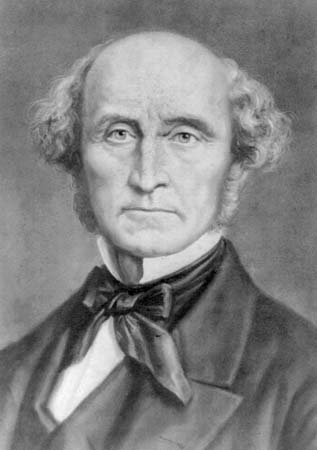
This sets the tone for the whole book, but Doyle also presents arguments intended to appeal to those who insist that we live in a society. With the compromises that entails. This was most famously recognised by notorious cis-hetero white man and free speech absolutist John Stuart Mill, who was surveying the world from the heights of Victorian Exceptionalism when he published the still unsurpassed On Liberty.

January 13, 2021

Driving people offline will break essential political feedback loops

Filed under: Liberty, Media, Politics, USA — Tags: , , — Nicholas @ 03:00

Larry Correia on the ongoing purge of Trump supporters from many social media networks:

Screencap of a Fox News report on the social media networks that have deplatformed President Donald Trump, January 2021.

For all of history when people have a problem they have been able to talk about it and hash it out. Solutions to complex problems don’t spring fully formed into existence the instant you note the problem. You get ideas from others. Their perspectives help you better articulate the issue and recognize consequences you didn’t expect.

Lawyers know law, engineers know engineering, artists know art, so on. So when there is a big problem that spreads across multiple fields, of course you need to talk it over with people who know those areas, because they know things you don’t. Being smart in one area doesn’t automatically make you an expert in others. We all need help. Big problems require discussion and brainstorming. Even if it isn’t effective, it’s still useful for the clever people who can make solutions to be able to listen to what the regular populace thinks and feels so that they can get the scope and understand how the problem hurts the public.

In the old days these conversations happened at churches, taverns, colleges, that kind of thing. All the famous places where big solutions to big problems were hashed out have a historical marker on them today. For us, those things are now illegal or stifled and we get the internet.

So of course the people who don’t see the problems as problems — or sometimes they are the problem — are trying to stop the rest of us from discussing the problems or they are trying to control where and how the conversations happen. Since they benefit from the problem, they will squash or sabotage people talking about solutions. It is in their best interests to do so, and when you give a bully a stick, they will beat you with it.

The topic of the current problem isn’t the important thing. This is our public square now whether we like it or not. We have foolishly abdicated the public square and now we are paying the price. Of course they can’t just let people they don’t like converse. That’s dangerous to their positions.

So when information they don’t like appears, they hide it. If they can’t hide it, they “fact check” it, and often that’s just a headline screaming false followed by an article full of straw grasping excuses they know most people won’t read. The goal is to shut you up or discredit you.

In the old days, at your pub or church, your drinking buddies or co-religionists probably shared your concerns and faced the same problems. So at least you were working toward a common goal. But now, big tech doesn’t want that. They don’t like groups or forums that don’t share their orthodoxy. They want/need to keep you here, and they need strangers to constantly kick in the doors and blunder in to tell you that you are stupid or crazy, that way we waste time arguing with them. It used to be a village had one idiot. When we talk now we get to deal with a thousand villages worth of idiot.

December 2, 2020

Bill C-10, An Act to amend the Broadcasting Act hijack the internet

Filed under: Bureaucracy, Cancon, Media, Technology — Tags: , , , , — Nicholas @ 03:00

At The Line, Josh Dehass outlines the benign-sounding claimed intent of Bill C-10 and the malign reality if it is implemented as written:

Bill C-10 would expand the term “broadcasters” to include online content creators. This means that after decades of a mostly regulation-free Internet, the CRTC will soon have a say in what content you can and can’t see on services like Netflix, Amazon Video and Spotify. The bill says these “broadcasters” will be required to “serve the needs and interests of all Canadians — including Canadians from racialized communities and Canadians of diverse ethnocultural backgrounds, socio-economic statuses, abilities and disabilities, sexual orientations, gender identities and expressions, and ages — and reflect their circumstances and aspirations, including equal rights, the linguistic duality and multicultural and multiracial nature of Canadian society and the special place of Indigenous peoples within that society.”

In the Globe and Mail Guilbeault helpfully translated from Newspeak: broadcasters now must create “Indigenous programming,” and possibly other forms of mandatory content by and for minority groups. Guilbeault said that the mandatory Indigenous programs are necessary to correct the “historical mistake” that Canada made when it denied Indigenous people their cultural expression. That historical mistake apparently cannot corrected solely by forcing Canadians to fund APTN and non-stop Indigenous content at CBC. Only when every private company is co-opted in the mission will the mistake be corrected.

It’s bad enough that this new law will require Canadians to pay for shows and podcasts that they’re unlikely watch. What’s really disturbing is that this new law means any large company that wants to produce artistic and cultural content online in Canada will no longer be permitted to devote their time and money exclusively to expressing the ideas that they wish [to] express. Instead, they will be forced to also express the ideas the government wishes them to express. This is compelled speech, which is the term lawyers use when the government forces you to mouth its message. This is contrary the spirit of free expression rights that the Charter of Rights and Freedoms guarantees.

The new policy might strike you as old-fashioned broadcast regulation. It isn’t. The theory behind the original Broadcast Act was that the airwaves were a finite resource, requiring the government to act as referee. Otherwise, we could end up consuming nothing but low-brow American cultural products rather than high-brow CanCon like Family Feud Canada and Hedley. This was an elitist argument, since it assumed that individual consumers weren’t capable of determining what content is in their own interests, but at least it made a little sense, because it was theoretically possible for important programming like news to get completely crowded out. The Internet, on the other hand, is effectively infinite. There’s room for everyone’s content in the online marketplace of ideas. So far, it’s worked wonderfully. Virtual nobodies can find huge audiences without big money to get started. There’s really no reason for the government to interfere.

November 17, 2020

Cancel culture comes for Donald Trump’s lawyers

Filed under: Law, Liberty, Politics, USA — Tags: , , , , — Nicholas @ 05:00

Mark Steyn reported yesterday that the Lincoln Project’s latest doxxing has been successful and that a law firm representing President Trump in one of his Pennsylvania suits has been intimidated into withdrawing from the case:

Donald Trump addresses a rally in Nashville, TN in March 2017.
Photo released by the Office of the President of the United States via Wikimedia Commons.

Back in the summer I mentioned on The Mark Steyn Show that “cancel culture” was increasingly literal: It used to mean you got kicked off Twitter or Facebook; then it progressed to losing your job or television show or book contract. By 2020 it had advanced to being denied domain registration on the Internet, credit-card services, bank accounts and other basic necessities of modern life. Now, in a country with more lawyers than the rest of the planet combined, the supposedly “most powerful man on earth” wakes up and finds his counsel just canceled:

    Lawyers with Porter Wright Morris & Arthur LLP submitted a filing late Thursday stating they were withdrawing as counsel in a federal suit seeking to block Pennsylvania from certifying its vote. No reason was given. In a statement issued Friday, the firm confirmed the filing but did not say why it was exiting the case.

Powerline‘s John Hinderaker reckons the reason is pretty obvious:

    Porter Wright is a mid-sized law firm with offices in eight cities across the country. But apparently it lacked the courage to stand up against the Twitter mob. The “Lincoln Project” doxxed the two Porter Wright lawyers who signed the Pennsylvania complaint, tweeting their pictures, addresses and telephone numbers, and encouraging leftists to harass them. Reportedly there also were employees at the law firm who objected to representing President Trump. Porter Wright’s abandonment of its client is shameful conduct for which I suspect it will receive little but praise.

[UPDATE: A Powerline reader with knowledge of the situation says that Porter Wright has withdrawn from only one of five suits.]

As John points out, in America everybody from 9/11 plotters to celebrity pedophiles, Boston bombers to Oscar-winning serial rapists gets hotshot law firms and nobody bats an eyelid. But not Donald J Trump, who is apparently unfit for legal representation.

If you like the sound of all that “unity” and “healing”, this is what it boils down to — unity in the sense the Soviets meant it: the absence of opposition. And, when they’re done with Trump, they’re serious about that “Truth & Reconciliation” enemies list. To reiterate a point I’ve made for months: on free speech and related issues, things are going to head south very fast. I carelessly assumed they’d wait till the inauguration, but it seems “the Office of the President-Elect” is already on the case.

November 7, 2020

QotD: “Hate speech”

Filed under: Humour, Law, Liberty, Quotations — Tags: , , — Nicholas @ 01:00

In an attempt to put down “racism”, the concept of “hate terms” was introduced into English law for the first time. This makes many words and expressions unlawful, and punishable by fines and imprisonment. It is the most comprehensive system of censorship since the days of Hitler’s Germany and Stalin’s Russia, and means there are more restrictions on freedom of expression in England than at any other time since Hogarth’s days.

It is, of course, fatal to humour, if enforced and persisted in. For one vital quality of humour is inequality, and striking visual, aural, and physical differences. Differences in sex, age, colour, race, religion, physical ability, and strength lie at the source of the majority of jokes since the beginning of human self-consciousness. And all jokes are likely to provoke discomfort if not positive misery among those laughed at. Hence any joke is liable to fall foul of those laws. The future for humourists thus looks bleak, at the time I write this. The ordinary people like jokes, often crude ones, as George Orwell pointed out in his perceptive essay on rude seaside picture postcards. But are ordinary people, as opposed to minor officials, in charge any more? Democracy doesn’t really seem to work, and people are insufficiently dismayed at its impotence.

Paul Johnson, Humourists: From Hogarth to Noël Coward, 2010.

November 1, 2020

QotD: Trumbo

Over the past weekend I watched Trumbo, the story of the Marxist screenwriter blacklisted by Hollywood during the Red Scare back in the 1950s. To say that I watched it with a jaundiced eye would be a very big understatement, because I suspected (just from the trailer) that the movie would just be one big blowjob for both Dalton Trumbo and his merry little band of Commiesymps who infested Hollywood back then.

And it was. Needless to say, the movie made villains of the conservatives who opposed the Marxist infiltration: people like John Wayne and Hedda Hopper in particular, Wayne because Wayne, and Hopper because she had a son serving in the U.S. Navy during the Korean War. Of course Wayne was made out to be a bully and Hopper a vindictive bitch — and the Senators and Congressmen who haled the Commies in front of the Senate and House Un-American Committee (HUAC) were depicted as ideological purists who saw Communists behind every bush — even though, in the case of Hollywood, there were Commies behind every bush at the time.

Of course, much was made of the fact that being a Communist wasn’t actually illegal (then, and now), and Trumbo made a great show of this being a First Amendment issue — which it was — and how these Commies all wanted to improve America, but of course there were evil right-wingers like Wayne, Joe McCarthy and HUAC harassing them at every turn.

The execution of the traitors Julius and Ethel Rosenberg got a little puff piece in the movie, which didn’t — couldn’t — actually say they weren’t guilty of treason espionage, so it was brushed over with the throwaway that it was the first execution for espionage in peacetime, as though peacetime should give espionage a pass. And if that wasn’t enough, the Rosenberg children were paraded around as sympathy magnets — as they still are — because Communists have no problem using children to serve their own purposes.

Kim du Toit, “Blacklists Matter”, Splendid Isolation, 2020-07-28.

October 15, 2020

Twitter will now helpfully prevent you from committing thoughtcrime, citizen!

Filed under: Liberty, Media, Politics, USA — Tags: , , , , — Nicholas @ 05:00

When you appoint yourself the guardian of speech, you quickly become the gatekeeper of all speech:

« Newer PostsOlder Posts »

Powered by WordPress