Quotulatiousness

August 31, 2020

QotD: The Alt-right and Jordan Peterson

Filed under: Cancon, Media, Politics, Quotations — Tags: , , , , — Nicholas @ 01:00

You can hear this in the visceral contempt with which Peterson’s “young white male” audience is described by his journalistic detractors, (most of whom are white, and many of whom are male). And yet this crucial piece of hearsay, linchpin of the Peterson narrative, is not true. It hasn’t been true for a while, if it ever was. Anyone who cares to know the truth can go out and find it: I saw it myself with my own eyes at three events I attended in the winter, as did the Maclean’s reporter who found that:

    They are new Canadians, people of colour, men and women. And in a way that seems out of sync with op-ed portrayals of Peterson’s supporters as committed to preserving old hierarchies and positions of privilege — they often see themselves as searchers, truth-seekers and iconoclasts.

Popularity, even among people of color, is not, of course, proof in itself of the salubriousness of anything, especially in a world where Fox News, Breitbart, and InfoWars also command the attention of tens of millions. And indeed, Peterson really was avidly embraced at first by the far-right when he emerged, denouncing concepts of unconscious bias and white privilege, and stated his intention to defy any prospective attempt through the force of law to compel him to adopt gender-neutral pronouns in his classroom at the University of Toronto. In his rather coarse-grained and Manichaean analysis of so-called Social Justice Warriors, Peterson occasionally invoked a term, “Cultural Marxism,” whose lineage was said, by others, to have also birthed a far-right conspiracy theory that, in turn, figured prominently in the manifesto of the Norwegian mass murderer Anders Breivik. So anyone playing a game of connect the dots in order to portray Peterson as part of a recrudescence of reactionary modernism has material to work with, some of it even provided by Peterson himself.

Yet it soon enough became clear to anyone paying attention that Peterson’s initial embrace by the alt-right was a case of mistaken identity. Eventually, the spokesmen of that poisonous and amorphous internet tendency decided in concert that Peterson had been sent by the left to disrupt their “movement” and siphon off its energies by redirecting it toward an individualistic creed that would prove fatal to their own racist ethnonationalism. Peterson then rapidly crossed over to an audience that is now many multiples the size of the cohort of problematic young males who first embraced, then rejected him, even as the progressive left tried to hold on to the alt-right’s original, mistaken read.

Wesley Yang, “The Shocking Truth About Jordan Peterson”, Tablet, 2018-05-28.

July 15, 2020

Wilfred Laurier University – from university to indoctrination centre

In the National Post, Barbara Kay notes how things are changing from general support of freedom of speech to cracking down on “dissent” of any nature, with WLU being a leading example:

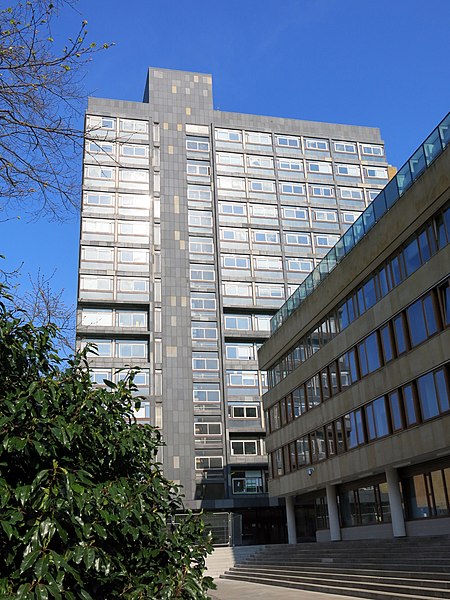
Wilfred Laurier University in Waterloo, Ontario. This photo taken from University Avenue shows the Maureen Forrester Recital Hall and John Aird Centre, 23 September, 2005.
Photo by Radagast via Wikimedia Commons.

My editor, a man in his prime, recently tweeted bemusement that his older readers often preface their emails to him with allusions to their age (“as a 75-year old man …” “I’m an 82-year old woman …”).

I know these readers. Or others like them.

When my oldie readers introduce generation markers in their emails, it’s generally a semaphore signifying bewilderment at a cultural landscape so utterly changed from their youth, they cannot find their bearings. I empathize with these readers because, an oldie myself, I share their anxiety at the continual erosion of classic liberal principles we took for granted as permanent. Especially the freedom to dissent from popular views.

[…]

If you had told us in our youth that one day students would be screaming obscenities and blaring horns to prevent presentations by visiting speakers whose opinions they dislike, as happens frequently in American universities and occasionally in Canada, we would have been shocked. If you had told us that someday a graduate student who exposed her class to a range of opinions on a controversial subject — the norm in my university experience — would be officially censured for including the views of a conservative commentator because his views might “harm” students, we would have been gobsmacked.

Lindsay Shepherd’s 2017 recording of her disciplinary session at Wilfrid Laurier University for the crime of exposing her students to Jordan Peterson’s views on compelled speech brought her to national attention. (Peterson was compared to Hitler by one interrogator. A defamation lawsuit by Peterson against WLU is in progress.) The broadcast of the ruthless performance that reduced Shepherd to tears was a pivotal teaching moment in the illiberalism that governs academia in the name of diversity, equity and inclusion.

Shepherd was the only adult in that room. But she was already an exception to the rule in her cohort, and the chances of another such act of dissidence by a WLU graduate student are slim to vanishing.

July 10, 2020

Freedom of speech – a tool to be discarded when your opponents try to use it

Filed under: Liberty, Politics, USA — Tags: , , — Nicholas @ 05:00

Arthur Chrenkoff discusses the recent uproar among progressives over an open letter calling for respect for free speech … when the “wrong kind of people” started signing on:

Godfrey Elfwick’s disturbingly accurate summary of free speech support among the woke.

So how did it come to this on a meta-level – how did the left, which for a long time championed ideas like freedom of speech, come to be the new censors and book burners?

The answer is short and simple: power.

Thanks to its Marxist heritage, the left is all about power. Who has it, who doesn’t (Lenin’s famous ur-question “who whom?”), how to get it. Power and power relationship is the ultimate touchstone and lodestar, the prism through everything else is seen and judged. Everything, including morality – what’s right, what’s wrong – flows from the position in this binary system (and with power it is a zero-sum game: you either have it all or you have none).

Turkish Islamist president Recep Erdogan has once famously said “Democracy is like a streetcar. When you come to your stop, you get off.” The stop – the end – is power; democracy is the mean to the end.

So it is with the left and freedom. The left was pro-freedom when it was on the way up. Being pro-freedom helped them achieve their objectives. Freedom of speech, for example, was important because it guaranteed them the ability to spread their ideas.

Now the left has the power, if not in all respects and in equal measure, certainly as far as culture is concerned, where it enjoys near hegemony. Being on top it doesn’t need freedom of speech anymore. Quite the contrary: freedom of speech now enables its critics to challenge their ideas and their position. Debate is a waste of time and effort, much better and more efficient is to silence any dissenting voices.

It’s never about principle – it’s about the side (yours) and power (yours to gain and keep).

July 1, 2020

Parler, pro and con

Filed under: Business, Liberty, Media, Politics, Technology, USA — Tags: , , , — Nicholas @ 05:00

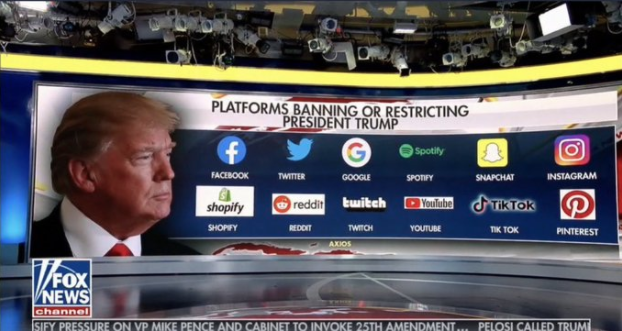
The latest social media challenger to Twitter has been getting a fair bit of attention over the last couple of weeks, as many British and American conservative Twitter users have announced they’ll be relocating to the newer service due to their concerns over Twitter’s progressive bias and very uneven-handed moderation. In The Critic, David Scullion points out that Parler may not be the dream social network for the unwoke:

The avowedly “unbiased” social media site based in Nevada has been around for two years but has rapidly gained traction amongst Trump supporters in the US, Brexit and Conservative supporters in the UK, and pro-monarchists in Saudi Arabia. (Yes really).

The raison d’être is free speech and in its “Declaration of Independence” Parler outlined the injustices, as they see it, of the existing big tech firms:

    They manipulate their platform to hide information. They shadow ban, trick and deceive. They have become enablers, and often leaders, of the vicious cancel-culture mob who goose-step through our online communities and scream down those who dare to disagree.

The document ends by calling on users to “#Twexit to Parler” – i.e. leave Twitter and join them.

But will they succeed?

[…]

It seems like Parler’s popularity is a symptom of censorship in big tech, but building a rival “free speech” network has its own problems.

For a start, Parler will throw you to the wolves if they get sued over your posts.

Parler requires users to “agree to defend and indemnify Parler, as well as any of its officers, directors, employees, and agents, from and against any and all claims, actions, damages, obligations, losses, liabilities, costs or debt, and expenses (including but not limited to all attorneys fees) arising from or relating to your access to and use of the Services.”

And in order to use Parler, individuals must also forfeit their right to sue it in court or join a class-action claim. Instead they must settle disputes in arbitration.

It’s also worth pointing out that Twitter once branded itself as “the free speech wing of the free speech party” and said it took a “neutral” view of tweets posted by users because of the company’s founding principles. Those principles are now gone, gradually removed in response to a need to protect their bottom line.

June 29, 2020

Today on NeoNaziHuntingExpeditions, we track down Neo Nazi Bronies

Filed under: Media, Politics, USA — Tags: , , , , , , , — Nicholas @ 05:00

In Quillette, Daniel Friedman examines the claims made in a recent Atlantic investigation into Nazis in the My Little Pony community (that is, adult fans of the show, not little girls … I think):

Image found by searching for “Neo Nazi Bronies”, listed URL – http://www.democraticunderground.com/1014960111

The evidence of this Nazi problem in the My Little Pony fandom is that, on a My Little Pony imageboard called Derpibooru, over 900 images were tagged as “racist,” and images mocking Black Lives Matter were upvoted by users while images supporting the movement were downvoted, even as the site’s administrators made a statement of support for the protests. After much controversy, the imageboard banned uploading images “created for no reason other than to incite controversy” and removed the 926 images tagged “racism” or “racist.” This move was extremely controversial within the Derpibooru community, many members of which oppose any moderation.

Atlantic reporter Kaitlyn Tiffany suggests that the strong free-speech norms of the Derpibooru boards stem from its origins on 4Chan, which Tiffany describes as “the largest den of chaos and toxic beliefs available on the Internet.” She describes the Brony community as being divided between those who “genuinely enjoy My Little Pony and the wholesome escapism it provides” and trolls who think it is “edgy and provocative to be an adult obsessed with cartoon ponies.” This frames the Derpibooru imageboard as a place where innocent cartoon fans are unknowingly subjected to subversive, racist memes and images that may send people down a rabbit hole of far-right content.

However, claims that a significant portion of the Brony community are Nazis, or that a significant amount of the content on Brony imageboards is right-wing propaganda or racist memes has to be put in the proper context. First of all, the 926 images tagged “racist” exist on a board that hosts over two million images. If you order all the site’s various tags by how many images fall within their categories, there are 12 full pages of other, more popular tags you have to scroll through to find the “racism” tag. One thousand two hundred and seventy-five images are tagged “politics” and include images both supporting and opposing Black Lives Matter. Discussion of these issues is a tiny fraction of one percent of the content on the My Little Pony imageboard.

By contrast, 315,867 images on the Derpibooru forum are tagged as sexually explicit, a further 127,414 images are tagged as sexually suggestive and 105,521 images are tagged as containing “questionable” sexual content. The truth is that Derpibooru’s lax moderation norms and anti-censorship culture don’t exist to protect objectionable political content; this imageboard is unmoderated because it is an enormous repository of fan-made My Little Pony pornography.

The Atlantic article fails to place the 926 racist images in the context of the larger scope of the two million images hosted by the Derpibooru board, because less than one-quarter of one percent of the site’s content is of a political nature. And the Atlantic article avoids mentioning the half-million pornographic images the site hosts, because doing so reveals that the community’s widespread opposition to content moderation on their imageboard is about protecting sexually explicit content rather than creating a space for hateful politics to flourish, and it further reveals that the Bronies are 500 times more interested in having sex with My Little Pony characters than they are in spreading racist pony memes.

The article creates an impression that the alt-Right is using seemingly-innocent cartoon fandoms as a Trojan horse to conceal and spread a sinister ideology, but the truth is that the only thing these guys are interested in hiding inside a horse is their dicks.

June 26, 2020

QotD: “The freedom to tell lies is one of the most basic freedoms of all”

It was clear to me from the questions that followed that the children had very little notion of what freedom actually was or what it entailed. For example, could it be right to allow climate-deniers to spread their falsehood and lies? The question begs many questions, of course: it assumes that it is beyond reasonable doubt that the globe is warming, that the warming is caused by man’s activities, that the warming is a wholly harmful phenomenon and that there is only one possible solution to it. I am insufficiently knowledgeable to pronounce on these questions and have heard eminent people whom I respect and whose integrity I have no grounds for doubting argue for very different conclusions.

But even if there were answers to these questions that were a good deal more certainly true than any answers that we possess today, it still would not be right to silence doubters and deniers: for error and even malice are the price of freedom. In the realm of intellectual freedom it is not truth that sets you free, but error, or rather the permissibility of error. And the freedom to tell lies is one of the most basic freedoms of all. There can be no freedom without it.

Well, the audience was only young and perhaps this was strong meat for their immature digestions rendered sensitive by a constant diet of modern pieties, as the young these days are said to be more likely to develop allergies because of the sterility and cleanliness of modern homes and ways of life (what they need is more dirt and early contact with potential pathogens). But soon they would be going off to university, where it was likely that they would encounter an even narrower and powerfully self-reinforcing view of the world. The pressure to conform would add to the natural self-righteousness of youth, which is often mistaken for idealism, and their impulse to censor in the name of their own irreproachable virtue would be strengthened and entrenched.

The long-term prospects for freedom of speech, then, are not altogether rosy. Those who value it are less vehement in their defence of it than are the self-righteous in their assault on it.

Anthony Daniels, “Free Speech’s Emboldened Enemies”, Quadrant, 2018-03-10.

June 12, 2020

J.K. Rowling on her most recent “cancellation”

I know a lot of Harry Potter fans are upset with their formerly favourite author for her stance on transgenderism … or what they’ve heard about her stance … or what their friends have said about her stance … so J.K. Rowling has posted an essay on her own site explaining what happened and how she has been coping with being “cancelled” so many times:

… as a much-banned author, I’m interested in freedom of speech and have publicly defended it, even unto Donald Trump.

The fourth is where things start to get truly personal. I’m concerned about the huge explosion in young women wishing to transition and also about the increasing numbers who seem to be detransitioning (returning to their original sex), because they regret taking steps that have, in some cases, altered their bodies irrevocably, and taken away their fertility. Some say they decided to transition after realising they were same-sex attracted, and that transitioning was partly driven by homophobia, either in society or in their families.

Most people probably aren’t aware – I certainly wasn’t, until I started researching this issue properly – that ten years ago, the majority of people wanting to transition to the opposite sex were male. That ratio has now reversed. The UK has experienced a 4400% increase in girls being referred for transitioning treatment. Autistic girls are hugely overrepresented in their numbers.

The same phenomenon has been seen in the US. In 2018, American physician and researcher Lisa Littman set out to explore it. In an interview, she said:

“Parents online were describing a very unusual pattern of transgender-identification where multiple friends and even entire friend groups became transgender-identified at the same time. I would have been remiss had I not considered social contagion and peer influences as potential factors.”

Littman mentioned Tumblr, Reddit, Instagram and YouTube as contributing factors to Rapid Onset Gender Dysphoria, where she believes that in the realm of transgender identification “youth have created particularly insular echo chambers.”

Her paper caused a furore. She was accused of bias and of spreading misinformation about transgender people, subjected to a tsunami of abuse and a concerted campaign to discredit both her and her work. The journal took the paper offline and re-reviewed it before republishing it. However, her career took a similar hit to that suffered by Maya Forstater. Lisa Littman had dared challenge one of the central tenets of trans activism, which is that a person’s gender identity is innate, like sexual orientation. Nobody, the activists insisted, could ever be persuaded into being trans.

The argument of many current trans activists is that if you don’t let a gender dysphoric teenager transition, they will kill themselves. In an article explaining why he resigned from the Tavistock (an NHS gender clinic in England) psychiatrist Marcus Evans stated that claims that children will kill themselves if not permitted to transition do not “align substantially with any robust data or studies in this area. Nor do they align with the cases I have encountered over decades as a psychotherapist.”

The writings of young trans men reveal a group of notably sensitive and clever people. The more of their accounts of gender dysphoria I’ve read, with their insightful descriptions of anxiety, dissociation, eating disorders, self-harm and self-hatred, the more I’ve wondered whether, if I’d been born 30 years later, I too might have tried to transition. The allure of escaping womanhood would have been huge. I struggled with severe OCD as a teenager. If I’d found community and sympathy online that I couldn’t find in my immediate environment, I believe I could have been persuaded to turn myself into the son my father had openly said he’d have preferred.

When I read about the theory of gender identity, I remember how mentally sexless I felt in youth. I remember Colette’s description of herself as a “mental hermaphrodite” and Simone de Beauvoir’s words: “It is perfectly natural for the future woman to feel indignant at the limitations posed upon her by her sex. The real question is not why she should reject them: the problem is rather to understand why she accepts them.”

As I didn’t have a realistic possibility of becoming a man back in the 1980s, it had to be books and music that got me through both my mental health issues and the sexualised scrutiny and judgement that sets so many girls to war against their bodies in their teens. Fortunately for me, I found my own sense of otherness, and my ambivalence about being a woman, reflected in the work of female writers and musicians who reassured me that, in spite of everything a sexist world tries to throw at the female-bodied, it’s fine not to feel pink, frilly and compliant inside your own head; it’s OK to feel confused, dark, both sexual and non-sexual, unsure of what or who you are.

I want to be very clear here: I know transition will be a solution for some gender dysphoric people, although I’m also aware through extensive research that studies have consistently shown that between 60-90% of gender dysphoric teens will grow out of their dysphoria. Again and again I’ve been told to “just meet some trans people.” I have: in addition to a few younger people, who were all adorable, I happen to know a self-described transsexual woman who’s older than I am and wonderful. Although she’s open about her past as a gay man, I’ve always found it hard to think of her as anything other than a woman, and I believe (and certainly hope) she’s completely happy to have transitioned. Being older, though, she went through a long and rigorous process of evaluation, psychotherapy and staged transformation. The current explosion of trans activism is urging a removal of almost all the robust systems through which candidates for sex reassignment were once required to pass. A man who intends to have no surgery and take no hormones may now secure himself a Gender Recognition Certificate and be a woman in the sight of the law. Many people aren’t aware of this.

June 10, 2020

“Gender critical” feminism

Barbara Kay finds herself in agreement with an academic who, having come from a Marxist and radical feminist background, she would not normally have much in common:

Kathleen Lowrey, associate professor of anthropology at the University of Alberta, ascribes much of her intellectual formation to Marxism and radical feminism. Not, I think my regular readers would agree, someone with whom I would normally have a great deal in common. And yet, in this strange cultural moment, Prof. Lowrey and I find ourselves amicably united in the service of a mutually revered ideal. I write this column with ardent sympathy for her in her present predicament.

Academics’ time is generally split 40/40/20 amongst, respectively, research, teaching and “service” to their community — meaning committees, mainly. Until late March, Lowrey served as associate chair for undergraduate programs on behalf of the department of anthropology. Following anonymous complaints about her views from one or more students to the university’s office of safe disclosure and human rights, as well as to the dean of students, Lowrey was asked to resign. She was not given a precise reason, only told that because she holds “gender critical” opinions, she was making the learning environment “unsafe” for the anonymous complainants who felt that her views caused them “harm.” (It’s not clear — Lowrey believes it is doubtful — that the complainants were even taking her courses.)

“Gender critical” refers to what was shortly ago normative feminism doctrine in considering biological sex of primordial importance in fighting for women’s rights. Where the traditional rights of biological women collide with asserted rights of trans women — sport, intimate spaces, rape crisis centres, prisons — gender-critical feminists join with conservatives like me in insisting that biological women’s rights must prevail: for the sake of their safety, privacy and right to a level playing field.

Until what seems like a few minutes ago, there was nothing controversial about this opinion. But now there is. The only “correct” opinion to hold is that gender expression trumps biology in any rights-based claims. And in academic circles, Lowrey’s views, which she is at no pains to hide on campus and off, are a form of apostasy that cries out for punishment.

June 5, 2020

Toronto radio station to be required to denounce itself in Canadian Content “Struggle session”

Filed under: Cancon, Media — Tags: , , , , , — Nicholas @ 05:00

Wikipedia defines a “Struggle session” as “a form of public humiliation and torture that was used by the Communist Party of China (CPC) at various times in the Mao era, particularly years immediately before and after the establishment of the People’s Republic of China and during the Cultural Revolution. The aim of a struggle session was to shape public opinion and humiliate, persecute, or execute political rivals and those deemed class enemies.” It seems that Canada is becoming just a bit more like China (whose “basic dictatorship” has been publicly admired by our Prime Minstrel), as Toronto’s CFRB has been found in violation of the whims of the Canadian Broadcast Standards Council:

The Canadian Broadcast Standards Council has ruled that a news broadcast that jokingly criticized Canadian content violates the Canadian Association of Broadcasters’ (CAB) Code of Ethics and the Radio Television Digital News Association of Canada’s (RTDNA) Code of Journalistic Ethics. The complaint arose from a December 2019 broadcast on Toronto radio station CFRB. David McKee used his lead-in to a report on a possible Netflix tax to state “the libraries of streaming services like Netflix, Disney+ could soon have more of a Canadian flavour that nobody watches or wants if the federal government gets its way.”

That comment was too much for one listener, who filed a complaint with the CBSC, arguing that “Canadian Content is important, and Mr McKee seems to forget that he is part of a Canadian Content Broadcaster. His opinions should be kept off of the regular news sections and limited to a specific commentary section if he is so transfixed on being a commentator.”

The CBSC agreed, taking aim at the words “nobody watches or wants”, which it concluded constituted inserting personal opinion into the broadcast […]

As a penalty, CFRB must now broadcast that it breached the ethics standards on several broadcasts. While few will likely take notice, Canadians should take notice of the regulatory policing of the line between news and commentary on a radio broadcast. Indeed, one wonders if there would be a similar outcome if the broadcaster had expressed support for Canadian content.

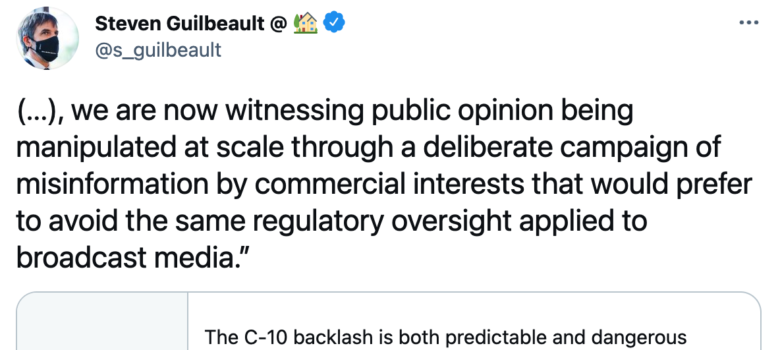
Moreover, the Broadcast and Telecommunications Legislative Review Panel, which Canadian Heritage Minister Steven Guilbeault plans to implement, recommended extending Canada’s broadcast regulatory framework to the Internet, including sites and services that aggregate the news.

May 27, 2020

QotD: “Hate speech” is the new secular heresy

The cynical category of “hate speech” is openly used to police the parameters of acceptable thought and to punish those who are considered to hold heretical views that the guardians of moral correctness oppose. So not only are critics of Islam denounced as “hate speakers” — so are feminists who question the cult of transgenderism, Christians who disapprove of same-sex marriage, right-wing people who want stricter immigration controls, etc. These are all entirely legitimate political or moral opinions. The branding of them as “hate speech” — and therefore undeserving of the protections of freedom of speech — is really a way of calling these views heresy. And of course heretics must be cast out. Feminists, Catholics, critics of Islam — hound them off campus, get them off the airwaves, report them to the police for their crimes of hatred. This is an intolerant assault on heresy of the kind that has appeared many times throughout history. Those who say “It isn’t censorship” protest far too much. Deep down they know it is. Deep down they know they are to the 2020s what Joe McCarthy was to the 1950s.

Brendan O’Neill, “Why we must win the fight for free speech”, Spiked, 2020-02-26.

April 29, 2020

“The war on ultraviolet radiation because it might help Trump is an educational moment”

Arthur Chrenkoff on the sudden decision that the World Health Organization is the ultimate arbiter of what we’re allowed to say on social media platforms like Twitter and YouTube:

There is of course no evidence that the video represents any disinformation. It relates to legitimate scientific research by a medical company conducted in association with a respected hospital to develop a novel treatment of possibly crucial importance in the current conditions and into the future. The only problem with the video is that is indirectly supports Trump’s flight of fancy speculation about using light and chemicals to “disinfect” the body. Ergo, according to a NYT journalist it represents a problem and YouTube agrees. YouTube now has a standing policy of removing COVID information that goes against the World Health Organisation’s guidelines. Putting aside the question of the WHO’s credibility in the wake of the pandemic, we are not talking here about some guy in a tinfoil hat talking about 5G towers spreading the virus; this is a video relating to ongoing, respectable scientific research. Will it work? Probably not. But perhaps neither will any of the 150 or so COVID-19 vaccines being currently developed around the world. We won’t know until we know. But in the meantime, scientific news should not be censored, period.

[…]

Goldsmith and Woods are correct in pointing out not only the greater role that governments have been playing in regulating speech but more importantly how much of that effort has been embraced and driven by the big tech — and by the private individuals enabled and encouraged by the big tech — what I have previously called the “democratised censorship”. The difference is that people like Goldsmith and Woods think that’s a good thing.

The dirty little secret is that a great number of leftists, progressives and even centrist technocrats and activists look at China, with its authoritarian government, social credit score system, ubiquitous surveillance, and the ability to “get things done” and done quickly and supposedly efficiently (in China, bullet trains run on time, I hear), and pine for such a system to be applied in their own countries — as long as, of course, they are the ones in power and decide what is right, important and valuable. The left’s objections are rarely against authoritarianism and its means and methods per se, just with the possibility that someone else — like Trump — is the one behind the wheel, implementing their, not the left’s, agenda.

The war on ultraviolet radiation because it might help Trump is an educational moment. One could say, first they came for crazy conspiracy theorists and I said nothing because I’m not an anti-vaxxer or anti-5G activist — and so on. The problem with censorship is that it keeps creeping up on everyone else. And those who do the censoring — who decide what the ignorant masses should and shouldn’t be allowed to read — are not some detached and impartial spiritual beings but people with political agendas. People who think that ideas and beliefs of one half of the society are harmful and offensive. People who will censor news that doesn’t fit the agenda and support the narrative.

And then they came for ultraviolet radiation… You have been warned.

April 27, 2020

QotD: H.L. Mencken’s literary theory

Filed under: Liberty, Politics, Quotations, USA — Tags: , , , — Nicholas @ 01:00

As for me, my literary theory, like my politics, is based chiefly upon one main idea, to wit, the idea of freedom. I am, in brief, a libertarian of the most extreme variety, and know of no human right that is one-tenth as valuable as the simple right to utter what seems (at the moment) to be the truth. Take away this right, and none other is worth a hoot; nor, indeed, can any other long exist. Debauched by that notion, it follows necessarily that I can be only an indifferent citizen of a democratic state, for democracy is grounded upon the instinct of inferior men to herd themselves in large masses, and its principal manifestation is their bitter opposition to all free thought. In the United States, in fact, I am commonly regarded as a violent anti-patriot. But this is simply because most of the ideas upon which American patriotism bases itself seem to me to be obviously sentimental and nonsensical — that is, they have, for me at least, no intelligible relation to the visible facts. I do not object to patriotism when it is logically defensible. On the contrary, I respect it as a necessary corollary to the undeniable inequality of races and people. Its converse, internationalism, appears to me to be almost insane. What an internationalist says, stripping it of rhetoric, is simply that a lion is no more than a large rat.

H.L. Mencken, “Private Reflections”, The Smart Set, 1922-12.

March 30, 2020

QotD: Free speech is the safety valve we must not eliminate

[W]hen you’re a peddler of Utopia, you can’t admit you’re wrong or that your methods are crazy. After all, your cult of Marx (a college-professor friend recently shocked his students by pointing out Marx is a 19th century western idea — born of the mechanical age and the idea you can make everything just so — and that imposing this interpretation on non-Western systems is colonialist) promises eventual paradise and world domination. You can’t be wrong. It would mean your whole life has been in vain, and everything you’ve been taught is a lie.

The system might have moved the downtrodden from those “exploited” by the industrial revolution, to “minorities” “third world people” and people with interesting colorations — mostly because the “exploited” workers kept rising up in the world and spitting in the eye of Marx, the ungrateful bastages — but it’s totally still true and the way of the future. Even if it requires conceptualizing a future where no one works and everything is free, since they’ve now tossed the “workers” out of their ideal society. (Again, ungrateful bastages who don’t know how “good” the intellectuals are for them.) But it is totally the future!

So all those people who say that it’s still spinach and to hell with it? They’re just trying to destroy the train of happiness leading to the station of utopia.

Which means they must be silenced. If they’re just silenced, then the system will work fine, and everyone will be happy and joyful.

So the latest attack is on free speech. Because free speech can be hurty and say things the left doesn’t want to hear. Bad bad free speech must be stopped.

They already have laws against “hate speech” or “harassment”, which according to a comment here is “saying something I don’t like more than once” in most of the world.

The US is holding fast in our unreasonable devotion to the first amendment which irks the left as much as our devotion to the second. Don’t we understand that bad speech hurts people? And leads to bad think?

In any institution they control, from companies code of conduct to deplatforming people on twitter, to Google strangling hits to dissenting blogs, etc, they are already silencing that nasty, evil feedback.

Because if only they don’t hear the whistles of rising steam, the engine will never explode.

Cotton stuffed in their ears, they keep feeding more coal to the engine of public opinion and stopping up the steam vents.

The end of this is what happened to Ceausescu and his repulsive wife: “Beloved leader of the morning, pile of cooling, bullet riddled meat in the afternoon.”

But they don’t see it. They’re convinced if they just stop the feedback, the machine will work fine.

And they’re going to take all of us into the explosion. Mind you, in the end we win, they lose, but it’s going to get very rough there for a while.

Unfortunately when dealing with true believers, there’s nothing you can do but let them utterly prove their system wrong, before sane people can build again.

Sarah Hoyt, “Breaking the Gears”, According to Hoyt, 2018-01-03.

March 14, 2020

“The people who write such things are thinking with their epidermis and genitalia, which is to say they’re not thinking at all”

In Quillette, Matt Johnson remembers the great anti-identitarian writer and speaker, Christopher Hitchens:

Christopher Hitchens speaking at The Amaz!ng Meeting held at the Riviera Hotel, Las Vegas, Nevada on 20 January 2007.
Photo detail by ensceptico via Wikimedia Commons.

Hitchens thought fearlessly. As Martin Amis put it, he liked “the battle, the argument, the smell of cordite.” This is why he told the publisher of God is Not Great: How Religion Poisons Everything to organize a book tour that ran through the pulpits of the American South instead of remaining confined to the coasts. It’s why he relished every opportunity to lambaste Bill and Hillary Clinton in front of liberal audiences. It’s why he went after Mother Teresa and Princess Diana. He was an inveterate iconoclast — if there was a bloated reputation to puncture or a cherished dogma to deflate, he saw it as a duty and a pleasure to do so.

It’s no surprise that this oppositional inclination, coupled with blistering rhetorical ability, made Hitchens a deadly debater. After his death in December 2011, countless tributes and articles about Hitchens emphasized what a force he was in the studio and on the debate stage — his erudition and wit, his fluency, his seemingly superhuman memory. Hitchens is unforgettable for all these reasons, but people don’t miss him because he could turn a phrase or win an argument on CNN — they miss him because he thought for himself and refused to apologize for it. He didn’t want to write and speak as the representative of a community: “My own opinion is enough for me,” he told the audience at a debate on free speech in 2007, “and I claim the right to have it defended against any consensus, any majority.”

“Unpopular ideas can be silenced, and inconvenient facts kept dark, without the need for any official ban,” Orwell wrote in his original introduction to Animal Farm (which was, ironically, suppressed). He continued: “Anyone who challenges the prevailing orthodoxy finds himself silenced with surprising effectiveness.” While there was far more official censorship in Orwell’s time, we’re living through an era of pervasive self-censorship, and as Packer explains, this type of silencing is “more insidious than the state-imposed kind, because it’s a surer way of killing the impulse to think, which requires an unfettered mind.”

[…]

Hitchens detested tribal and parochial feelings of any kind, which is why he was dismayed when he witnessed the emergence of identity as a catalyst for political mobilization in the late 1960s and early 1970s. In his memoir, Hitch-22, Hitchens attacked radicals who thought it was “enough to be a member of a sex or gender, or epidermal subdivision, or even erotic ‘preference,’ to qualify as a revolutionary.” When Hitchens first heard the expression “the personal is political,” he knew “as one does from the utterance of any sinister bullshit that it was — cliché is arguably forgivable here — very bad news.” As he put it in a 2008 article:

    People who think with their epidermis or their genitalia or their clan are the problem to begin with. One does not banish this specter by invoking it. If I would not vote against someone on the grounds of ‘race’ or ‘gender’ alone, then by the exact same token I would not cast a vote in his or her favor for the identical reason.

It’s easy to imagine what Hitchens would have thought about a recent New York Times headline that declared “The Next President Should Not Be a Man” or a prominent writer and activist who announced that she “will not support white male candidates in the Dem primary.” The people who write such things are thinking with their epidermis and genitalia, which is to say they’re not thinking at all. You don’t have to bother defending candidates’ principles and positions when gender and race are the only relevant variables.

February 27, 2020

Toby Young’s Free Speech Union (FSU)

Brendan O’Neill explains why Toby Young’s FSU is so important right now:

The beautiful thing about the mad reaction to Toby Young’s Free Speech Union (FSU) is that it proves why the union is so necessary. No sooner had Young unveiled his censorship-busting union than the illiberal liberals were out in force to mock it and ridicule it and to insist that, actually, there is no free-speech crisis in the UK. It’s a right-wing myth, they claim. There is no widespread censorship. People aren’t being shipped off to gulags for expressing an opinion. Apparently, the free-speech “grift” – God, I hate the word “grift” – is just a bunch of pale, male and stale blokes pissed off that they can no longer say the N-word or talk openly about women’s boobs. Freedom of speech is not under threat, the Young-bashers claim, and anyone who says it is is probably just an Islamophobe, transphobe or some other breed of phobe itching to spout bile with “no consequences”.

This rank denialism, this blinkered insistence that free speech is not in danger in 21st-century Britain, is exactly why we need the FSU and as broad a discussion as possible about the importance of the liberty to express oneself. Because the fact that so many inhabitants of the chattering-class bubble can’t even see that free speech is dying right now confirms how naturalised and uncontroversial the new censorship has become. They don’t even see it as censorship. They see it as perfectly normal, and good, in fact, that certain views cannot be expressed in public life or on social media. That’s how cavalier the new war on heretical opinion has become. At least in the past, from Torquemada to the McCarthyites, authoritarians were honest about being censors. Today’s self-elected moral guardians of correct opinion are so hubristic, so taken with their own mortal rectitude, that they don’t even see themselves as enemies of freedom, but rather as decent, unimpeachable maintainers of a natural intellectual order.

Things have come to such a pass that these people will literally seek to censor you in one breath and then express alarm at being called censors in the next breath. Hence the Guardian could publish a piece last week claiming that the idea that there is a culture of censorship in British universities is a “right-wing myth” while simultaneously defending censorship on campus. In an act of extraordinary moral contortionism, Evan Smith mocked the “idea that there is a free-speech crisis at British universities” and then, without missing a beat, he defended the policy of No Platform and the creation of safe spaces because “the university cannot be a place where racism and fascism – as well as sexism, homophobia and transphobia – are allowed to be expressed”. The Orwellianism is staggering. “There is no censorship on campus. Except the censorship I approve of. Which is not really censorship.” That is what is being said here. The intellectual dishonesty is almost impressive.

This Orwellian denialism of the existence of censorship by people who actually support and enact censorship cuts to the heart of the free-speech crisis in the UK. The reason the illiberal liberals and woke McCarthyites and Twittermobs don’t consider themselves to be censors – even as they gleefully agitate for the censorship of feminists, secularists worried about Islamist extremism, and right-wing people opposed to mass immigration – is because they have convinced themselves that certain forms of speech are not free speech. That certain beliefs should not be afforded the liberty of expression. You hear it in their telling, baleful mantra that “Hate speech is not free speech”. And if “hate speech” is not free speech, but rather some kind of toxin, a pox on public life, then crushing it is not censorship. It is more like an act of public health: cleansing the public realm of diseased thoughts that are liable to harm certain groups. These people see themselves not as censors, but as public-health activists delousing the community of germs spread by evil men and women.

« Newer PostsOlder Posts »

Powered by WordPress