Quotulatiousness

February 25, 2022

QotD: The lure of the forbidden knowledge

When we as academics avoid those uncomfortable questions, we unwittingly invite others to answer them for us. When activists try to suppress rather than debate speech they find loathsome, they should know they are adding to its mystique.

Forbidden ideas have an appeal that orthodoxy never does — just ask Martin Luther. In fact, the parallels between the rise of the alt-right and the Reformation are interesting. In Luther’s world the printing press had recently created new and difficult to control ways for people to share subversive ideas. Early forms of capitalism led to the rise of new social classes and fueled resentment against traditional elites and traditional forms of authority. There were even early forms of the meme. Long before Pepe the Frog was co-opted by the alt-right, drawing donkey ears on images of priests was a way of provoking the powerful.

It’s surely the case that some of the speech that activists and university administrators seek to suppress poses a much more direct threat to real people than does a debate about supply side economics or evolution, but it’s worth remembering that to the Church, the Lutheran heresy was a real threat too. It posed a mortal danger to the eternal souls of people who were deceived by its falsehoods and rejected orthodoxy. I doubt that the Inquisitors felt any more qualms about deplatforming Lutheran heretics than did the activists at Middlebury.

As the Church learned, simply suppressing heresy cannot guarantee that it will go away. If anything, meeting heretical speech with violence or disruption just adds to its allure, confirming in the minds of the already convinced that they are right and leading the fence sitters to take another, perhaps more sympathetic, look. Dismissing heretical speech because it falls into a category that is rejected by the orthodox is not that much more effective a strategy.

We can do a lot to keep things from getting to the sort of highly contentious encounters like the ones at Middlebury and Berkeley, just by addressing uncomfortable issues with evidence rather than just categorization in our courses. Next time you are tempted to sidestep contentious issues in your class or to dismiss a student’s question because it falls into a forbidden category, don’t.

In the long run we can’t win an argument by avoiding it.

Erik Gilbert, “Liberal Orthodoxy and the New Heresy”, Quillette, 2019-02-04.

February 13, 2022

In full: Rowan Atkinson on free speech

Defend Free Speech
Published 15 Aug 2018

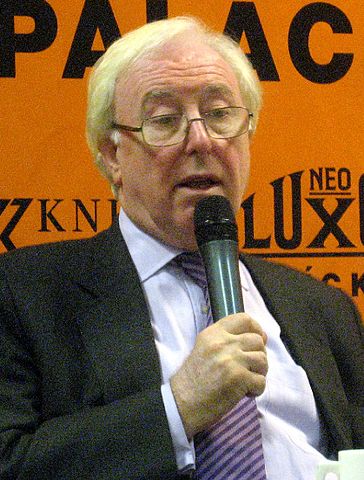
The forerunner of the Defend Free Speech campaign was called “Reform Section 5”. This speech by Rowan Atkinson at the launch event in Parliament in 2012 should be heard by every politician, journalist and campaigner before they start calling for laws to silence those they regard as “extremists”.

January 29, 2022

Viewing with alarm — Substack is a place where “misinformation is allowed to flourish”

Filed under: Business, Liberty, Media, Technology — Tags: , , , , — Nicholas @ 03:00

Matt Taibbi posts, appropriately, on Substack about demands by others to force Substack to censor writers and their content:

Substack is home to tens of thousands of writers and over a million paying subscribers, quadruple last year’s total of 250,000. The sites range from newsletters for comics enthusiasts to crypto news to recipe ideas. Like the Internet as a whole, it’s basically a catalogue of everything.

Still, panic campaigns in legacy press consistently focus on handfuls of sites, and with impressive dishonesty describe them as representative. I was particularly struck by a recent Mashable article that talked about a supposed “backlash” against Substack’s “growing collection of anti-trans writers”, which seemed to refer to Jesse Singal (who is no such thing) and Graham Linehan and — that’s it. Substack is actually home to more trans writers than any other outlet, but to the Scolding Class, that’s not the point. The company’s real crime is that it refuses to submit to pressure campaigns and strike off Wrongthinkers.

Substack is designed to be difficult to censor. Because content is sent by email, it’s not easy to pressure platforms to zap offending material. It doesn’t depend on advertisers, so you can’t lean on them, either. The only real pressure points are company executives like Hamish McKenzie and Chris Best, who are now regular targets of these ham-fisted campaigns demanding they discipline writers.

The latest presents Substack as a place where, as Mashable put it, “COVID misinformation is allowed to flourish”. The objections mainly center around Joseph Mercola, Alex Berenson, and Robert Malone. There are issues with the specific critiques of each, but those aren’t the point. Every one of these campaigns revolves around the same larger problem: would-be censors misunderstanding the basic calculus of the freedom of speech.

Even in a society with fairly robust protections, as ours once was, the most dangerous misinformation is always, without exception, official.

As the old joke from the Cold War had it, never believe any rumour until it’s been officially denied.

Censors have a fantasy that if they get rid of all the Berensons and Mercolas and Malones, and rein in people like Joe Rogan, that all the holdouts will suddenly rush to get vaccinated. The opposite is true. If you wipe out critics, people will immediately default to higher levels of suspicion. They will now be sure there’s something wrong with the vaccine. If you want to convince audiences, you have to allow everyone to talk, even the ones you disagree with. You have to make a better case. The Substack people, thank God, still get this, but the censor’s disease of thinking there are shortcuts to trust is spreading.

January 3, 2022

“… the ill-conceived concept of hate crime is tempting police officers away from law enforcement towards making moral judgements”

Filed under: Britain, Government, Law, Liberty — Tags: , , , — Nicholas @ 03:00

In The Critic, Josephine Bartosch outlines some of the problems with Britain’s approach to “hate crime” policing:

Photo from The Critic

When campaigner Harry Miller was questioned about comments he’d made online, the dutiful copper on the other end of the phone clearly thought he was just doing his job. Apparently unaware of the raging debate around the reform of the Gender Recognition Act, the officer explained that he knew he was right because he’d been on a training course. This small exchange, which was referenced in the recent case won by Miller at the Court of Appeal, underscores a wider problem: the ill-conceived concept of hate crime is tempting police officers away from law enforcement towards making moral judgements.

Hate crime does not exist in itself as an indictable offence; it is comprised of “non-crime hate incidents” (NCHI) and considered as an aggravating factor during sentencing. Developed as a response to the institutional racism exposed in the Macpherson report, hate crime is an attempt to give a voice to those too easily side-lined by a majority white, straight and male police force. The College of Policing (CoP) identify five specific “strands” which designate people at risk from hate: disability, race, religion, sexual orientation or transgender identity.

A new form of prejudice is baked into this touchy-feely approach: provided complainants tick the requisite boxes to show social disadvantage, they are not credited with the wit to be vexatious. Consequently, the police have found themselves unwitting foot soldiers in a culture war which has seeped from social media into real life. The good intentions of officers have been weaponised by unscrupulous whingers who claim offence to muzzle their ideological opponents. Miller was far from the only person targeted by police for exercising his freedom of speech — numerous others have been questioned, arrested and in some cases dragged through the courts for doing nothing more than sharing their opinions online.

Miller’s well-publicised victory against the CoP will force a rethink. It is estimated 124,091 NCHI have been logged since 2014. Many of those with NCHIs recorded against their names have no idea about it.

Looking outside at the cheerless drizzle, it’s easy to understand why police officers might prefer to sit inside cosy offices logging tweets rather than pounding the streets or breaking-up bar room brawls. At a time when much of the left-leaning press has tarred the law enforcement officials as “baddies”, notching-up hate crimes serves as a reminder that law enforcement is on the side of the righteous.

December 15, 2021

QotD: Suppressing intellectual heresy

Filed under: Books, Education, Liberty, Politics, Quotations, USA — Tags: , , , , — Nicholas @ 01:00

Middlebury students acted to prevent Charles Murray from speaking on the relatively benign subject of the travails of the white working class because he had previously written work that some have categorized as racist. That label meant that they need not grapple with the substance of his earlier book, but it also meant that as a known heretic his subsequent work was likewise tainted.

The young people at Middlebury who shouted down Charles Murray and assaulted a faculty member who had tried to engage him in civil debate were, in effect, suppressing the ideas of a heretic. After all, a heretic’s ideas are too dangerous to be heard.

Dangerous ideas are, of course, interesting ideas, especially to young people. When we fail to address dangerous ideas in our courses, we add to their mystique. When activists shout down or assault heretical speakers they send two messages. The first and intended message is a display of righteous disapproval. The other, unintended message, is that there is something so menacing about the idea being expressed that it cannot simply be laughed off or even argued with, rather it cannot be allowed to be spoken.

Consider how that looks to someone who is starting to question the premises of the liberal orthodoxy on race, gender, diversity and so on. Why, our alt-right curious person might wonder, are there some ideas that are so laughably false that one need not even mount a counter argument (a flat earth or the financial benefits of college athletics), some ideas that are considered contentious but still open to debate (supply-side economics), and some ideas that are so outré that they can only be met with back turning, shouting, or by punches to the face?

Might it be, our waverer must wonder, that these people don’t want me to hear this idea because they don’t have a good answer to it?

Erik Gilbert, “Liberal Orthodoxy and the New Heresy”, Quillette, 2019-02-04.

December 4, 2021

Things I never expected to read on the CBC website — “…frantically firing up the gaslights and moving the goalposts on COVID restrictions and vaccinations”

Canada’s state broadcaster has been — as you would expect — a staunch supporter of every government initiative to limit free speech and the rights of Canadians in tackling the Wuhan Coronavirus pandemic. They’ve consistently portrayed any concerns or doubts about draconian government action as irrational, anti-science conspiracy theories and the people raising such concern as effectively “enemies of the people”. As such, I never expected to see anything like this CBC Opinion piece by Allan Richarz:

Listen closely and one might be able to discern the unmistakable sounds of our elected and unelected officials frantically firing up the gaslights and moving the goalposts on COVID restrictions and vaccinations.

It was a precipitous but inevitable shift from “two weeks to flatten the curve” to get the jab or lose your job, and unsurprisingly, there is still more to come.

Met the provincial vaccination targets? Great; but now it’s time for a booster. Ready for the “temporary” vaccine passport system to expire? Sorry, we need to extend it through spring; proving once again that if you give the government an inch on your rights, they will go for the mile every time.

Less than a year ago, government and public health officials touted vaccination as a panacea to end the pandemic. It’s safe, effective and will allow the country to put COVID behind us, we were told. To that end, citizens were encouraged, prodded and eventually threatened to get their shots, with holdouts demonized by politicians at all levels. Yet, in Ontario, even as the province exceeded by weeks its vaccination and case number targets of the government’s phased reopening plan, citizens were offered only breadcrumbs in return: moving up Phase 3 reopening by just a few days, with no plans at the time for a complete reopening.

And now, with new case numbers in Ontario essentially split evenly between the unvaccinated and fully vaccinated and questions about waning vaccine efficacy, the goalposts shift again with the rollout of booster shots elsewhere in the country and calls for expanded eligibility.

One does not need to look hard to guess what the next step will be across Canada. In Israel and France, the definition of fully vaccinated was changed to include boosters; those six months out from their second dose, or first booster, are now considered unvaccinated, and their vaccine passport privileges suspended.

H/T to SDA for the link.

November 28, 2021

Cambridge University “uncancels” Jordan Peterson

Filed under: Britain, Education, Liberty — Tags: , , — Nicholas @ 03:00

Arif Ahmed explains why Cambridge originally “cancelled” Jordan Peterson and recently how that cancellation was overcome:

Jordan Peterson speaking at an event in Dallas, Texas on 15 June, 2018.
Detail of a photo by Gage Skidmore via Wikimedia Commons.

The Peterson cancellation was one of several troubling events at that time which spurred some of us at Cambridge to fight back. Not only because we wanted Peterson to be able to visit Cambridge, but also because we wanted anyone whom any academic saw fit to invite to be able to visit. It should never have been up to the university authorities to dictate what academics can discuss or whom we can discuss it with.

And so we began a long and at first lonely campaign to realign this ancient and great institution with freedom of speech, freedom of conscience and freedom of thought.

Our battle has borne fruit. In late 2020 Cambridge adopted a new, liberal free-speech policy that protected our right to invite speakers of our choosing, and prevented the university from cancelling an invitation that had been accepted. In May this year, the vice-chancellor took prompt and decisive action to remove a policy aimed at policing “microaggressions”. And then in the autumn, Jordan Peterson announced that he was planning to visit the university, at the invitation of Dr James Orr at the Faculty of Divinity.

That visit has now occurred. And thanks principally to the courage and energy of Dr Orr it has been a tremendous success.
I saw Peterson speak twice on his Cambridge visit. He spoke passionately, at length and without notes, to rapt audiences. He engaged the crowd with care and warmth. His seminars were a model of academic engagement. There was a lively, disputatious and often rigorous battle of ideas that ranged from the neuroscience of perception via William Empson and 17th-century counterpoint to Mesopotamian creation myths.

It seemed that everywhere Peterson went in Cambridge there were students who wanted to learn from him, to argue with him and sometimes to be photographed next to him (I advised him to check their t-shirts before posing). There were no protests, unless you count one silly but brave student popping up in a lecture wearing a lobster outfit.

One striking thing about Peterson’s lectures is the contrast between the forcefulness of his speech and the moderateness of the content. He espouses a moderate conservatism focused on self-discipline, on seeing the value in yourself and in others, and on finding meaning in life. And he connects religion with all of these things. He is no right-wing firebrand.

At his lecture on Tuesday night it became clear how much the tide has turned. In Cambridge’s largest lecture hall, before a sold-out audience, the first people to speak were the university proctors. The proctors hold an 800-year-old office whose principal duty is to uphold free speech in the university – as they reminded us in their speech. Their presence was the clearest possible signal that, this time around, the university fully supported Peterson’s invitation and his right to speak. The contrast with his cancellation just two years ago could hardly have been greater.

Free speech has won another victory at Cambridge.

November 17, 2021

The Supreme Court of Canada — four-ninths woke

Filed under: Cancon, Law, Liberty — Tags: , , , , — Nicholas @ 03:00

In The Line, Leonid Sirota discusses a disturbingly narrow victory for freedom of speech in the Supreme Court of Canada’s decision in Ward v Quebec (Commission des droits de la personne et des droits de la jeunesse):

The Supreme Court’s recent decision in Ward v Quebec (Commission des droits de la personne et des droits de la jeunesse) has attracted considerable public attention, and for good reason. Although no law was in danger of being found unconstitutional, the case did concern the limits of the freedom of expression, which have always been controversial, and are perhaps more controversial now than they had been in decades. In brief, the issue was whether nasty jokes by an “edgelord comedian”, as The Line‘s excellent editorial described Mr. Ward, at the expense of Jérémy Gabriel, a well-known disabled child artist, amounted to discrimination that could be punished by an award of damages.

Much has already been written about the Supreme Court’s narrow decision in favour of Mr. Ward; for my part, I have already commented on (mostly) the majority opinion on my blog. Here, I focus on the dissent, in which, as The Line put it, “[t]here’s an incredible amount of popular modern discourse seeping into judicial reasoning” that “culled plausible-sounding legalese from Twitter logic”. That sounds about right.

But let me put it slightly differently. The dissent is, in a word, woke. And I do not mean “woke” as a generic insult. Nor do I mean, incidentally, that Mr. Gabriel is a snowflake. I think he deserves sympathy on a human level, though not the protection of the law for his claim. Rather, what I mean by calling the dissent woke is that it embraces a number of specific tenets of contemporary social-justice ideology, which, if they become law ― and they were just one vote away from becoming law ― would be utterly corrosive to the freedom of expression.

For one thing, the dissent erases the line between words and actions, so that disfavoured words are treated as deeds and therefore subjected to vastly expanded regulation. Justices Abella and Kasirer (with whom two others agree) write:

    We would never tolerate humiliating or dehumanizing conduct towards children with disabilities; there is no principled basis for tolerating words that have the same abusive effect. Wrapping such discriminatory conduct in the protective cloak of speech does not make it any less intolerable when that speech amounts to wilful emotional abuse of a disabled child.

In what is going to be a theme of my comment, this twists the meaning of words beyond recognition. Conduct is conduct and speech is speech. Using words instead the proverbial sticks and stones is not just a disguise. It’s the better part of civilization. The law relies on a distinction between words and actions all the time. This is a principle, and a general one, but it has also been a cornerstone of the law of the freedom of expression in Canada since the early days of the Charter. I have criticized the majority decision for disregarding precedent and doctrine. The dissent does the same, only much worse.

Besides, as I once noted elsewhere, the negation of the distinction between speech and conduct often combines with a belief that violence against some politically heretical group or other is permissible with the toxic belief that “[w]hat one says, or does, is expression; what one’s opponents say, or do, is violence.” This, in turn, means that law dissolves into a raw competition for political power, with the ability to decide whose expression will be stripped of its “protective cloak” and proscribed as the prize.

October 5, 2021

Lars Vilks, RIP

Filed under: Europe, Humour, Liberty, Religion — Tags: , , , , , — Nicholas @ 03:00

Mark Steyn remembers Swedish artist Lars Vilks, best known for his defence of free speech rights after coming under (literal) attack by Islamist terrorists enraged that he drew a cartoon of Mohammed:

Lars Vilks, 1946-2021.
Cropped from a larger image by OlofE via Wikimedia Commons.

Yesterday, Sunday afternoon, he was being driven in a bulletproof car by two of his protection officers when there occurred what Swedish police regard as a freak collision with a truck. An almighty fire ensued and neither Lars nor the policemen survived; the driver of the other vehicle is seriously wounded and in hospital. This all happened near Markaryd, about an hour north-east of Helsingborg, where Lars was born. Helsingborg, like many Swedish cities, is utterly transformed, which is why Lars Vilks ended his life in an unmarked car being driven home under police protection from a guarded lunch with an old friend.

[…]

Lars was very funny about his newfound celebrity: He carried with him a picture of a Pakistani mob that had been whipped into a frenzy by somewhat inaccurate intelligence, so they were all jumping up and down in the streets demanding “DEATH TO LARISH”. And for a while that day in Copenhagen we all called him Larish: “Hey, Larish, another beer?”, etc.

Larish was likewise a hoot about two of the first jihadists sent to dispatch him. He came home one night to find that a couple of Kosovars had set his kitchen alight. As they escaped across the snowy field heady with the warm glow of their glorious victory over the infidel, they chanced to glance down and noticed that that warm glow was because they’d accidentally set their trousers on fire. After some effort to extinguish the blaze, they were forced to abandon their flaming pantaloons and scamper off into the chill night in their jihadist BVDs. Alas, the best-laid plans and all that: in addition to being trouserless in a Nordic winter, they had neglected to remove from their smouldering pants the charred driving licenses and other identifying documentation. Police were able to track them down rather easily, not least because they were the only two men in Scandinavia taking a late-night stroll in their Y-fronts.

When Lars told this story in Copenhagen, the whole room was roaring with laughter. Afterwards we all went to dinner. And news came to us somewhere between the soup and digestifs that a one-legged Chechen from Belgium, seething with resentment at Lars and the rest of us infidels, had prematurely self-detonated in his Copenhagen hotel room while assembling his package and preparing to hop into Paradise. And we all had a grand laugh about that, too. As I put it that day, Islamic terrorists are like Yosemite Sam, forever shoving the stick of dynamite in their own pants – until one day Yosemite Ahmed manages to get it right. After the bombing of the Conservative Party conference in 1984, the IRA taunted Mrs Thatcher: “You have to be lucky every day, we only have to be lucky once.”

Those jihad incompetents with the smoking trousers would modify the line: We only have to be competent once. Al-Qa’eda had put a six-figure bounty on Lars’ head, and there was no shortage of takers. In Ireland, the gardai arrested four men and three women from Waterford and Cork for a well-advanced plot to fly to Stockholm and kill him. At the height of the so-called “Troubles” you’d have been hard put to find five men in Waterford willing to travel to London to kill Mrs Thatcher or Willie Whitelaw. But an obscure artist in southern Sweden? Pas de problème!

As the report in the Daily Mail shows, the circumstances of Vilks’ death are at the very least, suspicious:

Swedish police investigating the car crash death of a controversial artist who had survived multiple assassination attempts after drawing a cartoon of the Prophet Mohammed cannot explain why his car was travelling so fast.

Lars Vilks, 75, was killed on Sunday when the police car he was travelling in veered onto the wrong side of the road and collided with a truck in Markaryd, in the Swedish province of Kronoberg.

Both vehicles caught fire and the truck driver, 45, was taken to hospital with serious injuries, while the two police protection officers and Vilks were killed.

Investigators believe there were no external influences that led to the deaths and say the crash may have been caused by a burst tyre.

However, they are unable to explain why the car was travelling at around 100mph, according to witnesses, in a 68mph zone.

September 30, 2021

QotD: Hate speech

Filed under: Liberty, Politics, Quotations — Tags: , , , — Nicholas @ 01:00

Cultivating hatred for another human group ought to be no more acceptable when it issues from the mouths of women than when it comes from men, no more tolerable from feminists than from the Ku Klux Klan.

Daphne Patai, Heterophobia: Sexual Harassment and the Future of Feminism, 1998.

August 9, 2021

The modern-day threat of being made an “unperson” is real and very dangerous

Sean Gabb explains why even libertarians need to consider the non-state power in the hands of corporations that can — and does — force people out of their jobs, their homes, and even deprive them of the ability to communicate or to access financial services merely for expressing unpopular opinions. As I said in a different venue, it’s a short step from “no fly lists” to “no eat lists”, especially when the enforcing entity is a nominally private organization:

John Stuart Mill (1806-1873)

The old pressures to conform were wrong. So are the new. And they are wrong simply because they are pressures to conform. I find myself at last appreciating a part of Mill’s essay On Liberty for which I never used to have much time. Until recently, I would insist that the only real oppression was by the State: all else was the working of private choice. If the authorities fined a man £5 for having sex with another man, that was outrageous tyranny. If his tastes became public knowledge, and he was unable to find work, that was merely unfortunate. This is, I still believe, essentially true. Indeed, I could argue that, without a State having centralised and corporatised powers of discrimination that ought to be widely distributed, there would be no problem — or there would be a problem that was bearable. But these powers were centralised and corporatised a long time ago. They are now being used to achieve a uniformity of opinion outside the home in which the formal organs of compulsion have no obvious part. This is not the “tyranny of the majority” that worried Mill. I find it inconceivable that anything close to a majority could believe the insane drivel pouring from the regime media. Neither, though, is it the kind of oppression against which liberal bills of rights have traditionally been written. Because of this —

    when society is itself the tyrant …, its means of tyrannising are not restricted to the acts which it may do by the hands of its political functionaries. Society can and does execute its own mandates: and if it issues wrong mandates instead of right, or any mandates at all in things with which it ought not to meddle, it practises a social tyranny more formidable than many kinds of political oppression, since, though not usually upheld by such extreme penalties, it leaves fewer means of escape, penetrating much more deeply into the details of life, and enslaving the soul itself. Protection, therefore, against the tyranny of the magistrate is not enough: there needs protection also against the tyranny of the prevailing opinion and feeling; against the tendency of society to impose, by other means than civil penalties, its own ideas and practices as rules of conduct on those who dissent from them …

    (J.S. Mill On Liberty, 1859, “Introductory“)

We need protection indeed. But the protection we need is not yet another law telling the police to leave dissidents alone. We already have a stack of these, and they are protections against a threat that largely does not exist. The answer, I suggest, is an amendment to the anti-discrimination laws to outlaw discrimination on the grounds of what may be loosely called political opinion.

I say hardly anyone read my original essay. Sadly, most of those who did read it stand in the more wooden reaches of the libertarian movement, and these set up a cry that I had become a Communist. I was suggesting that private organisations should be coerced in their choices of whom and whom not to employ, and even in their choices of customer and supplier. I had abandoned the non-aggression principle. Here, briefly expressed, is my answer to these claims.

I run the Centre for Ancient Studies. This provides a range of tuition services in Greek and Latin. It is a sole tradership. As such, I reserve the unconditional right to decide what services I offer and to whom. If I dislike the colour of your face, or the status of your foreskin, or your tastes in love, or anything else that I may think relevant, it should be my right not to do business with you. It may be that only a fool turns away customers with money to spend, and I am not that sort of a fool. Even so, I do claim at least the theoretical right, and I ground it on my right to do as I please with my own. But I claim these rights as a human individual. A limited company is not a human individual. Whatever entrepreneurship may exist in them, these companies are artificial persons and creatures of the State. Their owners have the privilege of limited liability. That is, they have the right, in the event of insolvency, not to pay the debts of a company if these are greater than the assets of the company. If this were not a valuable right, there would not be so many limited companies. There are almost no large companies, and none lasting more than a single generation, that do not have limited liability.

This being so, limited companies benefit from a grant of privilege from the State, and are legitimate subjects of regulation by the State for as long as they are receipt of this privilege. No doubt, some forms of state regulation are bad in their objects, or bad as regards the means to their objects. But regulation is not in itself an aggression by the State. It follows that, whether or not we can get it, libertarians should not feel barred from demanding laws to prevent limited companies from discriminating against their employees on the grounds of political opinion, and to require them to do business with customers and suppliers regardless of political opinion.

I appreciate that I am asking for more than the regulation of limited companies. The anti-discrimination laws we have make no distinction between incorporated and unincorporated associations. Even so, the extension of these laws to cover political opinion would mainly affect only the larger limited companies. At the same time, there is an obvious and overriding public interest in the protection of political opinion. People are now scared to speak their minds. Whether intended or just revealed, this is part of the strategy. The reason why the collapse of both freedom and tradition is gathering pace is because no one dares stand up and protest. In the absence of protest, everything will carry on as it is. Given a restored right of protest, there is a chance of stopping the collapse. The only way to lift the blanket of fear that now lies over all but approved opinion is somehow or other to get a law making it clear that no one who speaks his mind can be loaded with shadow punishments.

“Somehow or other!” In a sense, I am making a fool of myself. I am asking the politicians to make a law against what they themselves may not be doing, but that has no effect on their main reason for being in politics, which is to fill their pockets. I am asking them to take on the entire mass of the non-elected Establishment. I am asking a lot of these people. On the other hand, the politicians still need to be elected, and that was the weak point in the Establishment’s plan to stay in the European Union. We had to spend four years voting and revoting, but we did eventually get what we wanted. It is conceivable that, if enough of us call loudly enough for protection, some kind of protection will be granted.

Short of that, we are lost.

July 29, 2021

Speakers’ Corner in London’s Hyde Park, the Mecca of free speech

Filed under: Britain, History, Liberty — Tags: , , , — Nicholas @ 03:00

In Tuesday’s NP Platformed, Colby Cosh pays tribute to one of the holy places of free speech, Speakers’ Corner:

“Speakers’ Corner – Hyde Park – London” by Manolo Blanco is licensed under CC BY-NC-SA 2.0

We detect a slightly surprising absence of international media commotion over a dreadful event that happened Sunday: a woman giving a critique of Islam at Speakers’ Corner in London’s Hyde Park was slashed in the face by a fanatic. The victim, 39-year-old Hatun Tash, is said to be a familiar figure at the Mecca of free speech. And, yes, NP Platformed uses this geographic metaphor intentionally.

Probably every country has sites consecrated to its distinctive political ideals. Speakers’ Corner is different: it represents the ideal of absolute free speech for, and to, the entire world. A non-American visiting the Lincoln Memorial is there to honour the memory of a great man; if he visits the Washington Monument, it’s probably for the purpose of making phallic-themed jokes. But for 150 years, non-Englishmen visiting Hyde Park, from Lenin to Bishop Tutu, have been awestruck by the freedom that radical speakers enjoy at the original among the world’s many Speakers’ Corners.

Few Londoners pay it much mind anymore — not since the 19th century, when the nigh-inviolable freedom of speech enjoyed on the corner actually served to endanger governments and give impetus to liberal social change. Since about 1900, it has mostly been a place, almost a rehearsal space, for the tireless cranks of any given moment: dietary Savonarolas, village atheists, suffragettes, Trots and syndicalists and Maoists. They have been joined by generations of Muslims preaching various Islamic doctrines or far-out varieties of the faith.

Foreigners, however, have often been astonished to discover that Speakers’ Corner mostly lives up to its ideals, or that any place could. The British state really lets those people say those things in public without locking them up. The park has seen plenty of affrays in its time, but fights have become rare as the ritual purpose of the space has become universally understood.

Rare, too, are the United Kingdom’s infringements on its inviolability. After the Bloody Sunday shootings of 1972, three Irish republicans were arrested under the Treason Felony Act of 1848 for having proposed war against Britain in Hyde Park. They were found guilty of lesser charges, sentenced to time served and sent back across the Irish Sea, but Irish nationalists rightly dined out on the incident for many years, and the criminal offence of “treason felony” has never since been heard of in any English courtroom.

July 2, 2021

QotD: Quebec’s legendary sensitivity to criticism

We have a generally pro-Quebec stance; however, these annual meltdowns because Some Anglo Said Something Mean About Quebec are getting really tiresome. Somehow this province has managed to prove itself to be even more thin-skinned than Alberta — yes, we said it. Quebec is more reactive than the province that last week suffered a fit over an unflattering children’s cartoon.

And for some reason, the rest of Canada continues to treat these tantrums as if they are very weighty and serious matters meriting news coverage and discussion by very weighty and serious people. Canada’s indulgence of Quebec’s inability to tolerate pointed criticism is probably why the province gets away with passing racist legislation like Bill 21. And no one — least of all politicians — dare say boo because they’re all too eager to win seats in a populous province perpetually in play.

Attaran’s tweets wouldn’t even be worth our lowly mention, except that they prompted response from Justin Trudeau himself, who responded by saying: “Enough of the Quebec bashing.” That’s right, what we have here is Prime Minister Brownface condemning the tweets of an Iranian-Canadian professor who called Quebec racist by declaring such comments “Quebec bashing.” People, we are down the rabbit hole.

Earlier in this dispatch, we called Attaran a bit of a dumbass, and maybe some of you found that assessment a bit harsh. Others, perhaps not. We leave ourselves open to be capably judged by you, our dear readers. But we must ask this: What kind of dumbass do you have to be to make a figure like Amir Attaran into a national hero on free speech grounds? Good lord.

“Dispatch from The Front Line: Doing the Code Dance”, The Line, 2021-03-26.

June 24, 2021

“[M]any of the woke genuinely do not understand why anyone finds their politics, or their political tactics, threatening”

Filed under: Media, Politics, USA — Tags: , , , , — Nicholas @ 03:00

In The Line, Joseph Heath tries to explain why many adherents of the wokist ideology fail to understand why anyone could possibly be against their policies or their tactics:

Godfrey Elfwick’s disturbingly accurate summary of free speech support among the woke.

After several years of creeping illiberalism under the guise of progressive politics, American liberals are finally getting their act together. They are pushing back, creating several organizations committed to combating the influence of “woke” politics and ideology. They have momentum, not just because many woke mantras like “defund the police” have proven spectacularly unpopular, but also because there is genuine growing alarm about the intolerant and authoritarian brand of politics that has become associated with the woke left.

Unfortunately, many of the woke genuinely do not understand why anyone finds their politics, or their political tactics, threatening. In particular, the accusation that they are being authoritarian, or that “cancel culture” is a threat to freedom of expression, is one that they are simply unable to process.

There is a reason for this — and one that’s worth understanding. There are several key phrases that play an enormously important role in woke politics (e.g. “safety”, “mental health”, “microaggression”, “bullying” and even “human rights”) which they use to deflect the accusation of authoritarianism. If you adopt the right words, it’s easier to convince yourself that you’re the good guys even as you’re acting like the bad ones.

I want to take a shot at explaining how this works.

The most important thing to understand about woke politics is that it is not a conventional form of illiberalism, it is better thought of as a type of “illiberal liberalism”. It involves making a set of political demands that are fundamentally illiberal, but then articulating them in a way that fits the conventional structure of liberal political discourse. Because of the way that their complaints are packaged, the woke are able to brush off criticism of their tactics.

Take an issue like freedom of speech. There are various versions of this traditionally liberal virtue; predominant among them, is that those who hold this belief are opposed to content-based restrictions on speech. In the old days, lots of politicians didn’t really believe in freedom of speech, as many among the ruling class maintained straightforwardly illiberal views.

June 8, 2021

The utter failure of political leadership in most countries during the pandemic

Jay Currie runs through some of the many reasons our political leadership and their “expert class” advisors in most western countries were utter shit almost from the starting gun of the Wuhan Coronavirus pandemic:

“Covid 19 Masks” by baldeaglebluff is licensed under CC BY-SA 2.0

The first response of most of our political class was to doggedly claim to be following the science, turn day to day decision making over to “public health experts”, follow the guidance of the WHO and the CDC – guidance which was, to be charitable, inconsistent – and to largely avoid questioning the experts. (Trump seemed to make some attempt to raise questions but made little headway in the face of his own public health bureaucracy.)

“Wipe everything” (which the CDC now concedes is pointless because the virus is rarely, if ever, transmitted by contact, “wash your hands” (good advice at any time), “social distance” (hilarious when in effect outdoors where there is next to no transmission), “walk this way” in the essential grocery and liquor stores, “wear a mask”, “wear two masks”, “stay home” (logical for two weeks, insane for six months), “curfew” (no known benefit, Quebec ended up being under curfew for five months), “no indoor dining” (despite next to no evidence that restaurants were significant sources of infection), “don’t travel” (with a vast list of exceptions), “don’t gather outdoors (unless BLM protest)” (ignoring entirely that the virus rarely spreads outdoors): it was all COVID theatre and, to paraphrase Dr. Bonnie Henry, “There’s no science to it.”

What the politicians did was simply to panic. They abdicated their responsibility to lead to “experts” who seemed to all be reading from the same “mass lockdown, masks everywhere, hang on for the vaccine, there is no treatment” script.

The key political failure was the acceptance of the “there is no treatment” story. Back in February/March 2020 there were suggestions that there might well be treatments of some sort. HCQ was trotted out and, partially because Trump mentioned it and partially because of very badly designed studies, dismissed. The very idea of a COVID treatment regime was, essentially, made illegal in Canada and much of the United States.

The idea of boosting immunity with things like Vitamin D and C and a good long walk every day did not come up at most of the Public Health Officer’s briefings across Canada. And, again, not very well done studies were cited showing that “Vitamin D does not cure COVID”. A claim which was not being made. A healthy immune system, to which Vitamin D can contribute, most certainly does cure COVID in the vast majority of cases.

Citing privacy concerns, public health officials were unwilling to give many details as to who was dying of or with COVID. Age, co-morbidities, race, and the socio-economic status of the dying were disclosed reluctantly and long after the fact.

I don’t think most of this can be blamed on the public health officials. They had their jobs to do and, to a greater or lesser degree, managed to do them. They are hired to apply current best practices – often mandated on a world wide basis by the WHO – to the situation before them. Public Health officials are not expected to be imaginative nor innovative.

Imagination, leadership, thinking outside the proverbial box is what we elect politicians for.

But, hey! Doesn’t Justin wear cool socks? Totally worth flushing decades of economic growth down the toilet for those nice socks! Canada’s back! (Back to 1974, approximately.)

« Newer PostsOlder Posts »

Powered by WordPress