Overly Sarcastic Productions
Published 29 Jul 2017Human sacrifice, smallpox, and the Spanish empire … that’s the whole story, right? Haha, eheh, hehe, HA, not even close! The civilizations of Mesoamerica are fascinating in their own right, and very distinct from each other too! Step on in and I’ll learn you a thing or two.
Also no spoilers, but next time, I’m covering the Iroquois Confederation! Ok, maybe that was exactly a spoiler. [Reposted here.]
This video was produced with assistance from the Boston University Undergraduate Research Opportunities Program.
PATREON: www.patreon.com/user?u=4664797
MERCH LINKS:
Shirts – https://overlysarcasticproducts.threa…
All the other stuff – http://www.cafepress.com/OverlySarcas…Find us on Twitter @OSPYouTube!
May 4, 2020
History Summarized: The Maya, Aztec, and Inca
April 22, 2020
Can We Build A Space Elevator? | Earth Lab
BBC Earth Lab
Published 5 Aug 2013Getting to space in a rocket is expensive! One of the most popular alternative ideas is the space elevator, but is it really possible?
Here at BBC Earth Lab we answer all your curious questions about science in the world around you. If there’s a question you have that we haven’t yet answered or an experiment you’d like us to try let us know in the comments on any of our videos and it could be answered by one of our Earth Lab experts.
March 5, 2020
Fallen flag — The Clinchfield Railroad
This month’s fallen flag article in Classic Trains magazine recounts the story of the Carolina, Clinchfield & Ohio, later known as the Clinchfield Railroad:

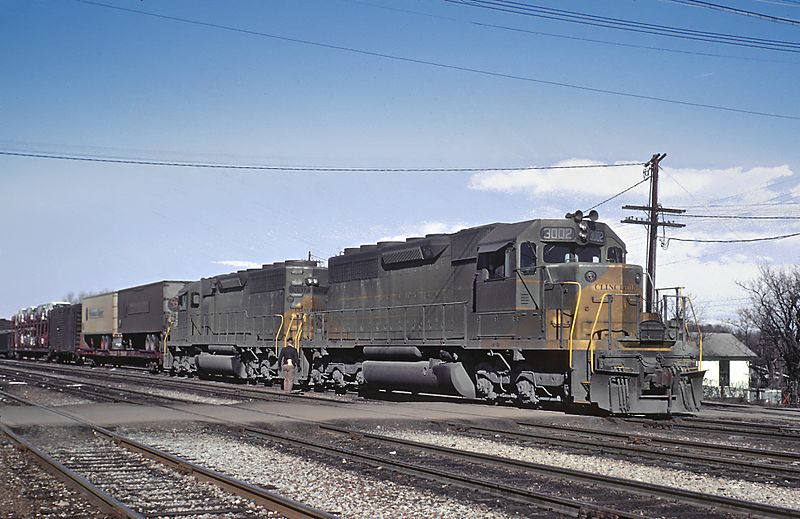
Clinchfield Railroad SD40 locomotive number 3002 at Spartanburg, SC in February 1968.
Roger Puta photo via Wikimedia Commons.
The Clinchfield was different. It was conceived by men who had the vision and resources to do things right. It was built to the highest engineering standards of the early 20th century. It never went through a financial failure or reorganization. Indeed, the Carolina, Clinchfield & Ohio Railway was the antithesis of traditional railroad evolution.
In 1902, a wealthy regional businessman, George L. Carter, began stitching together an integrated industrial enterprise to develop vast coal deposits in the Clinch (River) Fields of southwest Virginia and to deliver the coal across the southern Appalachian mountains to markets in the Carolinas and to ships calling at Wilmington, Charleston, Savannah, and Jacksonville. Carter, from whom Howard Hughes could have learned a thing to two about secrecy, operated using the South & Western Railway banner. The name said everything … and nothing. The S&W was chartered from any point on the Atlantic Ocean to any point on the Great Lakes. Carter agents seized by legal means and/or physical occupation key terrain features through the mountains in competition with the Chesapeake & Ohio and the Southern Railway.
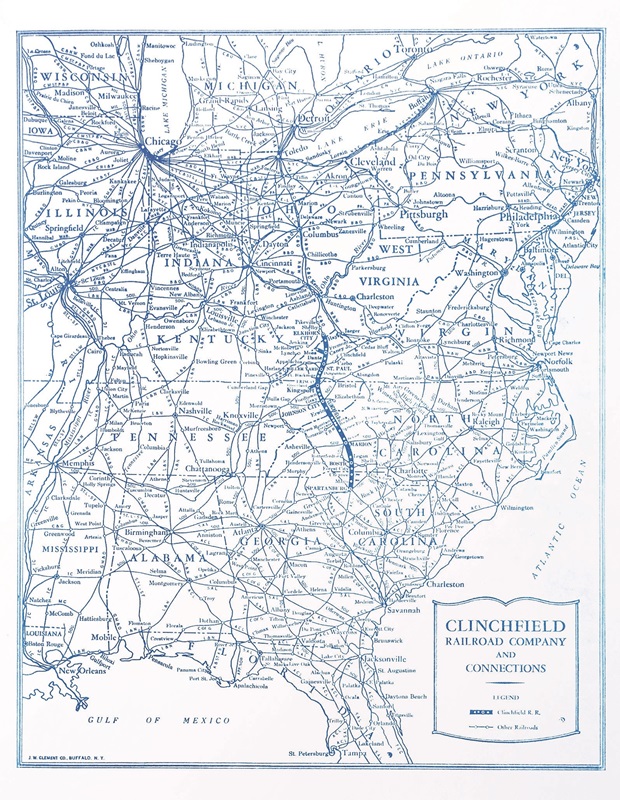
Clinchfield Railroad map. The Clinchfield’s 277-mile, 5-state line stretched from Elkhorn City, Kentucky, to Spartanburg, South Carolina.
Map via Classic Trains.Within that generous charter was the idea of building a railroad to haul coal south and merchandise in both directions between the Midwest and the Southeast. The plans also incorporated development of several on-line cities to consume coal and make products from regional resources to diversify and grow the freight business. Finally, a steamship line was organized to move coal beyond the ports to customers in the Caribbean.
By 1905, Carter realized he needed far more capital than he could personally provide. Reluctantly, he managed to convince Blair & Co., a big Wall Street investment house, to finance the project. M. J. Caples, an engineer with mining and railroad experience, laid out and then built a magnificent low-grade, high-capacity railroad. Tunnels, steel viaducts, generous fills, and rocky cuts appeared as needed. More than 4 percent (almost 10 miles) of the line was underground in 55 tunnels. With construction of the 277-mile railroad well advanced, its name was changed to Carolina, Clinchfield & Ohio Railway in 1908.
Coal began flowing across the 242 miles from Dante, Va., to Spartanburg, South Carolina, in 1909 while the owners and engineers debated how to cross the Cumberland mountains into the Ohio River valley. Between 1912 and 1915, a 35-mile extension including what was then the 10th-longest tunnel in the U.S. created a through route connecting Chesapeake & Ohio at Elkhorn City, Kentucky, with the three major southeastern carriers (Seaboard at Bostic, North Carolina; Atlantic Coast Line and Southern at Spartanburg). In constant-value dollars, the five-state CC&O was the most expensive railroad ever built in the U.S.
February 17, 2020
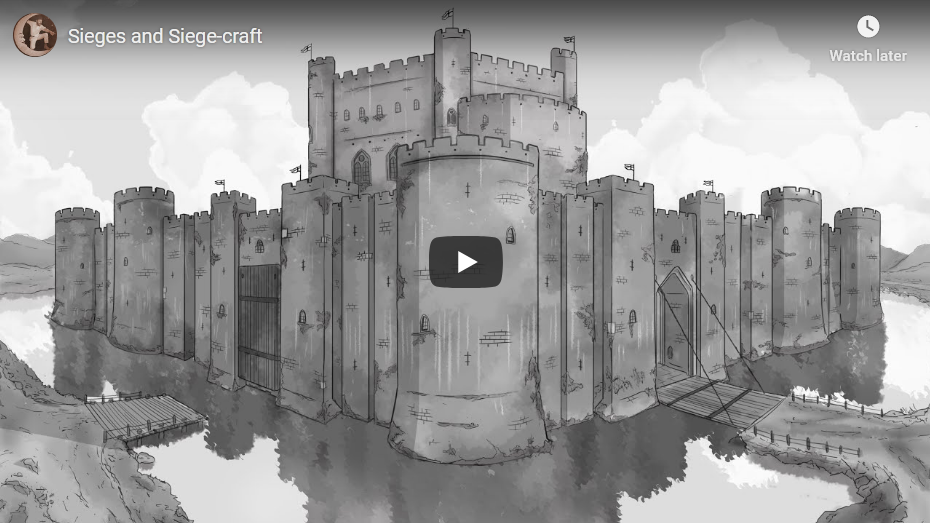
Sieges and Siege-craft
Lindybeige
Published 2 Jun 2016Sieges in the ancient and medieval worlds were on quite different scales. 10,000 men can do things differently from 500.
Support me on Patreon: https://www.patreon.com/Lindybeige
This video’s subject was chosen by Jack Sargeant, the winner of the DeepArt art competition a couple of weeks ago. The topic is a large one, but I hope I gave it a decent enough shot.
Castle illustration by Mathew Nielsen.
Buy the music – the music played at the end of my videos is now available here: https://lindybeige.bandcamp.com/track…
Lindybeige: a channel of archaeology, ancient and medieval warfare, rants, swing dance, travelogues, evolution, and whatever else occurs to me to make.
▼ Follow me…
Twitter: https://twitter.com/Lindybeige I may have some drivel to contribute to the Twittersphere, plus you get notice of uploads.
website: http://www.LloydianAspects.co.uk
January 31, 2020
Why The US Military Made GPS Free-To-Use
Real Engineering
Published 16 Jun 2017Get your Real Engineering shirts at: https://store.dftba.com/collections/r…
Patreon:
https://www.patreon.com/user?u=282505…
Instagram:
https://www.instagram.com/brianjamesm…
Twitter:
https://twitter.com/Fiosracht
Website:
http://www.RealEngineering.netThank you to my patreon supporters: Adam Flohr, darth patron, Zoltan Gramantik, Henning Basma, Karl Andersson, Mark Govea, Mershal Alshammari, Hank Green, Tony Kuchta, Jason A. Diegmueller, Chris Plays Games, William Leu, Frejden Jarrett, Vincent Mooney, Ian Dundore, John & Becki Johnston. Nevin Spoljaric
Once again thank you to Maeson for his amazing music. Check out his soundcloud here: https://soundcloud.com/maeson-1/tracks
January 27, 2020
Tank Chats #60 Valentine Bridgelayer | The Tank Museum
The Tank Museum
Published 23 Nov 2018The Valentine Bridgelayer, on a Valentine Mark I hull, was developed in 1943 during the Second World War. They were largely superseded by Churchill Bridgelayer, although some Valentine Bridgelayers were used in north-west Europe from 1944 to 1945, because the supply of Churchill Bridgelayers could not meet demand.
Support the work of The Tank Museum on Patreon: ► https://www.patreon.com/tankmuseum
Visit The Tank Museum SHOP: ► https://tankmuseumshop.org/
Twitter: ► https://twitter.com/TankMuseum
Tiger Tank Blog: ► http://blog.tiger-tank.com/
Tank 100 First World War Centenary Blog: ► http://tank100.com/ #tankmuseum #tanks #tankchats
January 4, 2020
Looking back at the ’20s … the 1620s
In the latest installment of Anton Howes’ Age of Invention, he takes us back to what he calls the “transformative 20s” of the seventeenth century:

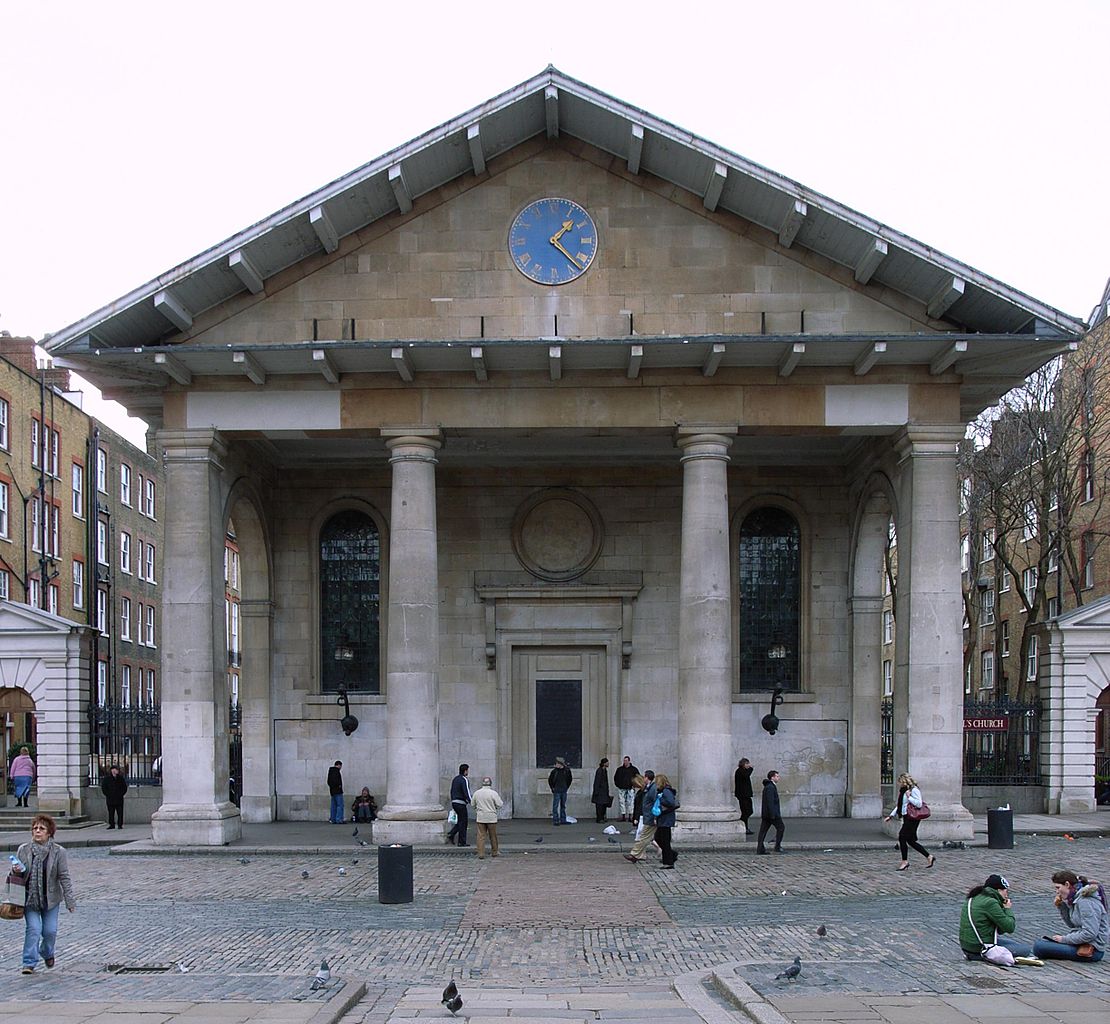
St. Paul’s Church in Covent Garden (built 1631-8) by Inigo Jones.
Photo by Steve Cadman via Wikimedia Commons.
The 1620s saw an upsurge in major projects to transform Britain’s landscape. Engineers from the Dutch Republic like Cornelius Vermuyden came to straighten its rivers, build canals, and even drain its marshes, converting them into pasturage and farmland — in the decades that followed, they would even begin to drain the Great Fens. The cityscapes changed too. The former theatre designer and architect Inigo Jones — by 1615 the Surveyor-General of the King’s Works — introduced classical architecture from the continent, drawing upon the rules of beauty and proportion that had been set down by Vitruvius in the first century BCE and resuscitated in Renaissance Italy by Andrea Palladio. Jones’s influence transformed England’s palaces, churches, cathedrals, and even Covent Garden square, to reflect his ancient Roman ideal.
But the environment, built or natural, would be most transformed by the experiments of a few individuals with fossil fuels. Dud Dudley, an illegitimate child of the 5th Baron Dudley, in the 1620s experimented with smelting iron with peat and coal. Dudley was not the first to do so — the patent on using coal instead of charcoal to work iron had been sold on from person to person since at least 1589 — but his experiments were among the most influential. The famous Abraham Darby, who achieved commercial success in applying coal to smelting metals in the early eighteenth century, was Dud Dudley’s great-great-nephew.
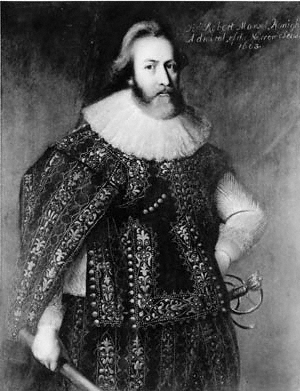
The decade also saw major new attempts to use coal as a fuel in other processes, such as glass-making. Although the patent on using coal to make glass had been around since at least 1610, by the 1620s Sir Robert Mansell had bought out the partners who owned it and was pouring a fortune into setting up glassworks at Newcastle. In this case, the transformation was institutional. Mansell’s political connections allowed him to widen the terms of his patent, such that he even tried to ban all other kinds of glass in England, regardless of whether they were made using other fuels, or even imported. Usually, patents of invention were for things entirely new, and were not supposed to interfere with existing English industries. But over the course of the 1610s, various abuses like Mansell’s came to light. King James I, eager for cash, had sold monopolies on ancient trades, as well as the new — one crony was even awarded a patent for inns and alehouses. Mansell’s patent, along with the others, was attacked in Parliament in the 1620s, and even revoked. The outcry ultimately led to the Statute of Monopolies of 1624 — the earliest patent legislation in England, which sought to regulate the royal practice of granting them. (Ironically, Mansell was so well-connected that he managed to get his controversial glass-making patent renewed and then exempted from the new Act.) The Statute of Monopolies was the only English patent legislation in force during the Industrial Revolution — there was no more patent legislation until 1852.
Finally, the ’20s saw a transformation of science. It was the decade in which Francis Bacon published some of his most significant works, on how to collect, refine, and systematise human knowledge for the good of humankind. He set out a comprehensive programme for the organisation of science and invention, with his utopian work New Atlantis setting out his ideal R&D lab – “Salomon’s House”. (Despite these high-minded aims, Bacon was also Mansell’s brother-in-law, and as attorney-general had helped draft the controversial glass-making patent. In 1621 he was convicted, fined, and even briefly imprisoned in the Tower of London for his role in the corrupt early patent system, though he appears to have been a scapegoat.)

January 2, 2020
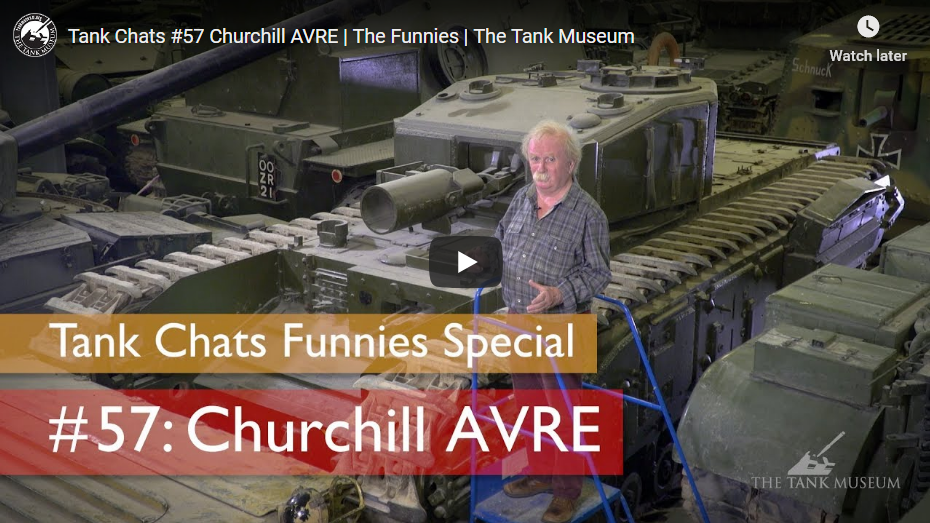
Tank Chats #57 Churchill AVRE | The Funnies | The Tank Museum
The Tank Museum
Published 20 Sep 2018Another episode in the Tank Chats Funnies Specials, with David Fletcher looking at the weird and wonderful vehicles of 79th Armoured Division led by Major General Percy Hobart, known as “Hobart’s Funnies”.
The Churchill AVRE (Armoured Vehicle Royal Engineers). The Churchill was the basis for a number of Funnies. David Fletcher looks at the Fascine, Bobbin, Small Box Girder bridge, Bullshorn plough, Conger, the Churchill ARK and Bridgelayer.
Support the work of The Tank Museum on Patreon: ► https://www.patreon.com/tankmuseum
Or donate http://tankmuseum.org/support-us/donateVisit The Tank Museum SHOP: ► https://tankmuseumshop.org/
Twitter: ► https://twitter.com/TankMuseum
Tiger Tank Blog: ► http://blog.tiger-tank.com/
Tank 100 First World War Centenary Blog: ► http://tank100.com/ #tankmuseum #tanks #tankchats
December 7, 2019
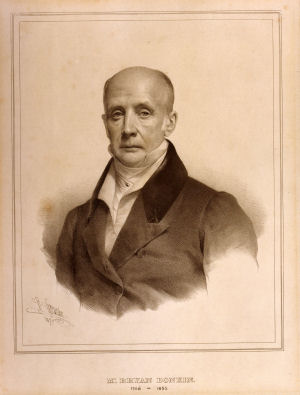
Bryan Donkin, 19th century inventor, amateur public relations whiz and independent lobbyist
In the latest installment of Anton Howes’ Age of Invention newsletter, he recounts the story of Bryan Donkin and his efforts to save innovators from excessive government interference:
One of the major arguments of the book I’m writing is that inventors’ talent for public relations and lobbying was one of the main reasons that Britain — rather unexpectedly — was the place that experienced an unprecedented acceleration of innovation.
The greatest of these lobbyist-inventors has to be Bryan Donkin, a nineteenth-century mechanical engineer. As an inventor, Donkin improved threshing machines, dredging machinery, and a variety of other tools. He invented the steel pen, dabbled in chemistry, as well as phrenology, and was one of the key people responsible for mechanising the production of paper. He became best known for improving and commercialising tin cans for food. Mechanised paper-making and canned food, having both been invented in France, were perfected in Britain by Donkin. He was the archetypal tinkerer.
But it’s as a lobbyist that I think Donkin was truly exceptional. His experience has important lessons for all would-be supporters of invention today.
In April 1817, Donkin read in his newspaper that there had been a disaster in Norwich: the boiler aboard the steamboat Telegraph had exploded. Of the boat’s twenty-two passengers, eight had died immediately in the blast, and another six had eventually succumbed to their wounds. It was a shocking tragedy. And for Donkin, doubly so: in addition to the human death toll, the explosion threatened to kill off one of the era’s newest and most exciting inventions.
Although some of the first trials of steamboats had taken place in the 1780s, it wasn’t until the turn of the century that they began to be practical. By 1817, the first commercially successful steamboat service in Britain, Henry Bell’s Comet, had been chugging its way up the River Clyde between Glasgow and Greenock for only five years. And Londoners like Donkin had only just seen their first steamboat, Margery, when she puffed her way into the Thames in 1815 (the following year, after becoming the first steamboat to cross the Channel, she reinvented herself in Paris as Elise). Thus, by the time of Telegraph‘s explosion, the passenger steamboat had only just been born. There was a very real risk that it would be banned.
Fortunately, however, the steamboat had Donkin in its corner. His immediate reaction upon reading about the explosion was to gather some of his engineer friends — Timothy Bramah and John Collinge — and set off for Norwich to view the explosion site for themselves. As the first expert engineers on the scene, they then took control of the narrative about the explosion. Donkin and his friends went straight to Norwich’s MP to ask him to set up a parliamentary select committee to look into the disaster. And while they waited for the politicians to be assembled for the committee, they held a series of public meetings about the disaster at the Crown & Anchor Tavern — a favourite haunt of London’s engineers. There, they had a chance to rally the rest of the profession and get their story straight about what must have caused the explosion.
November 12, 2019
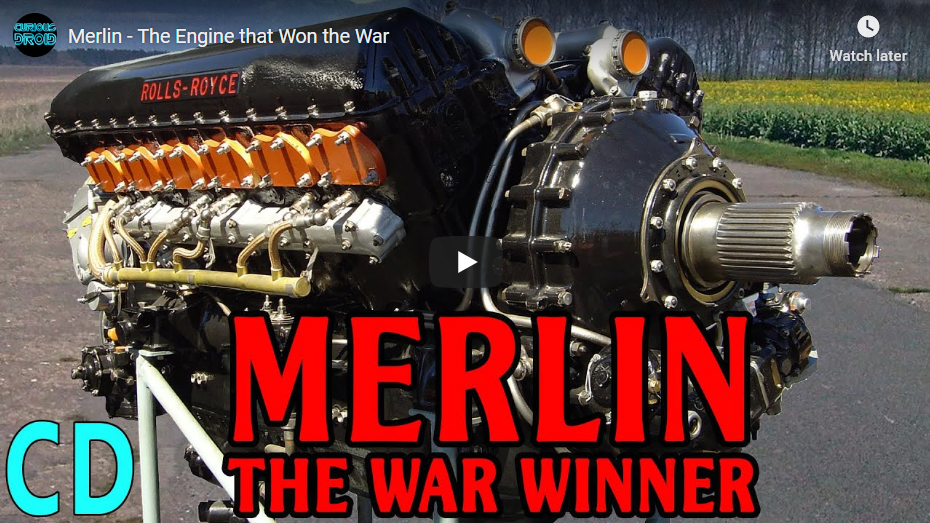
Merlin – The Engine that Won the War
Curious Droid
Published 28 Sep 2019Sounds like a bit of a bold claim that one engine helped change the course of WW2 but when you see the evidence it has a lot of validity but how did one little engine change the course of world events and become the engine that won the war?
I would like to thank David Irwin of Historic Aero Engines not only for the generous use of his footage but as in checking over the script and finished video for technical accuracy.
Historic Aero Engines display team :
https://www.youtube.com/channel/UCtE_…Patreon https://www.patreon.com/curiousdroid
Paypal.me https://www.paypal.me/curiousdroidSponsored by
Craig Fleming, Florian Hesse, Peter BarberPresented by Paul Shillito
Written and Researched by Paul Shillito with assistance from David Irwin.
Images and Footage:
Historic Aero Engines, Rolls Royce, USAF, RAF, Boeing, Packard,
Joel TrickMusic From the Youtube library
“Magical Gravity” by Asher Fulero
“Saving the World” by Aaron Kenny
“Adrift” by ELPHNT
“Oceans, Rivers, Canyons” by ELPHNT
“The Story Unfolds” by Jingle Punks
November 3, 2019
Building Angkor – A Drowning City – Extra History – #4
Extra Credits
Published 2 Nov 2019Join us on Patreon! http://bit.ly/EHPatreon
We’ve talked about the magnificence of Angkor at its peak, but how did this sprawling metropolis become a city of ruins? The city of Angkor depended on the reliability of the seasonal monsoon. Several decades of drought left them with little choice than to modify the whole water system. But when the waters returned, they returned in force. As did enemy forces. Thus begins the death spiral of the city of Angkor.
From the comments:
Extra Credits
1 day ago
Always 👏 maintain 👏 your 👏 water 👏 infrastructure !!!
October 21, 2019
Building Angkor – Temple City – Extra History – #2
Extra Credits
Published 19 Oct 2019Join us on Patreon! http://bit.ly/EHPatreon
Let’s take a little tour around Suryavarman II crowning achievement, the temple that took only 33 years to complete, while Europeans were taking centuries to build their cathedrals. With a two mile long wall, gates large enough to allow elephants to pass and steps so steep that the average person needed to climb them like a ladder, Angkor Wat’s every feature was made to be impressive. But what lies at the heart might be surprising…
October 13, 2019
Building Angkor – Monsoon Metropolis – Extra History – #1
Extra Credits
Published 12 Oct 2019Join us on Patreon! http://bit.ly/EHPatreon
Let’s lay down the foundations for one of the architectural marvels of the ancient world: At its height, the city of Angkor was, by several measures, the largest city of the medieval era. With a million people and a footprint larger than modern-day New York, it was arguably the world’s largest pre-industrial city. And at its center lay the magnificent Angkor Wat.
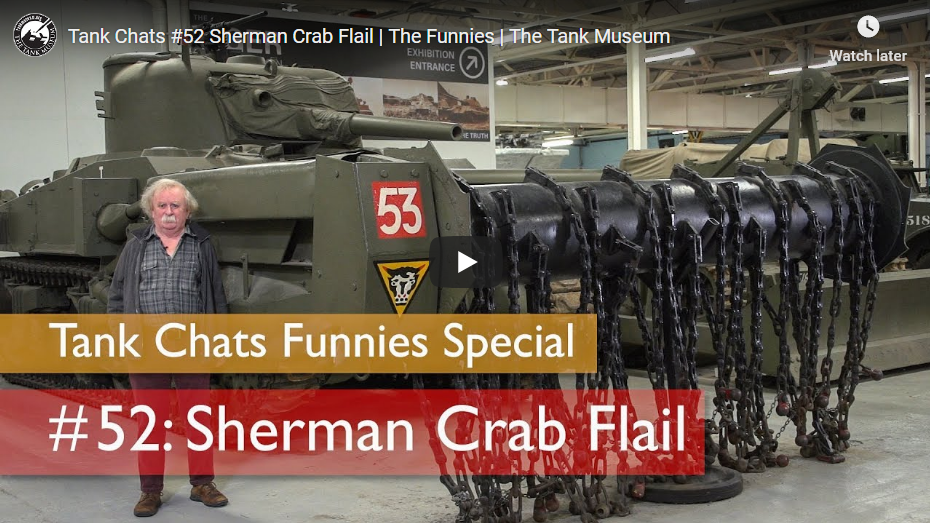
Tank Chats #52 Sherman Crab Flail | The Funnies | The Tank Museum
The Tank Museum
Published on 15 Jun 2018Tank Chats playlist https://www.youtube.com/playlist?list…
Another episode in the Tank Chats Funnies Specials, looking at the weird and wonderful vehicles of 79th Armoured Division led by Major General Percy Hobart.
The Flail tank was designed to clear mines and flails were operated in the 79th Armoured Division after D-Day.
Support the work of The Tank Museum on Patreon: ► https://www.patreon.com/tankmuseum
Or donate http://tankmuseum.org/support-us/donateVisit The Tank Museum SHOP: ►https://tankmuseumshop.org/
Press the little bell above to enable NOTIFICATIONS so you don’t miss the latest Tank Museum videos.
Twitter: ► https://twitter.com/TankMuseum
Tiger Tank Blog: ► http://blog.tiger-tank.com/
Tank 100 First World War Centenary Blog: ► http://tank100.com/ #tankmuseum #tanks #tankchats
October 7, 2019
The History of The London Underground
Real Engineering
Published on 29 Dec 2017