Extra Credits
Published 31 Oct 2019Start your Warframe journey now and prepare to face your personal nemesis, the Kuva Lich — an enemy that only grows stronger with every defeat. Take down this deadly foe, then get ready to take flight in Empyrean! Coming soon! http://bit.ly/ECWarframe
What do Ptolemy and ancient Chinese rockets have in common? Without either of these things, space flight wouldn’t be possible! In order to understand how we started traveling amongst the stars, we have to talk about how we started studying stars in the first place. Since the very first civilizations we’ve always looked at the night sky with wonder & curiosity but also as a way to try and understand the future and time itself.
November 2, 2019
History of Space Travel – Looking to the Stars – Extra History – #1
When entertainment morphs into propaganda
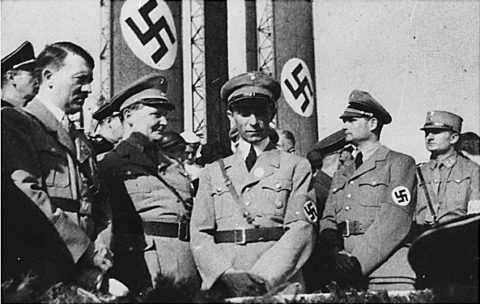
One of the key elements aiding Hitler and the NSDAP to take power and stay in power in Germany in the 1930s was the constant, ongoing propaganda campaign orchestrated by Joseph Goebbels. Hitler and the Nazi party were lauded as the perfect Germanic solution to every problem and Jews, socialists, homosexuals, and other undesireable elements were belittled and used as targets of hate. A big part of Goebbels’ propaganda revolved around one idea, the “Big Lie”:
If you tell a lie big enough and keep repeating it, people will eventually come to believe it. The lie can be maintained only for such time as the State can shield the people from the political, economic and/or military consequences of the lie. It thus becomes vitally important for the State to use all of its powers to repress dissent, for the truth is the mortal enemy of the lie, and thus by extension, the truth is the greatest enemy of the State.
By suppressing competing voices and having all the methods of reaching the people repeating the same story, the Nazis solidified their control on power in Germany that lasted until 1945, and was only demolished by massive military effort by the United States, the Soviet Union, and the British Commonwealth. Propaganda is a very powerful tool that works distressingly well to implant and nurture evil ideas in a subject population.
Modern propagandists in the west generally don’t have the power of the state aiding them, but if they get enough of the channels of communication — especially the entertainment channels — to co-ordinate the message, the effects can be very strong:
… I perfectly understand the legitimacy of feminist concerns regarding the portrayal of women in the media as consistently demure, retiring, and subservient to men. I grant that, in most of the action/adventure movies that I saw growing up, women would typically twist an ankle or get captured and then require rescuing by the swashbuckling male hero — and I realize how galling this must have been to generations of women. And therefore, a certain correction was undoubtedly in order. But what is problematic now is the Nietzschean quality of the reaction, by which I mean, the insistence that female power has to be asserted over and against males, that there is an either/or, zero-sum conflict between men and women. It is not enough, in a word, to show women as intelligent, savvy, and good; you have to portray men as stupid, witless, and irresponsible. That this savage contrast is having an effect especially on younger men is becoming increasingly apparent.
In the midst of a “you-go-girl” feminist culture, many boys and young men feel adrift, afraid that any expression of their own good qualities will be construed as aggressive or insensitive. If you want concrete proof of this, take a look at the statistics contrasting female and male success at the university level. And you can see the phenomenon in films such as Fight Club and The Intern. In the former, the Brad Pitt character turns to his friend and laments, “we’re thirty year old boys;” and in the latter, Robert De Niro’s classic male type tries to whip into shape a number of twenty-something male colleagues who are rumpled, unsure of themselves, without ambition — and of course under the dominance of an all conquering female.
It might be the case that, in regard to money, power, and honor, a zero-sum dynamic obtains, but it decidedly does not obtain in regard to real virtue. The truly courageous person is not threatened by another person’s courage; the truly temperate man is not intimidated by the temperance of someone else; the truly just person is not put off by the justice of a countryman; and authentic love positively rejoices in the love shown by another. And therefore, it should be altogether possible to hold up the virtue of a woman without denying virtue to a man. In point of fact, if we consult the “all conquering female” characters in films and TV, we see that they often exemplify the very worst of the traditional male qualities: aggression, suspicion, hyper-sensitivity, cruelty, etc. This is what happens when a Nietzschean framework has replaced a classical one.
My point is that it is altogether possible — and eminently desirable — to say “you go boy” with as much vigor as “you go girl.” And both the boys and the girls will be better for it.

How to make a Planter out of Pallet Wood | Paul Sellers
Paul Sellers
Published 31 Oct 2019Paul takes a break from his day to day of furniture making to show you how to create this very straightforward planter — which is made entirely out of pallet wood!
Paul hopped into a skip (with permission of course) grabbed some pallets and got creating. Using only a few simple hand tools and following alongside Paul with these easy steps, you can create a planter too!
Paul is now ready to start growing some vegetables in his garden when the growing seasons arrive. Why don’t you get ready for Spring this Autumn and create yourself a simple planter for your garden!
——————–Want to learn more about woodworking?
Go to Woodworking Masterclasses for weekly project episodes: http://bit.ly/2JeH3a9
Go to Common Woodworking for step-by-step beginner guides and courses: http://bit.ly/35VQV2o
http://bit.ly/2BXmuei for Paul’s latest ventures on his blog
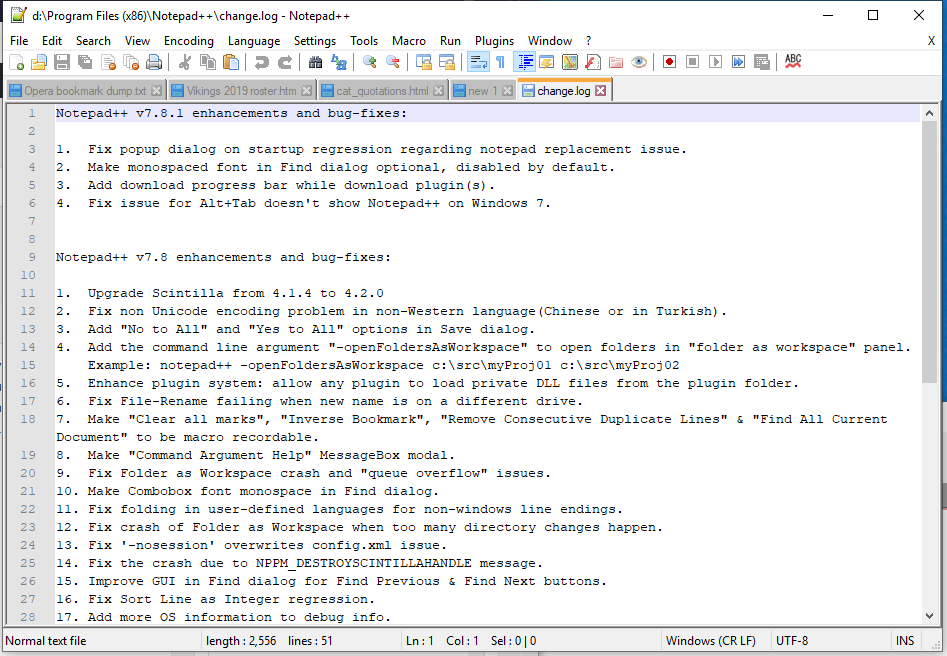
Notepad++ release 7.8.1, also known as the “Free Uyghur” edition, draws unfriendly Chinese attention
I’ve been using Notepad++ as one of my text editor options for a long time. It’s a very useful tool, and I heartily commend it to anyone needing a Windows text editor that can do a lot more than just edit text. I hadn’t downloaded the most recent version, so I was unaware that the developer was under attack from Chinese government supporters for his explicit designation of version 7.8.1 as the Free Uyghur edition:
On Tuesday, Don HO, the developer of Notepad++, a free GPL source code editor and notepad application for Microsoft Windows, released version 7.8.1, prompting a social media firestorm and a distributed denial of service attack.
Notepad++ v7.8.1 was designated “the Free Uyghur edition,” in reference to the predominantly Muslim ethnic group in western China that faces ongoing human rights violations and persecution at the hands of Beijing.
“The site notepad-plus-plus.org has suffered DDoS attack from 1230 to 1330 Paris time,” HO said in an email to The Register. “I saw the [reduced] amount of visitors via Google analytics then the support of my host confirmed the attack. The DDoS attack has been stopped by an anti-DDoS service provided by our host [Cloudflare].”
Previous politically-themed Notepad++ releases have focused on Tiananmen Square and the terrorist attack on French satirical publication Charlie Hebdo.
A post on the project’s website explains HO’s decision to criticize the Chinese government, something companies with business interests in China generally try not to do for fear of retribution.
From the Notepad++ website:
Human rights in China is always a hotly contested topic. Since 2017, numerous reports have emerged of the Uyghur people being detained in extrajudicial “re-education camps”, subjected to political indoctrination, and sometimes even torture. 2018 estimates place the number of detainees in the hundreds of thousands.
The Uyghurs are not ethnically Chinese but live in China’s so-called autonomous Xinjiang region. The region’s name suggests the Uyghurs have autonomy and self-governance. But similarly to Tibet, Xinjiang is a tightly controlled region of China. After the recent Xinjiang conflict, Beijing has recast the Uyghur ethnic group as a terrorist collective. This has allowed Beijing to justify its transformation of Xinjiang into a surveillance state. There has also been a marked rise of Islamophobia across China.
At least 120,000 members of Kashgar’s Muslim Uyghur minority have been detained in Xinjiang’s re-education camps which aim to change the political thinking of detainees, their identities, and their religious beliefs. Reports from the World Uyghur Congress submitted to the United Nations in July 2018 suggest that 1 million Uyghurs are currently being held in the re-education camps.
Sir Charles Ross was a Jerk: The Martello Tower
Forgotten Weapons
Published 29 Oct 2019Note: These towers were built by the British, not the French. Sorry!
http://www.patreon.com/ForgottenWeapons
Cool Forgotten Weapons merch! http://shop.bbtv.com/collections/forg…
Sir Charles Ross was really a jerk sometimes. Not the sort of guy you would want to go into business with.
Contact:
Forgotten Weapons
6281 N. Oracle #36270
Tucson, AZ 85704
Here are the Wikipedia pages on Sir Charles Ross, Bart. and Martello towers.
QotD: Business writing
For a long time — well, it seemed like a long time — seven or eight years, I taught effective writing seminars to business people. I was young, and I looked even younger. But I had to get up in front of engineers, chemists, lawyers, sometimes accountants, people who were accomplished in their fields but were not necessarily good at writing, and I was supposed to talk to them about how to write reports and letters and memos. And they challenged me because I looked like I was 10 years old, and they expected to be bored also.
[…]
OK, the most consistent mistake … not mistake, but inefficiency of business writing — and it was very consistent — is the absolute refusal on the part of the writer to tell you right away what message he or she is trying to deliver. I used to say to them, “The most important thing you have to say should be in the first sentence.” And “Oh, no, you can’t. I’m an engineer. We did a 10-year study, this is way too complicated.”
And inevitably, they were wrong. Inevitably, if they really thought about it, they were able to, in one sentence, summarize why it was really important. But they refused to do that because the way they found out was by spending 10 years of study and all this data and everything, and that’s the way they wanted everyone to look at what they did. They wanted their supervisors to go plowing through all they had done to come to this brilliant conclusion that they had come to.
COWEN: Through their history, through their thought patterns.
Drag everybody through it. And it was the one thing the newspaper people were taught to do that made more sense. You don’t have your reader’s attention very long, so get to the point. I found it was very difficult to get even really smart businesspeople to get to the point. Sometimes it was because they really couldn’t tell you what the point was.
What I wanted to say, but rarely felt comfortable saying, was, “If you don’t know what the point is, then you can’t really write this report.” But it was always too complicated for a layperson like me to understand. That was the way they did it. I was being hired by their bosses to tell them, “No, we want you to write clearly, and we want you to get to the point.”
COWEN: And why were they, at this meta level, resistant to your message?
Because nobody else was doing it. When I would start the class, I’d have 32 people in the class typically, and when they would turn in all their samples of writing, every one of them wrote the same way. They all wrote business-ese writing. This is my parody of it, but it was, “Enclosed please find the enclosed enclosure.” That kind of formal, nonsensical, meaningless flow of words. Somewhere in there would be something important, something significant, or maybe not.
Dave Barry, interviewed by Tyler Cowan in “Dave Barry on Humor, Writing, and Life as a Florida Man”, Medium, 2017-08-16.
November 1, 2019
“Unbreakable” – Guerrilla Warfare – Sabaton History 039 [Official]
Sabaton History
Published 31 Oct 2019The exact topic of Sabaton’s song “Unbreakable” will forever be a mystery. But we do know that it has to do with guerrilla warfare, which is what Indy will dive into in this episode.
Support Sabaton History on Patreon: https://www.patreon.com/sabatonhistory
Listen to The Art of War (where “Unbreakable” is featured):
CD: http://bit.ly/TheArtOfWarStore
Spotify: http://bit.ly/TheArtOfWarSpotify
Apple Music: http://bit.ly/TheArtOfWarAppleMusic
iTunes: http://bit.ly/TheArtOfWariTunes
Amazon: http://bit.ly/TheArtOfWarAmz
Google Play: http://bit.ly/TheArtOfWarGooglePlayListen to Sabaton on Spotify: http://smarturl.it/SabatonSpotify
Official Sabaton Merchandise Shop: http://bit.ly/SabatonOfficialShopHosted by: Indy Neidell
Written by: Indy Neidell, Spartacus Olsson and Markus Linke
Directed by: Astrid Deinhard and Wieke Kapteijns
Produced by: Pär Sundström, Astrid Deinhard and Spartacus Olsson
Creative Producer: Joram Appel
Executive Producers: Pär Sundström, Joakim Broden, Tomas Sunmo, Indy Neidell, Astrid Deinhard, and Spartacus Olsson
Post-Production Director: Wieke Kapteijns
Maps by: Eastory
Edited by: Iryna Dulka
Sound Editing by: Marek KaminskiEastory YouTube Channel: https://www.youtube.com/channel/UCEly…
Archive by: Reuters/Screenocean https://www.screenocean.com
Music by Sabaton.Sources:
– RIA Novosti archive
– Colorization of Mao Zedong by Olga Shirnina a.k.a. Klimbim
– IWM: NA 15129
– Water splash sound effect – littlerobotsoundfactoryAn OnLion Entertainment GmbH and Raging Beaver Publishing AB co-Production.
© Raging Beaver Publishing AB, 2019 – all rights reserved.
From the comments:
Sabaton History
2 days ago
There are many examples where guerrilla warfare was used in an attempt to force out or at least harass a foreign invader or domestic military power. Partisan movements are almost always connected to a certain ideology or party — after all, they rebel against a power they disagree with. We haven’t mentioned a lot of different movements and causes in this episode, not because we don’t value or support them or their cause, but because we have a limited amount of time to cover a general topic in. As Indy also states in the video, we have picked several examples to describe what guerrilla warfare was. Please share any additional groups or events that are relevant for this episode, but keep it civil and keep your political thoughts to yourself.
Cheers, The Sabaton History team
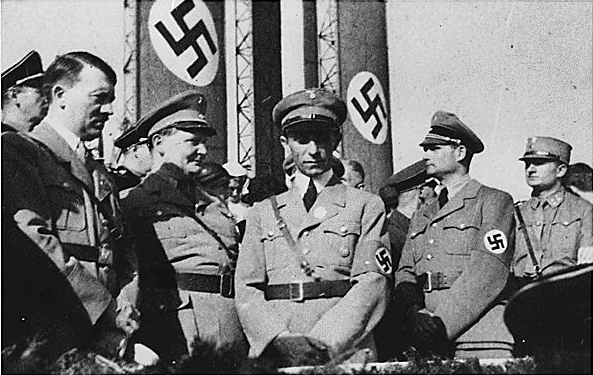
Why All Germans Were Nazis – How Hitler Created the Third Reich | BETWEEN 2 WARS I 1934 Part 1 of 4
TimeGhost History
Published 31 Oct 2019After Hitler seized power in Germany in January 1933, he rapidly transformed the Democratic Weimar Republic into a repressive, totalitarian and racist state. In 1934, Germany became Nazi Germany.
Join us on Patreon: https://www.patreon.com/TimeGhostHistory
Subscribe to our World War Two series: https://www.youtube.com/c/worldwartwo…
Hosted by: Indy Neidell
Written by: Spartacus Olsson and Francis van Berkel
Directed by: Spartacus Olsson and Astrid Deinhard
Executive Producers: Bodo Rittenauer, Astrid Deinhard, Indy Neidell, Spartacus Olsson
Creative Producer: Joram Appel
Post-Production Director: Wieke Kapteijns
Research by: Francis van Berkel and Spartacus Olsson
Edited by: Wieke Kapteijns
Sound design: Marek KamińskiImage sources: Bundesarchiv, Bundesarchiv, Bild 102-15282A / Georg Pahl, Heinz Bergschicker Deutsche Chronik 1933-1945 – Ein Zeitbild der faschistischen Diktatur
Icons from the Noun Project: Police by IconTrack, soldier by Simon Child, police man by Gregor Cresnar, hello by Universal Icons.
A TimeGhost chronological documentary produced by OnLion Entertainment GmbH.
From the comments:
Spartacus Olsson
2 hours ago
Now, this episode explains the measures that the Nazis used to gain control over the German people. It is not an attempt to justify, or be apologetic of the responsibility for the horrors committed during the Nazi regime. But it is also not a blanket condemnation of Germans. What happened in Germany starting in 1933 should serve us all as a warning to what can happen when you let loose authoritarian power, normalize lies as an acceptable part of political discourse, and make mainstream the disregard of basic human values. We should all think of that although the Nazis were especially efficient in their implementation of an authoritarian system, they are by far not the only ones that have succeeded in seducing whole a nation into blind hatred and acceptance of the suffering and death of others to forward an ideology. We should remember that freedom and democracy is essential, but also that words matters. The beginning of oppression starts with an endless stream of lies that confuse public discourse to the point that facts don’t matter anymore and truth becomes fiction. This video shows us what can happen next. Our mantra as a channel is to focus on the facts, not our opinions, not our ‘truth’ — just the facts m’am — and that is what we have presented here, for better or worse.
The “Wokescreen” protecting the Prime Racist
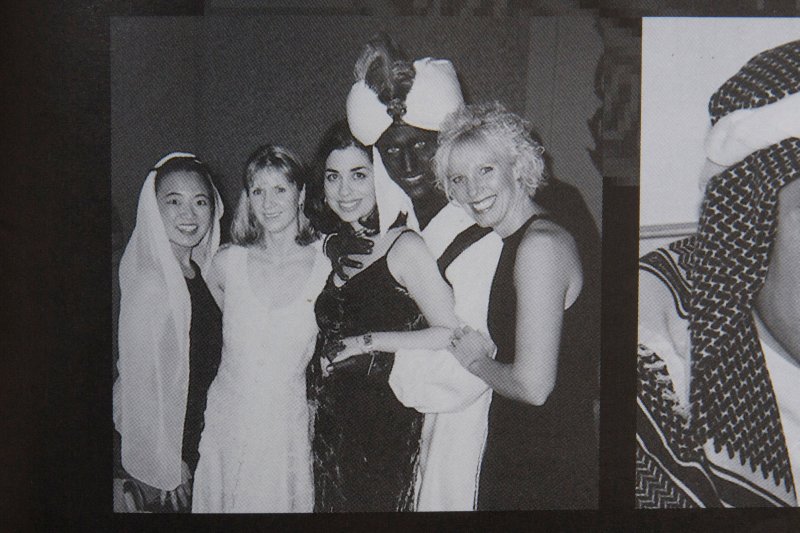
Justin “Blackface” Trudeau has been completely exonerated for any racist acts he committed, thanks to what Julie Burchill calls “the Wokescreen”:

Justin Trudeau with dark makeup on his face, neck and hands at a 2001 “Arabian Nights”-themed party at the West Point Grey Academy, the private school where he taught.
Photo from the West Point Grey Academy yearbook, via Time
Justin Trudeau seems as compulsively drawn to blacking up as his mother was to hanging around pop groups; after the third example of him doing so was revealed this year, he admitted that he had actually lost count of the number of times he’d done it. Nevertheless, he was defended by minority spokesmen and liberal commentators. This contrasts strikingly with the fate of Atlantic Records UK president Ben Cook, who was forced to resign earlier this month after old photographs of him in blackface emerged. As Cook is responsible for launching the career of Ed Sheeran, some might say he had it coming. But it’s weird how Trudeau, an ostentatiously woke politician, has survived and thrived, while Cook has limped away in disgrace. You’d think the former had betrayed both his beliefs and his followers far more.
[…]
So how come Trudeau got away with it? It’s part of a broader dodge – what the commentator Daniel Norris calls the Wokescreen. From behind this magical canopy, cliques can rob women of their hard-won private spaces (transgender activists) and enjoy the brutish thrill of racism (Corbynite anti-Semites) and because they’ve ticked the box which says Brotherhood Of Man it doesn’t make them bad people! Those people over there are the bad ones – like Jacob Rees-Mogg’s 12-year-old son.
It’s a mystery. But an even bigger one is why blackface is quite rightly unacceptable while drag gets bigger by the day. You’d have to be living in an Amish community not to have heard of RuPaul’s Drag Race, while Channel 5’s Drag Kids follows a process which we squares call “grooming”. Yet no one turns a hair. I’ve said it before and I’ll say it again: if the Black and White Minstrels are insulting and reactionary, why aren’t drag queens? If someone can explain to me why race-based parody is bad and sex-based parody “a bit of fun”, I’d love to know. Woke me up and tell me why!
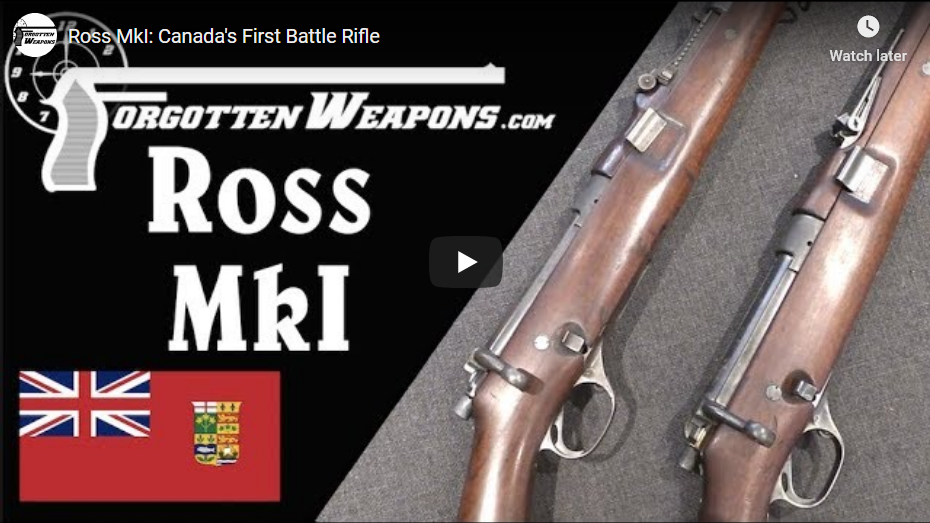
Ross MkI: Canada’s First Battle Rifle
Forgotten Weapons
Published 28 Oct 2019http://www.patreon.com/ForgottenWeapons
Cool Forgotten Weapons merch! http://shop.bbtv.com/collections/forg…
Sir Charles Ross was heir to a very wealthy Scottish family, and was a talented if temperamental engineer. He took an interest in firearms and their design, and worked with American and English connections to produce a line of his own straight-pull sporting rifles. Upon returning from the Boer War he looked to expand into the military market.
At this same time, the Canadian government was looking to replenish its arms supplies after the war, and requested Enfield rifles form the British. The request was turned down, as Britain did not have enough supply to spare any for the Canadians. The Canadians were expected to construct their own factory to make rifles of he standard British pattern. Well, the Canadian government was not eager to invest that sort of capital into the project. They investigated buying arms elsewhere, but the consensus was that Canada’s armaments should come from either Britain or from within Canada itself. No good solution was apparent until Sir Charles Ross stepped in.
Ross offered to fund the construction of a factory himself, and use Canadian labor and industry to manufacture Ross rifles for the military. This seemed like an excellent solution — for zero initial cash outlay, the Canadian government would get rifles both designed and produced domestically! The rifles would be chambered for the standard .303 British cartridge, thus handling the British objections about arms compatibility (Ross pointed out that the British themselves used something like 7 different patterns of rifle at the time).
In 1902, Ross and the Canadian government signed a contract for 12,000 rifles to be made in 1903 and 10,000 per year thereafter, at the price of $25 each. In addition to the Canadian military, the Royal North West Mounted Police also adopted the new Ross rifle. Deliveries did not actually begin until 1905, and when they did plenty of disturbing problems arose. The rifles proved fragile and unreliable — and a weak bolt latch periodically allowed the bolt to fall completely out of the rifle on parade drill — not a good start!
Only 10,000 of the Mark I Ross rifles were made, and an improved Mark II pattern would follow as quickly as Ross could make it a reality.
Many thanks to the private collectors who allowed me access to their rifles to make this video!
Contact:
Forgotten Weapons
6281 N. Oracle #36270
Tucson, AZ 85704
QotD: The much-ballyhoo’d open office benefits are a lie
As urban rents crept up and the economy reached full employment over the last decade, American offices got more and more stuffed. On average, workers now get about 194 square feet of office space per person, down about 8 percent since 2009, according to a report by the real estate firm Cushman & Wakefield. WeWork has been accelerating the trend. At its newest offices, the company can more than double the density of most other offices, giving each worker less than 50 square feet of space.
As a socially anxious introvert with a lot of bespoke workplace rituals (I can’t write without aromatherapy), I used to think I was simply a weirdo for finding modern offices insufferable. I’ve been working from my cozy home office for more than a decade, and now, when I go to the Times‘ headquarters in New York — where, for financial reasons, desks were recently converted from cubicles into open office benches — I cannot for the life of me get anything done.
But after chatting with colleagues, I realized it’s not just me, and not just the Times: Modern offices aren’t designed for deep work. […]
The scourge of open offices is not a new subject for ranting. Open offices were sold to workers as a boon to collaboration — liberated from barriers, stuffed in like sardines, people would chat more and, supposedly, come up with lots of brilliant new ideas. Yet study after study has shown open offices to foster seclusion more than innovation; in order to combat noise, the loss of privacy and the sense of being watched, people in an open office put on headphones, talk less, and feel terrible.
Farhad Manjoo, “Open Offices Are a Capitalist Dead End”, New York Times, 2019-09-25.
October 31, 2019
Should you build or buy a low-angle plane?
Rex Krueger
Published 30 Oct 2019More video and exclusive content: http://www.patreon.com/rexkrueger
(more…)
“Big Lizzie” (HMS Queen Elizabeth) to sail into disputed waters in 2021
UK Defence Journal reported a few days back that the Royal Navy’s new aircraft carrier will take on her first active deployment in 2021, including a possible Freedom of Navigation exercise (FONOPS) in the South China Sea:

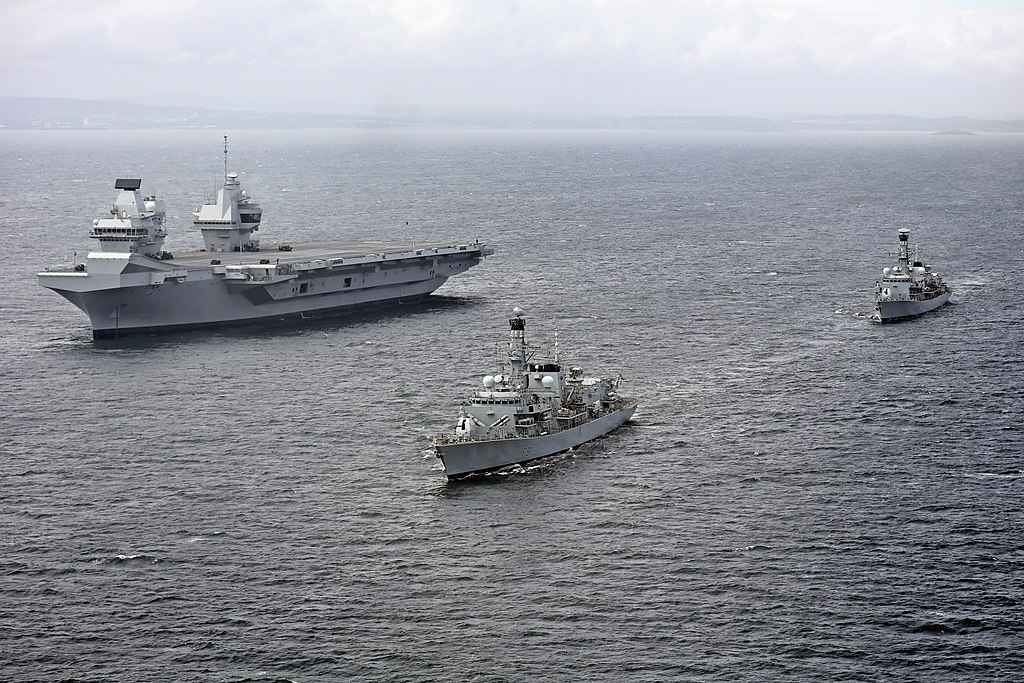
Aerial view of HMS Queen Elizabeth with Type 23 frigates HMS Iron Duke (centre) and HMS Sutherland (right) in June 2017 off the coast of Scotland.
Photo by MOD via Wikimedia Commons.
Commodore Michael Utley, Commander United Kingdom Carrier Strike Group, is reported by Save The Royal Navy here as saying that HMS Queen Elizabeth will be escorted by two Type 45 destroyers, two Type 23 frigates, a nuclear submarine, a Tide-class tanker and RFA Fort Victoria.
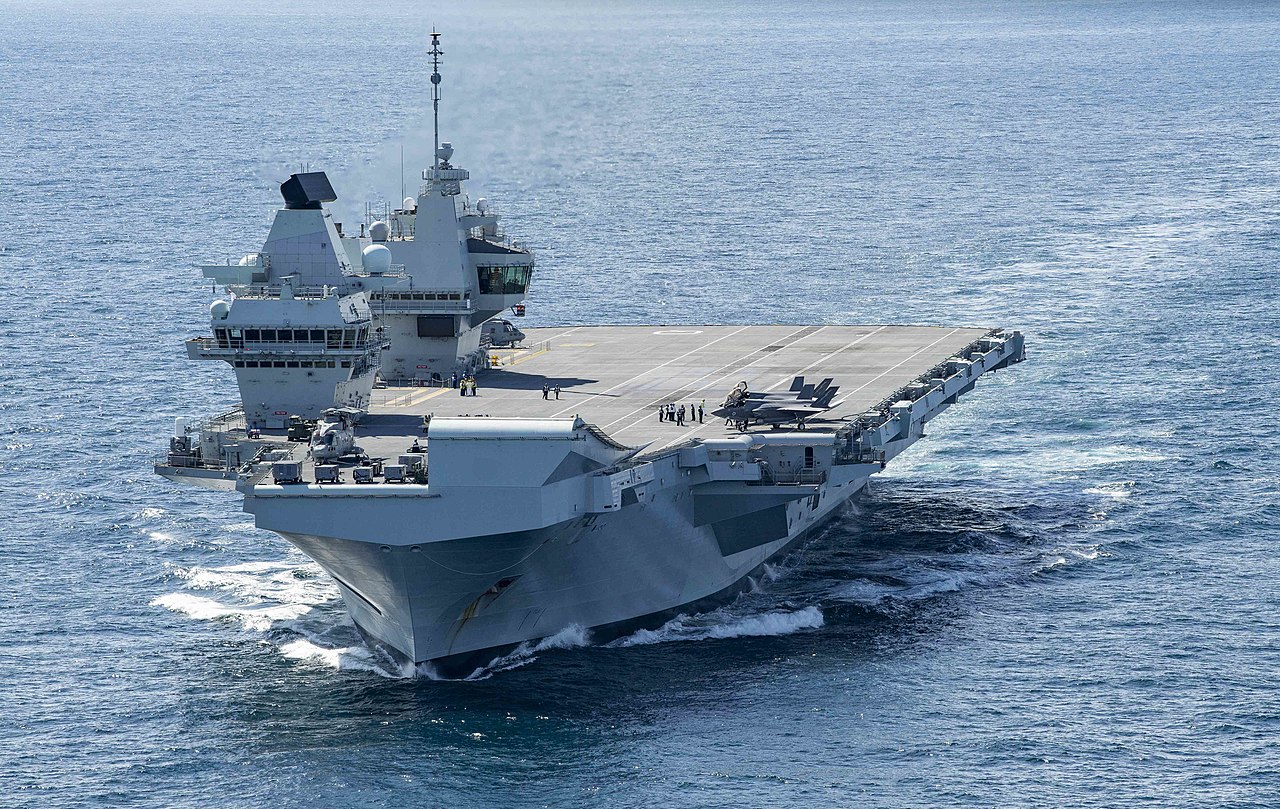
The ship will also carry 24 F-35B jets, including US Marine Corps aircraft, in addition to a number of helicopters.
Prior to the deployment, it is understood that the Queen Elizabeth carrier strike group will go through a work-up trial off the west Hebrides range sometime in early 2021.
When asked about whether or not the UK has enough escorts to do this without impacting other commitment, Defence Secretary Ben Wallace said:
The size and the scale of the escort depends on the deployments and the task that the carrier is involved in. If it is a NATO tasking in the north Atlantic, for example, you would expect an international contribution to those types of taskings, in the same way as we sometimes escort the French carrier or American carriers to make up that.
It is definitely our intention, though, that the carrier strike group will be able to be a wholly UK sovereign deployable group. Now, it is probably not necessary to do that every single time we do it, depending on the tasking, but we want to do that and test doing it. Once we have done that, depending on the deployment, of course, we will cut our cloth as required.
Gareth Corfield expands on this in The Register:
Although the initial plan was for Britain’s biggest ever warship to sail through the South China Sea, which China claims as its own territory in defiance of international laws and norms, and despite claims from at least six other countries including Vietnam and the Philippines, this detail was noticeably absent from the UKDJ report.
Over 200 islands, also subject to disputes between China, Taiwan, Vietnam, Malaysia, and the Philippines, also lie in the area, which stretches across 3.5 million square kilometres and is visited by one-third of the world’s shipping traffic.
A US presence on the South China Sea deployment will be a useful political tool for the administration as a show of strength to China as well as asserting the right to freedom of navigation in the sea. In addition, it reinforces the idea that the UK supports US foreign policy – Queen Elizabeth is effectively replacing a US carrier on her Far Eastern tour as part of the superpower’s standing naval presence.
Of the jets aboard QE, around half will be supplied by the US Marine Corps, as has been reported for years.
The Dutch Navy will definitely join the deployment, most likely with a De Zeven Provinciën-class frigate – replacing one of the British Type 23 frigates in the mooted carrier battle group. Similarly, UKDJ reckons that an American destroyer will join the 2021 deployment (named Carrier Strike Group 21), freeing up a British Type 45 destroyer.

Royal Navy aircraft carrier HMS Queen Elizabeth (R08) underway in the Atlantic on 17 October 2019, participating in exercise “WESTLANT 19”. The first operational deployment for HMS Queen Elizabeth with No. 617 Squadron and a squadron of USMC Lockheed Martin F-35B Lightnings is planned for 2021.
Photo by Mass Communication Specialist 3rd Class Nathan T. Beard, US Navy, via Wikimedia Commons
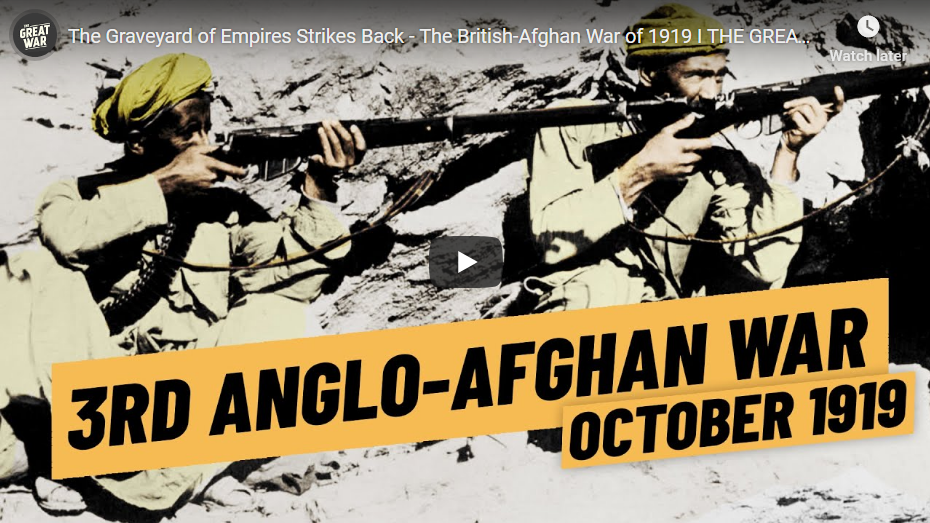
The Graveyard of Empires Strikes Back – The British-Afghan War of 1919 I THE GREAT WAR 1919
The Great War
Published 30 Oct 2019Get 70% off NordVPN! Only $3.49/mo, plus you get two additional months FREE at https://nordvpn.com/thegreatwar and use code thegreatwar
Thanks to NordVPN for sponsoring this video – sponsorships allow us to make this show better and keep it free.» SUPPORT THE CHANNEL
Patreon: https://www.patreon.com/thegreatwar
Merchandise: https://shop.spreadshirt.de/thegreatwar/» BUY OUR SOURCES IN OUR AMAZON STORES
Our Amazon US Store: https://www.amazon.com/shop/influence…
Our Amazon CA Store: https://www.amazon.ca/shop/influencer…
Our Amazon UK Store: https://www.amazon.co.uk/shop/influen…» SOURCES
Adamec, L.W. Afghanistan, 1900-1923: A Diplomatic History, Berkley, 1967
Barthorp, Michael (2002) [1982]. Afghan Wars and the North-West Frontier 1839–1947. London: Cassell.
Beattie, Hugh: “Afghanistan”, in: 1914-1918-online. International Encyclopedia of the First World War, ed. by Ute Daniel, Peter Gatrell, Oliver Janz, Heather Jones, Jennifer Keene, Alan Kramer, and Bill Nasson, issued by Freie Universität Berlin, Berlin 2016-09-02
Heathcote, TA. The Afghan Wars (Spellmount, 2003).
Jacobsen, M H. The Third Afghan War and the External Position of India, 1919-1924. Defense Technical Information Center Archive report ADA195401, 1988.
Monro, Charles. “Despatch from His Excellency the Commander-in-Chief in India regarding the operations against Afghanistan, to the Secretary to the Government of India, Army Department”. Second Supplement to the London Gazette, 15 March 1920 https://www.thegazette.co.uk/London/i…
Molesworth, George (1962). Afghanistan 1919 — An Account of Operations in the Third Afghan War. New York: Asia Publishing House
Robson, Brian (2007). Crisis on the Frontier: The Third Afghan War and the Campaign in Waziristan 1919–1920. The History Press.
Sykes, Percy. A History of Afghanistan vol II. (London Macmillan 1940)
Wyatt, Christopher M. “Change and Discontinuity: War and Afghanistan 1904-1924,” Asian Affairs, 01 September 2016, Vol.47(3): 366-385.» SOCIAL MEDIA
Instagram: https://instagram.com/the_great_war
Twitter: https://twitter.com/WW1_Series
Reddit: https://reddit.com/r/TheGreatWarChannel»CREDITS
Presented by: Jesse Alexander
Written by: Jesse Alexander
Director: Toni Steller & Florian Wittig
Director of Photography: Toni Steller
Sound: Toni Steller
Editing: Toni Steller
Motion Design: Philipp Appelt
Mixing, Mastering & Sound Design: http://above-zero.com
Maps: Daniel Kogosov (https://www.patreon.com/Zalezsky)
Research by: Jesse Alexander
Fact checking: Florian WittigChannel Design: Alexander Clark
Original Logo: David van StepholdA Mediakraft Networks Original Channel
Contains licensed material by getty images
All rights reserved – Real Time History GmbH 2019
I don’t normally comment on sponsors of the various videos I post, but NordVPN has been very recently in the news, should you be interested in their services.
A mathematical revolution in late medieval English ship design and construction
In the latest installment of Anton Howes’ newsletter on the Age of Invention, he discusses how geometry and mathematics helped transform late Medieval English shipbuilding:

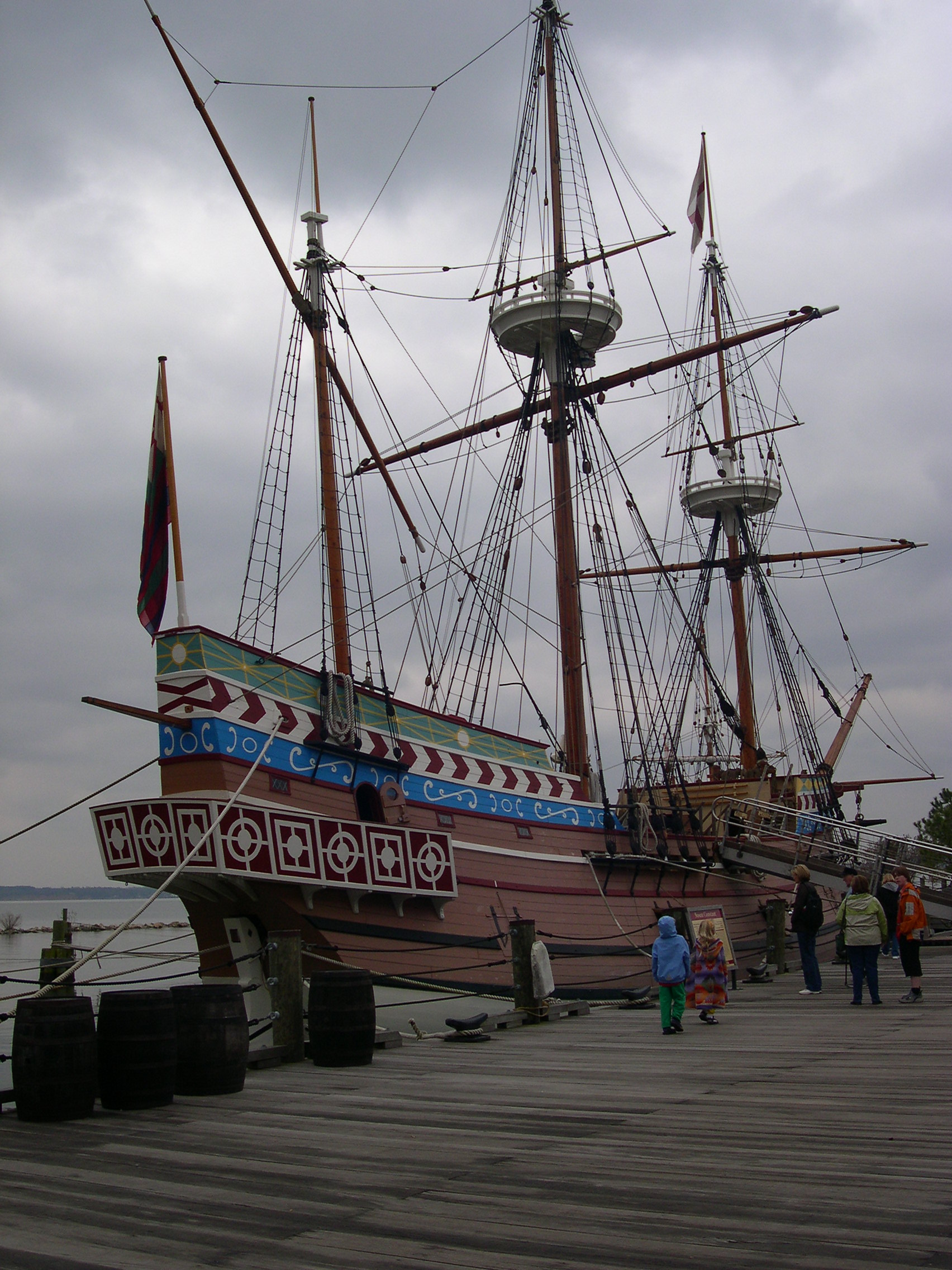
An English ship of a slightly later period: this is a replica of the Susan Constant at the Jamestown Settlement in Virginia. The original ship was built sometime before 1607 and rented by the Virginia Company of London to transport the original settlers to Jamestown.
Photo by Nicholas Russon, March 2004.
Since about 1500, an Italian and Portuguese method of making ships had come into ever wider use in northern Europe. This was to construct the ship’s skeleton first, and then lay the planking around it. This contrasted with the older “clinker” method, by which the planks were laid from the keel upwards, with each plank slightly overlapping the one below – the rest of the skeleton was filled in later to strengthen it. The new “carvel” method, instead of having overlapping planks, allowed for a smooth hull. But it also required more planning.
The master shipwright had to first design full-sized templates, or frames, which were placed along the keel to determine the width and height of the hull, like cross-sections up and down the length of the ship. To the edges of these frames were then fixed ribbands — long, pliable boards running down the ship’s length. Altogether, the frames and ribbands formed a temporary, basket-like structure, to guide the moulding of the ship’s permanent hull around it.
But calculating the size of the frames at each point was tricky. After the placement of the first few, which might be pre-specified in size, the next ones along were typically determined according to the curve of the ribbands. Calculation was certainly involved, but it took place in the form or marking and adjusting the wood itself. Design and construction both took place in the shipyard, and through the medium of wood.
What Matthew Baker did in the 1570s was to take the design process out of the shipyard, and onto paper. He drew his ships, to scale. And by using pen and paper, with geometry to make such drawings possible, he opened up grand new possibilities for design. His process allowed him to jot down the latest innovations from the Mediterranean, to speculate about the designs of Noah’s ark and the ships of the ancient world, and to cheaply conduct his own experiments. He drew out new designs for frames, using geometry to work out how any variation would affect the overall shape of the hull, as well as its weight and carrying capacity – all at the cost of only time, ink, and paper, and avoiding the huge potential waste of conducting experiments at full scale in wood. His process allowed him to innovate more easily, and even to design new measuring instruments.