Forgotten Weapons
Published 15 Oct 2018https://www.forgottenweapons.com/the-…
http://www.patreon.com/ForgottenWeapons
Cool Forgotten Weapons merch! http://shop.bbtv.com/collections/forg…
While the US Army was satisfied with the Thompson as a fighting weapon in World War Two, it was most certainly not happy with the gun’s exorbitant price tag. The Thompson was a very expensive gun, and the Army wanted to see that change. In March of 1942, engineers at the Savage factory submitted a simplified version for Army consideration, and it was accepted and adopted the very next month. Savage would transition from M1928A1 production to the new M1 pattern in June and July of 1942.
This new M1 Thompson had eliminated at last the unique and unnecessary Blish lock system in favor of a simple blowback action delayed only by bolt mass. In addition to greatly simplifying the production of bolt components, this also allowed the receiver internal shape to be much simplified. A further simplification would follow shortly, as the hammer and floating firing pin were replaced by a fixed firing pin milled into the bolt face in October of 1942 – this new type being designated the M1A1. Another 715,000 M1 and M1A1 Thompsons would be produced by Savage and Auto-Ordnance by February of 1944, when the Thompson was finally replaced by the yet cheaper M3 “Grease Gun”.
This is the fourth in a 5-part series on the development of the Thompson…
Note: I refer to the M1A1 in this video as a transferrable gun; it is actually a pre-May dealer sample. Sorry!
Contact:
Forgotten Weapons
PO Box 87647
Tucson, AZ 85754If you enjoy Forgotten Weapons, check out its sister channel, InRangeTV! http://www.youtube.com/InRangeTVShow

June 14, 2020
The Iconic American WW2 Thompson: the M1A1
QotD: The seen gains and unseen losses of high tariffs
Sure, there are gains to the workers and firms protected by tariff walls from their fellow Americans’ ability to trade freely with foreigners. But these protected firms’ resulting higher outputs are produced with resources from elsewhere in the economy. Output and opportunity in other parts of the economy shrink. American firms diverted by tariff walls into producing, say, more steel, rejoice. But this rejoicing ignores the jobs that these tariff walls destroy elsewhere in America and the loss of output from other domestic industries.
It’s easy to rejoice when a wall, literal or figurative, enriches you. And it’s even easier when the destruction wrought elsewhere by that wall is invisible. When a tariff wall causes people in Louisiana and Oregon to pay higher prices for steel made in Pittsburgh, no one can know how they would otherwise have used the extra funds they now pay to Pennsylvania steel producers. But those funds must be diverted from somewhere.
Yet because those somewheres are many, no one domestic industry suffers any great loss from higher steel tariffs. The destruction wrought by tariff walls is dispersed and, hence, invisible. But the sum of the losses is greater than the gain to domestic steel producers.
Americans on the whole are made poorer.
Don Boudreaux, “Mr. Trump, don’t build those walls!”, Pittsburgh Tribune-Review, 2016-11-22.
June 13, 2020
“1648” Pt. 2 – War and Disease – Sabaton History 071 [Official]
Sabaton History
Published 12 Jun 2020War and Plague. Just two horsemen of the apocalypse but never really far away from each other. Where armies march, disease usually follows. From the earliest records of time to modern day, epidemics and contagious diseases are the cause of uncountable deaths. Pandemics like the Spanish Flu or the Bubonic Plague killed millions of people around the world. To survive, mankind had resort to quarantines and plague houses, and put its trust to physicians and the evolution of modern medicine.
Support Sabaton History on Patreon: https://www.patreon.com/sabatonhistory
Listen to “1648” on the album Carolus Rex:
CD: http://bit.ly/CarolusRexStore
Spotify: http://bit.ly/CarolusRexSpotify
Apple Music: http://bit.ly/CarolusRexAppleMusic
iTunes: http://bit.ly/CarolusRexiTunes
Amazon: http://bit.ly/CarolusRexAmz
Google Play: http://bit.ly/CarolusRexGooglePlayListen to Sabaton on Spotify: http://smarturl.it/SabatonSpotify
Official Sabaton Merchandise Shop: http://bit.ly/SabatonOfficialShopHosted by: Indy Neidell
Written by: Markus Linke and Indy Neidell
Directed by: Astrid Deinhard and Wieke Kapteijns
Produced by: Pär Sundström, Astrid Deinhard and Spartacus Olsson
Creative Producer: Joram Appel
Community Manager: Maria Kyhle
Executive Producers: Pär Sundström, Joakim Broden, Tomas Sunmo, Indy Neidell, Astrid Deinhard, and Spartacus Olsson
Post-Production Director: Wieke Kapteijns
Edited by: Karolina Dołęga
Sound Editing by: Marek Kaminski
Maps by: Ryan Weatherby, Karolina DołęgaEastory YouTube Channel: https://www.youtube.com/channel/UCEly…
Archive by: Reuters/Screenocean https://www.screenocean.com
Music by Sabaton.Sources:
– Welcome Images
– National Library of Scotland
– IMW: Q 10378,
– National Museum of Health and Medicine
– National Archives
– Icons from The Noun Project by: Muhamad Ulum & Adrien CoquetAn OnLion Entertainment GmbH and Raging Beaver Publishing AB co-Production.
© Raging Beaver Publishing AB, 2019 – all rights reserved.
The CHAZ is a little bit 1968, a little bit 1789, but perhaps more 1871
Lawrence W. Reed finds the developments in the Capitol Hill Autonomous Zone of Seattle remind him of the Paris Commune:
“‘Autonomous zone’ has armed guards, local businesses being threatened with extortion.”
That was quite a striking headline to behold. My immediate reaction was, “Oh my gosh, the Paris Commune is back!”
Except that it wasn’t Paris, and it wasn’t 1871. It was Seattle, Washington, USA — today. According to multiple reports, radical protesters seized a six-block area of the city. They declared it a police-free fiefdom, posted armed guards at its perimeter, began extorting money from local businesses (normally called “taxation”) and were even requiring residents to provide ID to enter their own homes.
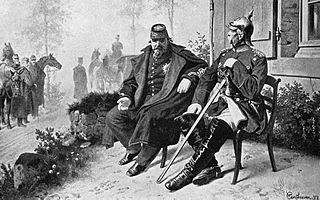
The Paris Commune that lasted just 70 days in the spring of 1871 was born amid the ruins of France’s wartime loss at the hands of Prussia in the fall of the previous year. When the Prussians captured France’s Emperor Napoleon III, the monarchy collapsed, and the French Third Republic was born. In Versailles, just a few miles from Paris, its leaders sat on their hands as Parisians stewed in the toxic juices of defeat, resentment, and a rising tide of Marxist-inspired class warfare. The voices of the big mouths increasingly drowned out those of the more moderate citizens who preferred to get the city back to normal and work for a living.
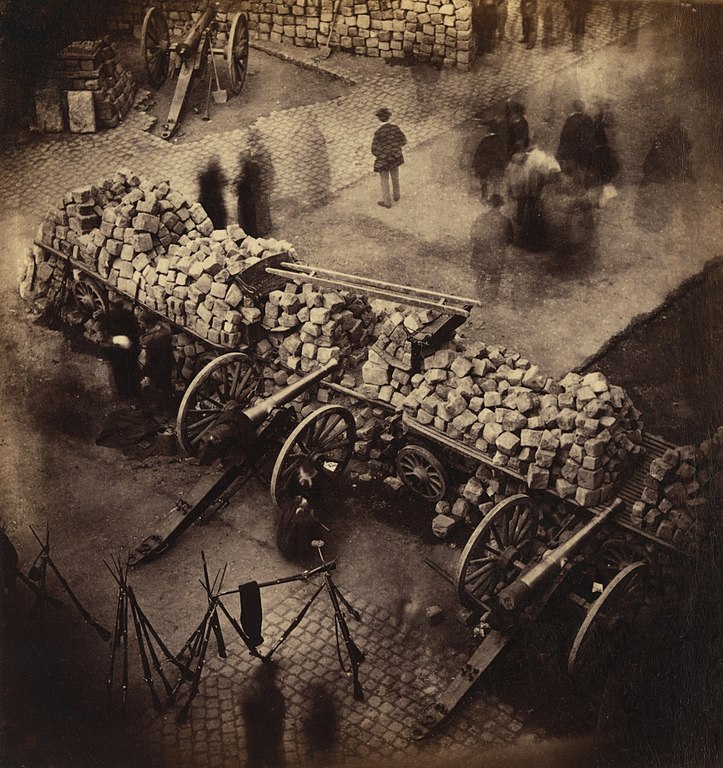
On March 18, 1871, the socialist radicals seized the upper hand in the City of Lights. They occupied government buildings and ousted or jailed their opposition. It was a “People’s Revolution” (unless you were one of the people who didn’t support it). Karl Marx’s communist scribblings provided the radicals — called “Communards” — with their primary inspiration, but Marx himself later criticized their failure to immediately seize the Bank of France and march on the government in Versailles. In the early days of the Paris Commune, however, he hoped he was witnessing a fulfillment of his own delusions:
The struggle of the working class against the capitalist class and its state has entered upon a new phase with the struggle in Paris. Whatever the immediate results may be, a new point of departure of world-historic importance has been gained.
Is Invisibility Possible? | James May’s Q&A (Ep 1) | Head Squeeze
BBC Earth Lab
Published 10 Jan 2013James May answers the question as to whether or not invisibility is possible. James draws upon quite a few interesting theories during this discussion.
Outtakes from this video: https://www.youtube.com/watch?v=6Fy1Xkx5VFc
James May’s Q&A:
With his own unique spin, James May asks and answers the oddball questions that we’ve all wondered about from ‘What exactly is one second?’ to ‘Is invisibility possible?’
QotD: The liberal media
As I have pointed out myself, the more one knows about a subject, the more conservative one becomes towards it. Conversely, the less one knows, the more liberal he becomes, and inclined to embrace “progress” and “reforms.” Even a Communist may prove a very conservative stamp collector, once he learns something about philately. It’s only economics he knows nothing about.
This is a universal principle. Everyone knows something about something, and is very backward on that which he knows. The one exception may be journalists, who know nothing about anything, and are therefore liberal all round.
David Warren, “I’ll be a Welshman”, Essays in Idleness, 2018-03-01.
June 12, 2020
LIVE Q&A – Listening to the tools | Paul Sellers
Paul Sellers
Published 11 Jun 2020Tune in with Paul where he will be answering your questions in this Live Q&A!
——————–Want to learn more about woodworking?
Go to Woodworking Masterclasses for weekly project episodes: http://bit.ly/2JeH3a9
Go to Common Woodworking for step-by-step beginner guides and courses: http://bit.ly/35VQV2o
http://bit.ly/2BXmuei for Paul’s latest ventures on his blog
An unwelcome return to the 1960s
David Warren reflects on how many parallels we’re seeing in the current year to the worst aspects of the 1960s:

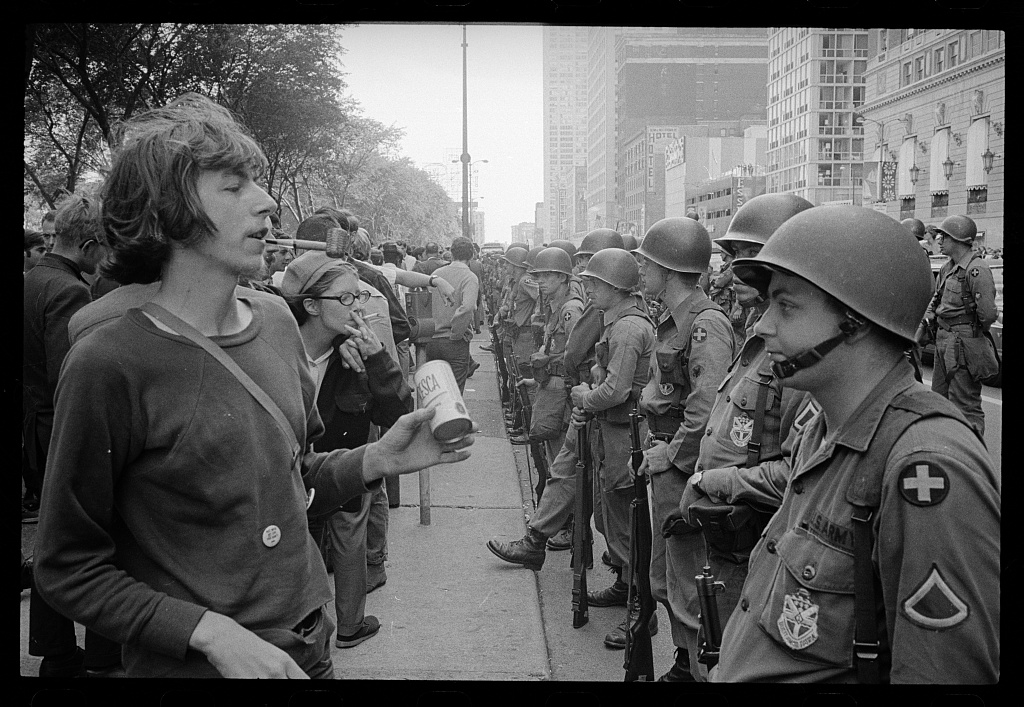
Young “hippie” standing in front of a row of National Guard soldiers, across the street from the Hilton Hotel at Grant Park, at the Democratic National Convention in Chicago, August 26, 1968. Photo by Warren K. Leffler for US News & World Report via Wikimedia Commons.
As an old Cold Warrior, and once “science kid,” whose childhood developed through the 1960s, there is nothing that ought to surprise me. We have Antifa today; we had the Weather Underground then. We have parallels to every event I witnessed through the idiot box of adolescence, and vice versa. Even the destruction of American cities by riots and crime isn’t new; nor the supine response of our liberal leaders. The obvious left bias of news and entertainment was the same then as now, only less shrieking. The replacement of flatfoot journalists, with malicious ideological clowns from the universities, then a work in progress, was by the end of the last century, complete. The poison spread, through all media of information. We’ve reached an Age of Unreason to match Robespierre’s, and seem now to be waiting for a Napoleon.
Charlatans are the handmaids of paganry. That the charlatans slide into violent insurrection, even against the better pagan customs, is not something historically new.
The alternative is improbable: another Age of Faith. This would necessarily include a subsidiary restoration of faith in science — in the modest belief that if we follow the facts where they lead, as opposed to where we want them to go, a lost perception of cosmological order will also be, willy-nilly, restored. “Modern science” — an unambiguously Christian construct — depends entirely on one assumption. It is, that a universe God created will make sense. Logic, or the principle of non-contradiction, will hold up, and where it doesn’t seem to be doing so, it is not God, but we, who have got it wrong.
By the inversion of “values,” at the present day, the sane views are labelled as “psycho.” The truth is not the true, but what we (or our masters) want to call true. This “truth” is “settled,” from one moment to another; and is not to be discovered, but imposed.
History of Prussia | Animated History
The Armchair Historian
Published 14 Sep 2018Sign up for The Armchair Historian website today:
https://www.thearmchairhistorian.com/Our Twitter: https://twitter.com/ArmchairHist
Sources:
The Rise and Fall of Prussia, Sebastian Haffner
Germans and Slavs, Arno Lubos
Frederick the Great, Tim BlanningMusic:
“Hungarian Rhapsody” by Franz Liszt“Twenty six variations on La Folia de Spagna”, London Mozart Players
Matthias Bamert, conductor*Correction 1: In 1648, Brandenburg-Prussia also acquired parts of Pomerania, which isn’t shown in the video. Pomerania is a state directly above Brandenburg.
QotD: Homelessness in America
First let’s start with the fact that homelessness as it exists in America isn’t poverty. In fact part of the problem with it is that it ISN’T poverty. Look, regardless of what you’ve seen on the movies or TV, most homeless are not families fallen on hard times. Yes, there are some of those now, but most of those while technically “homeless” aren’t living in your local park. They’ve just taken over mom and dad’s basement, moved onto a friend’s living room or whatever. Terrible – I’ve been JUST short of that at least three times in my married life – and humiliating, but NOT “stand in the park and wheedle on yourself.”
90% of the homeless in America and the hard core ones are people with mental health issues, people with drug abuse issues and people who have found they can live without having to do anything for it, and can be “free” and outside society. I’ve overheard conversations in the park, and I suppose that most of the people who “dropped out” in the sixties are dead, but a lot of them are alive and going from soup kitchen to free clinic, with a bit of begging in between.
Yes, there are entire families in this system, including homeless children – but for them to stay in it, the parents need to have some sort of serious issue. Otherwise, even if they can’t find work, there is assistance available to get them at least into public housing, which, nightmarish though it is, is not living in the park.
I’m not going to pretend this doesn’t happen to normal families too – see where I came very close to that level and more than once too – but normal families usually tend to bounce back. They go through a few months of mess and horror, and then they claw back to some semblance of normalcy. (This might change as our economy dives and programs of necessity get cut. The ones for the DESERVING poor will be cut first, of course, since they rarely riot.)
The problem with this is that when people get appalled at the conditions the homeless live in and start offering “homeless services” there is an entire network, not just of homeless but of social workers who direct the homeless to the cities with better services.
I swear to you and I’m not even joking that right now there are plenty more homeless on Colorado Springs streets than in Denver, despite the Springs being much smaller.
The Springs also has its soup kitchens and other services downtown and within easy walking distance of each other.
This means downtown businesses are closing, except for bars and restaurants which can control access. And that the library is of course a place to camp in the cool/warm during the day.
It means more than that. We moved within easy driving distance of downtown, because when we lived downtown when we first came to Colorado Springs, I used to take walks every day. When we moved to our little mountain village, without these, I gained ten pounds a year. I used to love walking downtown, dropping by the deli and the three bookstores (only one left, and it’s MOSTLY a restaurant now) checking out the other little shops which ranged from yarn to weird import crafts.
Now those are gone. Worse – the last two times I walked downtown alone (i.e. without commanding the muscle, aka older son to go with me) someone FOLLOWED me and I had to employ stuff from my childhood to lose them. Once it was a large and addled looking male, and yes, he was following me. And once it was TWO large and addled looking males. For the icing on the cake – not related to this, but from a blog entry – I clicked on the sex offenders registry. Yes, I know, a lot of people there are there because someone accused them and was never proven. Our local one at least has notes on whether it’s accusation, trial or conviction and also whether the crime was against children or adults.
The downtown zipcode is FULL of registered sex offenders who’ve done hard time and who have committed their crimes against adults. The faces are very familiar from my walks, and yep, one was the guy who tried to follow me.
Sarah Hoyt, “Of Books, Compassion And Cruelty A Blast From The Past From June 2013”, According to Hoyt, 2020-03-10.
June 11, 2020
Are Bedrock planes really better? // Affordable handtool woodworking
Rex Krueger
Published 10 Jun 2020Does the rare and expensive Bedrock plane offer the bang for its buck? Watch and see!
More video and exclusive content: http://www.patreon.com/rexkrueger
Sign up for Fabrication First, my FREE newsletter: http://eepurl.com/gRhEVT
(more…)
Black Death Mystery Solved – Not Bubonic Plague – Pandemic History 02
TimeGhost History
Published 10 Jun 2020From the day the Black Death starts to ravage humanity in 1347, there will be speculation about what it is. It will take until 2017 for science to give us a conclusive answer to the riddle how so many people could die so fast all over Europe, Africa, and Asia in only five years.
Join us on Patreon: https://www.patreon.com/TimeGhostHistory
Hosted by: Indy Neidell and Spartacus Olsson
Written by: Indy Neidell and Spartacus Olsson
Directed by: Astrid Deinhard
Executive Producers: Astrid Deinhard, Indy Neidell, Spartacus Olsson, Bodo Rittenauer
Creative Producer: Joram Appel
Post-Production Director: Wieke Kapteijns
Research by: Spartacus Olsson, Indy Neidell, and James Currie
Edited by: Karolina Dołęga
Sound Engineer: Marek Kamiński
Graphic Design: Ryan WeatherbyVisual Sources:
Welcome Images
Mark and Delwen from Flickr: https://www.flickr.com/photos/markand…
Smarteeee from Wiki CommonsIcons from The Noun Project by: arif fajar yulianto, James, Maxim Kulikov, Jejen Juliansyah Nur Agung, Gan Khoon Lay, Alfonso Melolonta Urbán
Laymik, parkjisun, Eucalyp, Adrien Coquet & Mahmure Alp.Music:
“Barrel” – Christian Andersen
“Symphony of the Cold-Blooded” – Christian Andersen
“Potential Redemption” – Max Anson
“Moving to Disturbia” – Experia
“Superior” – Silver Maple
“Please Hear Me Out” – Philip Ayers
“Guilty Shadows 4” – Andreas Jamsheree
“Deadline” – Marten Moses
“Endlessness” – Flouw
“Moving to Disturbia” – ExperiaArchive by Screenocean/Reuters https://www.screenocean.com.
Research Sources:
Quinto Tiberio Angelerio and New Measures for Controlling Plague in 16th-Century Alghero, Sardinia, Raffaella Bianucci, Ole Jørgen Benedictow, Gino Fornaciari, and Valentina Giuffra
“The Path to Pistoia: Urban Hygiene Before the Black Death”, G. Geltner, Past & Present, Volume 246, Issue 1, February 2020, Pages 3–33
Encyclopedia of the Black Death, Joseph Patrick Byrne
“Epidemiological characteristics of an urban plague epidemic in Madagascar, August–November, 2017: an outbreak report”, The Lancet, Rindra Randremanana, PhD *Voahangy Andrianaivoarimanana, PhD Birgit Nikolay, PhD Beza Ramasindrazana, PhD Juliette Paireau, PhD, Quirine Astrid ten Bosch, PhD et al
“Yersinia pestis, the cause of plague, is a recently emerged clone of Yersinia pseudotuberculosis” Mark Achtman, Kerstin Zurth, Giovanna Morelli, Gabriela Torrea, Annie Guiyoule, and Elisabeth Carniel
“Insights into the evolution of Yersinia pestis through whole-genome comparison with Yersinia pseudotuberculosis“, P.S.G. Chain, E. Carniel, F.W. Larimer, J. Lamerdin, P.O. Stoutland, W.M. Regala, A.M. Georgescu, L.M. Vergez, M.L. Land, V.L. Motin, R.R. Brubaker, J. Fowler, J. Hinnebusch, M. Marceau, C. Medigue, M. Simonet, V. Chenal-Francisque, B. Souza, D. Dacheux, J.M. Elliott, A. Derbise, L.J. Hauser, and E. Garcia
“Distinct Clones of Yersinia pestis Caused the Black Death”, Stephanie Haensch, Raffaella Bianucci, Michel Signoli, Minoarisoa Rajerison, Michael Schultz, Sacha Kacki, Marco Vermunt, Darlene A. Weston, Derek Hurst, Mark Achtman, Elisabeth Carniel, Barbara BramantiA TimeGhost chronological documentary produced by OnLion Entertainment GmbH.
From the comments:
TimeGhost History
2 days ago
There is much we can learn from history and as you will see in the next two episodes of our impromptu pandemics series it takes a long time for us to make these learnings. Many of the mistakes made during the outbreak of the Black Death are still an issue as we respond to COVID-19 almost 700 years later. This episode was also a very personal learning experience for us, Indy and Spartacus. Both of us read and studied a lot about the plague when we were younger in the 1980s, Indy even did his BA paper in history on the plague. Back then there was a lot of speculation about what the Black Death actually was (although the general consensus was that it must have been bubonic plague based on the findings made in the 20th century, after the discovery of the Yersinia Pestis bacteria). But that conclusion was a bit problematic — the Black Death was too lethal, spread too fast, and killed people too quickly for bubonic plague. Until we started researching these episodes we hadn’t spent much thought on the topic, so imagine our surprise when we discovered that bacteriologists, epidemiologists, and archeologists had come together to solve the mystery after two chance occurrences of unusual plague outbreaks in 2014 and 2017. To paraphrase Lord Marlborough: if you want to truly learn something about a topic, there’s no better way than to make a video about it.