… these same people want the government to provide them with free health care, and if they got their full way, other “positive liberties” (to quote Obama) including free college, free housing, free food, guaranteed income, guaranteed jobs.
[…] the moment all your necessities are furnished by someone else, someone else gets to make all the decisions for you. I mean, if your health is paid for by the taxes of your fellow citizens, and the government aka the nation looks after your every need: should they pay for your health if you insist on smoking or drinking? Or should those resources be husbanded for people who take better care of themselves? Okay, Sarah, but isn’t there a point to individual responsibility? Why shouldn’t you be required to take minimal care of yourself, so you get the benefits of the government’s care, which as you say someone else pays for.
Ah, but there’s the rub. See, ultimately, there’s always something some of us say or do that can be used to justify denying care or giving only palliative care. For instance, I’m overweight, which seems to be one of the remaining sins in the current lexicon. Sure, I gained tons of weight over 20 years of untreated hypothyroidism, even though I was starving myself for a long portion of those. But hey, I allowed myself to be overweight. So my prognosis is poor. Why spend money on me, when someone else could have better results?
Hell, even when it comes to my autoimmune. I’m a poor prospect, so why give me top of the line care?
If the government controlled other things, it would be exactly the same. Food? Sure, I break out in eczema all over when I eat a diet rich in carbs. But hey, flour and rice are cheap, and why should I get a specialized diet, since I’m only a writer who isn’t even a leftist or a supporter of the state, and besides my prospects of survival are poor?
College? Sure you want to be an economist, but your teachers say you’re cheeky and talk back, and the state doesn’t need that. What we need right now are pipe fitters. Here, you can take this six week course.
When the state is paying the bill, the state gets to decide what is better for you. The European constitution gives you the right to “death with dignity” because death with dignity is much cheaper than expensive treatments with a low chance of survival. After all this money is for everyone, you know?
And like the NHS, in Britain, they won’t even let you seek treatment outside their tender mercies. Why should they? They pay for you. That means in the end they decide what to spend on you. They own you. And if you went outside their system and your kid got cured? It would look pretty bad for them, wouldn’t it? Why should they allow you to do that? And besides, peasant, you have a bad attitude.
Sarah Hoyt, “Slouching Into Shackles”, According to Hoyt, 2018-04-27.
July 25, 2020
July 24, 2020
Winston Churchill and the 1943 Bengal famine
Christopher Howarth on a recent BBC production that threw facts out the window in a rush to condemn British Prime Minister Winston Churchill for the famine in Bengal during 1943:
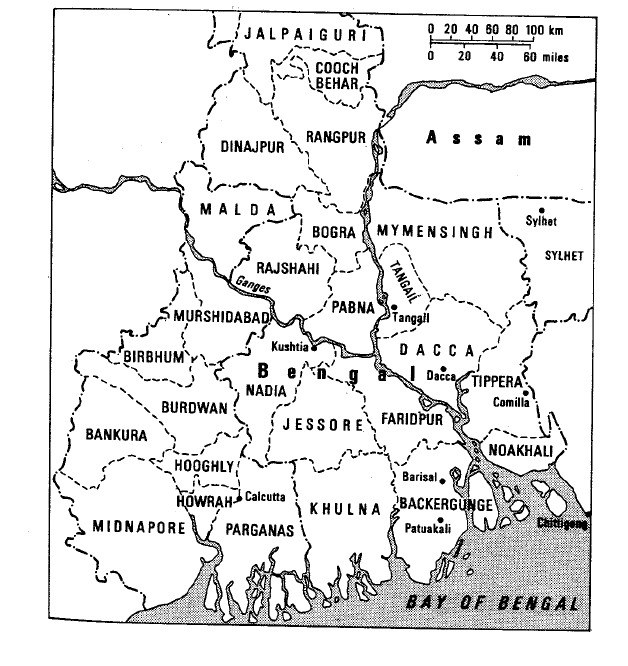
A 1945 map of Bengali districts as of 1943.
Famine Inquiry Commission (1945): Report on Bengal via Wikimedia Commons.
This argument was put forward by the BBC’s own Yogita Limaye, an Indian engineer and reporter on Women’s safety, based on the book Inglorious Empire by Shashi Tharoor, who was interviewed to give his opinion that Churchill was an “odious figure of reprehensible views and racist attitudes.”
No doubt the narrative of British evil and oppression is believed in India and elsewhere, but that does not make it true or worthy of the BBC reporting it as fact without any semblance of balance. The BBC failed its licence fee paying audience in two main regards, namely, conceptually and factually.
The British ruled India, one of the largest populations on earth, for well over two centuries. Good and bad things happened, just like everywhere else ever. You can join the dots to create whatever picture you like – Dr Tharoor chose the picture he wished to create. Why is the Bengal famine uniquely interesting to a BBC audience in 2020 over say a mini-series on British Railways and development in India? BBC presenters are demonstrably more interested in the first narrative: this is a major conceptual failing on their part. Being equal mixtures primitivism and solipsism. Always the borderline racist Western assumption is that “we” did things to “them”: we had agency, they were passive brutes. They are boring, we are endlessly interesting. Let’s talk about us. However even the slightest knowledge of the British-in-India teaches one that “we” did nothing without them. How on earth could we? There were famously few of us.
Yet it’s the second great BBC failing – over accuracy – which is so especially galling. On the actual allegation the BBC is plain wrong. Churchill was not responsible for the Bengal famine as any actual delving into the facts would have shown. Note well that they didn’t even try.
In 1943 Britain was at war with Japan, who were at the gates of India having occupied Burma, a major supplier of grain to Bengal. Important facts. Bengal was in the grips of a famine, nobody disputes that. But Churchill was not responsible, neither for the weather nor the agriculture nor the Japanese aggression.
Even the BBC did not allege that Churchill instigated the famine, the charge sheet is that he refused to help when he could. There were “stockpiles [of food] in the UK” and shipping which was retained in the northern hemisphere, prioritised for use there. Stockpiles of food in the UK in 1943? Even if there was the food and shipping, transporting US corned beef to Bengal would have been ludicrous. If there was shipping and protection from Japanese naval assault the food would have come from the rest of India. So why was food not transported from other parts of India to Bengal?
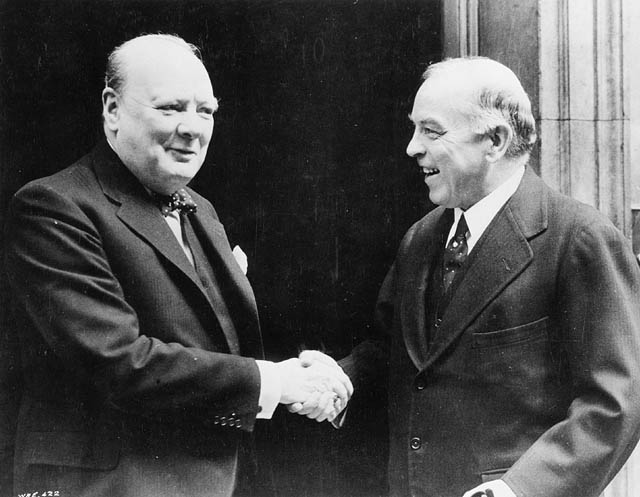
Prime Minister Winston Churchill greets Canadian PM William Lyon Mackenzie King, 1941.
Photo from Library and Archives Canada (reference number C-047565) via Wikimedia Commons.
War Diplomats, Japanese/Soviet Neutrality, and why not Sweden? – WW2 – OOTF 015
World War Two
Published 23 Jul 2020What happened to Allied ambassadors? And how did Hitler react to the Soviet-Japanese Neutrality Pact? And why didn’t he invade Sweden? Once again, Indy is in the Chair of Infinite Knowledge answering all your exciting questions about World War Two!
Join us on Patreon: https://www.patreon.com/TimeGhostHistory
Or join The TimeGhost Army directly at: https://timeghost.tvFollow WW2 day by day on Instagram @World_war_two_realtime https://www.instagram.com/world_war_two_realtime
Between 2 Wars: https://www.youtube.com/playlist?list…
Source list: http://bit.ly/WW2sourcesHosted by: Indy Neidell
Written by: Rune Væver Hartvig
Director: Astrid Deinhard
Producers: Astrid Deinhard and Spartacus Olsson
Executive Producers: Astrid Deinhard, Indy Neidell, Spartacus Olsson, Bodo Rittenauer
Creative Producer: Joram Appel
Post-Production Director: Wieke Kapteijns
Research by: Rune Væver Hartvig
Edited by: Mikołaj Cackowski
Sound design: Marek Kamiński
Map animations: Eastory (https://www.youtube.com/c/eastory)Colorizations by:
Jaris Almazani (Artistic Man), https://instagram.com/artistic.man?ig…
Norman Stewart – https://oldtimesincolor.blogspot.com/
Daniel WeissSources:
Bundesarchiv
Narodowe Archiwum Cyfrowe
Portrait of Charles Howard Smith, courtesy National Portrait GallerySoundtracks from the Epidemic Sound:
Howard Harper-Barnes – “London”
Fabien Tell – “Other Sides of Glory”
Johannes Bornlof – “The Inspector 4”Archive by Screenocean/Reuters https://www.screenocean.com.
A TimeGhost chronological documentary produced by OnLion Entertainment GmbH.
Orchestras encouraged to ditch blind auditions for reasons of diversity
Tal Bachman responds to a recent New York Times article by Tony Tommasini demanding that musical organizations ignore the relative quality of a potential musician’s play in order to ensure more visible minority players get hired:

The New York Philharmonic Orchestra, detail from a group portrait in 2018.
Photo from the New York Philharmonic Orchestra website.
Tommasini begins his piece, entitled “To Make Orchestras More Diverse, End Blind Auditions”, by decrying the racism and sexism which, he claims, kept the orchestras of yesteryear predominantly white and male. He then pays tribute to the simple practice that helped erase that racism and sexism from orchestra hiring procedures: the blind audition. Starting in the late 1960s, orchestras began ditching traditional face-to-face auditions in favour of auditions that took place behind screens. With orchestra administrators no longer able to see the race or sex of the orchestra applicant, conscious and unconscious bias in hiring choices became impossible. Musical skill became the sole criterion for winning one of those prized professional playing positions.
This meritocratic turn, Tommasini argues, proved especially beneficial to female players. Whereas in 1970, women made up only 6% of orchestras, they now make up somewhere between a third and half of an average orchestra.
I add that audiences also benefited from meritocratic hiring processes as orchestras played increasingly brilliant renditions of the classics. Those improved performances also showed greater reverence for the original composers themselves. In short, the blind audition was a big win for all lovers of musical excellence – players, living composers, and fans alike.
So why on earth would anyone now call for their abolition?
Tommasini answers this way:
Blind auditions changed the face of American orchestras. But not enough. American orchestras remain among the nation’s least racially diverse institutions, especially in regard to black and Latino artists … Ensembles must be able to take proactive steps to address the appalling racial imbalance that remains in their ranks. Blind auditions are no longer tenable.
In other words, the low number of black and Latino classical musicians means orchestras need to re-institute the old-time racial discrimination Tommasini began his article by decrying. Orchestras need to know which applicants are white and Asian precisely so they can refuse to hire them on that basis, no matter how skilled they are. Blind auditions make racial discrimination impossible, so they must be scrapped. American orchestras, writes Tommasini, should stop “passively waiting for representation to emerge from behind the audition screen”. Instead, they must realize that “removing the screen is a crucial step”.
To summarize: For Tommasini, it’s not just that justice requires injustice. It’s that justice is injustice (injustice in the form of racial discrimination). And if that reminds you of the official slogan of Orwell’s Ministry of Truth in 1984 – war is peace, freedom is slavery, ignorance is strength – you’re not alone.
10 Quick Woodworking Tips 02 | Paul Sellers
Paul Sellers
Published 26 Mar 2020Paul is back again bringing you another lot of 10 Quick Woodworking Tips!
Every Tuesday Paul uploads a quick 15 second “Tuesday Tip” to his Instagram stories. You can join Paul on Instagram here: https://www.instagram.com/paul.a.j.se…
Let us know your favourite tip in the comments!
——————–Want to learn more about woodworking?
Go to Woodworking Masterclasses for weekly project episodes: http://bit.ly/2JeH3a9
Go to Common Woodworking for step-by-step beginner guides and courses: http://bit.ly/35VQV2o
http://bit.ly/2BXmuei for Paul’s latest ventures on his blog

QotD: A death in the Roman Empire
Yet then something miraculous happened. Spreading from east to west across the Mediterranean, travelling along the great network of roads and shipping lanes that constituted the arteries of the Roman Empire, news began to spread that this man whose mortal remains supposedly lay entombed in the grave had been seen alive. Most people, of course, scoffed at such reports — but there were some, small communities of believers, who did not. These, even as the decades passed, kept the faith: the conviction that their saviour would come again, that he would reign, in the words of a widely circulated prophecy, as “the king of Jerusalem”, that he would bring to groaning humanity a universal peace.
In the event, Nero did not come again. Despite the various imposters who appeared in the wake of his death in AD 68, and the fact that, centuries later, there were cities in the eastern reaches of the Roman Empire that still honoured his memory, his fate was to be commemorated, not as a saviour, but as a monster. And so, in numerous ways, he was. His readiness to have members of his own family — mother, brother, wife — put to death ensured that when he himself died the dynasty of the Caesars perished with him.
His sex games were notorious. He was darkly rumoured to have set fire to Rome. By the time that Suetonius, half a century after his death, came to write his biography, the details of his life could be structured almost entirely as a catalogue of deviancies and crimes. “Insolence, an uninhibited sexual appetite, dissipation, greed, cruelty: these were the vices which, to begin with — because he gave expression to them only secretly and incrementally — might well have been chalked up as the excesses of youth, had it not been manifest to everyone even at the time that they were failings, not of age, but of character.”
Nero’s rule had become one protracted blasphemy against the customs of the Roman state. These, hallowed by the centuries, enabled the people of a city that had conquered most of the known world to feel a sense of communion still with the mos maiorum: the customs of their distant ancestors. To no class of society was this more important than the Senate, which still, despite the collapse of Rome’s venerable republican order and its replacement by the autocracy of the Caesars, cherished its time-honoured role as the guardians of tradition.
Tom Holland, “When Christ conquered Caesar”, UnHerd, 2020-04-10.
July 23, 2020
Every Stanley Bench Plane Explained (Once and for all!)
Rex Krueger
Published 22 Jul 2020Understand the whole line of Stanley bench planes; all ELEVEN of them.
More video and exclusive content: http://www.patreon.com/rexkrueger
Sign up for Fabrication First, my FREE newsletter: http://eepurl.com/gRhEVT
(more…)
Justin Trudeau and the Overton Window
Ted Campbell explains how Canada’s mainstream media work so hard to move the Overton Window to benefit Justin Trudeau and the Liberal Party:
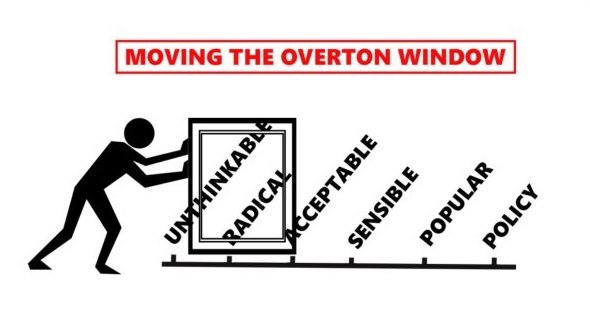
… this explanation from Politico might help:
The concept of the “Overton window,” the range of ideas outside which lie political exile or pariahdom, was first batted around in a series of conversations by the late free-market advocate Joseph Overton in the 1990s. After Overton’s untimely death in a plane crash in 2003, his friend and colleague at the libertarian Mackinac Center, Joseph Lehman, formalized and named the idea in a presentation meant to educate fellow think-tank warriors on the power of consistent advocacy. Ring the bell loudly for your idea, no matter how unpopular, and back it up with plenty of research and evidence, so the thinking went. Today’s fringe theory can become tomorrow’s conventional wisdom by the shifting of the finely tuned gears that move popular opinion; to Overton and Lehman the role of the think tank was to at least familiarize voters with these ideas, giving them an institutional home when public opinion finally moved their way.
Or, and even more brief visual explanation is:
Anyway, I believe that the Liberal Party of Canada and its allies in e.g. the CBC, The Star, and amongst the others who speak for the Laurentian Elites are working very hard, right now, to move the Overton Window frame of one idea from “Unthinkable” to at least barely “Acceptable.” That idea is that Justin Trudeau’s personal corruption (I believe that’s the right word) is acceptable because the alternative is a Conservative government that is, by Liberal/Laurentian Elite definition, authoritarian (fascist), homophobic, militaristic, racist, and sexist.
That’s right, the Liberal/Laurentian Elites admit that Justin Trudeau is dishonest, that he, unthinkingly, breaks the rules, over and over again ~ because, you see, he’s a really nice person but, sadly, he’s just not very smart. I have even made that case for them. I suggested, almost a year ago, that Justin Trudeau is an intellectual lightweight who is in no way qualified to hold high office … but he has the “second hand” celebrity of a famous name and he’s photogenic, too, and so, in 21st-century Canada he’s electable.
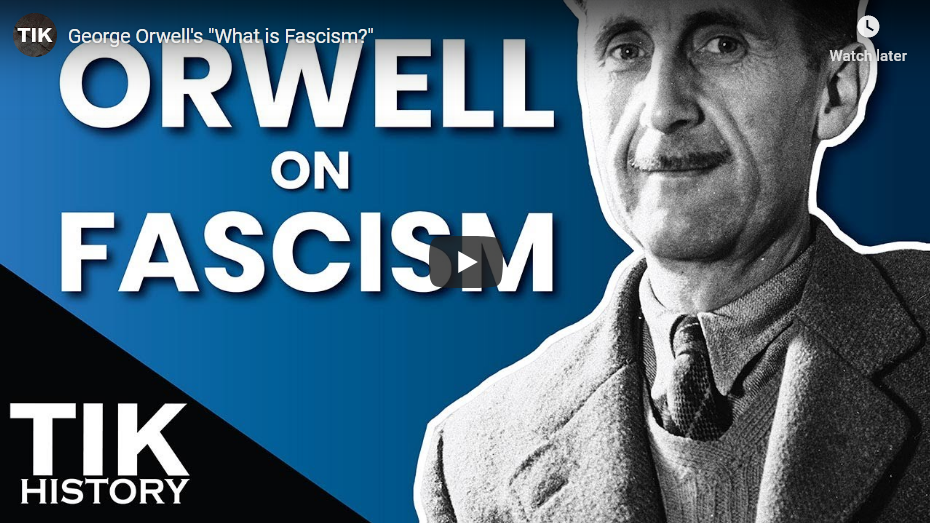
George Orwell’s “What is Fascism?”
TIK
Published 21 Jul 2020George Orwell wrote a short piece in 1944 asking the question: What is Fascism? George Orwell (Eric Arthur Blair) died in 1950. His work is technically not in the PUBLIC (STATE) domain in the UK until the end of this year. If Orwell’s estate wishes to make a Fascist-copyright claim on this video, feel free. I’m not monetizing it anyway, and will simply take the video down.
To see yesterday’s suppressed video on Greece under Fascist and National Socialist rule in WW2, click here https://youtu.be/oT2NPAoXeSk
To learn why the word PUBLIC means STATE, click here https://youtu.be/ksAqr4lLA_Y
If you’re looking for a Graphic Designer, here’s a good one: https://www.terriyoungdesigns.co.uk/
– – – – –
📚 BIBLIOGRAPHY / SOURCES 📚
Full list of all my sources https://docs.google.com/spreadsheets/…
– – – – –
⭐ SUPPORT TIK ⭐
Want to ask a question? Please consider supporting me on either Patreon or SubscribeStar and help make more videos like this possible. For $5 or more you can ask questions which I will answer in future Q&A videos. Thank you to my current Patrons! You’re AWESOME! https://www.patreon.com/TIKhistory or https://www.subscribestar.com/tikhistory
– – – – –
ABOUT TIK 📝
History isn’t as boring as some people think, and my goal is to get people talking about it. I also want to dispel the myths and distortions that ruin our perception of the past by asking a simple question – “But is this really the case?”. I have a 2:1 Degree in History and a passion for early 20th Century conflicts (mainly WW2). I’m therefore approaching this like I would an academic essay. Lots of sources, quotes, references and so on. Only the truth will do.
This video is discussing events or concepts that are academic, educational and historical in nature. This video is for informational purposes and was created so we may better understand the past and learn from the mistakes others have made.
Full text of Orwell’s “What is Fascism?”, first published in Tribune in 1944 is available here.
Edmonton’s CFL team will abandon the “Eskimos” nickname that’s been in use for over 100 years
Anything that happens in the United States tends to also happen later in Canada. The Washington NFL franchise has abandoned their “Redskins” nickname (although to many the “Washington” part is at least as offensive) but have not yet announced their new moniker. Edmonton is in the same situation, with no new name yet decided upon:

“Edmonton eskimos wordmark” by Pabstheiniker is licensed under CC BY-SA 4.0


I said an anticipatory farewell to the name of the Edmonton Eskimos football club in this space in 2017; on Tuesday the team’s front office executed the sentence, announcing that the team’s nickname, in use for Edmonton sports clubs for over 110 years, will be retired. (Note that the Canadian Football League is only 62 years old.)
But there is always some kind of minor surprise on the scaffold, and in this case it was that the team has not yet decided on a new name. This, I see, is where I made a mistake back in 2017.
I saw that getting rid of “Eskimos” was a relatively simple problem with an affordable cost that would have to be paid eventually. In the event, the final push was supplied, unsurprisingly, by corporate sponsors — themselves all in a state of vulnerability and panic in conditions of pandemic disease. The CFL team had played public-relations defence whenever the issue was raised aggressively before; they were, self-evidently, playing for time.
I noted in 2017 that the same P.R. apparatus was obviously trying to propagate “Empire” as an alternative by-word for the team, and it filed a trademark application for “Edmonton Empire” in 2018. The team can start selling new green-and-gold gear to fans as soon as it settles on something, and a new nickname beginning with “E” would preserve the team’s stylish double-E logo. “Empire” might even work well with the team colours if “gold” were interpreted more literally in the uniform, rather than serving as sales talk for “yellow.”
[…]
Speaking as an Edmonton-born fan of Edmonton Ellipsoidal Ball Sport Sodality, I see now that I may have prepared adequately for the end of the Eskimos, but my heart didn’t anticipate the dual nature of this decision any more than my brain did. I know — hell, my friends and my readers know — that I will dislike whatever they pick. Contests and polls of the public produce embarrassments like “The Toronto Raptors,” so the mere thought of any such exercise plunges me into despond.
Pattern 1913 Enfield Trials Rifle
Forgotten Weapons
Published 28 Apr 2016http://www.patreon.com/ForgottenWeapons
Sold at auction for $6,325.
One of the lessons learned by the British military in the aftermath of the Boer War was that modern Mauser rifles were superior to their Lee-action rifles and carbines. In response, British ordnance began experimenting with a Mauser-pattern rifle, ultimately finalized as the Pattern 1913. This rifle would also leave behind the obsolescent .303 rimmed cartridge, in favor of a new rimless .276 Enfield round.
The Pattern 13 rifle itself was excellent — it balanced and handled well, it had very good sights, and a smooth and fast bolt throw. However, the .276 Enfield cartridge was really more potent than it needed to be, and caused problems. The cartridge threw a 165 grain bullet at just under 2800fps, pretty close to the ballistics of today’s 7mm Remington Magnum. Loaded with Cordite propellent, this led to excessive barrel wear and unpleasant recoil, along with some parts breakage. However, as final testing was being done in the first half of 1914, the Great War broke out.
At this point, plans for using a new cartridge were abandoned. The rifle itself was redesigned in the .303 cartridge, to be manufactured in large numbers by American firms under contract. It would also be refitted for the .30-06 cartridge and used in large numbers by the American armed forces as the M1917 Enfield rifle. According to General Julian Hatcher (who ought to know), it was the best rifle of the First World War.

QotD: Herbert Hoover in Australia and China
After a few months, he finds a position as a clerk at a top Bay Area mining firm. One year later, he is a senior mining engineer. He is moving up rapidly – but not rapidly enough for his purposes. An opportunity arises: London company Berwick Moreing is looking for someone to supervise their mines in the Australian Outback. Their only requirement is that he be at least 35 years old, experienced, and an engineer. Hoover (22 years old, <1 year experience, geology degree only) travels to Britain, strides into their office, and declares himself their man. The executives “professed astonishment at Americans’ ability to maintain their youthful appearance” (Hoover had told them he was 36), but hire him and send him on an ocean liner to Australia.
[…]
After a year, Hoover is the most hated person in Australia, and also doing amazing. His mines are producing more ore than ever before, at phenomenally low prices. He scouts out a run-down out-of-the-way gold mine, realized its potential before anyone else, bought it for a song, and raked in cash when it ended up the richest mine in Australia. He received promotion after promotion.
Success goes to his head and makes him paranoid. He starts plotting against his immediate boss, Berwick Moreing’s Australia chief Ernest Williams. Though Williams didn’t originally bear him any ill will, all the plotting eventually gets to him, and he arranges for Hoover to be transferred to China. Hoover is on board with this, since China is a lucrative market and the transfer feels like a promotion. He travels first back to Stanford – where he marries his college sweetheart Lou Henry – and then the two of them head to China.
China is Australia 2.0. Hoover hates everyone in the country and they hate him back […] The same conflicts are playing itself out on the world stage, as Chinese resentment at their would-be-colonizers boils over into the Boxer Rebellion. A cult with a great name – “Society Of Righteous And Harmonious Fists” – takes over the government and encourages angry mobs to go around killing Westerners. Thousands of Europeans, including Herbert and Lou, barricade themselves in the partly-Europeanized city of Tientsin to make a final last stand.
In between dodging artillery shells, Hoover furiously negotiates property deals with his fellow besiegees. He argues that if any of them survive, it will probably because Western powers invade China to save them. That means they will soon be operating under Western law, and people who had already sold their mines to Western companies would be ahead of the game and avoid involuntary confiscation. Somehow, everything comes up exactly how Hoover predicts. US Marines arrived in Tientsin to liberate the city (Hoover marches with them as their local guide) and he is ready to collect his winnings.
Problem: it turns out that “Whatever, sure, you can have my gold mine, we’re all going to die anyway” is not legally ironclad. Hoover, enraged as he watches apparently done deals slip through his fingers, reaches new levels of moral turpitude. He offers the Chinese great verbal deals, then gives them contracts with terrible deals, saying that this is some kind of quaint foreign custom and if they just sign the contract then the verbal deal will be the legally binding one (this is totally false). At one point, he literally holds up a property office with a gun to get the deed to a mine he wants. Somehow, after consecutively scamming half the population of China, he ends up with the rights to millions of dollars worth of mines. Berwick Moreing congratulates him and promotes him to managing director. He and Lou sail for London to live the lives of British corporate bigshots.
As you might also predict, Hoover manages to offend everyone in Britain. Soon he is signing off on a “mutually agreeable”, “amicable” dismissal from Berwick Moreing. They agree to let him go on the condition that he does not compete with them – a promise he breaks basically instantly. He goes into banking, and his “bank” funds mining operations in a way indistinguishable from being a mining conglomerate. Eventually he abandons even this fig leaf, and just does the mining directly.
In other ways, his tens of millions of dollars are mellowing him out. Over his years in London, he develops hobbies besides making money and crushing people. He starts a family; he and Lou have two sons, Herbert Jr and Allen. He even hosts dinner parties, very gradually working on the skill of getting through an entire meal without mortally offending any guest…
Scott Alexander, “Book Review: Hoover”, Slate Star Codex, 2020-03-17.
July 22, 2020
How To Sharpen a Chisel | Matt Estlea’s Free Online Woodworking School
Matt Estlea
Published 20 Jul 2020Want to get a chisel razor sharp in 30 seconds or less? This masterclass will talk you through everything you need to know when sharpening a chisel to make your woodworking as enjoyable and accurate as possible.
Providing you know the sharpening basics explained in this video, this process is extremely simple and easy.
Topics covered include:
Introduction 0:22
Geometry 1:38
Honing Guides 6:53
Grinding 12:44
Honing 18:55
Lapping 24:11
Stropping 27:51
Testing 30:11If you want to see this lesson in full, please visit my FREE Online Woodworking School:
https://mattestlea.com/tutorials/how-…
_________________________________________________________________Support what I do by becoming a Patron! This will help fund new tools, equipment and cover my overheads. Meaning I can continue to bring you regular, high quality, free content. Thank you so much for your support! https://www.patreon.com/mattestlea
Don’t want to commit to a monthly direct debit but still want to help out? That’s fine!
You can make a one time donation here: www.mattestlea.com/donate
You can donate us biscuits here: www.mattestlea.com/wishlist
_________________________________________________________________
BUY THE WOODWORKING BIBLE HERE:
www.mattestlea.com/the-woodworkers-manual
_________________________________________________________________SOCIAL MEDIA
Instagram: www.instagram.com/mattestlea
Twitter: www.twitter.com/mattestlea
Patreon: www.patreon.com/mattestlea
Pinterest: www.pinterest.com/mattestlea
LinkedIn: www.linkedin.com/in/matt-estlea-b6414b11a/
_________________________________________________________________
See what tools I use here: www.mattestlea.com/equipment
My Website: www.mattestlea.com
_________________________________________________________________My name is Matt Estlea, I’m a 24 year old Woodworker from Basingstoke in England and my aim is to make your woodworking less s***.
I come from 5 years tuition at Rycotewood Furniture Centre with a further 1 year working as an Artist in Residence at the Sylva Foundation. I now teach City and Guilds Furniture Making at Rycotewood as of September 2018.
If you’re interested in studying at Rycotewood, view their courses here:
www.mattestlea.com/rycotewoodI also had 5 years of experience working at Axminster Tools and Machinery where I helped customers with purchasing tools, demonstrated in stores and events, and gained extensive knowledge about a variety of tools and brands. I discontinued this at the start of 2019 to focus solely on video creation and teaching.
During the week, I film woodworking projects, tutorials, reviews and a viewer favourite ‘Tool Duel’ where I compare two competitive manufacturers tools against one another to find out which is best. I also have a Free Online Woodworking School which you should definitely check out!
www.mattestlea.com/school
I like to have a laugh and my videos are quite fast paced BUT you will learn a lot, I assure you.
Lets go make a mess.

A brief look at the life of Thomas Cromwell, Henry VIII’s “main fixer”
Michael Coren discusses the career and reputation of Henry VIII’s powerful and capable Lord Chamberlain until he fell from favour and was executed in 1540:
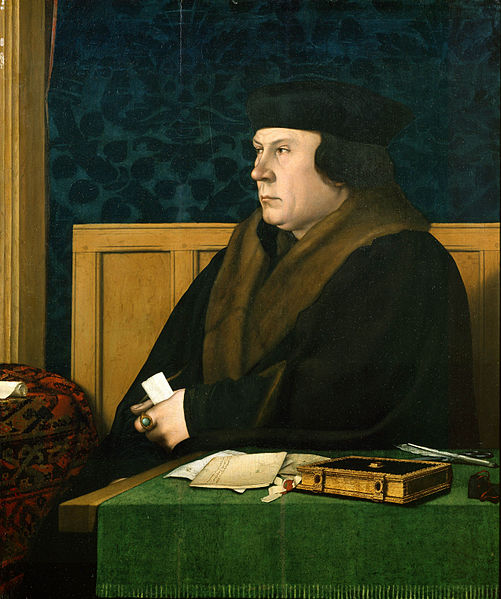
Portrait of Thomas Cromwell, First Earl of Essex painted by Hans Holbein 1532-33.
From the Frick Collection via Wikimedia Commons.
The panoply of British history doesn’t include too many monsters. The nation was founded more on meetings than massacres, and other than the usual round of chronic blood-letting in the Middle Ages, and a civil war in the seventeenth-century, the English have left it to the French, the Russians, and the Germans to provide the mass murderers and the genuine villains. But if anyone was generally regarded as being unscrupulous, with a touch of the devil always around his character, it was Thomas Cromwell, the main fixer for Henry VIII in the 1530s, and according to the Oscar-winning movie A Man for all Seasons, the dark politician who had hagiographical Thomas More executed. For decades both on British television and in Hollywood epics it was this self-made man who was willing to smash the monasteries, torture innocent witnesses into giving false evidence, and assemble lies to have that nice Anne Boleyn beheaded.
This was the dictatorship of reputation. Historians provided the framework, and popular entertainment dressed it all up in countless Tudor biopics. But then it all began to change.
The first person to seriously challenge the caricature was himself a victim of lies and hatred. The revered Cambridge historian GR Elton was born Gottfried Rudolf Otto Ehrenberg, son of a German Jewish family of noted scholars, who fled to Britain shortly before the Holocaust. He’s also, by the way, the uncle of the comedian and writer Ben Elton. GR, Geoffrey Rudolph, was one of the dominant post-war historians, and insisted that modern Britain, with its secular democracy and parliamentary system, was very much the child of Thomas Cromwell the gifted administrator and political visionary.
So we had the Cromwell wars. On the one side were the traditionalist, often Roman Catholic, writers who insisted that Cromwell was a corrupt brute and a cruel tyrant; and the rival school that regarded him as the first modern leader of the country, setting it on a road that would distinguish it from the ancient regimes of the European continent. But there was more. While previous political leaders – the term “Prime Minister” didn’t develop until the early eighteenth-century – had sometimes been of relatively humble origins, and Cromwell’s mentor and predecessor Thomas Wolsey was the son of a butcher, they were invariably clerics. Cromwell wasn’t only from rough Putney on the edge of London, and the son of a blacksmith, but he was a layman, and someone who had lived abroad, even fought for foreign armies.
Here was have the embodiment of the great change: the autodidact who was multi-lingual, well travelled, reformed in his religion and politics, and prepared to rip the country out of its medieval roots. Yet no matter how many historians might believe and write this, the culture is notoriously difficult to change, and understandably indifferent to academics. Not, however, to novelists. And in 2009 the award-winning author Hilary Mantel published Wolf Hall, a fictional account of Cromwell’s life from 1500 to 1535. Three years later came the sequel, Bring Up the Bodies. Both books won the Man Booker Prize, an extraordinary achievement for two separate works. The trilogy was completed recently with The Mirror and the Light. The first two volumes were turned into an enormously successful stage play and a six-part television show. Forget noble academics working away in relative obscurity, this was sophisticated work watched and read by tens of millions of people. Cromwell was back.
“It is as a murderer that Cromwell has come down to posterity: who turned monks out on to the roads, infiltrated spies into every corner of the land, and unleashed terror in the service of the state”, wrote Mantel in the Daily Telegraph back in 2012. “If these attributions contain a grain of truth, they also embody a set of lazy assumptions, bundles of prejudice passed from one generation to the next. Novelists and dramatists, who on the whole would rather sensationalise than investigate, have seized on these assumptions to create a reach-me-down villain.”
Operation Barbarossa – The German Plans to Lose the War – WW2 Special
World War Two
Published 21 Jul 2020The planning for Barbarossa, the German invasion of the Soviet Union, took nearly a year and went through a variety of scenarios. The basic plan was finalized in December 1940, and that month General Friedrich Paulus ran a series of war games to test its feasibility. Today we’ll look at his conclusions.
Join us on Patreon: https://www.patreon.com/TimeGhostHistory
Or join The TimeGhost Army directly at: https://timeghost.tvFollow WW2 day by day on Instagram @World_war_two_realtime https://www.instagram.com/world_war_two_realtime
Between 2 Wars: https://www.youtube.com/playlist?list…
Source list: http://bit.ly/WW2sourcesWritten and Hosted by: Indy Neidell
Director: Astrid Deinhard
Producers: Astrid Deinhard and Spartacus Olsson
Executive Producers: Astrid Deinhard, Indy Neidell, Spartacus Olsson, Bodo Rittenauer
Creative Producer: Joram Appel
Post-Production Director: Wieke Kapteijns
Research by: Indy Neidell
Edited by: Mikołaj Cackowski
Sound design: Marek Kamiński
Map animations: Mikołaj Cackowski, Eastory (https://www.youtube.com/c/eastory)Colorizations by:
Dememorabilia – https://www.instagram.com/dememorabilia/
Carlos Ortega Pereira, BlauColorizations – https://www.instagram.com/blaucoloriz…
Jaris Almazani (Artistic Man) – https://instagram.com/artistic.man?ig…
Cassowary Colorizations – https://www.flickr.com/photos/cassowa…
Norman Stewart – https://oldtimesincolor.blogspot.com/
Teppeny – https://www.instagram.com/teppeny.color/Sources:
Bundesarchiv
Narodowe Archiwum Cyfrowe
SA Kuva
from the Noun Project: Target by RITASYA, soldier by Wonmo KangSoundtracks from the Epidemic Sound:
Reynard Seidel – “Deflection”
Johannes Bornlof – “The Inspector 4”
Phoenix Tail – “At the Front”
Johannes Bornlof – “Deviation In Time”
Fabien Tell – “Last Point of Safe Return”
Johan Hynynen -” Dark Beginning”
Johannes Bornlof – “Death and Glory 3”
Rannar Sillard – “March Of The Brave 4”Archive by Screenocean/Reuters https://www.screenocean.com.
A TimeGhost chronological documentary produced by OnLion Entertainment GmbH.