
seangabb
Published 30 Dec 2022In this, the ninth in the series, Sean Gabb gives an overview of the last years of Byzantium, from the Crusader sack in 1204 to the Turkish capture in 1453.
Between 330 AD and 1453, Constantinople (modern Istanbul) was the capital of the Roman Empire, otherwise known as the Later Roman Empire, the Eastern Roman Empire, the Mediaeval Roman Empire, or the Byzantine Empire. For most of this time, it was the largest and richest city in Christendom. The territories of which it was the central capital enjoyed better protections of life, liberty and property, and a higher standard of living, than any other Christian territory, and usually compared favourably with the neighbouring and rival Islamic empires.
(more…)
January 24, 2023
The Byzantine Empire: Part 9 – The Last Centuries
Comments Off on The Byzantine Empire: Part 9 – The Last Centuries
An alternative theory about German Chancellor Olaf Scholz’s hesitation to allow Ukraine access to Leopard 2 tanks
I’ve been going on the assumption that the German government was terrified of Russian reaction if they allowed some Leopard 2 tanks to be donated to the Ukrainian forces, but eugyppius points out there’s another strong contending explanation:

Leopard 2A6M in Afghanistan
Years of peace in Europe, an ageing population and a corresponding focus on expensive social programmes have caused Germany to put its defence industry into near-hibernation. Only a little over 2,000 Leopard 2s have ever seen the light of day. Each one is a hand-built machine that takes two years to make. If Germany permits the export of the European supply of Leopard 2s to Ukraine, the Russians will grind them to nothing within months, and then Europe will have no tanks except the tanks that the Americans sell them:
Defence industry representatives, who wish to remain anonymous, report that the Americans are offering their own used tanks as replacements to [European] countries able to supply Leopard 2s to Ukraine, together with a long-term industrial partnership. Any country that accepts the American offer would be hard to win back for the German tank industry. Berlin’s influence in armament policy would decrease correspondingly.
Tanks are driven by men, who have to be trained in the operation of specific models. Their use moreover requires a whole supply chain of munitions and especially spare parts, which the Americans are eager to offer. The upshot is that, once Europe opts into American armour, it will never switch back, and Germany will be out of the game for good. Nor should we lend much credence to the idea that our very few tanks will make any difference either way for Ukraine’s prospects. The insistence that Scholz release the Leopard 2s is simply an attempt to edge Germany further out of the European arms industry and into a position of lesser political and economic influence in Europe, so that the United States can fill the gap.
Noah Carl, over at the Daily Sceptic, drew attention last week to remarks by the French intellectual Emmanuel Todd that “this war is about Germany“:
After the collapse of the Soviet Union, Zbigniew Brzezinski called Eurasia the new “great chessboard” of world politics … The Russian nationalists and ideologues like Alexander Dugin indeed dream of Eurasia. It is on this “chessboard” that America must defend its supremacy – this is Brzezinski’s doctrine. In other words, it must prevent the rapprochement of Russia and China. The financial crisis of 2008 made it clear that with reunification Germany had become the leading power in Europe and thus also a rival of the United States. Until 1989, it had been a political dwarf. Now Berlin let it be known that it was willing to engage with the Russians. The fight against this rapprochement became a priority of American strategy. The United States had always made it clear that they wanted to torpedo [Nord Stream 2]. The expansion of NATO in Eastern Europe was not primarily directed against Russia, but against Germany. Germany, which had entrusted its security to America, became the Americans’ target [in the destruction of the pipeline]. I feel a great deal of sympathy for Germany. It suffers from this trauma of betrayal by its protective friend — who was also a liberator in 1945.
After the anti-Russian sanctions regime and its clear deindustrialising effects on the German economy, followed by the attack on the Baltic Nord Stream pipelines, and even smaller things, such as the high-profile anti-industry protests by the American-funded activist group Letzte Generation, I am willing to believe many conspiratorial things about the Ukraine war.
Comments Off on An alternative theory about German Chancellor Olaf Scholz’s hesitation to allow Ukraine access to Leopard 2 tanks
What Would Browning Do: FN’s New High Power
Forgotten Weapons
Published 30 Sept 2022It seems like everyone is making a copy of the Browning High Power these days, and FN themselves have jumped into the arena as well. What FN is making isn’t just a clone of the original pistol, though — they have built something largely new, taking inspiration and design cues from the original BHP to create a gun more suited to 2022 than 1935.
While the original High Power (or Hi Power, depending on what era you are looking at) is lovingly romanticized by many — and I totally understand why — it has a number of significant shortcomings by today’s standards. It doesn’t feed hollow points well. The triggers are often bad, in part because of the magazine safety. The sights are tiny. The capacity is underwhelming. And most significantly to me, they tend to have bloody hammer bite, forcing you to take a low grip or just suffer through.
The new FN High Power looks to have fixed all of that. It’s a bigger pistol, but it offers a much more comfortable grip, modern style sights, a very nice single action trigger, and 17 round capacity (it does not interchange magazines with the original BHP). Let’s take a closer look at what FN did, and why …
(more…)
Comments Off on What Would Browning Do: FN’s New High Power
QotD: The primary goal of a bureaucracy
In the bureaucratic welfare state, administrative problems grow geometrically with the number of administrators, who devise rules ostensibly to guarantee probity and increase efficiency, but whose effect in practice is to increase the number of administrators necessary to achieve any given end.
Theodore Dalrymple, “Kafka’s Victory”, City Journal, 2005-01.
Comments Off on QotD: The primary goal of a bureaucracy
January 23, 2023
Who was John Wilkes?
Lawrence W. Reed on the life of John Wilkes, a British parliamentarian in the reign of George III:
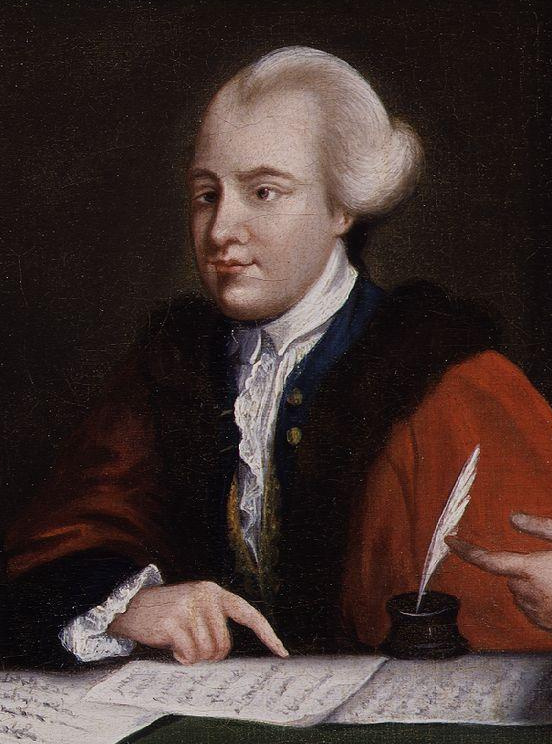
John Wilkes (1725-1797)
Cropped from a larger painting entitled “John Glynn, John Wilkes and John Horne Tooke” in the National Portrait Gallery via Wikimedia Commons.
In the long history of memorably scintillating exchanges between British parliamentarians, one ranks as my personal favorite. Though attribution is sometimes disputed, it seems most likely that the principals were John Montagu, 4th Earl of Sandwich, and the member from Middlesex, John Wilkes.
Montagu: Sir, I do not know whether you will die on the gallows or of the pox.
Wilkes: That depends, my lord, on whether I embrace your lordship’s principles or your mistress.
Repartee doesn’t get much better than that. And it certainly fits the style and reputation of Wilkes. Once when a constituent told him he would rather vote for the devil, Wilkes famously responded, “Naturally. And if your friend decides against standing, can I count on your vote?”
Wilkes deserves applause for his rapier wit, but also for something much more important: challenging the arrogance of power. He was known in his day as a “radical” on the matter. Today, we might label him “libertarian” in principles and policy and perhaps even “libertine” in personal habits (he was a notorious womanizer). His pugnacious quarrels with a King and a Prime Minister are my focus in this essay.
Born in London in 1725, Wilkes in his adult life was cursed with bad looks. Widely known as “the ugliest man in England”, he countered his unattractive countenance with eloquence, humor, and an eagerness to assault the powers-that-be with truth as he saw it. Fortunately, the voters in Middlesex appreciated his boldness more than his appearance. He charmed his way into election to the House of Commons as a devotee of William Pitt the Elder and, like Pitt, became a vociferous opponent of King George III’s war against the American colonies.
Pitt’s successor as PM in 1762, Lord Bute of Scotland, earned the wrath of Wilkes for the whole of his brief premiership. Bute negotiated the treaty that ended the Seven Years War (known in America as the French & Indian War), which Wilkes thought gave too many concessions to the French. Wilkes also opposed Bute’s plan to tax the Americans to pay for the war.
[…]
George III took it personally. He ordered the arrest of Wilkes and dozens of his followers on charges of seditious libel. For most of the nearly thousand years of British monarchy, kings would have remanded foes like Wilkes to the gallows forthwith. But as a measure of the steady progress of British liberty (from Magna Carta in 1215 through the English Bill of Rights in 1689), the case went to the courts.
Wilkes argued that as a member of Parliament, he was exempt from libel charges against the monarch. The Lord Chief Justice agreed. Wilkes was released and took his seat again in the House of Commons. He resumed his attacks on the government, Bute’s successor George Grenville in particular.
Comments Off on Who was John Wilkes?
Monte Cassino, the Battle Begins – Ep 230 – January 21, 1944
World War Two
Published 21 Jan 2023The Allies have reached the linchpin of the German defenses in Italy, but a first attack proves disastrous. It does, though, divert troops from where they soon plan to make landings behind enemy lines. Meanwhile in the USSR, the huge Soviet offensive in the north makes great gains against the stunned Axis forces.
(more…)
Comments Off on Monte Cassino, the Battle Begins – Ep 230 – January 21, 1944
Jeremy Clarkson and “the swamp of arrogant prejudice and self-gratification which sits at the bottom of the brain”
Nicholas Harris recounts the story of Jeremy Clarkson’s steady rise and sudden recent fall after a crude reference to someone or other in a newspaper article:

Screencap from Jeremy Clarkson’s banned Hawkstone Lager ad
“Ask Clarkson. Clarkson knows — people like fast cars, they like females with big boobies, and they don’t want the Euro, and that’s all there is to it.” This surmise, from Peep Show, captures the essence of Jeremy Clarkson’s Noughties appeal — approvingly for those who liked him, and scandalously for those who didn’t. The spawn and spokesman of the English male id. Insular, impudent and straightforward in taste. And if that weren’t enough, he was also into cigs, engines and the Second World War.
For the minority of a more severe, moralistic, and joyless disposition, this made him a national-psychological defect to be suppressed, or ideally exposed and exorcised. Before Piers Morgan, Nigel Farage or Donald Trump provided such stern competition, it was a small badge of honour on the Left to publicly hate Clarkson. But for many of us (probably a majority at his peak) he was a vulgar treat to indulge. For the length of a Sunday column or an episode of Top Gear, we could wallow harmlessly in the swamp of arrogant prejudice and self-gratification which sits at the bottom of the brain. At a time of minimal collective loyalty, the nation could reliably divide into those two tribes. Clarkson the monster, or Clarkson the geezer. Wokery vs blokery. A version of the same split is fuelling the current Clarkson row, but with the weight of opinion reversed.
[…]
But his spiritual and popular appointment to the English is a far tougher thing to dismiss. He is, like it or not, quite a lot of us writ ludicrously, satirically large. Like a 21st-century John Bull: to paraphrase Auden, a self-confident, swaggering bully of meaty neck and clumsy jest. Whatever Clarkson’s professional fate, the question of whether our society can tolerate him has implications for the stomach and sensibility of the national character, of which he is a significant avatar and champion. And his rise and fall reads as a history of a changing English firmament, one in which public morality has come to supersede mere entertainment.
Plenty of time and work went into the germination of such a figure. Clarkson’s early life is a whistle-stop tour of the English class system. He was born rural, lower-middle class, Yorkshire. But, in a wonderful twist of fate, the Clarkson family came into money after his parents won the exclusive rights to sell Paddington Bear dolls, based on the ones they had made for him and his sister. With aspirational intent, Clarkson was sent to Repton, one of the North’s oldest private schools. There, he smoked, pranked and failed his way to expulsion, developing the likeable loutishness which is his career mainstay. And then he jumped social tracks again, entering the lowest rungs of the Fourth Estate at the Rotherham Advertiser.
A public schoolboy who can still boast that he crashed out of education with a C and two Us at A Level. The ingredients were in place for a broad, classless appeal. But Clarkson really came of professional age in the new meritocracy of Thatcher and Murdoch, a place where common touch came to supersede common background (something also exploited by Boris Johnson and Nigel Farage). It was an England of quick, coarse wit, and quicker, coarser money; of the triumphant red-top, and the unrepentant “lad”. It suited Clarkson perfectly. Flush with entrepreneurial spirit, in Eighties London he had the wheeze of syndicating car news and reviews from his own company to the regional press. It was a money-maker which introduced him to motoring journalism and eventually to the producers of Top Gear.
Comments Off on Jeremy Clarkson and “the swamp of arrogant prejudice and self-gratification which sits at the bottom of the brain”
Five Dumb Canadian Cartoons
J.J. McCullough
Published 11 Nov 20175 dumb cartoons from Canada I remember from my childhood.
Comments Off on Five Dumb Canadian Cartoons
QotD: Rice farming
Wet-rice is farmed in paddies, small fields (often very small – some Chinese agronomists write that the ideal size for an individual rice field is around 0.1 hectare, which is just 0.24 acres) surrounded by low “bunds” (small earthwork walls or dykes) to keep in the water, typically around two feet high. Because controlling the water level is crucial, rice paddies must be very precisely flat, leading to even relatively gentle slopes often being terraced to create a series of flat fields. Each of these rice paddies (and there will be many because they are so small) are then connected by irrigation canals which channel and control the water in what is often a quite complex system.
The exact timing of rice production is more complex than wheat because a single paddy often sees two crops in a year and the exact planting times vary between areas; one common cycle on the Yangtze is for a February planting (with a June harvest) followed by a June planting (with a November harvest). In other areas, paddies planted with rice during the first planting might be drained and sown with a different plant entirely (sometimes including wheat) in the intervening time.
The cycle runs thusly: after the heavy rains of the monsoons (if available), the field is tilled (or plowed, but as we’ll see, manual tillage is often more common). The seed is then sown (or transplanted) and the field is, using the irrigation system, lightly flooded, so that the young seedlings grow in standing water. Sometimes the seed is initially planted in a dedicated seed-bed and then transferred to the field, rather than being sown there directly; doing so has a positive impact on yields, but is substantially more labor intensive. The water level is raised as the plant grows; agian this is labor intensive, but increases yields. Just before the harvest the fields are drained out and allowed to dry out, before the crop is harvested and then goes into processing.
Rice is threshed much like grain (more often manually threshed and generally not threshed with flails) to release the seeds, the individual rice grains, from the plant. That is going to free the endosperm of the speed, along with a hull around it and a layer of bran between the two. Hulling was traditionally done by hand-pounding, which frees the seed from the hull, leaving just the endosperm and some of the bran; this is how you get brown rice, which is essentially “whole-grain” rice. While it is generally less tasty, the bran actually has quite a lot of nutrients not present in the calorie-rich endosperm. Whereas white rice is produced by then milling or polishing away the bran to produce a pure, white kernal of the endosperm; it is very tasty, but lacks many of the vitamins that brown rice has.
Consequently, while a diet of mostly brown rice can be healthy, a diet overwhelmingly of white rice leads to Thiamine deficiency, known colloquially as beriberi. My impression from the literature is that this wasn’t as much an issue prior to the introduction of mechanical milling processes for rice. Mechanical milling made producing white rice in quantity cheap and so it came to dominate the diet to the exclusion of brown rice, producing negative health effects for the poor who could not afford to supplement their rice-and-millet diet with other foods, or for soldiers whose ration was in rice. But prior to that mechanical milling, brown rice was all that was available for the poor, which in turn meant less Thiamine deficiency among the lower classes of society.
Bret Devereaux, “Collections: Bread, How Did They Make It? Addendum: Rice!”, A Collection of Unmitigated Pedantry, 2020-09-04.
Comments Off on QotD: Rice farming
January 22, 2023
It’s not plunder if you wrap it into a “communications contract” with a “consultant”
Paul Wells notices an oddity with current federal government ministers’ continued dependence on outside contractors to help them with “communications”:
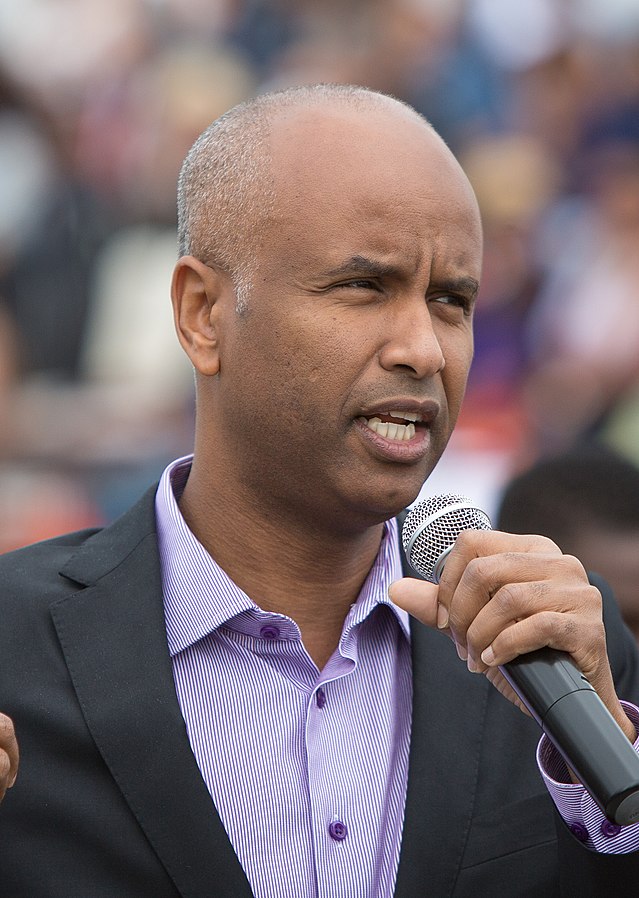
Immigration minister Ahmed Hussen at the Toronto Caribbean Carnival in 2017.
Photo by Bruce Reeve via Wikimedia Commons.
We’ll circle back to some specifics in a minute, but I’m fascinated by the notion of “communications” embodied here. I have questions.
- Four, five and seven years after being elected, who still needs communications help? You tell your voters the world will end if they elect the other team. A reporter calls, you send them bullshit. This isn’t exactly tricky.
- In what sense is this “communications”? Look at what Munch More Media did when Global came calling. (1) They erased their website. (2) They scrubbed their IG. (3) They shut down their Twitter account, which Global says had a single follower. (4) They left their Instagram account, whose last post was from 2018, and their LinkedIn account, which lists four followers and names no employees, intact. This is not a company with a proud story to tell. There’s a term for a communications firm that uses no social media. It’s “A firm that had damned well better have a sister in the minister’s office.”
- Hussen’s office hopes you’ll believe that a cabinet minister’s constituency office and his ministerial office never talk, but they sure seem to have closely studied the example of Munch More Media when it comes to fielding reporters’ queries. “Hussen’s office — over multiple conversations this week — did not acknowledge any connection between the director of Munch More Media and one of his most senior advisers,” Global reports. Now that’s gold-star communicating.
- This approach to communications is having its desired effect. Quick: What on Earth is Ahmed Hussen the minister of? How about Mary Ng? Don’t worry, I’m stumped too. Can you quote anything either person has ever said about anything? Of course not. If Hussen — or, might as well shoot for the moon, Ng — resigned from cabinet today, a resolution I here heartily advocate, you’d have to spare some sympathy for the poor wire-service reporter who’d be expected to come up with some kind of ending for the sentence beginning, “The minister is best known for ____.”
- Hussen’s riding has been held by the Liberals (and one apostate Liberal, John Nunziata, after he left the caucus to sit as an Independent) since Hussen was three years old, except for four years after the 2011 election. It’s one of the most reliably Liberal ridings under the eye of God, except for four years after the 2011 election. The only communications material a Liberal in York South-Weston needs is a billboard saying, “Michael Ignatieff Is No Longer the Liberal Leader.”
Willie Sutton was once asked why he robbed banks. Because that’s where the money is, he said. Well, communications contracts are the new banks. There will always be money in communications contracts, and, gloriously, the simple answer — “Answer the question” — is never correct. The goal of communications is not to communicate. It’s to figure out how to communicate as little as possible.
Comments Off on It’s not plunder if you wrap it into a “communications contract” with a “consultant”
Where The British Army Figured Out Tanks: Cambrai 1917
The Great War
Published 20 Jan 2023The Battle of Cambrai in 1917 didn’t have a clear winner, but the conclusions that Germany and Britain drew from it, particularly about the use of the tank (in combination with other arms), would have far reaching consequences in 1918.
(more…)
Comments Off on Where The British Army Figured Out Tanks: Cambrai 1917
One year later
Last year, the Freedom Convoy 2022 from all parts of Canada began to assemble and move toward Mordor, er, I mean Ottawa. Patrick Carroll remembers:

Posted to Twitter by @KatherineZupan https://twitter.com/KatherineZupan/status/1486164240364814337/photo/1
It’s hard to believe, but the one-year anniversary of the Canadian Freedom Convoy is upon us. It was January 22, 2022 when the convoy began to form across the country. Over the following week, thousands of trucks made their way to Ottawa, and on January 29 they arrived in the nation’s capital, loud and determined as ever.
The following month was one of the most tumultuous times in modern Canadian history. Downtown Ottawa was completely gridlocked, bridges were blocked, and politicians along with the media took every opportunity to smear the protesters.
Four weeks later, it ended quite a bit faster than most people expected. Armed with special powers from the never-before-invoked Emergencies Act, the government successfully dismantled the protest in a matter of days.
In hindsight, the practical effect of the protest on legislation is difficult to detect. Some Covid policies were probably relaxed a few months earlier than they otherwise would have been, but for the Convoy organizers, this was far from a decisive victory.
A debate has been raging in Canada ever since: were the protestors within their rights to do what they did? Those who support the convoy argue that they were, since the Canadian Charter of Rights and Freedoms guarantees the right to freedom of expression and freedom of peaceful assembly. Those who oppose the convoy largely agree with these freedoms, but argue that such freedoms should be subject to certain reasonable restrictions. Major obstructions to traffic, and especially obstructions to critical infrastructure such as bridges, are simply going too far in their view. Is the government supposed to stand by and let a group of hooligans bring the country to its knees?
That’s certainly the line the governments (city, provincial, and federal) generally chose to take and the media were almost chanting the governments’ line in unison. Of course, the governments were not all that well synchronized, which led to some blatant examples of deliberate misinformation/disinformation/gaslighting from one or another level, as Donna Laframboise points out:
During the inquiry into the use of the Emergencies Act, witnesses talked about misinformation as if it were a problem confined to contrarians on social media. But the Closing Submission of former Ottawa police chief Peter Sloly shows that government officials are, themselves, a fertile source of misinformation.
If someone in our federal government had demonstrated genuine leadership by going out and talking to the truckers, the protesters would likely have dispersed after the first weekend. Instead, a government that meets with professional lobbyists on 24,000 occasions a year refused to have a single meeting with working people who’d driven thousands of miles to the nation’s capital. Rather than being a grownup, the Prime Minister called them names. Rather than negotiating with the protesters, he told police to get rid of them.
According to Chief Sloly, the Ottawa force was understaffed at the best of times. Even after cancelling vacations and days off, there still weren’t enough personnel to deal with a significant, extended protest on top of normal duties.
From the beginning, the media failed to behave responsibly. It whipped up hysteria. It smeared and sneered. It sowed suspicion and fear of small town Canada, of those who see the world differently, of people who’d reached their breaking point. Big surprise a portion of the public did, in fact, become hysterical. As the protest dragged on, the pressure became intense. In lieu of pursuing a political resolution to what were clearly political grievances, slimy politicians pointed fingers at the Ottawa police. While simultaneously hamstringing them behind the scenes.
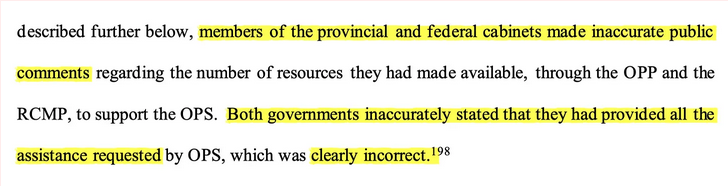
Page 43 of Chief Sloly’s Closing Submission says federal Public Safety Minister Marco Mendicino falsely told the world — on February 3rd — that the Royal Canadian Mounted Police (RCMP) had provided all the resources the Ottawa police had asked for. Four days later — on February 7th — he insisted 250 RCMP officers had been dispatched to Ottawa.
But the reality was quite different. Until mid-February, say his lawyers, the maximum number of RCMP officers available to the Ottawa force on any given day was 60 — far less than the number required.
It was the same story with the Ontario Provincial Police (OPP). On February 6th, Ontario’s Solicitor General Sylvia Jones falsely stated in an official document that “more than 1,500” OPP personnel had already been sent to Ottawa. In the words of Chief Sloly’s lawyers, this was “grossly inaccurate” (pages 80, 107).
Government ministers at both the provincial and federal level, they insist, made misleading statements about the degree of assistance Ottawa police had received. Statements that were “clearly incorrect” (page 53).
Which means Cabinet ministers were spreading misinformation. Misinformation that just happened to deflect blame away from themselves. That just happened to make the Ottawa Police Service look incompetent while turning the chief into a scapegoat. Ottawa’s first black police chief, a Jamaican immigrant, got thrown under the bus.

Comments Off on One year later
The Scientific Reason Your Wife Is Always Right. Don McMillan
A Little More Dry Bar
Published 23 May 2022The scientific reason your wife is always right as presented by Don McMillan in this clip from his first ever Dry Bar Comedy special. Whether you’re someone who appreciated power points and graphs, or you just enjoy a good laugh, this clip form Don McMillan’s Dry Bar Comedy special is sure to have you laughing from start to finish.
(more…)
Comments Off on The Scientific Reason Your Wife Is Always Right. Don McMillan
QotD: Evolution of the nation-state
It took the rest of Europe another 150 years, but the Thirty Years’ War did the trick. What started as another of the endless doctrinal conflicts kicked off by the Reformation ended with the creation of the modern nation-state. Cardinal Richelieu really was a Cardinal — a prince of the Roman Catholic Church, a guy with a legitimate chance of being elected Pope. This man brought Catholic France into the war on the Protestant side for “reasons of state”. This made sense in 1631 … and the war still had another 17 years to run.
Speaking of, the treaty that ended the Thirty Years’ War, the famous Peace of Westphalia, is credited with creating the modern nation-state. Which it did, but since we decided back in 1946 that nationalism was the worst possible sin, we Postmoderns forgot what everyone around the treaty table knew: That “nation” and “state” are inseparable. The nation-state, which for clarity’s sake will henceforth be known as the ethno-state, is the biggest stable form of human organization.
Severian, “The Libertarian Moment?”, Rotten Chestnuts, 2020-03-19.
Comments Off on QotD: Evolution of the nation-state
January 21, 2023
When did England become that sneered-at “nation of shopkeepers”?
In the latest Age of Invention newsletter, Anton Howes considers when the English stopped being a “normal” European nation and embraced industry and commerce instead of aristocratic privilege:
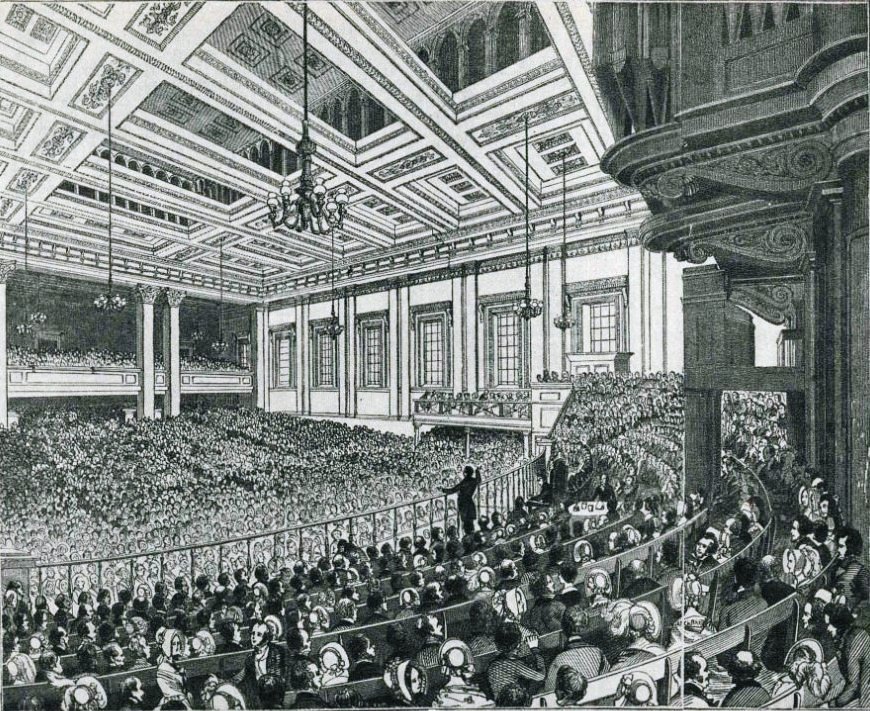
A meeting of the Anti-Corn Law League in Exeter Hall in 1846.
Wikimedia Commons.
England in the late eighteenth century was often complimented or disparaged as a “nation of shopkeepers” — a sign of its thriving industry and commerce, and the influence of those interests on its politics.
But when did England start seeing itself as a primarily commercial nation? When did the interests of its merchants and manufacturers begin to hold sway against the interests of its landed aristocracy? The early nineteenth century certainly saw major battles between these competing camps. When European trade resumed in 1815 after the Napoleonic Wars, an influx of cheap grain threatened the interests of the farmers and the landowners to whom they paid rent. Britain’s parliament responded by severely restricting grain imports, propping up the price of grain in order to keep rents high. These restrictions came to be known as the Corn Laws (grain was then generally referred to as “corn”, nothing to do with maize). The Corn Laws were to become one of the most important dividing lines in British politics for decades, as the opposing interests of the cities — workers and their employers alike, united under the banner of Free Trade — first won greater political representation in the 1830s and then repeal of the Corn Laws in the 1840s.
The Corn Laws are infamous, but I’ve increasingly come to see their introduction as merely the landed gentry’s last gasp — them taking advantage of a brief window, after over two centuries of the declining economic importance of English agriculture, when their political influence was disproportionately large. In fact, I’ve noticed quite a few signs of the rising influence of urban, commercial interests as early as the early seventeenth century. And strangely enough, this week I noticed that in 1621 the English parliament debated a bill that was almost identical to the 1815 Corn Laws — a bill designed to ban the importation of foreign grain below certain prices.
But in this case, it failed. In the 1620s it seems that the interests of the cities — of commerce and manufacturing — had already become powerful enough to stop it.
The bill appeared in the context of a major economic crisis that, for want of a better term, ought to be called the Silver Crisis of 1619-23. Because of the outbreak of the Thirty Years War, the various mints of the states, cities, and princelings of Germany began to outbid one another for silver, debasing their silver currencies in the process. The knock-on effect was to draw the silver coinage — the lifeblood of all trade — out of England, and at a time when the country was already unusually vulnerable to a silver outflow. (For fuller details of the Silver Crisis and why England was so vulnerable to it, I’ve written up how it all worked here.)
The sudden lack of silver currency was a major problem, and all the more confusing because it coincided with a spate of especially bountiful harvests. As one politician put it, “the farmer is not able to pay his rent, not for want of cattle or corn but money”. A good harvest might seem a time for farmers and their landlords to rejoice, but it could also lead to a dramatic drop in the price of grain. Good harvests tended to cause deflation (which the Silver Crisis may have made much worse than usual by disrupting the foreign market for English grain exports). An influential court gossip noted in a letter of November of 1620 that “corn and cattle were never at so low a rate since I can remember … and yet can they get no riddance at that price”. Just a few months later, in February 1621, the already unbelievable prices he quoted had dropped even further.
Despite food being unusually cheap, however, the cities and towns that ought to have benefitted were also struggling. The Silver Crisis, along with the general disruption of trade thanks to the Thirty Years War, had reduced the demand for English cloth exports. And this, in turn, threatened to worsen the general shortage of silver coin — having a trade surplus, from the value of exports exceeding imports, was one of the only known ways to boost the amount of silver coming into the country. England had no major silver mines of its own.
It’s in this context that some MPs proposed a ban on any grain imports below a certain price. They argued that not only were low prices and low rents harming their farming and landowning constituents, but that importing foreign grain was undermining the country’s balance of trade. They argued that it was one of the many causes of silver being drawn abroad and worsening the crisis.
Comments Off on When did England become that sneered-at “nation of shopkeepers”?


