
Forgotten Weapons
Published 17 Nov 2025Late in 1944 the Ordnance Committee recommended adoption of a magazine-fed, select-fire version of the M1 Garand as a new standard US infantry rifle. Both Springfield and Remington developed rifles to meet the requirement, with Springfield’s being the T20 and Remington’s the T22.
The Springfield design went through several iterations from the original T20 to the T20E1 and T20E2, with the capability to launch rifle grenades, mount optical sights, and fire in either semiautomatic or full auto. The first examples of the final T20E2 design were ready in June 1945, but the program lost momentum in August when Japan surrendered. It did continue slowly until 1949, providing some of the basis for the eventual M14 rifle.
(more…)
April 6, 2026
T20 Family: Springfield Makes the Garand a Grenade Launching Sniper Machine Gun
April 2, 2026
m/27PH aka m/37: Finland’s First Standard Sniper Rifle (and it’s really bad)
Forgotten Weapons
Published 14 Nov 2025The m27PH, aka the m/37, was the first standardized Finnish sniper rifle. It was developed as part of the plan to make a whole family of m/27 rifles for the Finnish Army, including cavalry, trainer, and sniper models. The sniper model was delayed because of the structural problems with the m/27 base rifle, and it was not formally adopted until 1937. The rifle used a 2.2x prismatic scope made by Finnish company Physica Oy. The scope was heavy, fragile, and had a very short eye relief.
When first adopted, the rifles had short, slightly bent bolt handled and standard stocks. Once they began to see use in the Winter War (for which they were Finland’s only standardized sniper rifle), experience showed these features to be problems. The bolt handles were largely replaced with much longer Soviet-style sniper bolts, and wooden cheek rests were added to the stocks.
During the Continuation War, m/27PH rifles were still in service, but as they were damaged their scopes were generally used to build new m/39PH sniper rifles instead. Today they are extremely rare rifles.
(more…)
March 30, 2026
UOTCAF – EP 001 – The Royal Canadian Regiment – SWG
Stormwalker Group
Published 24 Oct 2025Dive into the rich legacy of the Royal Canadian Regiment (RCR) in the premiere episode of “Units of the CAF”, hosted by ex-reservist Mario Gaudet.
This 15-minute narration explores the RCR’s origins in 1883 as Canada’s first permanent infantry unit, the symbolism of their iconic “VRI” cap badge, unique uniform features, and their heroic battles from the North-West Rebellion to Afghanistan. We also spotlight some of the regiment’s most decorated soldiers.
Whether you’re a history buff, military enthusiast, or proud Canadian, this series honors the sacrifices and traditions of the Canadian Armed Forces.
(more…)
March 29, 2026
Adventures in Surplus! Finnish M28 “Ski Trooper”
Forgotten Weapons
Published 10 Nov 2025Today we are going to take a look at just how much historical [information can] be read from the features and markings of an individual rifle. This is an early production Finnish M28 “ski trooper” Mosin Nagant that can be traced from Russian manufacture to WW1 Russian use, Austro-Hungarian capture, rechambering to 8x50mm Mannlicher, concession to Italy as war reparations, sale to Finland, rebuilding as a Civil Guard M28, use in the Winter War and Continuation War, transfer to the Finnish Army, and finally importation into the United States.
(more…)
March 27, 2026
Protecting modern warships from new threats
CDR Salamander considers how the US Navy up-gunned their fleet after the shock of the Pearl Harbour attacks with an eye to the current day, where it appears that modern warships suddenly need far more defensive firepower than they have:
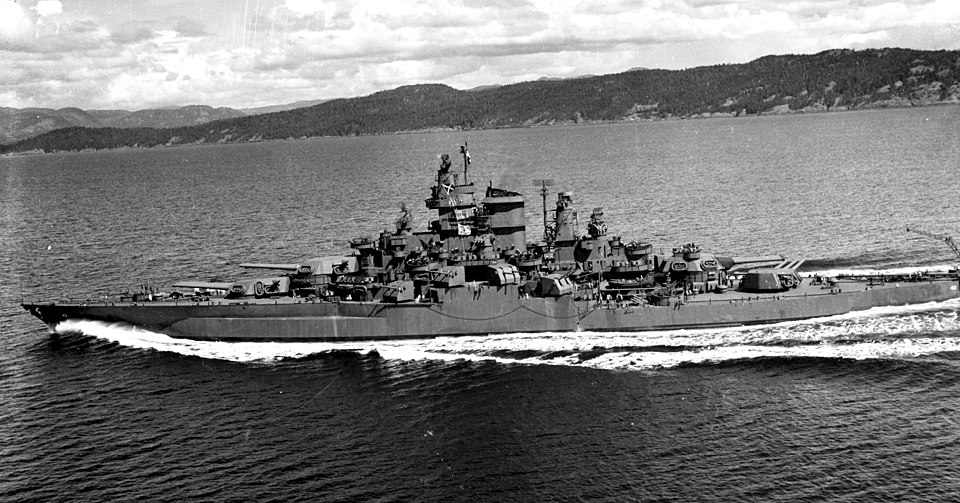
USS Tennessee (BB 43) underway in Puget Sound, Washington, on 12 May 1943, after modernization.
Photograph from the Bureau of Ships Collection in the U.S. National Archives via Wikimedia Commons.One of the many lessons of the modern air threat against surface ships in the last few years is simple: we need more of everything.
It isn’t really a new lesson. It is an old lesson that our peacetime accountants convinced us to pretend we didn’t know.
Since the first war in which the threat from the air targeted the surface fleet, what was a common thread after D+0 from WWII to the Falklands War?
After cursing those responsible for preparing the fleet for the next war, those tasked to fight the war in front of them would, at the first chance, put every possible weapon possible on their warships.
My favorite example is what the U.S. Navy did with its old battleships the first chance after Pearl Harbor.
The picture at the top of the post is the battleship USS Tennessee (BB 43) after the completion of her rebuild, May 12th, 1943.
- The older single 5-inch/25 cal guns were replaced by eight twin 5-inch/38 caliber dual-purpose gun mounts (totaling 16 guns).
- Ten quadruple 40 mm Bofors mounts and 43 single 20 mm Oerlikon guns replaced 1.1-inch and .50 cal machine guns.
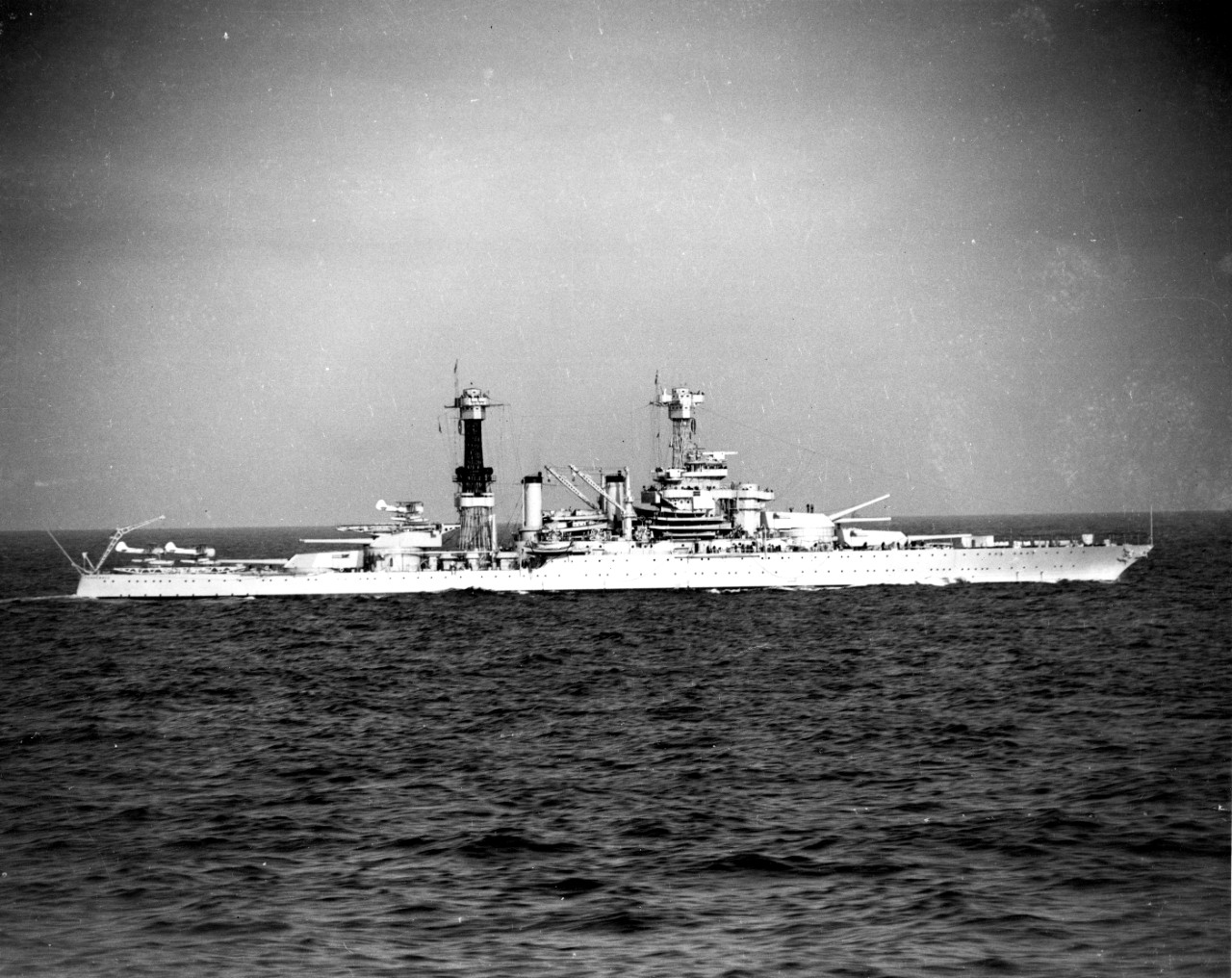
Here she was with her “cleaner” deck from the 1930s.
USS Tennessee in the mid-1930s.
The Royal Navy reached the point in the Falklands War that they resorted to lining the decks with Seamen firing whatever weapons they could find from rifles to crew-served weapons … as they simply did not have the time to up-arm their ships properly.
Like the sudden realization that they did not quite understand the true nature of the threat from the air in the 1930s, here in the mid-2020s we are suddenly realizing that we don’t fully understand — or more likely were comfortable ignoring those warning of the problem — the high/low threat to warships from the air.
The tan, rested, ready, if the not quite battle-tested People’s Liberation Army Navy (PLAN) is comfortably unbothered, moisturized, happy, and staying in their lane as we have been emptying out magazines and wearing out sailors and ships, They continue to be focused on how to defeat the U.S. Navy should it venture west of the International Date Line in response to a future contingency — the very mission the PLAN was built to execute as the world’s largest navy.
I am quite confident, because, especially in the ballistic missile area, they were ahead of everyone, that the PLAN has a whole mix of threats they are ready to throw at our fleet should it be required.
The Houthi who have been providing us unscheduled range time in the Red Sea for over two years, and Iran from Turkey to UAE over the last year. The Houthi are a fourth-rate threat, and the Iranians are on a good day, a second-rate threat. They are throwing everything from slow drones to anti-ship ballistic missiles (ASBM) at ships.
The People’s Republic of China (PRC) is a first-rate threat … and then some. She will do the same, but better and in higher volume. We need to be ready to face that, and we are not.
March 26, 2026
QotD: “Instead of the unsinkable battleship we have the unsinkable Military Expert …”
One way of feeling infallible is not to keep a diary. Looking back through the diary I kept in 1940 and 1941 I find that I was usually wrong when it was possible to be wrong. Yet I was not so wrong as the Military Experts. Experts of various schools were telling us in 1939 that the Maginot Line was impregnable, and that the Russo-German Pact had put an end to Hitler’s eastwards expansion; in early 1940 they were telling us that the days of tank warfare were over; in mid 1940 they were telling us that the Germans would invade Britain forthwith; in mid 1941 that the Red army would fold up in six weeks; in December 1941, that Japan would collapse after ninety days; in July 1942, that Egypt was lost and so on, more or less indefinitely.
Where now are the men who told us those things? Still on the job, drawing fat salaries. Instead of the unsinkable battleship we have the unsinkable Military Expert …
George Orwell, “As I Please”, Tribune, 1943-12-17.
Update, 27 March: Welcome, Instapundit readers! Have a look around at some of my other posts you may find of interest. I send out a daily summary of posts here through my Substack – https://substack.com/@nicholasrusson that you can subscribe to if you’d like to be informed of new posts in the future.
March 21, 2026
The second naval battle of Narvik
On his Substack, James Holland recounts the events of April, 1940 when British and German ships fought savagely for the port of Narvik in the north of Norway. The first battle had resulted in the loss of several destroyers on each side and the deaths of the commanders as well. A couple of days later, the Royal Navy sent in a more powerful force to eliminate the surviving ships of the Kriegsmarine and secure the port for landing allied troops:
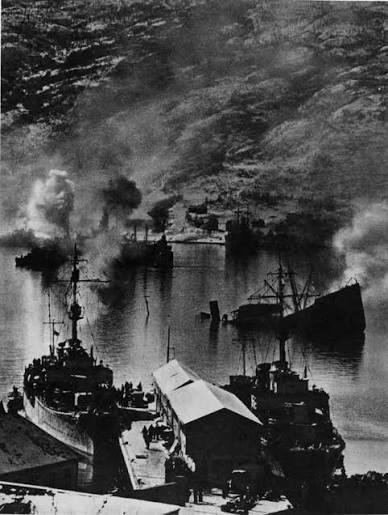
Narvik harbour after the first battle, April 1940.
The next few days were marked by caution and ponderousness by both sides. Now commanding the German flotilla was Kapitän Erich Bey. His remaining ships were trapped unless he moved them swiftly. This meant refuelling as soon as possible from the surviving oiler, making the damaged ships seaworthy, then using bad weather, darkness and supporting U-boats to sneak out past the British in the Vestfjord beyond the Ofotfjord. Although the ships were all refuelled and engines repaired, he then suffered a further calamity when the Zenke damaged her propellers manouevring around the wrecks in Narvik harbour, and the Köllner also caused debilitating damage while refuelling and made herself unseaworthy. Difficult though it was to manoeuvre in the narrow confines of Narvik, these were entirely avoidable and self-inflicted own goals. The British, meanwhile, reeling from the rapid German advances through southern Norway and uncertain what plan to now pursue, dithered from a lack of clear, unified and determined decision-making, so that it was not until the morning of 13th April that they returned, this time with four larger tribal-class destroyers, five further destroyers and the mighty battleship, HMS Warspite, all under the command of Admiral Whitworth.
Kapitän Bey had known the Royal Navy were coming, partly because German cryptanalysts had deciphered British naval codes, but also because it was blindingly obvious they would do. He tried to deploy his ships as well as he might but knew in his heart the situation was hopeless. The crippled Köllner was towed to Taarstadt, an inlet beyond Ballangen, where it was to lie in wait, unseen, for the arrival of the British then fire her torpedoes and guns and hope for the best. She had only reached the inlet at Djupvik, some 20 miles west from Narvik, when she was spotted by the Warspite‘s Swordfish floatplane late in the morning of 13th April. As the leading British ships, Bedouin and Eskimo, turned the headland, their guns and torpedoes were trained and ready. Köllner‘s bow was ripped off by the first torpedo and the rest of her sunk soon after. That was three of the ten now at the bottom of the fjord. The remaining seven had barely begun moving before the rest of the British force were bearing down upon them through the mist, frost and snow. First, though, ten Swordfish, flown from the aircraft carrier, HMS Furious, swooped down. Their orders were to dive-bomb the German ships, a role for which they were not suited; Swordfish, slow, ungainly biplanes, were designed to fly in low and drop torpedoes, a role to which they were, in fact, very well suited. As dive-bombers, however, they hit nothing but lost two of their own in an entirely fruitless attack.
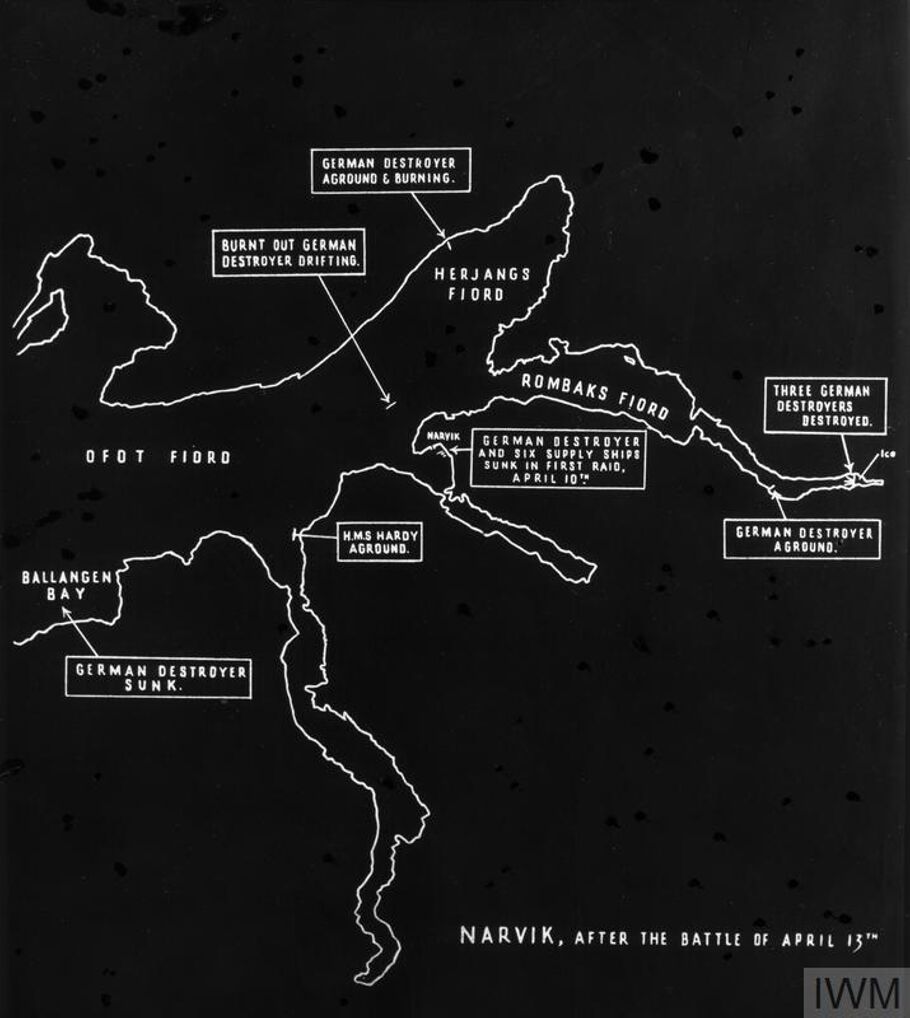
It was also completely unnecessary as Whitworth’s force had the matter firmly in hand. The German destroyers, still nursing the damage of four days earlier, swiftly fired all their remaining ammunition and were now effectively sitting ducks. Bey ordered them into the narrow Rombaksfjord, east and to the north of Narvik, where they were hotly pursued by Eskimo, Bedouin and even Warspite. Here the fjord narrowed to a few hundred yards before widening to half a mile but with the high mountain sides looming over this gloomily dark and slender channel, there was nowhere for the surviving German destroyers to go. The Künne was dispatched by Bedouin, and although the Georg Thiele fired one last torpedo that blew off the bow of Eskimo, her captain then ran her aground like the Hardy, while the surviving three, the Zenke, Von Armin and Lüdemann, steamed to the head of the fjord where they, too, deliberately ran themselves aground. The crews all then made good their escape into the mountains to join the Gebirgsjäger [mountain troops] that had disembarked five days earlier and who were still holding a shallow bridgehead around Narvik.
The second British naval action off Narvik. A diagram of the battle of 13 April 1940.
Imperial War MuseumAmazingly, Eskimo remained afloat, sailing stern-first back out of the fjord and to safety. She was repaired and would fight again, not least against the Bismarck in May 1941. But here in the waters around Narvik, the naval battle was now over, with half the Kriegsmarine‘s destroyer fleet sunk and lost — a disaster from which it could not hope to recover. A golden opportunity to send in decisive numbers of Allied troops to fight and defeat the beleaguered German troops in Narvik was now laid out on a plate. Southern Norway might have already been lost but the north — and, crucially, the iron-ore railway line and port — lay there for the taking — on paper, at any rate. British, French and Polish troops were eventually landed but this was not a part of the world where landing and maintaining supplies was at all straightforward. Britain had only a few basic landing craft at this early stage of the war, there were few beaches and its geographical remoteness and weather made a difficult task even harder. As it happened, by early June, the Allies did have victory there within their grasp, but by then, France was being overrun and facing defeat and the Allies decided the better part of valour was to pull out while they had the chance and consolidate in Britain instead. The Allied expedition to Norway was over.
The ramifications of the naval battle were significant, however. The Kriegsmarine not only lost half their destroyer fleet, but also one of two heavy cruisers, two of six light cruisers and six U-boats, leaving their navy woefully depleted. It also meant their plans for a successful surface fleet marauding in the Atlantic had been left in tatters. The U-boats, withdrawn from the Atlantic for the campaign, hit not a single vessel, largely due to problems with the magnetic ignition pistols on their torpedoes. For the three months they were tied up in the waters around Norway, they were not in the Atlantic, giving Britain a vital free pass as convoys sailed unimpeded. During the critical summer months of 1940, this was to prove a hugely important lifeline. Norway had been clinically subdued by Germany but it would cost Hitler more than half a million troops, all told, as well the costly construction of the Atlantic Wall in the years to come — a series of bunkers, coastal gun batteries and barracks in some of the remotest outposts of Europe and at an untold cost in men, resources and money. Norway would become an albatross around Nazi Germany’s neck, while its value to the Kriegsmarine was negligible.
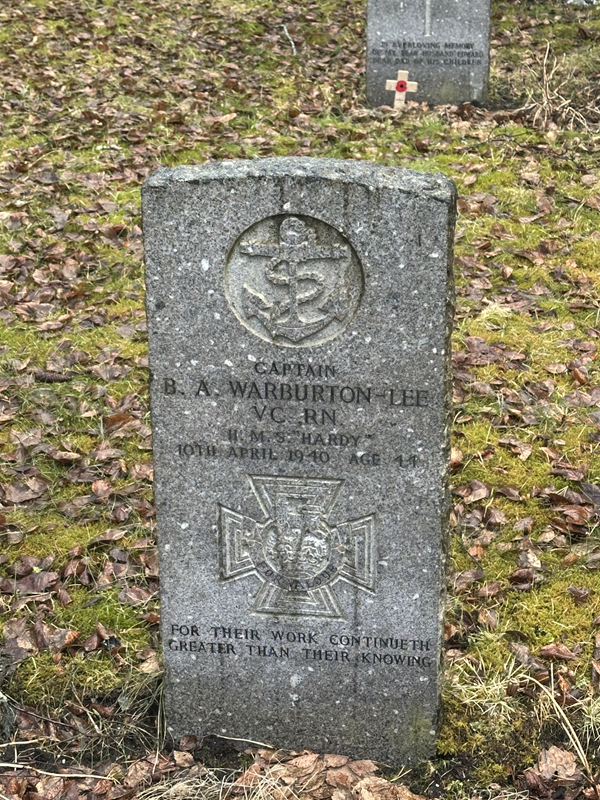
The grave of Captain Bernard Warburton-Lee, VC, RN, in Narvik.
Photo by James Holland
March 16, 2026
Preparing for Operation Veritable – First Canadian Army’s biggest battle of WW2
On Patreon, Project ’44 has posted an extensive article on the setup and preparation for Operation Veritable in February 1945, with the First Canadian Army under General Crerar preparing to attack into the Reichswald as part of Field Marshal Montgomery’s 21st Army Group:
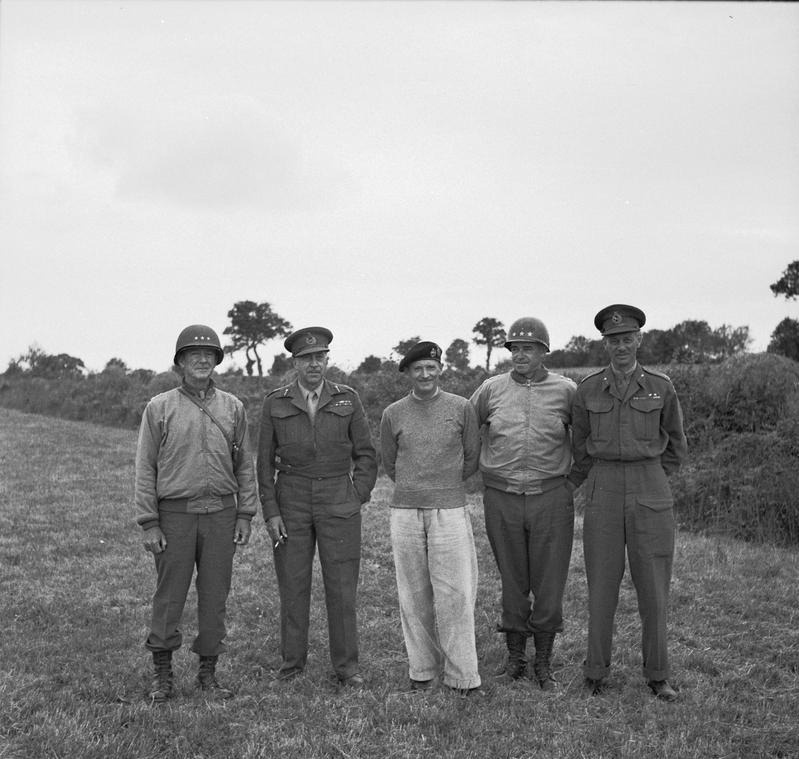
Lieutenant General Courtney Hodges (US First Army); General Harry Crerar (First Canadian Army); Field Marshal Bernard Montgomery (21st Army Group); Lieutenant General Omar Bradley (12th Army Group); and Lieutenant General Miles Dempsey (British 2nd Army), 21/08/1944 (Taken by Sgt. John Morris, No. 5 AFPS-AFPU, B9473).
In the early hours of the 8th of February 1945, the combined weight of the First Canadian Army and 21st Army Group’s massed artillery unleashed an immense orchestration of firepower, shattering any semblance of a peaceful morning and pounded German positions across the Reichswald. Massed in unprecedented density, with dump piles exceeding half a million shells, some 1,034 field, medium, heavy, super-heavy, and multi-barrelled rocket launcher platforms opened in concert. In accordance with their detailed fireplans this combined artillery effort was tasked with destroying enemy headquarters; severing lines of communication; disrupting road networks and infrastructure; rendering enemy defensive positions inhospitable; and, plainly, reducing the enemy’s force as much as possible, leaving survivors in a state of “shell happiness”. As the guns opened fire at 0500hrs, they quickly formed part of the largest artillery bombardment undertaken by Commonwealth forces since the battle of El Alamein in 1942.
This impressive symphony of artillery, along with the days of preliminary bombardments by both artillery and heavy bombers that preceded it, marked the very beginning of the month-long “Operation Veritable”. This operation was the 21st Army Group’s northern pincer movement, aimed at permitting a crossing of the river Rhine and, subsequently, a drive into Western Germany by dislodging and rupturing the German position between the rivers Mass and Rhine in the lower Rhineland.
Conceived by Canadian General Harry Crerar (commanding the First Canadian Army), part of Field Marshal Bernard Montgomery’s 21st Army Group, Veritable was set to be General Crerar’s largest and most complex undertaking of the war – and for that matter, Canada’s too. At its height, the First Canadian Army commanded almost half a million personnel, with the majority of its formations British in origin, and its personnel strewn from Canada, Britain, Poland, and the Netherlands. Though 450,000 personnel would not be involved in Operation Veritable, it would still come to command the entirety of the British XXX Corps and Canadian II Corps.
Veritable would not be the rapid breakthrough many had envisaged it to be, especially not in the style of operations the year prior. Instead, it would evolve into a month-long, multi-operation offensive fought over some of the most arduous terrain in northwestern Europe. Advancing across deep mud, inundated lowlands, and through dense forests and urban centres, against an often-fanatical enemy manning prepared defensive structures, Veritable was quickly turned into a troublesome slog.
As Sergeant Alex Troy of the 5th Field Regiment, Royal Canadian Artillery would write:
they [the Germans] fought really tough because the enemy had always before been fighting in some other poor devil’s country; now he was defending his own land.
The Allied Situation:
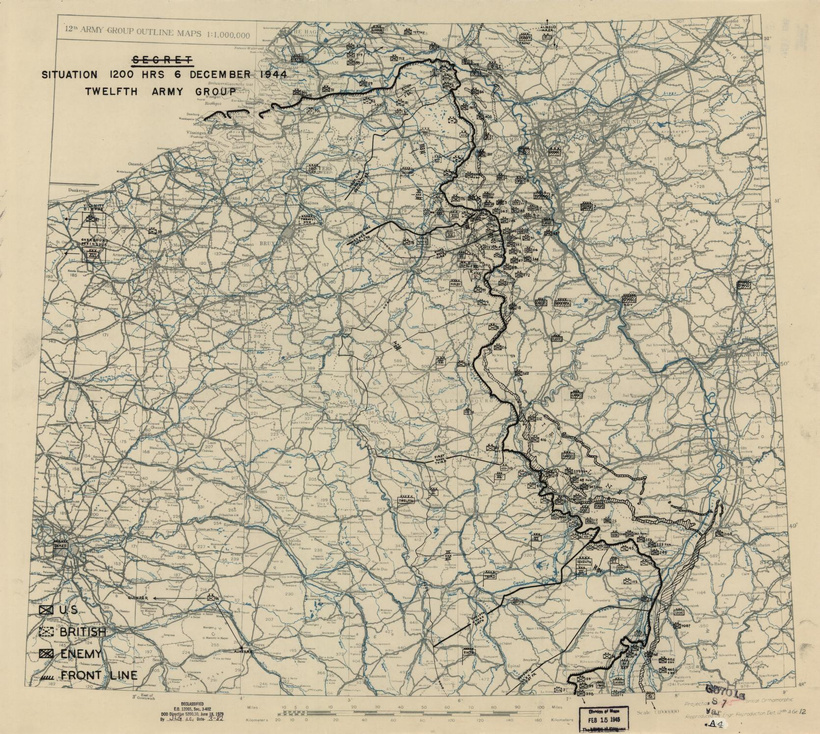
By early December 1944, the German force opposing Field Marshal Montgomery’s 21st Army Group had been dealt a series of important blows, none more recent than its forceful uprooting from the west bank of the river Maas as far south as Maeseyck. In that, the German position was believed to be, notably by Montgomery, strong – but undermined by a lack of equipment, trained troops, and suffering from rampant logistical shortages.
HQ Twelfth Army Group situation map, 6th December 1944. Produced by the Army Group Headquarters, 12 Engineer Section.
During a meeting on the 6th of December, Field Marshal Montgomery directed General Crerar to plan an offensive to the southeast of Nijmegen, and to support this transferred XXX (30) Corps to his command. Over the days that followed, two major operations were conceived. In the south, the British 2nd Army was to clear the triangle between Sittard, Geilenkirchen, and the river Roer as part of Operation Shears; whilst in the north, the First Canadian Army, as part of Operation Veritable, was to advance into the Reichswald, securing the settlements of Xanten, Geldern, and Sonsbeck, before taking charge of the river Rhine’s western bank.
March 14, 2026
Belgian Aces in Exile – Belgian Fighter Aces – WW2 Gallery 10
World War Two
Published 12 Mar 2026Belgium might have been quickly overrun by the Germans in 1940, but many Belgian airmen continued the fight by flying with Britain’s RAF, and quite a few of them were good enough to score five or more aerial victories and become Flying Aces. Here are a few of their stories.
(more…)
February 28, 2026
Lauri Torni Biography Part 1: Soldier of Three Armies
Forgotten Weapons
Published 3 Oct 2025Today is the first of a two-part biography on Finnish legend Lauri Törni, later known as Larry Thorne. He fought in the Winter War and Continuation War, and was awarded the Mannerheim Cross for his actions in the Continuation War. He also travelled to Germany between the two (and again after the Continuation War), spending some time with the German army. In the early 1950s he emigrated to the United States, joining the US Army and eventually serving several tours in Vietnam.
My guest today is Finnish writer and researcher Kari Kallonen, who has written several books on Törni and was kind enough to join me to share the man’s story …
(more…)
February 27, 2026
The British Are Coming! – British Fighter Aces – WW2 Gallery 09
World War Two
Published 26 Feb 2026In this gallery special, we examine five of Britain’s leading fighter aces: Archie McKellar, James MacLachlan, Robert Stanford Tuck, John Braham, and James Edgar Johnson. From the Battle of Britain to night fighting, Intruder missions, and offensive sweeps over occupied Europe, their careers reflect the RAF’s transformation from desperate air defense to sustained air superiority.
These pilots did more than accumulate victory claims. Their experiences illuminate the evolution of air combat, showing how individual skill, technology, and strategy intersected in the broader history of the Second World War.
Which of these careers best captures the changing nature of air power in World War Two?
(more…)
February 26, 2026
QotD: “Naming of Parts” by Henry Reed
We had daily cleaning. And tomorrow morning,
We shall have what to do after firing. But today,
Today we have naming of parts. Japonica
Glistens like coral in all the neighboring gardens,
And today we have naming of parts.This is the lower sling swivel. And this
Is the upper sling swivel, whose use you will see,
When you are given your slings. And this is the piling swivel,
Which in your case you have not got. The branches
Hold in the gardens their silent, eloquent gestures,
Which in our case we have not got.This is the safety-catch, which is always released
With an easy flick of the thumb. And please do not let me
See anyone using his finger. You can do it quite easy
If you have any strength in your thumb. The blossoms
Are fragile and motionless, never letting anyone see
Any of them using their finger.And this you can see is the bolt. The purpose of this
Is to open the breech, as you see. We can slide it
Rapidly backwards and forwards: we call this
Easing the spring. And rapidly backwards and forwards
The early bees are assaulting and fumbling the flowers:
They call it easing the Spring.They call it easing the Spring: it is perfectly easy
If you have any strength in your thumb: like the bolt,
And the breech, the cocking-piece, and the point of balance,
Which in our case we have not got; and the almond blossom
Silent in all of the gardens and the bees going backwards and forwards,
For today we have the naming of parts.Henry Reed, 1942.
February 23, 2026
QotD: Faith, Hope, and Charity defended Malta
France has collapsed, Hitler is eating Europe alive, and Mussolini doesn’t want to miss out. He wants birthday cake without bringing a present.
Poor show
So he looks at a map and asks the Italian Air Force:
“Who can we bomb that’s really close?”
Answer: Malta, 49 miles away.
The Italians begin their great wartime contribution by flying at 14,000 feet and dropping bombs with the accuracy of a man throwing darts after fourteen pints. Half land in the sea, a few hit fields.
But accuracy wasn’t the point. They just wanted to show Berlin they were “in the war”.
For the Maltese, who had never seen modern bombing, even bad Italian bombing was terrifying.
And unfortunately for them, this was only the warm-up act.
Maynard’s Defence: Faith, Hope and Charity
Air Commodore Foster Maynard is given the job of defending Malta with basically nothing.
He had been promised four fighter squadrons.
Zero have arrived. Typical early war British brilliance.
His only aircraft were some slow, ancient Fairey Swordfish.
Great for torpedoing ships, hopeless for intercepting bombers.
These were the famous “Stringbags”. We will hear from them later on.
Then like an archaeologist opening a cursed tomb the British discover 18 Gloster Gladiators in crates on the island. They were meant for HMS Glorious and HMS Eagle.
What followed was peak British wartime admin:
- Maynard asks the Navy to release some Gladiators.
- He gets permission.
- The ground crew assemble several.
- THEN the Navy says “No actually, stop, pack them back up.”
- THEN the decision gets reversed again.
- So they unpack them, reassemble them … again.
After all this faffing, three Gladiators emerge ready to fight.
Next problem: no fighter pilots.
Big problem I feel, anyway …
Maynard asks for volunteers. Eight bomber men step forward, either heroic or mildly insane.
Problem solved.
A journalist on the island, Harry Kirk, watching these three lonely biplanes scramble day after day, nicknames them Faith, Hope and Charity after his mother’s brooch.
The names stick. The legend begins.
On 21 June 1940 Pilot Officer George Burges shoots down a Savoia-Marchetti bomber over Valletta, the island’s first air victory.
The Maltese take it as a sign from God.
(It wasn’t, but let them have the moment.)
“MALTA: PART 1, Foreboding”, WWII Matters, 2025-11-17.
February 21, 2026
The Bomber Mafia by Malcolm Gladwell
Based on the few books of his I’d heard of, I wouldn’t have expected Malcolm Gladwell to dip into military history … and from what Secretary of Defense Rock says, it might have been better if Gladwell had steered clear of this particular topic anyway:
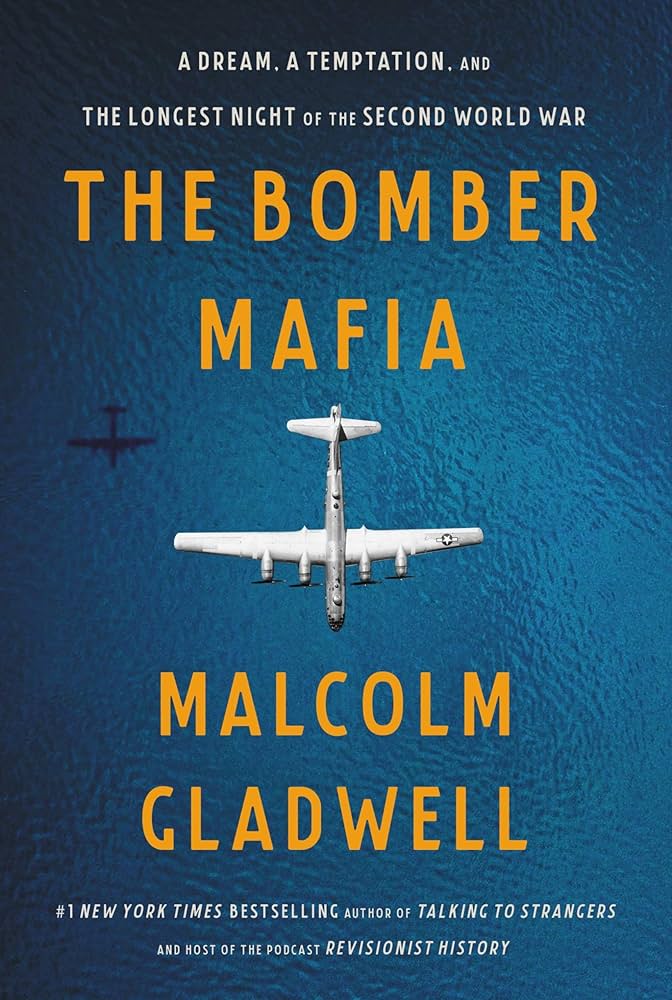
I recently received The Bomber Mafia as a gift for my birthday, and it was bad, so bad that I felt compelled to write this review. In so many ways, the book is everything that is wrong with the “pop history” genre: a bestselling author with a massive built-in audience, with a hit podcast to cross-promote the material, and a framing promise to reveal a supposedly “great untold story” about the strategic and moral struggles of American airmen in World War II. The problem in this case is that Gladwell’s narrative about Curtis LeMay, Haywood Hansell, and the evolution of strategic bombing repeatedly collides with the existing scholarship and often ignores it altogether. From his treatment of the raids of Münster and Schweinfurt–Regensburg to his use of the United States Strategic Bombing Survey and his confident claims about what compelled Japan to surrender, The Bomber Mafia exemplifies the worst tendencies of popular history: sweeping pronouncements built on selective reading, caricatured context, and a startling indifference to both primary sources and a vast secondary literature.1
I was only vaguely familiar with Malcolm Gladwell and his work, but for those who don’t know (like me until recently), he has been a staff writer for The New Yorker since 1996, has written a bunch of New York Times bestselling books on sociology, psychology, and economics, and also hosts a very popular podcast called Revisionist History.2 This is all to say he is widely known and already has a big audience that is generally receptive to his projects. The book was originally based on four episodes he did on this topic in July 2020, and then turned into print, so it isn’t so much an actual book as it is a printed podcast.3
Unsurprisingly, both the audiobook and print editions were widely acclaimed upon release. Writing in the Wall Street Journal, Yale professor Paul Kennedy praised the book as “a wonderful book”.4 The journalist Michael Lewis described it as “a riveting tale”, while the bestselling biographer Walter Isaacson called it “a wonderful narrative”.5 The book was named a Kirkus Reviews Best Book of the Year and selected as an Editors’ Choice by The New York Times Book Review. It also enjoyed significant commercial success, reaching number two on The New York Times Best Sellers list.6 To promote the book, Gladwell made appearances on Jimmy Kimmel, MSNBC, and CBS’s Sunday Morning show. MSNBC even stated in the segment title that this is “A great untold story”, which is hilarious, given that I don’t know how much ink has been spilled on the strategic bombing campaigns.7
But it should be noted that the book has been criticized by virtually anyone who has seriously studied this topic. Much of the criticism of the book has come from the fact that it hardly focuses on the Japanese and German perspectives, misinterprets why members of the air tactical school focused on precision bombing, and the actual role strategic bombing played in the surrender of Japan.8 All of that is valid, but what was initially more startling to me was how little use was made of primary or secondary sources. So many important works are left out makes me wonder how much research Gladwell even put in.9 To write about strategic bombing in World War II and not include Michael Sherry’s The Rise of American Air Power, Richard Overy’s The Bombing War, Donald Miller’s Masters of the Air, Ken Werrell’s Blankets of Fire or Death From the Heavens, Geoffrey Perrett’s Winged Victory, and barely using any of the official histories is borderline negligence.10 Anyone doing research on strategic bombing and Air Power in World War II almost certainly would have come across these.
- Popular history is a form of historical writing aimed at broad audiences that usually prioritizes storytelling over real scholarship. See Gerald Strauss, “The Dilemma of Popular History,” Past & Present, no. 132 (1991): 130–49, and more recently, Ben Alpers, “The Promise and Perils of Popular History,” Society for U.S. Intellectual History, August 17, 2021.
- The show itself isn’t really a conversation with experts and historians (though they do appear) so much as storytelling.
- I would also preface that I generally don’t have a problem with this premise. There is definitely a segment of the historical profession that dislikes pop history for reasons tied as much to credentials as to content. Much “popular history” is produced by journalists, independent writers, or commentators rather than credentialed academic historians, and that fact alone generates suspicion. In some cases, this skepticism is warranted: weak sourcing, thin engagement with the scholarship, and overconfident claims do real damage. But the problem is not who writes history so much as how it is written. Plenty of non-historians have produced outstanding historical works by taking the craft seriously — immersing themselves in primary sources, engaging honestly with existing scholarship, and resisting the temptation to oversimplify for the sake of narrative punch. Conversely, academic credentials have never been a guarantee for insight or even accuracy. If a writer does the work, respects the evidence, and treats complexity as something to be explained rather than avoided, there is no real reason to dismiss the result simply because of the writer’s background.
- Paul Kennedy, “The Bomber Mafia’ Review: Architects of a Firestorm”, The Wall Street Journal, April 30, 2021.
- Summary of reviews in paperback.
- “Hardcover Nonfiction – May 16, 2021”. The New York Times.
- Malcolm Gladwell: ‘Bomber Mafia’ Looks At A Great Untold Story From WWII.
- Some critical reviews include David Fedman and Cary Karacas, “When Pop History Bombs: A Response to Malcolm Gladwell’s Love Letter to American Air Power”, Los Angeles Review of Books, June 12, 2021; Saul David, “Malcolm Gladwell’s The Bomber Mafia is misleading history-lite”, The Daily Telegraph, April 25, 2021, and Steve Agoratus, Air & Space Power History 68, no. 4 (2021): 52–53.
- This is also coming from a guy who famously wrote that achieving world-class expertise in any field is, to a large extent, a function of accumulating roughly 10,000 hours of deliberate practice, as described in his book Outliers: The Story of Success.
- Gladwell doesn’t really deal with British strategic bombing; there’s just a brief chapter on Arthur Harris. If interested, see Noble Frankland, Bomber Offensive, the Devastation of Europe (New York: Ballantine Books, 1971) Max Hastings, Bomber Command: The Myths and Reality of the Strategic Bombing Offensive, 1939-45 (New York: Dial Press/James Wade, 1979), and Norman Longmate, The Bombers: The RAF Air Offensive against Germany, 1939-1945 (London: Hutchinson, 1983).
February 19, 2026
Hotchkiss Model 1886 3-pounder Quick Firing Gun
Forgotten Weapons
Published 26 Sept 2025Small fast boats with torpedos (or other explosives) have always been a threat to large warships. One of the weapons the British Royal Navy adopted to counter that threat was the Hotchkiss Model 1886 “Quick Fire” gun. This meant that it was a breech-loaded gun that used self-contained cartridge ammunition, instead of separate powder bags and projectiles. Mounted on a recoil-adsorbing soft mount with a wide range of movement and steep depression angle, guns like this could fire at small mobile torpedo boats that a capital ship’s main armament couldn’t handle.
This particular model is a 47mm bore, or 3-pounder as described in British service. It uses a vertically-traveling breech block, and more than 3,000 or them were acquired by the British. Two of them were employed as part of the Falkland Islands coastal defenses at one time. This example is one of two brought down from Gibraltar fairly recently and refurbished for ceremonial use on the Islands. Thanks to the FIDF for setting it up on its mount so I could film it for you!
(more…)


