
At its core, liberalism can be defined in gnostic terms as the human mind’s idolizing of itself. In this sense, Obama’s famous aphorism is spot on. The liberal mind really is what the liberal mind has been waiting for.
What it seeks is not, however, goodness, or security, or higher living standards, or even better health care. What it seeks is the celebration of its own brilliance. “Smug” is a small word that perfectly captures the nature of the progressive mind.
This gnostic trait is the source of all of the damage liberalism has wrought for more than 300 years. From the French Revolution to the Third Reich, from Stalinism to North Korea, liberalism has brought with it repression of liberty, death camps, and executions on a mass scale. What’s often not well understood is the fact that violence and repression are inevitable because liberalism seeks to change what does not wish to change – and it does so not for the purpose of making things better, but as an attempt to confirm the superiority of the liberal mind and its ability to manage society.
Most Americans find this conception of existence repulsive. They follow the true path of love, marriage, childbirth, hard work, and faith in God and country. Liberals actively seek to destroy this conception of existence because it rejects their mission of transforming society. It’s either the true path or liberalism. Both cannot be true.
To succeed, liberalism must acquire and retain clients in need of change. It is not in the interest of the liberal to solve problems. What the liberal needs is continually to discover new problems and hold them up as in need of solution. The fate of the “DREAMers”, held in limbo by generations of liberals, is one example. The “downtrodden”, as they were once called, are indeed the pawns of liberal politicians.
Jeffrey Folks, “Leftists versus the People”, American Thinker, 2018-02-24.
September 21, 2024
September 19, 2024
D-Day Tanks: Operation Overlord’s Strangest Tanks
The Tank Museum
Published Jun 7, 2024An opposed beach landing is the most difficult and dangerous military operation it is possible to undertake. Anticipating massive casualties in the Normandy Landings, the British Army devised a series of highly specialized tanks to solve some of the problems – Hobart’s Funnies.
Named after General Sir Percy Hobart, commander of their parent unit, 79th Armoured Division, the Funnies included a mine clearing tank – the Sherman Crab, a flamethrower – the Churchill Crocodile and the AVRE – Assault Vehicle Royal Engineers which could lay bridges and trackways, blow up fortifications and much else besides.
In this video, Chris Copson looks at surviving examples of the Funnies and assesses their effectiveness on D Day and after.
00:00 | Introduction
01:24 | Operation Overlord
03:02 | Lessons from the Dieppe Raid
05:31 | The Sherman DD
07:21 | Exercise Smash
14:38 | Sherman Crab
17:38 | The AVRE
19:47 | Churchill Crocodile
23:15 | Did the Funnies Work?
28:49 | ConclusionThis video features archive footage courtesy of British Pathé.
#tankmuseum #d-day #operationoverlord
September 18, 2024
The Korean War 013 – 70,000 UN Troops Head for Incheon – September 17, 1950
The Korean War by Indy Neidell
Published 17 Sep 2024[NR: For some unknown reason, YT decided to restrict the original release of this video, so I’m replacing it with the “Censored” version posted a couple of days later.]
This week sees the UN forces execute Operation Chromite, the amphibious invasion of the port of Incheon, far behind enemy lines. There are many hurdles to clear before this can happen, including the physical one of one of the world’s largest tidal ranges, which leaves many kilometers of mud flats in the approaches. There is also a UN counterattack at the same time, designed to perhaps break out of the Pusan Perimeter, or at least tie down big chunks of the enemy in the south.
(more…)
D-Day 80th Anniversary Special, Part 1: Paratroopers, with firearms expert Jonathan Ferguson
Royal Armouries
Published Jun 5, 2024This year marks the 80th anniversary of D-Day, the Allied invasion of France which took place on 6th June 1944. From landing on the beaches of Normandy, the Allies would push the Nazi war machine and breach Hitler’s Atlantic Wall.
To commemorate this, we’re collaborating with Imperial War Museums to release a special two-part episode as Jonathan will look at some of the weapons that influenced and shaped this historic moment in history.
Part 1 is all about the “tip of the spear”, the Paratroopers.
0:00 Intro
0:55 STEN MK V
1:40 History of the Sten
3:00 Mark V Details
6:23 Usage in D-Day
8:38 M1A1 Carbine
10:38 M1A1 Details
14:09 Usage in D-Day
15:01 ACME ‘Cricket’ Clicker
17:31 The Longest Day
19:30 Outro[NR: I’m glad Jonathan discussed that bloody clicker scene in The Longest Day … it bugged me the very first time I watched the movie as a young army cadet in the mid-1970s.]
(more…)
September 16, 2024
Anger sells – “Words like ‘wrong’, ‘bad’, ‘awful’, ‘hate’, ‘sick’, ‘fight’, and ‘scary’ each predict a 2.3% increase in click-through rates”
Rob Henderson explains the incentives that lead to provoking as much anger as possible among readers (and especially voters):

It seems like people are angrier than ever. According to a poll by CBS News, 84 percent of Americans believe we are angrier than previous generations. Another survey recently found that nine in ten Americans can name either a recent news event or something about American politics that made them angry, while only half could identify a recent news event or something about American politics that made them proud.
What explains this feeling of rage? One noteworthy reason is that exploiting anger is politically convenient.
The strategic use of anger in politics has transformed it from a natural human emotion into a weapon of division, with far-reaching consequences for our social cohesion and democratic governance.
According to Steven Webster, author of “American Rage: How Anger Shapes Our Politics” and assistant professor of political science at Indiana University, “Anger provides ample benefits to those politicians who are able to use it most skillfully”.
Indeed, across political settings, angry people are more likely to vote than those who are not angry. In other words, politicians who can stoke anger can use it to motivate their base. The angrier voters are at the opposing party, the more likely they are to show up to the polls to support their own party. As Webster puts it, “angry voters are loyal voters”.
Political anger has consequences that extend beyond how Americans view their governing institutions or the opposing political party. When American voters are angry about politics, they are inclined to avoid social interactions or social events where they are likely to come into contact with those whose political leanings differ from their own.
In a chapter titled “Emotions in Politics” published last year, the psychologists Florian van Leeuwen and Michael Bang Peterson suggest that along with other emotions, anger “seems to be a distinct strategy for increasing what one is entitled to in the minds of others”.
Provoking rage against selected groups is an effective way to promote unity in politics. Today, many Americans across the political spectrum are encouraged to feel they are being victimized. It’s no coincidence that one of Donald Trump’s go-to lines on the campaign trail is “They’re laughing at us”. Being laughed at induces humiliation, which often quickly transforms into rage.
In a notable historical illustration of a political movement using anger as a limitless source of ideological fuel, consider the case of the “Recalling Bitterness” campaign in Maoist China. In the 1960s, the communist dictator Mao Zedong grew worried that ordinary Chinese citizens were developing lukewarm attitudes about the socialist revolution. In response, the regime forced people into rituals in which they publicly announced how bad life was before they had been liberated. Mao ordered writers and artists to rewrite history through the lens of class struggle to suit the needs of his political agenda. Regime officials held meetings encouraging peasants to describe how much better life was now compared to pre-liberation, hoping to convince them that the revolution’s successes outnumbered its failures. The “devils” here were reactionaries, landlords, rich farmers, and counterrevolutionaries. Documenting the rituals of the Recalling Bitterness campaign, the historian Guo Wu has written, “Only poor peasants were allowed to speak; former landlords and rich peasants were silenced”.
Who Really Won The Korean War?
Real Time History
Published May 17, 2024Only five years after the end of WW2, the major nations of the world are once again up in arms. A global UN coalition and an emerging Chinese juggernaut are fighting it out in a war that will see both sides approach the brink of victory — and defeat.
(more…)
September 15, 2024
The Occupation of Japan Begins – a WW2 Epilogue Special
World War Two
Published 14 Sep 2024The war is over and the occupation of Japan has begun. The country has largely been destroyed by Allied bombs, and shall be rebuilt, physically, economically, and even governmentally. But what will the new government be? What shall become of the Emperor? Who is to actually do the occupation? Today we look at all this and more.
(more…)
My Man Godfrey (1936) with William Powell and Carole Lombard
The Film Detective
Published Nov 15, 2018During the height of the Great Depression, a scavenger hunt party game brings a pair of spoiled sisters, Irene and Cornelia Bullock (Carole Lombard and Gail Patrick) to a city dump looking for a “forgotten man”. They find down-and-out hobo Godfrey Parks (William Powell), who accompanies one of the sisters back to the party to be presented as a scavenger hunt find, and ends up warily accepting her offer to become the family butler. Irene falls for Godfrey, but is unaware of his mysterious past. Nominated for six Academy Awards, My Man Godfrey might be the screwiest of all screwball comedies.
Director: Gregory La Cava
Writers: Morrie Ryskind, Eric Hatch
Starring: William Powell, Carole Lombard, Alice Brady, Gail Patrick, Eugene Pallette, Jean Dixon
September 14, 2024
QotD: Academia
Severian, “Storytelling Fail”, Rotten Chestnuts, 2021-07-13.
September 13, 2024
“The problem [with America] is and has always been the people and their beliefs”
Chris Bray puts on the old biohazard suit and goes wading into the political book section, this time looking at two recent tomes by NeverTrumpers Robert Kagan and Tom Nichols:
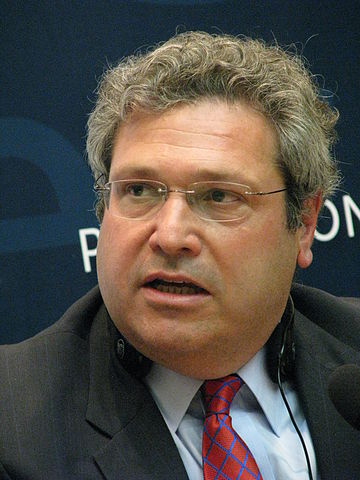
Robert Kagan speaking in Warsaw, 2008-04-17.
Photo by Mariusz Kubik via Wikimedia Commons.
If you want to know where we are as a country, get your hands on a copy of Robert Kagan’s new book, Rebellion. Don’t worry, you won’t even need to crack the spine and open it. Kagan, who married the Queen of Eternal War Victoria Nuland and helped found the now defunct neoconservative Project for a New American Century, has written a warning about the dangerous renascence of antiliberalism in American political life: intolerance, a rejection of minority rights, hatred of progress. America is in deep trouble, Kagan warns. We’re close to losing our democracy! You can already see the freshness and originality of his thought.
Flip it. Take the book, turn it around, and look at that back cover, which carries an excerpt from inside, getting right to the meat of the thing. The problem isn’t the media, Kagan concludes. And it isn’t government. It isn’t a problem with institutions at all: “The problem is and has always been the people and their beliefs”. The thing that’s wrong with America is Americans, full stop. The country works brilliantly, except for the existence of the population. Imagine how healthy we would become if we could just get rid of them.
Should you make the mistake of opening the book, your experience will get worse in a hurry. The intellectual muddle is fatal. Here’s Kagan’s summary of the one big problem that runs through all of American history: “A straight line runs from the slaveholding South in the early to mid-nineteenth century to the post-Reconstruction South of the late nineteenth and early twentieth centuries, to the second Ku Klux Klan of the 1920s, to the Dixiecrats of the 1940s and 1950s, to Joseph McCarthy and the John Birch Society of the 1950s and 60s, to the burgeoning Christian nationalist movement of recent decades, to the New Right of the Reagan Era, to the Republican Party of today.”
All of those movements are precisely the same, you see. Ronald Reagan was a latter-day Ben Tillman, the Birchers merely a rebrand for the 1940s Southern Democrats, and Barry Goldwater was a fitting heir to Nathan Bedford Forrest. A shrewd mind is at work here. All, Kagan concludes, were figures representing “antiliberal groups”: “All have sought to ‘make America great again,’ by defending and restoring the old hierarchies and traditions that predated the Revolution.” The American Revolution, he means. The Dixiecrats and the Birchers and Reagan and Trump all want to restore Parliamentary supremacy and the landed aristocracy, or … something.
But pretend, for a moment, that Kagan has made some form of coherent statement about American history. He is arguing for the protection of the liberal order, the dignity of the common man and the premise that we’re all created equal. At the same time, he says, the biggest problem with America is … the American people themselves. How do those two claims fit together? What kind of politics can we frame around the dignity and inherent worth of the common man, who is stupid and worthless?
See also, on this theme, anything the former U.S. Naval War College professor Tom Nichols has written in the last decade, such as his warning in Our Own Worst Enemy: The Assault from Within on Modern Democracy that “our fellow citizens are an intolerable threat to our own safety” — a claim that closely mirrors Kagan’s warning about America being plagued by Americans. Consider this framing very carefully: if a threat is intolerable, what do you have to do about it?
Kagan’s base argument sounded better in the original German.
September 11, 2024
The Korean War Week 012 – Green Light for Incheon – September 10, 1950
The Korean War by Indy Neidell
Published 10 Sep 2024Douglas MacArthur’s brazen plan to land two full divisions far behind enemy lines and sabotage the North Korean logistics finally gets the green light from the President and the Joint Chiefs of Staff, despite the myriad difficulties everyone knows the operation will face. It is to go off next week. In the field, the North Korean offensive against the Naktong Bulge continues, though it seems to be running out of steam, and the UN forces get beefed up as the first British troops to arrive in Korea join the battle line.
Chapters
01:03 Recap
01:23 KPA Offensive and Counterattacks
07:31 JCS Approve Incheon
10:33 Eugene Clark Investigates
13:32 More UN Forces for the fight
15:00 Summary
15:24 Conclusion
18:14 Call to Action
(more…)
“You call someplace paradise, kiss it goodbye”
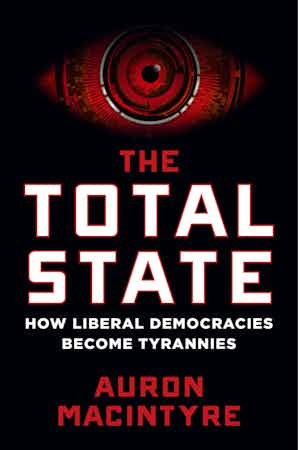
At The Upheaval, N.S. Lyons reviews The Total State: How Liberal Democracies Become Tyrannies by Auron MacIntyre:
Even when our nation’s dysfunction becomes too obvious to ignore, average Americans tend to comfort themselves with the story that it at least remains a democratic, constitutional republic. For such Americans, it’s probably been a confusing summer.
One moment the sitting president was, according to the near-universal insistence of mainstream media, sharp as a tack — all evidence to the contrary declared merely dangerous disinformation. The next he was suddenly agreed to be non compos mentis, unceremoniously ousted from the ballot for reelection, and replaced, not in a democratic primary but through the backroom machinations of unelected insiders. Overnight, the same media then converged to aggressively manufacture a simulacrum of sweeping grassroots enthusiasm for that replacement, the historically unpopular Kamala Harris. To call this a palace coup via The New York Times would seem not to stray too far from observable events.
What, some may wonder, just happened to our sacred democracy?
For those on the growing segment of American politics broadly known as the “New Right,” none of this was a surprise. The basic premise of the New Right — whose ranks notably include now-vice presidential candidate J.D. Vance — is that the governance of our country simply doesn’t function as we’re told it does. In fact, the United States has not operated as a constitutional republic for some time now; it is only the façade of one, effectively controlled by an unevictable cadre of rapacious plutocratic elites, corrupt party insiders, unelected bureaucrats, and subservient media apparatchiks — in short, a wholly unaccountable oligarchy.
Among the sharpest recent guides to this argument—and, in my view, to our current broader political moment—is a slim new book by the columnist and influential young New Right thinker Auron MacIntyre, titled The Total State: How Liberal Democracies Become Tyrannies.
MacIntyre provides a dispassionate dissection of how, without any cabal or specific conspiracy, an elite class captured all our major public and private institutions, hollowed them out, set them all marching in lockstep against the American middle-class, and made a mockery of the notion of constitutional “checks and balances”. The resulting “total state” now operates in increasingly flagrant contradiction to the interests of the American people and democratic government while “wearing the old regime like a skinsuit”.
Essential to understanding this total state is the concept of managerialism, an idea first pioneered by an older generation of political thinkers like James Burnham which has been recovered from relative obscurity and re-employed by the New Right. In this framing, America is today effectively run by a “managerial elite”, which presides over a broader professional managerial class — think college administrators, corporate HR managers, and non-profit activists. Fundamentally, the business of such people is not producing or building anything, providing any essential service, or even making critical leadership decisions, but the manipulation and management — that is, surveillance and control — of people, information, money, and ideas.
The story of the fall of the American republic is the story of the managers’ rise to power everywhere.
In part, this was the inevitable outcome of technological and economic change following the industrial revolution, which made it necessary to expand the ranks of people schooled in managing large, complex organizations. But, as MacIntyre demonstrates, it was also the result of a deeply misguided urge, pioneered by early progressives, to de-risk and “depoliticize” politics by handing over decision-making to technocratic “experts”. The hope was that these experts could rationally and neutrally administer government and society from the top down, through the same principles and processes of “scientific management” first applied to the assembly line.
This proved disastrous.
September 10, 2024
Why the US Left Vietnam
Real Time History
Published Apr 19, 2024With violent anti-war protests at home and discipline problems on US bases, President Nixon promises to withdraw American troops from the Vietnam War, but that doesn’t mean an end to the fighting. As US troop numbers drop, the war expands across borders and in the air as more weapons are pumped into the South.
(more…)
QotD: Contempt of court
Steve H., “Was I Wrong About Cooper? Don’t Think So”, Hog On Ice, 2005-07-06.
September 9, 2024
Update your Overton Window – “[A]nyone to the immediate right of 2024 liberal democracy is a fascist”
In Niccolo Soldo’s weekly commentary, a few insights into European “mainstream” political views on extreme right-wing crypto-fascists like … everyone who doesn’t support far left positions:

If you think that US media is bad, you should check out just how awful their German colleagues are. Their media is filled to the brim with daily hysteria about the Russians, Nazis, fascists, and so on. Every single day is a struggle to survive against these existential threats.
To the mainstream German media, a conservative Christian Democrat (the kind that ruled much of Western Europe during the Cold War) like Viktor Orban is a fascist in disguise. To the mainstream German media, a statist centrist like Vladimir Putin is Hitler without the disguise. A 90s Clinton Liberal like Donald Trump is both.
Thankfully, Der Spiegel reached out to writers and researchers who specialize in fascism to tell us that all of the above are fascists, and some are Nazis too:
The reversion to fascism is a deep-seated fear of modern democratic societies. Yet while it long seemed rather unlikely and unimaginable, it has now begun to look like a serious threat. Vladimir Putin’s imperial ambitions in Russia. Narendra Modi’s Hindu nationalism in India. The election victory of Giorgia Meloni in Italy. Marine Le Pen’s strategy of normalizing right-wing extremism in France. Javier Milei’s victory in Argentina. Viktor Orbán’s autocratic domination of Hungary. The comebacks of the far-right FPÖ party in Austria and of Geert Wilders in the Netherlands. Germany’s AfD. Nayib Bukele’s autocratic regime in El Salvador, which is largely under the radar despite being astoundingly single-minded, even using the threat of armed violence to push laws through parliament. Then there is the possibility of a second Trump administration, with fears that he could go even farther in a second term than he did during his first. And the attacks on migrant hostels in Britain. The neo-Nazi demonstration in Bautzen. The pandemic. The war in Ukraine. The inflation.
Meloni, Modi, Milei, Wilders, Bukele … all are suspected of crypto-fascism here.
Trump? “Fascist”, says neo-conservative Robert Kagan:
In May 2016, Donald Trump emerged as the last Republican standing following the primaries, and the world was still a bit perplexed and rather concerned when the historian Robert Kagan published an article in the Washington Post under the headline “This is how fascism comes to America.”
The piece was one of the first in the U.S. to articulate concerns that Trump is a fascist. It received significant attention around the world and DER SPIEGEL published the article as well. It was an attention-grabbing moment: What if Kagan is right? Indeed, it isn’t inaccurate to say that Kagan reignited the fascism debate with his essay. Interestingly, it was the same Robert Kagan who had spent years as an influential member of the Republican Party and was seen as one of the thought leaders for the neocons during the administration of George W. Bush.
The article has aged well. Its characterization of Trump as a “strongman”. Its description of his deft use of fear, hatred and anger. “This is how fascism comes to America, not with jackboots and salutes,” Kagan wrote, “but with a television huckster, a phony billionaire, a textbook egomaniac ‘tapping into’ popular resentments and insecurities, and with an entire national political party – out of ambition or blind party loyalty, or simply out of fear – falling into line behind him.”
Jason Stanley, the Jacob Urowsky Professor of Philosophy at Yale University, says that fascism has already come to America:
Six years ago, Stanley published a book in the U.S. called How Fascism Works: The Politics of Us and Them. The German translation only appeared two months ago, a source of annoyance for Stanley. He also has German citizenship and says that he loves the country despite everything.
So how does fascism work? Modern-day fascism, Stanley writes, is a cult of the leader in which that leader promises rebirth to a disgraced country. Disgraced because immigrants, leftists, liberals, minorities, homosexuals and women have taken over the media, the schools and cultural institutions. Fascist regimes, Stanley argues, begin as social and political movements and parties – and they tend to be elected rather than overthrowing existing governments.
Timothy Snyder says that both Trump AND Putin are fascists:
Timothy Snyder speaks thoughtfully and quietly, but with plenty of confidence. Putin is a fascist. Trump is a fascist. The difference: One holds power. The other does not. Not yet.
“The problem with fascism,” Snyder says, “is that it’s not a presence in the way we want it to be. We want political doctrines to have clear definitions. We don’t want them to be paradoxical or dialectical.” Still, he says, fascism is an important category when it comes to understanding both history and the present, because it makes differences visible.
Austrian Political Scientist Natascha Strobl says that fascists are now everywhere:
But this kind of violence can be seen everywhere, says the Austrian political scientist Natascha Strobl. It merely manifests itself differently than it did in the 1920s, when, early on in the fascist movement in northern Italy, gangs of thugs were going from village to village attacking farmer organizations and the offices of the socialist party, killing people and burning homes to the ground. Today, says Strobl, violence is primarily limited to the internet. “And it is,” says Strobl, “just as real. The people who perpetrate it believe they are involved in a global culture war, a struggle that knows no boundaries. An ideological civil war against all kinds of chimeras, such as ‘cultural Marxism’ or the ‘Great Replacement’.”
For Bulgarian think-tanker Ivan Krastev, AfD is a fascist organization:
It is all rather perplexing. Back in Berlin, Ivan Krastev makes one of his Krastevian jokes. An American judge, he relates, once said that he may not be able to define pornography, “but I know it when I see it”. The reverse is true with fascism, says Krastev: It is simple to define, but difficult to recognize when you see it.
The “F-word”. F as in fascism or F as in “Fuck you”. It is permissible, as a court in Meiningen ruled, to refer to Höcke as a fascist. The question remains, though, what doing so actually achieves.
So there you have it: anyone to the immediate right of 2024 liberal democracy is a fascist.


