Quotulatiousness

November 10, 2024

The 1896 US Presidential election

Filed under: History, Media, Politics, USA — Tags: , , , , , , — Nicholas @ 03:00

In the latest SHuSH newsletter, Ken Whyte looks back to the 1896 contest between William McKinley and William Jennings Bryan:
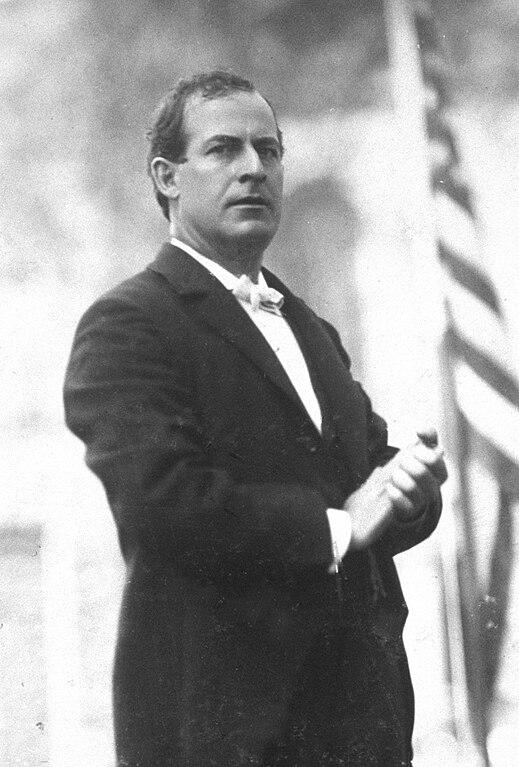
William Jennings Bryan, Democratic party presidential candidate, standing on stage next to American flag, 3 October 1896.
LOC photo LC-USZC2-6259 via Wikimedia Commons.

The 1880s and 1890s saw an enormous expansion in the number of newspapers in America. New printing technologies had drastically reduced barriers to entry in the newspaper field, while the emergence of consumer advertising was making the business more lucrative. By the election of 1896, there were forty-eight daily newspapers in New York (Brooklyn had several more), each vying for the attention of some portion of the city’s three million souls. The major papers routinely produced three or four editions a day, and as many as a dozen on a hot news day, making for a 24/7 news environment long before the term was coined. The individual newspapers were distinguished by their politics, ethnic, and class orientations. They advocated vigorously, often shamelessly, and occasionally dishonestly for the interests of their readers. Similar dynamics were afoot everywhere. America, in the 1890s, was noisy as hell.

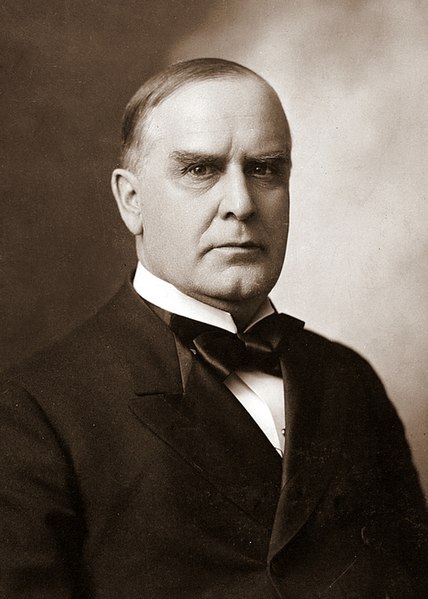
Republican nominee William McKinley was the respectable candidate in 1896, heavily favoured. He had a state-of-the-art organization, buckets of money, and vast newspaper support, even among important Democratic publishers such as Joseph Pulitzer. The Democrats fielded William Jennings Bryan, who looked to be the weak link in his own campaign. He was a relatively unknown and untested ex-congressman from Nebraska, just thirty-six-years-old, a messianic populist with a mesmerizing voice and radical views. A last-minute candidate, he was selected on the convention floor over Richard P. Bland, against the protests of the party establishment.

Bryan broke all the norms of politics in 1896. At the time, it was believed that the dignified approach to campaigning was to sit on one’s porch and let party professionals speak on one’s behalf. Grover Cleveland had made eight speeches and journeyed 312 miles in his three presidential campaigns (1884, 1888, 1892). Bryan spent almost his entire campaign on the rails, holding rallies in town after town. He travelled 18,000 miles and talked to as many as five million Americans. He unabashedly championed the indigent and oppressed against Wall Street and Washington elites.

Inflation was the central issue of the 1896 campaign. The US was on the gold standard at the time, meaning that the amount of money in circulation was limited by the amount of gold held by the treasury. Gold happened to be scarce, resulting in an extended period of deflation, a central factor in the major economic depression of the early 1890s. The effects were felt disproportionately by the poor and working class. Bryan advocated the monetization of silver (in addition to gold) as a means of increasing the money supply and reflating the economy. This was viewed by the establishment as an economic heresy (not so much today). Bryan was viewed as a saviour by his followers, and that’s certainly how he saw himself.

The New York Sun heard among the Democrats “the murmur of the assailants of existing institutions, the shriek of the wild-eyed”. The New York Herald warned that Bryan’s supporters, disproportionately in the west and south, represented “populism and Communism” and “crimes against the nation” on par with secession. The New York Tribune warned that the Democrats’ “burn-down-your-cities platform” would lead to pillage and riot and “deform the human soul”. The New York Times asked, in all sincerity, “Is Mr. Bryan Crazy?” and spoke to a prominent alienist who was convinced that the election of the Democrat would put “a madman in the White House”. That Bryan’s support was especially strong among new Americans — the nation was amid an unprecedented wave of immigration — was especially disconcerting to the establishment. His followers were a “freaky”, “howling”, “aggregation of aliens”, according to the Times.

The only major New York newspaper to support the Democrats that season was Hearst’s New York Journal, a new, inexpensive, and wildly popular daily. I wrote about this in The Uncrowned King: The Sensational Rise of William Randolph Hearst. Loathed by the afore-mentioned respectable sheets, the Journal became the de facto publicity arm of the Bryan campaign and Hearst became the Elon Musk of his time.

William McKinley, 1896.
Photo by the Courtney Art Studio via Wikimedia Commons.

The unobjectionable McKinley didn’t offer Democrats much of a target, but his campaign was being managed and funded by Ohio shipping and steel magnate Mark Hanna. The Journal had learned that Hanna and a syndicate of wealthy Republicans had previously bailed out McKinley from a failed business venture. Hearst’s cartoonists portrayed Hanna as a rapacious plutocratic brute (accessorized with bulging sacks of money or the white skulls of laborers) and McKinley as his trained monkey or puppet: “No one reaches the McKinley eye or speaks one word to the McKinley ear without the password of Hanna. He has McKinley in his clutch as ever did hawk have chicken … Hanna and his syndicate are breaking and buying and begging and bullying a road for McKinley to the White House. And when he’s there, Hanna and the others will shuffle him and deal him like a deck of cards.” The cartoons were criticized as cruel, distorted, and perverted. They were hugely effective.

Caught off guard by Bryan’s tactics, but unwilling to put McKinley on the road, Hanna instead arranged for 750,000 people from thirty states to visit Canton, Ohio and see McKinley speak from his front porch. He meanwhile made some of the most audacious fundraising pitches Wall Street had ever heard. Instead of asking for donations, he “levied” banks and insurers a percentage of their assets, demanding the Carnegies, Rockefellers, and Morgans pay to defend the American way from democratic monetary lunatics. Standard Oil alone coughed up $250,000 (the entire Bryan campaign spent about $350,000). Hanna printed and distributed a mind-boggling 250 million documents to a US population of about 70 million (the mails were the social media of the day), and fielded 1,400 speakers to spread the Republican gospel from town to town. All of this was unprecedented.

The Republicans generated their own conspiracy theories to counter the stories about Hanna’s controlling syndicate. Pulitzer’s New York World published a series of articles on The Great Silver Trust Conspiracy — “the richest, the most powerful and the most rapacious trust in the United States”. Bryan was said to be a puppet of this “secret silver society”, for which the World had no evidence beyond that the candidate was popular in silver mining states.

There were violent motifs throughout the campaign. The Republicans accused the Democrats of fostering division and rebellion, threatening national unity by pitting the south and the west against the east and the Mid-West. This was charged language with the Civil War still in living memory. Hanna funded a Patriotic Heroes’ Battalion comprising Union army generals who held 276 meetings in the last months of the campaign. They would ride out in full uniforms to a bugle call, advising the old soldiers who came out to see them to “vote as they shot”. Said one of their number: “The rebellion grew out of sectionalism … We cannot tolerate, will not tolerate, any man representing any party who attempts again to disregard the solemn admonitions of Washington to frown down upon any attempt to set one portion of the country against another.” Senior New York Republicans vowed that if the Democrats were elected, “we will not abide the decision”. These belligerent tactics were cheered by the majority of New York papers.

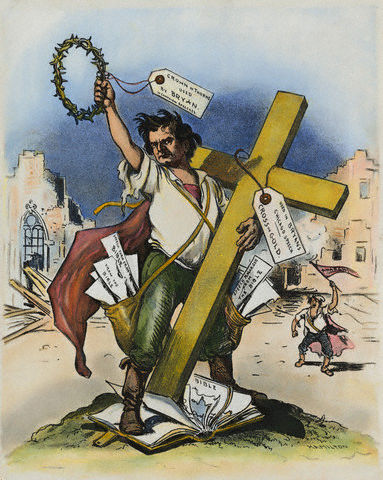
Democratic and populist leader William Jennings Bryan, climaxed his career when when he gave his famous “Cross of Gold” speech which won him the nomination at the age of 36.
Grant Hamilton cartoon for Judge magazine, 1896 via Wikimedia Commons.

Bryan did nothing to cool tempers by claiming, in his famous “cross of gold” speech, that he and working-class Americans were being crucified by financial and political elites.

On it went. There were many echoes of 1896 in 2024. The polarized electorate, the last-minute candidate, record spending, unprecedented campaign tactics, populism and personal charisma, relentless ad hominem attacks, class and culture and regional warfare, inflation, immigration, racism, misinformation and conspiracy theories, comedians and plutocrats, threats of authoritarianism and violence and revolution, all of it massively amplified, and sometimes generated, by messy new media.

Of course, some of the echoes are coincidental, and there are also many contrasts. It was a different electorate. The alignment of the parties bore little resemblance to what we see today. Bryan, aside from his megalomania and zealotry, was as personally decent as Trump isn’t. And Bryan lost the campaign.

My point is I don’t think it’s an accident that the likes of Bryan and Trump — mavericks who thoroughly dominate their parties (both thrice nominated) through a direct and unshakeable bond with their followers — surface when the public sphere is most chaotic. New media environments, by their nature, are amateurish, turbulent, unsettling. There are fewer guardrails, which is a major reason outsiders and their followers gravitate to them. They see a way to change the rules and end-run established media (establishment candidates are naturally more comfortable using established channels to reach voters). New forms of political communication develop, contributing to new political norms, tactics, and strategies, and long-lasting political realignments.

For better or worse.
November 9, 2024

Did US Indecision Encourage Stalin in Korea?

Filed under: Asia, China, History, Military, Russia, USA — Tags: , , , , , , — Nicholas @ 04:00

The Korean War by Indy Neidell
Published 8 Nov 2024

In March 1950, Stalin finally approves Kim Il-sung’s plans for an invasion of South Korea. But why now? Today Indy looks at the wider Cold War context that fed into Stalin and Mao Zedong’s decision making. He also examines whether the lack of a clear and public commitment from the US to defend the Asian theatre helped to invite the invasion.
(more…)

History of SAW (Squad Automatic Weapon) use in the US Army

Filed under: History, Military, USA, Weapons, WW1, WW2 — Tags: , , , , , , , — Nicholas @ 02:00

Forgotten Weapons
Published Jul 26, 2024

The first squad automatic weapon used by the US Army was the French Mle 1915 Chauchat, which was the primary LMG or automatic rifle for troops in the American Expeditionary Force in World War One. At that time, the Chauchat was a company-level weapon assigned where the company commander thought best. In World War Two, the Chauchat had been replaced by the BAR, and one BAR gunner was in each 12-man rifle platoon. The BAR was treated like a heavy rifle though, and not like a support weapon as light machine guns were in most other armies.

After Korea the value of the BAR was given more consideration and two were put in each squad instead of one, but the M14 replaced the BAR before it could gain any greater doctrinal importance. The M14 was intended to basically go back to the World War Two notion of every man equipped with a very capable individual weapon, and the squad having excellent flexibility and mobility by not being burdened with a supporting machine gun. The M60 machine guns were once again treated as higher-level weapons, to be attached to rifle squads as needed.

After Vietnam, experiments with different unit organization — and with the Stoner 63 machine guns — led to the decision that a machine gun needed to be incorporated into the rifle squad. This led to the request for what became the M249 Squad Automatic Weapon, and its adoption in the 1980s. At last, the American rifle squad included an organic supporting machine gun.

Today, the USMC is once again going back to the earlier model with every rifleman carrying the same weapon, now an M27 Individual Automatic Rifle. The Army may also change its organizational structure with the new XM7 and XM250 rifle and machine gun, but only time will tell …
(more…)

November 8, 2024

“The Science™, that thing we’re supposed to believe in and obey – is distinctly and increasingly political”

President-elect Donald Trump has a vast array of options to tackle in the traditional first hundred days of his administration. Chris Bray says that one of the very first of these should be the depoliticization of the federal science agencies:

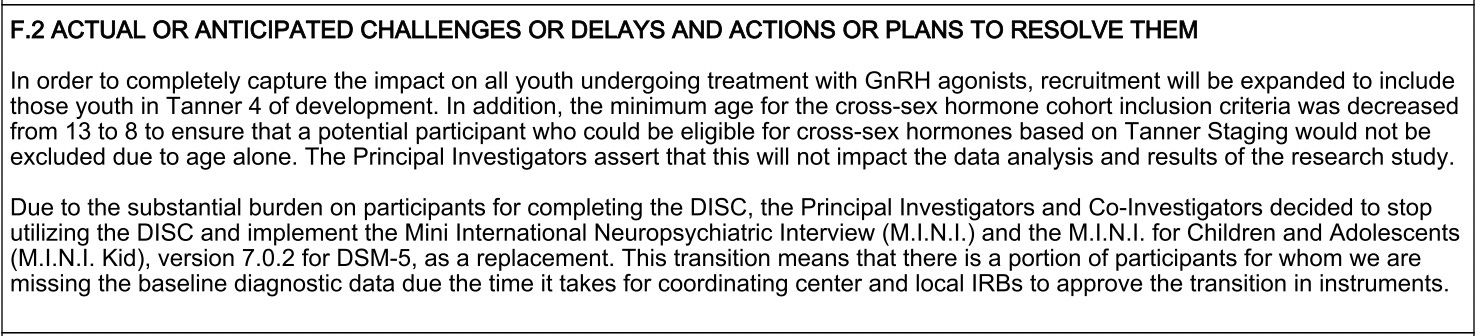
Donald Trump has spoken very clearly about his day-one determination to end the mutilation of children in the service of gender ideology, but let’s look for the roots of that poison tree. Via Billboard Chris, here’s a sample descriptive section from a National Institutes of Health grant given to a pediatric gender physician in Los Angeles, and read this carefully to find the most important sentence:

Dr. Johanna Olson-Kennedy has worked to push gender hormone treatment down to eight year-olds, with research funding from the federal government. Now, big finish: the dates on the NIH grant that Billboard Chris highlighted:

This is a project — gender hormones for eight year-olds — that operated with federal funding during the first Trump administration. Policy expressed in words meets policy expressed in cash. This is what matters, year after year, through Republican and Democratic administrations alike (click to enlarge):

The money, the money, and the money. What you fund is what you’re doing. It may not seem like a big target, but the politicization of federal science funding is a root cause of institutional decay and pathological narrative-making, and cutting the money pipeline to politicized science is the policy action that will matter for decades. Remaking the funding pipeline for federal science grants is a day one priority, because the money will shape policy far more than any declaration of intent.

The problem is everywhere: the NIH, the NSF, NASA, NOAA, and so on. SpaceX is catching rockets; NASA is funding this: “21-EEJ21-0020 ASSESSMENT OF THE GULF COAST ENVIRONMENTAL JUSTICE LANDSCAPE FOR EQUITY.”

And this: “EXPLORING SYNERGISTIC OPPORTUNITIES BETWEEN CHARLOTTE-AREA ENVIRONMENTAL JUSTICE INITIATIVES AND NASA EARTH SCIENCE INFORMATION.”

Pick a federal science grant website and spend some time exploring it. Here’s the National Science Foundation’s funding opportunities page. Sample grant program: “Growing Research Compliance Support and Service Infrastructure for Nationally Transformative Equity and Diversity”.

Today’s funded program for transformative science equity and environmental justice is tomorrow’s new policy measures. This is the pipeline to programs. What you fund today is what you’re going to do in five years.

The McDonald’s ice cream machines are always broken because of bad IP laws

Even if you never to to a McDonald’s yourself, you’ve undoubtedly heard that the ice cream machines are always broken. I hadn’t really given it any thought — it’s been years since I visited one of the restaurants and I don’t eat much ice cream — but Peter Jacobsen explains the weird and infuriating reason for the phenomenon:

Image Credit: Magnus D via Wikimedia | CC BY 2.0

How could it be that the ice cream machines at McDonald’s are so consistently broken? It turns out that, until just recently, it was illegal to hire most people to fix them. To understand why, we’re going to have to take a detour into the world of intellectual property.

DMCA Woes

So why has it been illegal for McDonald’s to hire people to fix their ice cream machines? Well, that’s where the Digital Millennium Copyright Act (DMCA) comes in. If you’re familiar with the DMCA, this is probably confusing to you.

Generally the DMCA is a big concern on content creation platforms like YouTube. If someone uses copyrighted music, he or she gets DMCAed. This is slang for when a video gets its monetization redirected to the owner of whatever copyrighted content was used.

DMCA takedowns draw a lot of ire, because the law is clumsily applied and often even legitimate uses of copyrighted content (e.g., fair use) are punished.

But the DMCA extends beyond content creation, as chronicled by Elizabeth Chamberlain of iFixit, an organization dedicated to ensuring that product owners have the right and ability to fix their property. Many machines ranging from phones to ice cream machines utilize copyrighted software to function. Sometimes, this software limits product users more than they’d like.

For example, iPhone software locks users into particular user interfaces. If a user wants to customize past some point, he’s going to have to modify the software more than the company intends. This process, called jailbreaking, involves breaking through “digital locks”. The DMCA often interprets breaking these locks as a violation of the intellectual property of the copyright holder.

The problem gets even worse when you recognize that fixing things — say, McDonald’s ice cream machines — means breaking past those digital locks. This means anyone hired to repair the machine would need an official blessing from the manufacturer.

However, things have changed. As of October 18th, the opening of digital locks for “retail-level commercial food preparation equipment” is now exempt from this DMCA rule. McDonald’s will now be able to hire from a larger group of people to fix their ice cream machines.

DMCA has allowed a lot of intellectual property owners to collect unearned rents while neglecting the needs of the customers who’ve bought, leased, or rented things that incorporate their IP.

Note, this is only an exemption to the rule. The rule itself has not changed. Second, other regulations still hamper McDonald’s franchise owners from fixing their own machines. As Chamberlain points out:

    While it’s now legal to circumvent the digital locks on these machines, the ruling does not allow us to share or distribute the tools necessary to do so. This is a major limitation … few will be able to walk through it without significant difficulty.

    It is still a crime for iFixit to sell a tool to fix ice cream machines, and that’s a real shame … Without these tools, this exemption is largely theoretical for many small businesses that don’t have in-house repair experts.

So your chance of getting a McFlurry has improved, but you can’t quite celebrate a total win yet.

The battle against these DMCA laws isn’t limited to ice cream machines. The “right to repair” movement spearheaded by organizations including iFixit has already battled for exemptions for medical devices, consumer devices like phones and tablets, vehicles, and assistive technologies for people with disabilities.

November 7, 2024

Donald Trump II: The Trumpening

Filed under: Media, Politics, USA — Tags: , , , — Nicholas @ 03:00

I went to bed on Tuesday night with assurances from several sources that the election was still very close and that it might take many more hours to determine the winner — if any — of the 2024 US federal election. Roughly an hour later, it was apparently all over but the crying:

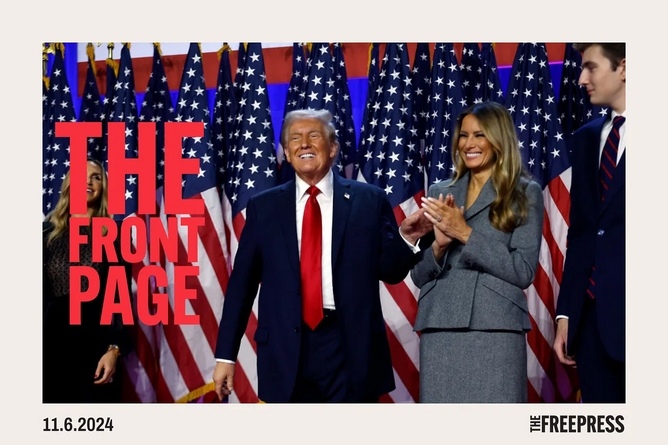
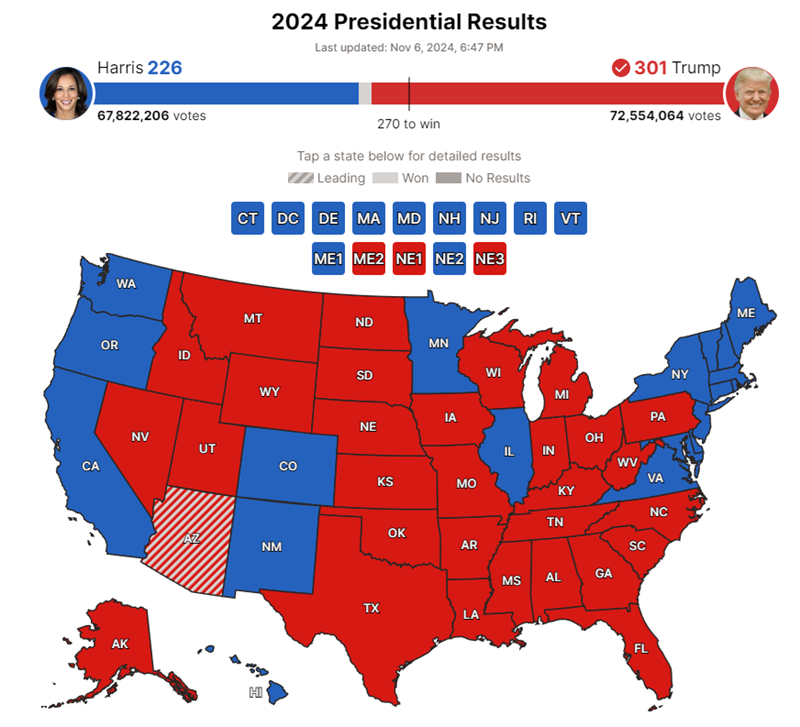
We’re sitting down to write this at 2 a.m., and by now it’s clear: Donald Trump is set to be the 47th president of the United States, and on track to win the electoral college and the popular vote. It is a stunning comeback.

The red wave that wasn’t in 2022 came crashing down tonight. Republicans have retaken control of the Senate. Control of Congress is still in the balance.

Going into tonight, Nate Silver ran 80,000 simulations of what could happen. In 40,012 of them, Kamala Harris won. Every pollster and pundit said the same: It was gonna be a squeaker. Too close to call. We wouldn’t know for days, maybe even weeks!

That’s not how it went down. Not at all.

Trump had won Pennsylvania before the night was out. And by 2:30 in the morning, he was onstage, surrounded by his family and Dana White, delivering his victory speech in West Palm Beach.

Tonight at our election party, the British historian Simon Sebag Montefiore said he hadn’t seen a comeback like this since Charles de Gaulle. But perhaps the only American echo of tonight is Richard Nixon. As Commentary editor John Podhoretz wrote on Twitter: “This is the most staggering political comeback in American history. Period. Nixon has held the comeback trophy for nearly 60 years. No longer.”

Why Trump won so convincingly — and why Kamala lost so fully — are themes we’ll cover over the coming weeks. But for now, enough from us.

In the same Front Page summary:

This race was the Democrats’ to lose. And they blew it. Badly. As of 2 a.m., there wasn’t a single county in the country in which Harris outperformed Joe Biden. What went wrong? Peter Savodnik has some ideas.

“They didn’t lose because they didn’t spend enough money,” writes Peter. “They didn’t lose because they failed to trot out enough celebrity influencers. They lost because they were consumed by their own self-flattery, their own sense of self-importance.”

And above all else, they lost because they lied. “They seemed to think that Americans wouldn’t mind that they had pretended Joe Biden was ‘sharp as a tack’, that they actually orchestrated a behind-the-scenes switcheroo, that the party that portrayed itself as the nation’s answer to fascism nominated its standard-bearer without consulting a single voter.”

Last night, the truth caught up with them.

Kamala Harris failed to retain Joe Biden’s record 81 million Democratic voters, falling back to about the same level of support (67 million) as Hillary Clinton in 2016 and Barack Obama in 2012. Weird.

Freddie deBoer wonders what the Democrats will end up blaming this loss on:

You can’t blame losing the popular vote and all seven swing states on Jill Stein.

You can’t blame losing the popular vote and all seven swing states on Putin and the Russians.

You can’t blame losing the popular vote and all seven swing states on Bernie Sanders and his supporters.

You can’t blame losing the popular vote and all seven swing states on Joe Rogan.

You can’t blame losing the popular vote and all seven swing states on Glenn Greenwald and The Young Turks.

You can’t blame losing the popular vote and all seven swing states on the decision to run with Tim Walz.

You can’t blame losing the popular vote and all seven swing states on the New York Times and its occasional Democrat-skeptical opinion pieces.

You can’t blame losing the popular vote and all seven swing states on Joe Biden for getting out of the race too late.

You can’t pull all the usual Democrat tricks. You have to actually figure out what’s wrong with your party, root and branch. Because you called the guy a fascist, again, and he walked right through that insult to the Oval Office, again. And the eternal question presents itself: what are you going to do about it?

Of course, some Trump supporters can’t help but get a little triumphal:

Donald J Trump has been elevated to the purple by the prince-electors at Aachen, and coronated in Rome by the Pope, so that he is now Imperator of the Holy Roman Empire, and of the Empire of Man, Rex Quondam et Rexque Futurum.

All Glory to God and to his anointed!

The Tribune Assembly of the Commoners in America, who retain a quaint custom of confirming the Electoral determination by local ballot, have also granted His Imperial Majesty the Mandate of the Commons.

[…]

JD Vance will be Executive-for-Life, and Elon the first Transhuman Immortal of the Noosphere. So far, so good.

Purple haired girls will no longer be allowed to twirk and grind in public, as show in the first scene, and modest dress codes will be decreed by the National Census Office. No more tattoos nor face piercings.

Also, involuntary concubinage will ensure a reverse of the demographic decline, the return to the fertility levels needed to colonize Mars.

QotD: Fear of … freedom

Filed under: Liberty, Quotations, USA — Tags: , , , , , — Nicholas @ 01:00

When Rousseau said you’d need to force men to be free, he wasn’t joking. It’s hard to admit the truth of that statement, especially as Rousseau, like all Leftists, quite obviously pleasured himself to the thought of forcing great masses of people to do things, but he’s right for all that. As Nikolai points out, so many people quite obviously enjoy the COVID madness, because it gives structure to their otherwise stressfully chaotic lives. Everyone, even the most rugged Marlboro Man individualist, has experienced “analysis paralysis”, that rising sense of near-panic that comes from having too many choices. Your developmentally normal person quickly snaps out of it — a mental slap upside the head in the form of “it’s just peanut butter, dummy!” usually does it — but a vast and increasing number of people never do.

Since this is my blog and it’s Friday and all that, I’ll go ahead and expand this into a nebulous Theory of Everything: What people really want, deep down, is drama within limits. Ideally, you have the sense that something better is possible — and that something worse is possible — but, most importantly, the sense that if you follow the rules, and make sure everyone else follows the rules, neither of them will happen.

If you reach what appears to be an end state — that is, there’s no realistic possibility of anyone going higher or lower — you see nasty Karen-ish behavior. From everyone, everywhere, always. The Z Man did a piece the other day on Sayre’s Law, which anyone who has ever dealt with eggheads instinctively understands: “The fighting is so vicious because the stakes are so small”. If you read the bios of the real lunatics — the insane-by-egghead-standards, I’m talking — you almost always see that they’re tenured at some second rate academy. They’re topped out, and they know it. Hang around the faculty lounge long enough, and you learn to spot it in their eyes — that precise moment when they realize that Harvard won’t be calling, so they’re stuck here at Flyover State. They can’t move up, and thanks to tenure there’s no realistic (in their minds) possibility of falling down. The only drama left, then, is interpersonal drama, which is why they’re such vicious, obnoxious bitches to everyone, everywhere, always.

It works outside the academy too, of course. The two main CRT loons, Robin De Angelo and that Ibram X. Kendi guy, are maxed out and they know it. They weep, because they’ve seen they have no more worlds to conquer. Ever-escalating lunacy is the only emotional escape hatch they have left. You saw the same deal with “the workers” under Communism. They’re stuck there, forever, and they know it. They can’t move up — wrong class background, comrade, plus you lack Party connections — but they can’t really move down, either, if for no other reason than the KGB, vast as it is, can’t bother with every moribund tractor factory in Krasnoyarsk. Can’t move up, can’t move down, so you drink yourself into oblivion and spend your still-conscious hours in petty backbiting.

Severian, “Mailbag Etc.”, Rotten Chestnuts, 2021-07-06.

November 6, 2024

The Korean War 020 – American Disaster at Unsan! – November 5, 1950

Filed under: Asia, Australia, Britain, China, History, Military, USA — Tags: , , , , , — Nicholas @ 04:00

The Korean War by Indy Neidell
Published 5 Nov 2024

American forces drive onwards, almost oblivious to the emerging Communist Chinese threat. At Unsan, an American regiment finds itself at the mercy of two Chinese divisions, who bear down on it from three sides. Getting out before being overrun will be no easy feat.

Chapters
01:18 Destruction of the 7th
03:41 Unsan Prelude
05:41 The Disaster at Unsan
10:47 Aftermath
13:31 Elsewhere
16:15 Summary
16:30 Conclusion
(more…)

November 5, 2024

It’s not really about Peanut and Fred

Filed under: Liberty, Media, Politics, USA — Tags: , , , , , , — Nicholas @ 04:00

Tom Knighton explains that the online furor isn’t really about poor Peanut the Squirrel and Fred the Raccoon … but they’ve become a trigger for a lot of simmering anger over the abuse of power and the unequal application of justice:

By now, you’ve probably already heard about Peanut the Squirrel and Fred the Raccoon. If you haven’t, then your blood pressure is probably thankful.

The short version is a man from New York rescued a baby squirrel, named him Peanut, and raised him. The squirrel became an Instagram star, apparently, thanks to cute pictures of him wearing cowboy hats and so on.

A woman from Texas, apparently, reported the man for having Peanut and a raccoon named Fred. Anonymously, at the time.

As a result, state officials stormed the house, took Peanut and Fred from their home, interrogated the man and his wife as if they were terrorists, tossed the house like officials were raiding a drug kingpin’s house, questioned the wife’s immigrant status (she’s from Germany), then euthanized both animals, supposedly to test for rabies.

And as a result, a lot of people are pissed.

I’m pissed.

Now, I’m someone who has put meat in the freezer by my own hand. I have no delusions about where meat comes from and I’m not some crazed animal rights activist that thinks animal lives are the same as human lives.

But that doesn’t matter because none of the outrage is really about the squirrel.

No, it’s about justice.

See, the issue with Peanut here is the uneven application of the law.

For Peanut, the letter of the law had to be applied. An animal raised inside of a home with other animals raised inside of the same home, none of which showed even an inkling of being diseased were taken from their loving owners because of some BS regulation that shouldn’t have applied in this case.

This after four years of more uneven application of the law.

For example, we’ve seen George Soros-backed district attorneys vow not to prosecute people for some crimes. Some of those are victimless crimes, which doesn’t bother me, but it also includes things like shoplifting, which is anything but victimless. As a result, shoplifting got so bad and brazen in some places that many chains just shuttered locations because they couldn’t make a profit.

It wasn’t all that long ago that we were locked in our homes and told we couldn’t go to church, to school, to visit our dying family in the hospital, to do anything except for approved activities, and even then, there were rules we were forced to follow.

All of that went out the window when a career criminal died at the hands of a police officer and mobs throughout the nation set fire to entire neighborhoods. At that point, the deadly virus that was akin to ebola and the Black Death really wasn’t that bad and people should totally be fine with rioters destroying communities.

Very few of them were arrested and even fewer were convicted over their actions during those riots.

[…]

See, on every level, our nation of laws has been corrupted so that only some people get a pass while others don’t. Peanut and Fred didn’t have to be seized like they were. While the law is the law, anyone could see that there was no threat to people or the animals. There was absolutely no reason for any of it, but the law was suddenly the law whereas New York is notorious for giving certain parties a pass when it comes to the law.

Then we have them questioning the wife’s immigration status, whereas they turn illegal immigrants back out onto the streets after committing actual crimes. It’s rank hypocrisy at best.

But the truth is that while the law itself provides equal protection, the application of that law is anything but equal. There, some animals are more equal than others, and so Peanut and Fred were murdered by the state.

We love our pets. We cherish them. We understand the sense of loss when people lose a pet.

“… in an effort at harm reduction, I selected the proven authoritarian over the aspiring totalitarian”

Filed under: Media, Politics, USA — Tags: , , , , , — Nicholas @ 03:00

In the National Post, J.D. Tuccille explains why he voted for “literally Hitler” instead of “the historic first woman president” in today’s US election:

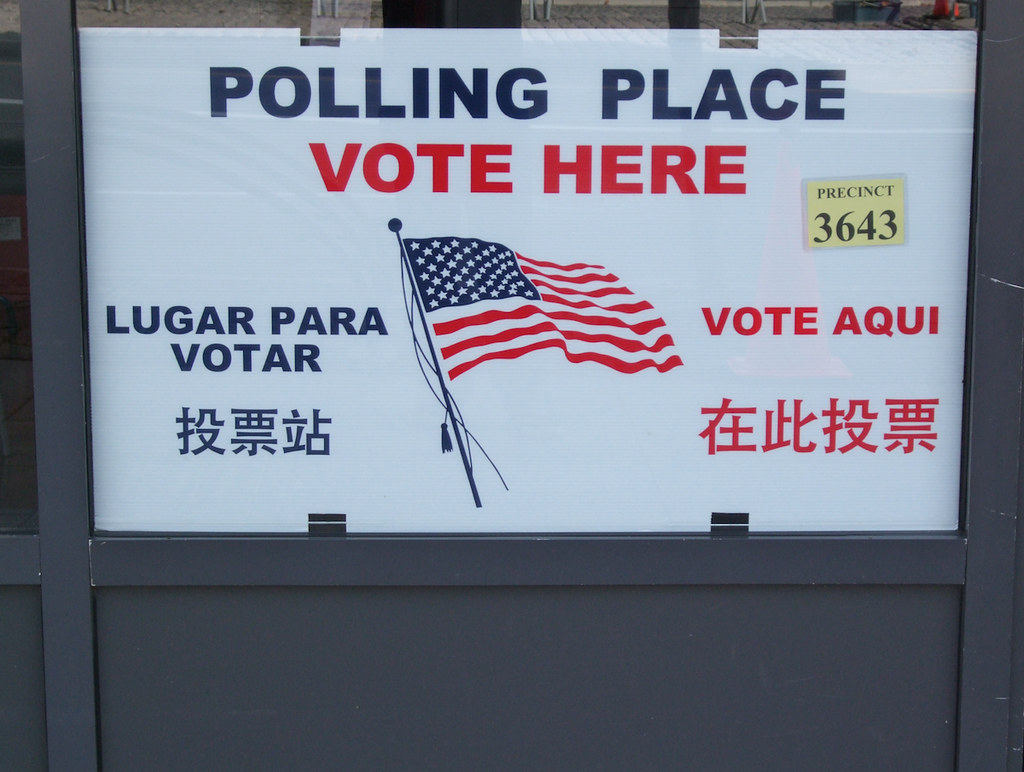
“Polling Place Vote Here” by Scott Beale is licensed under CC BY-NC-ND 2.0 .

For me and millions of other Americans, the 2024 U.S. election is already effectively over. Like most Arizonans, I mailed in my ballot and it awaits the count. Now, I suffer through the remaining days of hectoring political ads and finger-waggers nagging me about how I should have voted. This country doesn’t lack strong opinions about two of the worst candidates to ever grace a presidential race. Unfortunately, I felt obliged to vote for one of them, and in an effort at harm reduction, I selected the proven authoritarian over the aspiring totalitarian; I marked my ballot for Donald Trump.

There’s no doubt that Trump is a thin-skinned narcissist. Legendarily intolerant of criticism or even disagreement, he wants broadcast licenses pulled from news networks that he thinks have been mean to him and called for government to crack down on cable operations that aren’t actually subject to government regulation. The man needs perspective as much as he needs a social studies class.

This is, many Democrats and their media supporters will eagerly tell you, evidence of “fascism“. But, as John Bolton, Trump’s former national security adviser, told The New York Times, “Trump isn’t capable of philosophical thought”. Trump’s authoritarianism isn’t an ideology; it’s a personality disorder.

That should be enough to disqualify a candidate for president. You’d think that, in a nation of 330 million people, if one major party chooses to run a profoundly problematic and authoritarian nominee for president, the other could find somebody more qualified. But you’d be wrong. In Kamala Harris, Democrats picked a vacuous sociopath uninterested in policy, but willing to serve as a vehicle for those around her who have tried their hands at totalitarian speech controls, and who are increasingly hostile to Israel, the only majority-Jewish state on the planet, and to Jews as a people.

In 2021, The Washington Post reported that former staffers for Vice President Harris complained she “would refuse to wade into briefing materials prepared by staff members, then berate employees when she appeared unprepared”. That failure to prepare for responsibilities and public appearances feeds her propensity for word salads, leaving the impression she’s reciting the results of a dropped Scrabble board.

In a Biden-Harris administration already lacking for adult supervision — President Joe Biden’s failing mental faculties are now a matter of record, as is his inability to make decisions — that suggests a potential President Harris would have no firmer hand on the wheel. That would leave the relatively faceless minions around her free to continue to exercise their instincts. And their instincts are terrible.

QotD: “If you want me to treat you nicely, play nice with others”

Filed under: Health, Quotations, USA — Tags: , , , , — Nicholas @ 01:00

A message to trans people:

I’m a biological essentialist about sex — your sex is a given of your chromosomes and organs, and I will never actually believe that you can invert it by choice.

I am, however, conditionally willing not to challenge your weird Gnostic beliefs on this point, and to treat you as the sex you “identify” as anyway. Here are the conditions:

1. You must be good at passing. If you can’t present a convincing pretense, it’s neither in my interest nor anyone else’s to help you prop up an unconvincing one.

2. You must be harmless. Most obviously, you must not use your “identification” to prey on others, whether directly by violence or by using the physical advantage of your sex to overwhelm them in sports, or in any other way. And if you’re told you’re unwelcome in a bathroom or changing room, it’s on you to not impose.

3. You must be modest. Your desire to role-play as M or F does not entitle you to violate prevailing norms about where, and to whom, you expose your genitals. If you aren’t polite enough to refrain from this, I won’t be even a bit polite to you.

4. Children are off-limits. The moment you engage in behavior that seems intended to confuse or indoctrinate them, you enter the category of “predator” and stay there. My response to sexual predation on children only begins with rejection and rudeness.

5. If you try to use the force of law to gain what equal and voluntary negotiation with individuals won’t give you, you also enter the category of “predator” and stay there.

The meta-rule is: the more your behavior imposes costs on others, the less polite and accepting I will be. If you want me to treat you nicely, play nice with others.

Eric S. Raymond, Twitter, 2024-07-28.

November 3, 2024

The end of the “cheap streaming era” is at hand

Filed under: Business, Media, USA — Tags: , , — Nicholas @ 05:00

Ted Gioia explains why your streaming services are going to be jacking up their prices — if they haven’t already done so:

I got a request to explain why streaming subscription prices are so damned high — and getting higher.

This came in response to a chart I shared two days ago:

And it’s not just Disney.

All the streaming platforms are jacking up prices. I still subscribe to five different streaming services—down from six previously. Every one of them raised prices this year, and always by more than the inflation rate.

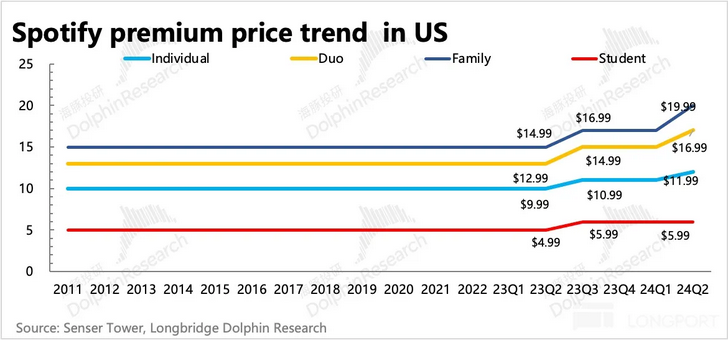
Here’s what Spotify is doing:

What’s going on? And will it continue?

I recently described this as an “endgame strategy” — but that might be confusing to readers.

Endgame is a term drawn from chess, where it refers to a body of wisdom about the final moves on the board. But business is like chess, so I frequently analyzed endgame situations back in my days at the Boston Consulting Group and McKinsey.

I now see these endgame strategies getting implemented in various media, entertainment, and streaming businesses. But almost nobody inside those businesses wants to talk about it.

So let me lay it out for you.

The Entertainment Industry Is Adopting an Endgame Mindset

You pursue an “endgame” strategy when demand for your business hits a wall, and it’s hard to attract new customers. The most typical endgame strategy is to cut back investment into new products and services, while raising prices sharply.

You’re willing to accept some loss of customers, because you’re now squeezing more profit-per-user out of your remaining consumers — who stick with you out of loyalty or habit or inertia.

These are your sheep, ready to be shorn.

Profit per customer is now the key metric driving your business. It’s more important than innovation or growth or artistry or any of those old fashioned ideas.

That’s why, for example, Netflix won’t share data on the number of subscribers anymore. They claim this is no longer relevant to their business model — and they aren’t lying.

Price increases are now the engine of their business.

QotD: Minutemen

Filed under: Government, Liberty, Politics, Quotations, USA — Tags: , , , — Nicholas @ 01:00

Ten years ago, America’s right-wing paramilitaries were so anti-government, they thought that driver’s licenses were an unbearable infringement on their liberties. Now they’re out on the border HELPING THE FEDS ENFORCE THEIR REGULATIONS. What the hell’s up with that?

Granted, there’s not necessarily much overlap between the two groups. But one has supplanted the other in the mass media, the public imagination, and the affection of the right-wing radio hosts — and so help me, I think I miss the days when I felt a certain kinship with the crazies.

Jesse Walker, “More ’90s Nostalgia”, Hit and Run, 2005-07-28.

November 1, 2024

End of typical US political discussion – “I can’t even talk to you about this stuff — you’re so irrational!”

Filed under: Media, Politics, USA — Tags: , , , , , — Nicholas @ 03:00

Chris Bray on the widespread phenomenon of progressives who “can’t even” their way out of political discussions that don’t confirm their priors:

In a long thread on his many discussions over the last year with Trump and Harris supporters, a Daily Wire editor drops this contrast down in the middle:

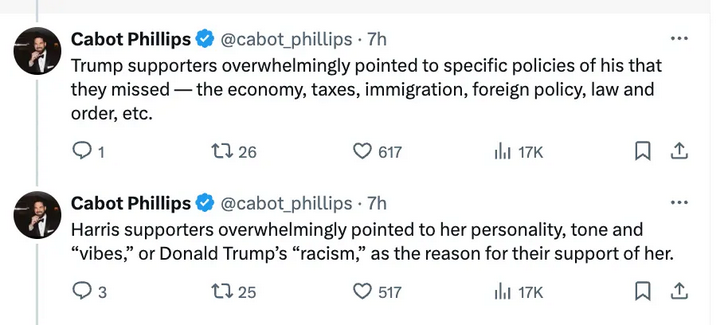
I live in a deep blue zone, and I have these vibes-and-racism conversations several times a week. I learned today, face-to-face, that Donald Trump hates everyone who isn’t white. I mean, he despises them. All of them. These conversations go like this:

    A: Trump is SUCH a fucking racist, man, he hates everyone who isn’t white, how can you even support someone like that?

    B: Why is he racist?

    A: Are you being serious right now? C’mon, man!

    B: No, but why is he racist?

    A: I can’t believe you’re defending him!

    B: Okay, look: Donald Trump has already been the president for four years. What would you say were the top three racist policies he implemented?

    A: You know what, I’m done with this discussion.

    B: I’d settle for one really good one. What big racist policy did he implement?

    A: I can’t even talk to you about this stuff — you’re so irrational!

Over and over and over and over again, these conversations hit the “I can’t even talk to you about this stuff” moment, the hard shutdown.

  1. What evidence can you offer for that view?
  2. [cognitive program shuts down]

Certain trigger terms warn you that the shutdown is moments away: conspiracy theory, disinformation, “what are you even talking about?” This personal observation about social interaction applies equally well to CNN panel discussions, by the way.

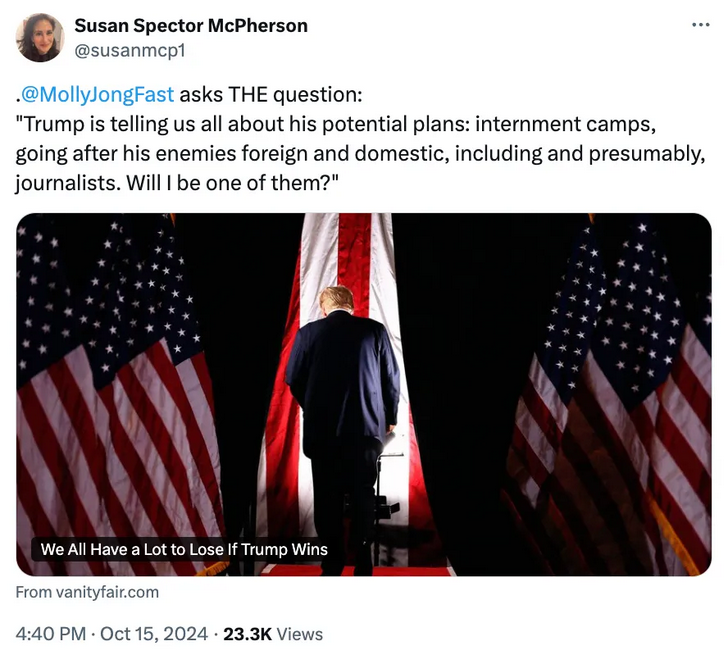
I’ve written before that I had a conversation just after the 2016 election in which I was asked how I could support someone who was going to put my own friends and family in the camps, man, he’s gonna put us in the fucking camps!

Eight years later, and after four years of a Trump presidency in which no one went to the camps, Trump can’t be allowed to return to the White House because, guess what, he’ll send us all to the camps:

FN M249S semiauto for military collectors

Filed under: Europe, History, Military, USA, Weapons — Tags: , , , , — Nicholas @ 02:00

Forgotten Weapons
Published Jul 10, 2024

In 2015, FN USA introduced a Military Collector product line — semiautomatic versions of their military contract small arms. These were the M4, M16, and — most interestingly — the M249 SAW. The SAW is a version of FN’s Minimi light machine gun, developed in 1974 and adopted by the US in 1982. The semiauto version, designated M249S, is exactly the same as the military M249 but adapted to fire from a closed bolt in semiautomatic only, making it a non-NFA item like any other semiautomatic rifle. The semiauto conversion as done by essentially chopping off the back of the bolt carrier to act as a linear hammer, thus allowing the use of the original style of trigger mechanism. Since its introduction in 2016, FN USA has made more than 10,000 of these rifles, truly proving the depth of American collector interest in this sort of thing (much to the surprise of the Belgian FN administration …).
(more…)

« Newer Posts — Older Posts »

Powered by WordPress