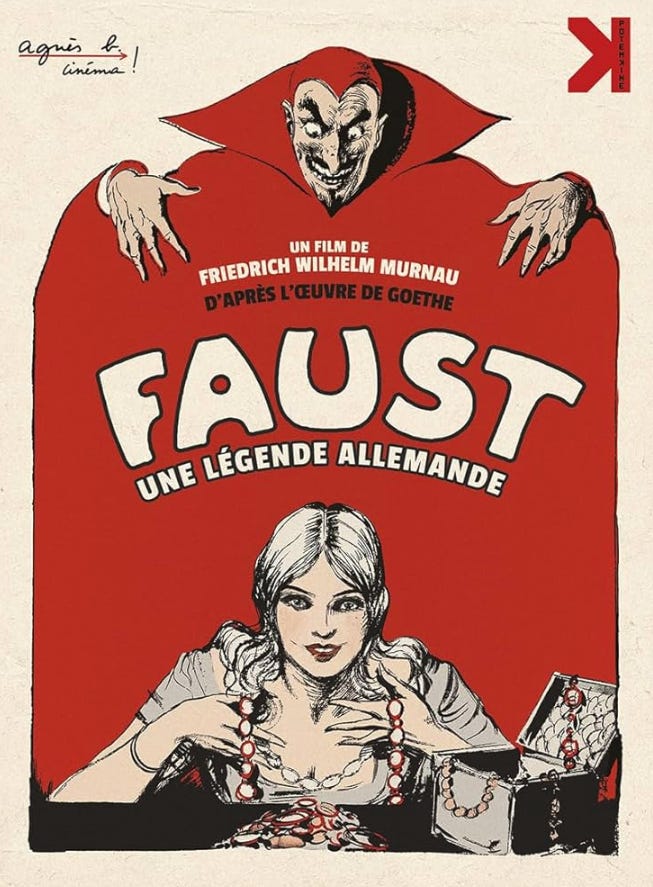
I am not in fact claiming that medieval Catholicism was mere ritual, but let’s stipulate for the sake of argument that it was — that so long as you bought your indulgences and gave your mite to the Sacred Confraternity of the Holy Whatever and showed up and stayed awake every Sunday as the priest blathered incomprehensible Latin at you, your salvation was assured, no matter how big a reprobate you might be in your “private” life. Despite it all, there are two enormous advantages to this system:
First, n.b. that “private” is in quotation marks up there. Medieval men didn’t have private lives as we’d understand them. Indeed, I’ve heard it argued by cultural anthropology types that medieval men didn’t think of themselves as individuals at all, and while I’m in no position to judge all the evidence, it seems to accord with some of the most baffling-to-us aspects of medieval behavior. Consider a world in which a tag like “red-haired John” was sufficient to name a man for all practical purposes, and in which even literate men didn’t spell their own names the same way twice in the same letter. Perhaps this indicates a rock-solid sense of individuality, but I’d argue the opposite — it doesn’t matter what the marks on the paper are, or that there’s another guy named John in the same village with red hair. That person is so enmeshed in the life of his community — family, clan, parish, the Sacred Confraternity of the Holy Whatever — that “he” doesn’t really exist without them.
Should he find himself away from his village — maybe he’s the lone survivor of the Black Death — then he’d happily become someone completely different. The new community in which he found himself might start out as “a valley full of solitary cowboys”, as the old Stephen Leacock joke went — they were all lone survivors of the Plague — but pretty soon they’d enmesh themselves into a real community, and red-haired John would cease to be red-haired John. He’d probably literally forget it, because it doesn’t matter — now he’s “John the Blacksmith” or whatever. Since so many of our problems stem from aggressive, indeed overweening, assertions of individuality, a return to public ritual life would go a long way to fixing them.
The second huge advantage, tied to the first, is that community ritual life is objective. Maybe there was such a thing as “private life” in a medieval village, and maybe “red-haired John” really was a reprobate in his, but nonetheless, red-haired John performed all his communal functions — the ones that kept the community vital, and often quite literally alive — perfectly. You know exactly who is failing to hold up his end in a medieval village, and can censure him for it, objectively — either you’re at mass or you’re not; either you paid your tithe or you didn’t; and since the sacrament of “confession” took place in the open air — Cardinal Borromeo’s confessional box being an integral part of the Counter-Reformation — everyone knew how well you performed, or didn’t, in whatever “private” life you had.
Take all that away, and you’ve got process guys who feel it’s their sacred duty — as in, necessary for their own souls’ sake — to infer what’s going on in yours. Strip away the public ritual, and now you have to find some other way to make everyone’s private business public … I don’t think it’s unfair to say that Calvinism is really Karen-ism, and if it IS unfair, I don’t care, because fuck Calvin, the world would’ve been a much better place had he been strangled in his crib.
A man is only as good as the public performance of his public duties. And, crucially, he’s no worse than that, either. Since process guys will always pervert the process in the name of more efficiently reaching the outcome, process guys must always be kept on the shortest leash. Send them down to the countryside periodically to reconnect with the laboring masses …
Severian, “Faith vs. Works”, Rotten Chestnuts, 2021-09-07.
January 14, 2025
QotD: Ritual in medieval daily life
December 25, 2024
QotD: Divine will
It is only the savage, whether of the African bush or of the American gospel tent, who pretends to know the will and intent of God exactly and completely.
H.L. Mencken, Damn! A Book of Calumny, 1918.
December 19, 2024
“A decree went out from Caesar Augustus” – The evidence for the date of the birth of Jesus
Adrian Goldsworthy. Historian and Novelist
Published 18 Dec 2024It’s December, with Christmas fast approaching, and I suspect that a fair few people who never think much about the Romans will hear mention of Caesar Augustus because of this verse from Luke’s Gospel. I have an appendix about this in my biography of Augustus, so thought that I would talk about how the New Testament dates the Christmas story and how well this fits with our other sources for the Ancient World.
November 23, 2024
QotD: Nietzsche’s message
[Nietzsche’s] objection to Christianity is simply that it is mushy preposterous, unhealthy, insincere, enervating. It lays its chief stress, not upon the qualities of vigorous and efficient men, but upon the qualities of the weak and parasitical. True enough, the vast majority of men belong to the latter class: they have very little enterprise and very little courage. For these Christianity is good enough. It soothes them and heartens them; it apologizes for their vegetable existence; it fills them with an agreeable sense of virtue. But it holds out nothing to the men of the ruling minority; it is always in direct conflict with their vigor and enterprise; it seeks incessantly to weaken and destroy them. In consequence, Nietzsche urged them to abandon it. For such men he proposed a new morality — in his own phrase, a “transvaluation of values” — with strength as its highest good and renunciation as its chiefest evil. They waste themselves to-day by pulling against the ethical stream. How much faster they would go if the current were with them! But as I have said — and it cannot be repeated too often — Nietzsche by no means proposed a general repeal of the Christian ordinances. He saw that they met the needs of the majority of men, that only a small minority could hope to survive without them. In the theories and faiths of this majority he has little interest. He was content to have them believe whatever was most agreeable to them. His attention was fixed upon the minority. He was a prophet of aristocracy. He planned to strike the shackles from the masters of the world …
H.L. Mencken, “Transvaluation of Morals”, The Smart Set, 1915-03.
November 19, 2024
QotD: The Reformation
The Reformation’s great complaint against the late-medieval Church is that it, the Church, had turned Catholicism entirely into a process. Those naive folks who argue that life wasn’t so hard for the medieval peasant because he had all those days off — 180 some odd saints’ days, feast days, and so on — have a bit of a point for all that. Ritual life simply was community life; “free time” as we understand it just wasn’t a thing in the middle ages, and not just because life was such a constant struggle. Every hour of your day carried its obligation to someone; there’s a reason the very best sources for “daily life in the middle ages” are called books of hours.
Your hotter Protestants, your John Calvins and Oliver Cromwells and so on, saw all of this as mere ritual. And to be fair to them, late-medieval Catholicism was very elaborate, and very, very weird — slog through a few chapters of The Stripping of the Altars if you want the details. To the Prods, this was cheating — you can’t just go through the motions and expect to get into Heaven. They made a similar distinction between “natural magic” and the unlawful stuff — the one was undertaken only after deep study and the most rigorous self-purification, while the other “worked” entirely mechanically, because what the sorcerer was really doing was cheating; he was really making a deal with a (or The) devil, to short-circuit the natural processes.
Now, it’s important to realize that the Protestants were not saying anything close to “do your own thing, man”. They were NOT hippies, encouraging everyone to read the Bible and decide for themselves how best to commune with the Big JC. The German peasants thought that’s what Martin Luther was saying back in 1524, but Luther himself was out there urging the authorities to smash the peasants with extreme prejudice. The Protestants were, in fact, extremely concerned about ritual. It just had to be the right ritual, the Biblically sanctioned ritual, and nothing but that — that’s what “Puritanism” (originally an insult) means.
Severian, “Faith vs. Works”, Rotten Chestnuts, 2021-09-07.
November 14, 2024
Early Christianity – from ~1,000 to 40 million believers in the Roman Empire
The latest book review at Astral Codex Ten is Rodney Stark’s The Rise of Christianity:
The rise of Christianity is a great puzzle. In 40 AD, there were maybe a thousand Christians. Their Messiah had just been executed, and they were on the wrong side of an intercontinental empire that had crushed all previous foes. By 400, there were forty million, and they were set to dominate the next millennium of Western history.
Imagine taking a time machine to the year 2300 AD, and everyone is Scientologist. The United States is >99% Scientologist. So is Latin America and most of Europe. The Middle East follows some heretical pseudo-Scientology that thinks L Ron Hubbard was a great prophet, but maybe not the greatest prophet.
This can only begin to capture how surprised the early Imperial Romans would be to learn of the triumph of Christianity. At least Scientology has a lot of money and a cut-throat recruitment arm! At least they fight back when you persecute them! At least they seem to be in the game!
Rodney Stark was a sociologist of religion. He started off studying cults, and got his big break when the first missionaries of the Unification Church (“Moonies”) in the US let him tag along and observe their activities. After a long and successful career in academia, he turned his attention to the greatest cult of all and wrote The Rise Of Christianity. He spends much of it apologizing for not being a classical historian, but it’s fine — he’s obviously done his homework, and he hopes to bring a new, modern-religion-informed perspective to the ancient question.
So: how did early Christianity win?
November 9, 2024
QotD: George Bernard Shaw
… Shaw is not at all the heretic his fascinated victims see him, but an orthodox Scotch Presbyterian of the most cock-sure and bilious sort. In the theory that he is Irish I take little stock. His very name is as Scotch as haggis, and the part of Ireland from which he comes is peopled almost entirely by Scots. The true Irishman is a romantic; he senses religion as a mystery, a thing of wonder, an experience of ineffable beauty; his interest centers, not in the commandments, but in the sacraments. The Scot, on the contrary, is almost devoid of that sort of religious feeling; he hasn’t imagination enough for it; all he can see in the Word of God is a sort of police regulation; his concern is not with beauty but with morals. Here Shaw runs true to type. Read his critical writings from end to end, and you will not find the slightest hint that objects of art were passing before him as he wrote. He founded, in England, the superstition that Ibsen was no more than a tin-pot evangelist — a sort of brother to General Booth, Mrs. Pankhurst, Mother Eddy and Billy Sunday. He turned Shakespeare into a prophet of evil, croaking dismally in a rain-barrel. He even injected a moral content (by dint of abominable straining) into the music dramas of Richard Wagner, surely the most colossal slaughters of all moral ideas on the altar of beauty ever seen by man. Always this ethical obsession, the hall-mark of the Scotch Puritan, is visible in him. He is forever discovering an atrocity in what has hitherto passed as no more than a human weakness; he is forever inventing new sins, and demanding their punishment; he always sees his opponent, not only as wrong, but also as a scoundrel. I have called him a good Presbyterian.
H.L. Mencken, “Shaw as Platitudinarian”, The Smart Set, 1916-08.
November 4, 2024
Ujjal Dosanjh blames Justin Trudeau for the rise of Sikh extremism in Canada
The Liberal Party normally manages to avoid having any internal differences come to public attention, so having a former Liberal cabinet minister come out and directly criticize Prime Minister Justin Trudeau is rather noteworthy:

Ujjal Dosanjh speaking at the 12th Pravasi Bharatiya Divas – Engaging Diaspora Connecting Across Generation, in New Delhi on January 08, 2014.
Photo by the Ministry of Overseas Indian Affairs (GODL-India) via Wikimedia Commons.
“A silent majority of the Sikhs do not want to have anything to do with Khalistan. They just don’t speak out because they’re afraid of violence and violent repercussions,” reports Ujjal Dosanjh, as a Sikh living in Vancouver, B.C.
The call for a separate Sikh homeland in Punjab, India — to be called Khalistan — has been brewing since the 1930s, when British rule in India was nearing its end. Although the movement now has marginal support in India, it has taken wings in Canada and escalated into the present derailing of relations between two friendly Commonwealth democracies, India and Canada.
Unlike many of his Sikh peers in Canada, Ujjal — a former NDP premier of British Columbia and a former federal cabinet minister under Liberal prime minister Paul Martin — isn’t afraid to speak out. He’s been extremely vocal, especially since 1985; that’s when the bombing of Air India Flight 182 by Khalistani extremists, killing 329 people, brought the separatist movement to Canada.
Ujjal, now 78, has faced death threats from extremists but remains unwavering in his determination to convince fellow Canadians that the overwhelming majority of the nearly 800,000 Sikhs in Canada do not support the Khalistani movement. “I’d say less than five per cent, less than five per cent,” he emphasizes.
[…]
While accountability for this violence is an imperative, the purpose of my conversation with Uijal is not to sift through the evidence and intelligence. What I want to understand is how we got to this place where Canada’s Sikh population, the largest Sikh diaspora in the world, has in effect been co-opted by the Khalistanis to the point where this obscure separatist movement has become a Canadian problem.
Without hesitation, Ujjal points to Prime Minister Justin Trudeau.
For two reasons, Ujjal blames Trudeau: “One, he’s never really understood the vast majority of Sikhs are quite secular in their outlook, despite the fact that they go to the temple,” he says. And the second reason: “Khalistanis are not a majority, and the fact nobody speaks against them is out of fear”. Through intimidation, Ujjal elaborates, Khalistani supporters control many of the temples in Canada. And it’s Trudeau’s fault, he asserts, “that Canadians now equate Khalistanis with Sikhs, as if we are all Khalistanis if we’re Sikhs”.
October 27, 2024
QotD: Puritans, predestination, and the Ranters
The third problem with Puritan wokeness is that it sinister echoes in the history of predestination. When the creed reached its zenith in the seventeenth century, the logical hole at its centre became insanely obvious. If it does not matter to God how you behave, because your salvation was pre-determined at birth, why not behave however the hell you want to?
The outpourings of radical thought in the English Civil Wars included sects who came to exactly this conclusion. The Ranters, at least by reputation, advocated a lifestyle of Dionysiac excess. If orgies and boozing, gluttony and blasphemy did not have any material impact on whether you were going to heaven or hell, then why not shag, indulge and curse the Lord as much as you want?
The extent of their membership is disputed and the fear of the Ranters was strong among the Puritans, partly, I suspect, because the logical fallacy of the original tenet is so glaringly obvious. Many of the theological arguments espoused by the men who were labelled Ranters were more textured and complicated than a license to loucheness. But the essential point remains: if you are already damned, your actions and intent are irrelevant.
The Puritan response was a horrified recoil. If God has made you one of the elect, you have a responsibility to Him to behave as if you are elect. A rare few came to believe they were not elect, and tortured themselves with it. If this sounds familiar, you have probably met an apologetic white male ally of the woke.
Antonia Senior, “Identity politics is Christianity without the redemption”, UnHerd, 2020-01-20.
October 24, 2024
QotD: From the OG Pontifex Maximus to the Pope
The title of the Pope in Rome today is Pontifex Maximus. “Pontifex Maximus” was originally the title of the chief high priest of the College of Pontiffs in ancient Rome, not specifically the Emperor, though several Emperors did hold the title. This title indicated both religious and secular authority within the Republic and the Empire, responsible for overseeing sacred rites to Jupiter/Zeus at the Temple on Capitoline Hill. The College of Pontiffs was established around 300 BCE, an organization of high priests overseeing public religious services. Sound familiar? That’s because the College of Cardinals directly descends from it.
The Protestants might be happy to hear Misanthrope claim this would make you sick, because they’d correctly state that absolutely none of this is in the Bible. The entire liturgical structure of the Catholic Church is pagan, an inherited but corrupted structure from classical antiquity. Thus, a great majority of historic Christianity is syncretic. You might even say haphazardly pagan. The very idea of a high priest who would oversee the spiritual and religious duties is copped by the Pope’s role in Catholicism. The vestments worn by Catholic clergy, the use of incense (especially frankincense, the main herb used by invocations in Hellenism), chants, the sanctification of holy spaces, and the very architecture of Catholic cathedrals are derived from religious practices of pagan Rome. Let’s not get into art. The processions, the veneration of saints (akin to the Roman household gods or Lares), ancestor worship (which Catholics pretend they don’t do), and the hierarchical structure all reflect a continuity from Rome’s Hellenic pagan past. The Catholic Church’s liturgy, with its detailed rituals and sacraments is a direct continuation of the Greco-Roman pagan way of embedding religious practice into every aspect of public and private life. The transformation of its pantheon of gods into a multitude of saints, each with specific roles and domains is indistinguishable from how they interacted with their deities.
Fortissax, “Spiteful Mutant Christians”, Fortissax is Typing, 2024-07-19.
[NR: Glossary links added.]
October 20, 2024
Debunking the “Muslims saved the Graeco-Roman legacy” intellectual urban legend
In my weekly set of recommendations from Substack there was a link to A History of Mankind‘s debunking of what is described as an “intellectual urban legend”:

Islamic scholars at an Abbasid library in Baghdad.
Illustration by Yahyá al-Wasiti from 1237 via Wikimedia Commons.
Among the most popular of those legends, there’s one that can be summarized as “Arab scholars and translators saved the books of Graeco-Roman antiquity from being destroyed by the Christians and/or forgotten”. This a surprisingly widespread view. I’ve lived in several countries, and heard versions of this legend, often told in very simple terms over somewhat complicated drinks, from well-educated people often working in academia or the financial sector (which makes more sense than it appears — I’ve worked in the financial sector myself, and people there are highly educated as a rule).
I’ve even heard scholars (normally not Medievalists) express this view, and I’ve read views to this effect in multiple occasions. Just Google “did the arabs save graeco-roman books” and look at the top results, if you don’t believe me. Lots of well-educated people believe this, not to speak of history enthusiasts all over the Internet.
However, the truth is that Arab translators had only a modest impact on the transmission of Graeco-Roman texts to modern times. There are various reasons that explain this, but first let me provide some clarity on why Baghdad’s Medieval “House of Wisdom” — oft-cited, correctly, as the center of the Abbasid-era translation movement inasmuch as there was one — is one of history’s most misunderstood institutions.
The House of Wisdom functioned as a state library with a focus on the transcription and storage of manuscripts, and their translation to the court’s main language, Arabic. Based on a similar library patronized by the Sasanian emperors and staffed with some of its personnel from about the 8th century, the House of Wisdom employed Christian Greek speakers – very few Muslims spoke or read Greek fluently in this era and others, particularly Arabs – as well as Muslim and Zoroastrian Arabic or Syriac speakers who worked to translate and disseminate work.
[…]
Just to give a final touch of class to these absurd claims, Abu Sahl added the detail that the Greeks, dunces as they all are, forgot to actually steal many Iranian books, and simply memorized the contents before they torched them, so the actual Greek copies of Iranian greats are, by necessity, inferior versions diluted by the Greeks’ faulty memory.
Some Muslim scholars later came up with a new wrinkle that Byzantines were poor keepers of their own treasures, and their books were eaten by insects, as the bibliographer Al-Nadim (932-995) wrote in a second- or third-hand anecdote about some guy who visited Constantinople and was sad to see some ancient temple filled with neglected books, later widely quoted, and included in his Index of 987. The same Al-Nadim transmits from someone “trustworthy” that the Byzantines burned fifteen loads of books by Archimedes, which never happened.
Abdullah Ibn-abi-Zayd (922–998), a prolific North African writer on Islamic law, came up with a wrinkle for this wrinkle: that the Byzantine emperor gathered books and hid them in a secret building to prevent heresy among potential readers; and when Yahya, a prominent Bamarkid Persian in the Abbasid court, heard of the repository he asked if he could borrow the texts. The emperor agreed on the condition that they were never returned, so that they would never hurt the delicate Christian feelings of his subjects.
Others with less experience of the Christian West, like the Egyptian Arab Ibn Ridwan (988-1061), claimed that ancient sciences were forgotten there, and only survived in the Ummah because of the supreme wisdom and care displayed by Al-Mamun and their successors. Ridwan’s fable showing just how obscurantist and dumb Christians are proved particularly successful, being often retold with the kind of reverence typically reserved for hadiths:
The history of medicine begins with a brief account of the development in antiquity from Asclepius to Galen. After Galen, the community of the Christians emerged from and prevailed over the Greeks. The Christians considered it a fault to study intellectual matters and their kings cast away the care for medicine and failed to take care of its students. So its students ceased to commit themselves to the toilsome study of medicine and found reading Hippocrates’ and Galen’s works too tedious; thus, it fell into disorder and its condition worsened. Then came Oribasius, after the Christian kings’ lack of interest in the instruction [of medicine] was firmly rooted … When none of the kings any longer felt the desire to promote the teaching [of medicine] and the people found Hippocrates’ and Galen’s works on it too tedious and tended to compendia and abridgments, the most prominent Alexandrian physicians, afraid that the art would vanish altogether, asked those kings to retain the teaching [of medicine] in Alexandria and [to allow] only twenty books on medicine to be read, sixteen from Galen’s and four from Hippocrates’ works … The teaching stood on shaky ground until al-Ma’mun ‘Abd-Allah ibn-Harun al-Rashid became caliph, who revived and spread it and favored excellent physicians. But for him, medicine and other disciplines of the ancients would have been effaced and obliterated just as medicine is obliterated now from the lands of the Greeks, which had been most distinguished in this field.
I should also mention that it wasn’t just the Graeco-Romans who the Abbasid-era Muslims ripped off in bulk. The fact that Indian numerals came to be known in Europe as “Arabic” numerals, and chess was widely, and wrongly, believed to be an Arabic invention, gives an idea about the impact that Caliphate scholars had as synthesizers and popularizers of scientific knowledge.
Indeed, when the Iranian Al-Khwarizmi (780-850), head of the House of Wisdom from around 820, published the earliest Arabic text on Indian numerals, he chose a title of disarming honesty: “Addition and subtraction according to the Indian calculation”. Such honesty was rarely imitated by Al-Khwarizmi’s successors.
I think you are probably getting the gist of how the story about the Muslim salvage of Graeco-Roman antiquity came about, and was later embraced by every Atheist writer in the West, so that he or she could have nice laughs at the expense of those barbarian fools who never washed themselves, the Christians.
October 10, 2024
QotD: Why did ancient China lose its early lead in science and technology?
Why, despite China’s prodigious lead in science, technology, population, and economic activity, did the scientific revolution and then the industrial revolution happen in Europe? Why did they fall so far behind after being so far ahead?
There are all kinds of answers given to this question, from ones based around the concept of “agricultural involution” (which I briefly surveyed in my review of Energy and Civilization), to ones that blame the complexity of the Chinese system of writing and other more outlandish theories. But would you know it, this question is commonly referred to within Sinology as the “Needham puzzle” or the “Needham question”, so what does the man himself think? Needham got the credit for posing the question, not for answering it, but in the final chapter of this book, “Attitudes Towards Time and Change”, he drops some fascinating hints.
A belief common to the great civilizations of the Axial Age was that time itself was somehow unreal. Greek philosophers from the pre-Socratics to the Neo-Platonists all expressed it in very different ways, but all agreed that in some sense the world of mutability and change was an illusion, and that outside of it stood an eternal, absolute reality sufficient in itself, unchanging in its perfection, αἰῶνας τῶν αἰώνων. The Buddhist civilizations include this under the doctrine of maya (illusion), and traditional Hinduism also exhibits time as a dreamlike and incidental quality of the world.
If time is somehow unreal and nothing can ever change, then it’s easy to see the attraction of a cyclic conception of history. And indeed, in the ancient world these cyclic theories predominate. The Babylonians had their Great Year, and Greek thinkers as diverse as Hesiod, Pythagoras, Plato, and Aristotle all speculated about the eternal repetition and recurrence of the ages of the world. In the Mahabharata the great yugas and kalpas, the Days of Brahma, follow one another in an inevitable fourfold cycle of world ages, the profusion of Hindu and Buddhist sects have promulgated a thousand interpretations and variations on this basic pattern. On the other side of the world, the Mayans had their own Great Year, and countless other peoples besides. This cosmology almost feels like a human universal (at least for civilizations at a particular stage of development), and why wouldn’t it be? We open our eyes and all we see are cycles within cycles — the cycle of the day, the cycle of the moon, the cycle of the seasons, the cycle of the generations. As sure as day follows night, why wouldn’t we expect that the universe too, a grand mechanism made by the gods, must eventually return to its starting point.
Various philosophers of science have asserted that this view of history makes scientific progress impossible, because of its fatalism and pessimism. If everything that happens has happened before and will happen again, then why bother trying to change anything? It’ll just get undone in the Kali Yuga anyway. But Needham points out another connection: if time is cyclic, or worse yet somehow unreal, then it makes no sense to stretch it out into an independent coordinate. In this way, the entire metaphysics of cyclical time resists the mathematization of physics. One can imagine the analytic geometry of Descartes being discovered in ancient Alexandria or Tikal or Harappa, but would it have been possible for one of the coordinate axes to represent time? A Descartes was possible, but a Newton or a Bernoulli was inconceivable.
All of this changes with the advent of Christianity, for which the most important fact about the world, the Incarnation, takes place at a particular moment in history, once and for all, κατὰ πάντα καὶ διὰ πάντα. The cosmos is fixed around this central point, and cannot curl back upon itself. Kairos transfigures chronos, and in so doing makes it real, gives it force and meaning. History is not a cycle, but a story of creation, separation, incarnation, and redemption, speeding towards its culmination as assuredly as a stone tracing a parabolic arc through the air. Or as Needham puts it:
[In the Indo-Hellenic world] space predominates over time, for time is cyclical and eternal, so that the temporal world is much less real than the world of timeless forms, and indeed has no ultimate value … The world eras go down to destruction one after the other, and the most appropriate religion is therefore either polytheism, the deification of particular spaces, or pantheism, the deification of all space … For the Judaeo-Christian, on the other hand, time predominates over space, for its movement is directed and meaningful … True being is immanent in becoming, and salvation is for the community in and through history. The world era is fixed upon a central point which gives meaning to the entire process, overcoming any self-destructive trend and creating something new which cannot be frustrated by cycles of time.
Some historians of science have argued that without this linear conception of time introduced by Christianity, we lack the conceptual vocabulary for various things ranging from analytic methods in physics to the idea of causality itself. So is that the answer? Is the solution to the Needham Puzzle that China progressed as far as it could until, weighed down by the fatalism of cyclic history and the impoverished mathematical vocabulary of timeless metaphysics, it ground to a halt?
Unfortunately, the answer is no. This theory sounds great, but it’s totally wrong.
There’s a bad habit among Western historians and philosophers of engaging in a shallow sort of Orientalism that aggregates all of the exotic East into a single entity.1 But when it comes to attitudes towards time, change, and history; the traditional Chinese attitude is much closer to that of Christendom than it is to the Hindu or Buddhist view. Needham does a good job summarizing the basic Chinese outlook, but includes a lot of details I didn’t know, including that the view of civilizations as ascending through distinct historical stages (e.g. the Stone Age, Bronze Age, Iron Age, etc.) is of Chinese origin! Needham also discusses the veneration, sometimes deification, of great inventors that saturates Chinese folk religion. All in all, the picture is one of China as a progress-obsessed society almost from its earliest moments, and as a society that was steadily progressing right up until it was suddenly and dramatically eclipsed by European science.
John Psmith, “REVIEW: Science in Traditional China, by Joseph Needham”, Mr. and Mrs. Psmith’s Bookshelf, 2023-08-14.
1. I am infuriated by restaurants that advertise “Asian food”. There’s more culinary diversity inside some regions of China than there is in most of Europe.
September 28, 2024
The rise in niqab and hijab use among Muslim women in Britain
In The Conservative Woman, Gillian Dymond discusses the cultural significance of Muslim women’s distinctive styles of clothing in modern Britain:
AS I WENT to the shops the other day in Whitley Bay, a strangely incongruous figure passed me. It was a woman in a niqab. In a recent article on his Substack, Joshua Trevino wrote an elegy for London: “I had not seen this many women in hijabs since a brief stint working in Jordan decades ago, and I had never seen this many women in a niqab, ever.” Up here on the north-east coast of England, it is different. True, even in Newcastle hijabs proliferate, but I had never before encountered the full niqab there, let alone in the small seaside town where I live.
The Government, I understand, are considering bringing in a law which would criminalise Islamophobia, as defined by the All-Party Parliamentary Group on British Muslims. “Islamophobia,” this states, “is rooted in racism and is a type of racism that targets expressions of Muslimness or perceived Muslimness“.
This, as Andrew Doyle points out here, is nonsense, incorrectly conflating a belief-system with racial identity. Let’s be accurate: Muslims can be of any race, English included. Moreover, different Muslims exhibit different kinds and degrees of “Muslimness”, from the Sufi, mystically seeking the divine, through the undogmatic, many of whom happily dispense with headscarf and hijab and the more bellicose interpretations of the holy books, to the kind of male fanatic who, on seeing a female co-religionist wearing Western dress and sporting lipstick, seizes her by the hair and slams her head on the dashboard of the car she has been shamelessly driving.
There is a variety of “Muslimness”, in short, whose intolerance cannot be tolerated in a tolerant society, and whose existence requires not protective legislation, but public acknowledgement of its incompatibility with the British way of life.
I do not know how the woman whose eyes peered through the slit in her black draperies felt about parading her glaring lack of integration on a street in north-east England. Did she go proudly and self-righteously into the alien throng, or had she been forced out of the house, heart pounding, to run the gauntlet of raised eyebrows in her eye-catching gear? What did she think of the women around her, hair and faces exposed, arms bare to soak up every last ray of autumnal sunshine, some of them, fresh from the beach, wearing shorts? Did she despise their “immodesty”? Did she envy them?
Who knows? There can be no casual breaching of the niqab’s anonymity, no spontaneous communication, when confronted by a garment which puts up barricades against the usual signals and responses of easy human intercourse.
On the other hand, the mentality of the men who insist on enveloping their wives and daughters head-to-foot in long black shrouds before they are allowed out in public is very clear indeed. These men have been taught to view women as assets to be protected, and they no doubt believe that the heavy-handed protection they impose is necessary, because they take it for granted that no man is able, or should be expected, to control his sexual urges in the face of female allurements. As for any woman who does not remain decently covered in deference to the male’s helpless susceptibility, she should know the consequences, and deserves everything coming to her.
August 20, 2024
August 16, 2024
QotD: American football
[F]ootball isn’t really a sport in America. It’s a religion. Almost every single game is played on a Saturday (college) or Sunday (NFL), which, for a Judeo-Christian country, means it’s played on the Sabbath. Accordingly, families come to a standstill when football is on. Tumbleweeds roll through usually busy towns. If anything squares with America’s reputation as a bunch of religious kooks, our faith in football is it.
Jonathan David Morris, “Our National Pastime?”, Libertarian Enterprise, 2005-04-23.