
TimeGhost History
Published 30 Nov 2025The Vietnam War didn’t begin with American boots on the ground. It began with a promise — and a break. After the French defeat at Dien Bien Phu in 1954, the Geneva Accords split Vietnam at the 17th parallel. Ho Chi Minh led the North. In the South, Ngo Dinh Diem struggled to hold a fragile new state together while armed sects, crime syndicates, and political rivals challenged his rule. Washington saw Vietnam as the next battleground of the Cold War, and threw its support behind Diem — believing he could stop the spread of communism in Southeast Asia.
But as elections for reunification approached, tensions rose. Diem refused the vote. The North rebuilt. The South descended into repression, unrest, and quiet rebellion. Former Viet Minh fighters slipped into the shadows. Secret networks formed. Targeted killings began. By 1958, the storm clouds of a new war gathered — one the United States could no longer afford to ignore.
This episode explores how the U.S. found itself pulled into Vietnam, how Diem rose to power, why the reunification election collapsed, how American aid reshaped the South, and how the first sparks of insurgency ignited a conflict that would define a generation.
Join us as we trace the origins of a war long before the Marines landed at Da Nang — to understand why Uncle Sam entered the Vietnam War in the first place.
(more…)
December 1, 2025
Why Uncle Sam entered the Vietnam War – W2W 055
Feeding the Robber Barons of the Gilded Age
Tasting History with Max Miller
Published 24 Jun 2025
Two majestic tiers of grapes, mandarin oranges, and raspberries suspended in pink champagne gelatin topped with whipped cream
City/Region: United States of America
Time Period: 1877The Gilded Age, a period of late 19th century United States history when a handful of people got mind-bogglingly wealthy off of industrialization, conjures up images of the social elite in New York. High society families had more money than most of us could imagine, and they spent it in the most ostentatious ways. One of those ways was by throwing parties that could cost up to the equivalent of millions of dollars in today’s money. These parties would host lavish feasts with dozens of dishes, like this gelée macédoine, which would have been served in a sweet course alongside plum puddings, mince pies, and fruit cakes.
I’m not normally a fan of gelatin, but this was really nice. It wasn’t rubbery at all and the champagne flavor really comes through. It takes a while to make, but feels fancy and is delicious. You could also use the recipe as a base and swap out other types of wine or use other flavorings like liqueurs or spices. If you do add spices (cinnamon was popular at the time), put them into the syrup, and be sure to use a cloth jelly bag or nut milk bag to strain the gelatin mixture. This will ensure a clear jelly.
If you don’t have a gelatin mold, you can use a bundt cake pan, or really any bowl of pan that you have.
Gelée Macédoine. This is made with any kind of jelly; however, jelly made with Champagne or sherry is preferable. Any of the delicate fruits of the season, such as grapes, cherries, peaches, strawberries, raspberries, mulberries, currants (on their stems), plums, and orange sections, or preserved fruits, such as brandied cherries, peaches, etc., are tastefully imbedded in the jelly, so as to show their forms and colors to best advantage.br/>
— Practical Cooking, and Dinner Giving by Mrs. Mary F. Henderson, New York City, 1877
QotD: Young Cyrus, before he became “the Great”
Of all Cyrus’s many qualities: willpower, strength, charisma, glibness, intelligence, handsomeness; Xenophon makes a point of emphasizing one in particular, and his choice might strike some readers as strange. It is this: “He did not run from being defeated into the refuge of not doing that in which he had been defeated”. Cyrus learned to love the feeling of failure, because failure means you’re facing a worthy challenge, failure means you haven’t set your sights too low, failure means you’ve encountered a stone hard enough to sharpen your own edge. Yes, it’s the exact opposite of the curse of the child prodigy, and it’s the key to Cyrus’s success. He doesn’t flee failure, he seeks it out, hungers for it, rushes towards it again and again, becoming a little scarier every time. He’s found a cognitive meta-tool, one of those secrets of the universe which, if you can actually internalize them, make you better at everything. Failure feels good to him rather than bad, is it any surprise he goes on to conquer the world?
And then … the most important single moment in Cyrus’s education, the moment when it becomes clear that he has actually set his sights appropriately high. He gets bored of the hunts. Cyrus deduces, correctly, that the hunts he is sent on, and all the other little missions, are contrived. Each is a problem designed to impart a lesson, a little puzzle box constructed by a demiurge with a solution in mind. In this respect, they’re like the problems in your math textbook. And like the problems in your math textbook, getting good at them is very dangerous, because it can mislead and delude you into thinking that you’ve gotten good at math, when actually you’ve gotten good at the sorts of problems that people put in textbooks.
When you’re taught from textbooks, you quickly learn a set of false lessons that are very useful for completing homework assignments but very bad in the real world. For example: all problems in textbooks are solvable, all problems in textbooks are worth solving (if you care about your grade), all problems in textbooks are solvable by yourself, and all of the problems are solvable using the techniques in the chapter you just read. But in the real world, the most important skills are not solving a quadratic by completing the square or whatever, the most important skills are: recognizing whether it’s possible to solve a given problem, recognizing whether solving it is worthwhile, figuring out who can help you with the task, and figuring out which tools can be brought to bear on it. The all-important meta-skills are not only left undeveloped by textbook problems, they’re actively sabotaged and undermined. This is why so many people who got straight As in school never amount to anything.
The section covering his childhood and education concludes with a dialogue between Cyrus and his father Astyages as the two ride together towards the border of Persia. Astyages recapitulates and summarizes all of the lessons that Cyrus has been taught, and adds one extra super-secret leadership tip. Cyrus wants to know how to attract followers and keep their loyalty, and his father gives him a very good answer which is: just be great. Be the best at what you do. Be phenomenally effective at everything. People aren’t stupid, they want to follow a winner, so be the kind of guy who’s going to win over and over again, and if you aren’t that guy, then maybe choose a different career.
Cyrus asks and so Astyages clarifies: no, he doesn’t mean be great at making speeches, or at crafting an image, or at appearing to be very good at things. He doesn’t mean attending “leadership seminars”, or getting an MBA, or joining a networking organization for “young leaders”. He means getting extremely good at the actual, workaday, object-level tasks of your trade: “There is no shorter road, son … to seeming to be prudent about such things … than becoming prudent about them”. In Cyrus’s case, this means tactics, logistics, personnel selection, drill, all the unglamorous parts of running an ancient army. People aren’t stupid. If they see that he is great at these things, they will flock to his banner. And then, one more ingredient, the final step: make it clear that you care about their welfare. “The road to it is the same as that one should take if he desires to be loved by his friends, for I think one must be evident doing good for them.”
There you have it. Two simple #lifehacks to winning undying loyalty: be the best in the world at what you do, and actually give a damn about the people under you. Our rulers could learn a thing or two from this book. So ends the education.1 The rest of this book, and the bulk of it, is Cyrus putting these lessons into practice by very rapidly conquering all of the Ancient Near East. It’s telegraphed well in advance that the final boss of this conquest will be the mighty Neo-Babylonian empire founded by Nebuchadnezzar,2 but before he takes them on Cyrus first has to grind levels by putting down an incipient rebellion by his grandfather’s Armenian vassals,3 then whipping the neighboring Chaldeans into line, then peeling away the allegiance of various Assyrian nobles, then defeating the Babylonians’ Greek allies and Egyptian mercenaries, before finally taking on the Great King in his Great City.
John Psmith, “REVIEW: The Education of Cyrus, by Xenophon”, Mr. and Mrs. Psmith’s Bookshelf, 2024-01-08.
- There’s actually one other noteworthy bit of advice that Astyages gives:
“Above all else, remember for me never to delay providing provisions until need compels you; but when you are especially well off, then contrive before you are at a loss, for you will get more from whomever you ask if you do not seem to be in difficulty … be assured that you will be able to speak more persuasive words at just the moment when you are especially able to show that you are competent to do both good and harm.”
This is decent enough advice, but what makes it especially fun is that Astyages also applies it to the gods! Maybe it’s his own pagan spin on “God helps those who help themselves”, but Cyrus takes this advice and takes it a step further. He learns to interpret auguries himself so that he will never be at the mercy of priests. Then when he needs an omen, he performs the sacrifices, decides which of the entrails, the weather, the stars, and so on are pointing his way, loudly points them out, and ignores the rest.
Henrich notes in The Secret of our Success that divination can be an effective randomization strategy in certain sorts of game theoretic contests. But the true superpower is deciding on a case-by-case basis whether you’re going to act randomly, or just make everybody think you’re acting randomly.
- Yes, that Nebuchadnezzar.
- Somewhere in the middle of In Xanadu, Dalrymple recounts an old Arab proverb that goes: “Trust a snake before a Jew, and a Jew before a Greek. But never trust an Armenian.” The tricksy Armenian ruler more than lives up to this reputation. But when Cyrus outwits and captures him, his son shows up to beg for his life, and what follows is one of the more philosophically charged exchanges in the entire book. They go multiple rounds, but by the end of it the Armenian crown prince has put Cyrus in a logical box as deftly as Socrates ever did to one of his interlocutors, and Cyrus lets the king off with a warning. The prince goes on to combat anti-Armenian stereotypes by serving Cyrus faithfully to the end of his days.
November 30, 2025
North Africa Ep. 10: Rommel’s Desert Cannae – The Trap at Mechili
World War Two
Published 29 Nov 2025This episode, Rommel sets up a “Cannae, modern style” at Mechili, a three-pronged encirclement with Wechmar pressing from the west, Schwerin/Ariete and MG 8 driving up from the south, and Olbrich’s panzers meant to close the center. A Ghibli, fuel chaos and delays upset the timing, but Ponath cuts the Derna road and captures Generals Neame and O’Connor. And after failed breakout attempts against Fabris, the Bersaglieri and Streich, Gambier-Parry surrenders about 1,700 men and Mechili falls, opening the road to Tobruk.
(more…)
November 29, 2025
Eliminating fathers – a long-term goal of early Feminists
Janice Fiamengo laments a recent British change to family law that “family courts will no longer work on the presumption that having contact with both parents is in the best interests of a child”. This is merely the latest move in a long-running legal and political struggle to alienate fathers from their children:
“Even today most people will refuse to believe that one of feminism’s main aims is, and always was, to give women the power to rid their families of men.” — William Collins, The Empathy Gap (2019)
“‘The person who is least likely to abuse a child is a married father,’ notes Canadian Senator Anne Cools. ‘The person who is most likely is a single, unmarried mother.'” — quoted in Stephen Baskerville, Taken Into Custody: The War Against Fathers, Marriage and the Family (2007)
[…]
It is a truism that feminists seek to destroy the father-led family and have long worked to do so through anti-father propaganda, legal chicanery, and evidence-free allegations of abuse.
Those who have not read feminists’ own words on this subject may have difficulty appreciating the depth of their desire to deny fathers any legally- or socially-recognized familial role.
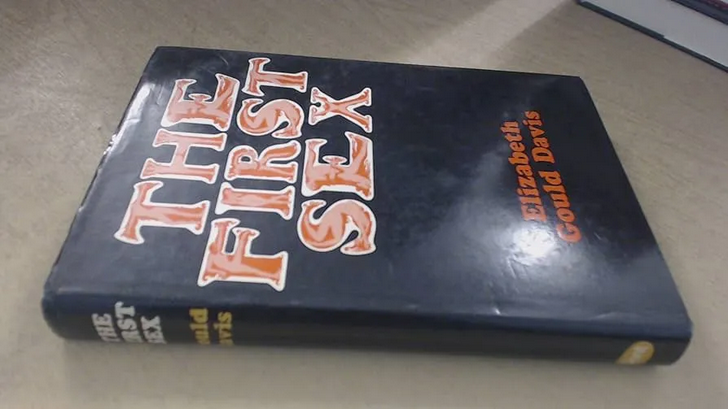
Elizabeth Gould Davis’s The First Sex (1971) provides a compelling example. Written at the height of the Second Wave of feminism, and published three years before the author’s death by suicide, it was a popular female-supremacist treatise. In it, Davis rhapsodized about goddess worship and female power in the ancient world, detailing a time when societies allegedly recognized and revered women as the superior sex.
In these societies, according to mythographer Robert Graves, “Men feared, adored, and obeyed the matriarch” (quoted p. 121). In thrall to women, men were peripheral, their roles as fathers non-existent: “[The woman] took lovers, but for her pleasure,” writes Davis, “not to provide her children with a father, a commodity early woman saw no need for” (p. 121). In this matriarchal sexual utopia, “Sexual morals were a matter of personal conscience, not of law” (p. 116), and the sole familial bond was between the mother and her offspring.
A chapter on “Mother-Right” made the case for a return to such a system, explaining that fathers contribute nothing good to their children’s lives. “The father is not at all necessary for a child’s happiness and development” (p. 117). Even children allegedly know this to be so: “In nearly every child’s experience, it is the mother, not the father, who loves all the children equally, stands by them without regard to their worth or lack of it, and forgives without reservation” (p. 118).
The father’s irrelevance is rooted, Davis explained, in men’s inability to love. “Maternal love was not only the first kind of love. For many millennia it was the only kind” (p. 119). Man has merely “learned to appreciate and be grateful for woman’s love, even though he was not emotionally equipped to return it in kind” (p. 119). She quoted Freudian psychoanalyst Theodor Reik to support her view that when men speak of love, they are actually speaking of a mere ‘scrotal frenzy'” (p. 119).
This rhapsody to female power and assertion of male uselessness continues for hundreds of pages in Davis’s ludicrous yet impressively-detailed book. Many feminists at this period made similar claims, attacking fatherhood and calling for the destruction of the patriarchal family. Author and activist Kate Millett, for example, argued in Sexual Politics (1970) that women’s oppression could not be ended without a transformation of “patriarchy’s chief institution […] the family” (p. 33).
In the same year, feminist radical Shulamith Firestone excoriated the patriarchal nuclear family as the “most rigid class/caste system in existence” (The Dialectic of Sex, p. 15). Two years earlier, would-be killer Valerie Solanas had expressed the sentiment crudely in her SCUM Manifesto: “The effect of fathers, in sum, has been to corrode the world with maleness. The male has a negative Midas touch — everything he touches turn to shit” (p. 45).
These were not simply sad cranks penning screeds in cat-piss-scented rooms (though many of them were mentally ill). They were acknowledged leaders of a movement that would, within a few decades, shape and control the core institutions of western civilization.
November 28, 2025
CZ247: Experimental Swivel-Action SMG
Forgotten Weapons
Published 16 Jul 2025The CZ247 was developed for Czechoslovakia’s post-war submachine gun trials, where it was pitted against the ZB47. It was a simple blowback 9x19mm SMG with a number of interesting elements, most notably the ability to fire with the magazine either vertical or horizontal. In theory, this made the gun more compact for use in a jungle sort of environment (vertical) or to allow a shooter to get much lower to the ground when shooting prone (horizontal). In practice, it really isn’t very important, and requires a bit of extra complexity in the gun’s design. The CZ247 also has a neat safety mechanism for preventing unintended firing and a stripper clip guide built into the stock (both of which would be incorporated in the vz.48 SMG that was eventually adopted).
When the CZ247 failed to win the military trials, CZ got government permission to sell it on the export market. A contract for 10,000 guns was quickly obtained from Egypt, but before the guns could be shipped the export permission was cancelled by the government. Czechoslovakia opted to support Israel in its declaration of independence in 1948, and the government decided to not send weapons to Egypt which might be used against Israel. This left the guns sitting in CZ warehouses, and the basically all stayed there for a few decades. Eventually most were sold to Nigeria in 1967 and Ethiopian in 1977 — and as a result they show up occasionally in African and Middle Eastern conflict zones to this day.
Thanks to CZ for giving me the opportunity to take this example out to film and also to shoot for you!
(more…)
November 27, 2025
Lack of talent is no obstacle to music success … even before Auto-Tune
One of the reasons I like Ted Gioia’s Substack is that even when I’m not overly interested in the topic of any particular post, I usually learn something:
I’ve tried to identify the turning point — the moment when the rules changed. By my measure it happened one night in 1958.
Let’s revisit that fateful day …
One Friday evening in 1958, record producer George Avakian sat down in front of his TV set, and watched an episode of the popular detective show 77 Sunset Strip. This chance incident would have surprising ramifications in the music business for decades to come.
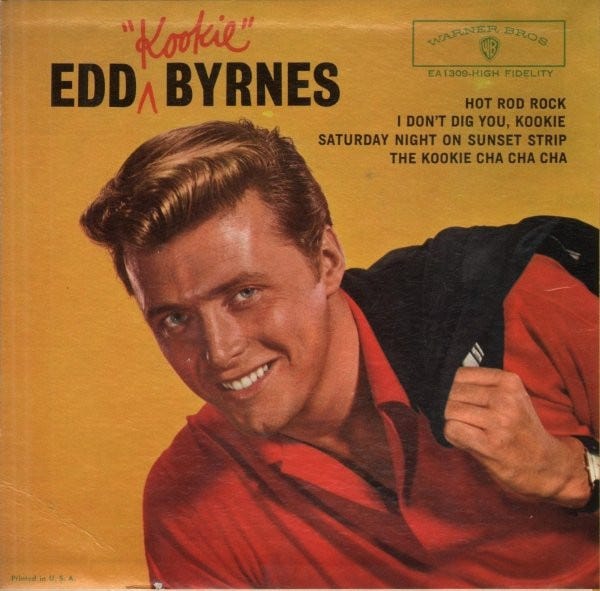
A few minutes into the episode, the record producer decided that one of the actors on the show looked and talked like a rock star. His name was Edd Byrnes and he played a hipster character named Kookie.
Kookie parked cars at a Hollywood nightclub in the show, and acted very cool. He had the right look and said witty hipster-ish things. The TV audience loved him, especially younger viewers.
Check Kookie out and decide for yourself.
There was just one tiny problem. Byrnes wasn’t a musician.
But Avakian didn’t worry about this. “I was sure that kids would like his talk and his looks, especially a way he had of looking out of the corner of his eye,” he later recalled. “And — the real clincher for his popularity with kids — parents would loathe him.”
They didn’t have Auto-Tune back then, but studio engineers had a few tricks to fix vocal imperfections. They knew how to splice together different takes, or make slight alterations in tape speed.
But when Byrnes did an audition for the label, it was bad. It was scary bad. This promising rock star had no sense of pitch. He had no range. He couldn’t even stay in rhythm with his accompanist.
No technology could fix this mess.
Record producer Avakian was no fool. During an illustrious career, he worked with Louis Armstrong, Duke Ellington, Miles Davis, Dave Brubeck, Sonny Rollins, and Keith Jarrett, among others. He had collaborated with genius, and now he had someone on the opposite end of the spectrum.
Maybe this situation is commonplace nowadays, but back in 1958 the record business believed in something called musical talent. Avakian’s bold decision to ignore that variable marks a historic moment in our culture.
Anybody else would have walked away from this looming disaster. They would have feared not just commercial failure but a tainted reputation. You don’t want to be the exec to greenlight a recording by somebody with zero musical ability.
But in a moment of brilliant insight, Avakian decided that Kookie didn’t need to sing, he could just rap. Of course, rapping wasn’t even a concept back in those days. But it sorta existed without a name. Deejays at radio stations often introduced a song by speaking in a hip tone of voice over the intro to a song.
Kookie would do the same. He would speak or rap his part, while somebody else did the actual singing. Connie Stevens, another Hollywood talent with the right look — and a slightly better voice — could handle the actual vocals.
Operation Catapult: The Royal Navy’s day of infamy?
Lindybeige
Published 28 May 2025Operation Catapult took place on July 3rd 1940 at Mers El Kebir on the Algerian coast. It remains a point of controversy in the relations between the British and the French. Who was to blame for the sinking of the French ships and deaths of French sailors? You be the judge.
Erratum: Acting Rear Admiral Onslow, captain of the aircraft carrier Hermes, was not “Rodney” Onslow as I named him, but Richard Francis John Onslow, M.V.O., D.S.C. (29 March, 1896 – 9 April, 1942).
(more…)
QotD: Honor, homage, and fealty in Game of Thrones
To refer to a distinction introduced in Wayne Lee’s talk [here] – Tywin cannot rely on force (do it because I will kill you if you don’t), he has to use power (do it because you think you ought). Because the apparatus of the state here is very limited, that power is largely generated through personal relationships – you ought to fight for your liege because you have a personal relationship with him. You see him fairly often, you swore loyalty to him (in person!!), he (or his ancestors) have helped resolve your problems in the past and most importantly, because he has kept faith with you in the past.
Which is a way of saying that this system runs on trust and reputation, and that runs both ways. Even as Tywin watches his vassals for signs of disloyalty, his vassals are watching him. Is he true to his word? Can I trust him? Because if the answer is no – I best start hedging my bets. And that bet-hedging is going to come in ways Tywin does not want – I might refuse to come out and fight, or redirect my efforts to fortifying my own holdings, or even switch over to another liege. And in the very early seasons, key characters – most notably Tywin and Tyrion – know this and act accordingly. Tywin talks a good game about lions and sheep, but when it comes down to it, he knows his reputation matters – what the sheep say about the lion matters a great deal, it turns out. Robb Stark’s failure to handle the Karstarks, Tullys and Freys is his eventual undoing. Tyrion berates Cersei on returning to King’s Landing for her actions which might call the Lannister reputation into question (“that bit of theatre will haunt our family for a generation”.)
What is unusual here is how frequently key characters deviate from the norms these societies need to function – Westerosi nobles are stunningly treacherous for people who rely on systems based in trust for survival. In a system which runs on trust and reputation, elites tend to value trust and reputation. They produce literature extolling it (as, indeed, do most “mirrors for princes” – guidebooks on how to be a good ruler – from the Middle Ages do; see, for instance, Book 3 of Dhouda’s Liber Manualis (9th cent.), which goes on and on about trustworthiness) and refine its practice. The sort of eye-popping treachery so common in Game of Thrones was far rarer in the actual historical Middle Ages for exactly the reason Game of Thrones would lead you to believe: it is almost always self-defeating.
The problem here comes in the later seasons and how they re-contextualize all of this concern. That problem has a name, and it is Cersei. Cersei breaks all of these rules. Even early on, she has her soldiers (who recall – are not paid mercenaries, but likely vassals of her house who can very much take their skills elsewhere if they don’t like their current employer) demonstrate her own capricious untrustworthiness on Lord Baelish (she has also, I will note, mistaken violence for power). She humiliates Barriston Selmy in court, a spectacle her own future vassals might have remembered. She incinerated her own family – by blood and marriage – along with her erstwhile allies. Cersei is endlessly treacherous, often foolishly and obviously so, and yet …
And yet it doesn’t matter. The Lannister bannermen in the penultimate episode mount the walls to fight a doomed battle for her anyway. Not only is that behavior inexplicable, it hardly seems possible. Who, after all, is raising and leading these men? Who is coordinating supplies and grain shipments to the capital? Remember, the reason for this distributed system of political leadership is that the central state does not have the administrative apparatus to raise armies or feed cities on its own – it has to outsource that to vassals. Vassals that Cersei has murdered or alienated, almost to a man. Cersei is defeated because dragons are unstoppable monsters, but she should have been defeated because she would have simply been incapable of raising an army at all.
Bret Devereaux, “New Acquisitions: How It Wasn’t: Game of Thrones and the Middle Ages, Part III”, A Collection of Unmitigated Pedantry, 2019-06-12.
November 26, 2025
The Korean War Week 75: Insurgency Behind The Lines! – November 25, 1951
The Korean War by Indy Neidell
Published 25 Nov 2025While there is no battle action this week, there is still a lot of fighting, as the UN forces must constantly watch their backs against the thousands of guerrillas in the hills of South Korea. At the truce talks, the Communist side accepts the UN proposal for a demarcation line — Item 2 on the agenda — but for it to be valid the other three items remaining on the agenda must be dealt with within 30 days, which seems very optimistic to most. There is also the question of post-armistice inspections teams; are they a good idea? Or will they simply provide the other side with much-needed actionable intelligence?
Chapters
00:00 Intro
00:45 Recap
01:08 Guerilla Actions
03:19 Hanley’s Numbers
05:37 The Demarcation Line
08:04 Inspection Teams
10:36 Ridgway’s Opinion
12:06 The Agenda
12:48 Summary
13:04 Conclusion
13:57 Call to Action
(more…)
November 25, 2025
Canada’s “post-national” project was foisted on us by the elites, not ordinary Canadians
On the social media site formerly known as Twitter, Fortissax responds to a recent article published in the National Post, where Geoff Russ describes Liberal nationalism as “a cringey failure” and calls for young members of the “new right” to work toward a new idea of Canada:

Geoff Russ’ specific claim that “millions of old stock Canadians cheered for it” is wrong. He takes a decades-long elite project, driven over the heads of the public, and pins it on the very people it was done to.
There was never a clear democratic moment when ethnic Canadians calmly voted to abolish old Canada and embrace a postnational, multicultural order. What happened was a long campaign run from the top.
After 1945, cabinet ministers, mandarins and policy people rebuilt Canadian identity around liberal internationalism and continental integration. The older understanding of Canada as a British and French country with its own civilisation was treated as something shameful to be buried. Schools, television, churches, courts, universities and the federal bureaucracy repeated the same script: “progress” meant loosening ties to the founding peoples and aligning with UN norms and North American liberal opinion.
This was not some anonymous drift. C.D. Howe and the postwar planners normalised a centralised, technocratic state tied to American capital. Mackenzie King and Louis St Laurent locked in continental and institutional commitments that weakened any independent British and French national idea. Jack Pickersgill used immigration as a tool of social engineering and admitted that public opinion was hostile, so policy had to move quietly from above.
Lester Pearson chaired the Biculturalism Commission while preparing the shift from “two founding races” to a vague multicultural formula, and his government set up the flag change that deliberately severed visual continuity with the old country.
Pierre Trudeau went further, announcing in 1971 that Canada would have no official culture and that no ethnic group would take precedence, which was a polite way of saying the historic British and French peoples would be stripped of formal primacy in their own state.
The public did not demand this. It had to be dragged and managed. Gallup and other polling in the postwar decades consistently showed majorities hostile to high immigration levels. The 1974 Green Paper and the extensive public hearings that followed produced sharp criticism of mass intake and of the cultural and economic disruption it would bring.
Ottawa thanked everyone for their input and then moved ahead with the 1976 Immigration Act, which entrenched a liberal, permanent immigration framework anyway. When Canadians were finally asked, they said no. Their answer was ignored.
At the same time, ordinary people lost any real leverage over core questions. Immigration policy was transformed without a referendum. Official multiculturalism was declared from above. The Charter and rights culture shifted effective authority from Parliament and local communities into the hands of courts and legal elites.
The flag changed, and symbols and curricula that reflected old Canada were rewritten or stripped away. Any attempt to defend the historic nation was smeared as crankish or hateful. To take this history and summarise it as “millions of old stock Canadians cheered for it” is like blaming a tenant for “choosing” demolition because he did not throw himself under the bulldozer.
The message is that old stock Canadians must now live with this order forever; that their own elites may have driven the revolution, but the public did not resist hard enough, so dispossession is deserved; and that any attempt by the founding peoples to assert a legitimate claim to continuity in their own country is some kind of moral offence.
You might as well watch Guru Nanak Jahaz, since you’ve already paid for it
The Canadian government loves handing out money — they hand out a lot of money — so it shouldn’t be surprising to find out that Canadian taxpayers funded the creation of a movie about a Sikh terrorist who assassinated a Canadian official … or that the assassin is the hero of the movie. After all, isn’t that the heart and soul of multiculturalism? Celebrating other cultures and traditions as being superior to those of ordinary Canadians? The feds seem to believe it.
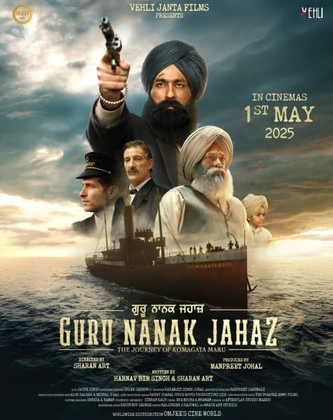
If you can find a way to watch the recently released Khalistani propaganda film Guru Nanak Jahaz, you might as well watch it. You paid for it, after all.
The film, which depicts the assassination of a Canadian civil servant by a Sikh terrorist as a heroic act of justice, has a “Funded by the Government of Canada” credit at the end. It was also supported by the B.C. government and gives special thanks to Conservative MP Tim Uppal and Liberal MP Sukh Dhaliwal. While the Liberals didn’t return a request for comment, a spokesperson for Uppal told me that he was not involved in the film and that the filmmakers did not communicate with him about the credit at any point.
Set in 1914, the plot follows the assassin, who you likely never heard about, and the voyage of the more familiar Komagata Maru, a ship which carried nearly 400 Indian passengers from Hong Kong to Vancouver, only to be denied entry to Canada. It was screened in some Cineplex theatres earlier this year.
The official narrative that you’ll find on government websites explains that this was purely a matter of baseless Canadian racism, and it’s been wholeheartedly adopted by politicians today: as prime minister, Justin Trudeau apologized for the incident in 2016, and the Conservative party releases annual statements commemorating the event, praising the bravery of the passengers and their craving for freedom.
That’s the whitewashed version, however. It leaves out that the Komagata Maru voyage was organized by the Indian Ghadar movement — the word literally means “revolution” — which advocated for violent resistance against the British Empire. (India was a British possession at that time and would continue to be until 1947). Its members were primarily Sikhs who lived in North America. And while they did experience racism, and while changes to Canada’s immigration laws in 1908 indirectly restricted Indian immigration, there were also reasons for the Canadian government to be apprehensive.
Ghadar members dreamed of a return to India, but wanted to rid that land of the British first. They remembered the Indian Mutiny of 1857 with regret — that bloody event saw many British-Indian regiments unsuccessfully take up arms against the Empire; Sikh Punjabis were among the exceptions, largely siding with the British. Decades later, the mostly Sikh Punjabi Ghadarites proposed another 1857-like uprising while applauding anti-British terrorism.
When rumblings of war with Germany began to brew in 1914, the Ghadarites grew excited — now was the time to strike. In August 1914, after the war broke out, the movement’s newspaper advocated, “Go to India and incite the native troops. Preach mutiny openly. Take arms from the troops of the native states and wherever you see the British, kill them. … There is hope that Germany will help you.” Expats in the Orient organized ships to return home and revolt.
The Komagata Maru was part of this movement. Organized by Ghadarites before the breakout of the First World War, it attempted to bring more movement adherents into Vancouver to settle. Canada was right not to let it dock because the entire envoy was a security threat.

The S.S. Komagata Maru was at the centre of an attempt to bring 400 Sikh revolutionaries into Canada to agitate for the destruction of British rule in India in 1914.
Roller Delay in France: The H&K 33F (Trials & Export Models)
Forgotten Weapons
Published 14 Jul 2025When France was looking to replace the MAS 49/56 rifle for military service in the 1970s, it tested all of the major rifle options available. These included the Colt M16, FN CAL, and HK33. The HK required some modification to meet French military requirements, specifically the capability to launch rifle grenades. The model 33F was developed specifically to meet these requirements — first as a modified standard HK33, and later as a factory production run. The modifications made include a reinforced magazine well, 4-position fire control gourd (including 3-round burst), a reinforced stock attachment, grenade range rings on the barrel, and a mounting bracket for a rifle grenade sight.
Apparently the HK33F performed very well in trials, but it was ultimately deemed politically unacceptable to adopt a German rifle for the French Army (a policy which has changed now, 50 years later …). Instead, the domestic FAMAS was chosen, along with the SIG-Manurhin 540 purchased in limited numbers for the Foreign Legion.
A second type of 33F came about from the program, however. Berlin police wanted HK33 rifles, but treaty prohibited West German arms from entering Berlin in East Germany. The loophole found was to send the parts to MAS in France, where they were assembled and marked HK33F, thus making them French origin gun which could be sent to Berlin. These rifles had none of the French grenade launching adaptations, and were completely standard HK33s except for the use of heavy barrels. MAS eventually added the G3, HK33, and MP5 to its export catalog in the late 1970s and sold quantities to a number of small countries in the French sphere of influence (including Haiti, Burkina Faso, Lebanon, and others).
Many thanks to the IRCGN (Institut de Recherche Criminelle de la Gendarmerie Nationale) for allowing me access to film these rather rare HK variants for you!
(more…)
QotD: British Socialism in the 1930s
George Orwell, The Road to Wigan Pier (1937)
November 24, 2025
Algeria: France’s War It Refused to Name – W2W 054
TimeGhost History
Published 23 Nov 2025This episode tracks how the doctrine “Algeria is France” — departments, settler power, and forced assimilation — breeds dispossession, mass violence, and a new Algerian nationalism: from conquest and the Sétif massacres to the FLN’s launch in 1954 and Philippeville in 1955. As Paris doubles its forces and passes Special Powers, Suez intertwines with the war, bombings in Algiers begin, and Lacoste hands police powers to General Massu — opening the Battle of Algiers and a system of torture.
(more…)


