
PauliosVids
Published 20 Nov 2018Following the 11th Hussars from Hanover to Coburg.
March 9, 2023
Look at Life – The Cherry Pickers (1965)
Comments Off on Look at Life – The Cherry Pickers (1965)
QotD: Iron ore mining before the Industrial Revolution
Finding ore in the pre-modern period was generally a matter of visual prospecting, looking for ore outcrops or looking for bits of ore in stream-beds where the stream could then be followed back to the primary mineral vein. It’s also clear that superstition and divination often played a role; as late as 1556, Georgius Agricola feels the need to include dowsing in his description of ore prospecting techniques, though he has the good sense to reject it.
As with many ancient technologies, there is a triumph of practice over understanding in all of this; the workers have mastered the how but not the why. Lacking an understanding of geology, for instance, meant that pre-modern miners, if the ore vein hit a fault line (which might displace the vein, making it impossible to follow directly) had to resort to sinking shafts and exploratory mining an an effort to “find” it again. In many cases ancient miners seem to have simply abandoned the works when the vein had moved only a short distance because they couldn’t manage to find it again. Likewise, there was a common belief (e.g. Plin. 34.49) that ore deposits, if just left alone for a period of years (often thirty) would replenish themselves, a belief that continues to appear in works on mining as late as the 18th century (and lest anyone be confused, they clearly believe this about underground deposits; they don’t mean bog iron). And so like many pre-modern industries, this was often a matter of knowing how without knowing why.
Once the ore was located, mining tended to follow the ore, assuming whatever shape the ore-formation was in. For ore deposits in veins, that typically means diggings shafts and galleries (or trenches, if the deposit was shallow) that follow the often irregular, curving patterns of the veins themselves. For “bedded” ore (where the ore isn’t in a vein, but instead an entire layer, typically created by erosion and sedimentation), this might mean “bell pitting” where a shaft was dug down to the ore layer, which was then extracted out in a cylinder until the roof became unstable, at which point the works were back-filled or collapsed and the process begun again nearby.
All of this digging had to be done by hand, of course. Iron-age mining tools (picks, chisels, hammers) fairly strongly resemble their modern counterparts and work the same way (interestingly, in contrast to things like bronze-age picks which were bronze sheaths around a wooden core, instead of a metal pick on a wooden haft).
For rock that was too tough for simple muscle-power and iron tools to remove, the typical expedient was “fire-setting“, which remained a standard technique for removing tough rocks until the introduction of explosives in the modern period. Fire-setting involves constructing a fuel-pile (typically wood) up against the exposed rock and then letting it burn (typically overnight); the heat splinters, cracks and softens the rock. The problem of course is that the fire is going to consume all of the oxygen and let out a ton of smoke, preventing work close to an active fire (or even in the mine at all while it was happening). Note that this is all about the cracking and splintering effect, along with chemical changes from roasting, not melting the rock – by the time the air-quality had improved to the point where the fire-set rock could be worked, it would be quite cool. Ancient sources regularly recommend dousing these fires with vinegar, not water, and there seems to be some evidence that this would, in fact, render the rock easier to extract afterwards.
By the beginning of the iron age in Europe (which varies by place, but tends to start between c. 1000 and c. 600 BC), the level of mining sophistication that we see in preserved mines is actually quite considerable. While Bronze Age mines tend to stay above the water-table, iron-age mines often run much deeper, which raises all sorts of exciting engineering problems in ventilation and drainage. Deep mines could be drained using simple bucket-lines, but we also see more sophisticated methods of drainage, from the Roman use of screw-pumps and water-wheels to Chinese use of chain-pumps from at least the Song Dynasty. Ventilation was also crucial to prevent the air becoming foul; ventilation shafts were often dug, with the use of either cloth fans or lit fires at the exits to force circulation. So mining could get very sophisticated when there was a reason to delve deep. Water might also be used to aid in mining, by leading water over a deposit and into a sluice box where the minerals were then separated out. This seems to have been done mostly for mining gold and tin.
Bret Devereaux, “Iron, How Did They Make It? Part I, Mining”, A Collection of Unmitigated Pedantry, 2020-09-18.
Comments Off on QotD: Iron ore mining before the Industrial Revolution
March 8, 2023
Feeding a Medieval Outlaw
Tasting History with Max Miller
Published 7 Mar 2023
(more…)
Comments Off on Feeding a Medieval Outlaw
First to the Fight: The Marines’ Reising M50 SMG
Forgotten Weapons
Published 4 Nov 2022Eugene Reising developed a .45 ACP submachine gun in the late 1930s that was basically the opposite of the Thompson — it was light and handy, fired from a closed bolt with a delayed blowback action, and was inexpensive to produce. Reising contracted with Harrington & Richardson to produce the gun, and when it entered the market in early 1940 it found immediate interest from the USMC. Looking initially to equip the Marine Paratroop Regiment (Paramarines), the Corps wanted a gun that was light and compact. The Reising M55 with its folding stock was certainly those things and since the Thompson was essentially unavailable anyway (all production was going to the Army and foreign contracts), the Corps adopted the Reising with initial purchases of both the M50 and M55 in January and February of 1942.
What we are looking at today is an early production M50. It is blued with 29 barrel fins and the early style of sights, stock screw, trigger guard, magazine release, stock (the lacquer coating and sling swivels having been added by a previous owner), and firing pin. Later production guns would be improved and strengthened in various ways, but the Reising would never quite meet the needs of frontline combat troops, much to the displeasure of the Marines who first used them in the Pacific theater. Lacking interchangeable parts and susceptible to fouling and malfunctions, the Reisings were quickly replaced by other arms — some Johnson M1941 rifles, some M1 and M1A1 carbines, and various other guns. Rotated back to duties like ship boarding parties, guards, and military police, the Reising served very well. They were indeed handy and accurate guns, just not built for the extreme rigors of Pacific beach assaults and jungle foxholes.
(more…)
Comments Off on First to the Fight: The Marines’ Reising M50 SMG
QotD: Who destroyed the Great Library?
The problem, however, is that there is no evidence that the Serapeum still contained any library by 391 AD and some good evidence indicating that it did not.
When the mythic version of the story of the destruction of the Serapeum gets told it usually begins without explaining why the temple was attacked. These retellings focus on the supposed destruction of its library, so they tend to assume that the mob was there simply because they hated learning. But several accounts of the end of the temple note that it came as the climax of a series of attacks by pagans on Christians in reaction to the desecration of pagan idols. Sozomen’s account details what happened next:
They killed many of the Christians, wounded others, and seized the Serapion, a temple which was conspicuous for beauty and vastness and which was seated on an eminence. This they converted into a temporary citadel; and hither they conveyed many of the Christians, put them to the torture, and compelled them to offer sacrifice. Those who refused compliance were crucified, had both legs broken, or were put to death in some cruel manner. When the sedition had prevailed for some time, the rulers came and urged the people to remember the laws, to lay down their arms, and to give up the Serapion (Sozomen, History of the Church, VII.15)
Sozomen was writing in the following century and, as a Christian, may not be reliable on the lurid details, but Socrates Scholasticus, writing a little closer to the events, confirms that many Christians were killed in the unrest. A stand-off followed, with Roman troops surrounding the temple while negotiations went on with the pagan militants inside. This situation must have continued for many weeks, as a petition went to the emperor in Constantinople about the siege and Theodosius ruled that the pagans should be pardoned for their murders and allowed to leave but that the temple should be demolished. Angry at this compromise, as the soldiers began to carry out the order, the Christian mob joined in the destruction, and made sure the great idol of Serapis was also destroyed.
We have no less than five accounts of the destruction of the Serapeum – Rufinius Tyrannius, Socrates Scholasticus, Sozomen, Theodoret and Eunapius of Antioch – which is rare in ancient history and actually makes this one of the best documented events in the period. What is significant about them is that not one of them mentions a library. Some try to argue that the Christian chroniclers would be ashamed of the crime of destroying the last remnant of the Great Library and so hushed it up in their accounts. This argument is hard to sustain. Firstly, Christian historians of the time did record other shameful acts against pagans, including the assassination of Hypatia, so at least one or two of the four Christians who describe the end of the Serapeum could be expected to at least lament the loss of a library. Socrates Scholasticus, who condemned the death of Hypatia, was a Novatian “heretic” and thus no fan of the bishop Theophilus, who urged on the crowd at the temple’s demolition, yet he makes no mention of a library. Even more significantly, Eunapius of Antioch was a pagan, a scholar and a vehement anti-Christian, so had every reason to condemn any destruction of a library, yet he too makes no mention of it. That great defender of New Atheist bad history, the inevitable Richard Carrier, has attempted to dismiss this silence by Eunapius by blithely claiming that “his account is too brief”. Carrier assures his online fan club “[a]ll he describes is the raid on its pagan statues, and some vague looting otherwise. His concern is clearly with the offense to the gods”. This is, as usual with Carrier, total nonsense. Eunapius’ account in his Lives of the Philosophers runs to 548 words in English translation. Of these, a full 245 are not about pagan statues etc, but are devoted wholly to detailed denigration of the ignorant Christian monks who destroyed the temple. He calls them “men in appearance (who) led the lives of swine”, says they “fettered the human race to the worship of slaves” and mocks them for their worship of martyrs’ relics and their general stupidity. Given that around 40% of his account is taken up with this scorning and mocking of these monks, it is still very strange that this scholar neglects to mention in his condemnation that these ignorant oafs also happened to destroy one of the best libraries in the world.
The lack of any mention of a library is most likely explained by concluding that it was no longer there by 391 AD. Temples had begun to be starved of funds with the conversion of the emperors [to] Christianity and the slower but gradual conversion of many rich patrons and city benefactors. The Serapeum survived most of the fourth century, but it is very likely that the expense of maintaining an extensive library would have been a strain. We know that it was ransacked on the orders of the Alexandrian bishop George the Cappodocian c. 360 AD and it is likely the library was looted in this action. Significantly, writing around 378 AD, Ammianus Marcellinus gave a detailed description of the Serapeum and mentions its libraries using the past tense:
In here have been valuable libraries and the unanimous testimony of ancient records declares that seven hundred thousand books, brought together by the unremitting energy of the Ptolemies, were burned in the Alexandrine War when the city was sacked under the dictator Caesar. (Ammianus, Roman History XXII.16-17)
Ammianus is muddling the Serapeum with the main Mouseion library with his reference to Caesar’s fire and the mythical “700,000” books, but the rest of his description is detailed and unique to his work in many respects. Other references in his work indicate that he had visited Egypt himself, probably around 363 AD (or three years after the sacking of the temple by Bishop George), so it is highly possible that his account is that of an eye-witness. This means his use of the past tense about the temple library is significant. Overall, the idea that there was still any library there when the temple was demolished is dubious at best and almost certainly wrong.
Tim O’Neill, “The Great Myths 5: The Destruction Of The Great Library Of Alexandria”, History for Atheists, 2017-07-02.
Comments Off on QotD: Who destroyed the Great Library?
March 7, 2023
“The First Soldier” – Albert Séverin Roche – Sabaton History 118
Sabaton History
Published 6 Mar 2023This song is the story of Albert Roche, who is very much forgotten today, but after the First World War was THE hero of France. He was hotheaded and tempestuous, but above all he was GOOD. His service — and his legend from that war — is just remarkable, and today we share the war stories of the First Soldier of France.
(more…)
Comments Off on “The First Soldier” – Albert Séverin Roche – Sabaton History 118
How Would a Nuclear EMP Affect the Power Grid?
Practical Engineering
Published 8 Nov 2022How a nuclear blast in the upper atmosphere could disable the power grid.
(more…)
Comments Off on How Would a Nuclear EMP Affect the Power Grid?
QotD: The Stoic view of beauty
Like all materialists, then, Stoics had a real problem with things like beauty. If you’re a materialist, Beauty is either a refutation of your theory, or a tautology (“certain arrangements of atoms produce chemical reactions that our brains interpret as pleasant” is just a fancy way of saying “beautiful things are beautiful because they’re beautiful”). Back in grad school, in one of the deepest, darkest, most dungeon-like corners of the university’s book morgue, I discovered Ayn Rand’s attempt at an Objectivist aesthetics. Her conclusion, stripped of her inimitable self-congratulatory prose, is here:
At the base of her argument, Rand asserts that one cannot create art without infusing a given work with one’s own value judgments and personal philosophy. Even if the artist attempts to withhold moral overtones, the work becomes tinged with a deterministic or naturalistic message. The next logical step of Rand’s argument is that the audience of any particular work cannot help but come away with some sense of a philosophical message, colored by his or her own personal values, ingrained into their psyche by whatever degree of emotional impact the work holds for them.
Rand goes on to divide artistic endeavors into “valid” and “invalid” forms …
In other words, there’s no art, only propaganda. Looks like ol’ Marcus really missed a trick, statecraft-wise, doesn’t it?
Severian, “On Fine Writing Etc.”, Everyday Stoicism, 2020-05-04.
Comments Off on QotD: The Stoic view of beauty
March 6, 2023
Updating Pascal’s Wager
David Friedman discusses moral realism and comes up with an improvement to Blaise Pascal’s famous wager:
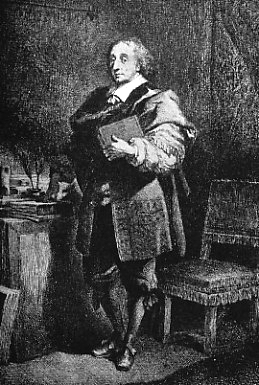
Blaise Pascal from Practical Physics (1914), by Macmillan and Company.
Wikimedia Commons.
Blaise Pascal famously argued that one ought to believe in the Catholic faith because the enormous payoff if it was true, heaven instead of hell, made it in your interest to believe even if you thought the probability that it was true was low.
There are three problems with the argument. The first is that belief is not entirely a matter of choice — I cannot make myself believe that two plus two equals five however much I am offered for doing so. The second is that belief motivated not by love of God but by love of self, the desire to end up in Heaven instead of Hell, might not qualify you for admission. The third is that the argument applies to many doctrines other than Catholicism and so gives you no way of choosing among Christian sects or between Christianity and alternative religions, short of somehow estimating the probability that each is true and the associated payoff and choosing the one with the highest expected return.
I, however, have an improved version of the argument free from all of those problems, an argument not for Christianity but for moral realism.
One explanation of our moral feelings is that right and wrong are real and our beliefs about right and wrong at least roughly correct. The other is that morality is a mistake; we have been brainwashed by our culture, or perhaps our genes, into feeling the way we do, but there is really no good reason why one ought to feed the hungry or ought not to torture small children.
If morality is real and you act as if it were not, you will do bad things — and if morality is real you ought not to do bad things. If morality is an illusion and you act as if it were not you may miss the opportunity to commit a few pleasurable wrongs but since morality correlates tolerably, although not perfectly, with rational self interest, the cost is unlikely to be large. It follows that if you are uncertain which of the two explanations is correct you ought to act as if the first is.
No god is required for the argument, merely the nature of right and wrong, good and evil, as most human beings intuit them. The fact that you are refraining from evil because of a probabilistic calculation does not negate the value of doing so — you still haven’t stolen, lied, or tortured small children. One of the odd features of our intuitions of right and wrong is that they are not entirely, perhaps not chiefly, judgements about people but judgements about acts.
Comments Off on Updating Pascal’s Wager
The Rise and Fall of Fast Food Architecture
Stewart Hicks
Published 3 Nov 2022What happened to McDonald’s? Their restaurants used to be so iconic. It was impossible to mistake one, for say, a Wendy’s. Distinguished architecture used to be an important part of a brand’s identity. But today, fast food restaurant’s all look the same. Bland grey boxes. The great convergence toward this standard has been called “Chipotle-ification”. In this video, we trace the changing restaurant designs of McDonald’s, from the iconic golden arch era to the soulless boxes of today. We break down the architecture and the forces at play in the great homogenization of fast food architecture.
(more…)
Comments Off on The Rise and Fall of Fast Food Architecture
March 5, 2023
The clear drawbacks of depending too much on oral history
In The Line, Jen Gerson explains why you need to exercise caution when dealing with oral traditions:
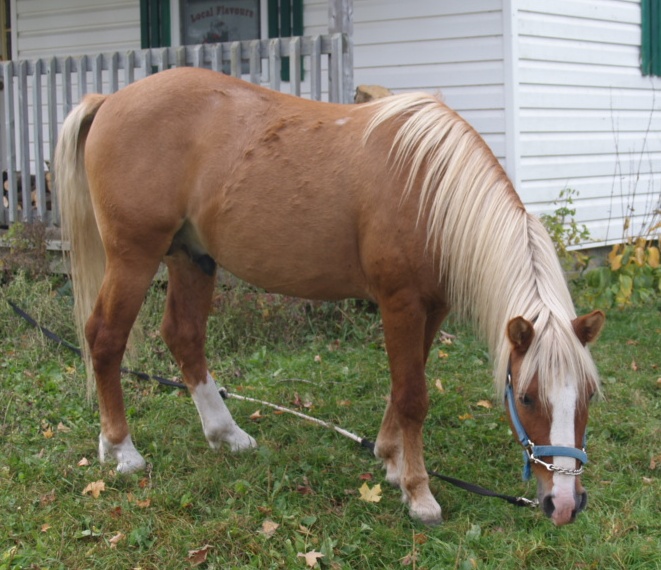
Lac La Croix Indian Pony stallion – Mooke (Ojibway for – he comes forth), October 2008.
Photo by Llcips09 via Wikimedia Commons.
A BBC travel feature published several weeks ago had the hallmarks of a classic progressive narrative. It was the tale of the “endangered Ojibwe spirit horse; the breed, also known as the Lac La Croix Indian pony, is the only known indigenous horse breed in Canada.”
The spirit horse was reduced to near extinction by European settlers who treat these magical creatures, deemed “guides and teachers”, as a mere nuisance to be culled and eliminated in favour of more profitable animals like cattle, or so the telling goes. A native breed of a beloved animal struggling to survive in the face of voracious colonial settlers.
Someone call James Cameron.
Unless you know a little evolutionary history, that is. In which case, you will already be aware that this story is pure pseudoscientific hokum.
Look, no one likes to be disrespectful about sensitive matters where the legitimately oppressed and aggrieved claims of First Nations peoples are concerned. This is a nation that is struggling to come to terms with its own horrific colonial past. This process is taking on many forms: witness the applause granted to singer Jully Black, who recently amended the national anthem “our home on native land”. Or, perhaps, the calls by one NDP MP to combat residential school denialism by passing new laws on hate speech — which would make questioning certain narratives not only an act of heresy, but also a literal crime.
Listening to stories, and respecting lived experiences and oral histories Indigenous people at the core of Canadian history and identity has given a new credibility to the traditional knowledge of First Nations people in academia, media, and in society at large.
But the story of the Ojibwe spirit horse is a clear example of the limits of oral history.
The horses now roaming the plains of North America are not a native species. The horse did evolve on this continent before migrating to Asia and Europe. However, the North American breed is believed to have been extirpated about 10,000 years ago (or thereabouts) during a mass extinction event that wiped out almost all large land mammals.
There is some evidence that isolated pockets of a native horse breed may have survived in North America much later than this, but the horses roaming about today are descended from those that were brought from Europe after the 15th century.
Of course, science is always evolving, but the overwhelming bulk of genetic and archeological evidence to date supports this theory. The native North American horse is long, long gone. The bands of horses freely wandering the backcountry are not wild, but feral; they’re the product of escaped or abandoned horse stock of distant European origin.
Comments Off on The clear drawbacks of depending too much on oral history
MacArthur and Nimitz Go Head-to-Head – Week 236 – March 4, 1944
World War Two
Published 4 Mar 2023The American attacks against the Admiralty Islands are successful, but this causes real tensions between commanders Douglas MacArthur and Chester Nimitz. Much of this week is taken up by planning and meetings on both sides — Adolf Hitler plans the occupation of Hungary, Josef Stalin plans new offensives in Ukraine, and the Allies plan to reconfigure their whole front in Italy. It’s all the prelude to an explosion of action.
(more…)
Comments Off on MacArthur and Nimitz Go Head-to-Head – Week 236 – March 4, 1944
Dinosaurs, Mammoths, and the Greek Myths
toldinstone
Published 20 Aug 2021Did dinosaur fossils inspire the mythical griffin? Did mammoth bones shape the story of the Gigantomachy? Were the cyclopes modeled on the skulls of dwarf elephants? This video investigates some of the fascinating intersections between fossils and the Greek myths.
This video is part of a collaboration with @NORTH 02 Check out their video “Scimitar Cats, Cave Bears, and Behemoths” for more on the fossils that so fascinated the ancient Greeks and Romans: https://youtu.be/lpU-F3EQ4v4
(more…)
Comments Off on Dinosaurs, Mammoths, and the Greek Myths
QotD: The role of the “big” landowners in pre-modern farming societies
Of course this begins with land. The thing to keep in mind is that prior to the modern period […] the vast majority of economic activity was the production of the land. That meant that land was both the primary form of holding wealth but also the main income-producing asset. Consequently, larger land holdings are the assets that enable the accumulation of all of the other kinds of capital we’re discussing. By having more land – typically much more land – than is required to feed a single household, these larger farmers can […] produce for markets and trade, enabling them to afford to acquire labor, animals, equipment and so on. Our subsistence farmers of the last post, focused on producing for survival, would be hard-pressed to acquire much further in the way of substantial capital.
The next most important category is generally animals, particularly a plow team […] while our small subsistence farmers may keep chickens or pigs on some small part of the pasture they have access to, they probably do not have a complete plow-team for their own farm […]. Oxen and horses are hideously expensive, both to acquire but also to feed and for a family barely surviving one year to the next, they simply cannot afford them. They also do not have herds of animals (because their small farms absolutely cannot support acres of pasturage) and they probably have limited access to herdsmen generally (that is, transhumant pastoralists moving around the countryside) because those fellows will tend to want to interact with the community leaders who are, as noted above, the large landholders. All of which is to say that while the small farmers may keep a few animals, they do not have access to significantly large numbers of animals (or humans), which matters.
The first impact of having a plow-team is fairly obvious: a plow drawn by a couple of oxen is more effective than a plow pushed by a single human. That means that a plow-team lets the same amount of farming labor sow a larger area of land […]. It also allows for a larger, deeper plow, which in turn plows at a greater depth, which can improve yields […]. You can easily see why, for a landholder with a large farm, having a plow-team is so useful: whereas the subsistence farmer struggles by having too much labor (and too many mouths to feed) and too little land, the big landholder has a lot of land they are trying to get farmed with as little labor as possible. And of course, more to the point, the large landholder has the wealth and acreage necessary to buy and then pasture the animals in the plow-team.
The second major impact is manure. Remember that our farmers live before the time of artificial fertilizer. Crops, especially bulk cereal crops, wear out the nutrients in the soil quite rapidly after repeated harvests, which leaves the farmer two options. The first, standard option, is that the farmer can fallow the field (which also has the advantage of disrupting certain pest life-cycles); depending on the farming method, fallowing may mean planting specific plants to renew the soil’s nutrients when those plants are uprooted and left to return to the soil in the field or it may mean simply turning the field over to wild plants with a similar effect. The second option is using fertilizer, which in this case means manure. Quite a lot of it. Aggressive manuring, particularly on rich soils which have good access to moisture (because cropping also dries out the soil; fallowing can restore that moisture) allows the field to be fallowed less frequently and thus farmed more intensively. In some cases it allowed rich farmland to be continuously cropped, with fairly dramatic increases in returns-to-acreage as a result. And by increasing the nutrients in the soil, it also produces higher yields in a given season.
Now the humans in a farming household aren’t going to generate enough manure on their own to make a meaningful contribution to soil fertility. But the larger landholders generally have two advantages in this sense. First, because their landholdings are large, they can afford to turn over marginal farming ground to pasture for horses, cattle, sheep and so on; these animals not only generate animal products (or prestige, in the case of horses), they also eat the grass and generate manure which can be used on the main farm. The second way to get manure is cities; unlike farming households, cities do produce sufficient quantities of human waste for manuring fields. And where small subsistence farmers are unlikely to be able to buy that supply, large landholders are likely to be politically well-connected enough and wealthy enough to arrange for human waste to be used on their lands, especially for market oriented farms close to cities. And if you just stopped and said, “wait – these guys were paying for human waste?” … yes, yes they sometimes did (and not just for farming! Check out how saltpeter was made, or what a fuller did!).
Finally, there’s the question of infrastructure: tools, machines and storage. The large landholder is the one likely to be able to afford to build things like granaries, mills and so on. Now there is, I want to note, a lot of variation from place to place about exactly how this sort of infrastructure is handled. It might be privately owned, it might be owned by the village, but frequently, the “village mill” was actually owned by the large landholder whose big manor overlooked the village (who may also be the local political authority). And while we’re looking at grain, other agricultural products which don’t store as well or as easily might need to be aggregated for transport to market and sale, a process where the large landholder’s storage facilities, political standing and market contacts are likely to make him the ideal middleman. I don’t want to get too in the weeds (pardon the pun) on all the different kinds of infrastructure (mills for grains, presses for olives, casks for wine) except to note that in many cases the large landholder is the one likely to be able to afford these investments and that smaller farmers growing the same crops nearby might well want to use them.
Bret Devereaux, “Collections: Bread, How Did They Make It? Part II: Big Farms”, A Collection of Unmitigated Pedantry, 2020-07-31.
Comments Off on QotD: The role of the “big” landowners in pre-modern farming societies
March 4, 2023
Nigel Biggar’s Colonialism: A Moral Reckoning
In The Critic, Robert Lyman reviews a recent book offering a rather more nuanced view of the British empire:
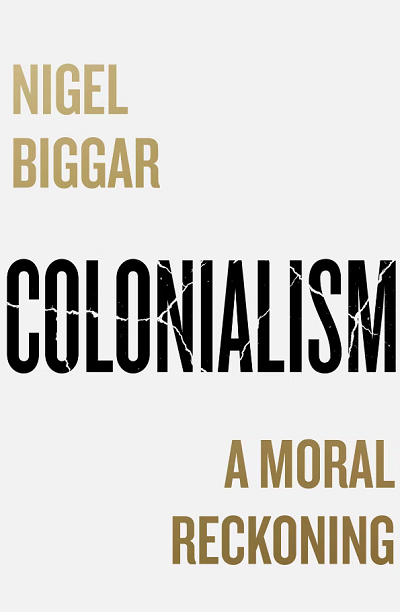
The book is a careful analysis of empire from an ethical perspective, examining a set of moral questions. This includes whether the British Empire was driven by lust or greed; whether it was racist and condoned, supported or encouraged slavery; whether it was based on the conquest of land; whether it entailed genocide and or economic exploitation; whether its lack of democracy made it illegitimate; and whether it was intrinsically or systemically violent.
Biggar’s proposition is simple: that we look at Britain’s history without assuming the zero-sum position that imperialism and colonialism were inherently bad, that motives and agency need to be considered and that good did flow from bad, as well as bad from good.
Whether he succeeds depends on the reader’s willingness to appreciate these moral or ethical propositions, and to re-evaluate accordingly. In my view, he has mounted a coolly dispassionate defence of his proposition, challenging the hysteria of those who suggest that the British Empire was the apotheosis of evil. Biggar’s calm dissection of these inflated claims allows us to see that they say much more about the motivations, assumptions and political ideologies of those who hold these views than they do about what history presents to us as the realities of a morally imperfect past.
He reminds us that British imperialism had no single wellspring. Most of us can easily dismiss the notion that it was a product of an aggressive, buccaneering state keen to enrich itself at the expense of peoples less able to defend themselves. Equally, it is untrue that economic motives drove all imperialist or colonial endeavour, or that economics (business, trade and commerce) was the primary force sustaining the colonial regimes that followed.
As Biggar asserts, both imperialism and colonialism were driven from different motivations at different times. Each ran different journeys, with different outcomes depending on circumstances. The assertion that there is a single defining imperative for each instance of imperial initiative or colonial endeavour simply does not accord with the facts.
Whilst other issues played a part, it was social, religious and political motives which drove the colonial endeavour in the New World from the 1620s: security and religion drove the subjugation of Catholic (and therefore Royalist) Ireland in the 1650s; social and administrative factors led to the settlement in Australia from 1788; and social and religious imperatives drove the colonisation of New Zealand in the 1840s.
In circumstances where trade and the security of trade was the primary motive for imperialism — think of Clive in the 1750s, for example — a wide variety of outcomes ensued. Some occurred as a natural consequence of imperialism. In India, Clive’s defeat of the Nawab Siraj-ud-Daulah in 1757 was in support of a palace coup that put Siraj’s uncle Mir Jafar on the throne of Bengal, thus allowing the East India Company the favoured trading status that Siraj had previously rejected.
This led in time to the Company taking over the administrative functions of the Bengal state (zamindars collected both rents for themselves and taxes for the government). Seeking to protect its new prerogatives, it provided security from both internal (civil disorder and lawlessness) and external threats (the Mahratta raiders, for example). The incremental, almost accidental, accrual of power that began in the early 1600s stepped into colonial administration 150 years later, leading to the transfer of power across a swathe of the sub-continent to the British Crown in 1858.
Biggar’s argument is that, running in parallel with this expansion came a host of other consequences, not all of which can be judged “bad”. We may not like what prompted the colonial enterprise at the outset (not all of which was morally contentious, such as the need to trade), but we cannot deny that good things, as well as bad, followed thereafter.
Comments Off on Nigel Biggar’s Colonialism: A Moral Reckoning


