
Ryan Doyle
Published 3 Mar 2013
(more…)
March 16, 2023
History of the Royal Navy – Wooden Walls (1600-1805)
Comments Off on History of the Royal Navy – Wooden Walls (1600-1805)
March 15, 2023
Irish Soda Bread from 1836
Tasting History with Max Miller
Published 14 Mar 2023
(more…)
Comments Off on Irish Soda Bread from 1836
An Aircraft Carrier Without A Deck? | The Remarkable Brodie Landing System
Rex’s Hangar
Published 21 Sept 2022Today we’re taking a look at the remarkable Brodie Launch System. This device could be used on land or aboard ships, and it was designed to provide accessibility for light aircraft in extremely remote locations during WW2.
(more…)
Comments Off on An Aircraft Carrier Without A Deck? | The Remarkable Brodie Landing System
QotD: The coming generation isn’t the Millennials … it’s Gen X
The reason this matters is: The whole thing now — St. George Floyd, the Kung Flu, the Seattle “autonomous zone”, all of it — is being portrayed as the revolt of the New New Left against the Old Left. It’s Alexandria Ocasio-Cortez vs. Nancy Pelosi (born 1940) … but lost in all of this is the fact that the next generation to take power won’t be the Millennials, it’ll be the Gen Xers. Those people born between 1965 and 1980(-ish)? You know, the “Slackers”? Did we all just kinda, umm, forget about them?
That’s your next layer of political and social control. The youngest of us are in their late 30s (again, using the broadest definition); most of us are well into middle age, and some of us are plunging headfirst into late middle age. The chiefs of police, the military’s senior staff officers (including, by now, some general and flag officers), the CEOs and CFOs … they’re not Millennials, they’re Xers.
Admittedly we’re a forgettable bunch. We didn’t get a chance at natural, healthy teenage rebellion, because our parents, the goddamn Boomers, claimed a monopoly on rebellion, so we had to be all, you know, like, whatever about it. The Boomers thought Andy Warhol was a serious artist and Bob Dylan a talented musician; is it any wonder that Kurt Cobain’s godawful caterwauling was the best we could do?
All of that is water under the bridge, of course. But here’s where it gets really, really meta: This great social upheaval is, for us, a copy of a copy. It’s people who were actually alive in the 1960s cosplaying The Sixties™ — just like they did the entire time we were growing up. Just as we had no template for teenage rebellion, we don’t really have a template for riots and whatnot either. Some of us have decided to crank it up to eleven — all of the most obnoxious Karens are Gen Xers — but lots of us … haven’t. I really have no idea just what the majority of my generational cohort is doing right now while our most vocal idiots are out Karening, in much the same way I have no idea what the majority of Silents were doing while the Chicago Seven were out doing their thing.
All I know is, there’s an entire layer of political power between AOC and Pelosi. We haven’t really seen it up until now, but it’s there. Is Gen X finally, at long last, going to get its shit together? I suspect that the real drama is still waiting in the wings.
Severian, “Talkin’ ’bout My Generation!”, Rotten Chestnuts, 2020-06-11.
Comments Off on QotD: The coming generation isn’t the Millennials … it’s Gen X
March 14, 2023
German Troop Trials “Push-Button” Gewehr 41(W)
Forgotten Weapons
Published 8 Nov 2022When the German army wanted a new semiauto service rifle in 1941, it received submissions from two companies; Walther and Mauser. Walther’s design didn’t strictly meet the criteria set forth, but it was clearly the better rifle and would eventually win the competition. This involved conducting troop trials, and Walther got an initial contract for 5,000 rifles for those trials. That first batch of rifles differed in several ways from the version that was ultimately put into mass production. Most substantially, the first version of the G41(W) had a push-button bolt release on the left side of the stock. After loading two stripper clips, one would push the button to close the bolt. Of course, one could also simply pull the bolt handle back slightly and release to do the same thing — and so the bolt release button was removed to simplify production. In addition, the bolt guide rail on the receiver would be lengthened on production, optics mounting rails were added (although never really used), and the serrations on the spring guide rod were dropped.
(more…)
Comments Off on German Troop Trials “Push-Button” Gewehr 41(W)
March 13, 2023
1949: HMS Implacable‘s Last Voyage | BBC Television Newsreel | Retro Transport | BBC Archive
BBC Archive
Published 19 Nov 2022HMS Implacable, a 149 year-old ship of the line — which survived the Battle of Trafalgar — embarks on her final, solemn voyage.
The figurehead, deck and stern cabin of this captured French ship are to be kept at the National Maritime Museum in Greenwich, but her hulk is to be towed out from Portsmouth dockyard and scuttled.
Originally broadcast 5 December, 1949.
(more…)
Comments Off on 1949: HMS Implacable‘s Last Voyage | BBC Television Newsreel | Retro Transport | BBC Archive
QotD: The components of an oath in pre-modern cultures
So when thinking about oaths, we want to think about them the way people in the past did: as things that work – that is they do something. In particular, we should understand these oaths as effective – by which I mean that the oath itself actually does something more than just the words alone. They trigger some actual, functional supernatural mechanisms. In essence, we want to treat these oaths as real in order to understand them.
So what is an oath? To borrow Richard Janko’s (The Iliad: A Commentary (1992), in turn quoted by Sommerstein [in Horkos: The Oath in Greek Society (2007)]) formulation, “to take an oath is in effect to invoke powers greater than oneself to uphold the truth of a declaration, by putting a curse upon oneself if it is false”. Following Sommerstein, an oath has three key components:
First: A declaration, which may be either something about the present or past or a promise for the future.
Second: The specific powers greater than oneself who are invoked as witnesses and who will enforce the penalty if the oath is false. In Christian oaths, this is typically God, although it can also include saints. For the Greeks, Zeus Horkios (Zeus the Oath-Keeper) is the most common witness for oaths. This is almost never omitted, even when it is obvious.
Third: A curse, by the swearers, called down on themselves, should they be false. This third part is often omitted or left implied, where the cultural context makes it clear what the curse ought to be. Particularly, in Christian contexts, the curse is theologically obvious (damnation, delivered at judgment) and so is often omitted.
While some of these components (especially the last) may be implied in the form of an oath, all three are necessary for the oath to be effective – that is, for the oath to work.
A fantastic example of the basic formula comes from Anglo-Saxon Chronicles (656 – that’s a section, not a date), where the promise in question is the construction of a new monastery, which runs thusly (Anne Savage’s translation):
These are the witnesses that were there, who signed on Christ’s cross with their fingers and agreed with their tongues … “I, king Wulfhere, with these king’s eorls, war-leaders and thanes, witness of my gift, before archbishop Deusdedit, confirm with Christ’s cross” … they laid God’s curse, and the curse of all the saints and all God’s people on anyone who undid anything of what was done, so be it, say we all. Amen.” [Emphasis mine]
So we have the promise (building a monastery and respecting the donation of land to it), the specific power invoked as witness, both by name and through the connection to a specific object (the cross – I’ve omitted the oaths of all of Wulfhere’s subordinates, but each and every one of them assented “with Christ’s cross”, which they are touching) and then the curse to be laid on anyone who should break the oath.
Of the Medieval oaths I’ve seen, this one is somewhat odd in that the penalty is spelled out. That’s much more common in ancient oaths where the range of possible penalties and curses was much wider. The Dikask‘s oath (the oath sworn by Athenian jurors), as reconstructed by Max Frankel, also provides an example of the whole formula from the ancient world:
I will vote according to the laws and the votes of the Demos of the Athenians and the Council of the Five Hundred … I swear these things by Zeus, Apollo and Demeter, and may I have many good things if I swear well, but destruction for me and my family if I forswear.
Again, each of the three working components are clear: the promise being made (to judge fairly – I have shortened this part, it goes on a bit), the enforcing entity (Zeus, Apollo and Demeter) and the penalty for forswearing (in this case, a curse of destruction). The penalty here is appropriately ruinous, given that the jurors have themselves the power to ruin others (they might be judging cases with very serious crimes, after all).
Bret Devereaux, “Collections: Oaths! How do they Work?”, A Collection of Unmitigated Pedantry, 2019-06-28.
Comments Off on QotD: The components of an oath in pre-modern cultures
March 12, 2023
Zhukov hits the Ground Running – WW2 – Week 237 – March 11, 1944
World War Two
Published 11 Mar 2023The Soviets launch not one, not two, but three offensives in Ukraine this week, designed to destroy the entire southern wing of the German forces. The Japanese counterattack against the Americans on Bougainville finally begins after months of preparations, but there are more Japanese attacks elsewhere that get going: the operation to invade India.
(more…)
Comments Off on Zhukov hits the Ground Running – WW2 – Week 237 – March 11, 1944
The young British officer’s attitude toward his men
Dr. Robert Lyman has been working on pulling together various newspaper and magazine articles written by Field Marshal William Slim before the Second World War, to be published later this year. I believe this will include everything he included (in shorter form in some cases) in his 1959 book Unofficial History plus many others. In this excerpt from “Private Richard Chuck, aka The Incorrigible Rogue”, Slim recounts taking command of a company of recent conscripts while recuperating from wounds received earlier in WW1:
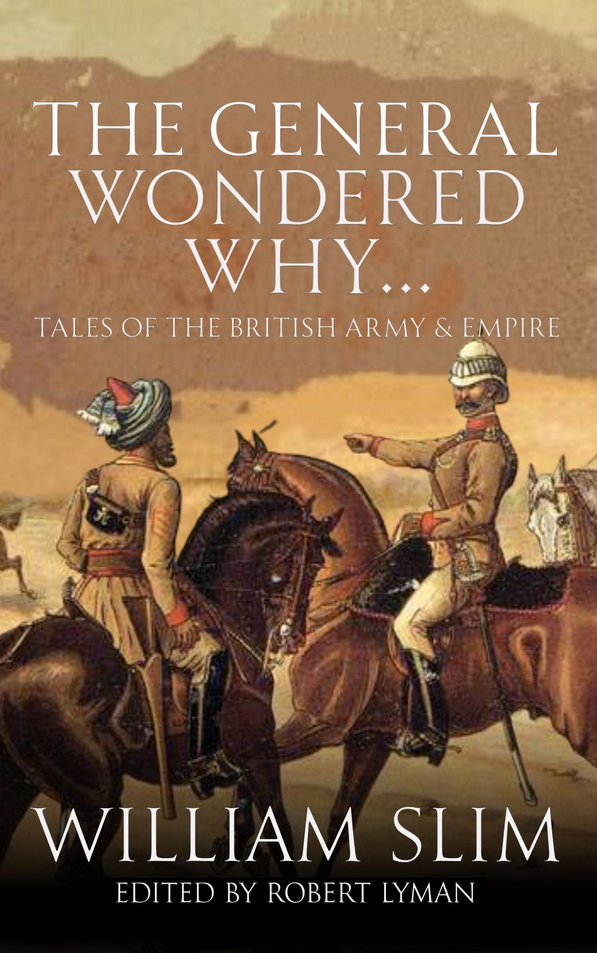
“Light duty of a clerical nature,” announced the President of the Medical Board. Not too bad, I thought, as I struggled back into my shirt. “Light duty of a clerical nature” had a nice leisurely sound about it. I remembered a visit I had paid to a friend in one of the new government departments that were springing up all over London at the end of 1915. He had sat at a large desk dictating letters to an attractive young lady. When she got tired of taking down letters, she poured out tea for us. She did it very charmingly. Decidedly, light duty of a clerical nature might prove an agreeable change after a hectic year as a platoon commander and a rather grim six months in hospital. Alas, after a month in charge of the officers’ mess accounts of a reserve battalion, with no more assistant than an adenoidal “C” Class clerk, I had revised my opinion. My one idea was to escape from “light duty of a clerical nature” into something more active. Reserve battalions were like those reservoirs that haunted the arithmetic of our youth — the sort that were filled by two streams and emptied by one. Flowing in came the recovered men from hospitals and convalescent homes and the new enlistments; out went the drafts to battalions overseas. When the stream of voluntary recruits was reduced to a trickle the only way to restore the intake was by conscription, and this was my chance.
It had been decided to segregate the conscripts into a separate company as they arrived. I happened to be the senior subaltern at the moment and I applied for command of the new company. Rather to my surprise, for I was still nominally on light duty, I got it. The conscripts, about a hundred and twenty of them, duly arrived. They looked very much like any other civilians suddenly pushed into uniform, awkward, bewildered, and slightly sheepish, and I regarded them with some misgiving. After all, they were conscripts; I wondered if I should like them.
The young British officer commanding native troops is often asked if he likes his men. An absurd question, for there is only one answer. They are his men. Whether they are jet-black, brown, yellow, or café-au-lait, the young officer will tell you that his particular fellows possess a combination of military virtues denied to any other race. Good soldiers! He is prepared to back them against the Brigade of Guards itself! And not only does the young officer say this, but he most firmly believes it, and that is why, on a thousand battlefields, his men have justified his faith.
In a week I felt like that about my conscripts. I was a certain rise to any remark about one volunteer being worth three pressed men. Slackers? Not a bit of it! They all had good reasons for not joining up. How did I know? I would ask them. And I did. I had them, one by one, into the company office, without even an N.C.O. to see whether military etiquette was observed. They were quite frank. Most of them did have reasons — dependants who would suffer when they went, one-man businesses that would have to shut down. Underlying all the reasons of those who were husbands and fathers was the feeling that the young single men who had escaped into well-paid munitions jobs might have been combed out first.
[…]
We had now advanced far enough in our training to introduce the company to the mysteries of the Mills bomb. There is something about a bomb which is foreign to an Englishman’s nature. Some nations throw bombs as naturally as we kick footballs, but put a bomb into an unschooled Englishman’s hands and all his fingers become thumbs, an ague affects his limbs, and his wits desert him. If he does not fumble the beastly thing and drop it smoking at his — and your — feet, he will probably be so anxious to get rid of it that he will hurl it wildly into the shelter trench where his uneasy comrades cower for safety. It is therefore essential that the recruit should be led gently up to the nerve-racking ordeal of throwing his first live bomb; but as I demonstrated to squad after squad the bomb’s simple mechanism, I grew more and more tired with each until I could no longer resist the temptation to stage a little excitement. I fitted a dummy bomb, containing, of course, neither detonator nor explosive, with a live cap and fuse. Then for the twentieth time I began!
When you pull out the safety-pin you must keep your hand on the lever or it will fly off. If it does it will release the striker, which will hit the cap, which will set the fuse burning. Then in five seconds off goes your bomb. So when you pull out the pin don’t hold the bomb like this!’
I lifted my dummy, jerked out the pin, and let the lever fly off. There was a hiss, and a thin trail of smoke quavered upwards. For a second, until they realized its meaning, the squad blankly watched that tell-tale smoke. Then in a wild sauve qui peut they scattered, some into a nearby trench, others, too panic-stricken to remember this refuge, madly across country, I looked round, childishly pleased at my little joke, to find one figure still stolidly planted before me. Private Chuck alone held his ground, placidly regarding me, the smoking bomb, and his fleeing companions with equal nonchalance. This Casablanca act was, I felt, the final proof of mental deficiency — and yet the small eyes that for a moment met mine were perfectly sane and not a little amused.
“Well,” I said, rather piqued, “hy don’t you run with the others?” A slow grin passed over Chuck’s broad face.
“I reckon if it ‘ud been a real bomb you’d ‘ave got rid of it fast enough,” he said. Light dawned on me.
“After this, Chuck,” I answered, “you can give up pretending to be a fool; you won’t get your discharge that way!”
He looked at me rather startled, and then began to laugh. He laughed quietly, but his great shoulders shook, and when the squad came creeping back they found us both laughing. They found, too, although they may not have realized it at first, a new Chuck; not by any means the sergeant-major’s dream of a soldier, but one who accepted philosophically the irksome restrictions of army life and who even did a little more than the legal minimum.
Comments Off on The young British officer’s attitude toward his men
Jack Benny and Mel Blanc – The Man of a Thousand Voices | Carson Tonight Show
Johnny Carson
Published 18 Nov 2022Original Airdate: 01/23/1974
(more…)
Comments Off on Jack Benny and Mel Blanc – The Man of a Thousand Voices | Carson Tonight Show
March 11, 2023
Why Japan Surrendered in WW2: Stalin or the Bomb?
Real Time History
Published 10 Mar 2023
It’s common wisdom that the nuclear bombs dropped over Hiroshima and Nagasaki caused the Japanese surrender at the end of the 2nd World War. However, there has been a fierce historical debate if this narrative omits the role of the Soviet invasion of Manchuria in August 1945 — or if this invasion was actually the main cause for the surrender.
(more…)
Comments Off on Why Japan Surrendered in WW2: Stalin or the Bomb?
M240 Bravo: America Replaces the M60
Forgotten Weapons
Published 7 Nov 2022In 1977, the US military adopted the FN MAG as the M240 in vehicular configuration to replace the less-than-successful M73/M219 machine guns. The USMC would get an early start adapting the 240 to ground configuration (the M240G), but it wasn’t until 1995 that the Army formally replaced the M60 with the MAG in M240B layout. The M240B has a number of differences from the standard MAG:
– Single-position gas regulator, giving about 600 RPM
– Picatinny rail on the top cover for mounting optics
– Front heat shield over the barrel to prevent heat mirage
– Top cover can be closed with the bolt either forward or backThe M240B has since been adopted by the Marines as well, and served extensively in Iraq and Afghanistan. It is a quite heavy gun (24+ pounds) but very well liked by its users for being exceptionally rugged, dependable, and accurate. The one we have today is in pristine condition, and one of just 11 transferrable examples registered in the US.
(more…)
Comments Off on M240 Bravo: America Replaces the M60
QotD: We used to call them “parlour pinks”
What’s life like in the Soviet Union? They neither know nor care, until the brute facts of life in the USSR are rubbed into their faces for so long that they have to acknowledge them. At which point they simply switch allegiances. Kolakowski’s essay doesn’t mention Paul Hollander’s Political Pilgrims, but they arrive at essentially the same conclusion — that instead of becoming disillusioned with Communism (Socialism, “social justice”) itself, the irritated butterflies of the Left grow disillusioned with a particular country or leader. The USSR has failed, yes, but — all together now! — “real Communism has never been tried”, so let’s put all our faith in Mao … and then Castro … and then Chavez, et cetera ad nauseam.
It’s all about maintaining the purity of the idea in the face of disappointing, vulgar, grubby reality. An honest-to-Marx Communist will come into plenty of contact with reality. A Leftist never will, because xzhey have convinced xzhemself that even the mugging they’re currently experiencing is a lofty and noble expression of authenticity. They’re willing to die for the Revolution, certainly — the urge for martyrdom has always been highly conspicuous on the Left. So long as they never feel that base, grubby, vulgar proletarian urge to defend themselves, they’ll be fine.
[…]
“Never cheer for your own.” When you come right down to it, that’s the Leftist motto. Leftists don’t deride “sportsball”, for instance, because they’re un-athletic little dweebs who were always picked last at recess (well, ok, not only that). It’s because cheering for a team, any team, is vulgar. It’s what grubby little proles do. (That’s another way to distinguish a Communist from a Leftist, by the way. Actual Commies love sports; look at all the resources the USSR poured into the Olympics, for instance. That’s because sports are good training for war).
Is Leftism curable? Can they be made to cheer for their own? Experience suggests that the cure will be very harsh indeed … if indeed it’s possible at all.
Severian, “Grubby Little Proles”, Rotten Chestnuts, 2020-05-31.
Comments Off on QotD: We used to call them “parlour pinks”
March 10, 2023
The evolution of a slur
Scott Alexander traces the reasons that we can comfortably call British people “Brits” but avoid using the similar contraction “Japs” for Japanese people:
Someone asks: why is “Jap” a slur? It’s the natural shortening of “Japanese person”, just as “Brit” is the natural shortening of “British person”. Nobody says “Brit” is a slur. Why should “Jap” be?
My understanding: originally it wasn’t a slur. Like any other word, you would use the long form (“Japanese person”) in dry formal language, and the short form (“Jap”) in informal or emotionally charged language. During World War II, there was a lot of informal emotionally charged language about Japanese people, mostly negative. The symmetry broke. Maybe “Japanese person” was used 60-40 positive vs. negative, and “Jap” was used 40-60. This isn’t enough to make a slur, but it’s enough to make a vague connotation. When people wanted to speak positively about the group, they used the slightly-more-positive-sounding “Japanese people”; when they wanted to speak negatively, they used the slightly-more-negative-sounding “Jap”.
At some point, someone must have commented on this explicitly: “Consider not using the word ‘Jap’, it makes you sound hostile”. Then anyone who didn’t want to sound hostile to the Japanese avoided it, and anyone who did want to sound hostile to the Japanese used it more. We started with perfect symmetry: both forms were 50-50 positive negative. Some chance events gave it slight asymmetry: maybe one form was 60-40 negative. Once someone said “That’s a slur, don’t use it”, the symmetry collapsed completely and it became 95-5 or something. Wikipedia gives the history of how the last few holdouts were mopped up. There was some road in Texas named “Jap Road” in 1905 after a beloved local Japanese community member: people protested that now the word was a slur, demanded it get changed, Texas resisted for a while, and eventually they gave in. Now it is surely 99-1, or 99.9-0.1, or something similar. Nobody ever uses the word “Jap” unless they are either extremely ignorant, or they are deliberately setting out to offend Japanese people.
This is a very stable situation. The original reason for concern — World War II — is long since over. Japanese people are well-represented in all areas of life. Perhaps if there were a Language Czar, he could declare that the reasons for forbidding the word “Jap” are long since over, and we can go back to having convenient short forms of things. But there is no such Czar. What actually happens is that three or four unrepentant racists still deliberately use the word “Jap” in their quest to offend people, and if anyone else uses it, everyone else takes it as a signal that they are an unrepentant racist. Any Japanese person who heard you say it would correctly feel unsafe. So nobody will say it, and they are correct not to do so. Like I said, a stable situation.
He also explains how and when (and how quickly) the use of the word “Negro” became extremely politically incorrect:
Slurs are like this too. Fifty years ago, “Negro” was the respectable, scholarly term for black people, used by everyone from white academics to Malcolm X to Martin Luther King. In 1966, Black Panther leader Stokely Carmichael said that white people had invented the term “Negro” as a descriptor, so people of African descent needed a new term they could be proud of, and he was choosing “black” because it sounded scary. All the pro-civil-rights white people loved this and used the new word to signal their support for civil rights, soon using “Negro” actively became a sign that you didn’t support civil rights, and now it’s a slur and society demands that politicians resign if they use it. Carmichael said — in a completely made up way that nobody had been thinking of before him — that “Negro” was a slur — and because people believed him it became true.
Comments Off on The evolution of a slur
Tank Chats #168 | Vixen & Fox | The Tank Museum
The Tank Museum
Published 18 Nov 2022Join David Fletcher as he takes a look at the Vixen and Fox armoured cars.
(more…)
Comments Off on Tank Chats #168 | Vixen & Fox | The Tank Museum


