
Forgotten Weapons
Published Jul 10, 2024In 2015, FN USA introduced a Military Collector product line — semiautomatic versions of their military contract small arms. These were the M4, M16, and — most interestingly — the M249 SAW. The SAW is a version of FN’s Minimi light machine gun, developed in 1974 and adopted by the US in 1982. The semiauto version, designated M249S, is exactly the same as the military M249 but adapted to fire from a closed bolt in semiautomatic only, making it a non-NFA item like any other semiautomatic rifle. The semiauto conversion as done by essentially chopping off the back of the bolt carrier to act as a linear hammer, thus allowing the use of the original style of trigger mechanism. Since its introduction in 2016, FN USA has made more than 10,000 of these rifles, truly proving the depth of American collector interest in this sort of thing (much to the surprise of the Belgian FN administration …).
(more…)
November 1, 2024
FN M249S semiauto for military collectors
October 29, 2024
The slavery reparations grift – “it’s not possible for us to compensate a man for having made him better off”
The demands for reparations from Britain over the slave trade are not based on the actual history as much as emotion and selective blindness to the facts:
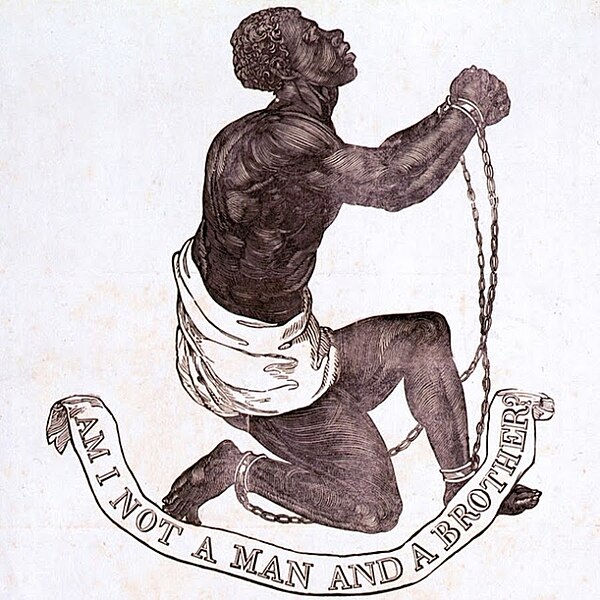
The Official Medallion of the British Anti-Slavery Society, by Josiah Wedgwood 1795.
British Abolition Movement via Wikimedia Commons.
No, no, stop squealing. Yes, slavery was appalling, vile, we’re all damn glad we don’t do it any more. But slave labour was not free.
We could — possibly should — look at the difference between that subsistence level that the slaves got and what free labour — not free as in at no cost, free as in free to choose — got at the same time. The answer being not much difference in fact. If we’re to believe Jason Hickel (which, of course, we shouldn’t) free labour in England got below subsistence incomes. To be Marxist, what was the expropriation from those slaves, from the value of their labour? And, well, not a hugely different amount from that of free labour at the time.
While imperial Britain soared to sustainable economic development and global military superpower status, the enslaved and their descendants were left to this day with enduring pain, persistent poverty and systemic suffering.
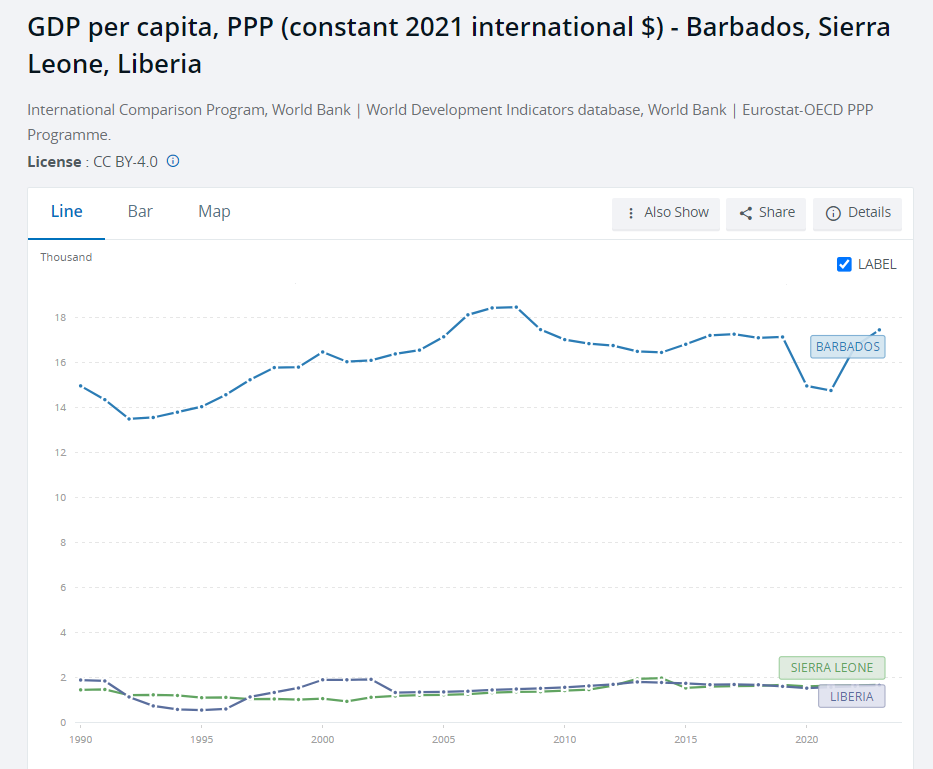
This is, as the cool kids say, problematic. Beckles is from Barbados. So, let us use Barbados numbers. And compare them to Sierra Leone and Liberia. The places that slaves not transported across to their servitude were freed into.
So, Hils, Matey, what is this poverty and pain you’re condemned to?
An obvious point — it’s not possible for us to compensate a man for having made him better off.
But we need to go further too. Britain did not benefit from this labour anyway. We did not then have a state controlled economy, we do not now have a state controlled economy. Britain didn’t own the slaves so it’s not Britain that — even if you can prove that there should be reparations — which should pay for owning the slaves it didn’t.
This does then rather leave the reparations argument being that Barbados — or whoever — needs to go around suing, individually, the estates of those who owned slaves. Good luck with that one.
The so-called Slavery Abolition Act, the most racist legislation ever passed in the British parliament,
Aha, have you ever in your puff seen such a perfect perisher of an argument? That abolition of slavery itself was the most racist legislation ever?
Aha, aha, aha. Becks must have practised that one in the mirror a lot for no audience would be able to hear that without screaming in laughter.
compensation of £20m in cash paid as reparations to the enslavers. The enslaved were valued at £47m, and the remaining amount was paid off with labour in kind for four extra years of enslavement after they were freed. They received no compensation for the theft of their labour or the denial of their human identity.
A £20 million bribe and cheap at twice the price. For that’s what it was. A bribe. One we’re still paying off today — no, Osborne did not pay it off, he issued more gilts to pay off the old ones — and I’m wholly happy to be paying my mite of that amount. Absolute damn bargain, freeing 700k people from slavery for such a trivial sum. As to the slaves, well, they gained their freedom. Which is of value. Actually, that’s rather the point, freedom has value, no?
QotD: The Roman Republic after the Social War
The Social War coincided with the beginning of Rome’s wars with Mithridates VI of Pontus – the last real competitor Rome had in the Mediterranean world, whose defeat and death in 63 BC marked the end of the last large state resisting Rome and the last real presence of any anti-Roman power on the Mediterranean littoral. Rome was not out of enemies, of course, but Rome’s wars in the decades that followed were either civil wars (the in-fighting between Rome’s aristocrats spiraling into civil war beginning in 87 and ending in 31) or wars of conquest by Rome against substantially weaker powers, like Caesar’s conquests in Gaul.
Mithridates’ effort against the Romans, begun in 89 relied on the assumption that the chaos of the Social War would make it possible for Mithridates to absorb Roman territory (in particular the province of Asia, which corresponds to modern western Turkey) and eventually rival Rome itself (or whatever post-Social War Italic power replaced it). That plan collapsed precisely because Rome moved so quickly to offer citizenship to their disgruntled socii; it is not hard to imagine a more stubborn Rome perhaps still winning the Social War, but at such cost that it would have had few soldiers left to send East. As it was, by 87, Mithridates was effectively doomed, poised to be assailed by one Roman army after another until his kingdom was chipped away and exhausted by Rome’s far greater resources. It was only because of Rome’s continuing domestic political dysfunction (which to be clear had been going on since at least 133 and was not a product of the expansion of citizenship) that Mithridates lasted as long as he did.
More than that, Rome’s success in this period is clearly and directly attributable to the Roman willingness to bring a wildly diverse range of Italic peoples, covering at least three religious systems, five languages and around two dozen different ethnic or tribal identities and forge that into a single cohesive military force and eventually into a single identity and citizen body. Rome’s ability to effectively manage and lead an extremely diverse coalition provided it with the resources that made the Roman Empire possible. And we should be clear here: Rome granted citizenship to the allies first; cultural assimilation only came afterwards.
Rome’s achievement in this regard stands in stark contrast to the failure of Rome’s rivals to effectively do the same. Carthage was quite good at employing large numbers of battle-hardened Iberian and Gallic mercenaries, but the speed with which Carthage’s subject states in North Africa (most notably its client kingdom, Numidia) jumped ship and joined the Romans at the first real opportunity speaks to a failure to achieve the same level of buy-in. Hannibal spent a decade and a half trying to incite a widespread revolt among Rome’s Italian allies and largely failed; the Romans managed a far more consequential revolt in Carthage’s North African territory in a single year.
And yet Carthage did still far better than Rome’s Hellenistic rivals in the East. As Taylor (op. cit.) documents, despite the vast wealth and population of the Ptolemaic and Seleucid states, they were never able to mobilize men on the scale that Rome did and whereas Rome’s allies stuck by them when the going got tough, the non-Macedonian subjects of the Ptolemies and Seleucids always had at least one eye on the door. Still worse were the Antigonids, whose core territory was larger and probably somewhat more populous than the ager Romanus (that is, the territory directly controlled by Rome), but who, despite decades of acting as the hegemon of Greece, were singularly incapable of directing the Greeks or drawing any sort of military resources or investment from them. Lest we attribute this to fractious Greeks, it seems worth noting that the Latin speaking Romans were far better at getting their Greeks (in Southern Italy and Campania) to furnish troops, ships and supplies than the Greek speaking (though ethnically Macedonian) Antigonids ever were.
In short, the Roman Republic, with its integrated communities of socii and relatively welcoming and expansionist citizenship regime (and yes, the word “relatively” there carries a lot of weight) had faced down a collection of imperial powers bent on maintaining the culture and ethnic homogeneity of their ruling class. Far from being a weakness, Rome’s opportunistic embrace of diversity had given it a decisive edge; diversity turned out to be the Romans’ “killer app”. And I should note it was not merely the Roman use of the allies as “warm bodies” or “cannon fodder” – the Romans relied on those allied communities to provide leadership (both junior officers of their own units, but also after citizenship was granted, leadership at Rome too; Gaius Marius, Cicero and Gnaeus Pompey were all from communities of former socii) and technical expertise (the Roman navy, for instance, seems to have relied quite heavily on the experienced mariners of the Greek communities in Southern Italy).
Like the famous Appian Way, Rome’s road to empire had run through not merely Romans, but Latins, Oscan-speaking Campanians, upland Samnites, Messapic-speaking Apulians and coastal Greeks. The Romans had not intended to forge a pan-Italic super-identity or to spread the Latin language or Roman culture to anyone; they had intended to set up systems to get the resources and manpower to win wars. And win wars they did. Diversity had won Rome an empire. And as we’ll see, diversity was how they would keep it.
Bret Devereaux, “Collections: The Queen’s Latin or Who Were the Romans, Part II: Citizens and Allies”, A Collection of Unmitigated Pedantry, 2021-06-25.
October 28, 2024
History of the Krummlauf Device: Hitler’s Folly (One of Many)
Forgotten Weapons
Published Jul 7, 2024Today we are taking a look at the backstory of the famously recognizable Krummlauf device, the curved barrel attachment for the StG-44. It is really a perfect example of how German late-war desperation weapons took shape. It went from an idea nobody actually wanted to an impossible development program in the chaos of the German defeat.
You can see my previous video on an example of the Krummlauf (from 2014) here:
https://youtu.be/HSsFiS2VoxgAnd definitely check out Garand Thumb‘s video shooting an original one here:
https://www.youtube.com/watch?v=cO2Gu…
(more…)
QotD: Democracy as theatre
One thing we are learning about modern democracy is that it is a myth. The people are not in charge. They get to vote on things and select representatives, but those representative don’t actually represent the interests of the people, who voted them into their positions. The office holders in a modern democracy represent the interests of the money-men who sponsored them. Politicians in a democracy are like prize fighters, in that they are controlled by a management team.
Like a prize fighter, one of the demands placed upon a modern politician is that he must at all times seek the attention of the public. Much of what we see in our modern democracies is false drama, designed to gain attention. This is why women have proven to be so successful as politicians. Women are naturally gifted with the ability to get attention, especially through false drama. It turns out that democracy is a form of governance modelled on the beauty pageant.
This is the point of the impeachment fiasco. The Democrats are the party of girls and gay men, so they naturally seek drama. Trump’s great sin is that he is a great showman, so he gets all the attention. Impeachment allows the vagina party to one-up him and force him to pay attention to them. If you look at the people celebrating in the streets, it’s lesbians and middle-aged woman. They are not celebrating because they hate Trump. They are happy someone is noticing them.
The Z Man, “Impeaching Democracy”, The Z Blog, 2019-12-19.
October 27, 2024
The Great Demobilization: How the Allied Armies Were Sent Home
World War Two
Published 26 Oct 2024After the war, the Allies face the new challenge how to bring home the tens of millions of troops they have deployed across the globe. Today Indy examines this massive logistical effort, looking at the American Operation Magic Carpet, the British government’s slow but steady approach, and the devastation that Soviet troops returned home to.
(more…)
Reading the Herculaneum Papyri
Toldinstone Footnotes
Published Jul 5, 2024On this episode of the Toldinstone Podcast, Dr. Federica Nicolardi and I discuss the challenges of reading scrolls charred and buried by the eruption of Vesuvius in 79 AD.
Chapters:
00:00 Discovery of the scrolls
03:23 Opened and unopened
05:17 How to handle charred papyrus
09:11 New texts
13:17 Philodemus of Gadara
16:04 Epicurean philosophy
20:20 The library in the Villa of the Papyri
24:05 The Vesuvius Challenge
25:56 Progress so far …
28:44 The newest text
30:06 What comes next
34:20 What’s still buried?
QotD: Puritans, predestination, and the Ranters
The outpourings of radical thought in the English Civil Wars included sects who came to exactly this conclusion. The Ranters, at least by reputation, advocated a lifestyle of Dionysiac excess. If orgies and boozing, gluttony and blasphemy did not have any material impact on whether you were going to heaven or hell, then why not shag, indulge and curse the Lord as much as you want?
The extent of their membership is disputed and the fear of the Ranters was strong among the Puritans, partly, I suspect, because the logical fallacy of the original tenet is so glaringly obvious. Many of the theological arguments espoused by the men who were labelled Ranters were more textured and complicated than a license to loucheness. But the essential point remains: if you are already damned, your actions and intent are irrelevant.
The Puritan response was a horrified recoil. If God has made you one of the elect, you have a responsibility to Him to behave as if you are elect. A rare few came to believe they were not elect, and tortured themselves with it. If this sounds familiar, you have probably met an apologetic white male ally of the woke.
Antonia Senior, “Identity politics is Christianity without the redemption”, UnHerd, 2020-01-20.
October 26, 2024
Our solar energy future – “In September alone, Germany paid 2.6 billion Euro to renewables producers for electricity that had a market value of a mere 145 million Euro”
Checking in with what’s been happening in Germany, eugyppius explains why solar power is far from the cost-free energy source that politicians and scam artists try to claim:

Photovoltaic panels on a roof, 28 April, 2015.
Photo by Antonio Chaves, via Wikimedia Commons.
Climatism in Germany is attended by all manner of naive ideas and bright pink fairytale slogans. Among the latter is a dubious proverb proclaiming that “The sun doesn’t send any bills” (in German: “Die Sonne schickt keine Rechnung“). Such proverbs always seem initially plausible (is there anything freer and more democratic than sunshine?) while proving to be basically the opposite of the truth. In fact, the energy transition has landed German taxpayers in the position of paying billions of Euros for the sun to shine. It is becoming an unmitigated disaster, and what is worse, the more we expand solar capacity, the more we will have to pay. For something that does not send any bills, sunshine has sure become very expensive here in the Federal Republic.
Welt calls it “the solar trap,” and it works like this: Our Renewable Energy Sources Act (EEG) pledges to pay renewables producers fixed tariffs for every kilowatt hour of electricity their installations feed into the grid. Whether you are an ordinary climate-conscious person with solar panels on your house or you run massive solar farms, the EEG entitles you to receive these fixed “feed-in tariffs” for a period of twenty years. The EEG also requires grid operators to accept your electricity regardless of demand and to sell it on the electricity exchange.
Now the sun, although it may not charge for its services, turns out to have this naughty habit of shining in many places all at once. When this happens, electricity supply often exceeds electricity demand and exchange prices fall. They can fall all the way to zero, or in extreme situations of excessive sunshine they can even go negative. Negative prices mean that you have to actually pay “buyers” to take the excess power off your hands. Whether the prices are merely very low, or zero, or negative, the German taxpayer has obligated himself, via the EEG, to pay these producers of unwanted if extremely green and climate-friendly electricity their fixed feed-in tariffs anyway. That is, we are on the hook for the difference between the actual exchange value of excess electricity and the feed-in tariffs promised to producers. In this way we have ended up literally paying for the sun to shine.
In September alone, Germany paid 2.6 billion Euro to renewables producers for electricity that had a market value of a mere 145 million Euro. Our sunny autumn is destroying our already-fragile government budget. Federal number-crunchers had originally allocated 10.6 billion Euros for feed-in tariffs in 2024, but already the government owes 15 billion and the year is not yet over. Scholz’s cabinet are thus trying to allocate an additional 8.8 billion Euro for the rest of the year. The parliament have yet to approve the additional funds, though, and also the damned sun will just not stop fucking shining, and so probably even this supplementary allocation won’t be enough. We’re bleeding money, all for a sun that doesn’t send any bills.
This problem will get worse before it gets better. The more solar panels we install, the greater oversupply we’ll face when the sun shines, and the larger the spread between the fixed feed-in tariffs and the actual market value of this green electricity. In 2024, as I said, the government projected that feed-in tariffs would cost 10.6 billion Euros, but they’ll probably end up costing 20 billion at least. Next year, the costs are projected to be even higher, and the year after that, they will be higher still. As Welt report, the German government plans to triple our solar capacity to 215 gigawatts over the next six years – “the equivalent of 215 nuclear power plants” every time the sun emerges from behind a blessed cloud.
The energy transitioners know they messed up. The new plan is to change the rules for solar subsidies. When prices go negative, larger producers won’t receive their fixed tariffs, and they’ll also have to sell their electricity themselves. In this way, they will become newly sensitive to market demand and stop overproducing electricity when nobody wants it. It is almost like creating a blind system totally oblivious to market incentives was a bad idea. Unfortunately, the new rules will apply only to new solar installations. The German government will still have to honour its insane agreement to pay the operators of older solar plants for years to come. We will light billions on fire for nothing.
Secrets of the Herculaneum Papyri
toldinstone
Published Jul 5, 2024The Herculaneum papyri, scrolls buried and charred by Vesuvius, are the most tantalizing puzzle in Roman archaeology. I recently visited the Biblioteca Nazionale in Naples, where most of the papyri are kept, and discussed the latest efforts to decipher the scrolls with Dr. Federica Nicolardi.
My interview with Dr. Nicolardi: https://youtu.be/gs1Z-YN1aQMChapters:
0:00 Introduction
0:40 Opening the scrolls
1:47 A visit to the library
2:38 A papyrologist at work
4:00 The Vesuvius Challenge
4:46 What the scrolls say
5:40 Contents of the unopened scrolls
6:28 The other library
7:12 An interview with Dr. Nicolardi
(more…)
QotD: Henry VIII
Leaving all of Henry’s personal quirks aside — and his was a very strong, distinctive personality — that’s got to affect you.
So many of the changes in Henry’s reign, then, must have been driven in part by the fact that it was the same man, reflecting on a lifetime’s experience in a job he was never expected to have, wasn’t really prepared for, and didn’t seem to want (aside from the lifestyle). There’s been lots of pop-historical theorizing about what was “wrong” with the later Henry — senility, syphilis, the madness of power — but more naturalistic explanations of his later actions must take into account simple age. A man nearing the end of his life, knowing that his succession was very much in doubt and fearing for the state of his soul, will do things differently than a young man in the prime of life.
[…]
Life was hard back then, and cheap. When every other child dies before the age of five and the average life expectancy is 35, I imagine, you live your life cranked to 11 every waking moment. Accounts of grown men weeping like little girls at the theater aren’t an exaggeration; the whole age was given to extreme outbursts. And that’s just the baseline! Now consider that a guy like Henry never had a moment to himself, and I do mean never — not once, in his entire life. He even had a guy with him on the crapper, who would wipe his ass for him. The relationship between Henry and a guy like Wolsey, then — to say nothing of his relationship with the Groom of the Stool — must’ve been intimate in a way we can’t possibly grasp. Compared to that, you and your wife are barely on speaking terms. If Henry seemed sometimes to set policy just because he was pissed at Wolsey, we must consider the possibility that that’s exactly what happened.
The best you can do, then, is imagine yourself back there as best you can, and make your interpretations in that light, acknowledging your biases as best you can (I’m not a medievalist, obviously, but I’m a much better read amateur than most, and though Henry VIII is a very hard guy to like, he’s equally hard not to admire). Most of all — and this, I think, is the hardest thing for academic historians, more even than recognizing their presentist biases — you have to keep your humility. Perhaps Henry’s decision about ___ was part of a gay little frenemies spat with Wolsey. That’s sure what it seems like, knowing the man, and having no contrary evidence …
… but contrary evidence might always emerge. It might not have been the optimal decision, but it might’ve been a much better one than you thought, because Henry had information you didn’t, but now do. It makes for some restless nights, knowing that your life’s work could be overturned by some grad student finding some old paper at a yard sale somewhere, but … there it is.
Severian, “Writing Real History”, Rotten Chestnuts, 2021-08-18.
October 25, 2024
How a Soviet Clerk Took Down a Spy Network
World War Two
Published 24 Oct 2024Igor Gouzenko, a Soviet cipher clerk in Canada, defected in 1945, bringing with him documents that revealed a massive Soviet espionage network in the West. His actions forced the world to confront Soviet infiltration, shifting global politics and igniting early Cold War tensions. This episode uncovers how one man’s bravery exposed a hidden war.
(more…)
October 24, 2024
It’s called “piercing the corporate veil” and it’s a terrible idea
Tim Worstall explains why the EU’s latest brain fart is not just a bad idea in its own right, but a truly horrific precedent for the future:

Elon Musk at the 2015 Tesla Motors annual meeting.
Photo by Steve Jurvetson via Wikimedia Commons.
… But now, this, now this is even more important than that. We can deal with free speech by the judicious use of lampposts. This is worse:
The European Union has warned X that it may calculate fines against the social-media platform by including revenue from Elon Musk’s other businesses, including Space Exploration Technologies Corp. and Neuralink Corp., an approach that would significantly increase the potential penalties for violating content moderation rules.
Under the EU’s Digital Services Act, the bloc can slap online platforms with fines of as much as 6% of their yearly global revenue for failing to tackle illegal content and disinformation or follow transparency rules.
In English law that’s known as “piercing the corporate veil”. It’s also something we don’t do. Because that corporate veil is the very thing, the only thing, that makes large scale economic activity possible.
It has actually been said — and not just by me — that the invention of the limited company is the third grand invention of all time. Agriculture, the scientific method, the limited company.
Before the limited co everything was done through partnerships. Every individual involved in the ownership of something was liable for all of the debts of that thing. Which, when you’ve got 5 or 10 blokes trading isn’t that bad an incentive upon them to be honest.
Now think of large scale activity. We want a blast furnace — plenty of folk say Britain should have one after all. £3 to £5 billion these days. OK. No one’s got that much. So, we need to mobilise the savings of many thousands of people to go build it. But without limited liability that means all of those thousands are liable for all the debts — off into the future — of that blast furnace.
“Invest £500 in the new, new British Steel. And if we fuck up then in 10 years’ time they’ll come and take your house.”
Err, yes.
Large scale economic activity depends upon being able to separate the debts of one specific activity from the general economic life of all its backers. If this is not true then no one will invest in large scale economic activity. Therefore we won’t have large scale economic activity. Which would, you know, be bad.
QotD: From the OG Pontifex Maximus to the Pope
The Protestants might be happy to hear Misanthrope claim this would make you sick, because they’d correctly state that absolutely none of this is in the Bible. The entire liturgical structure of the Catholic Church is pagan, an inherited but corrupted structure from classical antiquity. Thus, a great majority of historic Christianity is syncretic. You might even say haphazardly pagan. The very idea of a high priest who would oversee the spiritual and religious duties is copped by the Pope’s role in Catholicism. The vestments worn by Catholic clergy, the use of incense (especially frankincense, the main herb used by invocations in Hellenism), chants, the sanctification of holy spaces, and the very architecture of Catholic cathedrals are derived from religious practices of pagan Rome. Let’s not get into art. The processions, the veneration of saints (akin to the Roman household gods or Lares), ancestor worship (which Catholics pretend they don’t do), and the hierarchical structure all reflect a continuity from Rome’s Hellenic pagan past. The Catholic Church’s liturgy, with its detailed rituals and sacraments is a direct continuation of the Greco-Roman pagan way of embedding religious practice into every aspect of public and private life. The transformation of its pantheon of gods into a multitude of saints, each with specific roles and domains is indistinguishable from how they interacted with their deities.
Fortissax, “Spiteful Mutant Christians”, Fortissax is Typing, 2024-07-19.
[NR: Glossary links added.]
October 23, 2024
Canadian history through the propagandist lens
Fortissax casually tosses a few bricks into the glass house of Canadian history as it has been taught to schoolchildren over the last 30-40 years:
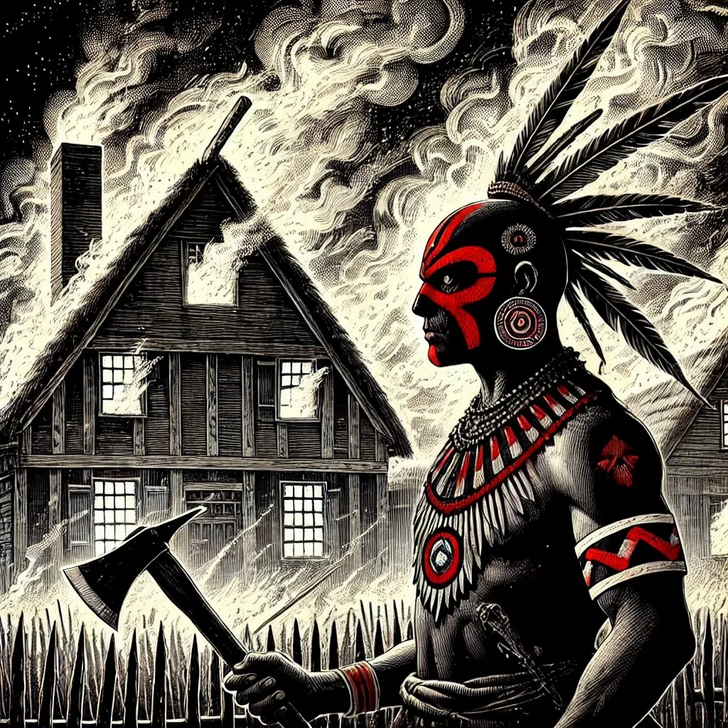
During our annual Not One Body Found season, I thought I’d discuss the truth about the brutal violence and savagery of North America’s most early, prominent and influential indigenous tribes, and popular narratives surrounding them.
If you’re an ethnic Canadian, born in the 1990s, you’re no doubt familiar with the education system’s attempts to subject you to a program of Maoist-style struggle sessions over the alleged genocide of the indigenous peoples in Canada. These struggle sessions in classrooms and collective humiliation rituals serve multiple purposes. One is to de-legitimize the history of, and perpetuate the ongoing deconstruction of Canada. The other is to de-legitimize the existence of the Canadian people as a nation (defined as a group sharing ethnic, cultural, and historical ties), in preparation for demographic replacement via mass migration.
The average Canadian’s school experience is filled with a turbo-charged version of liberal Noble Savage mythology, which is still propagated by leftists and indigenous activists. This has given the impression to many of the indigenous tribes as a singular race, continent-wide, uniformly peace-loving, non-binary, nature-appreciating matriarchal egalitarians until the evil, white, patriarchal Christian man arrived.
This resembles equally revisionist history about the Indo-European invasions into Europe around 4000 B.C. against the Pre-Indo-Europeans. You know that story: patriarchal brutes from the Eurasian steppes, with their advanced bronze weaponry and horse-powered chariots, wiped out the longhouse-dwelling, peace-loving, egalitarian agricultural Early European Farmers, who were feminist. This theory, conceived by Maria Gimbutas, a feminist intellectual, was debunked and discarded years ago. In reality, the Early-European-Farmers were extraordinarily warlike, violent, engaged in child murder or sacrifice and were apparently innovative as they built monuments like Stonehenge. This is much the same for indigenous in North America. All of this is framed in a Marxist oppressor-oppressed paradigm.
Tales of cruel treatment, deliberate biological warfare via smallpox blankets (of which there is only one known reference, with attempts to implement unknown), or extermination by colonial death squads haunts the minds of Canadians, planting the seeds of self-doubt and masochism. If you listen carefully to the rhetoric of leftists and indigenous activists, you’d be led to believe there was an industrial mass-slaughter of tribes, with conveyor belts funneling indigenous people into machines that spit out moccasins and dream catchers. The depopulation of indigenous tribes was not the result of deliberate action but rather Europeans being far more numerous and carrying diseases to which they had no immunity. The second cause was perpetual, brutal warfare by the survivors against each other. The mass depopulation from epidemic disease in North America occurred in the mid-1600s, after epidemic breakouts in the filthy, cramped conditions of Europe. Not almost a hundred years later in 1763, where smallpox blankets are merely discussed by General Jeffrey Amherst and Colonel Henry Bouquet.
Indigenous activists believe they were subject to a holocaust-style genocide. It is not a coincidence that the amplifying of the National Day for Truth and Reconciliation occurs at the same time as the Managerial Regime in Canada has declared itself a “post-national state” (which the indigenous also live in and suffer consequences from). They believe Canada is a country without a people. Ironically this lines up with activists’ own definition of “cultural genocide”, because in 1867 during Confederation Year, according to census data, Canada was 92% Anglo-French, 7% miscellaneous Europeans, and the remaining 1% indigenous. Canada is unquestionably, unmistakably, a European construct of Anglo-French extraction.
In 2021, seemingly out of nowhere, the public was subjected to the establishment of this astroturfed federal holiday, which was made statutory—still only for employees of the federal government (what a coincidence!)—as of March 2023. Participation in this public humiliation ritual involves the coerced wearing of orange, and sometimes red, shirts. Canadians across the political spectrum knowingly or unknowingly participate in this ritual, with many rough, cowboy-hat-wearing, lifted-big-black-truck-driving conservatives, as well as tattooed, soy-eating, vegan ketamine enthusiast quartz-worshiping leftists also enthusiastically partaking.
It’s called being a decent human being, Chud! Schools, the monopolized legacy media, corporations, and brands all recognize and partake in the humiliation ritual, directed exclusively at ethnic Canadians. Football games have their players sing the national anthem, and every clinically obese, corn-syrup-slurping sportsball fan claps as the announcer humiliates and shames him or her with a land acknowledgement to prove to the crowd and community that they “don’t see race”. Medical professionals and university faculty across the country also include land acknowledgements in professional email signatures. Even law enforcement gleefully participate in the the ritual, dancing like circus monkeys to the tune of people who despise them.


