Quotulatiousness

January 21, 2014

George Orwell – confessed pamphlet addict

Filed under: Britain, History, Media, Politics — Tags: , , , — Nicholas @ 11:22

The British Library has posted an interesting short item on their Untold lives blog about George Orwell’s pamphlet collection:

George Orwell’s collection of mostly political ephemera was an important barometer of the social changes of the 1930s and 1940s, and a measure of his influences during those decades. While Orwell’s personal papers went to University College London and the National Archives, his miscellaneous materials are held by the British Library. Totalling over 2700 items, a full inventory of Orwell’s collection of pamphlets is now available via the British Library’s website.

Orwell was not a writer of ‘bestselling’ books until the end of his life, after the Second World War. He became known as a journalist, a critic of other people’s writings and a word-portraitist of the landscape of politics. It is likely he never passed up the opportunity to acquire pamphlets of any persuasion. He wryly observed in The Tribune that the pamphleteer’s road was paved by a “complete disregard for fairness or accuracy” (8 December 1944). Perhaps the most appealing aspect of his pamphlets collection is that he wasn’t Hoovering them up to form a George Orwell Archive; he considered them as a spectrum of thought that was deserving of preserving.

[…]

Orwell’s heaps of pamphlets informed his writing, both fiction and non fiction. He took pride in his squirrelling-away of pamphlets, “political, religious and what-not”. In 1949, he estimated that this hoard numbered 1200-2000, but even the higher figure was an underestimation. He wrote that “a few of them must be great rarities” and they were “bound to be of historical interest in 50 years time.” In line with most of his considerations, he wasn’t wrong.

What The Three Musketeers owes to real history

Filed under: Books, Europe, France, History, Media — Tags: , — Nicholas @ 07:56

Boyd Tonkin discusses some of the real historical incidents that Alexandre Dumas drew upon for his fiction:

In September 1784, an unpleasant incident took place at M. Nicolet’s fashionable theatre in Paris. A young, aristocratic man-about-town, born in the French colony of Saint-Domingue (now Haiti), had escorted to the play an elegant lady whose family also came from the West Indies. Dashing, handsome, the son of Count Davy de la Pailleterie might have seemed the ideal squire for the evening. Save, in many eyes, for one thing. He was black — notably dark-skinned, the mixed-race youth had a slave mother — and his companion white.

At Nicolet’s, a white West Indian officer, Jean-Pierre Titon de Saint-Lamain, decided that it would be good fun to insult the count’s black son. First, he pretended to mistake the young man of colour for the lady’s lackey. Then, after an affray, Titon’s henchmen forced the victim to kneel in front of his assailant and ask for pardon. Soon the police arrived and took both men into custody. Statements were taken, but no further action followed. In 1786, the humiliated colonial boy forsook his life of leisure to embark on a military career. He enrolled in the Queen’s Dragoons under a surname not his father’s. Instead, he chose the identity of his slave-born mother: Marie-Cessette Dumas.

[…]

By the early 1850s, this Alexandre Dumas had become not only the famous novelist but, arguably, the most famous Frenchman in the world. At this point, garlanded with international fame and quickly spent riches, he wrote his memoirs. Dumas the novelist adored and hero-worshipped his father, who had died in 1806 but left indelible memories. The first 200 pages of My Memoirs deal with General Alex; in fact, Dumas abandons the narrative of his own life at the age of 31. But in his version of the contretemps at Nicolet’s, the strapping young Alex picks up Titon and chucks him into the orchestra pit. This is a feat of derring-do worthy of… well, worthy of a musketeer.

[…]

Dumas relished his life, and the privileges and pleasures that his mythic tales earned. He made and lost fortunes as quickly as he wrote bulky novels. He meddled in revolutionary politics first in France and then in rebellious Italy (where he founded a paper called The Independent). He ran through perhaps 40 mistresses and sired (at least) seven children with them. His published works comprise 300 volumes and 100,000 pages. After packing around five lives into one, he died after a stroke in 1870 — the same year as Charles Dickens, whose A Tale of Two Cities pays its own tribute to the style of the comrade with whom he dined in Paris. If living well is the best revenge, then Alexandre made the bigoted society which had tried to humble General Alex kneel to him.

H/T to Jessica Brisbane for the link.

Update, 4 February: A.A. Nofi reviews The Black Count: Glory, Revolution, Betrayal, and the Real Count of Monte Cristo, by Tom Reiss.

Reiss […] fits Dumas into his times and his social environment. So we get a look at the brutalities of slavery and racism under the Ancien Régime and later during the supposedly enlightened French Republic. We see the dying days of the Bourbon monarchy, the Revolution that finished it off, and the rise of Bonaparte’s empire, which brought things part way back to their start again. Reiss also gives us little portraits of many individuals; the general’s family, of course, but also soldiers and rulers such as Carnot, Kleber, the Neapolitan and French royals, Lafayette, and others, including Bonaparte, who would become Dumas’ nemesis. Finally, Reiss looks at how the count’s life shaped that of his son and influenced the latter’s novels, noting traces of the senior Dumas in some of the younger’s characters, notably Edmund Dantes of The Count of Monte Cristo.

The book has some flaws. Reiss betrays a certain over-fondness for Revolutionary France, failing to see its dark side. He neglects the corruption of French officials, both at home and in occupied territories, the widespread plundering of supposedly “liberated” peoples, the slaughter of dissidents, and the widespread atrocities committed by French troops, which often sparked resistance from the very people the Revolution claimed to be liberating. There are, however, flaws common in treatments of the era, and Reiss is commendably more critical of Napoleon, who also tends to get a favorable press.

The Black Count, which was awarded the 2013 Pulitzer Prize in biography, is an excellent work, well-crafted, with a flowing narrative that makes for an easy read.

January 20, 2014

Addressing commonly held beliefs about the First World War

Filed under: Britain, Europe, Germany, History, Military, WW1 — Tags: , , , — Nicholas @ 08:37

BBC News Magazine has an article by Dan Snow discussing some commonly held beliefs about the First World War:

3. Men lived in the trenches for years on end

Front-line trenches could be a terribly hostile place to live. Often wet, cold and exposed to the enemy, units would quickly lose their morale if they spent too much time in them.

As a result, the British army rotated men in and out continuously. Between battles, a unit spent perhaps 10 days a month in the trench system, and of those, rarely more than three days right up on the front line. It was not unusual to be out of the line for a month.

During moments of crisis, such as big offensives, the British could occasionally spend up to seven days on the front line but were far more often rotated out after just a day or two.

4. The upper class got off lightly

Although the great majority of casualties in WW1 were from the working class, the social and political elite was hit disproportionately hard by WW1. Their sons provided the junior officers whose job it was to lead the way over the top and expose themselves to the greatest danger as an example to their men.

Some 12% of the British army’s ordinary soldiers were killed during the war, compared with 17% of its officers. Eton alone lost more than 1,000 former pupils – 20% of those who served. UK wartime Prime Minister Herbert Asquith lost a son, while future Prime Minister Andrew Bonar Law lost two. Anthony Eden lost two brothers, another brother of his was terribly wounded and an uncle was captured.

[…]

7. Tactics on the Western Front remained unchanged despite repeated failure

Never have tactics and technology changed so radically in four years of fighting. It was a time of extraordinary innovation. In 1914 generals on horseback galloped across battlefields as men in cloth caps charged the enemy without the necessary covering fire. Both sides were overwhelmingly armed with rifles. Four years later, steel-helmeted combat teams dashed forward protected by a curtain of artillery shells.

They were now armed with flame throwers, portable machine-guns and grenades fired from rifles. Above, planes, that in 1914 would have appeared unimaginably sophisticated, duelled in the skies, some carrying experimental wireless radio sets, reporting real-time reconnaissance.

Huge artillery pieces fired with pinpoint accuracy — using only aerial photos and maths they could score a hit on the first shot. Tanks had gone from the drawing board to the battlefield in just two years, also changing war forever.

January 18, 2014

British army unit diaries from WW1 now online

Filed under: Britain, Cancon, France, History, Military, WW1 — Tags: , , — Nicholas @ 12:07

Rather than the diaries of individual soldiers (as the original title of the video suggests), these are the formal day-to-day action records of battalions and regiments of the British army. A proportion of the diaries from the First World War have been digitized and are available on the internet:

Published on 15 Jan 2014

Diaries describing life during the First World War by British soldiers have been digitised and can be read online.

As part of the organisations centenary programme the National Archives is publishing the first batch of unit diaries from France and Flanders.

One soldier from the 4th Division, 1 Battalion Somerset Light Infantry in 1917 describes one occasion of gunfire: “The Germans quickly got their artillery into position, and a considerable amount of shelling was experienced. Our casualties in this engagement were slight.”

Another entry by Captain CJ Paterson, one of the First Battalion’s soldiers describes the horrendous reality of life in the trenches:

“As I say all should be nice and peaceful and pretty. What it actually is is beyond description.

“Trenches, bits of equipment, clothing (probably blood-stained), ammunition, tools, caps, etc., etc., everywhere.

“Poor fellows shot dead are lying in all directions. Some of ours.”

“Everywhere the same hard, grim, pitiless sign of battle and war. I have had a belly full of it.”

Maria Miller, Culture Secretary, Maria Miller, said: “The National Archives’ digitised First World War unit diaries will allow us to hear the voices of those that sacrificed their lives and is even more poignant now there are no living veterans who can speak directly about the events of the war. This new online vehicle gives a very public voice to some of these soldiers, through which we will be able to hear their thoughts and feelings.”

You can read the online war diaries on the National Archive website here: www.nationalarchives.gov.uk/first-world-­war

Records for the Canadian Corps (which fought as part of the British army) are in the process of being digitized, according to the Library and Archives Canada website.

War diaries are a day-to-day description of unit activities for army units in active service, and contain information about unit location and the military operations in which it may be involved. The diaries rarely mention individuals by name, with the exception of some references to officers.

[…]

War diaries for the Army in the First World War (RG 9 IIID3) are being digitized and can be viewed online by using the Advanced Archives Search. Records not yet digitized are available on microfilm.

  • Select Finding Aid Number in the pull down menu, and enter: 9-52
  • Enter a keyword, for example, the unit name or battalion number: “102nd” or “Royal Canadian Dragoons”

January 17, 2014

QotD: Forming a cabinet in a parliamentary system

Filed under: Britain, Government, Humour, Quotations — Tags: , , — Nicholas @ 08:05

The argument that we must do everything a Minister demands because he has been ‘democratically chosen’ does not stand up to close inspection. MPs are not chosen by ‘the people’ — they are chosen by their local constituency parties: thirty-five men in grubby raincoats or thirty-five women in silly hats. The further ‘selection’ process is equally a nonsense: there are only 630 MPs and a party with just over 300 MPs forms a government and of these 300, 100 are too old and too silly to be ministers and 100 too young and too callow. Therefore there are about 100 MPs to fill 100 government posts. Effectively no choice at all.

Jonathan Lynn, “Yes Minister Series: Quotes from the dialogue”, JonathanLynn.com

January 15, 2014

Top Gear – Car hit by train – Safety Message

Filed under: Britain, Humour, Railways — Tags: , , — Nicholas @ 00:01

January 14, 2014

Questions in Parliament – Scotland and the post-referendum military

Filed under: Britain — Tags: , , , , — Nicholas @ 00:01

A few answers to questions in the UK parliament on issues relating to the military in a post-separation Scotland, courtesy of Think Defence. First on the official reactions to the Scottish government’s pre-referendum white paper:

Sovereignty: Scotland

Andrew Rosindell: To ask the Secretary of State for Defence what discussions he has had with Ministers in the Scottish Government on defence prior to the publication of the White Paper on an independent Scotland. [178081]

Dr Murrison: The Secretary of State for Defence, my right hon. Friend the Member for Runnymede and Weybridge (Mr Hammond), did not have any discussions with Ministers in the Scottish Government about the White Paper on an independent Scotland on defence nor were any requested prior to its publication.

10 Dec 2013 : Column 197W

Ann McKechin: To ask the Secretary of State for Defence what representations his Department has received from the Scottish Government in the last 12 months on the proposed reconfiguration of the UK defence estate in the event of Scottish independence, as set out in Scotland’s Future: Your Guide to An Independent Scotland. [178610]

Dr Murrison: None. The Ministry of Defence has not received any representation from the Scottish Government regarding the reconfiguration of the UK defence estate in Scotland in the event of independence.

Ann McKechin: To ask the Secretary of State for Defence what representations his Department has received from the Scottish Government in the last 12 months on the proposed removal of the UK Trident nuclear submarines from Scottish waters in the event of Scottish independence, as set out in Scotland’s Future: Your Guide to An Independent Scotland. [178611]

Dr Murrison: None. The Ministry of Defence has not received any representation from the Scottish Government regarding the removal of the UK’s nuclear deterrent from Scotland in the event of independence.

And again, on the 17th of December:

Sovereignty: Scotland

Ann McKechin: To ask the Secretary of State for Defence what representations his Department has received from the Scottish Government in the last 12 months on the proposed transfer of armed forces personnel in the event of Scottish independence, as outlined in Scotland’s Future: Your Guide to An Independent Scotland. [180163]

Dr Murrison: None. The Ministry of Defence has not received any representation from the Scottish Government regarding the proposed transfer of armed forces personnel in the event of Scottish independence.

And on January 9th, a question on the estimated costs of defending Scotland in either case after the September referendum:

Sovereignty: Scotland

Mr Gordon Brown: To ask the Secretary of State for Defence if he will estimate the pro rata population adjusted cost of defence provision in Scotland in 2016-17; and what the Scottish Government estimates those costs will be for 2016-17 in an independent Scotland. [180865]

Dr Murrison: Defence is organised, resourced and managed on a UK basis to provide high levels of protection and security for all parts of the UK and its citizens at home and abroad. Decisions on spending are based on meeting Defence requirements and ensuring value for money. The Defence budget is for the whole of the UK and is not apportioned on a regional basis. As part of the UK, Scotland benefits from the full range of UK Defence capabilities and activities funded by the Defence budget. The UK Government is confident that the Scottish people will vote to remain part of the United Kingdom and is not planning for an independent Scotland. In the event of a vote to leave the UK, it would be for the Scottish Government to determine the Defence budget for an independent Scottish state.

January 13, 2014

An independent Scotland and the UK’s existing debts

Filed under: Britain — Tags: , , — Nicholas @ 08:56

Robert Peston examines the question of whether a post-referendum Scotland would be debt-free or would have a share in the existing debt obligations of the United Kingdom:

This morning’s statement from the Treasury that the UK will stand behind all its sovereign debts, whether or not Scotland’s people vote for independence, is in a way a statement of the bleedin’ obvious.

That debt, all £1.4 trillion of it, is an obligation of the National Loans Fund.

And nothing can change that — whether Scotland were to decide to secede (or, to pick an unlikely corollary, in the event that the People’s Liberation Army of West Sussex, miffed about fracking, were to declare UDI).

So why has the Treasury chosen to say that the UK will honour its debts, whatever Scotland does?

Well, it is because investors — whom we may think of as sophisticated and informed (ahem) — have been increasingly asking the Treasury and the Debt Management Office for clarification of the status of the UK’s financial obligations in the event of a fracturing of the United Kingdom.

[…]

Who would not vote for independence if an autonomous, separate Scotland would be set free from the burden of UK debts currently equivalent to 76% of GDP or national income (on the latest estimates by the Office for Budget Responsibility)?

Except that even Alex Salmond and the Scot Nats don’t believe that an independent Scotland could, in practice, walk away from its fair share of the UK’s debts — even if they would have the legal ability to do so.

January 12, 2014

Obscure old German book from 1925 becomes surprise e-book hit

Filed under: Books, Europe, Germany, History, Media, Politics — Tags: , , , — Nicholas @ 00:01

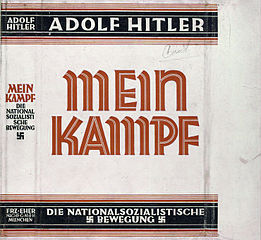
Dust jacket of 1926–1927 edition

Dust jacket of 1926–1927 edition

Sales of printed copies of Mein Kampf have been declining for years, but the e-book version is disturbingly popular:

Adolf Hitler’s Mein Kampf has quietly become an e-book bestseller, climbing high on the charts of political books on Apple’s iTunes and Amazon’s Kindle, even as print sales of the 1925 anti-Semitic screed continue to languish.

Mein Kampf hasn’t made the New York Times‘ nonfiction chart since its U.S. release in 1939, the same year Germany invaded Poland, and its print sales have fallen steadily ever since,” Chris Faraone wrote for the website Vocativ. “But with a flood of new e-book editions, Hitler’s notorious memoir just clocked a banner digital year.”

Two different digital versions of Mein Kampf currently rank third and fourth on the Politics & Current Events on iBooks, outpacing books by modern-day conservative pundits and celebrities such as Sarah Palin, Charles Krauthammer and Glenn Beck. The books sell for 99 cents and $2.99 respectively.

On Amazon, the Kindle version of Mein Kampf ranks No. 1 in the category of Propaganda and Political Philosophy.

Odd how the LA Times‘ instinct is to compare the sales of Mein Kampf with books by American conservatives, rather than works by, say, Marx, Mao, or Mussolini. You know, comparable theorists of totalitarian power (oh, wait…that is how the Times views Palin, Krauthammer, and Beck).

In a post from 2010, Reason TV looks at the power of Nazi Propaganda:

From radio and film to newspapers and publishing, the Nazi regime controlled every aspect of German culture from 1933-1945. Through Josef Goebbels’ Ministry of Public Enlightenment and Propaganda, the German state tightly controlled political messaging, promoting deification of the leader—the Führerprinzip—and the demonization of the ubiquitous and duplicitious “racial enemy.” A new exhibit at the United States Holocaust Memorial Museum in Washington, D.C., examines “how the Nazi Party used modern techniques as well as new technologies and carefully crafted messages to sway millions with its vision for a new Germany.” Reason.tv’s Michael C. Moynihan visited with museum historian and curator Steve Luckert to discuss the role and effectiveness of propaganda in the rise of fascism and what lessons can be drawn from the Nazi experiment in mass manipulation.

January 11, 2014

Spain downsizes their navy under economic pressure

Filed under: Europe, Military — Tags: , , , — Nicholas @ 13:11

Spain has decommissioned 18 ships over the past six years, including the aircraft carrier Príncipe de Asturias:

Despite increased budgets and investment in certain weapon developments, the Spanish Ministry of Defence states that their overall budget has depleted by 32% since the start of the financial crisis, with 8.4 billion in the kitty in 2008, dropping to a mere 5.75 billion planned for 2014.

As a result, the Ministry says that it has no choice but to reduce costs, thus resulting in a significant reduction in high profile military elements, like the decommissioning of 18 naval ships in the past 6 years.

One of the most iconic ships to be withdrawn last year was the aircraft carrier Príncipe de Asturias, decommissioned after 25 years of service, considered a somewhat tragic sight when she arrived at the Arsenal Militar de Ferrol for final discharge from service. But as the last Captain of the vessel, Alfredo Rodríguez Fariñas, explained, modernization and maintenance of the ‘Prince of Asturias’ cost the MoD a hundred million per year.

Part of the strategy is the withdrawal of these costly and purpose built ships, in favour of more modern craft that meets the needs to the Navy’s international mission, such as the activities in the Indian Ocean where the frigate Álvaro de Bazán and maritime action ship Tornado are currently patrolling, and the ship Cantabria, currently in the sea off the Australian coast.

Spanish navy's Juan Carlos and Principe de Asturias

Spanish navy's Juan Carlos and Príncipe de Asturias

January 10, 2014

US analysis of captured German U-boats after WW2

Filed under: Germany, History, Military, WW2 — Tags: , — Nicholas @ 08:12

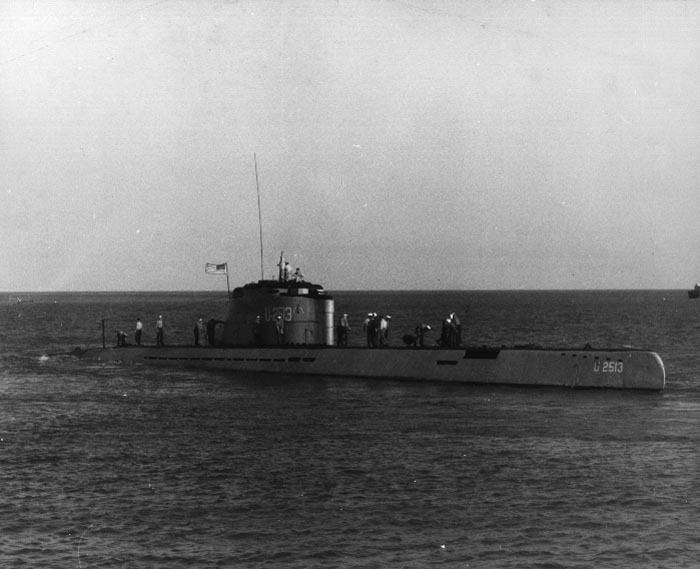
Tony Zbaraschuk posted an interesting link to the Lois McMaster Bujold Mailing list (http://lists.herald.co.uk/cgi-bin/mailman/listinfo/lois-bujold):

Design Studies of German Submarines by the US Navy

The Design Study of Type IXC U-boats was made available by Scott Sorenson. The Design Study of Type XXI U-boats was made available by the Portsmouth Naval Shipyard Public Affairs Office and the Navy Yard Museum — in particular Debora White, Gary Hildreth, Jim Dolf and Bill Tebo (a member of the US Navy crew of U-2513).

Photographs and documents of surrendered German submarines and their crews were made available by John Cunningham (a member of the US Navy crew of U-2513).

U-2513 off Key West, Florida - 30 October 1946

U-2513 off Key West, Florida — 30 October 1946

January 9, 2014

The Anti-Social Behaviour, Crime and Policing Bill, “a revolution in law-making, creating an unprecedented form of blank-cheque state power”

Filed under: Britain, Law, Liberty — Tags: , , , — Nicholas @ 11:30

Josie Appleton on the amazingly restrictive bill wending its way through the UK parliamentary process:

The bill includes Injunctions to Prevent Nuisance and Annoyance (IPNAs), which can be issued against anybody whose conduct — or threatened conduct — is capable — on the balance of probabilities — of causing nuisance or annoyance to any person.

Few things in the public space are incapable of at least annoying someone. Some people can be annoyed by busking, ball games, skateboarding, street preaching, protests, and all the rest of it. As the former director of public prosecutions Lord Macdonald QC judged: ‘It is difficult to imagine a broader concept than causing “nuisance” or “annoyance”. The phrase is apt to catch a vast range of everyday behaviours to an extent that may have serious implications for the rule of law.’

[…]

However, the problems don’t stop with clause 1. Other clauses in the bill include Public Space Protection Orders (clause 55), which allow local authorities to ban any activity which has a ‘negative effect on the quality of life’ of the area. This ban can be applied to particular groups or individuals, and can also impose conditions with which such groups must comply. This is drafted so broadly it could target anything from sleeping rough, collecting for charity, public drinking, begging, feeding pigeons, or smoking in parks. Indeed, the lead civil servant agrees that the law could be used against groups ‘if there is a localised issue’, such as a ‘group of Goths’ or ‘twentysomethings listening to music in a park’.

At base, this bill represents a revolution in law-making, creating an unprecedented form of blank-cheque state power. The aim is explicit: rather than create specific powers, it seeks to remove limitations to local authorities’ actions. The civil servant says: ‘We don’t want to put too many constraints in the legislation.’ Well, there is no danger of that.

The bill completes the transformation of the role of the British local authority, from a limited body concerned with public provision to a summary law-maker and public-order power.

January 7, 2014

Fortunate wind shift helps free trapped Antarctic vessels

Filed under: China, Environment, Russia — Tags: , , — Nicholas @ 09:19

AntarcticaBBC News updates us on the situation:

The Russian research ship Akademik Shokalskiy and Chinese icebreaker Xue Long have broken free from Antarctic ice where they had been stranded for several days.

The Russian ship’s captain said a crack had appeared in the ice after a change in wind direction.

The Akademik Shokalskiy got stuck on 25 December. It has a Russian crew of 22.

On Thursday, the Xue Long‘s helicopter ferried 52 passengers from the stranded Russian ship to an Australian vessel.

The Xue Long then became stuck itself on Friday.

[…]

A US Coastguard icebreaker, Polar Star, is heading towards the two ships, responding to an earlier request for help. It left Sydney, Australia, on Sunday and will take a week to get there.

The Akademik Shokalskiy got trapped by thick floes of ice driven by strong winds about 1,500 nautical miles south of Hobart in Tasmania. It was being used by the Australasian Antarctic Expedition (AAE) 2013 to follow the route explorer Douglas Mawson travelled a century ago.

The “politicization” debate about the First World War

Filed under: Britain, Education, History, Media, Politics, WW1 — Tags: , — Nicholas @ 08:54

In sp!ked, Frank Furedi says that the row in Britain over the centennial of the start of World War 1 isn’t really about the war at all:

Somehow, the First World War has come alive. Suddenly, everyone in Britain seems to have strong views about its causes, meaning and the way it is taught in schools and represented by the entertainment industry.

Boris Johnson, the Conservative mayor of London, is certain that the Germans started the war. Michael Gove, the Conservative secretary of state for education, concurs, insisting that the ‘ruthless social Darwinism of the German elites’ and their ‘aggressively expansionist war aims’ made ‘resistance more than justified’. Gove, who believes Britain fought a ‘just war’ back in 1914, has denounced ‘left-wing academics’ and cynical TV shows like Blackadder for mocking Britain’s role in the conflict.

The Labour Opposition has dutifully done what it always does — attack Gove. Labour’s shadow education secretary, Tristram Hunt, said in response to Gove that ‘few imagined that the Conservatives would be this crass’. He also reminded his opposite number that the left played an honourable role in the Great War. Labour activist Sir Tony Robinson, who played Baldrick in Blackadder, also joined the fray, accusing Gove of ‘slagging off teachers’.

This looks and sounds like a debate about the past — but actually, its main drivers are contemporary conflicts over cultural values and political opinions.

Hunt claims Gove is using history for political ends. No doubt he is right. However, Hunt himself, and other Labour-supporting critics of Gove, fail to acknowledge their own complicity in the politicisation of the current debate on the meaning of the First World War. When they depict Gove’s attack on media cynicism about the war as just another example of him ‘slagging off teachers’, what they’re really doing is continuing today’s education debate under the guise of talking about the past.

January 6, 2014

Austria, the “laboratory of the Apocalypse”

Filed under: Europe, History, WW1 — Tags: — Nicholas @ 09:25

Bethany Bell in Vienna writes about Austria just before the start of the war in 1914:

Across the road, a crowd had gathered outside a large, late 19th Century building. I walked over to have a look. It was the Embassy of what was then still Yugoslavia. An official had just pinned to the door two notices about the war that was, at that time, raging in Bosnia. Two men in front of me were talking about the siege of Sarajevo.

I shivered. History suddenly seemed very close.

A few months ago, a Viennese friend frowned as he stirred his coffee. We were sitting in Cafe Griensteidl, in the centre of town.

I’d just told him that, even after 15 years of living here, I’m still haunted by Vienna as it was just before the outbreak of World War One, before the defeat that led to the collapse of the rotting Austro-Hungarian Empire.

“But don’t lots of periods of history feel close in Vienna?” he asked. “You’ve got Mozart and the Baroque, you’ve got the 19th Century and the Ringstrasse, you’ve even got the Flak towers of the World War Two… Why not focus on them?”

I looked around at the cafe with its marble-topped tables and high white ceiling. Among the visitors and tourists, I recognised several senior Austrian civil servants, a couple of foreign diplomats and one of the country’s most distinguished historians.

“It’s partly the idea of cafe society,” I said lightly. “Just think who might have been sitting here back then!”

At the end of the 19th Century, Cafe Griensteidl was at the heart of Vienna’s dazzling intellectual life, patronised by people such as Arnold Schoenberg and Theodore Herzl. Sigmund Freud is thought to have preferred the nearby Cafe Landtmann.

“Ah, you have bought into the romance of fin-de-siecle Vienna!” he exclaimed. “You know that it was encouraged by some of Austria’s leaders after 1945. They wanted people to look back at a period of history they could be proud of — not like World War Two.”

He looked up at the Jugendstil mirror above our table.

“Even this cafe isn’t really genuine,” he said. “The original Griensteidl shut down in 1897 — this place was re-opened in the 1990s.”

“You know better than me that lots of traditions and places have survived,” I replied. “It’s not all fake — just look over there,” and I pointed through the window at the bank opposite. Built by the Modernist architect Adolf Loos, around 1910, the building had caused a scandal because of its severe lack of decoration.

“I think what haunts me is something a bit different,” I said.

“It’s the thought that this exquisite, civilised place didn’t seem to be able to stop its own collapse — and that it unleashed so many destructive ideas and people that tore Europe — and the 20th Century apart.”

The writer Karl Kraus had a phrase for it. In his obituary for Franz Ferdinand, he called Austria the laboratory of the Apocalypse.

My friend smiled wryly. “Ah, yes,” he said, “the Viennese, dancing towards destruction.”

« Newer PostsOlder Posts »

Powered by WordPress