Quotulatiousness

February 2, 2020

Africa, the Axis’ Achilles Heel – The Allied African Campaigns – WW2 – 075 – February 1, 1941

Filed under: Africa, Britain, Germany, Greece, History, Italy, Military, WW2 — Tags: , , , , — Nicholas @ 06:00

World War Two
Published 1 Feb 2020

Greek Prime Minister Ioannis Metaxas dies this week as Italy is still uncomfortably wrapped up in the Albanian Mountains. Italy also finds itself in a pickle on other fronts, as Allied troops in Africa move into Italian territory with three offensives this week.

Join us on Patreon: https://www.patreon.com/TimeGhostHistory
Or join The TimeGhost Army directly at: https://timeghost.tv

Follow WW2 day by day on Instagram @World_war_two_realtime https://www.instagram.com/world_war_t…
Join our Discord Server: https://discord.gg/D6D2aYN.
Between 2 Wars: https://www.youtube.com/playlist?list…
Source list: http://bit.ly/WW2sources

Written and Hosted by: Indy Neidell
Produced and Directed by: Spartacus Olsson and Astrid Deinhard
Executive Producers: Bodo Rittenauer, Astrid Deinhard, Indy Neidell, Spartacus Olsson
Creative Producer: Joram Appel
Post-Production Director: Wieke Kapteijns
Research by: Indy Neidell
Edited by: Mikołaj Cackowski
Map animations: Eastory (https://www.youtube.com/c/eastory)

Colorizations by:
Dememorabilia – https://www.instagram.com/dememorabilia/
Adrien Fillon – https://www.instagram.com/adrien.colo…
Julius Jääskeläinen – https://www.facebook.com/JJcolorization/

Sources:
IWM (IND 883); (IND 2405); (E 3661); (E6661)
Vatican by Made by Made from the Noun Project
king crown by ProSymbols from the Noun Project
tick by akash k from the Noun Project
Artillery by Creative Mania from the Noun Project

Soundtrack from the Epidemic Sound:
Christian Andersen – “Disciples of Sun Tzu”
Reynard Seidel – “Deflection”
Fabien Tell – “Last Point of Safe Return”
Johan Hynynen – “Dark Beginning”
Bonnie Grace – “Imperious”
Johannes Bornlof – “Last Man Standing 3”

Archive by Screenocean/Reuters https://www.screenocean.com.

A TimeGhost chronological documentary produced by OnLion Entertainment GmbH.

“The European Union is a 1970s solution to a 1940s problem”

Filed under: Books, Bureaucracy, Europe, Government — Tags: , , , — Nicholas @ 03:00

Mark Steyn shares some thoughts on the now-diminished European Union from his 2006 book America Alone as the United Kingdom exits the European Union:

The construction of a pan-continental Eutopia was meant to ensure that Europe would never again succumb to militant nationalism of one form or another. Instead, the European Union’s governing class has become as obnoxiously post-nationalist as it was once nationalist: its post-nationalism has become merely the latest and most militant form of militant nationalism — which, aside from anything else, makes America, as the leading “nation state” in the traditional sense, the prime target of European ire.

It’s true that there are many European populations reluctant to go happily into the long Eurabian night. But, alas for them, modern Europe is constructed so as to insulate almost entirely the political class from populist pressures. As the computer types say, that’s not a bug, it’s a feature: the European Union is a 1970s solution to a 1940s problem, and one of the problems it was designed to solve is that fellows like Hitler and Mussolini were way too popular with the masses. Just as the House of Saud, Mubarak, and the other Arab autocracies sell themselves to the West as necessary brakes on the baser urges of their peoples, so the European leadership deludes itself on the same basis: why, without the EU, we’d be back to Auschwitz. Thus, on the eve of the 2005 referendum on the European “constitution,” the Dutch prime minister, Jan Peter Balkenende, warned his people where things would be headed if they were reactionary enough to vote no. “I’ve been in Auschwitz and Yad Vashem,” he said. “The images haunt me every day. It is supremely important for us to avoid such things in Europe.”

Golly. So the choice for voters on the Euro-ballot was apparently: yes to the European Constitution or yes to a new Holocaust. If there was a neither-of-the-above box, the EU’s rulers were keeping quiet about it. The notion that the Continent’s peoples are basically a bunch of genocidal wackos champing at the bit for a new bloodbath is one I’m not unsympathetic to. But it’s a curious rationale to pitch to one’s electorate: vote for us; we’re the straitjacket on your own worst instincts. In the end, the French and Dutch electorates voted no to the new constitution. One recalls the T-shirt slogan popular among American feminists: “What part of ‘No’ don’t you understand?” In the chancelleries of Europe, pretty much every part. At the time of the constitution referenda, the rotating European “presidency” was held by Luxembourg, a country slightly larger than your rec room. Jean-Claude Juncker, its rhetorically deranged prime minister and European “president,” staggered around like a collegiate date-rape defendant, insisting that all reasonable persons understand that “Non” really means “Oui.” As he put it before the big vote: “If it’s a yes, we will say ‘on we go,’ and if it’s a no we will say ‘we continue.'”

And if it’s a neither of the above, he will say “we move forward.” You get the idea. Confronted by the voice of the people, “President” Juncker covers his ears and says, “Nya, nya, nya, can’t hear you!”

Only in totalitarian dictatorships does the ballot come with a pre-ordained correct answer. Yet President Juncker distilled the great flaw at the heart of the EU constitution into one disarmingly straightforward expression of contempt for the will of the people. For his part, the architect of the constitution — the former French president Valery Giscard d’Estaing — was happy to pile on: why, even if the French and the Dutch had been boorish enough to want to vote no to the constitution, they would have been incapable of so doing, as the whole thing was designed to be way above their pretty little heads. “It is not possible for anyone to understand the full text,” declared M. Giscard. During his labors on the constitution, he’d told me he saw himself as “Europe’s Jefferson.” By referendum night he’d apparently become Europe’s Jefferson Airplane, boasting about the impenetrability of his hallucinogenic lyrics. The point is that his ingrate subjects had no need to read beyond the opening sentence: “We the people agree to leave it to you the people who know better than the people.”

After that, the rest doesn’t matter: you can’t do trickle-down nation-building. The British, who’ve written more constitutions for more real nations than anybody in history and therefore can’t plead the same ignorance as President Juncker, should be especially ashamed of going along with this farrago of a travesty of a charade.

February 1, 2020

The Greco-Turkish War & The Turkish War Of Independence I THE GREAT WAR 1920

The Great War
Published 31 Jan 2020

Sign up for Curiosity Stream and Nebula: https://curiositystream.com/thegreatwar

The Ottoman Empire was among the losing powers of World War 1 and left a power vacuum after the armistice of Mudros. The Great Powers had already made plans for the territory beforehand and now Greece had ambitions to take over the parts of Turkey where Greeks lived.

» SUPPORT THE CHANNEL
Patreon: https://www.patreon.com/thegreatwar
Merchandise: https://shop.spreadshirt.de/thegreatwar/

» SOURCES
Criss, Nur Bilge: “Occupation during and after the War (Ottoman Empire)”, in: 1914-1918-online. International Encyclopedia of the First World War, ed. by Ute Daniel, Peter Gatrell, Oliver Janz, Heather Jones, Jennifer Keene, Alan Kramer, and Bill Nasson, issued by Freie Universität Berlin, Berlin 2015-08-05 https://encyclopedia.1914-1918-online…

Leonhard, Jörn. Der überforderte Frieden. Versailles und die Welt 1918-1923 (CH Beck, 2018).

Macmillan, Margaret. The Peacemakers: Six Months that Changed the World (London: John Murray, 2001).

Karsh, Efraim and Inari Karsh. Empires of the Sand (London: Harvard UP, 1999).

Llewllyn Smith, Michael. Ionian Vision: Greece in Asia Minor (London: Hurst, 2016 (1973))

Gerwarth, Robert. The Vanquished. Why the First World War Failed to End, 1917-1923 (Penguin, 2017).

Fromkin, David. A Peace to End All Peace (New York: Avon, 1989)

McMeekin, Sean. The Ottoman Endgame (Penguin, 2015)

» SOCIAL MEDIA
Instagram: https://instagram.com/the_great_war
Twitter: https://twitter.com/WW1_Series
Reddit: https://reddit.com/r/TheGreatWarChannel

»CREDITS
Presented by: Jesse Alexander
Written by: Jesse Alexander
Director: Toni Steller & Florian Wittig
Director of Photography: Toni Steller
Sound: Toni Steller Editing: Toni Steller
Mixing, Mastering & Sound Design: http://above-zero.com
Maps: Daniel Kogosov (https://www.patreon.com/Zalezsky)
Research by: Jesse Alexander
Fact checking: Florian Wittig Channel

Design: Alexander Clark

Original Logo: David van Stephold

A Mediakraft Networks Original Channel

Contains licensed material by getty images
All rights reserved – Real Time History GmbH 2019

Brexit Day

Filed under: Britain, Europe — Tags: , , , — Nicholas @ 05:00

Late Friday night, the United Kingdom left the European Union. Within minutes, the power failed all across the nation, people began to starve due to the lack of food, and the shattered remnants of civilization were hurled on the rubbish heap. London is now nothing but a smoking hole in the ground along the banks of the Thames occupied by filthy machete-wielding twitchy-eyed savages. Now that nobody in the UK can read or write, nobody knows how the machines used to work, and all the disgusting medieval diseases are back in full strength, the sun will literally never rise again over those once green and pleasant lands.

Yet, despite the ongoing disasters, a few brave souls still cling to their dim and pathetic hopes of a better world outside the European Union. Here, for example, someone claiming to be Brendan O’Neill smuggled out a story on the last helicopter to take off from the roof of the embassy building (at least, that’s how I assume it got posted to the web…):

Remainers, for their part, are furious about all the talk of parties. We’re rubbing their noses in it, they say. Everything from the Brexit Day gathering in Parliament Square this evening to Sajid Javid’s issuing of a commemorative 50p coin is being cited by the establishment’s bruised, Remoaning anti-democrats as proof of the vile populist streak in the Brexit movement. London mayor Sadiq Khan is even fretting that tonight’s Brexit bashes could give rise to xenophobic hate crimes.

Of course he is. That’s how they see us: as a pogrom-in-waiting. As a racist blob. As an unthinking mass driven almost entirely by hatred of the Other. They’ve been hurling these insults at us, at the millions of men and women who voted for Brexit, for three-and-a-half years now.

But all sides in the Brexit Day discussion are wrong. Baker and other timid Brexiteers are wrong to suggest we should play down the significance of this day lest we offend Remainers, and the Brexitphobic wing of the elite is wrong to say these celebrations are a screech of populist arrogance against the defeated side in the referendum. No, the reason this day must be marked — loudly, firmly and colourfully — is because it represents a glorious victory for democracy. What is being celebrated today is the defence of democracy against one of the greatest threats it has faced in modern times.

One of the peculiarities of the Brexit era, and of the contemporary era more broadly, is that very small and very unrepresentative sections of society are in control of the political and moral narrative. So even as 17.4million people, the largest electoral bloc in our history, voted for Brexit, and stood by their vote for Brexit in the face of the most extraordinary campaign of demonisation that I can remember, still the Remainer elites got to write the story of Brexit.

The powers-that-be — from the business elites to more than 70 per cent of MPs to virtually the entire academy and cultural sphere — were pro-Remain. And they used their influence in the worlds of commentary, letters and culture to paint a picture of Brexit as disastrous. As toxic. As fascistic. Or, at best, as very, very difficult to enact. The disjoint between public enthusiasm for Brexit and elite disgust with it was, at times, staggering.

As a consequence, it became incredibly difficult to draw out the historic significance, the magnificence, of Brexit. Even those in public life who supported Brexit, no doubt feeling the pressure of the often deranged establishment narrative around Brexit, became defensive. Brexit was manageable, they insisted. It would be okay. “Get Brexit Done”, as the Boris Johnson campaign said in December — a tellingly apologetic slogan which, thankfully, was enough to win the support of vast numbers of Leave voters, but which implicitly played into the denigration of Brexit, the reduction of it to a difficult, pesky task. Hardly anywhere was there an assertion of the historic, epoch-defining nature of Brexit.

History Summarized: Byzantine Empire — The Golden Age

Overly Sarcastic Productions
Published 31 Jan 2020

What do you do when life takes away half of your empire? Well, if you’re the Medieval Byzantines, you make comprehensive structural reforms to better manage a changing geopolitical landscape — And then you make an absolute crapload of mosaics.

Our content is intended for teenage audiences and up.

This video was edited in part by Sophia Ricciardi, AKA “Indigo”.

FURTHER SOURCES: A Short History of Byzantium by John Julius Norwich.

PATREON: https://www.Patreon.com/OSP

DISCORD: https://discord.gg/h3AqJPe

MERCH LINKS: https://www.redbubble.com/people/OSPY…

OUR WEBSITE: https://www.OverlySarcasticProductions.com
Find us on Twitter https://www.Twitter.com/OSPYouTube
Find us on Reddit https://www.Reddit.com/r/OSP/

January 31, 2020

How Hitler Won the Olympic Games – The Berlin Olympics | BETWEEN 2 WARS I 1936 Part 3 of 3

Filed under: Germany, History, Sports — Tags: , , , , — Nicholas @ 06:00

TimeGhost History
Published 30 Jan 2020

The Berlin Olympics in 1936 were a masterfully played piece of Nazi propaganda, where they framed their race as physically superior and their ideology as modern, organised and cultured while also ostensibly downplaying their anti-internationalism racism and anti-semitism. But the Germans didn’t embrace sports for friendly competition. They did so for something very different.

Join us on Patreon: https://www.patreon.com/TimeGhostHistory

Hosted by: Indy Neidell
Written by: Joram Appel
Directed by: Spartacus Olsson and Astrid Deinhard
Executive Producers: Bodo Rittenauer, Astrid Deinhard, Indy Neidell, Spartacus Olsson
Creative Producer: Joram Appel
Post-Production Director: Wieke Kapteijns
Research by: Joram Appel
Edited by: Daniel Weiss
Sound design: Marek Kaminski

Sources:
Bundesarchiv_Bild:
183-G00372, 102-08105, 145_Bild-P017100, 183-R96374, 146-
1998-020-00A, 146-1976-033, 183-G00978, 183-1992-0421-500,
146-2005-0017, 183-G00352, 146-1976-116-08A, 146-1988-106-
29, 146II-728, 8076_Bild-0008
Modern Olympic Photos:
Photo from illang https://www.flickr.com/photos/ilan_sr…,
Photo by Agência Brasil http://agenciabrasil.ebc.com.br/rio-2…

Colorizations by:
Daniel Weiss
Norman Stewart
Joram Appel

Soundtracks from Epidemic Sound:
– “First Responders” – Skrya
– “The Inspector 4” – Johannes Bornlöf
– “Heroes On Horses” – Gunnar Johnsén
– “Split Decision” – Rannar Sillard
– “Not Safe Yet” – Gunnar Johnsen
– “Thunder Storm 01” – Fredrik Ekstrom
– “Dawn Of Civilization” – Jo Wandrini (1)
– “March Of The Brave 4” – Rannar Sillard
– “Magnificent March 3” – Johannes Bornlöf
– “Imperious” – Bonnie Grace
– “The Charleston 3” – Håkan Eriksson

A TimeGhost chronological documentary produced by OnLion Entertainment GmbH.

From the comments:

TimeGhost History
2 days ago (edited)
The 1936 Berlin Summer Olympics and Garmisch-Partenkirchen Winter Olympics were the first true modern Olympic games. Many of the now staples of the Olympic games were introduced for the first time by the Nazis. But magnificent as they might have been, the intent of the Germans was not really to advance the vision of the internationalist and pacifist goals of the Olympic games. And while we do realise that many of the characteristics of the 1936 Olympics – how it was used to push a certain national image or to strengthen nationalism, could be said of more recent editions of the Olympics as well. And while sports and international institutions are still today being used to push alternate agendas, we’d rather not discuss them in the comment section here as this is a history channel – not a current affairs channel.
Cheers, Joram

Wehrmacht” – The German Army 1935-1945 – Sabaton History 052 [Official]

Filed under: Germany, History, Media, Military, WW2 — Tags: , , , , , — Nicholas @ 04:00

Sabaton History
Published 30 Jan 2020

From 1935 onwards, the German Wehrmacht was expanding rapidly. Millions of men joined the army, the Luftwaffe and the Kriegsmarine to fulfill Adolf Hitler’s visions for the 3rd Reich.

Highly motorized Panzergrenadiers, elite parachute- and resilient mountain-infantry troops were trained and and led with the utmost combat-efficiency in mind, supported by state of the art Panzers and aircraft. If it came to war, they would break the enemy and break them fast, achieving fast victories in a series of devastating hits. However, succumbing to the ideological influence of National-Socialism, the Wehrmacht found itself soon to be both culprit and accomplice to a self-reinforcing cycle of violence and atrocities.

Support Sabaton History on Patreon: https://www.patreon.com/sabatonhistory

Listen to “Wehrmacht” here:
CD: http://bit.ly/CoatOfArmsStore
Spotify: http://bit.ly/CoatOfArmsSpotify
Apple Music: http://bit.ly/CoatOfArmsAppleMusic
iTunes: http://bit.ly/CoatOfArmsiTunes
Amazon: http://bit.ly/CoatOfArmsAmzn
Google Play: http://bit.ly/CoatOfArmsGooglePlay

Check out the trailer for Sabaton’s new album The Great War right here: https://www.youtube.com/watch?v=HCZP1…

Listen to Sabaton on Spotify: http://smarturl.it/SabatonSpotify
Official Sabaton Merchandise Shop: http://bit.ly/SabatonOfficialShop

Hosted by: Indy Neidell
Written by: Markus Linke and Indy Neidell
Directed by: Astrid Deinhard and Wieke Kapteijns
Produced by: Pär Sundström, Astrid Deinhard and Spartacus Olsson
Creative Producer: Joram Appel
Executive Producers: Pär Sundström, Joakim Broden, Tomas Sunmo, Indy Neidell, Astrid Deinhard, and Spartacus Olsson
Post-Production Director: Wieke Kapteijns
Edited by: Iryna Dulka
Sound Editing by: Marek Kaminski
Maps by: Eastory – https://www.youtube.com/c/eastory

Archive by: Reuters/Screenocean https://www.screenocean.com
Music by Sabaton.

Sources:
– Bundesarchiv
– IWM: H 21907- Bundesarchiv
– IWM: H 21907

An OnLion Entertainment GmbH and Raging Beaver Publishing AB co-Production.

© Raging Beaver Publishing AB, 2019 – all rights reserved.

The little-known golden age of “The Xeriffe” in the 17th century

Filed under: Books, Economics, Europe, History — Tags: , , , — Nicholas @ 03:00

In the latest Age of Invention newsletter, Anton Howes discusses the economic snapshot of 17th century Europe (and parts of the wider world) provided in the work of Giovanni Botero:

… I’ve spent the past couple of days reading the work of an Italian geographer, Giovanni Botero. His 1590s treatise, on The Strength of all the Powers of Europe and Asia (translated into English in 1601 as The Traveller’s Breviat) tries to provide a comprehensive account of the relative strengths of all the world’s great powers. It can be a bit dry — at times it’s a bit like reading a table of statistics, but in paragraph form, as he goes through every country’s population, geography, and industries, as well as their manpower, the sizes and qualities of their armies and navies, their political systems, taxes, and geopolitical situations. Yet in all that information, we get a snapshot of what characteristics stood out internationally, at a point that was midway through England’s crucial century of change.

I thought I had a pretty good general grasp of the economic history of Europe and the west in the post-Middle Ages period, but Anton mentions something I didn’t know anything about:

Panoramic view of the Old Medina in Fez, Morocco.
Photo by Michal Osmenda via Wikimedia Commons.

Yet there was another region that Botero singled out in terms of its technological and economic achievements, which I had never heard mentioned before: the land of “The Xeriffe”.

The term is usually rendered as sharif, denoting a descendant of the Prophet Muhammad via his grandson, Hasan ibn Ali. In 1600, the title was claimed by the rulers of the Saadi Empire, centred around Fez, in present-day Morocco. Botero claimed that its cities were of marble and alabaster, decorated with great lamps of brass. In Fez in particular were “200 schools of learning, 200 inns, and 400 water mills, every one driven with four or five wheels”, from which the ruler derived a substantial rent. The city also featured “600 conduits, from whence almost every house is served with water.” Indeed, he noted that “the inhabitants are very thrifty, given to traffic [commerce], and especially to the making of clothes of wool, silk, and cotton.”

So here was a remarkable city. One that was wealthy, populous, somewhat industrialised, and given to trade. It was a centre of learning for the entire region, especially under the long rule of one of its sultans, Ahmad al-Mansur “the Golden” and his immediate successors: the library they amassed forms one of the major surviving collections of Islamic manuscripts on literature and science (which was captured during a war in the seventeenth century, and has been in Spain ever since). The Saadi Empire even had some military might: during its rise it successfully contended with Portugal, and it had a large arsenal of gunpowder weapons, which it put to use in conquering parts of Sub-Saharan Africa. It maintained friendly commercial and diplomatic links with both England and the Dutch Republic, uniting with them in their opposition to Spain.

And yet, the Saadi Empire is never mentioned as an efflorescence [defined as “temporary bubblings up of innovation and economic growth, which ultimately resulted in stagnation or decline”]. It doesn’t even feature in debates about the causes of the Long Divergence — the centuries-long reversal of economic fortunes between northwestern Europe and the Islamic world. The latest major book on the reversal, by Jared Rubin (which is excellent, by the way), is entirely devoted to comparisons with the Ottoman Empire, not discussing Morocco even once. That may just be a product of which sources are most readily available in English, or because there are currently quite a few excellent Turkish economic historians, like Şevket Pamuk or Timur Kuran. It’s also possible that the descriptions of Fez’s wealth were exaggerated, or that there are straightforward explanations for its relative economic decline. But, if we’re to fully understand the causes of the Industrial Revolution in Britain, I think the rise and fall of the Saadi Empire is another efflorescence we need to seriously consider.

January 30, 2020

QotD: Nutrition and aging from the middle ages to the 20th century

Filed under: Europe, Food, Health, History, Quotations — Tags: , , , — Nicholas @ 01:00

Those of us who didn’t grow up in the first world (second and a half at best!) know d*mn well how people lived in the 20th century, with nominal indoor plumbing, but without a lot of changes of clothing, washers and dryers, heated houses, etc. (The trains from the mountains, where it was colder, in winter, smelled like a mix of VERY unwashed bodies and wood smoke. You never forget that smell.) The particular etc. I have in mind in this case is the lack of refrigeration.

Look Portugal is fertile enough that a careful planner can feed a family on less than an acre of land (particularly the area I come from, apparently one of the oldest inhabited in Europe and whose name in Indo European translated as wet and fertile valley.) I’m sure the food available to us in the 20th century when you could buy improved seeds, etc. was way better than the one available to people in the middle ages.

But … yeah, no. We didn’t eat like people do now. Not even close. For one, meat was fairly scarce. We mostly ate fish (thanks to the coasts!) and vegetables. Oh, and we were relatively lucky. A lot of people got almost no protein. The most common lunch among the people was the “isca” that is a bit of fried flour which might or might not have a couple of shreds of codfish in it. The very poor ate a lot of vegetable soup.

And again this was in the 20th century. In winter vegetables more or less vanished and the only fruit available were the wrinkled, flour-like apples.

Christmas treats were dried fruit, not cookies. It tells you all you need to know. (Yes, it was healthy too except for the scarce protein for most people, but no one said the way we eat is particularly healthy.)

I’m not complaining, but I know that we ate massively better than my parents did in the mid 20th century. And they ate better than their parents. So, kindly, do not tell me some serf on a medieval estate got his choice of however many flavors of ice-cream.

Sure the very rich ate well, if sometimes oddly. But the average person, not so much.

And as for living as long? Yeah, no.

I still remember vividly — as do many our age — when 60 was old, 70 VERY old.

Yes, I’m concerned for my parents in their late eighties. And that’s, as my dad puts it “after 80, that’s old”. But it would surprise no one is they lived another 10 years. Because a lot of people do now. And now one makes a big deal of people who turn 100. (Even though 114 seems to be, a little inexplicably, our hard drop-off limit.)

And besides we KNOW. Shakespeare at 58 — two years older than I’m now — was “very old.”

So kindly take your “people lived about as long,” fold it all in corners and put it where the sun don’t shine, even if people in the arctic in winter will be a little puzzled by it.

Sarah Hoyt, “What if I Told You?”, According to Hoyt, 2019-11-05.

January 29, 2020

The Roman Triumph

Filed under: Europe, History, Military — Tags: , , , , — Nicholas @ 06:00

Historia Civilis
Published 5 Dec 2018

Patreon | http://patreon.com/HistoriaCivilis
Donate | http://www.paypal.com/cgi-bin/webscr?…
Merch | http://teespring.com/stores/historiac…
Twitter | http://twitter.com/HistoriaCivilis
Website | http://historiacivilis.com

Sources:
The Jewish War, by Josephus: https://amzn.to/2Ub8JRq
Parallel Lives: The Life of Pompey, by Plutarch: https://amzn.to/2BP6vjq
Parallel Lives: The Life of Julius Caesar, by Plutarch: https://amzn.to/2BP6vjq
Letters to Atticus, Book 13, by Cicero: https://amzn.to/2Qa9SKv
The History of Rome, Book 1, by Livy: https://amzn.to/2PbCkX7
Natural History, Book 3, by Pliny the Elder: https://amzn.to/2PhX3Za
Roman History, Book 43, by Cassius Dio: https://amzn.to/2PgJ99C
Roman History, Book 44, by Cassius Dio: https://amzn.to/2PgJ99C
Roman History, Book 53, by Cassius Dio: https://amzn.to/2Pgdq8Q
Roman History, Book 54, by Cassius Dio: https://amzn.to/2Pgdq8Q
Roman History, Book 55, by Cassius Dio: https://amzn.to/2Pgdq8Q
The Life of Julius Caesar, by Suetonius: https://amzn.to/2QuwULE
The Fasti Triumphales http://www.attalus.org/translate/fast…
The Roman Triumph, by Mary Beard: https://amzn.to/2UafiDD
Rubicon, by Tom Holland: https://amzn.to/2E0x5HX
Cicero, by Anthony Everitt: https://amzn.to/2PgJJnO
Julius Caesar, by Philip Freeman: https://amzn.to/2DXortC
Caesar: Life of a Colossus, by Adrian Goldsworthy: https://amzn.to/2Q9rtlO
The Rise of Rome, by Anthony Everitt: https://amzn.to/2PeSEGw
Circum Metas Fertur: An Alternative Reading of the Triumphal Route,” by Ida Östenberg. From Historia: Zeitschrift für Alte Geschichte, vol. 59, no. 3: https://bit.ly/2SpsjHJ

Music:
“Honey,” by Nctrnm
“XY,” by Nctrnm
“The House Glows (With Almost No Help),” by Chris Zabriskie
“Hallon,” by Christian Bjoerklund

We are a participant in the Amazon Services LLC Associates Program, an affiliate advertising program designed to provide a means for us to earn fees by linking to Amazon.com and affiliated sites.

January 28, 2020

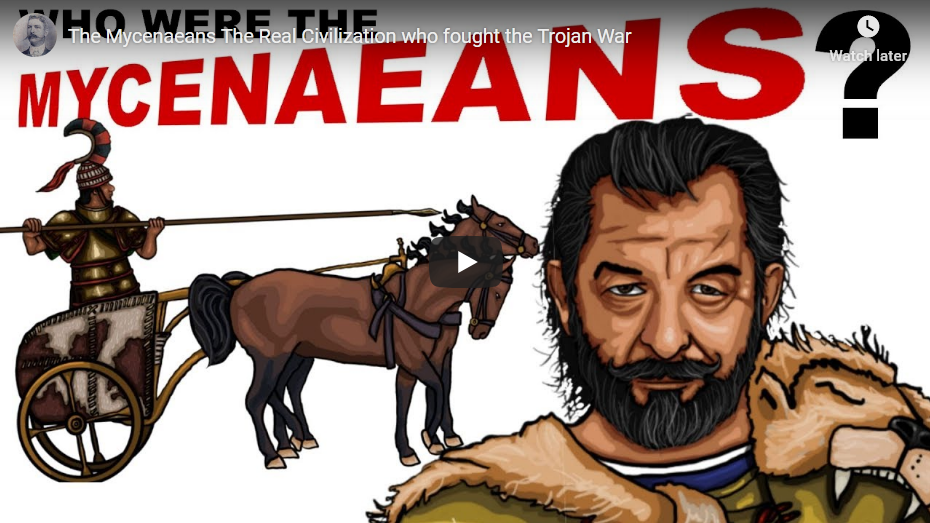
Classics Summarized: The Iliad

Filed under: Books, Greece, History, Middle East, Military — Tags: , , , — Nicholas @ 02:00

Overly Sarcastic Productions
Published 23 Jan 2015

I’m baaaaaaaack!

This one took me a while. The reason why should be pretty obvious. Enjoy your adorable murderfest.

Troy may be a good movie (though I have my doubts) but it sure as hell isn’t the Iliad.

PATREON: https://www.patreon.com/user?u=4664797

Find us on Twitter @OSPYouTube!

January 27, 2020

Tank Chats #60 Valentine Bridgelayer | The Tank Museum

Filed under: Britain, History, Military, WW2 — Tags: , , — Nicholas @ 02:00

The Tank Museum
Published 23 Nov 2018

The Valentine Bridgelayer, on a Valentine Mark I hull, was developed in 1943 during the Second World War. They were largely superseded by Churchill Bridgelayer, although some Valentine Bridgelayers were used in north-west Europe from 1944 to 1945, because the supply of Churchill Bridgelayers could not meet demand.

Support the work of The Tank Museum on Patreon: ► https://www.patreon.com/tankmuseum

Visit The Tank Museum SHOP: ► https://tankmuseumshop.org/
Twitter: ► https://twitter.com/TankMuseum
Tiger Tank Blog: ► http://blog.tiger-tank.com/
Tank 100 First World War Centenary Blog: ► http://tank100.com/ #tankmuseum #tanks #tankchats

January 26, 2020

When Anti-Semites Infight, Jews Still Die – Pogroms in Romania – WW2 – 074 – January 25, 1941

Filed under: Africa, Britain, Europe, History, Italy, Military, WW2 — Tags: , , , , , , — Nicholas @ 04:00

World War Two
Published 25 Jan 2020

The British offensive in East-Africa takes off with some rapid advances. Meanwhile in Eastern-Europe, Romania is the stage of fierce anti-semitism, but also infighting between two of the groups causing the anti-semitism.

Join us on Patreon: https://www.patreon.com/TimeGhostHistory
Or join The TimeGhost Army directly at: https://timeghost.tv

Follow WW2 day by day on Instagram @World_war_two_realtime https://www.instagram.com/world_war_t…
Join our Discord Server: https://discord.gg/D6D2aYN.
Between 2 Wars: https://www.youtube.com/playlist?list…
Source list: http://bit.ly/WW2sources

Written and Hosted by: Indy Neidell
Produced and Directed by: Spartacus Olsson and Astrid Deinhard
Executive Producers: Bodo Rittenauer, Astrid Deinhard, Indy Neidell, Spartacus Olsson
Creative Producer: Joram Appel
Post-Production Director: Wieke Kapteijns
Research by: Indy Neidell
Edited by: Mikołaj Cackowski
Map animations: Eastory (https://www.youtube.com/c/eastory)
Additional animations: Ryan Weatherby

Colorizations by:
Adrien Fillon – https://www.instagram.com/adrien.colo…
Julius Jääskeläinen – https://www.facebook.com/JJcolorization/
Dememorabilia – https://www.instagram.com/dememorabilia/
Daniel Weiss

Sources:
IWM (B 10600)
Narodowe Archiwum Cyfrowe
freemason by Kyle Tezak from the Noun Project
Letter by Mochammad Kafi from the Noun Project
ETH-Bibliothek Zürich, Bildarchiv / Fotograf: Wehrli, Leo / Dia_247-08618
Private collection of Riggio family https://commons.wikimedia.org/wiki/Fi…

Soundtracks from the Epidemic Sound:
Philip Ayers – “The Unexplored”
Max Anson – “Ancient Saga”
Hakan Erikson – “Epic Adventure Theme 4”
Andreas Jamsheree – “Guilty Shadows 4”
Johannes Bornlof – “Last Man Standing 3”

Archive by Screenocean/Reuters https://www.screenocean.com.

A TimeGhost chronological documentary produced by OnLion Entertainment GmbH.

From the comments:

World War Two
2 days ago
Thank you all so much for reaching 400.000 subscribers! Thanks to all of your support and enthusiasm, more and more people get to see more and better content. In fact, from mid-February onwards, we are going to publish three WW2 videos a week, including Out of the Foxholes, Biographies, Special Episodes, War Against Humanity and a new series on the Homefronts. Not only that, we are also going to start a new series on the TimeGhost History Channel (http://www.youtube.com/c/timeghost). Our Patreons get to vote on what we’ll do next! So don’t miss out and change history here -> https://www.patreon.com/posts/what-timeghost-33300161
Cheers, Joram

The Diamond of Collector FALs: The G-Series

Filed under: Europe, History, USA, Weapons — Tags: , , , , — Nicholas @ 02:00

Forgotten Weapons
Published 2 Apr 2018

Sold for $17,250.

When the Browning Arms Company first began importing semiautomatic FAL rifles from FN in 1959, the submitted an example for evaluation, and ATF determined that it was not a machine gun. The rifle was made with a selector that could not be moved to the fully automatic position, and did not have the automatic sear required for full auto firing. This was acceptable at the time, and Browning would import 1,836 of these rifles (mostly standard configuration, but some heavy barrel and paratrooper patterns) by January 10, 1963. On that date, ATF changed its standard, and ruled the FAL as currently being imported now would be considered a machine gun subject to the NFA. In order to be acceptable now, the rifle must not be able to accept an automatic sear at all, not merely be made without one. However, ATF ruled that the previously imported guns would be grandfathered in, and remain legally owned as semiautomatic rifles. They were listed by serial number (an additional 12 guns were added in 1974 which were imported by “administrative error”), and remain exempted from the NFA to this day. For the FAL collector, these G-series rifles are desirable because they are completely authentic and original early FN production guns, without any of the design changes that would be required later for importation.

Exempt serial number list: http://www.gseriesfal.com/docpages/91…

http://www.patreon.com/ForgottenWeapons

Cool Forgotten Weapons merch! http://shop.bbtv.com/collections/forg…

If you enjoy Forgotten Weapons, check out its sister channel, InRangeTV! http://www.youtube.com/InRangeTVShow

January 25, 2020

Miscellaneous Myths: Tantalus

Filed under: Europe, Greece, History, Humour — Tags: , — Nicholas @ 06:00

Overly Sarcastic Productions
Published 24 Jan 2020

Tantalus! The number one dude known for his eternal punishment in Hades, perhaps second only to Sisyphus

Our content is intended for teenage audiences and up.

PATREON: https://www.Patreon.com/OSP

MERCH LINKS: https://www.redbubble.com/people/OSPY…

DISCORD: https://discord.gg/hhAZA2z

OUR WEBSITE: https://www.OverlySarcasticProductions.com
Find us on Twitter https://www.Twitter.com/OSPYouTube
Find us on Reddit https://www.Reddit.com/r/OSP/

« Newer PostsOlder Posts »

Powered by WordPress