Historia Civilis
Published 6 Feb 2020Join the Mailing List here: https://www.historiacivilis.com/
Patreon | http://patreon.com/HistoriaCivilis
Donate | http://www.paypal.com/cgi-bin/webscr?…
Merch | http://teespring.com/stores/historiac…
Twitter | http://twitter.com/HistoriaCivilis
Website | http://historiacivilis.comSources:
T. B. Howell “A Complete Collection of State Trials and Proceedings for High Treason and Other Crimes and Misdemeanors from the Earliest Period to the Year 1783,” Volume IV | https://bit.ly/2Q9tPOS
“The Sentence of the High Court of Justice upon the King,” January 27th, 1649 | https://bit.ly/2rooZVC
—
Diane Purkiss, The English Civil War: A People’s History | https://amzn.to/36YHkrb
Leanda de Lisle, White King: Traitor, Murderer, Martyr | https://amzn.to/2Qen9ir
Esmé Wingfield-Stratford, King Charles the Martyr: 1643-1649 | https://amzn.to/36XFvLg
Allan Massie, The Royal Stuarts: A History of the Family That Shaped Britain | https://amzn.to/2SonMZz
Michael B. Young, Charles I | https://amzn.to/35Jm9t7
John MacLeod, Dynasty: The Stuarts 1560-1807 | https://amzn.to/2MiJGt2
C. V. Wedgwood, The Trial of Charles I | https://amzn.to/372MDWy
Maurice Ashley, The House of Stuart | https://amzn.to/2PMvU42
Trevor Royle, Civil War: The Wars of the Three Kingdoms, 1638-1660 | https://amzn.to/2tKZNJP
Robert Ashton, The English Civil War: Conservatism and Revolution 1603-1649 | https://amzn.to/36WWOMz
J. P. Kenyon, The Civil Wars of England | https://amzn.to/2EIAJW3
Mark Kishlansky, A Monarchy Transformed: Britain 1603-1714 | https://amzn.to/371CSs0
Sean Kelsey, Politics and Procedure in the Trial of Charles I | https://www.jstor.org/stable/4141664
Clive Holmes, The Trial and Execution of Charles I | https://www.jstor.org/stable/40865689Music:
“Heliograph,” by Chris Zabriskie
“John Stockton Slow Drag,” by Chris Zabriskie
“Your Mother’s Daughter,” by Chris Zabriskie
“Hallon,” by Christian BjoerklundWe are a participant in the Amazon Services LLC Associates Program, an affiliate advertising program designed to provide a means for us to earn fees by linking to Amazon.com and affiliated sites.
February 8, 2020
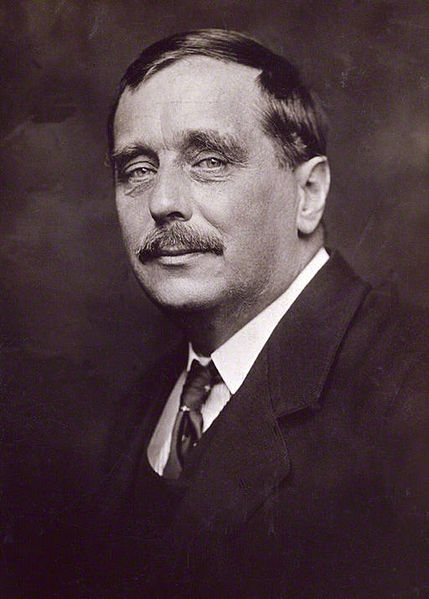
The Trial of Charles I (1649)
Switching over from internal combustion vehicles to electric won’t be cheap … it really won’t be cheap!
At Spiked, Rob Lyons looks at the British government’s recent decision to ban sales of internal-combustion cars in 2035 rather than the earlier target date of 2040:
First, at present, electric vehicles cost a lot more than those with internal-combustion engines. For example, one car-buying advice website notes that the Peugeot e-208 is as much as £6,200 more than the standard 208 model. There are government subsidies to help with the cost of electric cars (currently £3,500), but can this be sustained if we all switch? It has already been cut from £4,500 in 2018.
That said, while the purchase price of an electric car may be higher, charging is a lot cheaper than fuelling a regular car. Electric vehicles cost between £4 to £6 per 100 miles to charge at home and £8 to £10 using public charge points, while petrol and diesel cars cost £13 to £16 per 100 miles in fuel (although 60 per cent of the fuel cost is tax).
In theory, maintenance should be cheaper, too, given that electric motors have fewer moving parts than petrol or diesel engines. But to further complicate matters, batteries gradually lose their capacity to hold charge over time. They have to be replaced at the cost of thousands of pounds every few years. (The warranties covering battery replacement varies by manufacturer: Tesla, for instance, offers an eight-year warranty, but the Renault Zoe is covered for just three years.)
Electric cars may be cheaper to own overall, but this is largely down to subsidies and tax breaks, including lower vehicle duties and not having to pay charges in low-emission zones. Still, with the entire car industry throwing its efforts into making electric cars cheaper and increasing battery capacity, costs may well come down somewhat, reducing the need for such breaks. Fingers crossed.
The cost to individual owners will be higher, but the costs to build up the electric charging infrastructure will be distributed among all consumers, not just the owners of vehicles:
This brings us to perhaps the biggest problem: where will the power come from and how will it reach us? Eventually shifting all the energy for cars from oil to electricity means producing much more electricity. Greens are pleased that electricity use is currently decreasing, and a greater proportion of electricity is coming from renewable sources. But the arrival of electric cars en masse would demand a whole lot more electricity, mostly to be used at night.
Unless we want to coat the landscape in wind turbines, which are unreliable in any event, we’ll need other sources of power. More nuclear? Fine by me. But will eco-warriors stand for that? Even if we can produce the juice, having lots of cars charging in the same area may overwhelm the local electricity networks. Who is going to pay for the upgrade?
When all of these factors are considered we have to ask if all this effort will really reduce greenhouse-gas emissions anyway. Digging up the resources required to create all those batteries will be hugely carbon-intensive. Perhaps the most likely outcome of banning sales of new petrol and diesel vehicles is that demand for second-hand vehicles will go up. We could end up like Cubans, nursing venerable old cars for years, way beyond their intended lifespans.
Confederate Whitworth Sniper: Hexagonal Bullets in 1860
Forgotten Weapons
Published 12 Oct 2017NOTE: Please see this video for a correction regarding Whitworth accuracy: https://youtu.be/cUd2RQGfL7E
Sold for $161,000.
Sir Joseph Whitworth is quite the famous name in engineering circles, credited with the development of such things as Whitworth threading (the first standardized thread pattern) and engineer’s blue. When he decided to make a rifle, he decided that he could make flat surfaces more precisely than round ones, and chose to design a rifle with a hexagonal bore and mechanically fitted bullets.
The Whitworth rifles proved to be magnificently accurate, with a British military test showing a group of 0.85 MOA at 500 yards, and under 8MOA even at 1800 yards. However, the rifles were equally expensive, and were not given further consideration for military use. Whitworth made a total of about 13,700, selling them to high level competitive marksmen and wealthy shooting enthusiasts. A small number were purchased by Confederate agents during the Civil War, and between 50 and 125 were able to evade the Union blockades to be delivered into Confederate hands. These rifles were equipped with Davidson 4-power telescopic sights, and they were put to extremely good effect by Confederate sharpshooting units. In particular, they were used to shoot at Union artillery crews, and Whitworth bullets have been found on a great many Civil War battlefields. They were not available in large numbers, but they were excellent rifles and put to use as much as possible.
Given the small number originally brought into the CSA, the number of known surviving examples is extremely low. This one, like many, was found without its scope and mount, and those parts have been replaced with period examples. As a true Confederate Whitworth, however, this is an extremely rare and historically relevant rifle!
http://www.patreon.com/ForgottenWeapons
Cool Forgotten Weapons merch! http://shop.bbtv.com/collections/forg…
If you enjoy Forgotten Weapons, check out its sister channel, InRangeTV! http://www.youtube.com/InRangeTVShow
February 7, 2020
“Winged Hussars” – Polish Cavalry – Sabaton History 053 [Official]
Sabaton History
Published 6 Feb 2020The Winged Hussars have arrived!
By the 17th century it seemed like the golden age of the Winged Hussars had come to an end. Heavily armored, clad in steel and leopard skins, they had once charged over the battlefields with their wings proudly flying in the wind. But as the city of Vienna came under siege by the Ottoman Empire, the Polish Winged Hussars once more set out to meet their foes on the battlefield. Prepare for a thunderous charge that would go down in history.
Support Sabaton History on Patreon: https://www.patreon.com/sabatonhistory
Listen to “Winged Hussars” on the Last Stand Album:
CD: http://bit.ly/TheLastStandStore
Spotify: http://bit.ly/TheLastStandSpotify
Apple Music: http://bit.ly/TheLastStandItunes
iTunes: http://bit.ly/TheLastStandItunes
Amazon: http://bit.ly/TheLastStandAmz
Google Play: http://bit.ly/TheLastStandGooglePlayWatch the official lyric video of “Winged Hussars” here:
https://www.youtube.com/watch?v=rcYhY…Check out the trailer for Sabaton’s new album The Great War right here: https://www.youtube.com/watch?v=HCZP1…
Listen to Sabaton on Spotify: http://smarturl.it/SabatonSpotify
Official Sabaton Merchandise Shop: http://bit.ly/SabatonOfficialShopHosted by: Indy Neidell
Written by: Markus Linke and Indy Neidell
Directed by: Astrid Deinhard and Wieke Kapteijns
Produced by: Pär Sundström, Astrid Deinhard and Spartacus Olsson
Creative Producer: Joram Appel
Executive Producers: Pär Sundström, Joakim Broden, Tomas Sunmo, Indy Neidell, Astrid Deinhard, and Spartacus Olsson
Post-Production Director: Wieke Kapteijns
Edited by: Iryna Dulka
Sound Editing by: Marek Kaminski
Maps by: Eastory – https://www.youtube.com/c/eastoryArchive by: Reuters/Screenocean https://www.screenocean.com
Music by Sabaton.An OnLion Entertainment GmbH and Raging Beaver Publishing AB co-Production.
© Raging Beaver Publishing AB, 2019 – all rights reserved.
Modern day Kremlinology and show trials
At Rotten Chestnuts, Severian explains why the Soviet Union’s Moscow Trials were so important well outside the borders of the USSR:

Krushchev, Brezhnev and other Soviet leaders review the Revolution parade in Red Square, 1962.
LIFE magazine photo by Stan Wayman.
It’s not much of an exaggeration to say that the Moscow Trials set the course of 20th century history. If you want to be a dictator in peacetime, this is pretty much how you have to do it — see e.g. every other Communist regime ever. The downside, though, is that you cost yourself a lot of irreplaceable technical expertise. I’m not saying Hitler would’ve called Barbarossa off if Stalin hadn’t purged all his generals — Hitler was, of course, crazy — but he surely would’ve thought twice about it, the plan relying as it did on the utter incompetence of the now-leaderless Red Army.
The show trials also gave birth to “Kremlinology”, the art and science of reading Soviet tea leaves to find out who’s really in charge. Stalin didn’t invent “elimination by promotion”, but he was a master of it. In Stalin’s USSR, being “promoted” to some big, important-sounding position was an all-but-guarantee that you’re going to get shot. Seemingly minor functionaries, on the other hand, really ran things in the countryside. E.g. Khrushchev, a Red Army commissar — not an unimportant position by any means, but hardly a glory post either. Stalin’s generals knew who he was, but few outside the Red Army’s high command did. And since Stalin liked to signal major policy shifts with articles in obscure publications — he once wrote an article on lingustics that previewed some huge change — you had to be very wired in to figure out who was really a comer.
Let’s imagine, then, that somehow the Moscow Show Trials failed. That Zinoviev, say, was acquitted, because (take your pick) he’d obviously been tortured, the charges were ludicrous, there was zero hard evidence against him, or any combination of the above. Stalin staked his entire position on the outcome of the Trials. What if he’d lost? How long do you think the Boss would’ve remained Boss? A few weeks? A few days? Hours, maybe?
Nancy Pelosi is no Stalin, of course, but whoever survives November’s electoral bloodbath had better start working on Secret Speech 2.0 the very second the last vote is counted. I was doubtful about the 2020 presidential election until they actually decided to show-trial Donald Trump. Since there’s no way in hell they’re going to get a 2/3 majority to vote to convict, the whole thing looks like not just a witch hunt, but a botched witch hunt. No one, not even Koba the Dread, is politically strong enough to survive one of those.
February 6, 2020
The rise of the Saadi Empire of Morocco
In the latest Age of Invention newsletter, Anton Howes outlines the rise of a Morocco-based Islamic empire that beat the Portuguese and established a thriving smuggling network with England:
In 1500 you would have thought that Morocco’s golden ages were firmly in the past. The Portuguese in 1415 had conquered Ceuta, on the southern side of the Straits of Gibraltar, with minimal resistance. Over the next century they had then spread their influence across the Moroccan coastline, building forts, establishing small trading colonies, and interfering in local politics. Faced with constant raids, coastal towns like Safi, Massa, and Azammur submitted themselves to Portuguese vassalage in exchange for protection. And when local rulers failed to please them, the Portuguese installed new ones or even took direct control. A disunited Morocco was at the mercy of Portuguese colonial ambition — a source of grain destined for Portugal’s population, and of horses and patterned cloths for it to exchange in sub-Saharan Africa for gold and slaves.
In the 1510s, however, a new dynasty arose in Sus, in the south-west of the country, claiming direct descent from the Prophet Muhammad. These sharifs, the Saadi dynasty, began to fill the vacuum left by ineffective leadership from the sultans in Fez and Marrakech. And to address the massive power imbalance between themselves and the Portuguese, they began to cultivate sugar, selling it to other Europeans — Spanish, French, Genoese, Dutch, and English — in exchange for gunpowder weapons.
The English were especially expert smugglers, frequently able to sneak past the Portuguese fleets to where they could trade directly with the Saadis. Merchants from the Hanseatic league even approached the English government about using English mariners to get iron shot to Morocco. Their request was denied — Elizabeth I and her ministers were always careful never to explicitly allow the munitions trade, even in private letters, and often publicly disavowed it — but it was common knowledge among London’s merchants that the government supported the smuggling. This was partly about having a supply of sugar independent of Portuguese and Spanish control, but it was also a matter of national security. Because hidden among the sugar, marmalade, candied fruits, and almonds that the English transported from Morocco, were also copper and saltpetre — crucial materials for England’s own gunpowder weapons (I still haven’t quite worked out why England needed to import copper, given it had its own deposits in Cornwall, but it seems to have been important and a secure supply of saltpetre was definitely essential).
Both sides benefited from the arrangement. By the mid-1540s, the Saadis had bought the firearms and artillery necessary to take Marrakech and Fez, effectively unifying the country, and had earned sufficient wealth to buy the allegiance of the Moroccan population, providing grain during periods of intense famine. With that allegiance, they began isolating the Portuguese forts along the coastline, denying them access to food, workers, and trade. From the perspective of the Portuguese crown, the forts thus lost their economic value, while becoming increasingly expensive to maintain. Rather than providing Portugal with Moroccan grain, the forts increasingly needed grain from Portugal. With the added pressure of Saadi sieges, now aided by massive artillery, Portugal began to lose their footholds, abandoning many of the rest. Thus, in the space of a few decades, the export of sugar (and saltpetre) by the Saadis had put the mighty Portuguese empire on the back foot.
Rifles of Emperor Menelik II: Ethiopian Gewehr 88 and Karabiner 88
Forgotten Weapons
Published 5 Feb 2020http://www.patreon.com/ForgottenWeapons
https://www.floatplane.com/channel/Fo…
Cool Forgotten Weapons merch! http://shop.bbtv.com/collections/forg…
In 1889, Emperor Menelik II ascended to power in Ethiopia, and would rule for 20 years, moving Ethiopia (aka Abyssinia) forward into the modern age. He brought railways, sewer systems, telegraph lines, and other modern amenities to the country, particularly the capital of Addis Ababa. In addition, Menelik II was a very capable logistician and military strategist, and decisively defeated an Italian colonial invasion at the Battle of Adwa in 1896. This victory was made possible by Ethiopian acquisition of modern arms of many types. Early support came from Orthodox Russia in the form of Berdan rifles, but other arms would flow into the country as well, including Gewehr 88 and Karabiner 88 rifles and carbines. These two are marked in Amharic as Menelik’s property, and are a part of what allowed Ethiopia to be the only major African nation not colonized by Europe.
Thanks to InterOrdnance for giving me access to these rifles to bring to you!
Contact:
Forgotten Weapons
6281 N. Oracle #36270
Tucson, AZ 85740
Tank Chats #61 Beaverette | The Tank Museum
The Tank Museum
Published 7 Dec 2018David Willey talks about the Beaverette, which was recently acquired by The Tank Museum.
Beaverettes were manufactured as a “stop gap” measure when invasion threatened in 1940, using the chassis of civilian saloon cars. These armoured cars were only ever issued to the Home Guard and RAF airfield defence units.
Support the work of The Tank Museum on Patreon: ► https://www.patreon.com/tankmuseum
Visit The Tank Museum SHOP: ► https://tankmuseumshop.org/
Twitter: ► https://twitter.com/TankMuseum
Tiger Tank Blog: ► http://blog.tiger-tank.com/
Tank 100 First World War Centenary Blog: ► http://tank100.com/ #tankmuseum #tanks #tankchats
February 5, 2020
Submarine Warfare WW1 vs WW2 – Differences & Commonalities
Military History Visualized
Published 15 Nov 2016A comprehensive view that compares submarine warfare in the First and Second World Wars. Due to the lack of a submarine warfare in the Pacific in World War 1, the Pacific isn’t covered at all, but there will be an episode on it in the future.
Military History Visualized provides a series of short narrative and visual presentations like documentaries based on academic literature or sometimes primary sources. Videos are intended as introduction to military history, but also contain a lot of details for history buffs. Since the aim is to keep the episodes short and comprehensive some details are often cut.
» HOW YOU CAN SUPPORT MILITARY HISTORY VISUALIZED «
(A) You can support my channel on Patreon: https://www.patreon.com/join/mhv(B) Alternatively, you can also buy “Spoils of War” (merchandise) in my online shop: https://www.redbubble.com/people/mhvi…
» SOURCES & LINKS «
Milner, Marc: “The Atlantic War, 1939-1945”; in: Cambridge History of the Second World War, Volume 1
Blair, Clay: Hitler’s U-Boat War – The Hunters 1939-1942
Owen, David: Anti-Submarine Warfare – An Illustrated History
Germany & The Second World War – Volume VI
Germany & The Second World War – Volume II
Breemer, Jan S.: “Defeating the U-boat. Inventing Antisubmarine Warfare”. Naval War College Newport Papers 36
https://www.usnwc.edu/getattachment/e…Das Deutsche Reich und der Zweite Weltkrieg – Band VI.
Das Deutsche Reich und der Zweite Weltkrieg – Band II.
Rahn, Werner: “Die Deutsche Seekriegsfürung 1943 bis 1945”; in: Das Deutsche Reich & der Zweite Weltkrieg, Band X/1, S. 3-276
Erster Weltkrieg – Zweiter Weltkrieg: Ein Vergleich.
U-boat losses by cause
https://web.archive.org/web/201006112…Differences German U-Boat Design WW1 vs. WW2
https://www.reddit.com/r/AskHistorian…» CREDITS & SPECIAL THX «
Song: Ethan Meixsell – “Demilitarized Zone”
Suomi m/31: Finland’s Famous Submachine Gun
Forgotten Weapons
Published 12 Sep 2017For some great firing footage and an assessment of the m/31 in practical terms, check out today’s video on InRangeTV: https://www.youtube.com/watch?v=6HJMv…
http://www.patreon.com/ForgottenWeapons
Cool Forgotten Weapons merch! http://shop.bbtv.com/collections/forg…
Designed by Finland’s most notable arms inventor, Aimo Lahti, the m/31 Suomi submachine gun is an iconic weapon of the Winter War and the Continuation War. It is a first-generation submachine gun with a heavy milled receiver and very well-fitted parts — enough so that a series of vent holes were put in the end of the receiver tube to prevent air compression during the firing cycle. The gun is overall quite heavy (4.7kg / 10.4lb) and has a high rate of fire (~900 rounds/minute). It originally used 50-round quad-stack magazines and 71-round drum magazines, which allowed a shooter to exploit the high rate of fire without constantly having to change magazines.
The quad-stack magazines were eventually found to be insufficiently reliable, and were retired. The drum proved to be quite good in use, although quite awkward and bulky to carry (note that Finnish troops had no specialized pouches for these drums). The drum design would be taken by the Russians (handed over by a defecting Finnish officer, apparently) and copied for use in the Soviet PPD and PPSh submachine guns. In the 1950s, a simple double-stack 36 round magazine was developed and became most popular.
If you enjoy Forgotten Weapons, check out its sister channel, InRangeTV! http://www.youtube.com/InRangeTVShow
February 4, 2020
The Macedonian Phalanx
HistoryMatters
Published 30 Jan 2016A short introduction to the Macedonian phalanx, from conception to demise.
Anglo-Saxon Invasion | 3 Minute History
February 3, 2020
“The people could not be given what they had asked for. It would set a precedent.”
In the latest Libertarian Enterprise, Sean Gabb reacts to the changes (or lack of changes) on Brexit Day:

London on the morning after Brexit Day, according to the BBC and other mainstream media.
The Course of Empire – Destruction by Thomas Cole, 1836.
From the New York Historical Society collection via Wikimedia Commons.
Yesterday evening — that is, the 31st January 2020 — at 11pm GMT, my country left the European Union. We did so after four years of heated and often hysterical argument. Nothing much seemed to have changed this morning. I went out shopping, to see the same people buying the same things at the same prices. Since we are now in a transition period, lasting till the end of this year, in which we remain within the Single Market and subject to the rules of the European Union, it would have been odd if anything visible had changed. Yet, if nothing visible had changed, one very important thing has changed.
The ruling class has suffered its first serious defeat in living memory. The coalition of politicians, bureaucrats, lawyers, educators, media people and associated business interests who draw wealth and power from an extended state was committed to European Union membership. This coalition was never uniformly committed to membership. Some elements were strongly committed, others only mildly. But all were agreed that membership was good for them, so far as it blurred the lines of accountability and gave the exercise of power a supranational appearance. This was the position before the 2016 Referendum, which was not expected to go as it did. When the result was to leave, ruling class support for membership strengthened. Long before it ended, the referendum campaign had become a vote of confidence in the ruling class. Losing this vote was a shock. The people could not be given what they had asked for. It would set a precedent. Give them that, and they would start believing they lived in a democracy where votes counted for something. If this happened, the people might be inclined to start asking for other things – all things variously unwelcome within the ruling class.
The ruling class response to losing fell under two headings. One was to deny the validity of the vote and to demand another, and to make sure that this one was rigged in favour of remaining. The other was to deliver an exit so partial that it amounted to continued membership, and that could be upgraded to full membership after a few years of propaganda. These responses eventually merged into a single project of dragging things out so long that the people would get bored and stop demanding that their voice should be heard.
These responses failed. The people had spoken, and they continued speaking — eventually giving the Conservatives their biggest majority in a generation. Because of this, our departure yesterday was more definite than had previously been imagined. Immediately after the Referendum, I think most of us would have accepted a slow disengagement — perhaps including ten or twenty years of remaining within the Single Market, though out of the customs and political union. The next three years of bad faith killed any taste for gradualism.
Emphasis added.
Classics Summarized: The Odyssey
Overly Sarcastic Productions
Published 3 Feb 2015Funny story. Exporting this monster was almost as difficult as getting back to Ithaca was for our intrepid hero, who — as viewers of The Iliad may note — has inexplicably lost his Solid Snake voice in this production.
PATREON: http://www.patreon.com/user?u=4664797
Find us on Twitter @OSPYouTube!