
World War Two
Published 25 Jan 2022With high losses of German soldiers and low birth rates, the Nazis worry about who will inherit the Nazi paradise they are fighting to build. One of their ideas to breed a new Aryan generation is the Lebensborn association.
(more…)
January 26, 2022
Nazi Breeding Farms – Lebensborn – On the Homefront 014
Comments Off on Nazi Breeding Farms – Lebensborn – On the Homefront 014
“Last year, we’re told, was the ‘deadliest’ year for transgender people since records began”
Tish Still, parent of a child who identifies as transgender, was worried about the “epidemic” of trans murder victims:

Facts always matter — but they take on a particular importance when they’re being used to claim that your child could be murdered. So I decided to delve into the research used to inform these claims. For me, it was personal.
The Government doesn’t publish data on the number of transgender people in the UK, though in 2018 it “tentatively” estimated that the figure stood between “approximately 200,000-500,000”. What proportion of that number must have been killed to warrant today’s warnings of trans murder epidemic? 10? 100? 1,000?
To find out, I analysed data collected by the trans-led organisation Transgender Europe, which has received more than a million dollars from the Arcus Foundation, who are based in the US and take a keen interest in transgender issues. As well as donating almost $150,000 to Stonewall, in 2015 the Arcus Foundation handed $312,000 to Transgender Europe specifically to supply reliable global data on transgender murders. The website it created provides an interactive map and links to documents naming the transgender victims.
Looking at Transgender Europe’s list of cases, it became clear — to my relief — that the total murders reported for the United Kingdom since 2008 amounted to 11. This translates as a murder rate of around 0.165%.
Now, that is still significantly higher than the murder rate for the UK as a whole: the ONS reports that the homicide rate in the UK for the year ending March 2020 was 11.7 per million people, rising to 17 per million among men. But look a bit closer at the list of trans murder victims, and that figure of 11 becomes increasingly suspect.
For instance, two of the listed victims, Vikki Thompson and Jacqueline Cowdry, appear to have been erroneously included. Thompson died by suicide while incarcerated in HMP Leeds, while Cowdry’s death was ultimately ruled as non-suspicious. This reduces the total to nine unlawful deaths, all of whom were born male. (By contrast, the number of homicides committed by transgender people between 2008 and 2017 was 12.) For context, the number of women killed by men during the same period was 1800. So much for our alleged “cis-privilege”.
Searching for more information led me to the work of Karen Ingala-Smith, who founded the Counting Dead Women project in 2012 after she realised that there was no central record of the extent of femicide here in the UK; thanks to her, a list of murdered women is read out in the House of Commons each year to imprint the rate of femicide on the minds our political class. Ingala-Smith’s tireless work focusses on female victims of, predominantly, male violence, though she made an exception to highlight the discrepancy between the mass hysteria about transgender victims of homicide compared to the treatment of woman-killing as mere background noise. (There is still no equivalent to the Trans Day of Remembrance for the much greater number of women killed by male violence.)
Crucially, her research sheds a vital spotlight on the nine remaining victims identified by the Trans Murder Monitoring report. Reading it, two things become clear. The first is that it is not entirely certain that all the victims themselves identified with the label “transgender”. The second is that the motives behind these crimes are more complex than straightforward “transphobia”.
Comments Off on “Last year, we’re told, was the ‘deadliest’ year for transgender people since records began”
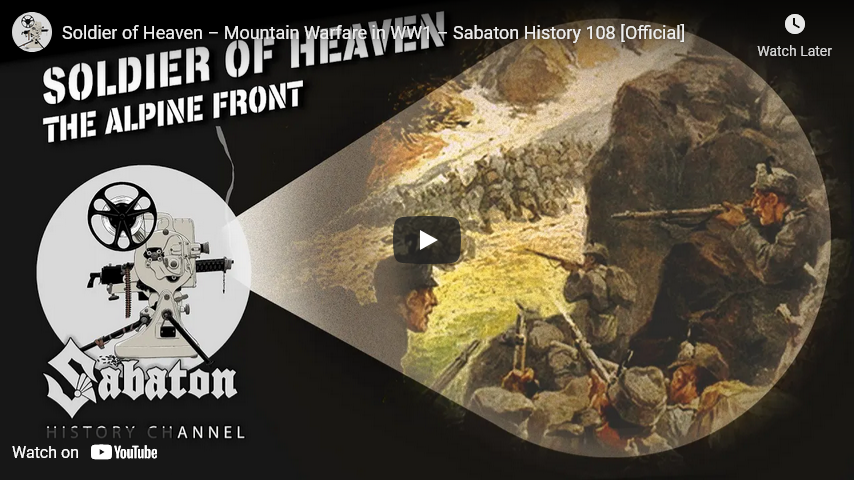
“Soldier of Heaven” – Mountain Warfare in WW1 – Sabaton History 108 [Official]
Sabaton History
Published 25 Jan 2022The war in the Alps between the Italians and the Austro-Hungarians added new dimensions to the fighting in the Great War since mountain warfare has its own unique set of challenges and dangers. What sort of men were doing the fighting here? And how did they cope with it? How did the survivors survive? Let’s take a look.
Support Sabaton History on Patreon: https://www.patreon.com/sabatonhistory
Listen to “Soldier of Heaven”: https://music.sabaton.net/SoldierOfHe…
Watch the Official Music Video of “Soldier of Heaven” here: https://www.youtube.com/watch?v=LYI3e…
Listen to Sabaton on Spotify: http://smarturl.it/SabatonSpotify
Official Sabaton Merchandise Shop: http://bit.ly/SabatonOfficialShopHosted by: Indy Neidell
Written by: Markus Linke and Indy Neidell
Directed by: Astrid Deinhard and Wieke Kapteijns
Produced by: Pär Sundström, Astrid Deinhard and Spartacus Olsson
Creative Producer: Maria Kyhle
Executive Producers: Pär Sundström, Joakim Brodén, Tomas Sunmo, Indy Neidell, Astrid Deinhard, and Spartacus Olsson
Post-Production Director: Wieke Kapteijns
Editor: Iryna Dulka
Sound Editor: Marek Kaminski
Archive: Reuters/Screenocean – https://www.screenocean.com
Sources:
– IWM Q 65115, IWM Q 65299, IWM Q 65062, IWM Q 65324, IWM Q 65102, IWM 1034-4, IWM 1062-14, IWM 459, IWM Q 114805б IWM Q 65104, IWM Q 65053, IWM Q 54778, IWM Q 65114, IWM Q 65130, IWM Q 65158
– esercito.difesa.it
– Médiathèque de l’architecture et du patrimoineS
– Business vector created by macrovector, Background vector created by freepik – www.freepik.com
All music by: SabatonAn OnLion Entertainment GmbH and Raging Beaver Publishing AB co-Production.
© Raging Beaver Publishing AB, 2019 – all rights reserved.
Comments Off on “Soldier of Heaven” – Mountain Warfare in WW1 – Sabaton History 108 [Official]
Three generations of the OG Puritans
At Founding Questions, Severian considers the New England Puritans and the world they inhabited:
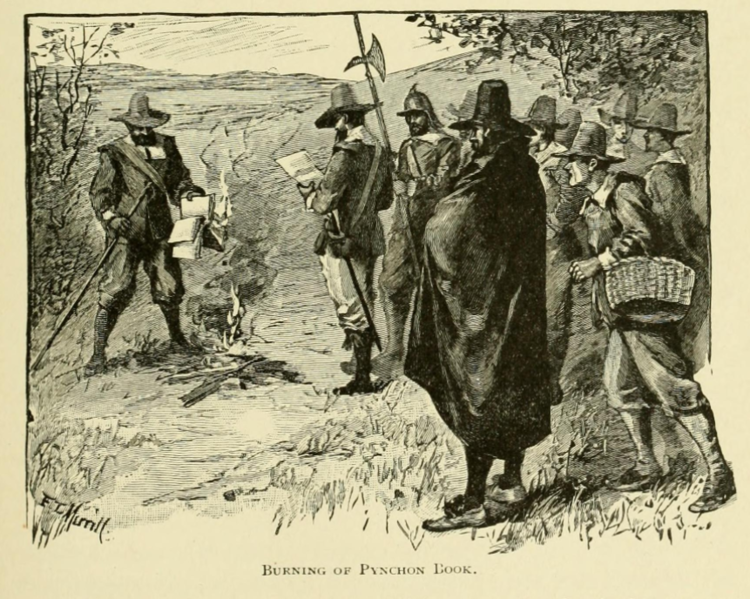
Portrayal of the burning of copies of William Pynchon’s book The Meritous Price of Our Redemption by early colonists of the Massachusetts Bay Colony, who saw his book as heresy; it was the first-ever banned book in the New World and only 4 original copies are known to survive today.
Engraving by F.T. Merrill in The History of Springfield for the Young by Charles Barrows, 1921.
Total cultural and intellectual uniformity, constantly reinforced. If those Puritans were going to go crazy, in other words, they’d do it within very carefully circumscribed boundaries. The only thing close to that level of mental control is Twitter … and I suppose I must put the disclaimer out front, so that you can factor it in if you disagree with me: I hate the Puritans. They’re just SJWs with balls and a slightly less tedious prose style. When they’re not obsessing over the tiniest motions of their pwecious widdle selves, they’re screwing you over for the hellbound heathen you are.
Credit where it’s due, though: If you need to go sodbusting in an unexplored continent, the Puritans are your guys. The original Plymouth Bay colony was thoroughly militarized, and they didn’t fuck around — when the local Indian tribes were beginning to wonder if they shouldn’t do something about these White devils they’d let loose, the Puritans attacked the fiercest tribe and wiped them out, as a show of force. Life was hard in the OG Plymouth Colony, but it was about as good as you were going to get in that era.
But the typical inheritance pattern soon took over. “Regression to the mean” is a behavioral phenomenon, too, not just an IQ one. Puritanism is an obsessive, paranoid creed; it can only flourish in times of high stress and dire insecurity. But by the 1690s, Plymouth Colony was arguably the healthiest, wealthiest, safest place per capita in Christendom (not a high bar, obviously, but still). The OG settlers were all gone by that time, of course — the original settlement, you’ll recall, was 1620 — and so were most of their almost as hardcore kids. The third generation was coming up fast …
… but finding their way blocked by the old men of the previous generation, who were as tediously, dogmatically Puritan as the OGs, but without the stones. This made them — the 2nd generation — enormous hypocrites, but even without the hypocrisy, imagine living in a world where the ultra-wealthy who control everything in society tell you that they deserve it all, because they’re God’s Elect, while you, sinner, deserve to live in a rented box and eat bugs and own nothing, because God hates you.
History’s full of weird stuff like that, and that was the situation circa 1690. One example will have to do: Since we probably all got to experience Nathaniel Hawthorne’s existential angst back in high school, consider that the ancestor who caused him so much grief, Judge John Hathorne, was born in 1641. He would’ve been 51, then, during his trial service – a ripe old age by 17th century standards.
Not only that, but the 2nd generation — the one that stubbornly refused to move on and let the kids take their place in the sun — had spent the previous twenty years grievously fucking things up. King Philip’s War nearly ruined the colony, there’d been widespread plague, and oh yeah, that whole Restoration thing back in England — the hardest of hardcore Puritan thinkers in the run-up to the Civil War had been colonials; guys like Col. Rainsborough were closely associated with Massachusetts, etc. Lots of bad blood on the other side of the water, and while the third generation was willing to let bygones by bygones, the 2nd generation wasn’t.
So: Hypocritical old throwbacks and cavemen, with a decades-long track record of dumbfuckery, who just wouldn’t get out of the way. As they got older, they got more insular and inward-looking, as old people tend to do … and “more inward looking” for a Puritan is a near-BCG level of narcissism. Meanwhile, the new generation is eager to take their place in the burgeoning Atlantic world, especially after the Glorious Revolution (1688) … but can’t.
Comments Off on Three generations of the OG Puritans
Reliant Robin Three Wheeler | British Cars | Drive in (1973)
ThamesTv
Published 21 Jul 2019Tony Bastable takes the iconic Reliant Robin for a spin to see what this new British car has to offer.
First shown: 29/10/1973
If you would like to license a clip from this video please e mail:
archive@fremantle.com
Quote: VT8219
From the comments:
Tortinwall
2 years ago
I love the idea that you buy a Reliant Robin and then keep “valuable objects” in the boot.

Comments Off on Reliant Robin Three Wheeler | British Cars | Drive in (1973)
January 25, 2022
QotD: James Bond’s stand-in
Like many a kiddy growing up in the 1960s, the release of a new James Bond film was a thrilling event. My cohort were too young to know about sex proper but the saucy suggestiveness of the Sean Connery films was the nearest we got to it. Once, a rumour went around our school that there was a kissing stand-in man employed on Bond films in order to get the lighting right rather than keep bothering the star with snogging various starlets; the careers officer became quite exasperated with the 16-year-old school-leavers he dealt with that year.
Julie Burchill, “How James Bond became the prisoner of woke”, Spiked, 2021-10-14.
Comments Off on QotD: James Bond’s stand-in
January 24, 2022
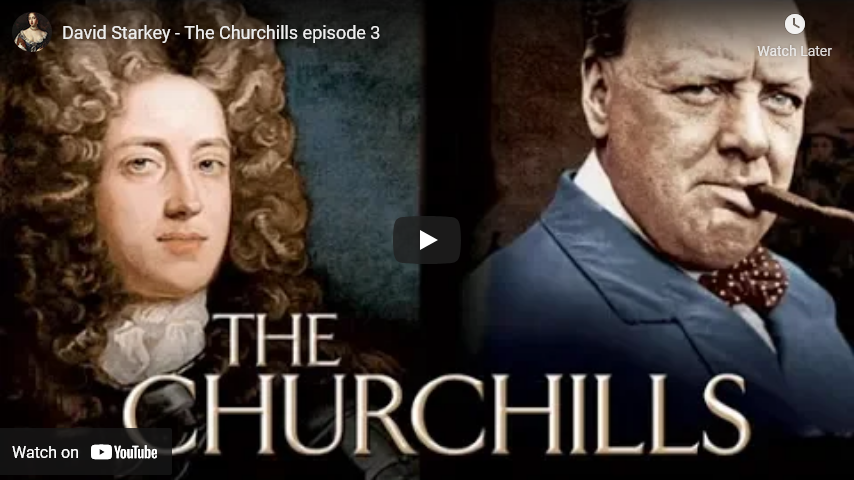
David Starkey – The Churchills episode 3
Whitehall Moll History Clips
Published 29 May 2019How did Winston Churchill draw on the lessons of his ancestor John Churchill to fight World War II? The Duke of Marlborough’s influence is apparent as Dr David Starkey explains
Comments Off on David Starkey – The Churchills episode 3
Parker-Hale .303-.22 Conversion Kits for the Enfield, Lewis, and Vickers
Forgotten Weapons
Published 14 Sep 2021http://www.patreon.com/ForgottenWeapons
https://www.floatplane.com/channel/Fo…
Cool Forgotten Weapons merch! http://shop.forgottenweapons.com
In July of 1918, the British military formally adopted a Parker-Hale system of adapting .303-caliber arms to .22 rimfire for short range training. The system involved lining standard barrels with .22 caliber blanks that were machined with full size .303 chambers. Special cartridge inserts were used which had the external dimensions of .303 cartridges, but held .22LR cartridges inside. This allowed the weapon to use the same feeding system as it normally would, and to duplicate the handling and trigger mechanism of a standard .303 caliber gun while only firing a small rimfire cartridge.
Parker-Hale built kits of this type for the Lee Enfield rifle, the Lewis LMG, and the Vickers HMG, and all were used by the British military. In the Lewis and Vickers, there was no accommodation made to actually cycle the guns; this sort of .22 practice drill was done by manually cycling the actions after each shot. Still, it was a good way to practice basic drill (loading, unloading, etc) as well as basic marksmanship without the noise of full power cartridges and without the need for a full-power-rated backstop.
The system for the Lee Enfield was replaced in 1920 (after only about 2 years of use) with the No2 MkIV* rifle, a dedicated .22 conversion of an SMLE. Parker-Hale kept the system in their commercial catalog into the 1930s, however.
Contact:
Forgotten Weapons
6281 N. Oracle 36270
Tucson, AZ 85740

Comments Off on Parker-Hale .303-.22 Conversion Kits for the Enfield, Lewis, and Vickers
QotD: The Punk-Prog War of 1977
The Sex Pistols were angry young men — sois-dissant situationists who hated the dreamy Jung men with their Hipgnosis gatefold album art, their endless concept albums and “song-cycles”, and their am-dram dressing-up box shenanigans. The progs were pretentious and effete and disdained, not only for being able to read music, but for littering their lyrics with symbols from the collective unconscious. It all came from doing too much prep — they were the decadent ancien regime to punk’s snotty sans culottes.
Whether there was any truth to all this didn’t matter much. As mediated by their friends at the NME, the punks despised prog — a genre they regarded as anything but progressive. And Genesis were among the original sinners. True, it was a Pink Floyd t-shirt onto which Johnny Rotten had scrawled “I hate”, an alteration which amounted to all the wit he needed back then to get hired by Malcolm McLaren. But Genesis were the Druidic Lords of the iddly-diddly — the eye-wash and the whimsy that the bin-bag and safety-pin boys and girls found so contemptible.
The Pistols drew as much of their energy from the desire to make overfed rock dinosaurs like Genesis extinct, as they did from making music themselves. They wanted to see the carcasses of these privately educated fops littering the impact crater of punk rock, exposed for the cold blooded, lumbering, vegetative grotesques that they were. The nimble-witted likes of Rotten and Co. pogoed jubilantly on the wreckage of shattered Melotrons and twin-necked Gibsons and their long-overdue graves. Their hour — 1977, year zero — had surely arrived.
Simon Evans, “Rocker Crocked. Pistol Shot.”, Quillette, 2021-10-04.
Comments Off on QotD: The Punk-Prog War of 1977
January 23, 2022
Hitler’s Interference is losing the war – WW2 – 178 – January 22, 1943
World War Two
Published 22 Jan 2022This is a rough week for the Germans — their trapped garrison at Velikie Luki is liquidated, and their trapped army at Stalingrad is … well, it isn’t going well for them. In fact, it isn’t going well for the Axis anywhere this week, being pushed back or retreating in New Guinea, the Caucasus, North Africa, and on Guadalcanal. Berlin is even bombed this week as well.
(more…)
Comments Off on Hitler’s Interference is losing the war – WW2 – 178 – January 22, 1943
The Abandoned Hill With Two Members Of Parliament
Tom Scott
Published 6 Jul 2020Old Sarum, in Wiltshire, is a now-desolate hillfort run by English Heritage. But it was once one of the most important sites in southern England: so important that it had two members of Parliament. Then, it became a “rotten borough”: and a warning about power.
Thanks to English Heritage: more information and how to visit: https://www.english-heritage.org.uk/v…
Research and script assistance from Jess Jewell
Drone camera by Jamie Bellinger
Edited by Michelle Martin: https://twitter.com/mrsmmartin
Audio mix by Graham Haerther: https://haerther.netFilmed safely, following all local and national guidance: https://www.tomscott.com/safe/
SOURCES:
Corfield, P. (2000). Power and the professions in Britain 1700-1850. London: Routledge.Dodsworth, W. (1814). An historical description of the cathedral church of Salisbury: including an account of the monuments, chiefly extracted from Gough’s “Sepulchral Monuments,” and other authentic documents: also, biographical memoirs of the Bishops of Salisbury, from the earliest period by W. Dodsworth, verger of the Cathedral
English Heritage’s own research page: https://www.english-heritage.org.uk/v…
http://www.historyhome.co.uk/c-eight/…
I’m at https://tomscott.com
on Twitter at https://twitter.com/tomscott
and on Instagram as tomscottgo

Comments Off on The Abandoned Hill With Two Members Of Parliament
QotD: The British governments of the 1930s
In spite of the campaigns of a few thousand left-wingers, it is fairly certain that the bulk of the English people were behind Chamberlain’s foreign policy. More, it is fairly certain that the same struggle was going on in Chamberlain’s mind as in the minds of ordinary people. His opponents professed to see in him a dark and wily schemer, plotting to sell England to Hitler, but it is far likelier that he was merely a stupid old man doing his best according to his very dim lights. It is difficult otherwise to explain the contradictions of his policy, his failure to grasp any of the courses that were open to him. Like the mass of the people, he did not want to pay the price either of peace or of war. And public opinion was behind him all the while, in policies that were completely incompatible with one another. It was behind him when he went to Munich, when he tried to come to an understanding with Russia, when he gave the guarantee to Poland, when he honoured it, and when he prosecuted the war half-heartedly. Only when the results of his policy became apparent did it turn against him; which is to say that it turned against its own lethargy of the past seven years. Thereupon the people picked a leader nearer to their mood, Churchill, who was at any rate able to grasp that wars are not won without fighting. Later, perhaps, they will pick another leader who can grasp that only Socialist nations can fight effectively.
George Orwell, “The Lion And The Unicorn: Socialism and the English Genius”, 1941-02-19.
Comments Off on QotD: The British governments of the 1930s
January 22, 2022
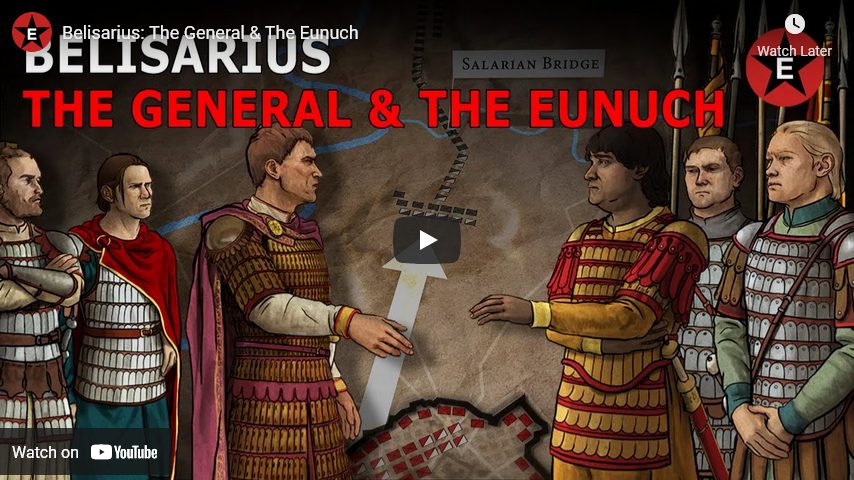
Belisarius: The General & The Eunuch
Epic History TV
Published 21 Jan 2022Download Fishing Clash for FREE and play today! https://fishingclash.onelink.me/dkOM/…
Big thanks to Legendarian for Total War: Attila gameplay footage, check out his YouTube channel here: https://www.youtube.com/channel/UCOI2…
Big thanks also to our series consultant Professor David Parnell of Indiana University Northwest, who you can follow on Twitter here: https://twitter.com/byzantineprof
Total War: Attila gameplay footage used with kind permission of Creative Assembly – buy the game here: https://geni.us/qDreR
Support Epic History TV on Patreon from $1 per video, and get perks including ad-free early access & votes on future topics https://www.patreon.com/EpicHistoryTV
🎨 Original artwork by Miłek Jakubiec https://www.artstation.com/milek
📚 Recommended reading (as an Amazon Associate I earn from qualifying purchases):
📖 Procopius, History of the Wars https://geni.us/L3Pgc
📖 The Wars of Justinian by Michael Whitby https://geni.us/Xxrd3
📖 Rome Resurgent by Peter Heather https://geni.us/ZFoU1
📖 The Armies of Ancient Persia: the Sassanians by Kaveh Farrokh https://geni.us/jMQo3z
📖 Late Roman Cavalryman AD 236–565 (Osprey) by Simon MacDowall https://geni.us/XMGl👕 Buy EHTV t-shirts, hoodies, mugs and stickers here! teespring.com/en-GB/stores/epic-histo…
🎶 Music from Filmstro: https://filmstro.com/?ref=7765
Get 20% off an annual license with this exclusive code:EPICHISTORYTV_ANN#EpicHistoryTV #RomanEmpire #EasternRomanEmpire #Justinian #Belisarius #ByzantineEmpire #Romans #Ostrogoths
Comments Off on Belisarius: The General & The Eunuch
James I and his experiment with “personal rule”
In the latest Age of Invention newsletter, Anton Howes explains why King James I grew frustrated in his dealings with Parliament and decided to avoid calling that body into session and ruling the kingdom directly:
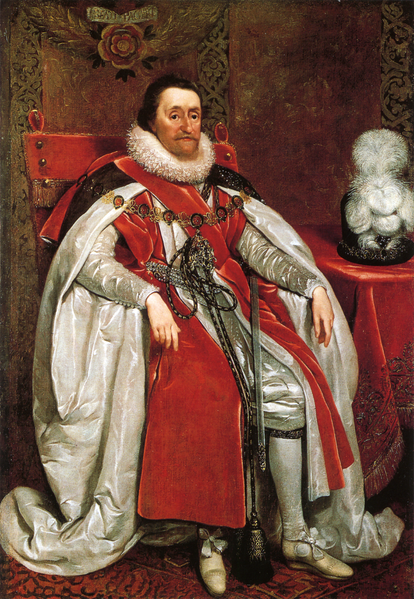
King James I (of England) and VI (of Scotland)
Portrait by Daniel Myrtens, 1621 from the National Portrait Gallery via Wikimedia Commons.
By the end of 1610, James’s disillusionment with the House of Commons was complete — it was, he said, after six years of fruitlessly wrangling for parliamentary taxes, like a “House of Hell”.
So, despite failing to reach a permanent financial settlement, James decided to try to rule without it. His debts were huge, and his deficit substantial. But after the failure of 1610 he would do everything he could to never have to summon a Parliament again. Although he couldn’t actually afford it, he decided to try ruling as an absolutist monarch anyway — to embark on “personal rule”.
This extraordinary decision, to be an absolutist ruler without adequate financial support, would have dramatic consequences for England’s foreign policy, and perhaps on the whole balance of Europe too. James had already tried to reduce the costs of war when he came to the throne in 1603, by immediately concluding a peace with the vast Spanish Empire. Yet peace now became a necessity — if he couldn’t even plug the deficit during peacetime, he could not possibly pay for a war. Recognising this, Spain intervened freely in the affairs of the Protestant German states, confident that England would not be able to come to their aid.
To make matters worse, James’s financial woes made him especially susceptible to foreign influence. A poor king could be bought. Some of the smaller but wealthier European dynasties began to offer James large sums for his children’s hands in marriage. In 1611, the duke of Savoy offered a vast dowry of £210,000 for his daughter to marry James’s eldest son and heir, Prince Henry. The notoriously wealthy grand duke of Tuscany even put in a bid for £300,000. France then offered £240,000 — not as high, but it had the greater status as a kingdom. Any of these amounts would have plugged the deficit for a few years, even if they were nowhere near to eliminating James’s debt. Yet Henry died in 1612 at the age of eighteen, before any match was agreed, and James’s new heir Charles was much younger and sickly. There was now no rush, so the bidding war ceased. Indeed, by 1616 Charles had given England’s rivals yet another way to influence its king. The Spanish Hapsburgs dangled the prospect of a gigantic dowry of £600,000, but dragged their feet in negotiations, keeping James focused for as long as they could on trying to keep them sweet.
In the meantime, with Henry’s death denying him an immediate windfall, James in 1613 turned [to] Ireland. The Irish Parliament had not been summoned for over a quarter of a century, but it could be a way to reduce the costs of the occupation of Ireland and even raise some funds. The Parliament was initially a disaster. James had flagrantly gerrymandered a Protestant majority by chartering dozens of new towns, particularly in the English plantations in Ulster. Each new town was a borough constituency able to choose its own MPs, and James could even select their initial members — especially in cases where the towns were actually only tiny villages. In protest, the Catholic MPs refused to even recognise the new borough MPs, so each side elected their own Speaker. The Catholic Speaker was only forced out of the chair when the Protestant Speaker was hoisted onto his lap. Nonetheless, although James was legally entitled to create as many new boroughs as he liked, he soon compromised and in 1615 the Irish Parliament ended up voting him some cash.
But the delays forced James’s hand, and in 1614 he briefly suspended his foray into personal rule by summoning the English Parliament again. He needn’t have bothered. Having embarked on personal rule, James had doubled down on legally dubious ways of raising cash, like imposing new customs duties without parliamentary approval — measures that had already been deeply unpopular with MPs in 1610. This time, the Parliament lasted just two months and two days before James dissolved it in a rage — the House of Hell had proved even more impudent than before. One of the veteran opposition leaders, Sir Edwin Sandys, went so far as to explicitly compare James’s impositions on trade to tyranny, before reminding the Commons that tyrants often met a bloody end. When the Parliament was dissolved, the king had MPs’ notes on impositions burned, and a few of the ringleaders were even briefly imprisoned. But with the dissolution of Parliament, which had not voted him any cash, he was still none the richer.
Comments Off on James I and his experiment with “personal rule”
World War Zero – The Russo Japanese War
The Great War
Published 21 Jan 2022Get the Smartest Bundle in Streaming: https://smartbundle.com/thegreatwarsb
The Russo-Japanese War is nicknamed World War Zero – it was a clash between two world powers that foreshadowed war on an industrial scale as seen just 10 years later again. Gigantic land battles like the Battle of Mukden showed the true cost in manpower and materiel when modern armies clashed and the naval side of the war showed the strategic importance of modern navies.
» SUPPORT THE CHANNEL
Patreon: https://www.patreon.com/thegreatwar» THANKS TO OUR CO-PRODUCERS
John Ozment, James Darcangelo, Jacob Carter Landt, Thomas Brendan, Kurt Gillies, Scott Deederly, John Belland, Adam Smith, Taylor Allen, Rustem Sharipov, Christoph Wolf, Simen Røste, Marcus Bondura, Ramon Rijkhoek, Theodore Patrick Shannon, Philip Schoffman, Avi Woolf,» BIBLIOGRAPHY
Akiyama Saneyuki, Gundan (Tokyo: Jitsugyō no Nihonsha, 1917)Atsuo Yokoyama; Toshikatsu Nishikawa & Ichō Konsōshiamu, Heishitachi ga mita Nichi-Ro sensō, (Tokyo: Yūzankaku, 2012)
Corbett, Julian S., Maritime Operations in the Russo-Japanese War, 1904-1905, Volume I, (Annapolis, MD: Naval Institute Press, 2015)
Corbett, Julian S., Maritime Operations in the Russo-Japanese War, 1904-1905, Volume II, (Annapolis, MD: Naval Institute Press, 2015)
Деникин А. И. Путь русского офицера. (Нью-Йорк: Изд. им. А. Чехова, 1953)
Forczyk, Robert, Russian Battleship vs Japanese Battleship: Yellow Sea 1904-05, (Oxford: Osprey Publishing Ltd, 2009)
Hamby, Joel E, “Striking the Balance: Strategy and Force in the Russo-Japanese War” Armed Forces & Society, Vol. 30, No. 3 (2004)
Hosokawa Gentarō, Byōinsen Kōsai Maru kenbunroku (Tokyo: Hakubunkan Shinsha, 1993)
Ivanov, A & Jowett P, The Russo-Japanese War 1904-05, (Oxford: Osprey Publishing Ltd, 2004)
Jacob, Frank, The Russo-Japanese War and its Shaping of the Twentieth Century, (London: Routledge, 2017)
Jukes, Geoffrey, The Russo-Japanese War 1904-1905, (Oxford: Osprey Publishing Ltd, 2014)
Kowner, Rotem (ed), Rethinking the Russo-Japanese War, 1904-5, Volume 1: Centennial Perspectives, (Folkestone: Global Oriental, 2007)
Lynch, George & Palmer, Frederick, In Many Wars By Many War Correspondnets, (Tokyo: Tokyo Printing Co. 1904)
Mozawa Yusaku, Aru hohei no Nichi-Ro Sensō jūgun nikki (Tokyo: Sōshisha, 2005)
Murakami Hyōe, Konoe Rentai ki (Tokyo: Akita Shoten, 1967)
Paine, S. C. M., The Japanese Empire: Grand Strategy from the Meiji Restoration to the Pacific War, (Cambridge: Cambridge University Press, 2017)
Steinberg, John W; Meaning, Bruce W; Schimmelpennick van der Oye, David; Wolff, David & Yokote, Shinji (eds.), The Russo-Japanese War in Global Perspective: World War Zero, (Leiden: Brill, 2005)
Stille, Mark, The Imperial Japanese Navy of the Russo-Japanese War, (Oxford: Osprey Publishing Ltd, 2016)
Takagi Suiu, Jinsei hachimenkan (Tokyo: Teikoku Kyōiku Kenkyūkai, 1927)
van Dijk, Kees, Pacific Strife: The Great Powers and Their Political and Economic Rivalries in Asia and the Western Pacific, 1870-1914, (Amsterdam: Amsterdam University Press, 2015)
Warner, Denis & Warner, Peggy, The Tide at Sunrise: A History of the Russo-Japanese War 1904-1905, (London: Angus & Robertson, 1974)
»CREDITS
Presented by: Jesse Alexander
Written by: Jesse Alexander
Director: Toni Steller & Florian Wittig
Director of Photography: Toni Steller
Sound: Toni Steller
Editing: Jose Gamez
Motion Design: Philipp Appelt
Mixing, Mastering & Sound Design: http://above-zero.com
Research by: Jesse Alexander
Fact checking: Florian Wittig
Channel Design: Yves ThimianContains licensed material by getty images
All rights reserved – Real Time History GmbH 2022

Comments Off on World War Zero – The Russo Japanese War


