Forgotten Weapons
Published 3 May 2021http://www.patreon.com/ForgottenWeapons
https://www.floatplane.com/channel/Fo…
Cool Forgotten Weapons merch! http://shop.forgottenweapons.com
The first handguns issued by the North West Mounted Police (which would later become the modern RCMP) were 330 Adams revolvers, requisitioned by the new police service in March 1874, and shipped over from England. Upon their receipt in July of that year, the Mounties were dismayed to find thoroughly worn out Adams Mk I 5-shot conversions from old percussion revolvers. These were found totally unfit for frontier service, and an appeal was sent back to England for something better.
A replacement shipment arrived in October 1875, and this time they received 326 much better Adams MkIII revolvers (330 were shipped, but 4 were stolen in transit). The MkIII pattern was a purpose-made .450 Adams cartridge revolver, holding six shots with a double action trigger and solid frame. These served very well, and the NWMP ordered more in 1880 — for which they instead received Enfield revolvers, which had replaced the Adams in British military service by that time.
The 326 Adams MkIII revolvers issued by the NWMP were marked by a local gunsmith upon their arrival. The right side of the frames are marked “C M.P.” (presumably Canada Mounted Police) and given a police inventory number just below the barrel (in addition to the serial number above the trigger). These issue numbers were defaced when the guns were sold out of service.
Contact:
Forgotten Weapons
6281 N. Oracle Box 36270
Tucson, AZ 85740
August 22, 2021
Mounties’ First Revolver: the NWMP Adams MkIII
August 21, 2021
In this matter Canada apes the US rather than following the great example provided by France
In The Line, Kevin Newman highlights the stark difference between what France has been doing to rescue their own citizens and Afghani civilians with ties to France with the utterly feckless Canadian government’s “effort”:

On the second day of the Taliban’s rule in Kabul, the front of Hamid Karzai International Airport was crowded with people trying to travel abroad, but were stopped by Taliban militants, 17 August, 2021.
Public domain image from VOA via Wikimedia Commons.
Ten buses screamed out of France’s embassy in Kabul early this week, past every Taliban checkpoint along the way, and according to eyewitnesses, zipped confidently through a back-entrance gate and straight onto the chaotic tarmac at Hamid Karzai International Airport. Five hundred exhausted and terrified passengers were then loaded onto a French military aircraft which quickly took off.
And then it happened again on Thursday, four buses this time, under the guard of French special forces. As with the first convoy, Paris newspapers reported the buses carried French nationals stranded in Kabul, and hundreds of Afghans and their families the French embassy had given shelter to since before the Taliban roared into and re-occupied the city. Two ballsy airlifts took them to safety at a French military base in the United Arab Emirates, where hundreds of desperate people were given a hot meal, questioned about their identities and had their documents confirmed. Most were then sent on to Paris, where they received physical and mental-health support as well as cash, clothing, and places to stay as they begin their new lives.
On those same days in Kabul, another country tried to rescue its citizens and hundreds of Afghan interpreters and their families hiding throughout the city. I’ve pieced together what happened to them from texts and video Canadian veterans have been receiving every hour from people they know in Kabul, and I am sharing them with permission. I have verified each of these facts (from the peace of Canada) with multiple sources on the ground.
There were no buses, soldiers or escorts for these terrified people. Thursday they received a short text from Immigration, Refugees and Citizenship Canada (IRCC). They were instructed (in English only) to urgently head to the airport on their own, try to find a way through multiple Taliban checkpoints searching for them, and then if they survived that kilometres-long trip, figure out a way through thousands of desperate Afghans trying to flee. They were told by IRCC to carry documents to identify themselves to a gate agent, but because those same documents would be used to identify them by the Taliban, it was up to them to decide whether to carry them. With that, IRCC wiped its hands of responsibility. No direction on where to avoid Taliban checkpoints, no specific gates to head to (there are eight), and no Canadians on site to help. In fact there hadn’t been any Canadian officials in Kabul for a week, and when a few arrived hours after that text blast, reporters said they had travelled on an American military flight because their Canadian C-17 needed servicing somewhere else.
Needless to say, no one got through the airport, so they returned to their safe houses — wondering if their last flight to freedom had left without them.
It hadn’t. It never existed. Later that night another set of blasts went out again telling Afghans to move on their own to the airport. This time they were told to shout “Canada” and hope a soldier would hear them and help them through the airport gates. Taliban guards could hear them as well there, which would ensure that the target on their backs they had been trying to hide came completely into focus.
“Free” Navies of World War 2 – Small but Deadly (and a little crazy)
Drachinifel
Published 13 Aug 2019Today we take a brief look at the various “Free” navies that operated with the Royal Navy and how that interaction played out across the years of conflict.
Want to support the channel? – https://www.patreon.com/Drachinifel
Want a shirt/mug/hoodie – https://shop.spreadshirt.com/drachini…
Want a medal? – https://www.etsy.com/uk/shop/Drachinifel
Want to talk about ships? https://discord.gg/TYu88mt
Want to get some books? www.amazon.co.uk/shop/drachinifel
Drydock Episodes in podcast format – https://soundcloud.com/user-21912004
August 20, 2021
Battle of Colombey-Nouilly – Strasbourg Under Siege I GLORY & DEFEAT Week 5
realtimehistory
Published 12 Aug 2021Sign up for Curiosity Stream and get Nebula bundled in and SAVE 26%: https://curiositystream.com/realtimeh…
After the opening battles of the Franco-Prussian War, the German armies have suffered heavy casualties but were also able to stop French plans in their tracks. Now the French are withdrawing towards Metz and the symbolic city of Strasbourg is under siege.
» THANK YOU TO OUR CO-PRODUCERS
John Ozment
James Darcangelo
Jacob Carter Landt
Thomas Brendan» OUR PODCAST
https://realtimehistory.net/podcast – interviews with historians and background info for the show.» LITERATURE
Arand, Tobias: 1870/71. Die Geschichte des Deutsch-Französischen Krieges erzählt in Einzelschicksalen. Hamburg 2018Mährle, Wolfgang (Hrsg.): Nation im Siegesrausch. Württemberg und die Gründung des Deutsches Reichs 1870/71. Stuttgart 2020
Milza, Pierre: L’année terrible. La guerre franco-prussienne septembre 1870 – mars 1871. Paris 2009
Roux, Georges: La Guerre de 1870. Paris 1966
» SOURCES
Bodenhorst, Georges: Le siége de Strasbourg en 1870. Paris. u.a. 1876Engels, Friedrich: “Notes on the war, No. 5”, in: The Pall Mall Gazette Nr. 1712 vom 9. August 1870
Engels, Friedrich: “Der Deutsch-Französische Krieg 1870/71“. Sechzig Artikel aus der Pall Mall Gazette. Berlin (Ost) 1957
Fontane, Theodor: Der Krieg gegen Frankreich. Bd.1 und 2. Berlin 1873
» OUR STORE
Website: https://realtimehistory.net»CREDITS
Presented by: Jesse Alexander
Written by: Cathérine Pfauth, Prof. Dr. Tobias Arand, Jesse Alexander
Director: Toni Steller & Florian Wittig
Director of Photography: Toni Steller
Sound: Above Zero
Editing: Toni Steller
Motion Design: Philipp Appelt
Mixing, Mastering & Sound Design: http://above-zero.com
Maps: Battlefield Design
Research by: Cathérine Pfauth, Prof. Dr. Tobias Arand
Fact checking: Cathérine Pfauth, Prof. Dr. Tobias ArandChannel Design: Battlefield Design
Contains licensed material by getty images
All rights reserved – Real Time History GmbH 2021
“They were there to debate Afghanistan, a far-away country of which it turns out that we know even less than we thought”
The British government recalls Parliament to debate the situation in Afghanistan (not that there’s much to be done at this late stage, but formalities are at least being observed in a perfunctory manner):
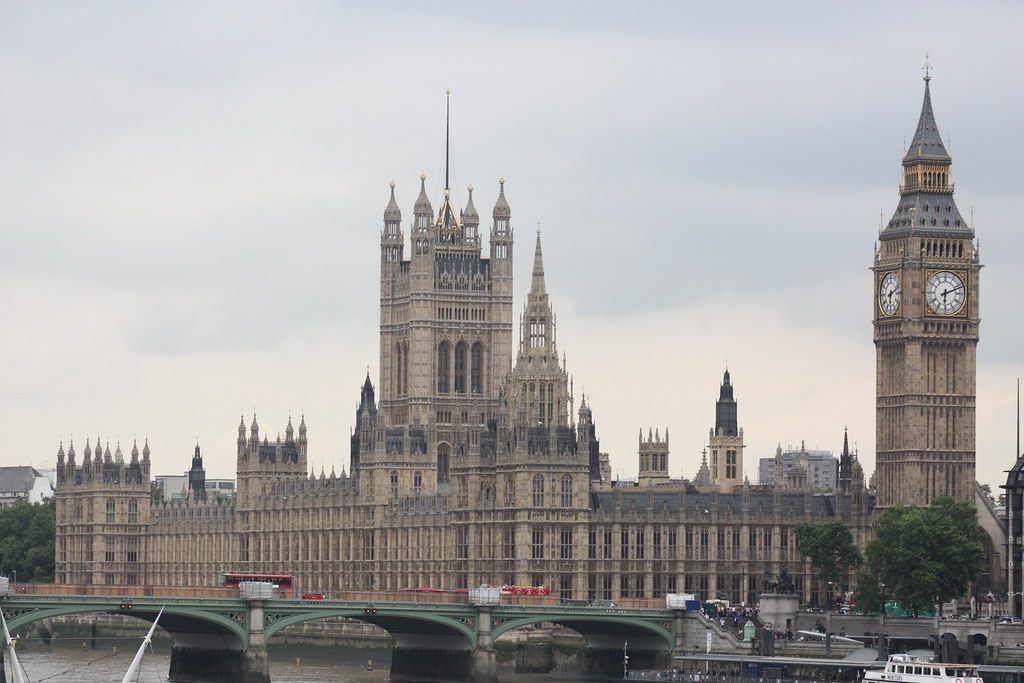
The House of Commons was full, for the first time since last March. Members of Parliament had been brought back from their holidays, from West Country campsites and from Greek resorts, in a repatriation operation that puts the Foreign Office to shame.
They were there to debate Afghanistan, a far-away country of which it turns out that we know even less than we thought. It was only last month that Boris Johnson was assuring MPs that “there is no military path to victory for the Taliban”, although we now know that path was straight along the road to Kabul, as fast as their trucks could carry them.
Now Johnson was back to explain that things had turned out to be a bit more complicated than he thought. Or perhaps a bit simpler: we’ve gone, they’re back. Parliament was getting eight hours to discuss this, although it was too late to do very much about it. It wasn’t so much shutting the stable door after the horse had bolted as holding a long discussion about the history of equine care as the stallion in question disappeared over the horizon.
Still, the atmosphere was jolly. Many of these MPs haven’t seen each other in over a year. There was a first-day-of-term feel to things. With Parliament’s Covid restrictions lapsed, the Conservatives were wedged in together in the small, windowless chamber, barely a facemask in sight. The government’s instructions are still to wear masks in crowded places, but the Conservatives view Covid as some sort of socialist conspiracy that will go away if they ignore it. Or maybe they just feel that rules are for the little people.
Labour MPs had at least nodded to social distancing, sitting about 18 inches apart from each other. This is, admittedly, easier when there aren’t very many of you. The opposition benches were a sea of masks. Only the Democratic Unionists, who like the Tories see illness as a sign of moral failure, were a lone island of uncovered faces.
Johnson’s statement was, as ever, a masterpiece of bare adequacy. It eloquently just about dealt with the matter in question, magisterially pretty much covering the bases. The speechwriters, one sensed, must have been working on the words late into the previous afternoon. They had gone through as many as one draft as they tried to come up with something that, if it didn’t deal with every complex nuance of the Afghan tragedy, at least asked the question that Johnson lives by: “Will this do?”
The situation in Afghanistan was a “concern”, the prime minister explained, with what might, in another context, have been a brilliantly comic understatement. Over the past 20 years, the British had worked for a better future for the people of Afghanistan. “Some of this progress,” the prime minister said, “is fragile”, which is certainly one way of putting it.
What had gone wrong with our intelligence services, several people asked, that they had so comprehensively failed to see this coming? Be fair, replied Johnson, even the Taliban had been surprised by the speed of their own advance.
On the US Naval Institute Blog, CDRSalamander notes the only speech in the House of Commons during that debate that grabbed and held the attention of the entire body:
Let’s back away from the problem at hand a bit … and then back up further. I mentioned it earlier, but let’s bring it up again; national humiliation. There are different aspects of this growing humiliation that are already manifesting itself, the first of which is how others look at us.
Let’s start with our closest friend and take a moment to listen to a speech earlier today in the British House of Commons by Tom Tugendhat, MP.
The mission in Afghanistan wasn’t a British mission, it was a Nato mission. … And so it is with great sadness that I now criticise one of them. … To see their commander-in-chief call into question the courage of men I fought with — to claim that they ran. It is shameful. … this is a harsh lesson for all of us and if we are not careful it could be a very, very difficult lesson for our allies. … to make sure we are not dependent on a single ally, on the decision of a single leader, but that we can work together with Japan and Australia, with France and Germany, with partners large and small, and make sure we hold the line together.
That is our closest friend outlining a loss of confidence. That is just one datapoint from a friend, but it is safe to say that it is probably somewhere in the center of opinion.
What are those nations who are not our friends thinking? I don’t think I need to spend all that much time on discussing how emboldened they are. It is self-evident to anyone who reads USNIBlog.
On the ground, troops of 2nd Battalion, The Parachute Regiment are actively involved in escorting British and Afghani civilians from safe houses to Kabul airport for evacuation:
At least one NATO country hasn’t forgotten the civilians who have been left behind during the precipitate withdrawal by US troops.
HMS Indefatigable – Guide 116 (Extended)
Drachinifel
Published 6 Apr 2019HMS Indefatigable, a razee frigate of the British Royal Navy, is today’s subject.
Want to support the channel? – https://www.patreon.com/Drachinifel
Want to talk about ships? https://discord.gg/TYu88mt
Want to get some books? www.amazon.co.uk/shop/drachinifel
August 18, 2021
The Conscripts and Conscientious Objectors of World War Two – WW2 Special
World War Two
Published 17 Aug 2021In keeping with their ideals of personal liberty, Britain and the United States have historically maintained relatively small armies made up of volunteer soldiers. When Germany and Japan mobilize huge numbers of well-trained conscripts and sweep across Europe and Asia, the democratic allies devote huge resources to closing the gap, while respecting the rights of those who object to fighting on moral grounds.
(more…)
Tank Chats #120 | Sd.Kfz. 234 Panzerspähwagen | The Tank Museum
The Tank Museum
Published 26 Mar 2021The Tank Museum’s Curator David Willey presents a Tank Chat on the Sd.Kfz. 234 Panzerspähwagen, a heavy German reconnaissance vehicle from the Second World War, and the only wheeled German armour in The Tank Museum collection. Join David as he tells you more.
(more…)
QotD: Napoleon Bonaparte
Wednesday [May 5th] marks the 200th anniversary of the death of the French Emperor Napoleon Bonaparte, who was, depending on who you’re listening to, either a wily Corsican bandit who rose to dominate Europe through force and terror, or a messiah of liberalism who de-medievalized the continent. Whichever view you buy, Napoleon’s unique vis viva is still felt strongly in the world today. Any strong history undergrad ought to be able to chart a path from Napoleon through his nephew and successor Napoleon III, to what A.J.P. Taylor called “the period of the German wars” (ending in 1945), to the present moment.
The French Republic still uses Napoleonic touches in its mythmaking, as do its politicians. Sweden’s crown is still worn by descendants of Bernadotte, a general who was of humble birth but proved the ultimate champion of the emperor’s bizarre game of thrones. Napoleon said of his army that every man in it carried a marshal’s baton in his knapsack. By the same token, every ambitious colonel who ever plotted to pull together a squadron of tanks and overthrow a president carries a little portrait of Napoleon I next to his bosom. It may not be fair to say that Napoleon bears part of the responsibility for Hitler, but if there had been no Napoleon there could not possibly have been a Hitler. It is probably one of those “necessary cause” vs. “sufficient cause” things that give people so much trouble.
The bicentenary of Napoleon’s lonely death in custody on a windblown South Atlantic island has given the English an excuse to refresh some of their most precious and whimsical tokens of victory. At Apsley House, the home of the 1st Duke of Wellington, art restorers have been giving special attention to a bronze copy of Napoleon’s death mask, which was taken in plaster after the emperor expired. It’s a mesmerizing totem: to our eyes, the face emphasizes the Italian character that the ci-devant Buonaparte struggled to elude and conceal on the way to becoming master of France. Death masks seem creepy to us today, but they speak in ways a portrait cannot.
Colby Cosh, “Will There Be Cake?”, NP Platformed, 2021-05-05.
August 17, 2021
Opening Battles of the Franco-Prussian War: Saarbrücken, Wissembourg, Wörth I GLORY & DEFEAT Week 4
realtimehistory
Published 5 Aug 2021Support Glory & Defeat: https://realtimehistory.net/gloryandd…
Early August 1870 saw the first series of opening battles of the Franco-Prussian War. The Battle of Saarbrücken was the only battle of the entire war fought on German soil, the following Battle of Wissembourg, the Battle of Wörth and the Battle of Spicheren happened right after and gave a glimpse of the carnage to come.
» THANK YOU TO OUR CO-PRODUCERS
John Ozment
James Darcangelo
Jacob Carter Landt
Thomas Brendan» OUR PODCAST
https://realtimehistory.net/podcast – interviews with historians and background info for the show.» LITERATURE
Arand, Tobias: 1870/71. Die Geschichte des Deutsch-Französischen Krieges erzählt in Einzelschicksalen. Hamburg 2018Bourguinat, Nicolas/Vogt, Gilles: La guerre franco-allemande de 1870. Une histoire globale. Paris 2020
Gall, Lothar (Hrsg.): Deutschland Archiv. Deutsche Geschichte in Dokumenten. O.O., o. J. (2007)
Mährle, Wolfgang: “Das württembergische Heer im Deutsch-Französischen Krieg 1870/71“, in: Nation im Siegesrausch. Württemberg und die Gründung des Deutschen Reichs 1870/71, hrsg.v. Wolfang Mährle. Stuttgart 2020. S. 45-64.
Milza, Pierre: L’année terrible. La guerre franco-prussienne septembre 1870 – mars 1871. Paris 2009
Roux, Georges: La Guerre de 1870. Paris 1966
» SOURCES
Bazaine, François-Achille: Episoden aus dem Krieg von 1870 und der Belagerung von Paris. Berlin 1884Chuquet, Arthur: La guerre 1870/71. Paris 1895
Engel, o.V.: Die Verluste der deutschen Armeen an Offizieren und Mannschaften im Kriege gegen Frankreich 1870 und 71. Berlin 1872
Engels, Friedrich: Der Deutsch-Französische Krieg. Sechzig Artikel aus der ‘Pall Mall Gazette’. Berlin (Ost) 1957
Goncourt, Edmond de: Journal. Bd. 5. 1869-1872. Leipzig 2013
Henderson, George: The battle of Spicheren, August 6th 1870, and the events that preceded it – a study in practical tactics. London 1891
Klein, Karl: Fröschweiler Chronik. Kriegs- und Friedensbilder aus dem Jahre 1870/71. Illustrierte Jubelausgabe. München 1897
Kriegsgeschichtliche Abtheilung des Großen Generalstabs (Hg.): Der deutsch-französische Krieg 1870/71. Erster Theil. Erster Band. Berlin 1874
Kühnhauser, Florian: Erinnerungen eines Soldaten des königlich bayerischen-Infanterie-Leib-Regiments. Partenkirchen 1898
Le Faure, Amédée: Atlas de la guerre 1870/71. Paris 1875
Meisner, Heinrich Otto (Hrsg.): Kaiser Friedrich III. Das Kriegstagebuch von 1870/71. Berlin, Leipzig 1926
Pietsch, Ludwig: Von Berlin bis Paris. Kriegsbilder 1870-1871. Berlin 1871
» OUR STORE
Website: https://realtimehistory.net»CREDITS
Presented by: Jesse Alexander
Written by: Cathérine Pfauth, Prof. Dr. Tobias Arand, Jesse Alexander
Director: Toni Steller & Florian Wittig
Director of Photography: Toni Steller
Sound: Above Zero
Editing: Toni Steller
Motion Design: Philipp Appelt
Mixing, Mastering & Sound Design: http://above-zero.com
Maps: Battlefield Design
Research by: Cathérine Pfauth, Prof. Dr. Tobias Arand
Fact checking: Cathérine Pfauth, Prof. Dr. Tobias ArandChannel Design: Battlefield Design
Contains licensed material by getty images
All rights reserved – Real Time History GmbH 2021
QotD: The “Crisis of the Third Century”
You can find huge shelves of books analyzing this, attributing it to every conceivable thing, from the ol’ “lead in the water pipes” to massive structural defects stretching into remote antiquity. There’s probably something to all of them, but the biggest proximate cause is probably one the Romans themselves had identified, as early as Sallust, way back in the last century BC: lack of purpose. Having defeated Carthage and salted the earth where once she stood, the Roman “security state” — the largest and most comprehensive ever assembled to that point — simply ran out of reasons to exist.
If you’ve read much about (or especially by) them, you know that the Romans were, for lack of a better term, paranoid. It was simply incompatible with the Roman psyche to have any large, organized group of non-Romans anywhere near the Empire’s borders … so the Empire kept expanding, first reducing, then Romanizing, every conceivable threat. They kept doing this long past the point of negative returns, such that the Empire collapsed under the strain of trying to hold itself together.
Stop me if this sounds familiar: A “government” whose only claim to legitimacy is naked force. A large, increasingly rapacious, increasingly class-conscious military with no obvious enemies to fight, and no ability to subdue the ones it settles for. A large, increasingly rapacious, increasingly caste-conscious bureaucracy that views the whole “Imperial” project as one big tax farming operation. Massive, ever-increasing wealth disparities that can only be very temporarily alleviated by debasing the currency, because structural reform is culturally impossible from above, and physically impossible from below. And to top it all off, a weird, apocalyptic religious cult totally destroying the few pan-imperial cultural institutions, including the military.
The history of the Third Century is insanely complex, not well understood in many respects even by field specialists, but the gist of it is clear enough: Some general somewhere decides he’d like to have a crack at emperorizing, so he gets his troops to throw a purple toga on him and proceeds to take on the incumbent. Some other general thinks that’s a pretty nifty idea, so he does the same thing, taking on both the incumbent and the pretender. Not wanting to be left out of the fun, the incumbent’s main general murders the incumbent and takes the crown for himself, fighting whoever’s left, plus whichever of his subordinate commanders decide they want a shot at the big chair. The Senate rubber-stamps one of these clowns, or some other general who decides he’d like to throw his toga into the ring, and civil war follows civil war until one of them temporarily triumphs … only for the same thing to happen again once the shine is off the new guy (usually in less than a year or two).
They called ’em the “Barracks Emperors” for a reason, y’all. And it’s actually worse than that, since lots of times the rebel generals didn’t bother going for the big prize back in Italy. Lots of them decided they’d do just fine ruling, say, Britain, or parts of Gaul, or Asia Minor or Egypt or what have you, while the other guys slugged it out for the increasingly marginalized, if not totally meaningless, “official” title. Declare yourself the Emperor of ___, issue some slapped-together coins with your picture on them, and go nuts. The “Gallic Emperors” had a run of nearly half a century like that — not bad at all for Late Antiquity.
Severian, “The Crisis of the Third Decade”, Rotten Chestnuts, 2021-03-18.
August 16, 2021
French and German Armies in 1870 – Dreyse and Chassepot Rifle Overview I GLORY & DEFEAT Week 3
realtimehistory
Published 29 Jul 2021Sign up for Curiosity Stream and get Nebula bundled in and SAVE 26%: https://curiositystream.com/realtimeh…
While the French and different German Armies are gathering we are taking the time this week to take a look at military organization and warfare in 1870. As a special guest we also have Cap And Ball on the show who introduces the famous Chassepot and Dreyse rifles which will be important in this conflict.
» THANK YOU TO OUR CO-PRODUCERS
John Ozment
James Darcangelo
Jacob Carter Landt
Thomas Brendan» OUR PODCAST
https://realtimehistory.net/podcast – interviews with historians and background info for the show.» LITERATURE
Arand, Tobias: 1870/71. Die Geschichte des Deutsch-Französischen Krieges erzählt in Einzelschicksalen. Hamburg 2018
Delpérier, Louis; Mirouze, Laurent: Der Deutsch-Französische Krieg 1870/71. Bd. 2. Uniformierung und Ausrüstung der französischen Armeen. Wien 2020
Herre, Franz: Kaiser Wilhelm I. Der letzte Preuße. Köln 1980
Milza, Pierre: L’année terrible. La guerre franco-prussienne. Septembre 1870 – mars 1871. Paris 2009
Stein, Markus; Bauer, Gerhard: Der Deutsch-Französische Krieg 1870/71. Bd. 1. Uniformierung und Ausrüstung der deutschen Armeen. Wien 2020» SOURCES
Fontane, Theodor: Der Krieg gegen Frankreich. Bd. 1. Berlin 1873
Kriegsgeschichtliche Abtheilung des Großen Generalstabs (Hg.): Der deutsch-französische Krieg 1870/71. Erster Theil. Erster Band. Berlin 1874
Pflugk-Harttung, Julius: Krieg und Sieg 1870-1871. Bd. 2 Berlin 1896» OUR STORE
Website: https://realtimehistory.net»CREDITS
Presented by: Jesse Alexander
Written by: Cathérine Pfauth, Prof. Dr. Tobias Arand, Jesse Alexander
Director: Toni Steller & Florian Wittig
Director of Photography: Toni Steller
Sound: Above Zero
Editing: Toni Steller
Motion Design: Philipp Appelt
Mixing, Mastering & Sound Design: http://above-zero.com
Maps: Battlefield Design
Research by: Cathérine Pfauth, Prof. Dr. Tobias Arand
Fact checking: Cathérine Pfauth, Prof. Dr. Tobias ArandChannel Design: Battlefield Design
Contains licensed material by getty images
All rights reserved – Real Time History GmbH 2021
HMS Glamorgan – Computer Ship Of The Future (1967)
British Pathé
Published 13 Apr 2014English Channel.
Top shots of the guided missile destroyer
battleshipHMS Glamorgan at sea. In the control/computer room a man pulls out old-fashioned computer records [circuit packs, I believe] from a large control cupboard; officers on the bridge look at dials and through binoculars. Various shots in steering, control and engine rooms as the ship moves along. On the flight deck sailors play hockey while others watch and cheer them on. A navigator on deck looks through a sextant while another officer makes notes. A helicopter is moved from a hanger out onto the deck and prepared for takeoff; firemen in asbestos suits and helmets stand by with a hose; the chopper takes off.Three young men play guitars and banjos before a television camera in a tiny studio; we hear that the ship has its own closed circuit TV station; good shots of the filming; tape recording machines going round; picture being adjusted. Men in a mess room watch the performance on the television while they have a pint. Several shots of the sailors getting their rum rations. Various shots in the kitchens show food being prepared and served into the sailors mess tins; good canteen and catering shots (most of the food looks pretty unappetising) [the person writing the description clearly has no idea just how unappetizing British food could be in the 1960s … this looks well above average for the time]. In the sick bay a sailor gets a shot in the arm from the Medical Officer.
Several shots of the radar antennae on the ship and the men looking at the radar scanner screens in the control room. Men in protective gloves and hoods load shells in the gun turret; M/Ss of the main guns on the ship being fired. Several shots show the countdown for Seaslug missiles to be fired; men at control panels look at dials and radar screens; an officer counts down into a microphone (mute). Complicated boards of buttons show the location of the missiles, intercut with shots of the missiles moving into position by electronic instruction. The missiles move into the launchers on deck and are fired; men watch their progress on a radar screen. Another launcher moves into position; L/S of the ship as the missiles are fired.
Note: on file is correspondence and information about HMS Glamorgan. Cuts exist – see separate record. FILM ID:419.04
A VIDEO FROM BRITISH PATHÉ. EXPLORE OUR ONLINE CHANNEL, BRITISH PATHÉ TV. IT’S FULL OF GREAT DOCUMENTARIES, FASCINATING INTERVIEWS, AND CLASSIC MOVIES. http://www.britishpathe.tv/
FOR LICENSING ENQUIRIES VISIT http://www.britishpathe.com/
British Pathé also represents the Reuters historical collection, which includes more than 136,000 items from the news agencies Gaumont Graphic (1910-1932), Empire News Bulletin (1926-1930), British Paramount (1931-1957), and Gaumont British (1934-1959), as well as Visnews content from 1957 to the end of 1984. All footage can be viewed on the British Pathé website. https://www.britishpathe.com/
August 15, 2021
No Soviet Oil for Hitler – WW2 – 155 – August 14, 1942
World War Two
Published 14 Aug 2021The Axis advance into the Caucasus is going great … except the oil towns they take have no oil, and wasn’t that the whole purpose? Meanwhile in the Pacific, the US Navy is suffering perhaps its greatest defeat ever off Savo Island, even as the Marines take Tulagi, Gavutu, and Tanambogo.
(more…)
August 14, 2021
English wholesalers, Dutch retailers and the expansion of foreign trade by European sailors
In the latest Age of Invention newsletter, Anton Howes considers the changing nature of English foreign trade as possibly one of the main drivers of the unprecedented growth of London from 1550-1650, and how both English and Dutch sailors differed from most of the rest of Europe:

An English merchant ship of the late 16th to early 17th century: this is a replica of the Susan Constant at the Jamestown Settlement in Virginia. The original ship was built sometime before 1607 and rented by the Virginia Company of London to transport the original settlers to Jamestown.
Photo by Nicholas Russon, March 2004.
I am fairly convinced that this transformation was sparked by the changing nature of England’s trade, with its merchants taking near-total control of it themselves, whereas once they had relied on foreign merchants to bring many of their imports to them. And thanks to their adoption of celestial navigation techniques from the Iberians and Italians — learning to read the stars, to find their latitude at sea — the English gained the ability to discover new routes, noting details down for others to come back again and again and create more permanent new trades. In merchants’ parlance of the time, the English increasingly went in search of “the well head” — to buy things at source, where they were cheapest.
This sounds like the common-sense thing to do. But it was surprisingly rare. Very few countries’ merchants attempted to take advantage of such opportunities for arbitrage — to buy where things were cheapest and sell them where they were most expensive. Even the English themselves, despite their newfound search for well heads, rarely exploited arbitrage opportunities to the full. Although they bought at source, they tended, at first, to sell the goods they’d acquired back in London, to serve English consumers rather than taking them to wherever the goods would sell for the highest prices. This was instead the strategy of the Dutch, whose trading techniques were by 1600 said to surpass all others. Indeed, the Dutch were also some of the only merchants who discriminated on prices within markers, “not shaming to retail any commodity by small parts and parcels”, as one English merchant complained, charging a multitude of buyers according to what they thought they could get from them — something that “both English merchants and Italians disdain to do in any country whatsoever.” It was seemingly considered beneath them.
I’m not wholly clear why the English only sold wholesale when they knew that price discrimination was a Dutch advantage. It seems, at first, to be irrational. But I suspect it had something to do with the wider difficulties of trading abroad. For the English and Dutch were quite unusual in Europe in the early seventeenth century for being among the only merchants willing to risk sailing to shores where their own rulers held no sway.
The Hanseatic merchants of the North Sea and Baltic, who had once been dominant in London, had been stripped of their privileges there and displaced by the English, later confining themselves largely to the Baltic. German mercantile efforts were otherwise generally concentrated inland. And French merchants were apparently under-capitalised, or so the English suspected, because “gentlemen do not meddle with traffic, because they think such traffic ignoble and base”. French merchants did occasionally sail down the Atlantic coast to Spain, and into the Mediterranean to trade with Italy and the Ottoman Empire, but overall they were content to have third parties to come to them — there was always the attraction to foreign merchants of being able to buy French wines, salt, linens, and grain.
As for the once-great Italians, they had apparently been impoverished by the Portuguese discovery of a direct route around Africa to the Indian Ocean, and perhaps by the depredations of various Mediterranean predators too — Algerian corsairs, Ottoman galleys, and the like. Although their rulers could themselves be merchants — the Grand Duke of Tuscany, a Medici, was considered the greatest merchant of them all — by this stage the Italians only rarely ventured far abroad themselves, except over land. Indeed, the English considered them impious for not risking the seas, accusing them of blasphemy for not trusting their lives and livelihoods to God. Whereas the Venetian merchant-nobility had once been required to spend time aboard ship, English commentators by 1600 noticed that their mariners were now overwhelmingly Greek. “Their customs have decayed, their ships rotted and their mariners, the pride of their commonwealth all become poltrones” — that is, loafers or idlers — “and the worst accounted in all those seas”. A Tuscan exploration of the coast of South America in 1608, to look into founding a colony in what is now French Guiana, had to be captained and piloted by Englishmen. What reputation the Italians maintained was as financiers and money-exchangers — perhaps because the Genoese were the only merchants permitted to take the vast quantities of New World silver out of Spain.